

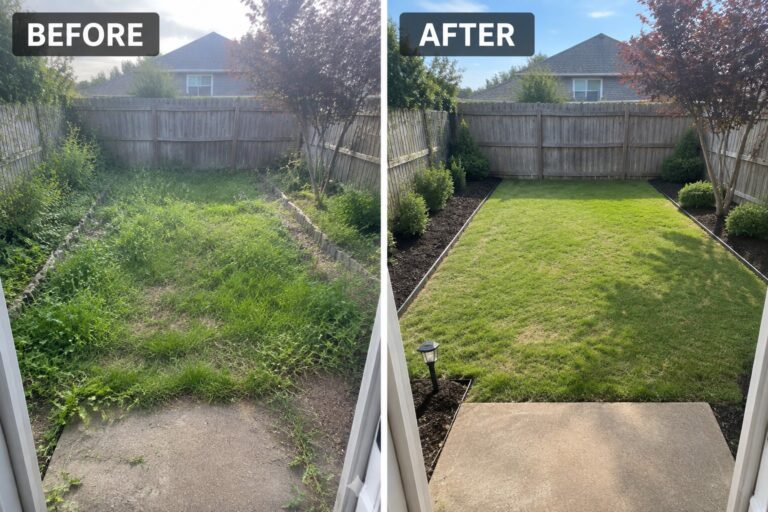
My yard always felt a bit uneven until I paid attention to the basic layout and cleared away the spots that never quite worked.
Adding a few defined pathways and reshaping the lawn edges gave the space a steadier feel without needing a big overhaul.
I would test edging and simple plant groupings first because those steps tend to hold up better than random additions.
Cleanup and structure seem to matter more than filling every corner when the goal is an area that stays usable.
Over time the layers build in a way that makes the yard feel less neglected and more like part of the home.
Add Structure To An Overgrown Backyard
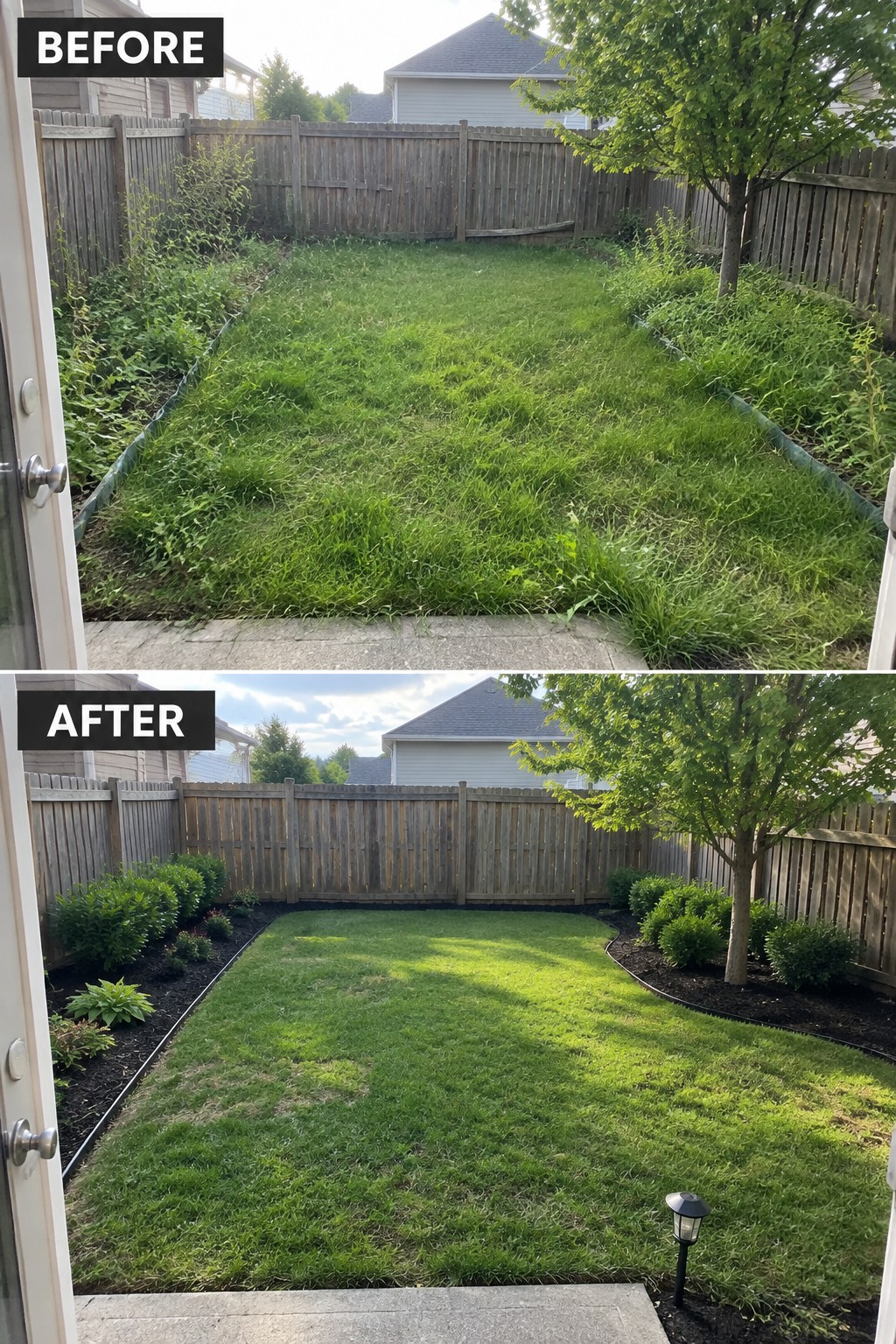
The main change here is how the yard went from grass spilling into the fence line to a clean lawn with clear borders. Once the edges were cut and simple garden beds were added along the fence, the whole space started to feel intentional instead of neglected.
This approach works well in average backyards where you want to keep the lawn as the main feature. Install edging first to separate the grass from the beds, then add mulch and a few shrubs. It keeps maintenance low and gives the yard shape without filling it with too many plants or structures.
Lay Stepping Stones To Give A Yard A Clear Path

A dirt trail that gets worn down over time makes the yard feel messy and hard to use. Placing flat stepping stones along the same route turns the path into something solid while letting the grass grow right up to the edges.
This idea works best in smaller yards or side areas where you want function without adding too much. Clear the old path first, set the stones level with the soil, and keep the surrounding lawn simple so the walkway stays easy to mow and maintain.
Turn Gravel Into A Simple Patio Seating Area
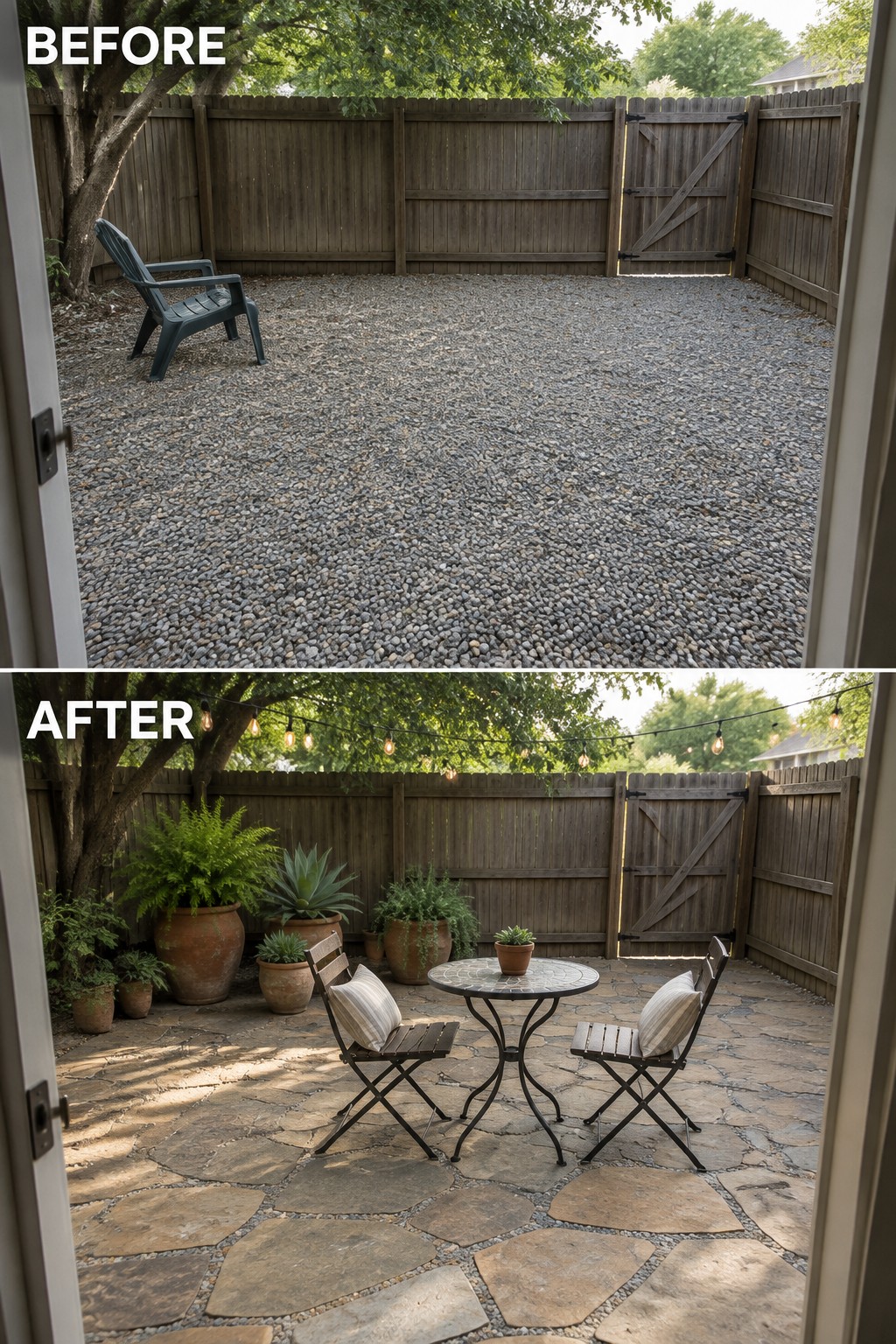
A bare gravel backyard often feels like wasted space because there is no clear place to sit or gather. Replacing the loose gravel with flagstone creates a solid surface that instantly makes the area feel like an outdoor room. Adding a small table and a couple of chairs gives the space a purpose without filling it up.
This idea works well in small or medium yards where you want a low-maintenance spot to eat or relax. Start with the hard surface first, then bring in weatherproof furniture and a few large pots so the area stays open and easy to move around. String lights help if you plan to use it in the evening.
Add Vertical Planters To A Fence

A tired fence can drag down the whole yard, especially when the wood looks worn and the surface stays bare. Painting the fence a clean color and mounting simple wooden planters turns that same wall into a place for flowers and trailing plants without using up ground space.
This works well along side yards or back fences where you want color but still need room to mow or walk. Start with a good cleaning and paint job, then use sturdy brackets to hold the planters level. Choose plants that can handle the sun exposure on your fence and water them regularly since they dry out faster than ground beds.
Add Gravel And Stepping Stones To Define A Narrow Side Path
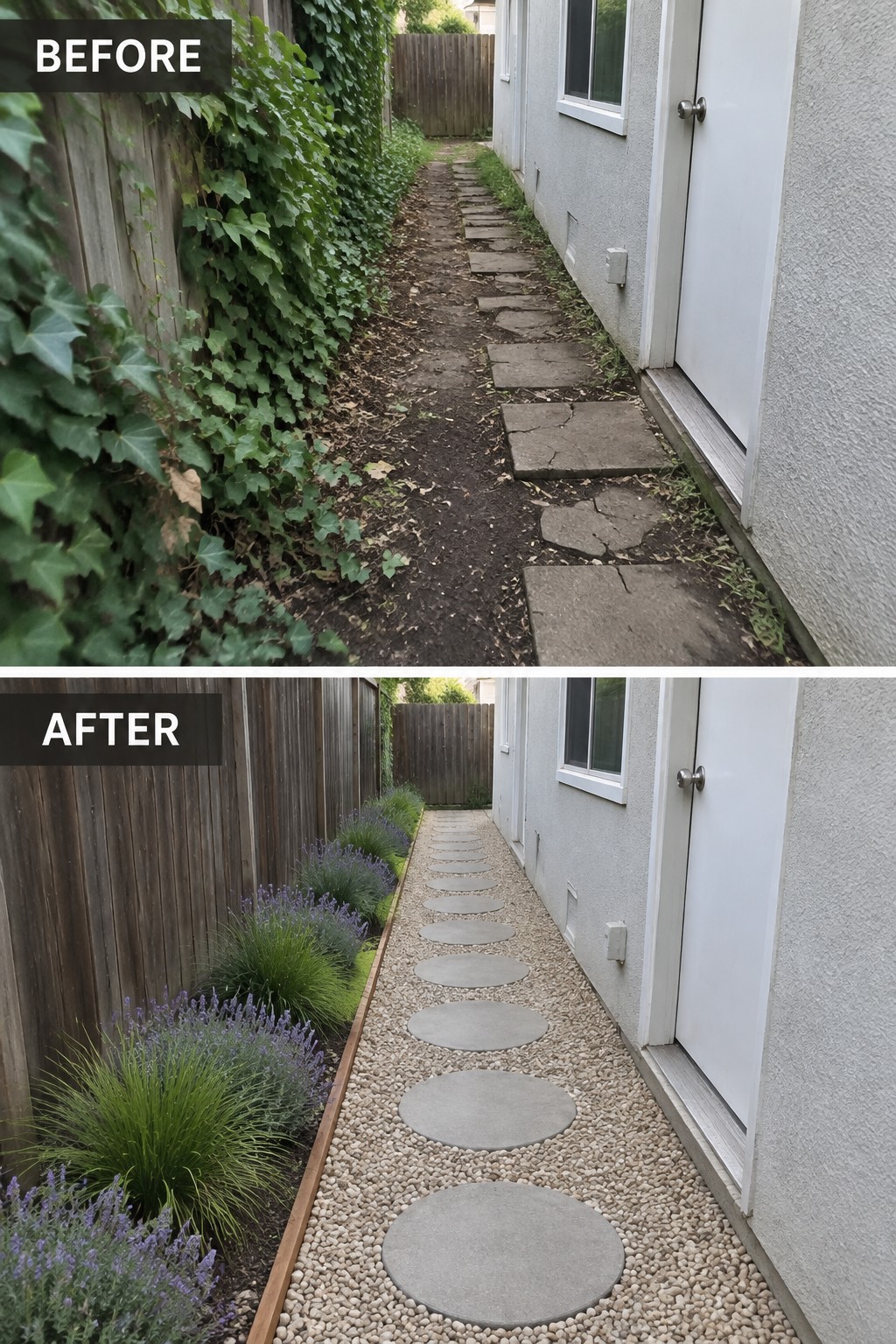
Side yards often turn into messy strips of dirt and weeds because they feel too narrow for real use. Laying down gravel with round stepping stones creates a firm, walkable surface that stays clean and keeps the path from disappearing under overgrowth.
This works best in tight spaces between a house and fence where you still need access. Start by clearing the old plants and leveling the ground, then add a simple border of low plants along one side so the path feels intentional without crowding the walkway.
Build Retaining Walls To Terrace A Sloped Yard
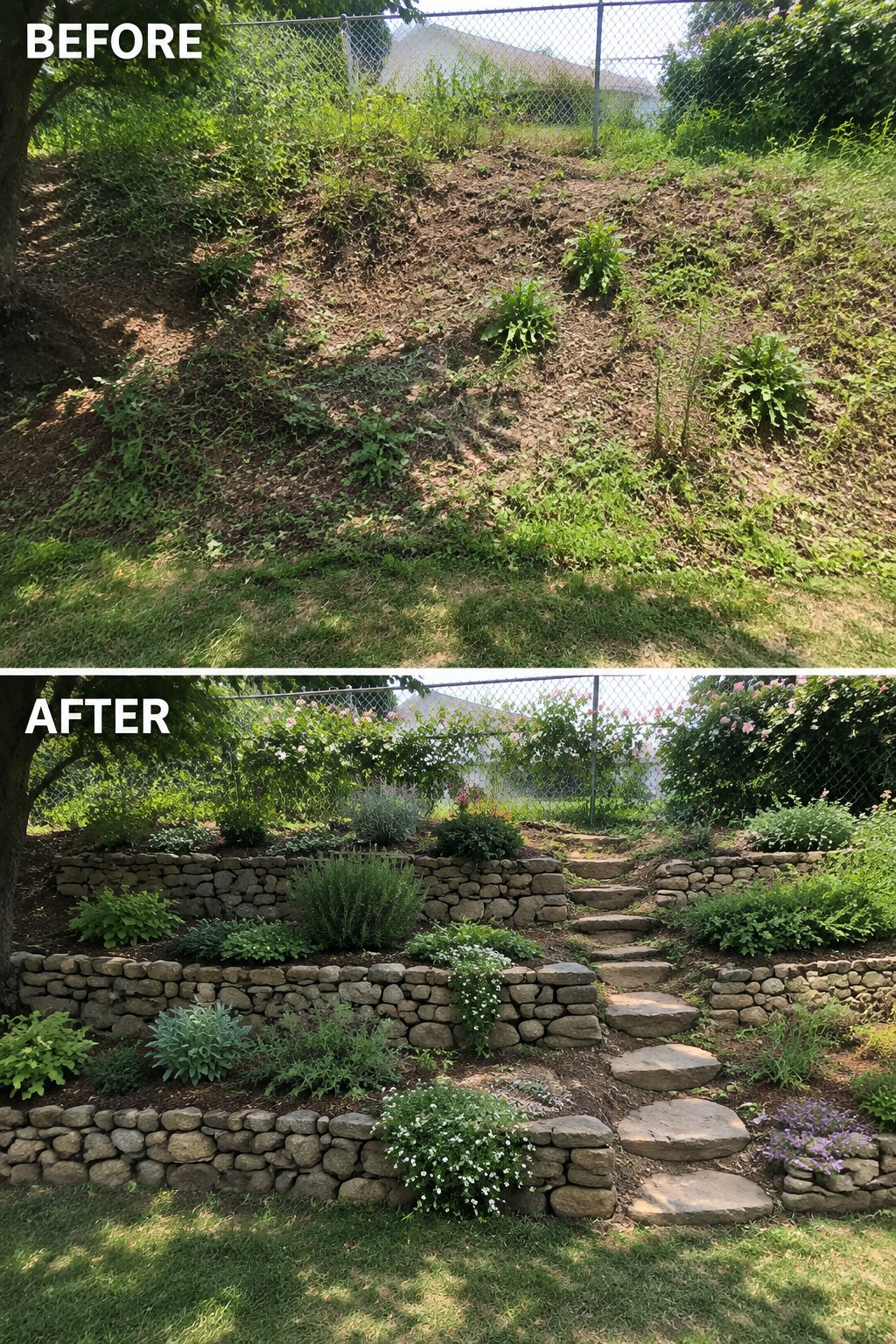
A steep, weedy slope is hard to use and even harder to maintain. Adding stone retaining walls breaks the hill into flat beds that stay in place and give plants room to grow without sliding down.
This idea works best on yards where the ground drops more than a foot or two. Keep the walls low enough to build yourself, add steps early so the levels connect, and plant the new beds before adding anything else. The result is a yard that feels planned instead of neglected.
Add Defined Garden Beds Along The Curb

The main change is turning a strip of uneven grass into planted beds filled with flowers and mulch. This gives the front of the yard a much tidier, more finished edge that ties the lawn to the street.
This approach works best on narrow strips that often get neglected. Clear the grass first, lay down mulch to control weeds, and choose a mix of perennials that can handle roadside conditions. The result feels planned without needing a full yard redesign.
Anchor A Patio With One Large Rug

A bare concrete patio often feels unfinished because nothing defines where the seating should go. Adding one large outdoor rug instantly creates a clear zone that pulls the chairs and fire pit together into a single, usable space.
This approach works well on any open deck or slab where furniture tends to drift. Choose a rug that fits all the seating with a little room to spare around the edges, then keep the rest of the patio simple so the defined area stands out.
Add Defined Garden Beds To An Overgrown Border

Clearing out the thick vines and weeds along a fence first makes room for something much cleaner. The after photo shows how a simple row of garden beds with layered plants turns a messy edge into a neat border that actually feels planned.
This idea works best along fences or property lines where growth gets out of hand. Cut everything back, add a clear edge with mulch, and plant in groups of different heights so the beds look full without crowding each other. It suits smaller yards that need structure more than new features.
Turn A Cluttered Patio Into A Functional Outdoor Cooking Area

A patio often turns into extra storage when there is no plan for it. Clearing away the scattered tools and work table, then placing a grill on one side and a simple wooden table on the other, gives the space a single clear job. The result is a spot that actually gets used instead of collecting more stuff.
This idea works best on small concrete areas right next to the house. Start by moving everything that does not belong outside, then keep the layout open enough to walk around the grill and table. Pick pieces that handle weather so the setup stays useful without constant moving.
Define Your Lawn Edge With A Simple Border
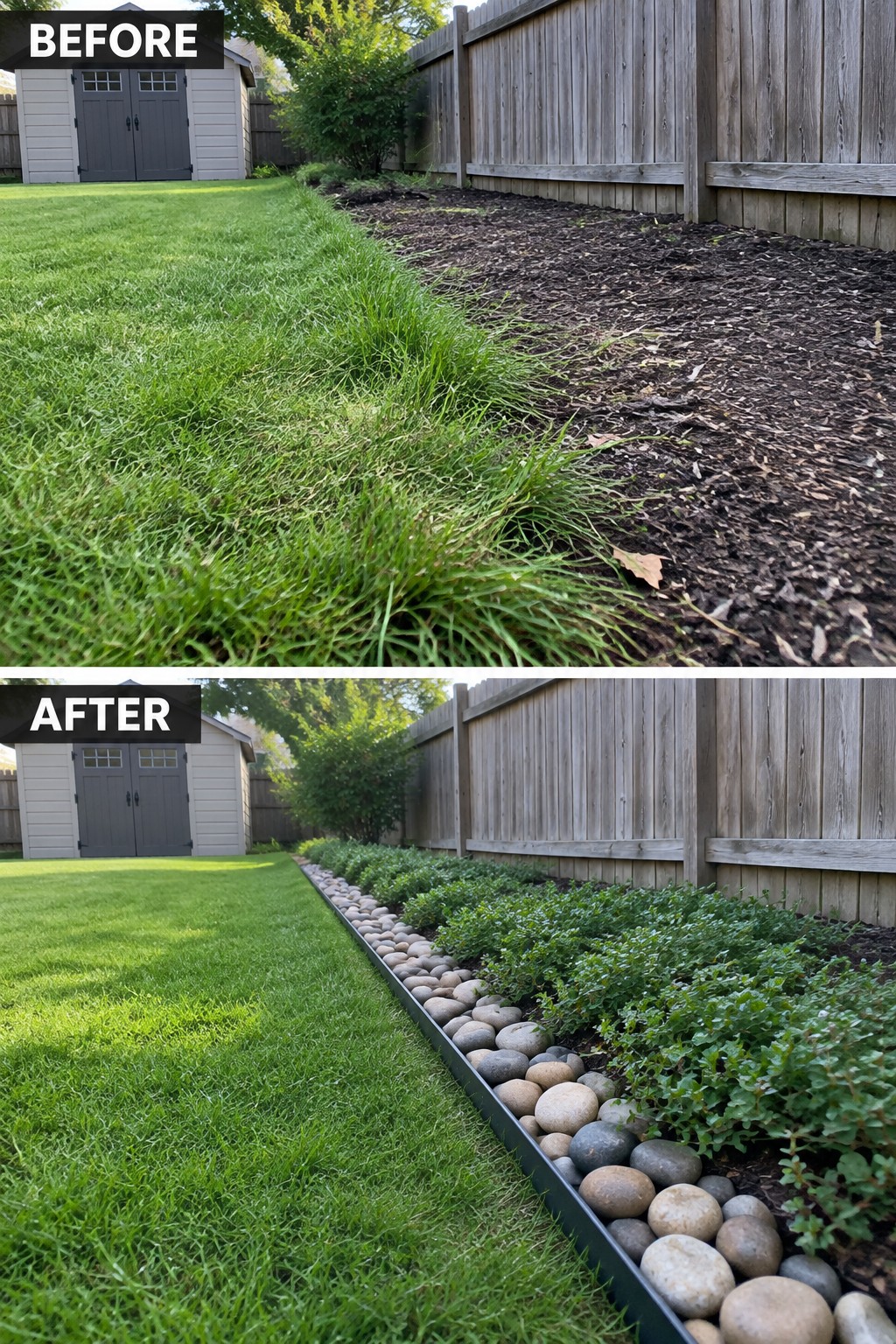
A messy line where grass meets bare mulch makes the whole yard feel unfinished. Adding a stone border creates a clear separation that keeps the lawn tidy and gives the garden bed a place to start.
This works best along fences or side yards where you want planting without losing open grass space. Lay the border first before adding plants so the shape stays clean even after things fill in.
Define A Narrow Side Path With Gravel And Lights

A narrow side path between a house and fence often turns into an overgrown mess with uneven boards and weeds creeping in from both sides. Laying down gravel with a few wooden planks set into it and adding simple solar lights along the edges gives the space a clear purpose and makes it feel like part of the yard again instead of an afterthought.
This idea works especially well on tight access paths where full planting is not practical. Start by clearing out the weeds and old debris, then use landscape fabric under the gravel so it stays neat longer. Solar lights are easy to add without running wires and help people see the steps at night.
Create A Defined Fire Pit Area In Your Backyard
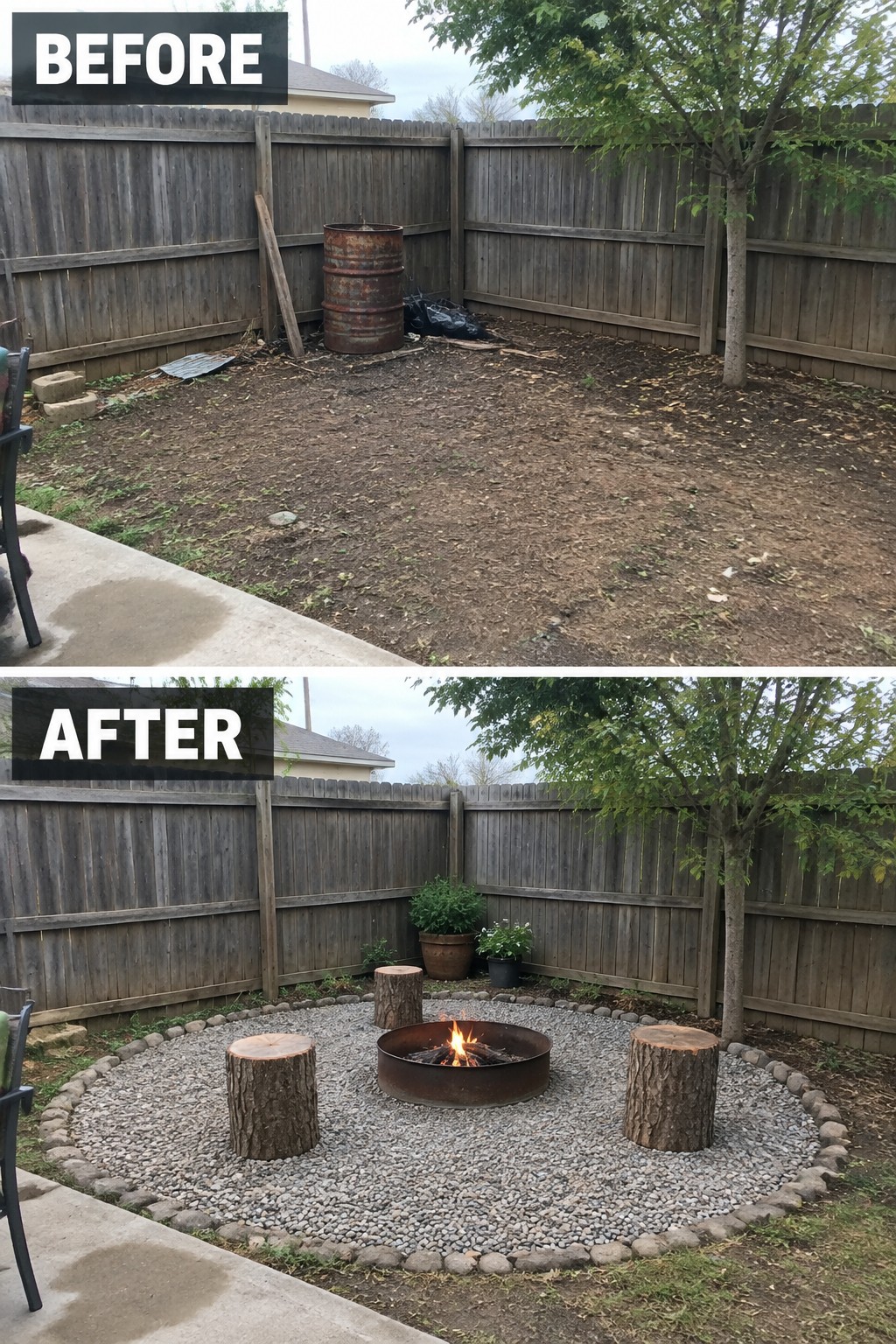
A bare patch of dirt can sit unused for years until you give it a clear purpose. Laying down a simple gravel circle and placing a fire pit in the center turns the space into a spot people actually want to gather. The log stools add seating without needing much furniture, and the edge of stones keeps the gravel from spreading into the rest of the yard.
This approach works best in smaller backyards where you want one main outdoor spot rather than trying to fill the whole area. Keep the circle a reasonable size so there is still room to walk around it, and choose seating that can stay outside year-round. Start with the gravel base before adding plants or extras so the zone feels finished even on a weekend project.
Refresh Your Front Entry With Door Color And Planters
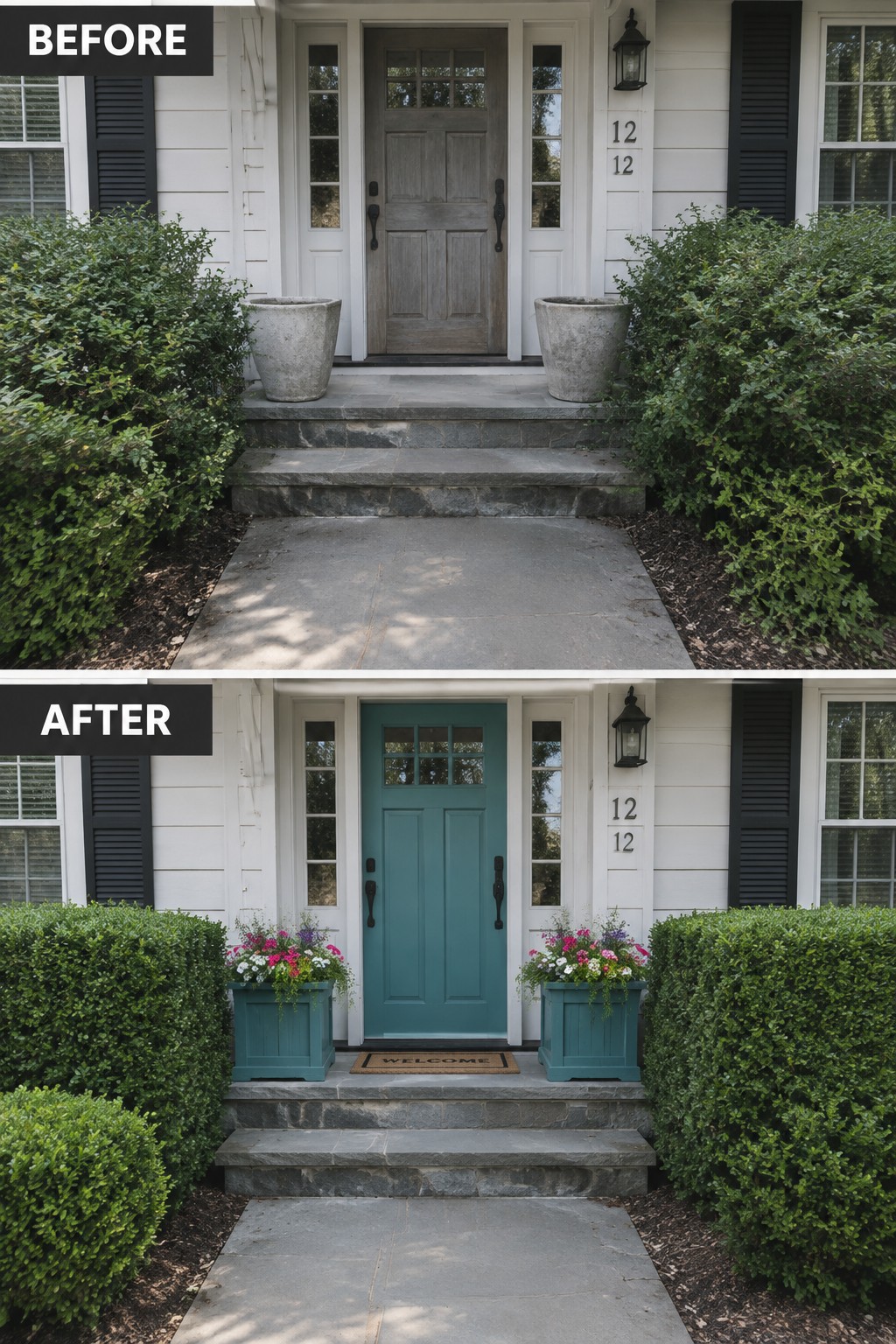
Painting the front door a solid color and repeating that color in the planters gives the entry a finished look without major construction. The change from the old gray door and plain pots to the teal door and matching containers makes the space feel pulled together and more welcoming right away.
This idea works on many homes because it stays simple and low cost. Pick one color that works with your siding, use it on the door, then carry it into the planters so the eye moves easily from the steps up to the house. Keep the surrounding bushes trimmed so the new color stays the main focus.
Add Structure To A Sloped Backyard
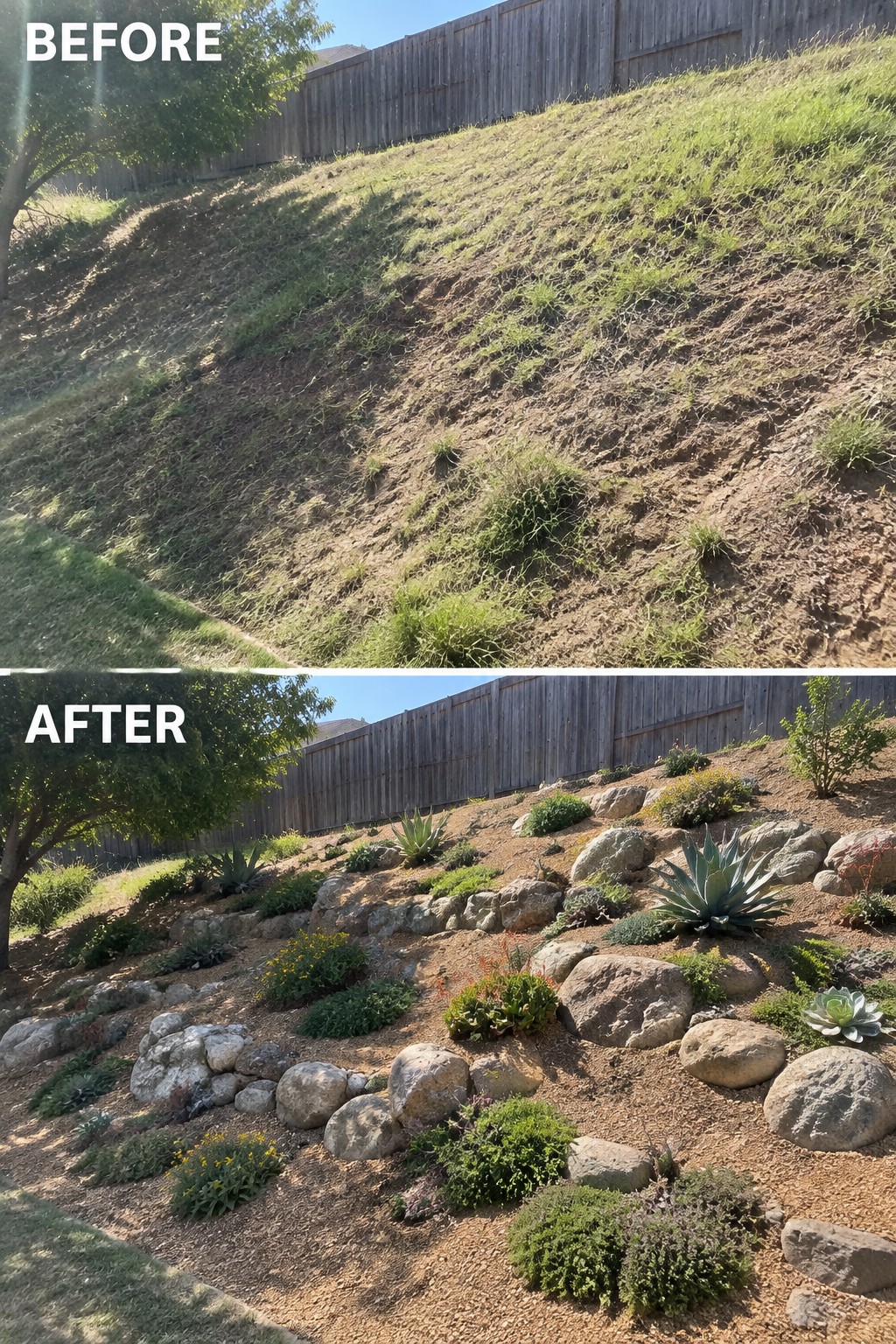
A bare, weedy slope is hard to maintain and easy to ignore. Placing larger rocks first creates lines that hold the soil and give the area shape, then filling in with low-water plants keeps the slope from washing out or looking messy again.
This works best on yards where grass struggles or mowing feels unsafe. Clear the weeds thoroughly before you start, use a few big rocks to break up the angle, and choose plants that spread without much care so the slope stays stable over time.
Add Trellises And Lights Along A Bare Fence

A long fence next to a walkway often looks flat and unfinished on its own. Adding a few simple trellises gives the fence height and breaks up the straight line, while string lights add a bit of warmth once the sun goes down.
This idea works best in narrow side yards or along the back edge of a lot where you want structure without crowding the space. Mount the trellises at even intervals, choose vines that climb easily, and run the lights along the top rail so they highlight the new planting rather than scatter light everywhere.
Add Raised Beds To Organize An Overgrown Yard

A patch of tall grass and weeds next to the house can feel like wasted space until you add a few raised beds. The wooden planters sit directly on the ground and create clear boundaries so the garden stays contained instead of spreading everywhere.
This idea works best in narrow side yards or corners where the lawn is hard to maintain. Build or buy simple boxes, set them where you want growing space, and fill them with soil and plants you actually use. The result is a tidy, productive area that feels planned instead of neglected.
Add Gravel To Shape A Bare Backyard
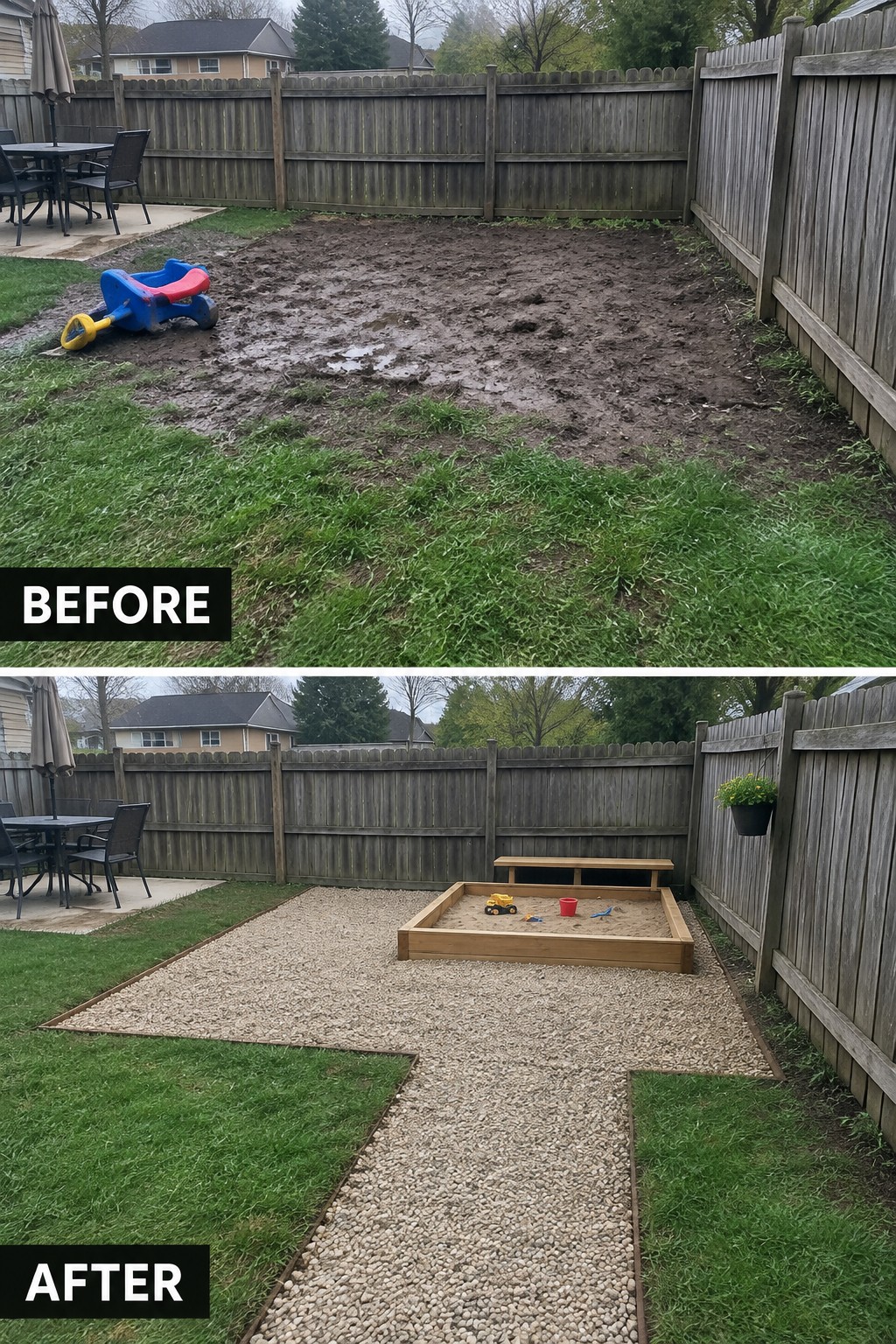
A bare, muddy yard offers little room for play or movement once it rains. Laying down gravel creates firm paths and a contained play zone that stays usable even after wet weather. The sandbox sits neatly inside the gravel area instead of sinking into dirt, and the path connects it to the rest of the lawn without tracking mud onto the patio.
This approach suits homes with children or pets that need a durable outdoor spot. Clear the area first, add landscape fabric to block weeds, then spread gravel about three inches deep. Keep the gravel zone a simple rectangle or path shape so the lawn still has room to breathe around it.
Frequently Asked Questions
Q: Do all these projects really fit into one weekend? A: Break bigger ideas into smaller steps if you need more time. Some like adding mulch or string lights go up fast. Pick two or three that match your pace.
Q: Where can I find cheap supplies without driving all over town? A: Check local hardware stores for sales on wood and paint. Reuse what you already have around the house first.
Q: How do I make sure my DIY changes last through the seasons? A: Seal wood projects every year to protect them. Pick weatherproof items for anything left outside. Check for loose parts now and then after storms.
