

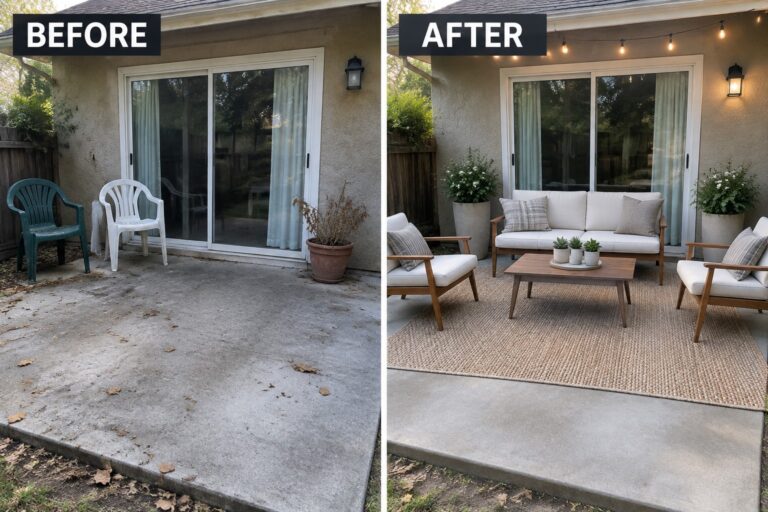
Concrete yards tend to look unfinished when there is no clear structure connecting the open space to the surrounding beds or fences.
I often start by looking at how pathways could divide the area without breaking up the concrete itself.
Planting structure comes next because it softens the edges and gives the yard a reason to feel more settled.
Some of these changes are worth trying first.
The rest can wait until you see how the space actually gets used day to day.
Use Inset Pavers To Break Up A Long Concrete Path
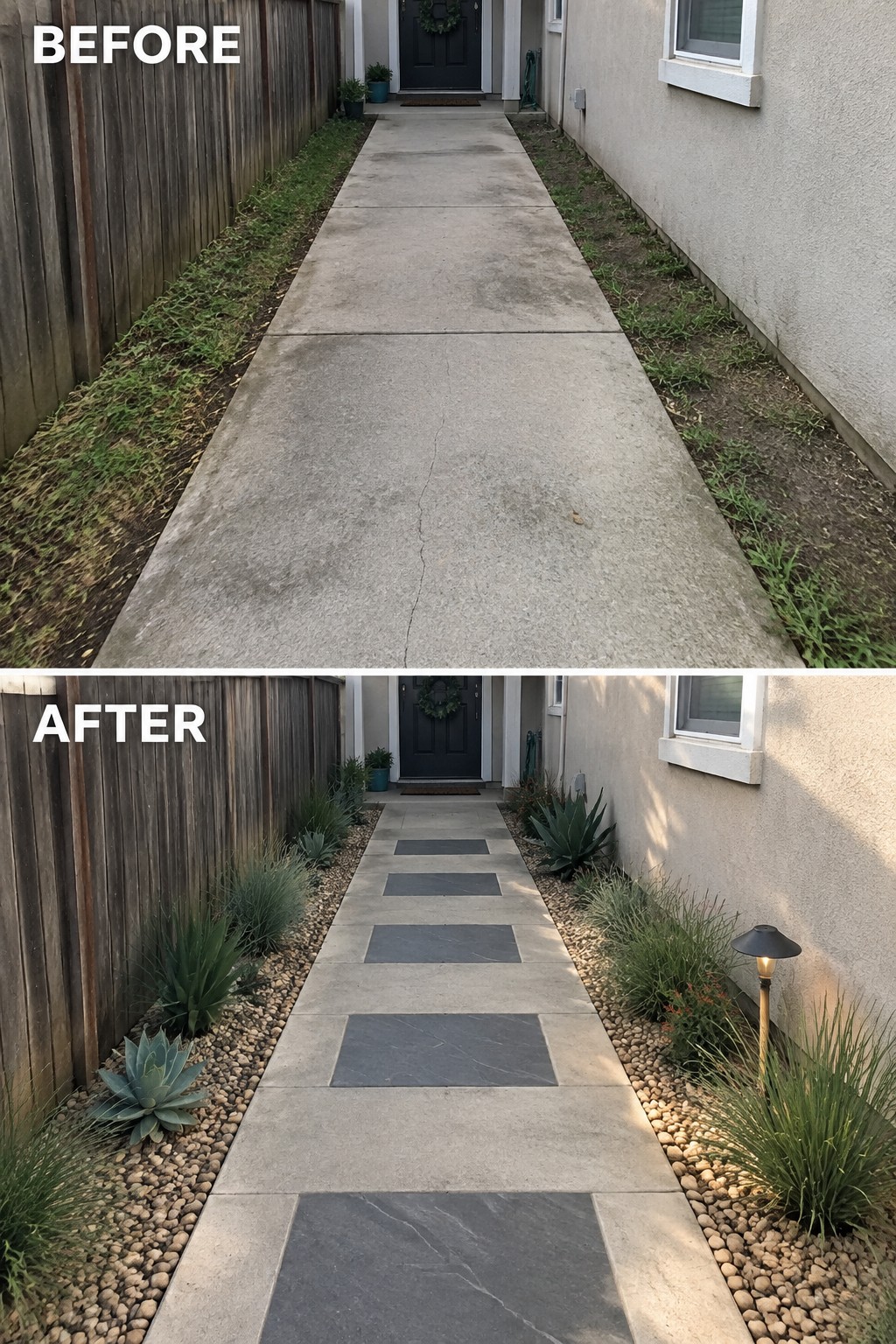
A plain concrete walkway can feel flat and endless when it runs the full length of a side yard. Adding a few dark inset pavers at regular intervals gives the path visual breaks and makes the space feel more planned without tearing out the existing slab.
This approach works best in narrow side yards where you want to keep the concrete but reduce its blank look. Lay the pavers first to set the spacing, then add gravel along both edges and repeat a few low-water plants so the beds stay simple and easy to maintain.
Turn A Bare Concrete Patio Into A Seating Area

The main change here is covering the cracked concrete with deck tiles and adding a table, chairs, and bench. That single step turns an empty slab into a space that actually invites people to sit down and stay awhile.
Deck tiles are a practical choice when you want to skip a full rebuild. They go down over the existing surface, and you can keep the layout simple with just enough furniture to define the zone. Add potted plants around the edges to soften the look and make the area feel more finished.
Turn An Empty Patio Into A Seating Area
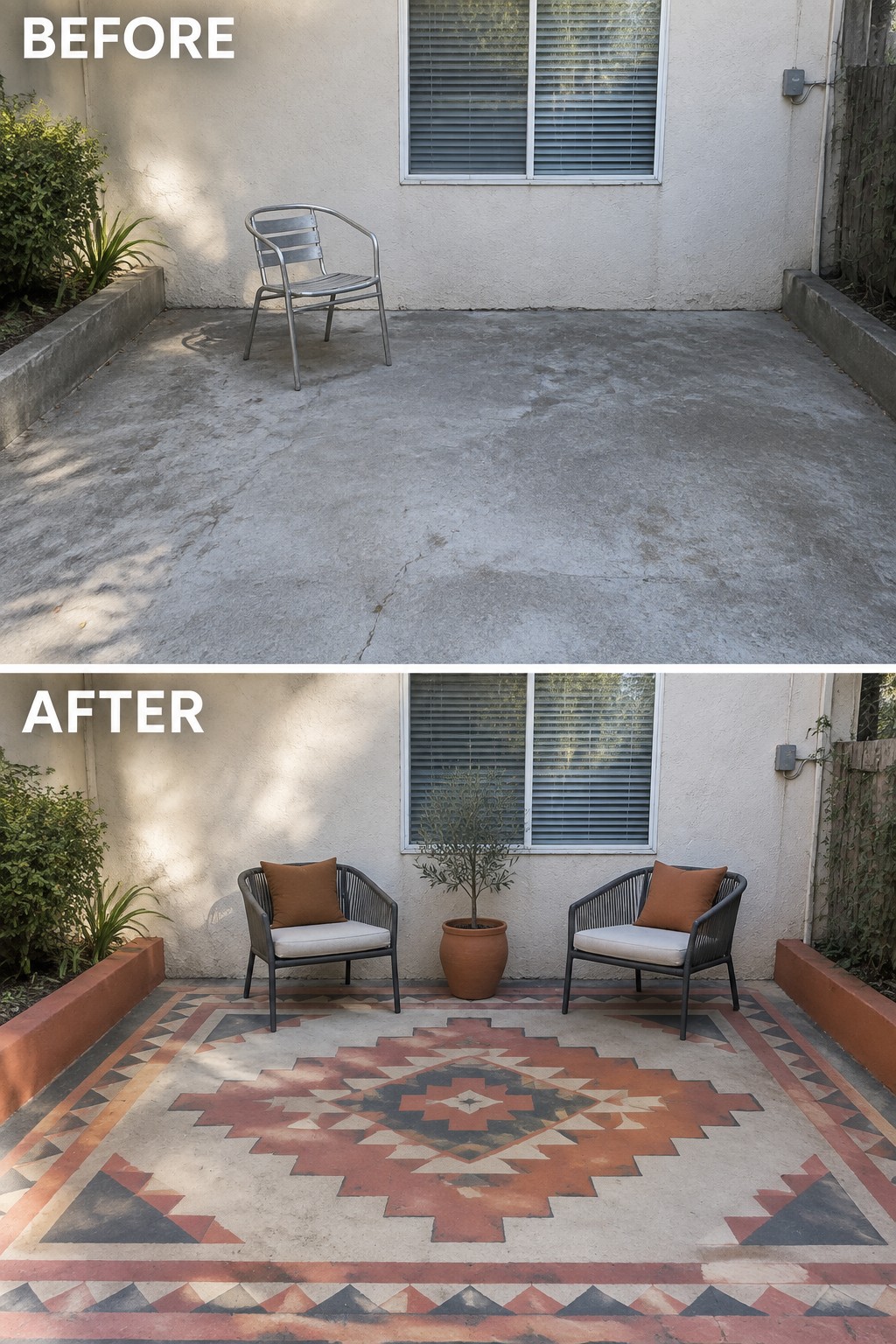
A bare concrete slab often feels like dead space until you give it a clear purpose. Adding one large rug instantly creates a defined zone, and pairing it with two simple chairs turns the area into a place where people actually want to sit.
This idea works best on small side yards or back patios where you do not want to pour new surfaces. Keep the furniture scale modest so the rug still has breathing room around the edges, and choose pieces that can stay outside year-round.
Add A Circular Planting Bed To Break Up Concrete
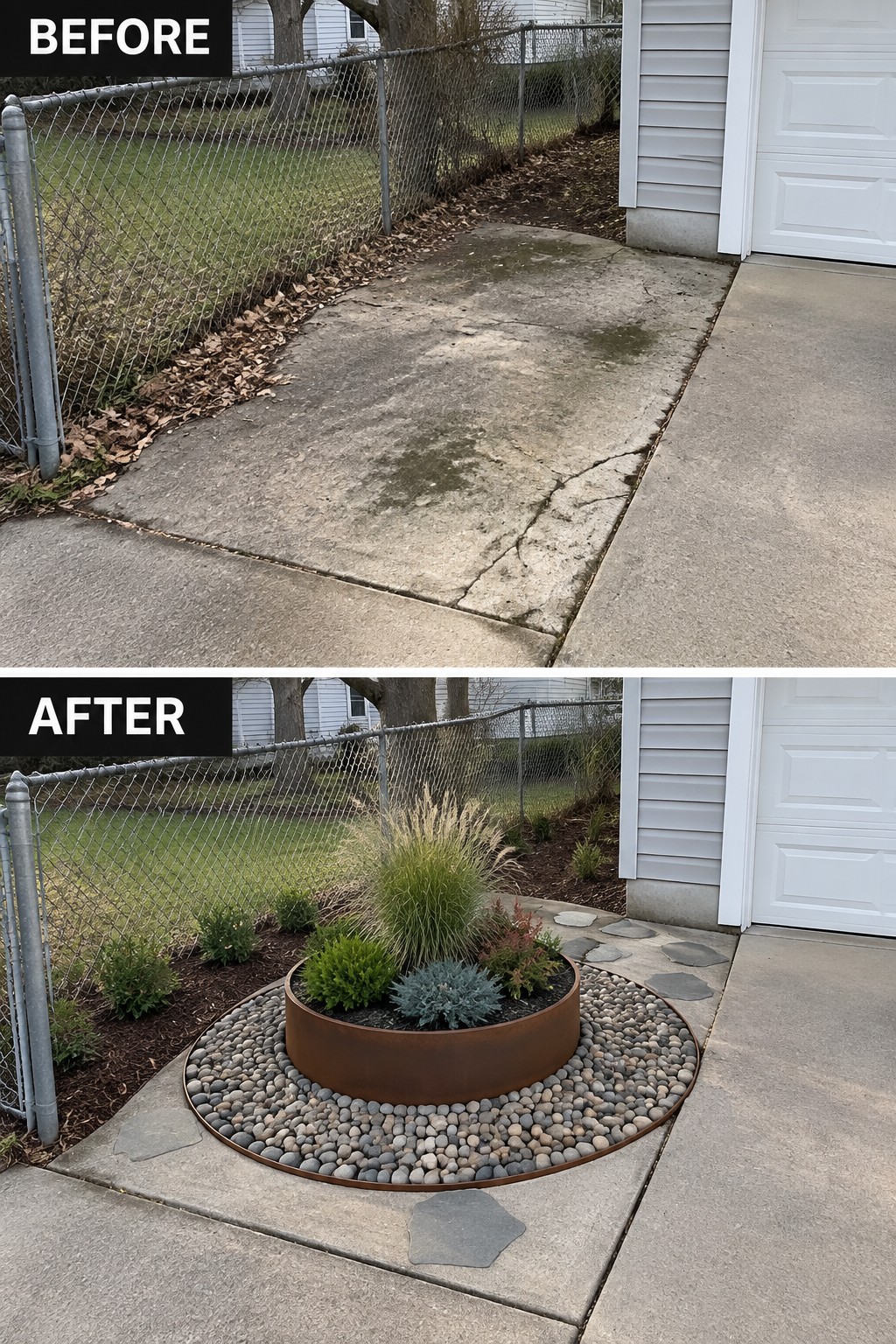
A large stretch of plain or cracked concrete can make a side yard or entry path feel unfinished. Placing a round raised planter in the middle with a pebble border and a few shrubs or grasses gives the space a clear center without tearing out the existing slab. The circle softens the straight lines and turns an empty walkway into something that feels more like a garden.
This approach works well along garage sides, narrow side yards, or any spot where concrete dominates but you still need room to walk. Keep the bed size modest so it does not block movement, and choose hardy plants that can handle the exposure. Starting with one strong focal element like this keeps the project simple and lets the rest of the yard stay usable.
Turn An Empty Patio Into A Seating Area

A plain concrete pad often sits unused because it has no clear purpose or comfort. Adding a simple cover with string lights and curtains turns the space into an outdoor room that feels intentional. The rug and sectional then anchor the area so it reads as furniture rather than just open concrete.
This approach works well on patios that already sit right off the house but lack shade or definition. Focus first on the cover and lighting, then bring in one main seating group and a few potted plants. Keep the furniture scale modest so you still have room to move around the edges.
Turn Bare Concrete Into A Seating Area
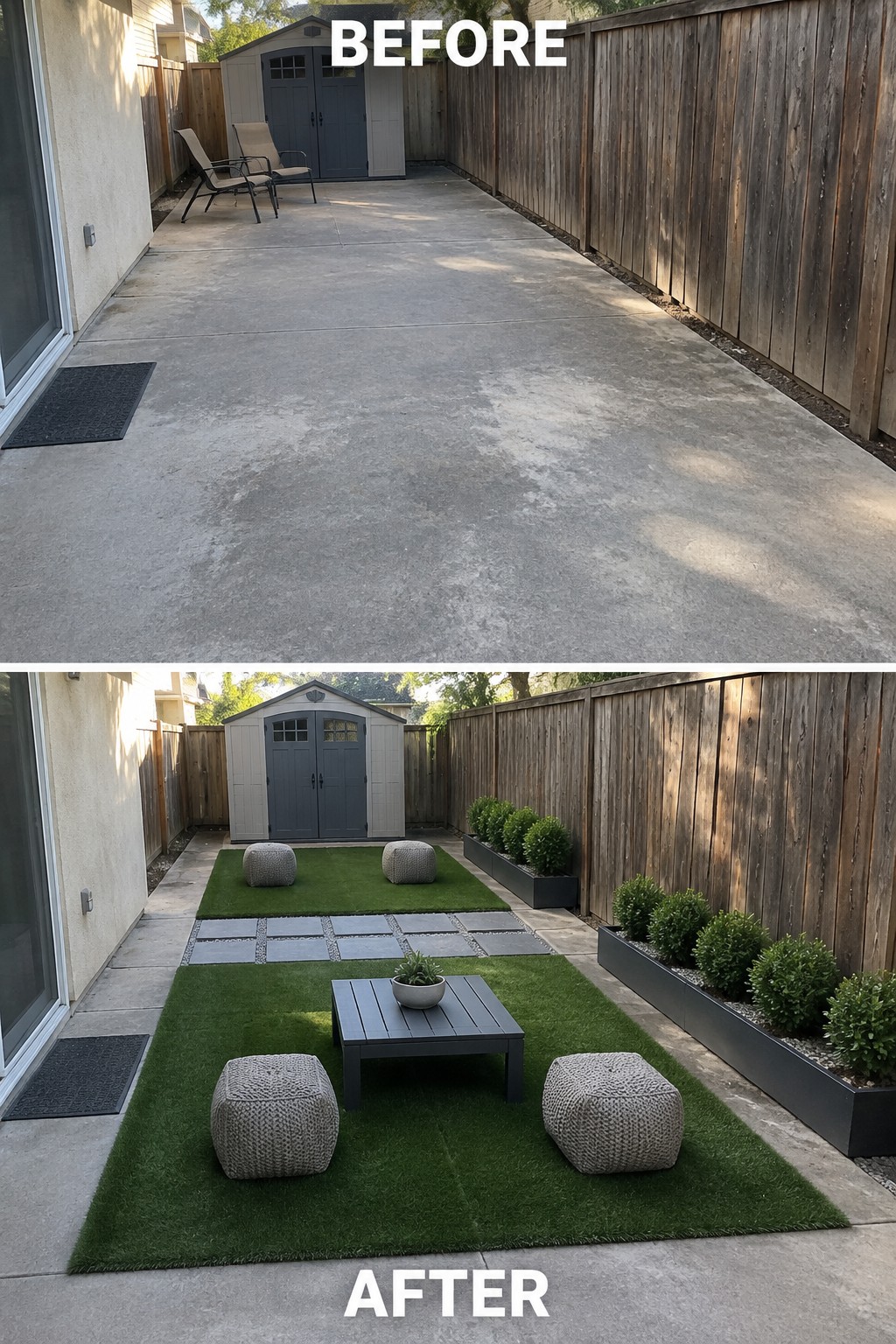
A plain concrete slab often feels like wasted space because there is nothing to define where people should sit or gather. Laying down sections of turf and adding a small table with ottomans creates a clear zone that turns the yard into an outdoor room. The change works because it adds color, texture, and a focal point without removing or rebuilding the existing surface.
This idea suits homes that already have a solid concrete base and just need a way to make it usable. Keep the furniture scale modest so the area does not feel crowded, and choose pieces made for outdoor conditions. The turf can be cut to fit around any permanent features like the shed or fence line, which keeps the project simple and reversible.
Turn Bare Concrete Into A Paved Dining Area
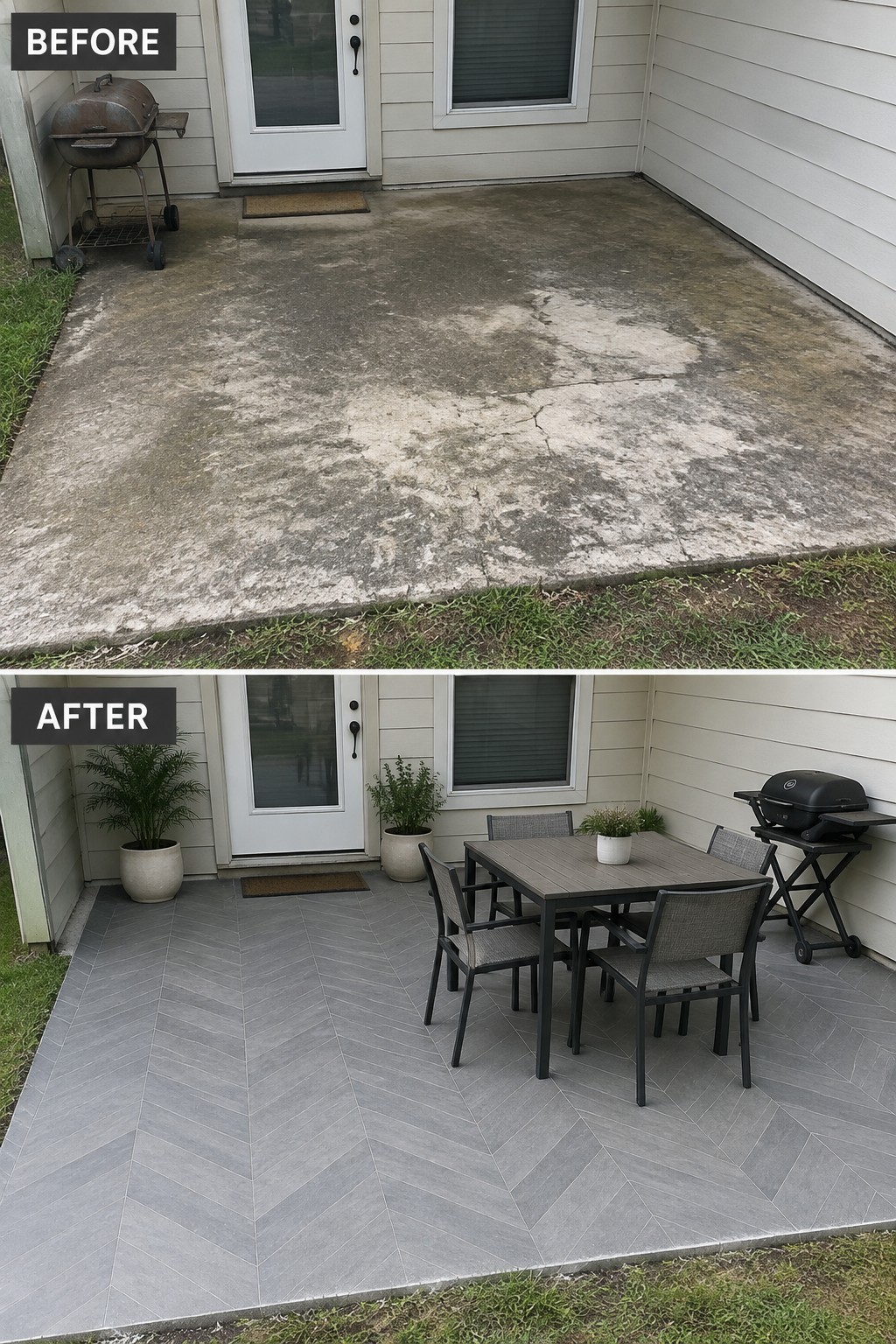
A plain concrete slab often stays empty because it feels unfinished and hard to use. Covering it with pavers gives the surface structure and makes the whole area feel like an intentional outdoor room. The gray tiles here create a solid base that supports a full dining table and chairs without looking temporary.
This idea works on any flat concrete patio that gets regular use. Choose outdoor-rated pavers that handle weather, then keep the furniture layout simple so there is still room to move around the table. Start with the paving before adding pieces so the space stays practical instead of cluttered.
Add Vertical Planters To A Concrete Retaining Wall

A long concrete wall can look flat and unfinished when it runs beside a sidewalk or driveway. Vertical fabric planters mounted along the wall add greenery at eye level, let vines trail down the surface, and turn the same stretch of concrete into a planted feature without any major construction.
This approach works best in narrow side yards or along property edges where ground space is tight. Use outdoor-rated pockets, water them regularly, and pick a mix of trailing vines and compact plants so the wall stays covered as the seasons change.
Turn An Empty Patio Into A Seating Area
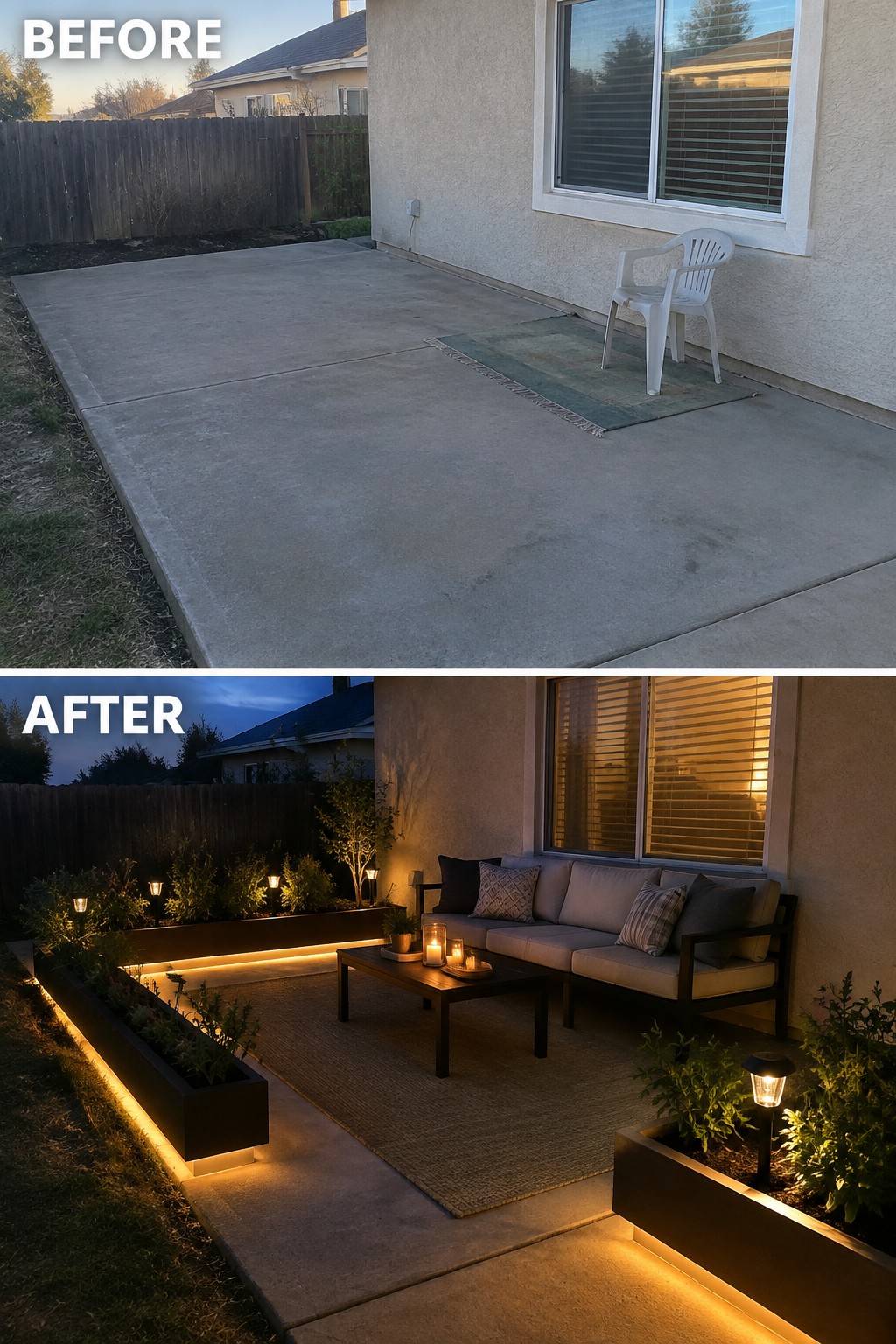
A plain concrete slab often stays empty because nothing defines how to use it. Adding a sofa, coffee table, and rugs turns the same surface into a spot where people actually want to sit.
This idea works on any flat concrete area that already has decent access and some shade in the afternoon. Keep the furniture scale realistic so there is still room to walk around, and use a rug or two to mark the seating zone clearly. Add a few low planters with simple lighting along the edges if you want the space to feel finished after dark.
Define A Narrow Side Yard With Pavers And Gravel
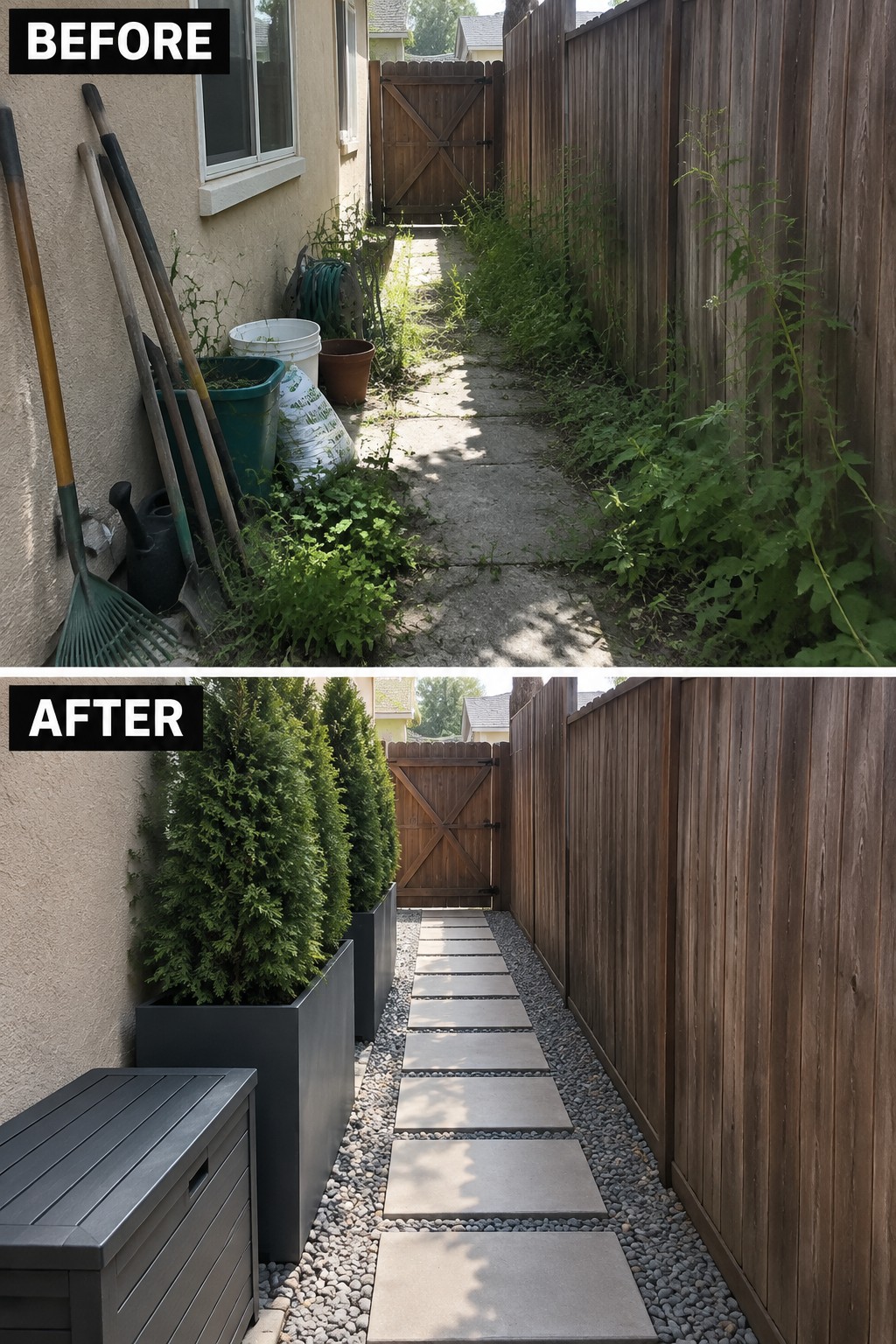
The main improvement came from clearing out the weeds and clutter first, then laying a straight line of pavers with gravel on both sides. That simple change turned a narrow, messy passage into a usable walkway that no longer feels neglected or hard to navigate.
This idea works best in tight spaces where a full patio is not practical. Focus on one clean path, keep the planting to containers along the edge, and choose materials that handle foot traffic and weather without much upkeep.
Turn A Bare Patio Into A Seating Area
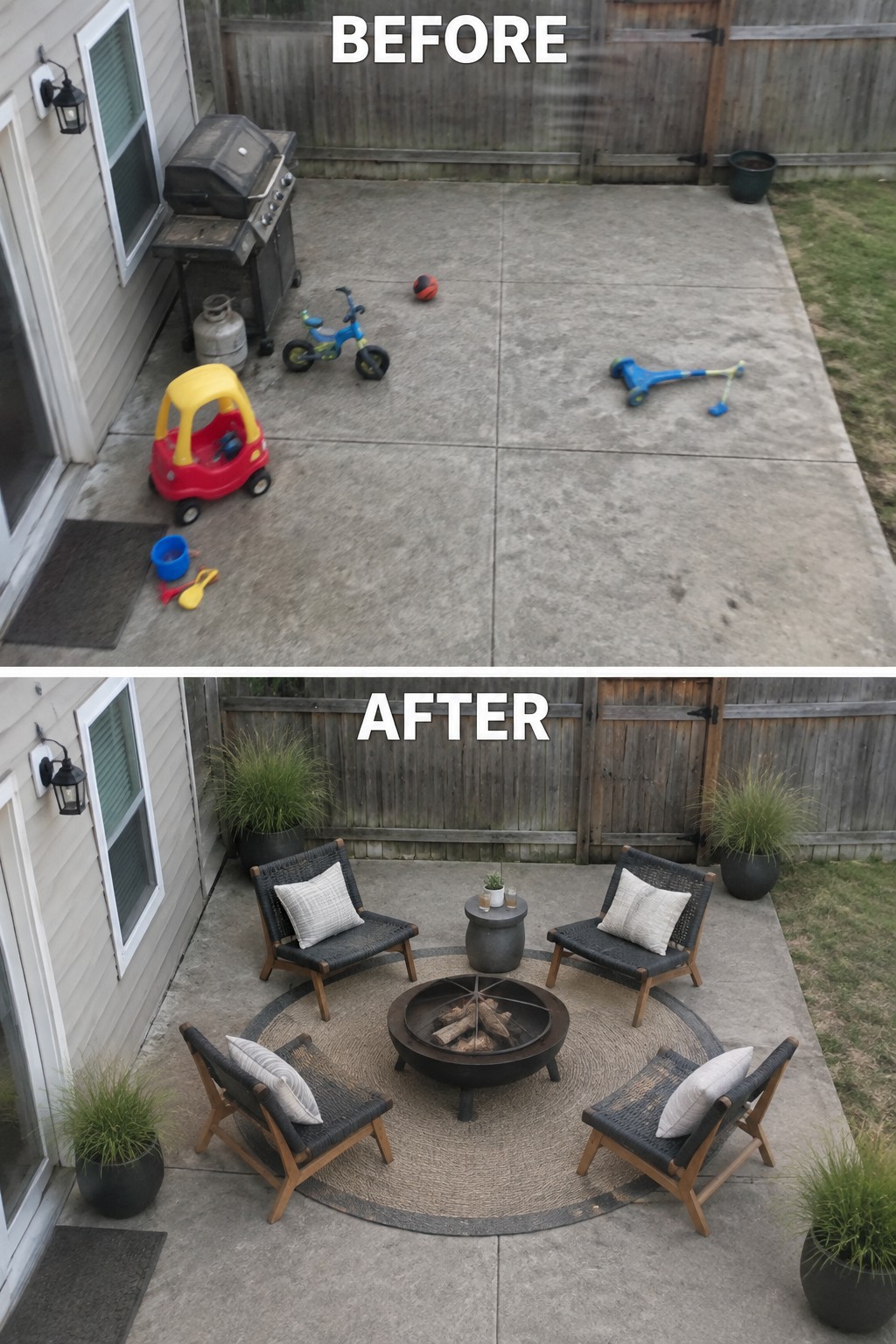
A plain concrete slab often sits unused because it lacks any sense of purpose. Placing a large rug in the center and arranging chairs around a fire pit instantly creates a defined outdoor room that feels intentional rather than leftover.
This approach works on most existing patios as long as the furniture stays in scale with the space. Start with the rug to mark the seating zone, then add only what fits comfortably without crowding walkways.
Frame Your Front Entry With Matching Planters
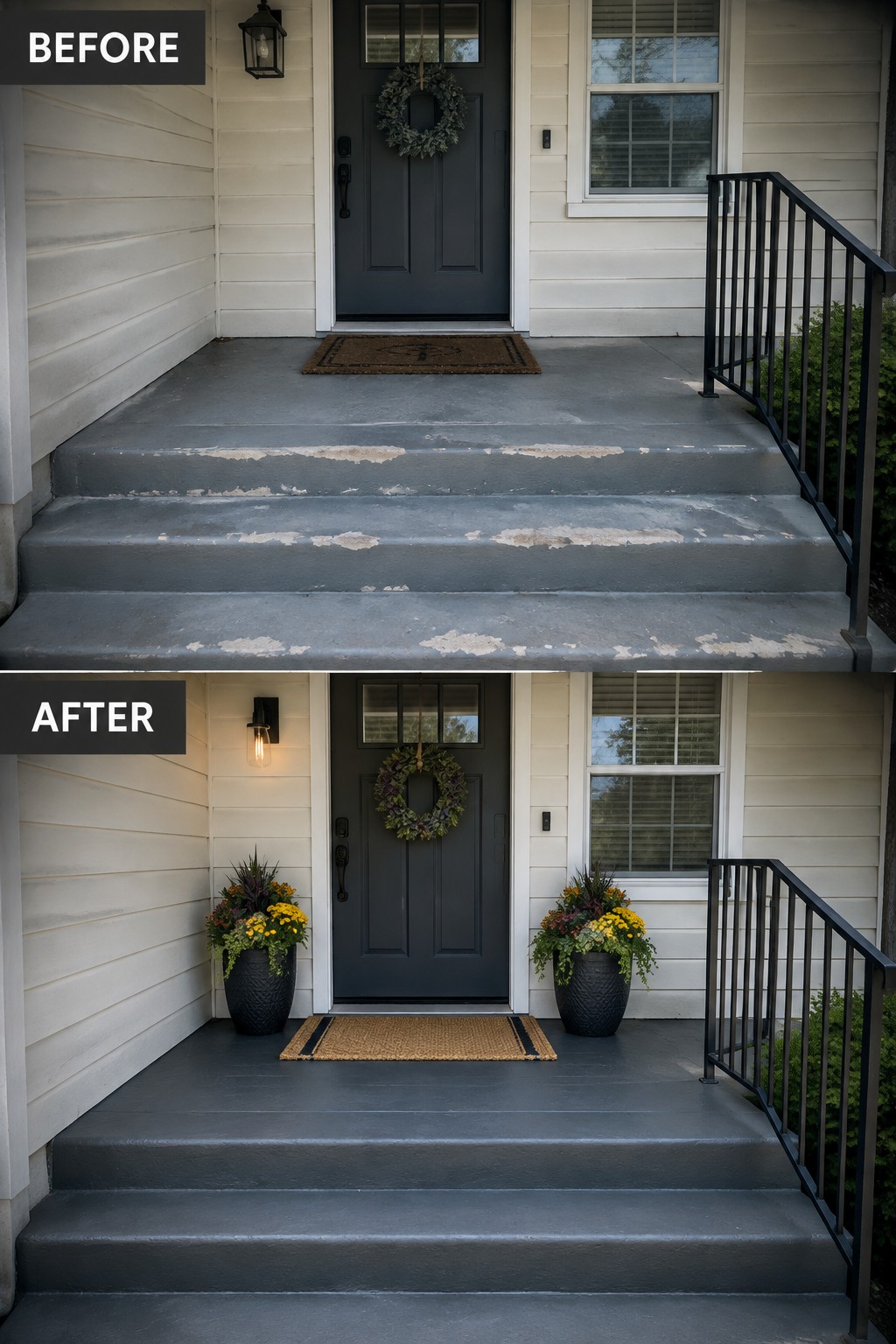
A bare front entry often feels unfinished because the space on either side of the door sits empty. Placing two matching planters in those spots creates balance and makes the door the clear focal point. Fresh paint on the steps also removes the worn look, so the whole entrance reads as cared for instead of neglected.
This idea works best on porches or small stoops that already have decent width. Match the planters in size and color so the arrangement stays simple. Pick plants suited to your sun exposure and climate, and leave enough walking room between the pots and the steps.
Turn A Bare Patio Into An Outdoor Kitchen

Adding a rolling island is one of the simplest ways to give a plain concrete slab a clear purpose. The empty stretch of concrete next to the house becomes a usable cooking and seating area once the island is brought in. It pulls the grill, storage, and stools into one spot without any new construction.
This idea works best on side yards or smaller patios where you want the option to rearrange later. Keep the island on wheels, leave enough room to walk around it, and add just a few potted plants for softness. It suits homes that already have a basic concrete surface but need a defined outdoor cooking zone.
Turn A Bare Concrete Slab Into A Seating Area

A large round concrete pad often sits unused in a yard because it feels flat and unfinished. Adding a low curved bench along the edge and a simple central feature like a pebble mosaic gives the space a clear purpose and makes it feel like an actual place to sit rather than just leftover concrete.
This approach works best when the slab is already in decent shape and you want to avoid a full rebuild. Keep the bench low and wide so it doubles as seating and a border, place a few pots to soften the edges, and choose one focal point in the middle to pull the area together. It suits smaller backyards or side yards where you need a defined spot without crowding the lawn.
Turn Bare Pool Deck Concrete Into A Seating Area
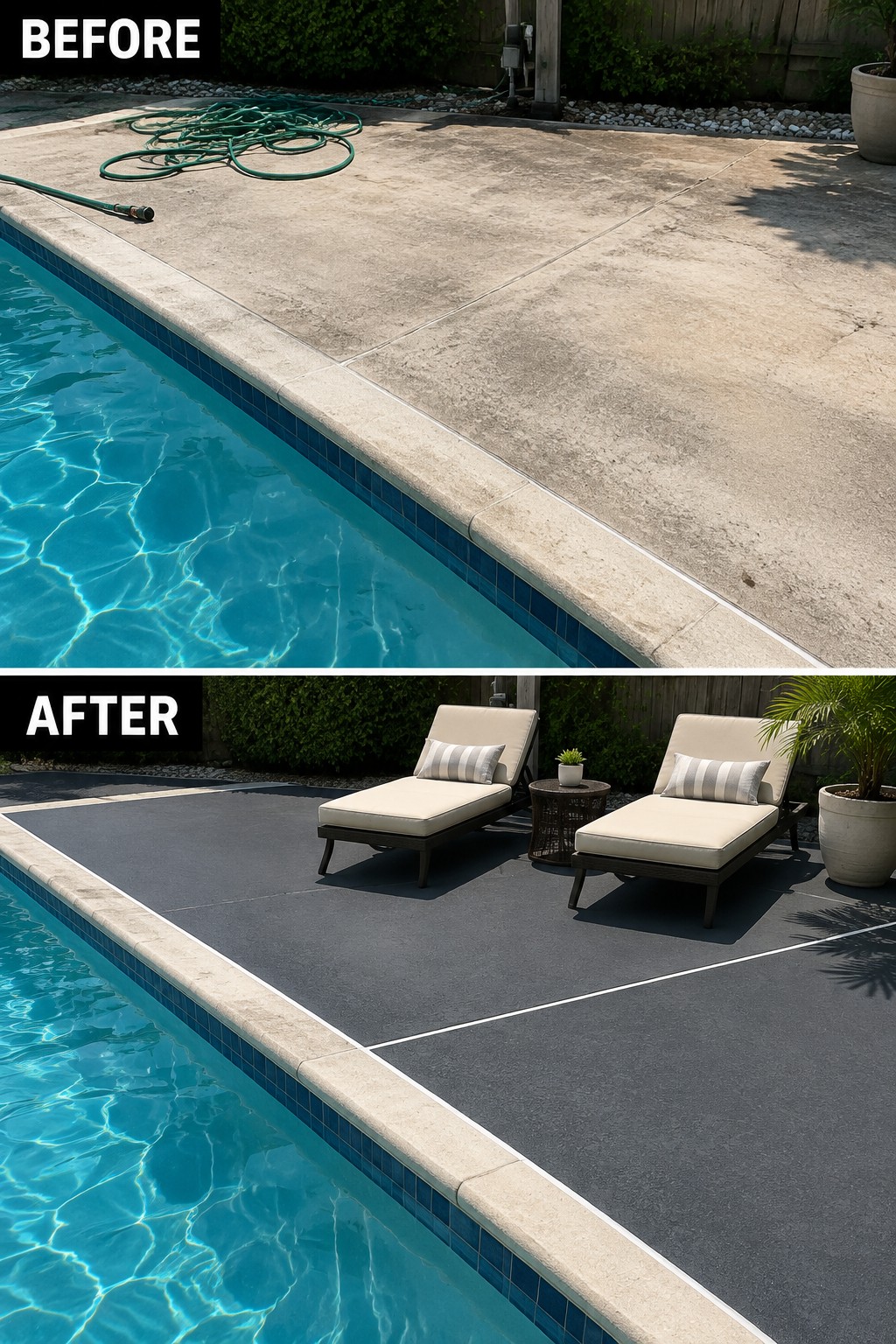
The before photo shows an empty concrete deck next to the pool with only a hose left on the surface. In the after, a dark floor covering replaces the plain concrete and two lounge chairs with a small table create a clear spot to sit and relax.
This idea works best when the deck already has good structure but feels unfinished. Use a durable outdoor mat or resurfacing material that stands up to water and sun, then add a few weatherproof pieces of furniture sized for the space. Leave enough room around the seating so the pool edge stays easy to walk along.
Turn A Bare Patio Into A Seating Area

A plain concrete patio often sits unused because it has no clear purpose. Adding a built-in wooden bench with an attached planter gives the space one main function and makes it feel finished. The bench creates a defined spot to sit while the plants soften the hard edges and add a bit of life without needing a full redesign.
This approach works best on small balconies, side patios, or terraces where you want seating but do not want to crowd the floor. Keep the bench height comfortable for lounging, choose cushions that can handle weather, and stick to simple plants that do not require daily care. The key is starting with one long seating element rather than scattering smaller chairs around an empty slab.
Turn A Cluttered Corner Into A Potting Station

A bare concrete corner can easily become a dumping ground for extra pots and tools. Adding a simple wooden bench and a basic shelving unit gives the space a clear purpose and keeps everything off the ground and easy to reach.
This setup works well in small yards or along a fence line where you need a spot to repot plants or store supplies. Start with one sturdy table or bench, then add a shelf or two for vertical storage. Keep the rest of the area open so you can still move around and water plants without crowding the space.
Turn A Bare Concrete Patio Into Separate Seating Zones
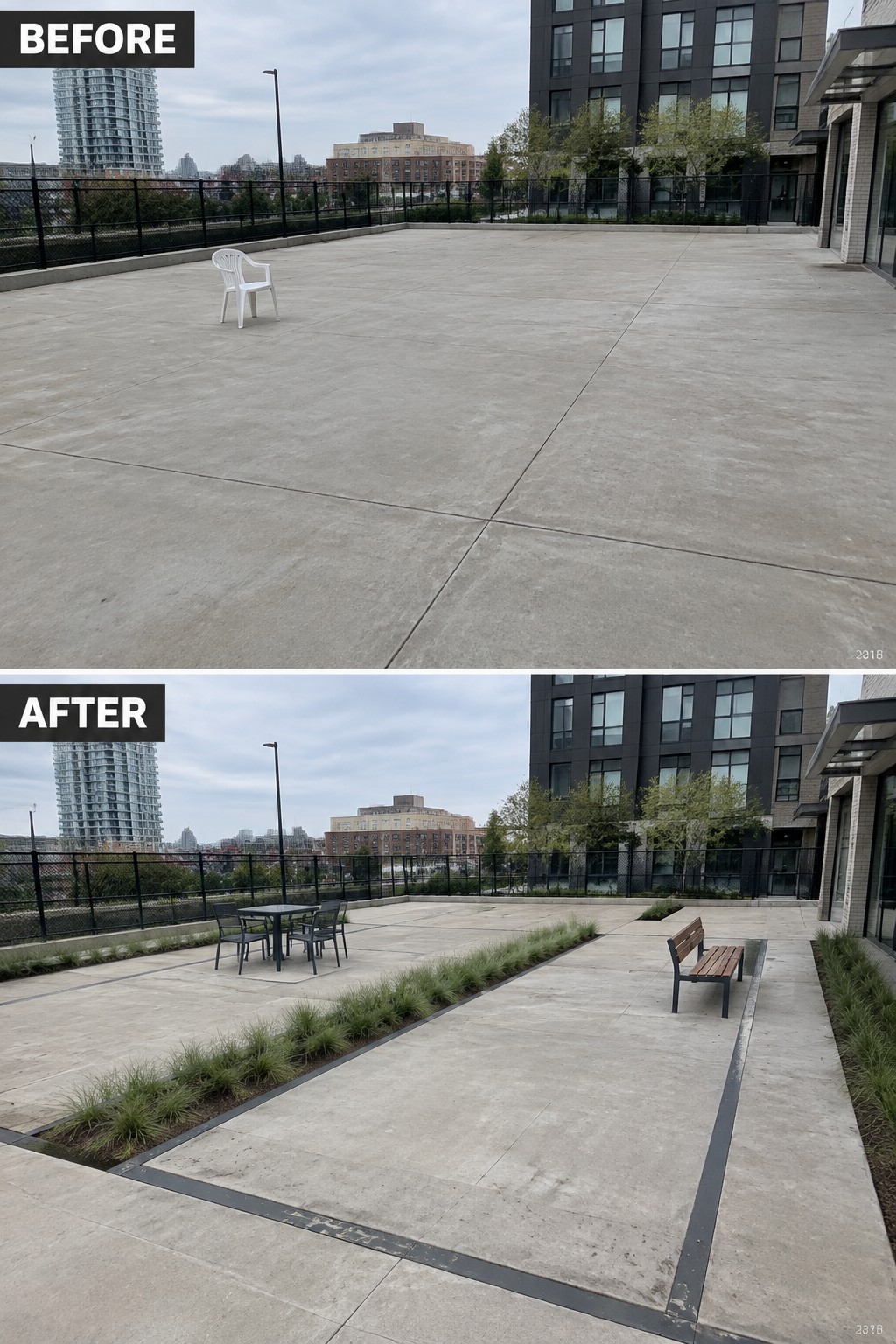
A large empty concrete surface often feels overwhelming and unused. Adding a few simple planted strips along the edges and placing furniture in small clusters instantly breaks the space into usable zones. The table and chairs create one spot for meals while the bench forms a quieter seating area, making the whole terrace feel much more manageable.
This approach works best on rooftops, side yards, or any wide paved area that lacks natural boundaries. Keep the planting low and linear so it defines space without blocking movement, and choose weatherproof furniture that stays in place year-round. Start with just two or three defined spots rather than trying to fill the entire surface.
Turn A Bare Porch Into A Welcoming Entry
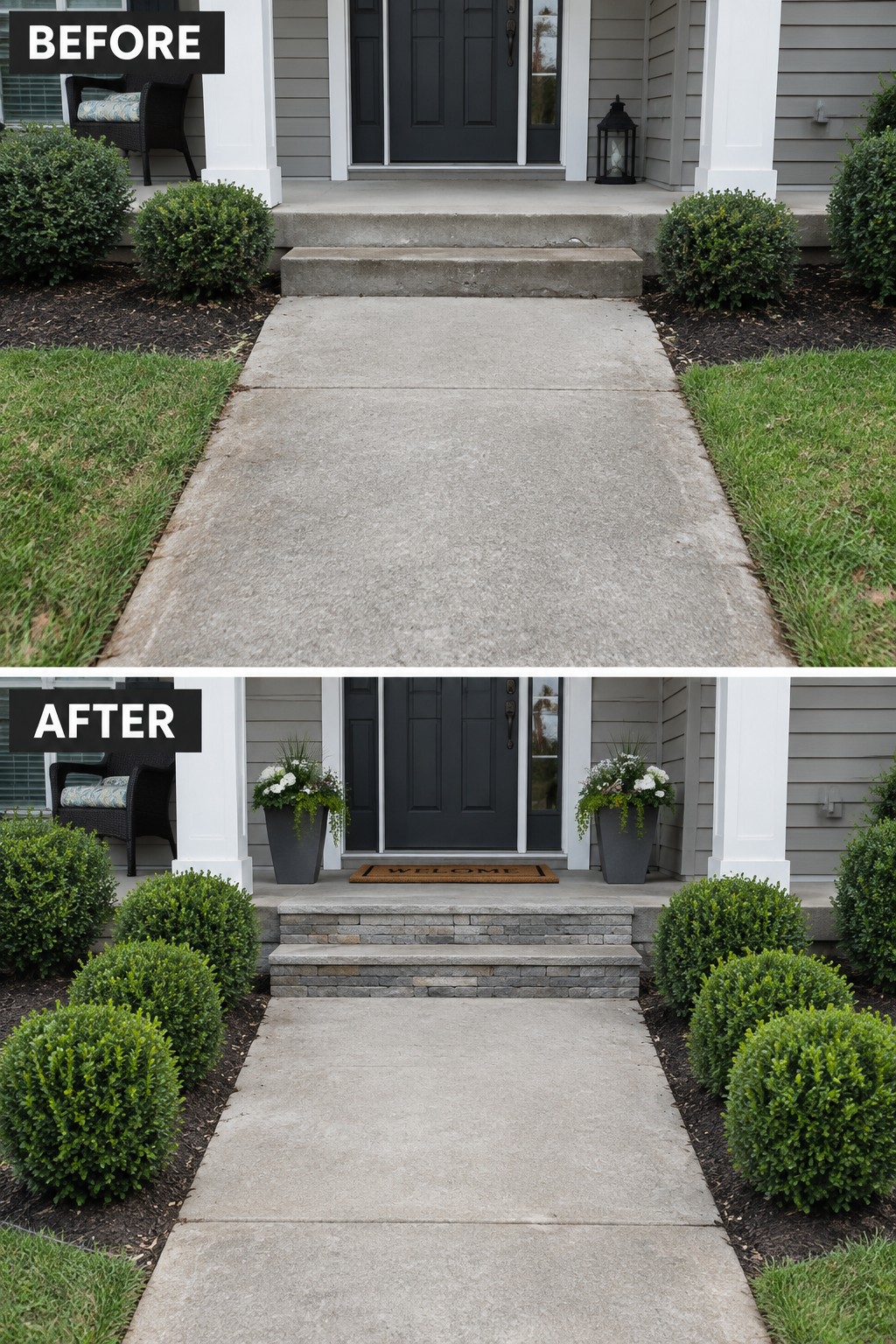
A plain concrete porch often feels unfinished even when the rest of the yard looks fine. Adding two matching planters on either side of the door and placing a simple doormat in the center gives the entry a clear purpose. The stone facing added to the steps helps tie everything together without changing the existing concrete.
This approach works well on homes with straightforward front entries where the porch is mostly open space. Choose planters that sit at a comfortable height and repeat one color or material so the look stays balanced. Keep the walkway clear and make sure the plants can handle sun or shade in that spot.
Turn Bare Concrete Into A Defined Seating Area
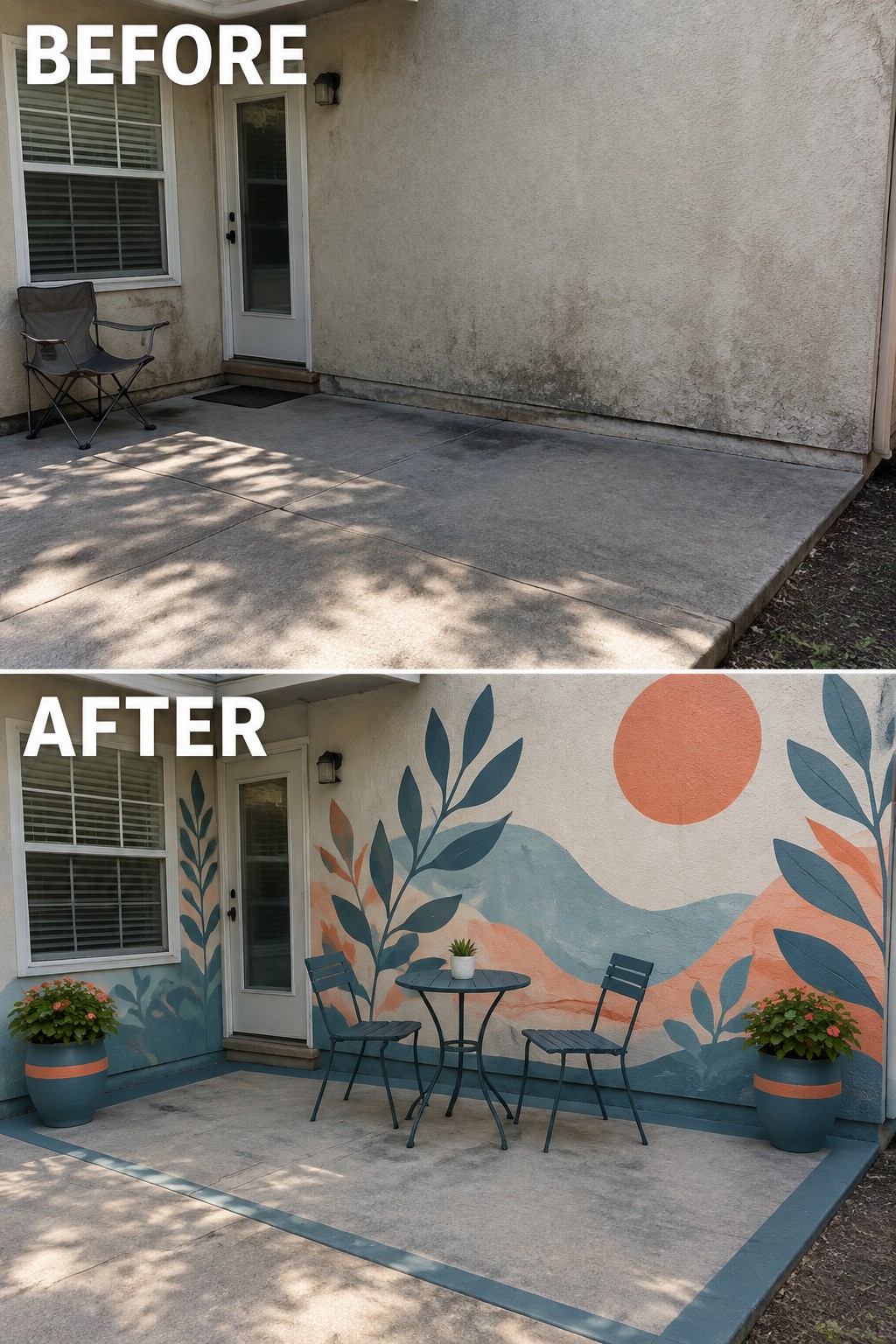
A plain concrete patio usually feels empty until you give it a clear purpose. Adding a small table and two chairs turns the open slab into a place to sit and spend time outside. The simple wall design and matching planters on each side help frame the space without needing new construction or big changes.
This idea works best on side yards or small back patios where the concrete is already level. Choose compact, weatherproof furniture that leaves room to walk around, and place planters at the corners to mark the edges. Start with just the seating zone first, then add one or two more pieces only if the space still feels open.
Frequently Asked Questions
Q: What is the easiest way to make old concrete look new again?
A: Clean the surface well first. Then roll on a fresh coat of concrete paint in a light color. This covers stains and brightens the whole yard right away.
Q: How do I keep weeds from growing through cracks after an update?
A: Fill the cracks with a concrete repair mix before you paint or seal. Check the area once a year and touch up any spots that open up.
Q: Can I plant flowers right next to my updated concrete without roots causing problems?
A: Yes. Choose shallow root plants and leave a small gap along the edge. Water them away from the concrete to avoid extra moisture.
Q: Does sealing the concrete make a big difference in rainy weather?
A: Sealing stops water from soaking in and causing damage over time. Apply it after the paint dries and reapply every couple of years.
