

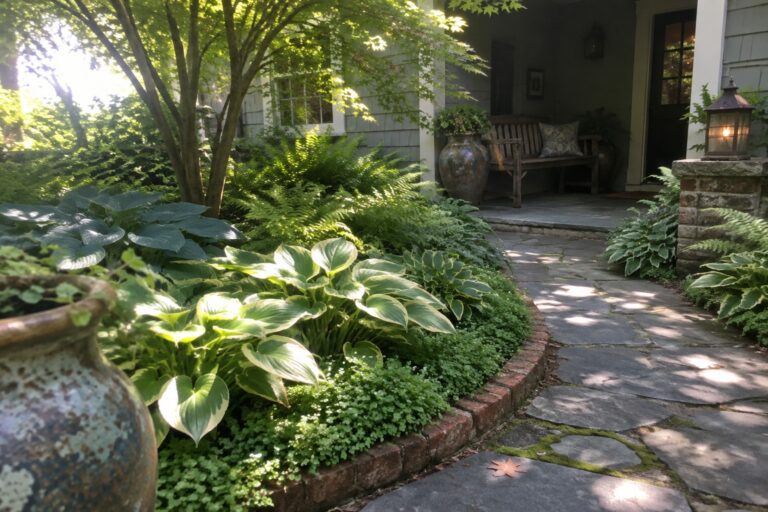
Shady front yards can be tricky to shape because the light limits plant choices, while the house still needs a clear, welcoming approach.
I find hostas useful for building structure in those spots, since their broad leaves can define a bed even when flowers are scarce.
The layout matters as much as the plants: a path should stay easy to follow, and edging can keep the beds from feeling like they spill onto the lawn.
Leaf size, color, and placement also change how the yard reads from the street, especially beneath trees or beside a porch.
I’d save ideas that suit the shade and yard size, then adapt them to create a planting plan that can fill in gradually.
Use a Stone Path to Lead Through Shade
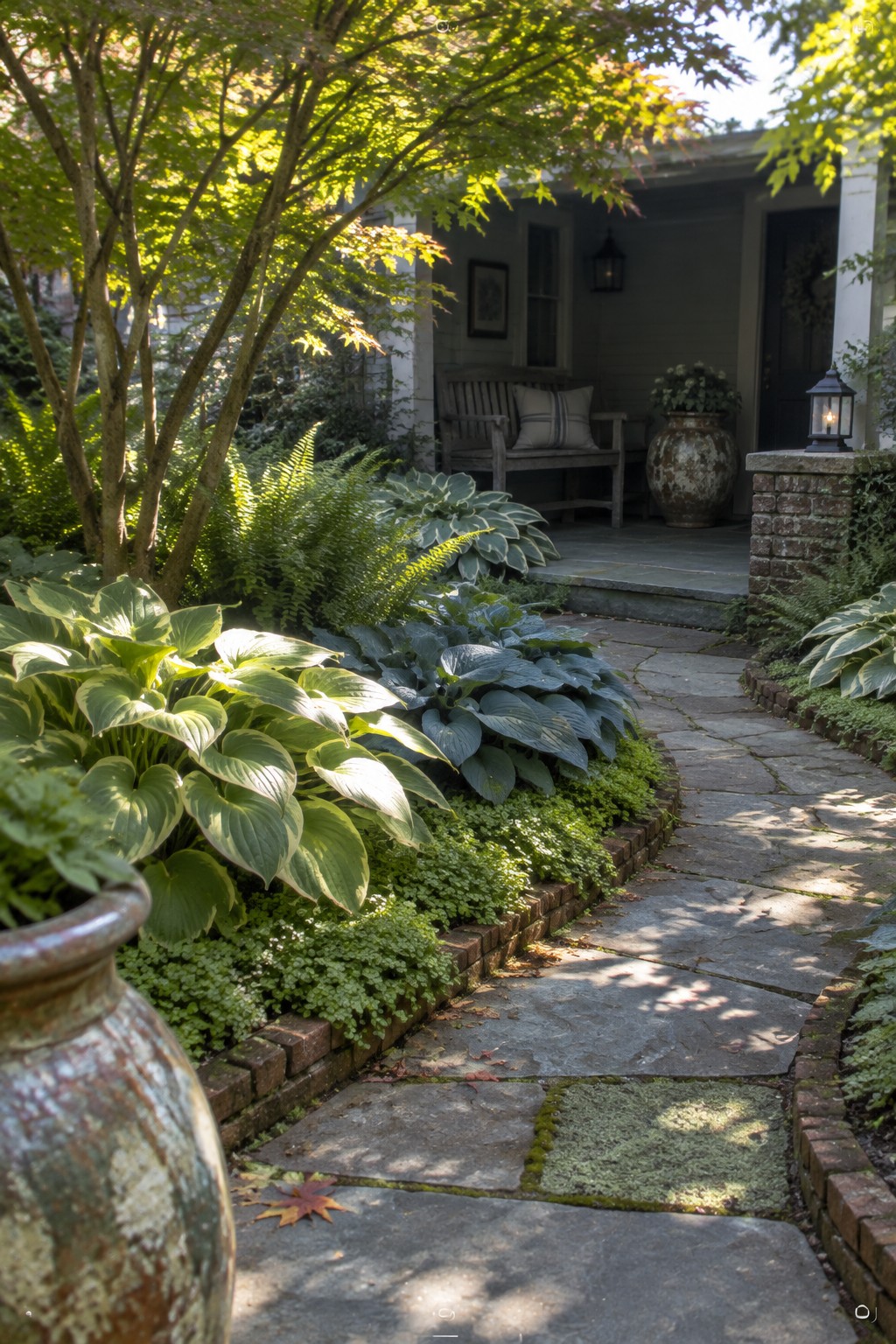
A stone path gives a shady front yard a clear route while letting the planting beds remain the main feature. Here, the irregular paving feels natural beside leafy hostas and fern-like plants, rather than making the garden feel too formal.
For a similar look, leave small gaps between stones and let low groundcover fill the edges. This works well in a woodland-style yard, but make sure the stones sit firmly and stay level so the path is comfortable to walk on.
Use a Grass Path to Lead Through a Shady Front Yard
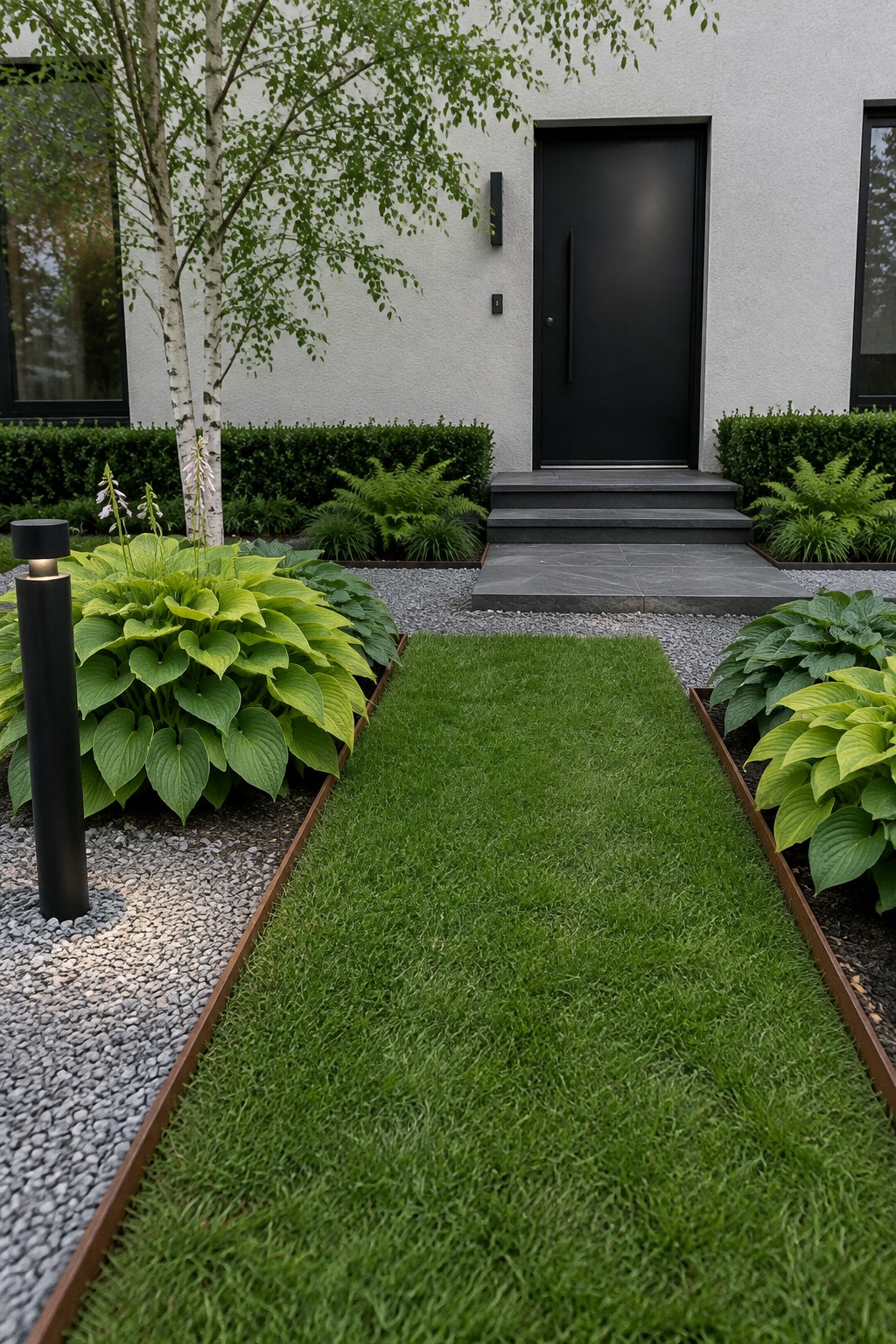
A narrow grass path gives a shady front yard a clear route to the door without covering the whole garden in paving. The strip of lawn feels natural among hostas and other leafy plants, while the straight edges keep the layout tidy.
For a similar look, set the path between planting beds and use metal or stone edging to hold its shape. Hostas work well along the sides, especially in spots with partial or full shade. Keep the route wide enough to walk comfortably and choose a paving section near the steps if the grass gets worn.
Layer Hostas Along a Stone Garden Path
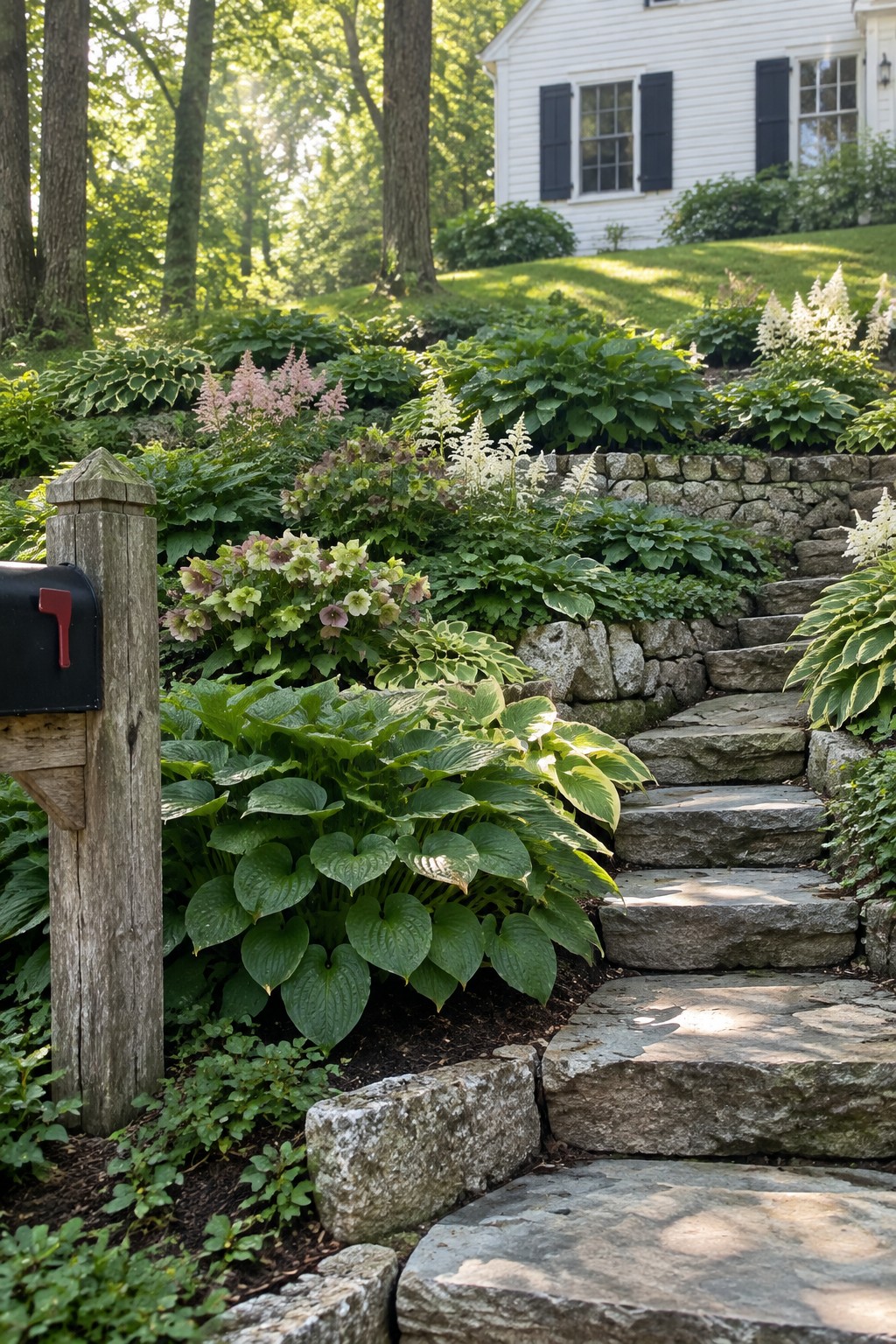
Hostas work especially well beside stone steps because their broad leaves make the path feel settled into the garden rather than simply placed on top of it. Mixing leaf sizes also gives a shady slope a fuller look without relying on lots of flowers.
Plant hostas in loose groups along the edges, leaving enough room for the leaves to spread and the steps to stay clear. A few flowering plants can add seasonal color, but hostas can carry most of the planting in a shaded front yard.
Use Hosta Beds Along a Front Walk
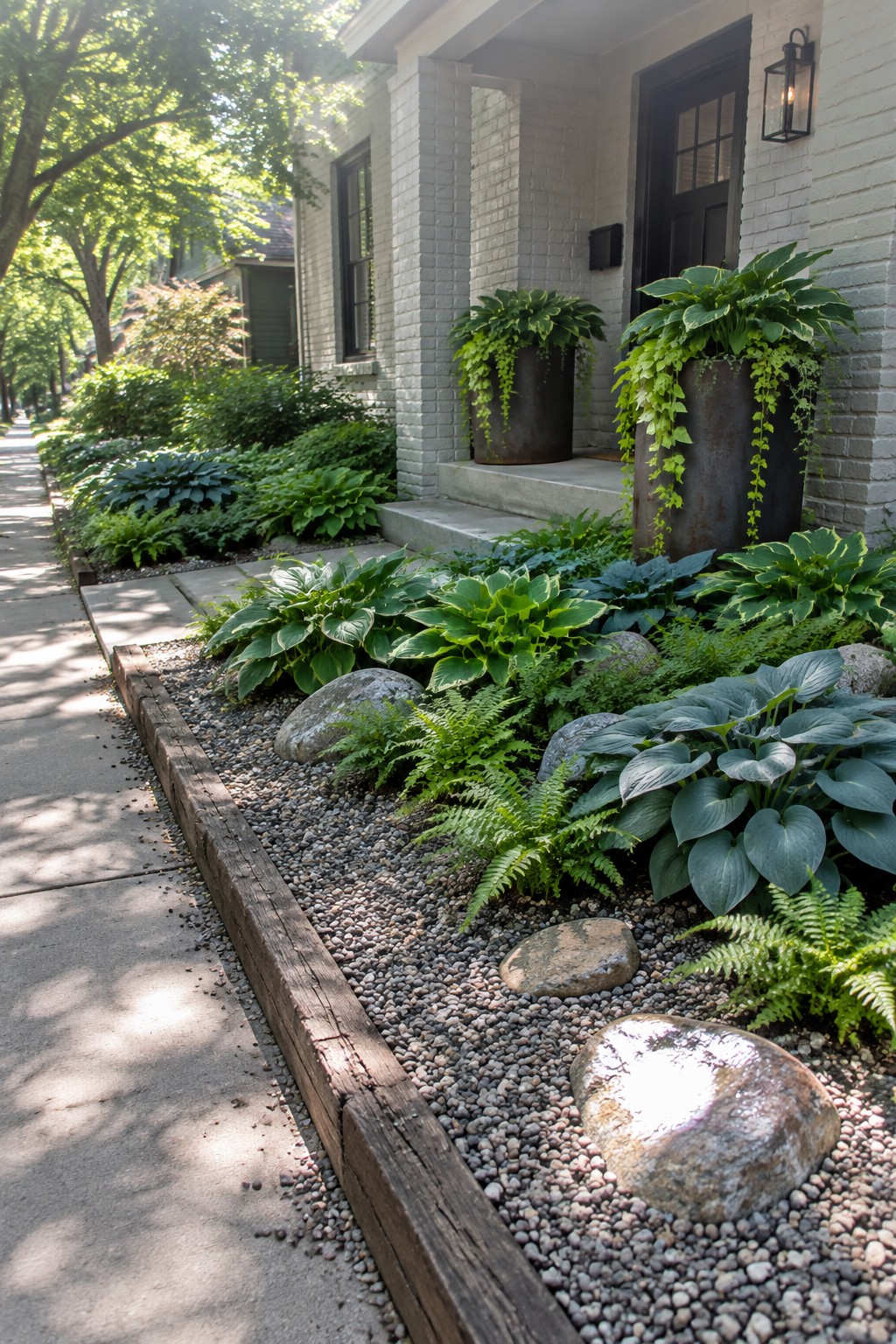
Hostas make a shady front walk feel like part of the garden instead of a bare route to the door. Planting them in generous groups gives the bed a steady rhythm, and their broad leaves stand out against smaller groundcover.
Use a simple edging material to keep the bed separate from the path, then leave enough room for hostas to spread. This works especially well along a shaded sidewalk or beside a porch. Choose varieties that fit the space so mature plants do not crowd the walkway.
Use Hostas to Edge a Stepping-Stone Path
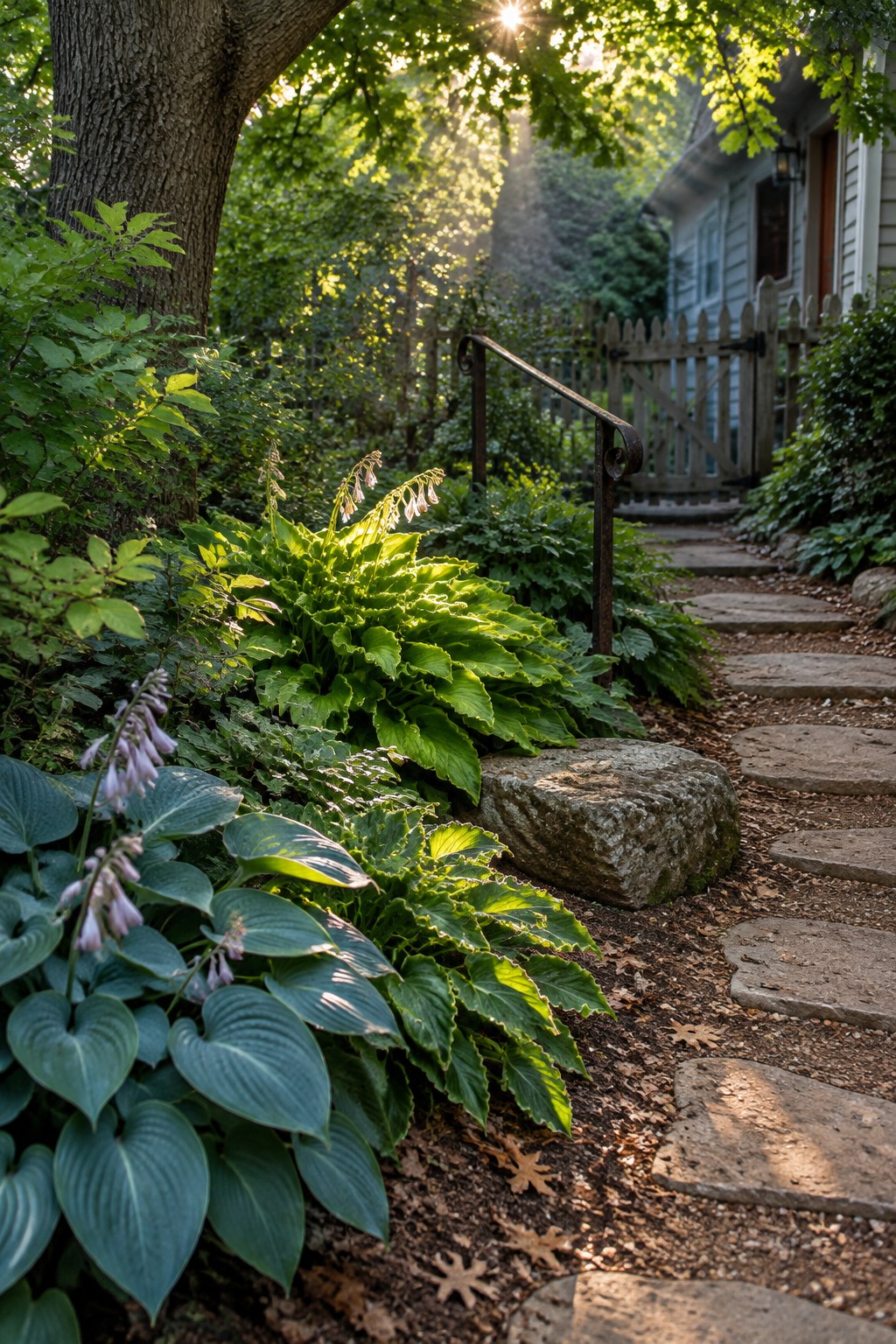
Hostas make a practical border for a winding front-yard path, keeping the stones connected to the garden instead of leaving them to feel like a separate strip. Their broad leaves fill the space along the edges and suit shady spots where many flowering plants struggle.
Leave enough room for the plants to spread without covering the stones, and keep the path wide enough for comfortable walking. A mix of hosta sizes can work well beside irregular stone steps, especially in a wooded or older front yard.
Build Raised Hosta Beds Along the Walk
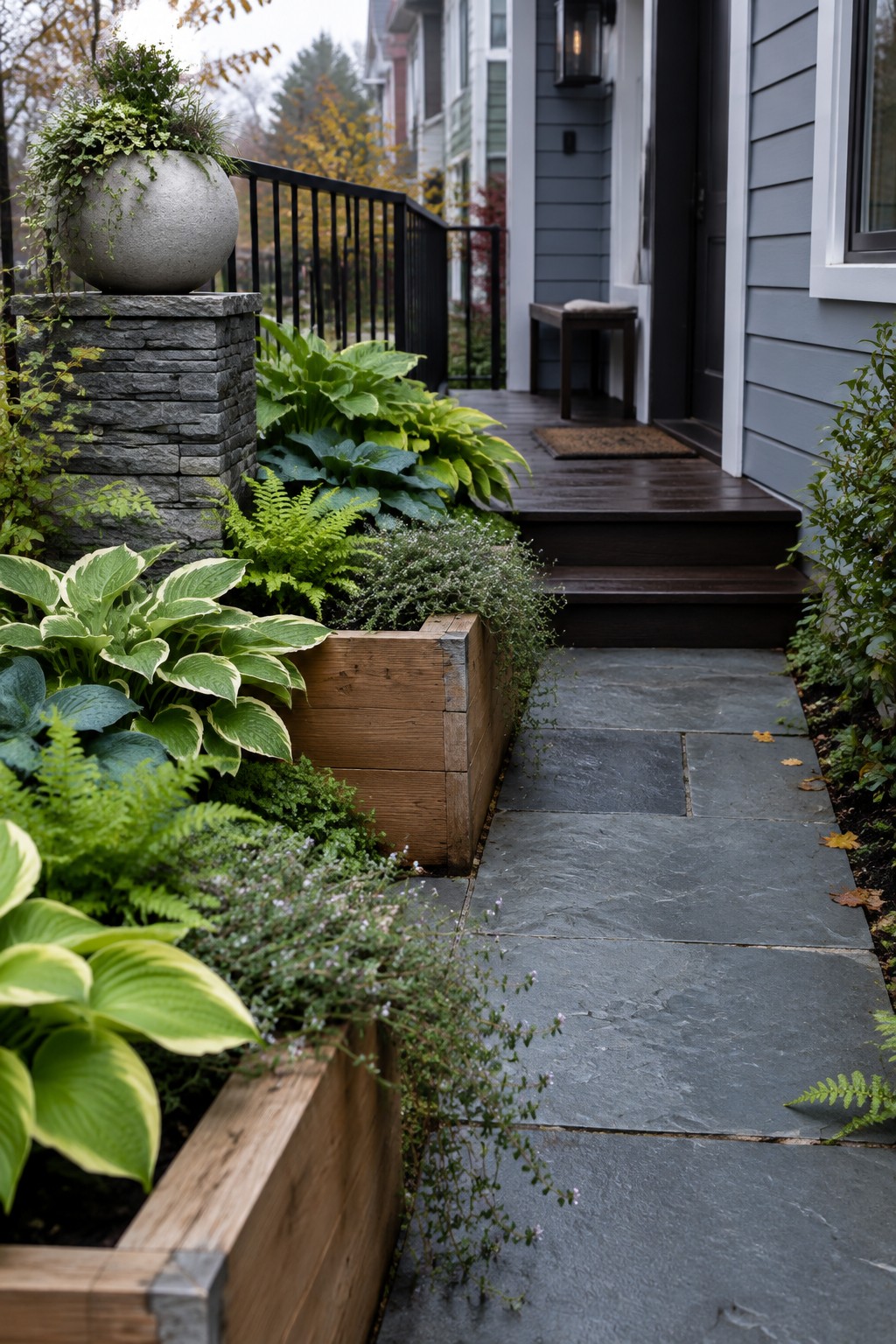
Raised beds give hostas a clear place to grow while keeping a front walkway neat. The wooden bed edges in this garden make a simple boundary between the path and the leafy planting, so the plants can spread without crowding the route to the door.
This idea works well when a shady front yard has limited planting space or uneven ground. Keep the beds wide enough for hostas to mature, and leave a comfortable path through the middle. Choose rot-resistant wood and make sure the beds drain well.
Add Broad Stone Stepping Stones Through Hosta Beds
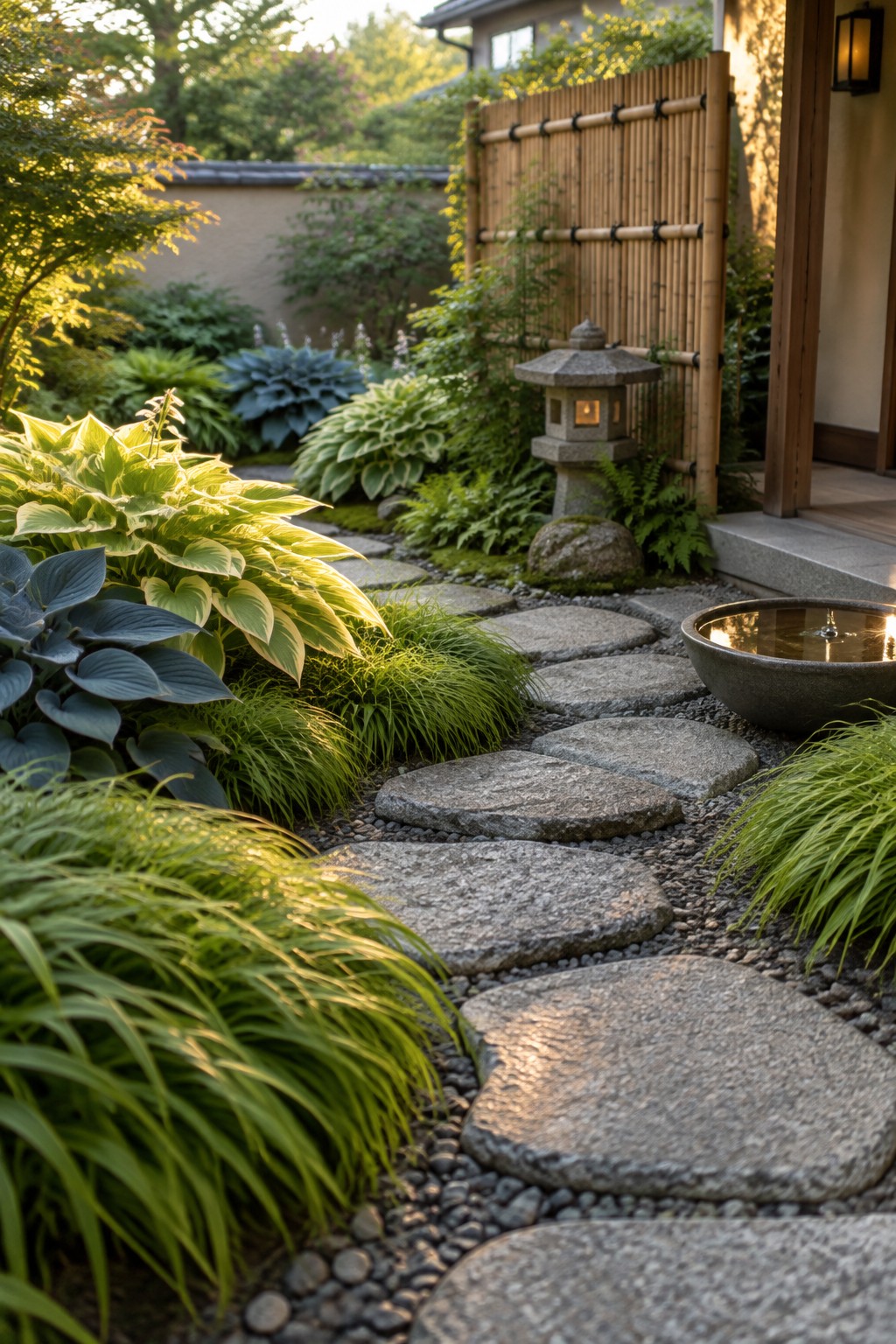
Broad, irregular stepping stones make a shady garden easier to walk through while keeping the planting beds connected. Their generous size feels practical, and hostas can grow close along the edges without making the route hard to see.
Use this approach where a front-yard path needs to wind between established plants. Set the stones firmly and leave enough room for comfortable steps; small gravel between them helps define the route.
Use Hostas to Shape a Formal Garden

Hostas can do more than fill a shady bed. Repeating them in clipped garden borders gives a front yard a clear structure, while their broad leaves bring a softer look to the edges.
Use hostas of different sizes in balanced groups, and leave enough room for mature plants so the leaves do not crowd the paths. This approach suits a traditional front yard, especially where a straight walkway or stone steps already set the layout.
Use Hosta Beds to Connect Garden Levels
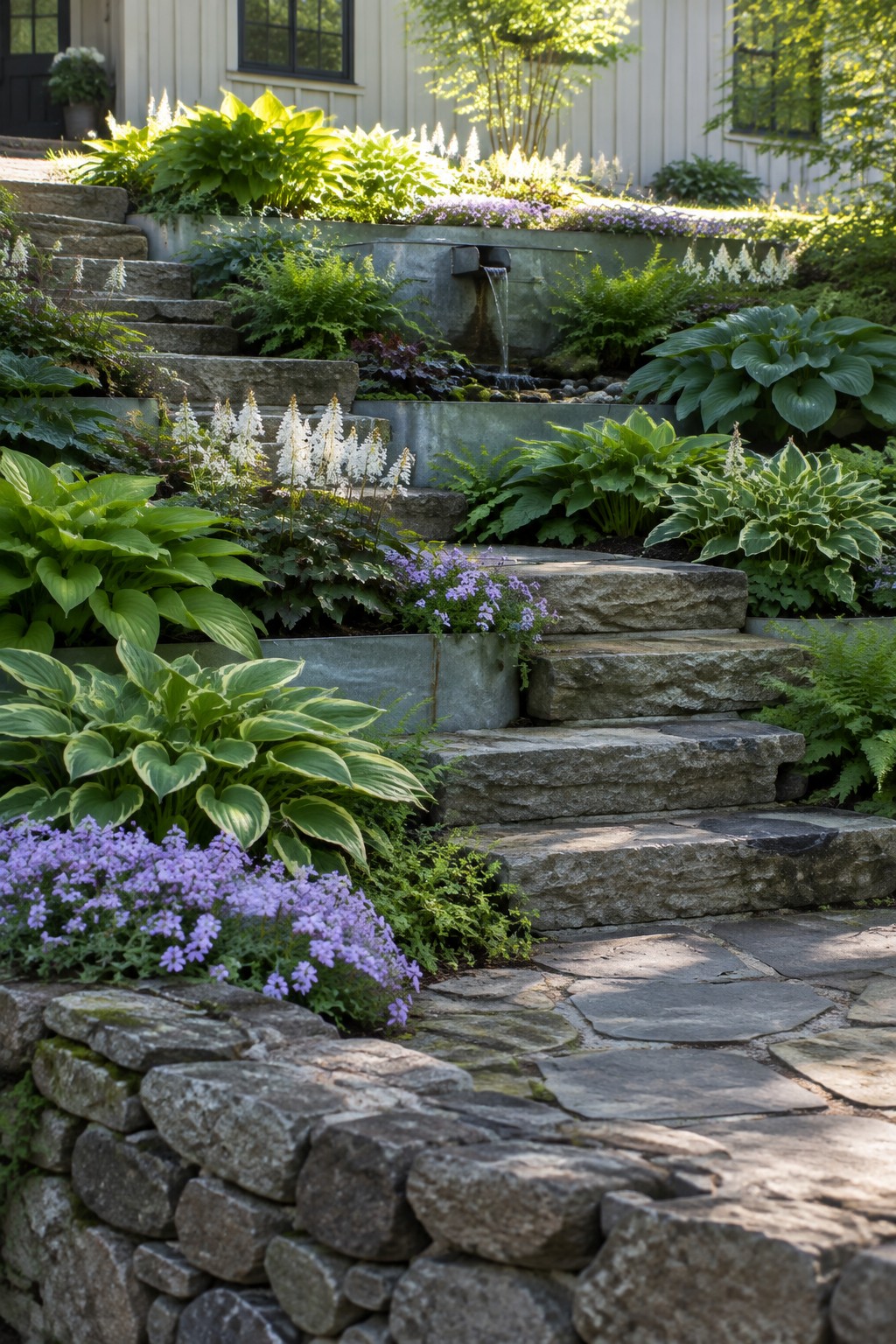
Planting hostas along a stepped stone garden helps tie separate levels into one continuous front yard. Their broad leaves fill the spaces around the stonework, while the steps remain clear and easy to follow.
Use this approach on a sloped or terraced yard, and vary hosta sizes to suit each bed. Leave enough room for plants to spread without covering the treads or making the path feel narrow.
Plant Hostas Around Front Steps
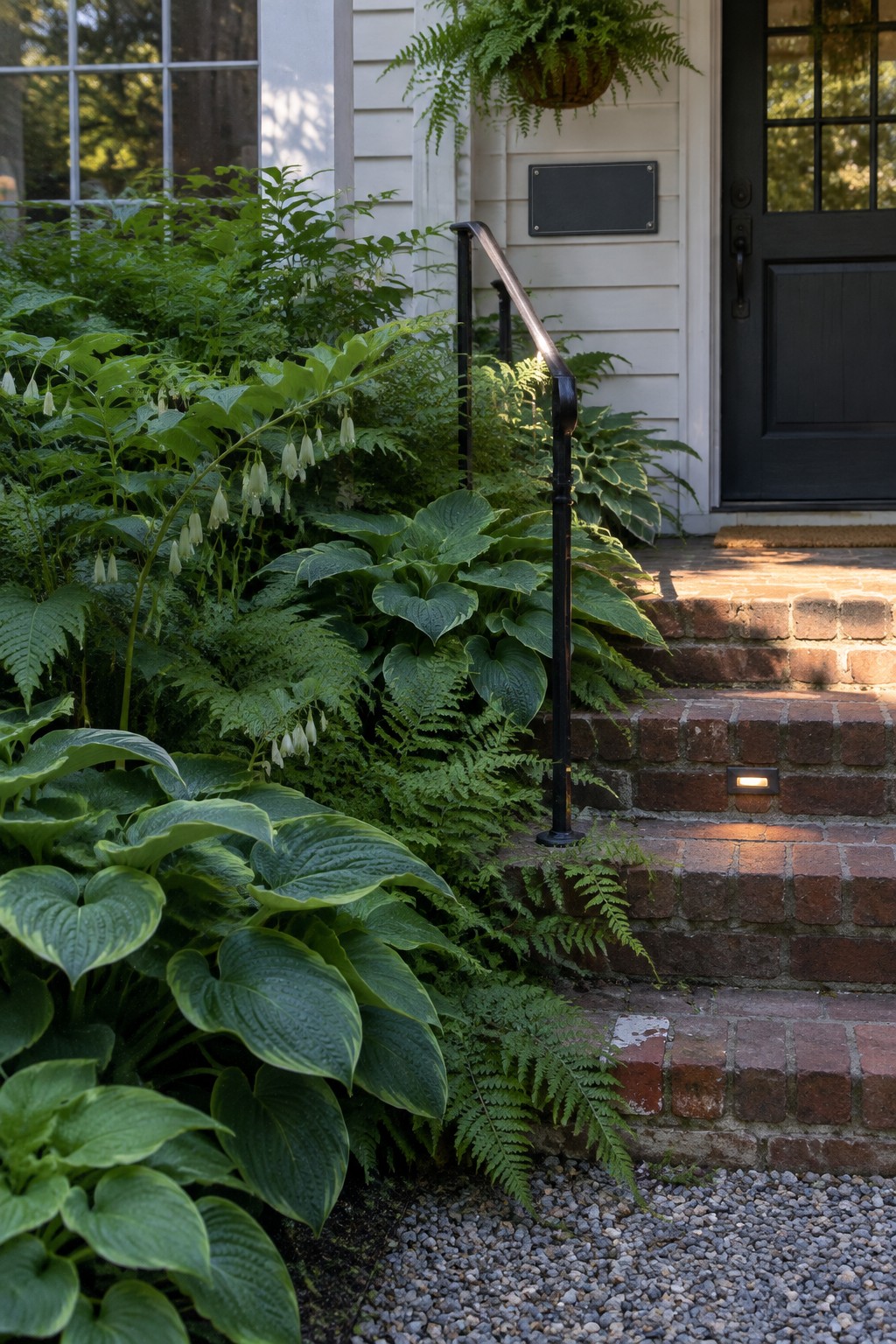
Hostas can make front steps feel like part of the garden instead of a separate path to the door. Their broad leaves fill the space beside brick steps, while smaller ferns add a lower layer without hiding the route.
This approach works well in shady front yards where grass may struggle. Leave enough room for plants to spread, and keep foliage clear of the step edges so the entrance stays easy to use.
Plant Hostas Along a Curving Garden Path
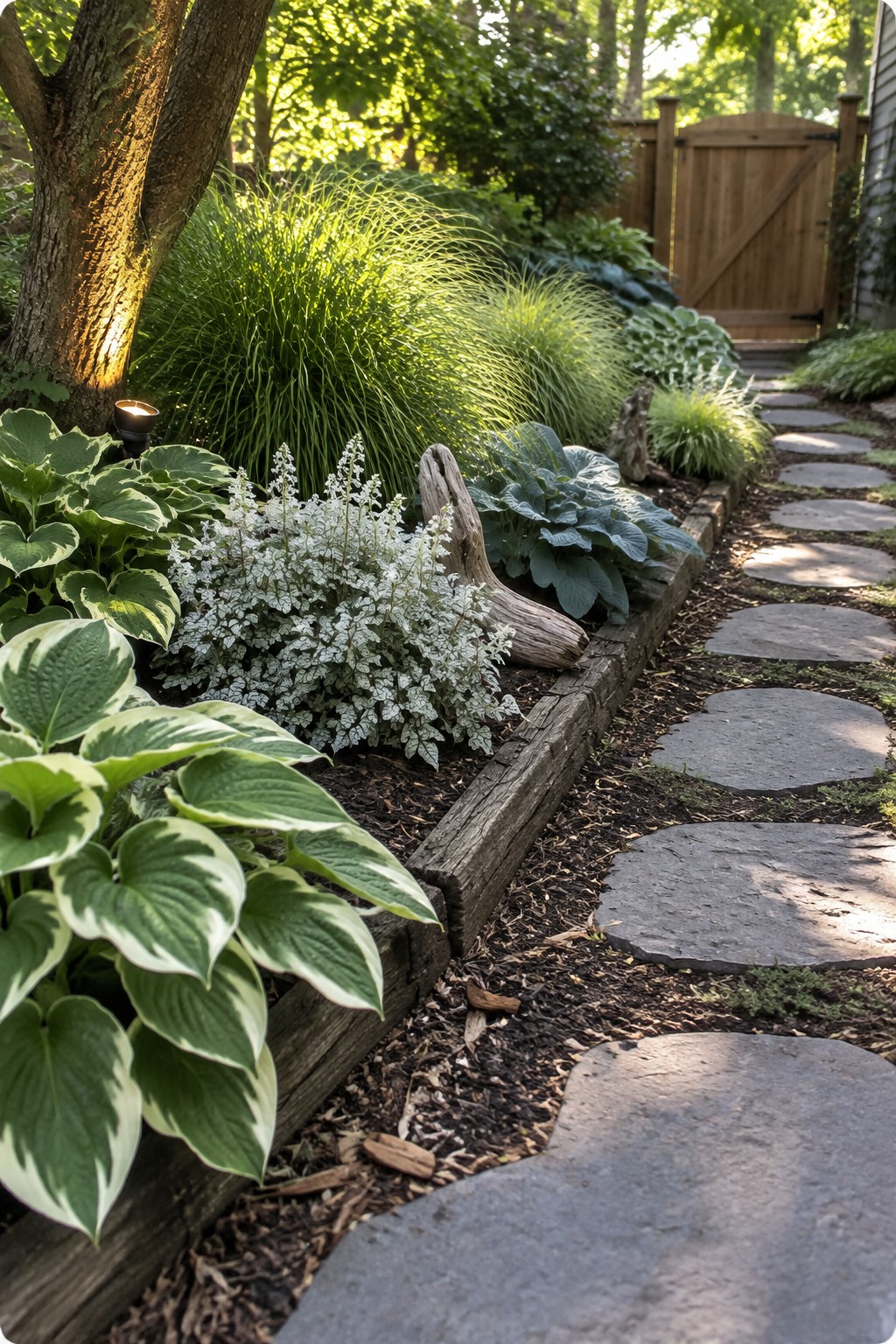
Hostas make a useful border for a stepping-stone path, especially in a shady front yard. Their broad leaves help define the route without making the garden feel too formal, and the path stays easy to follow.
Leave enough room for hostas to spread so they don’t cover the stones. A mix of leaf sizes can keep the planting from looking too uniform, while a clear edge between the bed and path makes walking easier.
Plant Hostas Along the House
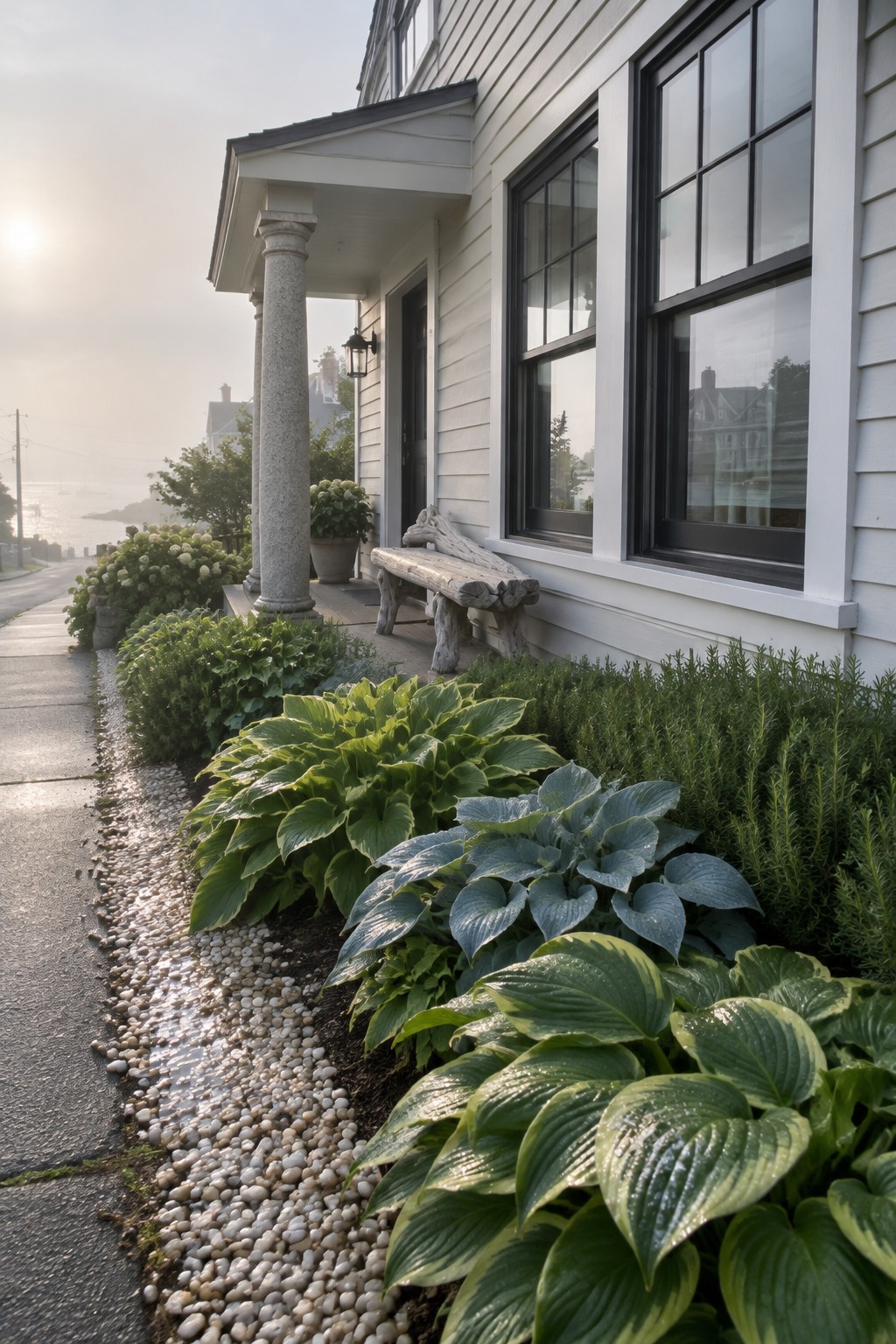
Hostas make a useful border for a shady front walk, especially when you plant them in loose groups rather than a straight line. Their broad leaves fill the space neatly and give the path a clear edge.
Use a few hosta varieties with different leaf sizes to keep the bed from looking uniform. Leave enough room for mature plants, and keep them back from the walkway so leaves do not spill across the path.
Use Large Stepping Stones Through Hosta Beds
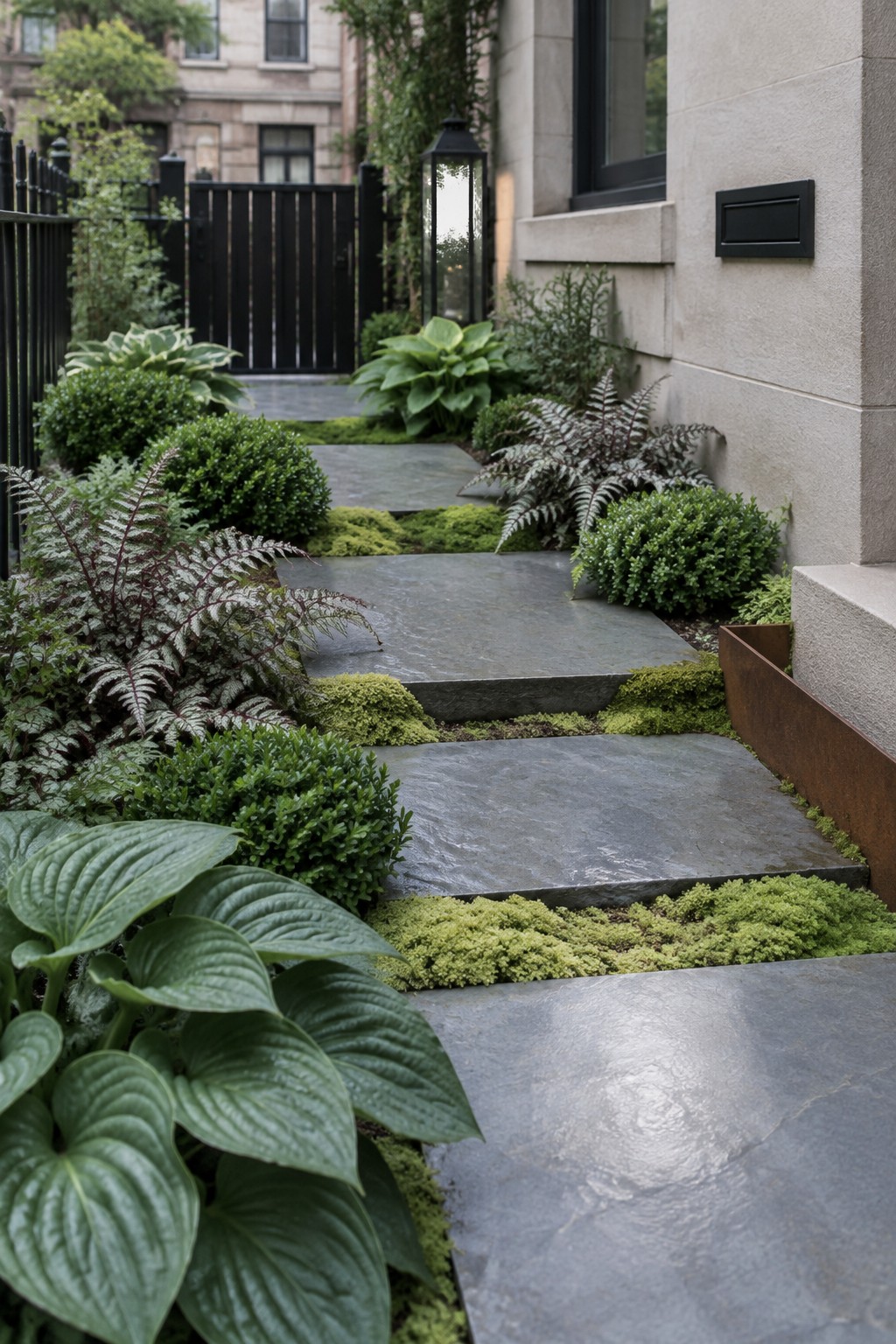
Large stepping stones make a shady front yard easier to walk through while leaving room for generous planting. Their broad, simple shape works especially well with hostas, whose leaves can fill the spaces around the path without hiding the route.
Set the stones at a comfortable stride and leave enough room between them for low ground cover or mulch. This approach suits narrow entry gardens, but keep plants trimmed back so the walking surface stays clear.
Use Hostas to Fill a Shady Entry Garden
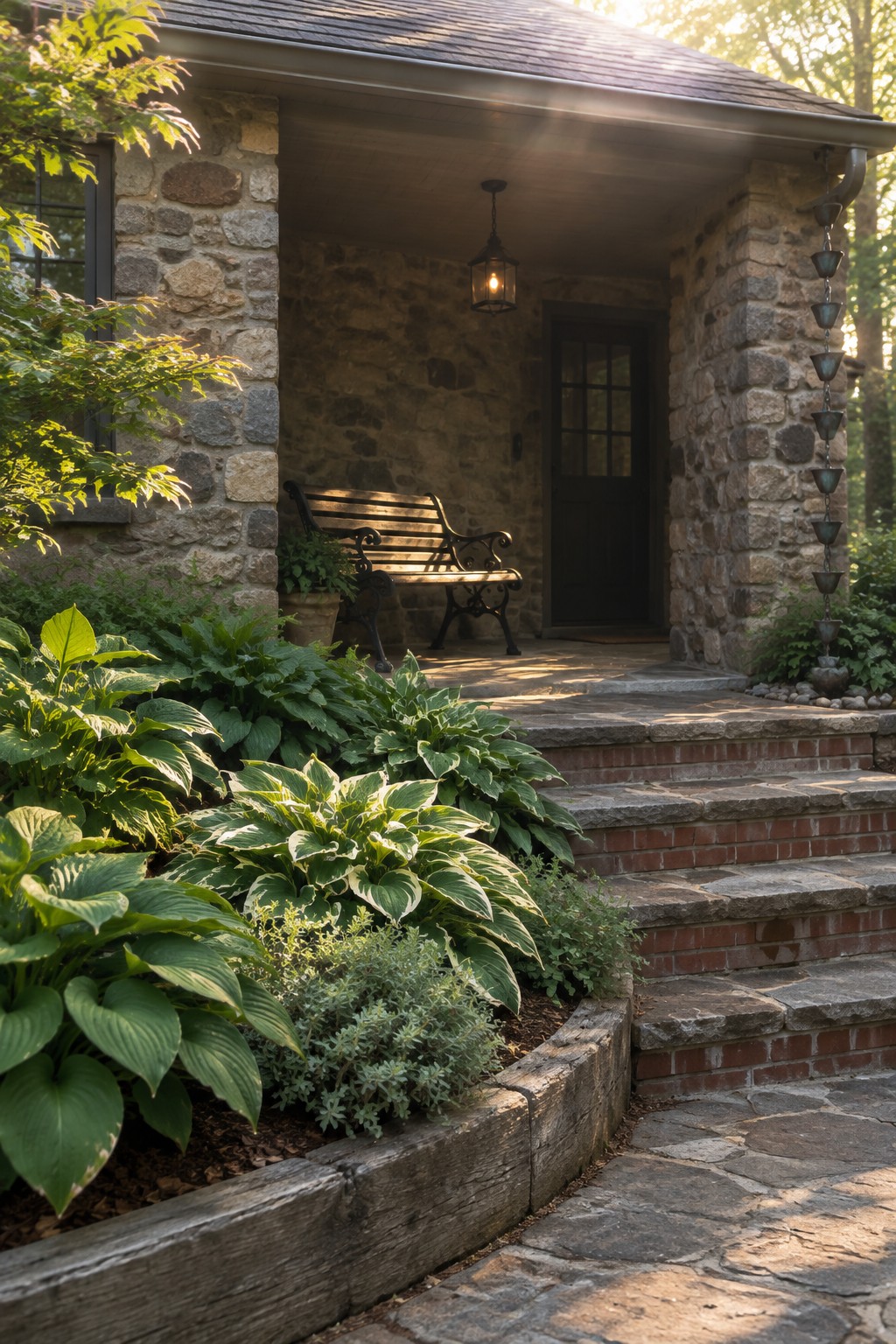
Hostas are a practical choice for planting beds beside a shaded front entry. Their broad leaves fill in the space around steps and stonework, making a front walk feel connected to the garden without needing a lot of different plants.
Use several hosta varieties in a bed along the path or porch, leaving enough room for mature plants to spread. A few contrasting leaf colors can keep the planting interesting, but avoid crowding the steps or covering the edge of the walkway.
Use Raised Hosta Beds to Organize a Shady Entry
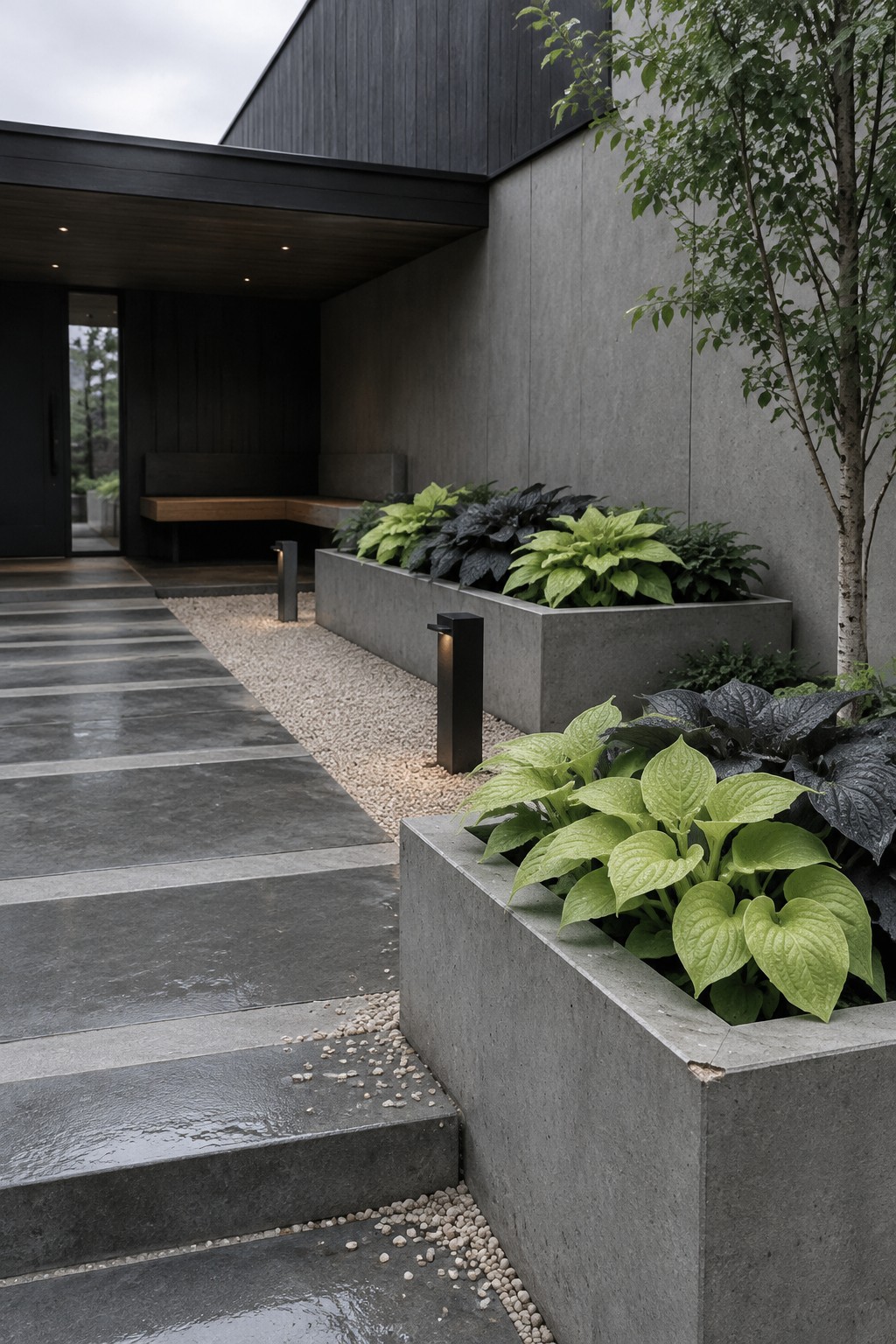
Raised beds give hostas a clear place to grow and help keep a front entry looking orderly. Their broad leaves stand out against the simple concrete walls, while the contained planting area makes the garden feel intentional rather than crowded.
This approach works well beside a walkway or near front steps, especially where the ground is uneven or planting space is limited. Choose a bed deep enough for healthy roots, and leave room for the hostas to spread without covering the path.
Use Timber Steps to Follow a Sloped Garden
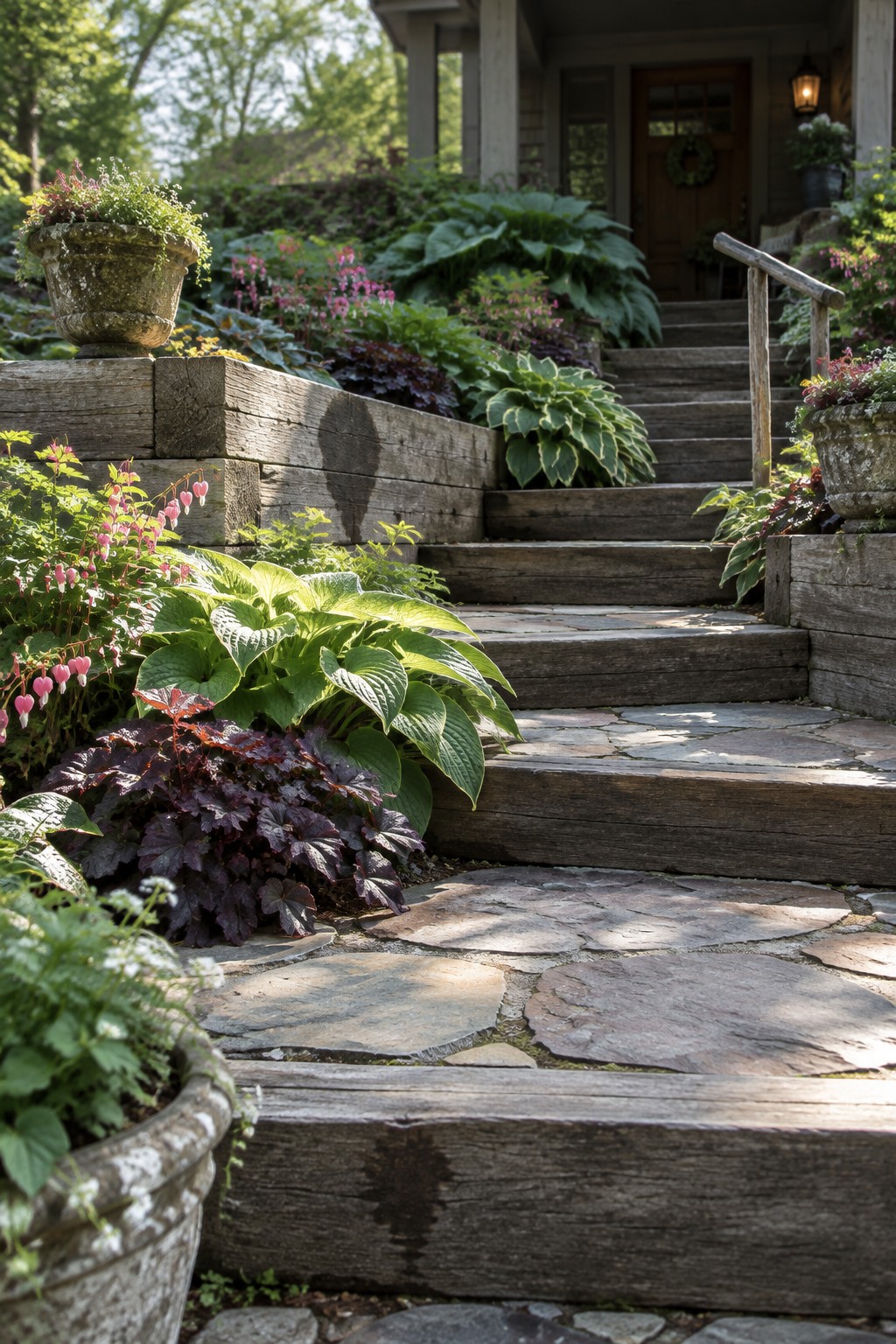
Timber steps are a practical way to make a sloping front yard easier to walk through. Here, broad wooden risers sit among layered hostas, giving the path a clear route without taking away space for planting.
This approach suits a shady yard with a noticeable change in height. Use sturdy, weather-resistant wood and leave enough room on each tread for a comfortable step. Hostas can fill the beds along the sides, but keep their leaves from spilling onto the walking surface.
Layer Hosta Beds Along a Curving Front Walk
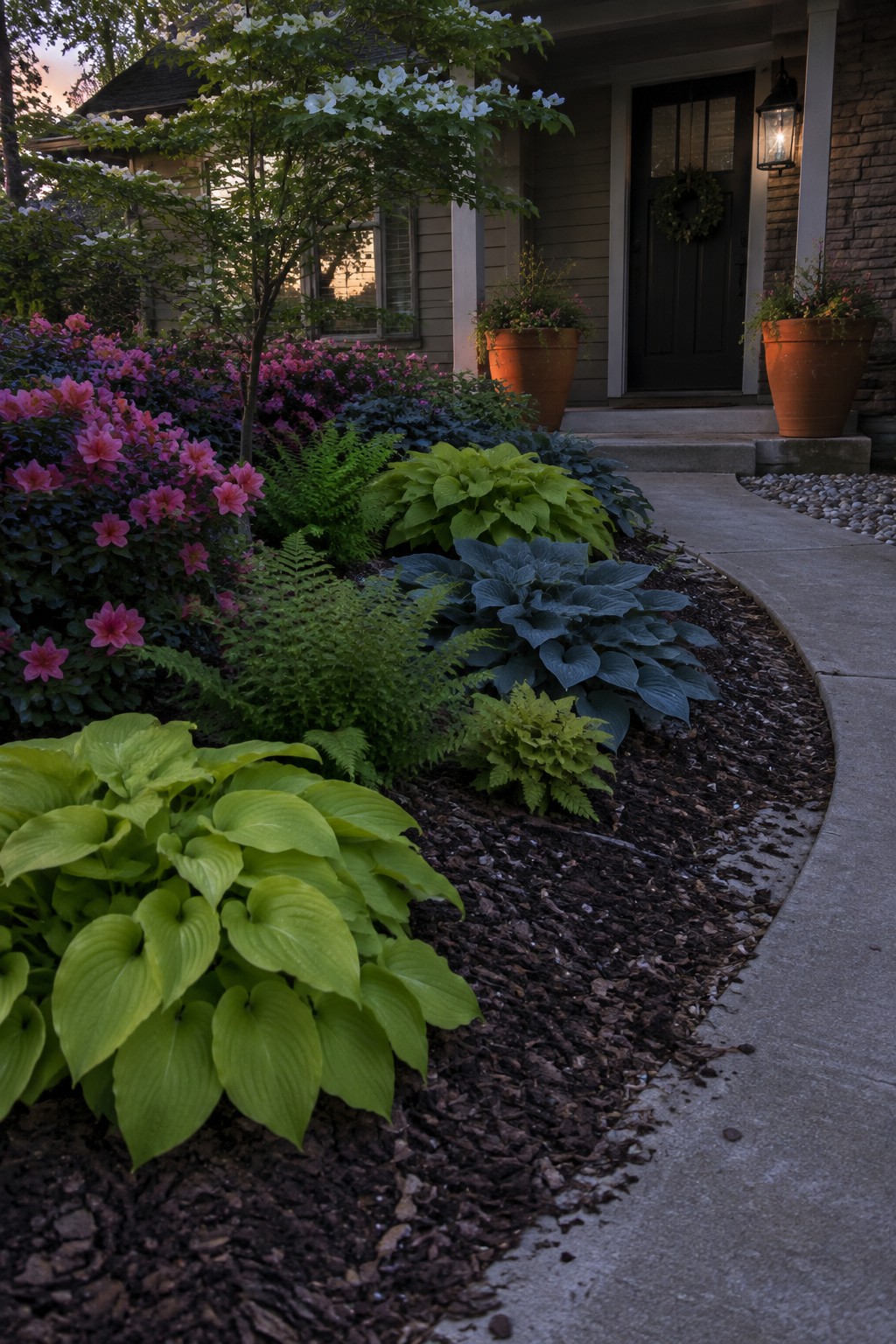
A curved walk can make a shady front garden feel more natural than a straight path. Broad hostas and ferns follow the bend, while pink flowers add a little color without taking over the planting.
Let the bed edge echo the path, and use hostas in groups so the leaves make a clear border. This works well near a front entry, but leave enough room for the plants to spread without spilling onto the walking surface.
Use Hostas to Edge a Narrow Front Path
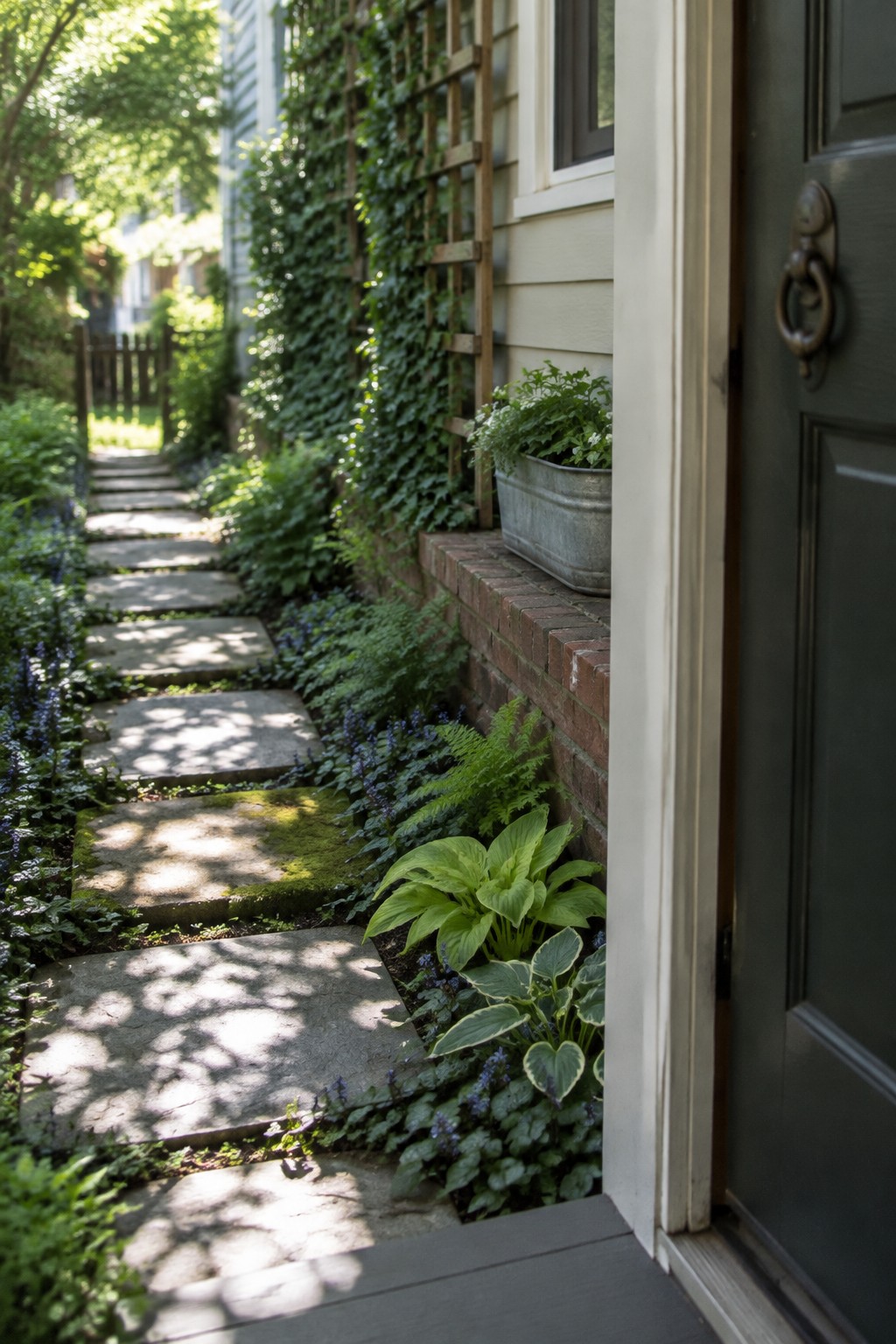
Hostas make a shady front path feel like part of the garden rather than a route cut through it. Their broad leaves are especially useful along stepping stones, where they fill the gaps and give the walkway a softer edge.
Leave enough room for the plants to spread without crowding the stones. A brick edge beside the path can help keep the planting tidy, while a mix of hosta sizes adds interest in a narrow side yard.
Use a Gravel Path to Shape a Shady Hosta Garden
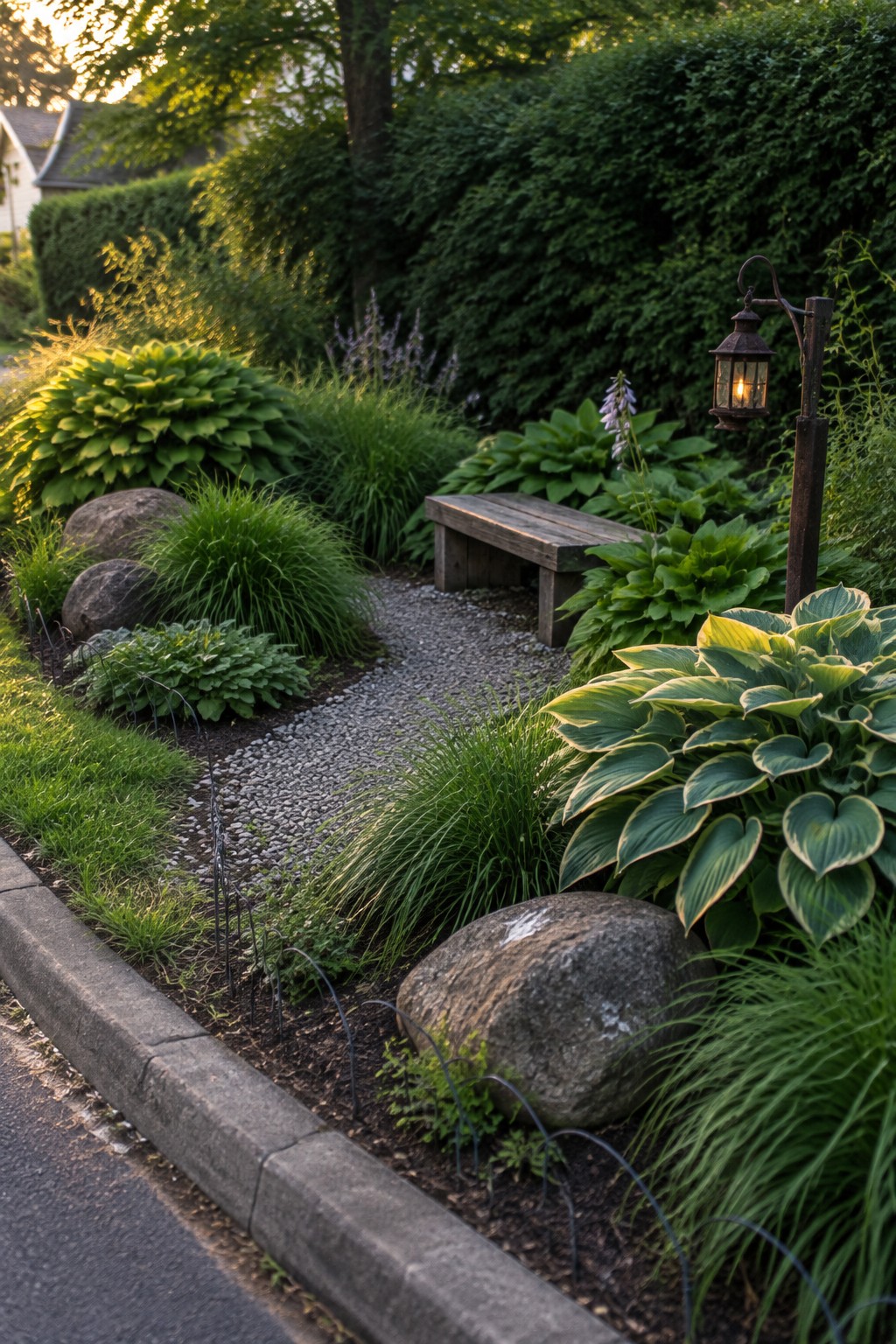
A narrow gravel path gives a shady front garden a clear route without taking up much planting space. Hostas can grow along its edges, where their broad leaves make a simple path feel like part of the garden rather than a shortcut through it.
For a similar look, keep the path wide enough to walk comfortably and use edging to stop gravel from spreading into the beds. This layout works well in small front yards, especially where a winding route can make the space feel less cramped.
Use a Stone Walkway to Link Hostas to the Entry
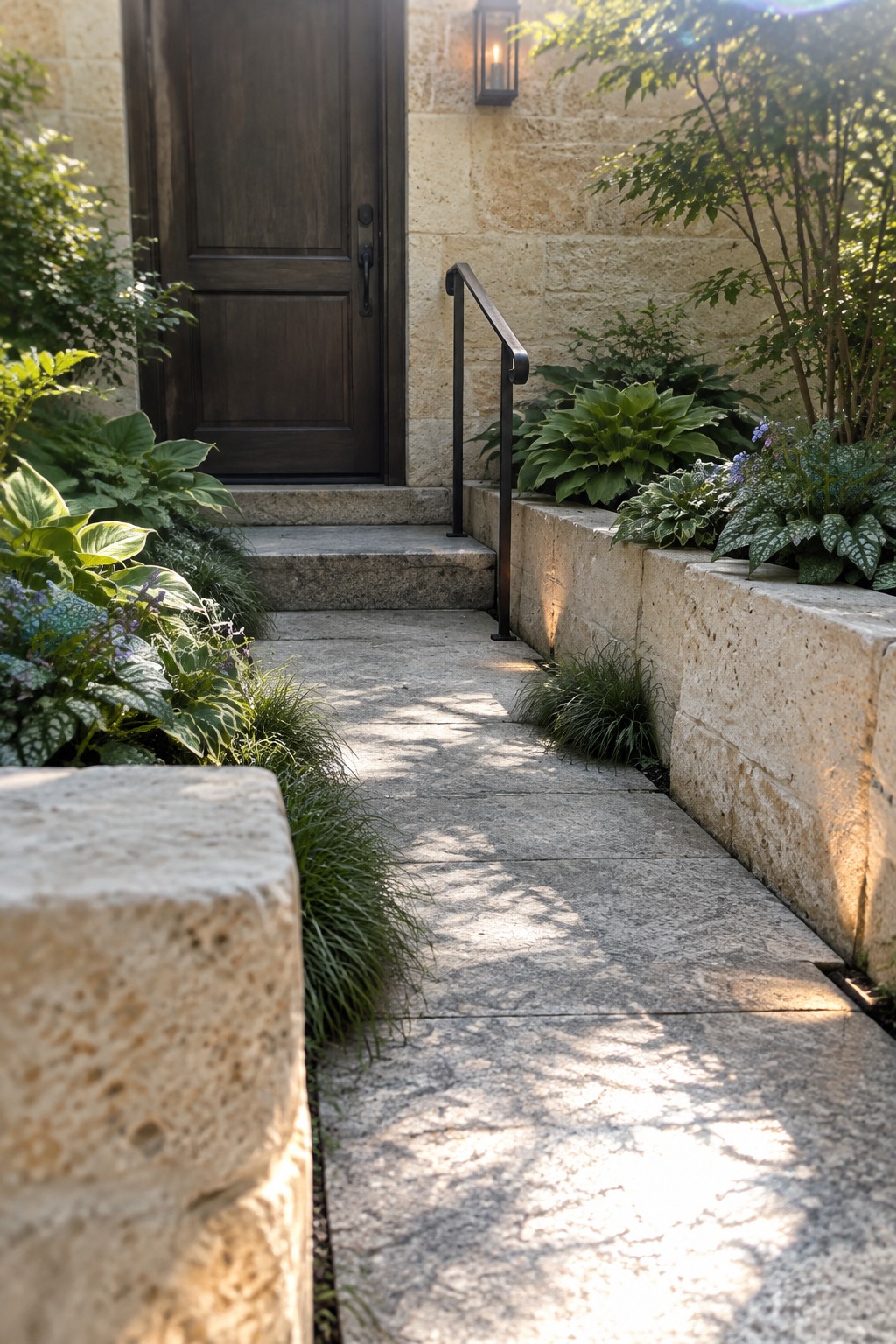
A stone walkway can make a shady front garden easier to navigate while giving hostas a clear place to grow along its edges. The broad paving feels sturdy underfoot, and the plants soften the hard boundary without spilling into the walking space.
Keep the path wide enough for carrying bags or passing another person, and leave room for hostas to mature beside it. This approach suits an entry that gets limited sun, especially when the walkway leads directly to a few steps.
Use Hostas to Mark a Stepping-Stone Path
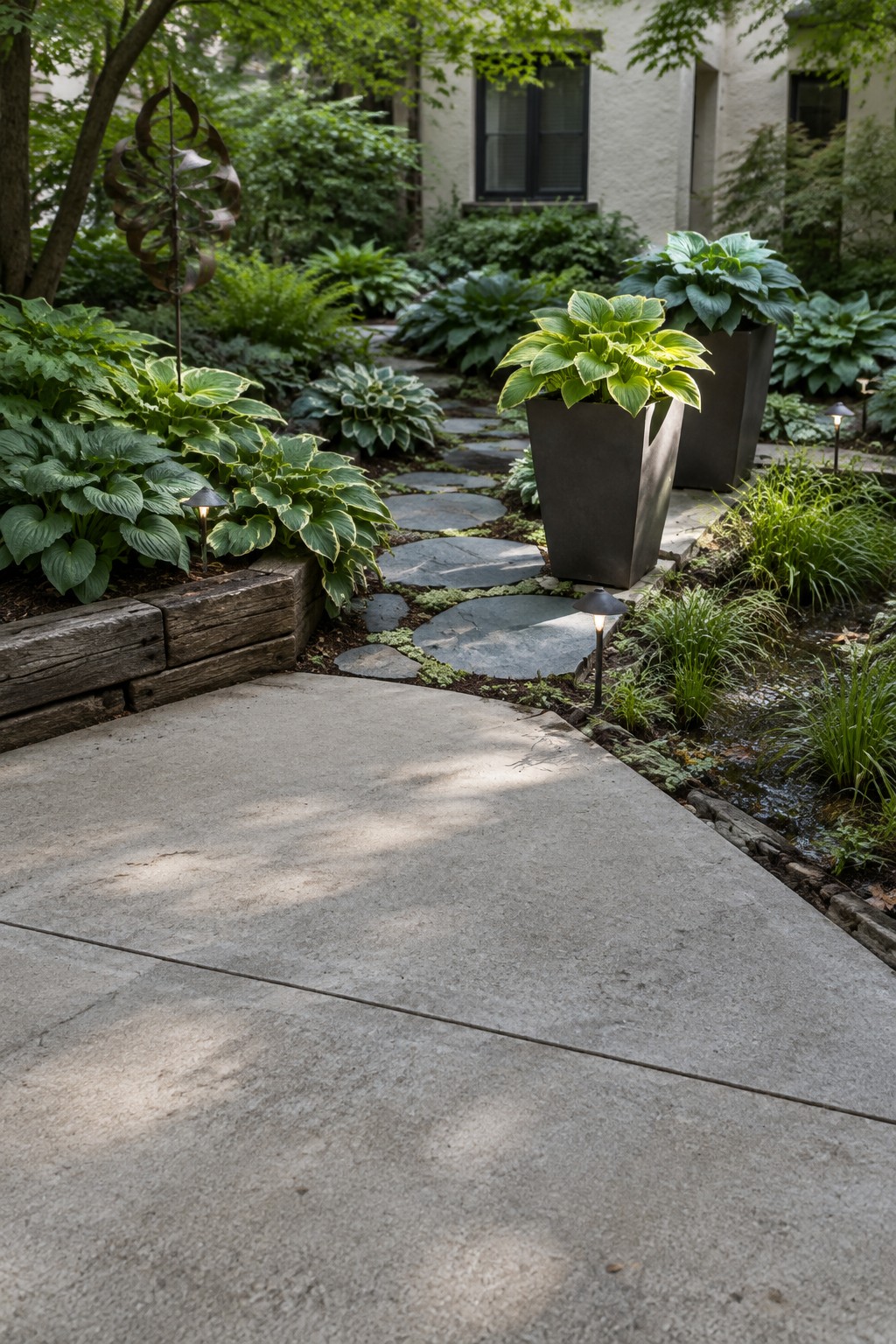
Hostas make a shady path feel like part of the garden instead of just a way through it. Their broad leaves create a clear edge along the irregular stone walkway, while leaving the stones easy to see and use.
For a similar front yard, plant hostas in loose groups beside the path and vary their sizes for a natural look. Leave enough room for the leaves to spread without covering the walking surface.
Frequently Asked Questions
Q: How much sun can hostas handle in a front yard?
A: Most hostas do best in shade or dappled light, especially during the hot afternoon. A few varieties tolerate morning sun, but watch for faded or scorched leaves and move them to a shadier spot if that happens.
Q: What can I plant with hostas so the bed has color before they come up?
A: Tuck spring bulbs such as crocuses or daffodils between the hostas. They bloom early, then fade back as the hostas fill in for summer.
Q: How far apart should I plant hostas along a walkway?
A: Check the mature width on the plant label and leave enough room for each clump to reach it. Small varieties can sit closer together, while large hostas need more space so their leaves don’t crowd the path.
Q: How do I keep slugs from chewing holes in hosta leaves?
A: Water in the morning and clear away damp leaf litter where slugs like to hide. If they’re still a problem, check under leaves in the evening and remove any you find.
