

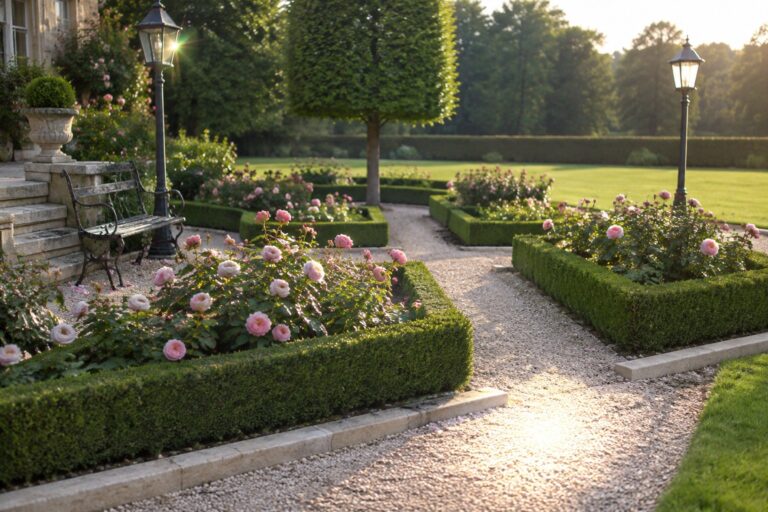
Roses bring color and softness to a garden, while boxwood gives beds a steady shape that lasts through the seasons.
I’ve found that this balance matters most near paths and entryways, where loose blooms can look unruly if there isn’t a clear edge or planting rhythm.
A thoughtful layout lets the roses stand out without making the yard feel crowded, and it also helps the garden look composed when flowers are between blooms.
Some combinations call for clipped hedges and neat borders, while others work better with a looser path or layered planting.
I’d save the ideas that suit your light, space, and willingness to prune, then adapt their structure to fit your own garden.
Use Boxwood to Give Rose Beds a Clear Shape
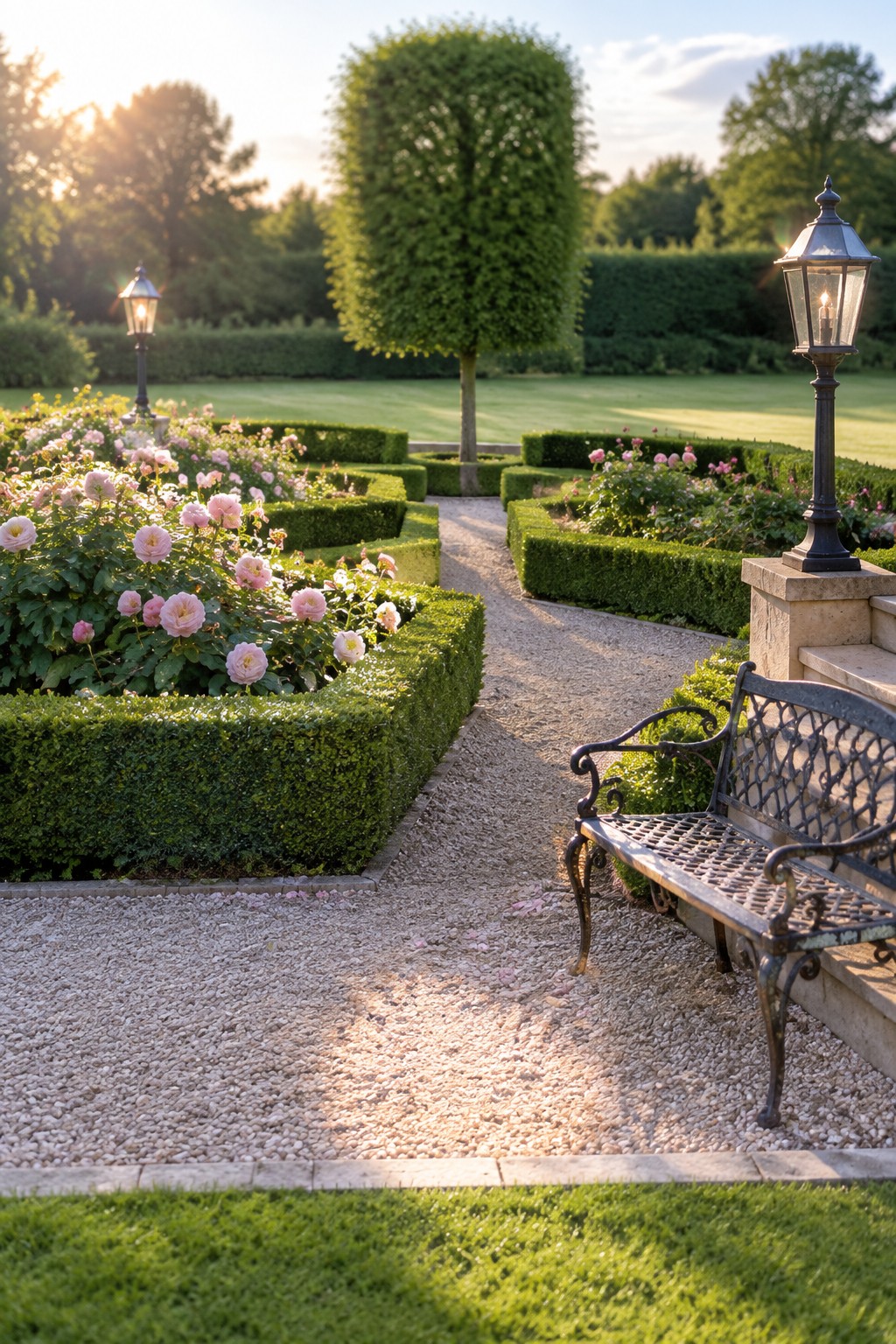
Clipped boxwood can give rose beds a tidy outline while letting the flowers stay loose and full. This simple structure helps a garden feel organized, even when the blooms vary in color and height.
Use low hedges to edge a path or divide larger beds into manageable sections. Keep them low enough that they do not hide the roses, and leave room for pruning and airflow as the plants grow.
Use Boxwood To Shape A Garden Path
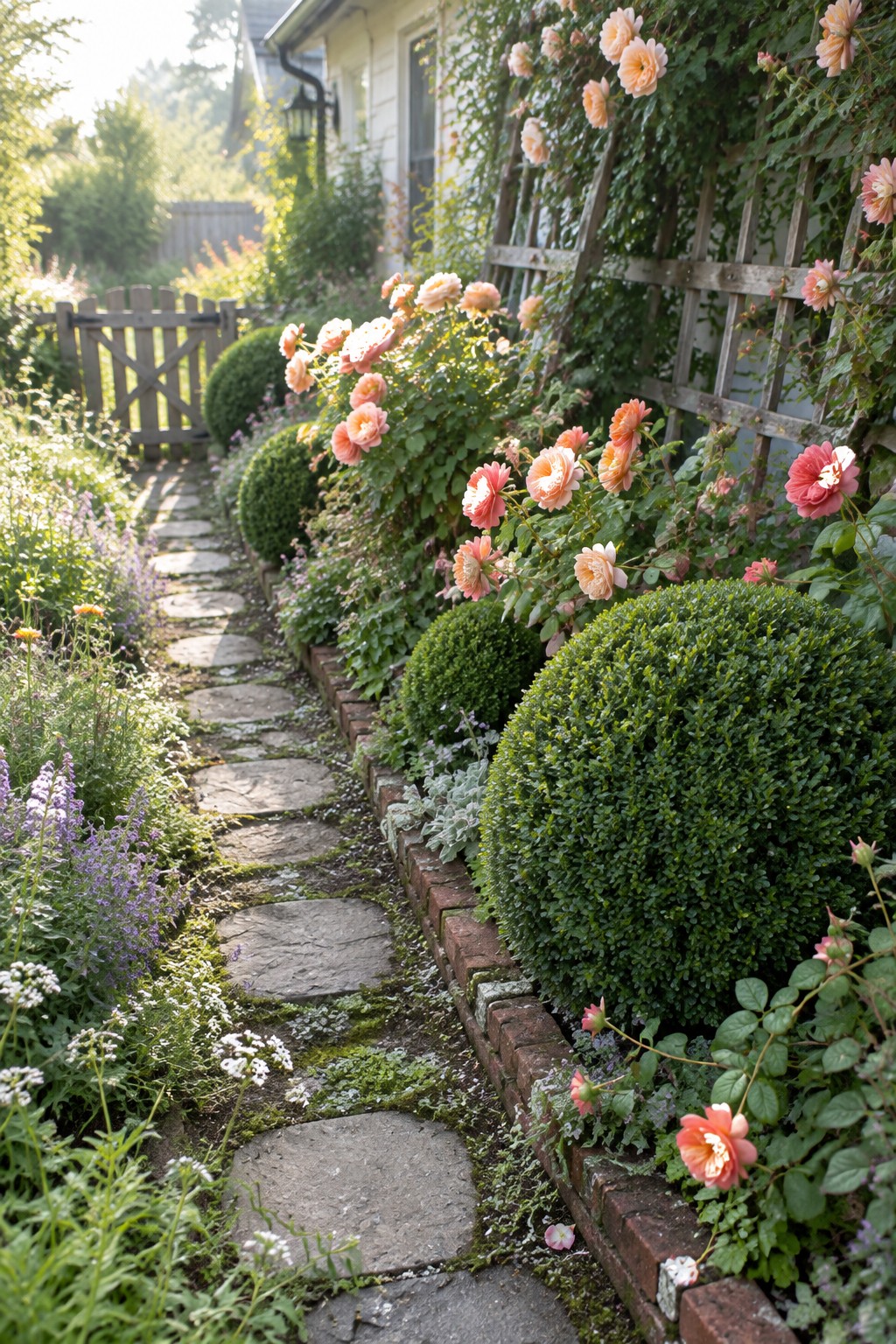
Clipped boxwood gives a winding path a clear edge and a steady rhythm. Here, rounded shrubs sit beside stepping stones, while roses add color along the fence.
This approach works well in a narrow side yard, where plants can make a simple route feel planned. Keep the boxwood spaced so it has room to grow, and leave enough clearance for easy walking and pruning.
Use Boxwood To Shape A Rose Garden
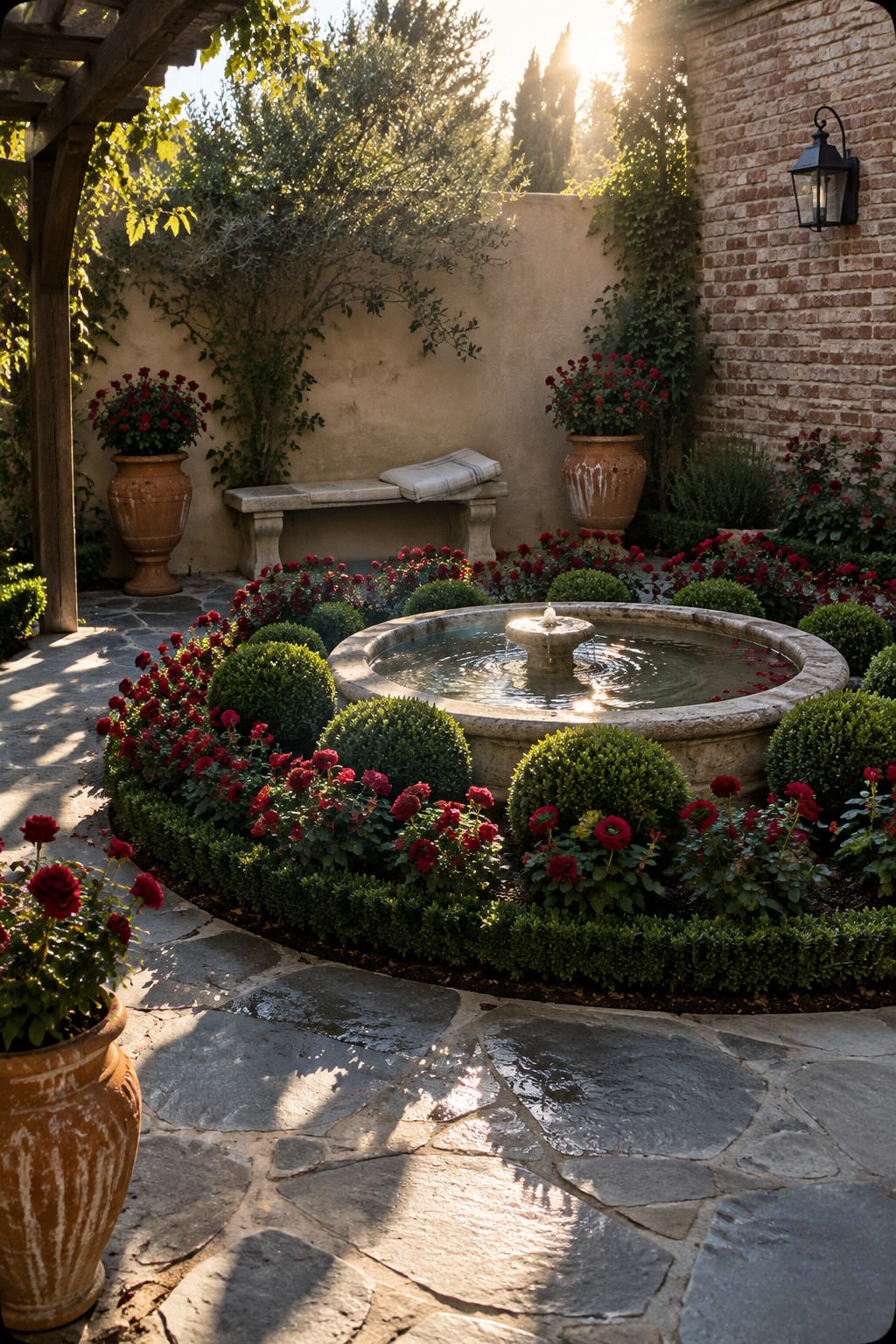
A low boxwood border gives a rose bed a clear shape and keeps the planting looking tidy between blooms. It also makes a simple garden feel more planned without needing a lot of different plants.
Use clipped boxwood around a small circular bed or along a curved path, then let roses provide the color inside the border. Leave enough space for the shrubs to grow, and keep the edging low so it does not crowd the flowers.
Use Boxwood to Shape a Rose Bed
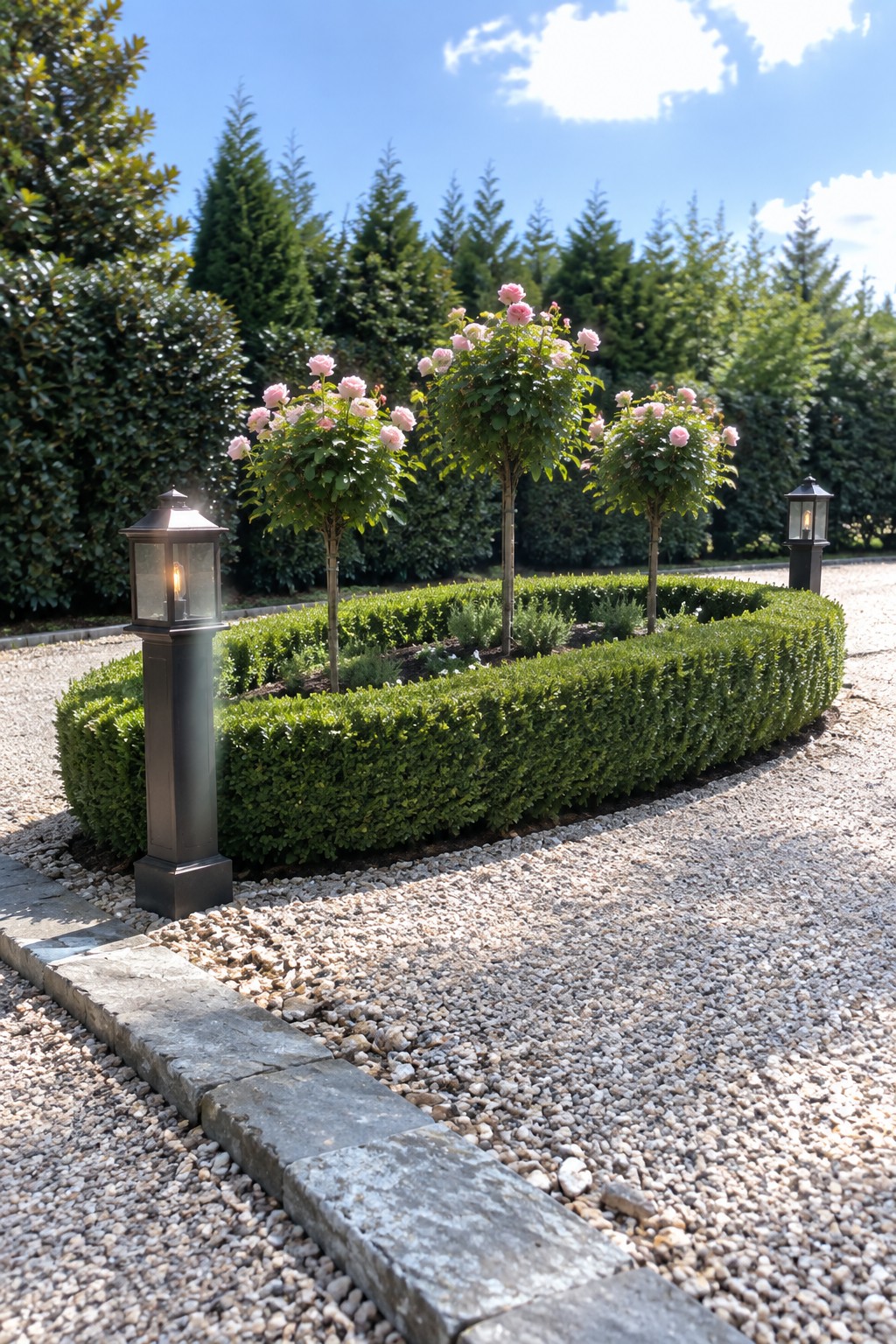
A low boxwood border gives a rose bed a clear shape and keeps the planting looking orderly even when the roses are in bloom. It works especially well when you want flowers to stand out without letting the whole garden feel loose.
Use a simple bed outline and leave enough room inside for the roses to grow and be pruned. This approach suits formal front gardens and paths, but boxwood needs regular trimming to keep its edge neat.
Use a Rose-Covered Arch to Mark the Garden Path
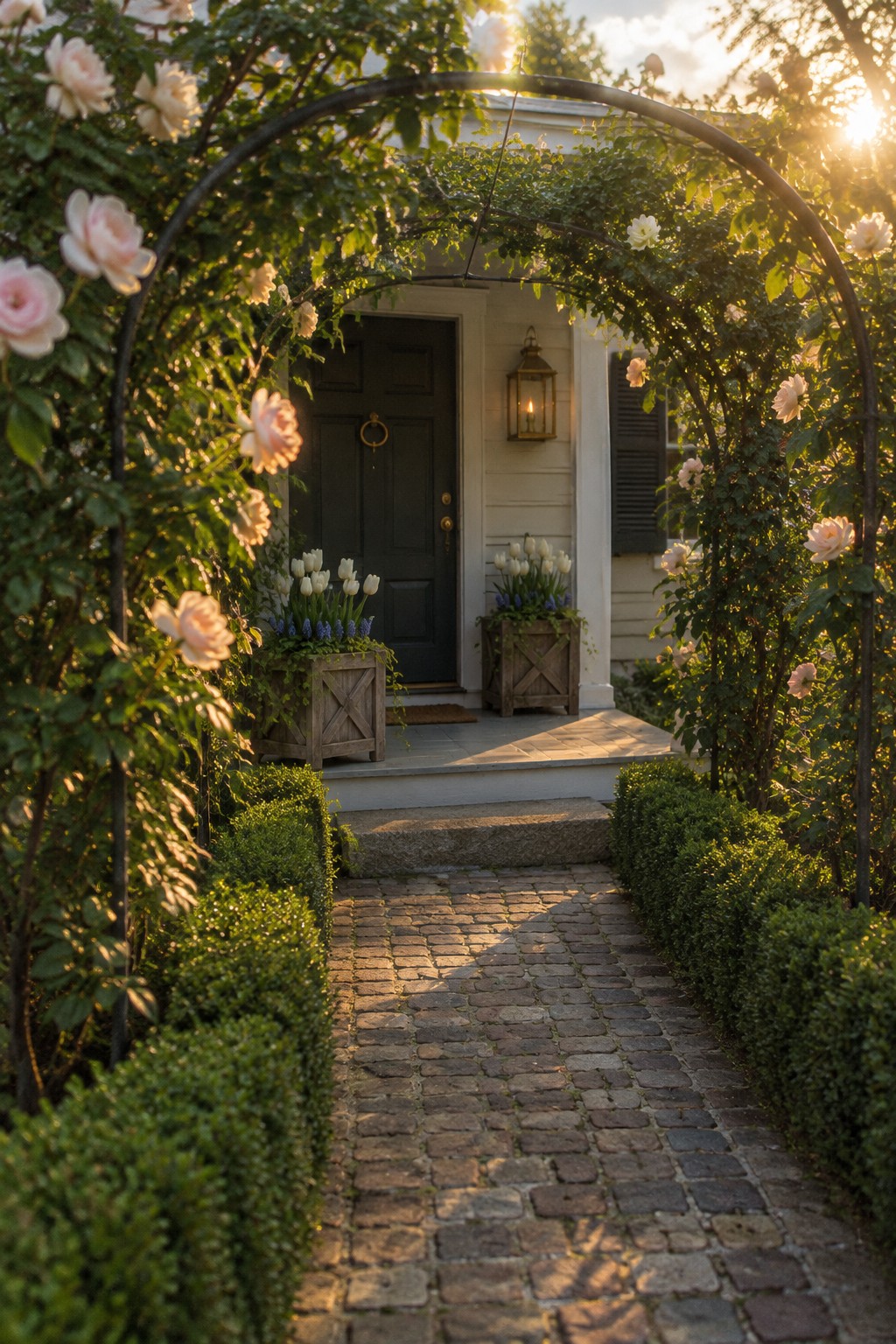
A rose-covered arch gives a garden path a clear beginning and makes the walk toward the front door feel more intentional. It works especially well when the path is fairly simple, since the arch adds structure without needing extra paving or edging.
For a similar look, train climbing roses over a sturdy metal or wood frame, and keep the plants trimmed so the opening stays clear. Boxwood borders along the path can add a neat edge, but leave enough room for the roses to grow without crowding the walkway.
Use Boxwood Hedges to Create a Formal Rose Garden
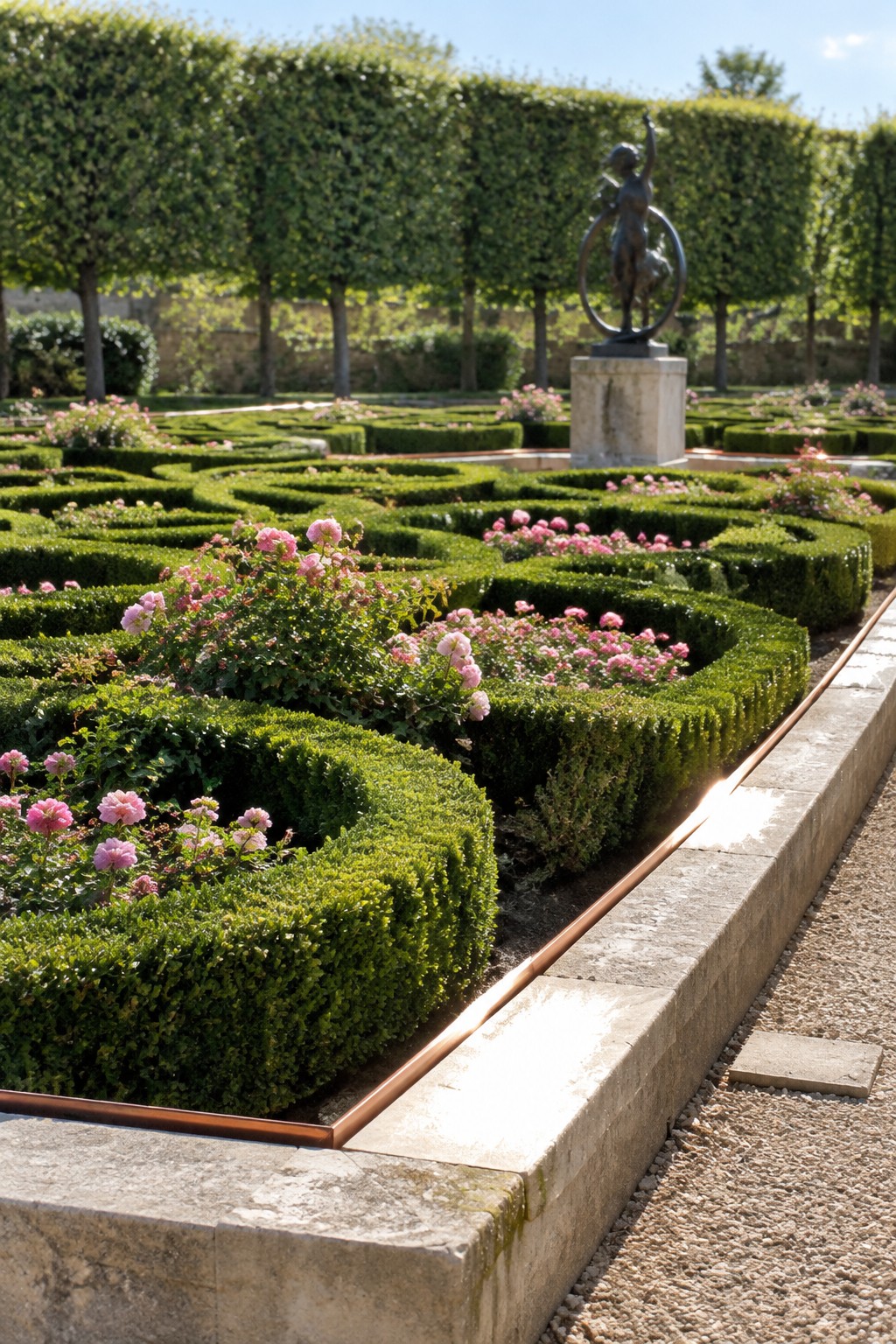
Boxwood hedges give a rose garden a clear pattern, so the flowers feel arranged rather than scattered. The low clipped borders here form neat beds while leaving the pink roses room to show.
This approach works well in a level garden where you can keep the edges trimmed and easy to reach. Use simple bed shapes, and leave enough space between the hedges for weeding and pruning.
Keep Rose Pots Neat With Boxwood
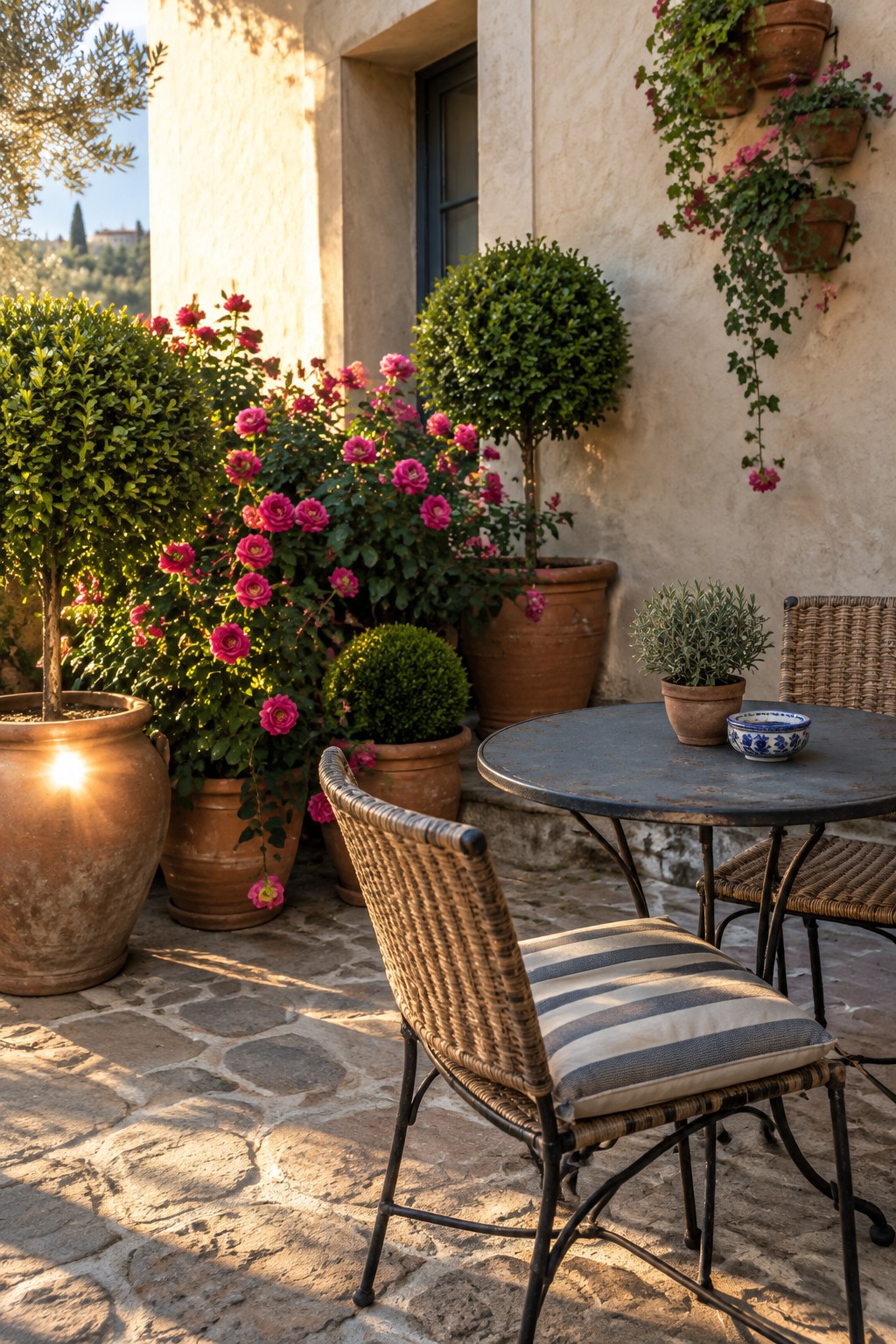
Potted boxwood gives a rose-filled patio some steady shape throughout the year. The rounded shrubs hold their form while the roses change with the season, so the planting feels orderly without needing a formal garden bed.
Use this approach near a terrace wall or around outdoor seating, where large pots can define the edges of the space. Keep the boxwood clipped to a manageable size, and leave enough room between pots for rose growth and easy watering.
Make Outdoor Dining Part of the Garden

A long dining table can make a garden feel useful for more than looking at. Here, clipped boxwood edges give the seating area a clear boundary, while nearby roses keep the planting close without crowding the table.
This layout works well in a narrow garden where a path can run beside the dining area. Leave enough room to pull chairs out and walk past, and keep taller plants back from the seating so the space stays comfortable.
Use Boxwood to Edge a Rose Bed
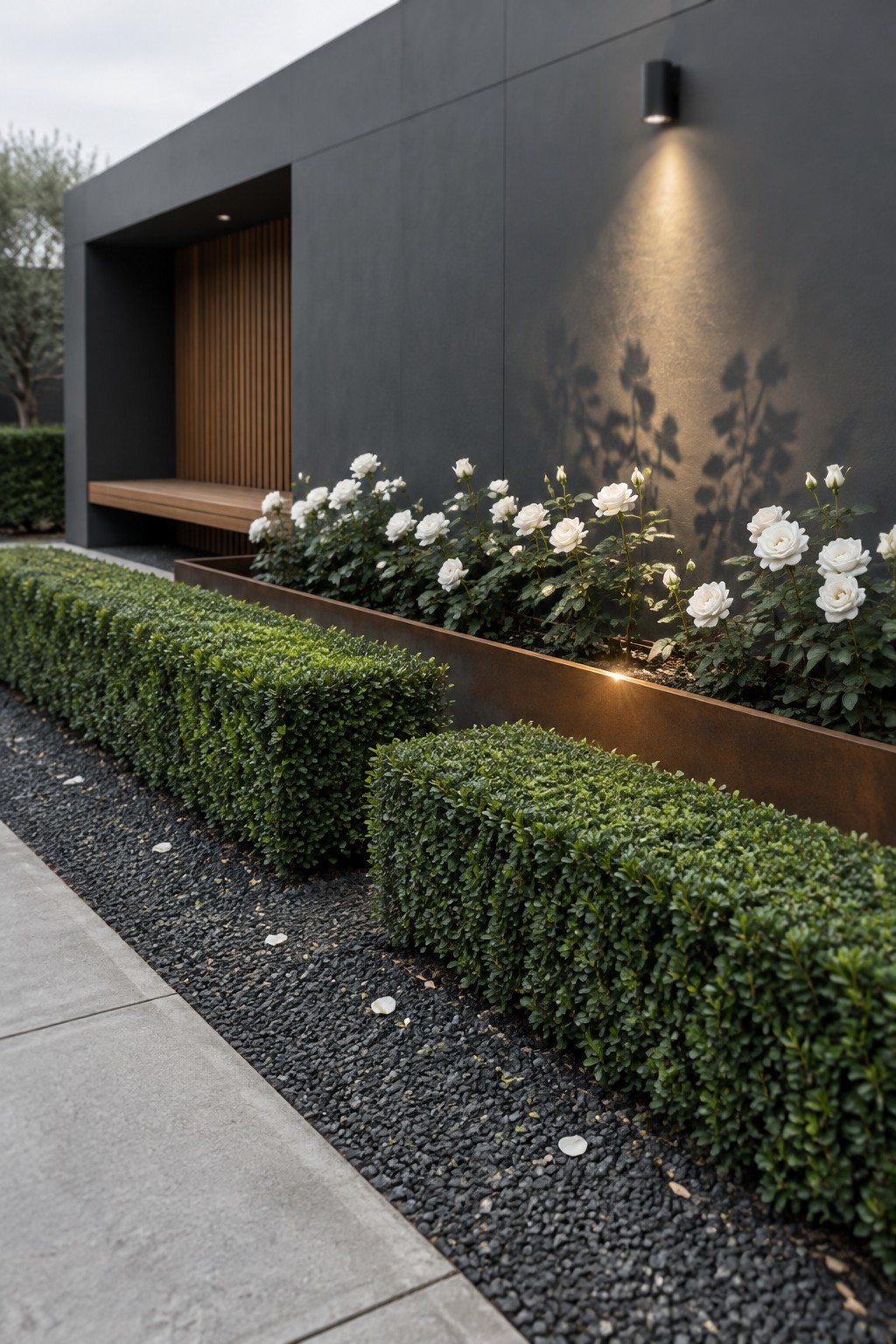
A low boxwood border gives a rose bed a tidy outline and keeps the planting from feeling scattered. White roses stand out against the clipped green foliage, while the clean edge suits a modern home.
Use this approach along a wall or beside a walkway where a clear boundary helps keep the garden neat. Leave enough room for the roses to grow and for easy pruning, so the boxwood does not crowd them.
Use Boxwood to Define a Poolside Seating Area
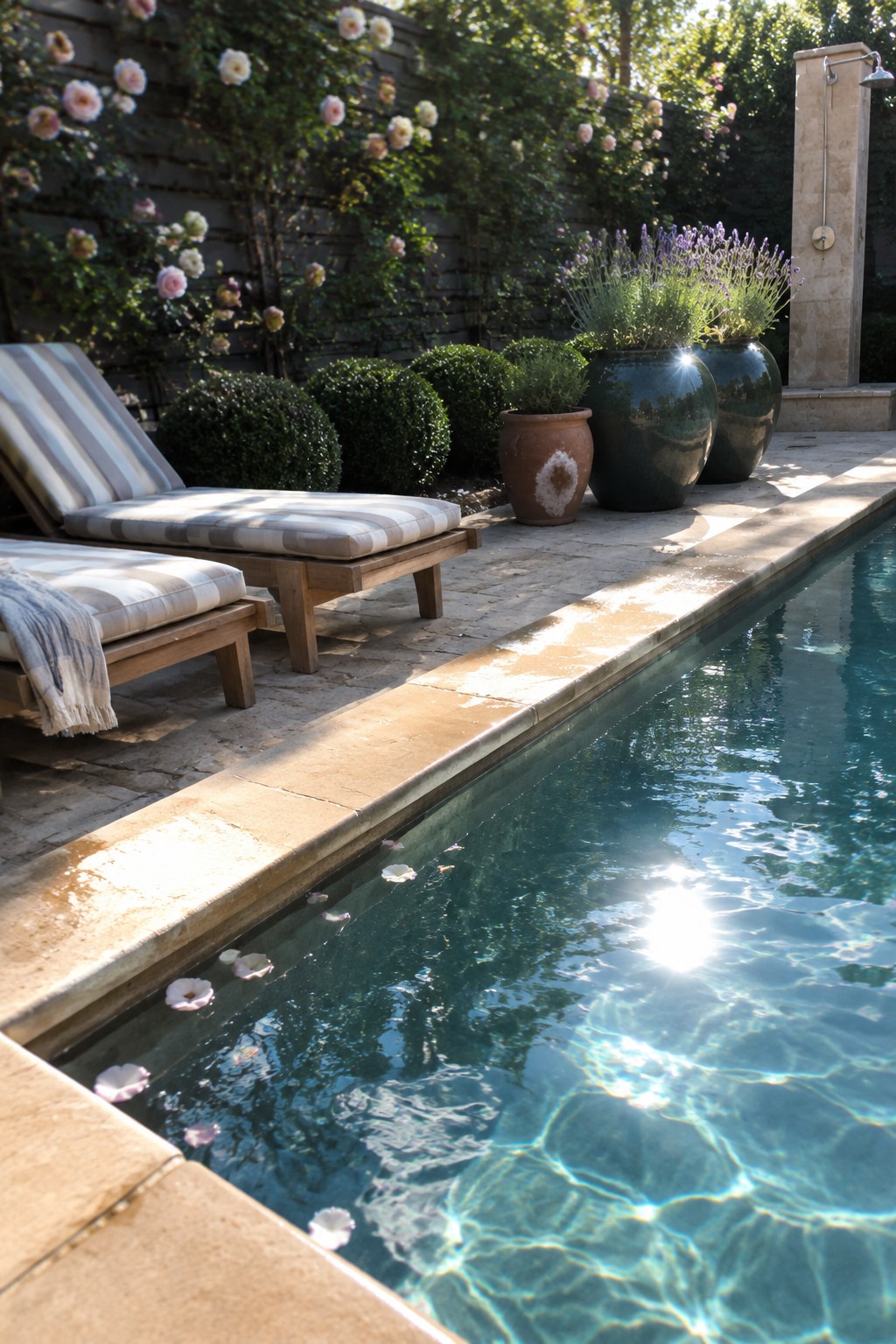
Boxwood can give a poolside lounge a neat, garden-like edge. Here, rounded shrubs sit behind the chaise lounges, making the seating area feel set apart without blocking the view of the pool.
For a similar look, plant boxwood along the back of a patio or beside a pool path. Keep the shrubs trimmed to a consistent size, and leave enough room for people to move around the seating.
Use a Boxwood Border to Shape a Rose Garden
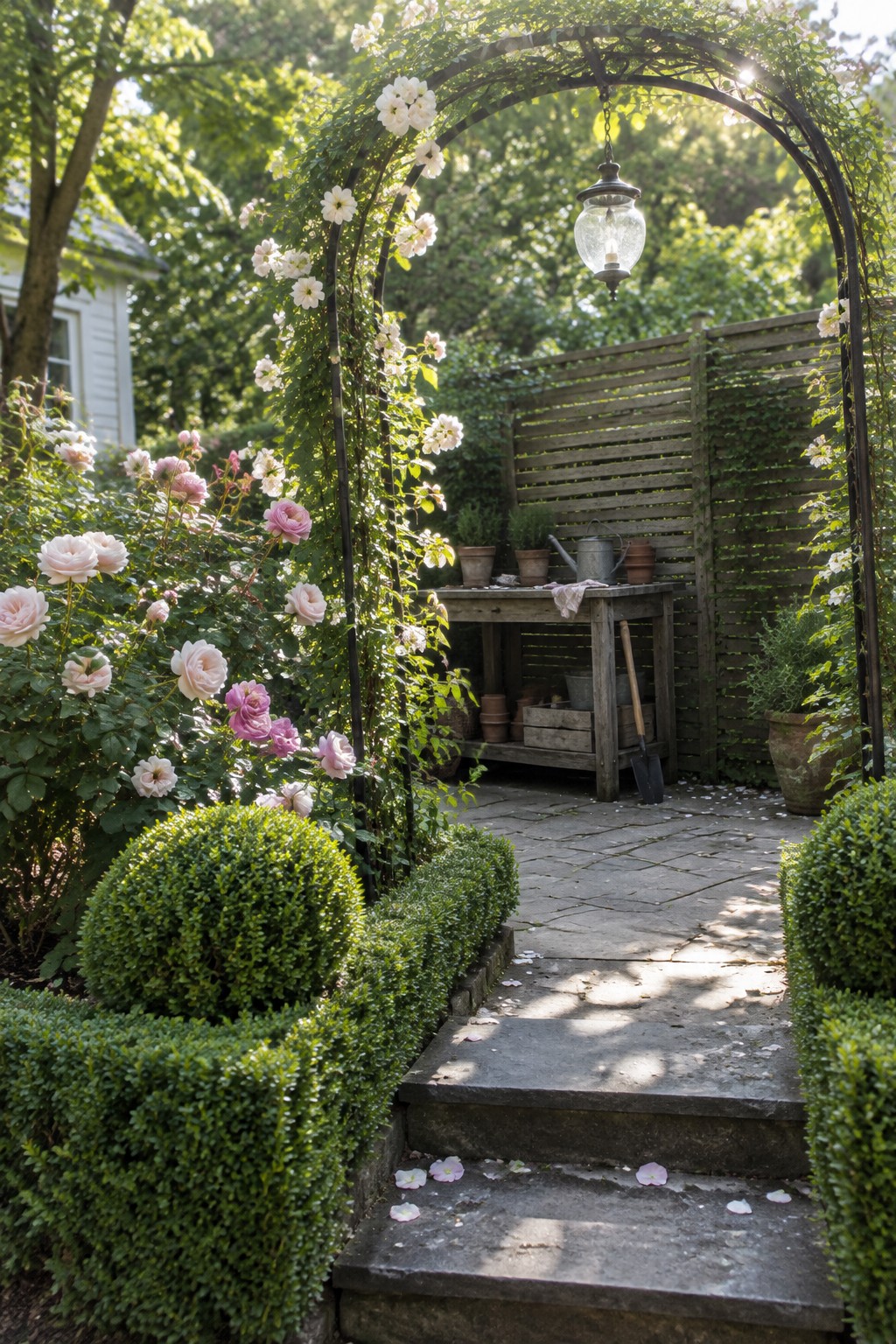
A clipped boxwood border gives a rose garden a clear outline and keeps the planting from spreading into the path. It also makes a relaxed mix of pink and white flowers feel a little more orderly.
This approach suits a small garden where a path needs a defined edge. Keep the boxwood low enough that it does not hide the roses, and leave room for the shrubs to grow between trims.
Use Stone Steps to Connect Garden Levels
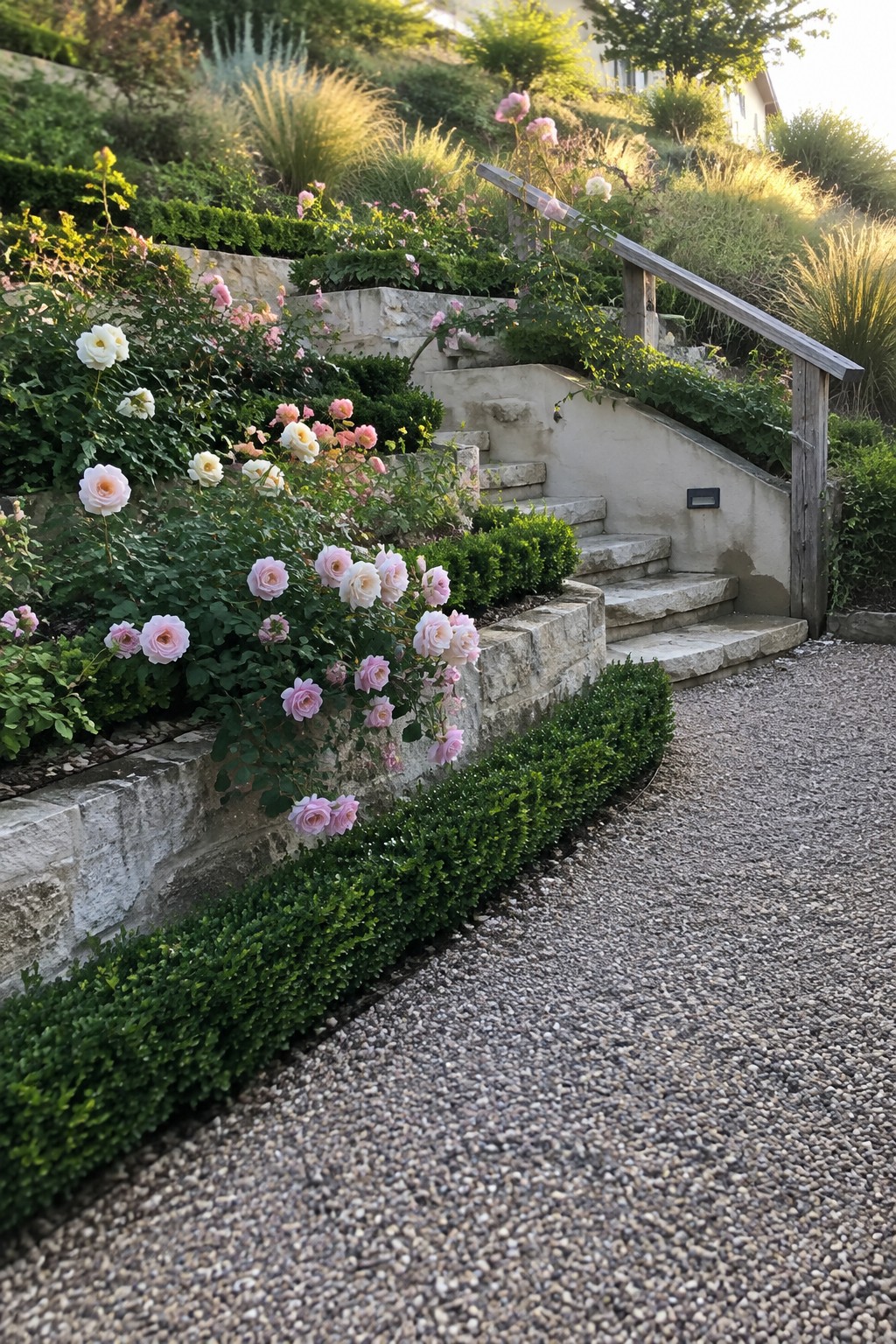
Stone steps make a sloped garden easier to move through while keeping the planting beds in place. Here, the pale stone stairway gives the roses and clipped boxwood a clear structure without taking over the garden.
This approach works well on hillsides where a path alone would be awkward. Keep the steps wide enough for comfortable footing, and use sturdy stone walls to support the beds along the way.
Make a Rose-Covered Pergola Part of the Dining Area
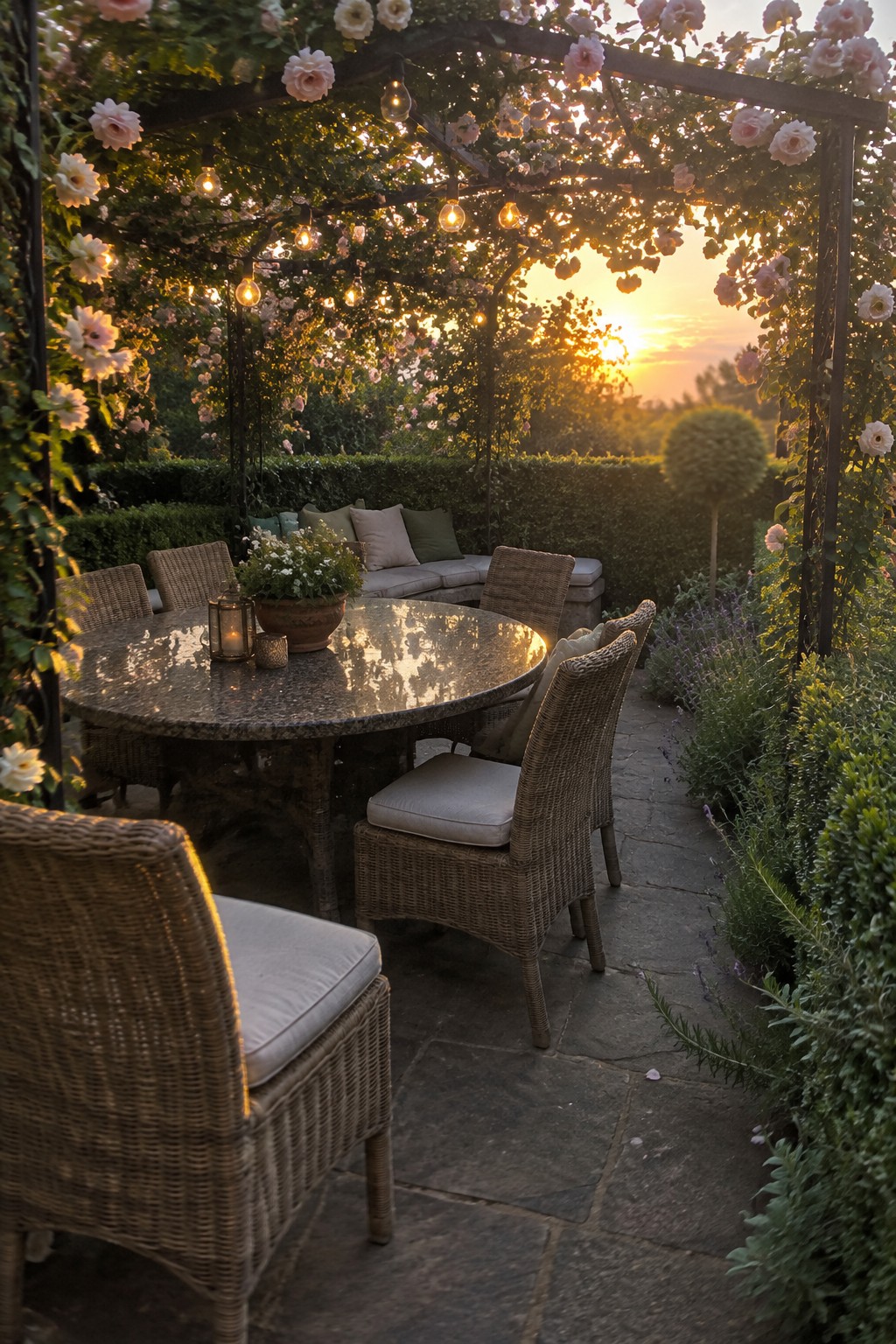
A pergola covered in roses can make an outdoor dining spot feel tucked into the garden without closing it off. The overhead flowers give the seating area a clear shape, while boxwood hedges around the edges help keep the planting looking orderly.
This works well in a garden with room for a small patio or dining area. Train roses along a sturdy pergola, and leave enough space for chairs to move comfortably. Regular pruning helps keep the walkway and seating clear.
Use a Stone Path to Organize Rose Beds
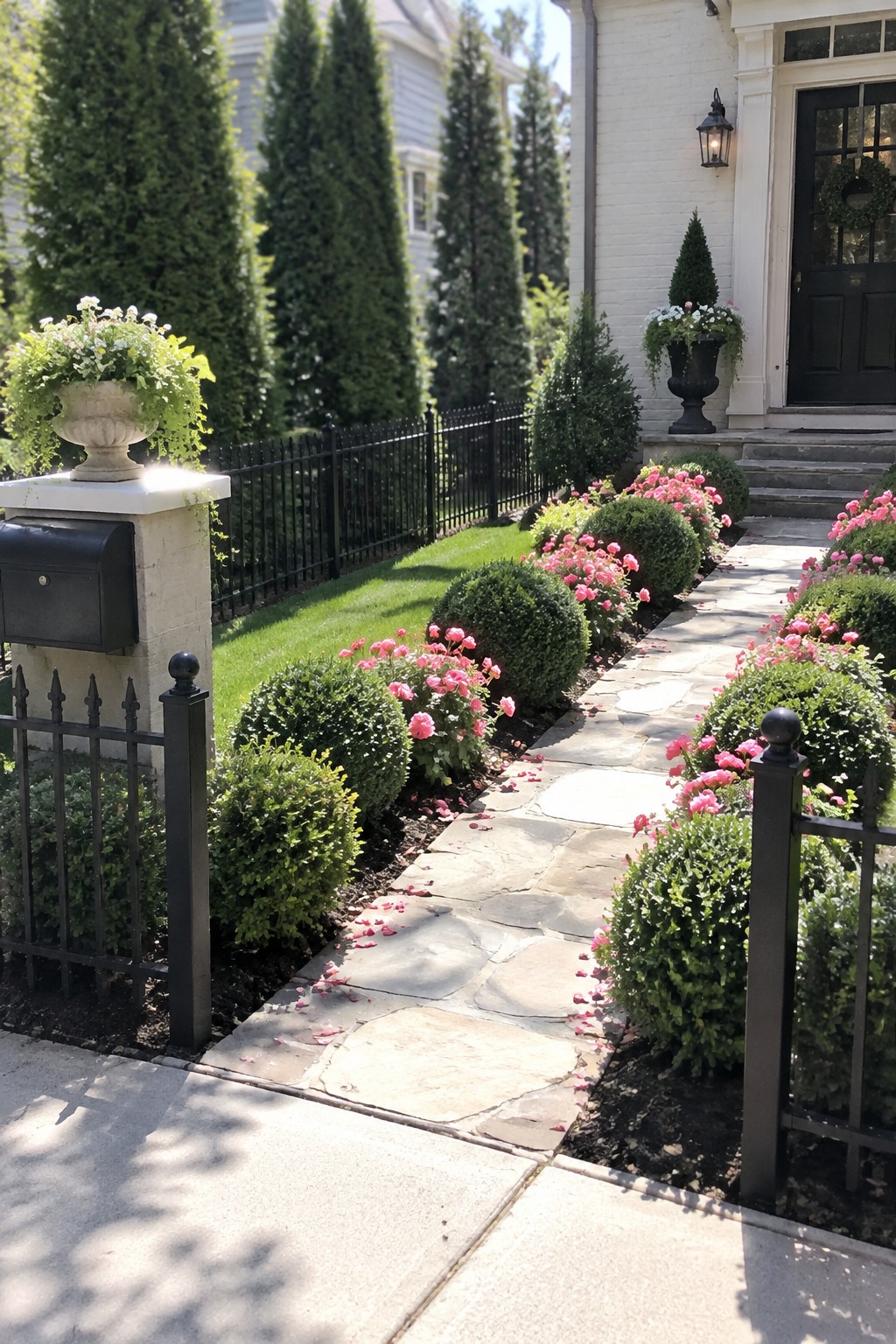
A stone path gives a rose garden a clear route to the front door while keeping the planting beds in order. Rounded boxwood shrubs and pink roses along the edges make the walkway feel settled without crowding it.
This approach works well in a front garden where visitors need an easy, direct way to the entrance. Leave enough room for comfortable walking, and keep the roses trimmed back so petals and branches do not make the path difficult to use.
Use Boxwood to Create a Small Rose Garden
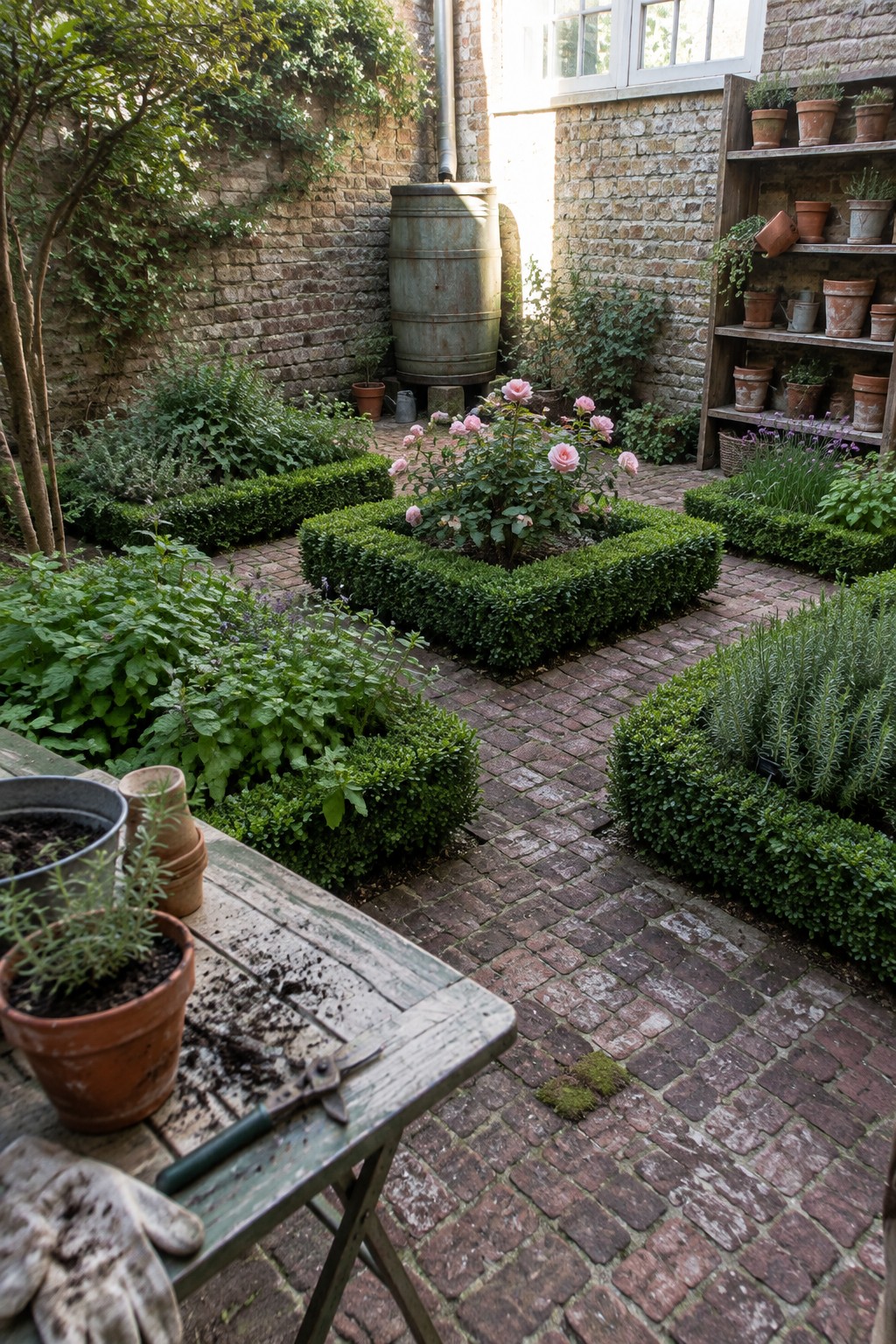
Low boxwood hedges can give a rose bed a clear shape, especially in a compact courtyard. The clipped edges make the planting feel orderly while the roses remain the main feature.
This layout works well where brick paving surrounds a central bed. Keep the hedge low enough to see the roses, and leave a comfortable path around it so the garden is easy to tend.
Use a Gravel Path Along a Rose Border
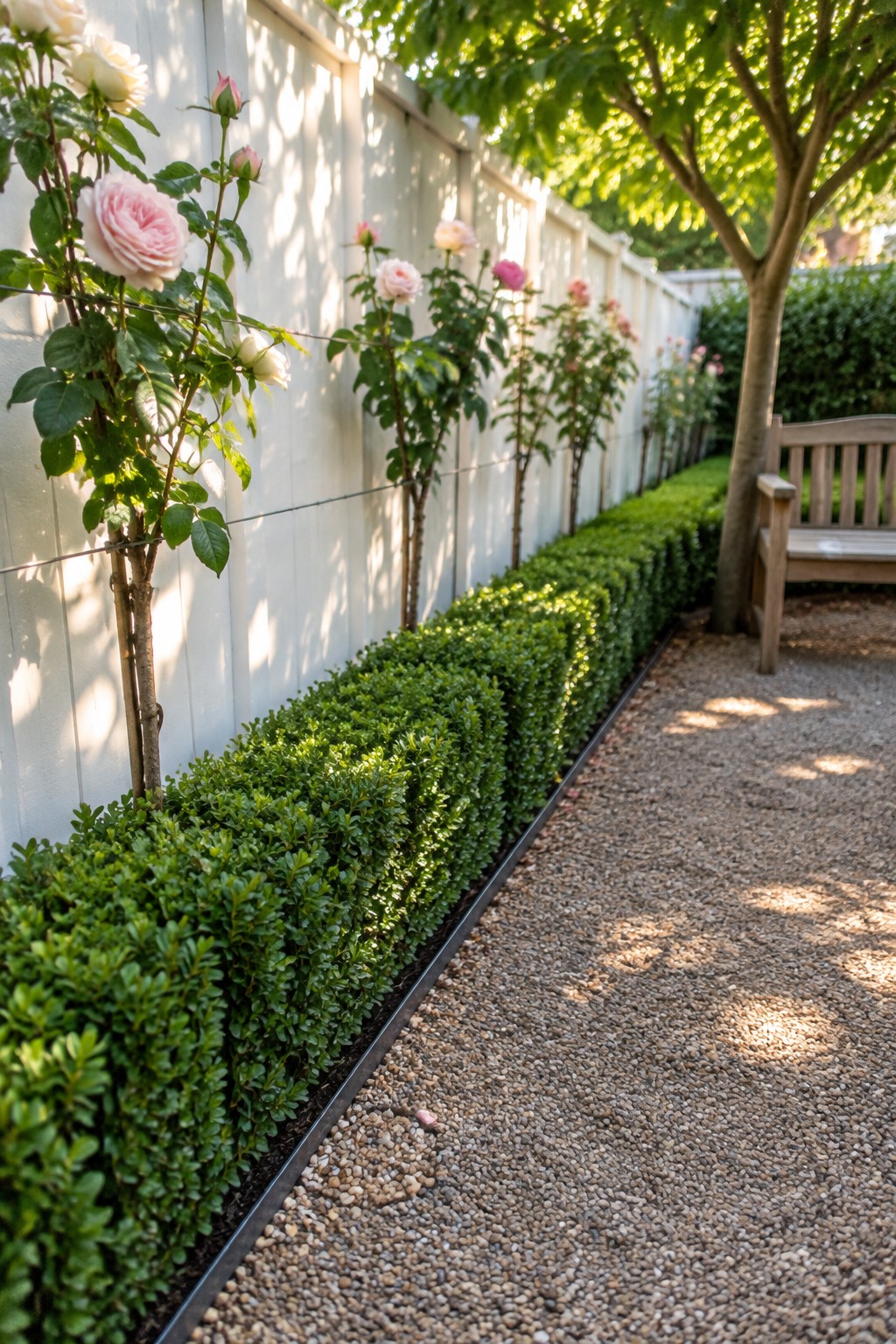
A gravel path beside roses and clipped boxwood gives a garden a clear, easy-to-follow layout. The firm edge between the planting and the path keeps the bed tidy, while the roses bring color up along the boundary.
This approach works well in a narrow side garden or along a fence. Choose gravel that is comfortable to walk on, and use a sturdy edging strip to keep it from spreading into the boxwood.
Use a Rose Hedge for Garden Privacy
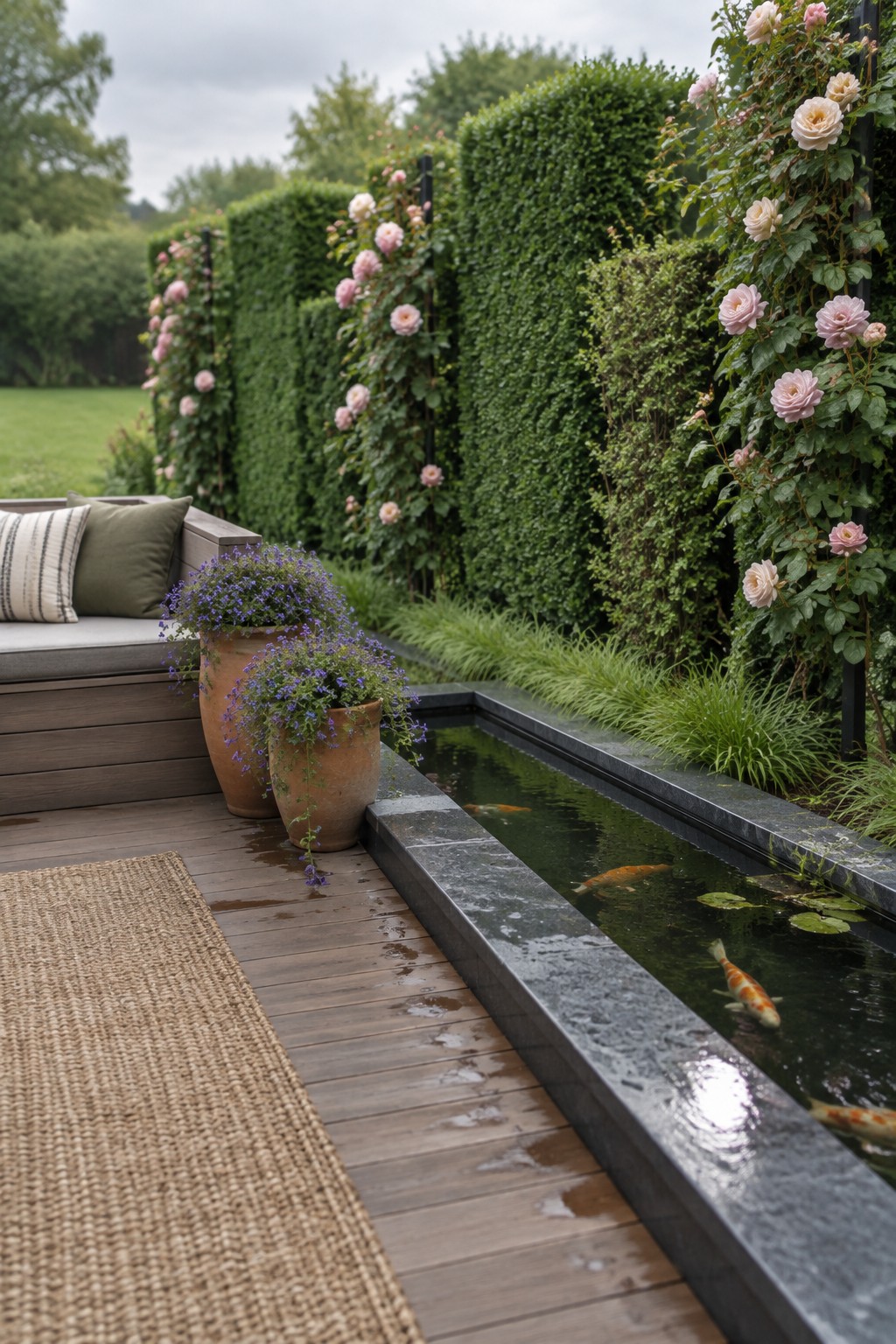
A tall, clipped hedge can give climbing roses a clear place to grow while screening a seating area from the rest of the yard. The repeated green panels make the planting feel orderly, even as the roses bring a softer look.
This approach works well along a deck or patio where a little privacy is useful. Train roses on sturdy supports set along the hedge, and leave enough room to prune and care for both plants.
Use a Rose Trellis to Add Privacy to a Rooftop Garden
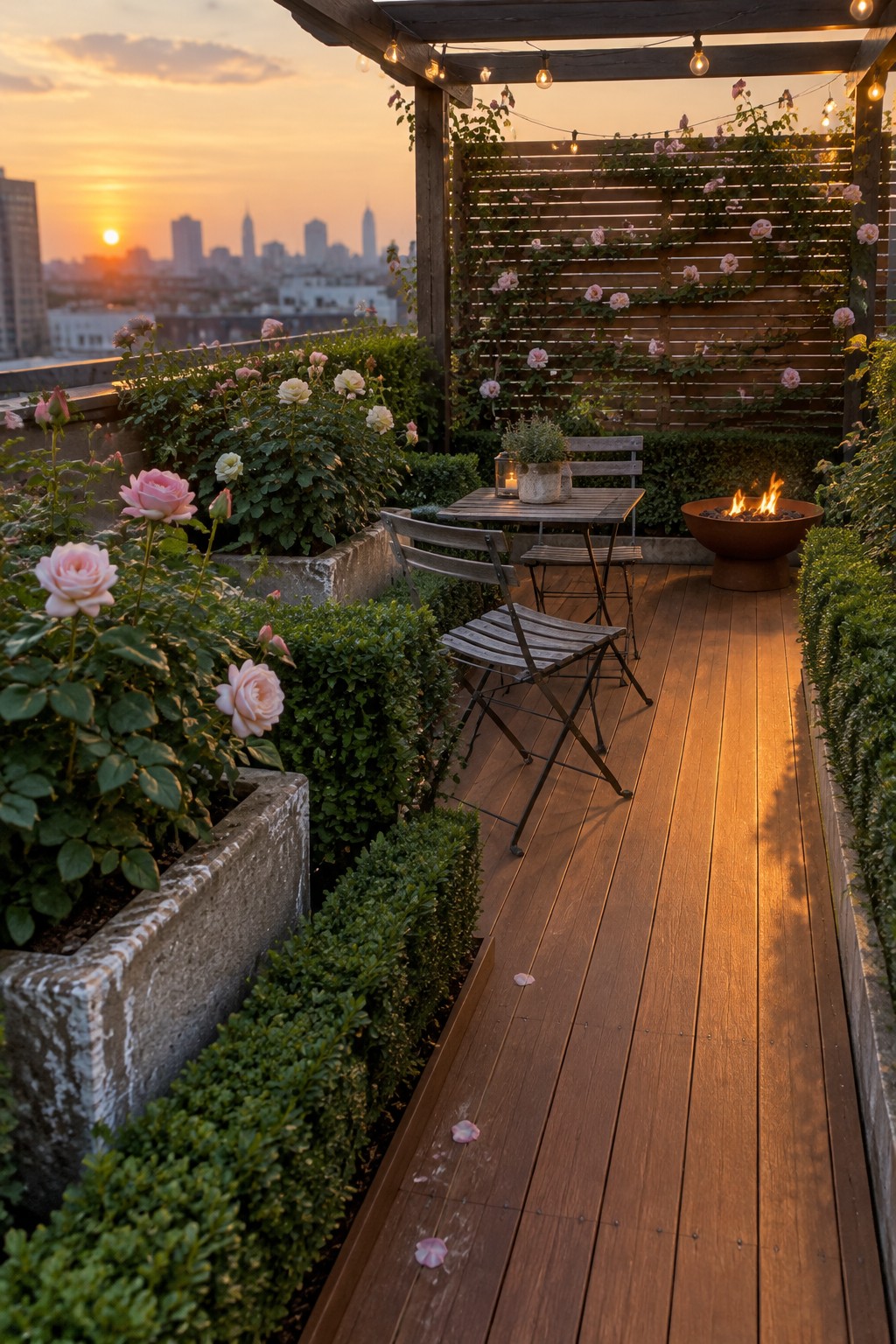
A slatted trellis covered in climbing roses can give a rooftop garden a little more privacy without closing it off completely. It also makes a small outdoor space feel more like a garden, rather than just a deck with seating.
Place the trellis along an exposed edge or behind a dining area, and train roses across the slats as they grow. Keep clipped boxwood nearby to define the planting beds, but leave enough room for the roses to spread and for air to move through.
Use a Rose Arch to Create a Garden Seating Nook
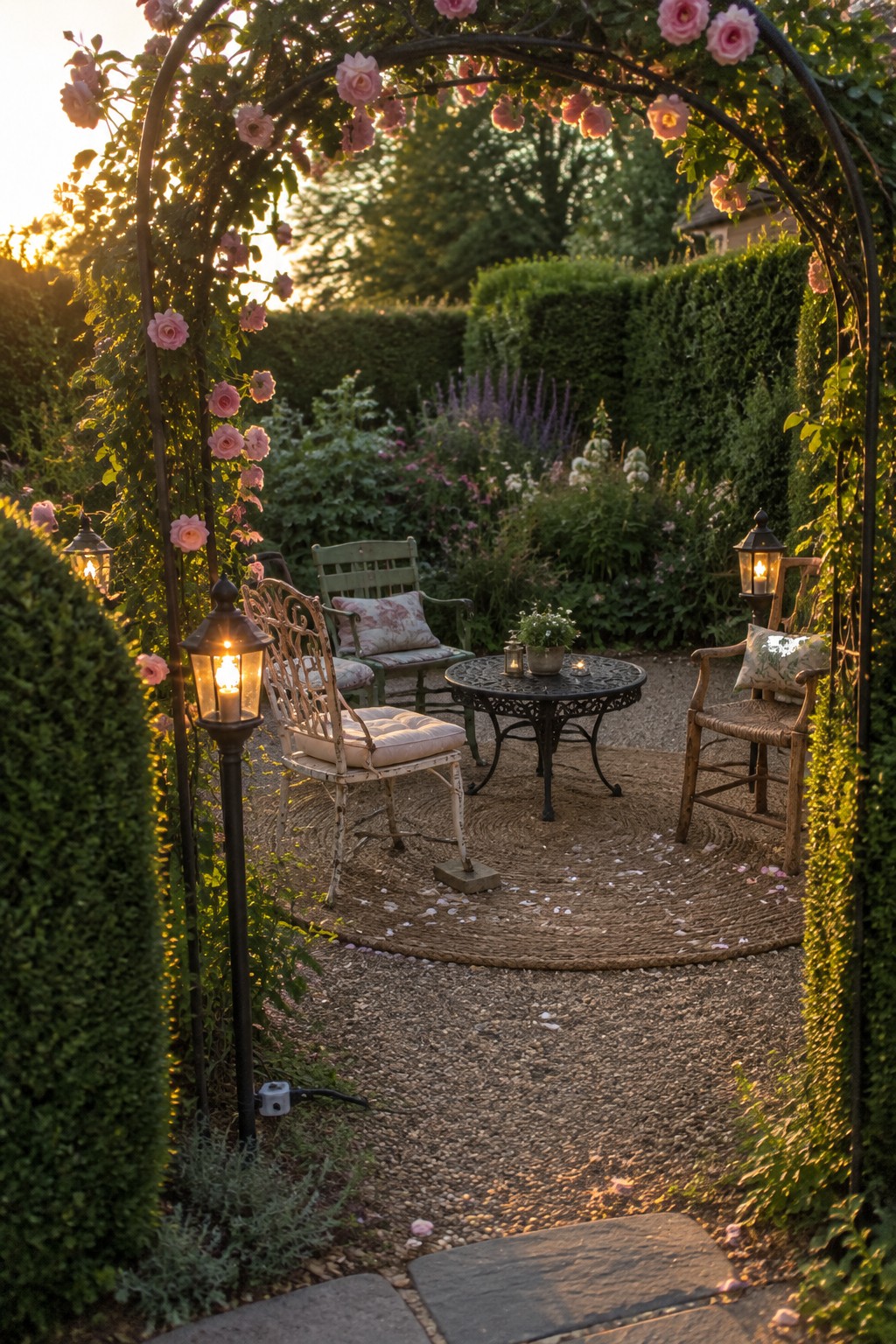
A rose-covered arch can make a small seating area feel like its own part of the garden. It gives the space a clear boundary without blocking the view, and the flowers bring color up above the surrounding planting.
This works well at the end of a garden path or in a quiet corner where you want to pause. Train climbing roses along a sturdy metal arch, and keep nearby hedges trimmed so the seating area stays open rather than enclosed.
Frequently Asked Questions
Q: Which roses work best with boxwood?
A: Compact shrub roses are an easy fit because they stay in scale with low boxwood hedges and need less shaping than sprawling varieties. Choose a repeat-blooming type if you want color through more of the season.
Q: How much space should I leave between roses and boxwood?
A: Leave enough room for each plant to reach its mature width without crowding. Good airflow helps keep rose foliage healthy, and a little space makes pruning easier.
Q: Can I plant roses and boxwood in the shade?
A: Boxwood handles partial shade, but roses usually bloom better with at least six hours of sun. If the spot is shady for most of the day, try shade-tolerant plants alongside the boxwood instead.
Q: How do I keep the planting looking neat without constant trimming?
A: Pick compact varieties and give them room to grow naturally. Trim boxwood lightly once or twice a year, and prune roses according to their type rather than shearing everything into a tight shape.
