


Hostas can make a shady garden feel settled and full, but they work best when their size and placement suit the space.
I find that the first things you notice are the shape of the planting beds and how the leaves repeat along a path or beneath trees.
Pairing hostas with simple edging, groundcover, or a few contrasting plants can add structure without creating much extra work.
The ideas here offer practical ways to fill difficult shaded spots while keeping pathways clear and the garden easy to care for.
I’d start with the layouts that fit your yard’s existing trees and borders, then adapt the plant combinations as the garden grows.
Let a Stone Path Guide the Garden

A gently curving stone path makes a shaded garden easier to move through and gives the planting beds a clear shape. Hostas work well along its edges, where their broad leaves can soften the hard lines of the stones without covering the walking surface.
Use larger hostas near the front of the beds and smaller plants where the path narrows. Leave enough room for mature leaves to spread, and choose stepping stones with fairly even surfaces for comfortable walking.
Use a Clear Path Beside Shade-Garden Beds
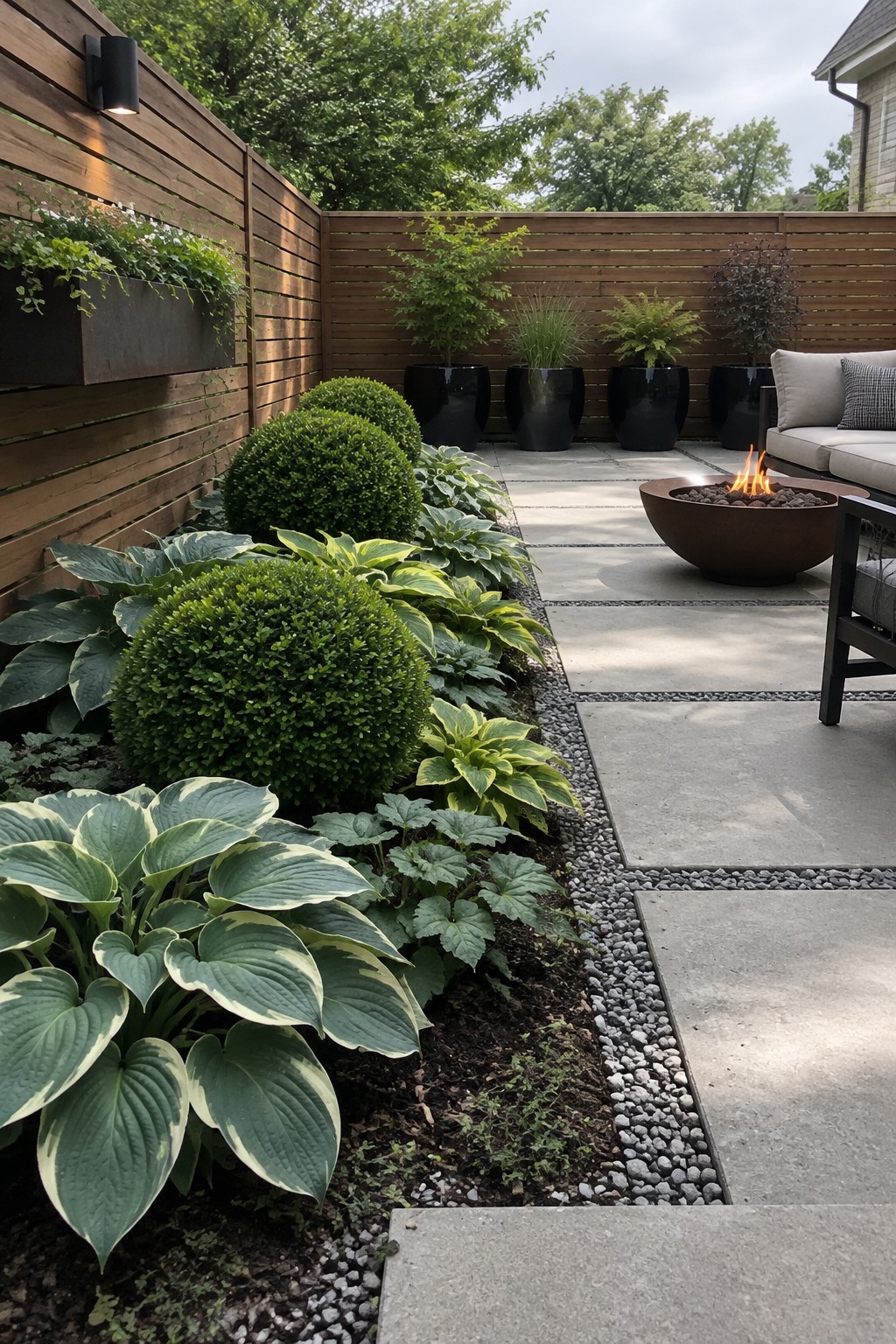
A simple path gives a hosta bed a tidy edge and makes it easier to move through the garden without stepping among the plants. Large concrete pavers separated by narrow strips of gravel keep the route clear while letting the planting bed remain the main feature.
For a similar layout, leave enough space between pavers for comfortable walking and keep the gravel edge neat. This works especially well in a compact side yard or patio garden where a defined path helps the space feel easy to use.
Use Stepping Stones to Make a Garden Path
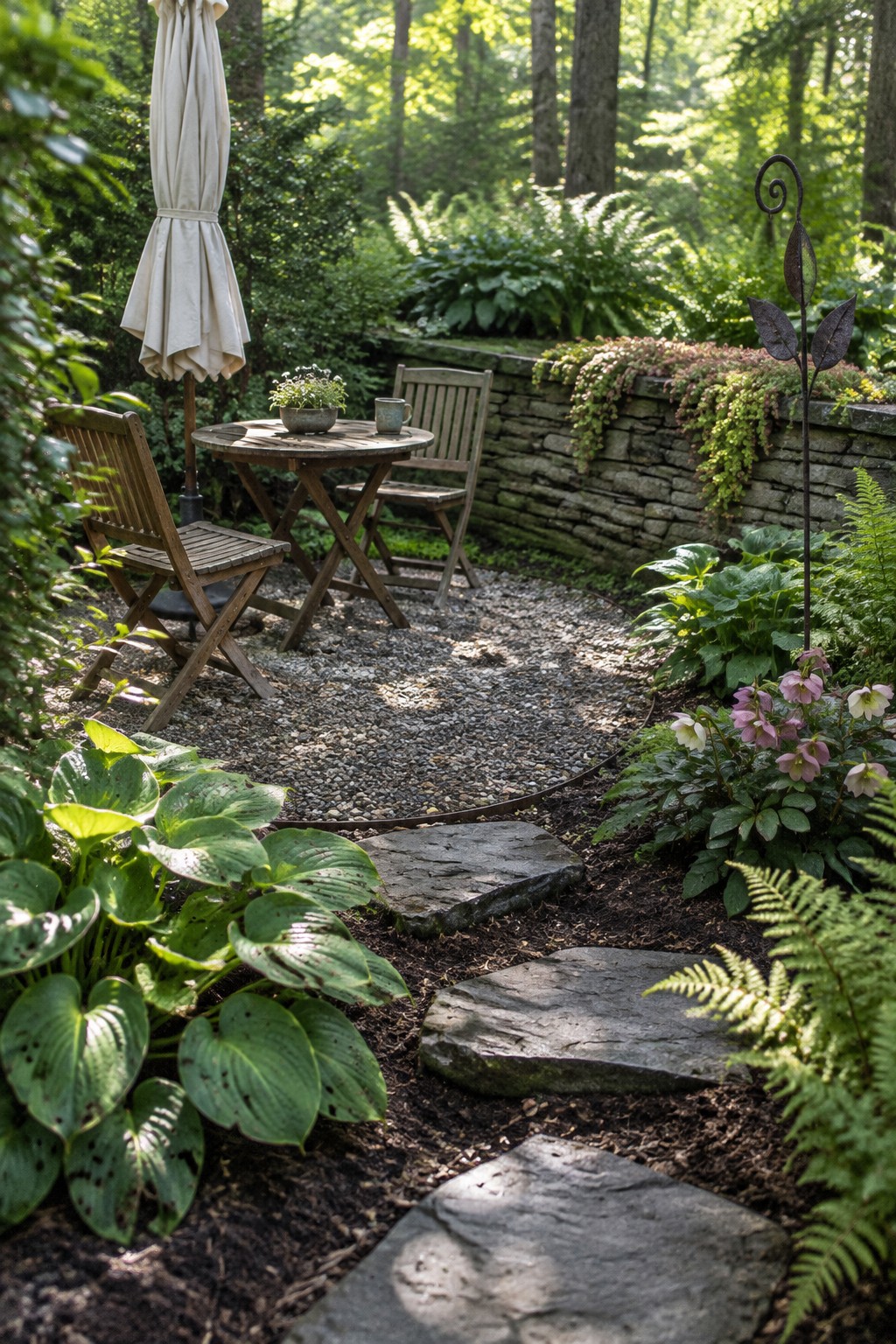
A stepping-stone path gives a shaded garden a clear route without covering the soil with paving. The broad stones stand out among low plants and help keep foot traffic off the planting areas.
Set the stones where people naturally walk, and leave enough room for a comfortable stride. This approach works well in informal shade gardens, especially where hostas grow along the edges. Keep the stones level and stable so they are easy to use.
Use Hostas Along a Brick Garden Path
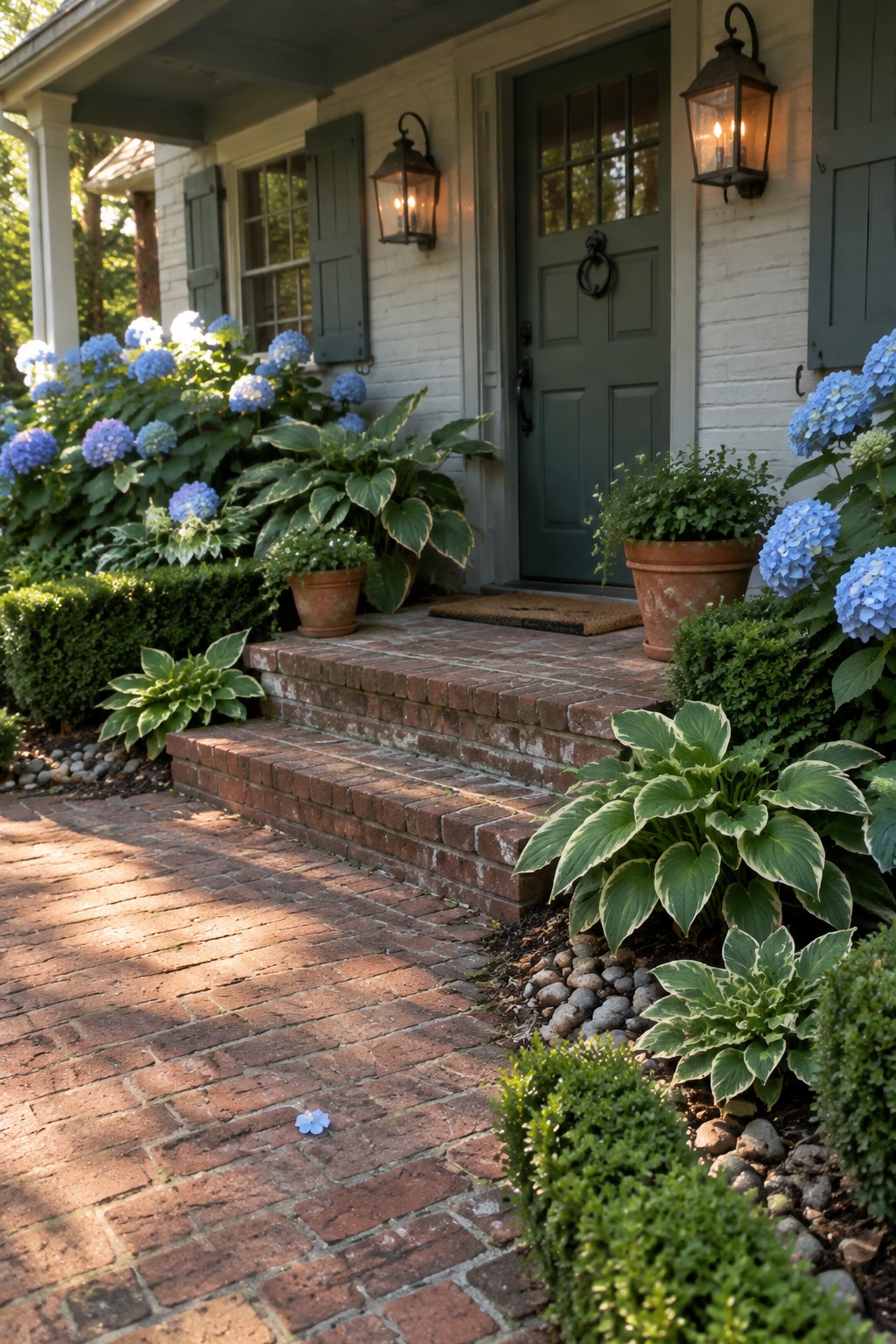
Hostas make a shady path feel planted without requiring a lot of fussy upkeep. Their broad leaves fill the edges neatly, while hydrangeas can add seasonal color nearby.
For a similar look, repeat a few hosta varieties along the path rather than mixing in too many plants. Choose varieties suited to the amount of shade, and leave room for their mature size so the leaves do not crowd the walkway.
Use a Gravel Path Beside Shade-Garden Beds
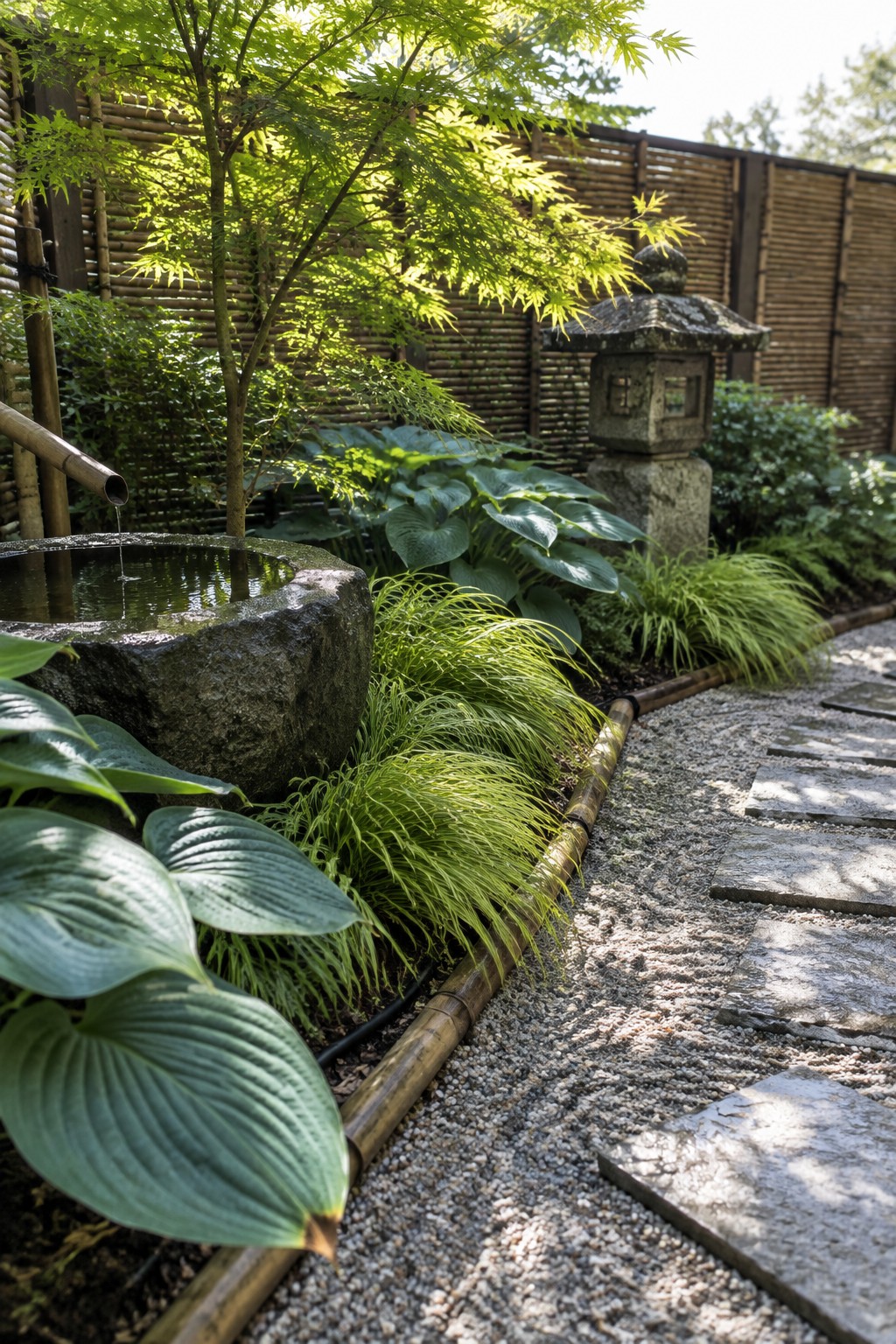
A gravel path gives a shade garden a clear route without taking up much planting space. The stepping stones make it easier to walk across, while hostas and other leafy plants can fill the beds alongside it.
This approach works well in a narrow side yard or any garden where a solid paved path would feel too wide. Keep the path edges tidy and leave enough room for plants to spread without spilling onto the walking surface.
Use Hostas Along a Poolside Garden Border

A narrow planting bed beside a pool is a good place to use hostas. Their broad leaves fill the strip neatly, while a simple stone edge keeps soil and gravel out of the water.
Choose hosta varieties that suit the amount of shade, and leave enough room for them to spread. This layout works well in a compact yard, but keep plants trimmed back from the pool coping so leaves are easy to clear.
Build Shade-Garden Beds With Stone Retaining Walls
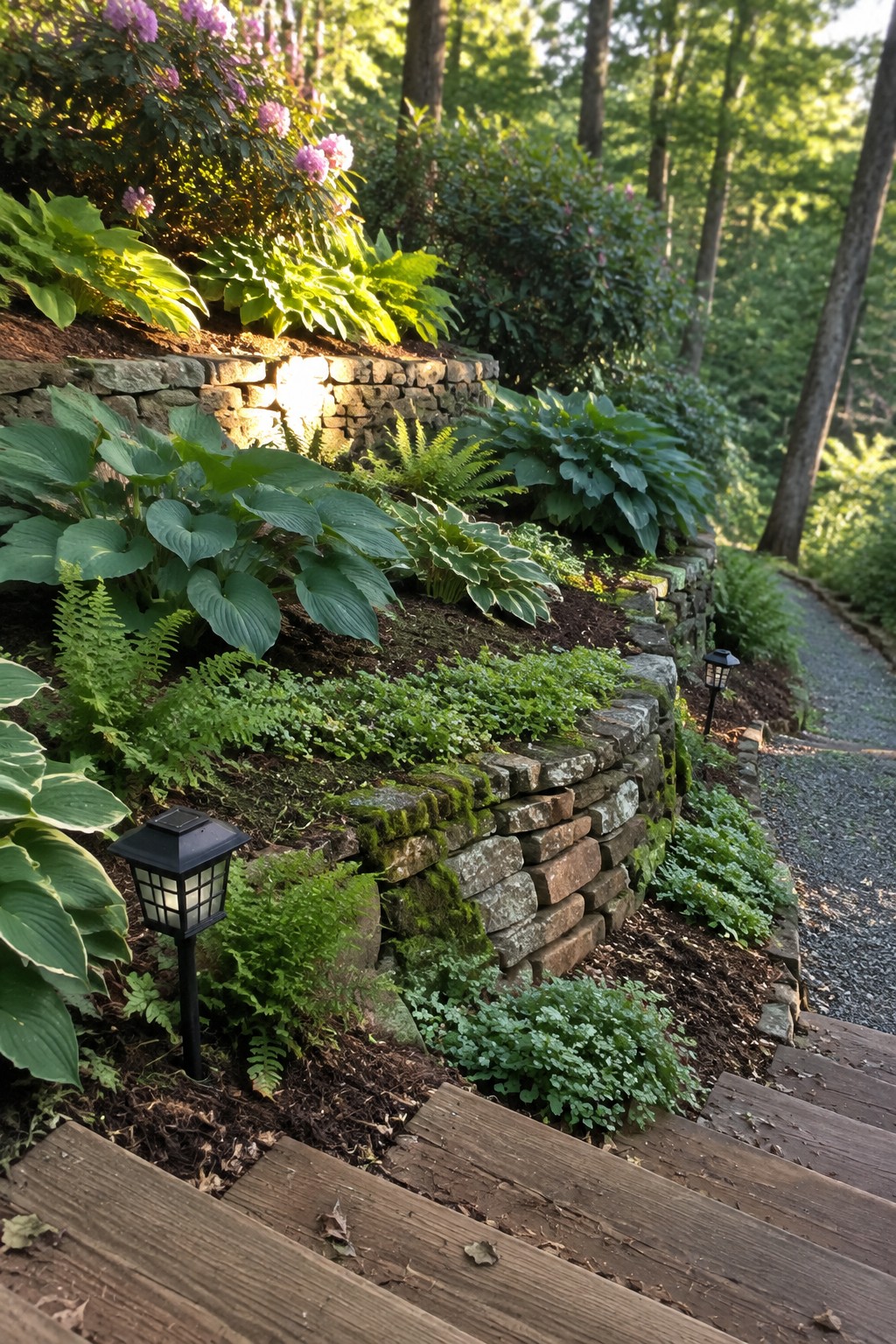
Stone retaining walls create planting levels on a sloped yard, giving hostas and other shade plants room to grow without letting the bed spill onto the path. The stacked stone also gives the garden a clear edge.
Use this approach where a slope makes a flat bed difficult to maintain. Plant hostas along the wall and leave enough space for them to spread, while keeping the stonework stable and the path clear.
Use Raised Hosta Beds Along a Narrow Path
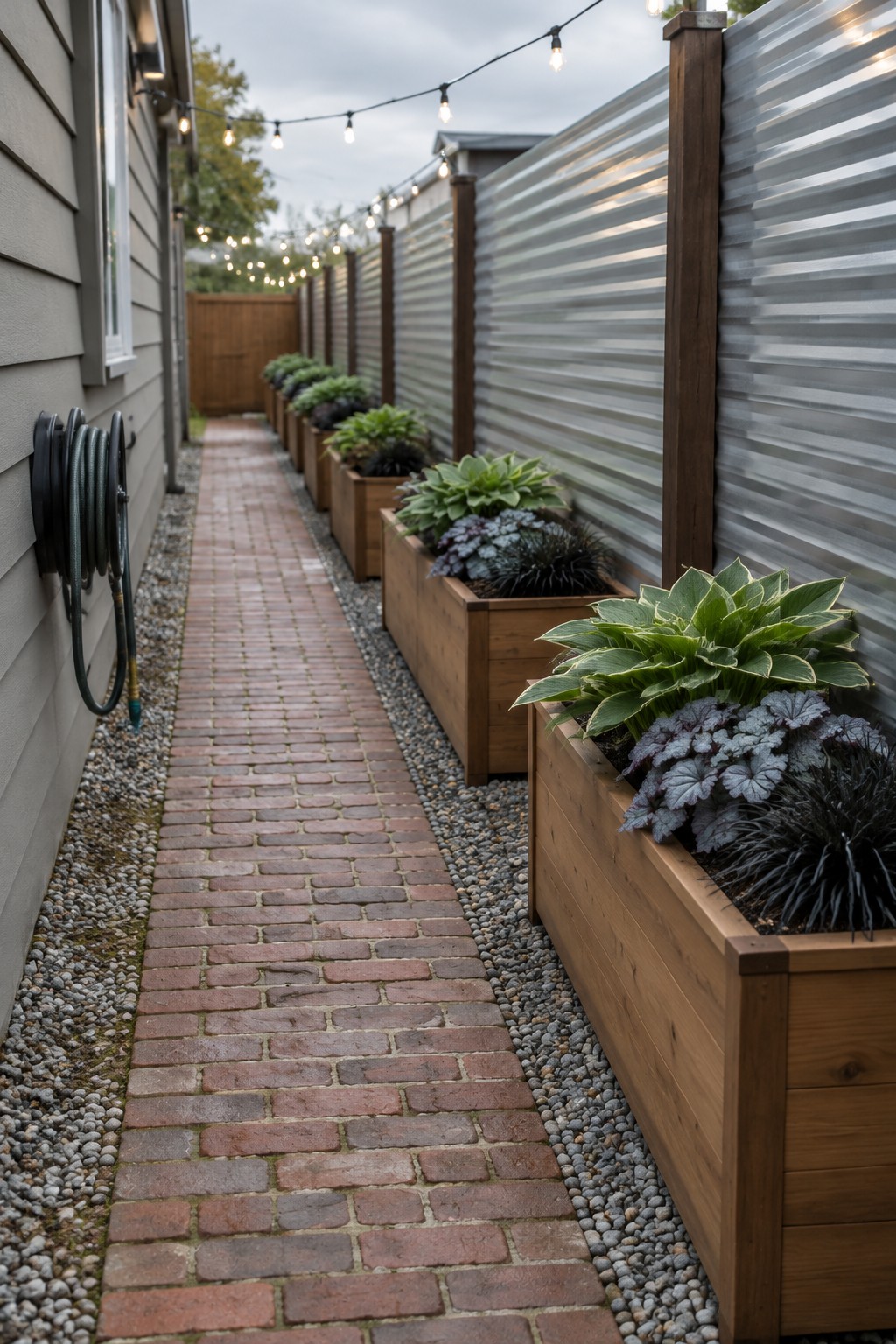
Raised planters make a narrow side yard easier to keep tidy while giving shade-loving hostas a defined place to grow. The brick path stays clear, and the beds bring greenery close without spreading plants across the walkway.
This layout works well beside a house or fence where garden space is limited. Leave enough room for comfortable walking, and choose planters that are easy to reach for watering and occasional trimming.
Use Hostas Along a Stone Patio Border
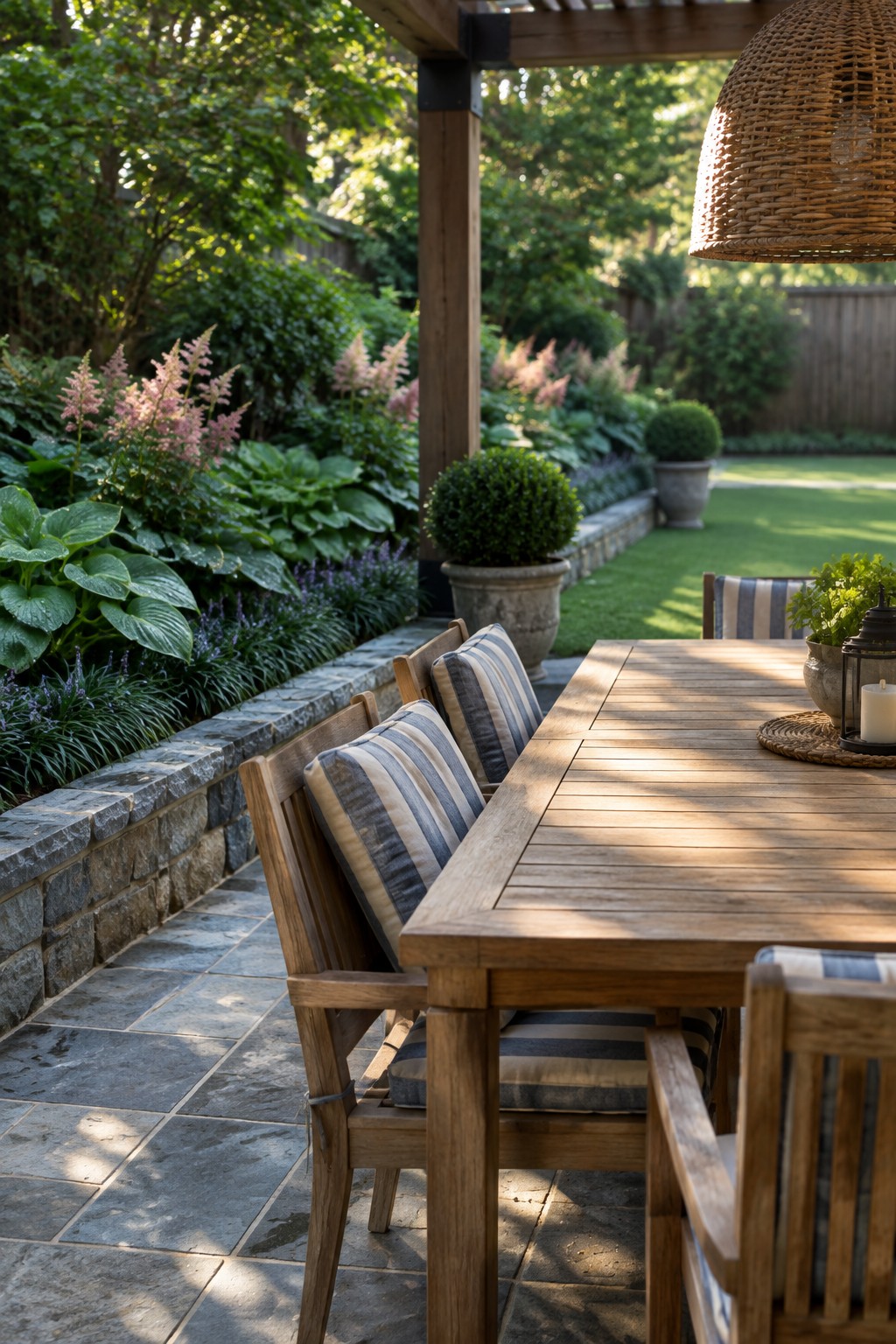
A low stone wall can give a shade garden a tidy edge while keeping the planting bed separate from the patio. Hostas work well here because their broad leaves fill the space without needing a lot of fuss.
Plant hostas in groups along the wall, leaving room for them to spread as they mature. This approach suits patios beside a shaded bed, but keep the stone edge low enough that it does not block the view of the plants.
Shape Shade Beds With Clipped Boxwood Edging
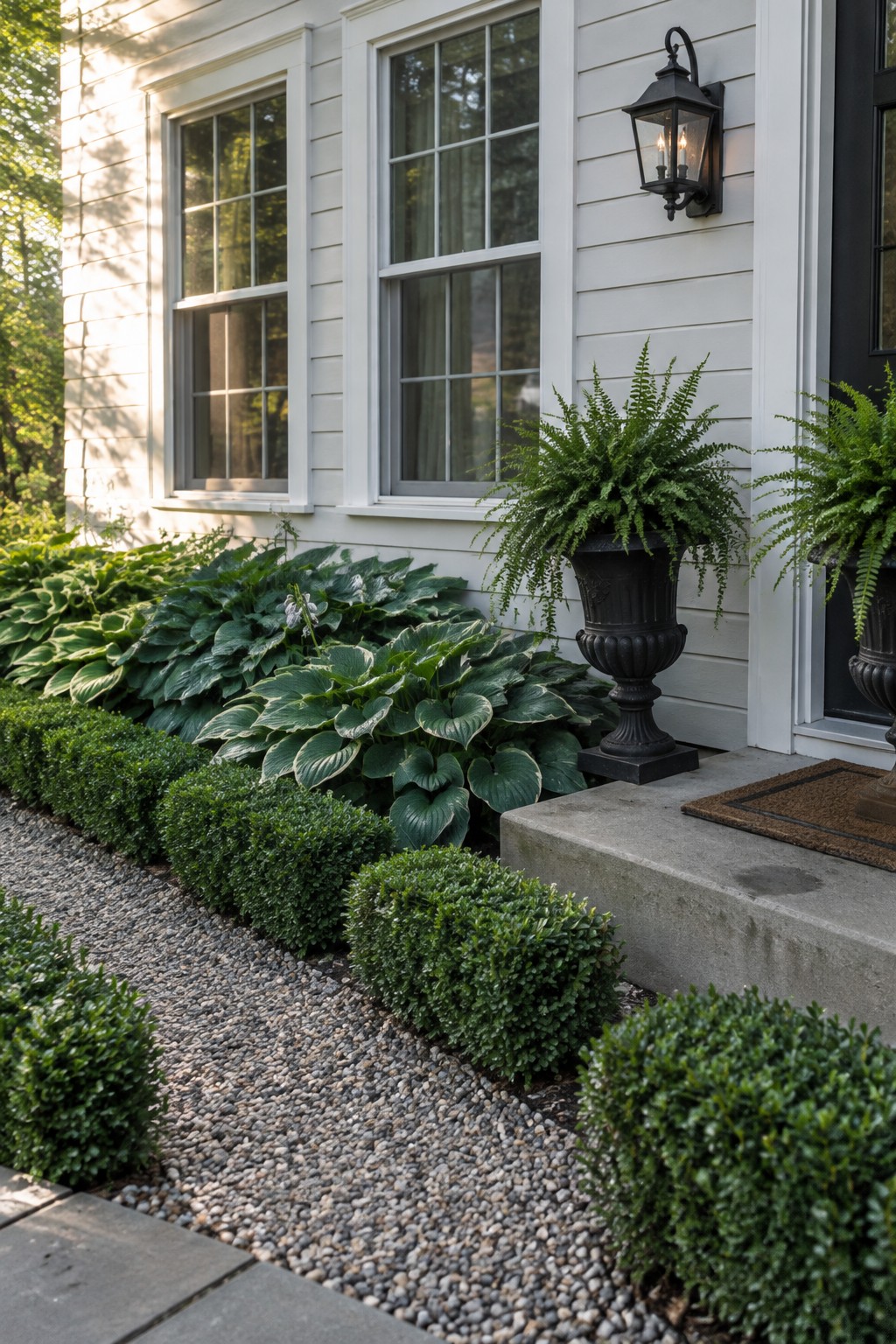
Hostas make a lush ground layer in a shaded front garden, while a low clipped hedge gives the bed a neat, defined edge. This is a useful way to keep generous foliage from looking untidy beside the house.
Use the same simple edging along a gravel path or entry walk to make the planting feel planned. Leave enough room for hostas to spread, and trim the boxwood when needed to keep the border clear.
Use Hosta Rows to Edge a Garden Walk

A straight row of hostas can give a garden path a tidy, settled look without needing much extra planting. Their broad leaves make a clear edge along the paving, and once established, hostas need little attention beyond watering during dry spells.
For a similar layout, plant hostas in a narrow bed beside large paving slabs, leaving enough room for the leaves to spread without covering the walking surface. This works especially well in a shady side yard or courtyard. Give each plant space to reach its mature width so the path stays easy to use.
Use Hosta Beds to Edge a Garden Pond
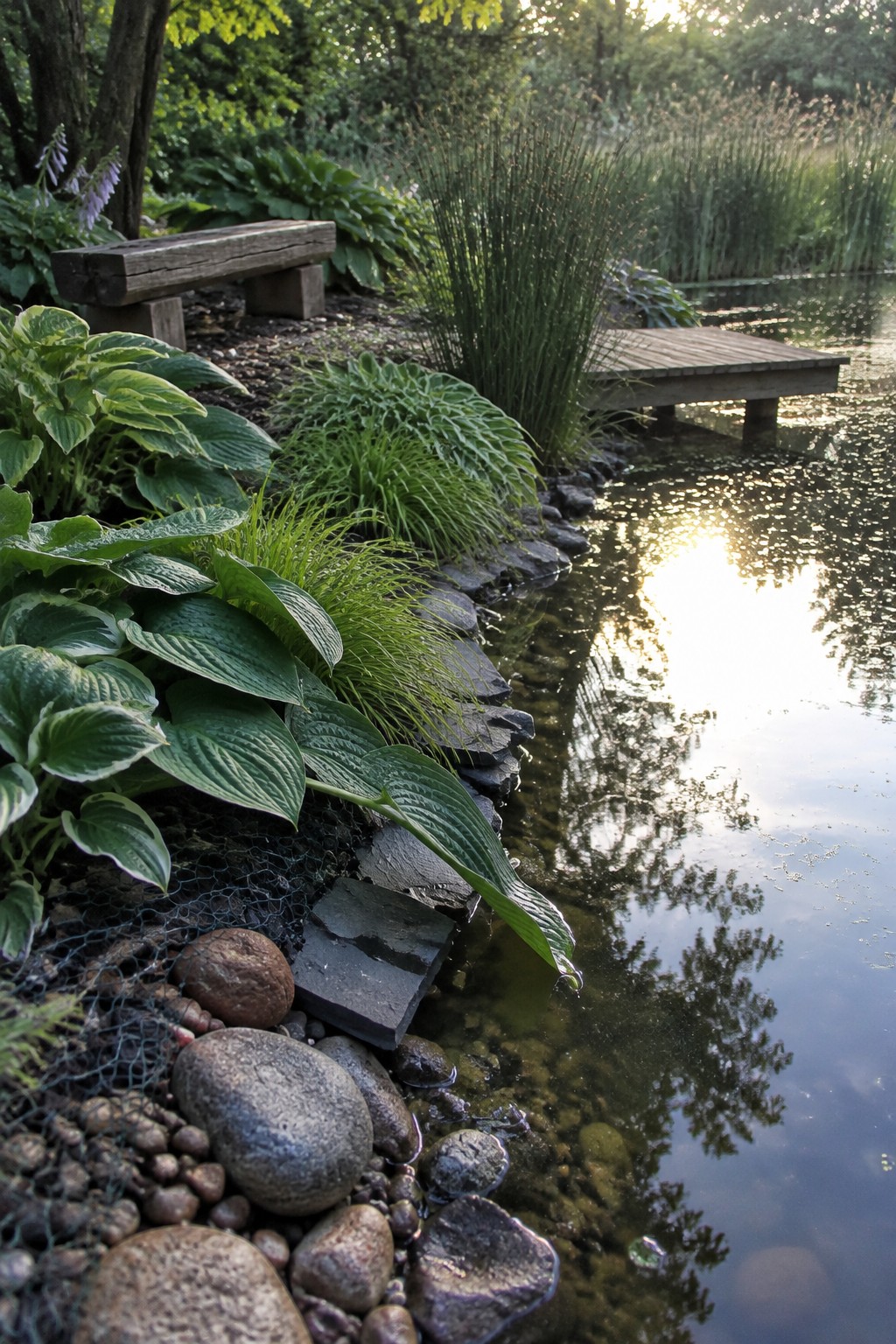
Hostas work well along a pond because their broad leaves make a clear, leafy border between the water and the rest of the garden. They also do well in the shade cast by nearby trees, so this is a practical spot for plants that might struggle in a sunnier bed.
Plant hostas in loose groups along the bank, leaving room for them to spread. A stone edge can help hold the soil in place, but keep the leaves from hanging too far over the water where they may be difficult to manage.
Use Hostas Along a Gravel Garden Drive
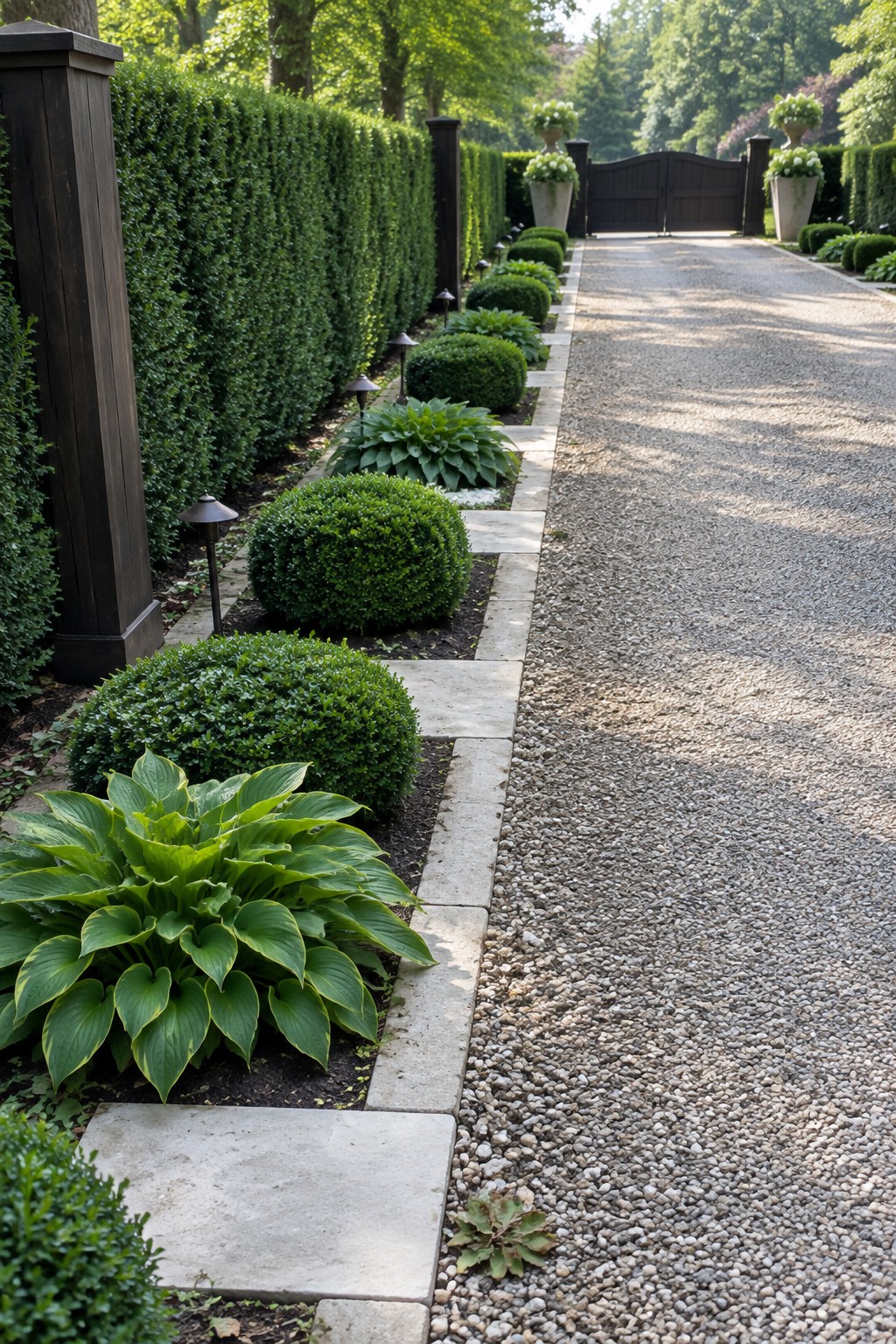
A gravel drive can feel softer and more garden-like when a planted border runs along its edge. Large hostas make a useful choice for shady sections, while rounded shrubs add a little structure without making the bed feel crowded.
Keep the planting in a narrow, defined strip so it does not spill onto the drive. Hostas suit the wider spots in the bed, where their leaves have room to spread, and a stone edge helps keep gravel out of the soil.
Use Hostas to Edge a Patio Dining Area
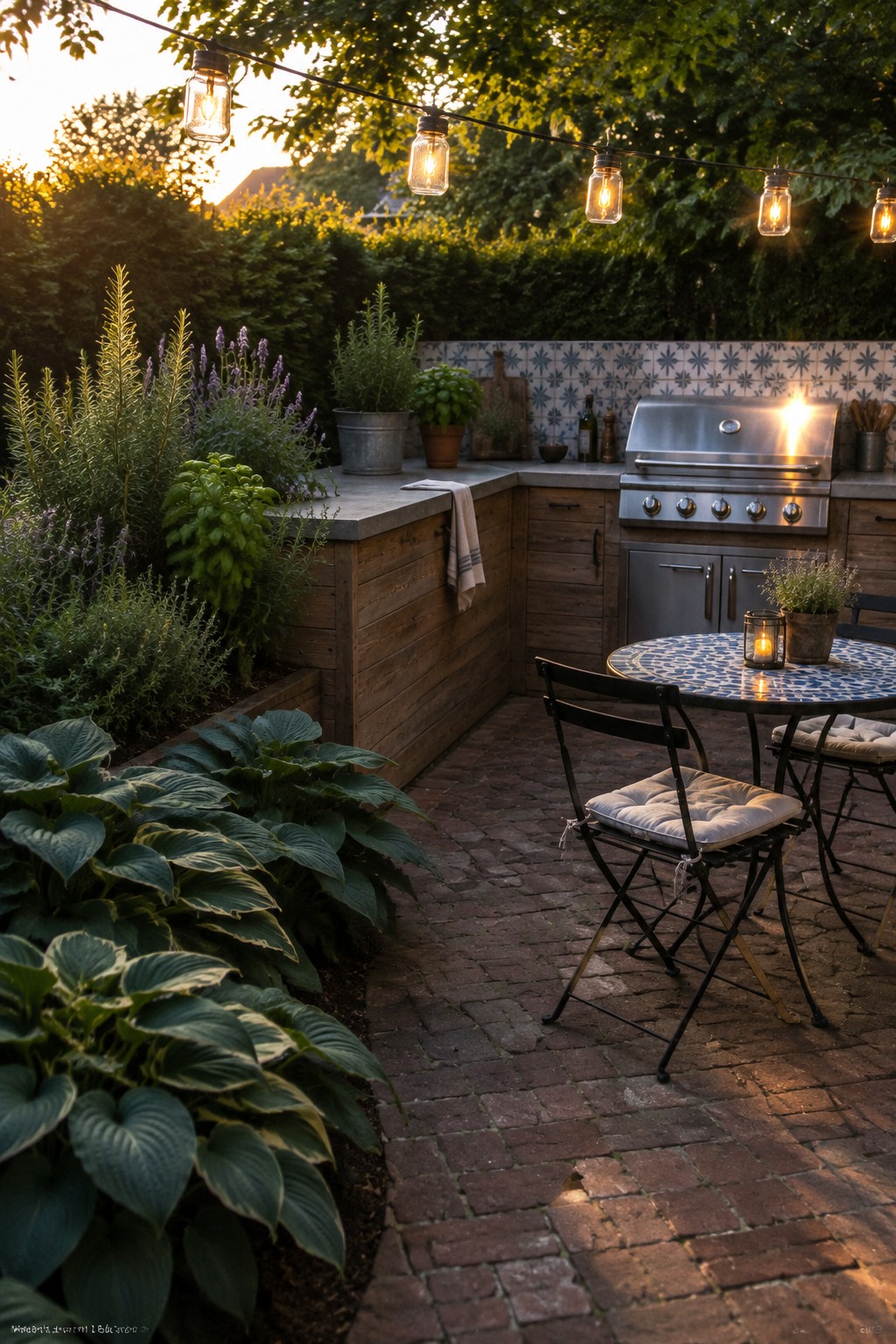
Hostas can make a patio feel tucked into the garden without taking up the space needed for a table and chairs. A border of broad-leaved plants along the edge gives the seating area a clear boundary and keeps the hard surface from feeling separate from the planting beds.
This works especially well beside a brick or stone patio in a shady yard. Plant hostas in a continuous bed along one side, leaving enough room for chairs to pull out and for people to walk comfortably. Choose varieties suited to your climate, and allow for their mature width so the leaves do not crowd the path.
Use Hosta Beds Beside Stepping-Stone Paths
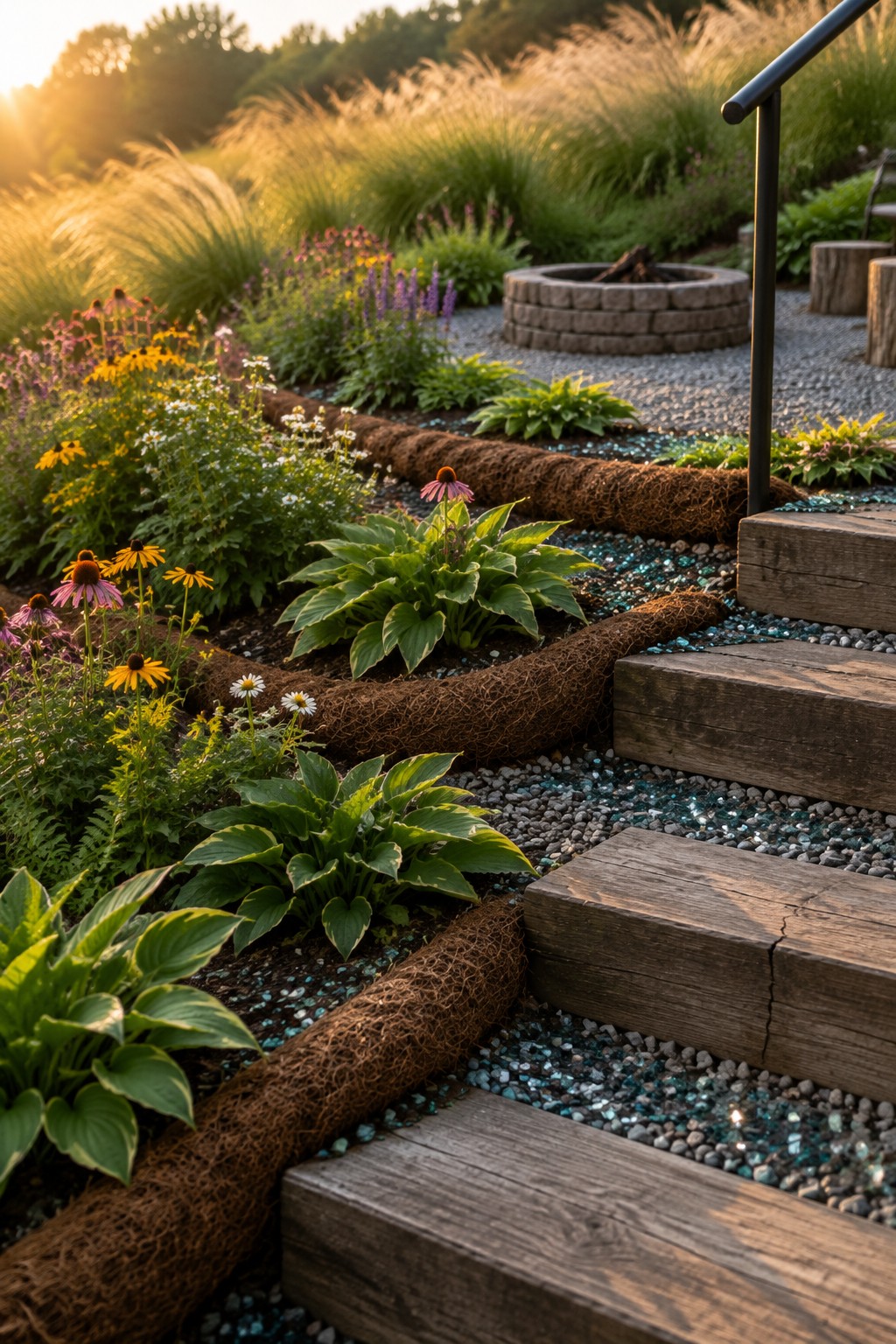
Stepping stones make a garden path easy to follow while leaving room for generous planting beds along the edges. Hostas are a good fit for this layout because their broad leaves fill the space between stones and taller flowers without needing frequent trimming.
Set the stones on a stable, well-drained base, with enough room to walk comfortably. Plant hostas along the path in groups, leaving space for them to spread as they mature. The path shown uses chunky timber steps and gravel, a practical approach for a gently sloped garden.
Use Hostas to Screen a Small Balcony
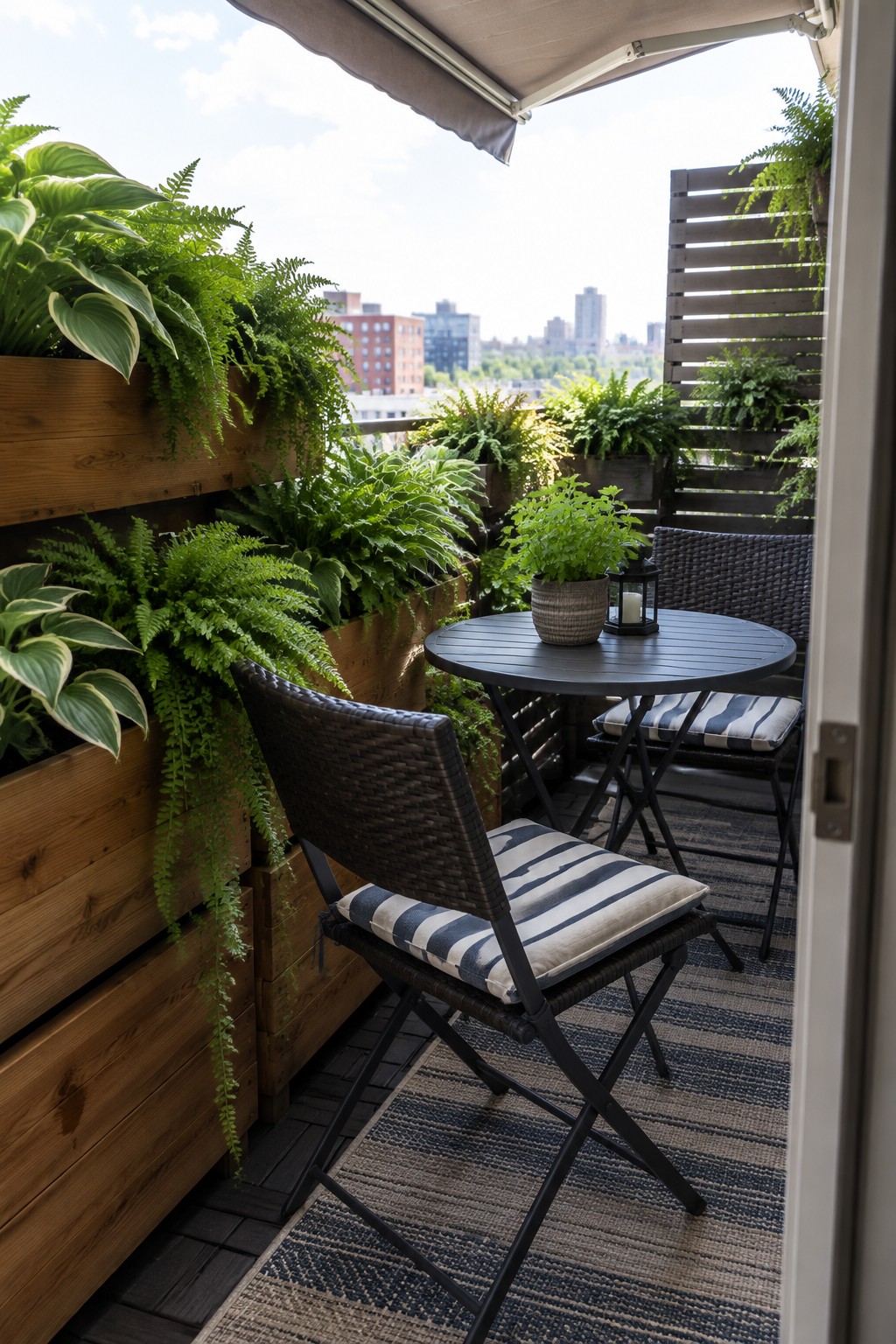
A row of planters can turn a narrow balcony into a leafy, private-feeling spot without taking up much floor space. Hostas are a good choice for shaded balconies, where their broad leaves can fill the planters and create a lush border.
Use long containers along the railing or wall, and leave enough room for chairs and a small table. Choose hostas suited to the amount of shade your balcony gets, and make sure the planters have drainage so the roots do not sit in water.
Use a Garden Arch to Mark the Path
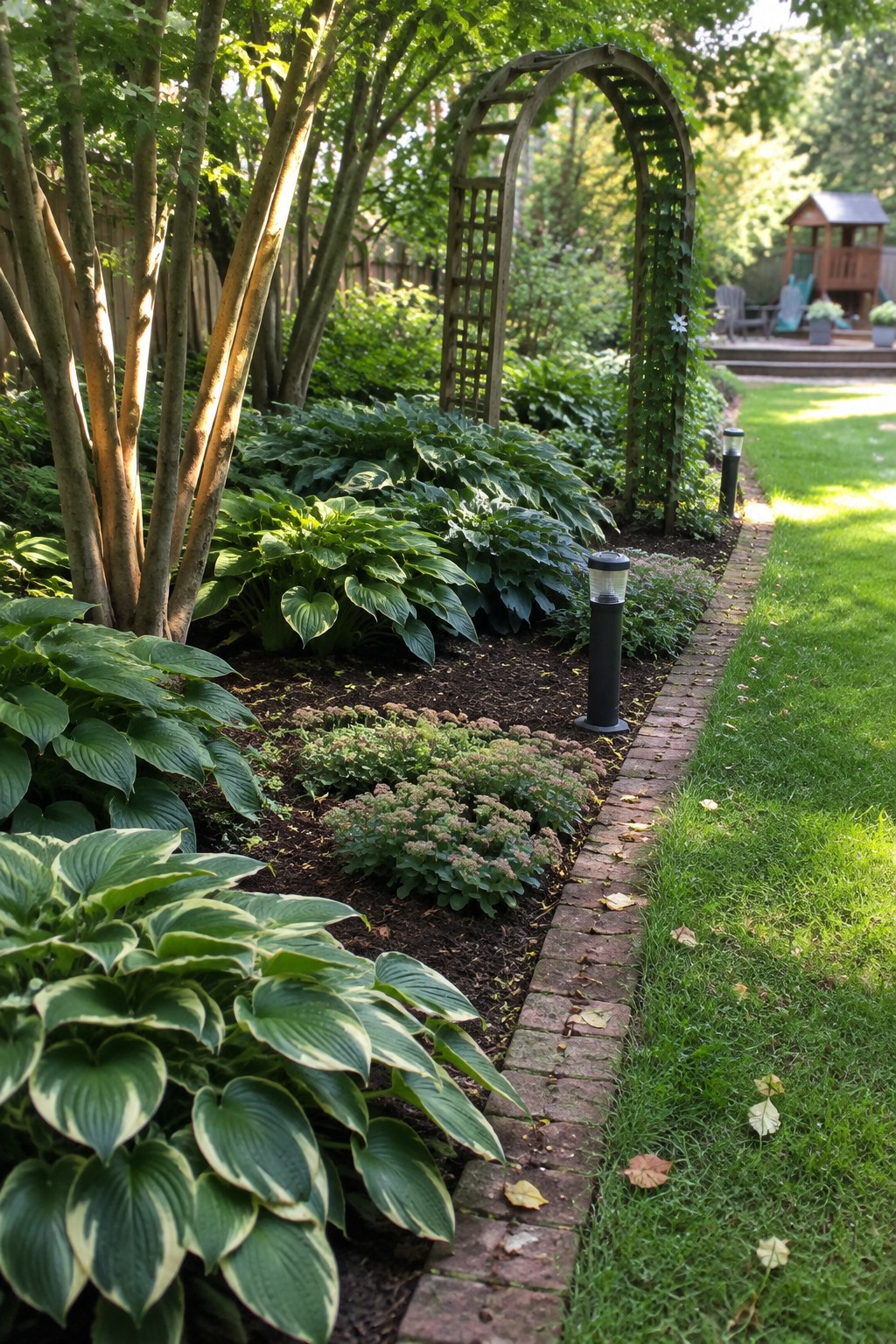
A simple garden arch gives a shade garden a clear point to walk toward. Set among leafy hostas, it adds a little structure without taking attention away from the planting.
Place the arch where a path enters or changes direction, and let hostas fill the nearby bed. Choose a sturdy design that can handle climbing plants, but leave enough room for the foliage to spread without narrowing the walkway.
Use Hostas to Define a Small Patio Seating Area
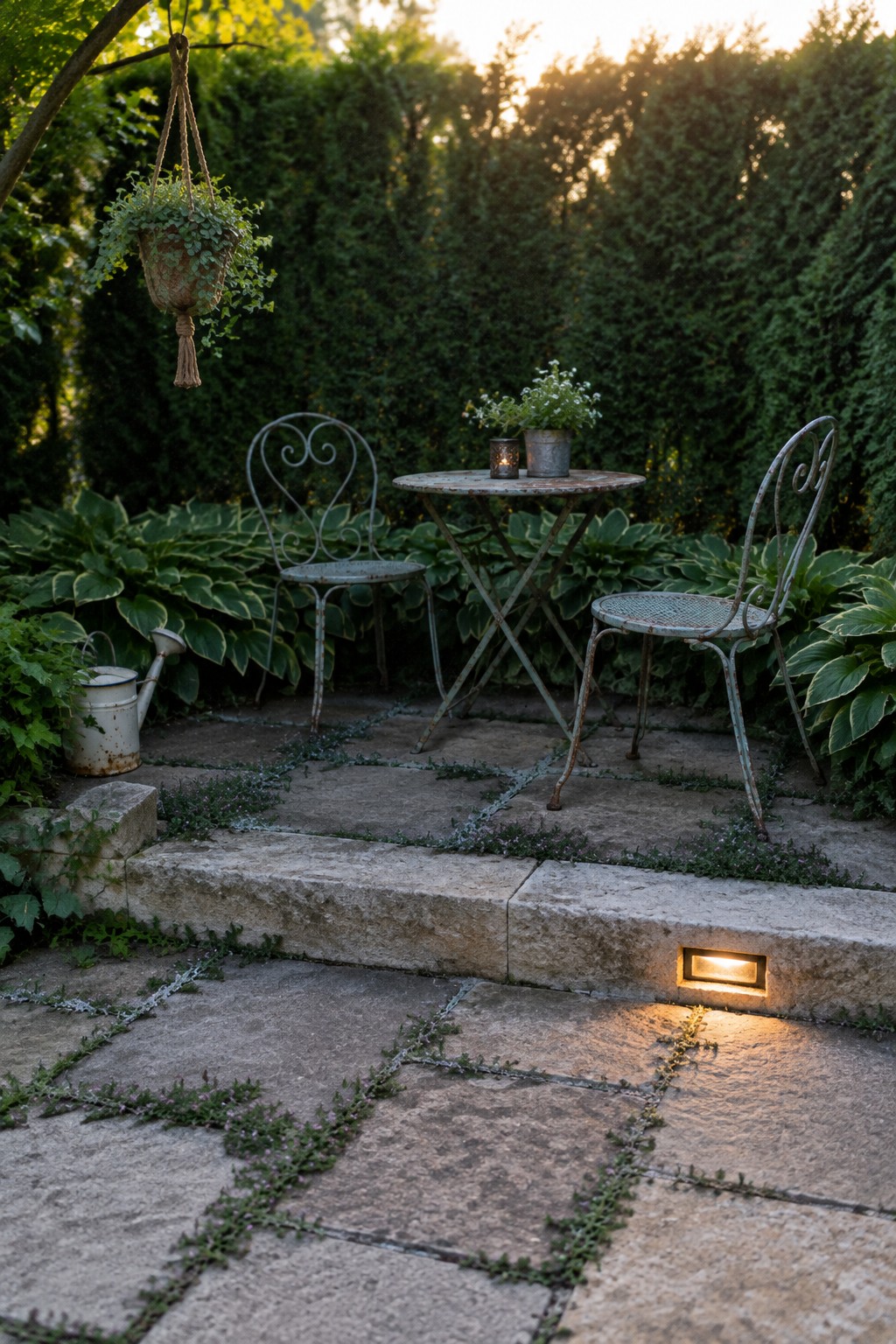
Hostas can make a small patio feel settled without needing a complicated planting plan. A low bed around the seating area gives the chairs a leafy backdrop and helps mark where the patio ends.
Plant them along the edge rather than between the seats and table, leaving enough room to pull chairs out and move around. Hostas suit shaded patios especially well, and a simple stone border can keep soil from spilling onto the paving.
Use Curved Edging to Define Hosta Beds
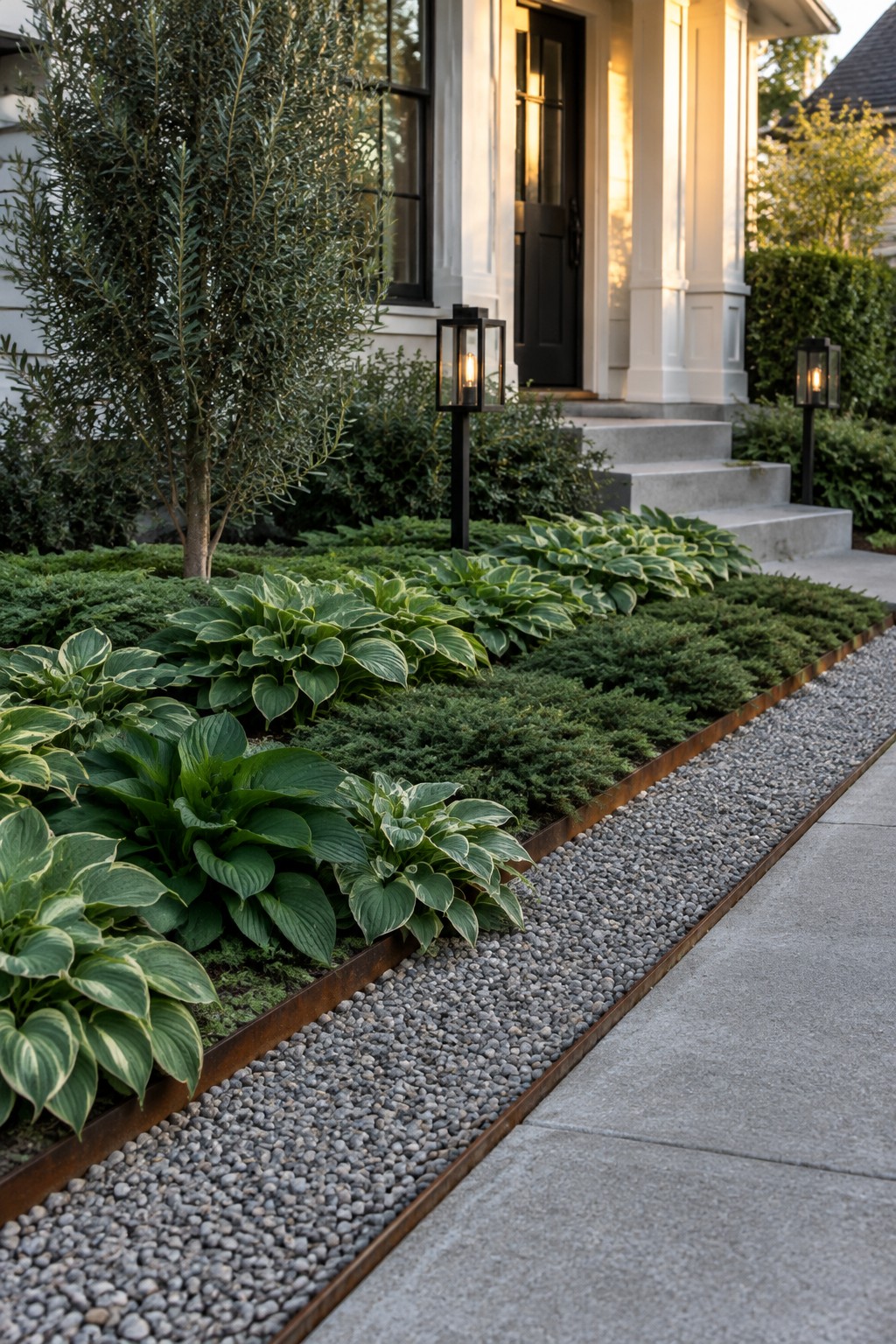
A simple metal edge can give a shade garden a clear shape without making the planting feel formal. Here, the curved border separates low ground cover and hostas from the gravel path, so the bed looks tidy even with full, leafy plants.
This approach works well beside a front walk or anywhere a planting bed meets gravel or paving. Choose edging that follows the bed’s natural curve, and keep it low enough that it does not compete with the hostas.
Arrange Hostas in Pots for a Small Shade Garden
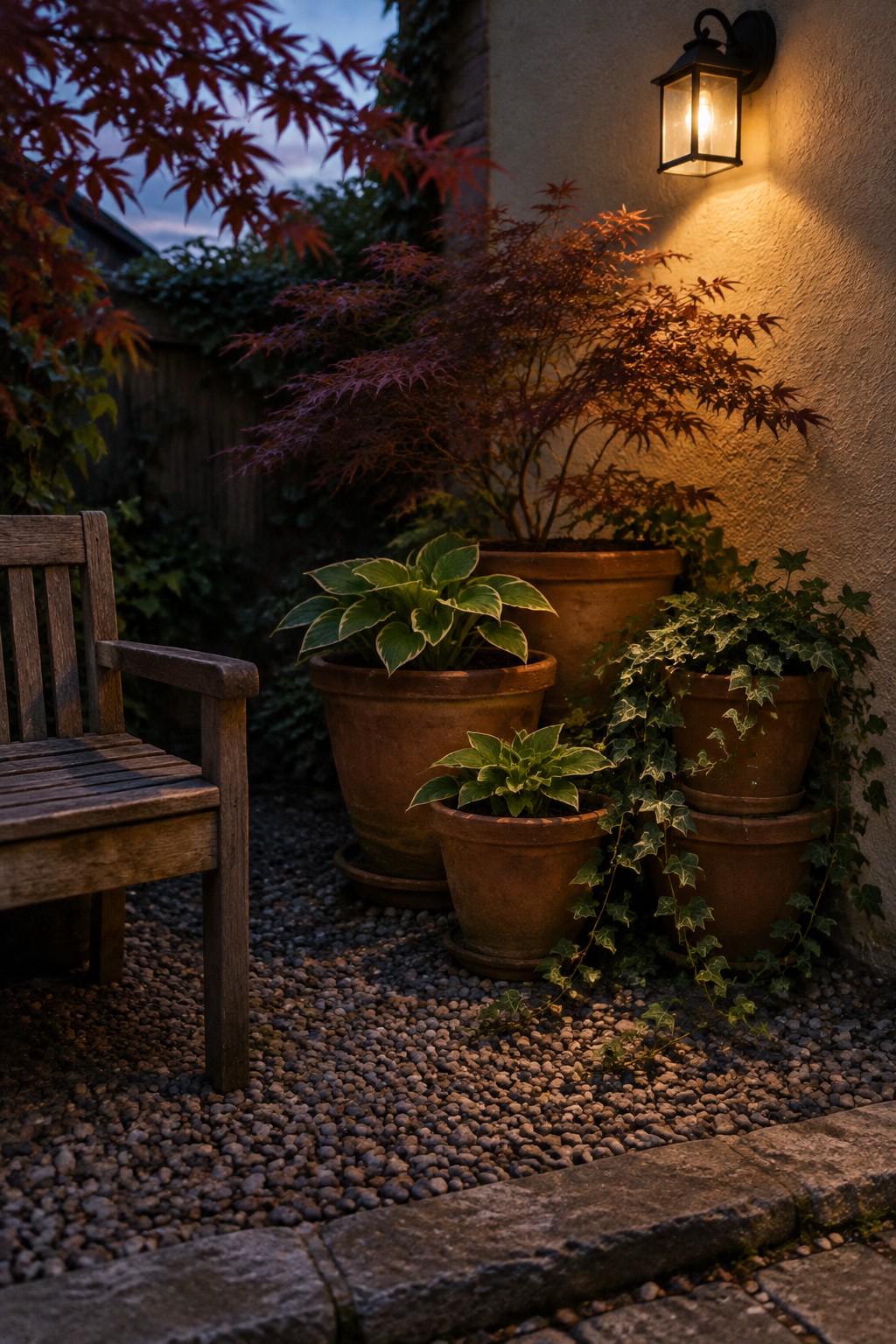
Grouping hostas in containers is an easy way to bring shade-loving plants to a patio or other small garden spot. Their broad leaves stand out against gravel, and pots let you enjoy greenery without digging a full planting bed.
Use pots of different sizes to give the group a relaxed feel, and place them where they get shade or gentle morning sun. Keep the containers close enough for easy watering, especially in warm weather, since pots dry out faster than garden soil.
Frequently Asked Questions
Q: How much sun can hostas handle?
A: Most hostas do well in shade or a spot with gentle morning sun. Strong afternoon sun can scorch their leaves, especially in hot weather, so give them a shadier place if the edges start turning brown.
Q: What can I plant with hostas to fill in the garden?
A: Ferns, heucheras, and astilbes all pair nicely with hostas and enjoy similar shady conditions. Mix in plants with different leaf shapes so the bed stays interesting even when the hostas aren’t flowering.
Q: How do I keep slugs from chewing holes in hosta leaves?
A: Water in the morning and clear away damp, decaying leaves where slugs like to hide. If they’re still a problem, check beneath the foliage after dark and remove them by hand.
Q: Can hostas grow in containers?
A: Yes, as long as the pot has drainage holes and enough room for the roots. Container hostas dry out faster than garden plants, so check the soil regularly and water when the top feels dry.
