


A patio can feel exposed or unfinished when the planting around it has no clear shape, even if the furniture and paving are well chosen.
Roses add color and fragrance, but I find they work best when their height, spacing, and paths leave room to move and sit comfortably.
Low borders can soften a patio edge, while climbing varieties can bring interest to a fence or pergola without taking over the whole space.
The right layout also depends on sunlight, access, and how much pruning you are willing to do through the seasons.
I’d save the ideas that suit your patio’s shape and test them against the way you actually use the space.
Make a Rose-Covered Pergola Part of the Patio
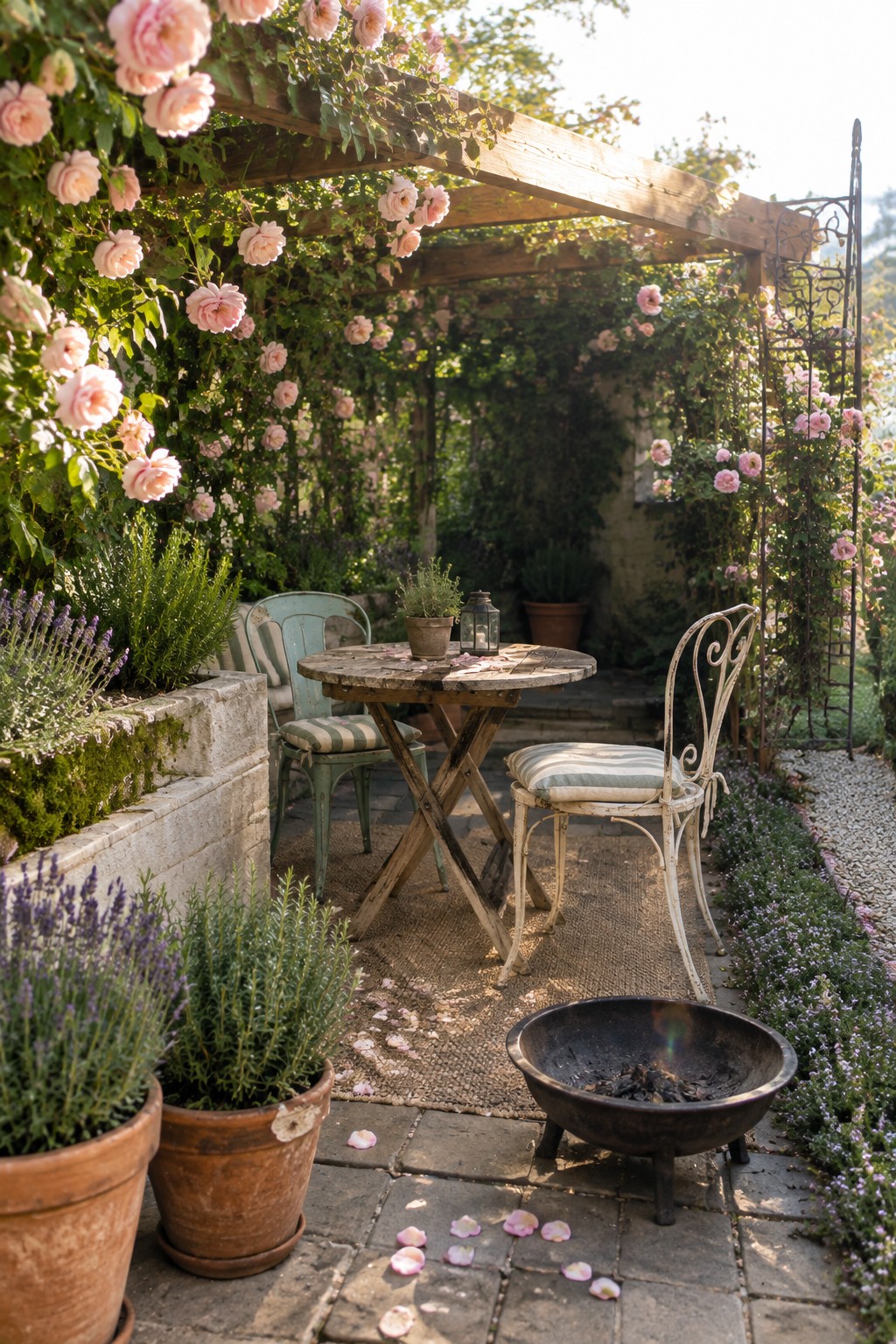
A pergola can make a small patio feel like a place to sit and stay awhile. Train climbing roses along its beams to bring flowers overhead while leaving the seating area open and usable.
This idea works especially well where a patio needs a little shade or a more defined edge. Give the roses sturdy supports and enough room to grow, and keep the table and chairs clear of the main walking path.
Make Room For Rose-Covered Patio Dining

A sturdy outdoor dining table can make a patio feel useful every day, not just on special occasions. A climbing rose canopy gives the seating area a little shade and brings flowers close to the table without taking up floor space.
This setup works well on a terrace or in a garden with room for a table and chairs. Train roses over a strong pergola, and leave enough clearance so branches and thorns do not crowd the seats.
Let Roses Climb Over the Patio
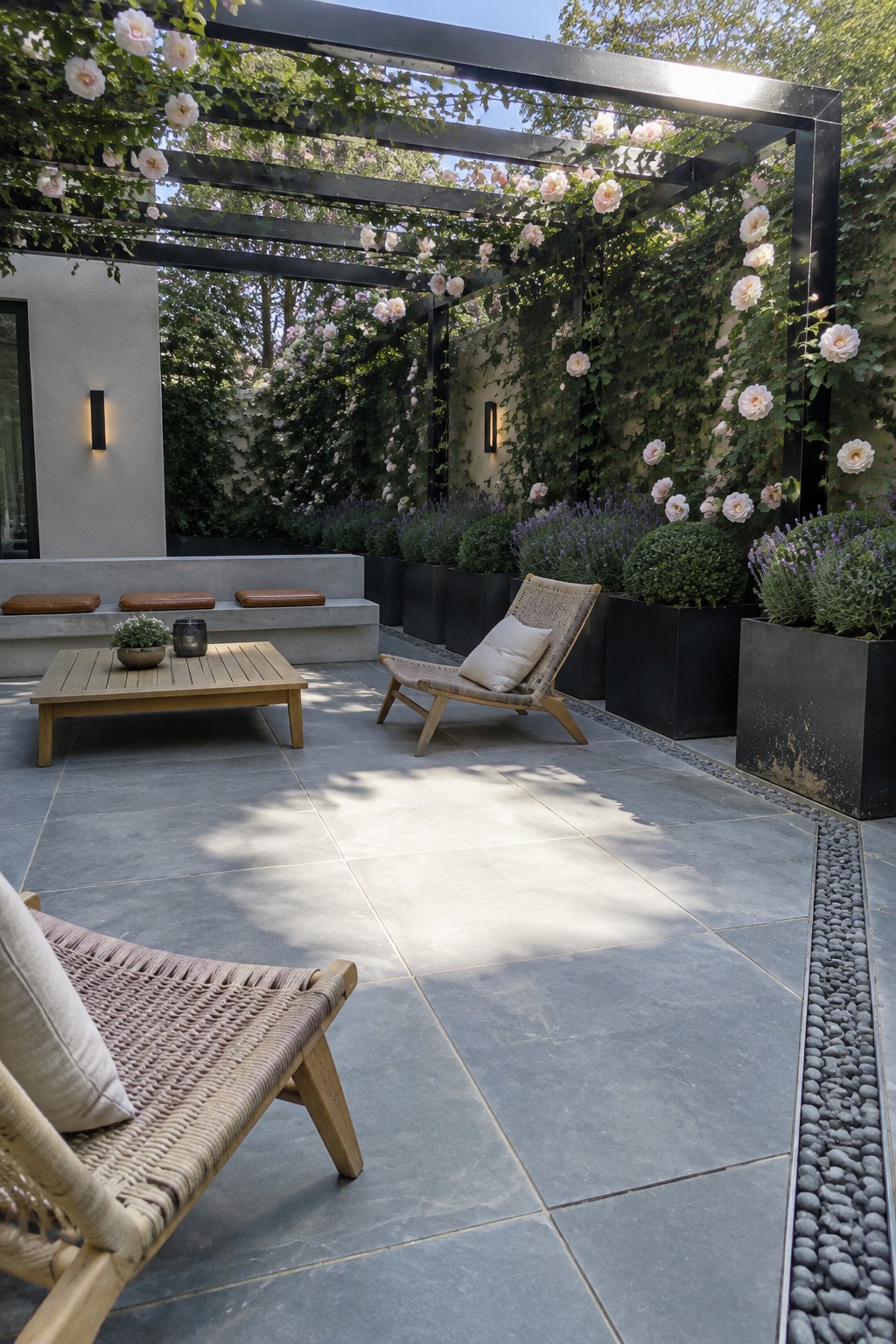
Training roses across a pergola gives a patio a leafy canopy and brings flowers up to eye level. It is a simple way to make an open seating area feel more tucked away without closing it off.
Choose a sturdy pergola and a climbing rose suited to your climate, then guide the stems along the beams as they grow. Leave enough open space overhead for light and airflow, and remember that roses need regular pruning to keep the structure manageable.
Create a Rose-Covered Patio Dining Spot
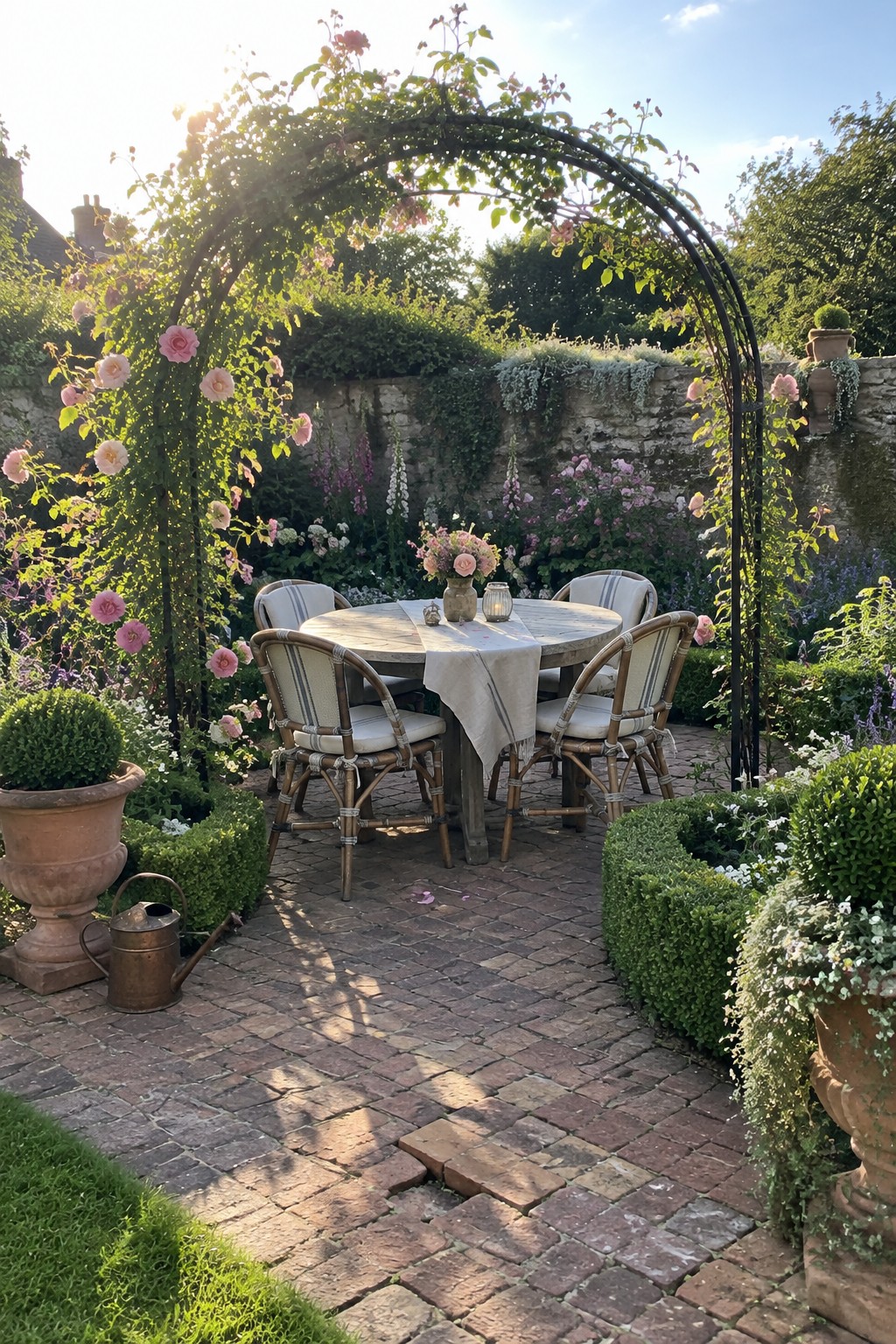
A simple garden table feels more special when it sits beneath a rose-covered arch. The arch gives the dining area a clear place in the garden, while climbing roses add color overhead without taking up much patio space.
Use a sturdy metal arch beside a brick or stone patio, and guide roses along its sides and top as they grow. Choose a repeat-flowering variety if you want blooms through more of the season, and leave enough room around the table for chairs to move easily.
Use a Pergola to Define the Patio Seating Area
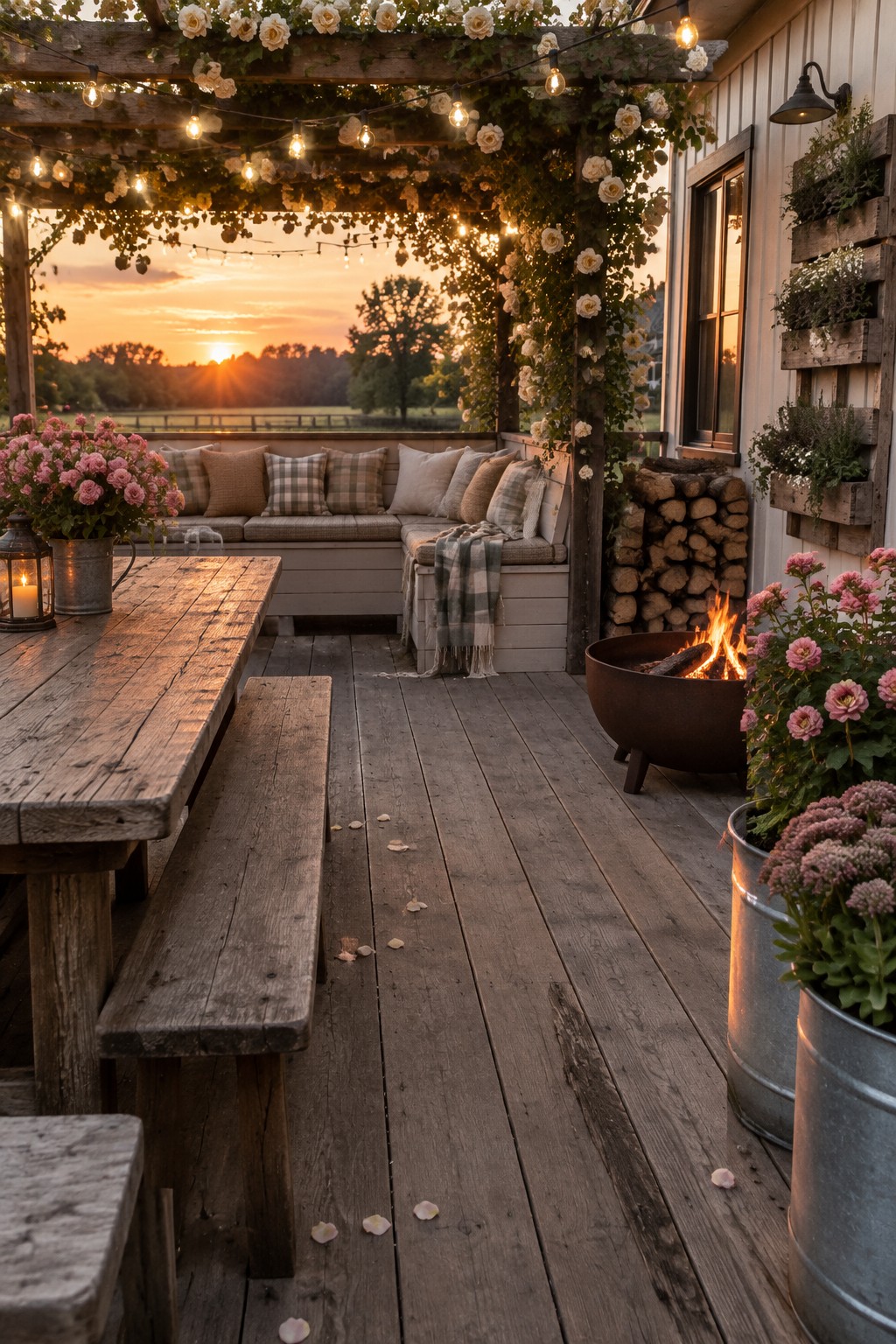
A pergola can make a patio feel like a distinct outdoor room, especially when it sits above a built-in seating area. Climbing roses add a leafy canopy, while the open sides keep the space connected to the yard.
For a similar setup, place the seating beneath the pergola and leave a clear route through the rest of the patio. Roses need sturdy supports and regular pruning, so choose a structure that is easy to reach and maintain.
Use Wall Planters to Grow Roses in a Small Patio

Wall-mounted planters let climbing roses grow upward instead of taking up more patio floor space. Here, the planters sit against a brick wall, giving the roses room to spread while keeping a compact dining area usable.
Choose sturdy planters and give each rose a trellis or other support to climb. This setup suits narrow patios and courtyards, but check that the wall and planters can handle the weight of mature plants and damp soil.
Use Raised Rose Planters to Define the Patio

Raised planters can mark the edge of a patio without closing it off. Filled with roses, they bring color close to the seating area while keeping the planting contained.
Try this idea along a deck or terrace where you want a clear boundary between seating and the garden. The tiled planters shown here give the flowers a finished edge, but make sure the containers are deep enough for healthy rose roots.
Set Up a Patio Around a Fire Pit
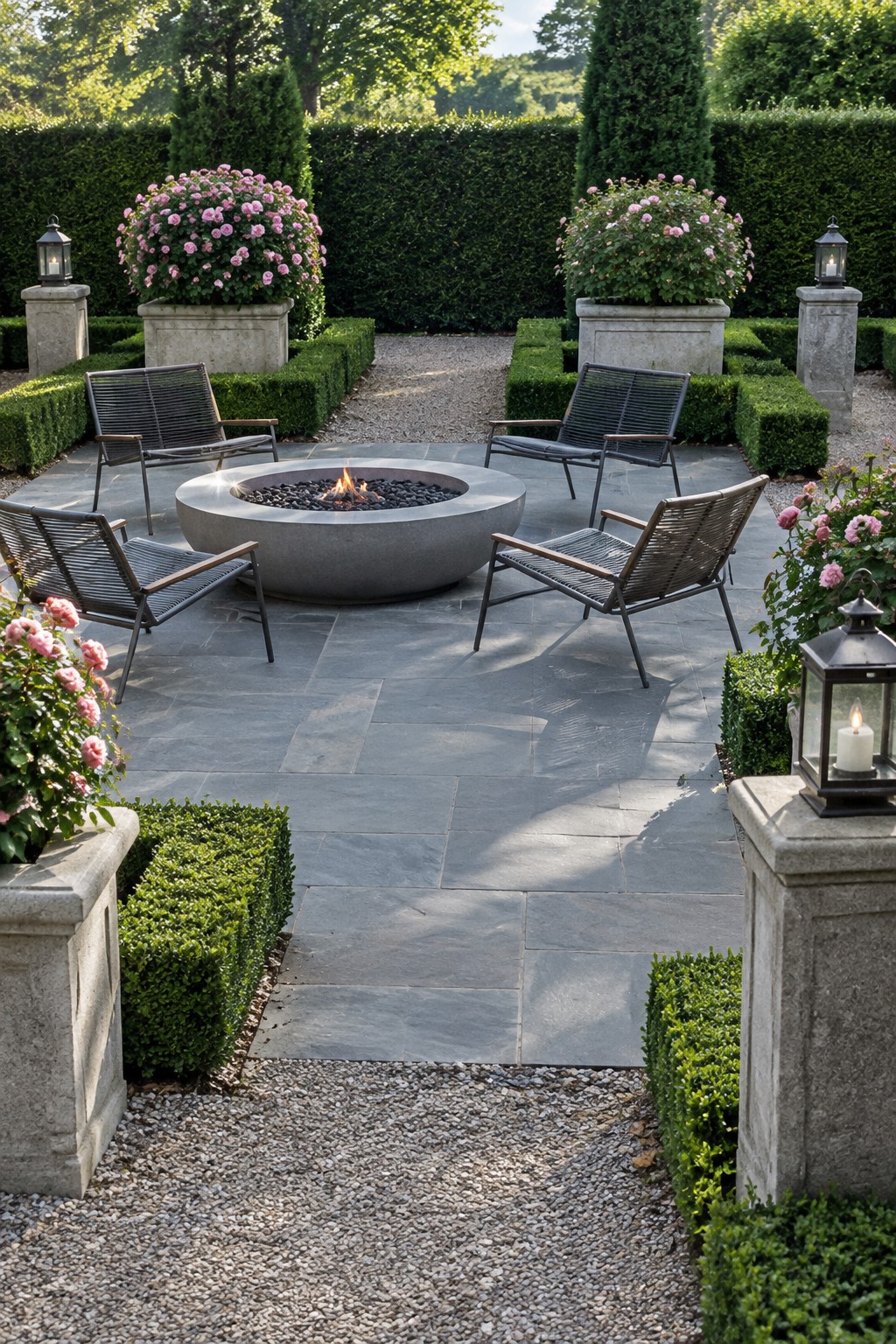
A round fire pit gives patio seating a clear center and makes it easy to gather for an evening outside. Four chairs arranged around it keep conversation comfortable without making the space feel crowded.
Leave enough room to pull chairs back safely, and choose a fire pit suited to the patio surface and local fire rules. Roses can grow nearby in raised planters, but keep flowers and foliage well away from the flame.
Arrange Patio Seating Around a Comfortable Conversation Area
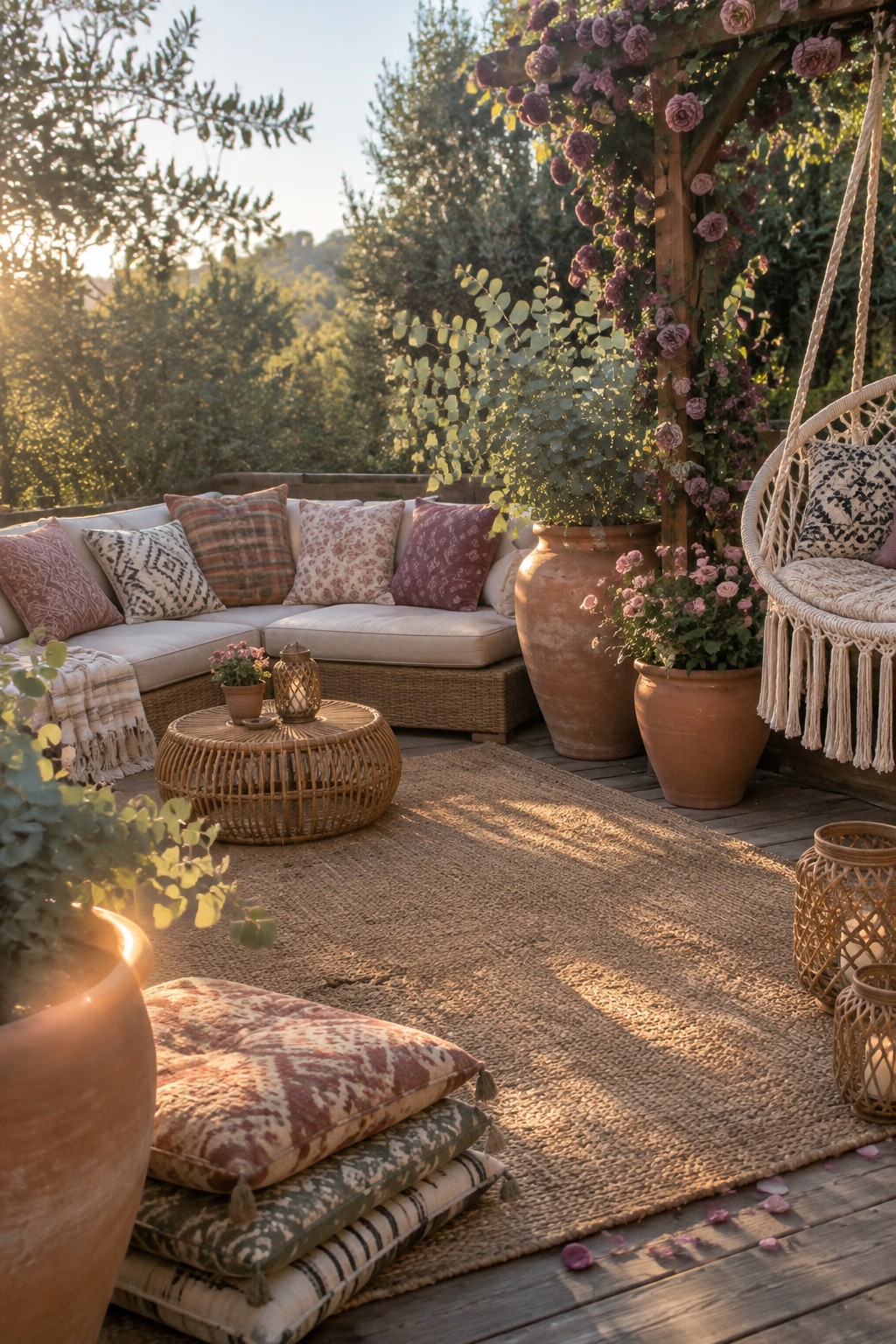
A corner seating arrangement makes a patio feel like a place to linger, rather than just a path through the garden. The sectional sofa keeps everyone facing one another, while a small round table gives the group a handy spot for drinks.
This setup works well on a deck or paved patio where you want to make good use of a corner. Leave enough room to walk around the seating, and add rose planters nearby to bring flowers close without crowding the seats.
Add a Stepping-Stone Path Through the Garden

A stepping-stone path gives a garden a clear route without covering every inch in paving. Irregular stone slabs set into gravel and moss feel relaxed, and they lead naturally toward a small seating area.
Use stones with enough room between them for an easy walking stride, especially if the path gets regular use. This approach suits a compact garden where you want to keep plenty of space for planting.
Add a Poolside Seating Area Beside the Roses

A pool patio feels more usable when it has a comfortable place to sit away from the water. Here, a shaded bench sits beside a rose bed, making the planting part of the seating area rather than something to look at from a distance.
Try this layout where there is room for a small lounge spot near the pool. Leave a clear path around the water, and choose cushions that can handle sun and occasional splashes.
Make a Fire Pit the Center of Patio Seating
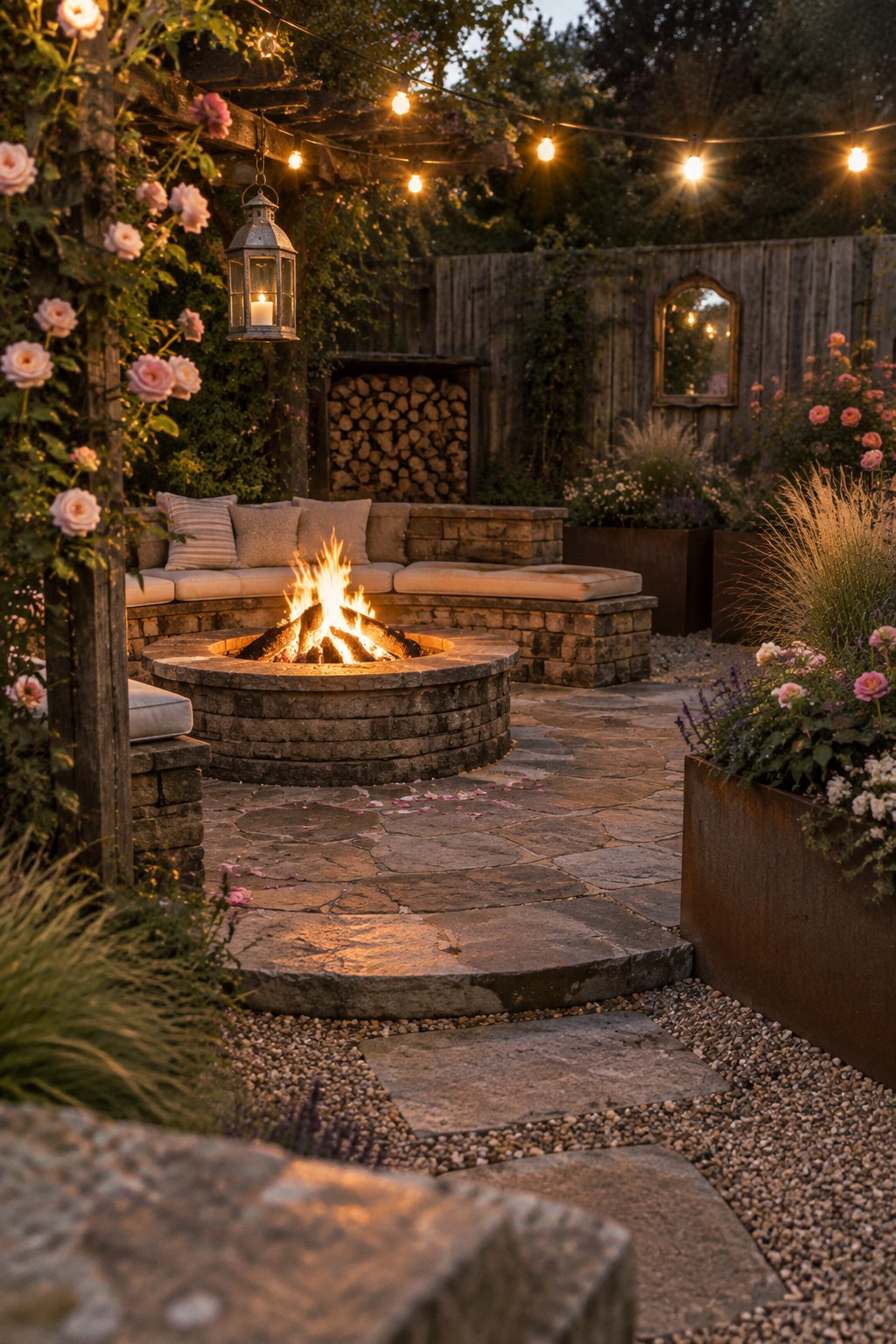
A fire pit can give a patio a natural place to gather, especially when the seating faces inward around it. Here, a built-in stone bench keeps the arrangement close and makes good use of the space.
For a similar setup, leave enough room to walk around the pit and choose materials that can handle heat and outdoor use. Roses in nearby planters or along a fence can bring flowers into the seating area without crowding the path.
Grow Roses Along a Narrow Patio Wall
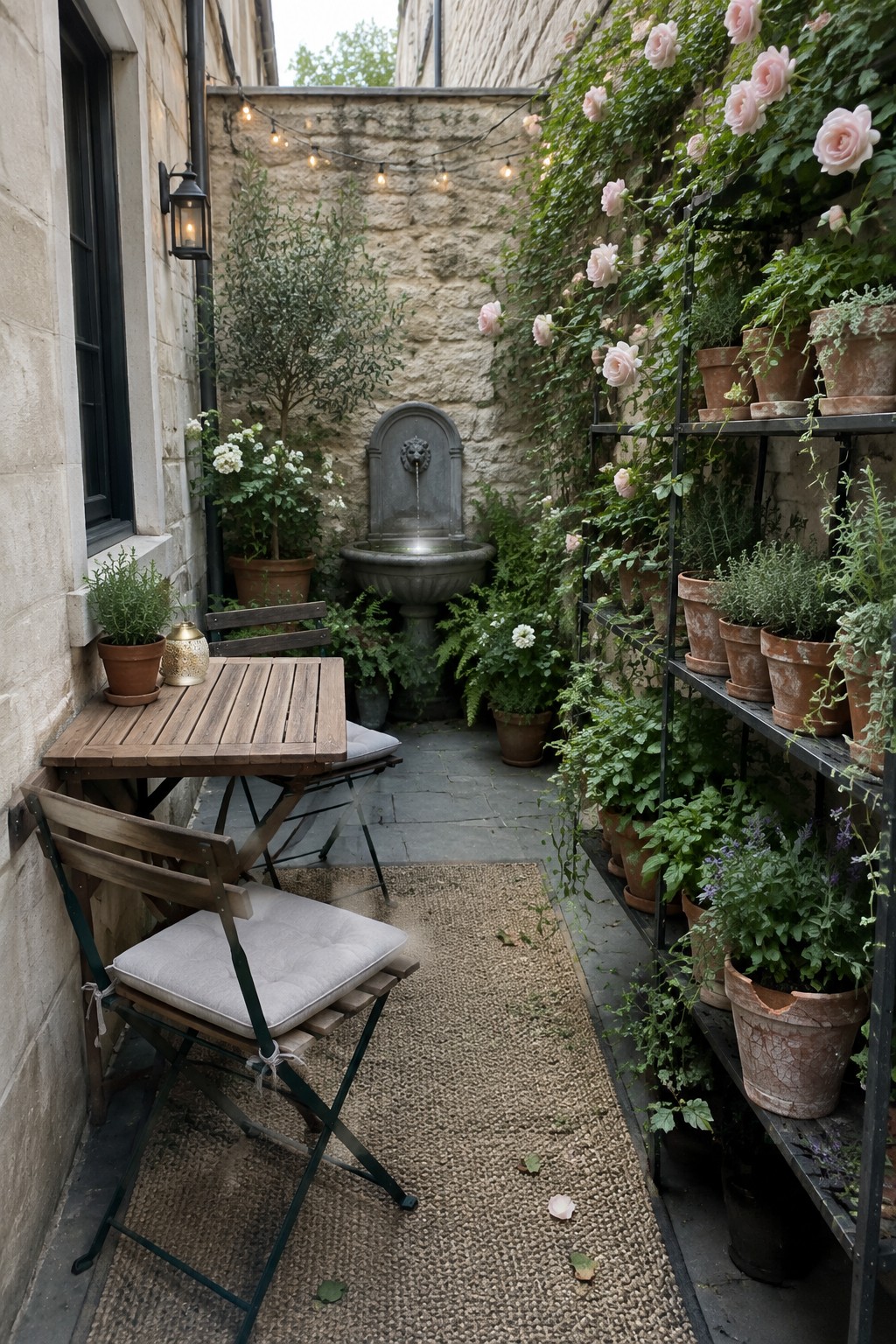
Climbing roses can bring flowers into a small patio without taking up much floor space. Letting them grow up a wall or trellis keeps the walkway clear and makes the most of a narrow outdoor area.
Choose a sturdy support and leave room to reach the wall for pruning and upkeep. This approach suits courtyards and side patios, especially when there isn’t space for a separate rose bed.
Create a Secluded Patio Nook With Roses

A small patio can feel tucked away when its seating sits close to a garden wall. Climbing white roses bring color and privacy around the built-in corner bench without taking up floor space.
This layout suits a narrow courtyard or an unused corner of a larger garden. Train roses along a sturdy wall support, and leave enough room to reach the plants for pruning and care.
Use Raised Rose Planters Along the Patio

Raised planters let roses sit close to the patio seating without needing a garden bed at the edge. Their height also helps define the sitting area while keeping the planting contained.
Choose sturdy planters with enough soil depth for the rose varieties you grow, and leave room to reach in for pruning. A pair placed along the patio edge can mark the seating zone without blocking the open view.
Grow Climbing Roses Around a Patio Seating Area

A rose-covered trellis can make a small patio feel tucked away without closing it off. The climbing roses add a clear garden backdrop for a table and chairs, while still leaving the seating open to the rest of the yard.
Use a sturdy trellis near the edge of a paved patio, and leave enough room for chairs to slide out comfortably. Climbing roses need regular pruning and support, so keep the structure accessible rather than placing it where it will be hard to maintain.
Use a Pebble Path to Lead Into a Rose Garden
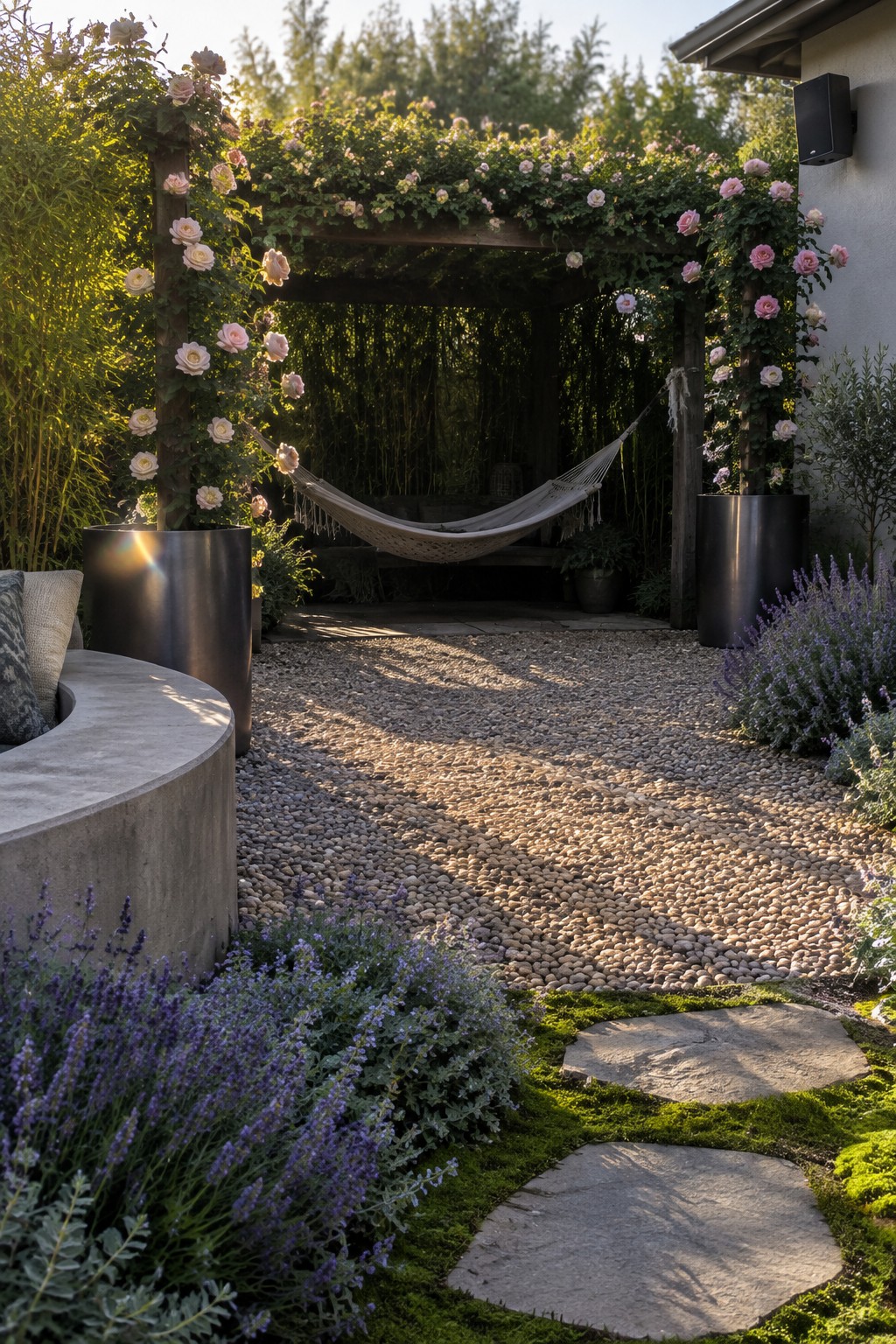
A pebble path can make a rose garden feel like a place to wander, not just a border around the patio. Here, the loose stone surface leads toward a rose-covered pergola, giving the garden a clear route and a natural stopping point.
For a similar look, keep the path wide enough to walk comfortably and edge it well so the stones stay in place. It works especially well in a relaxed garden where roses and other plants spill close to the walkway.
Use a Rose Trellis to Add Privacy to Patio Dining
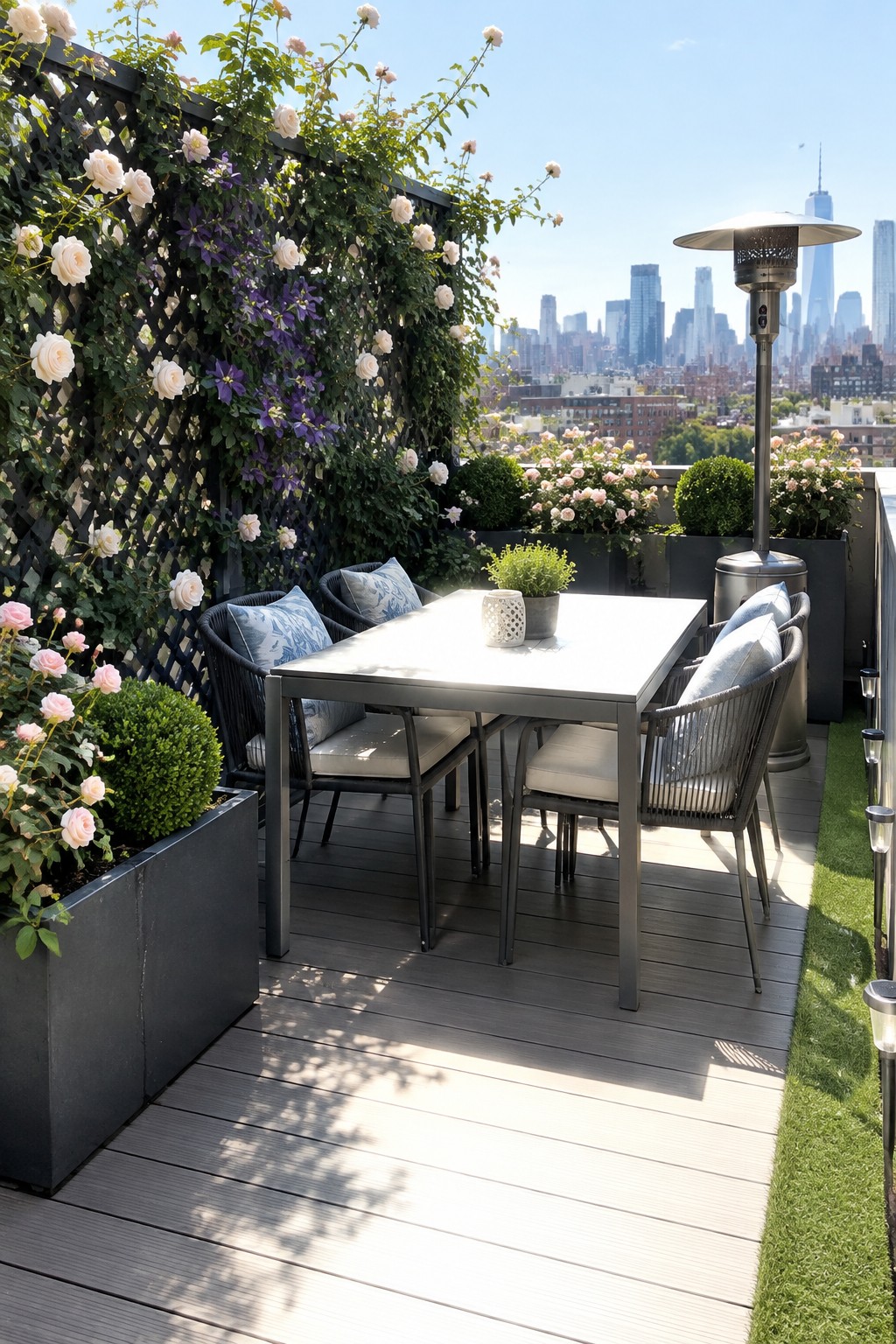
A rose-covered trellis can give a patio dining area a little separation without closing it off. Climbing roses bring color around the seating, while the open structure still lets light and air through.
Use a sturdy trellis along one side of a deck or terrace, and leave enough room for the roses to grow without crowding chairs or pathways. This works especially well in a city patio where a green screen can make dining feel more private.
Set Up a Garden Dining Table Beneath a Pergola
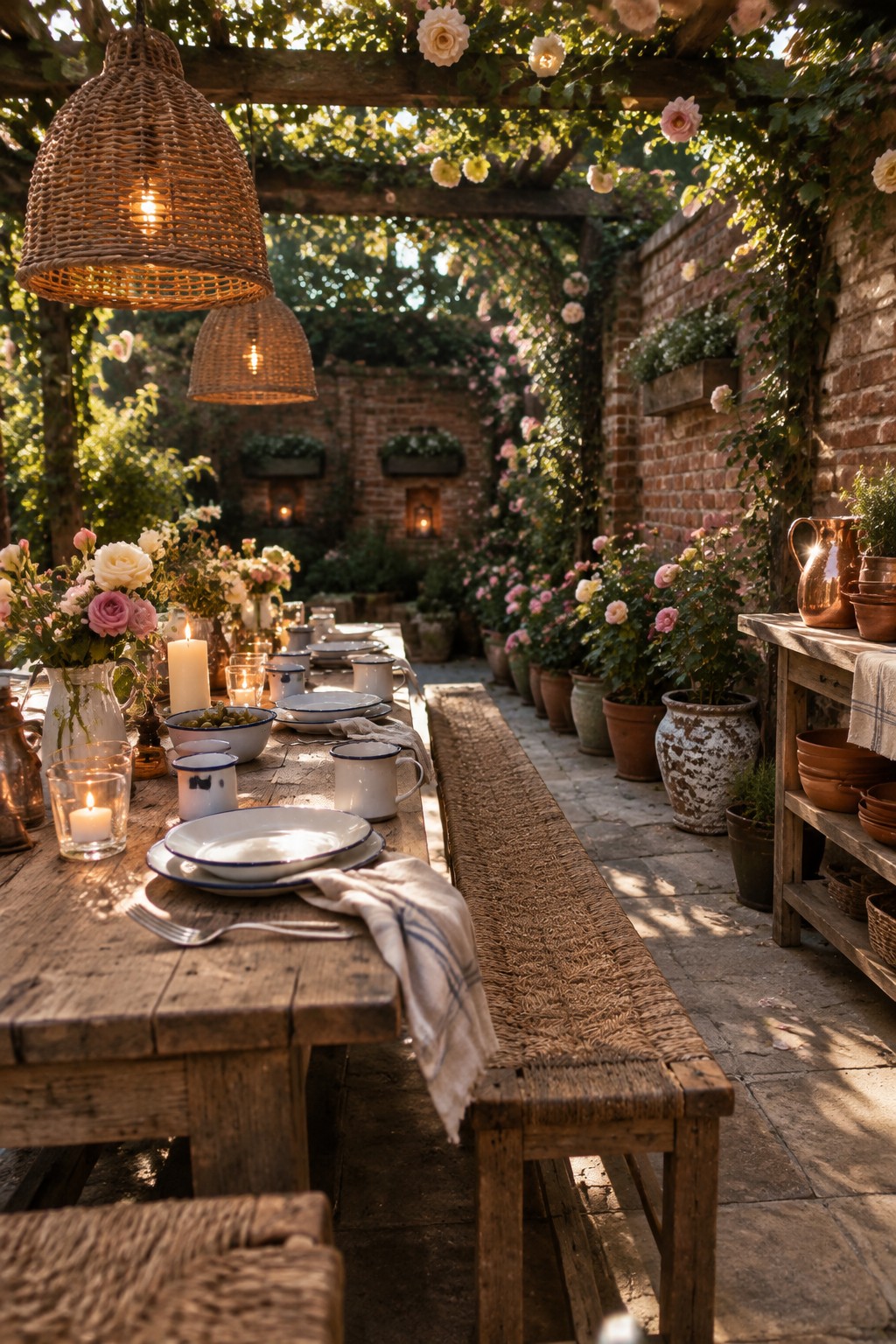
A pergola can make an outdoor dining area feel like a natural part of the garden. Climbing roses and leafy vines overhead give the table a bit of shelter and make the spot feel tucked away, while still leaving it open to the air.
For a similar setup, place a sturdy table beneath a pergola and train roses along its beams. Keep the main walking path clear, and leave enough room to pull chairs back comfortably. This works especially well in a courtyard or a small patio where a defined dining spot is useful.
Frequently Asked Questions
Q: What roses work best around a patio where people sit and walk?
A: Choose compact, repeat-blooming roses with little or no fragrance if you’re sensitive to scent. Keep thorny varieties away from chairs and paths, and use them farther back where they won’t snag anyone.
Q: How much space should I leave between patio roses and the paving?
A: Leave enough room for the mature plant to spread without spilling over the walkway. Check the rose’s expected width before planting, and keep a little extra space so you can prune and clean around it.
Q: Can I grow roses in pots beside a patio?
A: Yes. Pick a roomy pot with drainage holes, and water it more often than you would an in-ground rose because containers dry out faster. Place the pot where the plant gets plenty of sun.
Q: How do I keep fallen rose petals from making the patio slippery?
A: Sweep them up regularly, especially after rain. If you’re choosing a spot for a rose, avoid placing it directly above smooth paving where petals tend to collect.
