

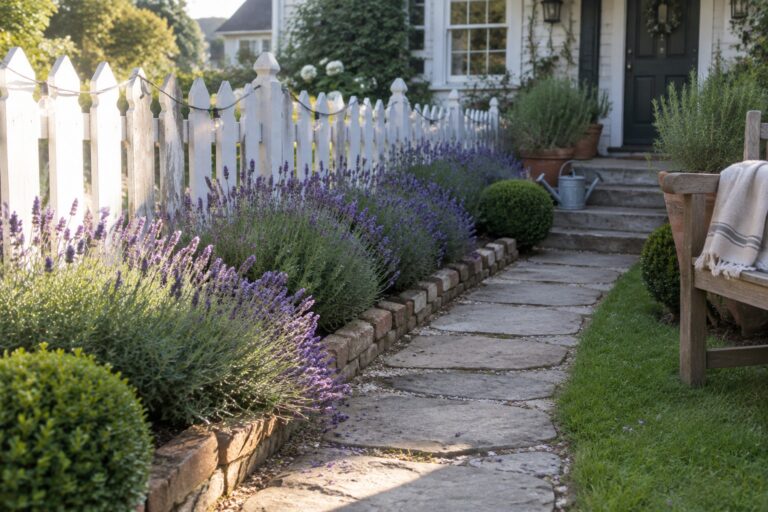
A fence can make a garden feel neatly framed, but the strip along it often needs planting that softens the hard line without crowding the yard.
I find lavender works especially well when its spacing and height suit the fence, leaving room for air, sunlight, and a clear path for maintenance.
The purple blooms draw the eye first, while the silvery foliage and tidy planting edges help the border look considered even before the flowers open.
Some layouts keep the lavender low and even, while others mix in grasses or taller plants to add depth and break up a long stretch of fencing.
I’d save the ideas that fit your garden’s light and available width, then adapt the spacing to how you actually use the space.
Use Lavender Along a Garden Path
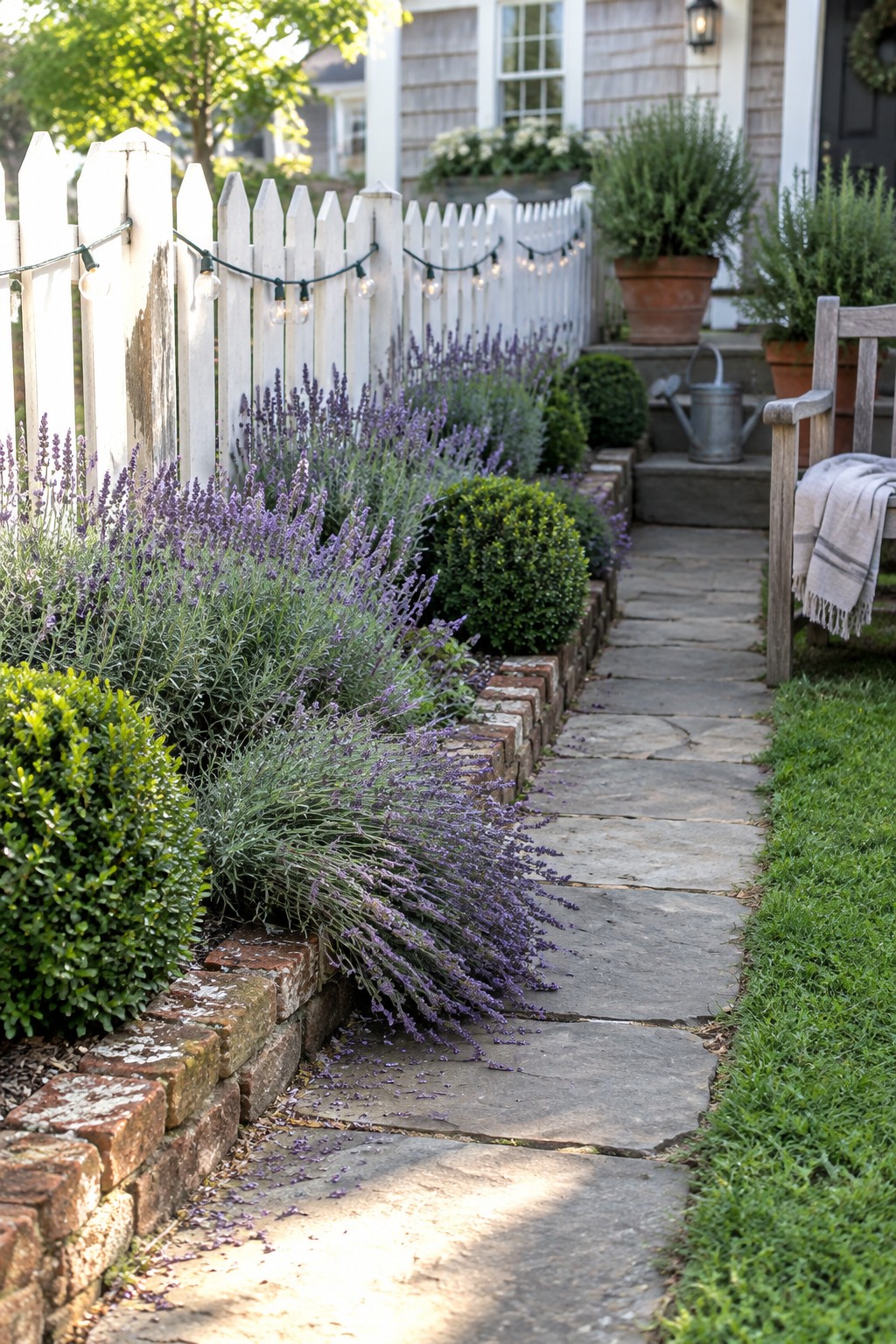
Lavender planted along a fence can form a soft purple border that also guides the eye down a garden path. The loose flower stems bring a relaxed look, while a low brick edge helps keep the planting bed tidy.
This approach works well beside a narrow walkway where there is enough room for plants to spread without crowding the stones. Give lavender a sunny spot and keep the soil well drained, since it can struggle in wet ground.
Use a Fence Trellis for Vertical Color
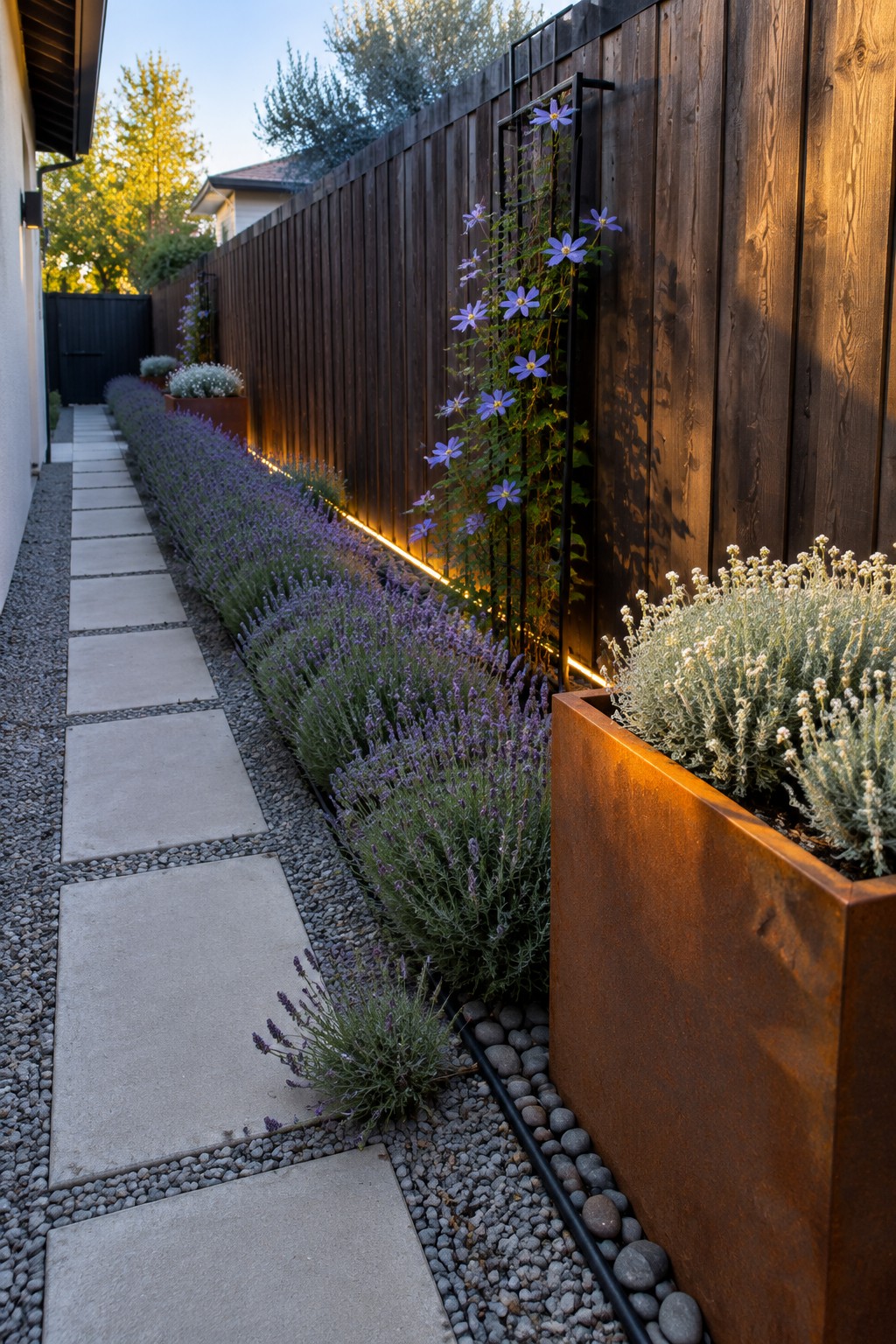
A trellis can bring lavender borders up to eye level without taking up much garden space. Here, purple clematis climbs against the fence, adding a second layer of color above the low planting.
Place a sturdy trellis where the fence gets enough sun for flowering vines, and leave room for the lavender to spread below. This works well in a narrow side garden, but keep the plants trimmed so they don’t crowd the path.
Use Lavender To Soften A Garden Border
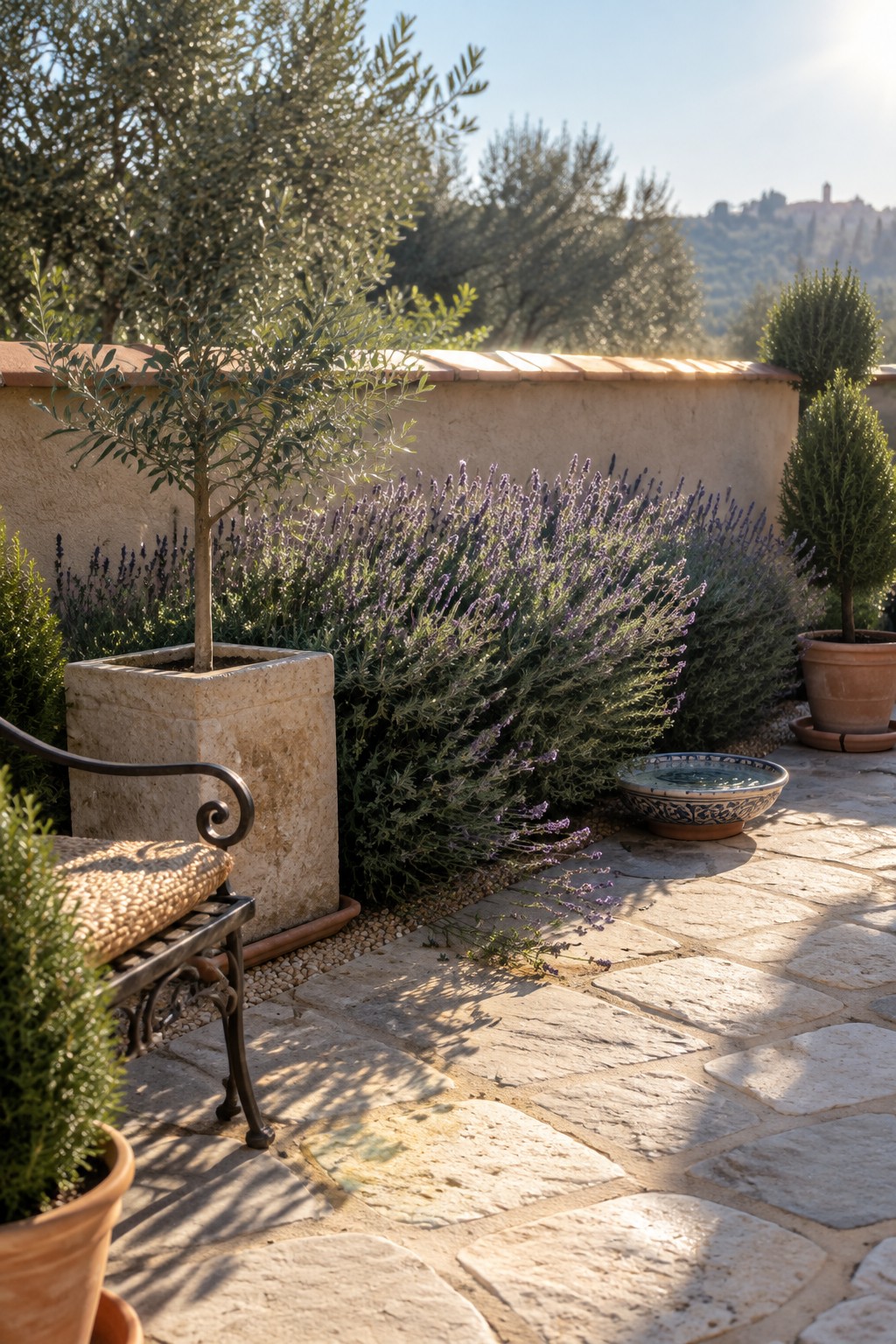
Lavender makes a useful border planting because its loose shape and purple flowers bring color along a wall or fence without making the edge feel too formal. It works especially well beside pale stone or stucco, where the flowers stand out clearly.
Plant it in a sunny spot with well-drained soil, and leave enough room for the plants to spread. A few lavender plants can be enough for a narrow border; crowded plants are harder to maintain and may not get the airflow they need.
Use Lavender to Edge a Garden Path
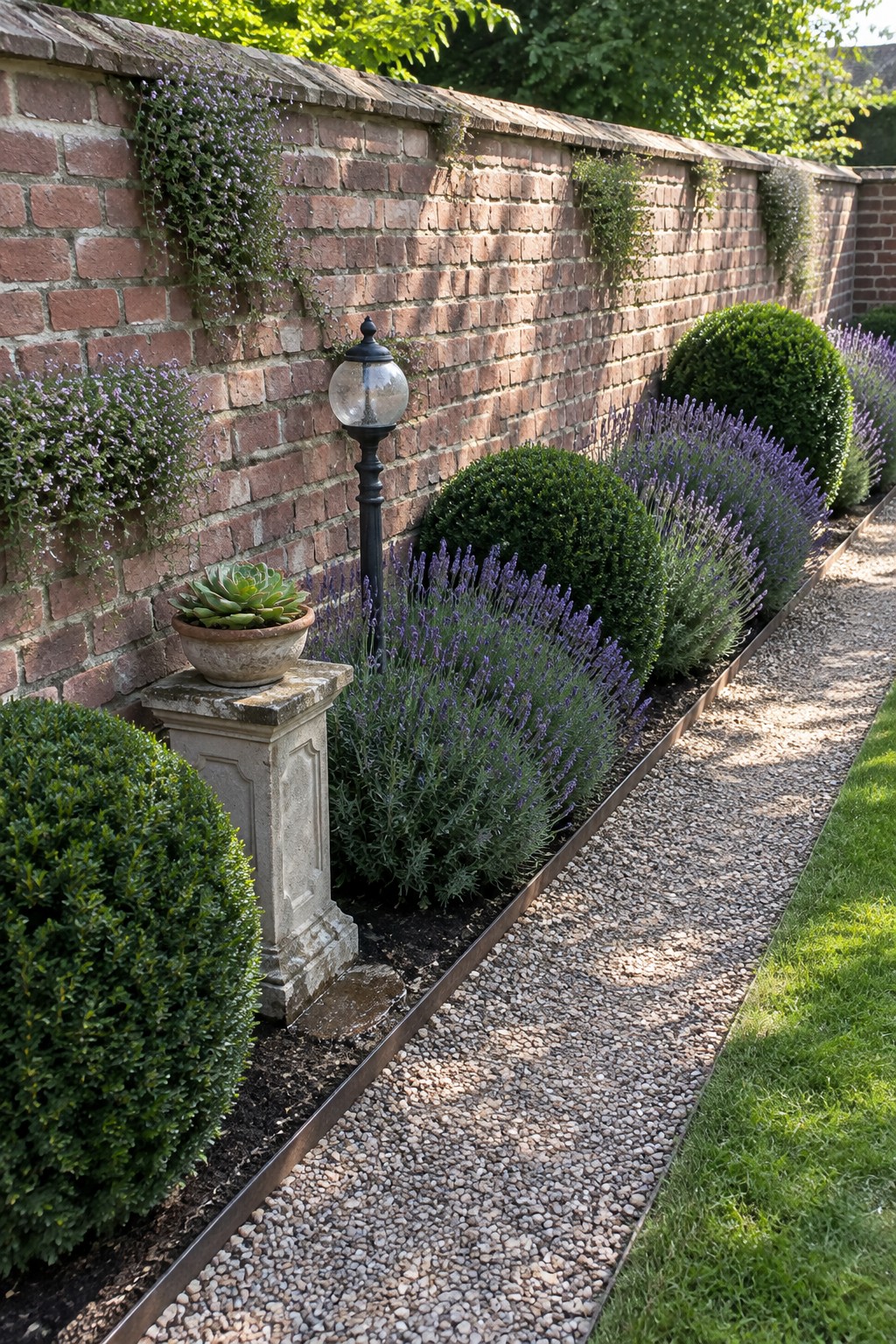
A narrow lavender border gives a garden path a clear edge while keeping the planting relaxed. Along a brick wall, the repeated purple blooms soften the straight line of the fence without hiding it.
Plant lavender in a sunny bed with well-drained soil, leaving enough room for each mound to spread. A simple metal edge can keep soil and plants from spilling onto the path, and clipped shrubs nearby add a tidy contrast.
Plant Lavender in Layers Along a Fence
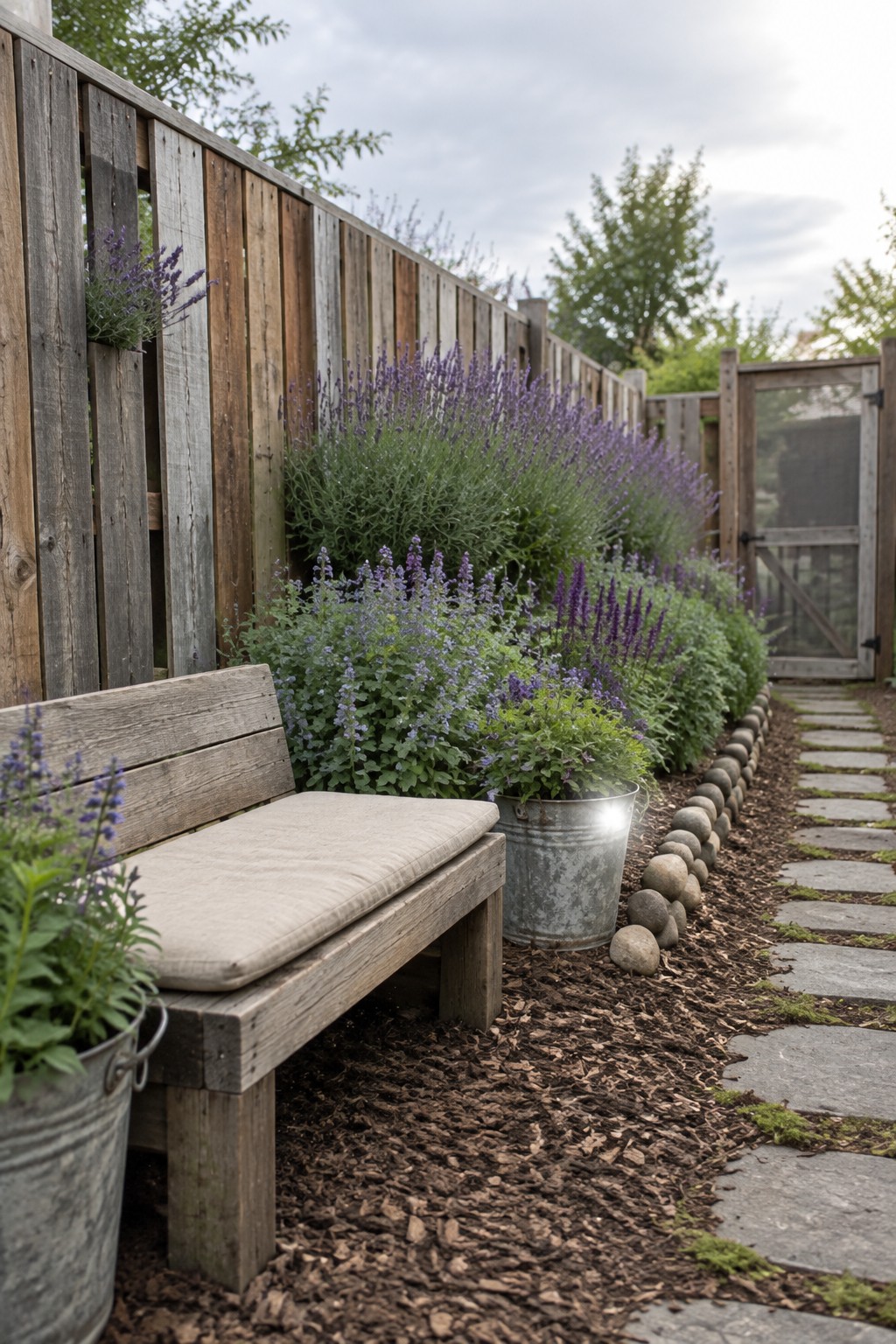
Layering lavender along a fence gives a narrow garden bed a fuller look without taking up much room. Taller plants at the back create a soft purple screen, while lower flowers at the front make the border feel less uniform.
Give each plant enough space for air to move through the foliage, and choose a sunny spot with well-drained soil. This approach works especially well beside a plain fence, where the planting can add color and interest without making the path feel crowded.
Plant Lavender Along A Fence
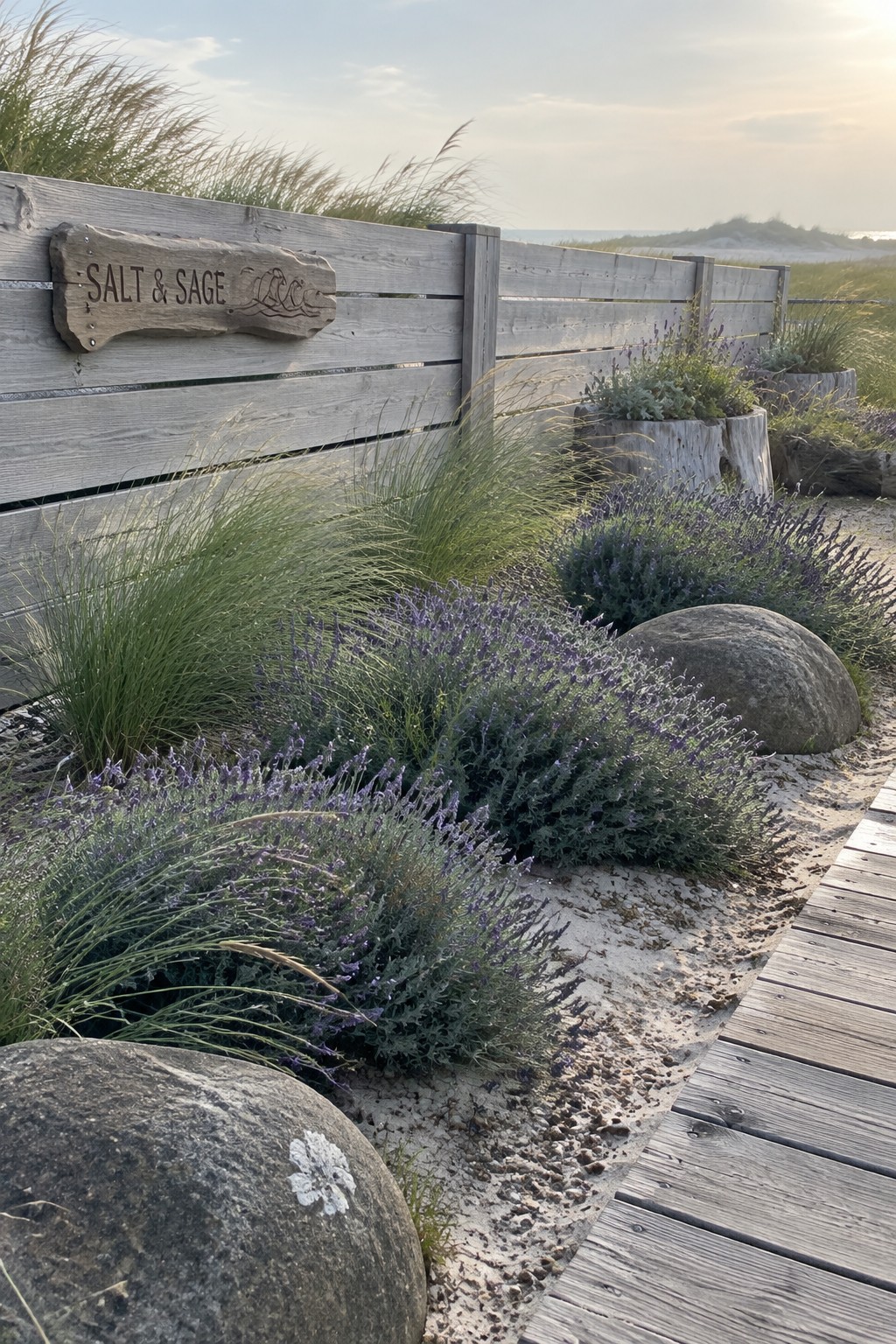
Lavender planted in a loose border is a simple way to bring color and structure to a fence line. Its purple flower spikes stand out against weathered wood, while the mounded plants make the edge of the garden feel less bare.
Leave enough room for each plant to spread and allow for good drainage, especially in sandy or gravelly soil. This approach suits a coastal-style garden, and ornamental grasses can fill in around the lavender without crowding it.
Plant Lavender Along a Fence Bed

Lavender planted in a long raised bed can make a fence line feel like a proper garden border. The repeated clumps give the edge a steady rhythm, while the purple flowers stand out against the wall.
Use this approach where a narrow planting strip runs beside a fence or paved area. Leave enough room for plants to spread and choose a sunny spot with well-drained soil, since lavender can struggle in damp ground.
Use Lavender in Raised Fence Planters

Raised planters can turn a narrow fence-side walkway into a tidy planting border without taking up much ground space. Lavender’s upright purple blooms work well along the fence, while a few trailing plants can spill gently over the planter edges.
This setup suits side yards where a path needs to stay clear. Leave enough room for comfortable walking, and choose planters with good drainage so lavender roots do not sit in soggy soil.
Use Lavender to Line a Fence Bed
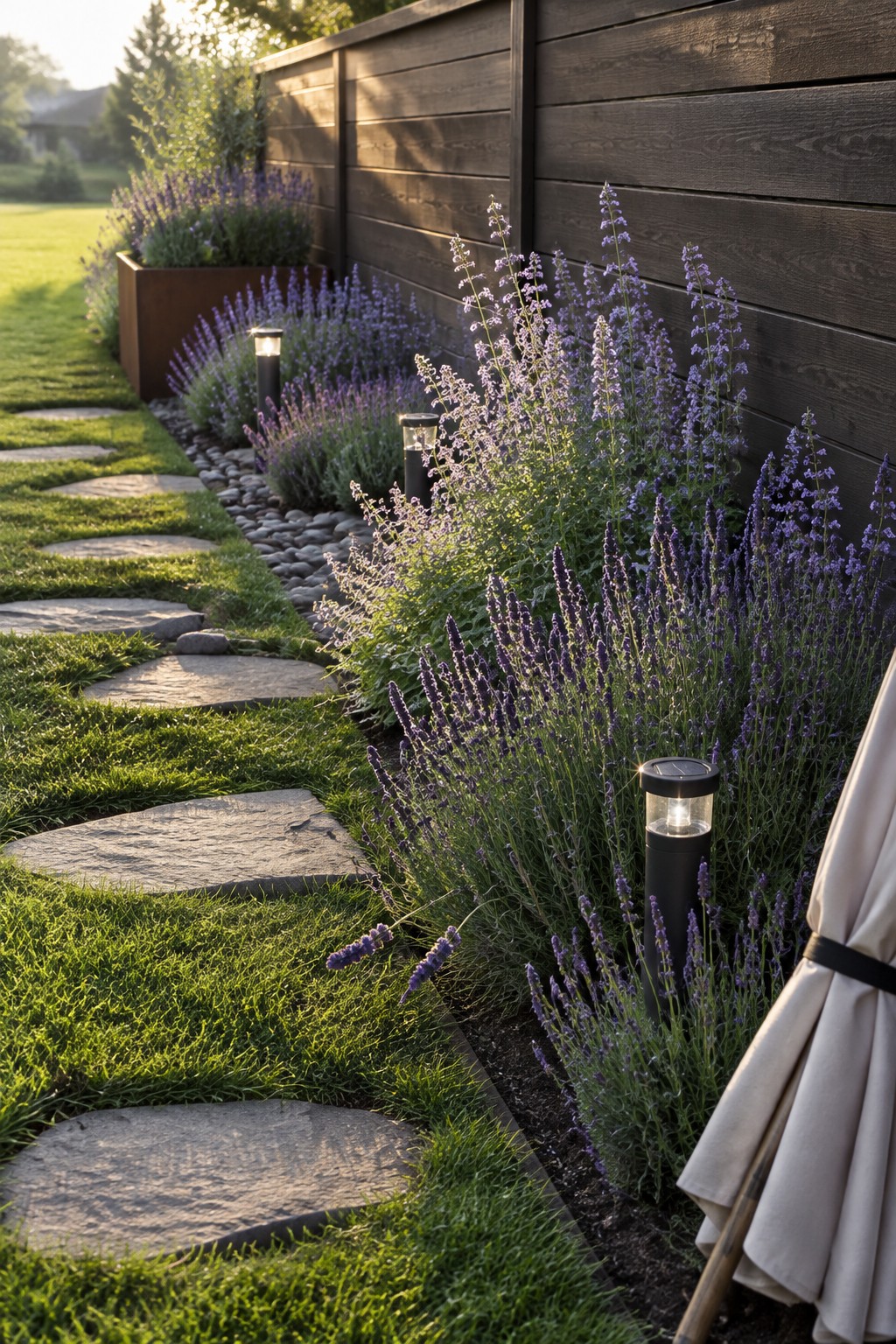
A narrow planting bed can make a long fence feel like part of the garden. Lavender planted in a loose row adds purple color along the boards, while taller flower stems keep the border from looking too uniform.
Leave enough room for each plant to spread, and use a strip of gravel or mulch to keep the bed tidy. This approach works well beside a lawn or stepping-stone path, where the lavender can define the edge without taking over the walkway.
Use Lavender to Mark a Garden Trail
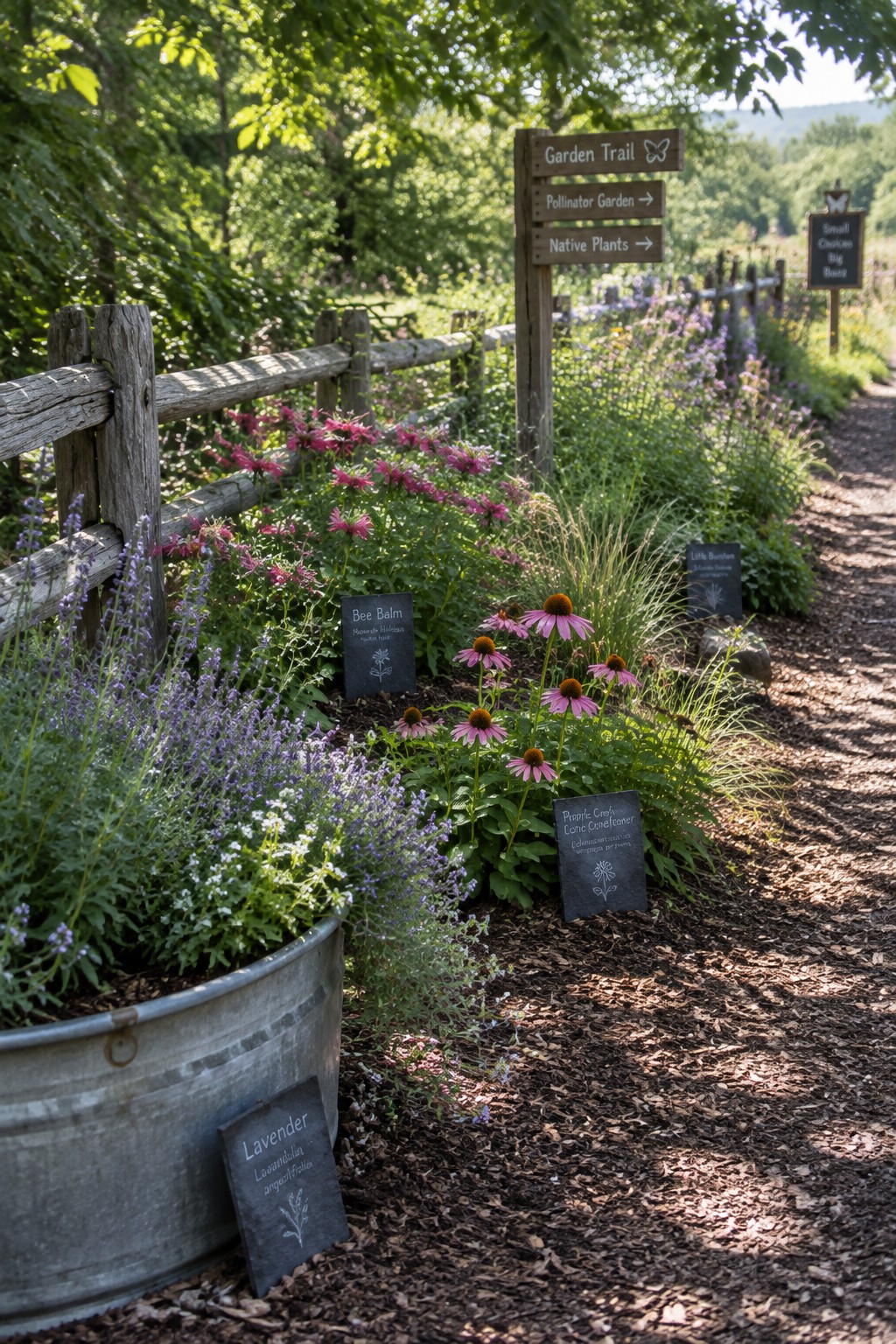
A planted border can make a garden path feel like part of the garden rather than a route cut through it. Lavender works well near a fence because its purple flowers bring color along the edge without blocking the view beyond.
Plant it in loose groups beside the path, leaving enough room for the plants to spread and for people to walk comfortably. Mix in a few different-height flowers for variety, but keep the border simple enough to maintain.
Build Stone Steps Into a Lavender Border
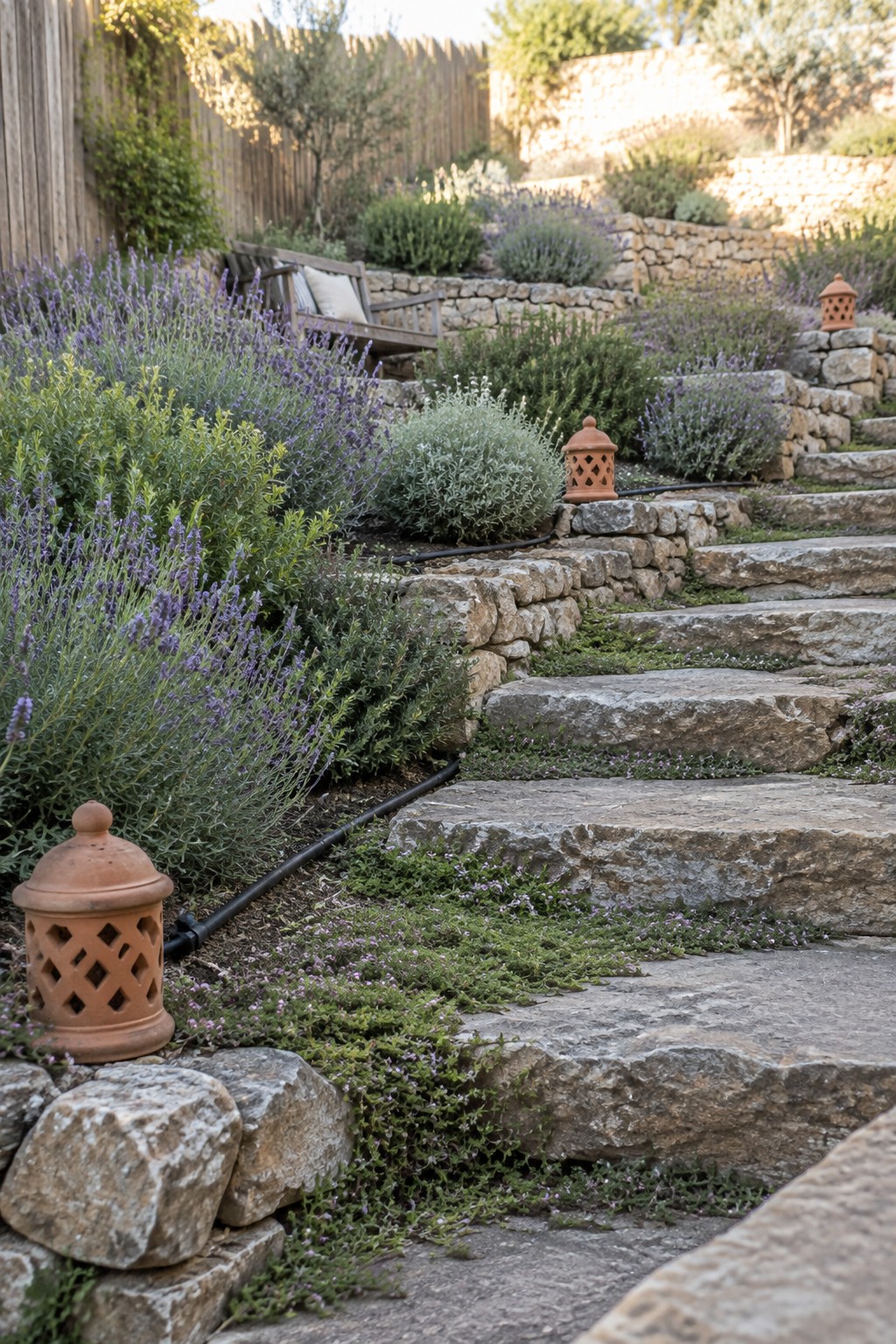
Stone steps can make a sloped garden easier to walk through while keeping the planting beds in place. Lavender planted along the edges brings purple color close to the path without blocking the route.
This approach works well on uneven ground where a straight path would be awkward. Use sturdy, well-set stones, and leave enough room beside the steps for plants to spread without crowding the footing.
Use Lavender to Define a Gravel Patio Edge
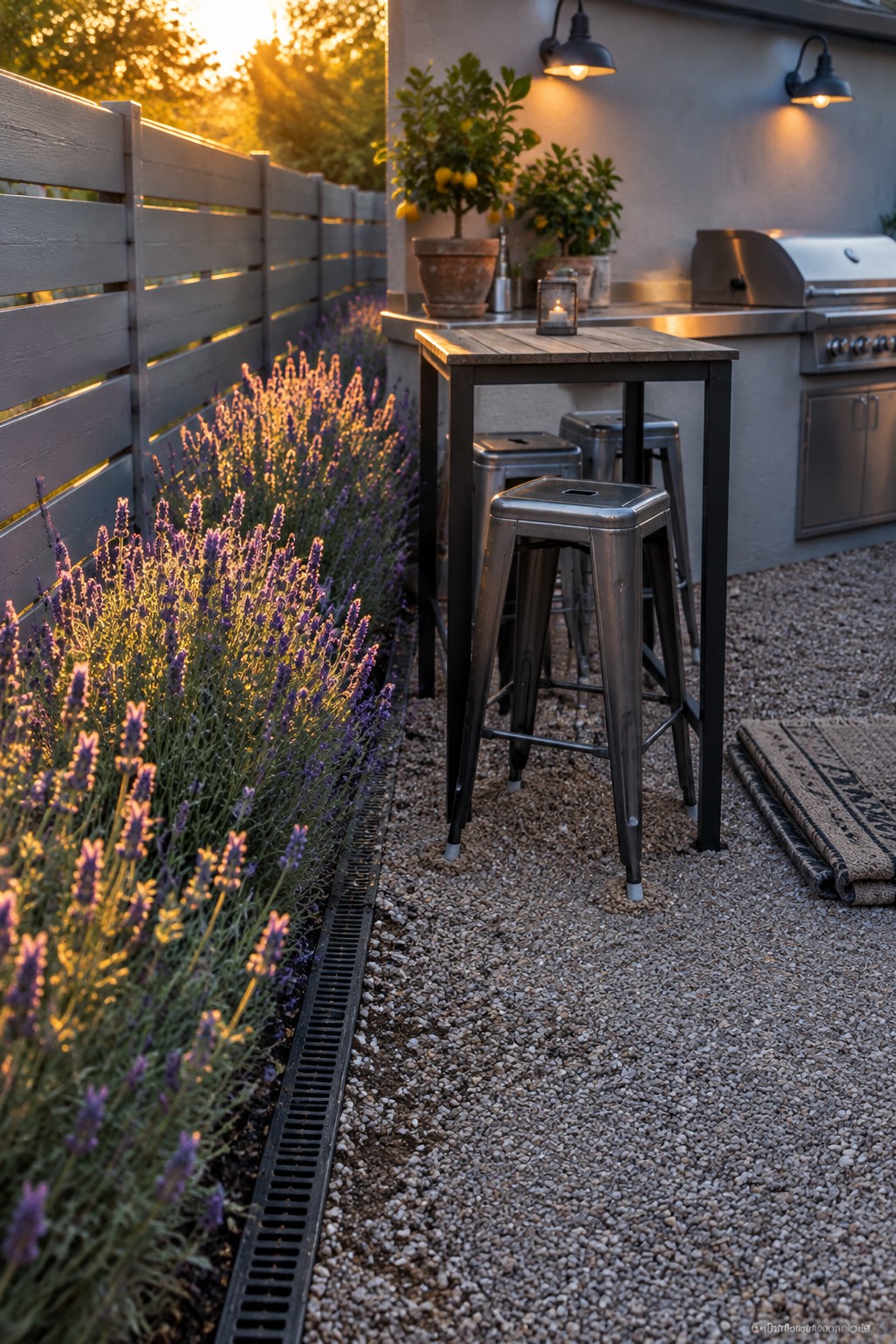
A narrow lavender bed can give a gravel patio a clear edge without making the space feel boxed in. The purple blooms add color along the fence, while the planting keeps the open gravel area easy to use.
For a similar border, plant lavender in a long, loose row beside a fence and leave enough room for it to spread. This works well where a patio needs a little separation from the garden, but avoid crowding the plants against a drain or walkway.
Repeat Lavender and Silver Foliage Along the Fence
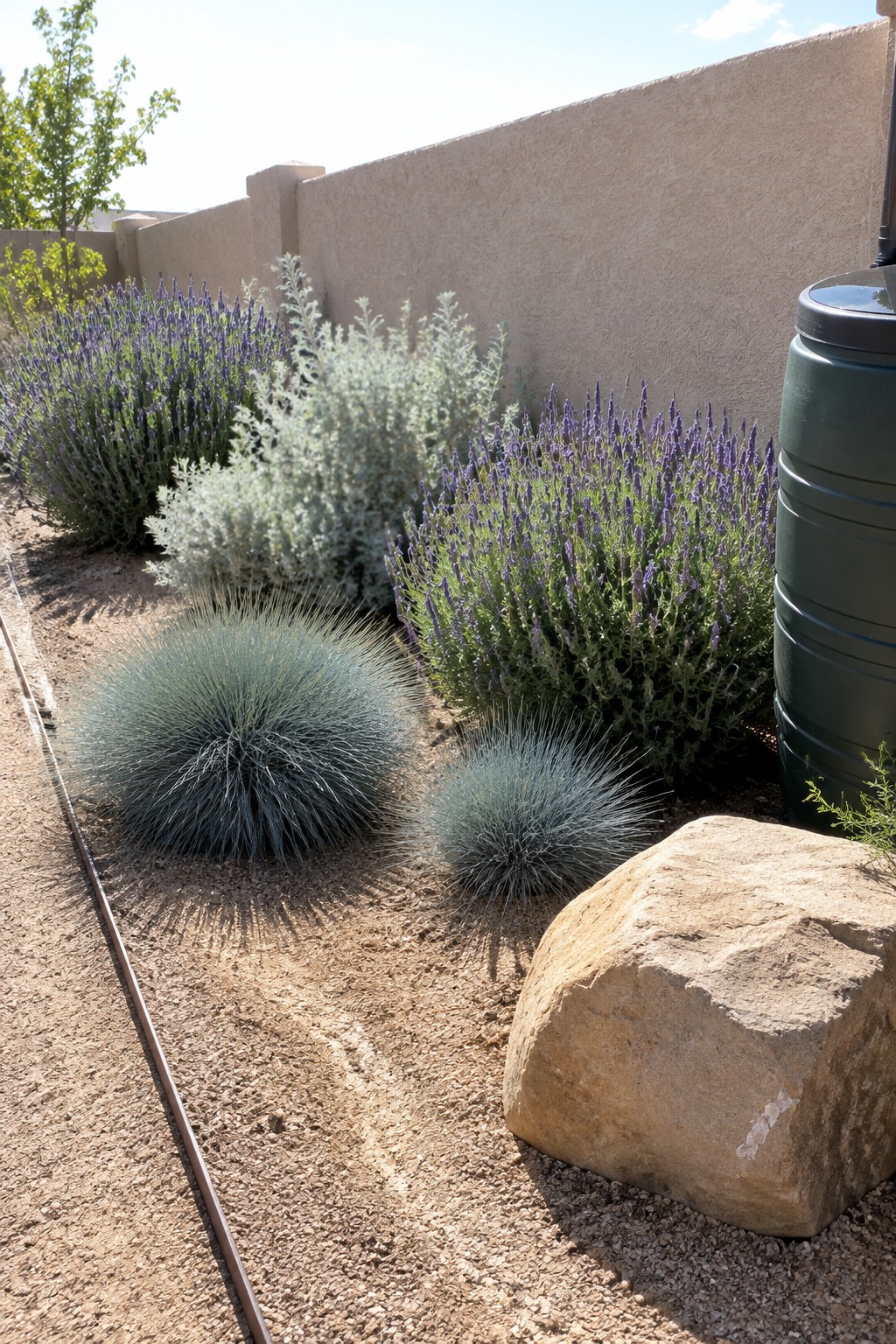
Repeating lavender in loose groups along a fence gives a long garden bed a steady rhythm without making it feel too formal. Silver-leaved plants between the purple blooms add a simple change in texture while keeping the planting restrained.
Use the same few plants at intervals, leaving room for each one to reach its mature size. This kind of border suits a sunny, dry spot; avoid crowding the plants, since good airflow helps lavender stay healthy.
Mix Lavender With Full Border Planting
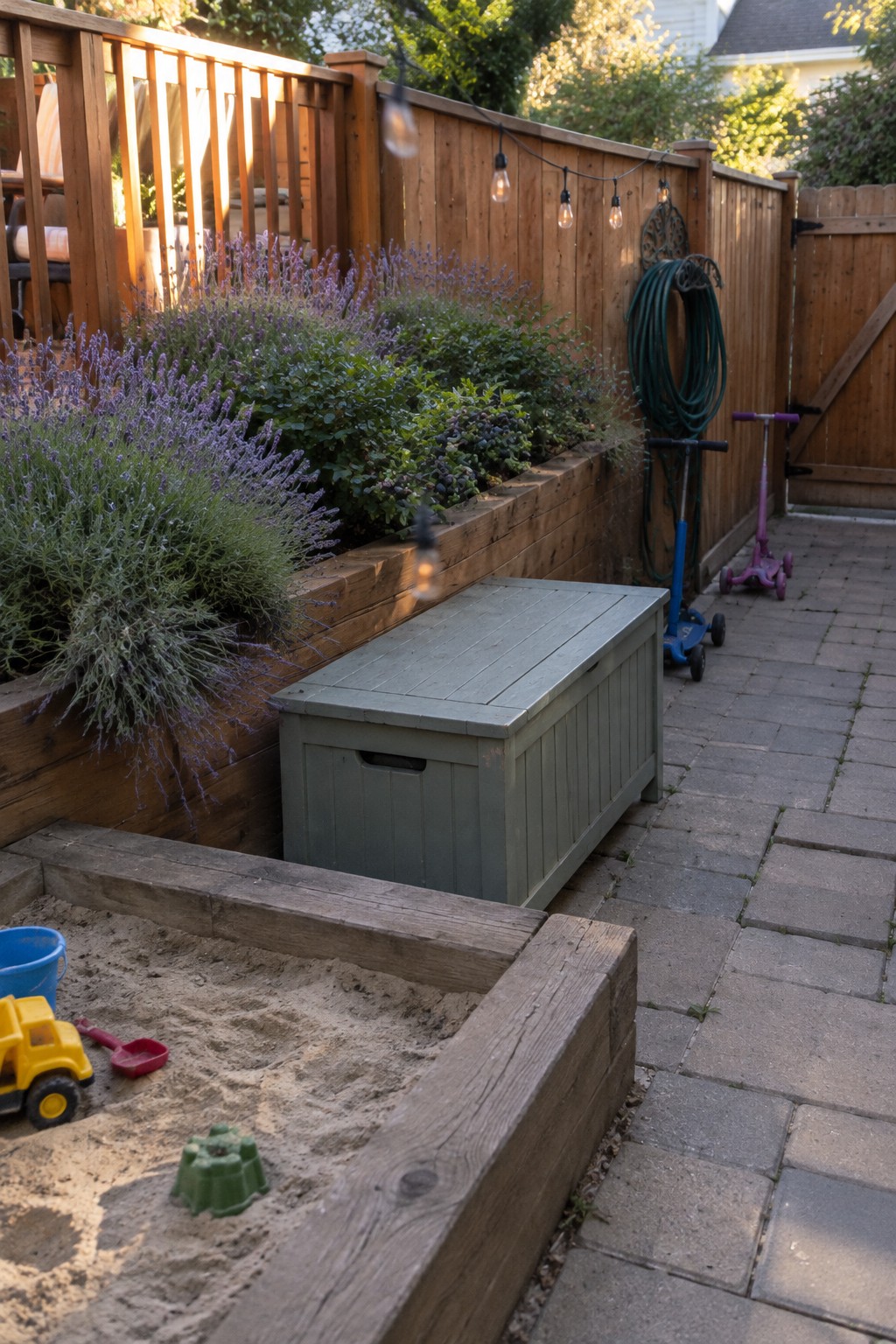
A lavender border can feel less formal when it grows alongside fuller green plants. The purple flower spikes still stand out, but the mix gives the bed a relaxed, layered look rather than a single row of color.
Plant lavender along the front or edge of a fence bed, leaving room for neighboring plants to spread. A raised timber bed can help contain the planting, but keep the lavender in a sunny spot with well-drained soil.
Use Lavender to Connect Poolside Planting
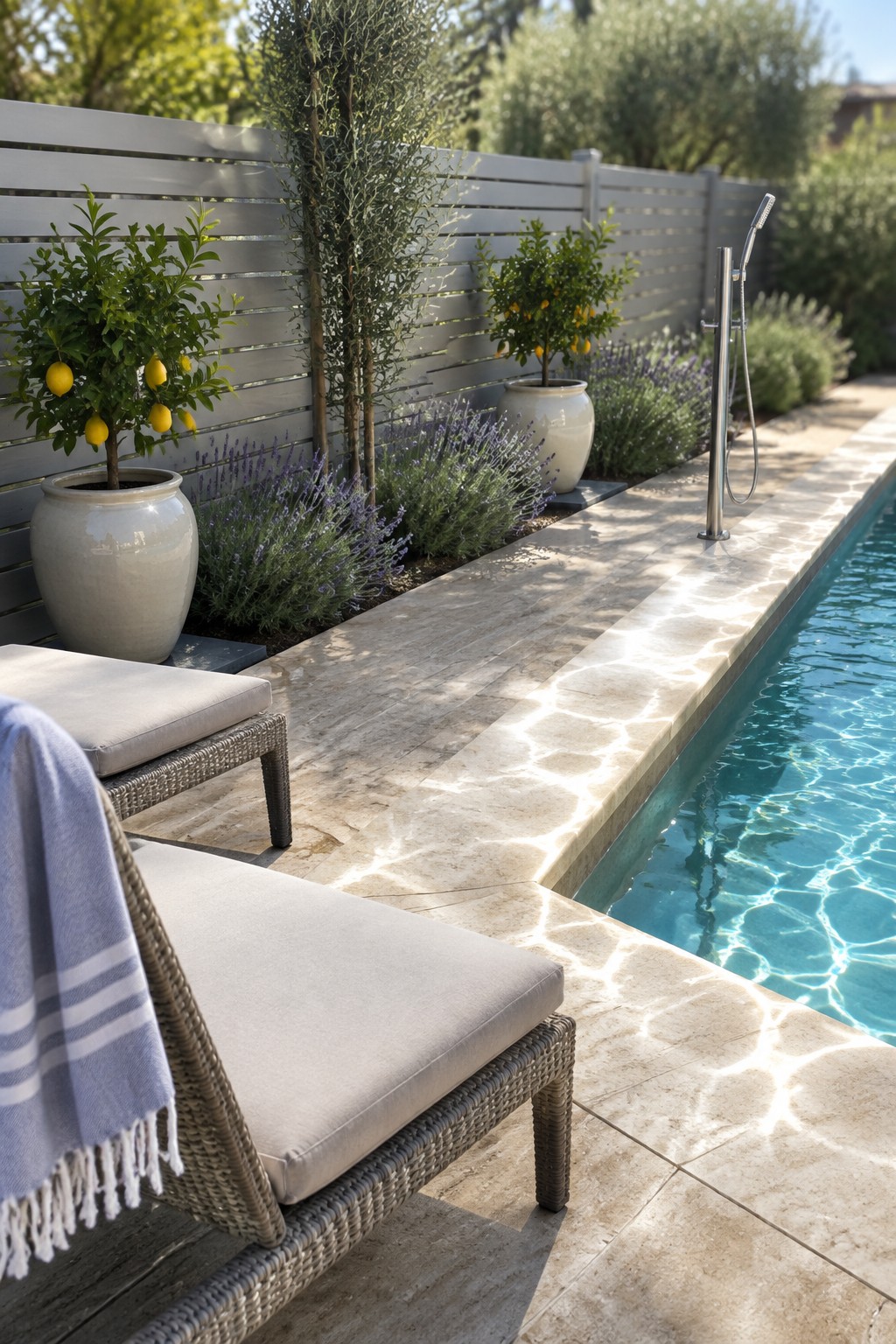
Planting lavender in a narrow bed along a fence can help a pool area feel more like part of the garden. The low purple blooms make a neat border, while taller plants behind them add height without taking over the deck.
Keep the lavender a little back from the pool edge so it has room to grow and swimmers have a clear path. It suits sunny, well-drained beds, and repeating small groups along the fence makes the planting feel orderly.
Grow Lavender in Planters Along a Balcony Railing
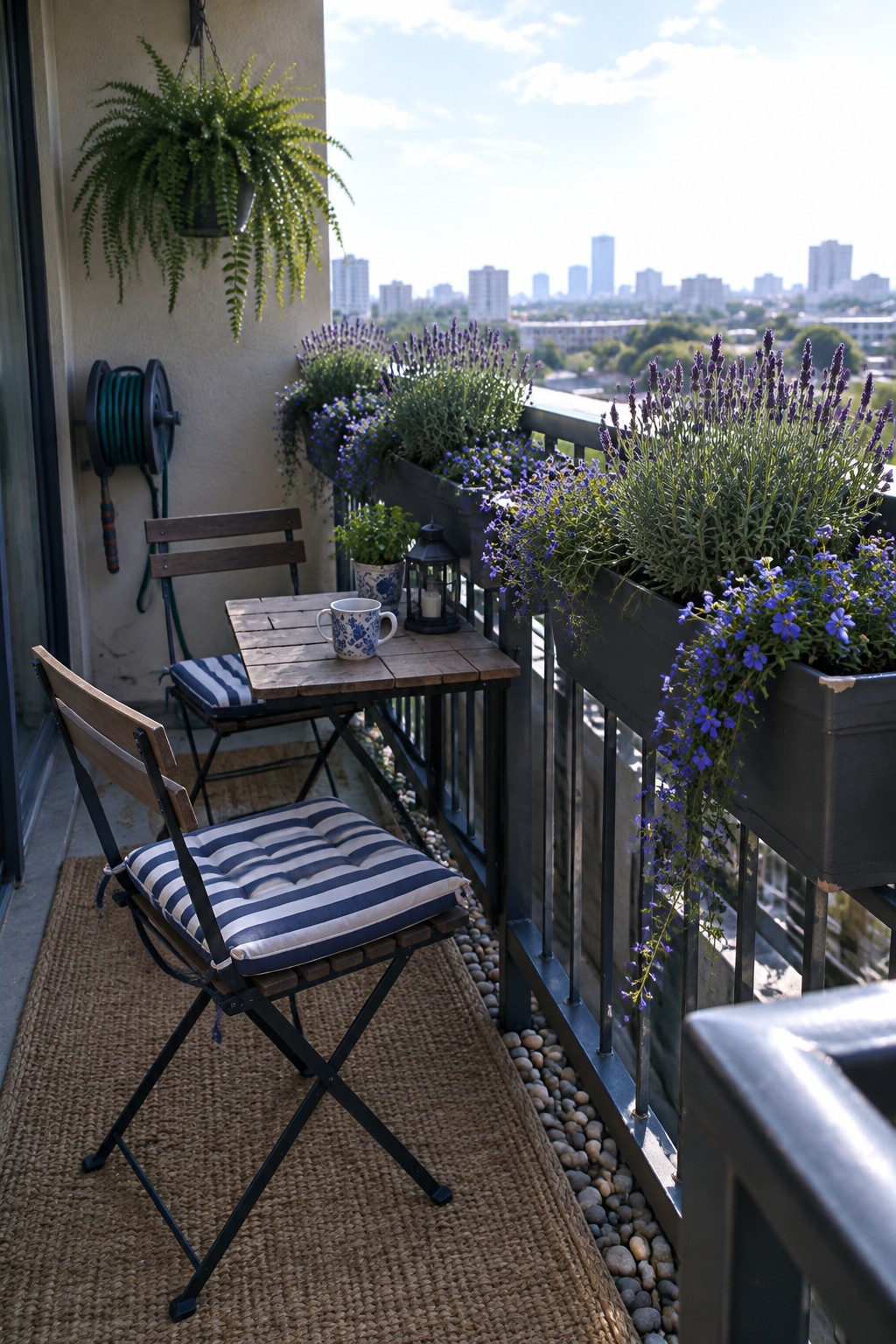
Using planters along a railing is a handy way to make a small balcony feel greener without taking up much floor space. Lavender can bring soft purple color to the edge of the seating area, while trailing flowers spill over the sides.
Choose sturdy, well-draining planters and give each plant room for airflow and sunlight. This works best on a sunny balcony, but check the railing’s weight limit and secure the containers so they cannot shift in wind.
Layer Flowering Plants Along a Garden Fence

A fence-side border can feel fuller when plants grow at different heights. Lavender near the front makes a low purple edge, while taller blooms behind it add color without hiding the fence.
Use this approach where there’s enough room for plants to spread, and leave space between lavender and taller flowers so each can get light and air. A simple path beside the bed also makes pruning and weeding easier.
Grow Lavender in Planters Along a Fence
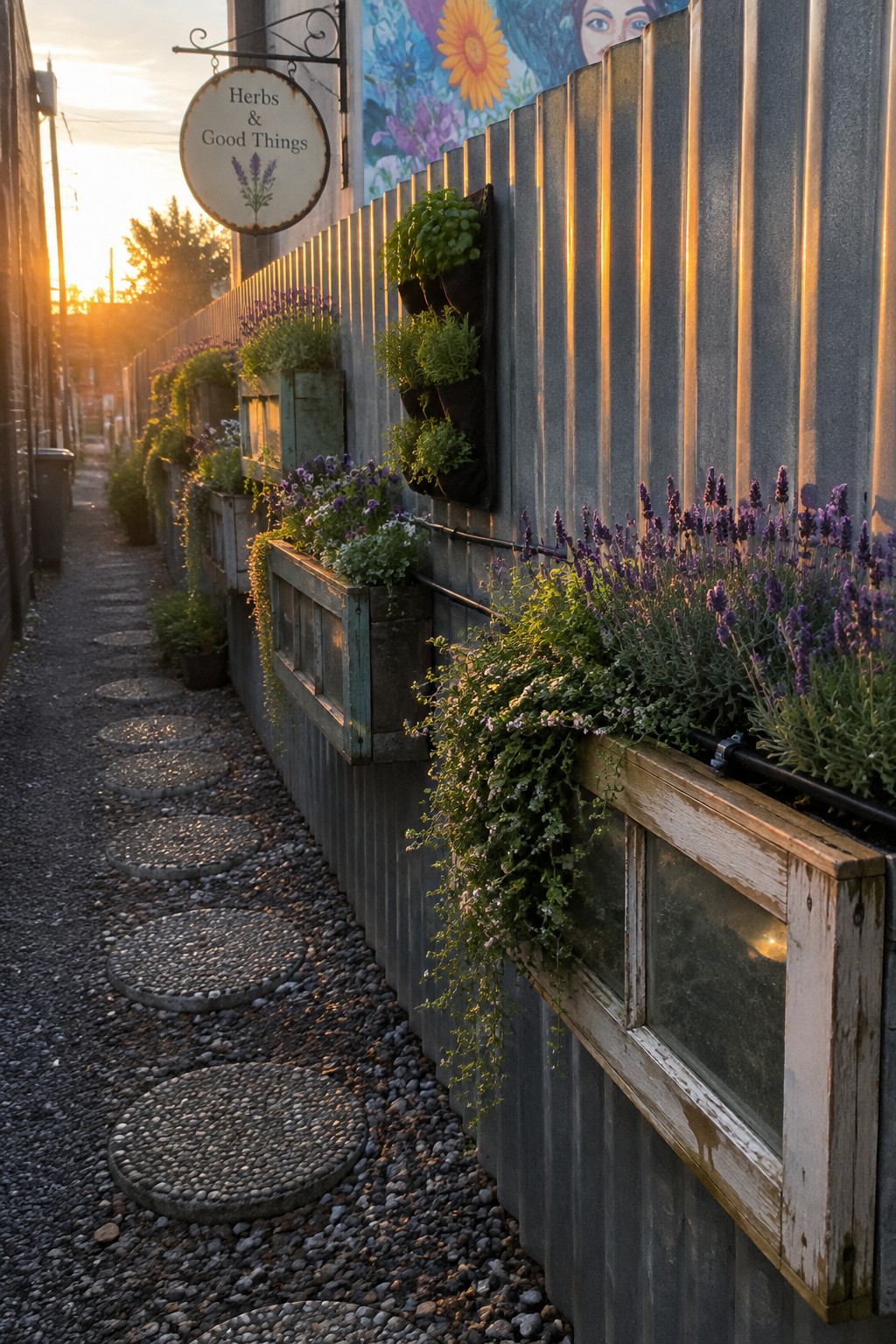
A fence can do more than mark the edge of a garden. Shallow planters attached to it let you grow lavender where ground space is tight, while keeping the plants close enough to enjoy their color and scent.
Use sturdy, well-drained planters and give lavender plenty of sun. This setup suits a narrow side path or small urban garden, but avoid crowding the plants so air can move around them.
Use Lavender to Add Structure to a Mixed Border

Lavender can give a mixed garden border a clear shape without making it feel too formal. Planting it in a long bed beside a fence lets its purple flowers repeat along the edge, while other flowers and foliage bring variety.
This approach works well in a sunny spot with soil that drains freely. Leave room for lavender to spread, and avoid placing it where water collects. A few other plants can fill the bed, but keep enough space around each lavender plant for air to circulate.
Frequently Asked Questions
Q: How far apart should I plant lavender along a fence?
A: Leave about 18 to 24 inches between plants so air can move around them as they grow. Check the mature width of your variety, since compact lavender can sit closer together than larger types.
Q: Will lavender grow well in the shade beside my fence?
A: Lavender blooms best with at least six hours of direct sun a day. If the fence casts shade for much of the day, try a sunnier stretch or choose a plant that handles shade better.
Q: How do I keep lavender from leaning into the fence?
A: Give each plant enough room and avoid rich, heavily watered soil, which can lead to floppy growth. A light trim after flowering helps keep the plants neat without cutting into the old, woody stems.
Q: Can I mix other flowers into a lavender border?
A: Yes. Pair lavender with plants that enjoy sun and well-drained soil, such as salvia or low-growing thyme. Keep a little space between plants so the lavender still has room to breathe.
