

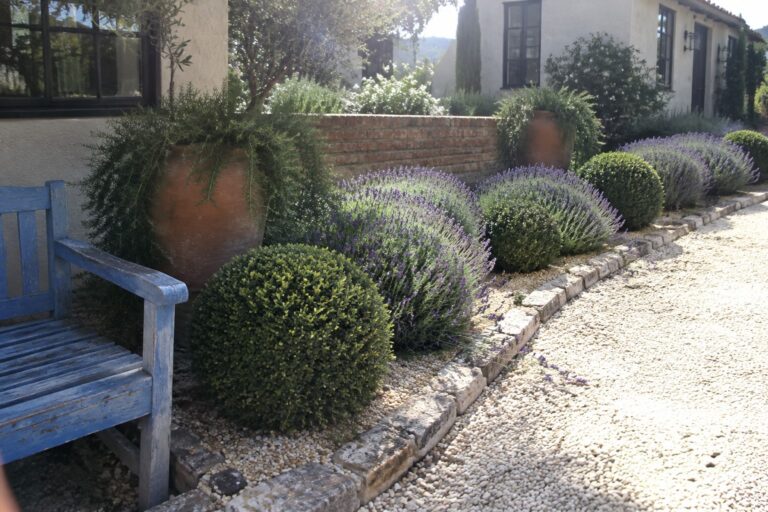
Lavender can bring a garden together, but in a sunny bed, its spacing and companions matter as much as its color.
I find that the first thing people notice is often the shape of the planting, whether tidy rows guide the eye or softer clusters make the edges feel relaxed.
The strongest beds leave enough room for lavender to grow and keep pathways, borders, and nearby plants from feeling crowded.
Full sun also calls for thoughtful plant choices, since a good layout needs to look balanced through heat and dry spells, not just at planting time.
I’d start with ideas that suit the space you have, then adapt the spacing and edging to fit your garden.
Use Stone Edging to Shape a Lavender Bed
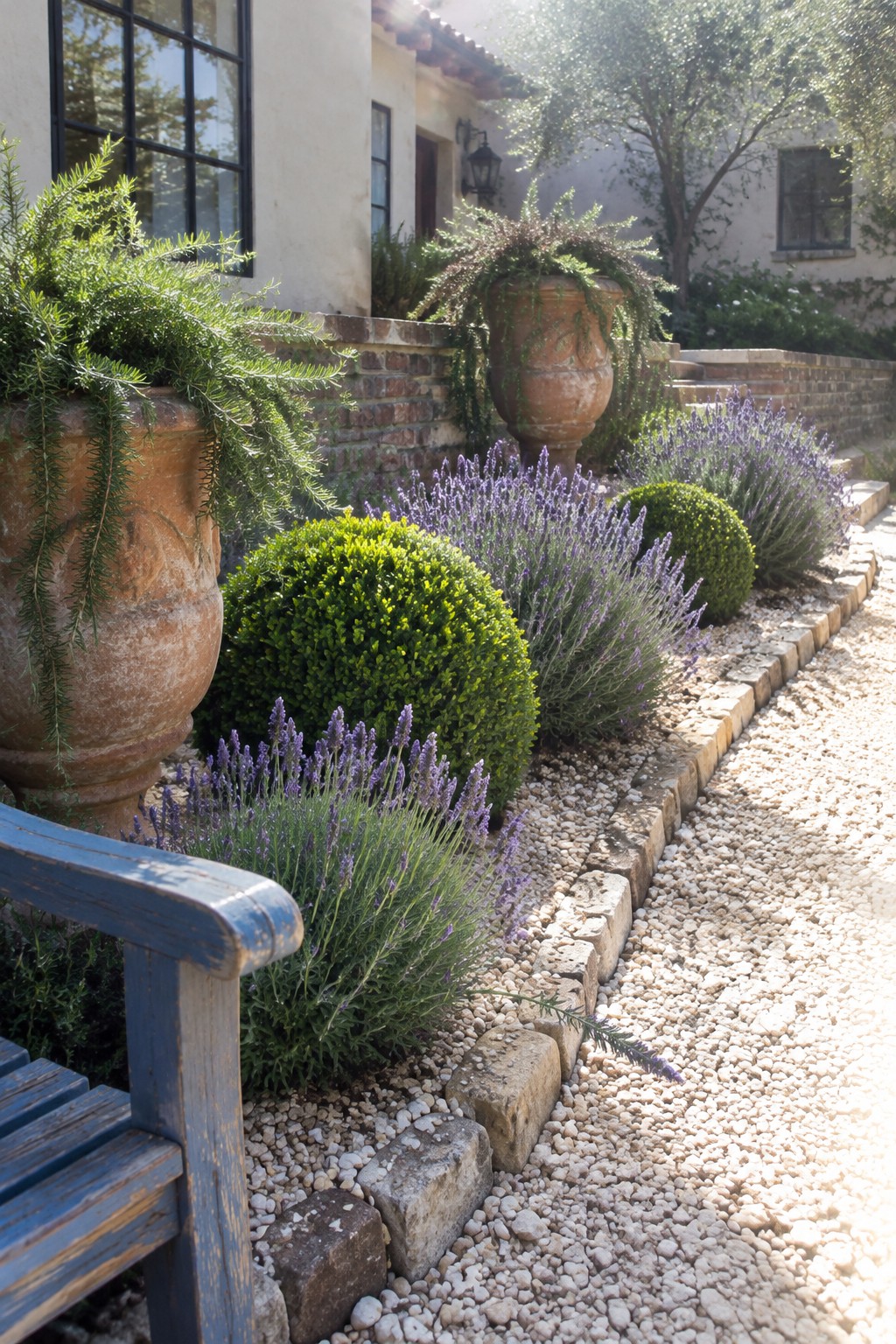
Stone edging gives a sunny flower bed a clear shape and helps keep gravel paths from spilling into the plants. Lavender looks especially at home along this kind of informal border, where its upright blooms can repeat in a tidy rhythm.
Use sturdy stones to define a path or separate planting areas, and leave enough room for lavender to spread as it matures. The low stone edge suits cottage-style gardens and homes with rustic details; just make sure the bed drains well, since lavender dislikes soggy soil.
Use Lavender to Edge a Garden Path
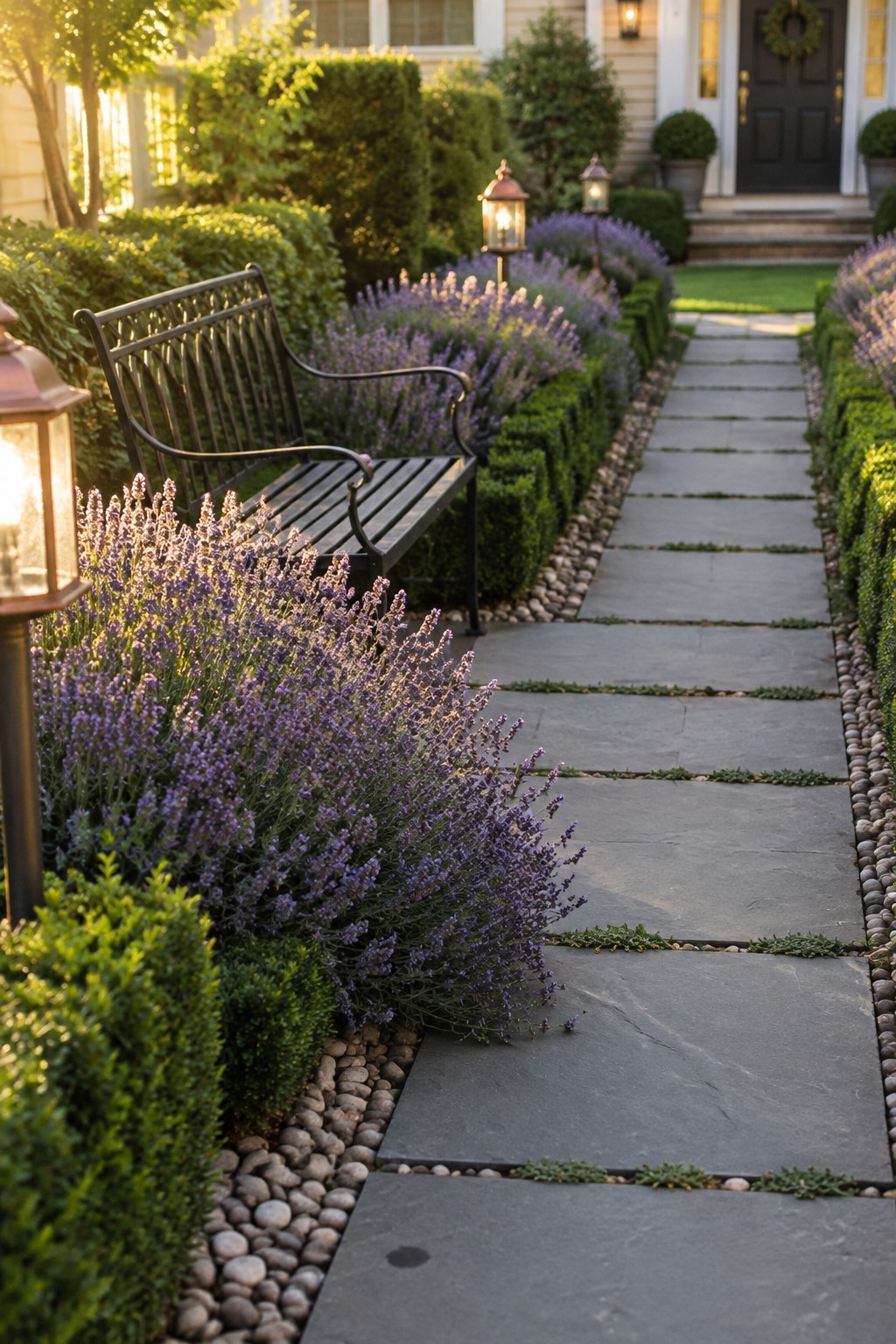
Lavender makes a practical border for a garden path, giving the walkway a clear edge while keeping flowers close to where they can be enjoyed. Its purple blooms also stand out against simple stone paving.
Plant it along a sunny path with enough room for mature plants to spread, and keep the paving wide enough for easy walking. A low hedge nearby can help define the bed without crowding the lavender.
Use Curved Edging to Shape a Lavender Bed
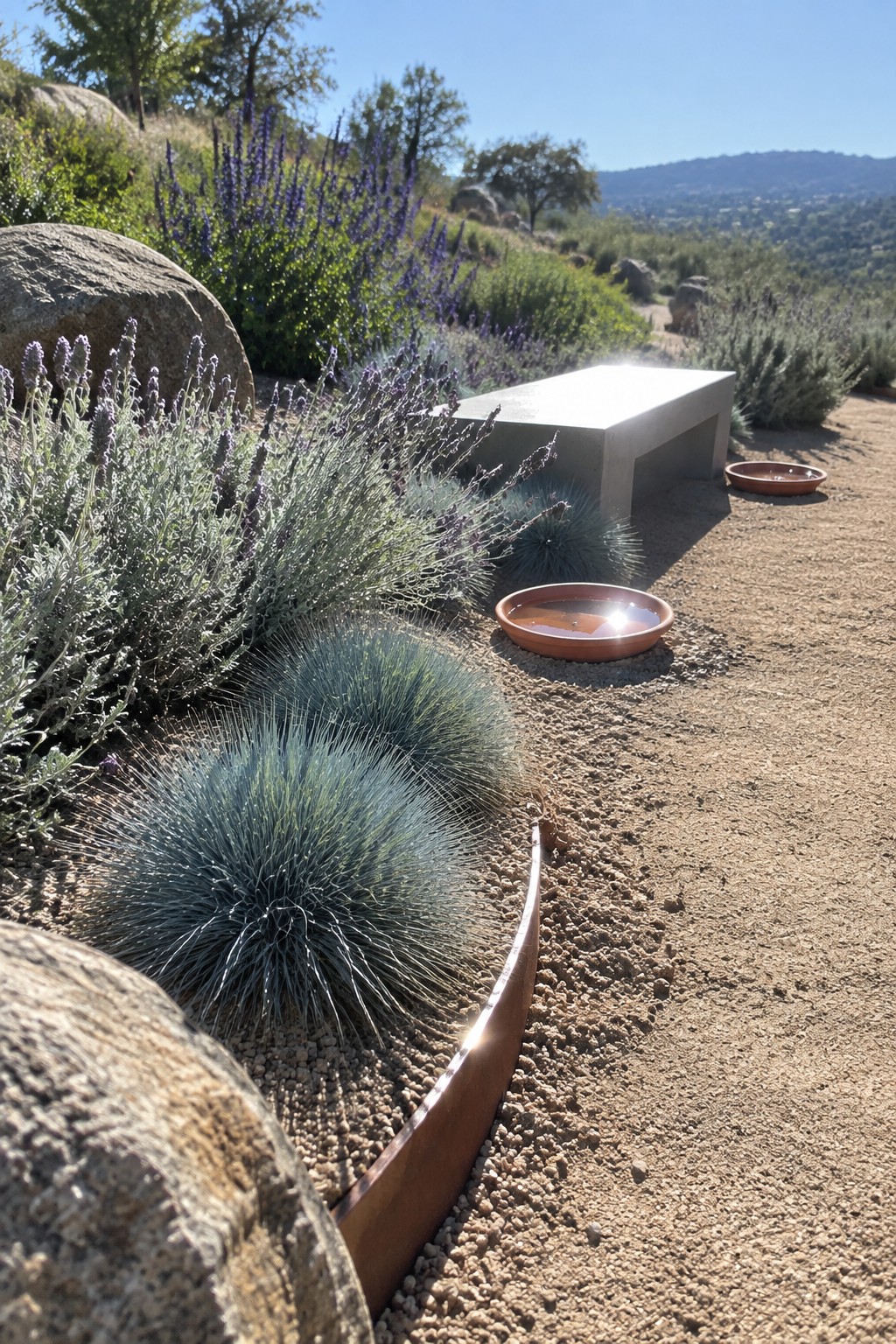
Curved metal edging gives a lavender bed a clear shape without making it feel stiff. It also helps keep gravel in place and separates the planting area from the path.
Use a gentle curve to guide the bed around existing rocks or along a walkway. Lavender and other sun-loving plants suit this kind of dry, gravelly border, but leave enough room for them to spread and keep the edging low enough to avoid crowding the plants.
Use Stone Walls to Shape Lavender Beds
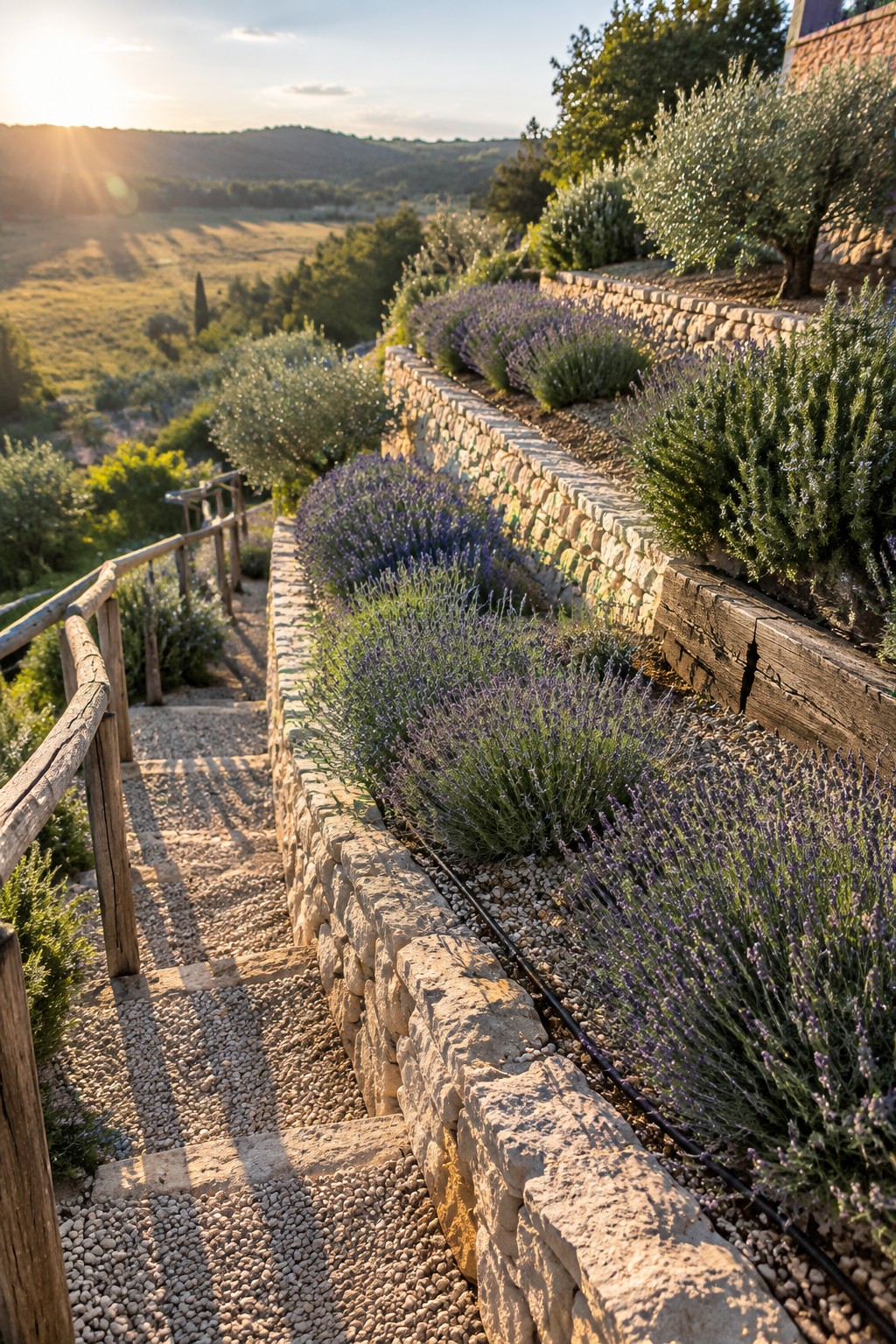
Terraced stone walls are a practical way to organize lavender on a sloped garden. They create level planting areas and give each bed a clear edge, so the lavender can grow in defined rows rather than spilling across a hillside.
This approach works best where the ground already slopes and the site gets plenty of sun. Leave enough room for plants to spread, and make sure the soil drains well. Lavender dislikes staying wet, especially in a tightly packed bed.
Plant Lavender in a Narrow Raised Bed
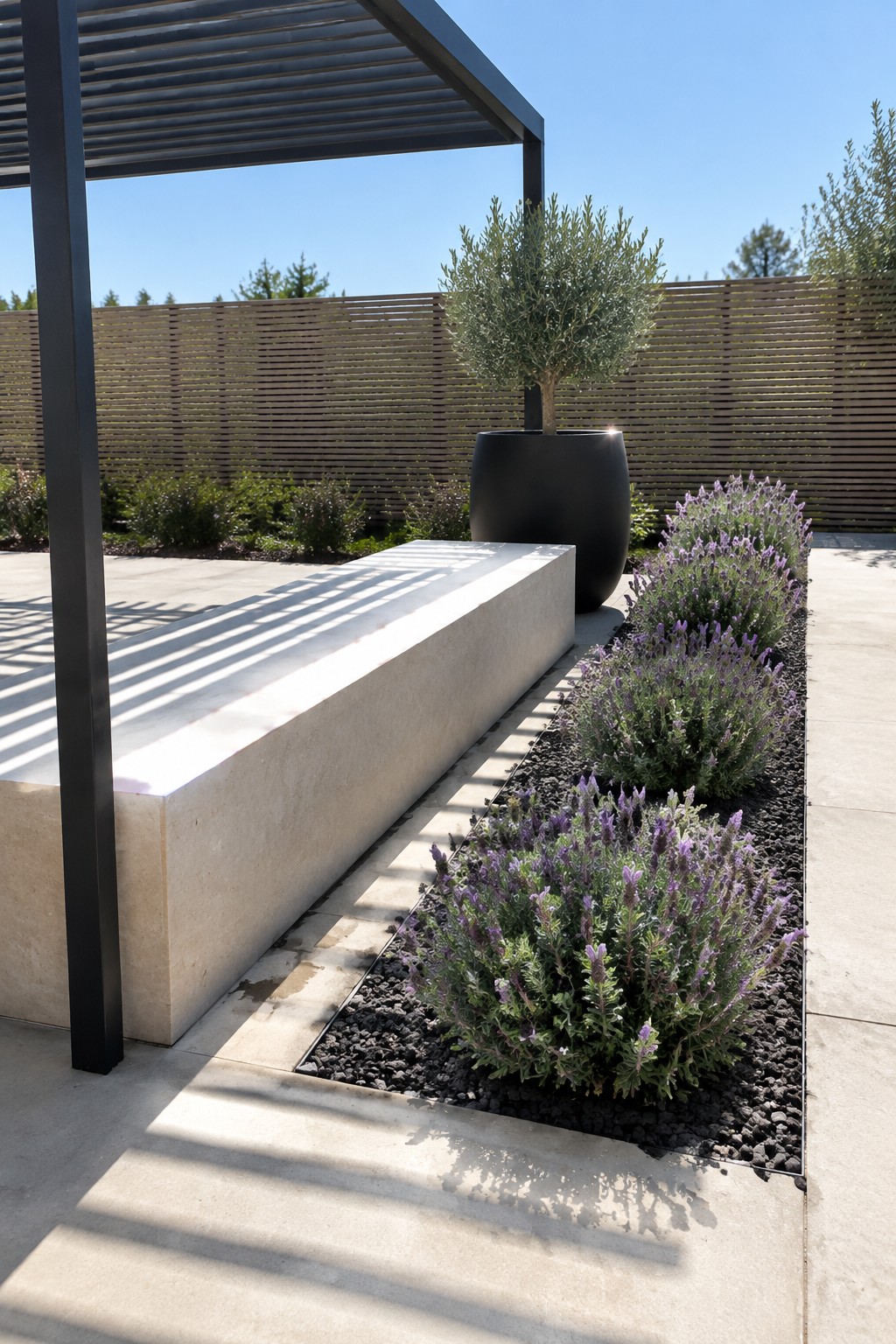
A long, narrow bed gives lavender a clear place in a sunny garden without taking over the patio. The dark gravel around the plants also makes it easier to keep the planting strip neat.
This layout works well beside a bench or along a paved walkway, especially where space is limited. Leave enough room between plants for air to move through, and choose a sunny spot with soil that drains well.
Use a Circular Bed to Organize Lavender
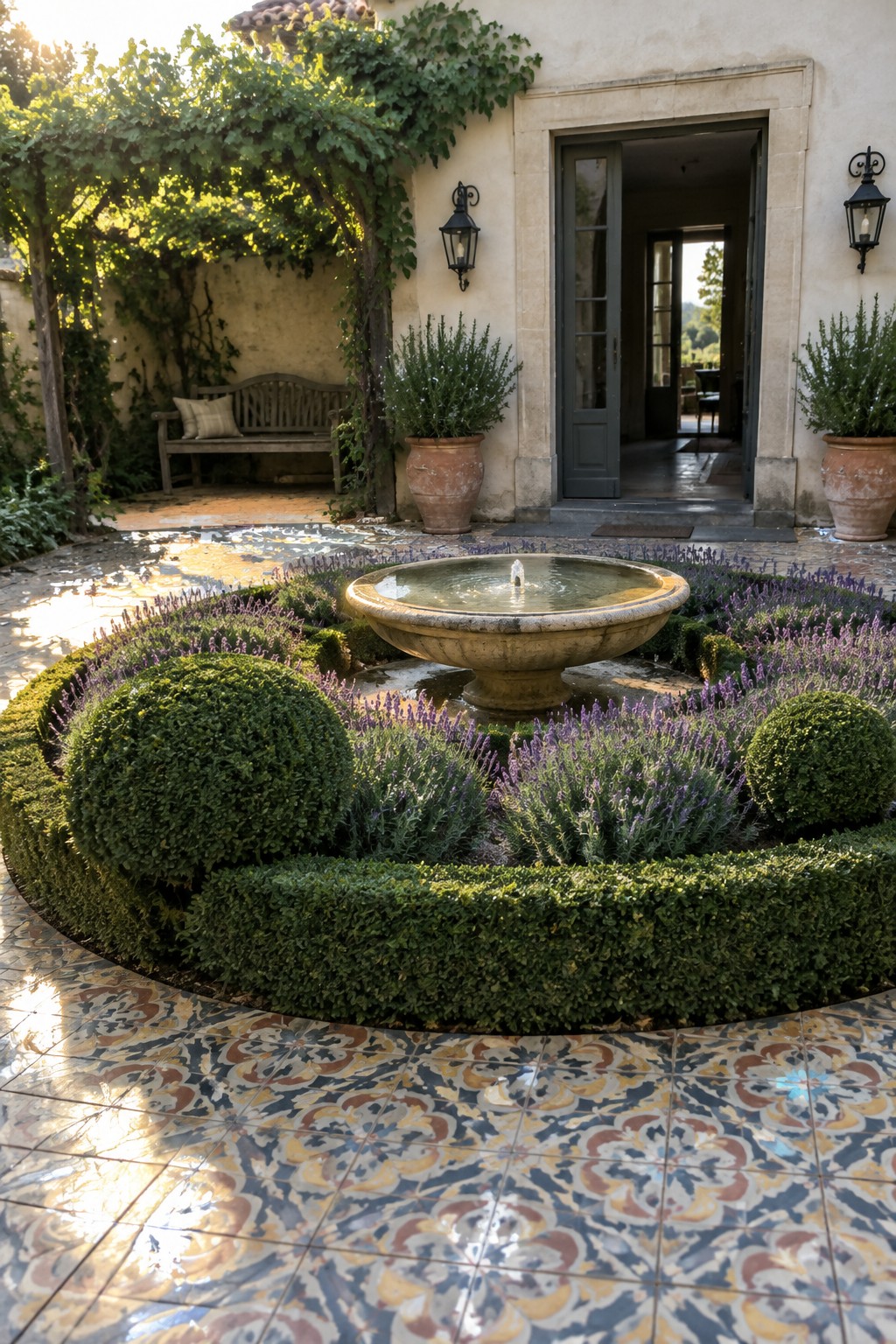
A round planting bed gives lavender a clear shape and makes it feel like a feature of the garden. A low hedge around the edge helps keep the bed tidy while leaving the flowers room to grow.
This layout works well in a sunny courtyard or open lawn where people can see the bed from several sides. Keep the edging low so it does not shade the lavender, and leave enough space between plants for good air circulation.
Add Lavender Along a Poolside Patio
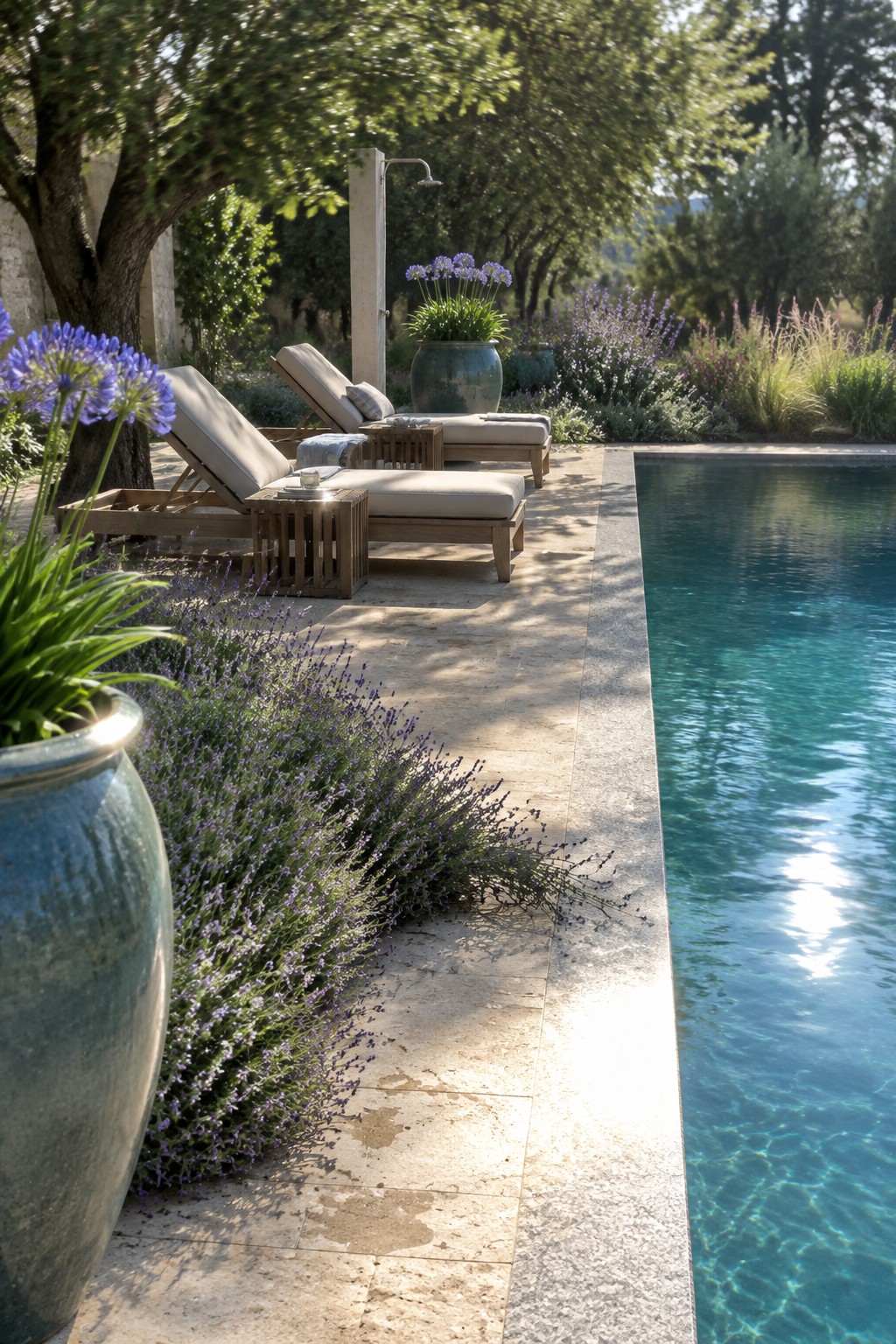
A strip of lavender beside a patio can make the edge feel less bare without blocking the view or taking up seating space. The purple flowers bring color close to the paving, while the plants stay low enough to keep the pool area open.
Use this idea where the bed gets plenty of sun and has room to spread slightly. Leave a clear gap between the plants and the paving so they are easier to trim and don’t spill onto the walking area.
Use Lavender to Define an Entry Garden
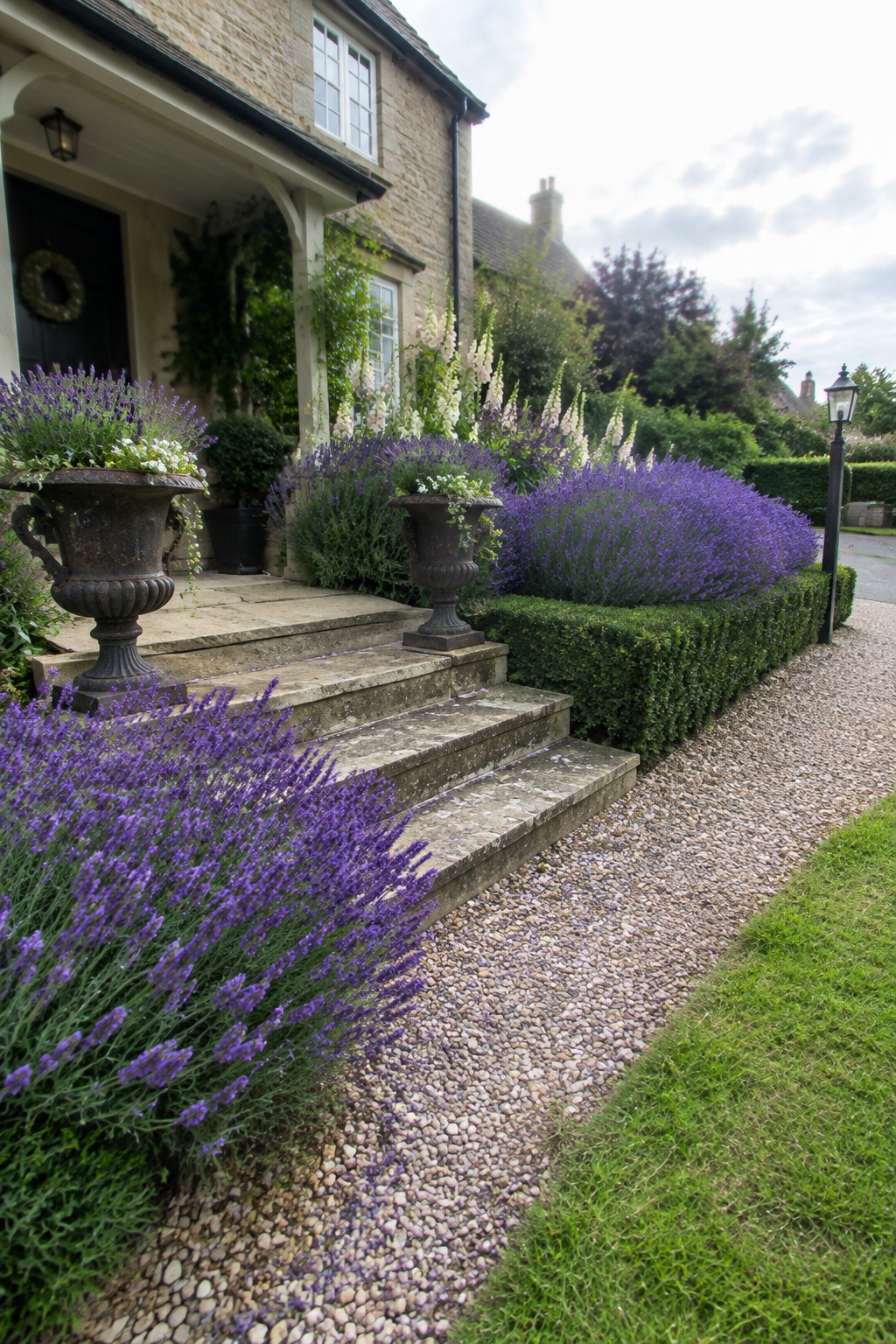
Lavender can give a front entry a clear planting edge without hiding the house. Here, a broad band of purple planting follows the stone steps and path, making the route to the door easy to read.
For a similar effect, plant lavender along a sunny walkway or beside front steps, leaving enough room for people to pass and for the plants to spread. Low clipped hedges can help keep the bed’s outline tidy.
Grow Lavender Along a Garden Path
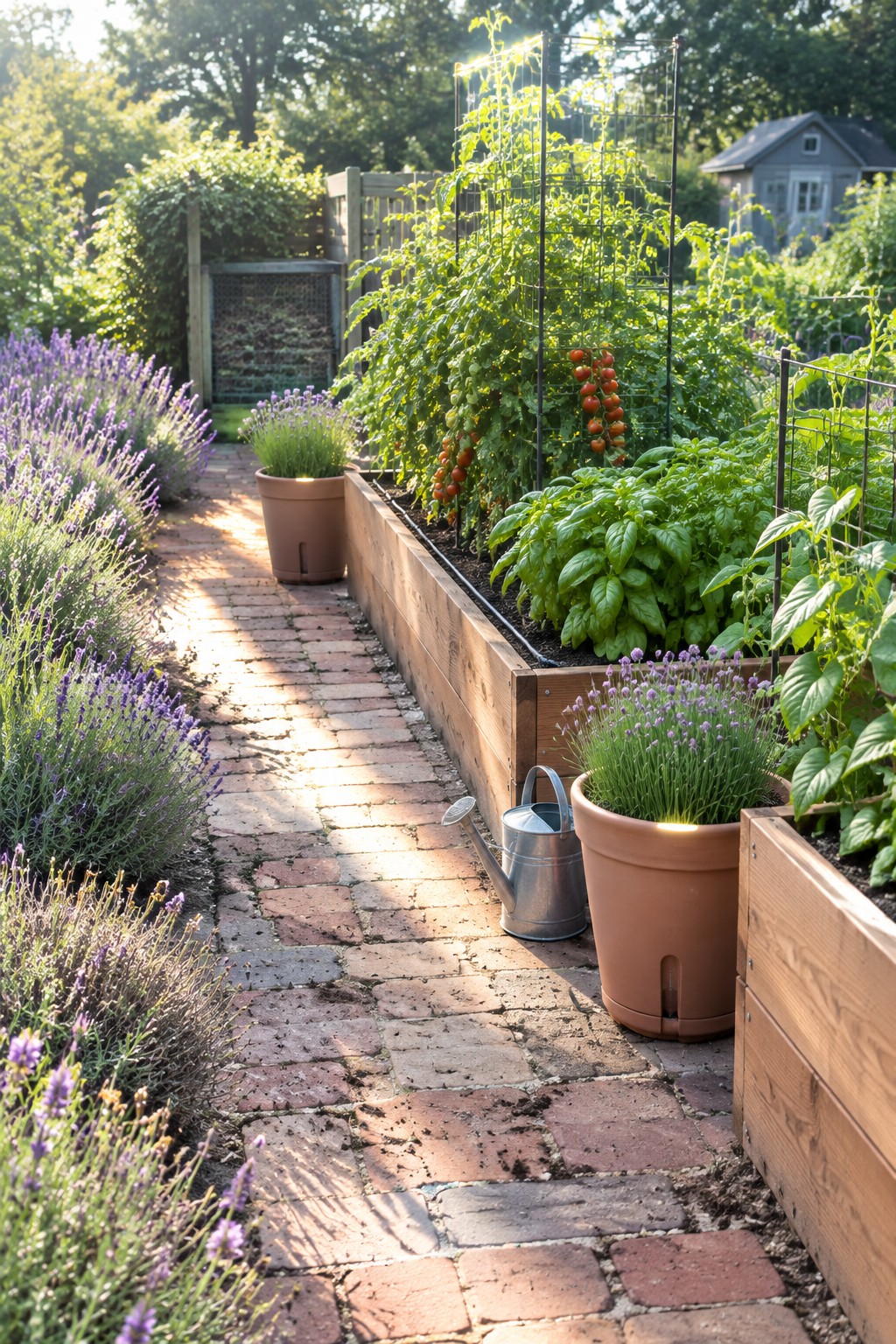
Lavender makes a useful border for a garden path, giving the walkway a clear edge while leaving the center open for walking. Its purple flowers also add color beside vegetable beds or other garden plantings.
Plant lavender in a sunny spot with well-drained soil, and leave enough room for mature plants so they do not spill across the paving. A narrow brick path works well, but keep the route wide enough to pass through comfortably.
Plant Lavender Along a Pebble Garden Path
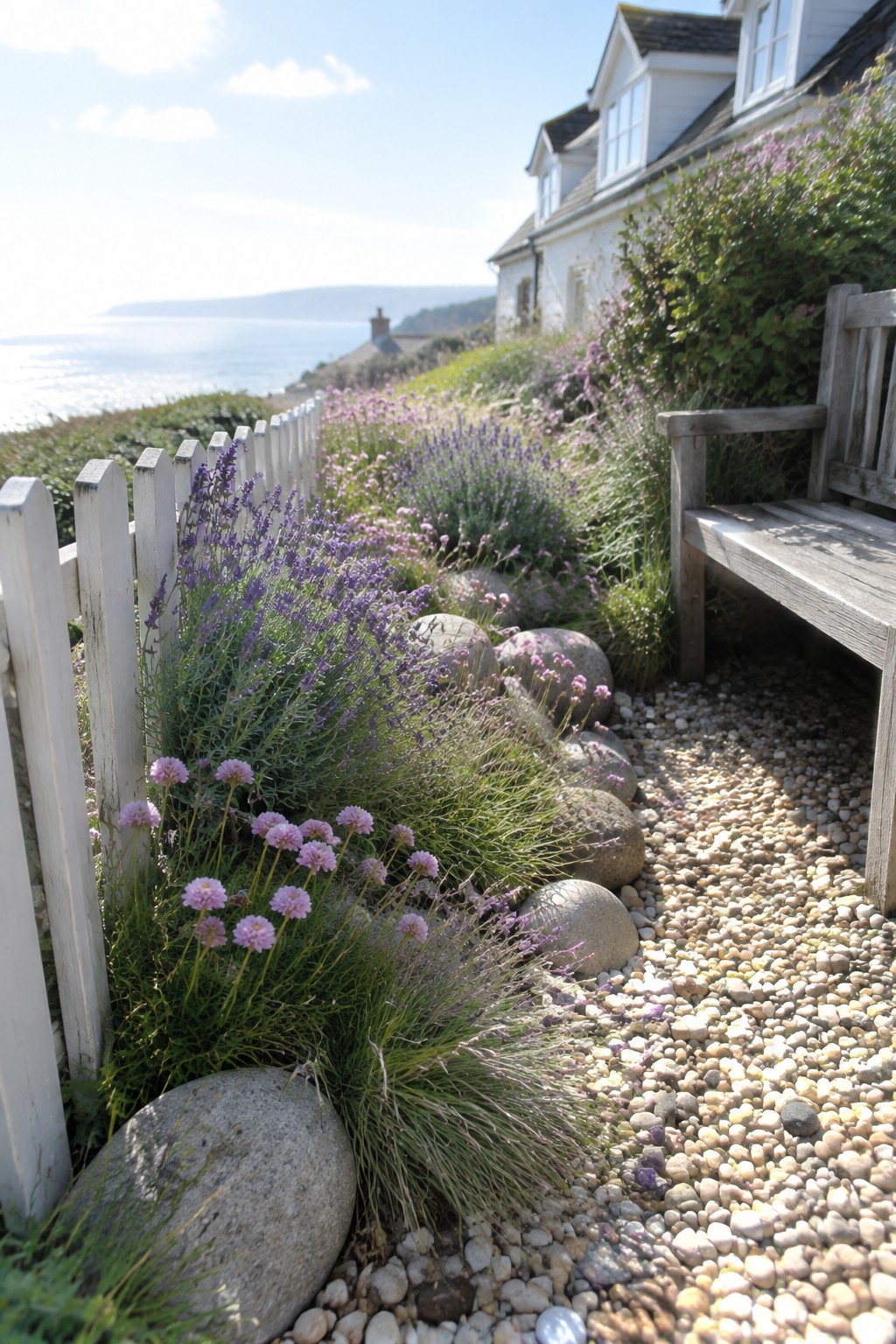
A narrow path of small stones can make a lavender bed feel like part of the garden’s layout rather than a separate patch of planting. Lavender works well along the edge because its upright flowers and silvery foliage give the path a clear border.
This approach suits sunny coastal gardens and other spots with free-draining soil. Leave enough room for plants to spread, and keep the path wide enough to walk comfortably as they mature.
Plant Lavender Along a Garden Dining Area
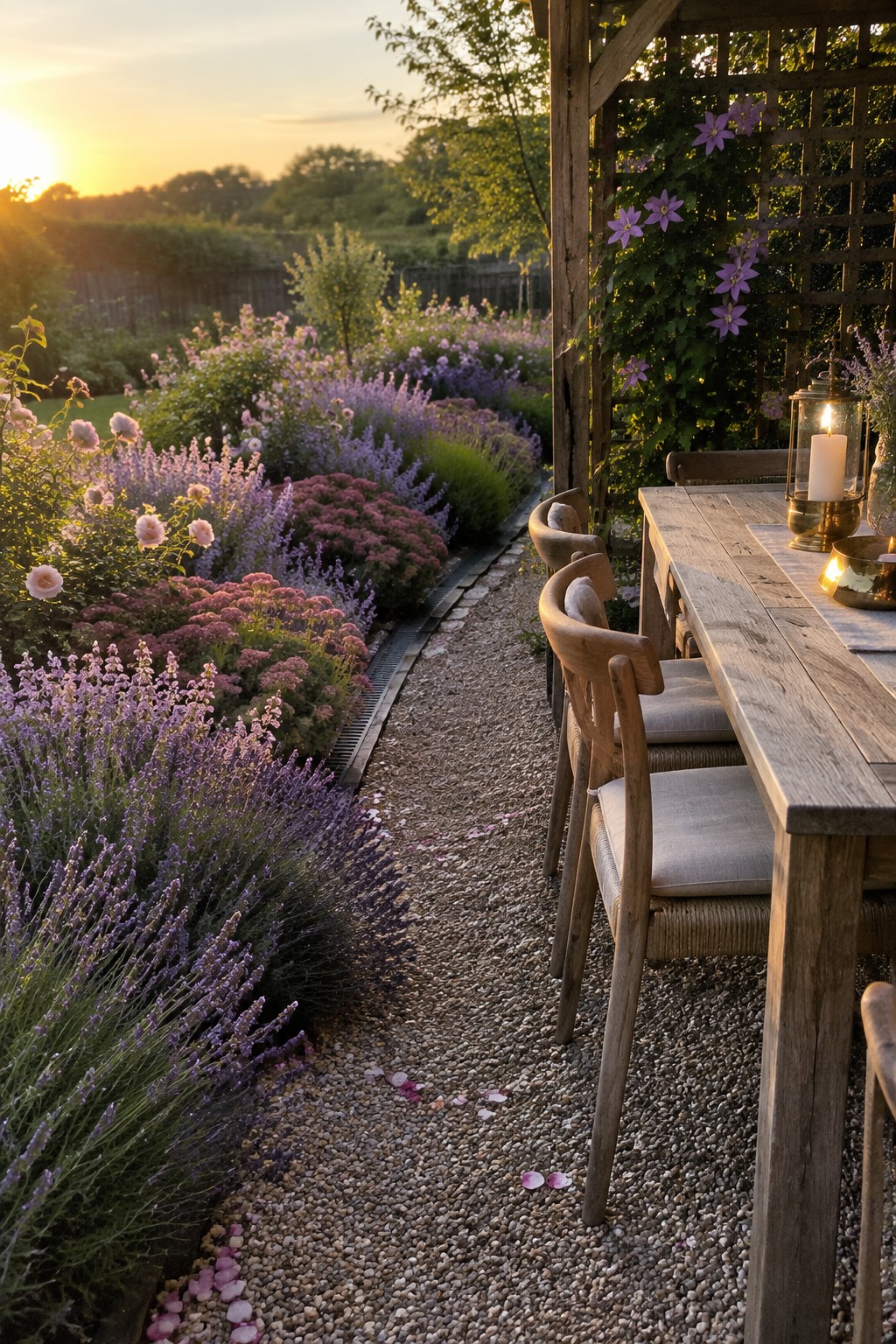
A lavender bed beside an outdoor dining spot makes the garden feel connected to where people actually spend time. The planting brings color and a soft edge to the gravel walkway without taking up space needed for chairs.
This works well beside a patio or a simple garden table, especially where the bed gets plenty of sun. Leave enough room for people to pull out chairs and walk past the plants, and keep lavender trimmed back from the path.
Plant Lavender in a Narrow Raised Bed
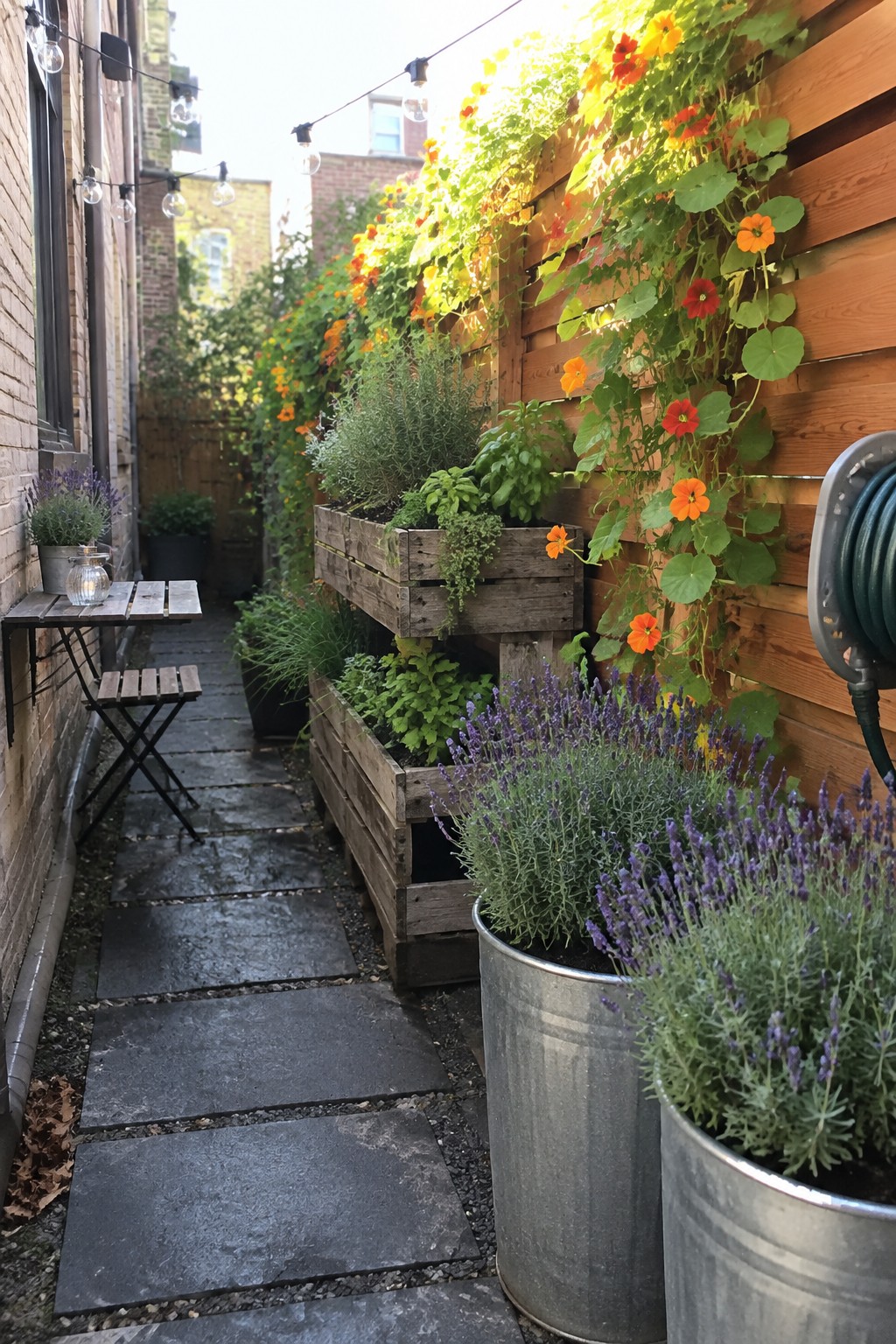
A narrow raised bed is a practical way to fit lavender into a tight garden. It gives the planting a clear boundary and keeps the path open, which matters when there isn’t much room to spare.
Use a long wooden bed along a sunny fence or wall, and leave enough space for lavender to mature without crowding the walkway. Good drainage is important, so avoid filling the bed with heavy, waterlogged soil.
Plant Lavender Along a Front Entry Walk
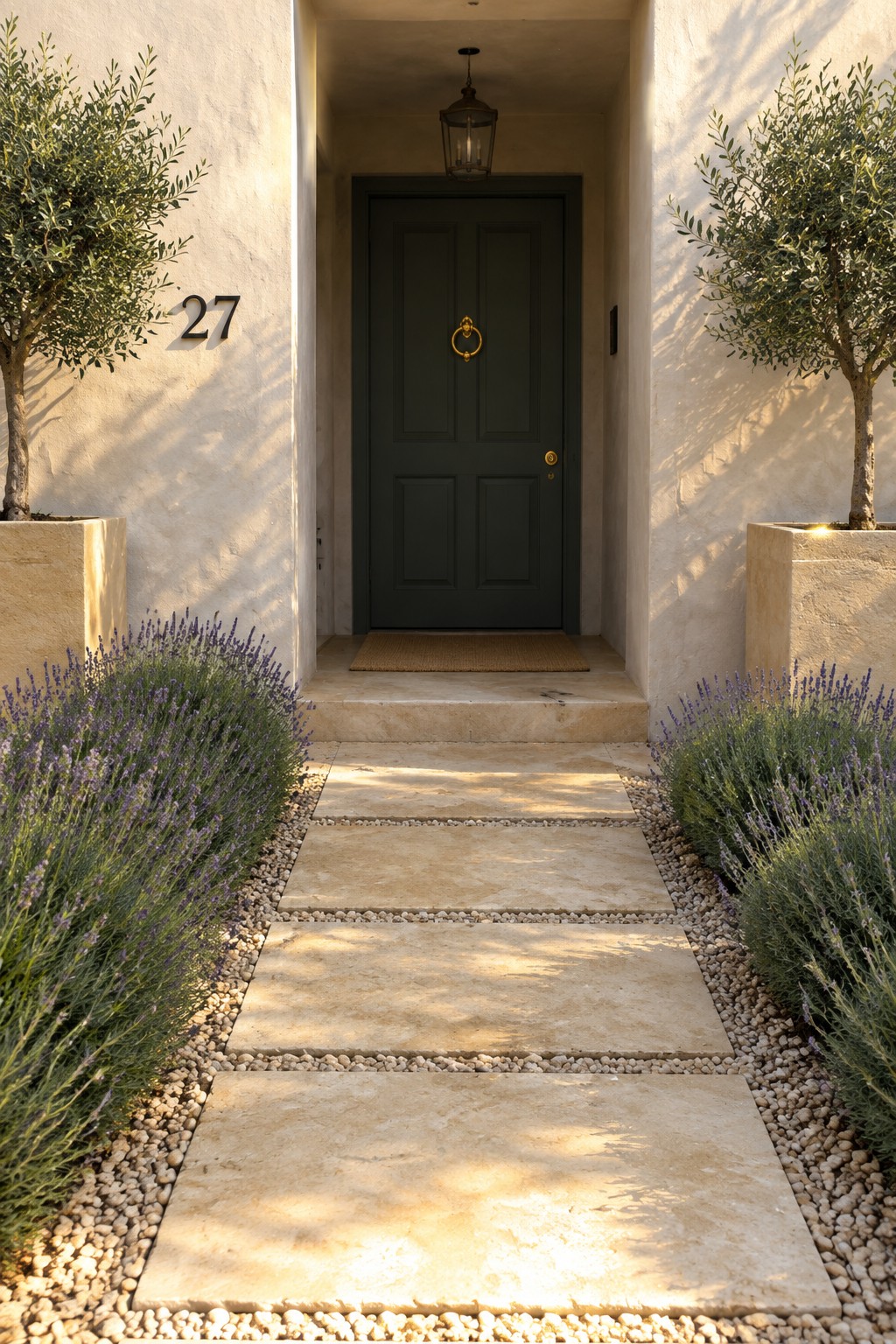
Lavender makes a useful border for a front walk, bringing color close to the house without taking over the path. Repeating it along both sides gives the entrance a clear, tidy approach.
Leave enough space for the plants to spread without leaning over the stepping stones. This layout suits sunny entries with a simple stone path, and gravel between the pavers helps keep the walkway neat.
Use Lavender to Define an Outdoor Dining Area
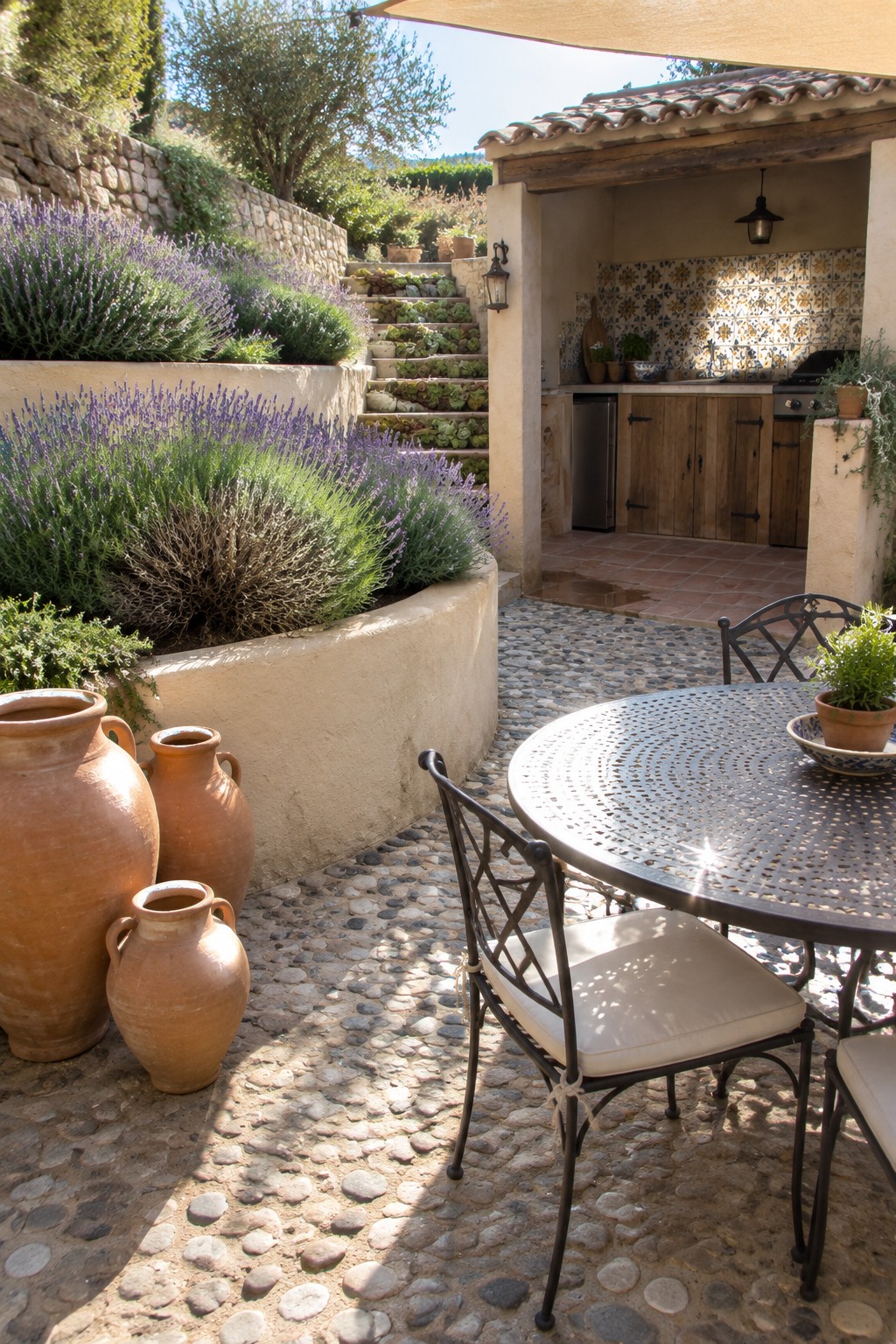
Lavender beds can help mark out a dining spot without closing it off from the rest of the garden. Here, a curved raised bed gives the patio edge a clear shape, while the purple flowers bring color close to the table.
This idea suits a sunny terrace where you want planting near the seating but still need an open route through the space. Keep the bed low enough that it does not crowd chairs, and leave room for lavender to spread as it matures.
Use a Straight Path to Organize a Lavender Garden
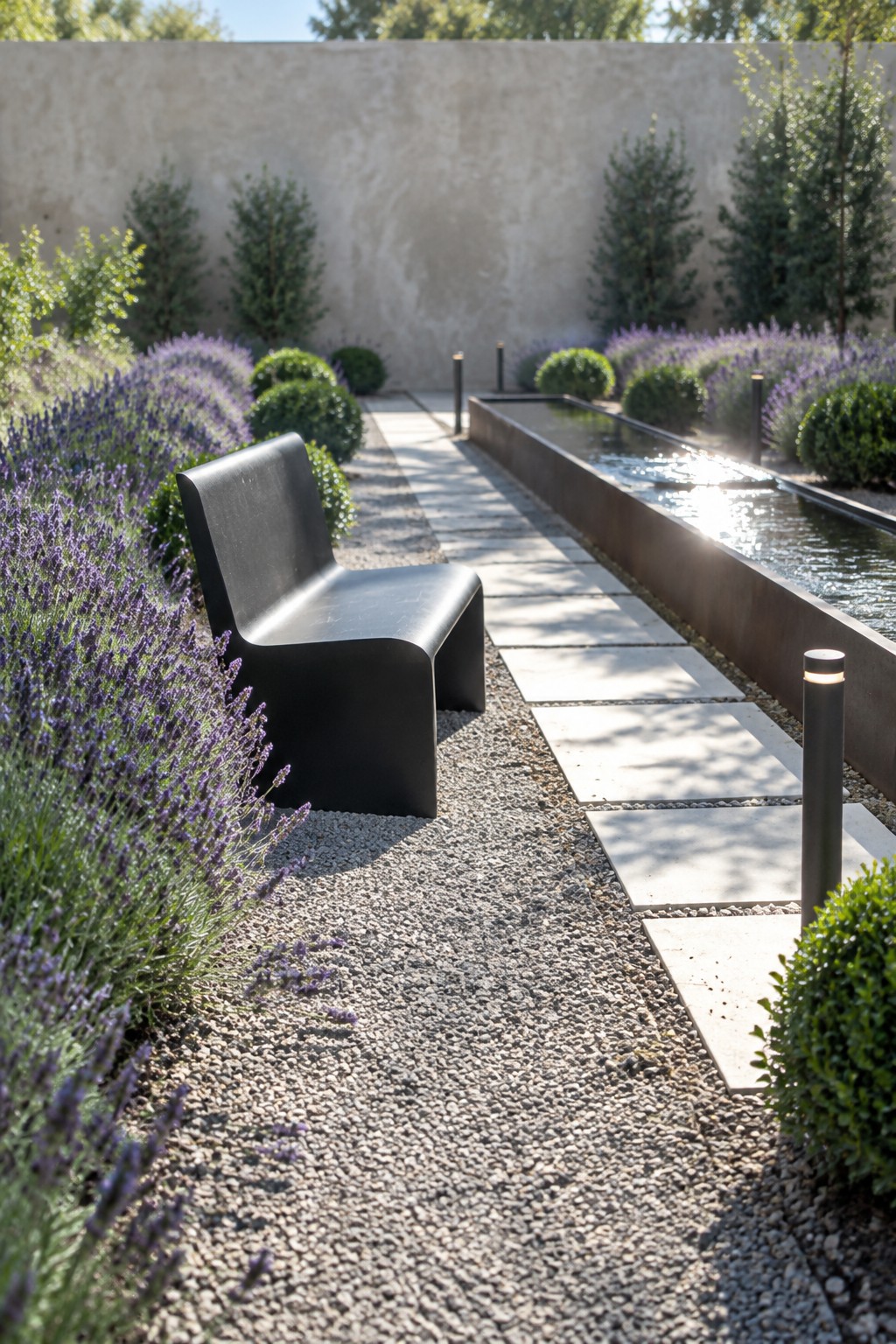
A straight path gives a lavender bed a clear shape and makes the garden easier to walk through. Here, pale stepping stones run beside a long band of lavender, keeping the route distinct from the planting.
This layout works well in a narrow side yard or along a garden wall. Leave enough room for the plants to spread without spilling over the stones, and use gravel between the pavers for simple drainage.
Use a Pebble Path to Divide Lavender Beds
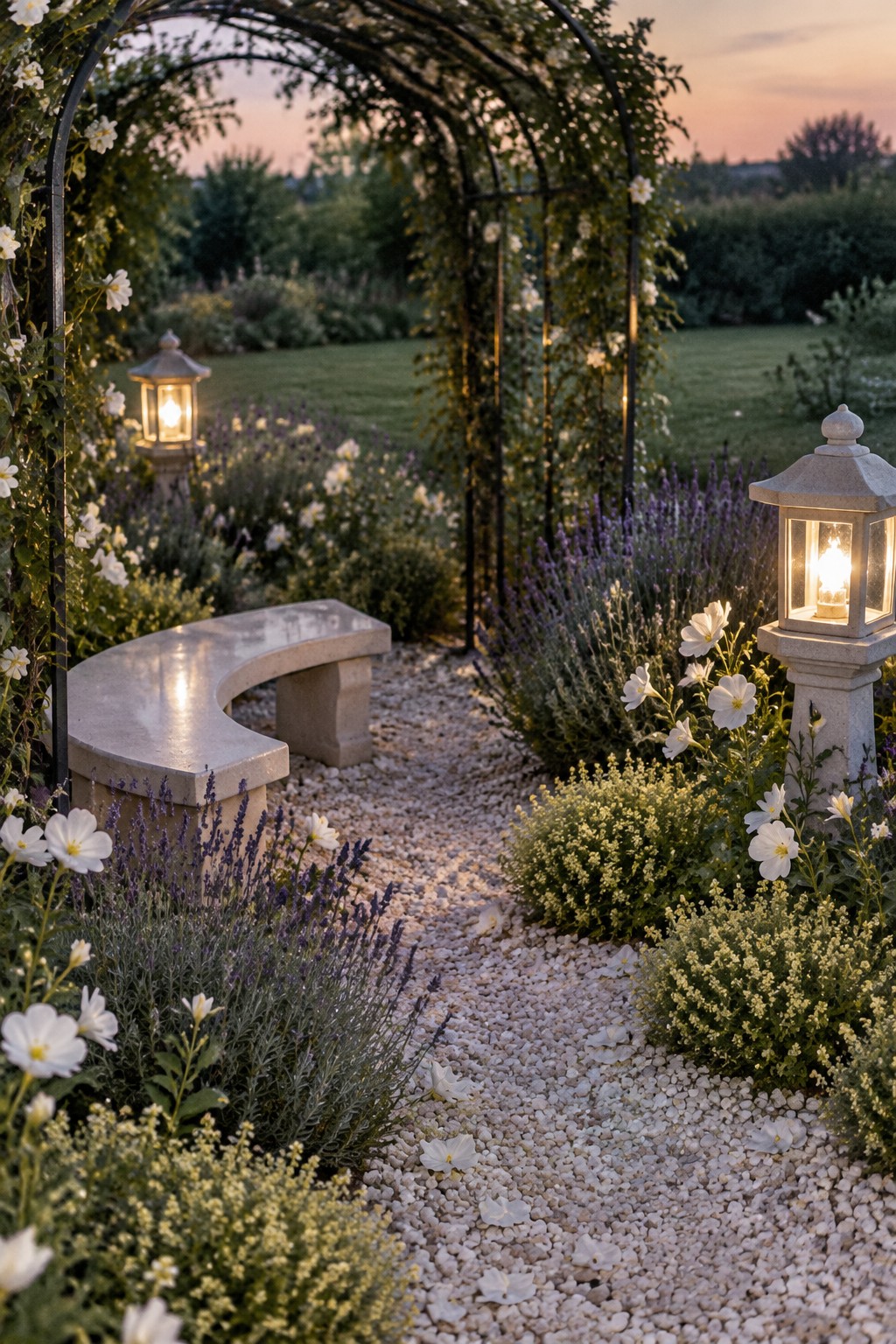
A narrow pebble path gives a flower bed a clear route through the garden and makes the planting easier to enjoy up close. Lavender along the edges keeps the path feeling connected to the beds rather than like a separate walkway.
This approach works well in sunny gardens where lavender can grow on both sides of a path. Leave enough room for the plants to spread without crowding the walking area, and choose well-draining gravel or small stones.
Use Lavender to Structure a Front Garden
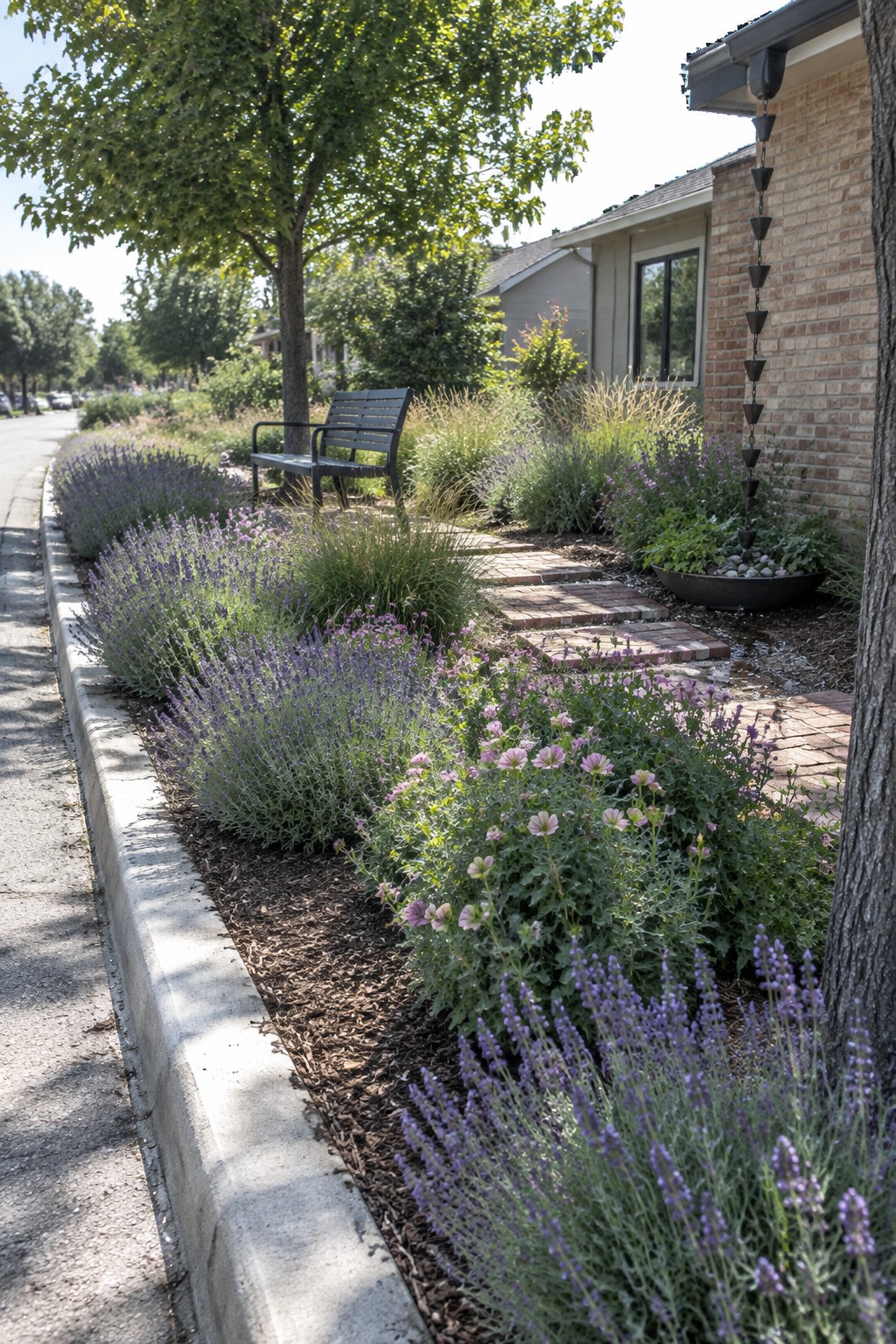
A clear planting bed can make a front garden feel orderly without looking formal. Here, lavender and other flowers fill a long bed beside the sidewalk, while short brick sections provide a simple route toward the house.
This layout works well along a front walk or street-facing garden where you want color but still need easy access. Keep the path wide enough to use comfortably, and leave room around the plants so they can spread without spilling onto the walkway.
Use Lavender Planters to Edge a Sunny Patio
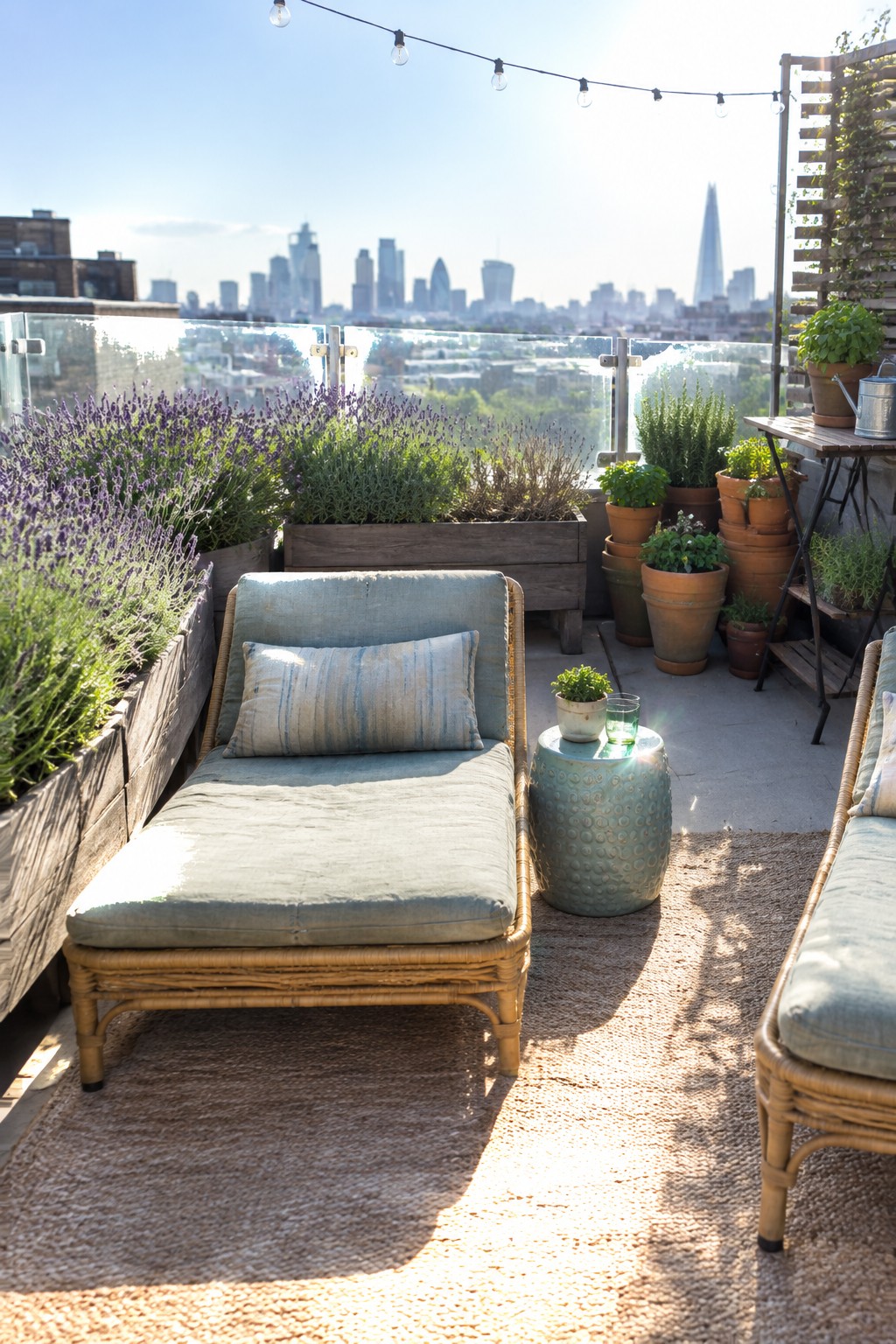
Container-grown lavender can bring a flower-bed feel to a small patio without taking up the whole floor. A long wooden planter keeps the flowers together along the edge, while leaving room for seating.
Choose a sunny spot and use containers with drainage holes, since lavender dislikes soggy roots. This approach suits balconies and terraces where planting directly in the ground is not an option.
Use a Curving Path to Shape the Lavender Bed
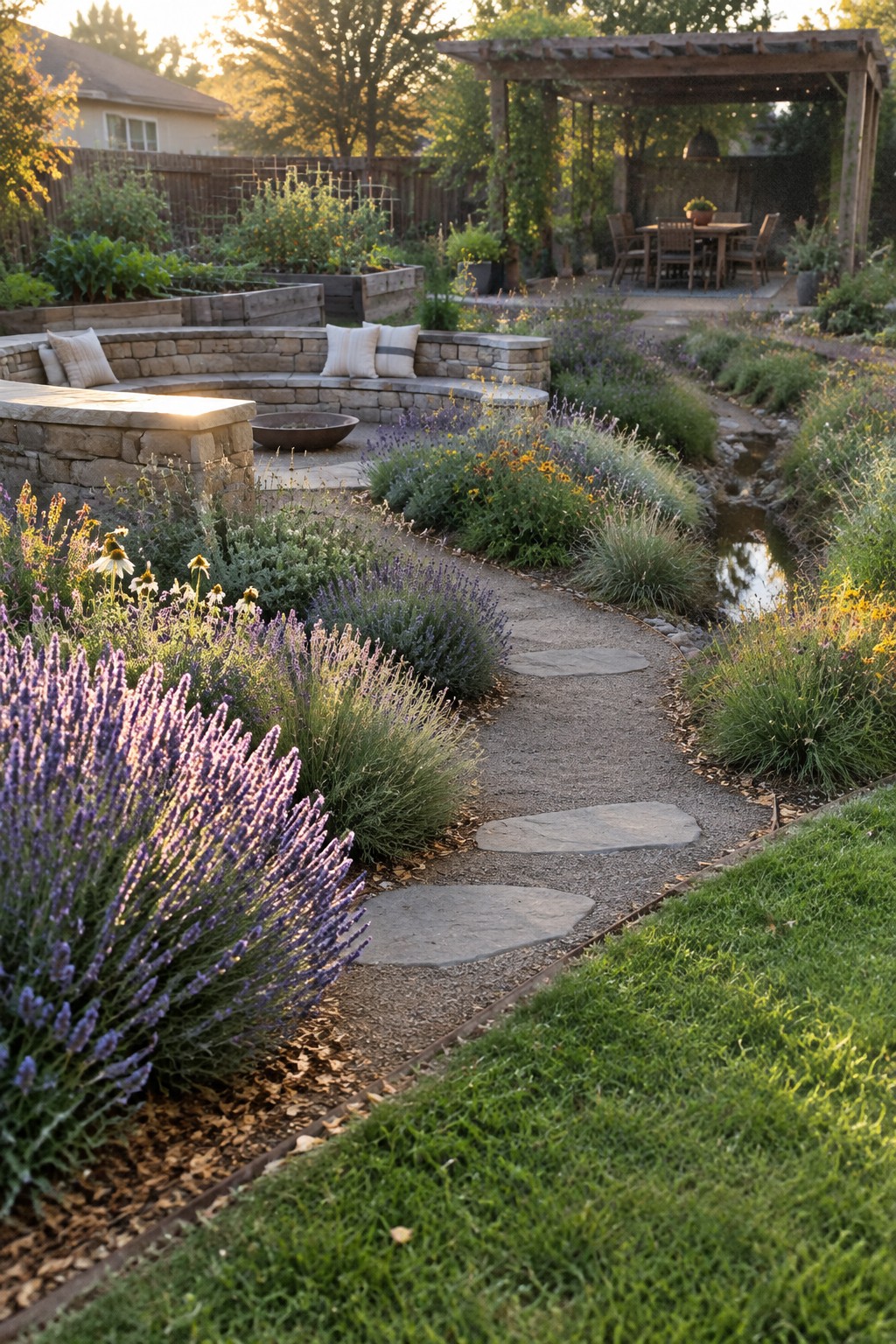
A gently curving garden path gives a lavender bed a clear shape without making it feel formal. Here, broad plantings follow the walkway and make the route through the garden easy to see.
Use this layout where you have room for the path to bend, such as a side yard or a larger backyard. Keep lavender close enough to edge the route, but leave space for it to spread without crowding the stepping stones.
Frequently Asked Questions
Q: How many hours of sun does lavender need to flower well?
A: Aim for at least six hours of direct sun each day. If your bed gets afternoon shade, lavender may grow but flower less heavily.
Q: Can I plant lavender in heavy clay soil?
A: Lavender struggles when clay stays wet, especially in winter. Mix in plenty of grit or coarse sand, or plant it in a raised bed where water drains away quickly.
Q: How far apart should I space lavender plants?
A: Check the mature width of your variety and leave about that much space between plants. Good airflow helps prevent crowded, damp growth and gives each plant room to show its shape.
Q: What can I plant beside lavender in a sunny bed?
A: Choose other sun-loving plants that prefer well-drained soil, such as catmint, salvia, or ornamental grasses. Avoid pairing lavender with plants that need frequent watering, since soggy soil can harm its roots.
