

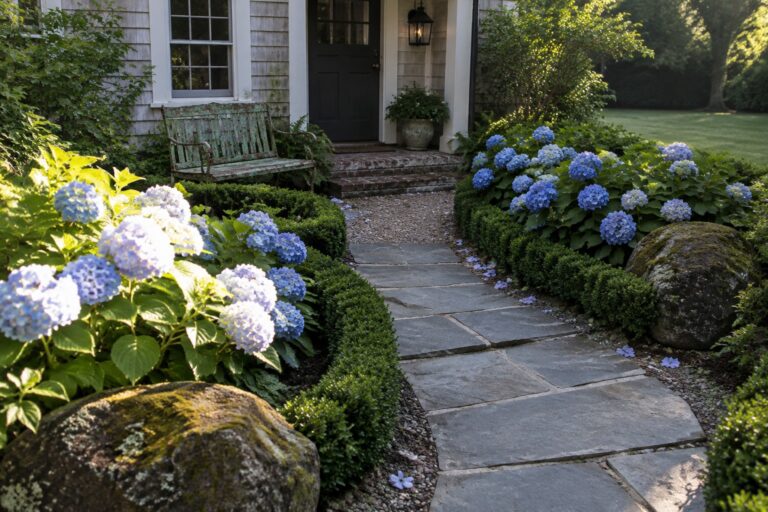
In a small front yard, hydrangeas can soften the view of the house, but their placement matters as much as their blooms.
I find they work best when their mature size, the front path, and the shape of the beds all have room to make sense together.
A row of shrubs can frame an entry, while a looser mix of heights can keep a narrow planting bed from feeling crowded.
The details people notice first are often the clear path to the door and how the plants relate to the facade, not just the flowers.
I’d save ideas that suit the yard’s light and leave enough space for the garden to grow over time.
Let a Stone Path Lead Through Hydrangeas
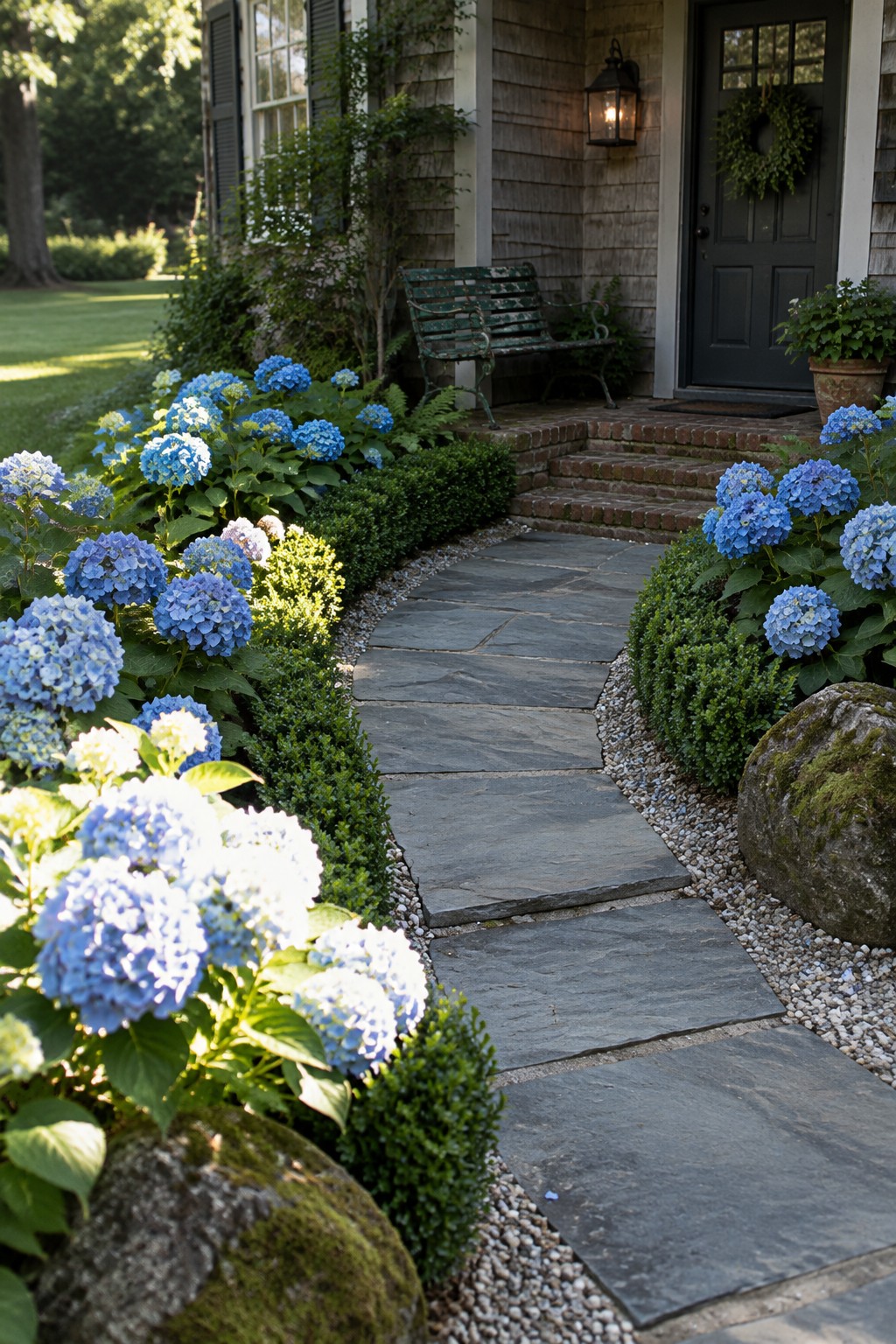
A simple stone path gives a small front yard a clear route to the door while leaving room for hydrangeas along the edges. The flowers make the walk feel like part of the garden rather than just a way to get inside.
Use broad stepping stones and keep the planting beds narrow enough that the path stays easy to walk. Blue hydrangeas work well beside clipped low shrubs, but leave space for the plants to spread so the walkway does not get crowded.
Repeat Hydrangeas Along the Front Walk
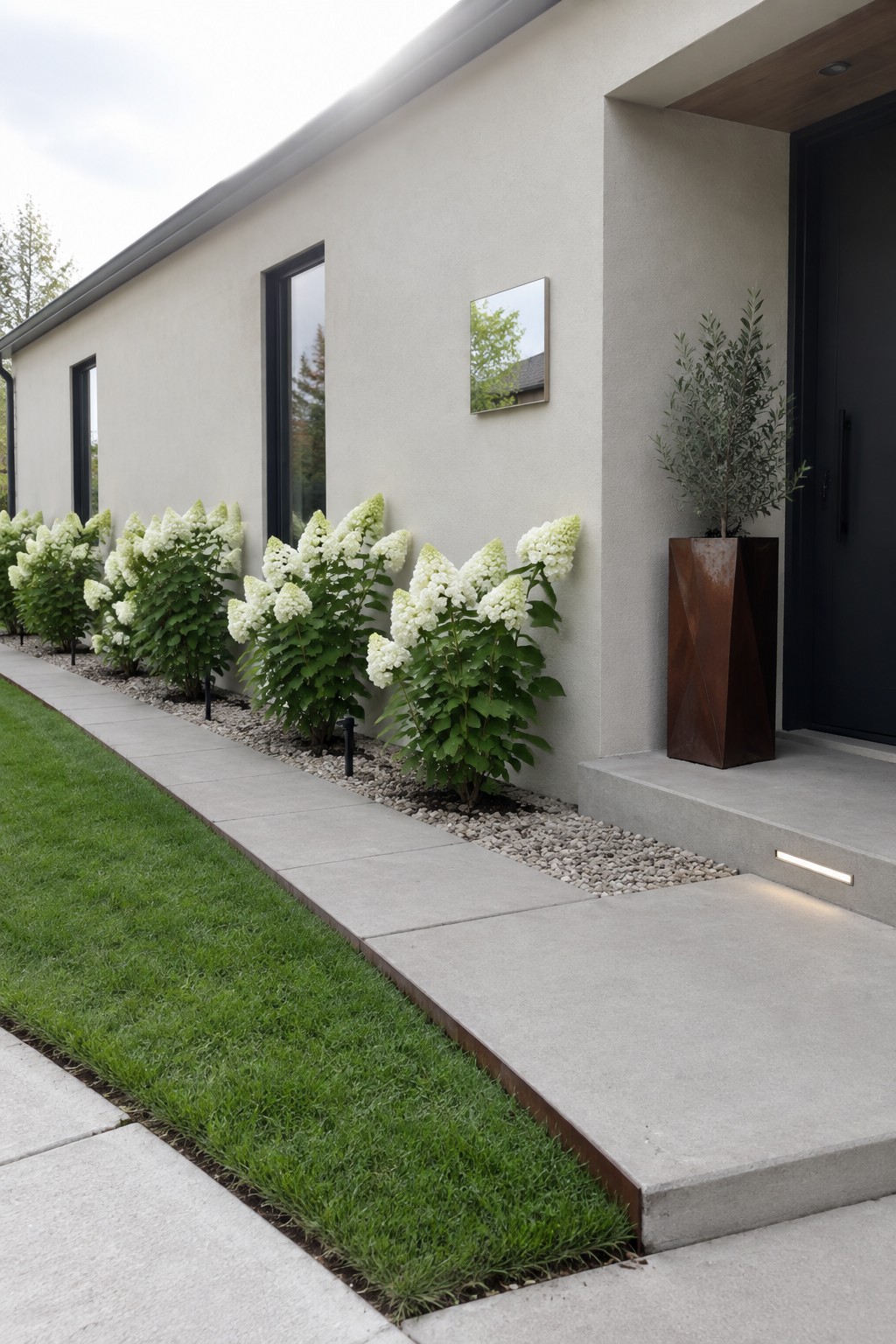
Repeating the same hydrangea along a narrow planting bed gives a small front yard a clear, tidy rhythm. The row of white blooms beside the straight walkway feels abundant without needing a wide garden.
Plant hydrangeas at consistent intervals and leave enough room for their mature size, so the bed does not become crowded. A slim gravel edge can help define the planting area and keep the path easy to maintain.
Use Large Pots To Bring Hydrangeas To The Front Door
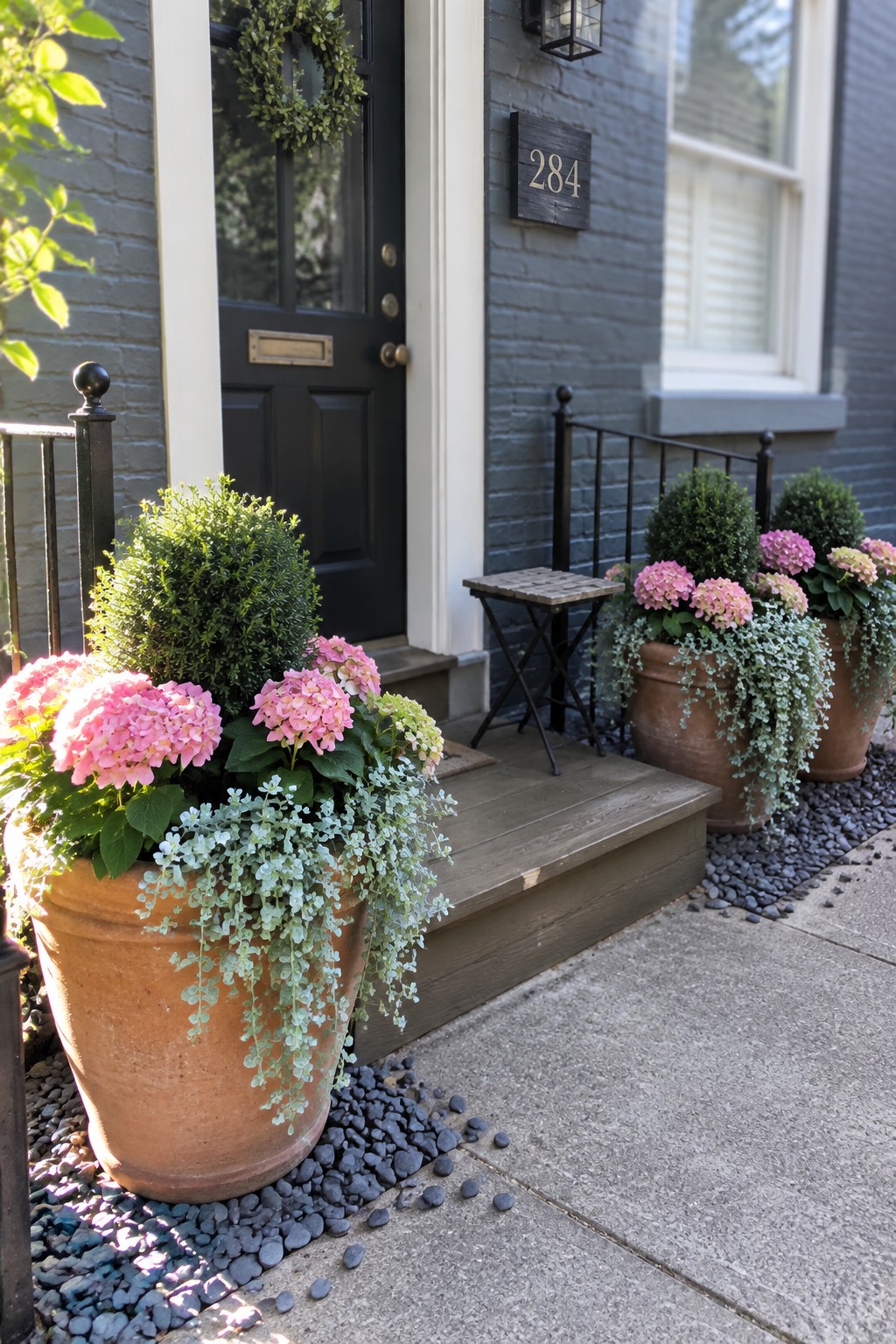
Container planting is a useful way to add hydrangeas to a small front yard without taking up much ground space. A few large pots can give the entry a clear planting plan, and trailing plants help the arrangement feel full.
Place the pots beside the steps or along the edge of a narrow path, leaving enough room to walk comfortably. Choose containers with drainage holes, and water them regularly since pots dry out faster than garden beds.
Use Stone Steps to Lead Through a Small Garden
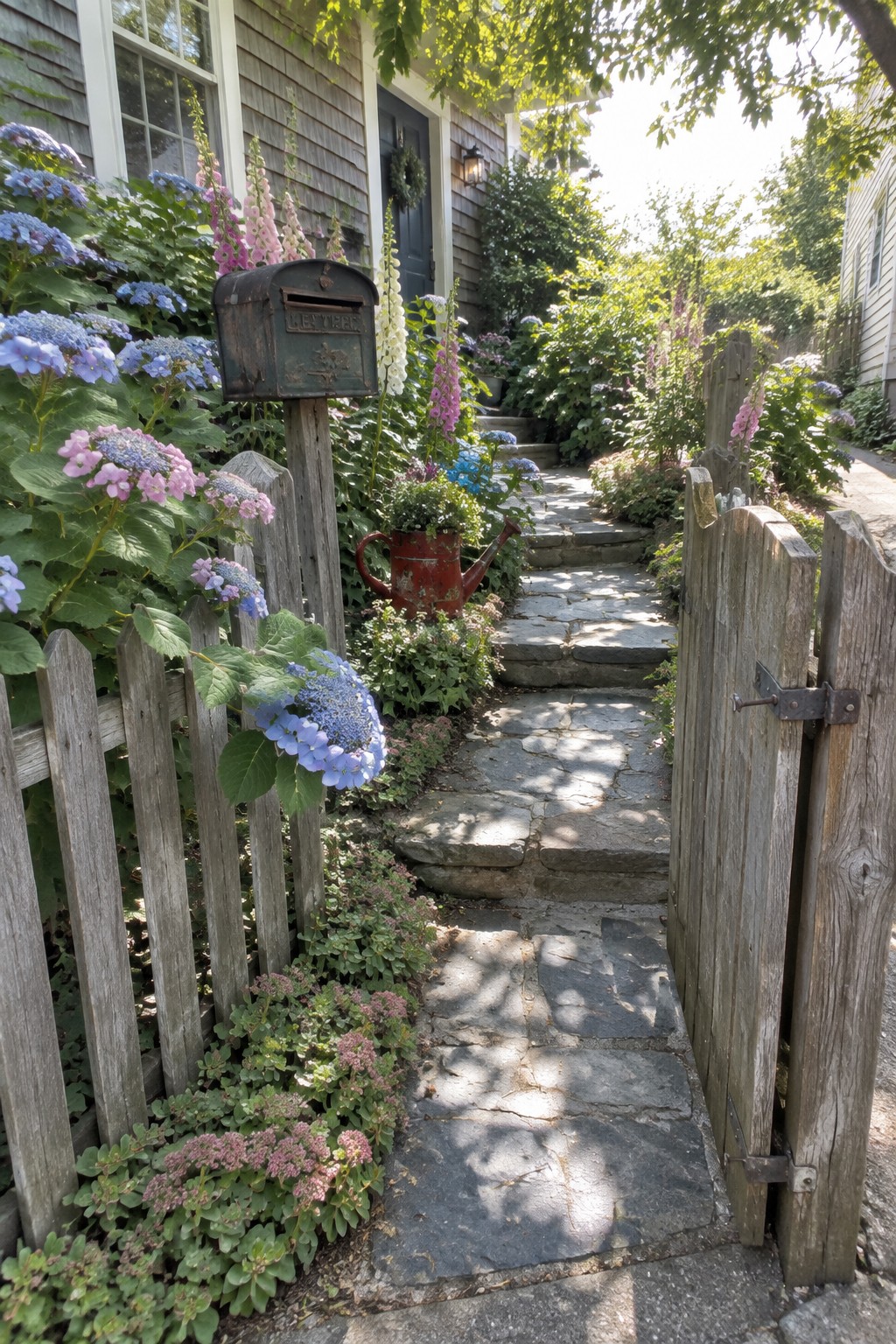
Stone steps make a sloped front yard easier to walk through while giving the planting beds a clear shape. Here, the path passes through clusters of hydrangeas, so flowers can fill the narrow space without blocking the route.
For a similar yard, keep the steps wide enough to use comfortably and leave room along the edges for plants. Hydrangeas work well beside the path, but leave space for them to mature so their leaves don’t spill onto the steps.
Use a Low Stone Wall to Shape the Garden Bed
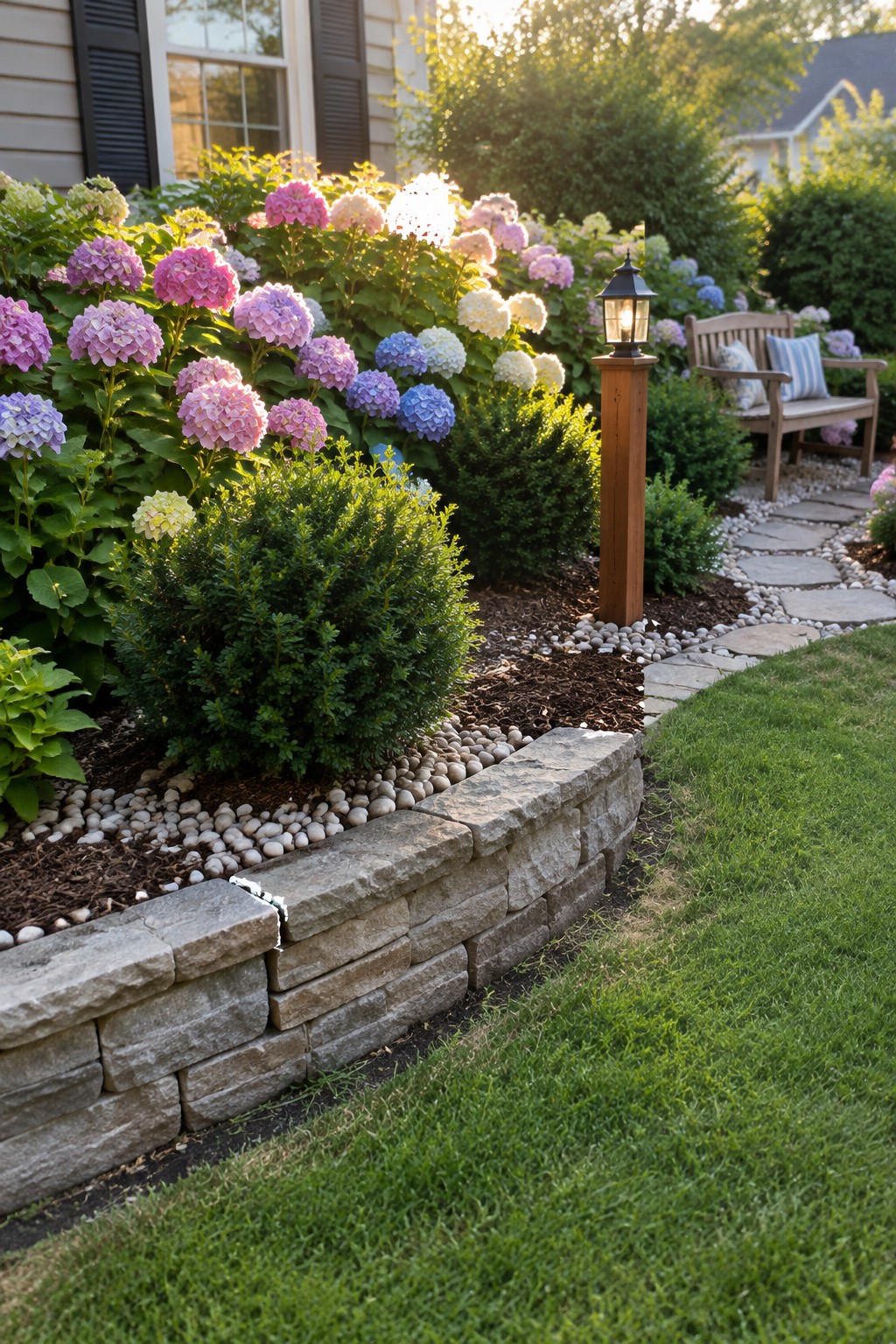
A low stone retaining wall gives a small front garden a clear edge and keeps the planting bed slightly raised. Here, it also makes room for a simple line of white stones beside the hydrangeas.
This approach works well where a sloped lawn meets a planting area. Keep the wall low enough to preserve the view of the flowers, and leave enough space behind it for the hydrangeas to grow without crowding the path.
Use Hydrangeas Along a Gravel Garden Path
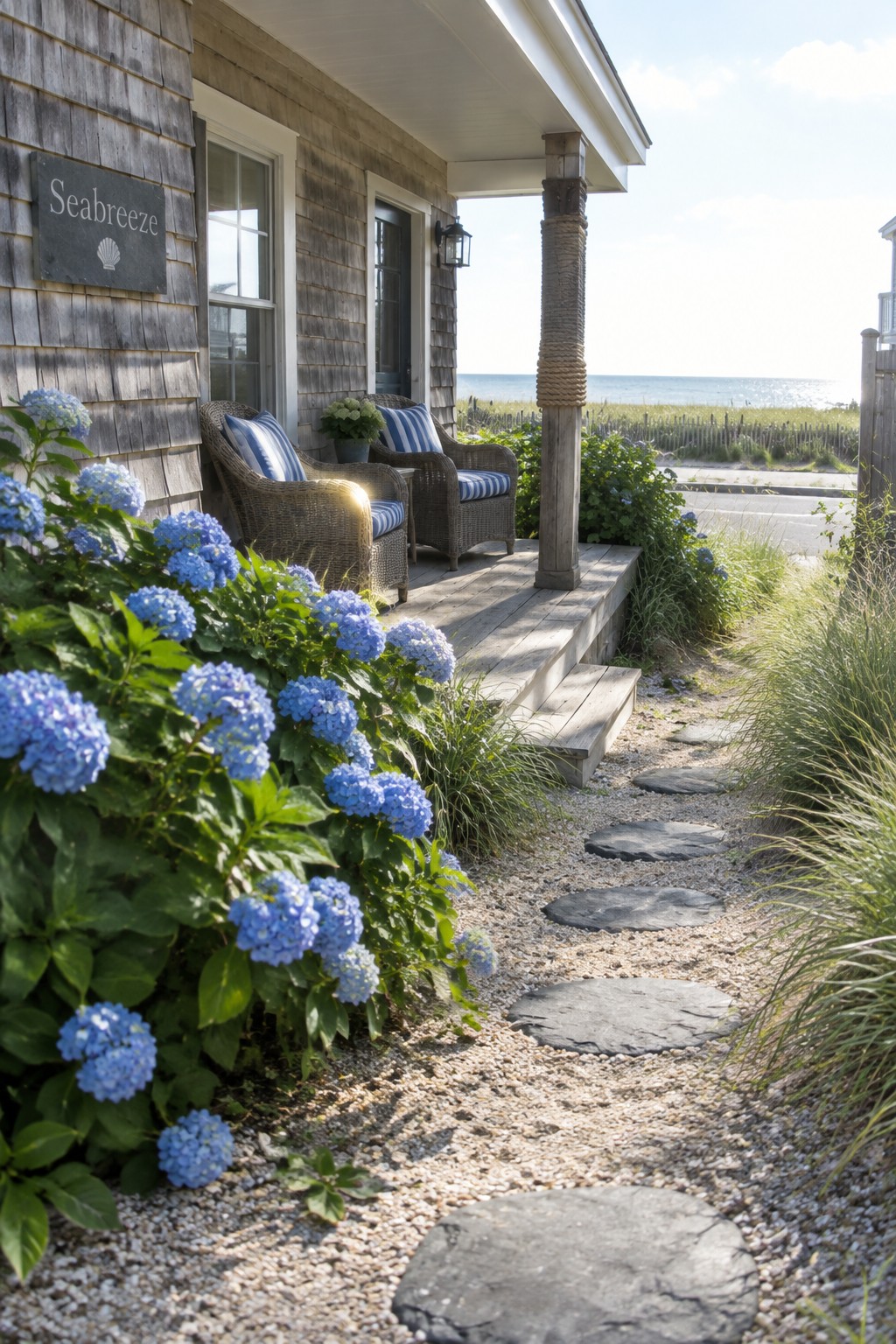
Hydrangeas planted beside a simple gravel path make a small front yard feel lush without needing a large lawn. The flowers bring color close to the walkway, while the gravel keeps the route practical and easy to maintain.
Leave enough room for the plants to spread without narrowing the path. This approach suits cottage-style homes, and a few flat stepping stones can make the gravel more comfortable to walk on.
Use Low Hedges To Shape A Hydrangea Walk
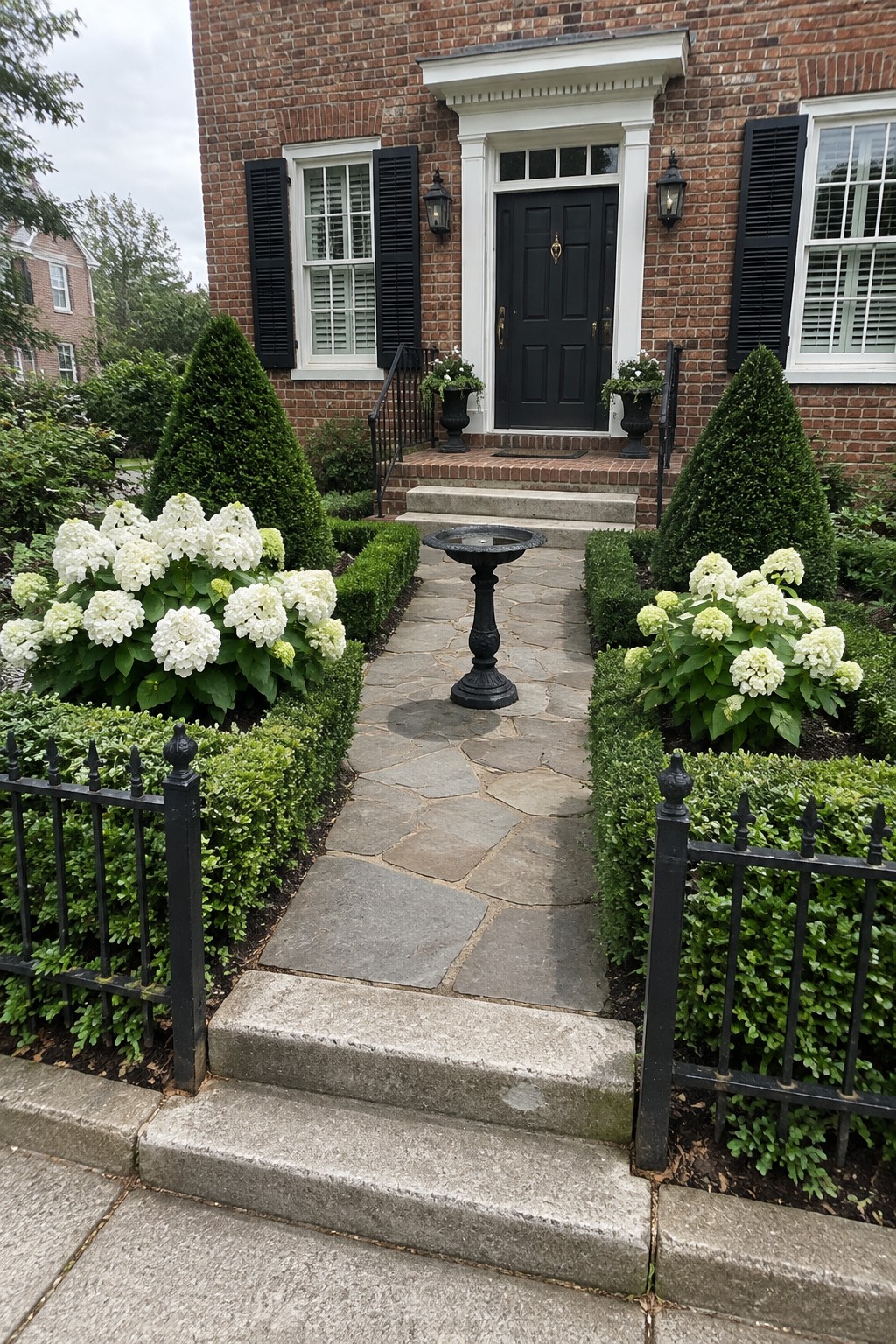
Low hedges can give a small front yard a tidy structure without taking attention away from the flowers. Along a stone path, they create a clear edge and help a cluster of white hydrangeas feel like part of the garden rather than a bed set off to one side.
Keep the edging low so it does not crowd the path, and leave enough room for hydrangeas to spread as they grow. This approach suits a narrow entry garden, especially when a simple path leads straight to the front steps.
Use Hydrangeas To Edge a Simple Front Walk
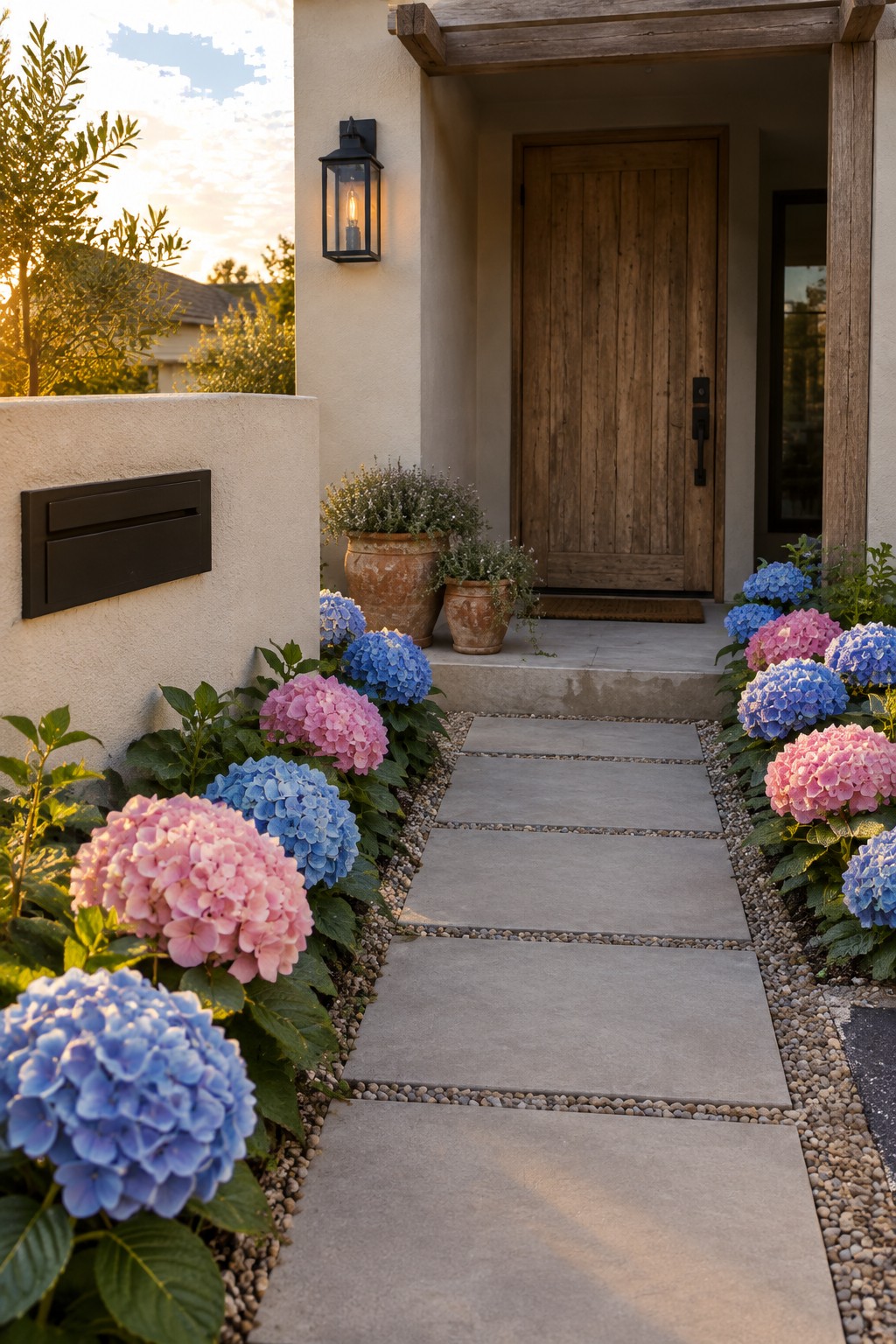
A straight path can make a small front yard feel organized without taking up much room. Hydrangeas planted along its edges bring color close to the walkway and help define the route to the door.
Leave enough space for the plants to spread without crowding the paving. This works especially well with broad stepping stones and a narrow gravel border, which keep the walk easy to maintain.
Use Hydrangeas To Edge an Irregular Stone Path
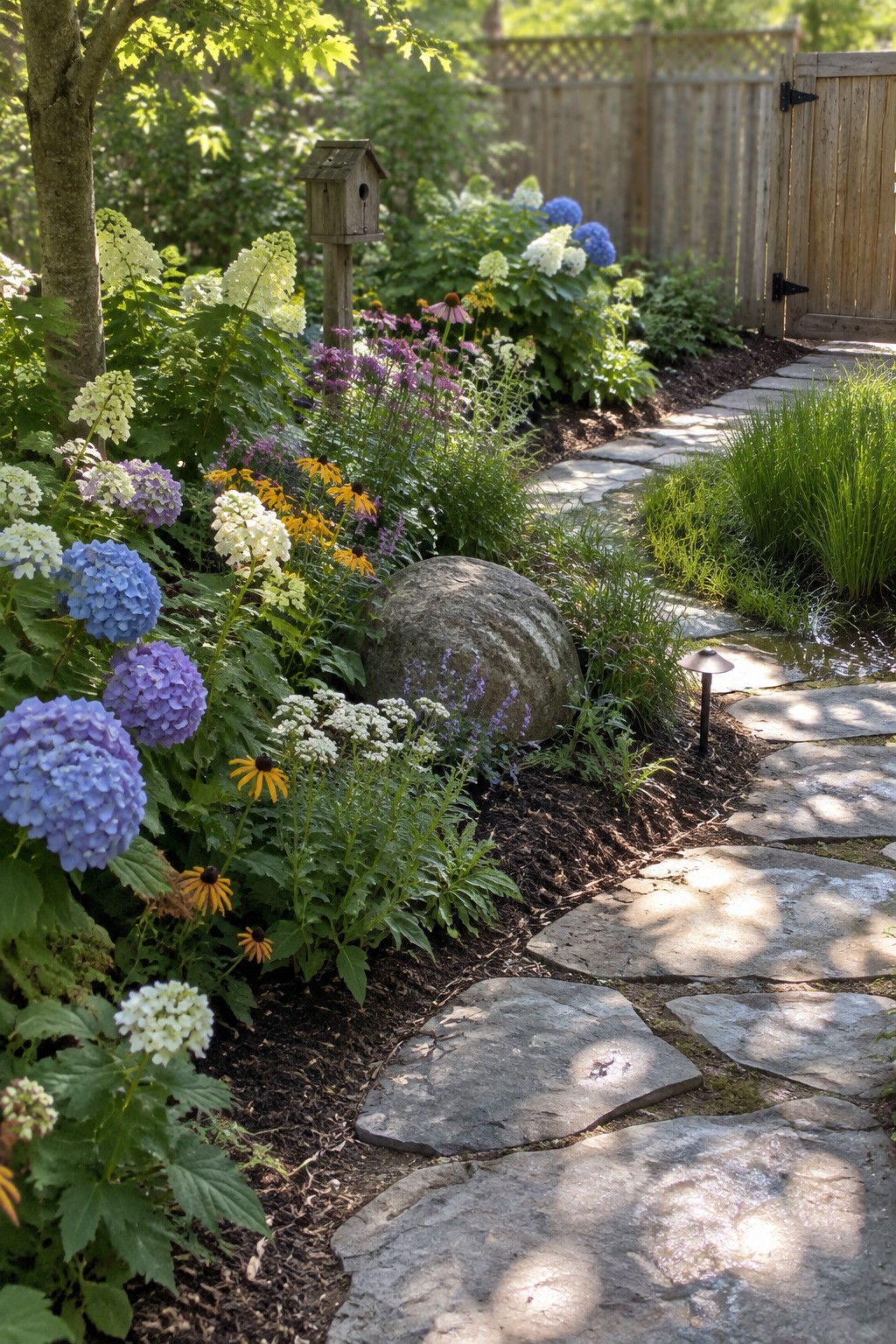
Hydrangeas can make a small front yard feel lush without needing a wide planting bed. Set them along one side of a stone path, then add a few lower flowers nearby so the walkway still feels open and easy to use.
This approach works especially well when the path curves through the yard rather than running straight to the door. Leave enough room for the hydrangeas to spread, and keep plants low beside the stones so the path stays clear.
Layer Hydrangeas Along Stone Retaining Walls
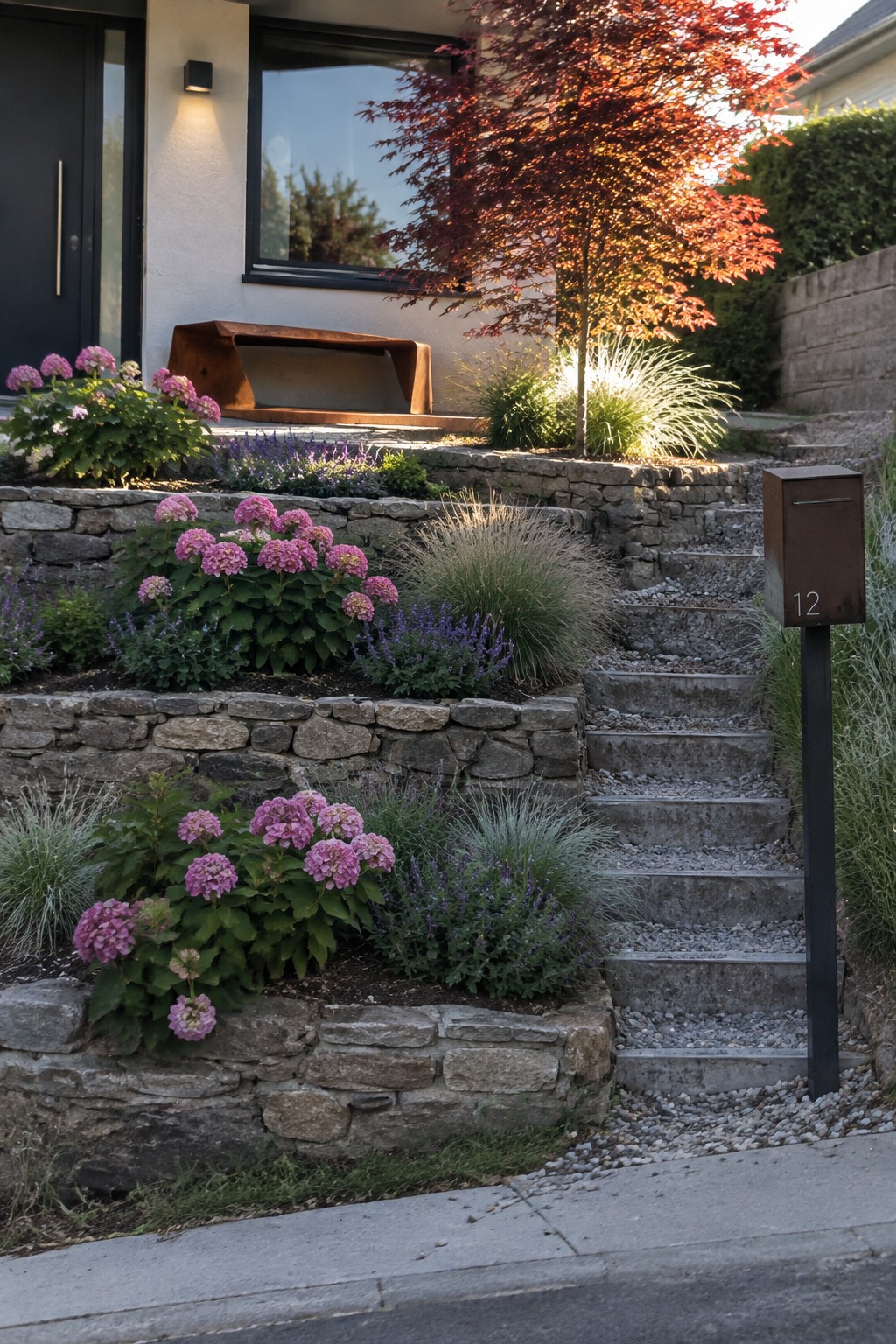
Stone retaining walls help organize a small sloped front yard into planting areas, giving hydrangeas room to stand out without taking over the whole garden. Their pink blooms look especially at home against rough, low stone.
Use hydrangeas near the front of a wall, where their flowers can be seen from the sidewalk, and fill nearby gaps with smaller plants. Keep the wall low enough that it does not hide the blooms, and leave space for the shrubs to spread.
Plant Hydrangeas Along the Front Steps
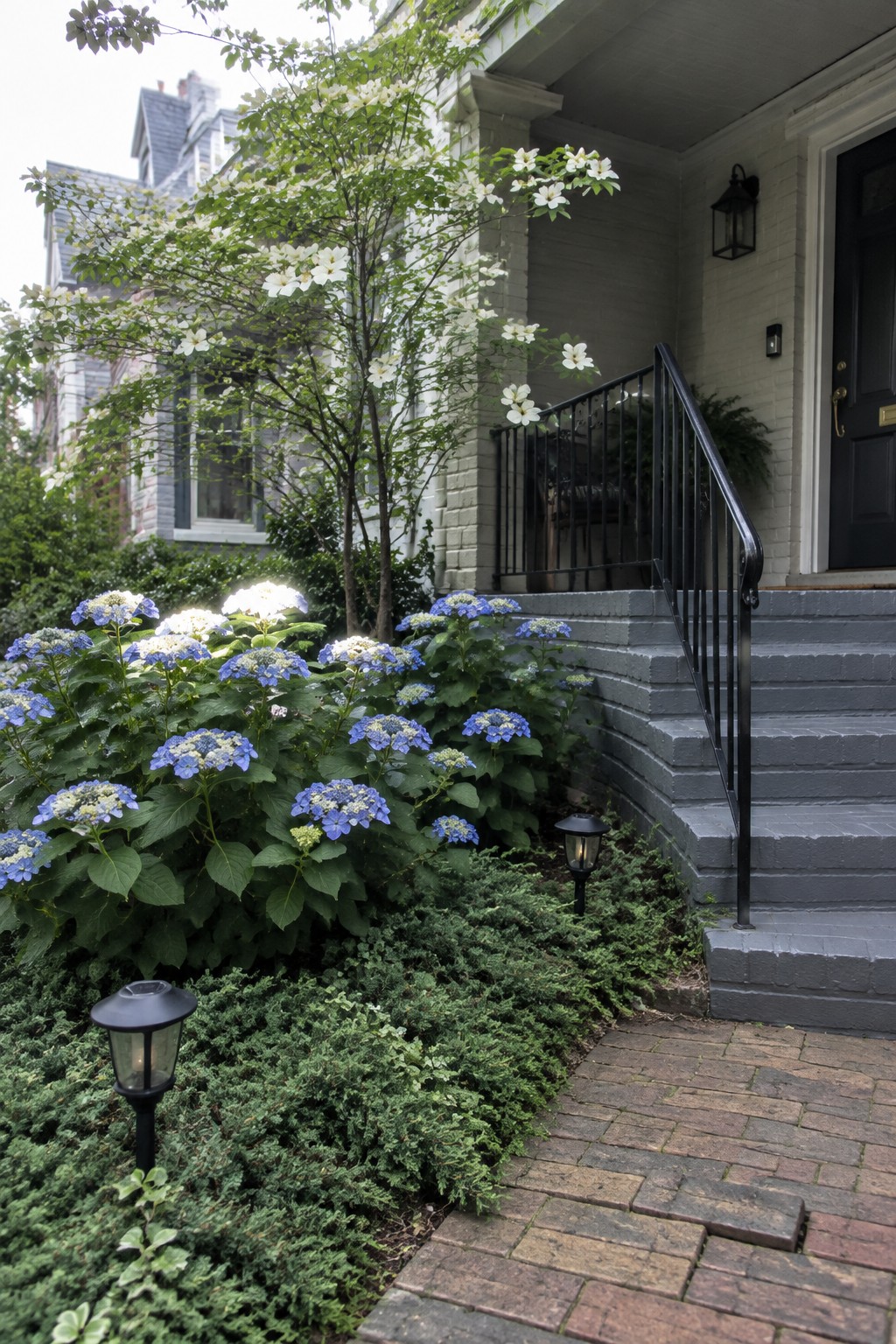
Hydrangeas can make a small front entry feel more like part of the garden when they fill the bed beside the steps. Here, blue flower clusters bring color close to the path, while a flowering dogwood adds height without taking up much ground space.
For a similar look, plant hydrangeas in a generous bed along one side of the steps, leaving enough room for the railing and a clear route to the door. Choose a compact variety if the space is narrow, and keep the plants trimmed back from the walkway.
Plant Hydrangeas in a Layered Front Bed
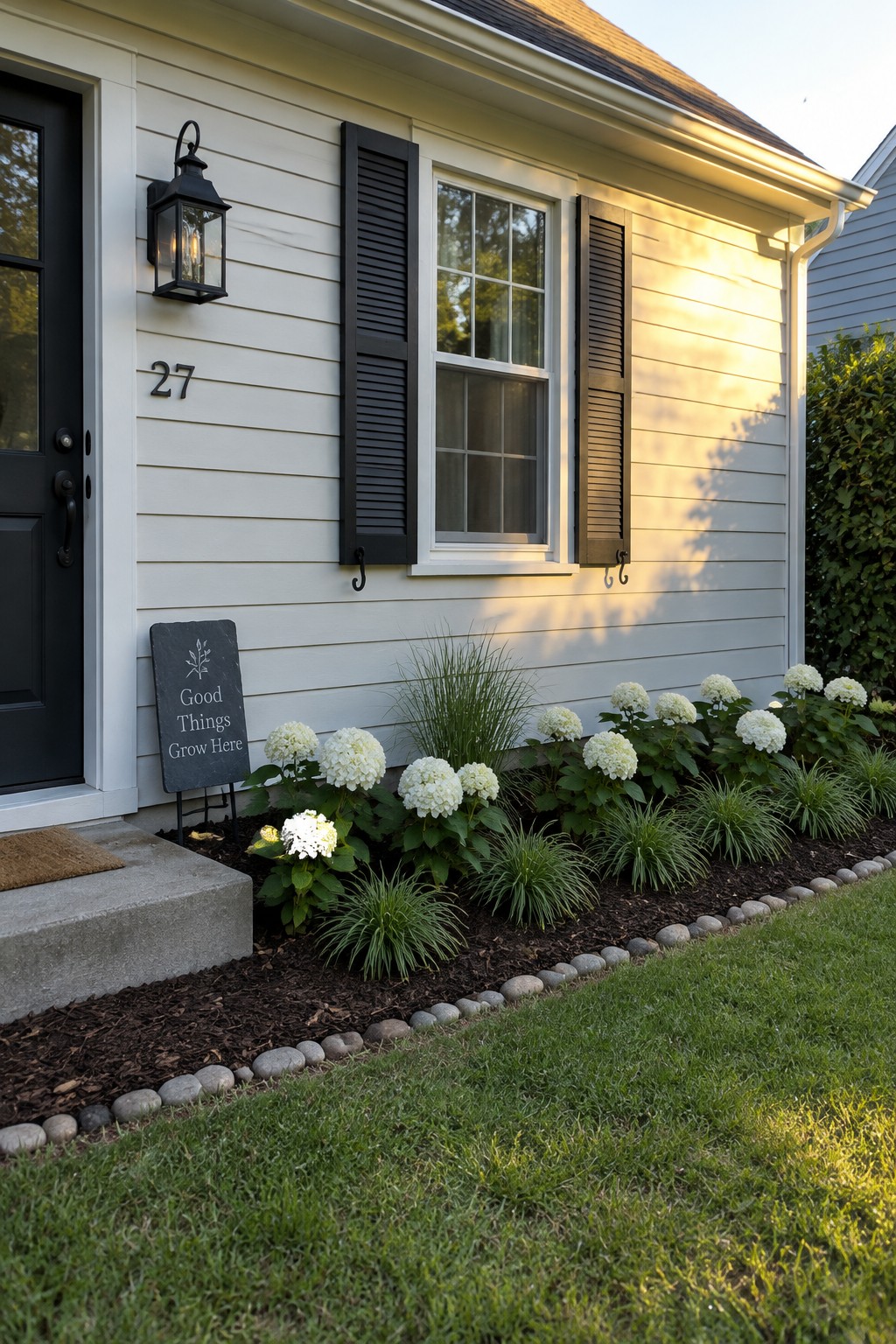
A narrow bed can still feel full when hydrangeas form the main layer and smaller grasses fill the spaces between them. The rounded white blooms bring a steady rhythm along the house without needing a wide yard.
Keep the bed shallow enough that the plants do not crowd the walkway or cover the lower siding. A few repeating hydrangeas suit a small cottage-style front yard, and ornamental grasses can add texture without competing with the flowers.
Curve a Stone Wall Around the Hydrangea Bed
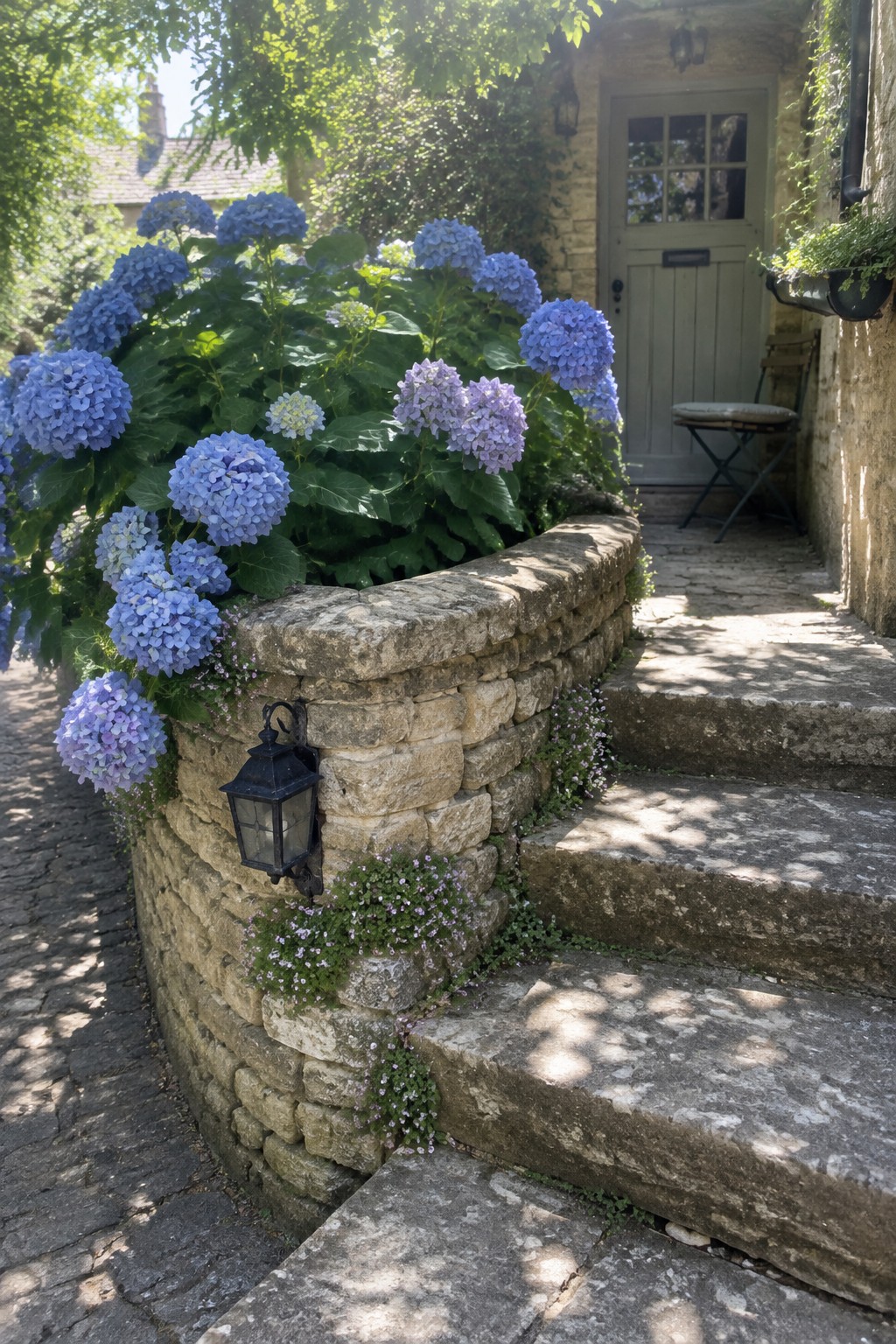
A low stone wall can give a small hydrangea bed a clear shape without making it feel boxed in. The curved edge also leaves room for the flowers to spill slightly over the stones, which suits a front yard where space is limited.
Use a wall like this to define a planting bed beside steps or a narrow path. Keep it low enough that the hydrangeas remain easy to see, and leave space behind the wall for the plants to grow.
Plant Hydrangeas in a Narrow Front Bed
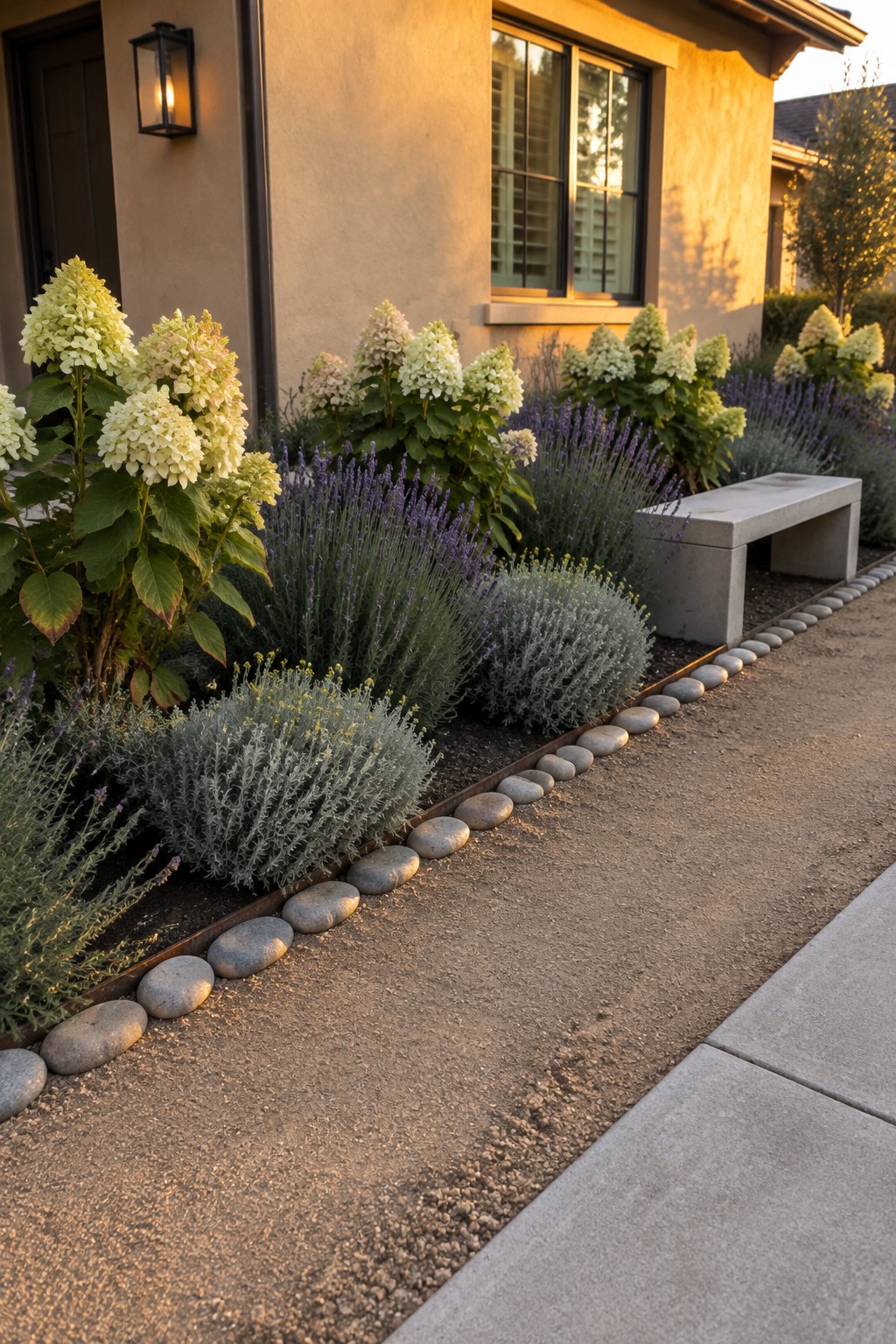
A narrow bed can still feel full when hydrangeas form the main planting and lower, smaller plants fill the front edge. The hydrangea blooms bring height and color, while the compact plants help the bed look finished without taking up much yard space.
For a small front yard, leave enough room for each hydrangea to reach its mature width, then tuck lavender or another low-growing plant along the border. This layered approach works well beside a foundation, but avoid crowding the walkway or blocking windows.
Use a Curved Brick Edge to Shape a Hydrangea Bed
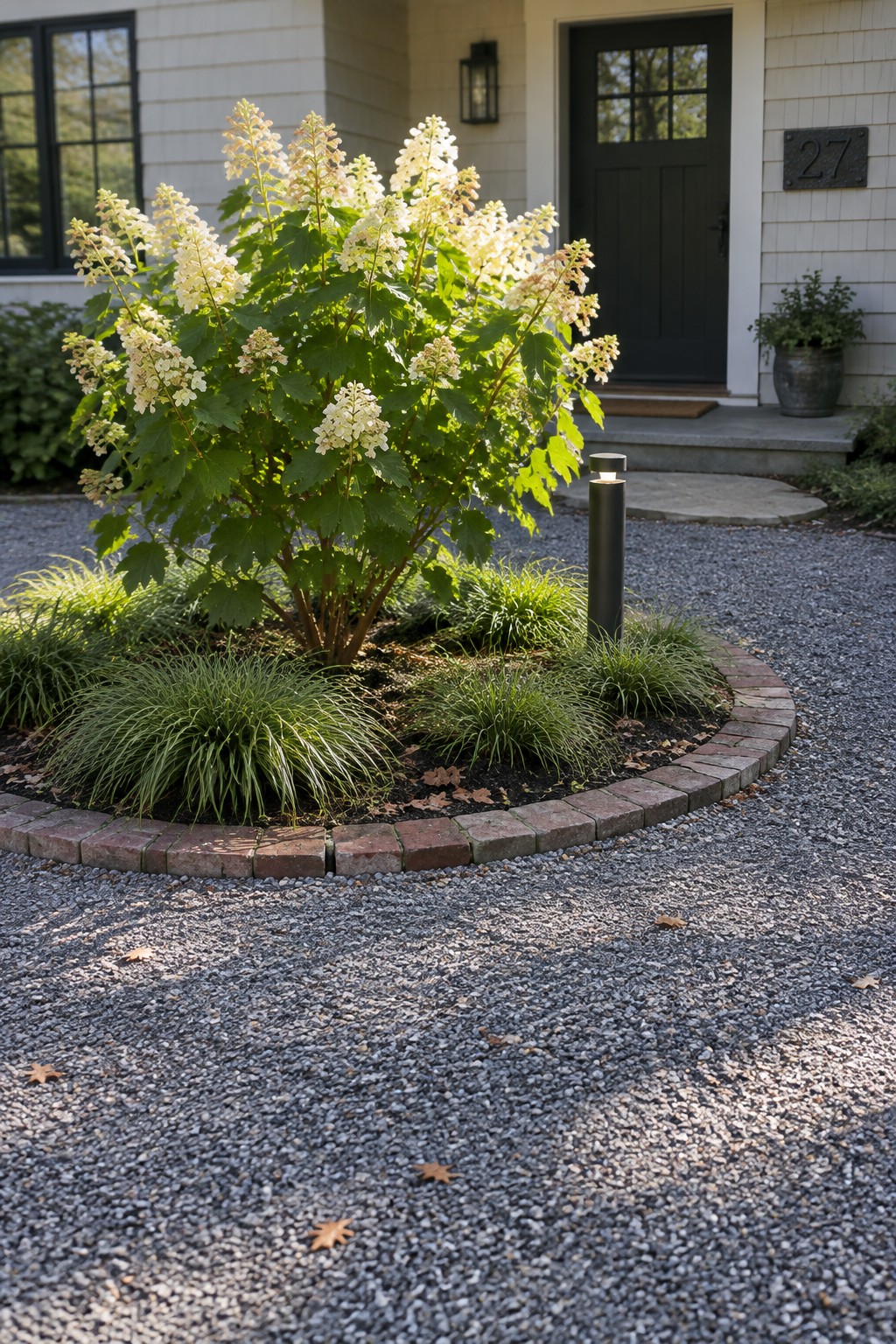
A curved brick border gives a small front-yard planting bed a clear shape without making it feel too formal. It also keeps the bed distinct from the gravel driveway, so the hydrangeas and low grasses have their own defined space.
Use a gentle curve to follow the entry or driveway, and keep the edging low so it does not block the plants. A few hydrangeas can fill the center, with smaller plants around the edge. Leave enough room for the mature shrubs so the bed does not become crowded.
Use a Raised Planter for Front-Yard Hydrangeas
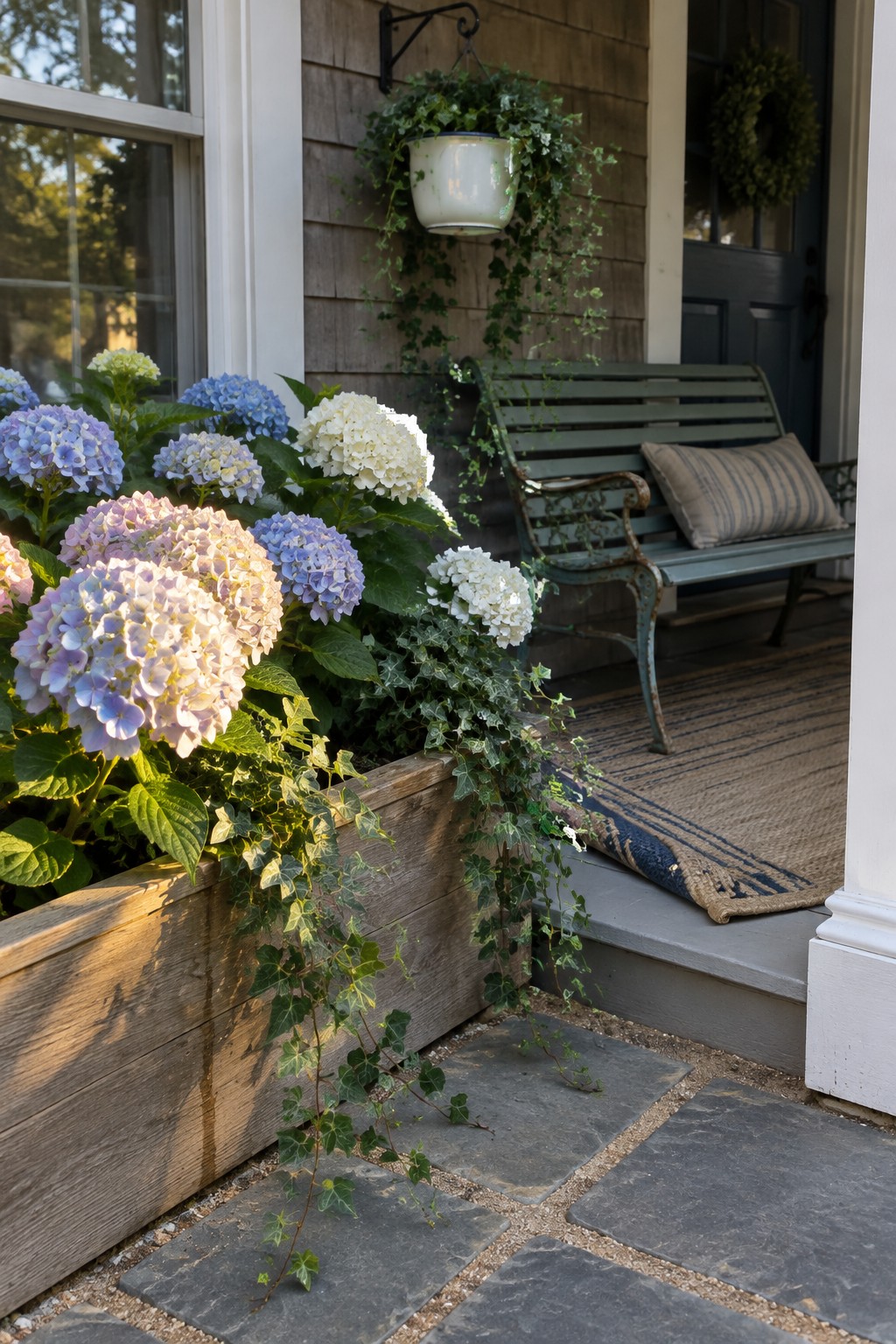
A raised planter can make hydrangeas easier to fit into a small front yard. The defined bed keeps the planting neat near the house, while the blooms bring color close to the entry.
Choose a spot with enough room for the shrubs to reach their mature size, and check that the planter drains well. A long wooden box works along a porch or window, but avoid packing it too tightly; hydrangeas need space and airflow.
Use Brick Pavers to Shape a Small Hydrangea Garden
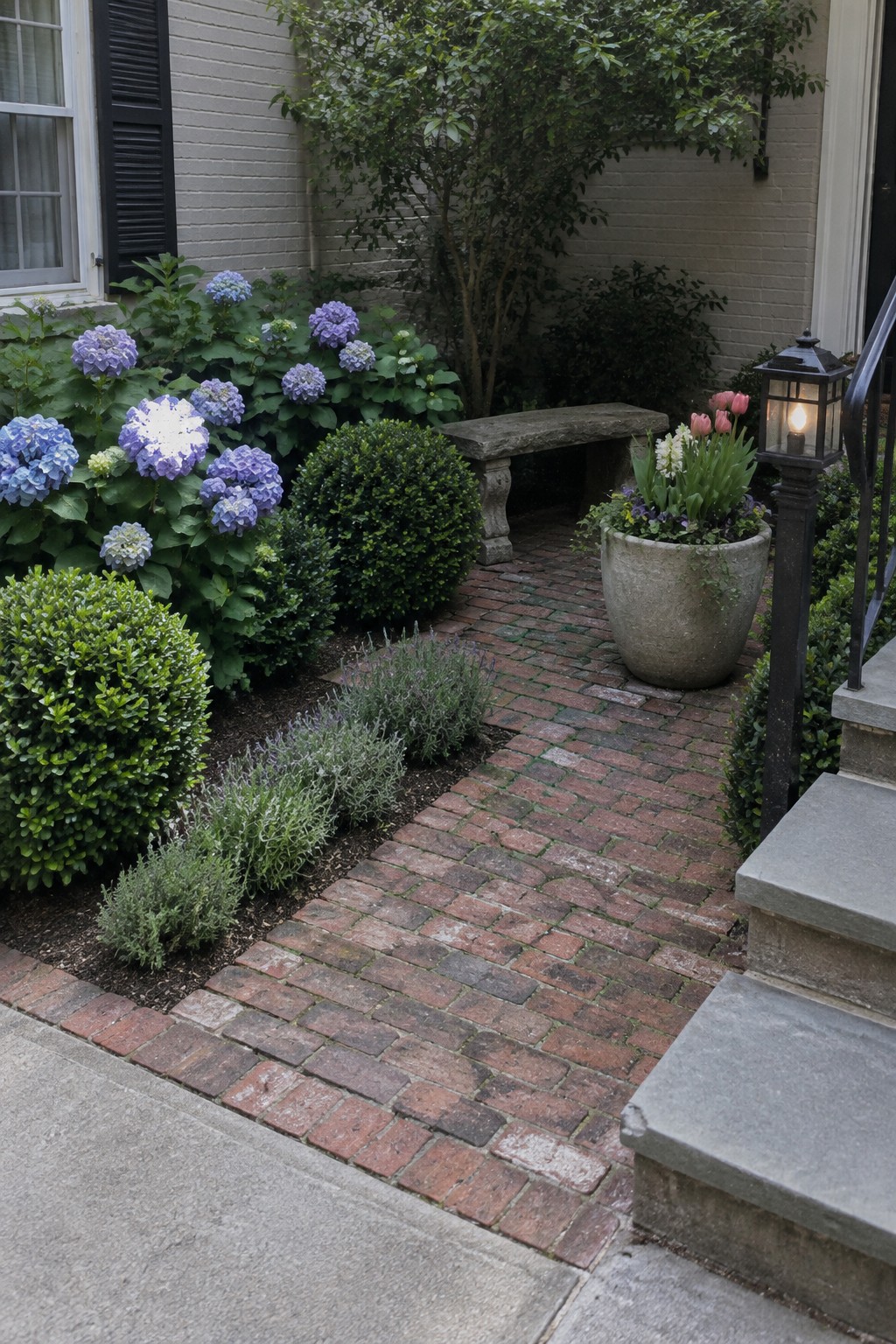
A brick path can give a small front garden a clear shape without taking up space for more planting. Here, hydrangeas sit beside the walkway, where their broad blooms are easy to enjoy as you approach the house.
Keep the path wide enough for comfortable walking, and let the planting bed follow its edge rather than spread across the route. Brick suits a traditional home, though uneven pavers may need occasional resetting.
Make a Mulched Path Through a Shady Garden
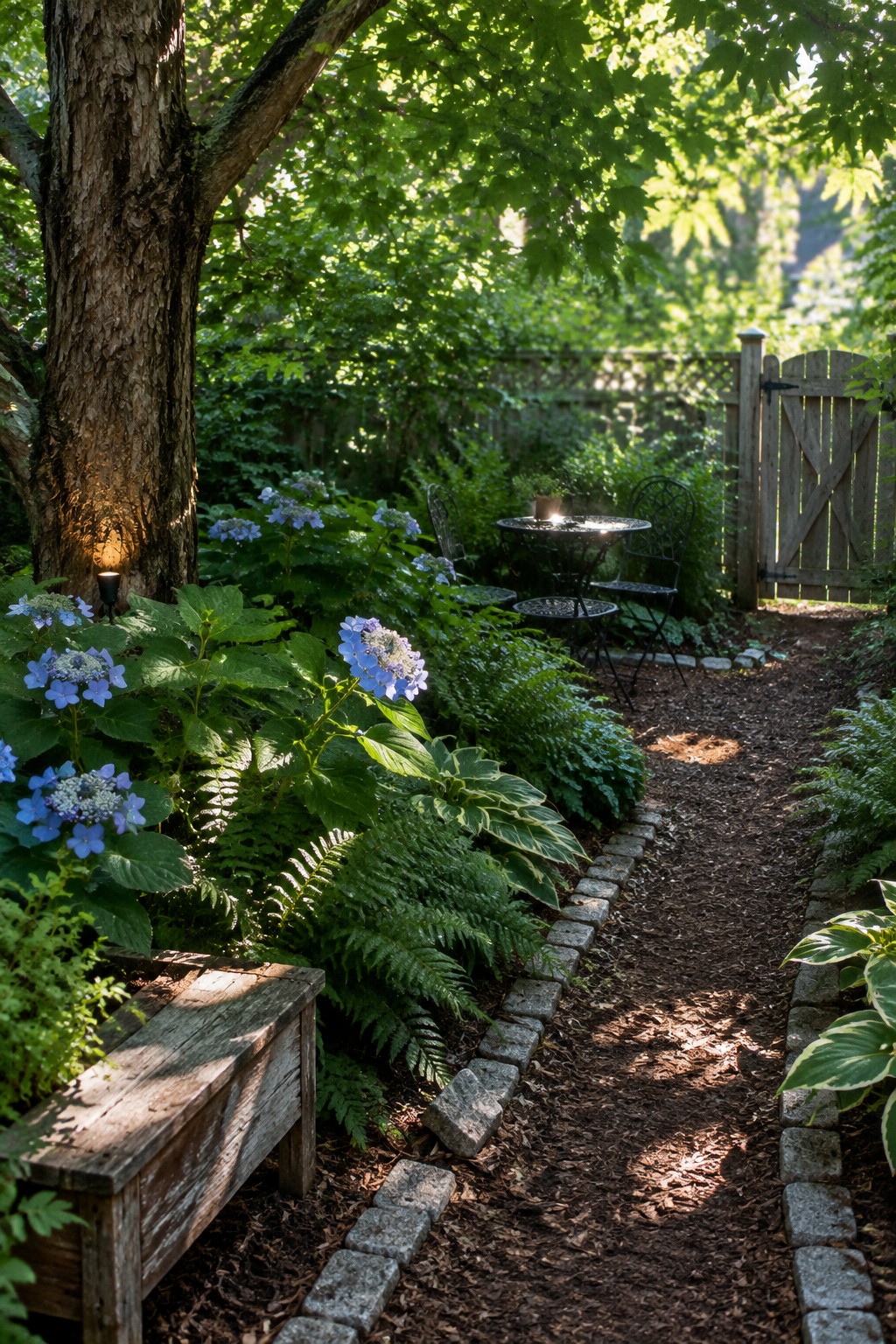
A simple mulched path can make a small hydrangea garden easier to use without taking space away from planting. Its informal look suits a leafy yard, and stone edging helps keep the path from spreading into the flower bed.
Use this approach where a paved walk would feel too wide or formal. Plant hydrangeas along the sides, leaving enough room for them to grow without narrowing the route.
Frequently Asked Questions
Q: Will hydrangeas get too big for a small front yard?
A: Some varieties can spread several feet, so check the mature size before planting. Compact hydrangeas fit neatly beside a walkway or under a front window, and you can leave a little breathing room around them.
Q: How much sun do hydrangeas need near the front of the house?
A: Most do well with morning sun and afternoon shade, especially in warmer areas. If the spot gets strong afternoon sun, choose a more sun-tolerant variety and keep the soil from drying out.
Q: Can I grow hydrangeas in pots by my front door?
A: Yes. Choose a compact variety and a large pot with drainage holes, then water when the soil starts to feel dry. Potted hydrangeas may need more frequent watering than plants in the ground.
Q: What can I plant around hydrangeas in a small yard?
A: Low-growing groundcovers or a few simple perennials can fill the space without crowding the shrubs. Keep a clear edge along the path so the planting stays tidy and easy to walk past.
