


Wisteria can make a pergola or garden arch feel settled into the landscape, but its growth needs room and a sturdy structure to climb.
I find the best designs consider how the vine will look as it matures, not just how the space appears when it is newly planted.
The placement of an arch, the path beneath it, and the plants around its base all shape how the garden feels and how easily people move through it.
Some layouts keep the flowers close to a seating area, while others use wisteria to draw the eye along a walkway or frame a view.
I’d look for ideas that suit the scale of the yard and are practical to maintain, then adapt the details to fit the way the garden is used.
Let Wisteria Shade An Outdoor Dining Area
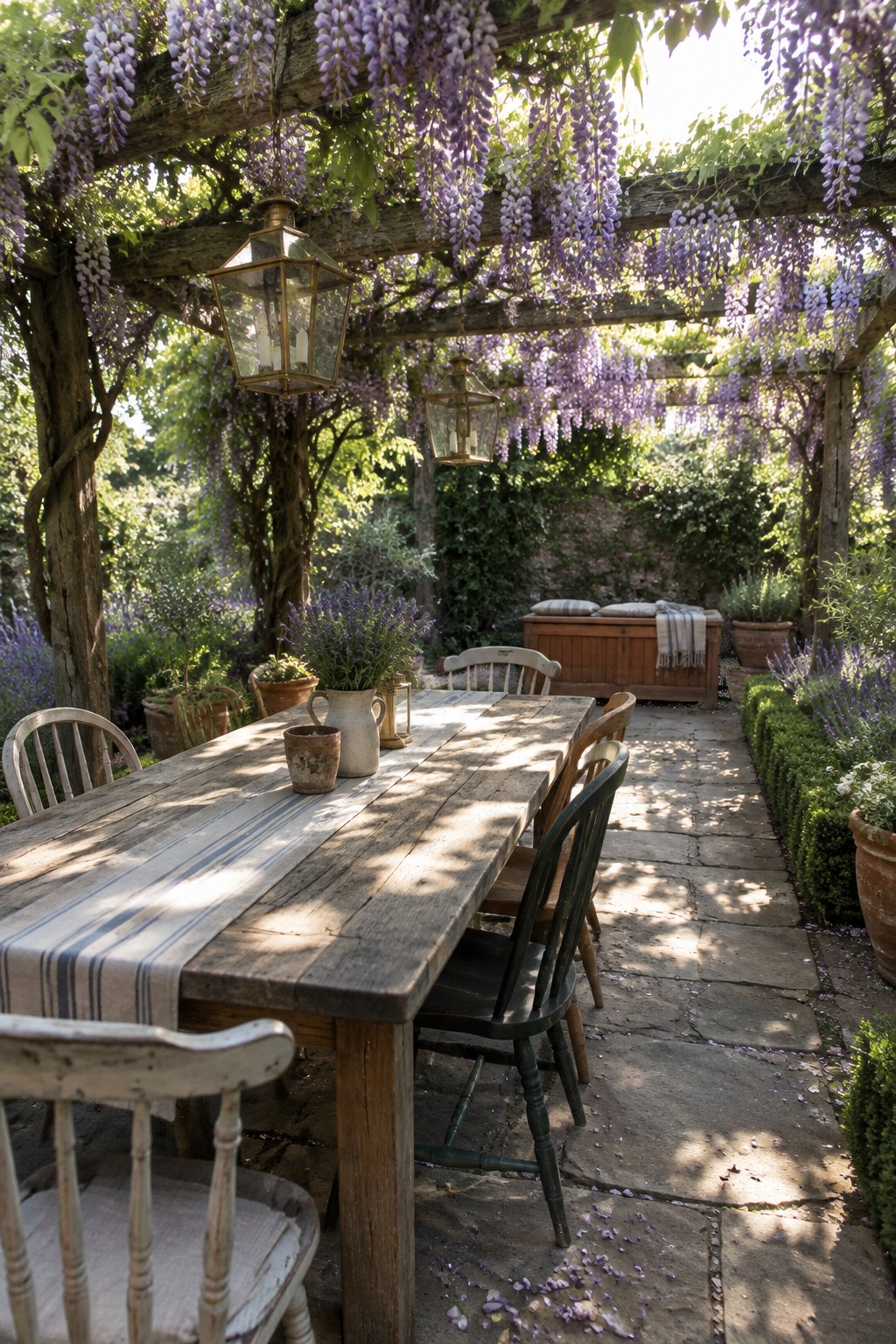
A pergola covered in wisteria can make an outdoor dining spot feel tucked away from the rest of the garden. The leafy canopy provides welcome shade, while the hanging flowers bring color overhead without taking up table space.
Use a sturdy pergola over a patio or garden table, and give the vines room to spread across the beams. Wisteria grows vigorously, so prune it regularly and keep the structure strong enough to support mature growth.
Use Wisteria to Create a Garden Path

A wisteria-covered arch can turn a simple garden path into a more defined route through the yard. The repeated arches make the walkway feel sheltered and give the planting a clear structure.
Use sturdy supports, since mature wisteria grows heavy, and leave enough room for people to pass comfortably. This approach works well along a side garden or on the way to a back door, where the path gets regular use.
Let Wisteria Shade a Patio
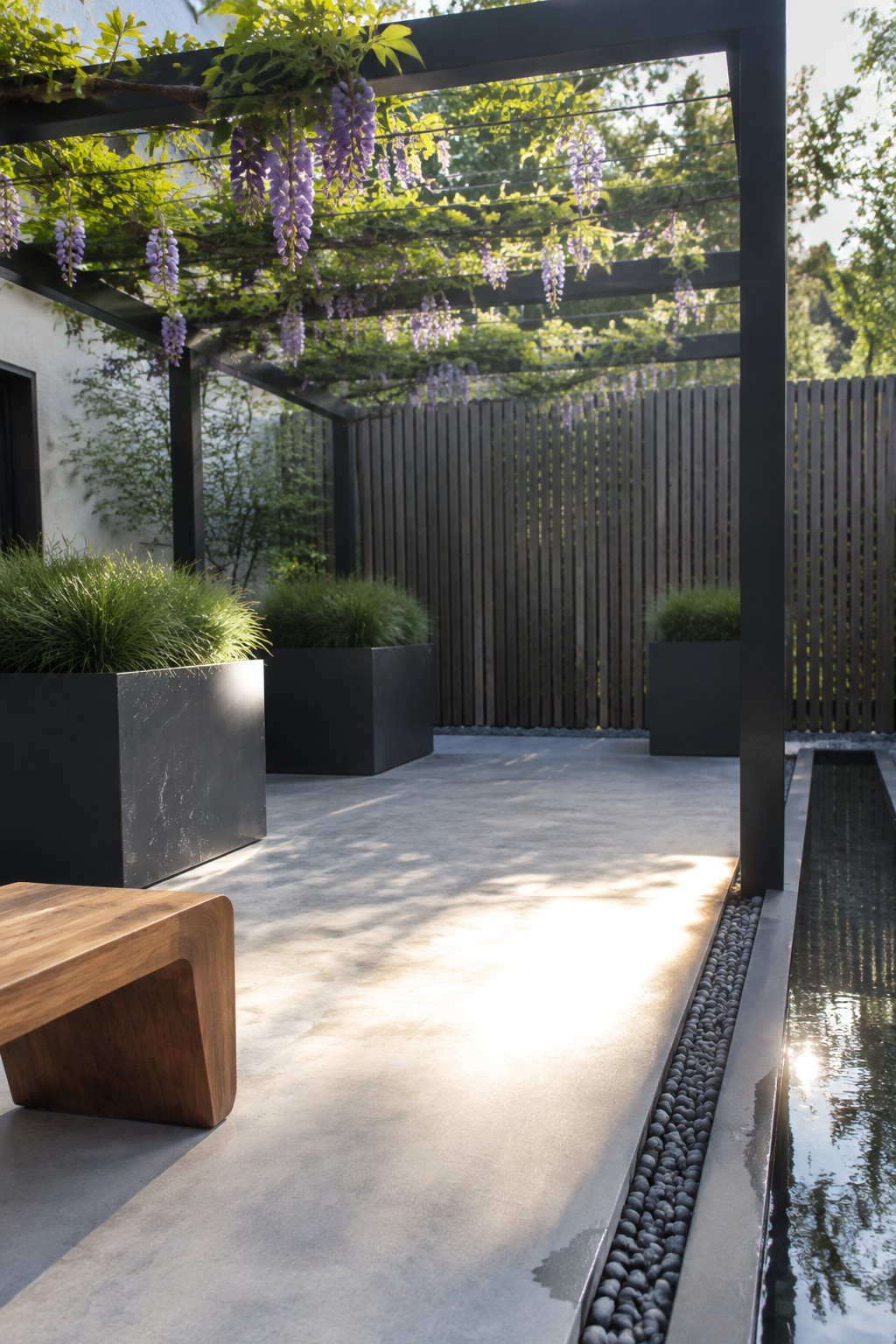
Wisteria can turn a simple pergola into a useful patch of shade, while its hanging flowers make the overhead structure feel less stark. It works especially well over a patio where you want a little cover without closing off the garden.
Train the vines along sturdy beams and wires, and give them room to grow away from roofs, gutters, and walkways. A dark pergola makes the greenery and purple blooms easy to notice, but regular pruning helps keep the plants manageable.
Use Wisteria to Mark a Garden Path
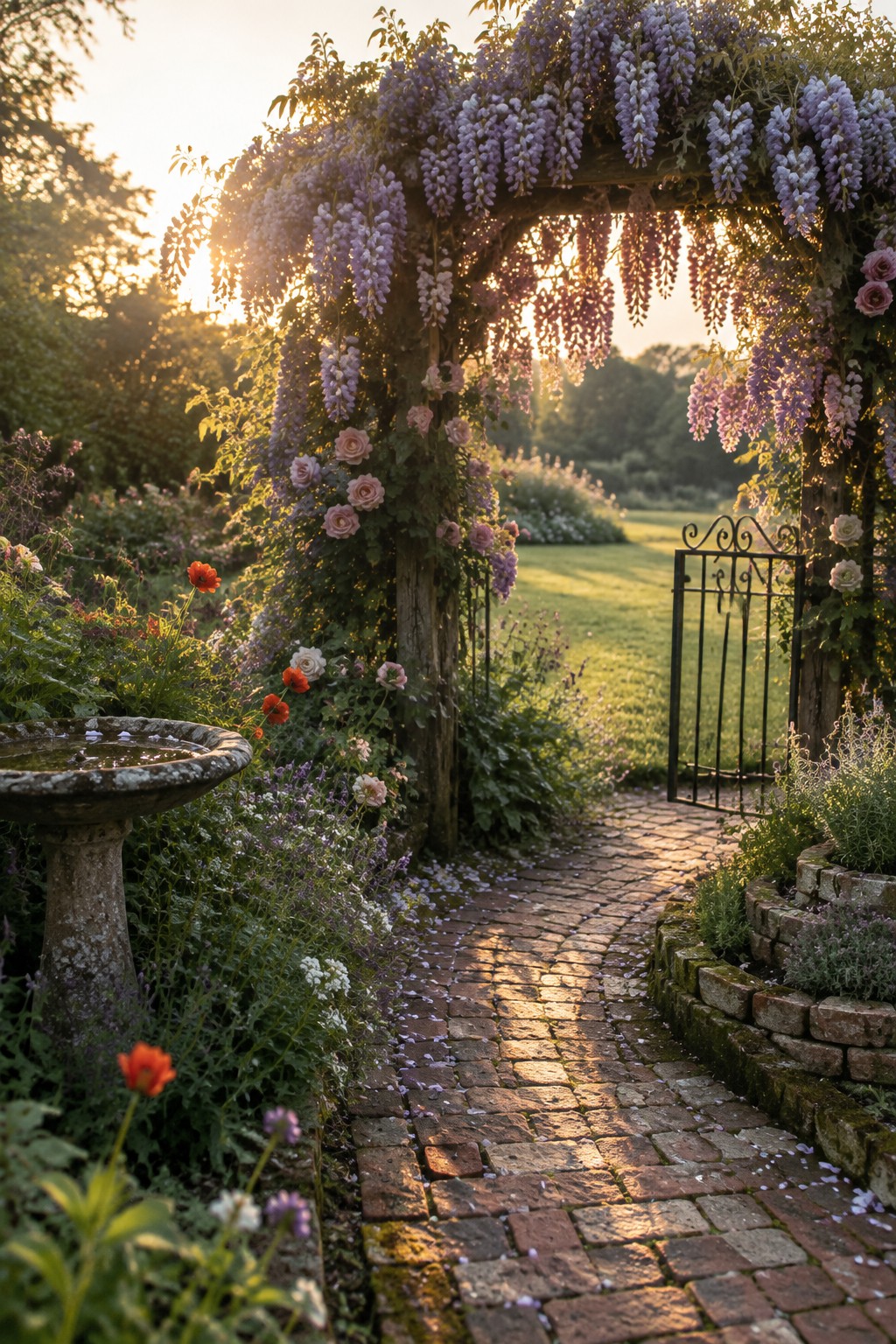
Wisteria can turn a garden arch into a clear entrance to a path, making a simple route through the garden feel more defined. Its hanging flowers bring plenty of color overhead without taking up much of the walking space.
Use a sturdy arch where a path leads between garden areas or into an open lawn. Wisteria needs firm support and regular pruning, so leave room to reach the structure and keep the walkway clear.
Grow Wisteria Over a Pergola for Patio Shade
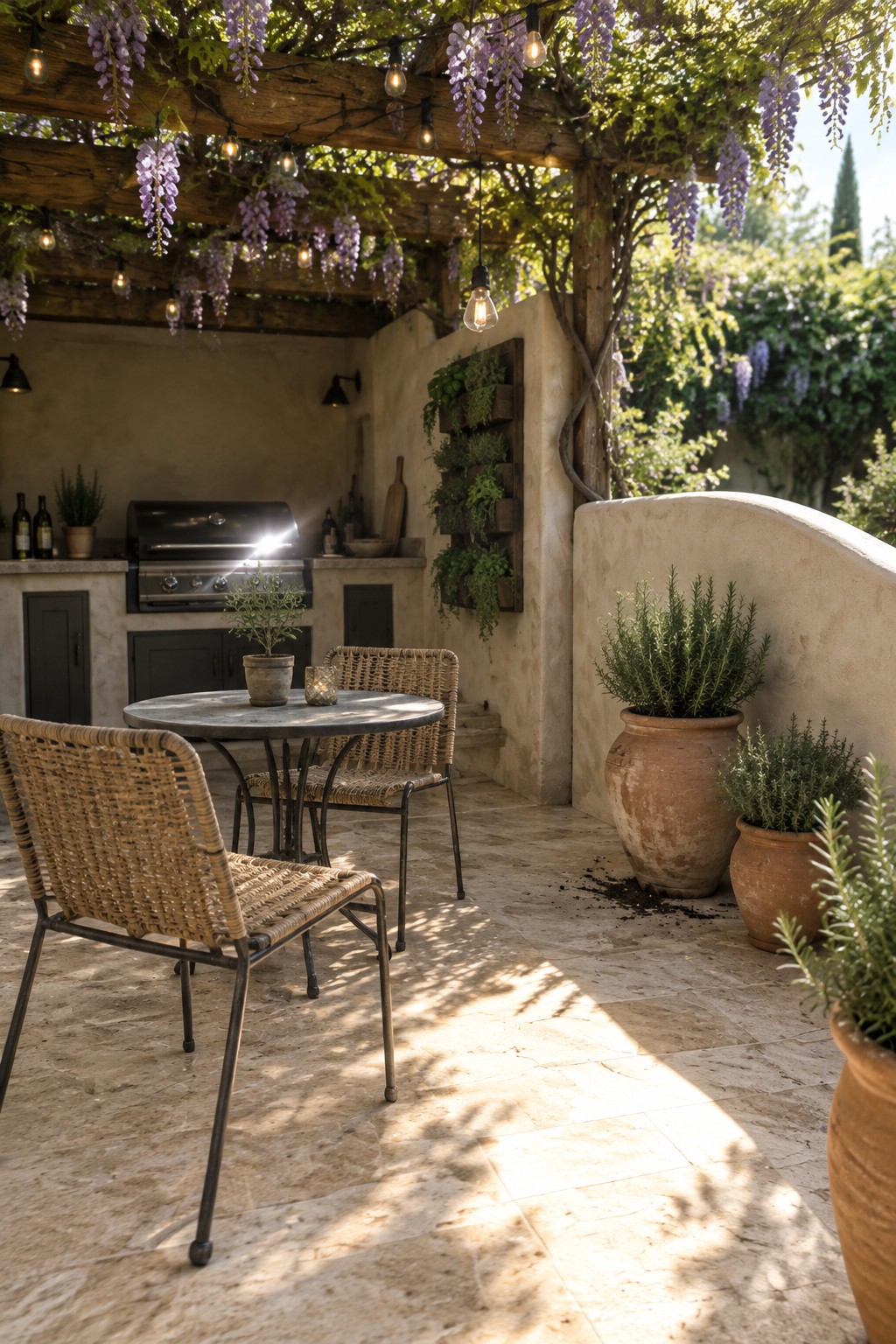
A pergola covered in wisteria can make an outdoor dining spot feel tucked away without closing it off. The leafy roof provides shade, while the hanging flower clusters bring color overhead.
This works well on a patio where you want a comfortable place to eat or sit. Train the vines along a sturdy pergola, and prune them regularly so they do not crowd the seating area or block too much light.
Train Wisteria Along a Garden Walkway
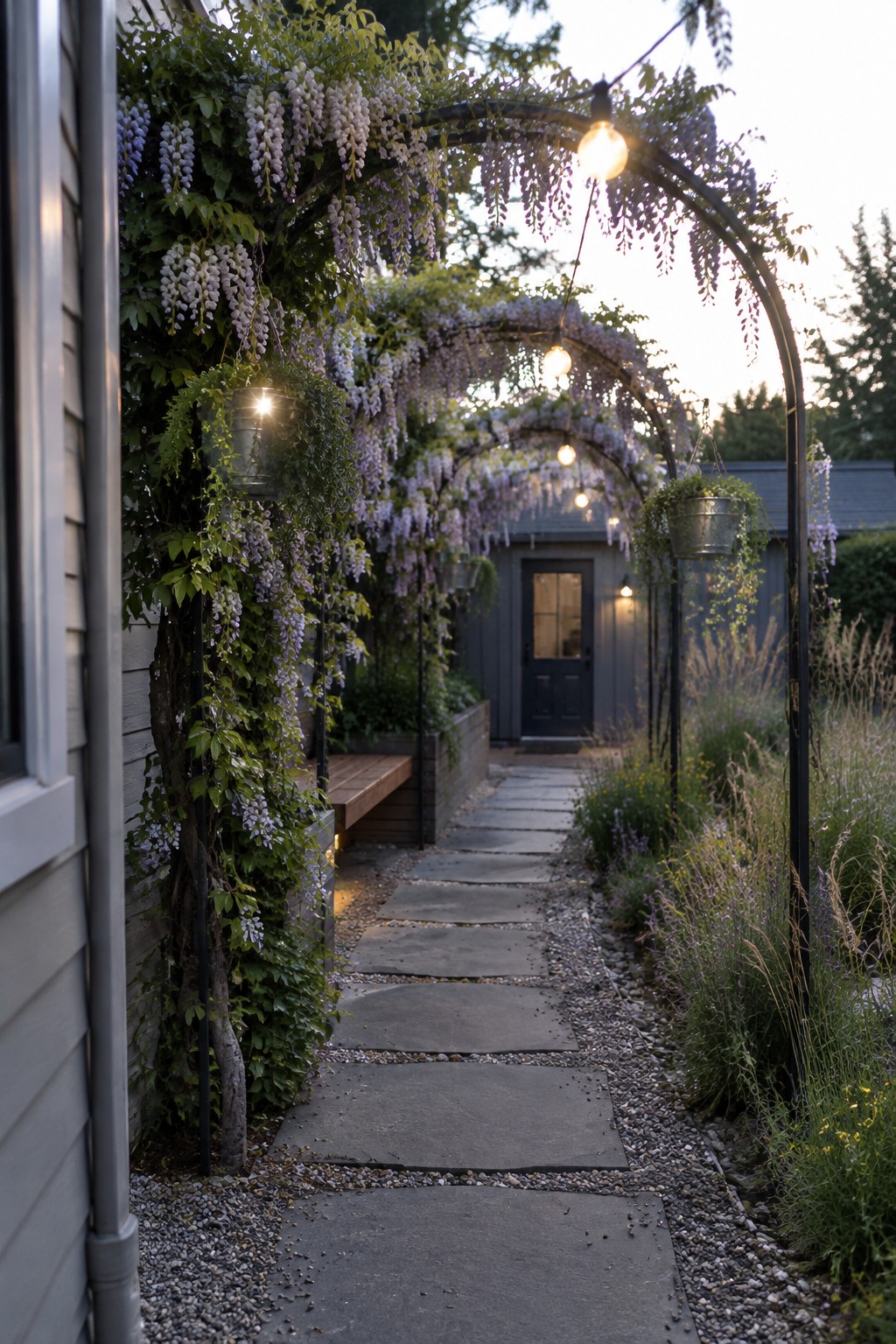
A wisteria-covered arch can turn a simple garden path into a feature of its own. The overhead growth gives the walkway a sheltered feel, while the repeated arches lead the eye toward the garden at the end.
Use sturdy supports, since mature wisteria grows heavy, and leave enough room for people to pass beneath it. This works well along a side yard or a path to a garden shed, where a narrow stretch of space can benefit from a clear sense of direction.
Use a Wisteria Pergola to Shade Poolside Seating

A pergola covered in wisteria can make a poolside seating area more comfortable during the warmer months. The leafy canopy provides dappled shade, while the hanging blooms give the structure a softer garden feel.
This setup works well beside a pool or on a sunny terrace where there is room for a few lounge chairs. Train the wisteria along a sturdy pergola, and keep up with pruning so the vines stay manageable and leave enough clearance above the seating.
Use a Wisteria Arch to Mark a Garden Entrance
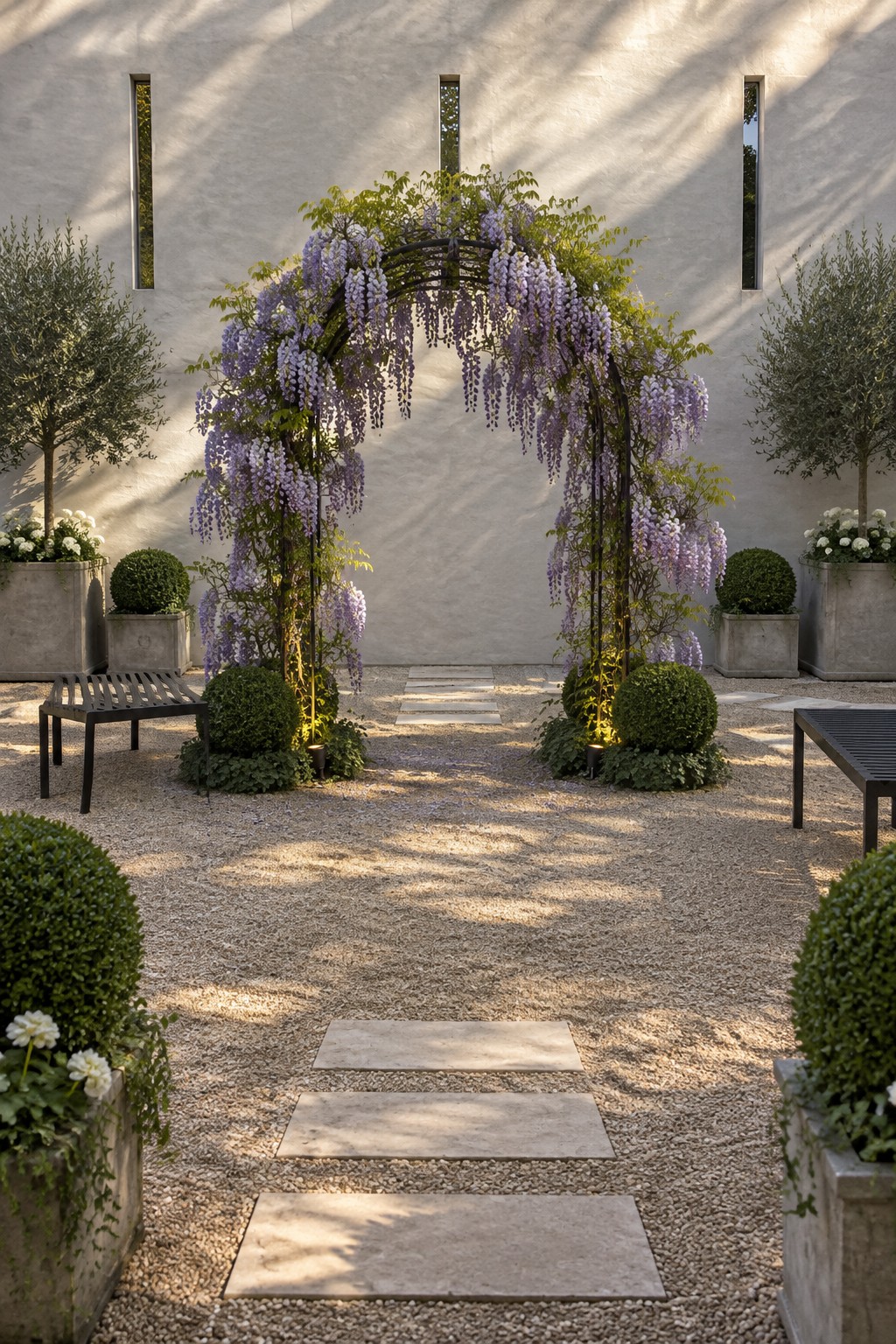
A wisteria-covered arch gives a garden path a clear destination and makes the entrance feel like part of the planting plan. The flowers hang over the walkway, while the open center keeps the route easy to see.
Use a sturdy arch where a path leads into a courtyard or another garden area. Wisteria grows vigorously, so leave room for the stems and plan to prune it regularly to keep the walkway open.
Train Wisteria Over a Garden Stairway

Wisteria can turn a simple garden stairway into a leafy passage, making the route feel like part of the garden rather than just a way to get from one level to another. A sturdy overhead frame gives the vine a clear place to grow and lets the path remain open below.
This idea works well on a sloped or stepped garden path, especially where an arch can connect planting areas on either side. Use a strong structure and keep the wisteria pruned so its weight does not crowd the steps or block the route.
Train Wisteria Over a Garden Seating Spot
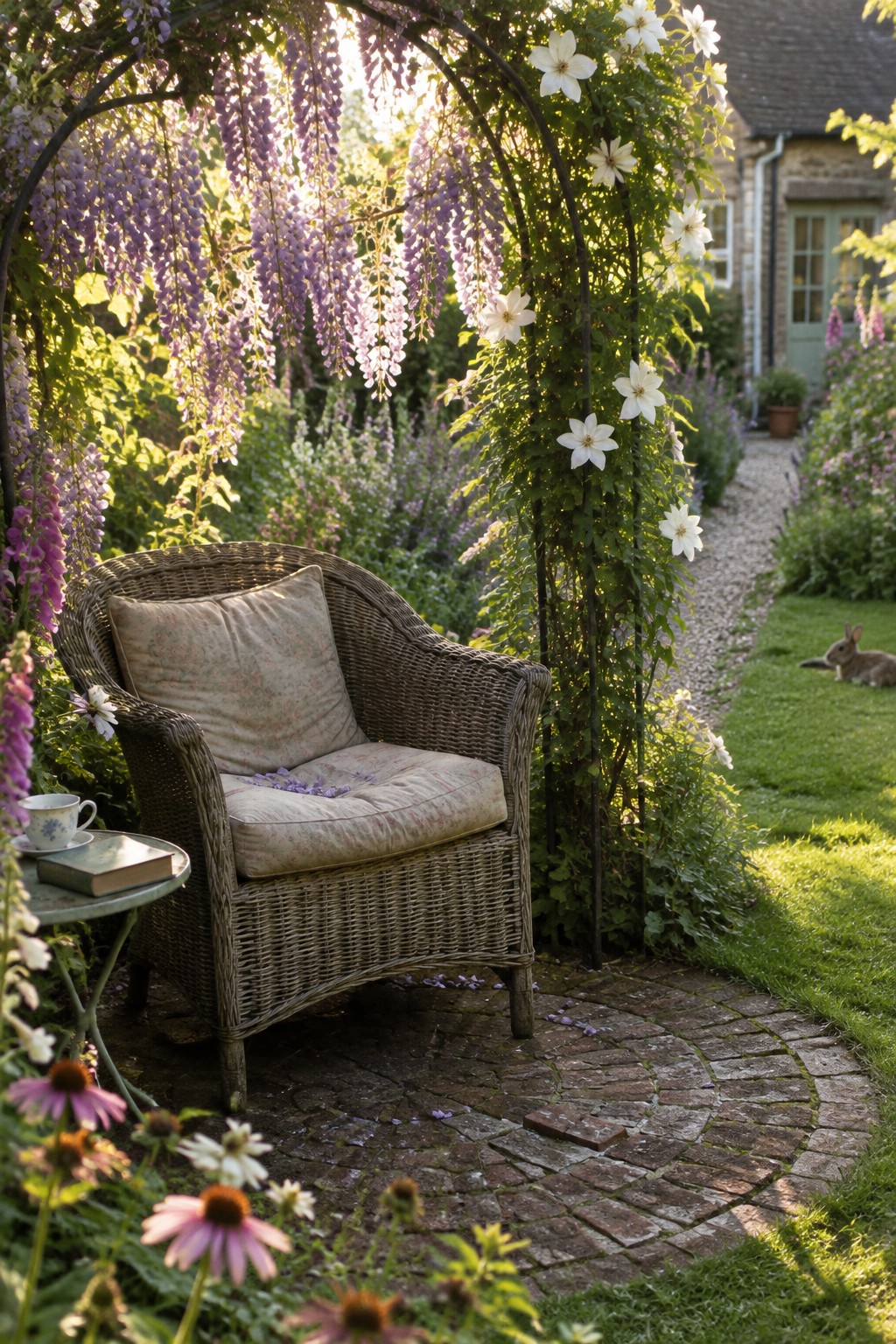
A simple garden arch can turn one chair into a place to sit and enjoy the flowers. Wisteria growing overhead gives the spot a bit of shade, while the arch makes it feel separate from the rest of the garden.
Set the chair on a small paved area and train the vine along a sturdy metal frame. Wisteria can get heavy as it matures, so use a strong support and prune it regularly to keep the growth in check.
Train Wisteria Over an Entry Arch
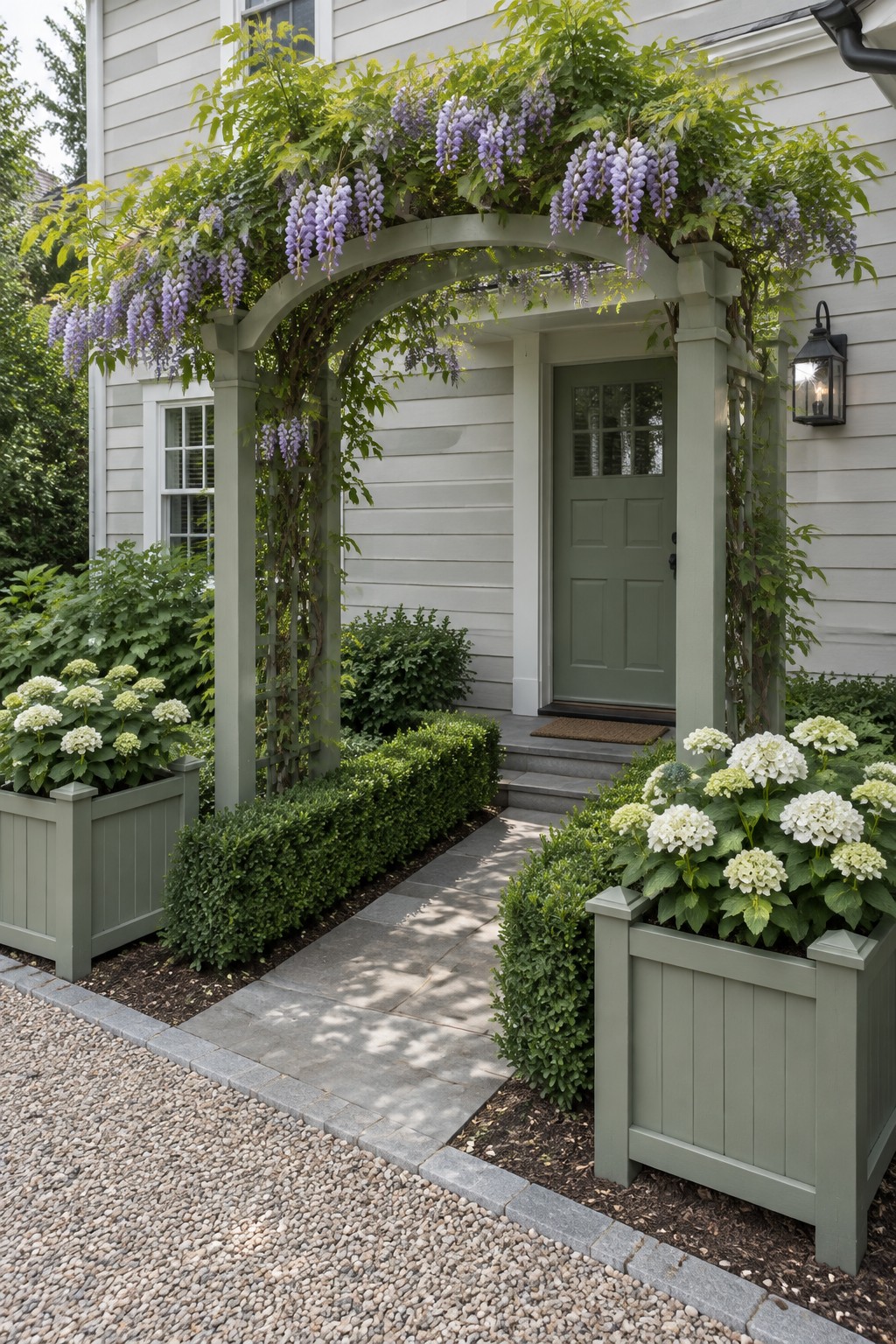
A garden arch gives wisteria a place to climb and turns a plain front walk into a more defined entrance. The overhead growth provides a bit of shade, while the hanging flowers make the entry feel connected to the garden.
Choose a sturdy arch and keep the vines pruned so they do not crowd the doorway or block the path. This approach suits a cottage-style home, especially when the arch sits close to the front steps.
Use a Wisteria Pergola to Shade a Seating Area
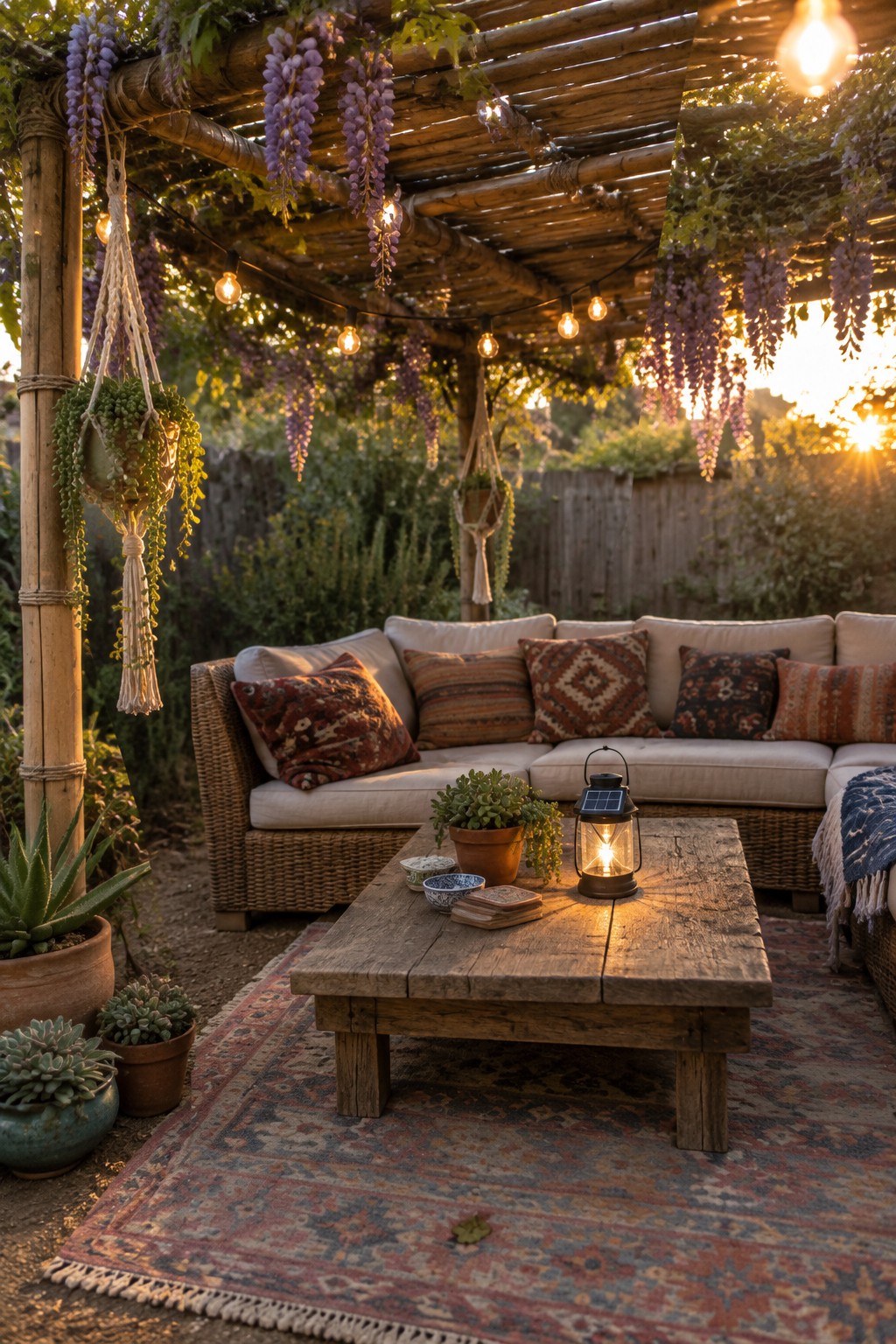
A pergola covered in wisteria can make an outdoor seating area feel tucked away without closing it off. The overhead growth gives the space some shade, while gaps between the vines still let in light and air.
For a similar setup, train wisteria across a sturdy pergola above a patio sofa or conversation area. Keep the structure well maintained, since mature wisteria can become heavy, and prune it regularly so it does not crowd the seating.
Use a Wisteria Pergola to Shade a Seaside Terrace
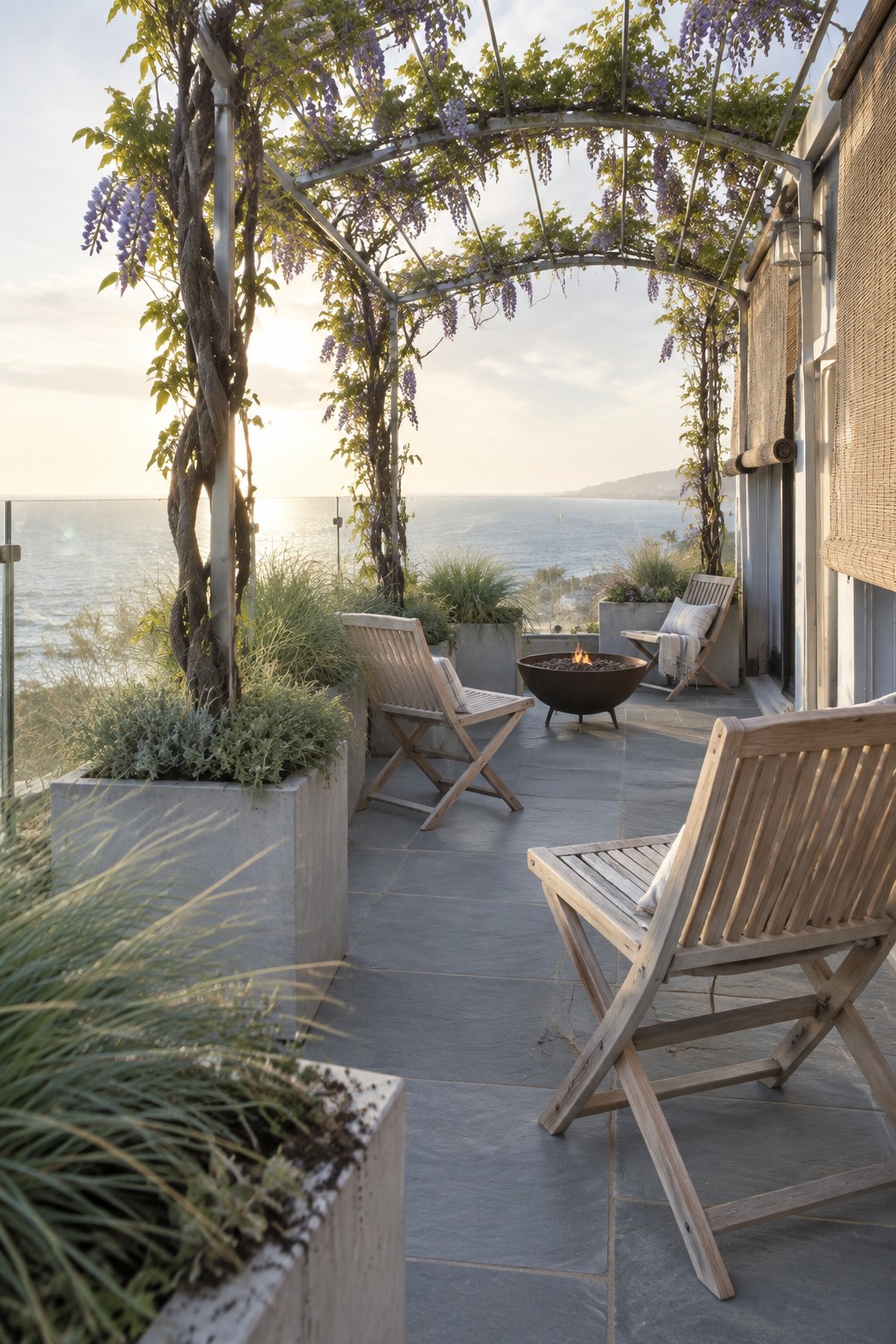
A pergola covered in wisteria can make an open terrace more comfortable without closing it off. The leafy canopy provides some shade, while gaps in the overhead growth let light and air through.
This idea suits a patio with room for a few chairs and a clear walkway. Train the wisteria along a sturdy overhead frame, and keep the vines trimmed so they don’t crowd the seating or block the view.
Train Wisteria Over an Entryway
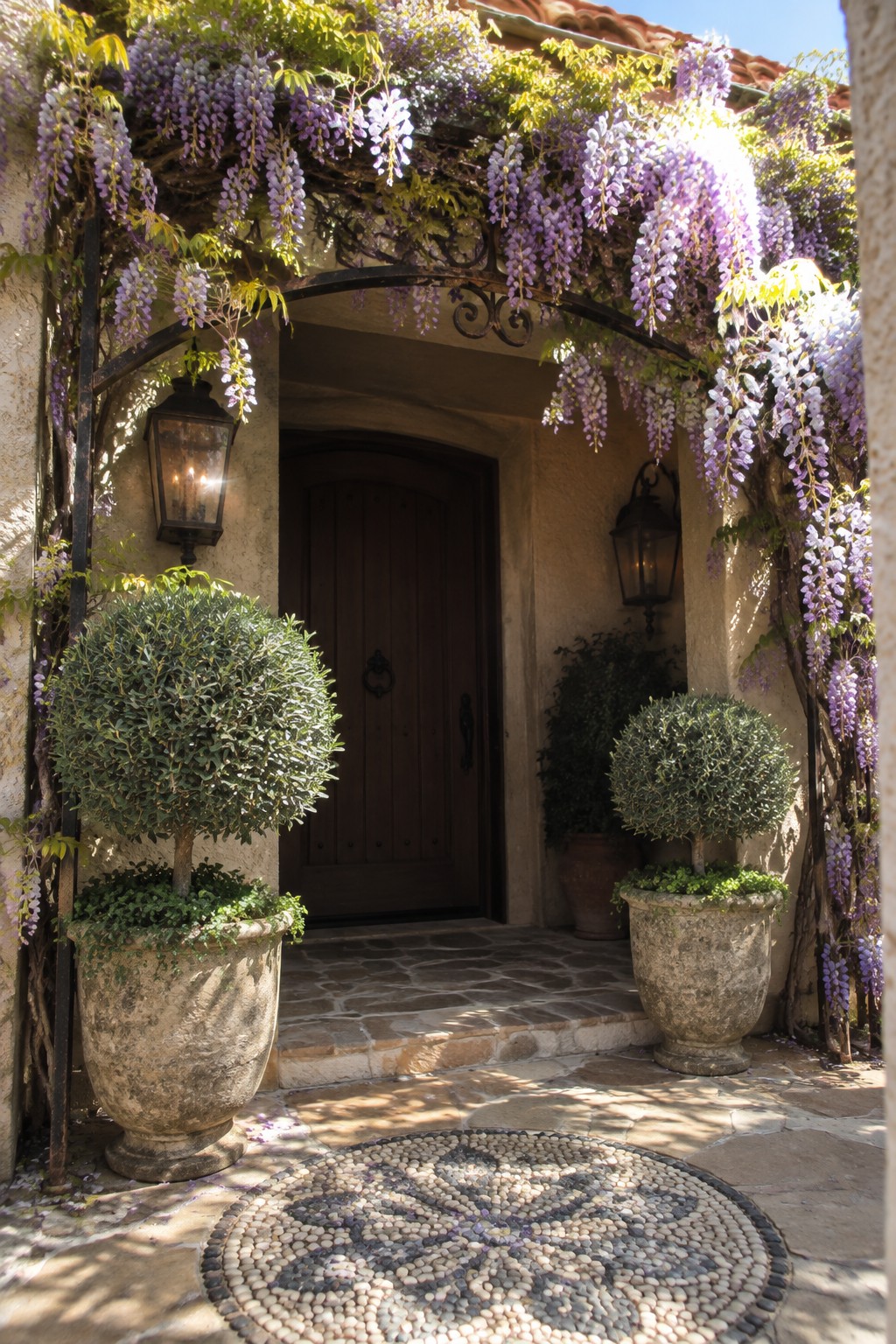
Wisteria can make a garden entrance feel like part of the landscape rather than a bare passage to the front door. Training it across a sturdy metal arch lets the flowers form a leafy canopy, while keeping the doorway clear below.
This idea works well for a courtyard or a home with a recessed entry. Give the vine a strong support and prune it regularly so its growth stays manageable and doesn’t crowd the path.
Train Wisteria Over a Garden Work Area
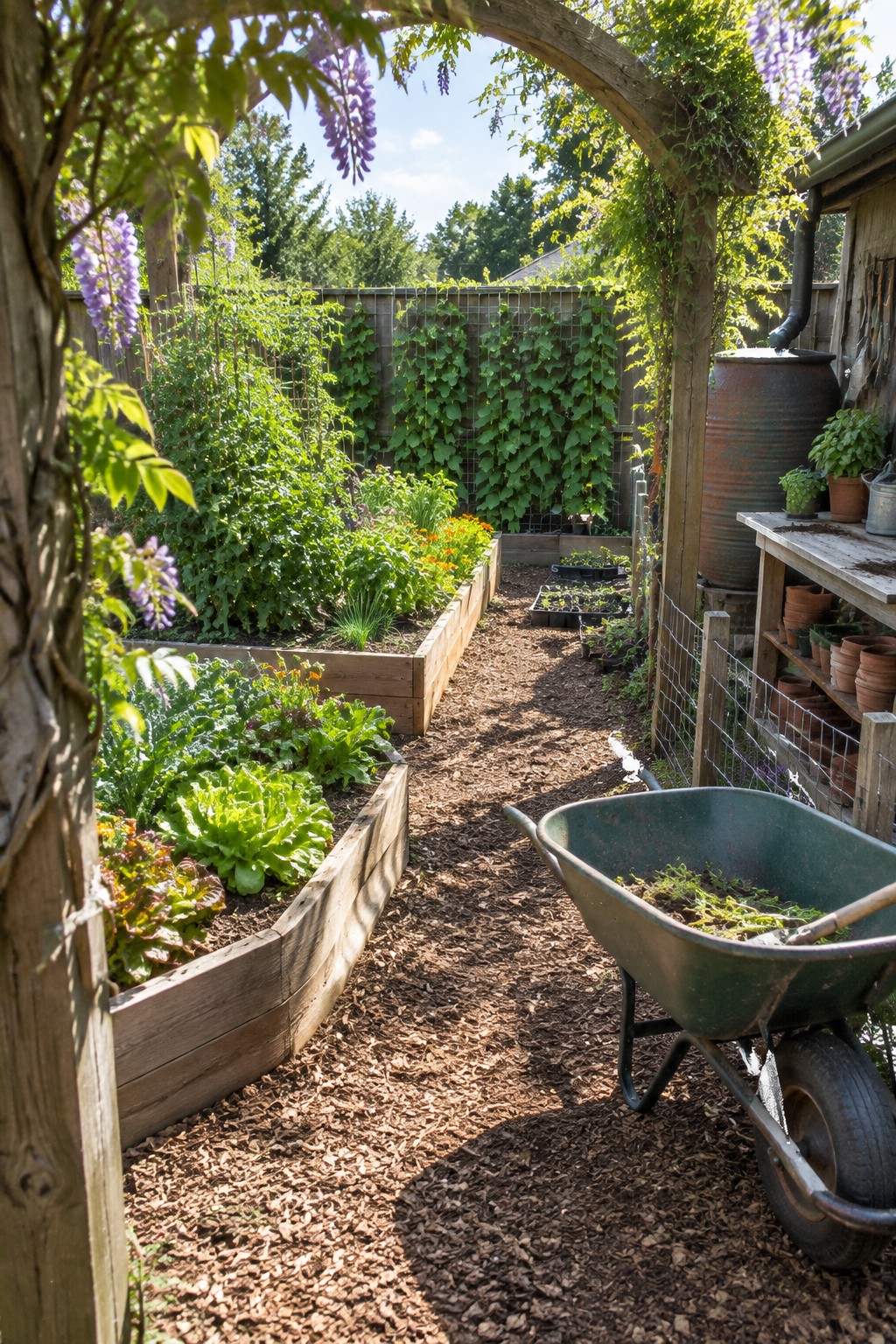
A simple overhead structure can make a working garden feel more organized while giving wisteria a place to climb. Here, the wooden arch helps define the path between the raised beds, and flowering vines provide shade without taking up much planting space.
This idea works well in a narrow garden where a path needs a clear beginning and end. Give wisteria a sturdy support and keep it trimmed back from the walkway so the arch stays easy to pass through.
Use Wisteria to Connect Garden Features

Wisteria can help a garden path feel like part of the landscape rather than a route through it. A simple arch over stepping stones gives the walk a clear beginning and draws the eye toward a destination, such as a small bridge.
This works well in a leafy garden where the path already winds through planting. Train the vine along a sturdy structure, and keep its growth trimmed so it does not crowd the walkway.
Train Wisteria Over a Garden Arch

A wisteria-covered arch can give a garden path a clear beginning and a destination. The leafy canopy and hanging blooms make the walkway feel like part of the garden, rather than simply a route through it.
Use a sturdy arch where a path enters a flower bed or connects two parts of the yard. Wisteria needs regular pruning and a strong support, so leave enough room to keep the walkway clear as the vine grows.
Train Wisteria Over a Garden Walkway
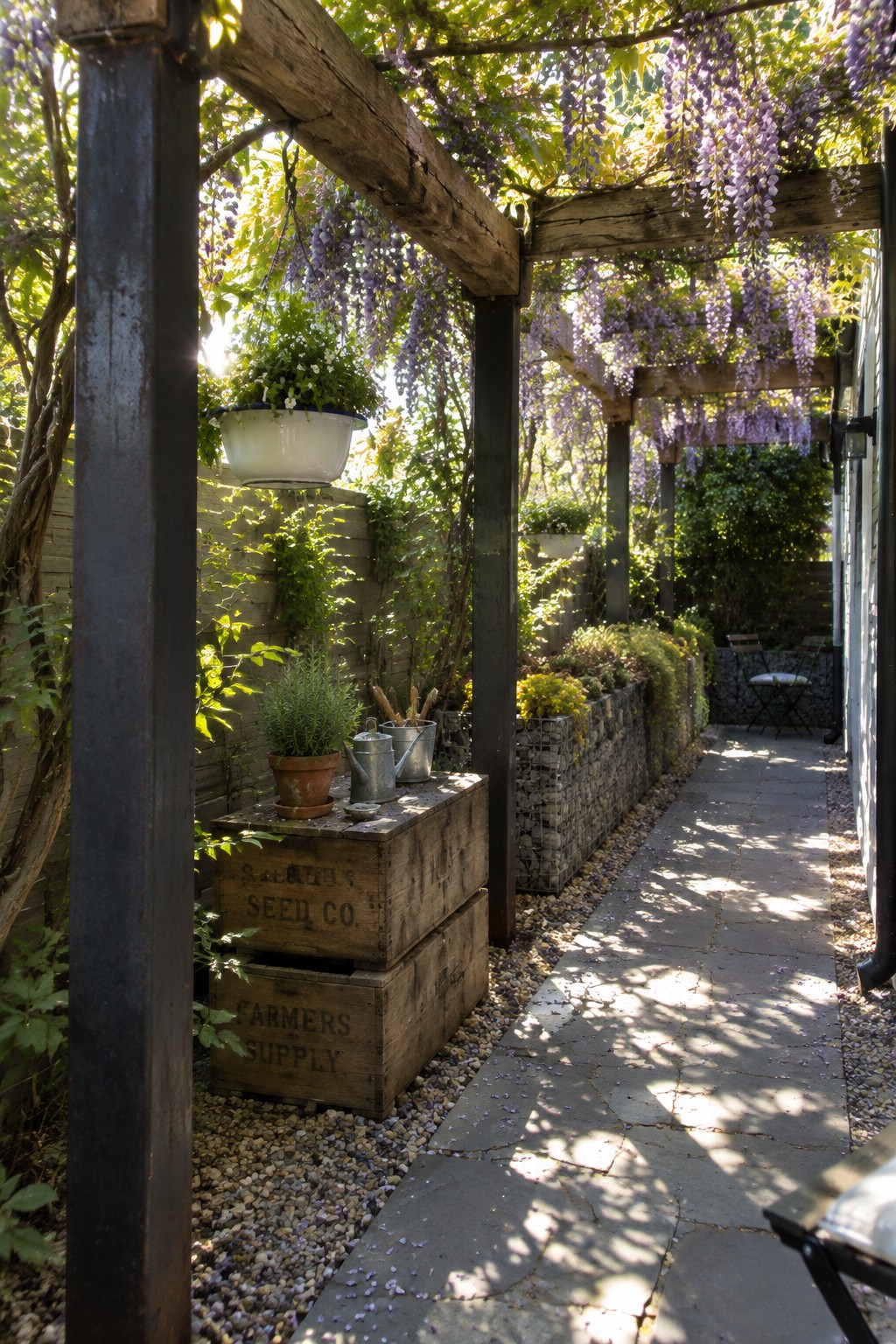
A wisteria-covered pergola can turn a narrow garden path into a shady passage. The overhead growth gives the walkway a clear structure, while the open sides keep it from feeling enclosed.
This works well along a side yard or between different parts of a garden. Use sturdy posts and beams, and prune the vines regularly so they do not crowd the path or block access.
Frequently Asked Questions
Q: How fast does wisteria cover a pergola?
A: Wisteria can take a few years to establish before it gives you a thick canopy. Choose a healthy plant, water it regularly while it settles in, and guide new stems along the pergola as they grow.
Q: Will wisteria damage my pergola or garden arch?
A: Its heavy, twisting stems can strain a lightweight structure over time. Use a sturdy pergola or arch with solid posts and crosspieces, and check the ties and structure as the vine grows.
Q: Can I grow wisteria in a small garden?
A: Yes, but give it a strong support and prune it regularly to keep it in bounds. You can also train it as a single stem over an arch instead of letting it spread across a large pergola.
Q: Why isn’t my wisteria flowering?
A: Young plants may need time to mature, and too much shade or excessive nitrogen-rich fertilizer can also reduce blooms. Give it plenty of sun and prune it thoughtfully, since cutting at the wrong time can remove developing flower buds.
