

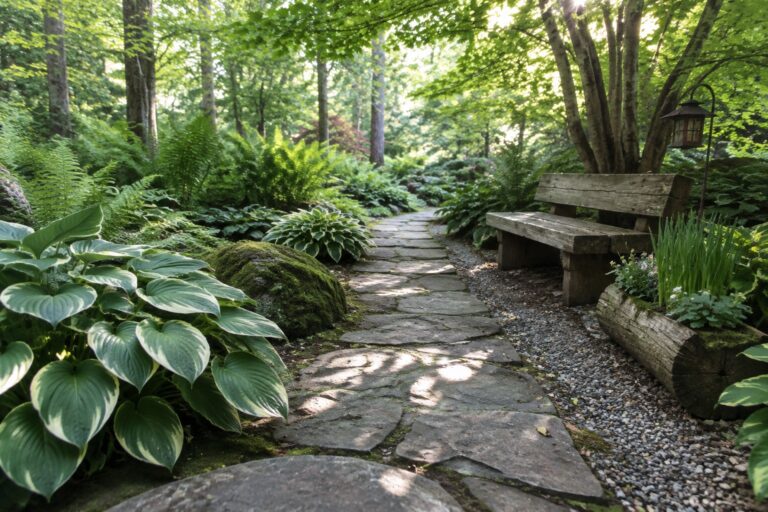
Hostas and ferns bring a woodland garden together through their contrasting leaf shapes, but the layout matters just as much as the plants.
I find that layered planting looks most natural when broad hosta leaves anchor the beds and finer fern fronds soften the edges.
A shaded path or a simple border can give the garden structure without making it feel too formal.
Repeating a few varieties also helps the space feel calm and connected as the plants fill out over time.
I’d save ideas that suit the shade, soil, and walking routes you already have, then adapt them to your yard.
Use Stone Slabs to Create a Woodland Garden Path
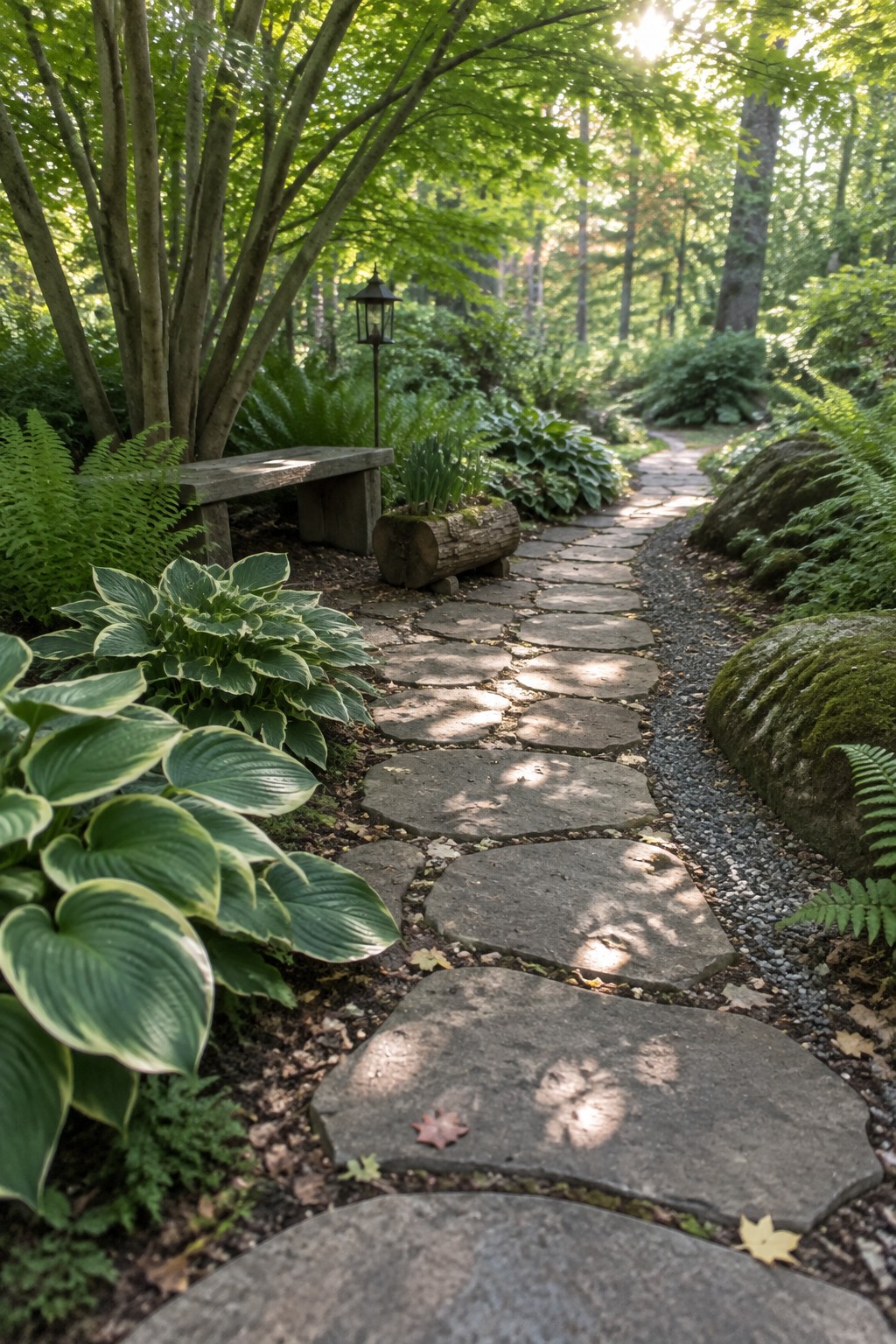
A stepping-stone path makes it easier to move through a leafy garden without crowding the planting beds. Broad, irregular slabs feel at home in a woodland setting and give hostas and ferns room to spread along the edges.
Leave enough space between stones for comfortable steps, and keep the surface fairly level. This approach suits a shady side yard or a garden with a natural, informal layout.
Use a Stone Wall to Shape a Woodland Path
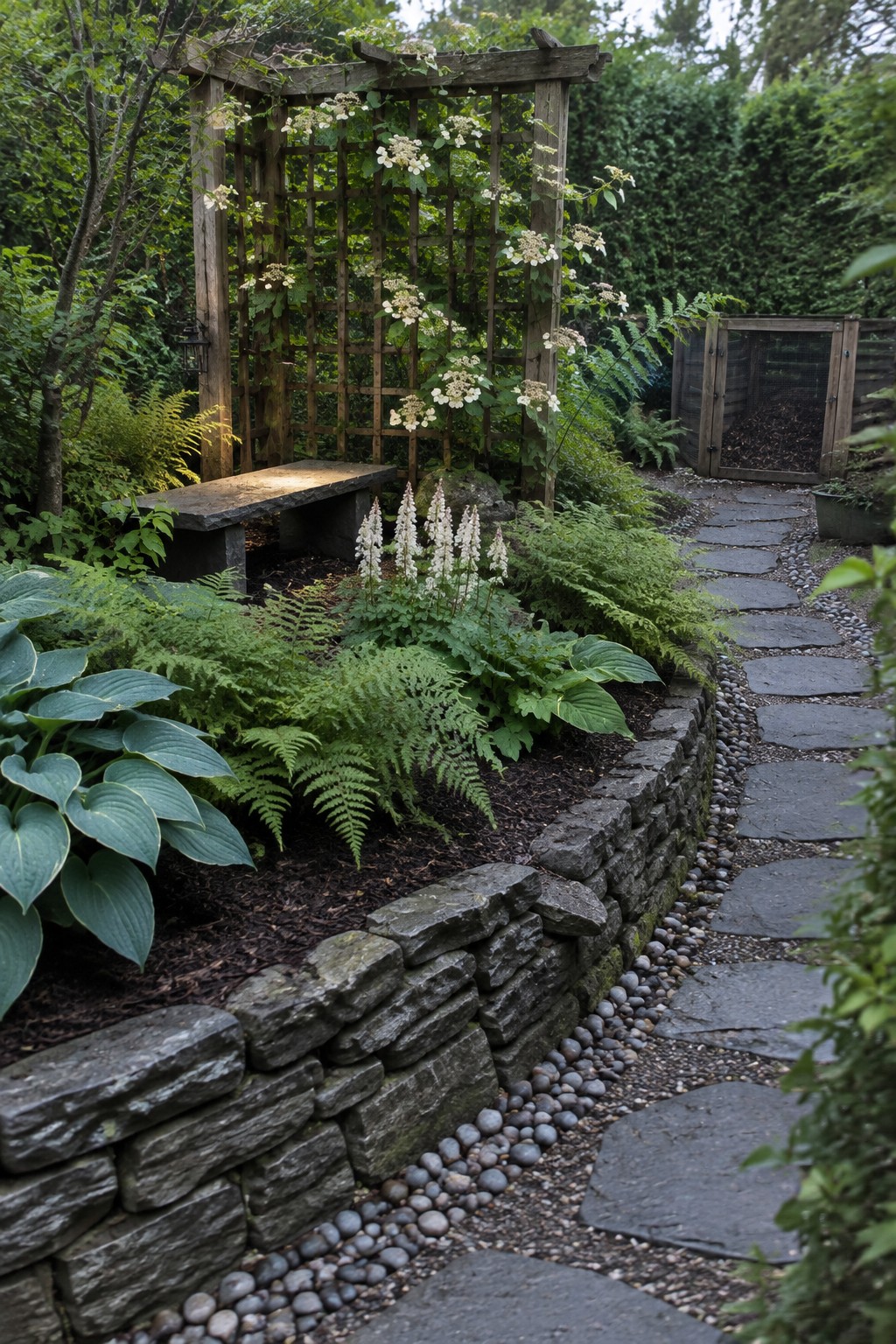
A low stone wall gives a garden path a clear edge and makes a sloped or uneven planting bed easier to manage. Here, the wall holds a raised bed of hostas and ferns beside the stepping stones, keeping the path distinct without making the garden feel formal.
This approach works well in a shady side yard or narrow garden where a path needs to pass through dense planting. Choose stones that suit the setting, and leave enough room for the plants to fill in without spilling across the walking surface.
Use a Stone Path to Shape a Woodland Garden

A stone path gives a leafy garden a clear route while letting the planting stay informal. Hostas and ferns can spill along the edges, making the path feel part of the garden rather than a separate strip of paving.
Choose stones with a comfortable walking surface and leave enough room between the path and nearby plants. This approach works well beside a shaded entry, where broad hosta leaves and ferns can fill the planting bed without crowding the way.
Use Stepping Stones to Lead Through a Woodland Garden
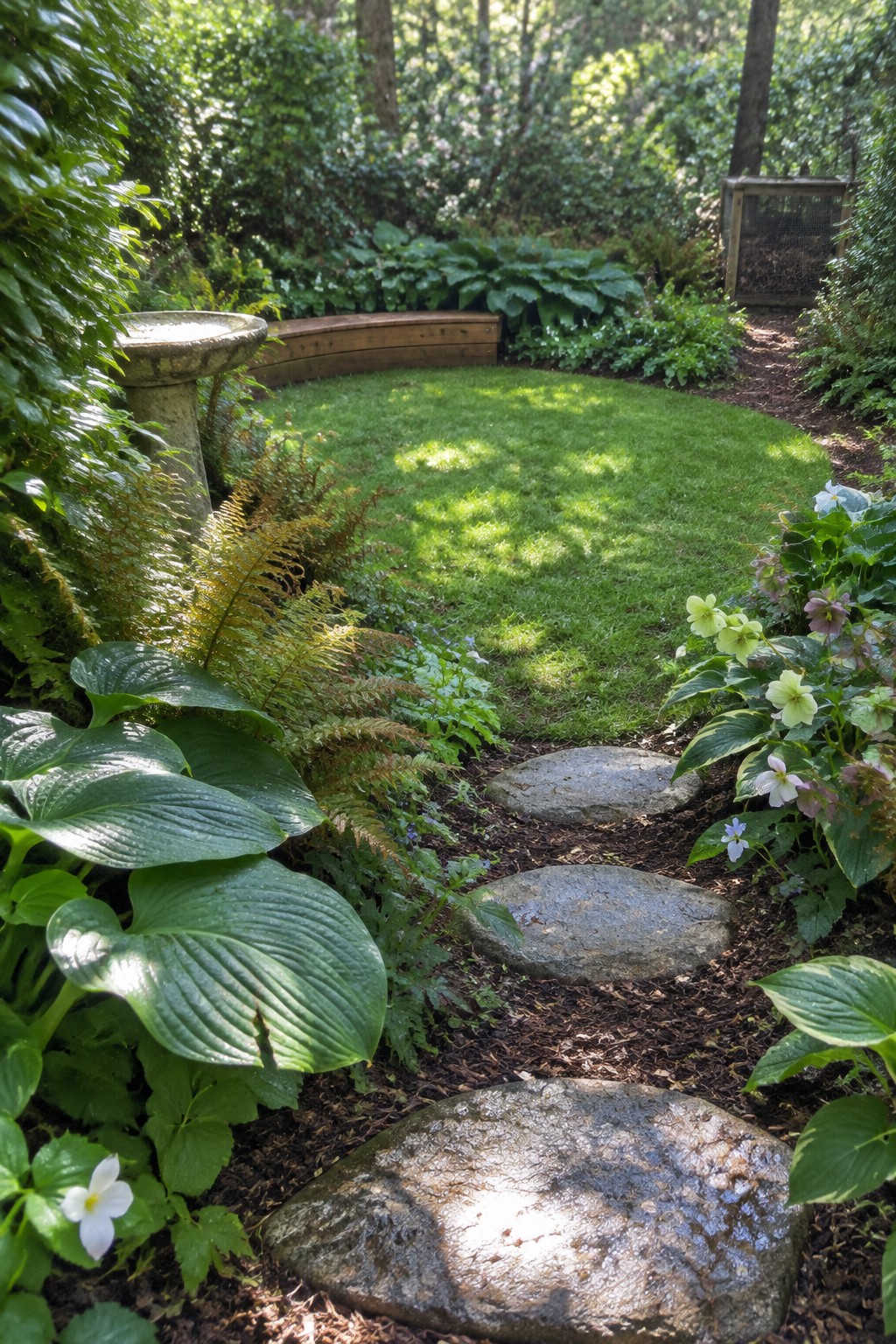
A simple stone path gives a woodland garden a clear route without taking away its informal feel. Broad, flat stepping stones sit comfortably among hostas and ferns, making it easier to move through the planting while keeping the garden’s natural character.
Set the stones where people are most likely to walk, and leave enough room between them for groundcover or mulch. This approach works well in shady beds, but choose stones with a rough surface so they are less slippery when damp.
Use a Brick Path Through a Layered Garden

A brick path gives a woodland garden a clear route without taking away from the planting. Here, ferns and hostas grow in a broad bed beside the path, so the hard surface feels tucked into the garden rather than set apart from it.
This layout works well in a narrow side yard, where a path can lead people through while leaving room for plants along the edge. Keep the planting low beside the bricks so it does not spill too far onto the walking surface.
Use a Trellis to Give a Woodland Garden Privacy
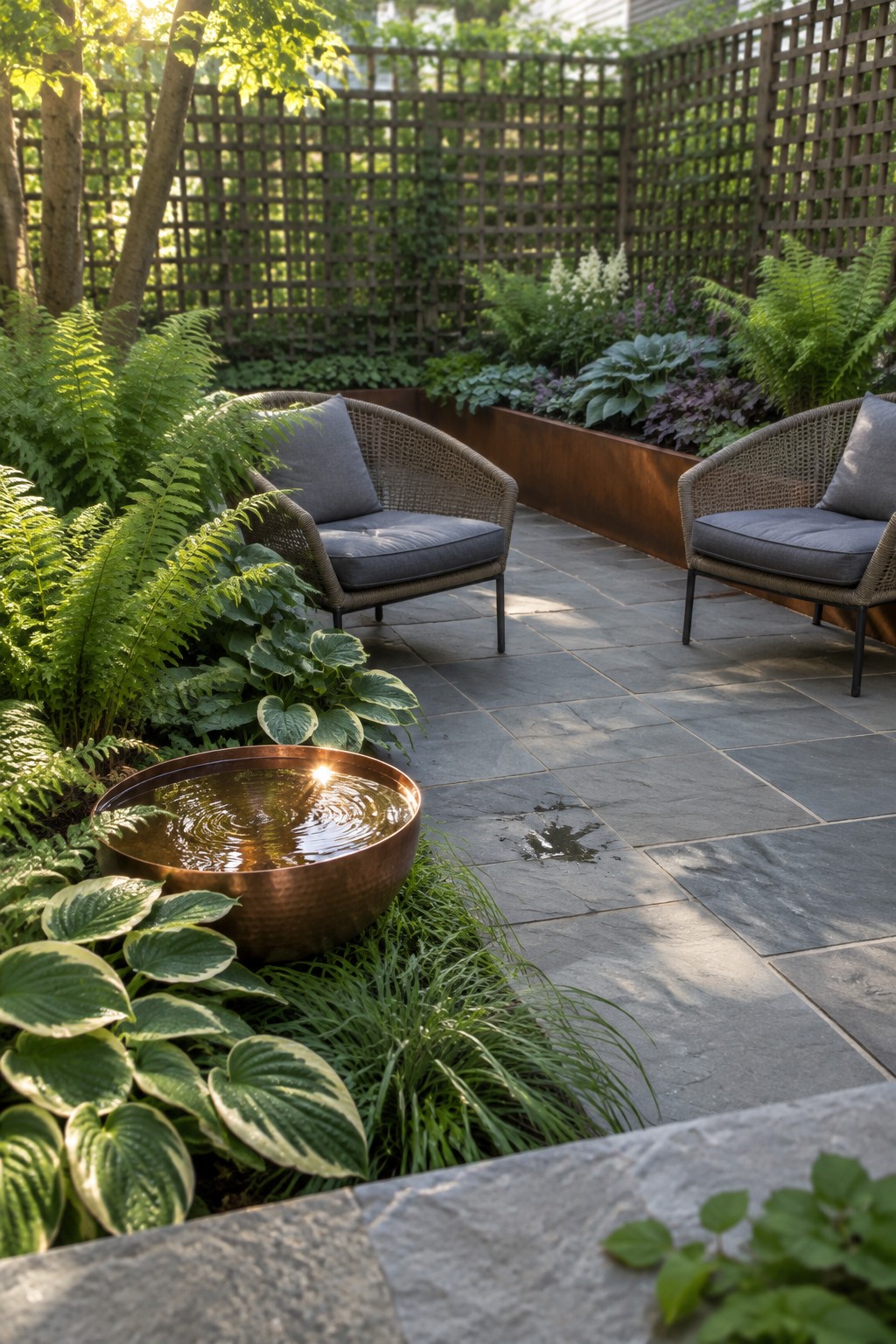
A tall lattice trellis can make a small garden feel more tucked away while giving climbing plants a place to grow. It also makes a useful backdrop for ferns and hostas, which look at home in the softer, leafy setting.
Use this idea along a patio edge or property line where you want a bit more privacy without building a solid fence. Leave enough room for plants to spread, and choose varieties suited to the shade beneath the trellis.
Add Rustic Log Steps to a Sloped Garden
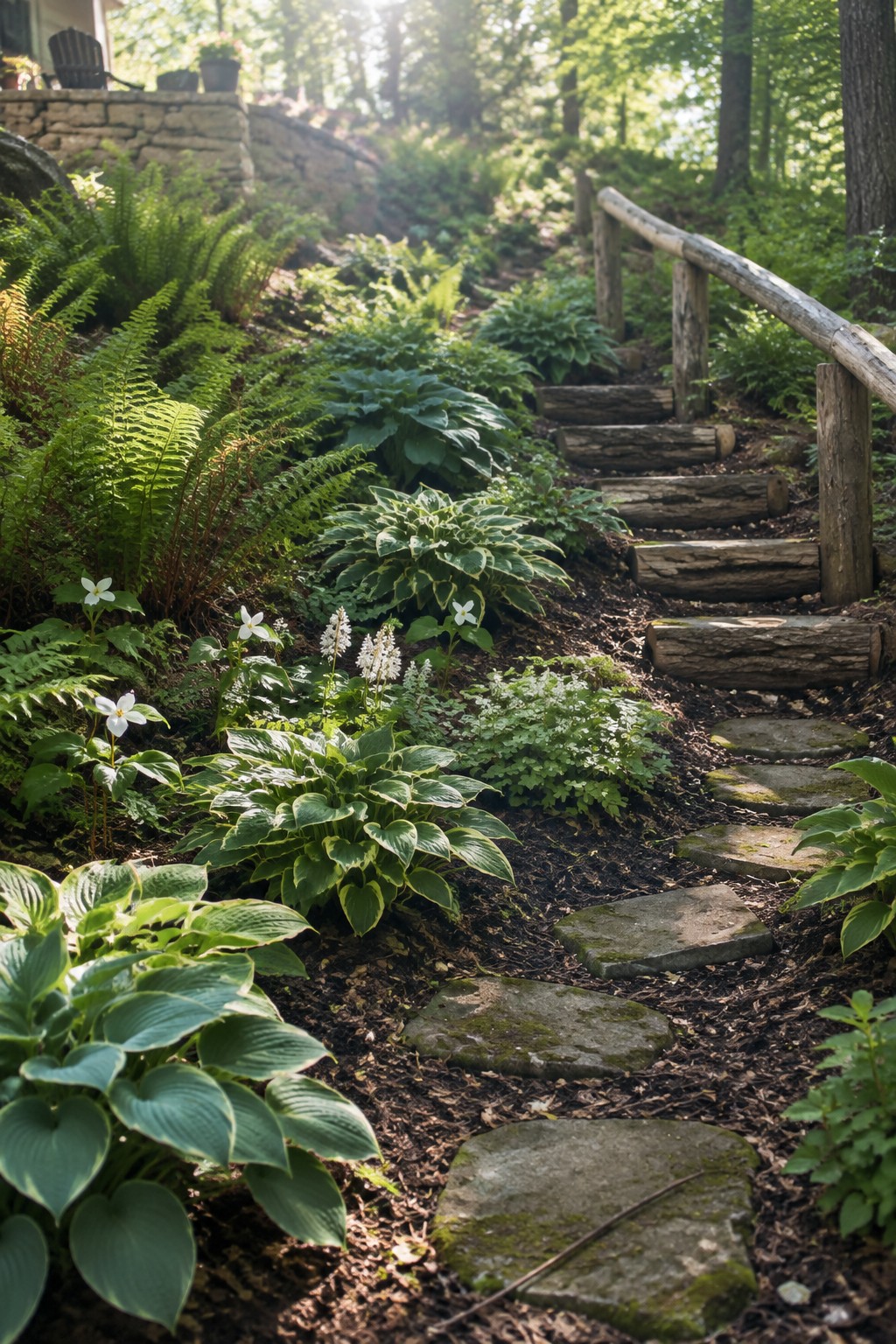
Log steps make a woodland path easier to use on a slope while keeping its natural, informal feel. They fit well among hostas and ferns, where a more formal set of stairs might look out of place.
Set each log securely into the slope and keep the step heights fairly even. Use flat stones for the lower part of the path, as shown here, and make sure the steps have a firm, non-slippery surface.
Use Ferns to Create a Private Poolside Garden
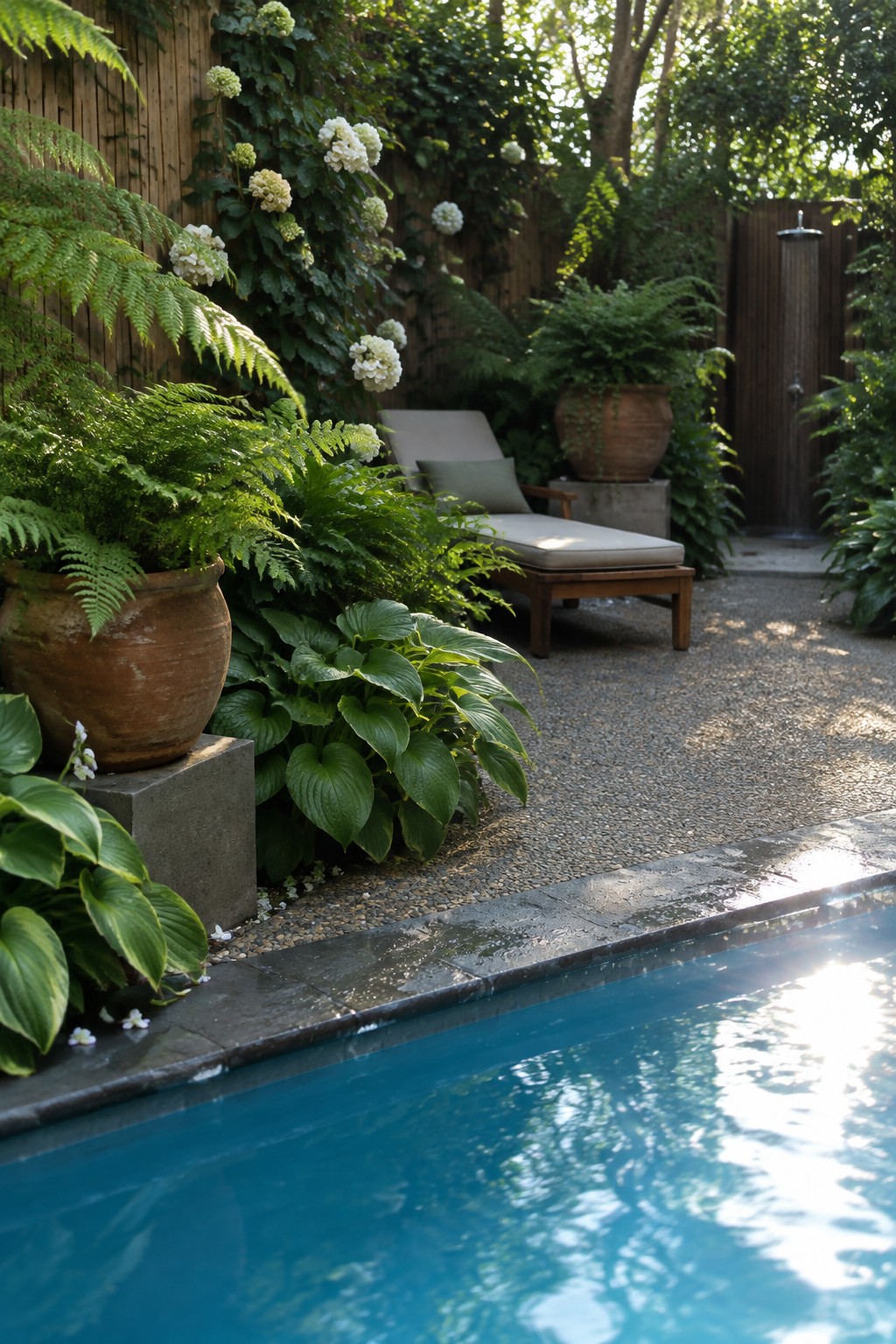
Ferns can make a pool area feel more sheltered without needing a solid screen. Their leafy growth gives the space a lush edge, while the mix of heights keeps the planting from looking like a hedge.
Plant them in generous groups along a fence or pool border, and leave enough room to reach the water and walk comfortably. They work especially well in shady spots with consistently moist soil; a few large-leaved hostas can fill in the lower layer.
Build Garden Steps Into a Woodland Path
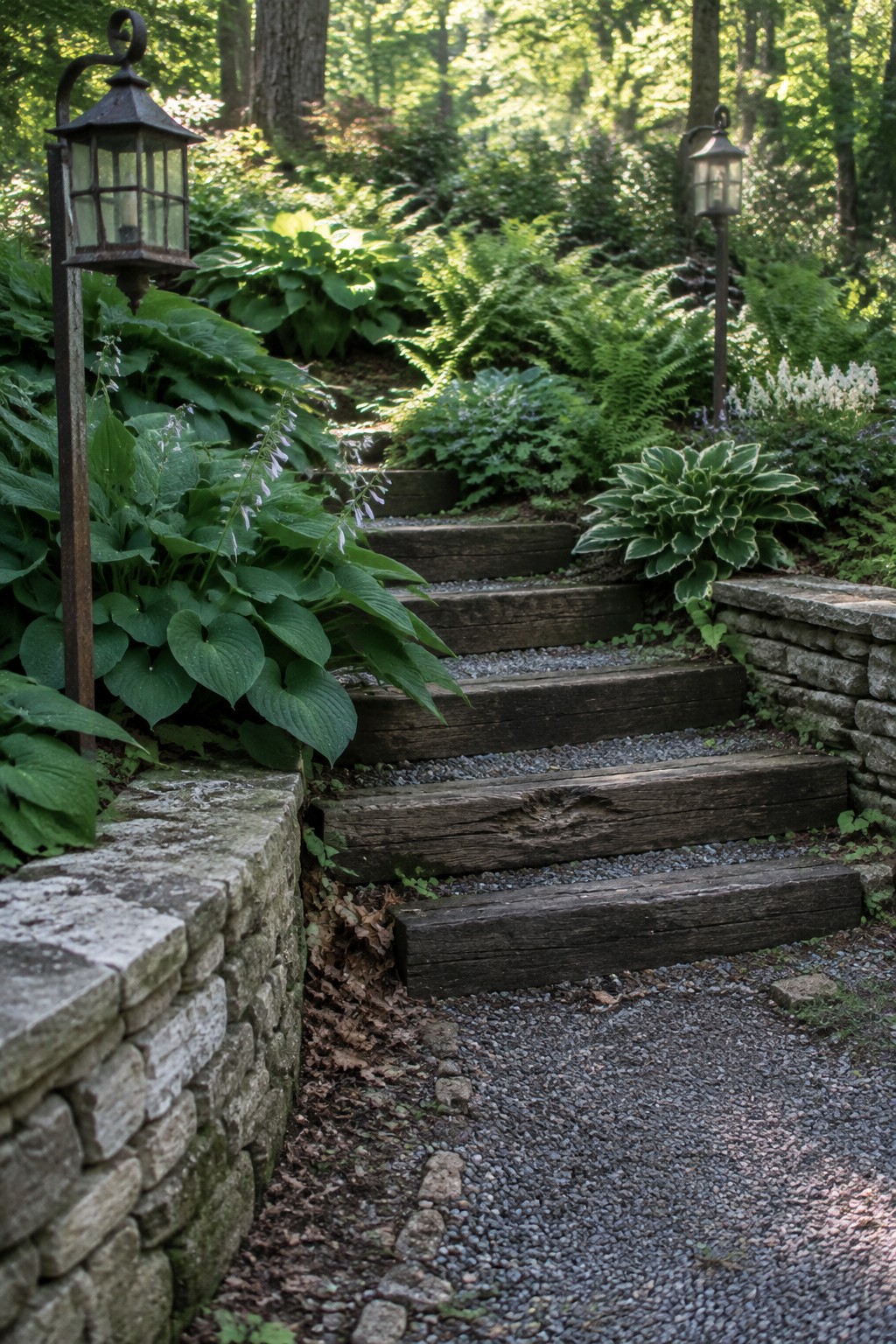
Timber steps make a sloped woodland garden easier to walk through while keeping the route in step with its natural setting. Gravel between the risers gives water somewhere to drain and makes the steps feel less bulky.
Use sturdy, rot-resistant timbers and set each step securely into the slope. Ferns and hostas can grow along the edges, but leave enough room to see the tread and keep leaves from collecting on the steps.
Use Raised Beds Along a Brick Garden Path

Raised beds beside a narrow brick path make a small garden easier to use without losing its leafy, informal feel. The path gives you a clear route through the planting, while the beds keep herbs and vegetables in one manageable area.
This layout suits a side garden or a narrow yard where open ground is limited. Keep the path wide enough for a wheelbarrow, and leave room to reach into the beds for weeding and harvesting.
Use a Stone Bench as a Woodland Garden Focal Point
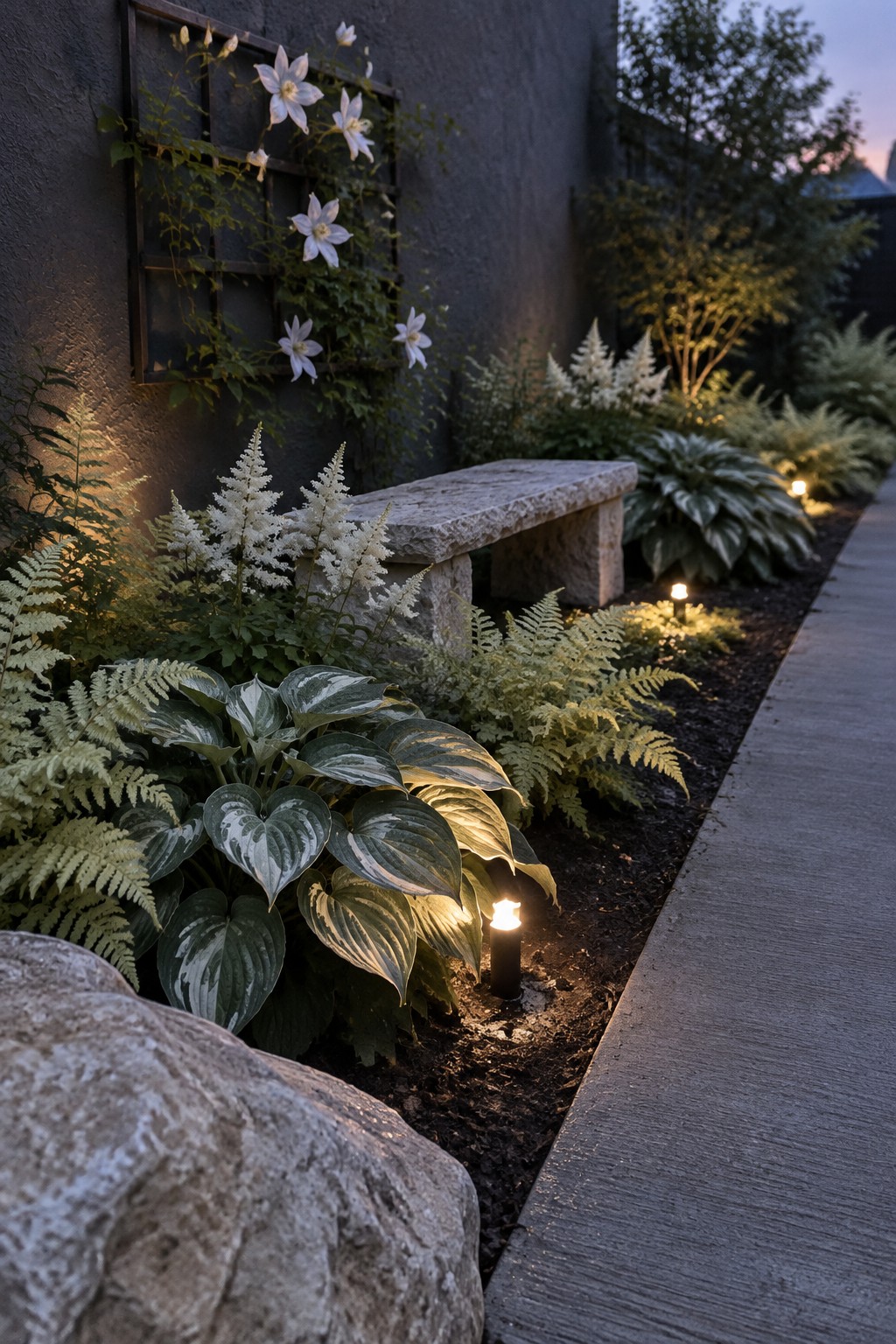
A simple stone bench gives a planted garden a useful place to pause. Set among ferns and hostas, it feels like part of the landscape rather than a separate patio feature.
This works well along a garden wall or beside a path, especially where there is enough room to sit without crowding the plants. Choose a sturdy stone with a surface that can handle weather, and leave space around it so the foliage does not spill over the seat.
Add a Narrow Water Feature Along the Garden Path
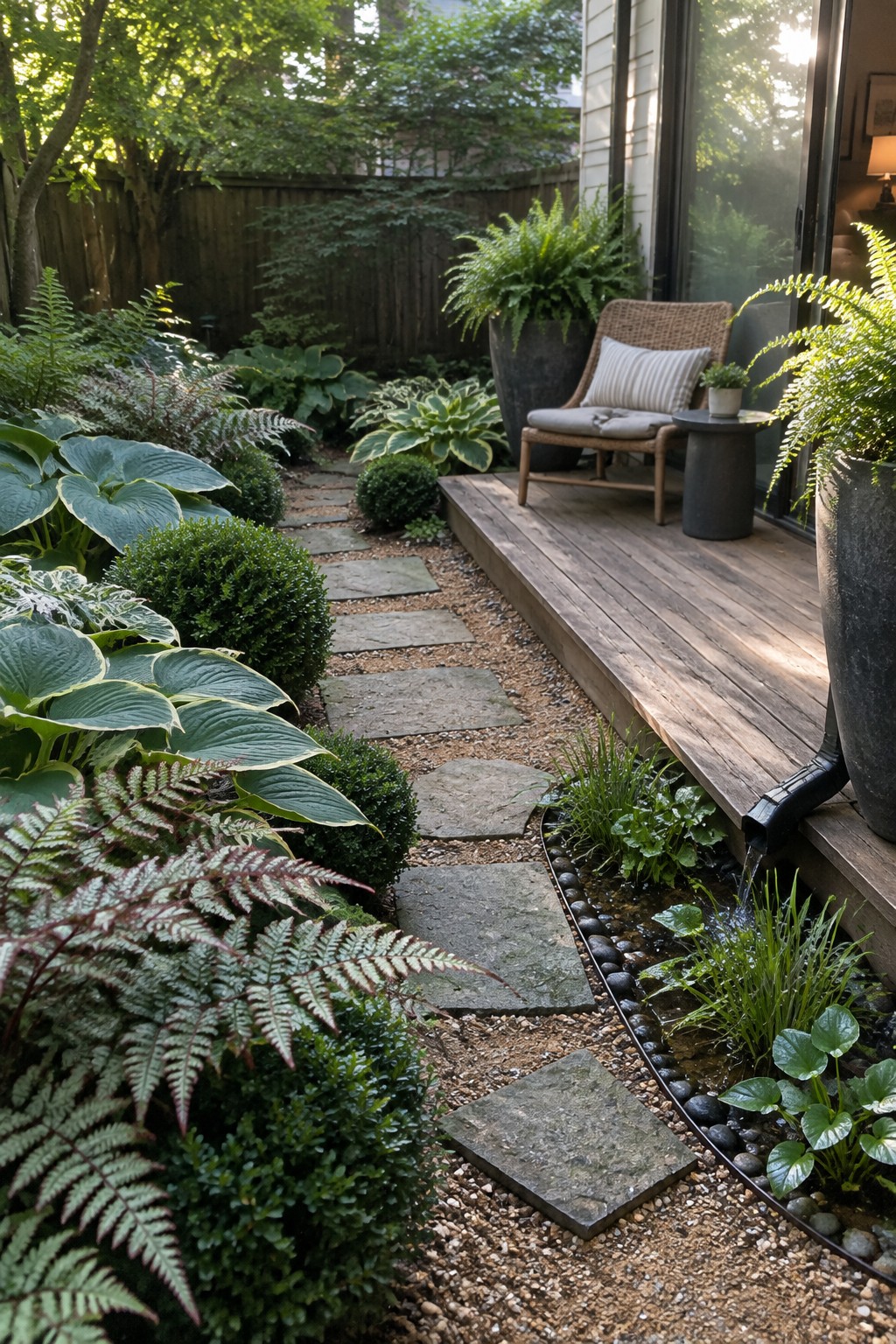
A slim water feature beside a garden path gives a small yard a clear edge and a quieter feel. Here, dark stones and water sit close to the stepping stones, while hostas and ferns help the feature fit into the planting.
This works well in a compact woodland garden where there is room for a narrow channel but not a large pond. Keep the path wide enough to walk comfortably, and choose plants that can handle the moisture nearby.
Add a Narrow Water Channel to a Woodland Garden
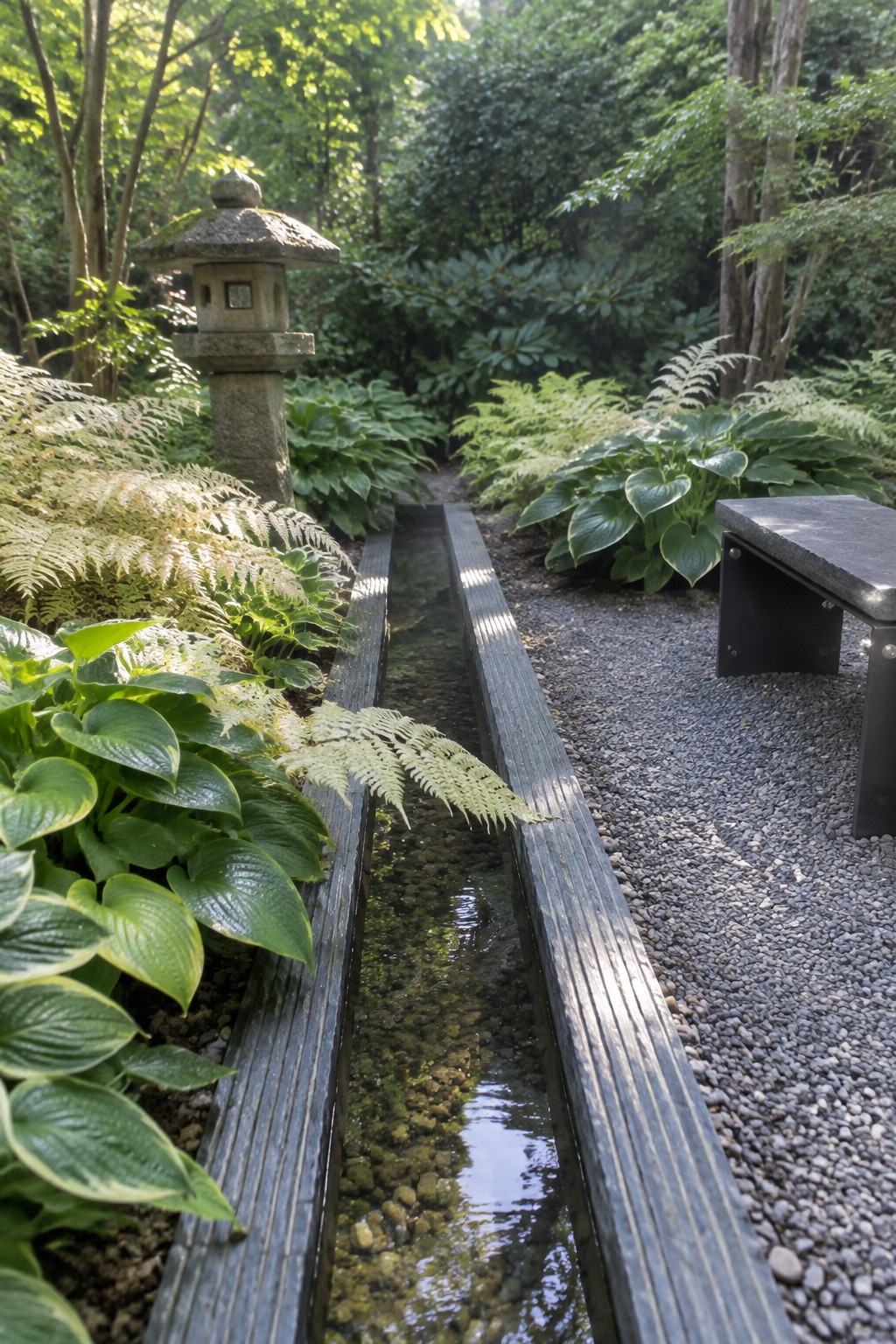
A narrow water channel can give a woodland garden a clear line to follow without taking up much room. Set into the path area, it adds a quiet point of interest while leaving plenty of space for ferns and hostas to grow alongside it.
This idea works well in a shaded garden where a broad pond would feel out of place. Keep the channel simple and shallow, with a sturdy edge, and check that leaves and debris can be cleared easily.
Plant Ferns Along a Curving Garden Path
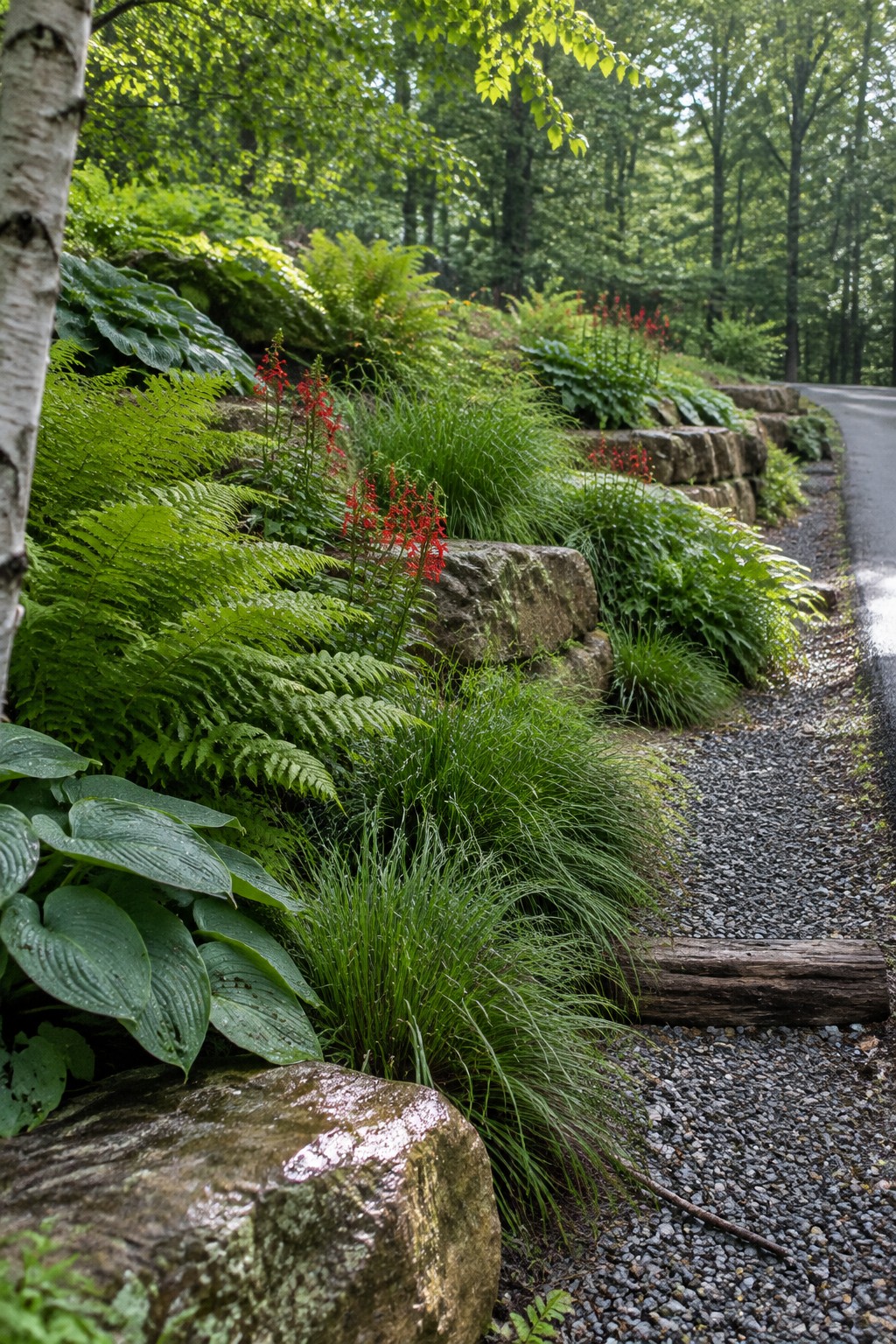
A gently curving path feels more at home in a woodland garden than a straight route. Ferns planted along its edge make the path feel tucked into the garden, while leaving enough open space to walk comfortably.
Use this idea beside a shaded gravel path, especially where the ground slopes or the route bends around a planting bed. Let ferns form the main edge, then add a few flowering plants for color. Keep growth trimmed back so the path stays easy to use.
Use a Curved Planting Border to Shape a Small Patio
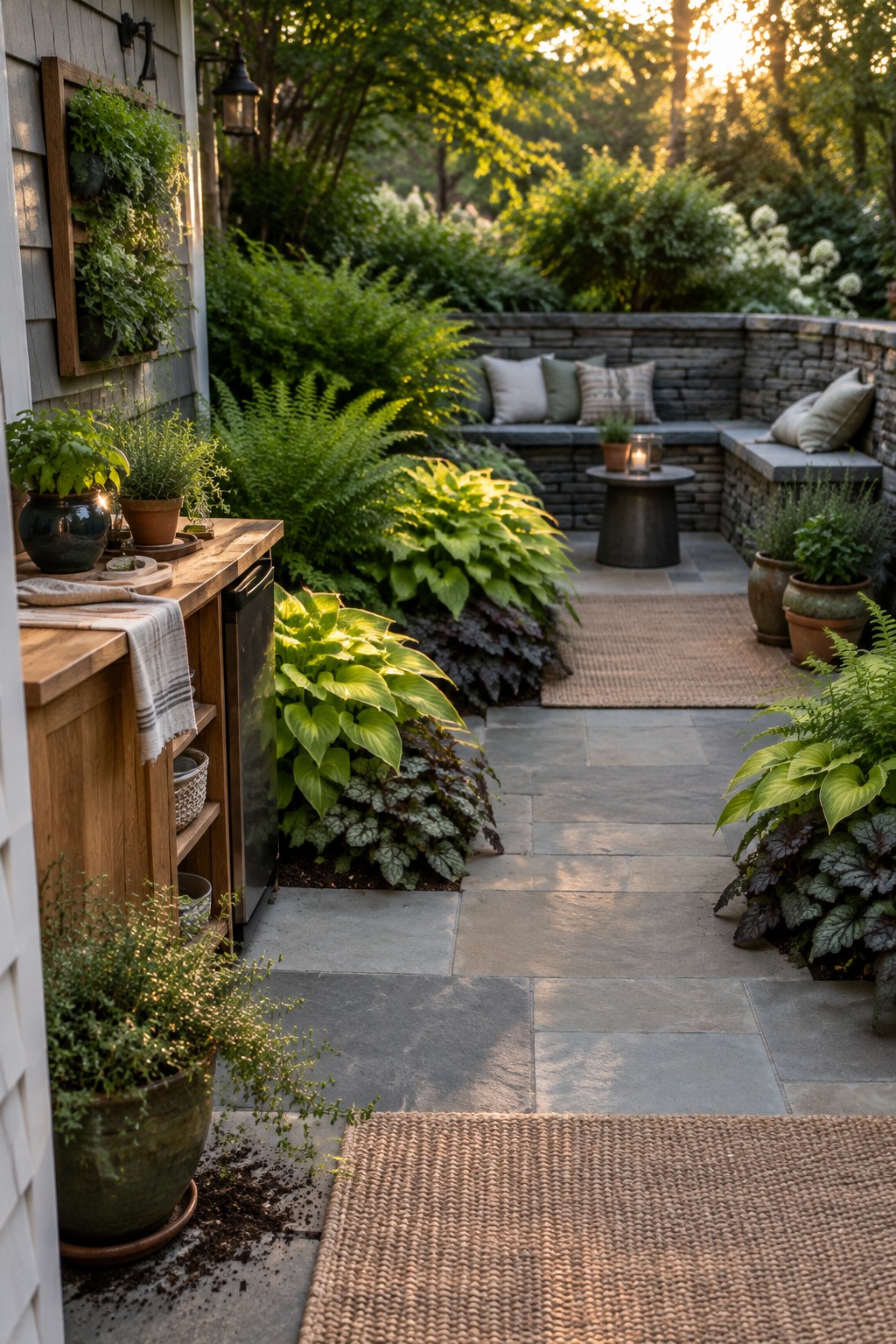
Layered planting along the path gives this compact patio a woodland-garden feel without taking away the seating area. Ferns and broad-leaved plants soften the edge of the paving and help guide the eye toward the stone seating nook.
Use a similar border where a path meets a patio or garden seating area. Keep taller plants toward the back and leave enough room for the path so the greenery does not crowd the walkway.
Create a Shaded Garden Dining Area

A simple dining spot can make a leafy garden more useful without taking away its woodland feel. Here, hostas and ferns grow around a rustic table beneath a timber pergola, so the seating feels tucked into the planting.
Use a small patio or firm stone surface for the table, then plant shade-loving greenery along its edges. Leave enough room to pull chairs out and walk around them, especially if the area sits on a narrow garden path.
Use Timber Risers to Shape a Woodland Garden Path
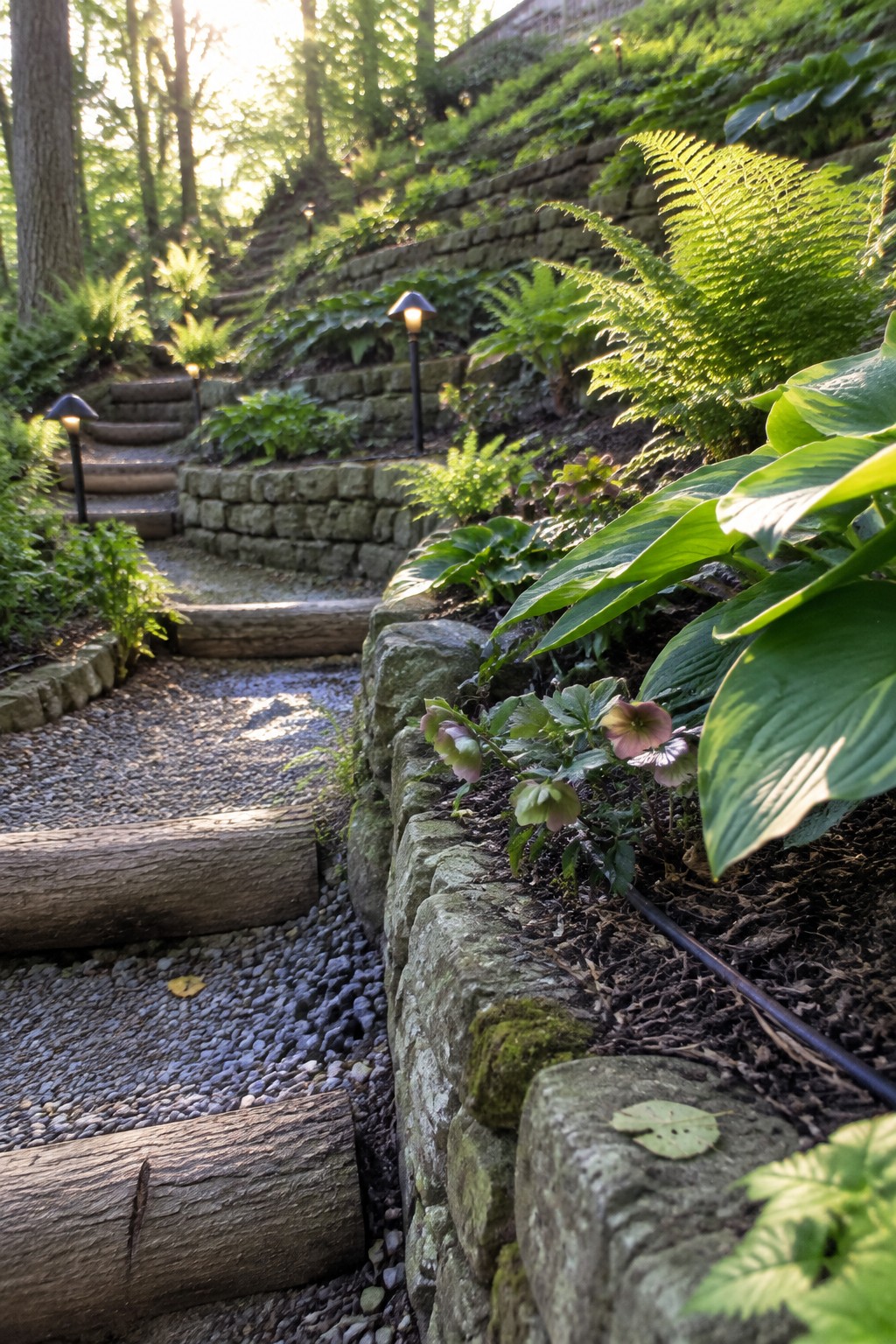
Short timber risers can turn a sloped garden into an easy-to-follow path. Set across a gravel or pebble walkway, they hold the surface in place and give each step a clear edge. Ferns and hostas can grow along the sides without hiding the route.
This approach works well on gentle slopes where a full staircase would feel too formal. Choose durable, rot-resistant timber and secure each riser firmly, especially where water may run downhill. Keep the steps even and wide enough to walk comfortably.
Use a Gravel Path to Divide Woodland Planting

A gravel path can give a leafy garden a clear shape without making it feel too formal. Here, the pale path runs between clipped hedges and broad-leaved hostas, making the planting beds easier to follow and tend.
Use this approach where you want a defined route through a shaded garden. Keep the path wide enough to walk comfortably, and edge it well so gravel stays out of the beds. Ferns and hostas both suit the softer borders alongside it.
Layer Hostas and Ferns Along a Curving Garden Path
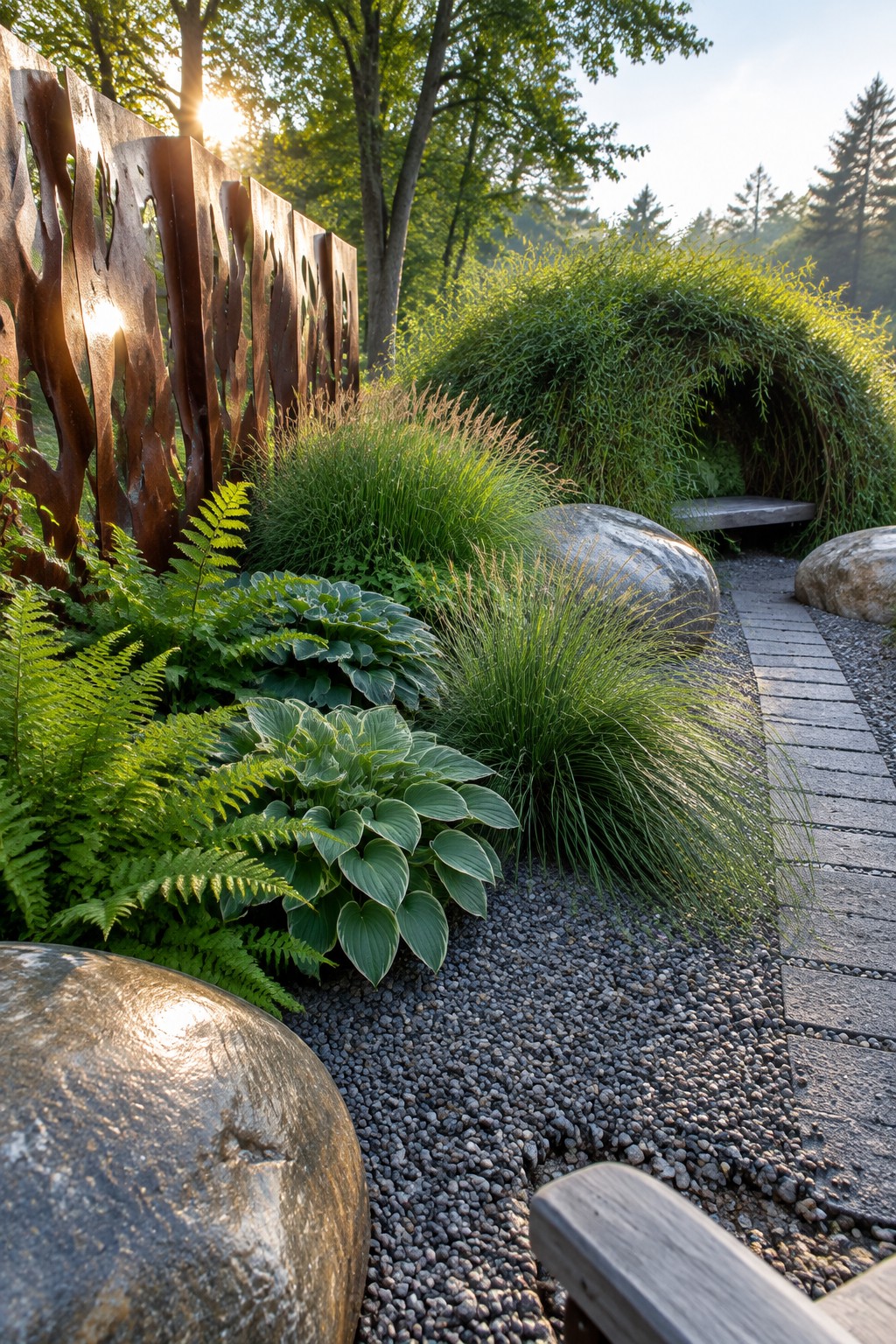
A gently curving path feels more at home in a woodland garden than a straight walkway. Plant hostas and ferns along its edge to make the route feel tucked into the greenery, while leaving enough room for people to walk comfortably.
This approach suits a shaded yard with a gravel or stone path. Let the plants grow in loose groups rather than lining them up evenly, and keep them trimmed back from the walking surface.
Frequently Asked Questions
Q: Can hostas and ferns grow together in the same shady bed?
A: Yes. Both enjoy moist soil and protection from strong afternoon sun. Give each hosta enough room to spread, and tuck ferns between them to add softer texture.
Q: How can I keep slugs from chewing up my hostas?
A: Water in the morning so the soil surface has time to dry by evening, and clear away damp leaves where slugs hide. Check plants regularly and remove any slugs you find before they leave their mark.
Q: What if my garden gets some afternoon sun?
A: Choose hostas with thicker leaves and place them where taller plants or a tree can filter the sun. Most woodland ferns prefer shade, so use them in the more sheltered spots.
Q: Do I need to cut back ferns and hostas in fall?
A: Once frost has damaged the leaves, trim them back and clear away the dead foliage. Leaving a tidy bed helps reduce hiding places for pests.
