

Azaleas can soften the base of a tree, but the planting needs enough room to look natural and keep the roots from feeling crowded.
I like designs that balance the broad canopy with smaller layers of color, foliage, and open ground.
The first thing I notice is whether the bed follows the tree’s shape or looks like an awkward ring cut into the lawn.
Pathways, edging, and plant spacing can help the area feel connected to the rest of the yard as the shrubs grow.
Some of these layouts are easy to adapt, and I’d start by testing the one that fits the tree’s shade and available space.
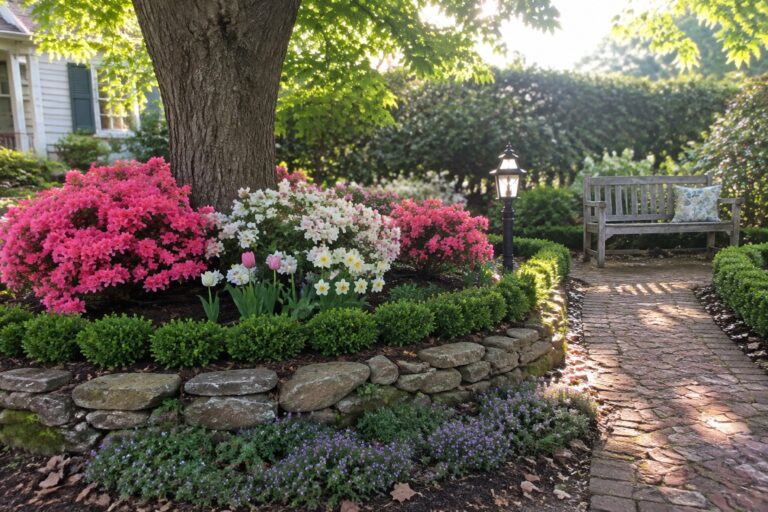
Build A Garden Bed Around A Mature Tree

A layered garden bed is a practical way to make a mature tree part of the planting plan. Azaleas can provide a broad band of color around the trunk, while lower plants and a stone edge help define the bed.
Leave room around the trunk and avoid piling soil or mulch against the bark. This approach suits yards with established shade trees, but choose azalea varieties that match the amount of sun the bed receives.
Create a Gravel Path Around a Tree
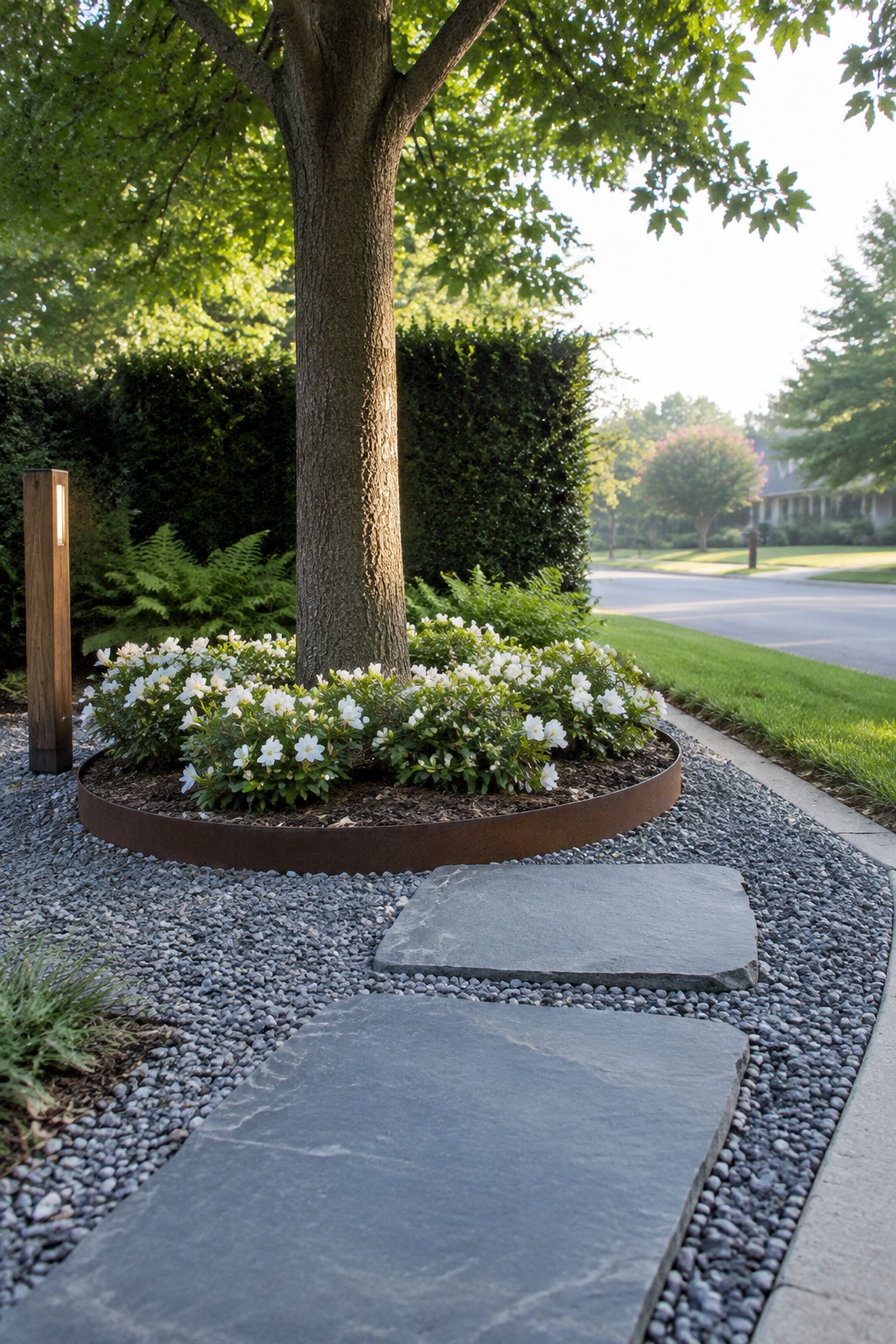
A gravel path can make a tree planting feel like part of the garden rather than an island in the lawn. A simple metal border keeps the bed tidy, while the pale stones make a clear route through the space.
Use broad stepping stones so the path feels comfortable underfoot, and leave enough room around the trunk for the tree to grow. This approach works well in a side yard or front garden, but keep gravel contained so it does not spill onto nearby walks.
Layer Azaleas Around a Tree
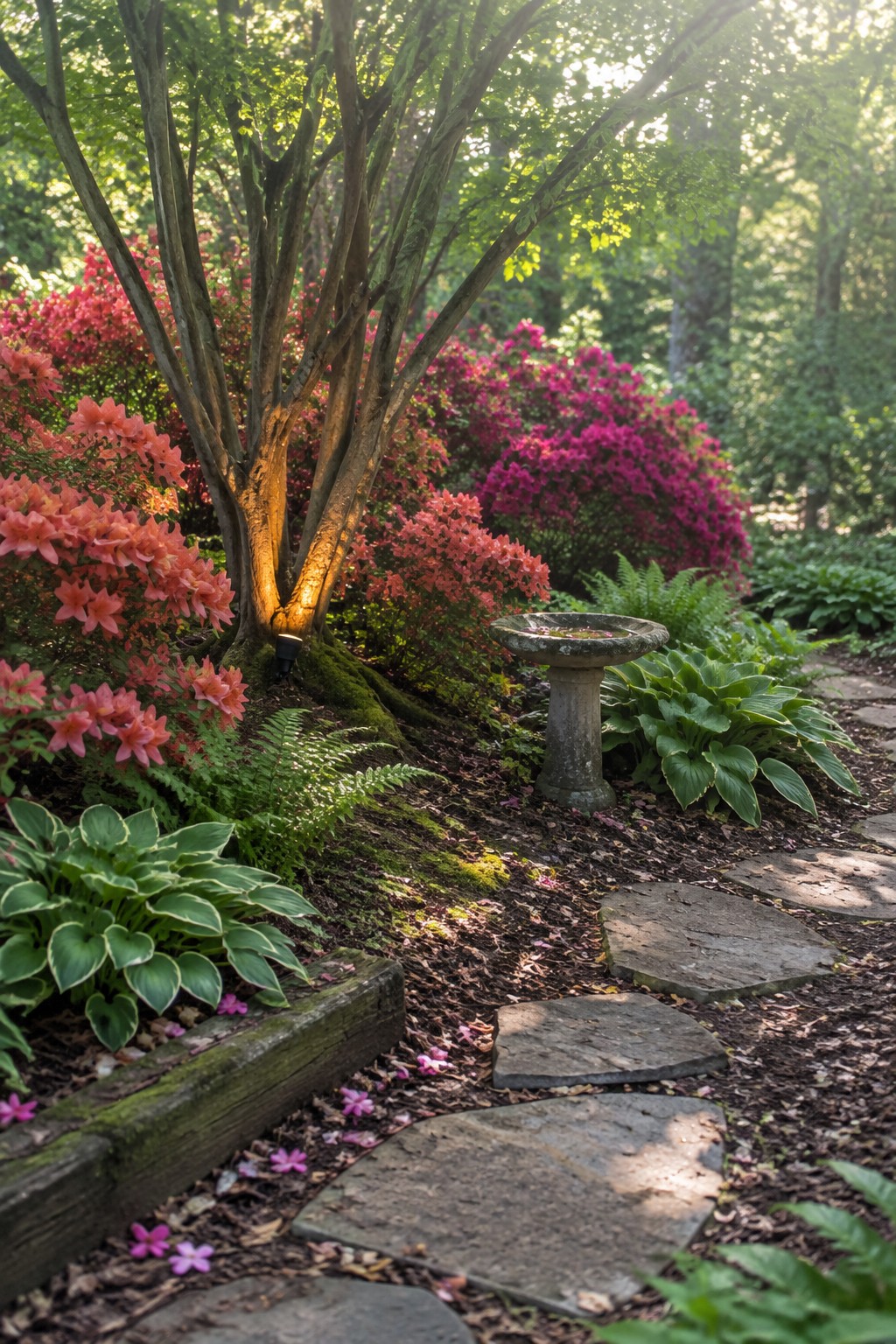
Planting azaleas around a tree is an easy way to give the garden bed a fuller look. The tree provides height, while the flowering shrubs add a broad band of color below it.
Leave room around the trunk and choose azaleas suited to the light under your tree. A few low plants near the front edge can help the bed blend into the rest of the garden without crowding the path.
Shape Azalea Beds Around a Mature Tree
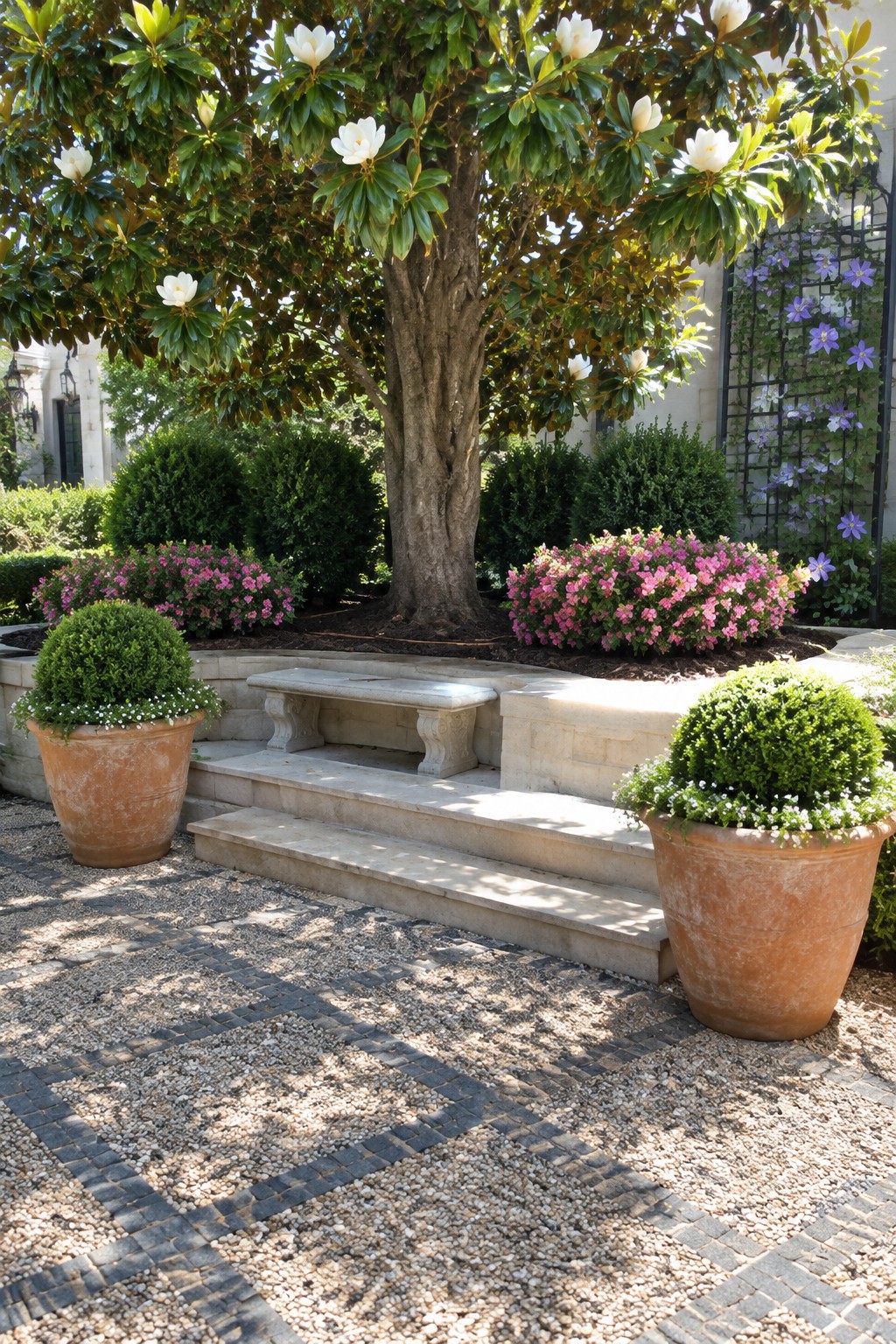
Planting azaleas in broad, curved beds around a mature tree gives the garden a clear center without crowding the trunk. The flowers add a band of color, while the tree’s canopy provides a natural backdrop.
Leave open space around the trunk and check how much shade the tree casts before choosing azaleas, since their light needs vary by variety. A low stone edge can help define the bed, but keep it simple so the plants remain the focus.
Use Stone Terraces to Shape Azalea Beds
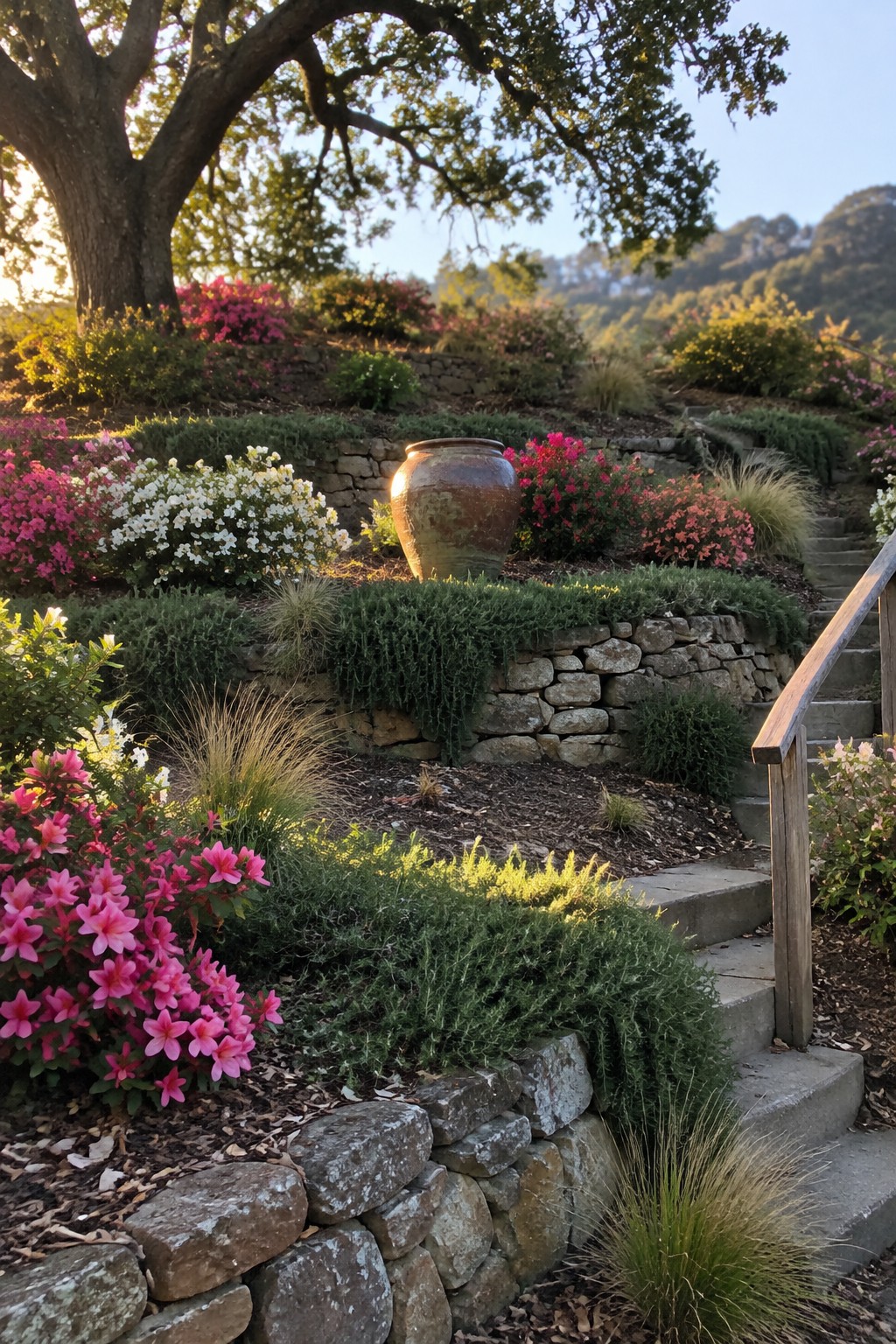
Terraced garden beds are a practical way to plant azaleas on a slope. Low stone retaining walls hold the soil in place and give the flowers clear, level areas to grow.
Use this approach where a sloping yard makes planting difficult, and let steps connect the different levels. Keep the walls low enough that the plants remain easy to reach for pruning and care.
Add a Circular Bench Around a Tree
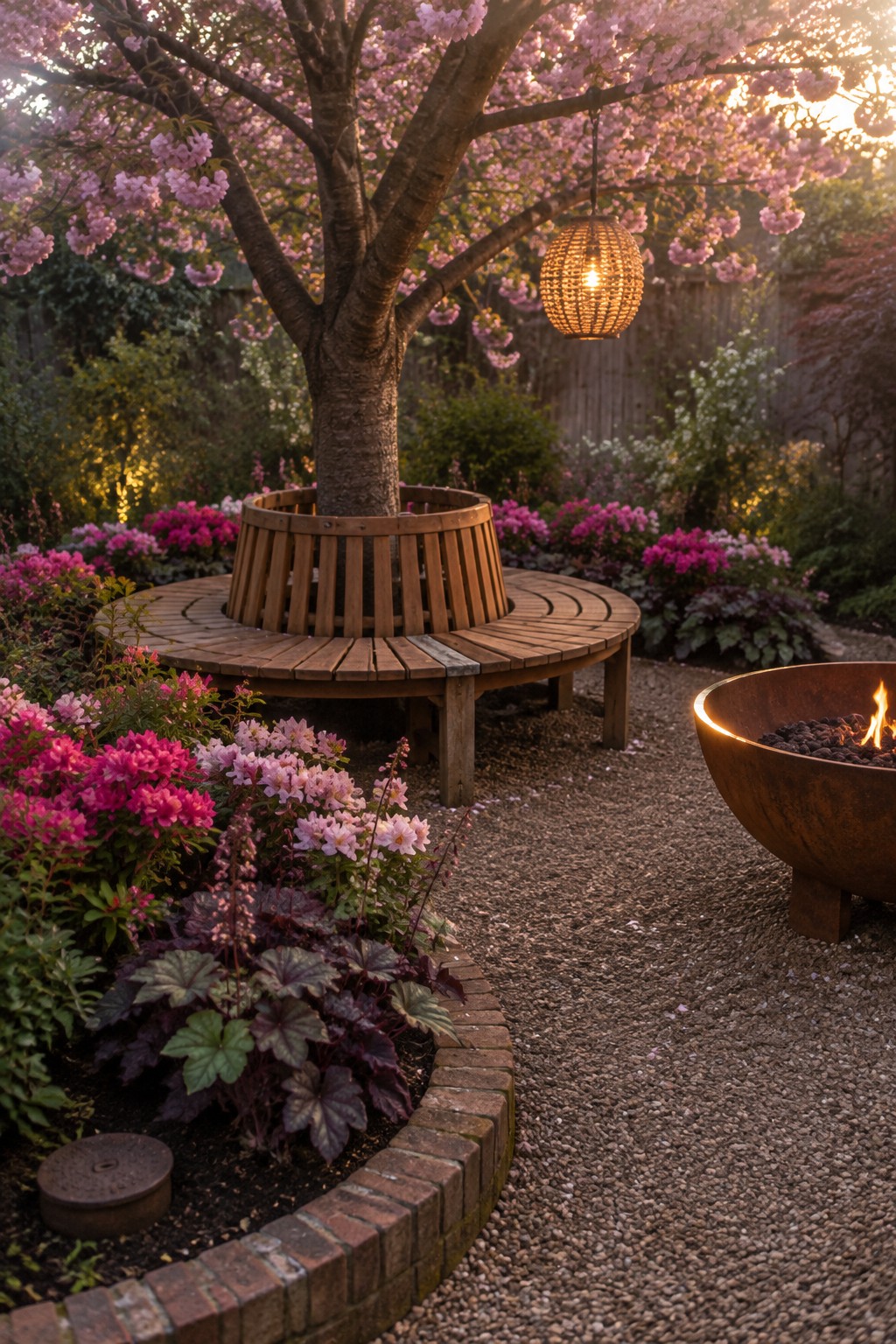
A built-in bench around a mature tree gives the garden a useful place to sit while making the tree part of the garden layout. The circular shape also gives nearby azaleas a clear edge, so the planting feels organized rather than scattered.
This works best where there is enough room to walk around the seat and where the tree has space for healthy roots. Leave a generous opening around the trunk, and avoid digging or compacting soil close to it when building the bench.
Use a Seating Area as Part of the Garden
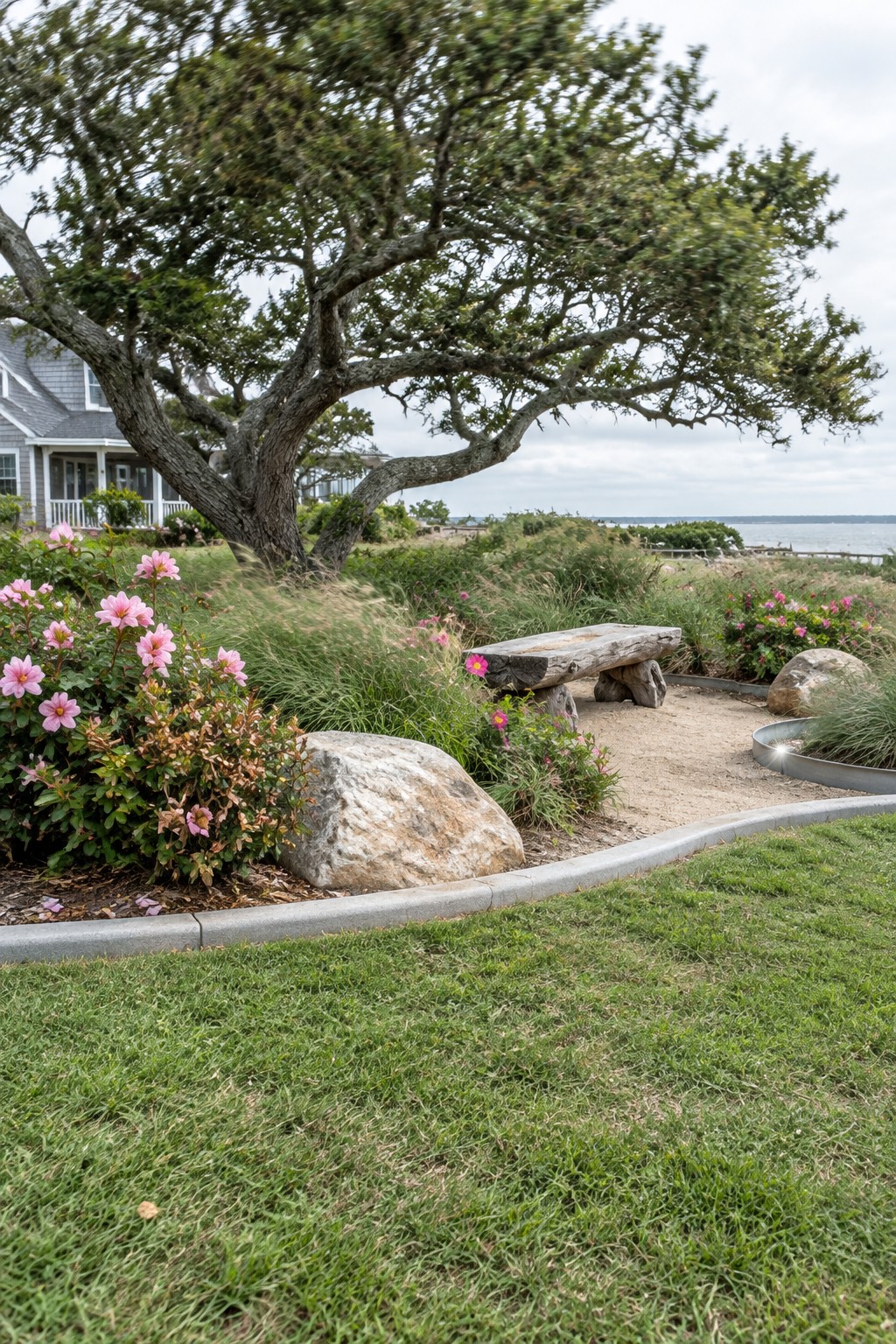
A small seating spot can make a garden bed around a tree more useful without taking attention away from the planting. Here, a simple stone bench sits within the garden, while pink azaleas and grasses grow nearby.
Leave enough open space around the seat to walk comfortably, and keep plants low near the path. This approach works well in a spacious yard where a mature tree already provides shade.
Add a Stone Path Through the Azalea Garden
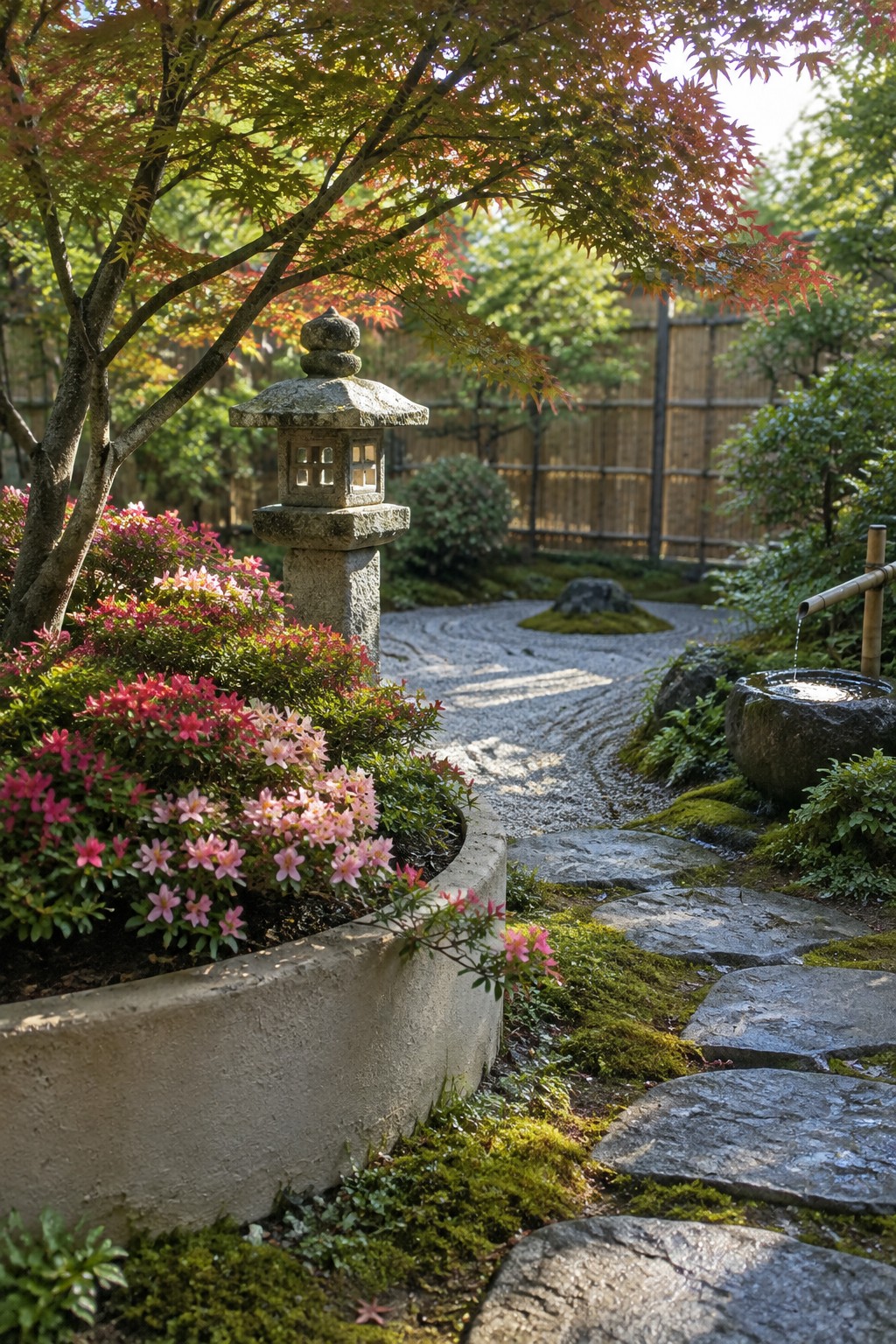
A stone path can make an azalea garden easier to enjoy without taking attention away from the plants. The irregular stepping stones here give the garden a clear route while keeping the planting beds natural in shape.
Use this approach where you want to walk through a garden without cutting across moss or flower beds. Set the stones firmly and leave enough room between them for a comfortable stride, especially if the path gets regular use.
Line a Garden Path With Azaleas
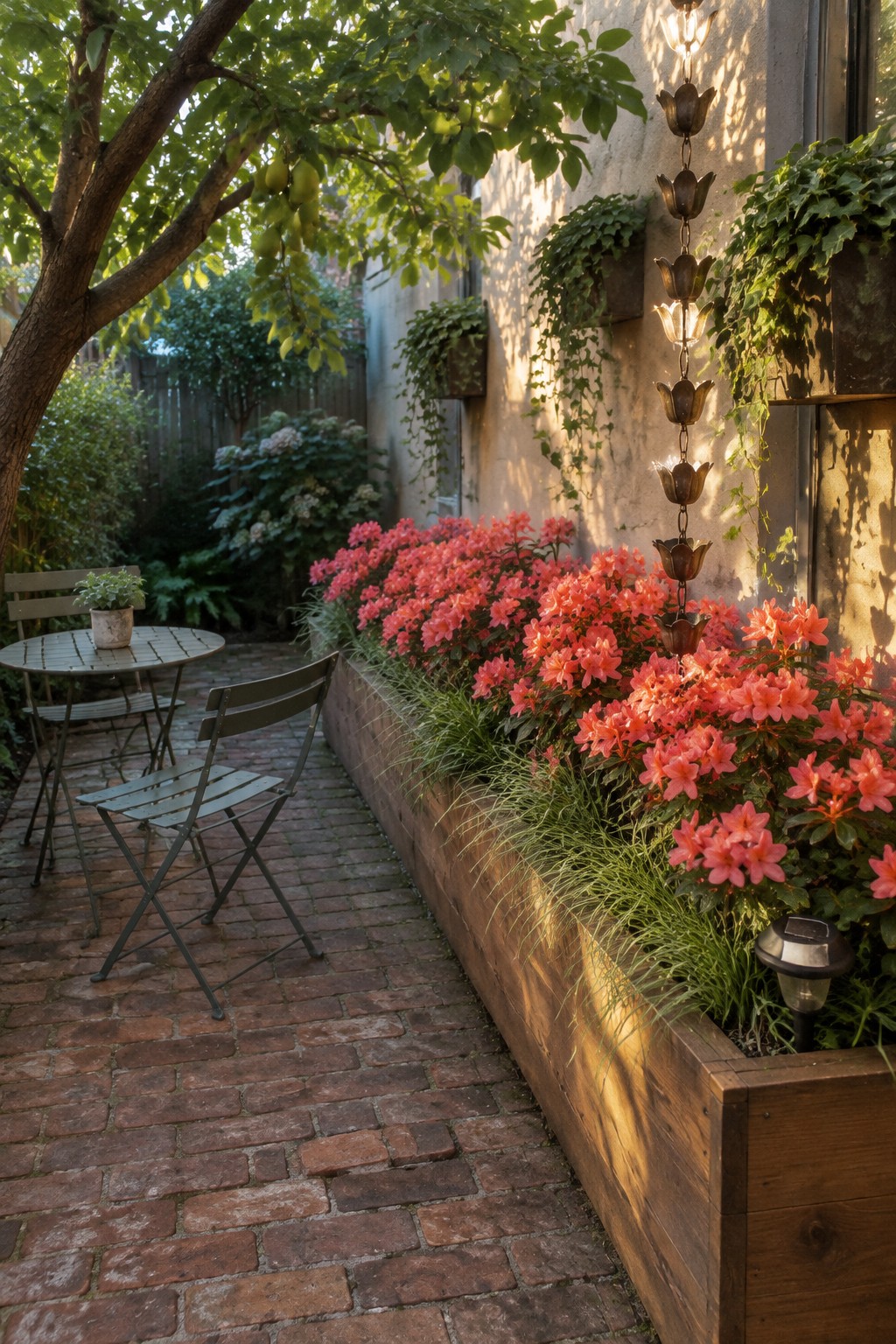
Azaleas can make a narrow garden path feel like part of the planting rather than just a way through the yard. A long bed of flowers along one side gives the walkway a clear edge and brings color close to the route people use most.
This works well beside a brick path or along a fence where there is room for a continuous bed. Leave enough space for the plants to spread without crowding the walkway, and check that the spot suits azaleas’ light and soil needs.
Edge Azalea Beds With A Curved Pool Border
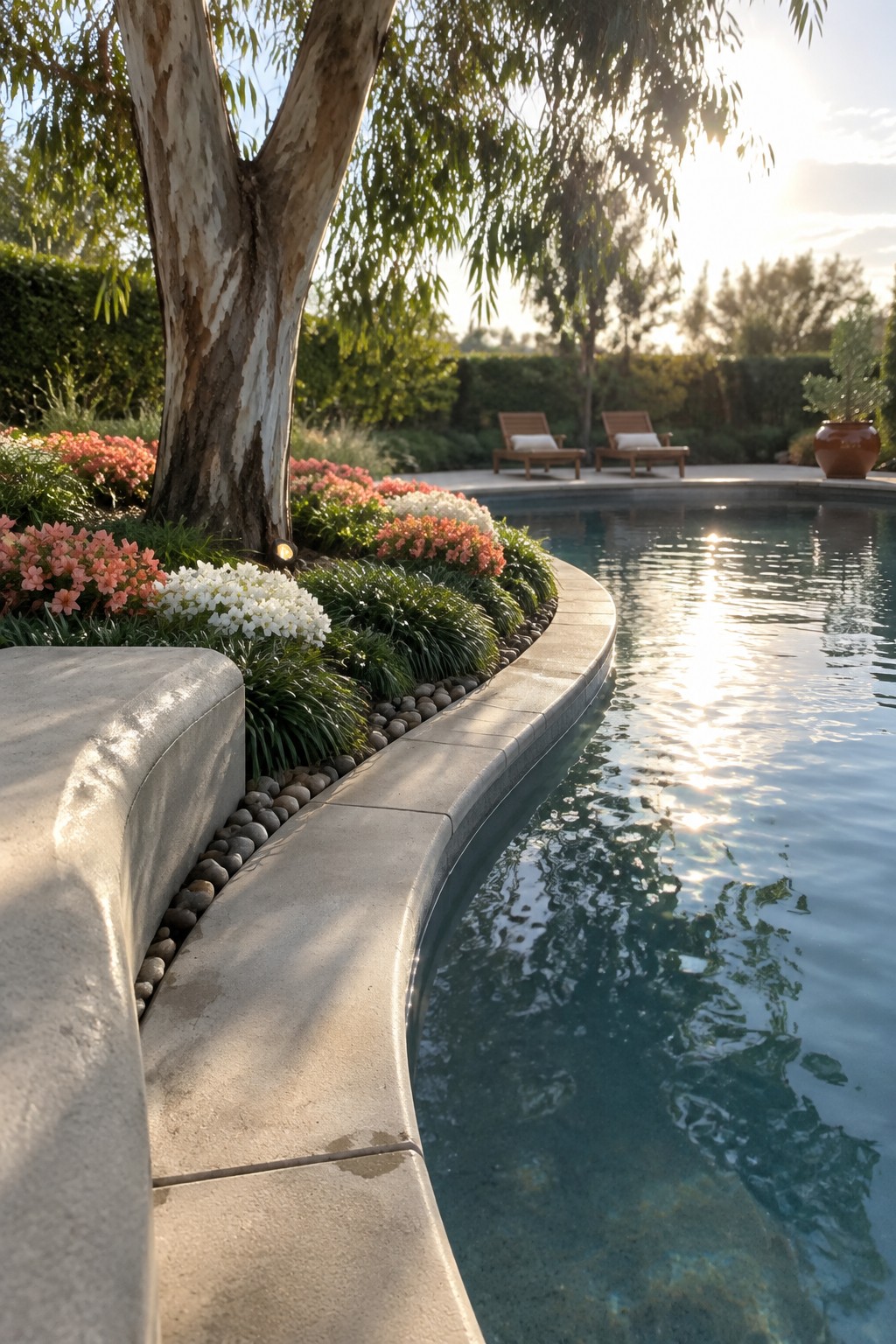
A curved stone edge can give an azalea bed a clear shape beside a pool or patio. The smooth line separates the planting from the water while letting the flowers follow the garden’s natural contours.
Use low azaleas along the edge so they do not block views or crowd the walkway. Leave room for mature plants to spread, and choose a border material that can handle regular splashing.
Make a Curved Path Through Azalea Beds
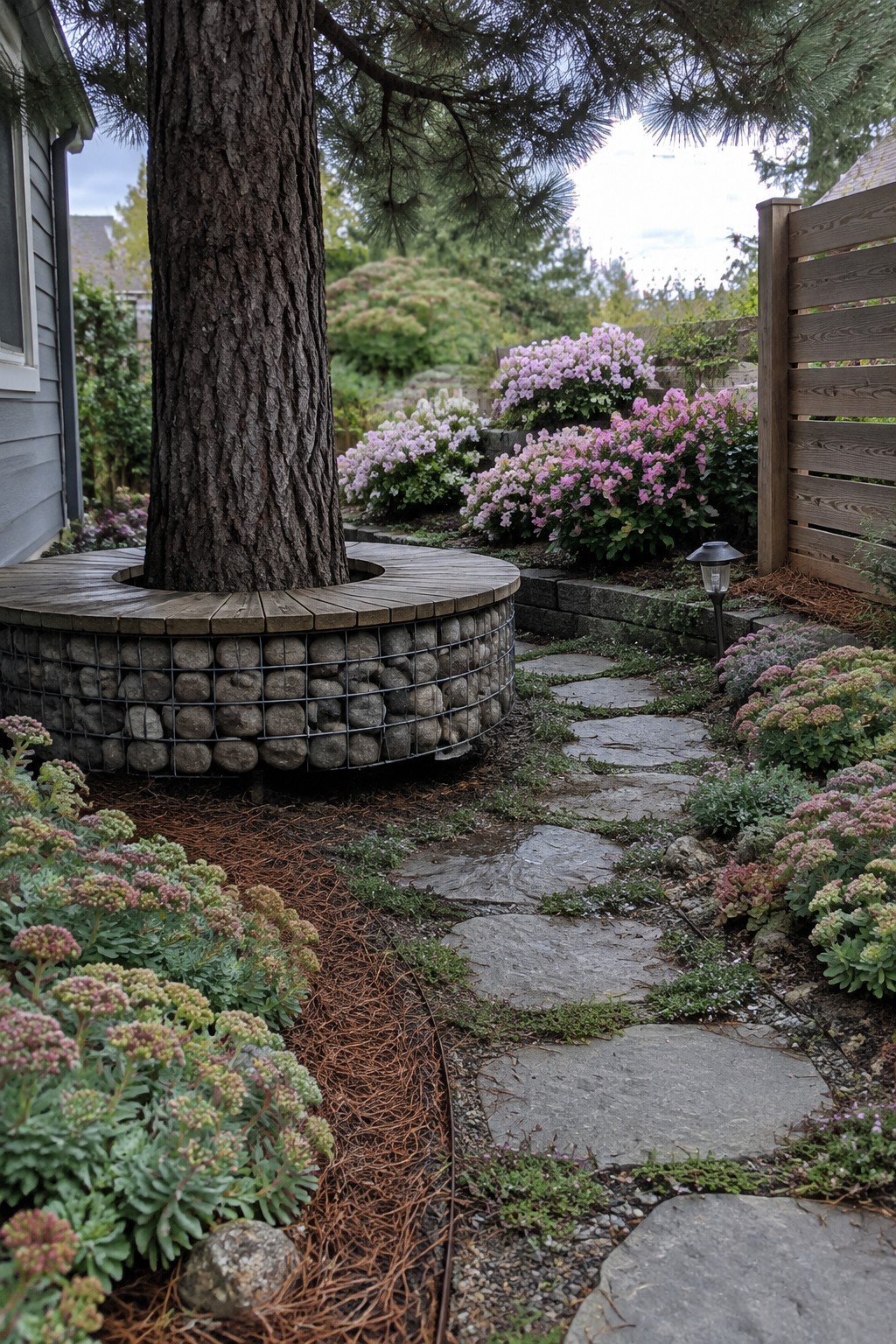
A gently curving stone path lets you move through an azalea garden without cutting across the planting beds. The bends also make a small garden feel less like a straight route from one end to the other.
Use broad, stable stepping stones and leave enough room beside them for plants to spread. This layout works well in a tucked-away garden, but keep the path easy to walk on and clear of low branches.
Create a Flower Bed Along a Garden Path
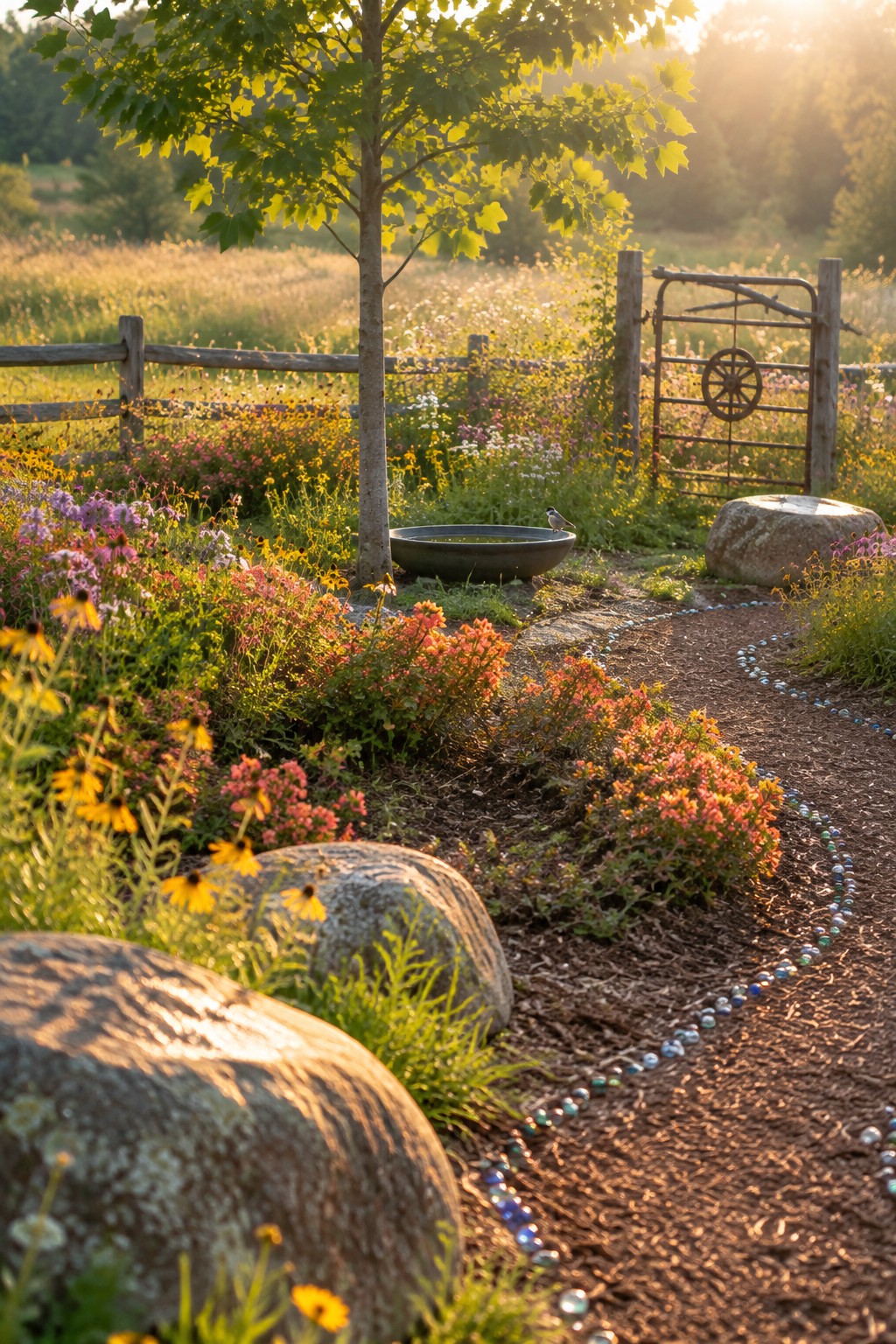
A curving path can make an azalea garden easier to explore and give the planting bed a clear shape. Planting flowers along its edges keeps the route connected to the garden rather than cutting through it.
For a similar look, let the path bend gently around existing trees or large rocks, and leave enough room for azaleas to spread without crowding the walkway. A mulch surface is practical and easy to adjust as the garden grows.
Use Curved Edging To Shape Azalea Beds
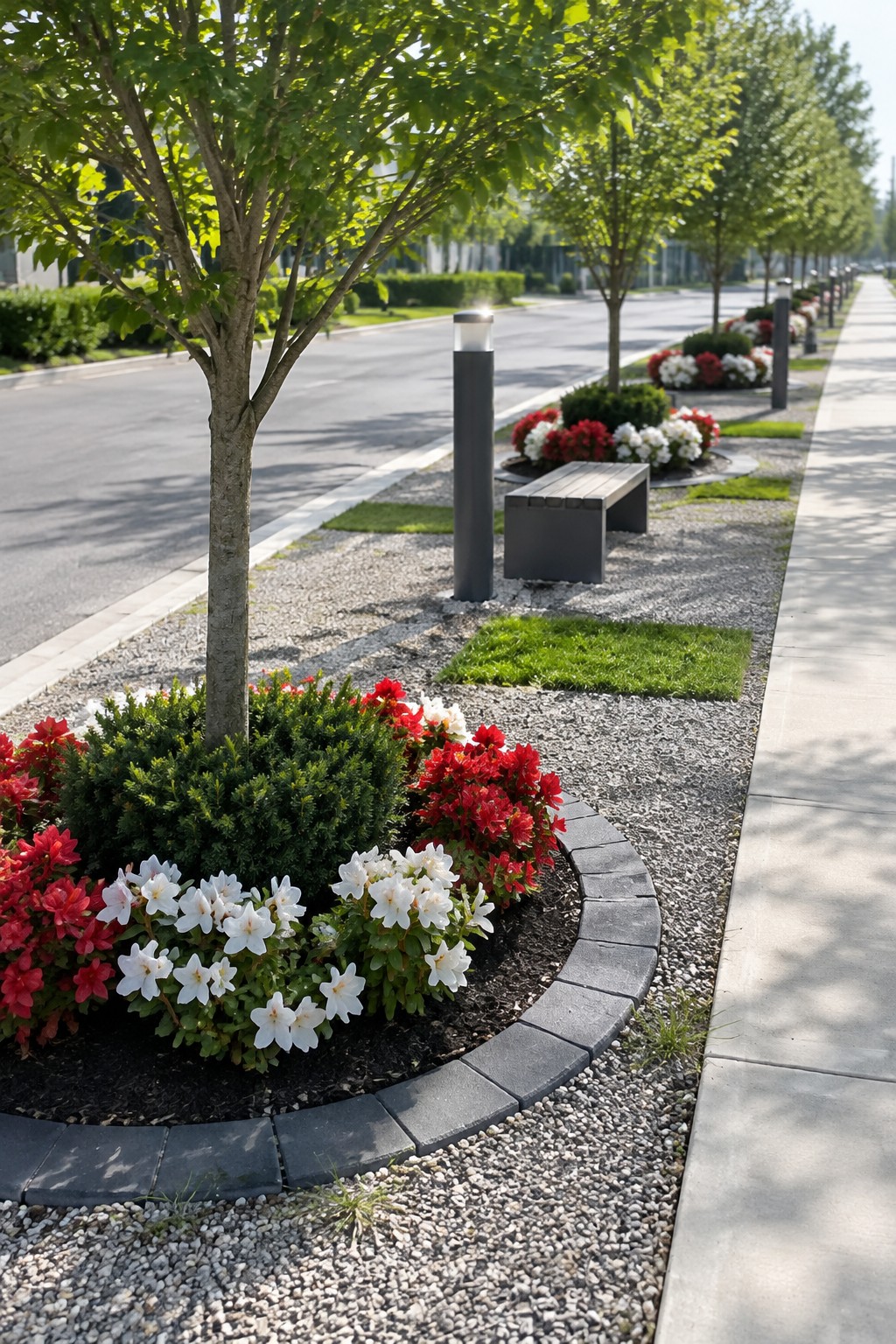
A curved border gives an azalea bed a clear shape while letting it follow the natural line of a tree. Here, dark stone edging separates the flowers and shrubs from the surrounding gravel, making the planting area look tidy without making it feel too formal.
This approach works well along sidewalks or in narrow planting strips where a straight bed might feel stiff. Choose edging that sits low enough to keep the plants in view, and leave room for azaleas to spread as they grow.
Use Stone Steps to Connect Garden Levels
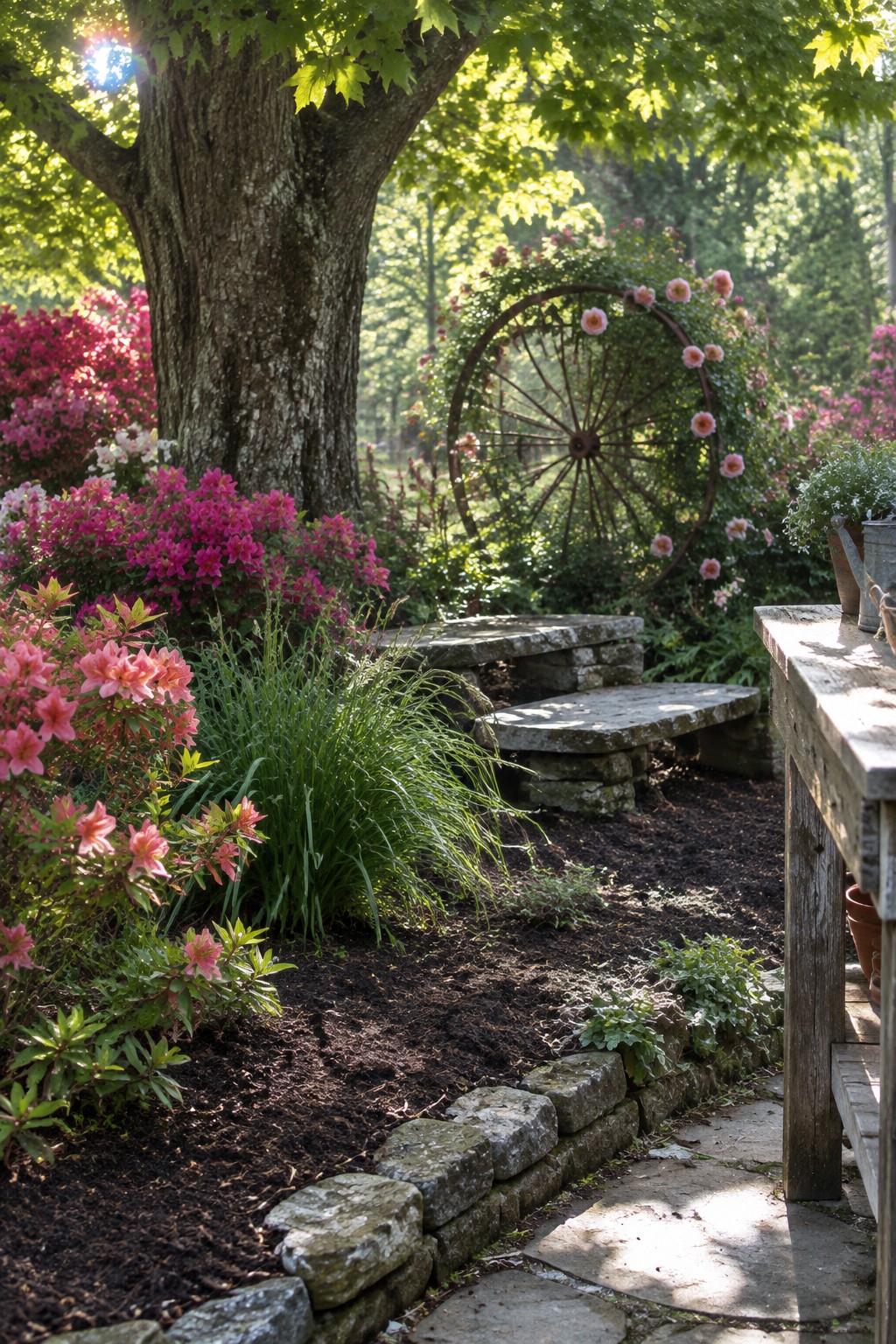
Stone steps can make a sloped azalea bed easier to move through without taking away its garden feel. Here, broad stone treads sit among the planting and give the path a clear route through the space.
For a similar garden, use a few sturdy slabs where the slope changes most, and leave enough room for comfortable footing. Low stone edging can help hold the soil in place, but keep steps level and stable, especially where fallen leaves may make them slippery.
Use Raised Planters to Define a Rooftop Garden
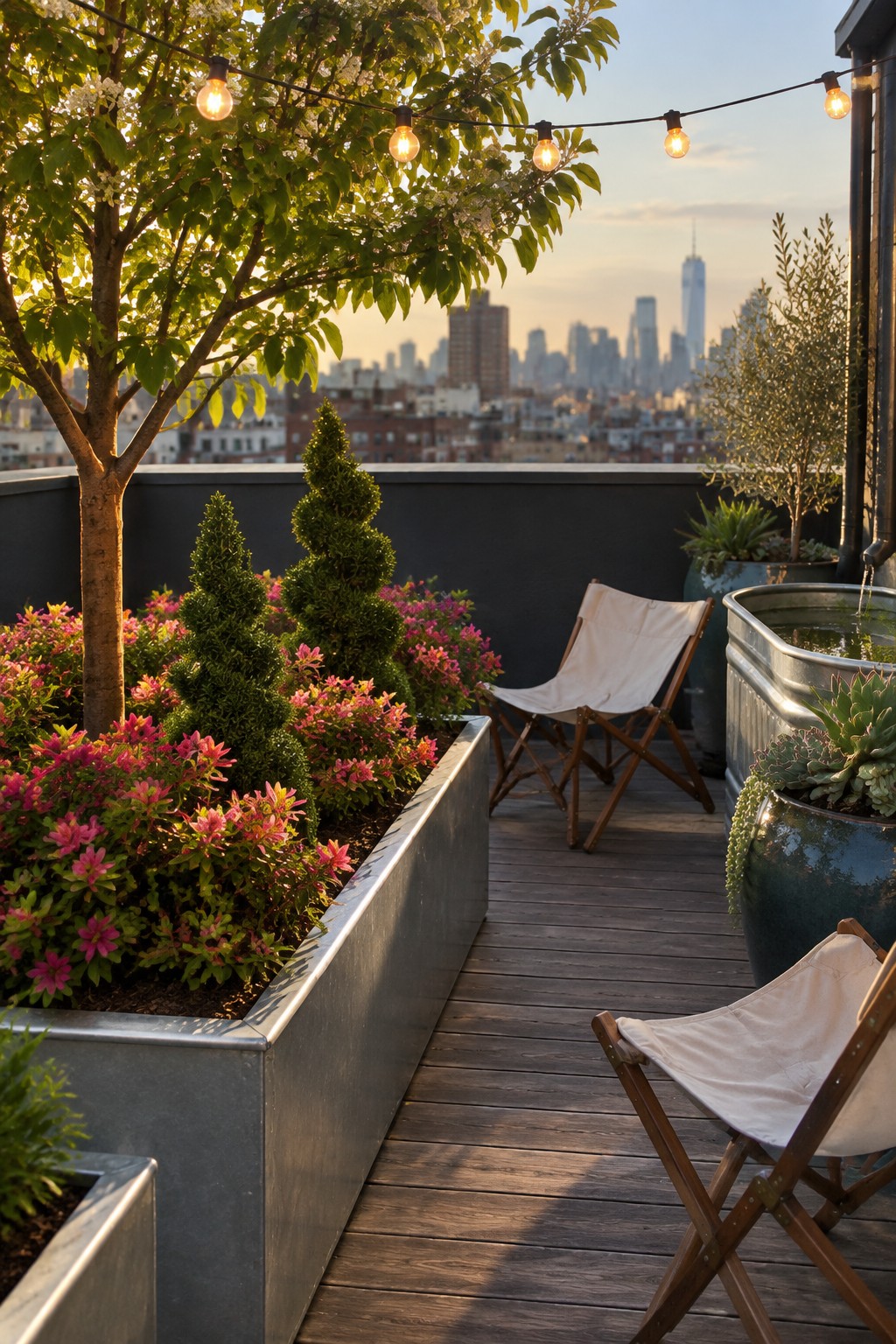
Raised planters make it easier to organize a rooftop garden and keep flowering shrubs in clear beds. Here, a long metal planter holds azaleas around a small tree, leaving a separate walkway and seating area.
This approach suits a deck or terrace where planting directly in the ground is not an option. Choose planters with good drainage and enough room for azalea roots, and check that the roof can support the filled containers.
Let Azaleas Follow a Curved Garden Edge

Azaleas look at home in a curved bed around a mature tree. The rounded edge gives the planting a clear shape while leaving room for the tree’s trunk and roots.
Use a low, gently curving border to keep the bed tidy, and plant azaleas in loose clusters rather than a straight row. Check how much shade the tree casts and choose azalea varieties suited to those conditions.
Frequently Asked Questions
Q: Can azaleas grow under a tree with lots of shade?
A: Yes, many azaleas do well in partial shade, especially under trees with high, open branches. If the spot stays dark all day, choose a shade-tolerant variety and expect fewer blooms.
Q: How far from the tree trunk should I plant azaleas?
A: Keep them out from the trunk and avoid piling soil over the tree’s roots. Plant where the azaleas have room to spread, and leave a clear ring around the trunk for airflow and easy watering.
Q: Will the tree roots steal water from my azaleas?
A: They can, especially in dry weather. Water the azaleas slowly at the base when the soil feels dry, and add a light layer of mulch to help hold moisture without touching the stems.
Q: What kind of soil do azaleas need around trees?
A: Azaleas prefer loose, well-drained, acidic soil. Rather than digging deeply among tree roots, improve the planting area gently with suitable soil and avoid covering exposed roots.
