

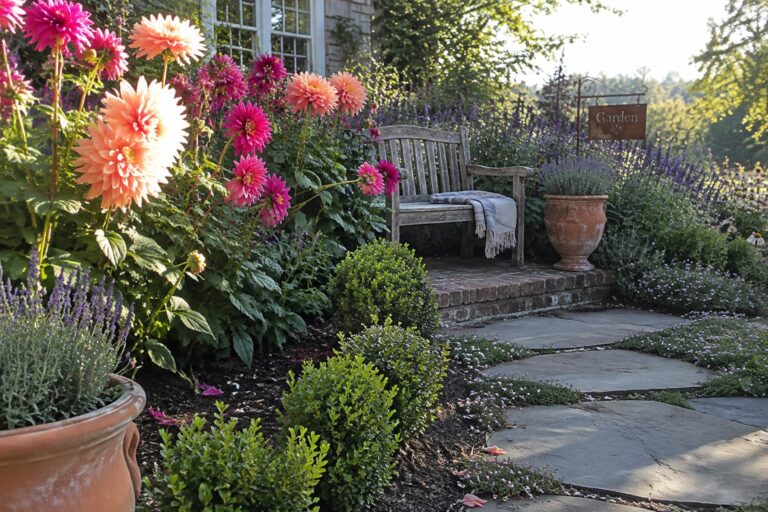
Dahlias can bring strong color to a summer garden, but their impact depends on how they sit among paths, borders, and neighboring plants.
I find that a clear planting structure helps bold blooms feel connected to the yard rather than scattered through it.
Height, spacing, and foliage all shape how a dahlia bed looks as it fills in over the season, so it helps to think beyond the flowers alone.
Some combinations are worth testing in a small border first, especially when you want color without crowding walkways or hiding other plants.
A little planning makes the display easier to enjoy all summer.
Use Dahlias to Build a Layered Garden Bed
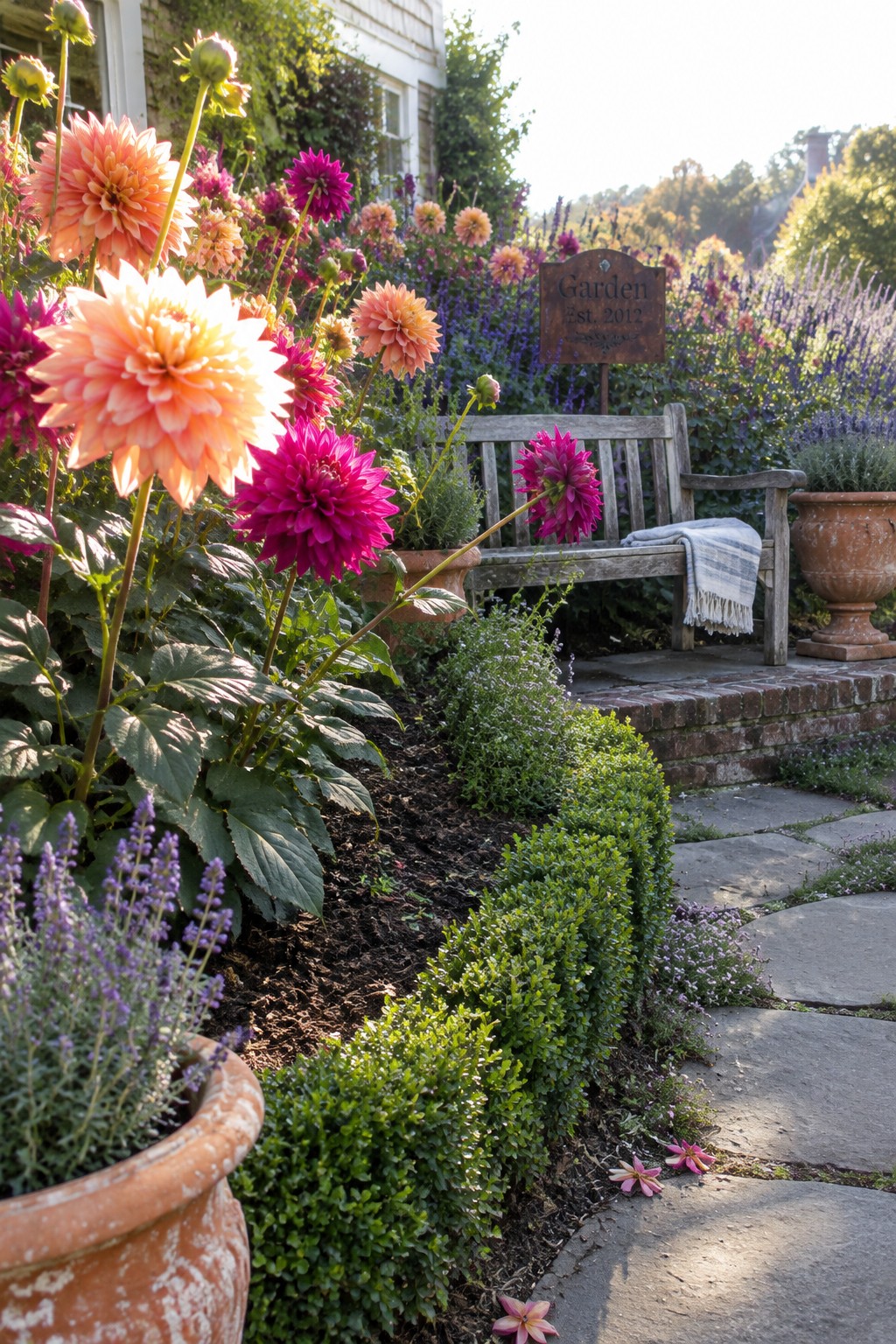
Dahlias make a garden bed feel full of color without needing a complicated planting plan. Their large blooms stand out above lower flowers and leafy plants, giving the bed a natural sense of height and variety.
Plant taller dahlias toward the back or middle of a border, then use shorter flowers along the edge. A stone path beside the bed makes it easier to reach the plants for watering and deadheading. Choose a sunny spot, and leave enough room for mature dahlias to spread.
Use a Gravel Path to Lead Through a Dahlia Garden
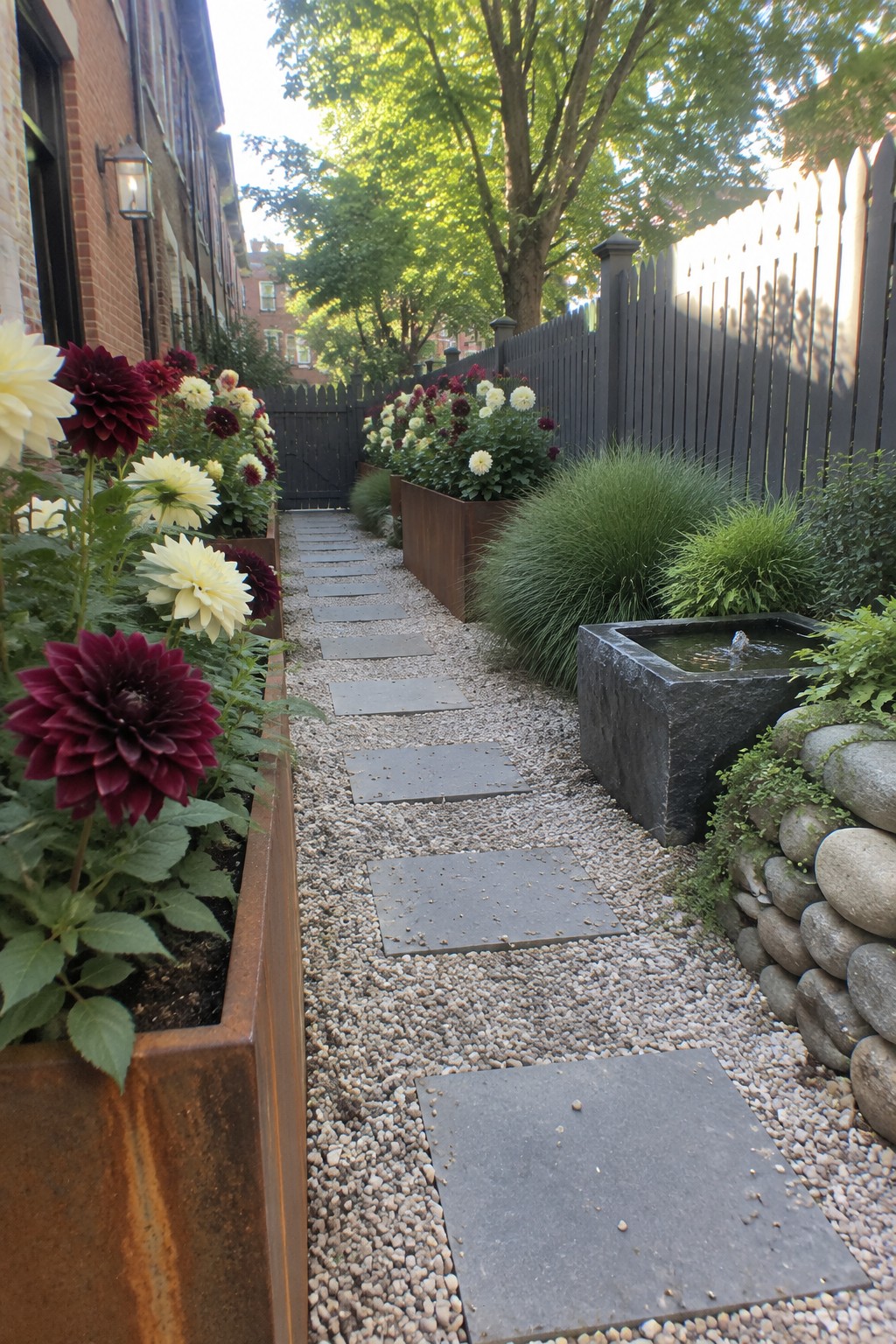
A gravel path makes it easy to move through a flower bed without stepping on the plants. Set flat pavers into the gravel for a steady walking surface, while dahlias along the edges bring color close to the route.
This approach suits a narrow side yard or any garden where a clear path needs to fit between planting beds. Leave enough space around each paver for comfortable steps, and choose gravel that stays put underfoot.
Plant Dahlias Along a Garden Path

Dahlias make a garden path feel colorful and full without needing a formal layout. Planting them in raised beds on either side lets their blooms spill toward the stepping stones and gives the route a clear, cheerful edge.
Give dahlias enough room to grow, and leave a comfortable width for walking and tending the beds. This approach works well in a sunny backyard, especially when you mix a few dahlia colors with other flowers rather than crowding the path.
Use Dahlias to Add Bold Color Along a Garden Path

Dark dahlias make a strong seasonal accent in a layered planting bed. Their deep blooms stand out against silvery foliage, so you can use just a few plants to give a path more color without filling the whole bed with flowers.
Plant dahlias toward the middle or back of a border, with lower foliage near the path edge. They suit a sunny walkway where you can reach the plants easily for watering and deadheading. Keep the surrounding plants simple so the blooms have room to show.
Add Dahlias to a Stepped Stone Garden
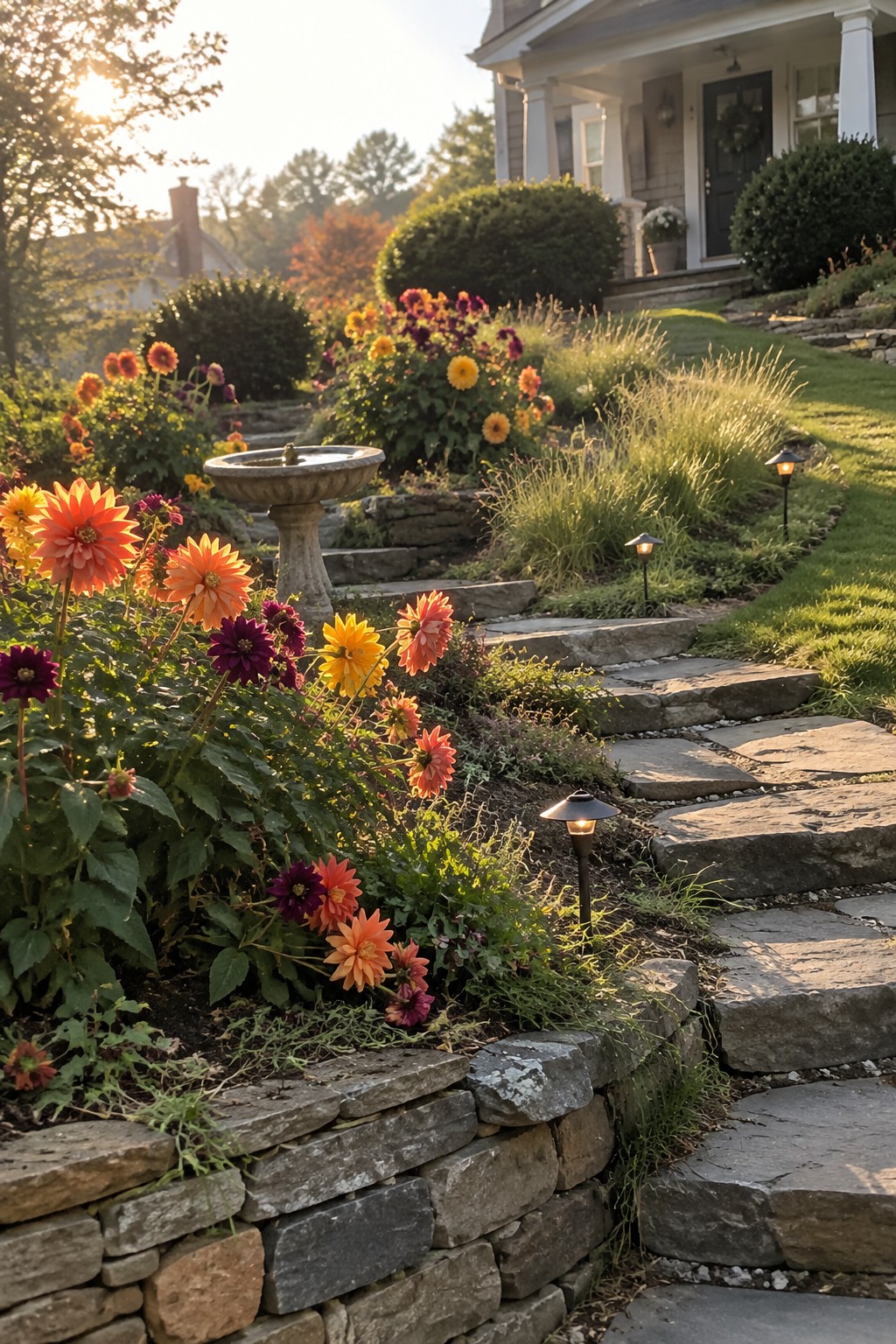
Dahlias bring strong seasonal color to a sloped garden, especially when they grow along a stone path. The flowers make the route feel connected to the planting beds rather than separate from them.
Plant dahlias in loose groups beside the steps, leaving enough room for their foliage and mature blooms. A stone retaining wall can help define the bed, but keep plants clear of the walking surface so the path stays easy to use.
Add Dahlias to a Formal Garden Border

Dahlias can bring lively seasonal color to a garden with a more formal layout. Their bright blooms stand out against clipped shrubs and tidy edges, so the planting feels organized without looking plain.
Use them in a defined bed beside a path or near a seating area where the flowers can be enjoyed up close. Give the plants enough room to grow, and leave a clear route through the garden so the border stays easy to maintain.
Plant a Round Dahlia Bed in the Patio
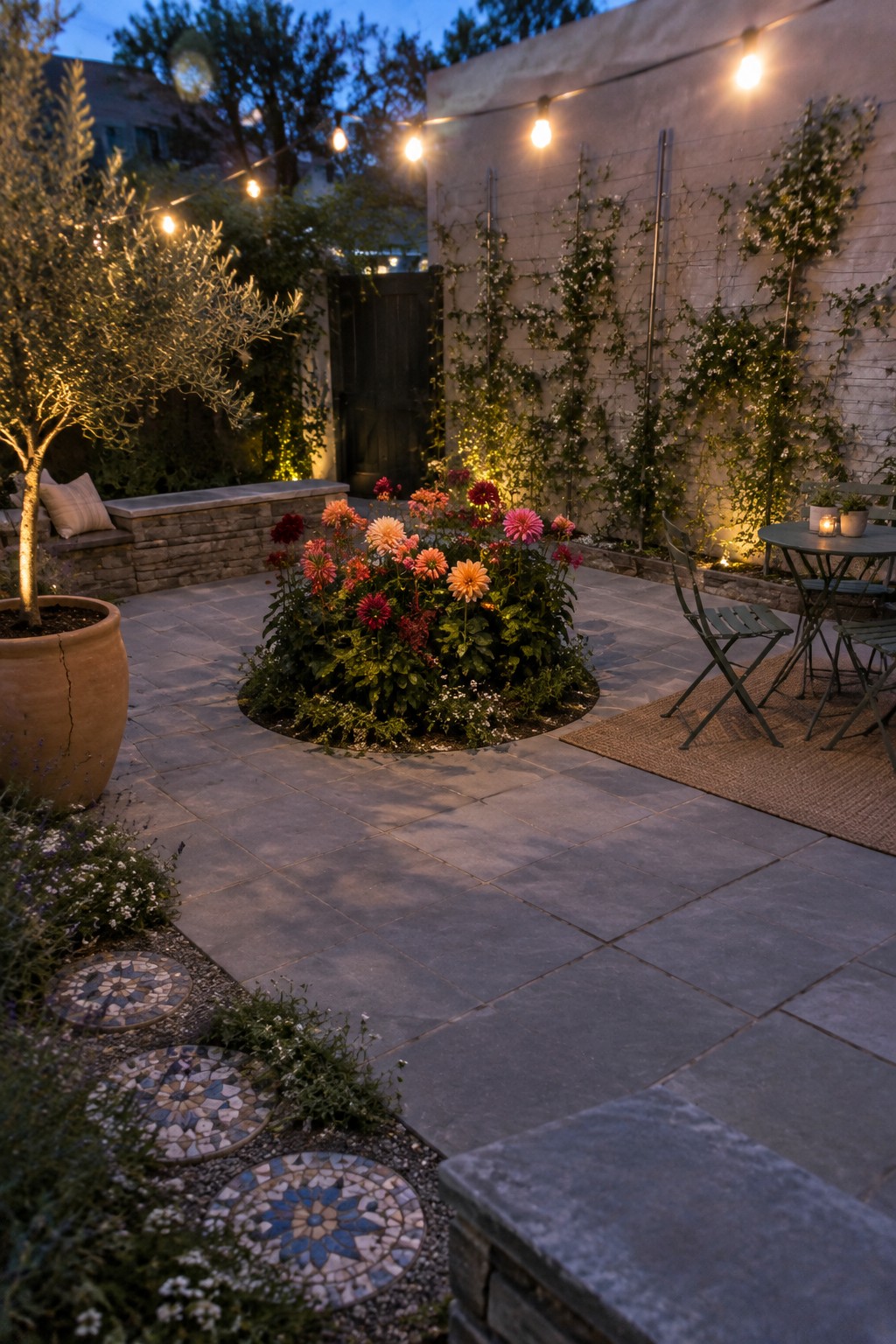
A small, rounded flower bed can bring dahlias into a paved garden without taking over the whole space. The circular shape gives the flowers room to stand out, and the mix of blooms makes a strong patch of seasonal color.
This works well in a courtyard or compact patio where there is room for one planted island. Leave enough paving around the bed for easy walking, and choose dahlias in a few related colors if you want the planting to feel less busy.
Add Dahlias to a Poolside Flower Bed

A flower bed beside a pool can bring seasonal color to a patio without taking up space needed for seating or walking. Dahlias would suit this kind of planting, where their bold blooms can stand out against simple stone paving.
Plant them in a bed set back from the pool edge, leaving a clear route around the water. They do best in a sunny spot with well-drained soil, and a little extra room makes it easier to tend the plants and keep fallen petals out of the pool.
Use Dahlias to Brighten a Cottage Entry

Dahlias can bring a welcome burst of seasonal color to a cottage-style entrance. Plant them in small groups along the path, where their blooms can stand out against softer grasses and leafy greenery.
This approach works well beside a narrow walkway or near a front door. Leave enough room for the plants to grow without crowding the path, and choose a few dahlia colors that suit the house.
Use Dahlias to Brighten a Narrow Garden Walk

Dahlias can bring bold seasonal color to a narrow garden without taking up the walking space. Planting them in pots along a brick path gives the flowers room to spread while keeping the route clear.
Use a few large containers beside a fence or wall, and leave enough space between them for easy access. Add smaller trailing flowers near the pot edges, but keep the path itself uncluttered.
Plant Dahlias in a Long Garden Border
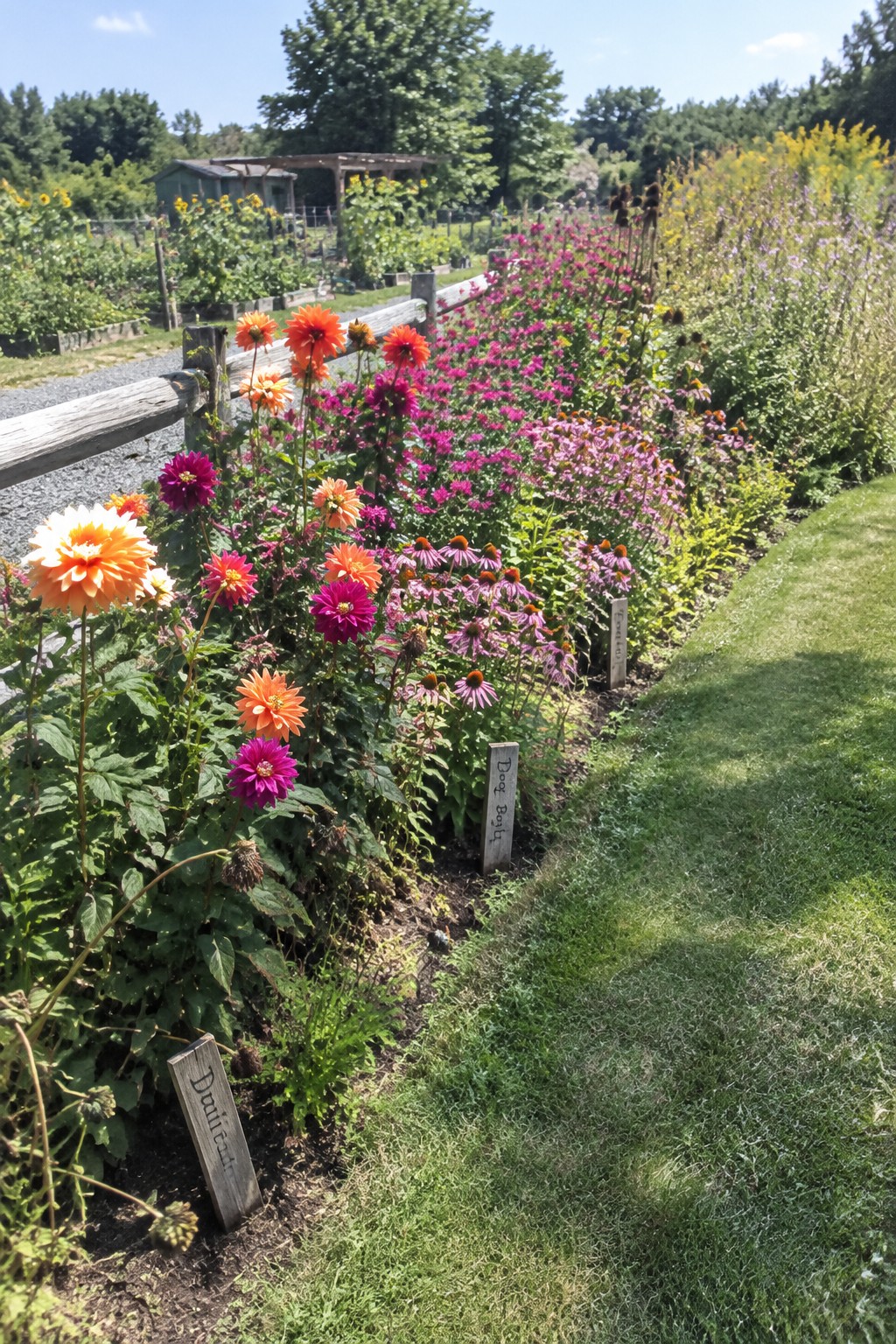
A long flower border is a good way to give dahlias room to stand out while keeping the garden easy to follow. Mixing orange and magenta blooms through the bed makes the color feel lively without relying on just one variety.
Use a lawn edge or simple fence to keep the border’s shape clear, then leave enough space between plants for airflow and access. This works well along a garden path or open lawn, where the flowers can be enjoyed from more than one angle.
Plant Dahlias in Stone-Walled Garden Beds

Dahlias bring strong seasonal color to a terraced garden, where stone walls give each planting bed a clear shape. The flowers stand out against the rough stone, while smaller plants can fill the edges between blooms.
This approach works well on a sloped yard where flat planting areas are limited. Leave enough room for dahlias to grow, and make sure each bed has soil that drains well.
Use Dahlias in Raised Garden Beds
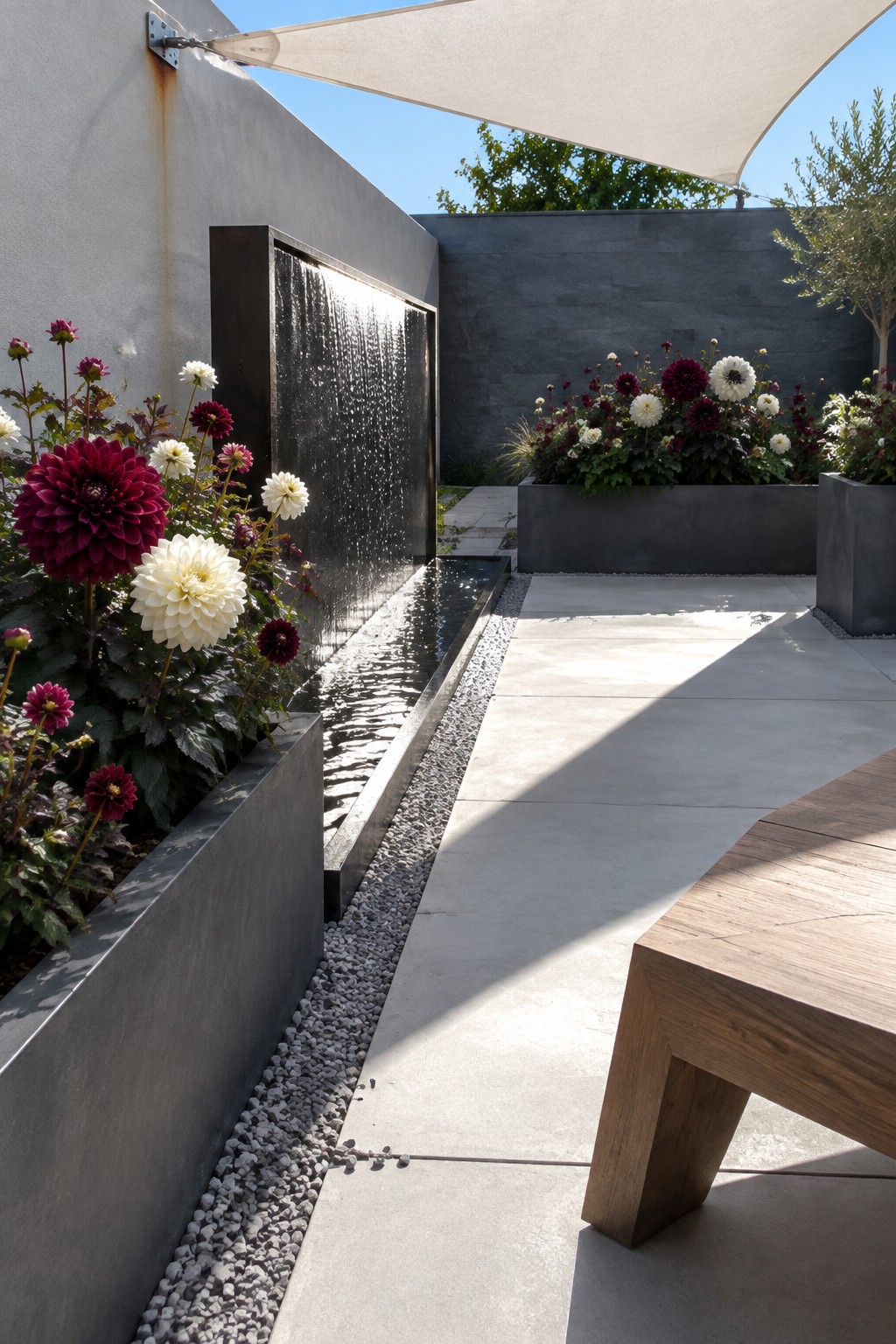
Raised beds give dahlias a clear place in a garden and make their bold blooms easy to enjoy. A dark, simple planter also lets the flowers stand out without needing a lot of extra decoration.
This approach works well beside a patio or along a wall where in-ground planting space is limited. Give dahlias room to grow, and check that the beds drain well so their roots do not sit in water.
Use Dahlias to Create a Circular Garden Center

A round planting bed gives dahlias a clear place to shine and makes a small garden feel thoughtfully arranged. Here, the circular clipped hedge surrounds a central urn, while the flowers add color around the outer beds.
This layout works well in a courtyard or other compact space where a central feature can be seen from several directions. Plant dahlias in groups around the edges, leaving enough room between them for airflow and access.
Grow Dahlias Along an Outdoor Kitchen
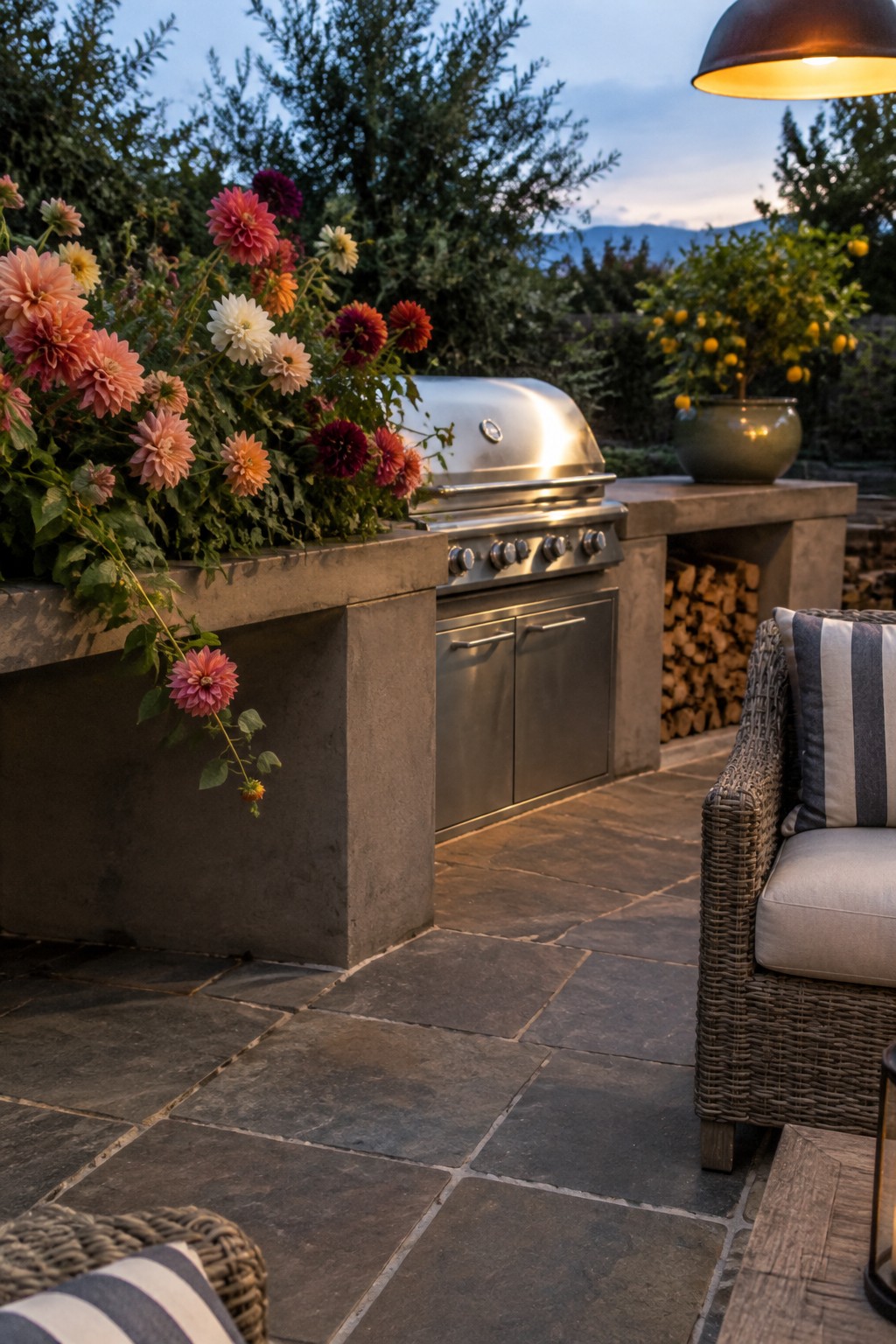
Dahlias can bring strong seasonal color to an outdoor kitchen without taking up patio space. Letting them grow in a raised bed beside the counter makes the flowers part of the cooking area, where their color is easy to enjoy.
Use a sturdy bed with enough soil for healthy growth, and leave room for access to the grill and work surface. Dahlias need regular watering, so keep them within reach of a hose and avoid planting them where cooking heat or foot traffic can damage them.
Grow Dahlias in Raised Balcony Beds

Raised wooden planters make it possible to grow dahlias on a rooftop or balcony where there is no room for an in-ground garden. Their height also brings the flowers closer to eye level, so a few plants can make a strong display.
Choose planters deep and sturdy enough to support mature dahlias, and leave room for their foliage to spread. A gravel walkway between the beds can help keep the space easy to reach and maintain.
Add Dahlias Along a Garden Drainage Channel
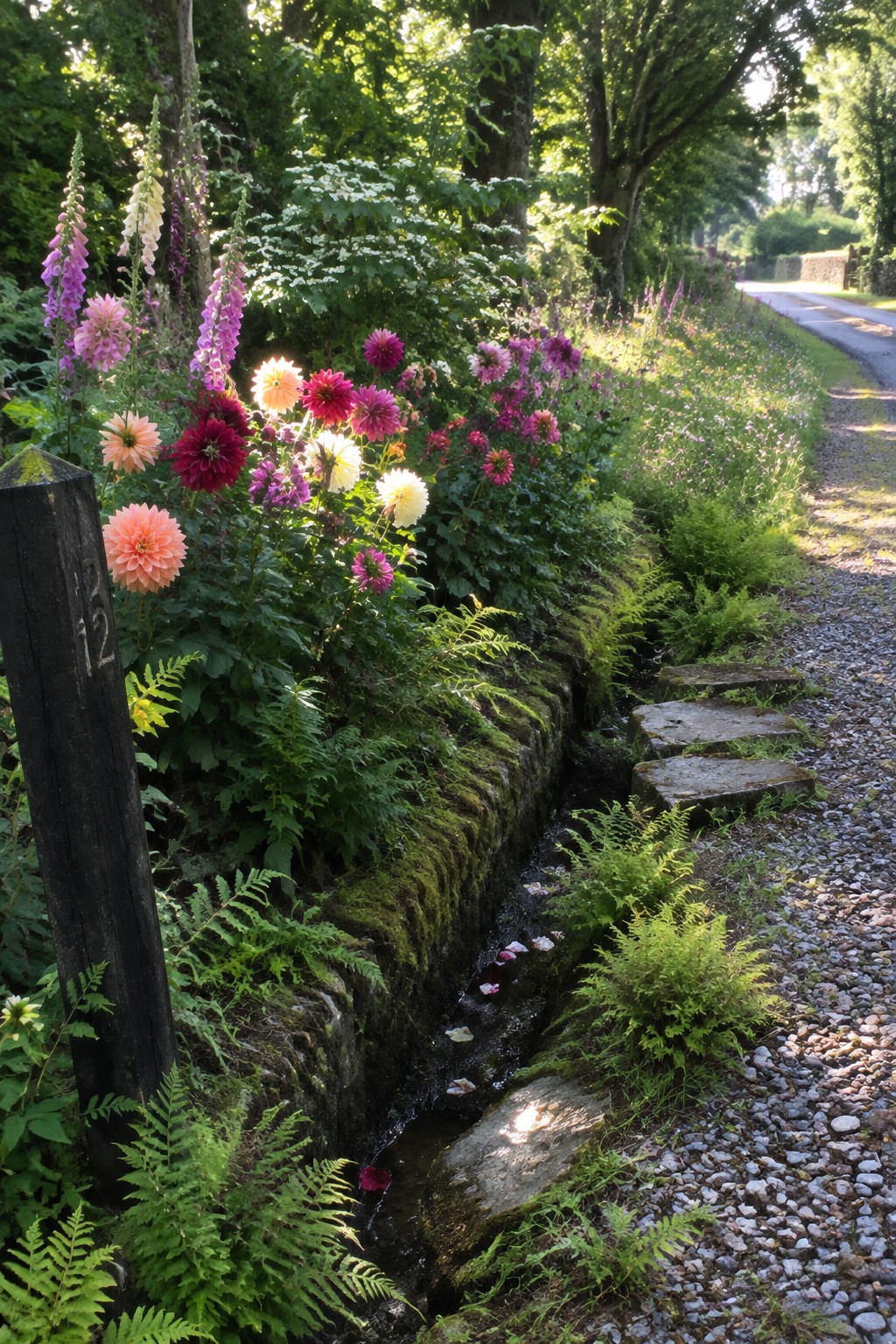
Dahlias can bring strong seasonal color to a narrow drainage channel, turning a practical garden feature into part of the planting design. Here, bright blooms sit beside a small stone-lined runnel, while lower plants fill the space around them.
Choose dahlias for the higher ground beside the channel, where the soil stays moist but does not remain waterlogged. Leave the water’s route clear and use sturdy edging so the bed does not spill into it.
Use Dahlia Rows to Give a Garden Bed Structure
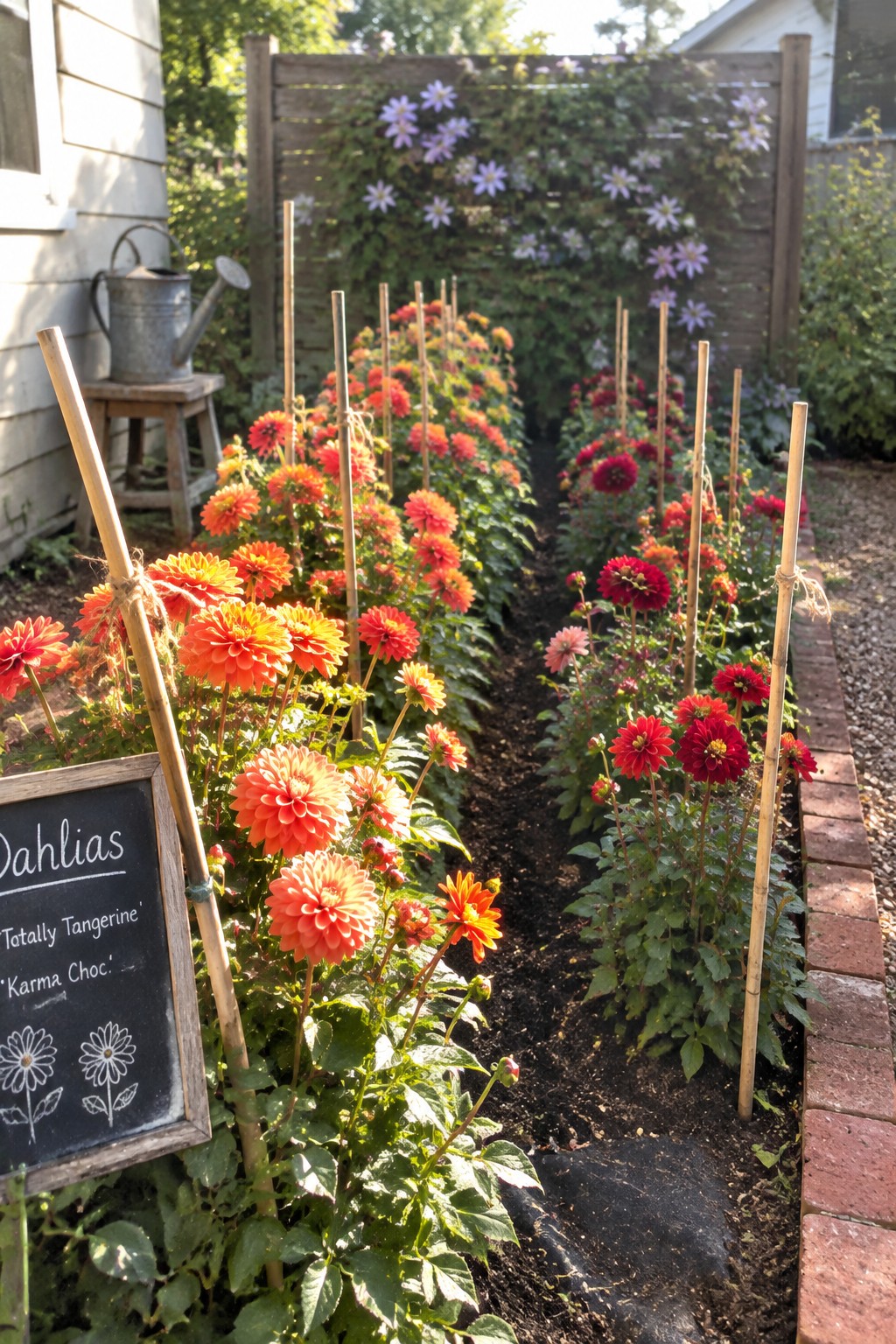
Planting dahlias in parallel rows makes a flower bed feel organized while still giving it plenty of color. The repeated bands of orange and deep red blooms create a clear rhythm, and the open soil between them makes the layout easy to follow.
This approach works well in a narrow bed where you want the flowers to stand out without crowding the path. Leave enough room between rows to reach each plant for watering, deadheading, and staking.
Plant Dahlias Along a Lakeside Garden Path

A flower bed beside a curving garden path is an easy way to make dahlias part of the route through a yard. Their bold blooms bring color close to the lawn, while the path keeps the planting easy to enjoy without stepping into the bed.
Use this idea along a garden edge that gets plenty of sun, and leave enough room for mature dahlia plants so they do not spill across the stones. A loose mix of dahlia colors can suit an informal lakeside garden, while repeating one or two shades gives the border a tidier look.
Use Dahlias to Bring Color to a Public Garden

Dahlias can make a small garden bed feel lively without needing a complicated layout. Their large blooms stand out among smaller flowers, and mixing a few colors keeps the planting cheerful through summer.
For a similar look, plant dahlias in groups through a sunny bed, leaving room for paths and other plants. A mix of flower heights helps the bed feel full, but avoid crowding the dahlias so they have space to grow and are easy to tend.
Use Dahlias to Edge a Garden Path
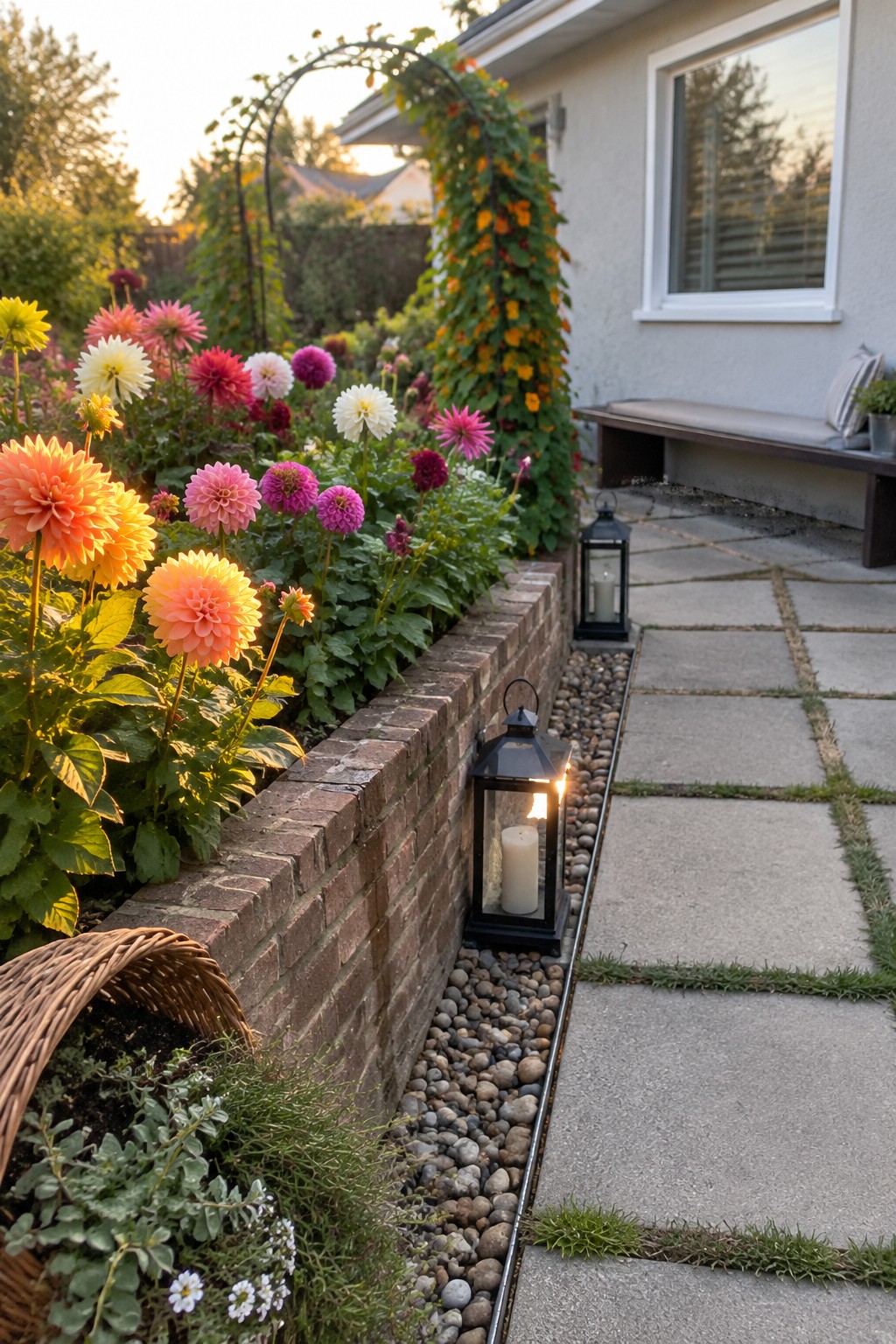
A raised flower bed beside a path gives dahlias a clear place to grow while keeping the walkway easy to follow. The low brick edge also helps separate the planting from the paving, so the flowers can fill the bed without spilling onto the route.
This approach works well along a narrow side yard or a path beside the house. Leave enough room for plants to spread, and keep the paving wide enough to walk comfortably as the dahlias grow.
Frequently Asked Questions
Q: How much sun do dahlias need to keep blooming through summer?
A: Most dahlias do best with at least six hours of direct sun a day. In very hot areas, a little afternoon shade can help keep flowers from fading quickly.
Q: Can I plant dahlias in a garden bed with other flowers?
A: Absolutely. Pair them with airy plants such as salvia or cosmos, and leave enough space for air to move around their foliage. This helps the bed feel full without crowding the dahlias.
Q: How do I keep tall dahlias from flopping over?
A: Add a sturdy stake when you plant each tuber, then loosely tie the stem as it grows. Waiting until a tall stem falls over makes it harder to support without damaging it.
Q: What should I do with dahlias when summer rain is frequent?
A: Make sure the soil drains well, and avoid watering the leaves when you can. If a flower gets waterlogged, snip it off so the plant can focus on fresh blooms.
