

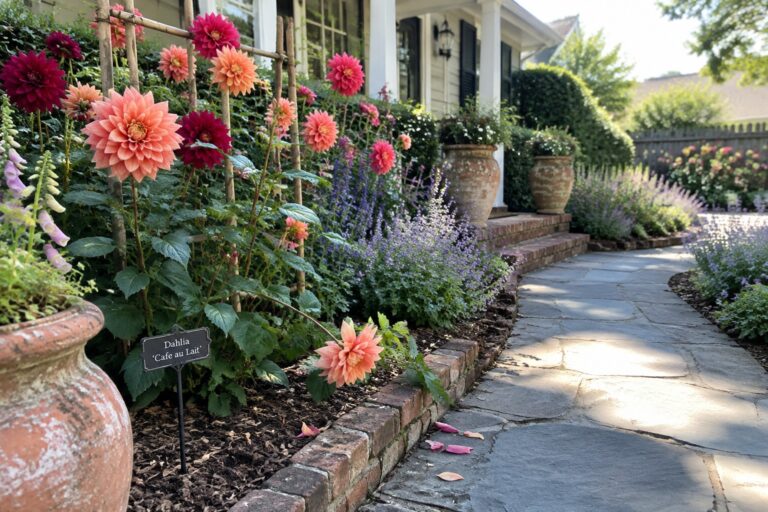
Dahlias can bring a lot of color to a sunny garden, but the bed works best when the plants have room to grow and the layout feels settled rather than crowded.
I find that height, spacing, and a clear edge make a real difference, especially when dahlias share space with smaller flowers or foliage.
A pathway or repeated planting pattern can also help the bed feel connected to the rest of the yard.
Some arrangements suit a tidy border, while others have a looser look that may need more room as the season goes on.
I’d save the ideas that fit your sunlight, space, and watering routine, then adapt the planting details to your own garden.
Layer Dahlias Along a Garden Path
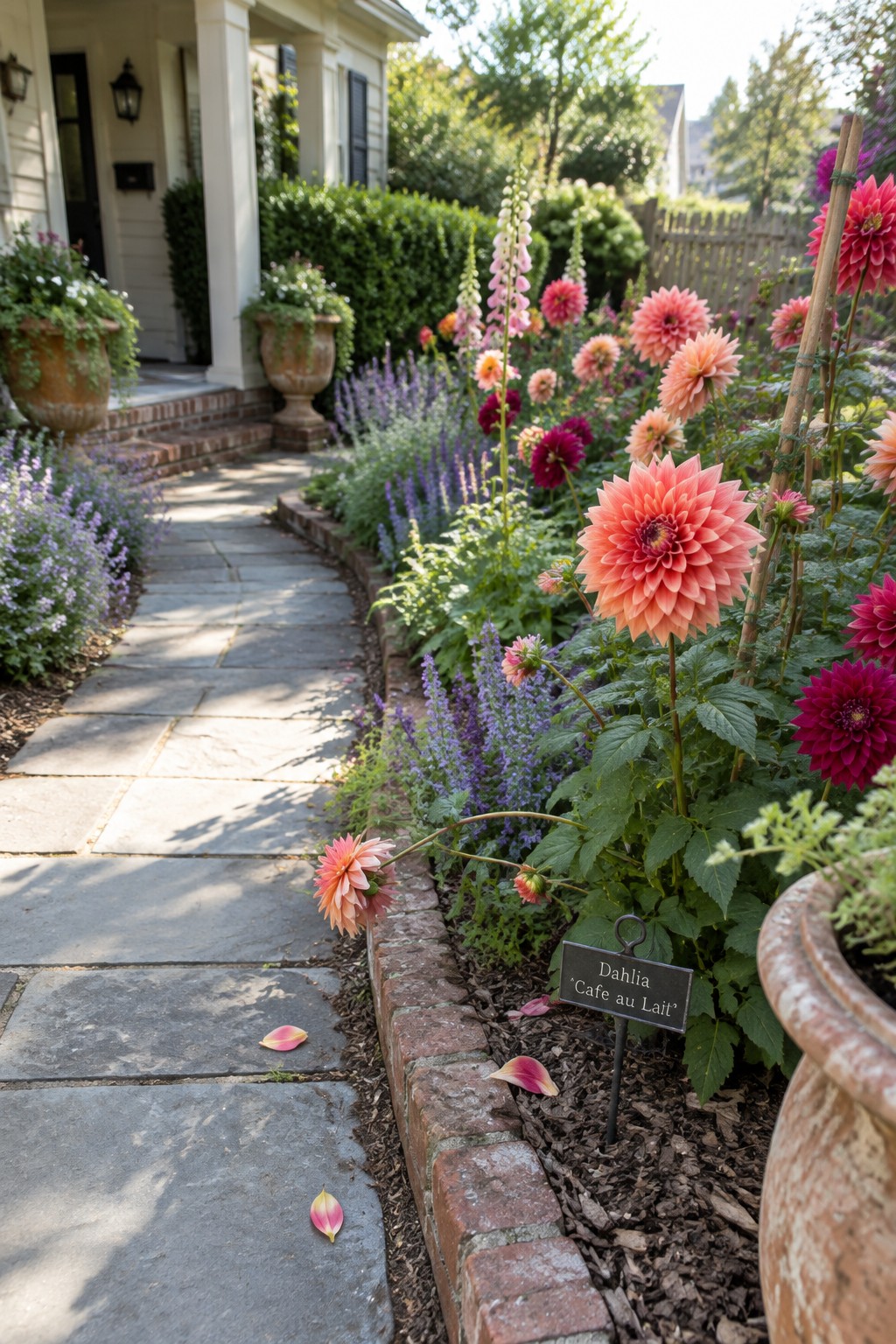
A sunny flower bed can feel more connected to the house when it follows the line of a walkway. Here, dahlias form the main layer, while lower purple flowers edge the path and taller blooms add height behind them.
Use this approach beside an entry walk where the bed has room to widen and narrow naturally. Plant dahlias where they’ll get full sun, and leave enough space between them to reach in for deadheading and staking.
Raised Dahlia Beds Along a Garden Path
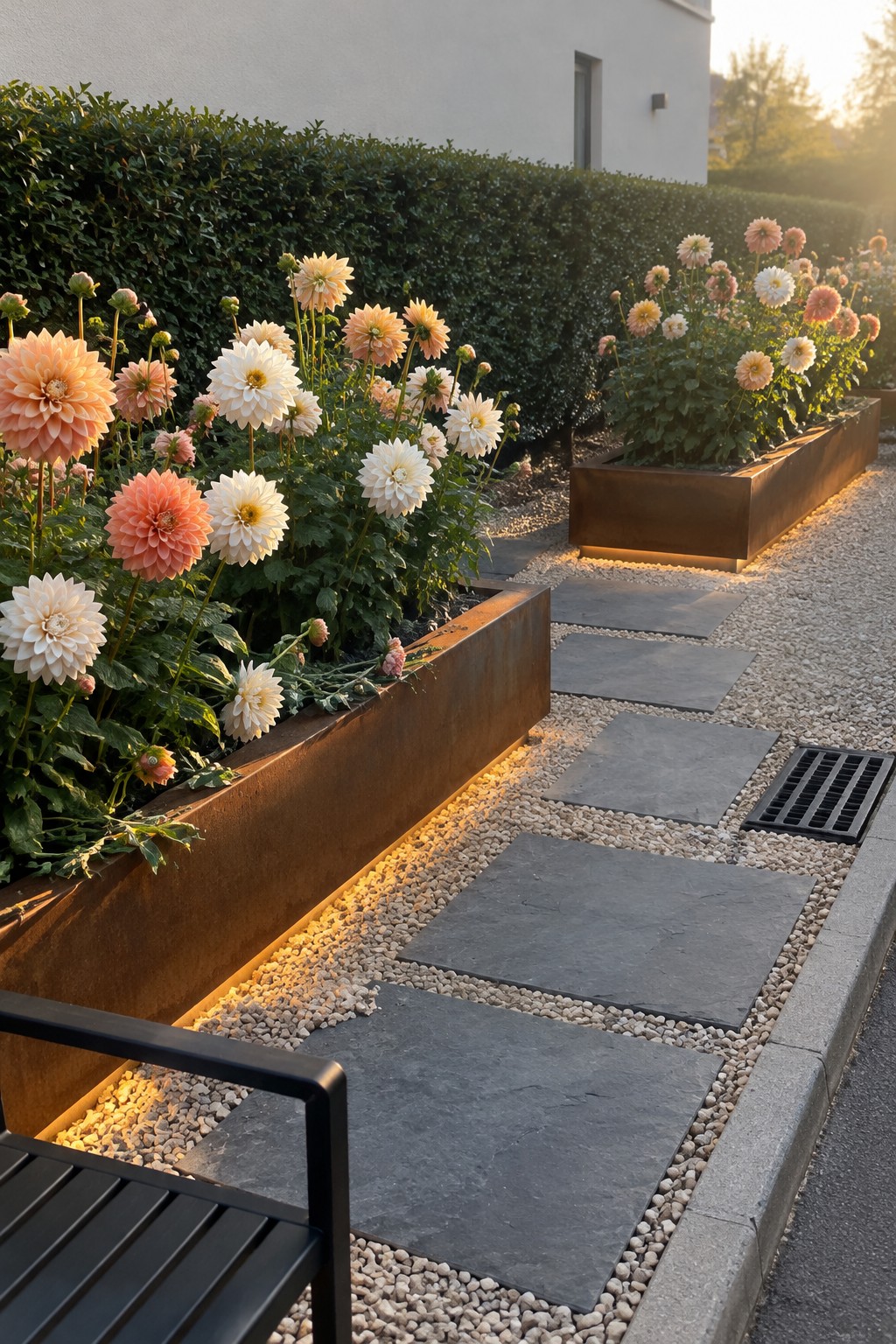
Raised beds make it easier to give sun-loving dahlias a dedicated place in the garden. The clean edges also keep a full planting from spreading into the path, while the flowers remain easy to reach for cutting and deadheading.
Use this approach beside a walk where the beds get several hours of direct sun. Rusted steel planters suit a modern yard, but check that the beds are deep enough for dahlia roots and have good drainage.
Use A Central Dahlia Bed To Organize The Garden
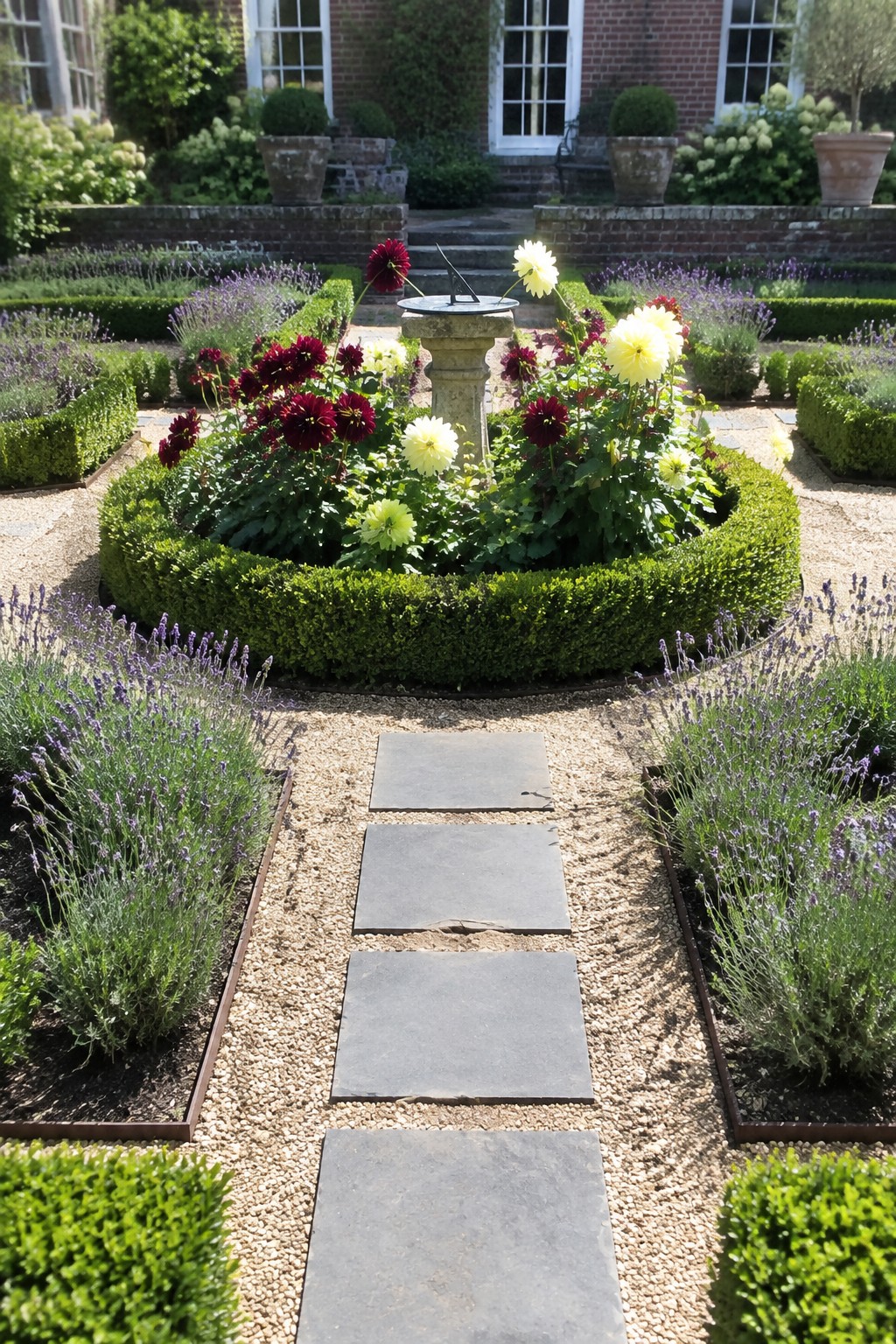
A circular flower bed can give a sunny garden a clear center. Dahlias make a good choice for this kind of planting because their large blooms stand out among lower, clipped plants.
Keep the bed easy to reach for watering, deadheading, and staking taller dahlias. A gravel path around it helps define the shape, while a low hedge gives the flowers a neat edge.
Plant Dahlias in a Curved Bed
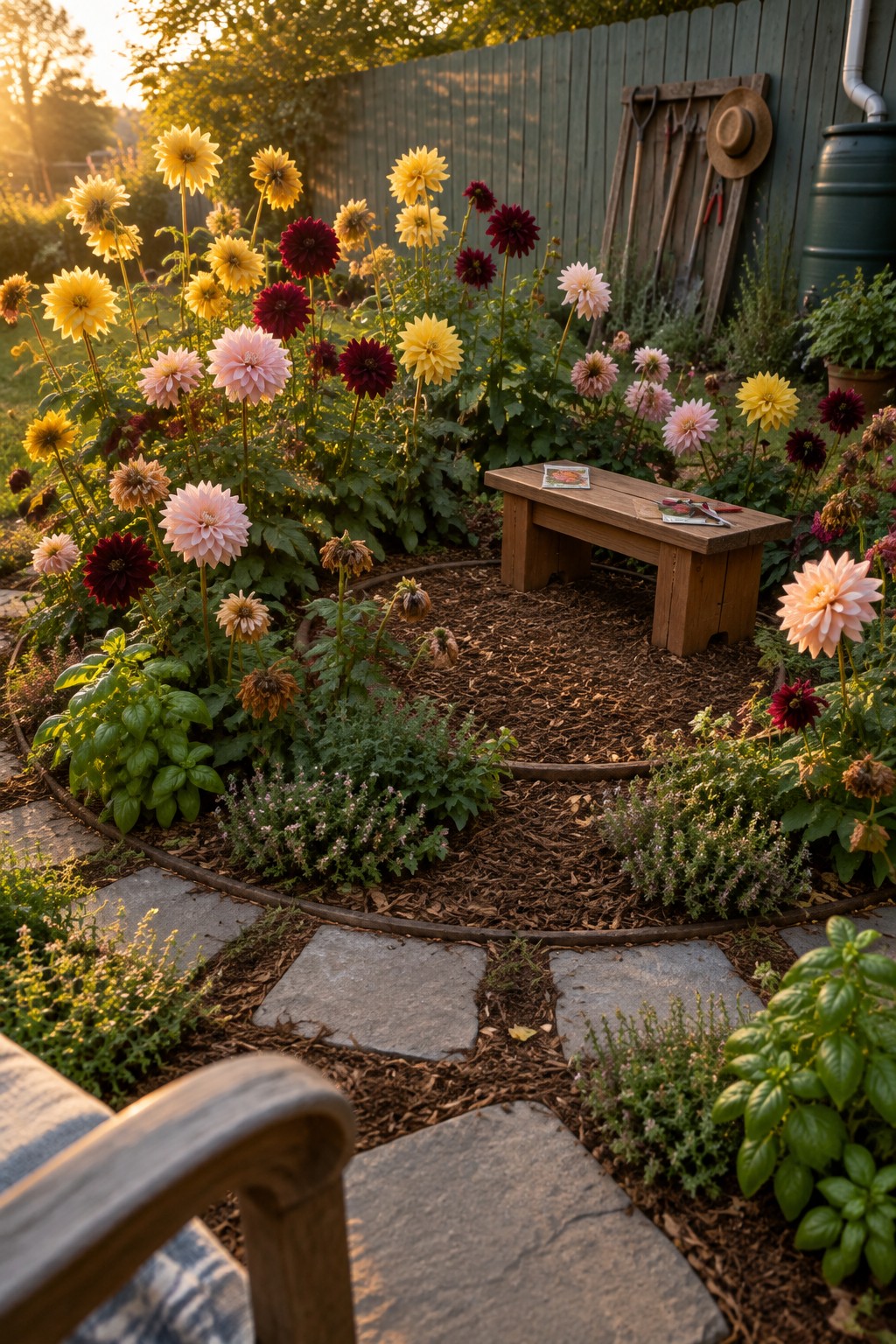
A curved flower bed gives dahlias room to grow while making the garden path feel like part of the planting. The rounded edge also breaks up a straight fence line, and groups of yellow, pink, and deep red blooms keep the bed from looking too uniform.
Use this layout where the bed gets plenty of sun, leaving space between plants for airflow and access as they grow. A simple stone path can make it easier to reach the dahlias for watering and deadheading.
Grow Dahlias in Large Terracotta Pots
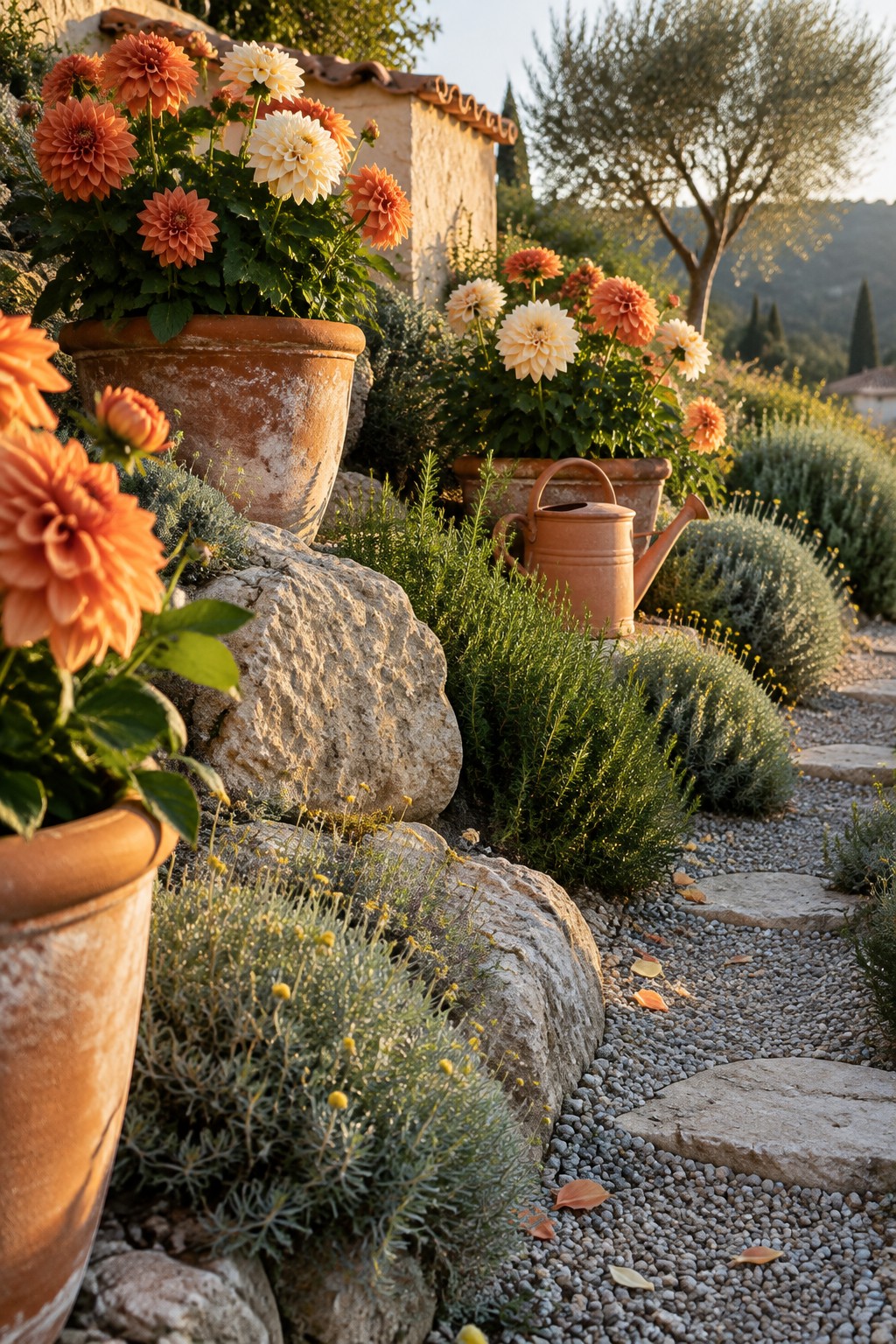
Large pots make it easier to feature dahlias in a sunny garden without setting aside a full flower bed. Terracotta containers give the plants room to grow and can be moved if you need to adjust their position.
Choose pots with drainage holes and enough space for the dahlia roots. Place them where they’ll get plenty of sun, and check the soil often since containers dry out faster than garden beds.
Use Terraced Beds for Dahlias on a Slope
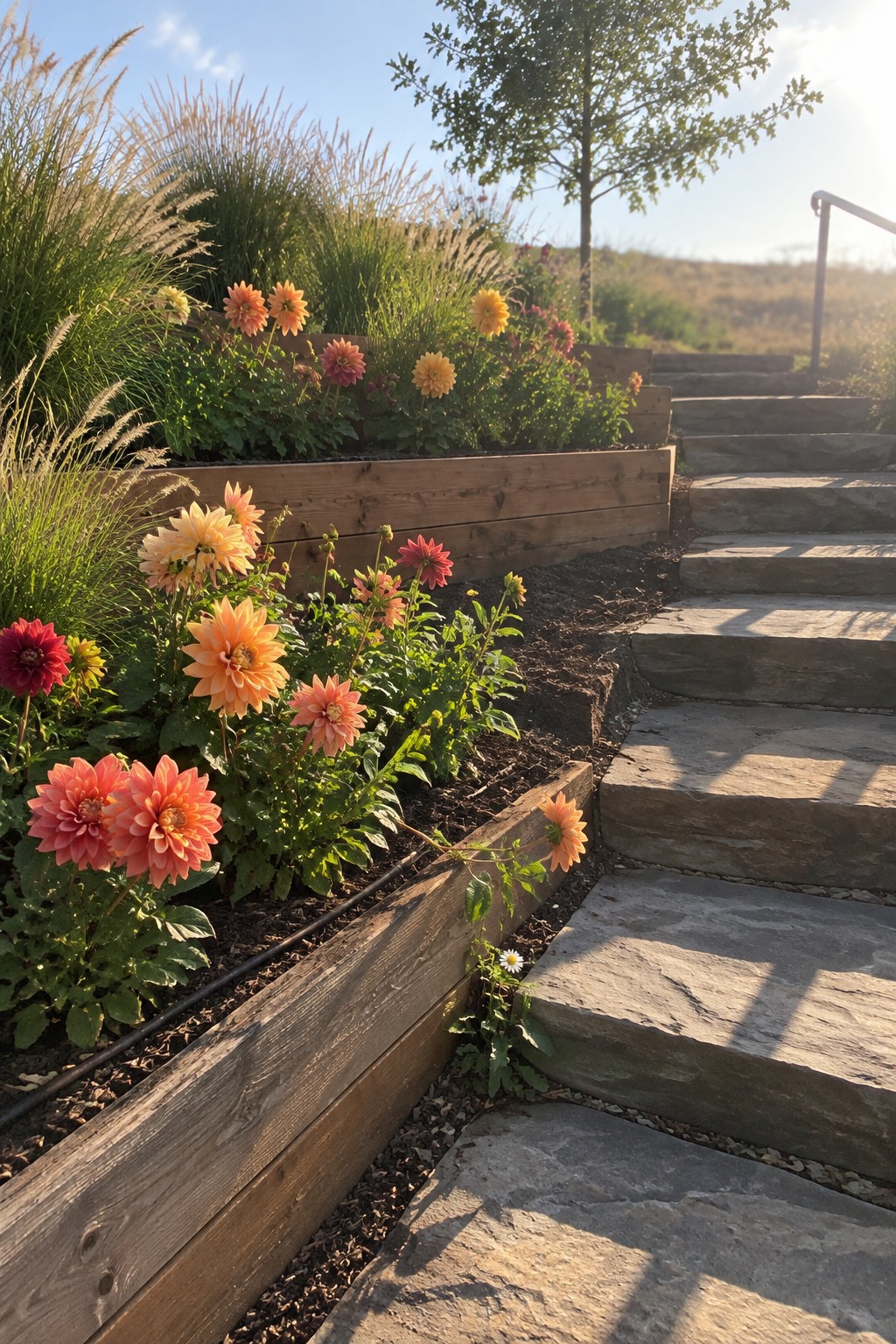
Terraced flower beds make a sloped garden easier to plant and maintain. The level spaces give dahlias room to grow, while sturdy edging helps keep soil in place.
Use this approach where a hillside would be difficult to mow or plant in one continuous bed. Choose full-sun spots for dahlias, and leave enough space between tiers to reach the plants for watering and deadheading.
Use Raised Beds to Keep Dahlias Organized
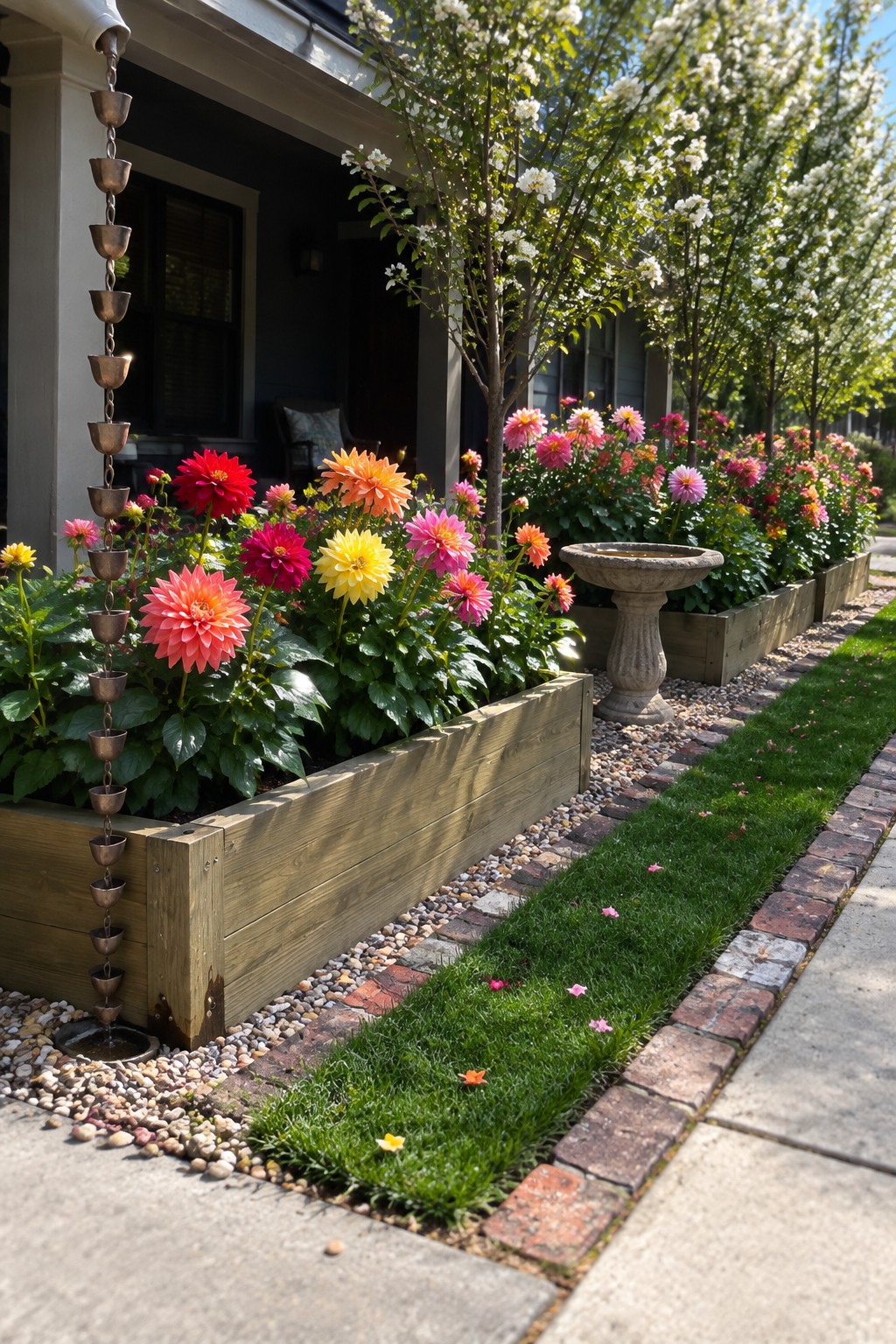
Raised beds give a sunny dahlia garden a clear shape and make it easier to keep flowers together in a defined planting area. The wooden sides also help separate the beds from the nearby path.
This approach works well along a house or walkway where in-ground planting space is limited. Leave enough room between beds and paths to reach the plants for watering and deadheading.
Build a Naturalistic Dahlia Bed Along a Path
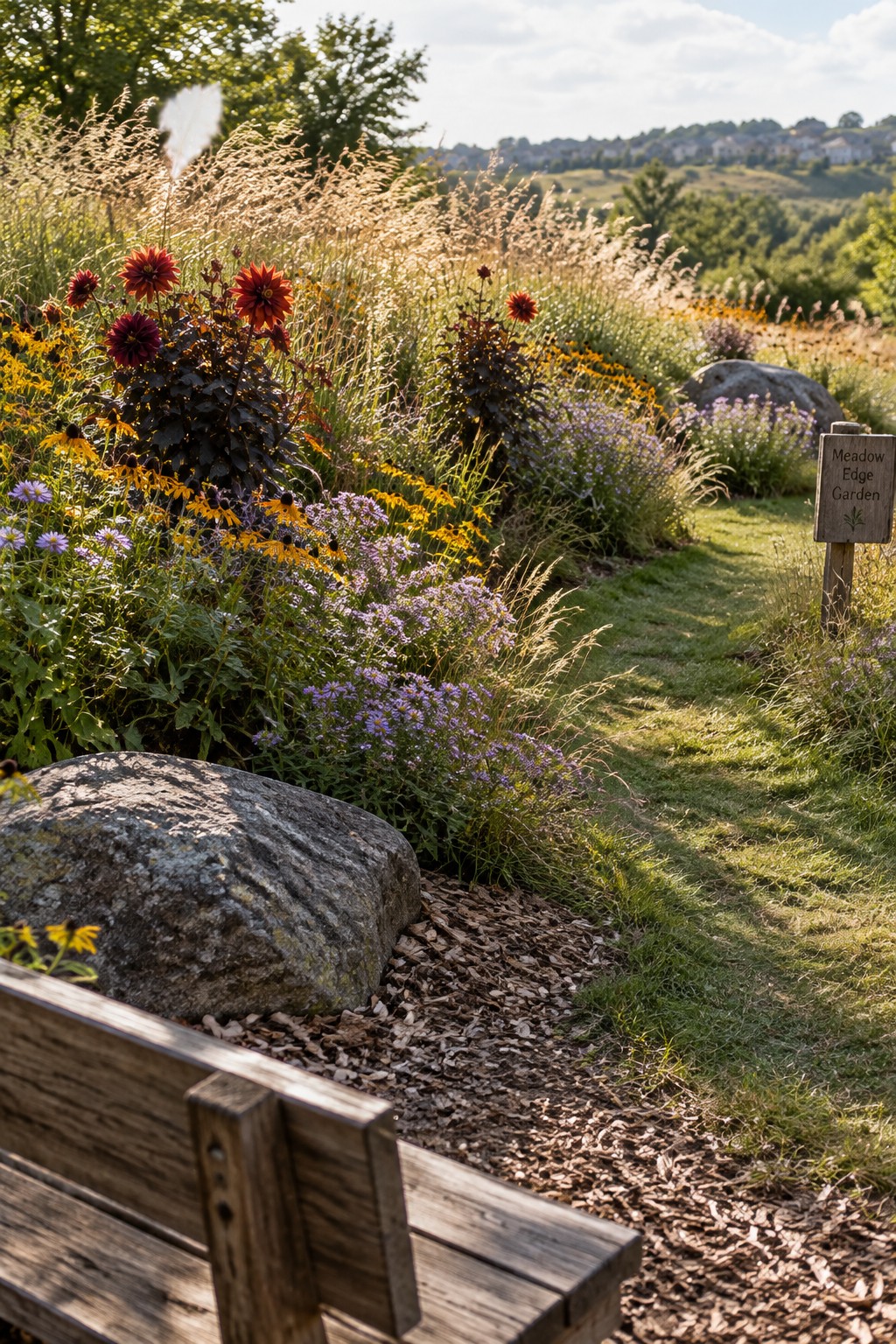
A garden path can make a full-sun flower bed easier to enjoy and care for. Planting dahlias among airy grasses and smaller flowers gives the bed a relaxed, layered look without making the walkway feel crowded.
Leave enough room for dahlias to spread and stake taller varieties before they need support. This approach suits an informal garden, especially where a simple mown path can guide visitors through the planting.
Grow Dahlias in a Coastal Gravel Garden
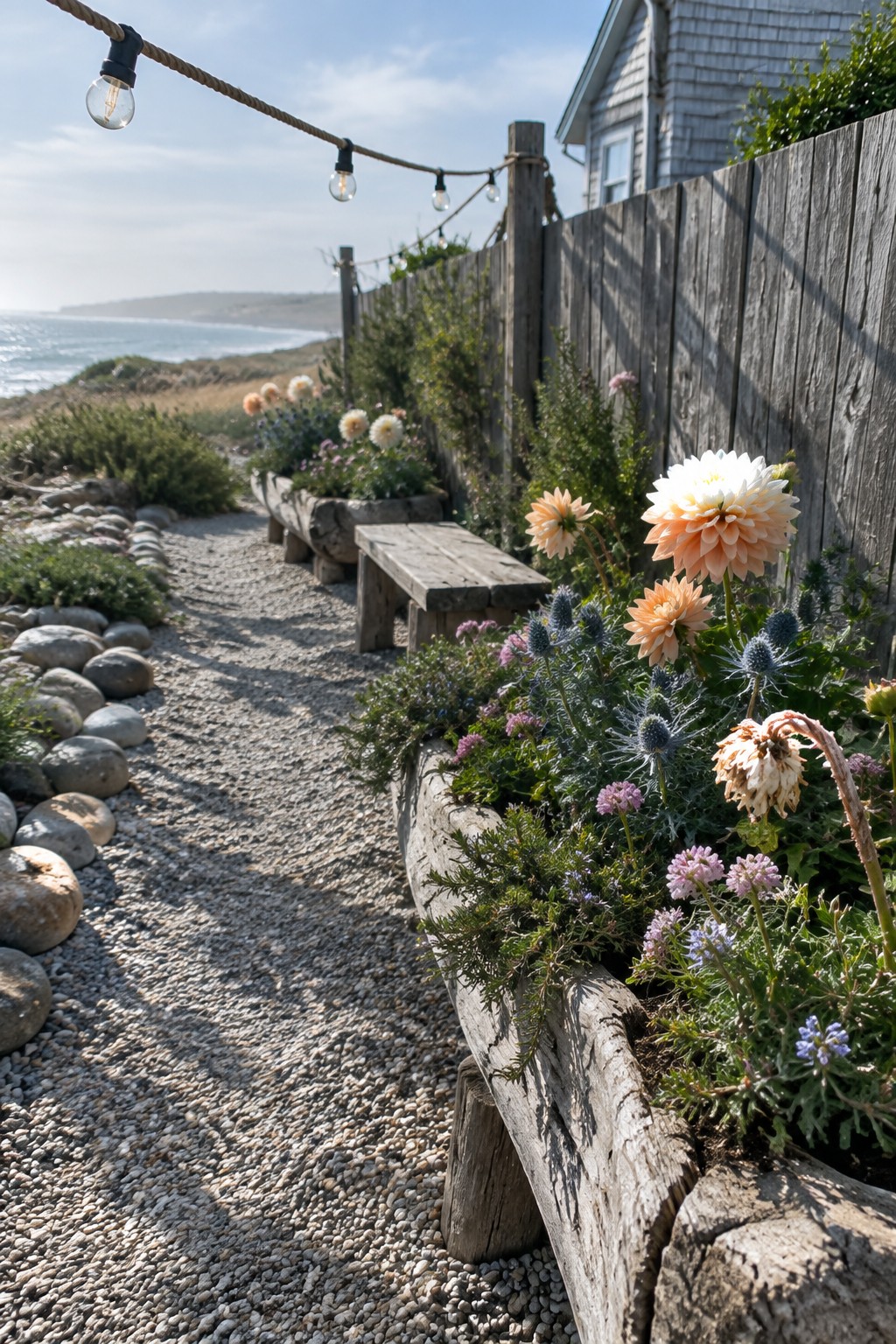
A gravel path can make a sunny flower bed easier to use and give dahlias a clear place in the garden. Plant them in a raised bed along the path, where the blooms are easy to see and the gravel helps keep muddy soil off the walkway.
This approach suits a coastal or otherwise dry, sunny spot with well-drained soil. Dahlias still need regular water and support as they grow, so leave enough room in the bed to reach each plant.
Grow Dahlias in a Modern Gravel Garden
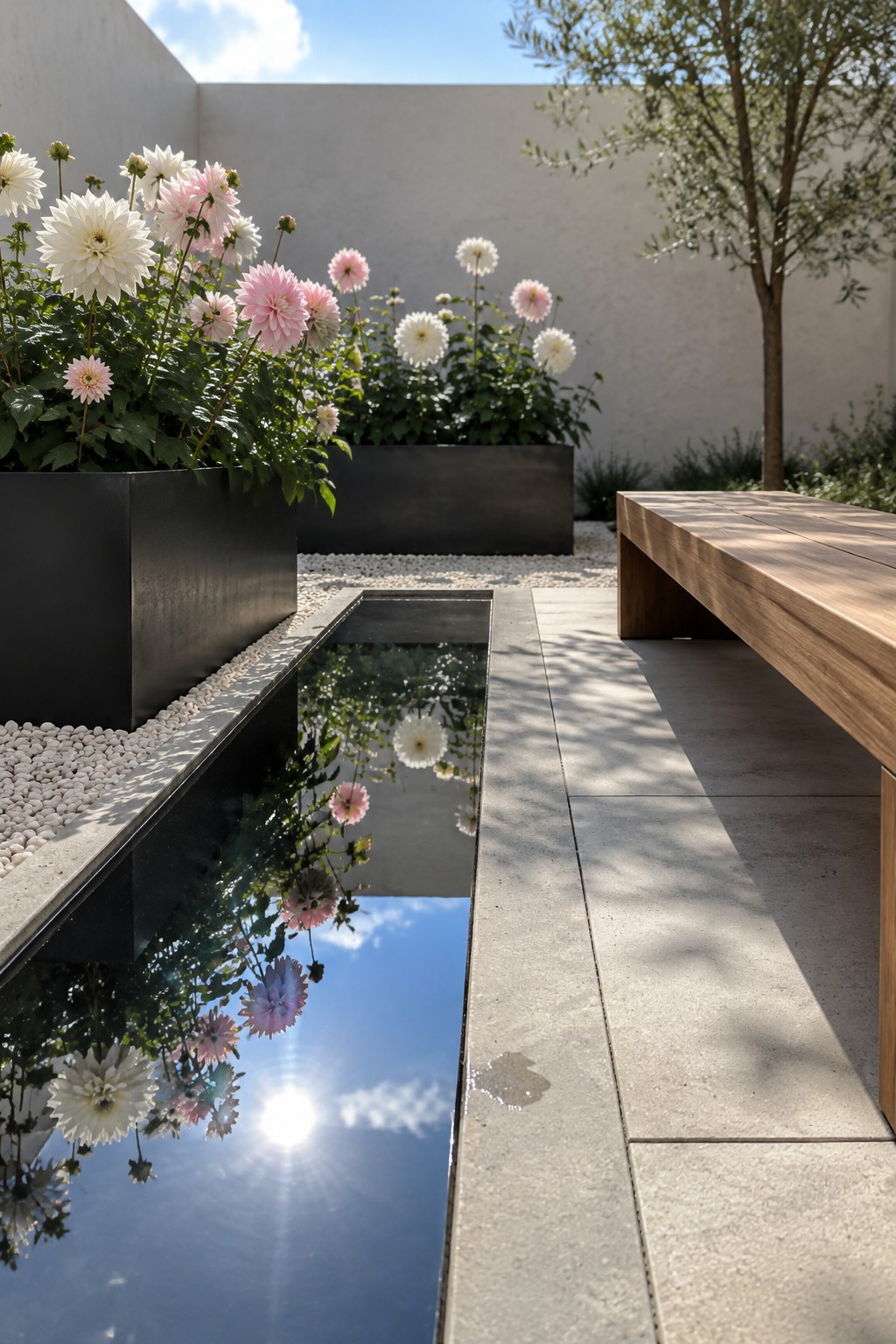
Dahlias can bring plenty of color to a gravel garden, where clean edges keep the planting from feeling unruly. Large blooms stand out against pale stone and dark raised planters, making this a good approach for a sunny, contemporary yard.
Use gravel around sturdy beds to help define the planting area, and leave enough room for dahlias to grow without crowding. Dahlias need regular watering in full sun, so keep a hose or water source nearby.
Grow Dahlias in Galvanized Planters
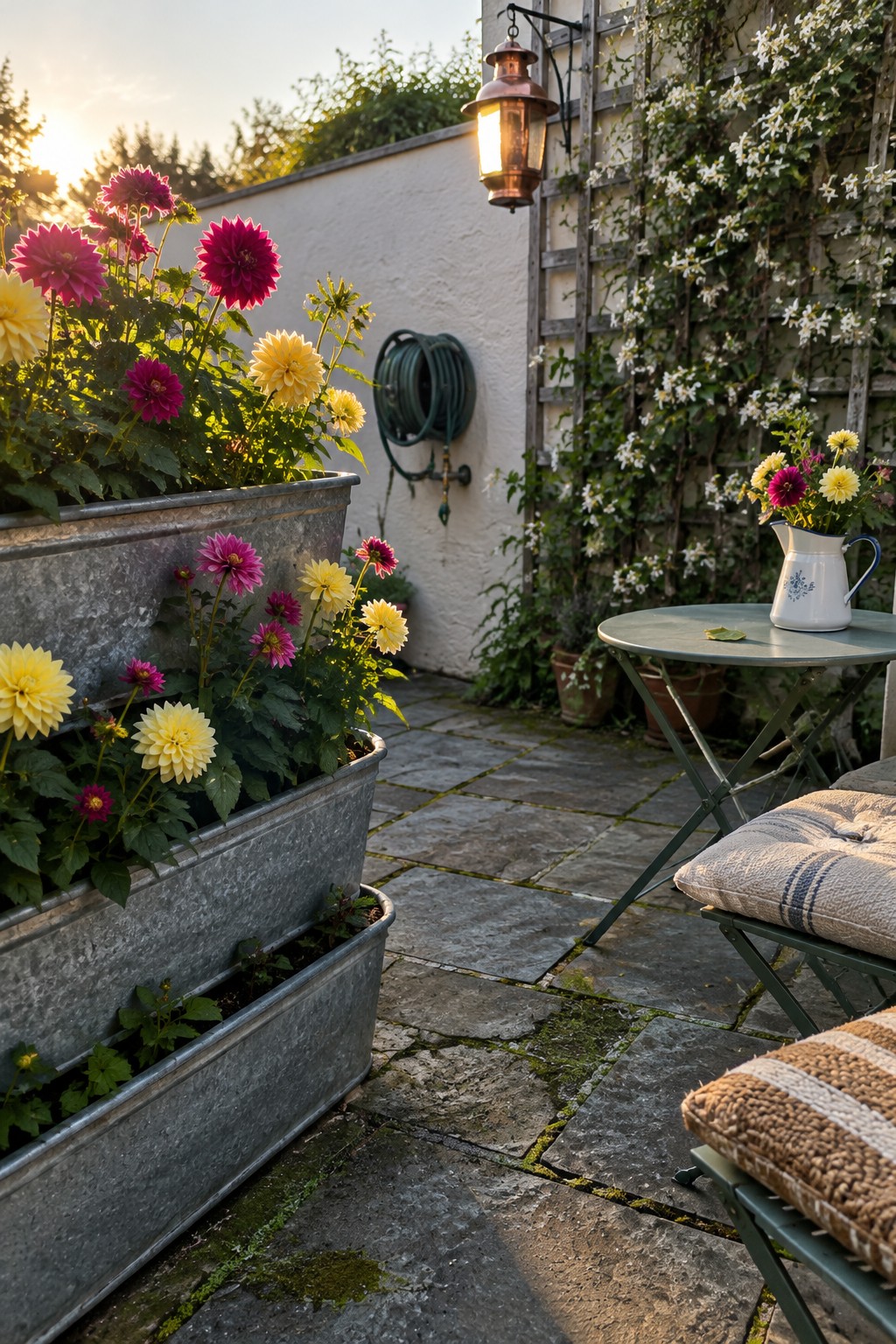
Galvanized planters make it easy to grow dahlias in a small patio garden. Their height keeps the flowers together in a neat display, while separate containers let you group different colors without digging a permanent bed.
Choose deep planters with drainage holes, since dahlias need room for their roots and dislike sitting in wet soil. Place them where they’ll get plenty of sun, and leave enough space to reach in and tend the plants.
Grow Dahlias in a Long, Layered Bed
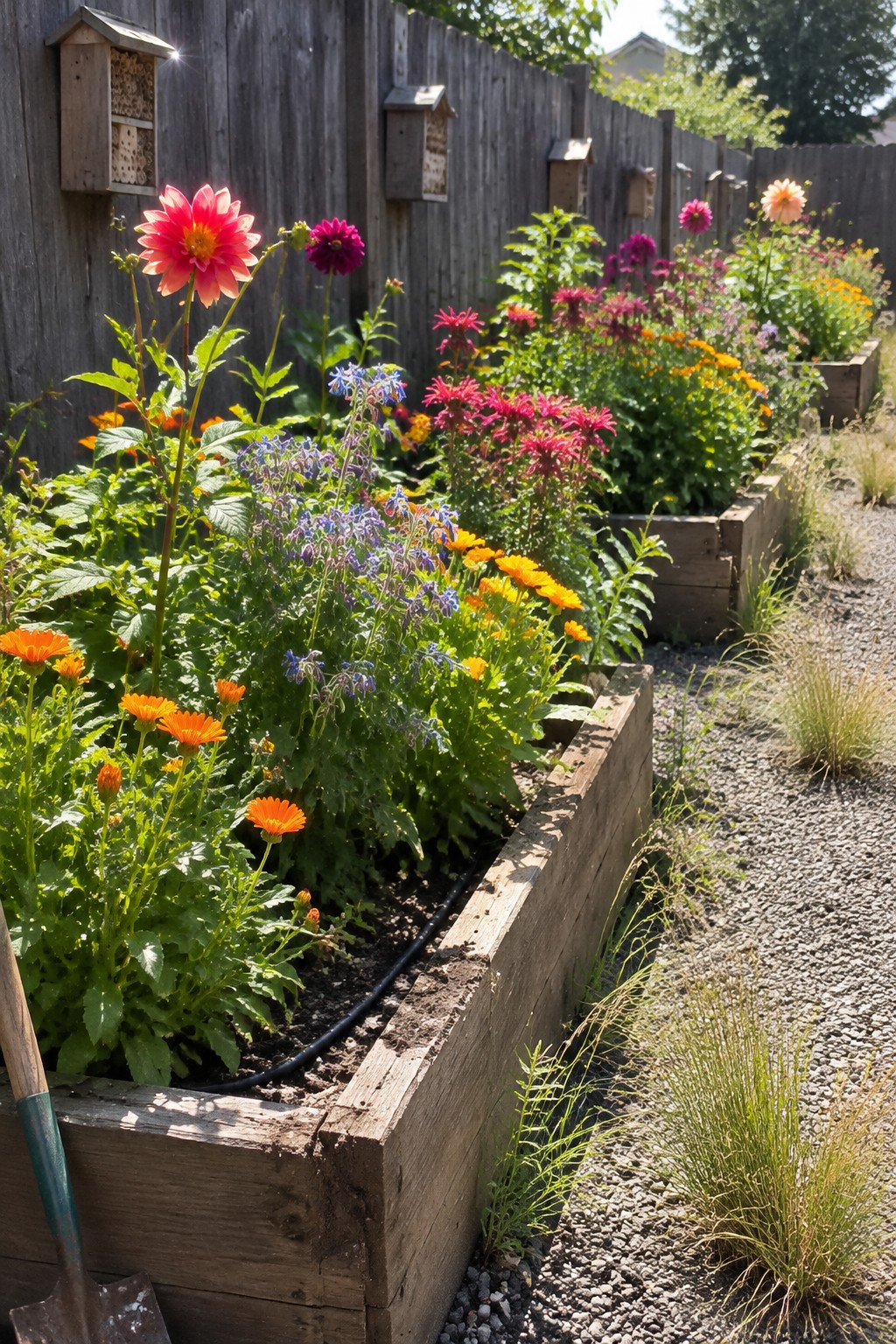
A long flower bed lets dahlias stand out while still leaving room for other full-sun plants. Taller blooms can sit toward the back, with shorter flowers near the edge, so the bed stays colorful without hiding its different layers.
This approach works well along a fence or garden path. Leave enough space between plants for airflow, and make sure the bed gets several hours of direct sun each day.
Use a Stone Path to Divide a Dahlia Bed
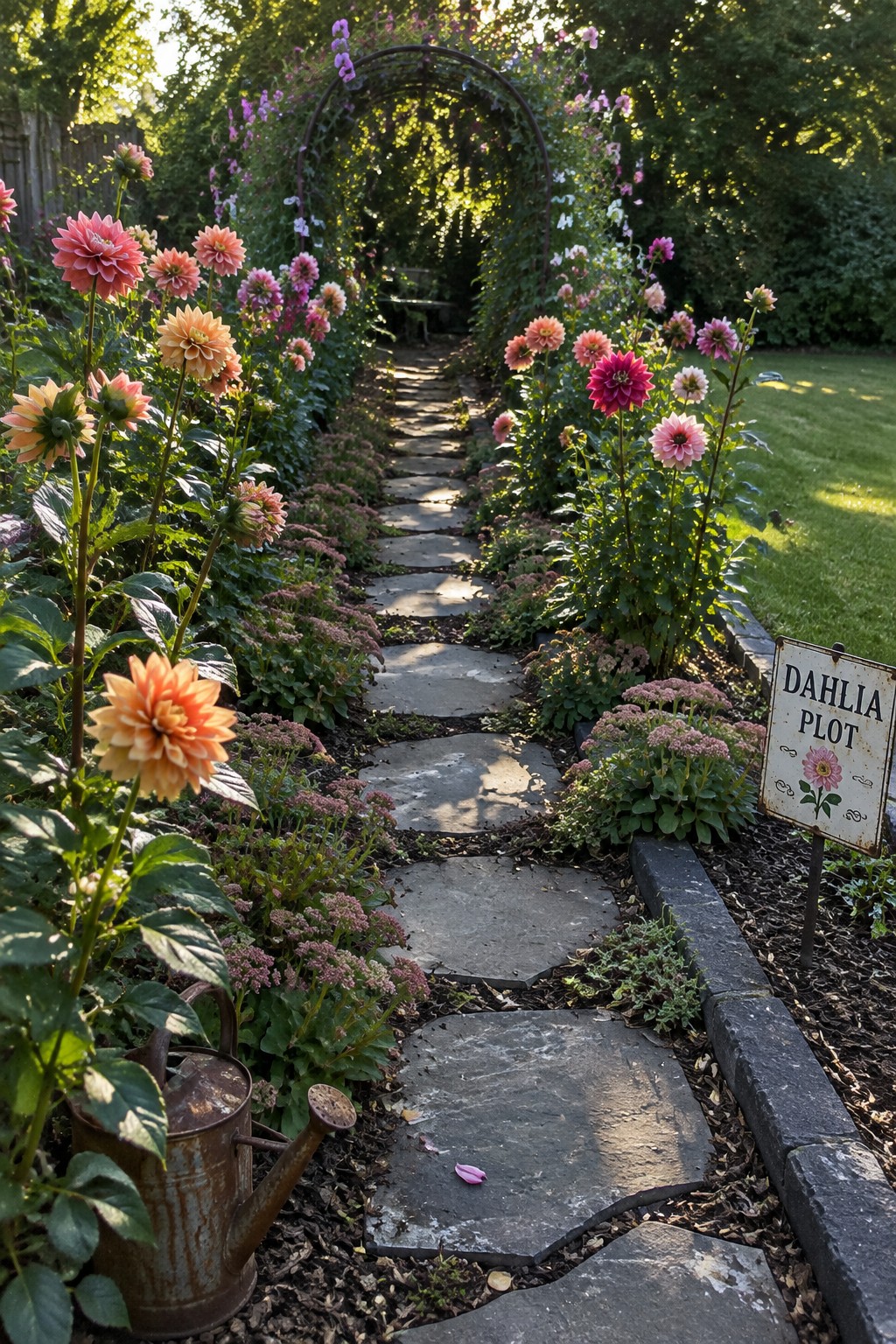
A simple stone path makes a flower bed easier to enjoy and care for. Here, dahlias grow along both sides, so the path leads through the planting rather than separating it from the garden.
Use broad, steady stepping stones and leave enough room between them to reach the plants for watering and cutting blooms. This layout works well in a sunny garden where you want plenty of dahlias without making the bed difficult to maintain.
Plant Dahlias in a Circular Bed
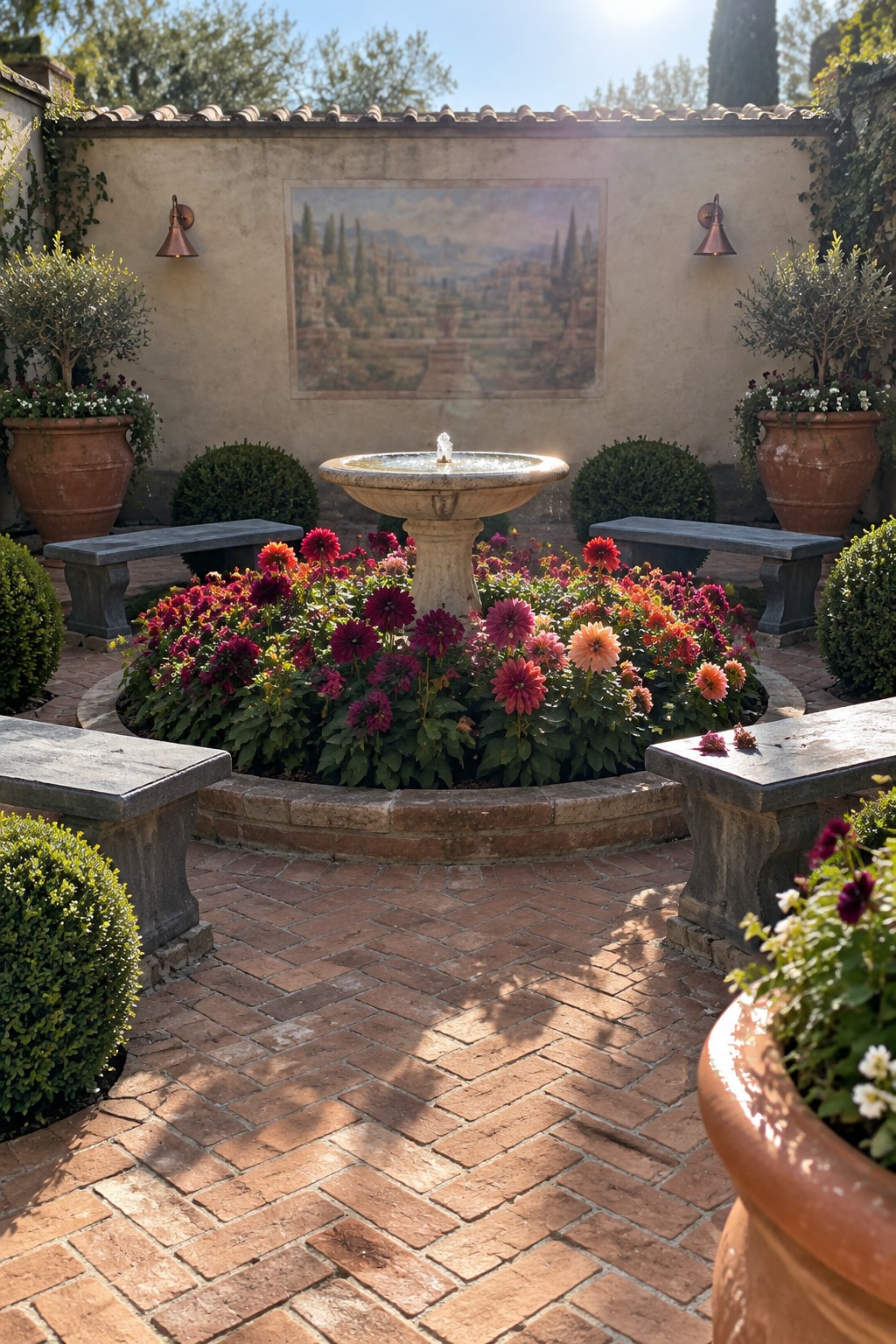
A round flower bed can make dahlias the garden’s main feature without needing a large space. Planting them in a curved brick-edged bed gives the flowers room to grow while keeping the planting area tidy.
This layout works well in a sunny courtyard or beside a small patio, especially where a central feature can be seen from different sides. Leave enough space between plants for airflow, and avoid crowding the bed with too many varieties.
Add a Dahlia Bed Beside the Pool
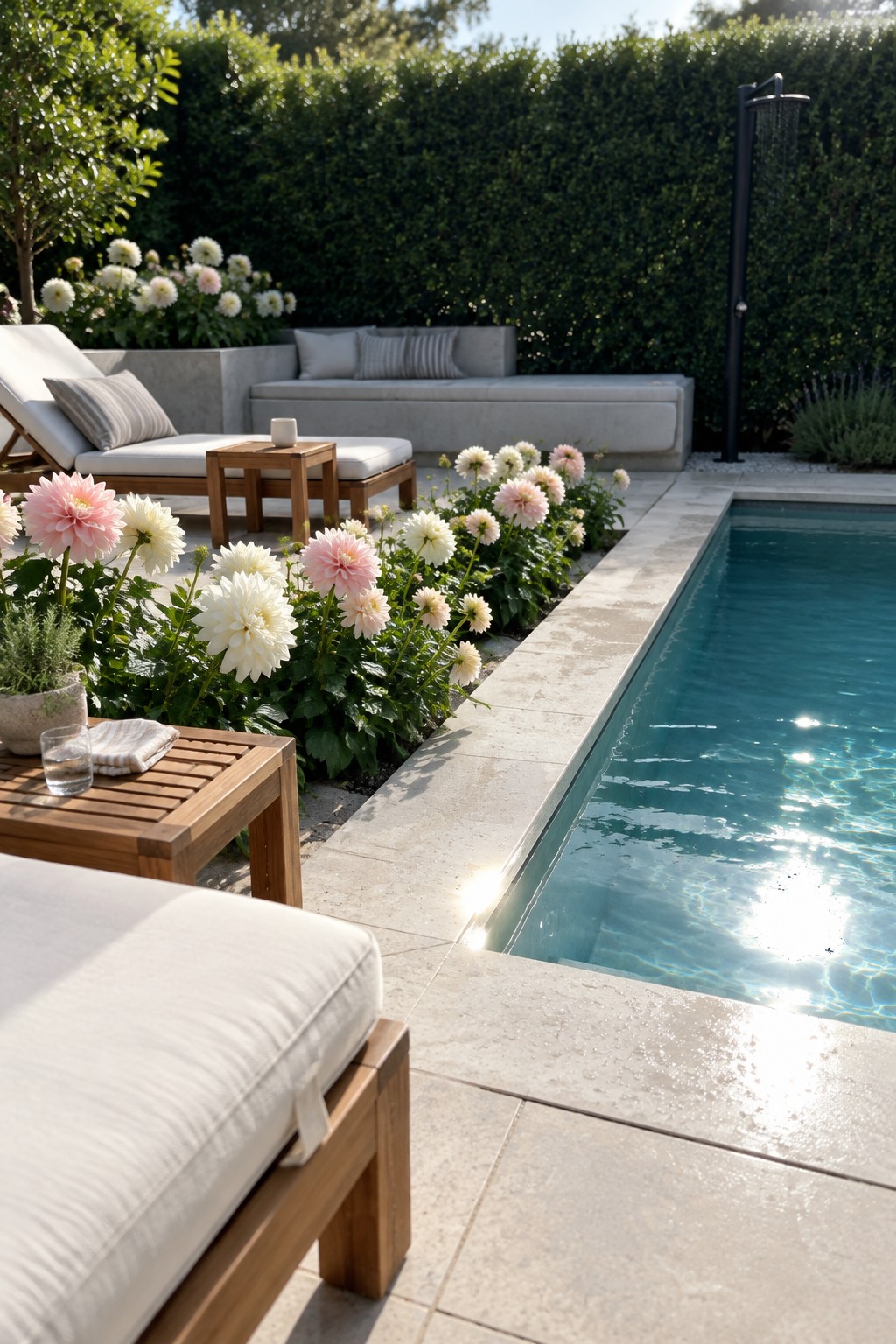
A flower bed can make a pool area feel more connected to the garden. Dahlias bring a welcome burst of color beside pale stone paving, while keeping the seating and swimming space open.
Use a narrow bed along one edge of the pool, leaving enough room for people to walk comfortably. Dahlias do best in a sunny spot, but avoid placing them where plants will crowd the pool edge or drop too much debris into the water.
Plant Dahlias in a Gravel Garden
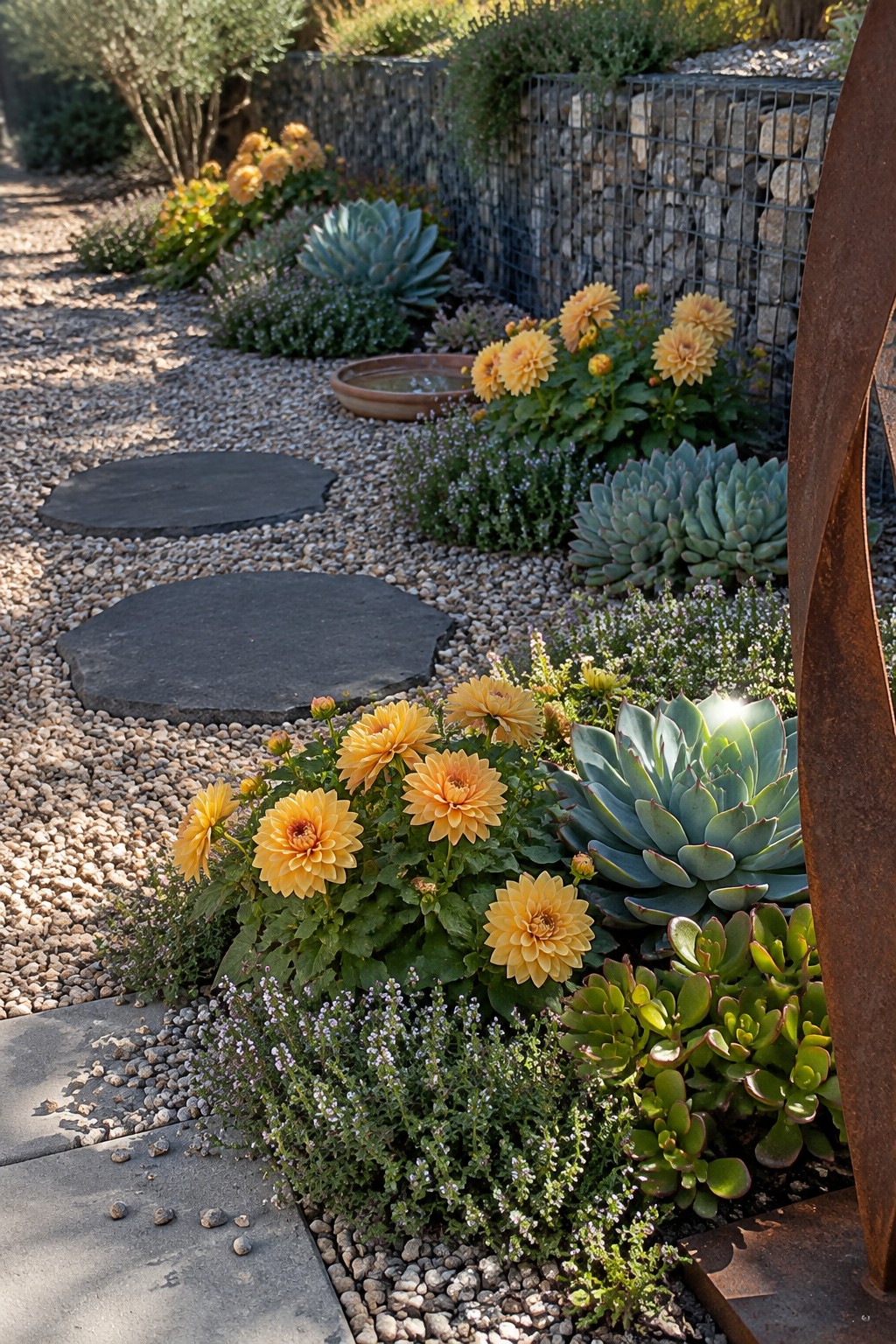
A gravel garden is a practical way to grow dahlias in a sunny, well-drained space. The pale stones keep the planting areas distinct, while broad stepping stones make it easier to reach the flowers for cutting and care.
Use gravel around the beds, but leave dahlias in roomy pockets of soil where you can water them regularly. This approach suits a dry or low-water garden, though dahlias still need consistent moisture during active growth.
Plant Dahlias Along an Entry Path
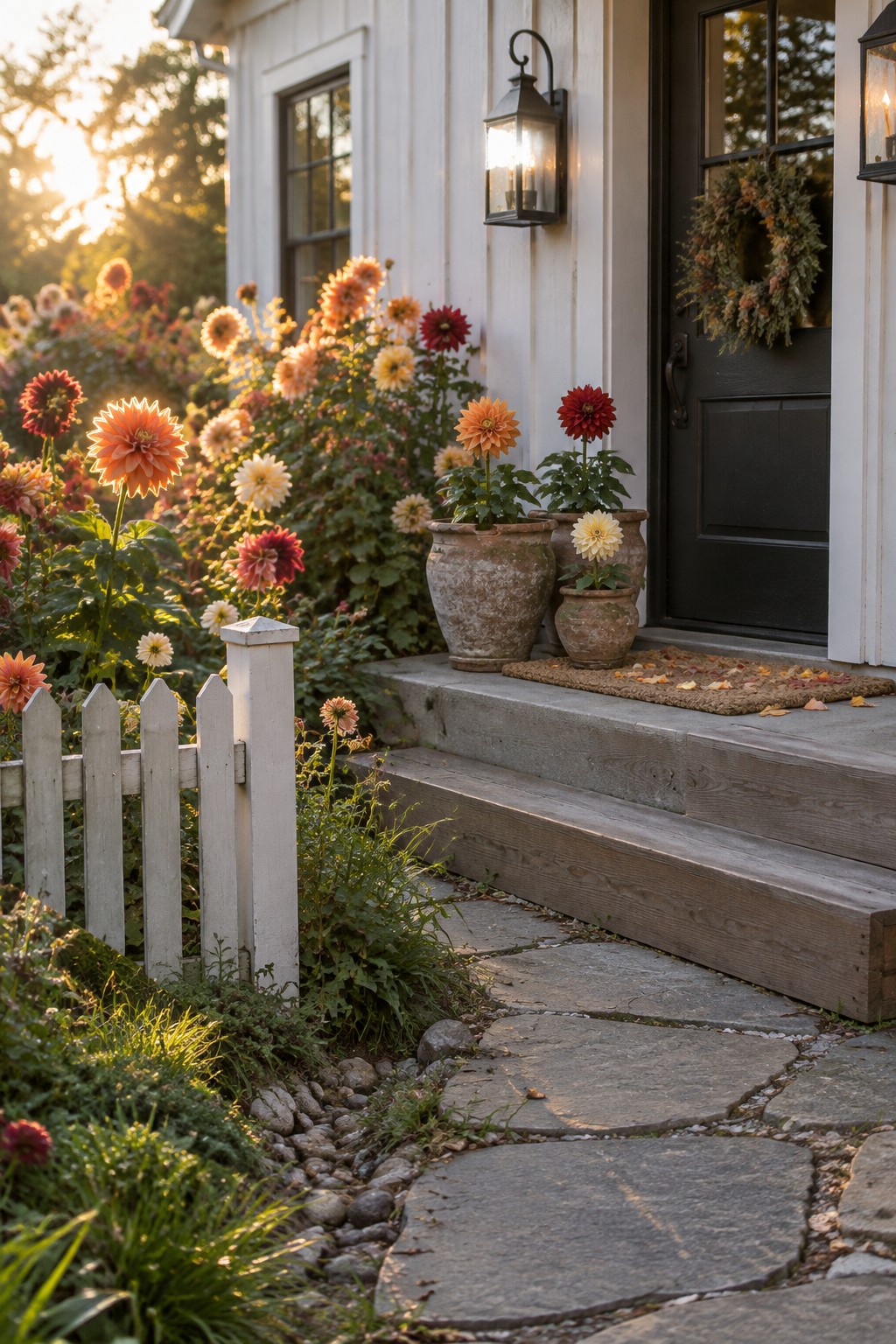
A flower bed beside the front walk makes dahlias part of the approach to the house, rather than something tucked away at the back of the yard. The blooms bring color close to the entry, while the path gives the planting a clear edge.
For a full-sun spot, plant dahlias in a generous bed along the walk and leave enough room for mature plants so they don’t spill across the path. A short stretch of white picket fence helps mark the garden edge without blocking the flowers.
Grow Dahlias in Raised Planters on a Balcony
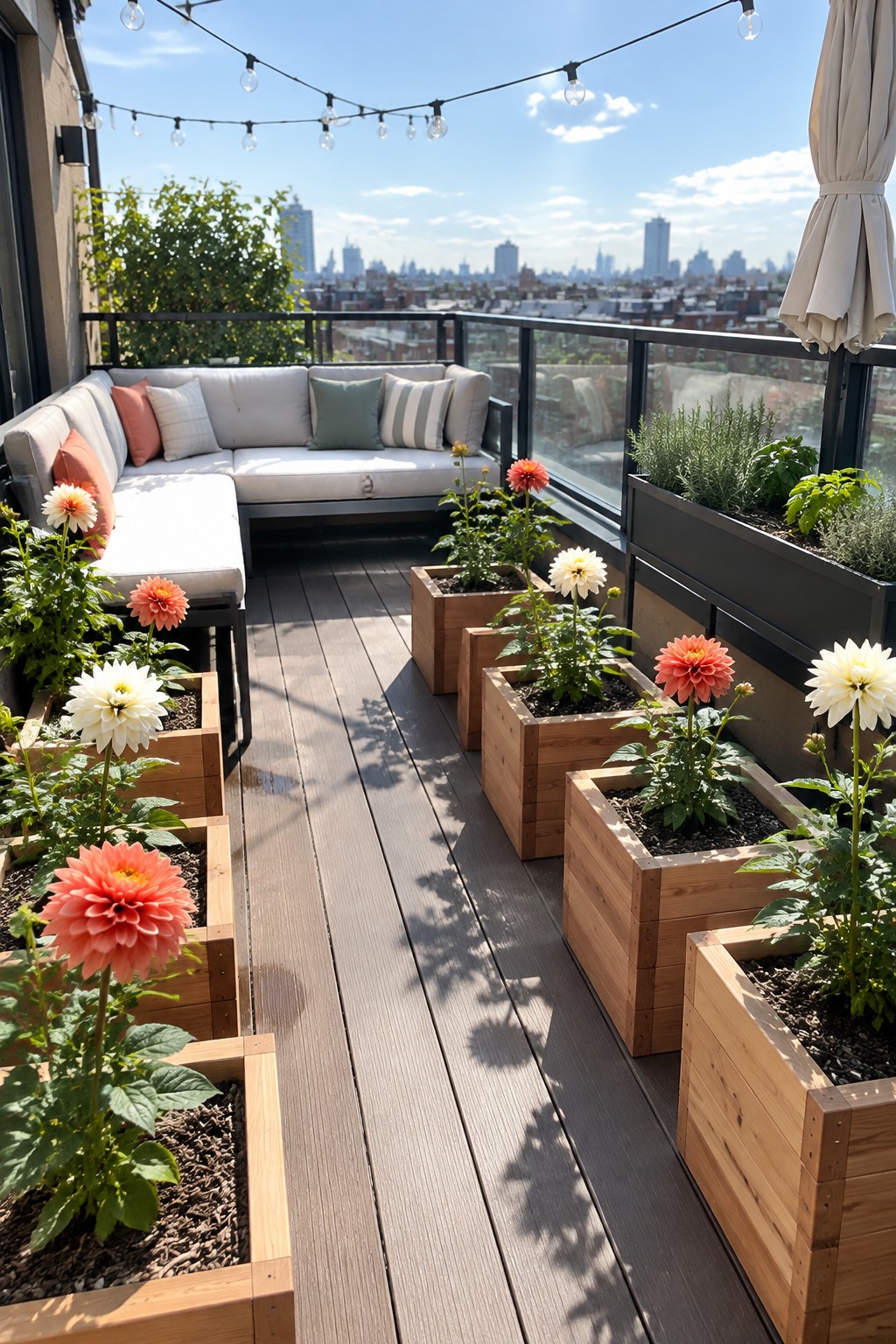
Raised wooden planters make it easier to give dahlias a sunny growing spot when there is no garden bed to use. They also keep the planting organized, while the flowers bring color along the edges of a balcony or deck.
Choose planters with drainage holes and enough room for the roots, and make sure the balcony gets several hours of direct sun. Dahlias can grow tall, so leave space to move around them and add support if the stems need it.
Use a Mown Path to Edge a Dahlia Bed
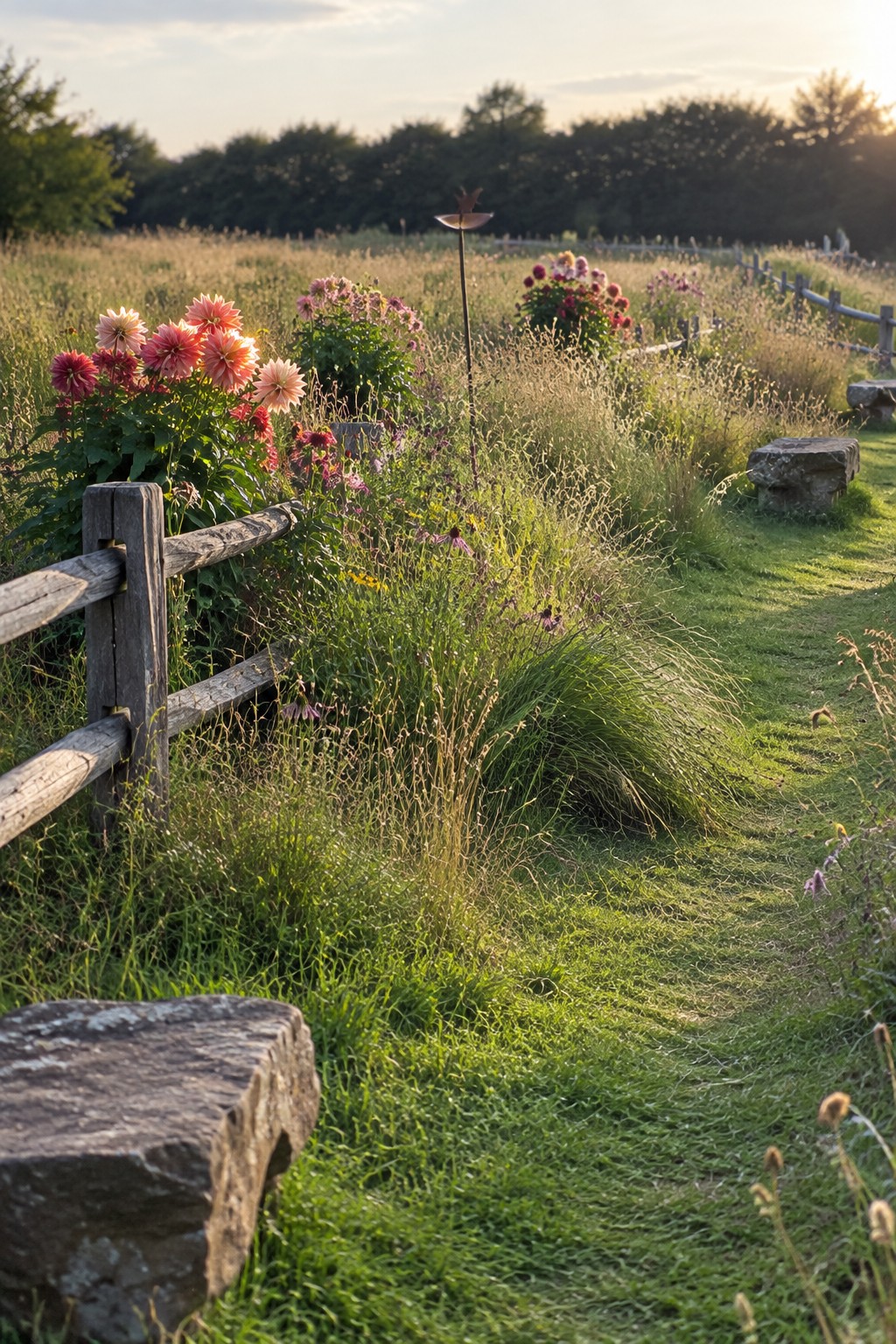
A simple mown path gives a flower bed a clear edge without adding more hardscape. It also makes the dahlias easier to reach for cutting and deadheading, while the taller planting can stay loose and natural.
Leave enough room for a wheelbarrow or a comfortable walk, and mow the path regularly so grass does not creep into the bed. This approach suits larger sunny gardens, especially where a fence or border already helps define the planting area.
Light a Dahlia Bed Along the Path
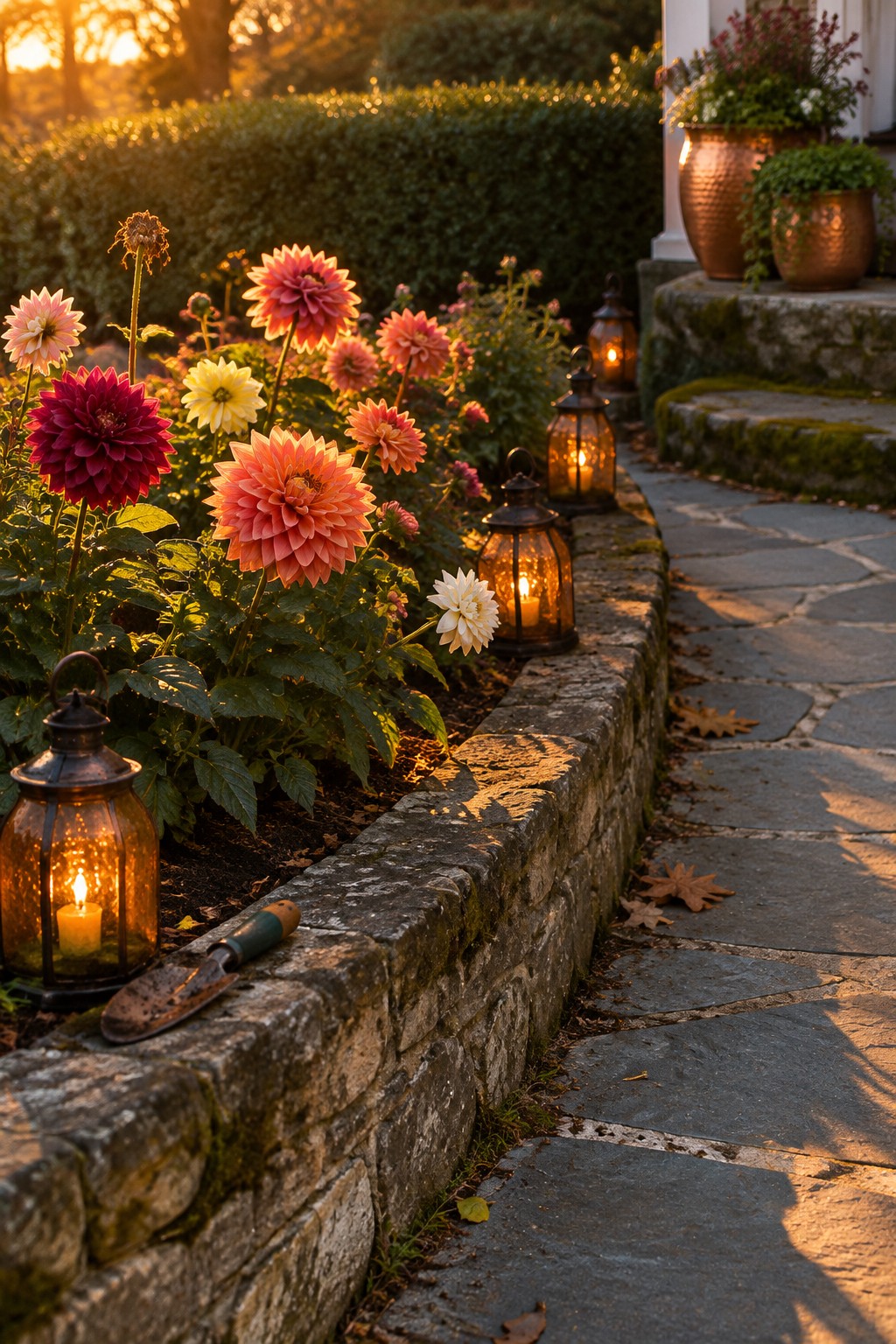
Lanterns placed along a flower bed make a garden path easier to enjoy after sunset, while keeping the dahlias as the main feature. The low stone edging gives the planting a clear boundary beside the paving.
Use lanterns sparingly along a sunny path, leaving enough room to walk and tend the flowers. Choose weather-safe fixtures, and keep open flames well away from dry leaves and stems.
Frequently Asked Questions
Q: How many hours of sun do dahlias need to flower well?
A: Dahlias bloom best with at least six hours of direct sun a day. In a very hot climate, a little afternoon shade can help keep blooms from wilting.
Q: Can I plant different dahlia varieties together in one bed?
A: Yes, just check the mature heights before planting. Put taller dahlias toward the back or center so they don’t shade shorter varieties.
Q: How often should I water a sunny dahlia bed?
A: Water deeply when the soil starts to feel dry, especially during hot, dry spells. A layer of mulch helps the soil hold moisture, but keep it away from the stems.
Q: Do dahlias need support in a full-sun garden?
A: Tall varieties often do, especially once they’re covered in blooms. Add stakes or a simple support early, before the stems get large and harder to work around.
