


Boulders can give a desert garden shape and texture, but when they sit without a clear plan, the yard can feel scattered or hard to use.
I find that the best results come from treating rock placement, pathways, and drought-tolerant plants as parts of the same layout.
A few thoughtful changes can define planting beds, guide the eye, and make open areas feel more intentional without adding much upkeep.
It’s satisfying to see a yard feel more settled while still fitting the dry climate and natural character of the landscape.
I’d save the ideas that suit your own space and try them one layer at a time.
Create A Defined Desert Garden Bed

A patchy lawn can be hard to maintain in a dry climate. Replacing it with a curved gravel bed gives the yard a clear shape, while boulders and succulents provide structure without relying on thirsty grass.
This idea works well in a small front yard where you want a tidy look and a simple path to the entry. Keep the planting focused around a few larger rocks, and leave enough open gravel for easy upkeep.
Turn A Bare Patio Into A Seating Area

A cracked concrete patio can become a useful outdoor room when the surface is replaced with a more defined place to gather. Here, stone paving and a curved built-in bench make the seating area feel planned, with a fire pit as its main feature.
For a similar yard, start by deciding where people will sit and leave enough open space to move around comfortably. A built-in bench can work well in a small patio, but keep the materials practical for your climate and the seating size suited to the space.
Add Terraced Stone Beds To A Steep Yard

A bare slope can be hard to maintain and prone to erosion. Low stone retaining walls break the grade into planting levels, turning the hillside into a more stable, organized garden.
This approach suits sloped yards where a single planting bed would wash out or be difficult to reach. Use sturdy stones and drought-tolerant plants, and make sure the walls are properly built for the height and soil conditions.
Replace Patchy Grass With A Stone Garden Bed
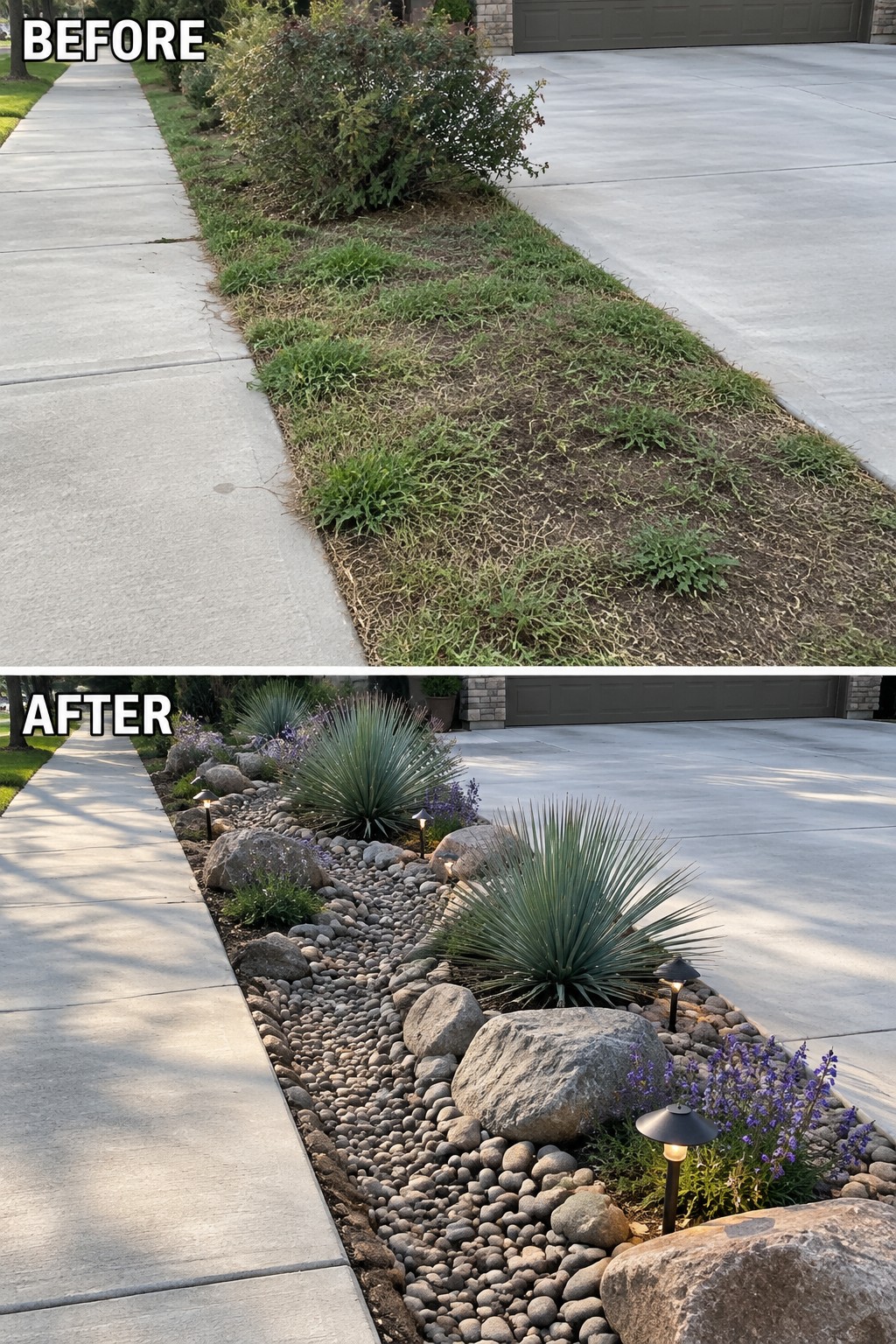
A strip of struggling grass can be hard to keep tidy, especially between a sidewalk and driveway. Replacing it with gravel and a few drought-tolerant plants gives the space a clear shape and cuts down on lawn upkeep.
This works well in a sunny side yard or other narrow area where grass tends to thin out. Clear the weeds first, then use a defined edge and leave enough open space for water to drain and people to pass.
Replace Shrubs With A Simple Desert Garden

The crowded shrubs leave the front bed looking plain and hard to maintain. Replacing them with gravel, a few sculptural cacti, and agaves gives the yard a clear desert-garden layout while letting the boulder serve as the main focal point.
This approach works well in a small, sunny front yard where thirsty shrubs need frequent trimming or watering. Keep the plant count modest and leave space between plants so each one can grow without blocking the path or steps.
Add Structure To An Overgrown Side Yard

A clear planting bed can make an unruly side yard feel planned and easier to maintain. Here, the tangled growth gives way to a low stone border with drought-tolerant plants, while the gravel path stays open.
For a similar look, remove unwanted growth first, then use boulders to define a bed along the fence. Choose plants suited to a dry climate and leave enough room to walk and reach the fence for upkeep.
Add Structure Around A Desert Garden Tree

The loose rock bed looks scattered, while the new arrangement gives the tree a clear focal area with boulders and grouped desert plants. That simple structure makes the planting feel planned without filling every part of the yard.
For a similar bed, keep a little open space around the tree and group a few hardy plants near the larger rocks. This works well in gravel yards where you want a defined garden feature, but avoid packing plants too tightly as they grow.
Create A Clear Stone Path Through A Side Yard
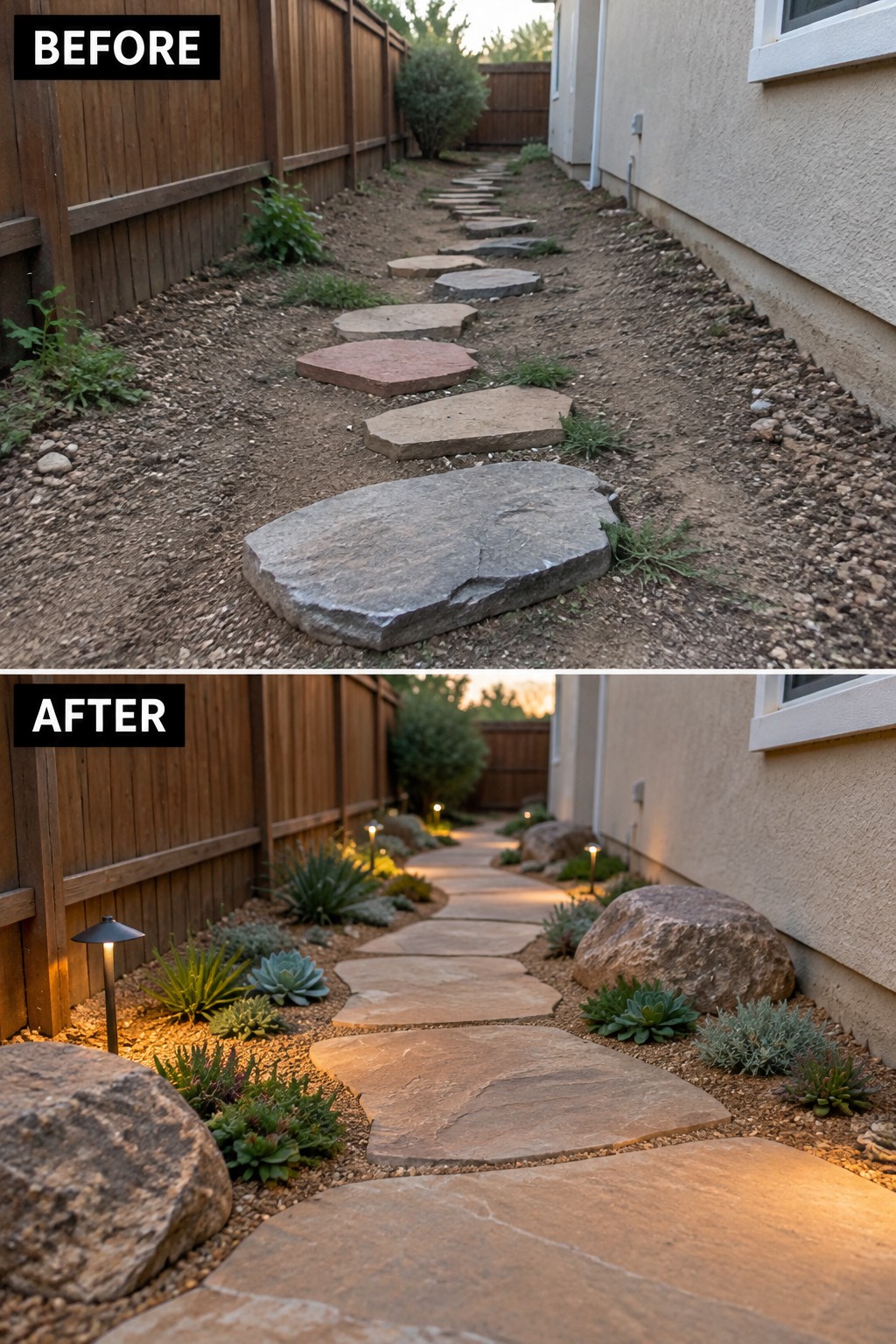
A simple stone path gives a narrow side yard a clear route instead of asking people to pick their way across bare, uneven soil. In this makeover, larger stepping stones form a more continuous walkway, while gravel and low desert plants fill the space around them.
This idea works well between a house and fence, where there may not be room for a wide paved path. Keep the stones level and close enough for an easy stride, and leave enough space around them for gravel and plants without crowding the walkway.
Replace A Cracked Patio With A Gravel Garden

An unused concrete patio can become a more practical desert garden when you replace the hard surface with gravel and add a simple planting area. Here, large boulders create a clear garden bed, while the open gravel space keeps the small yard from feeling crowded.
This idea works well in a compact courtyard where a full lawn would take more water and upkeep. Use gravel that suits the local climate, leave a clear route through the space, and choose a few hardy plants rather than filling every gap.
Add Boulder Planting Along The Pool Fence
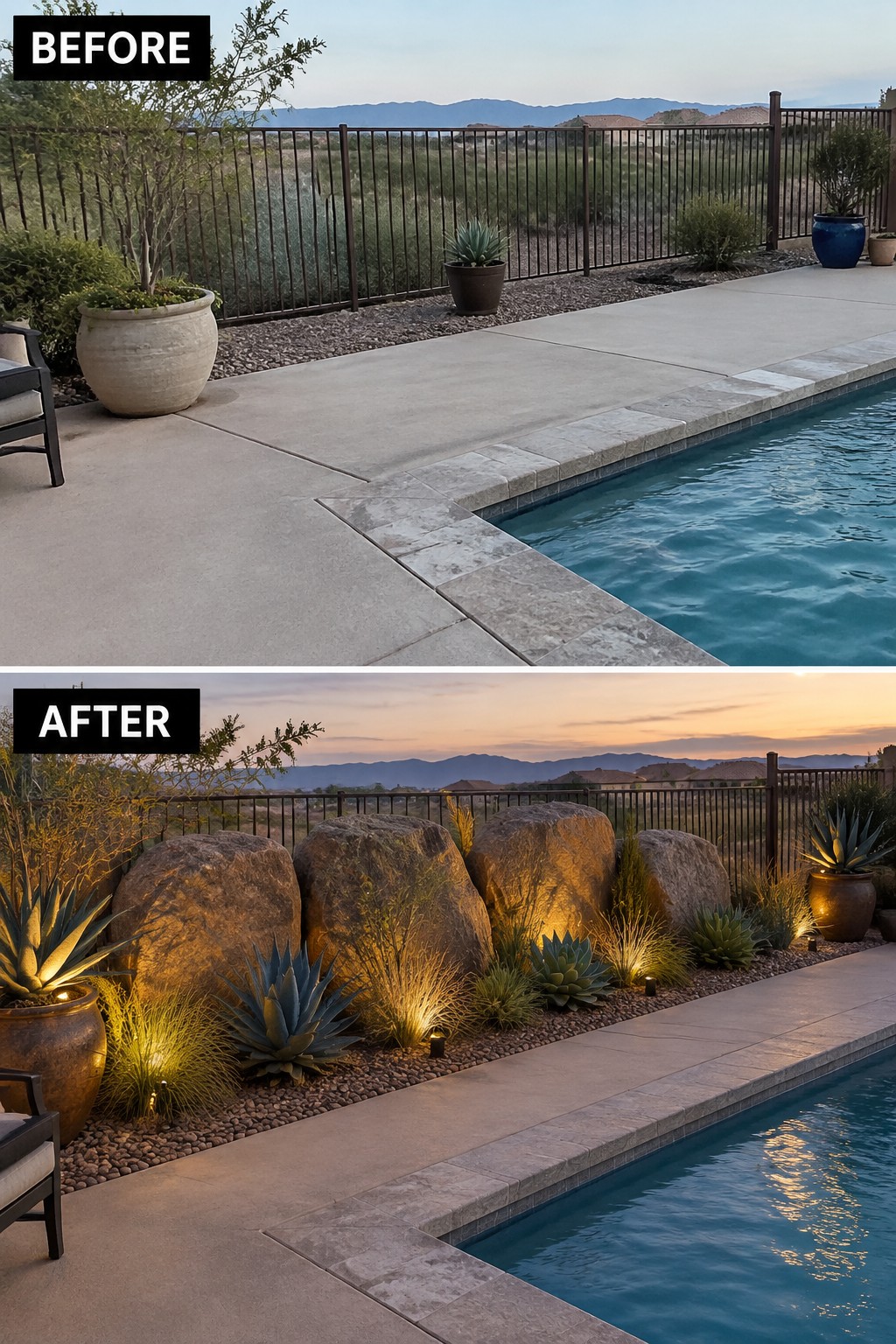
The plain gravel strip beside the pool becomes a defined desert garden with large boulders and grouped plants. The rocks give the bed a clear shape and make the planting feel intentional without changing the patio itself.
This idea works well along a fence or other narrow yard edge. Keep enough room between the plants and pool deck for walking, and use drought-tolerant plants suited to your climate.
Replace Overgrown Shrubs With A Desert Garden

The crowded shrubs hide much of the home and make the front bed feel unplanned. Replacing them with gravel and a few well-spaced desert plants gives the yard a clearer shape and lets the entry show.
This approach suits a sunny front yard where thirsty shrubs have become too large to manage. Remove the overgrowth first, then choose a few plants suited to your climate and leave room for them to grow. A large boulder can serve as a simple focal point without filling the bed with more plants.
Use Boulders To Add Structure To A Gravel Garden

A gravel yard can look sparse when it has little shape or planting variety. Here, larger boulders break up the open stone and create distinct spots for drought-tolerant flowers and grasses, giving the garden a more planned look without replacing the gravel.
Try this approach in a sunny front yard where water-wise planting makes sense. Set a few boulders at varied heights, then group plants around them rather than spreading small plants evenly across the whole bed. Leave enough open gravel to keep paths clear and the layout easy to maintain.
Turn A Narrow Balcony Into A Seating Area

A narrow balcony can become more useful when it has one clear purpose. Here, loose pots give way to a compact seating spot, while a planted stone wall makes the garden part of the space without taking up the floor.
Keep the furniture small enough to leave a clear path to the door, and use weather-ready chairs and a table. A vertical planting feature can suit a tight balcony where there isn’t room for more pots, but avoid packing in so much greenery that the seating feels cramped.
Create A Dry Creek Bed For A Steep Yard

A dry creek bed gives a steep, bare yard a clear shape while helping direct runoff. Here, loose soil and scattered weeds give way to a winding channel of smooth stones, with boulders and drought-tolerant plants helping it fit the slope.
For a similar yard, plan the channel along the natural path water takes and use stones in a range of sizes to hold its edges in place. Keep plants suited to your climate, and make sure the creek bed does not send water toward the house or a neighbor’s property.
Turn A Patchy Strip Into A Boulder Garden

The narrow lawn strip beside the sidewalk looks worn and uneven, so replacing it with a defined gravel garden gives the space a cleaner, more intentional layout. Large boulders provide a few clear focal points, while low-growing plants fill the gaps without needing a full lawn.
This idea works well in sunny, dry side yards and other narrow areas where grass is difficult to maintain. Clear out the struggling turf, set the boulders in place, then add gravel and hardy plants while leaving enough room for the sidewalk and access to the house.
Give A Bare Porch A Defined Garden Bed

The empty porch felt unfinished, but a raised stone-edged bed gives the entry a clear planting area without taking over the walkway. Gravel and drought-tolerant plants make a practical fit for a modern desert garden.
This idea works well beside a front door where there’s room for a shallow bed. Keep the plants low near the path and leave enough space to walk comfortably.
Make An Overgrown Corner Into A Fire Pit Area

The main change here is turning a neglected corner of the yard into a defined place to sit. Clearing the overgrowth and using gravel around a fire pit gives the space a clear purpose, while large boulders provide simple, sturdy seating.
This idea works well in a small fenced yard where a full patio would take up too much room. Clear the area first, then leave enough space around the fire pit for people to sit and move safely. Choose plants suited to your climate and keep them away from the fire.
Turn A Bare Side Yard Into A Gravel Garden
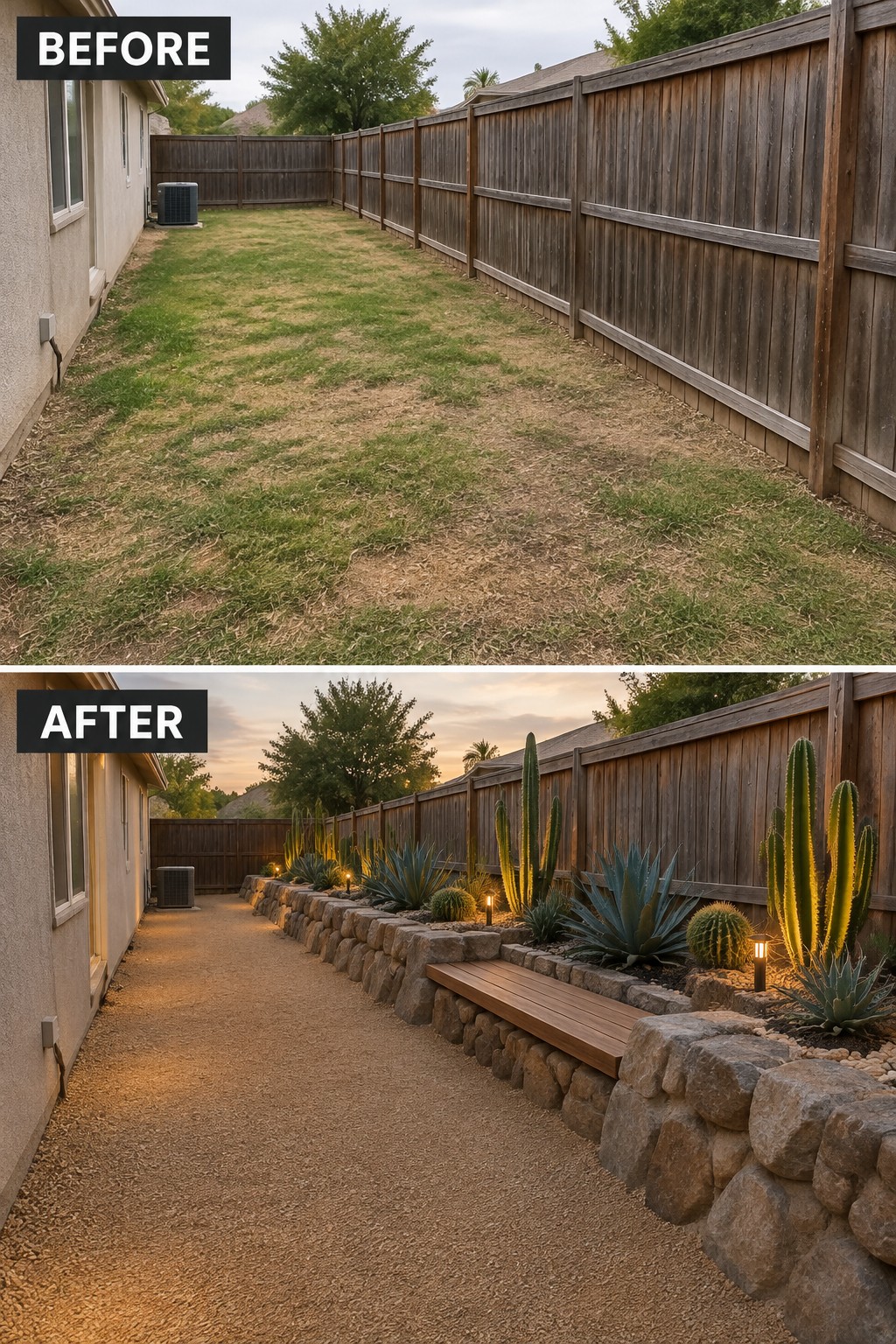
Replacing patchy grass with a gravel path and a raised boulder bed gives this narrow side yard a clear purpose. The stone edge keeps the desert planting contained, while the open path leaves room to walk through without trampling the garden.
This approach works well in side yards where grass struggles or takes too much upkeep. Set the boulders to define a planting area, then use gravel for a stable path. Leave enough width for easy access to the house and any equipment.
Add Terraced Beds To Make A Steep Yard Usable

A steep, bare slope can be hard to plant and prone to washing out. Stone steps and low retaining beds break the grade into smaller sections, giving plants a place to grow and making the hillside easier to navigate.
For a similar yard, plan the steps and retaining edges around the slope before choosing plants. Boulder-style stone and drought-tolerant planting suit a desert garden, but leave enough room on each step for safe footing.
Turn A Bare Patio Into A Covered Seating Area

The concrete patio was mostly unused, but adding a pergola and a simple seating arrangement gives it a clear purpose. The overhead shade makes the area more comfortable, while the furniture turns it into an outdoor room rather than just an empty slab.
This idea works well in desert yards where shade matters during the day. Keep the layout open enough to walk through, and choose outdoor furniture that can handle sun and heat.
Use Boulders To Define A Desert Garden Bed

A bare strip along a block wall can look unfinished, even when the rest of the yard is in good shape. Adding a defined bed of boulders and drought-tolerant plants gives the area a clear shape and makes the wall feel like part of the garden.
For a similar look, start by clearing weeds and deciding how wide the bed should be, then group a few large stones among smaller plants and gravel. Leave room for each plant to grow, and keep the bed’s edge simple so it’s easy to maintain.
Frequently Asked Questions
Q: How do I keep boulders from looking like they were just dropped on the ground?
A: Bury the bottom third or so, then group stones in uneven numbers and vary their sizes. Tucking a few around gravel or low plants helps them feel settled into the landscape.
Q: What kind of plants look good around boulders in a desert garden?
A: Choose plants that suit your sun and soil, such as agave, desert grasses, or low-growing succulents. Leave enough space for each plant to grow without hiding the stone.
Q: Will boulders make my yard hotter?
A: Dark stone can hold heat, especially in full sun. If that’s a concern, use lighter-colored boulders and place heat-sensitive plants a little farther away.
Q: Do I need to anchor large boulders?
A: Yes, especially on a slope or near a path where a stone could shift. Have heavy boulders placed securely on stable ground rather than trying to move them by hand.
