

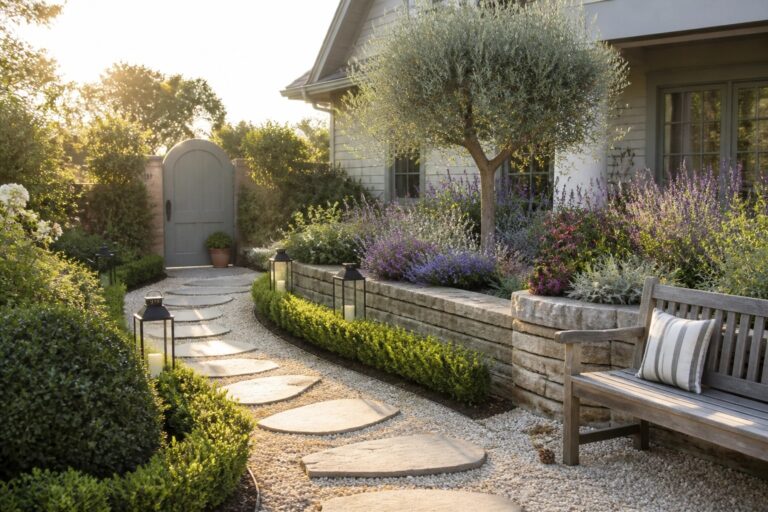
Front yards tend to reveal their strengths once you consider how paths guide movement and how flower beds frame the plants that stand out.
I have found that bold choices in statement plants work best when they connect to the existing layout rather than fighting against it.
Paths make the biggest difference.
Flower beds need enough structure so they hold their shape through the seasons without constant upkeep.
Some of these approaches are ones I would try adapting to my own space to see how they shift the daily experience of coming home.
Stone Paths That Wind Through Flower Beds
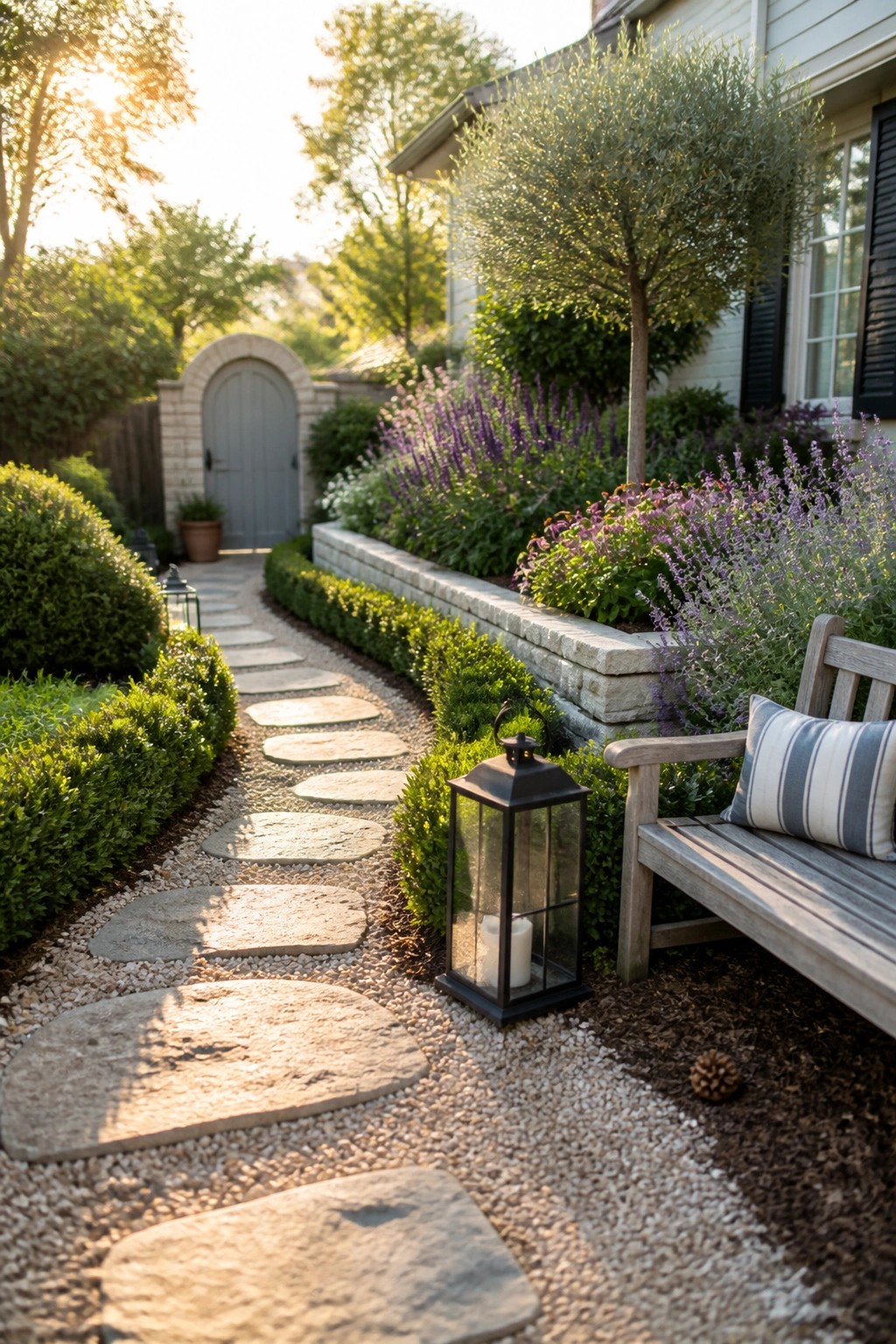
A winding path made of large stepping stones set in gravel gives the front yard a gentle flow. It lets the eye travel through the space instead of stopping at a straight line, and it works especially well when the beds on either side are planted in layers of different heights and colors.
This layout suits homes where the front garden has some depth or leads toward a gate or side entrance. Keep the stones uneven in spacing so the walk feels natural, and let low shrubs and taller perennials spill slightly over the edges to soften the hardscape without crowding the route.
Paver Paths Set In Gravel
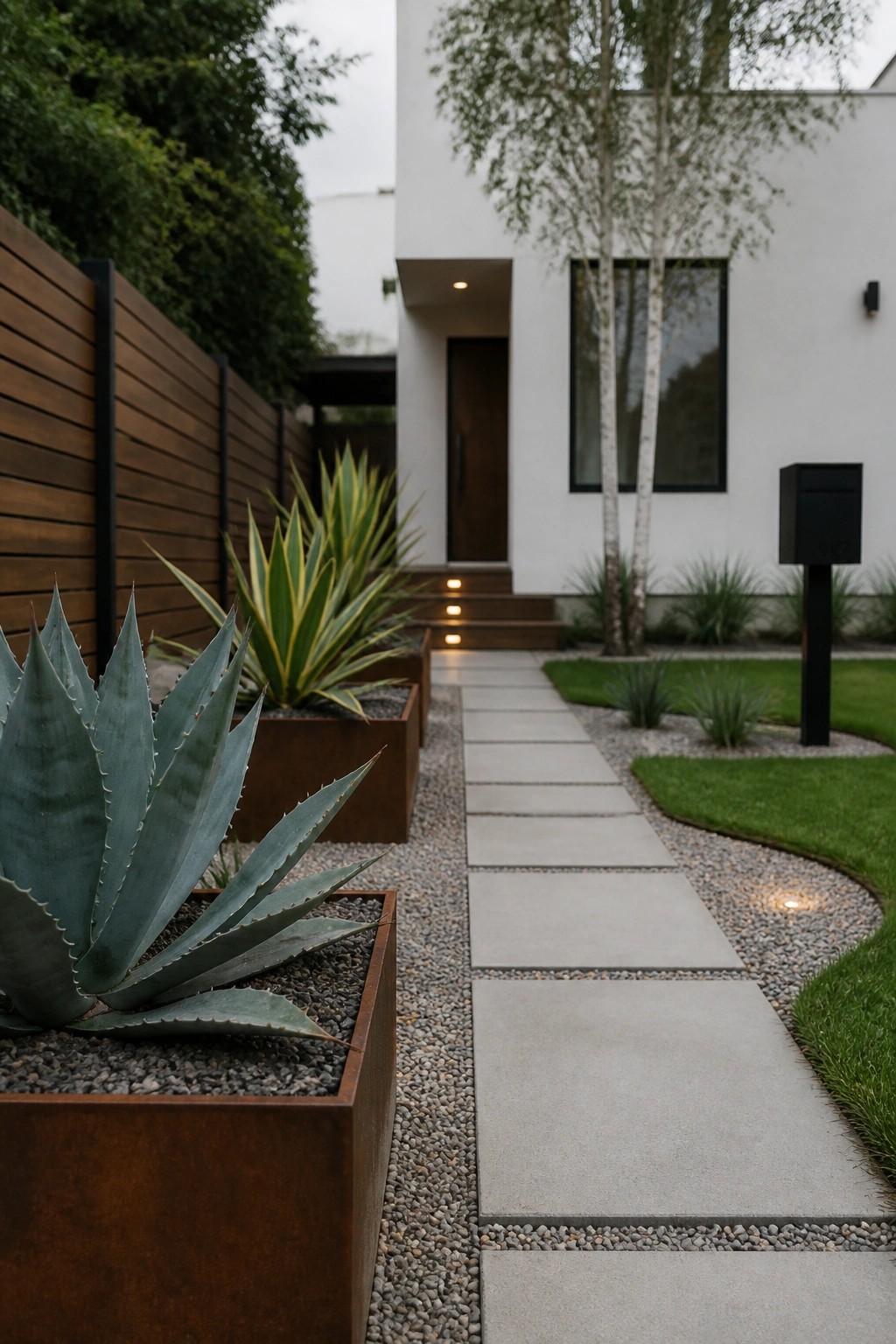
A grid of large pavers laid into gravel makes a front path feel simple and direct. It avoids the look of a solid concrete walkway while still giving clear footing and good drainage.
This works best on modern homes where you want low maintenance. Place a few large plants in metal boxes along one side to add height and shape without crowding the walkway.
Curved Brick Paths Through the Garden
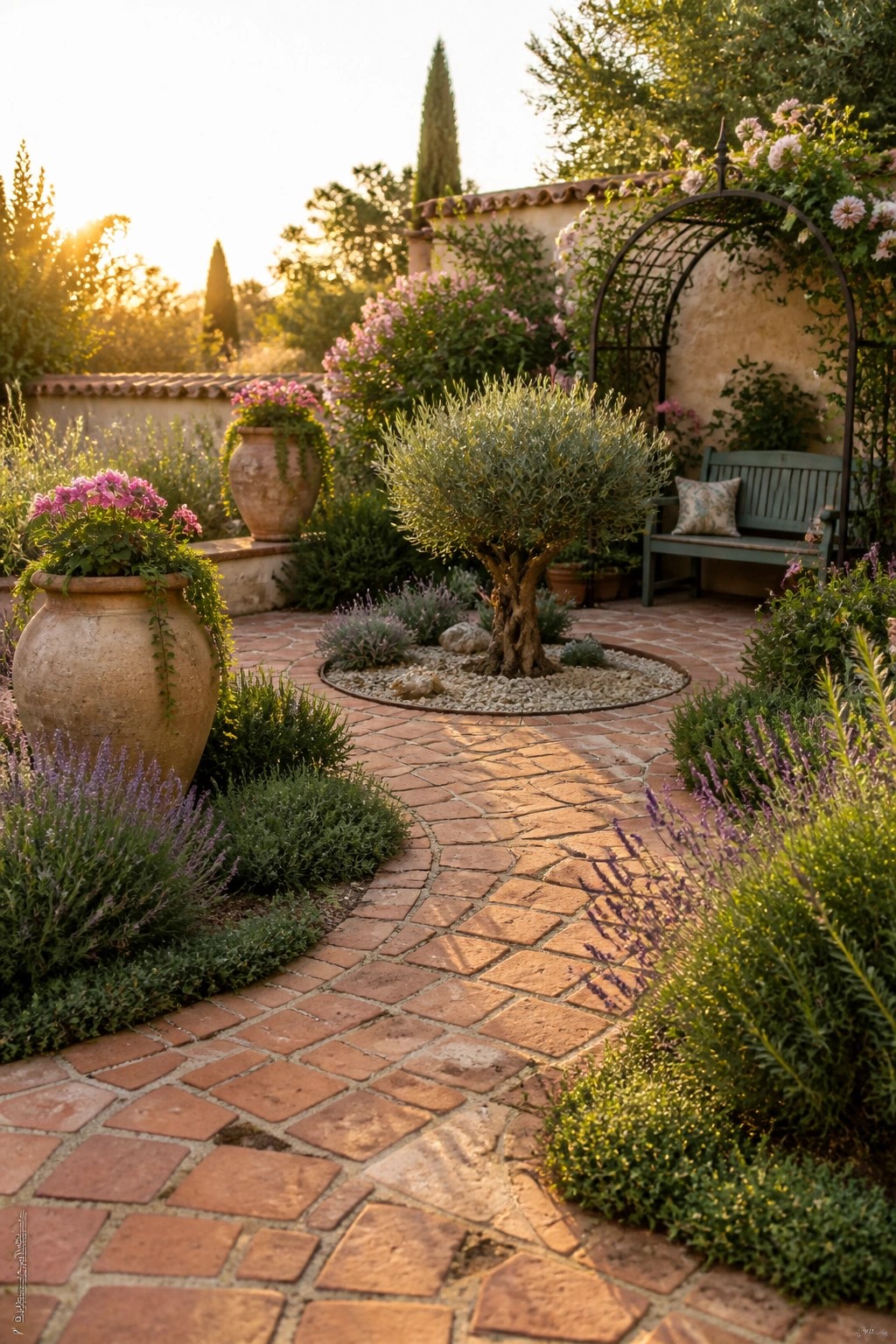
A gently curving brick path adds movement to a front garden without needing lots of hardscaping. It breaks up straight lines from the house or driveway and gives you room to layer plants along the edges. The bricks feel warm underfoot and age nicely over time.
This layout works well on smaller lots where a straight path can feel too formal. Keep the curve loose rather than dramatic, and let low plants like lavender spill over the sides. Terracotta pots placed near the bends help mark the way and add height without crowding the walkway.
Stepping Stones In Gravel Beds
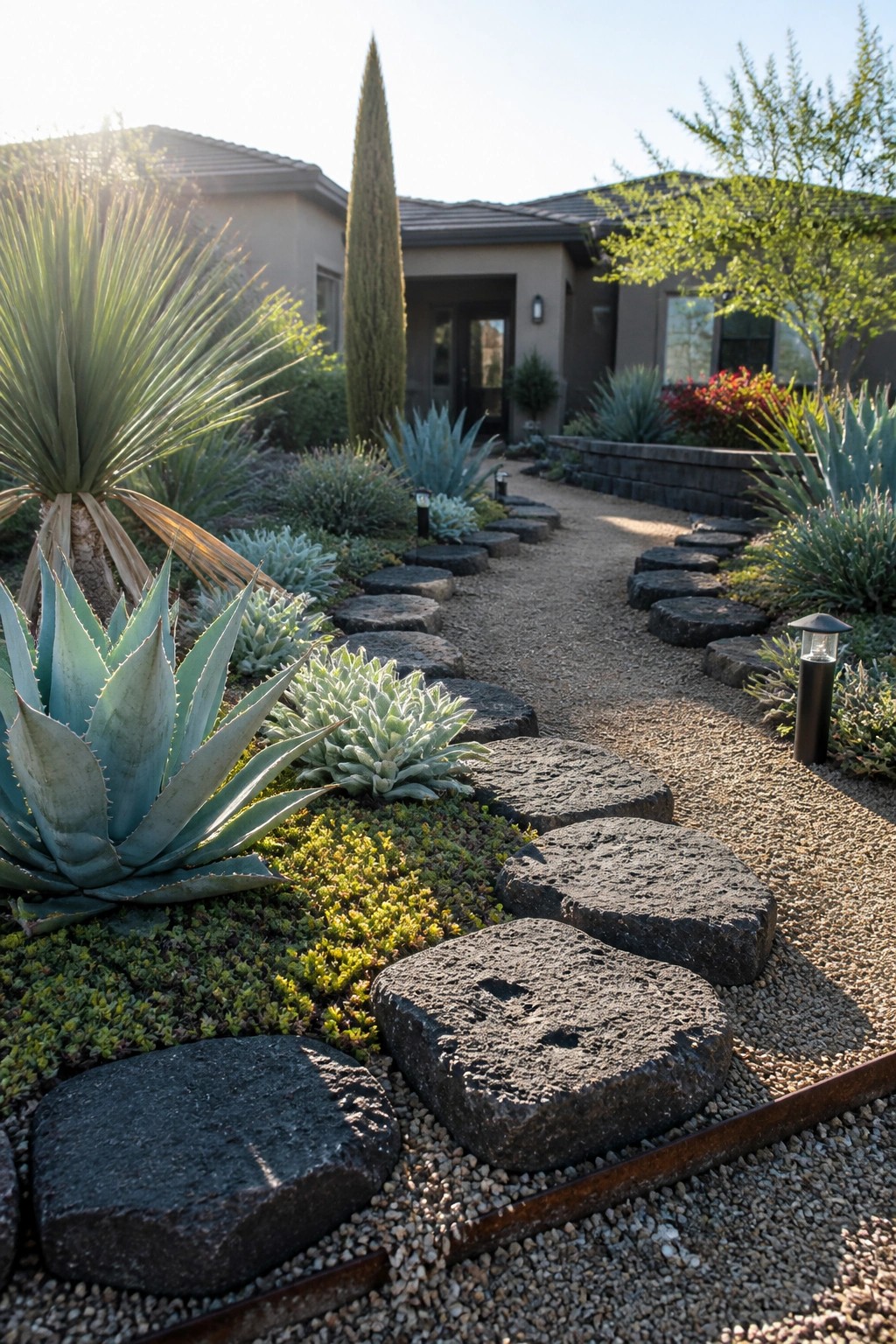
A path made from large stepping stones set into gravel gives a front yard an easy flow without needing a solid walkway. The stones keep your feet above the ground cover and let rain drain straight through, which works well in drier climates.
This setup pairs nicely with bold plants like agaves and low succulents along the edges. Use stones that are wide enough to feel stable and space them so the stride feels natural rather than forced.
Curved Paths Through Layered Beds
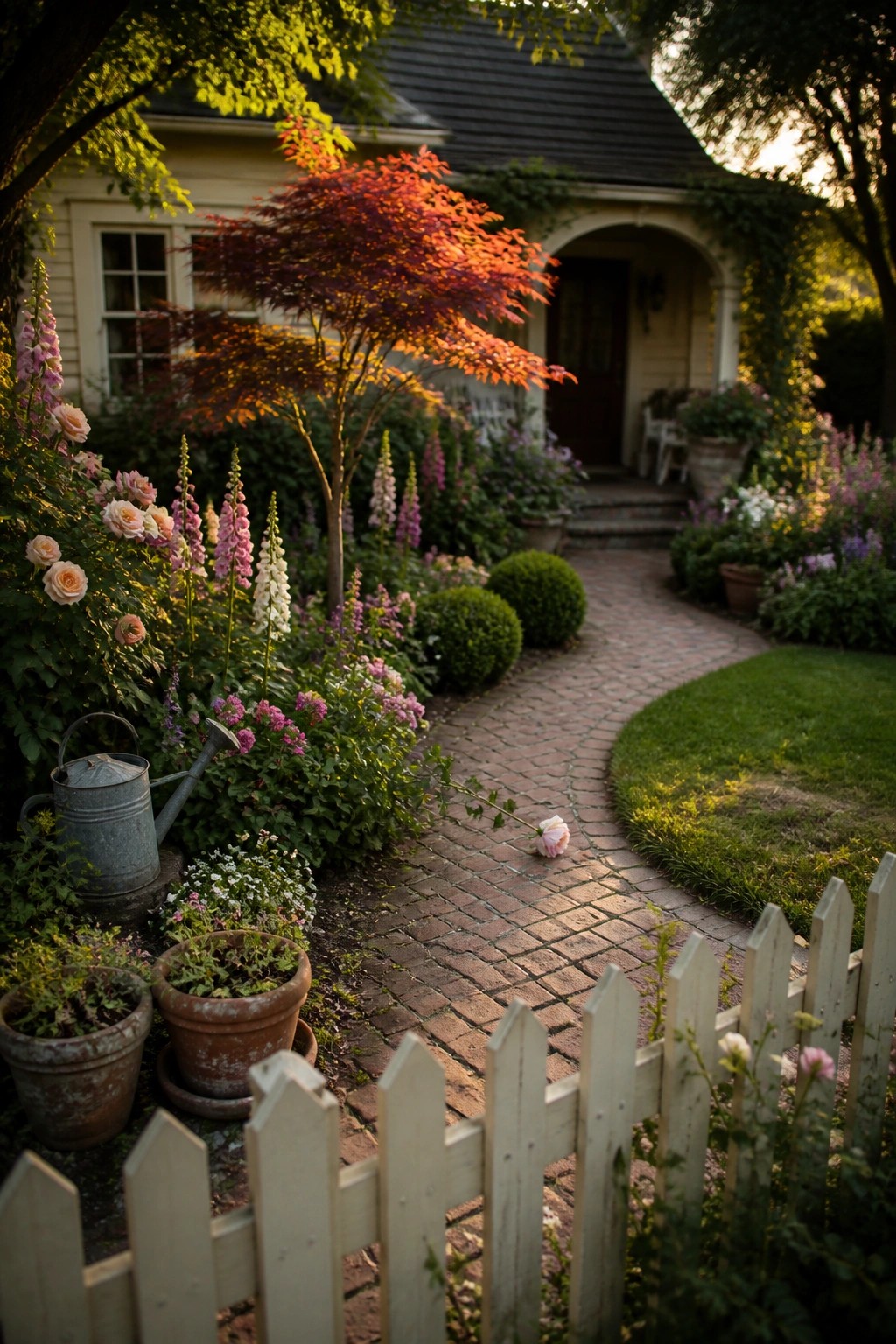
A gentle curve in a front path can make even a small yard feel more interesting. Instead of running straight to the door, the path here bends through the plantings, which lets the beds sit at different depths and gives each group of flowers its own space.
This layout works especially well on narrow lots or in front of older homes where you want the garden to feel established rather than flat. Keep the path width steady so it stays easy to walk, and use low plants near the edges so the curve stays visible.
Stepping Stone Paths With Gravel
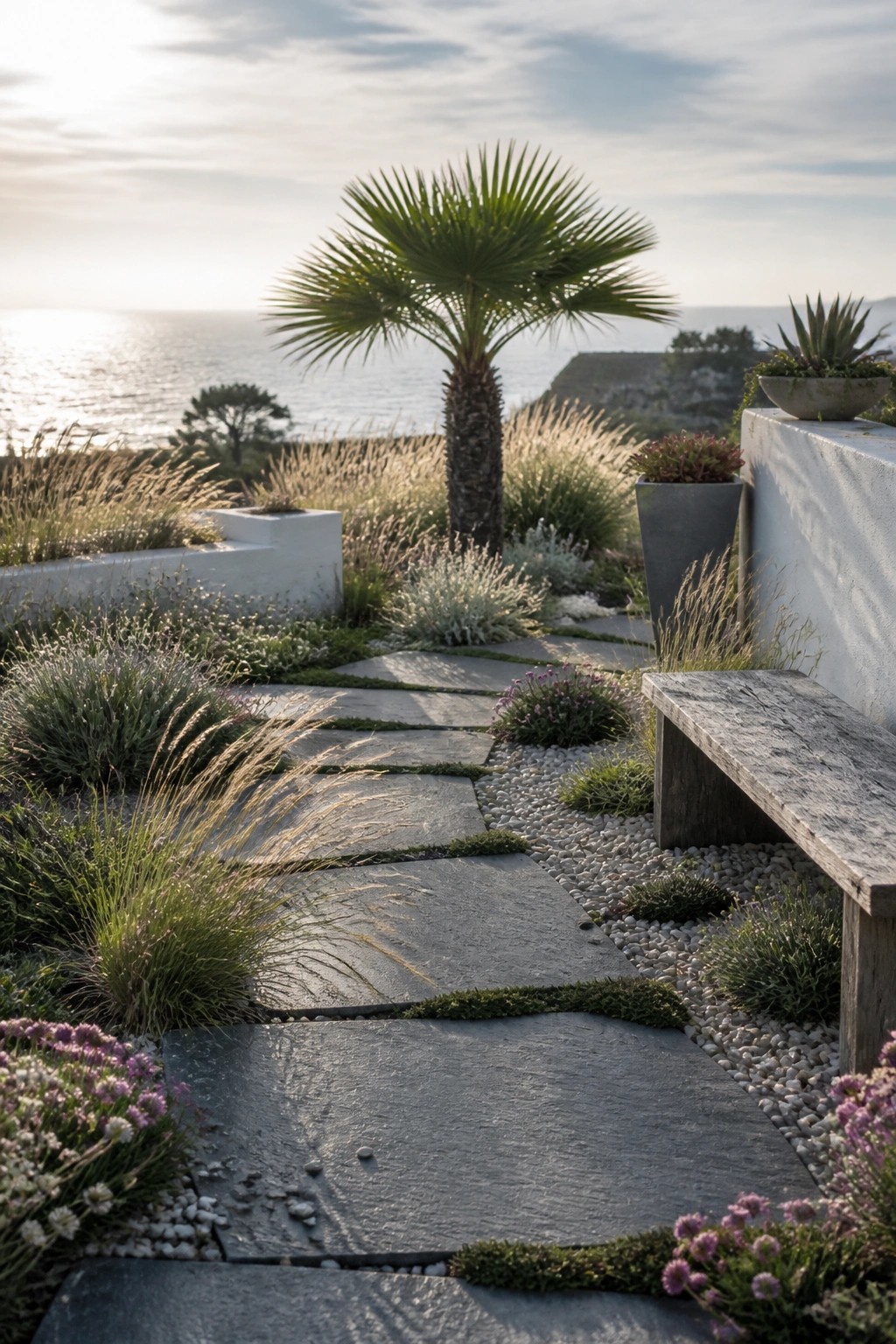
Stepping stone paths with gravel between the slabs give a front yard an easy, natural flow. The stones create clear footing while the gravel fills in around them, letting plants creep close without looking messy or overgrown.
This setup works well in sunny yards or coastal spots where drainage matters. Keep the stones large and fairly flat, then use the gravel to soften the edges so the whole path blends into the surrounding beds.
Curving Paths Through Mixed Beds

A curving path gives the front yard a more natural flow than a straight line. It lets the eye move gradually from one planting area to the next and makes even a modest garden feel larger.
Brick works well for this because it ages nicely and sits low to the ground. Place taller grasses and shrubs toward the back of the beds and keep lower flowers near the edge so the path stays open and easy to follow.
Wooden Paths With Edge Lighting
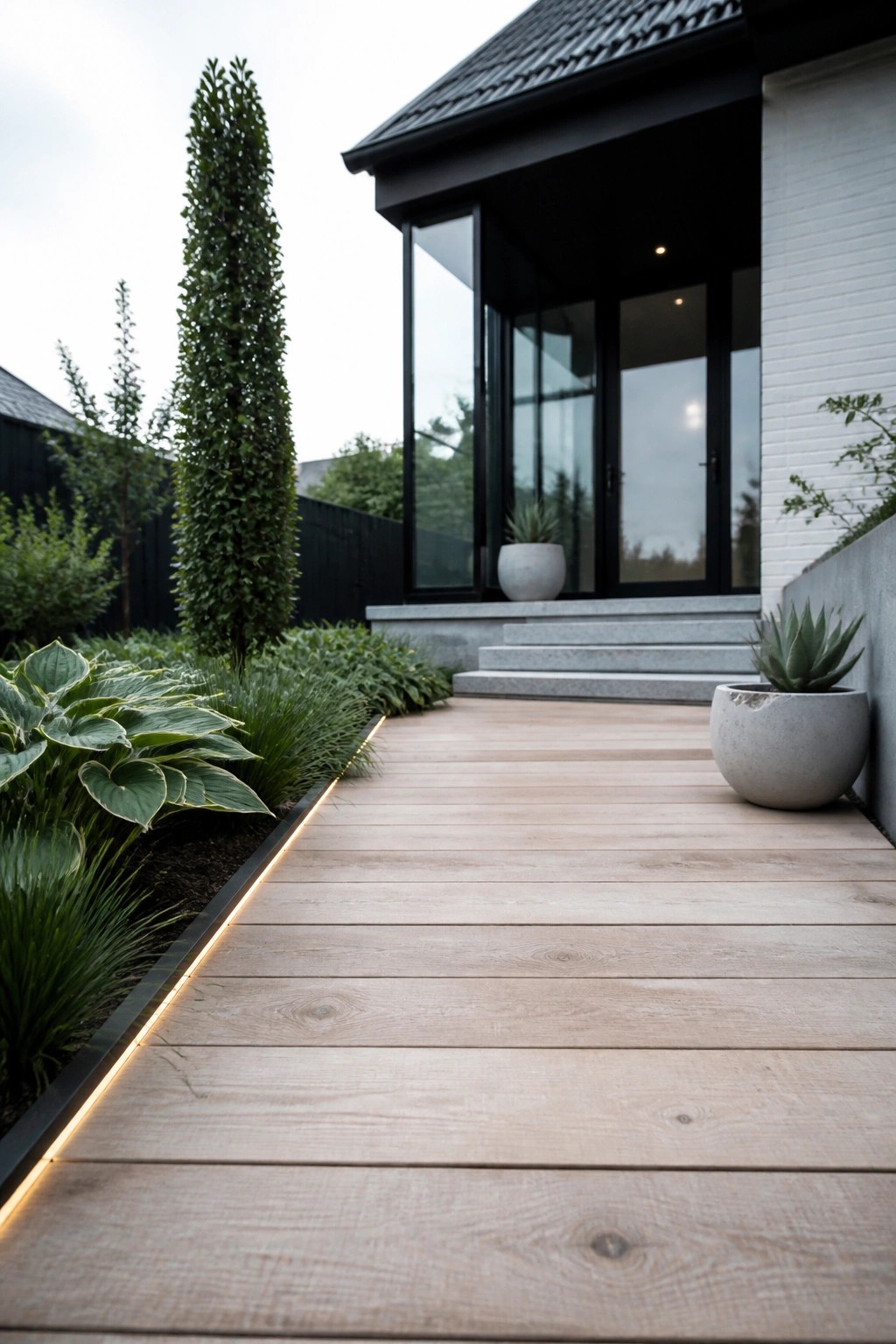
A wooden plank path gives the front yard a simple, grounded feel while keeping the focus on the plants. The thin strip of light along the edge makes the walkway easy to follow after dark without adding extra fixtures that could crowd the beds.
This approach works best on modern homes where the architecture stays quiet and the planting does most of the work. Use weather-treated boards in a light tone and keep the lighting low and even so the path feels like part of the garden rather than a separate feature.
A Simple Stone Path Through Dense Planting
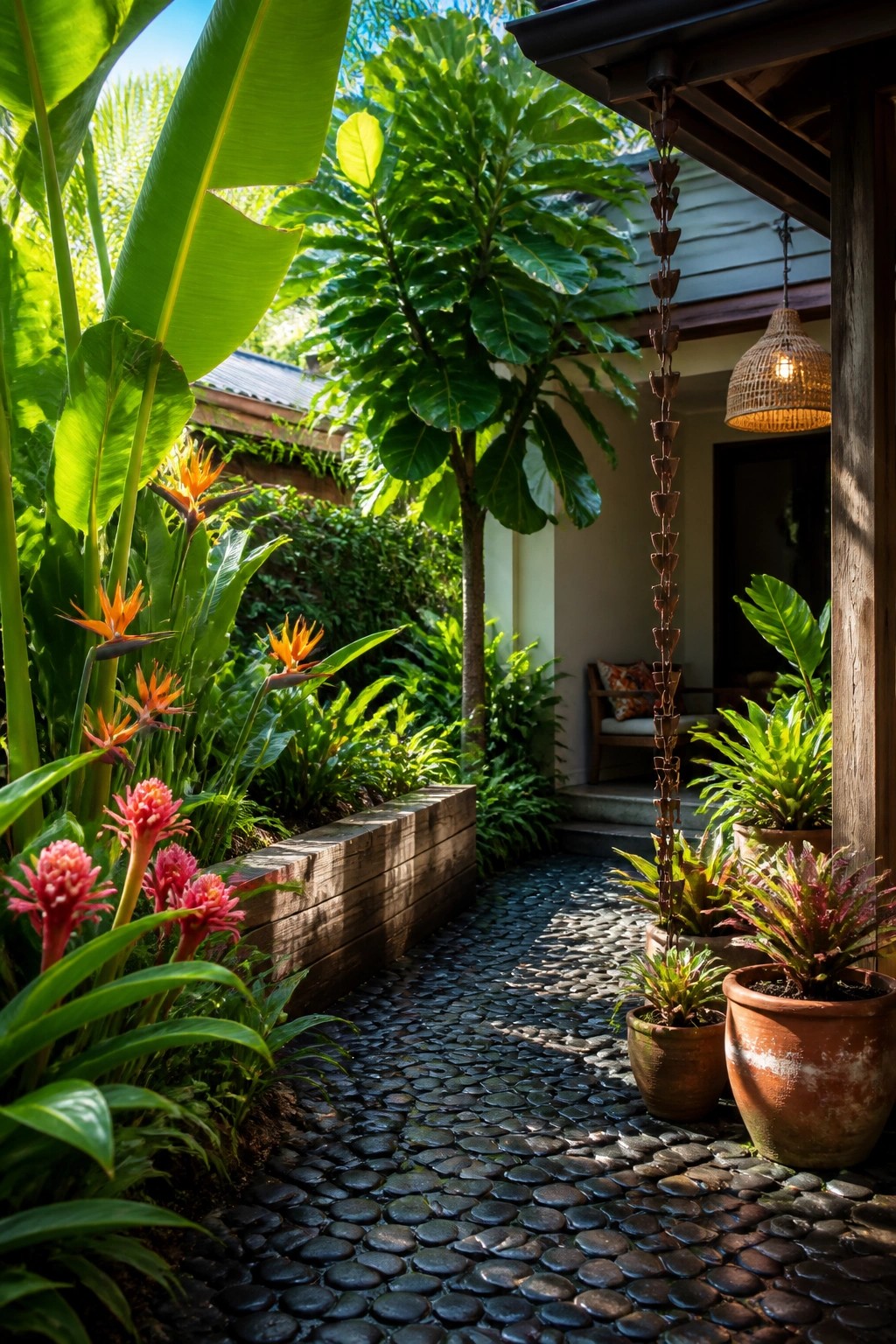
A rounded stone path keeps the focus on the plants rather than the walkway itself. It lets the beds feel full and natural while still giving you a clear way through the garden.
This works best in front yards with room for layered planting on both sides. Use it along the side of the house or between raised beds, and keep the edges soft so the stones almost disappear under the leaves. Just make sure the path has good drainage if rain tends to pool in your area.
Stepping Stone Paths That Wind Through The Garden
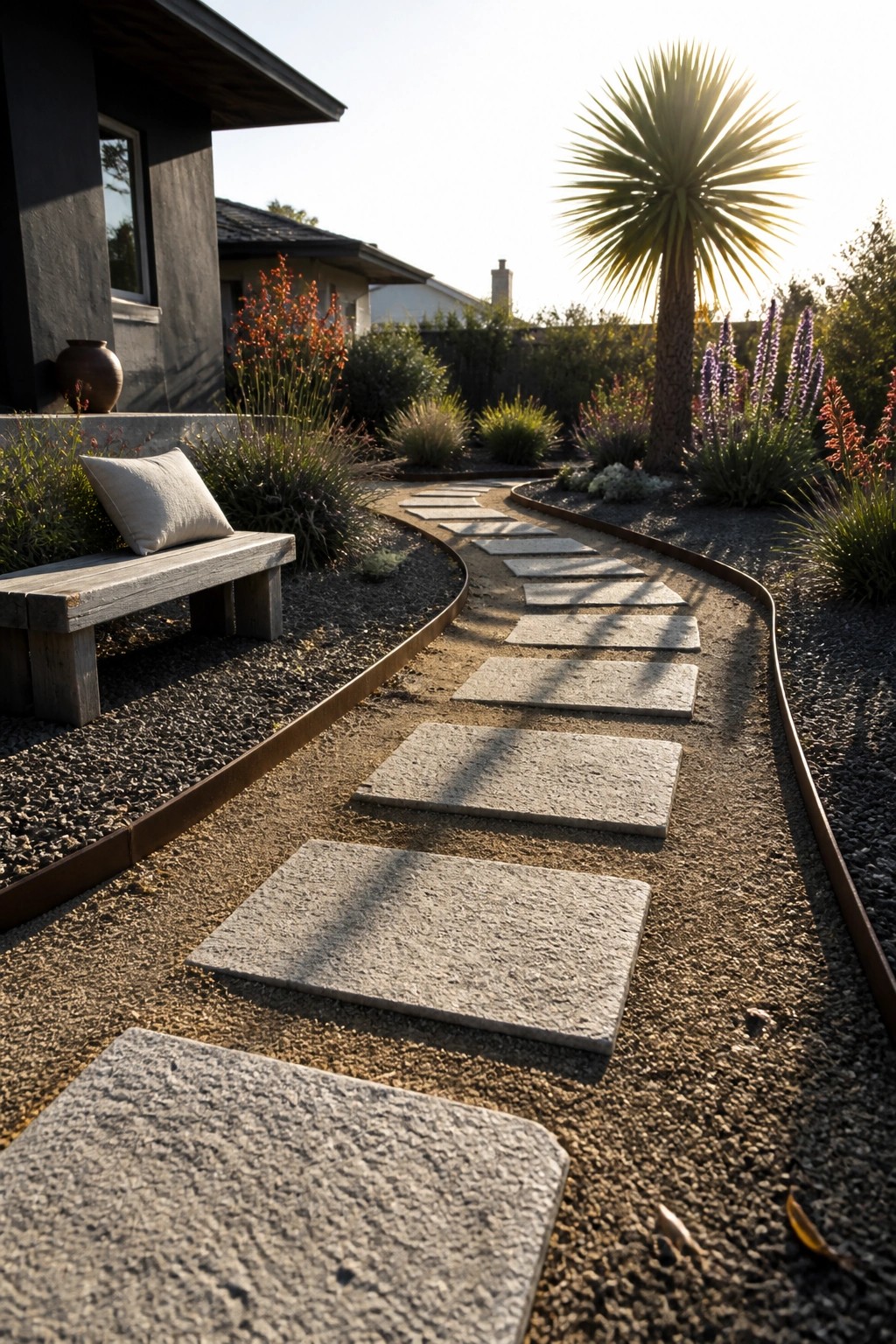
A path made of stepping stones set into gravel gives a front yard a relaxed structure without making it feel too formal. The gentle curve lets the eye follow the route while the surrounding beds stay the main focus.
This layout works best on a slight slope or along the side of a house where a straight walkway would feel stiff. Keep the stones large and slightly irregular so the path feels natural rather than rigid, and use the gravel to help with drainage and weed control.
Layered Blooms Along A Stone Path
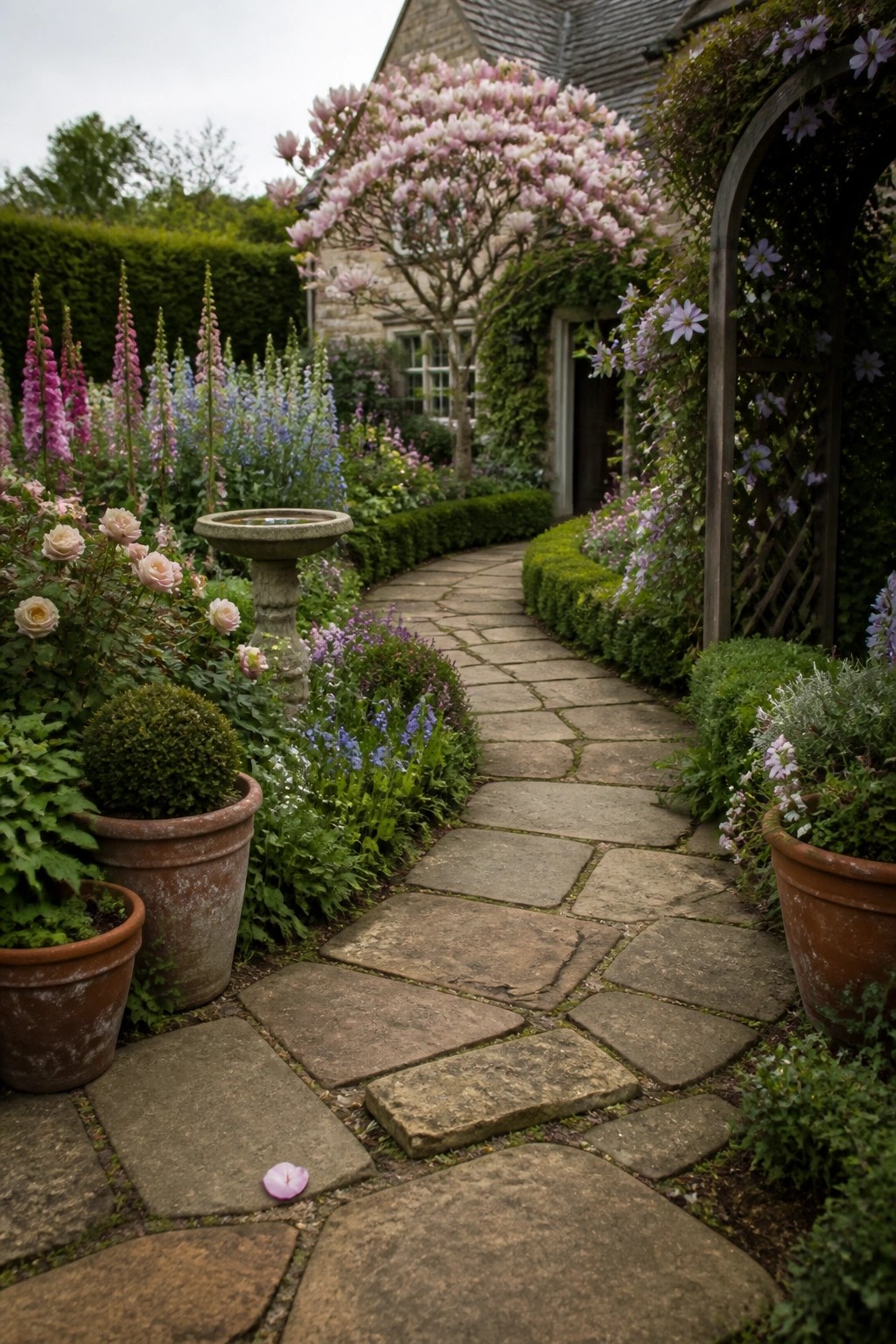
A winding stone path gains more character when it is bordered by flowers planted in layers. Tall spikes at the back, midsize blooms in the middle, and low ground covers along the edges make the walk feel fuller and more inviting without crowding the space.
This approach works best in front yards that already have some width between the path and the house. Keep the beds a consistent depth and mix in a few containers near the start of the path so the planting feels intentional rather than scattered.
Stepping Stones Set In Gravel
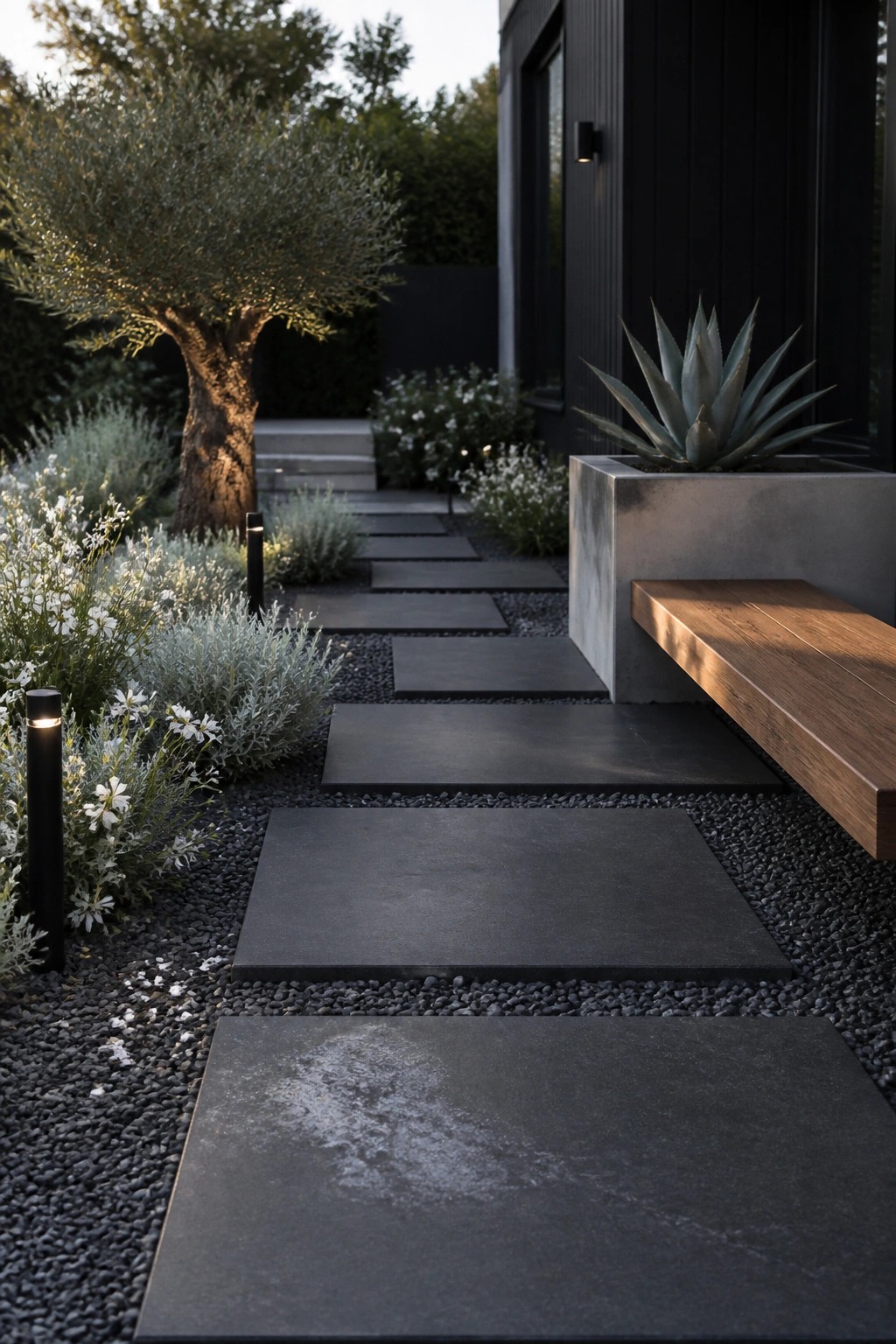
A simple path of large dark pavers laid through gravel gives a front yard structure without looking too formal. It keeps the space open while still guiding people from the street or driveway toward the house. The gravel also helps with drainage and cuts down on mud.
This works well on flatter lots where you want low maintenance but still need a clear route. Keep the pavers large and spaced evenly so walking feels natural. Add a few low lights along the edge if the path will be used after dark.
Brick Paths With Stone Steps
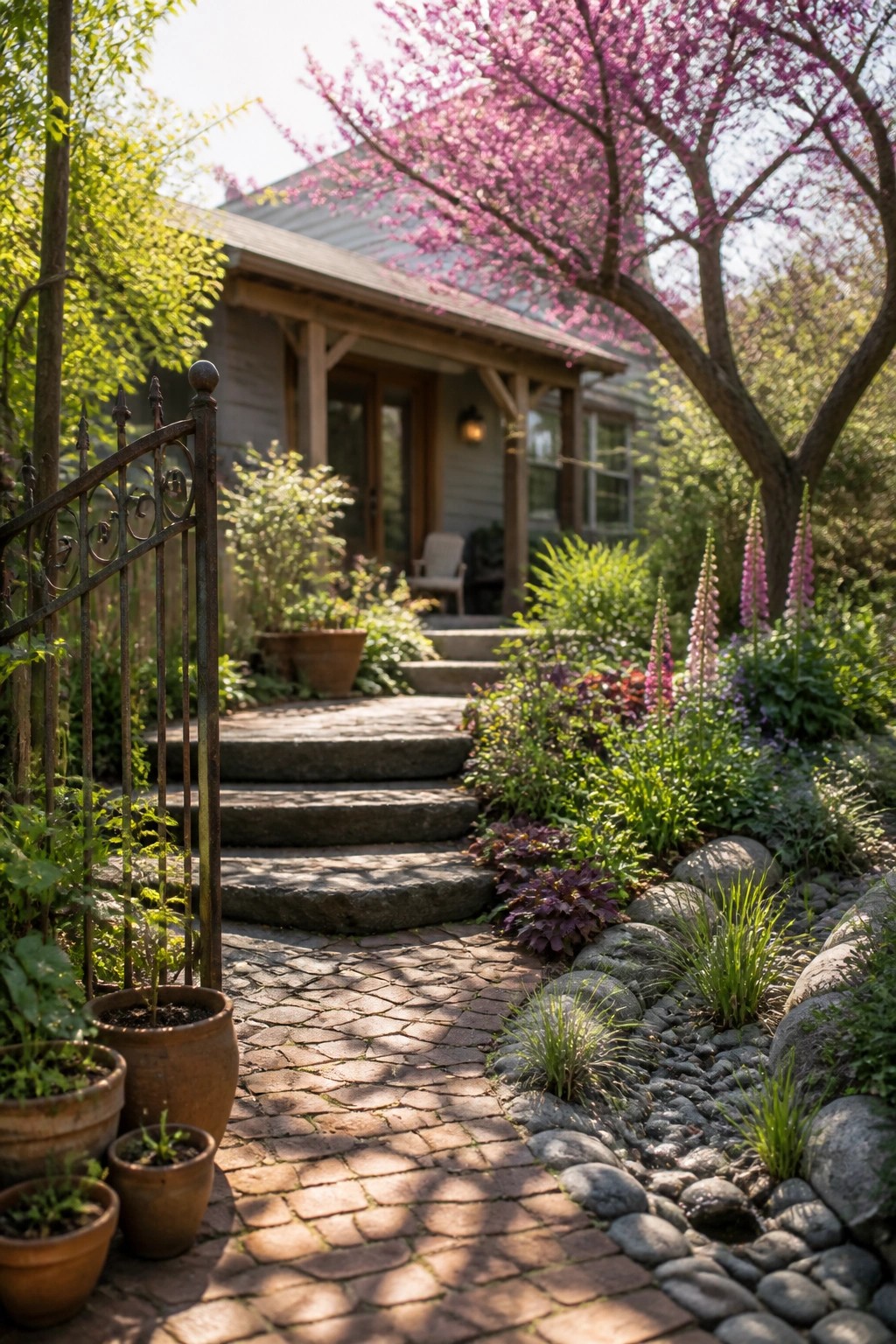
A brick path paired with stone steps gives a front yard a settled, lived-in feel. It handles small changes in level without looking forced and lets plants spill over the edges naturally.
This setup works well on homes with a gentle slope from the street. Keep the rock edging loose for drainage and choose plants that can take a bit of foot traffic near the path.
Curved Paths Through the Beds
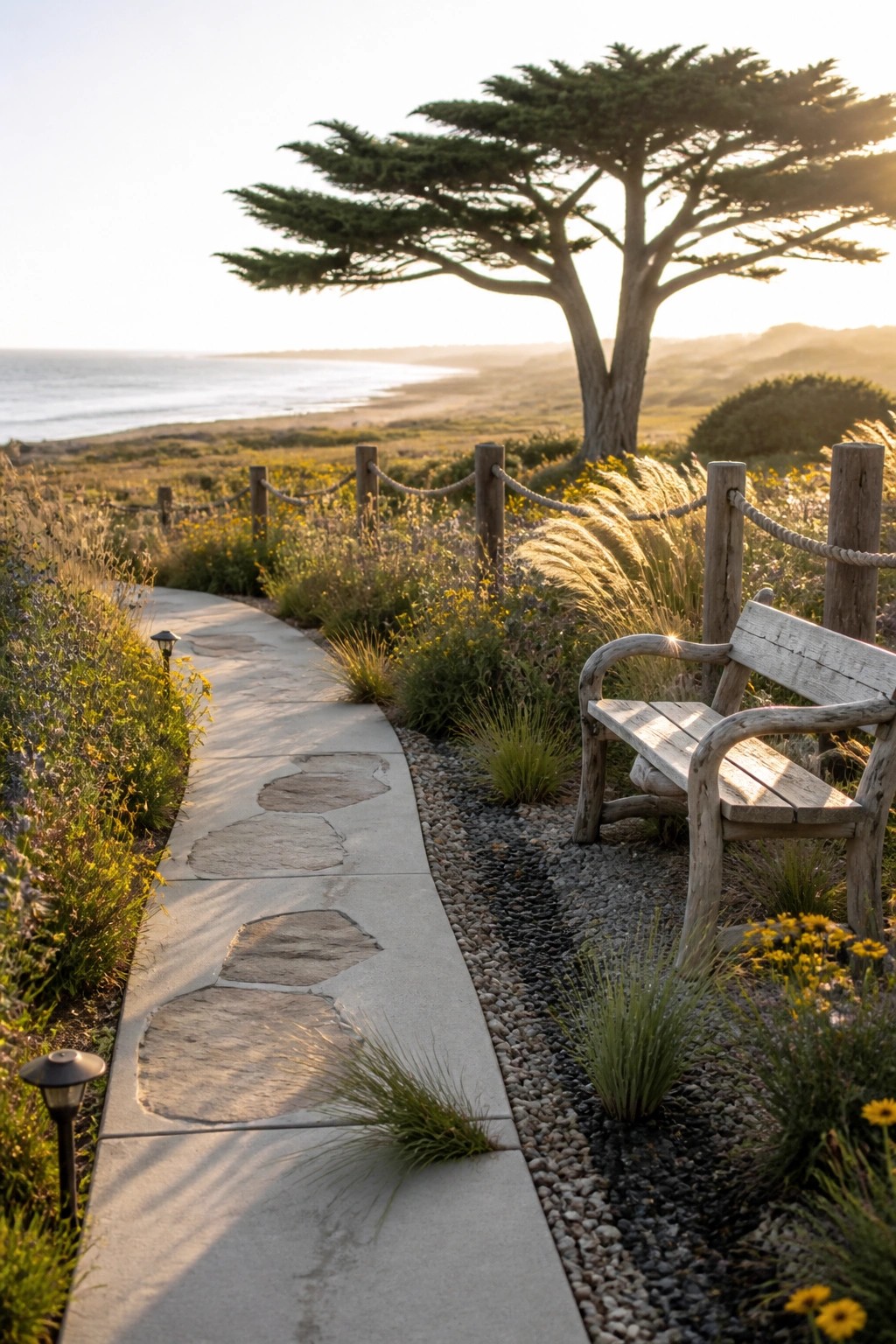
A path that curves instead of running straight gives the whole front yard a softer, more relaxed feel. It lets the flower beds and grasses shape the walk rather than forcing a rigid line through them. The result feels less like a walkway and more like part of the planting.
This layout works best in open yards where you want the garden to flow toward a view or seating spot. Use wider slabs or pavers so the edges can blur with low grasses and perennials. Just keep the curve gentle so mowing and walking stay easy.
Large Pavers For Simple Garden Paths
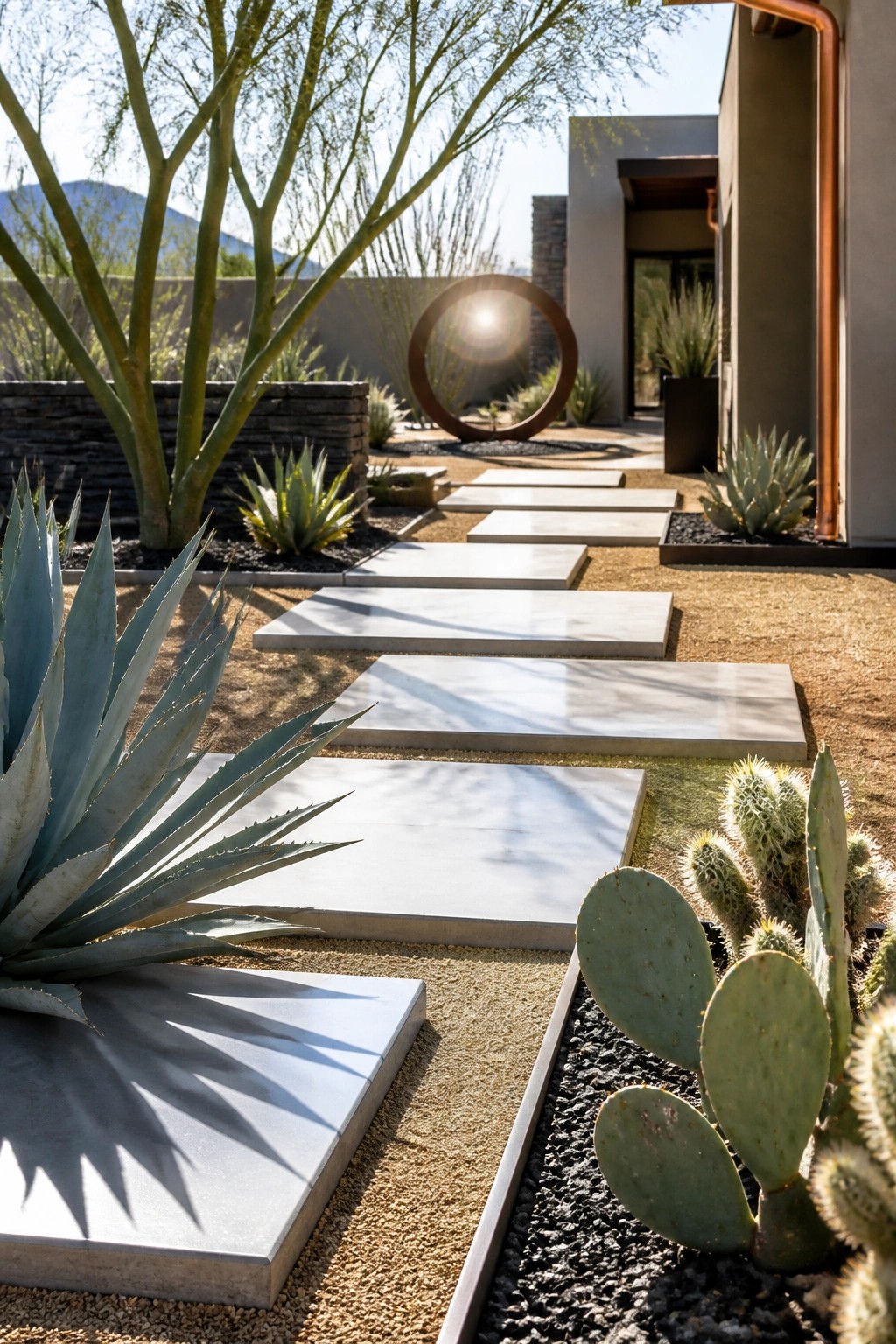
Large rectangular pavers laid out in gravel give a front yard path a clean, low-key structure without covering the whole ground. They work especially well in dry climates where you want something easy to walk on but still let rain soak through.
This setup suits homes with desert-style planting and limited water. Keep the spacing even, use stones big enough for steady footing, and pair them with tough plants that stay low so the path stays the main line through the yard.
Winding Paths Through Layered Beds
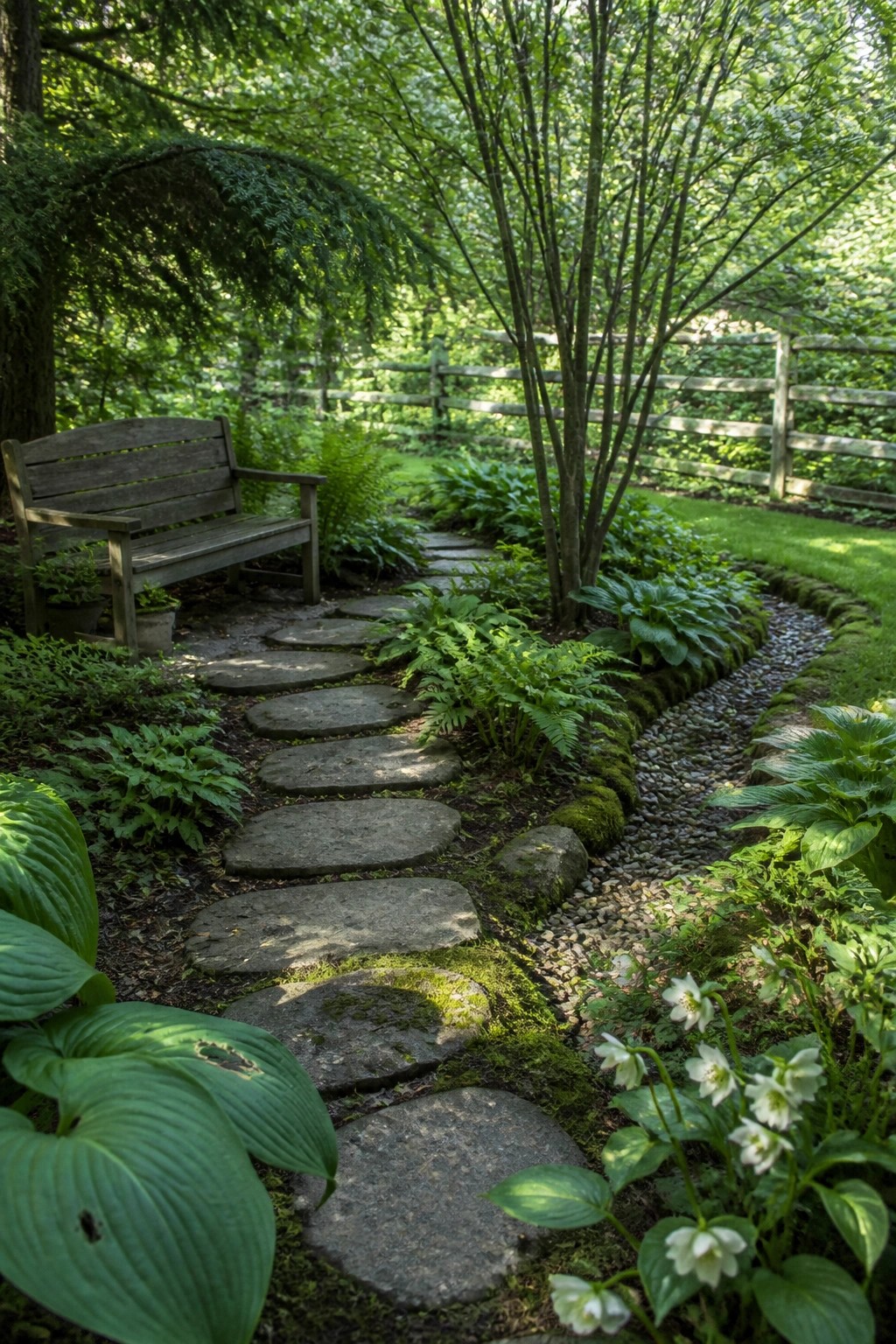
A path made of stepping stones that curves gently through the garden adds movement without any fuss. It breaks up a straight line of lawn and gives the eye something to follow while showing off the plants along the edges.
This layout works best in front yards that have room for beds on both sides of the walk. Use stones that sit low to the ground and let the hostas and ferns grow close so the path feels like part of the planting rather than a separate feature.
Winding Paths With Pebble Borders

A curving path edged in dark pebbles gives a front yard an easy flow that feels less rigid than straight lines. The contrast between the light concrete and the small stones keeps the edges tidy while letting the garden look softer overall.
This layout works best on lots that have room for larger plants along the sides. Place a tall statement palm or similar focal plant where the path bends so it becomes a natural focal point without crowding the walkway.
Winding Stone Paths Through Layered Flower Beds
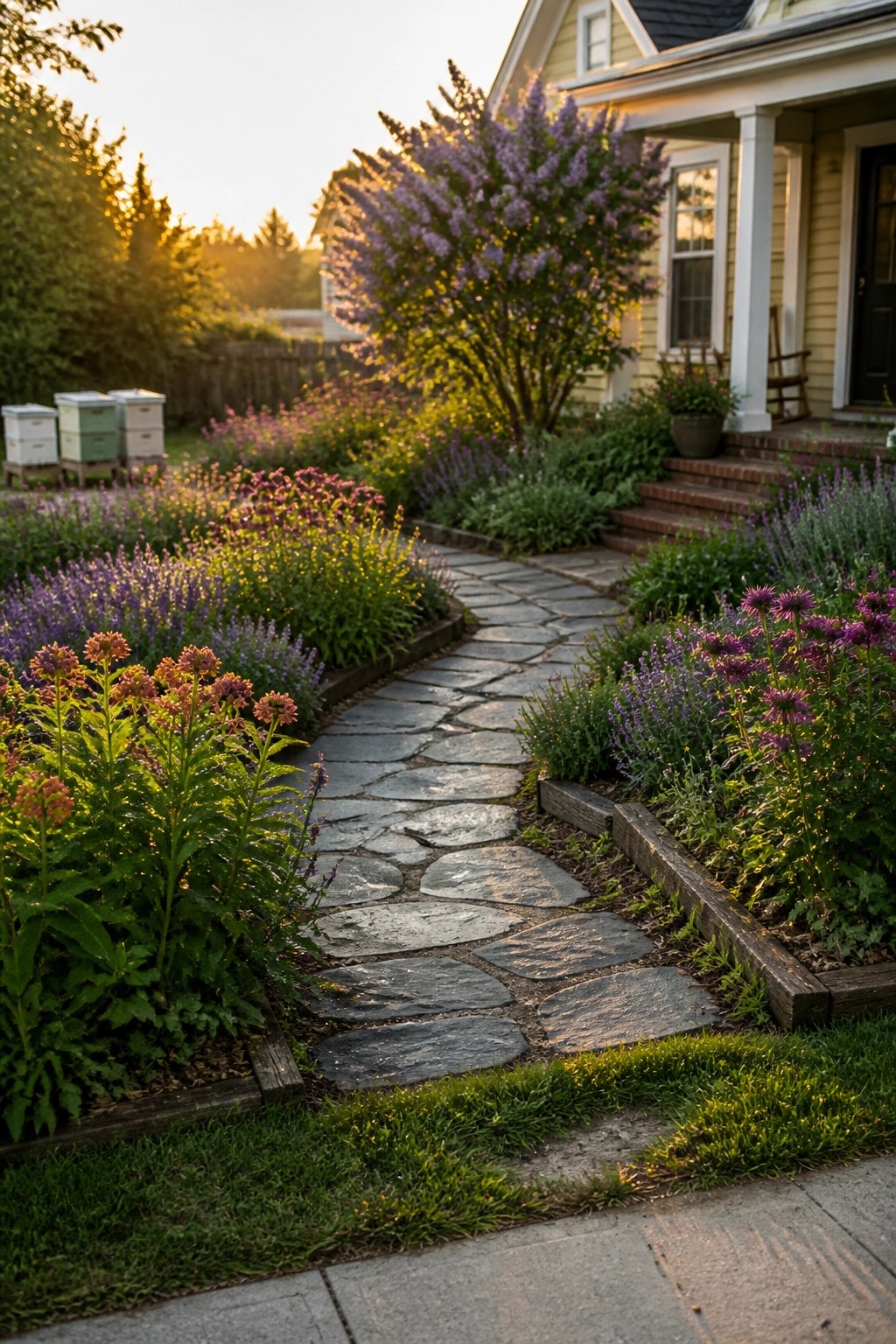
A winding stone path gives a front yard an easy flow while letting the planting feel full and natural. It breaks up the lawn without adding too much hard surface and draws attention to the beds instead of a straight line to the door.
This layout works best on wider front yards where you have room for deep beds on both sides. Keep the edging simple with wood or brick so the stones stay the focus, and mix taller shrubs with lower perennials to create layers that change through the seasons.
Mix Gravel And Pavers For A Stronger Path
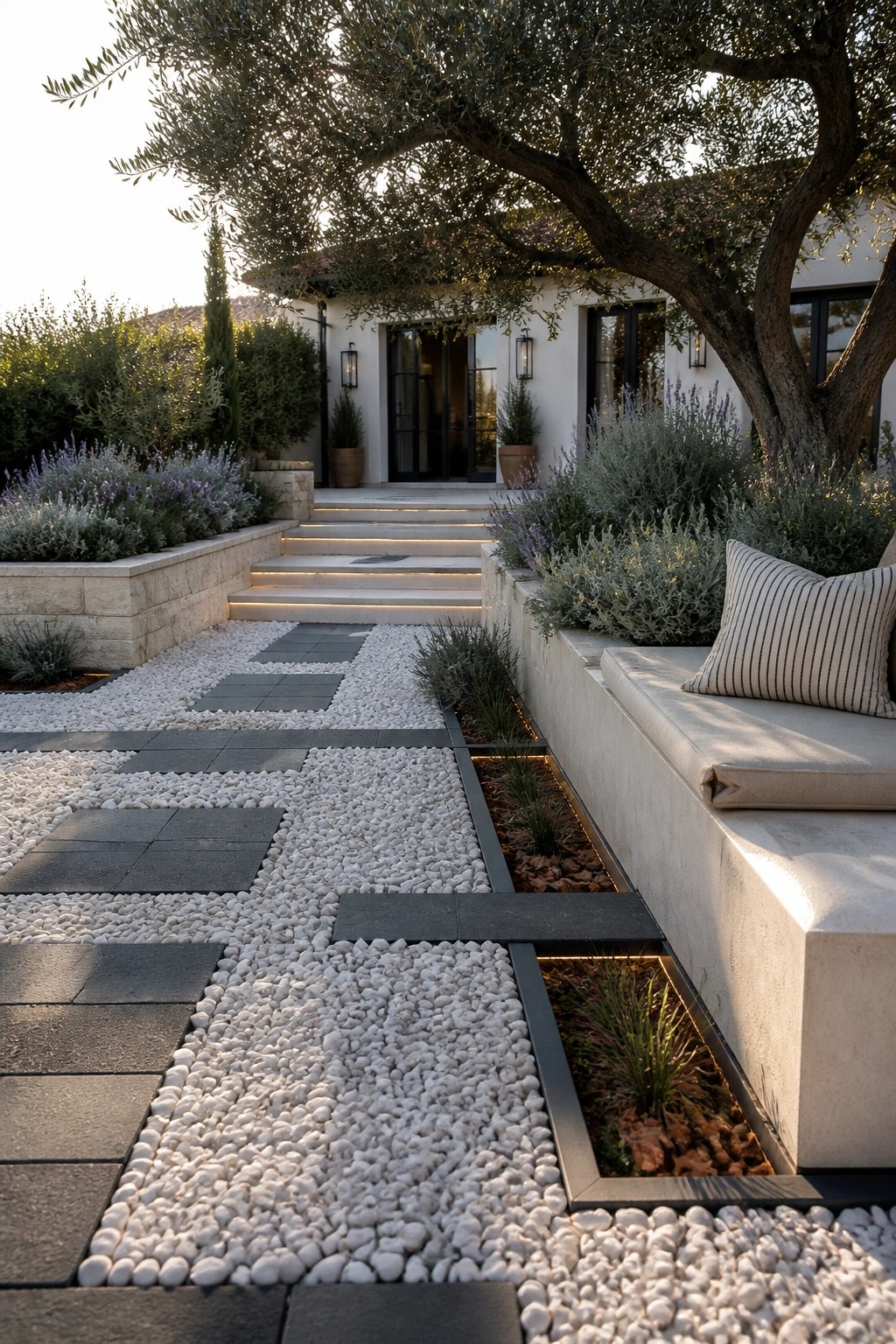
A mixed material path keeps things interesting without trying too hard. The contrast between light gravel and dark stone slabs creates movement and helps the walkway feel more grounded than a single surface ever would. It also handles foot traffic well and drains nicely after rain.
This approach works best on a gentle slope or a straight run toward the front door. Keep the beds simple on either side so the path stays the main feature. Avoid making the pattern too busy or the sections too small, or the whole thing starts to feel fussy.
Stepping Stones in Raked Gravel
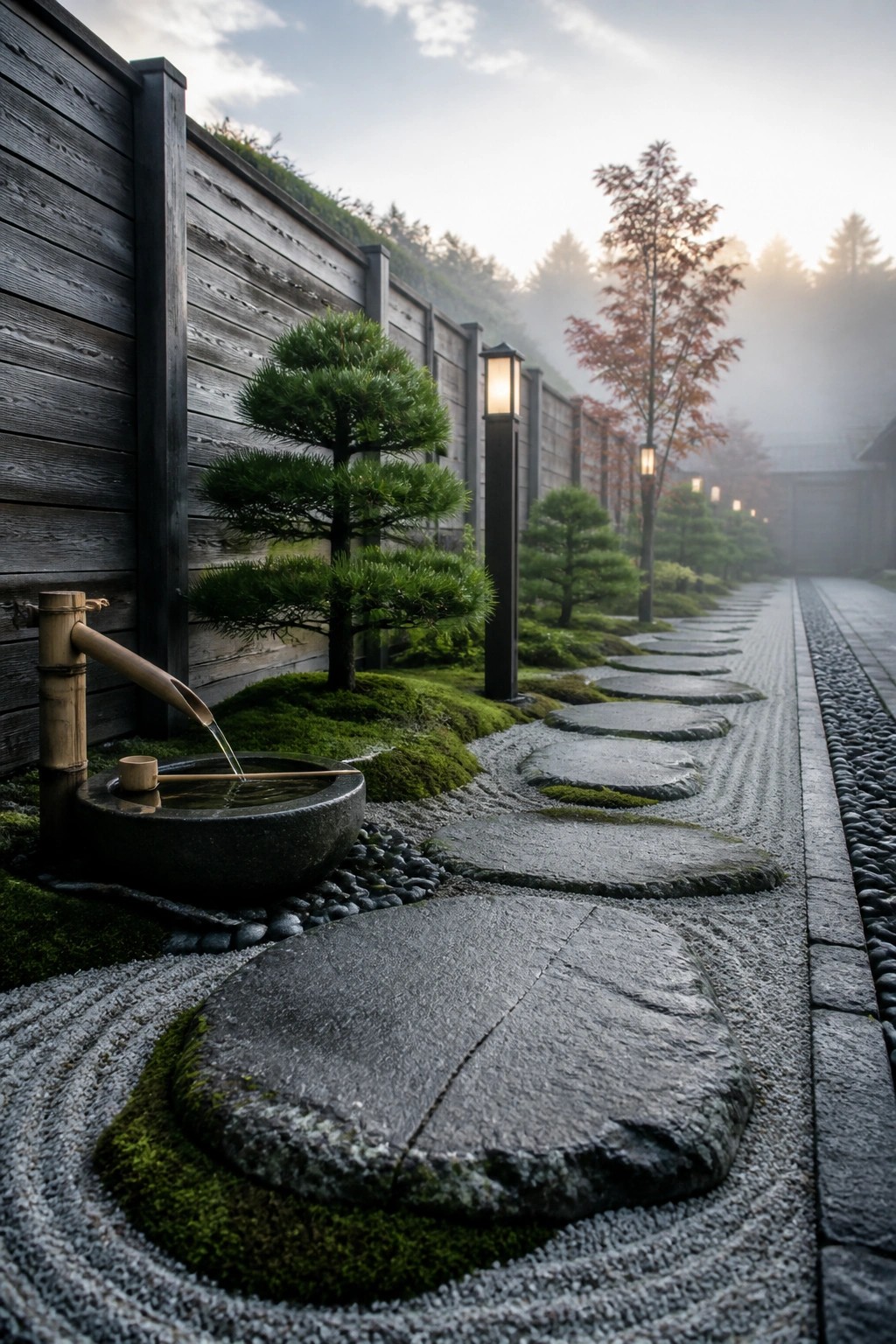
This path style keeps things simple but effective. Large flat stones give solid footing while the raked gravel fills the gaps and adds a quiet texture that feels calm rather than busy.
It suits front yards with a long narrow strip or a side entrance. Place the stones at a comfortable walking distance and keep the gravel raked every so often to maintain the look. A small water basin at the start, like the one shown here, can mark the beginning without crowding the path.
Raised Circular Planters Along The Path
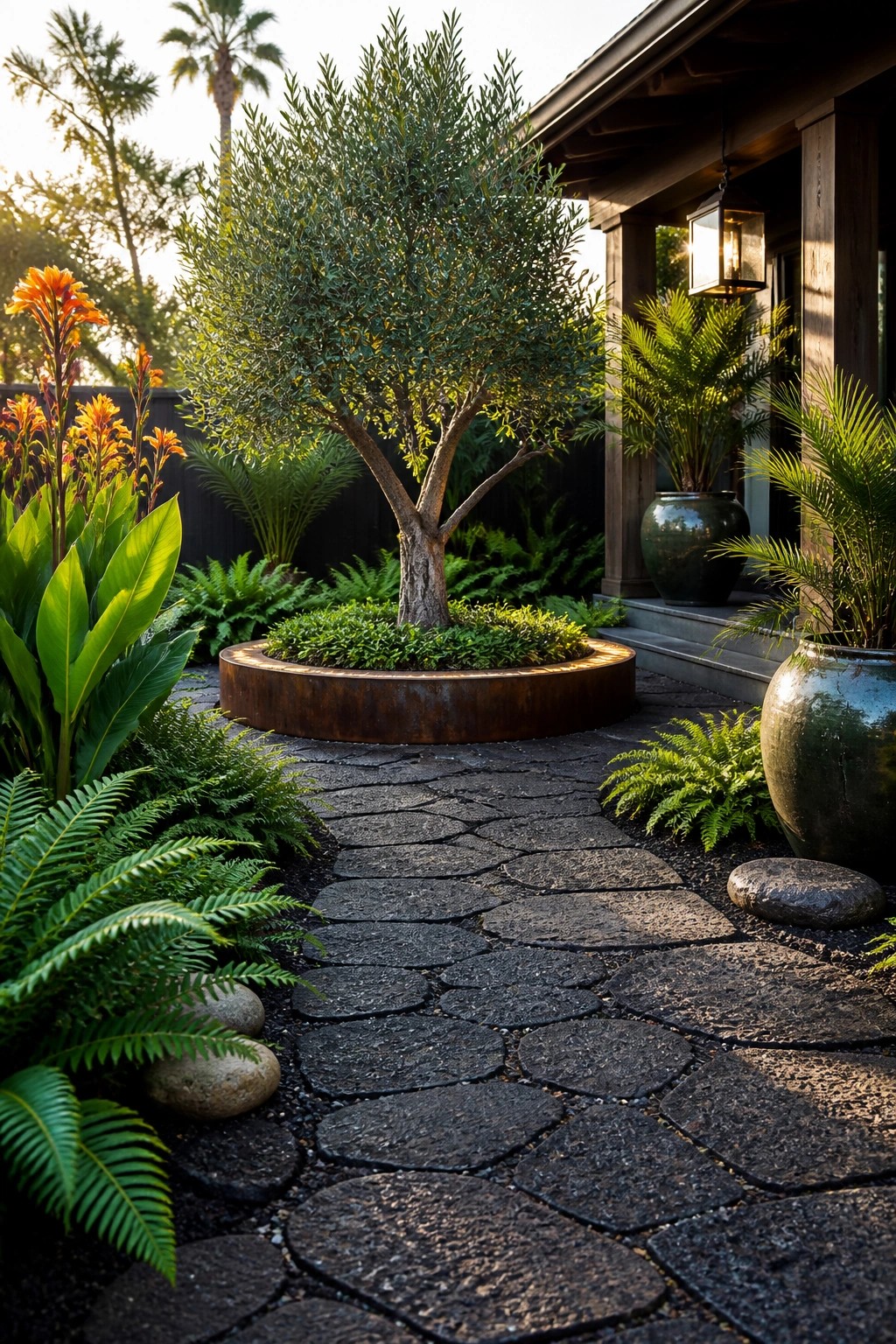
A raised metal ring around a single tree gives the path a clear center point without crowding the walkway. It adds height and structure while the surrounding ferns and flowers fill in at ground level. The rusted finish blends with the dark stone and keeps the whole area from looking too formal.
This setup works best on narrow front yards where you need one strong plant to do the work. Keep the tree small enough that roots will not lift the path over time and add a simple drip line inside the ring for watering.
Edge Garden Paths With Stone Borders
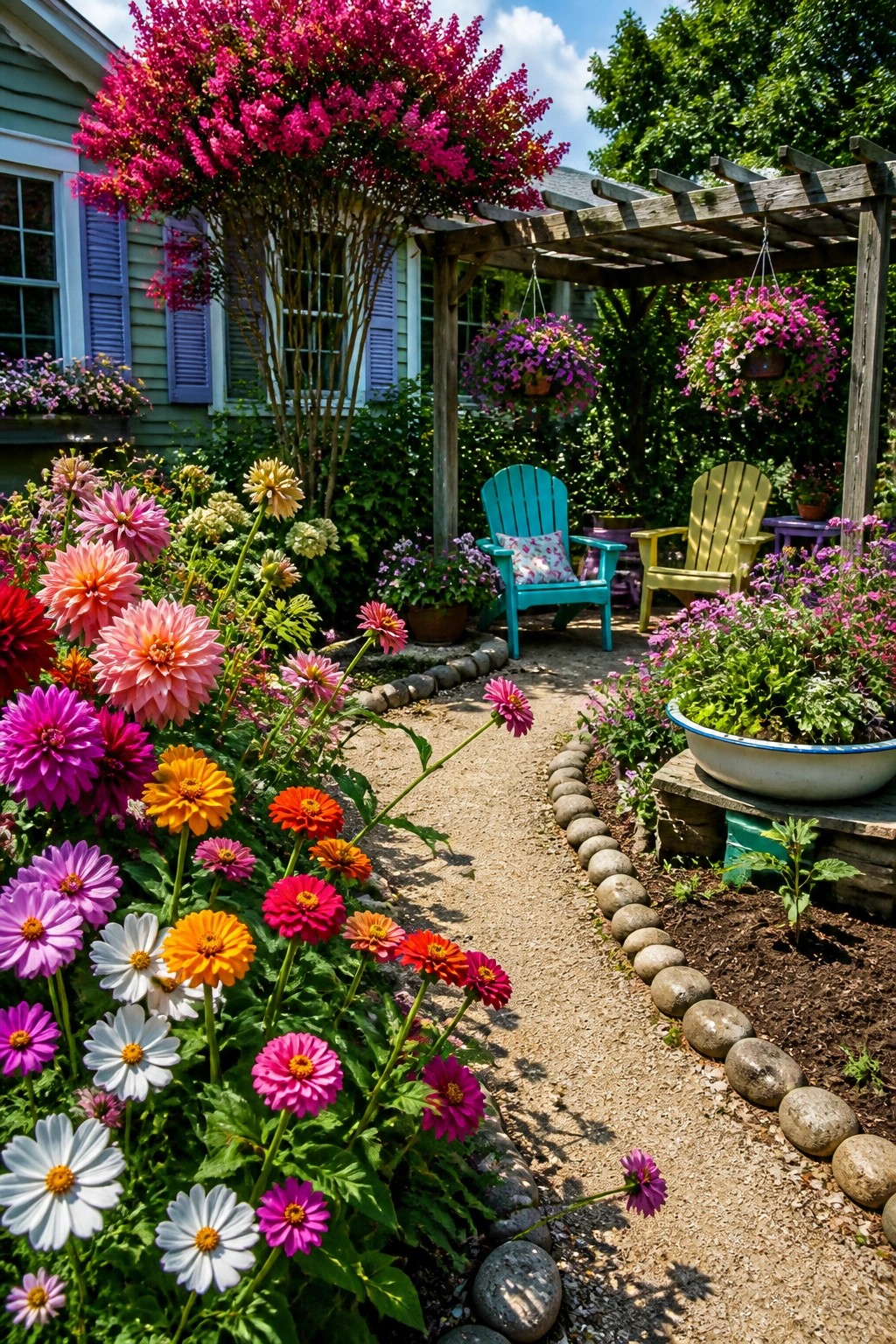
A low stone edge along a garden path helps keep the beds looking tidy while letting the flowers take center stage. It works especially well with bright annuals that grow right up to the walkway, since the border stops them from spilling onto the walking surface.
This setup fits front yards or side gardens where you want easy access without giving up on dense planting. Use rounded stones or similar edging material and keep it low to the ground so it stays practical and simple to maintain.
Stone Pavers Set in Gravel Create a Natural Path
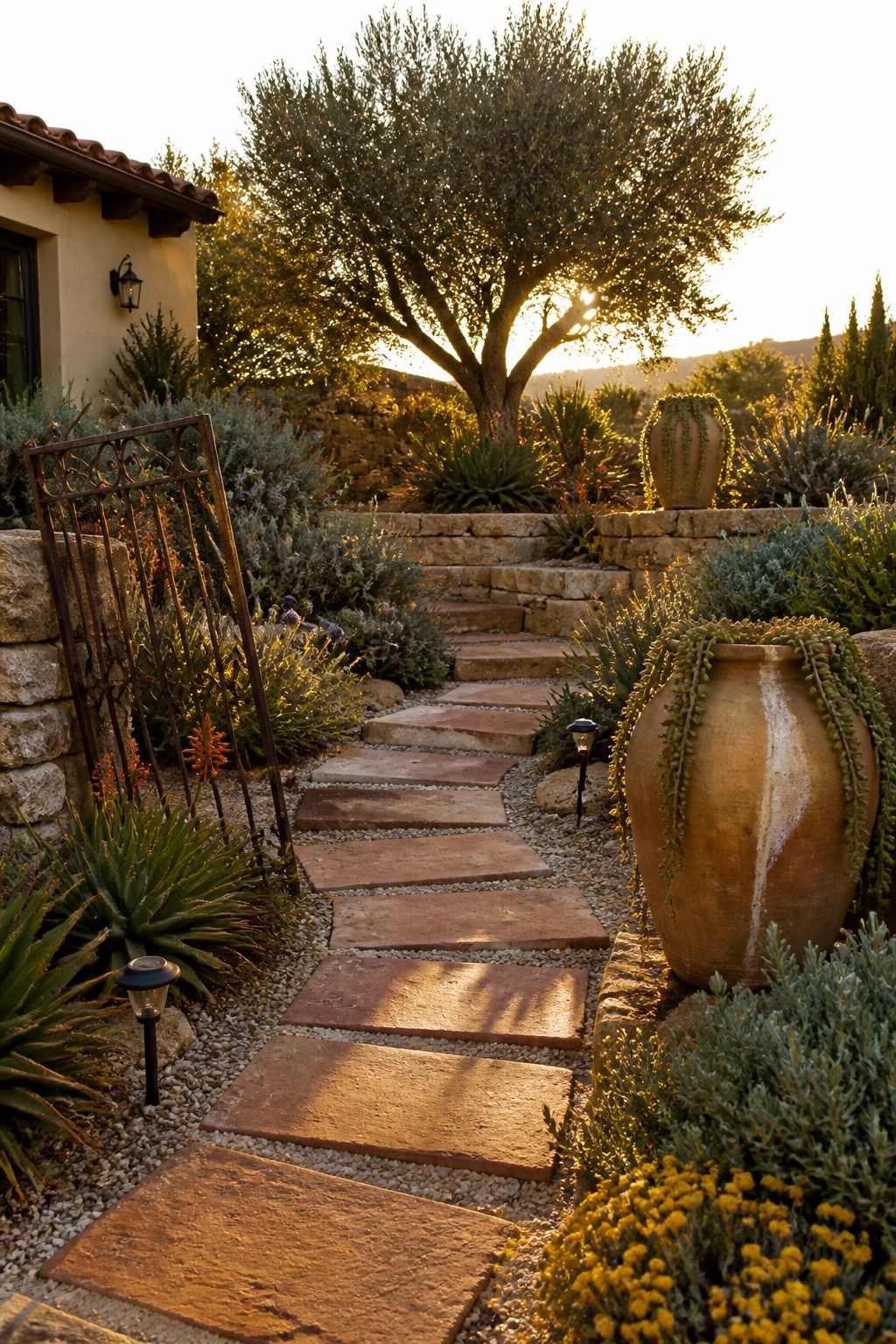
A path made from flat stone pavers laid into gravel gives a front yard an easy flow without looking too stiff. The loose gravel keeps the look relaxed while the stones give you solid footing as you move through the beds.
This works well on slightly sloped lots or when you want the planting to feel like the main feature. Keep the pavers large and the gravel light in color so the path reads as part of the garden rather than a separate walkway.
Using Tree Rounds For Garden Paths
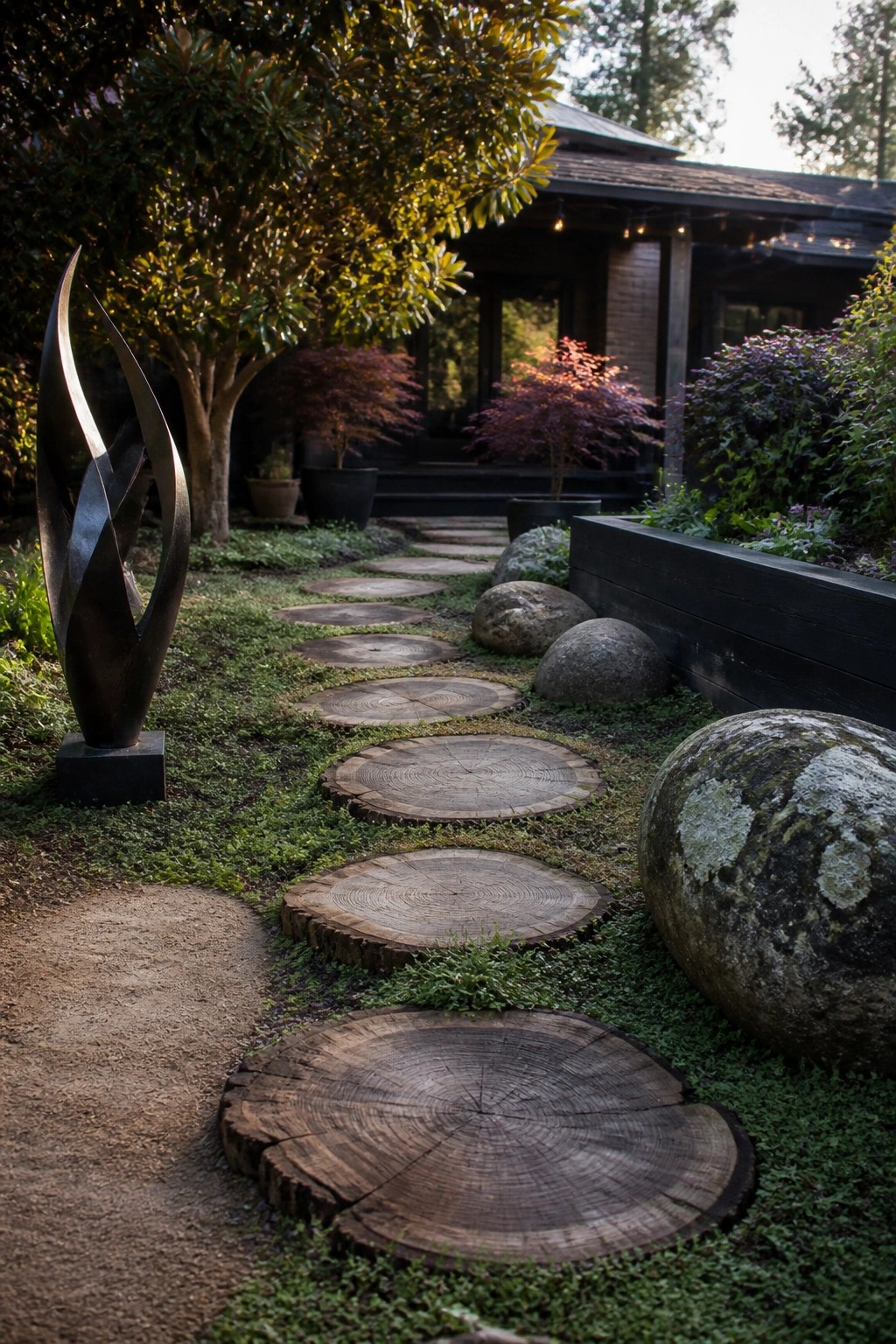
Tree rounds create a path that feels relaxed and tied to the landscape. They sit low to the ground and let grass or ground cover grow right up to the edges, so the walkway looks like it belongs rather than sitting on top of the yard.
This works best on fairly flat ground in front yards that already have trees or a natural look. Space the rounds so they are easy to step on and treat the wood if your area gets a lot of rain. The result stays simple and low cost while still giving a clear route from the street or driveway to the house.
Frequently Asked Questions
Q: How wide should I make a path if flower beds line both sides?
A: Give the path at least four feet so two people can walk side by side without brushing the plants. This also leaves room for you to reach in and weed or deadhead without stepping on the beds. Test the width by laying out a hose first and walking it a few times.
Q: What happens if my statement plant grows faster than the rest of the design?
A: Cut it back hard in late winter to keep its shape. If it still crowds the path or nearby flowers, dig it up and move it to a roomier spot before the roots settle too deep.
Q: Do I need to edge my flower beds or can I let them blend into the lawn?
A: Cut a clean line with a spade every month or so. The sharp edge stops grass from creeping in and makes the beds look like they belong with the path.
Q: How do I stop mulch from washing onto the path after heavy rain?
A: Lay the beds a little lower than the path surface. Then add a thin strip of river rock along the edge to catch anything that shifts.
