

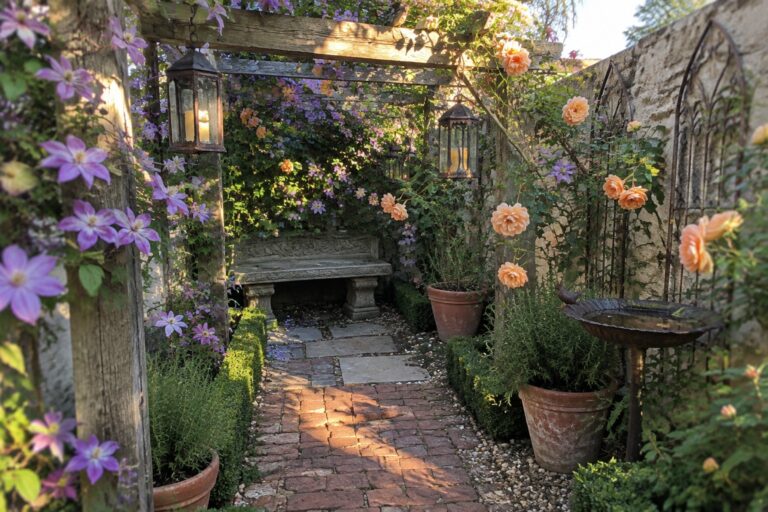
Clematis and roses can bring color and height to a garden, but they work best when their supports and planting spaces are planned together.
I find that a path, arch, or fence covered with vines feels more settled when the plants frame a route or mark a garden entrance rather than crowding it.
Their different bloom times and growth habits also matter, so I would leave room to tie in stems, prune them, and keep the structure easy to pass through.
A simple trellis beside a gate can feel just as romantic as a larger arbor when the flowers soften its lines without hiding its shape.
I’d save the ideas that suit the scale of your yard and adapt the planting distance and supports to how you actually use the space.
Use Clipped Hedges To Shape Rose Beds
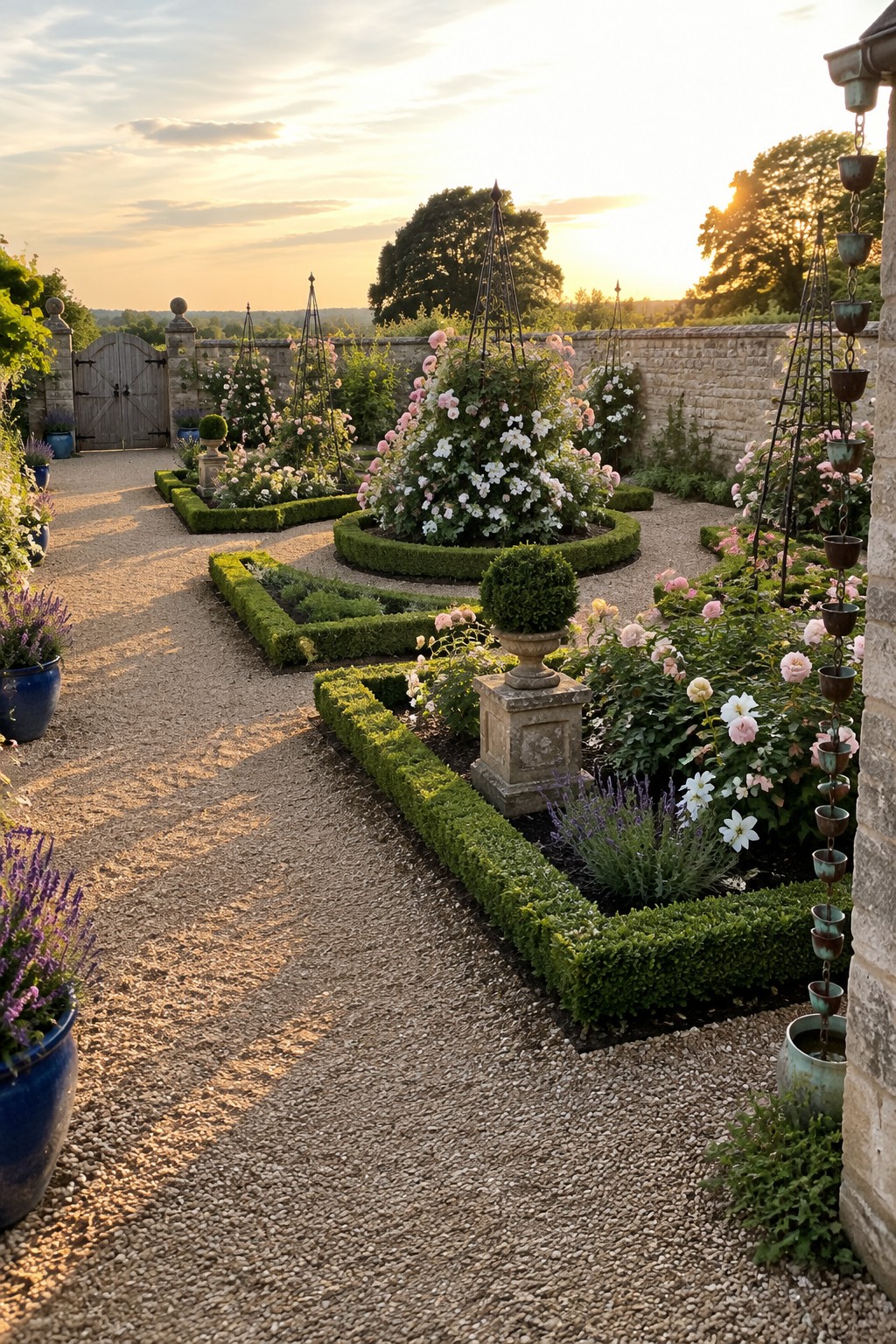
Low clipped hedges give flower beds a clear shape and help a romantic planting feel orderly rather than crowded. They also make a gravel path look like part of the garden design, not just a way through it.
Use the hedging to outline simple curves or geometric beds, then let roses and clematis grow inside the borders. This approach suits a formal garden, but keep the hedge low enough that it does not hide the flowers or make upkeep difficult.
Add a Climbing Frame to the Patio
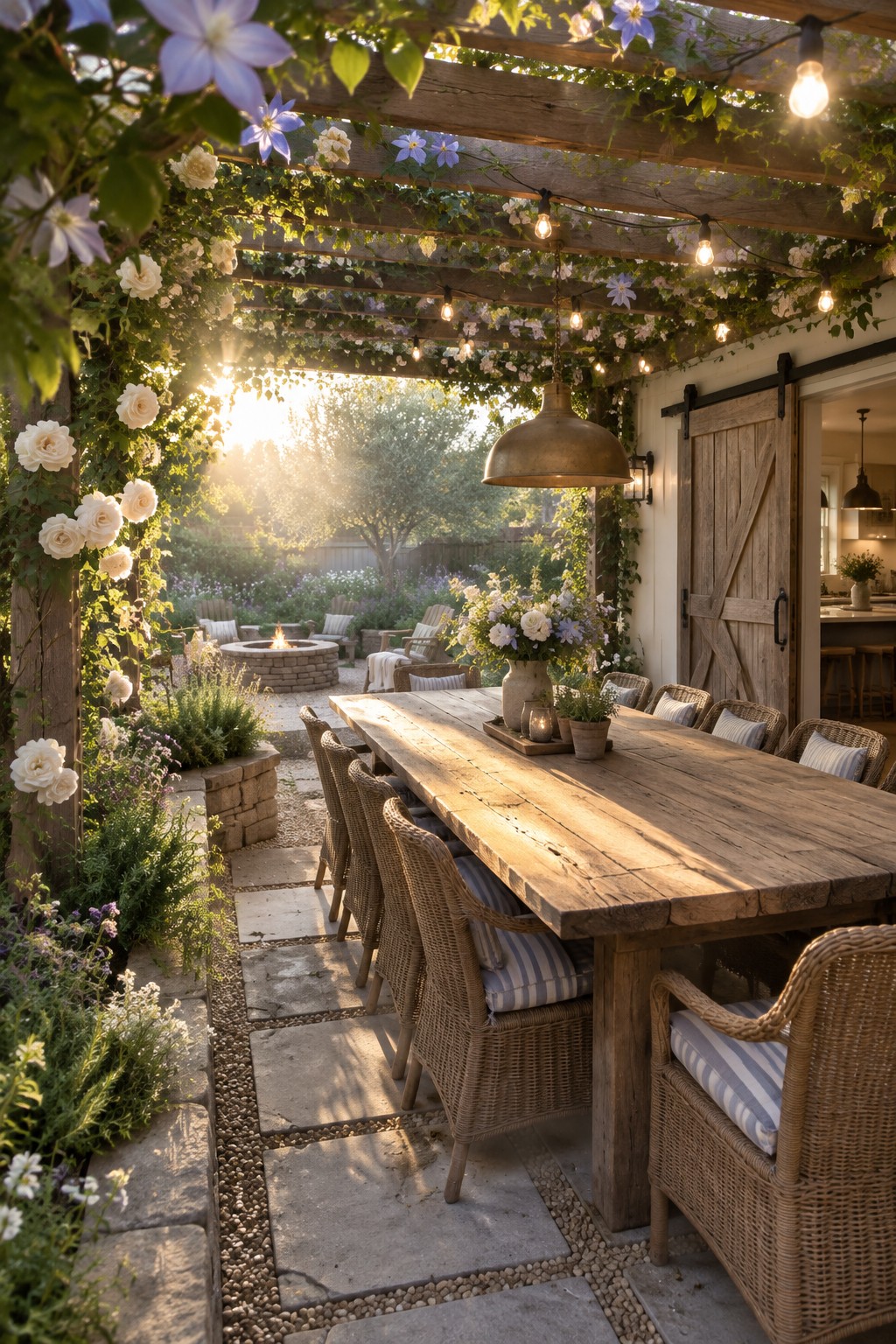
Clematis and roses can make a pergola feel like part of the garden while giving an outdoor dining area a little shade and privacy. Letting the vines grow across the overhead beams is a practical way to bring flowering plants close to the places where people sit.
Use a sturdy pergola near a patio or garden table, and give each vine enough room and support to grow. Choose plants suited to your climate, and leave some open space in the structure so the flowers do not block too much light.
Let Roses And Clematis Cover A Garden Arbor
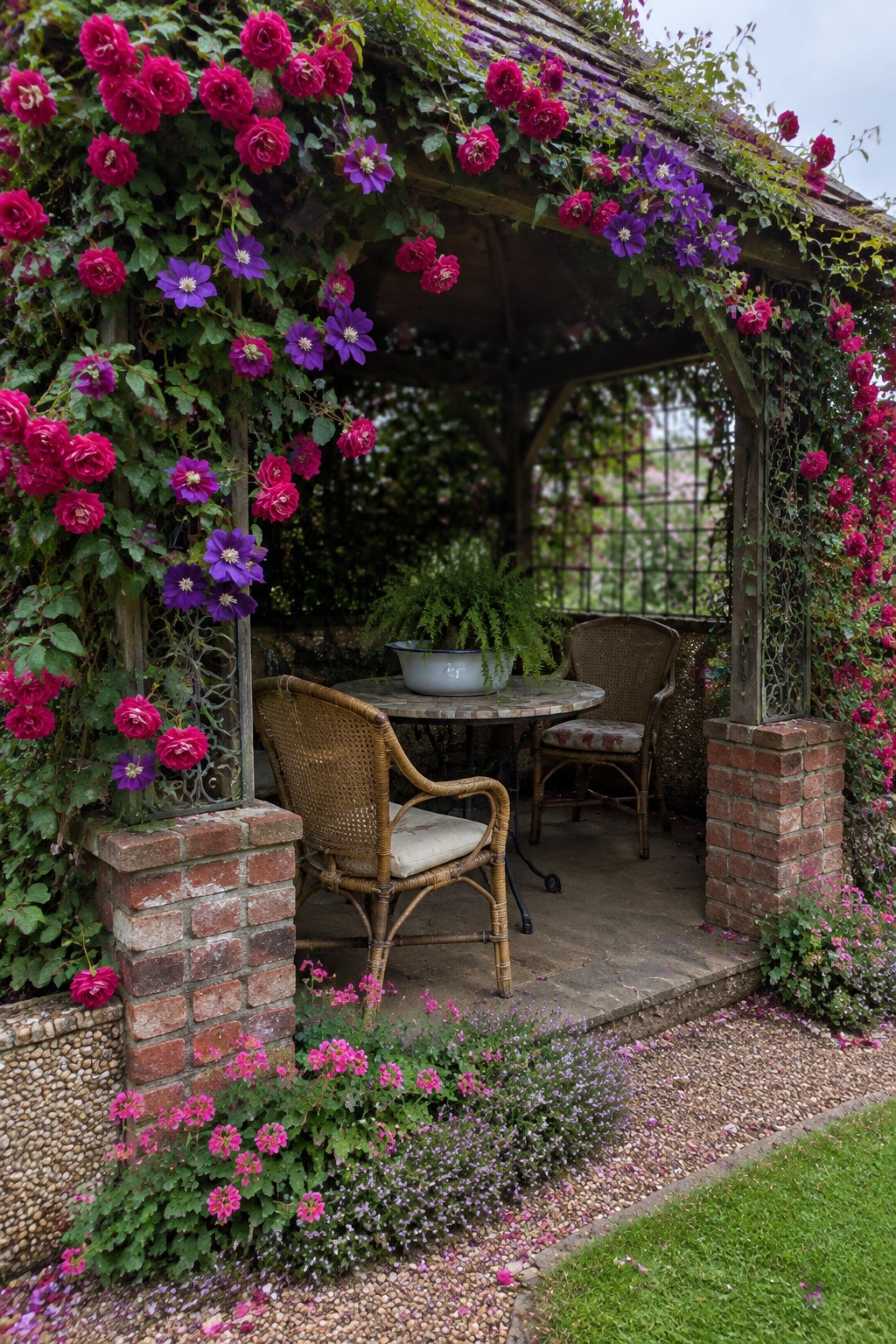
Climbing roses and clematis can turn a simple arbor into a flower-filled garden feature. The mix works well because the roses bring fuller blooms while clematis adds lighter flowers among the leaves.
Use sturdy supports and give each vine room to grow, especially where the arbor forms a shaded seating nook. Prune and guide the plants regularly so they cover the structure without blocking the opening.
Let a Rose-Covered Arch Mark the Garden Path
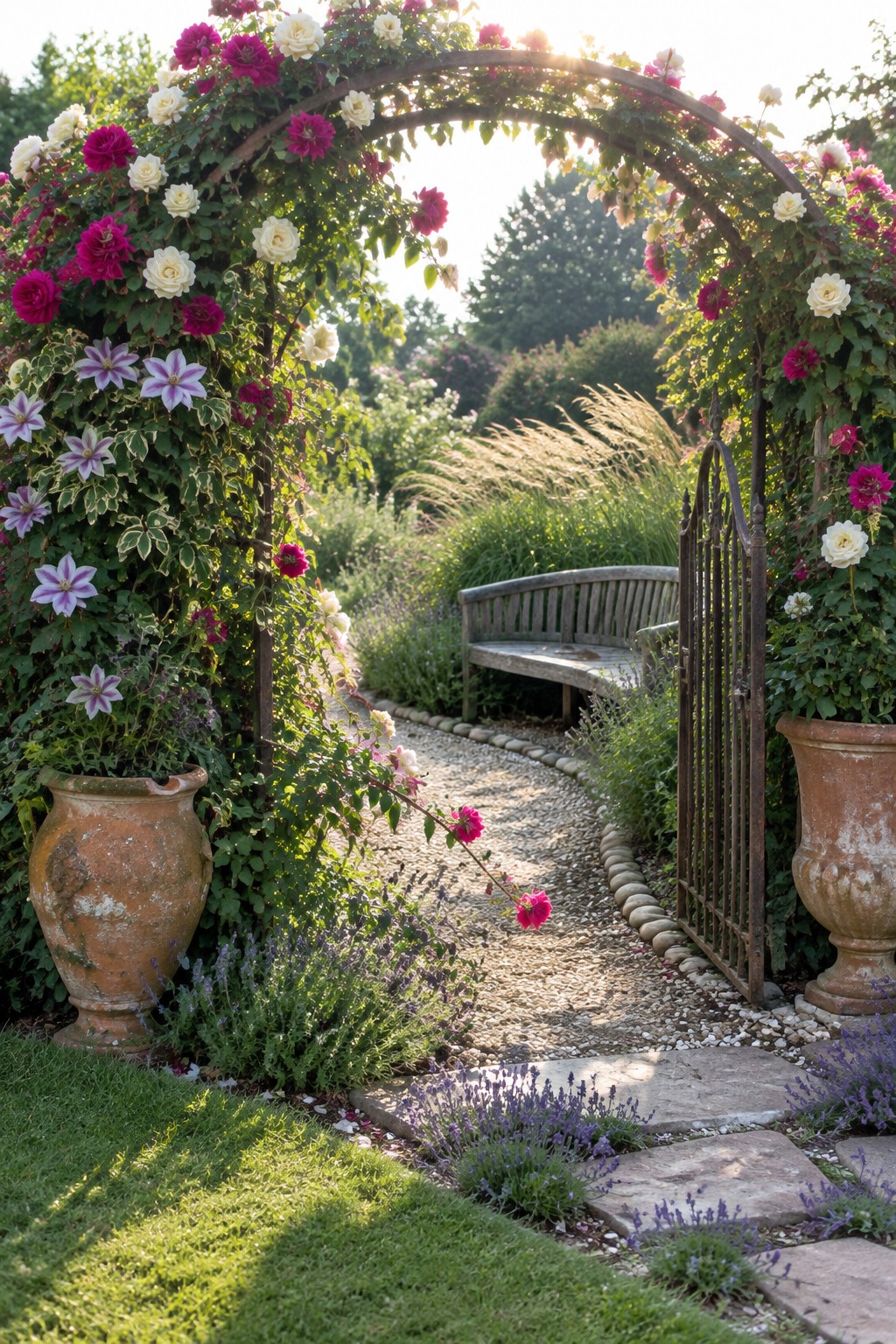
A garden arch gives climbing roses and clematis a clear place to grow while marking the change from one part of the garden to another. It feels especially natural when the path passes straight beneath it, rather than leaving the arch as a feature with no purpose.
Use a sturdy metal or wooden frame and train the vines along both sides, trimming them enough to keep the walkway open. This works well on a garden path or at an entrance, but leave room for mature growth so the arch does not become difficult to pass through.
Build Garden Steps Into Flowering Stone Walls
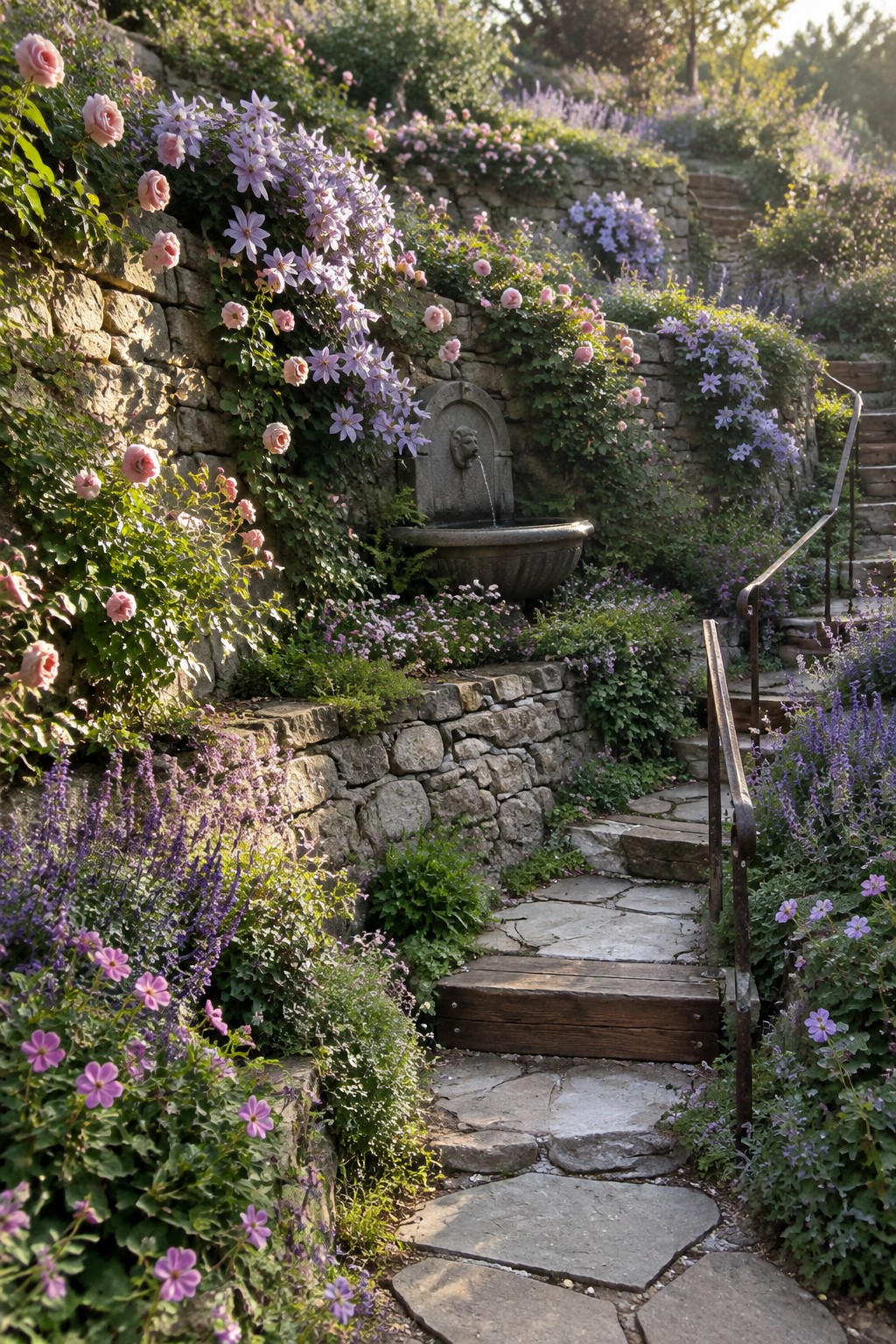
Terraced stone walls can turn a sloping garden into a series of planted levels, while steps make each level easy to reach. Letting clematis and roses spill over the wall edges helps the hard stone feel part of the garden rather than a separate structure.
Use this approach on a hillside where a single steep path would be awkward. Leave enough room for the plants without narrowing the steps, and choose a sturdy support for climbers so stems do not rely on loose stonework.
Use a Flower-Covered Trellis To Make A Patio Feel Private
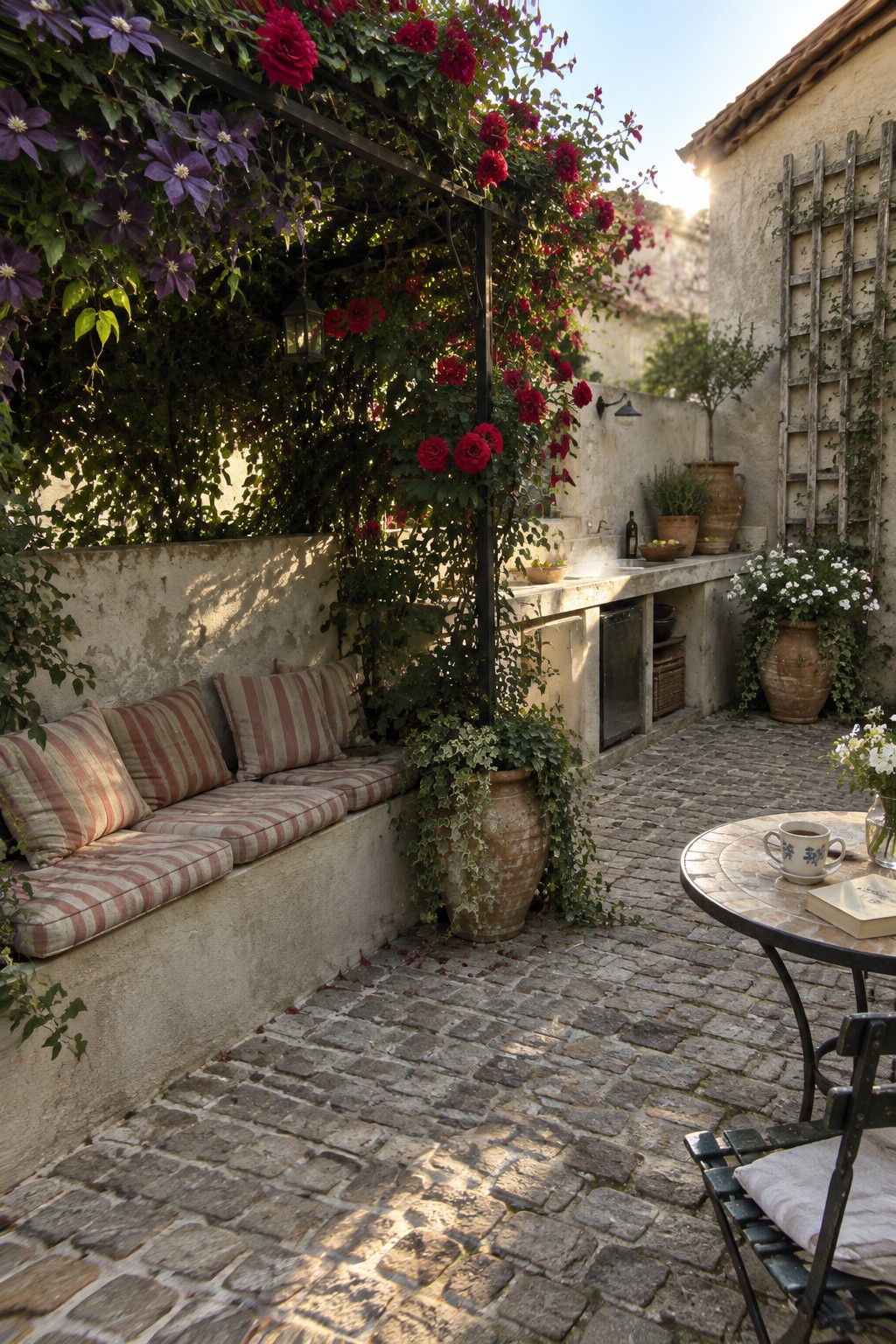
A trellis covered in climbing roses and clematis can give a patio a little separation without closing it off. The flowers and leaves form a leafy canopy, while the open structure still lets in light and air.
This works especially well beside a built-in bench or along the edge of a small courtyard. Train the vines along sturdy supports, and leave enough room to prune them and keep pathways clear.
Train Roses And Clematis Along A Garden Gate

A flower-covered gate can make a garden entrance feel like part of the planting, rather than just a way through. Training roses and clematis over a sturdy arch brings flowers up to eye level and gives a simple gate more presence.
Choose a strong frame and guide the stems along its sides and across the top, leaving enough room for the gate to swing freely. This works especially well at a path entrance or beside a house, where the climbers can link the garden to the home.
Train Clematis Along A Narrow Garden Path
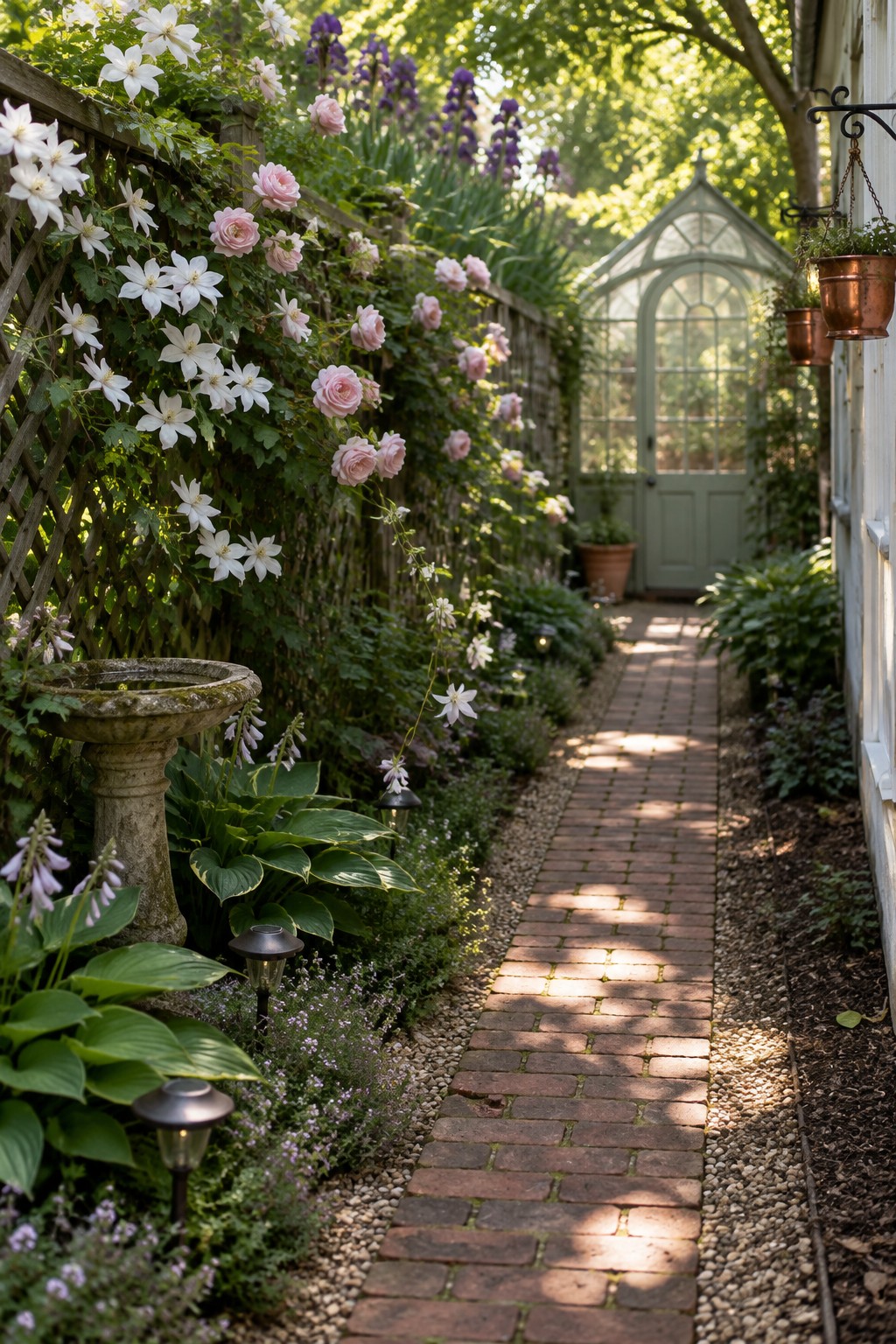
A narrow brick path can feel tucked into the garden when flowering vines grow along a nearby fence. Clematis adds height without taking up much ground space, while roses bring softer blooms along the route.
Use a sturdy trellis or fence to guide the vines, and leave enough room for plants to stay off the walking surface. This approach suits side yards and other slim garden spaces where a path needs a clear edge.
Train Climbing Roses And Clematis On A Balcony Pergola
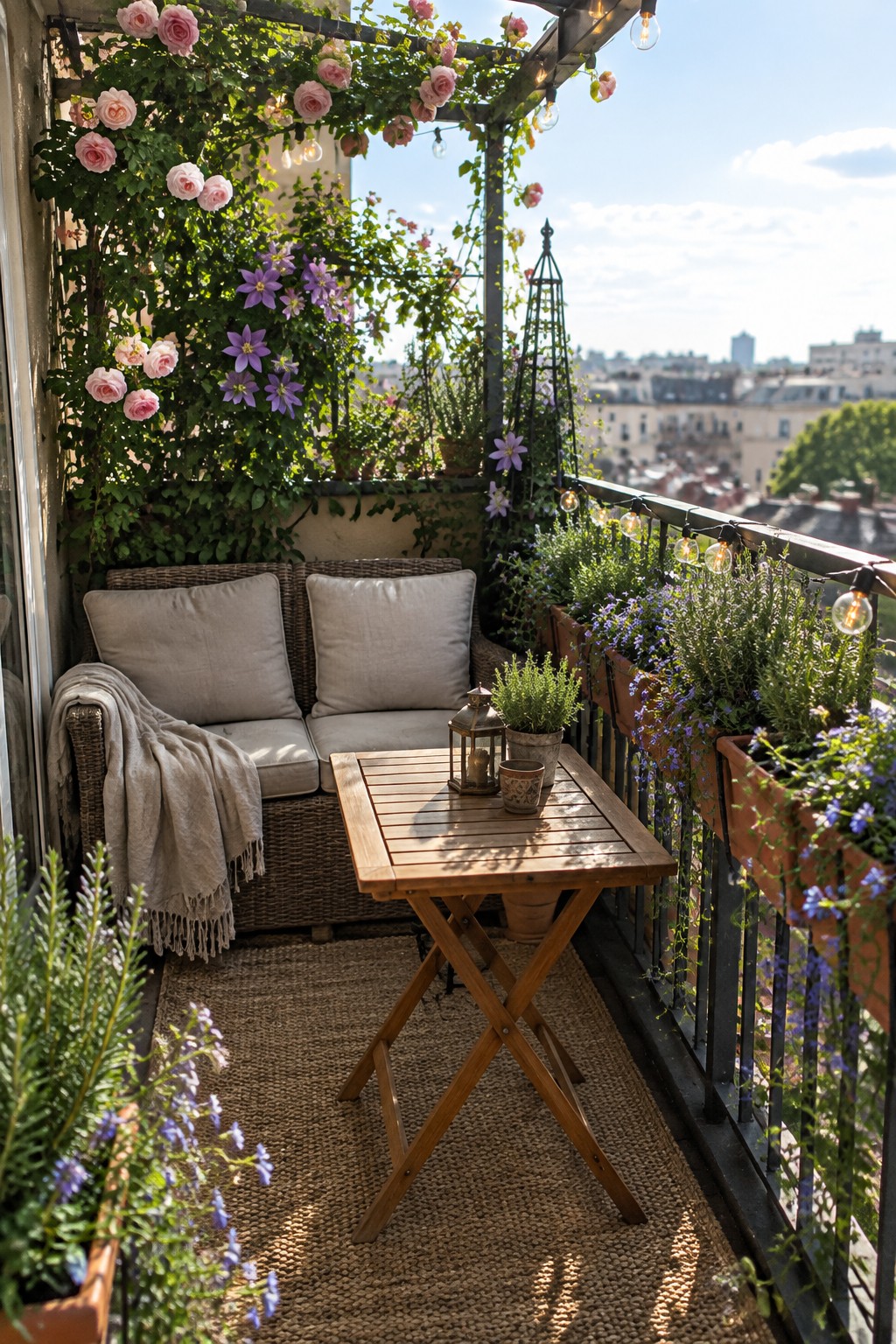
A pergola can turn a narrow balcony into a planted outdoor room. Roses and clematis climb overhead and along the supports, making good use of vertical space without taking up much room on the floor.
Use sturdy supports and leave enough space to reach the plants for pruning. This idea suits a small terrace or balcony with a strong frame, but keep the growth in check so it does not crowd the seating area.
Use a Flowering Arch To Mark A Garden Entrance

A climbing arch can make a simple garden gate feel like a proper entrance. Roses and clematis grow well together here, giving the structure flowers at different heights and helping it blend into the planting.
Choose a sturdy metal arch and give each vine room to grow without blocking the gate. This idea suits a narrow path or a small garden entrance, where the arch adds a focal point without taking up much ground space.
Use A Flowering Pergola To Shape An Outdoor Dining Area
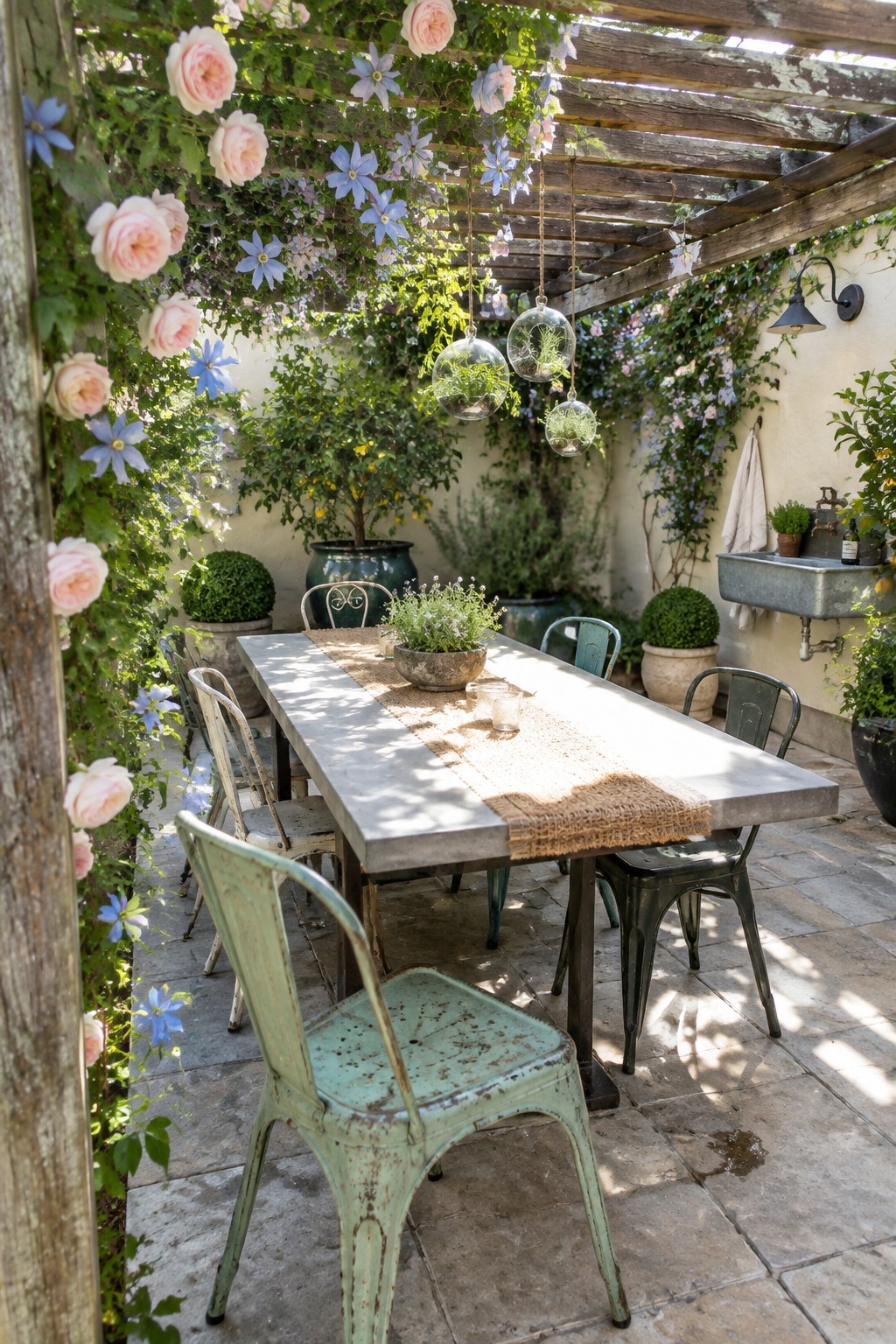
A pergola can make an outdoor dining spot feel like its own part of the garden. Let clematis and roses grow across the beams and down the sides, as shown by the flowering vines overhead and along the wall.
This idea suits a patio where you want some shade and a little privacy without closing the space in. Leave enough room for the vines to spread, and prune them back from the table so they don’t get in the way.
Use A Flowering Pillar To Mark A Garden Courtyard
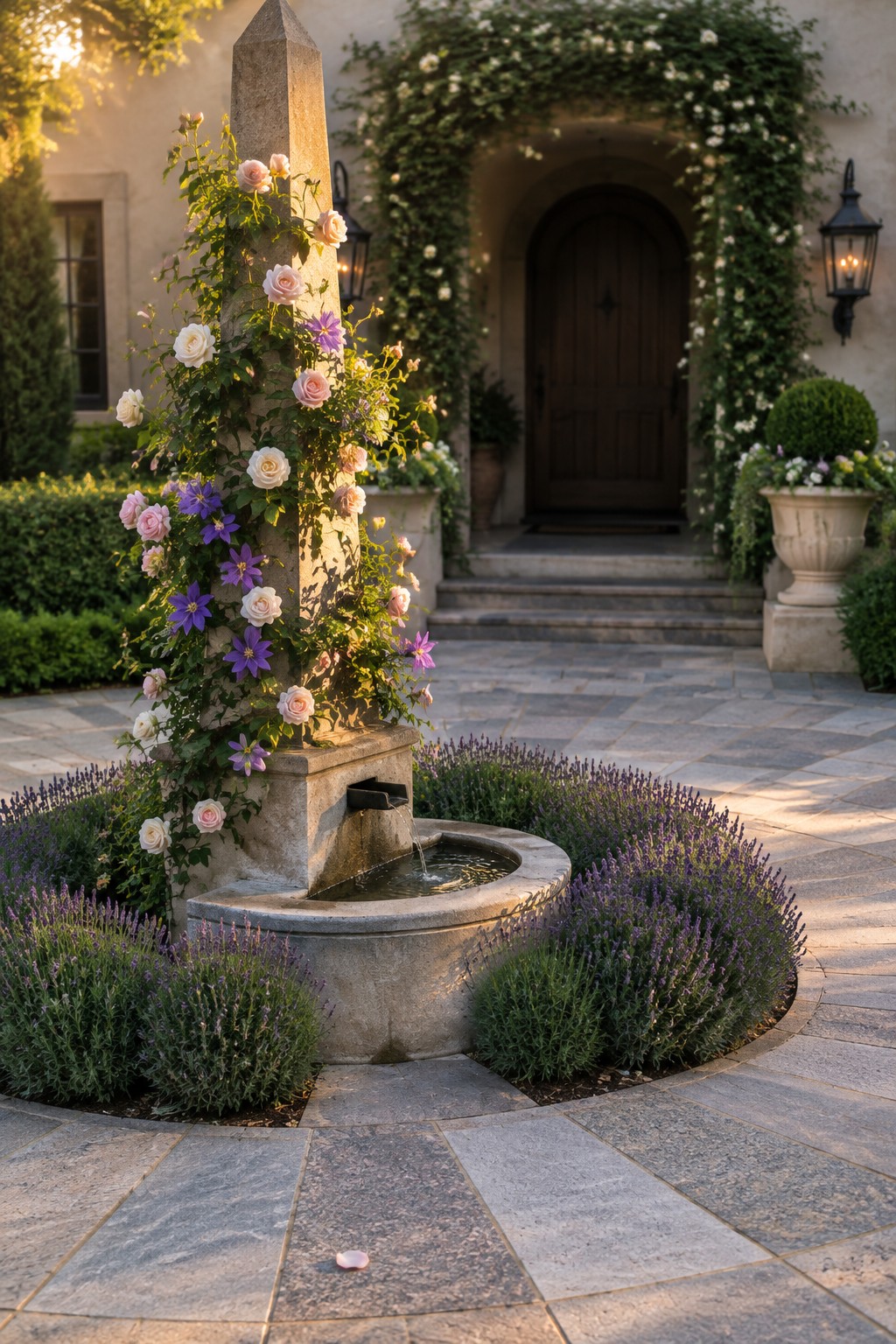
A stone pillar can give climbing roses and clematis a place to grow while adding a clear focal point to a courtyard. The mix of flowers and stone suits a traditional garden, and it works especially well where there is room to walk around the planting.
Choose a sturdy pillar or column with enough width to support climbing plants, and guide the stems as they grow. Keep the base accessible for pruning and watering, and avoid letting foliage crowd nearby paths.
Layer Climbing Flowers Along a Stone Garden Wall
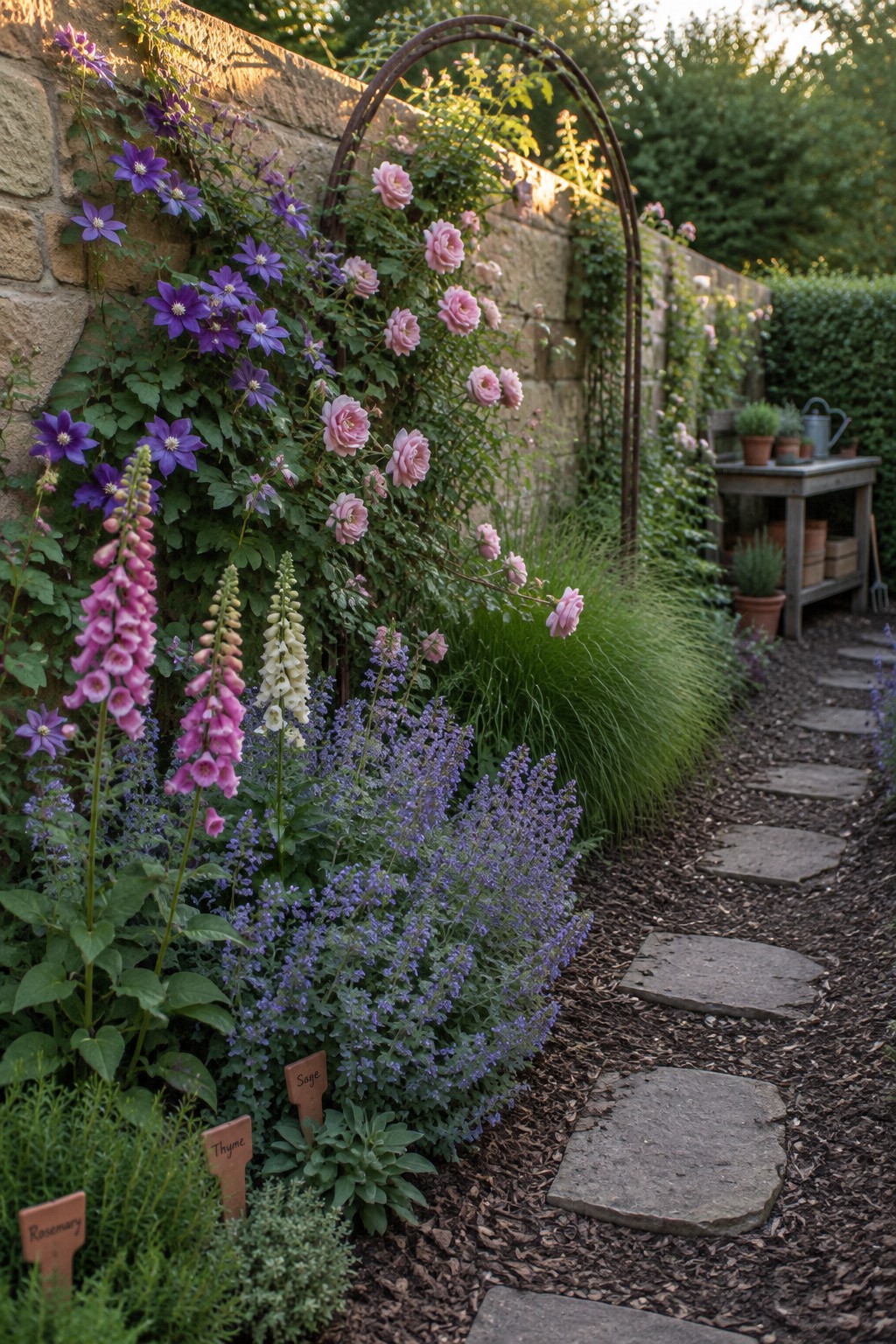
A stone wall can give climbing roses and clematis a sturdy backdrop, while an arch adds height and helps the planting feel like part of the garden layout. The flowers stand out against the stone without needing a separate screen or fence.
Use a narrow bed along a boundary wall, and guide the climbers onto a trellis or arch so they do not spread across the path. Leave enough room to prune and reach the plants, especially where the walkway runs close to the bed.
Grow Clematis And Roses Up A Brick Pillar
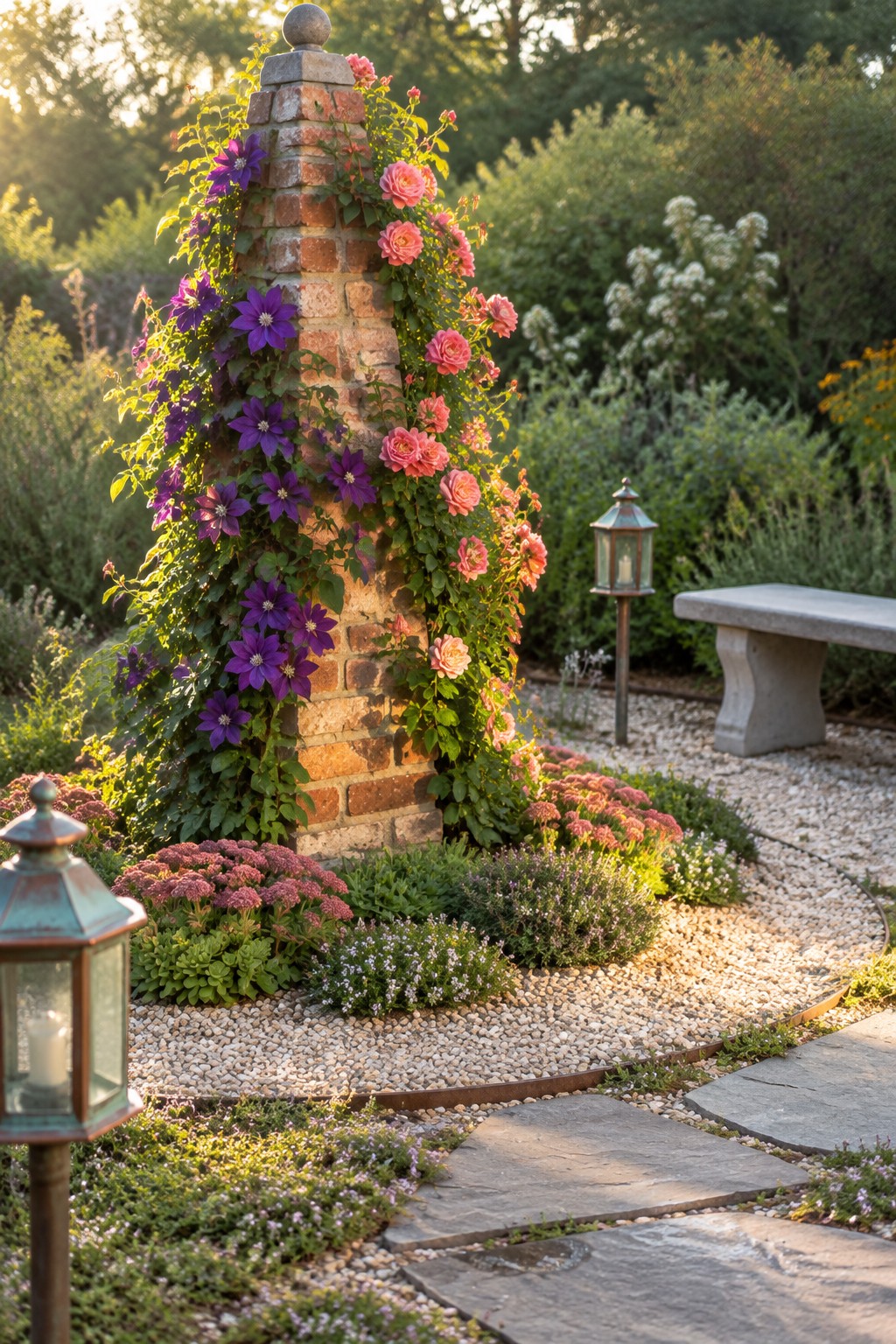
A sturdy brick pillar can give climbing roses and clematis a place to grow while making a flower bed feel more structured. The mix of large blooms and leafy vines also breaks up the hard surface without hiding it completely.
Choose a pillar in a sunny spot, and add discreet wires or supports so the stems can attach as they grow. Leave room around the base for airflow and pruning, especially if the plants become dense.
Use A Flowering Pergola To Shade Poolside Seating
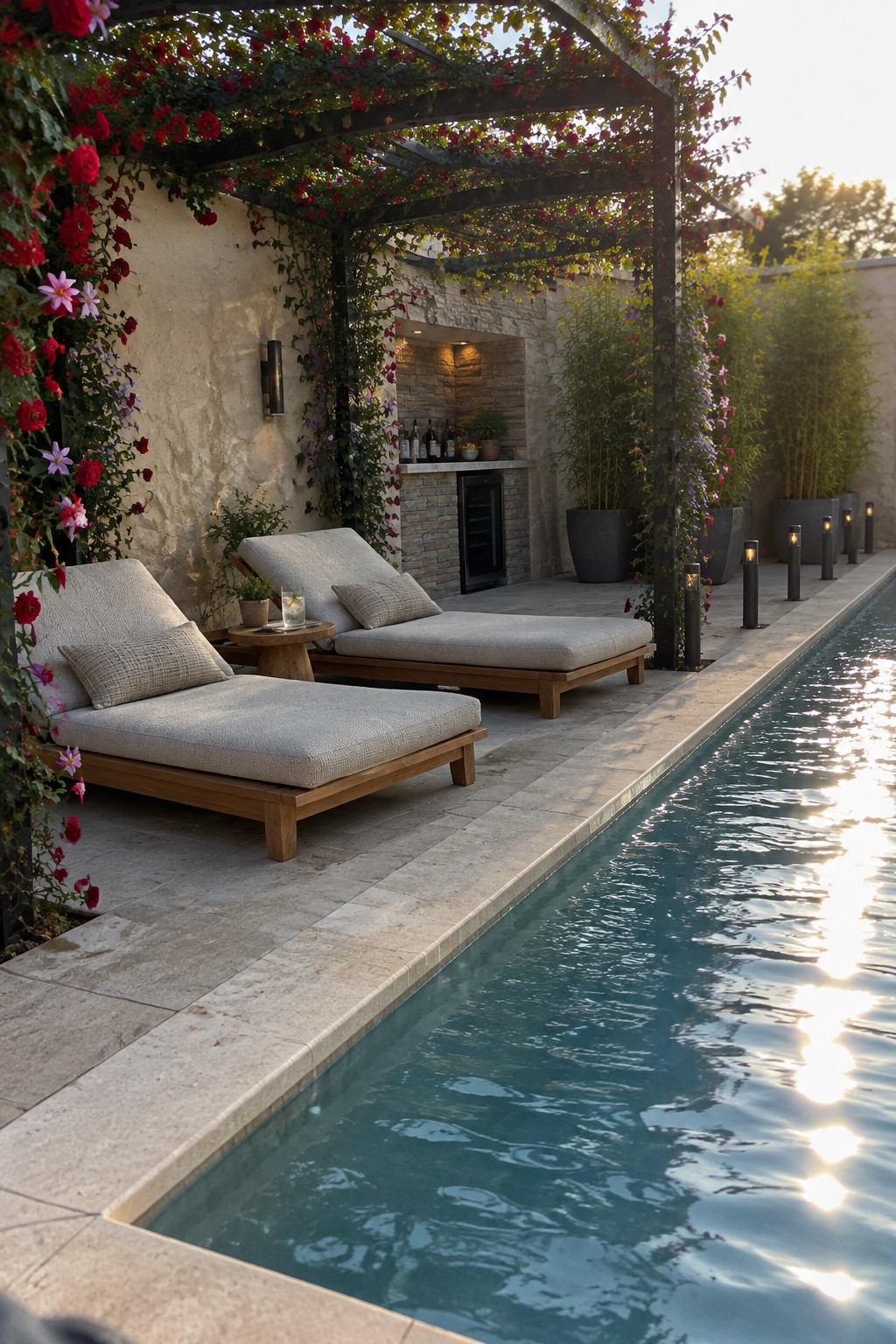
A pergola covered in climbing roses and clematis can make poolside seating feel tucked into the garden. The leafy canopy provides some shade while giving the seating area a clear shape.
Use this idea beside a pool or on a sunny patio where you want a defined place to sit. Train the vines along the beams and allow room for regular pruning so they do not crowd the seating or block the walkway.
Frequently Asked Questions
Q: Can I plant clematis and roses on the same arch?
A: Yes, as long as the arch is sturdy and both plants have room to grow. Plant them on opposite sides so you can guide each one separately and keep the rose from crowding the clematis.
Q: Which should I plant first?
A: Plant the rose first, then add the clematis a little farther from the base. Roses can take time to settle in, and a bit of distance helps keep the clematis from competing with its roots.
Q: How do I keep them from getting tangled?
A: Train the stems along separate sections of the structure and tie them loosely as they grow. A quick check every few weeks makes it easier to redirect new growth before it becomes a knot.
Q: Will this pairing work in a small garden?
A: It can, especially with a narrow trellis or obelisk instead of a wide arbor. Choose a rose with a manageable growth habit and prune it regularly so the clematis still gets its share of light.
