

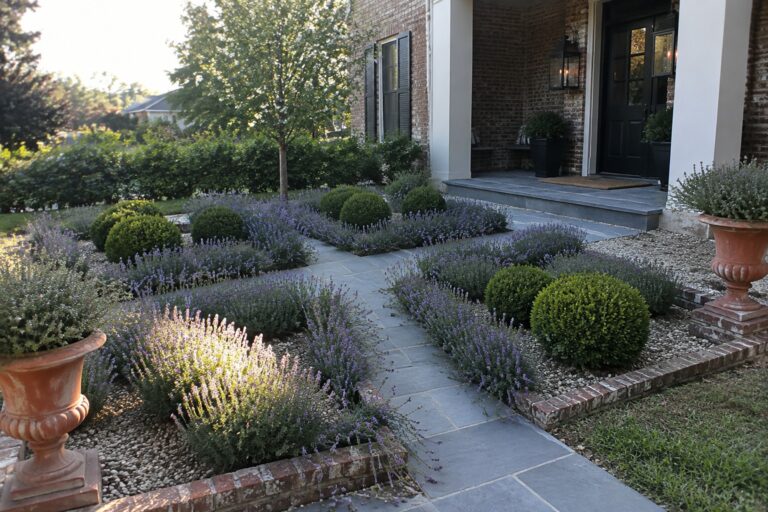
Lavender and boxwood can give a garden bed both softness and clear shape, but the balance depends on how the plants are arranged and spaced.
I find that the beds that work best leave enough room for each plant to grow without losing the crisp edges that make the layout feel intentional.
Pathways, edging, and the lines of the house also affect how the planting reads, especially as lavender spreads and boxwood fills out over time.
A simple structure helps.
The ideas ahead show ways to combine the two plants, and I’d save the layouts that suit your garden’s scale and test their spacing before planting.
Use Brick Edging to Shape Garden Beds
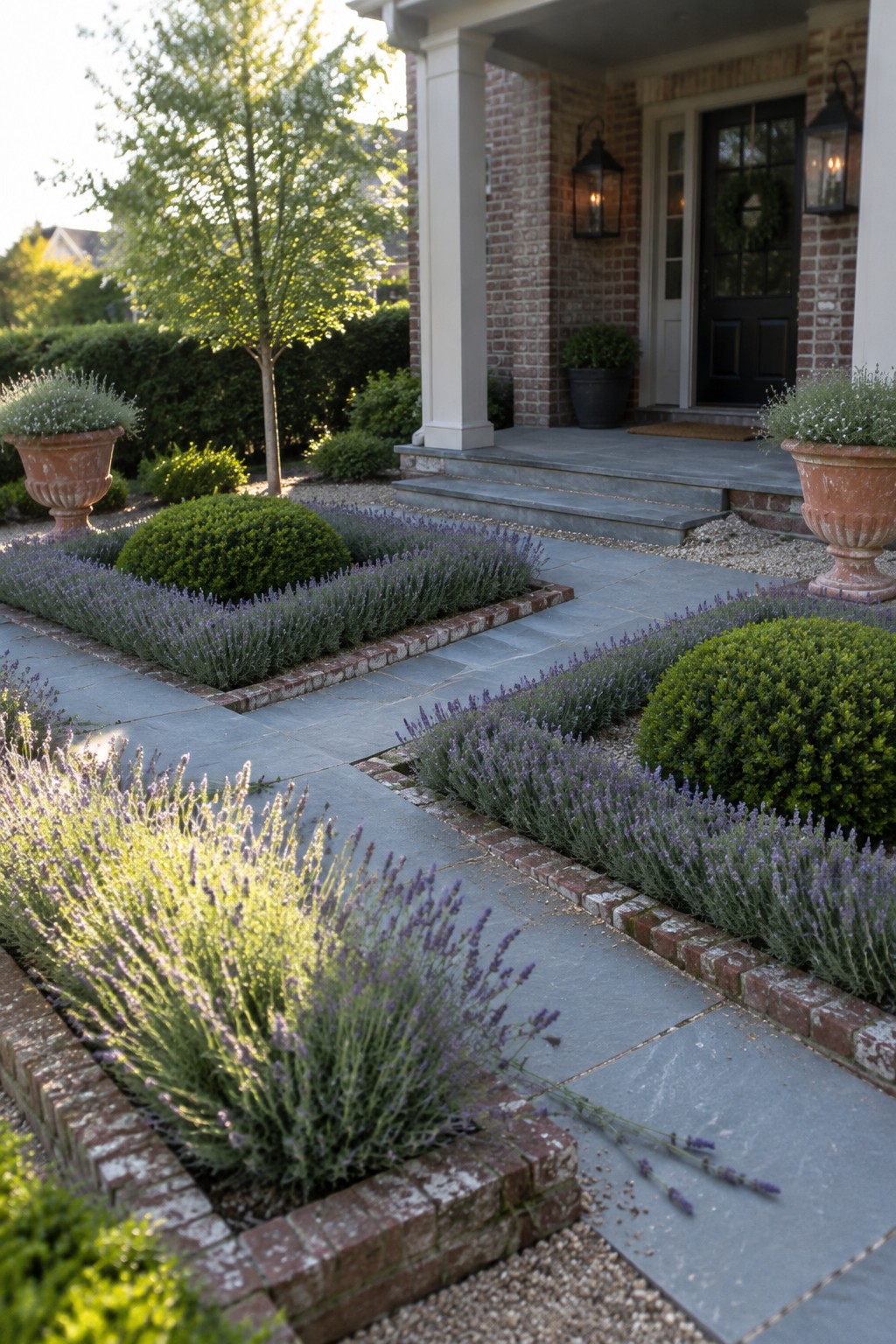
Brick edging gives garden beds a clear outline and helps them sit neatly alongside a stone path. It suits lavender and boxwood especially well, since their informal flowers and rounded evergreen shapes both benefit from a tidy border.
Use a low brick edge to follow straight or gently curved beds near an entry walk. Keep the border level and leave enough room for plants to grow without spilling onto the path. It works well in traditional gardens, particularly where the brick can echo the house.
Use Curved Paths to Shape Garden Beds
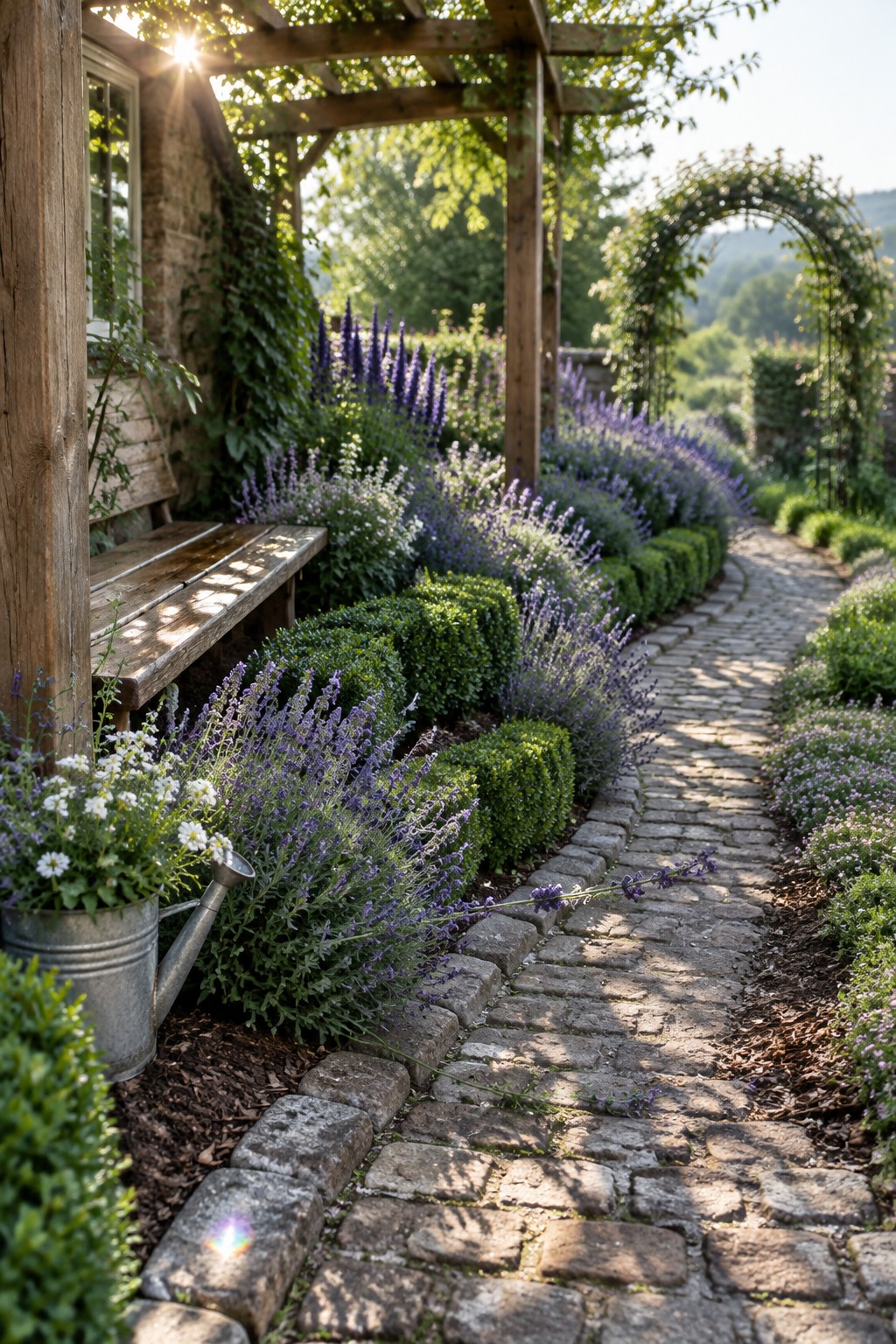
A gently curving path gives structured garden beds a softer outline without losing their order. Low boxwood edging can keep the planting neat, while lavender adds loose color along the route.
This approach works well in a narrow side garden or along a longer walkway. Keep the path wide enough to use comfortably, and repeat the same edging plants so the curves still feel tidy.
Use Boxwood To Shape A Garden Path

Boxwood hedges give a garden path a clear edge and make the planting feel orderly. Here, clipped boxwood borders the stone walkway, while lavender fills the beds beside it. The contrast keeps the path easy to follow without making the garden feel bare.
This approach works well along a straight walkway or around a small pool. Keep the boxwood trimmed to a manageable height, and leave enough space for lavender to spread without spilling across the path.
Use Lavender Along a Clear Garden Path
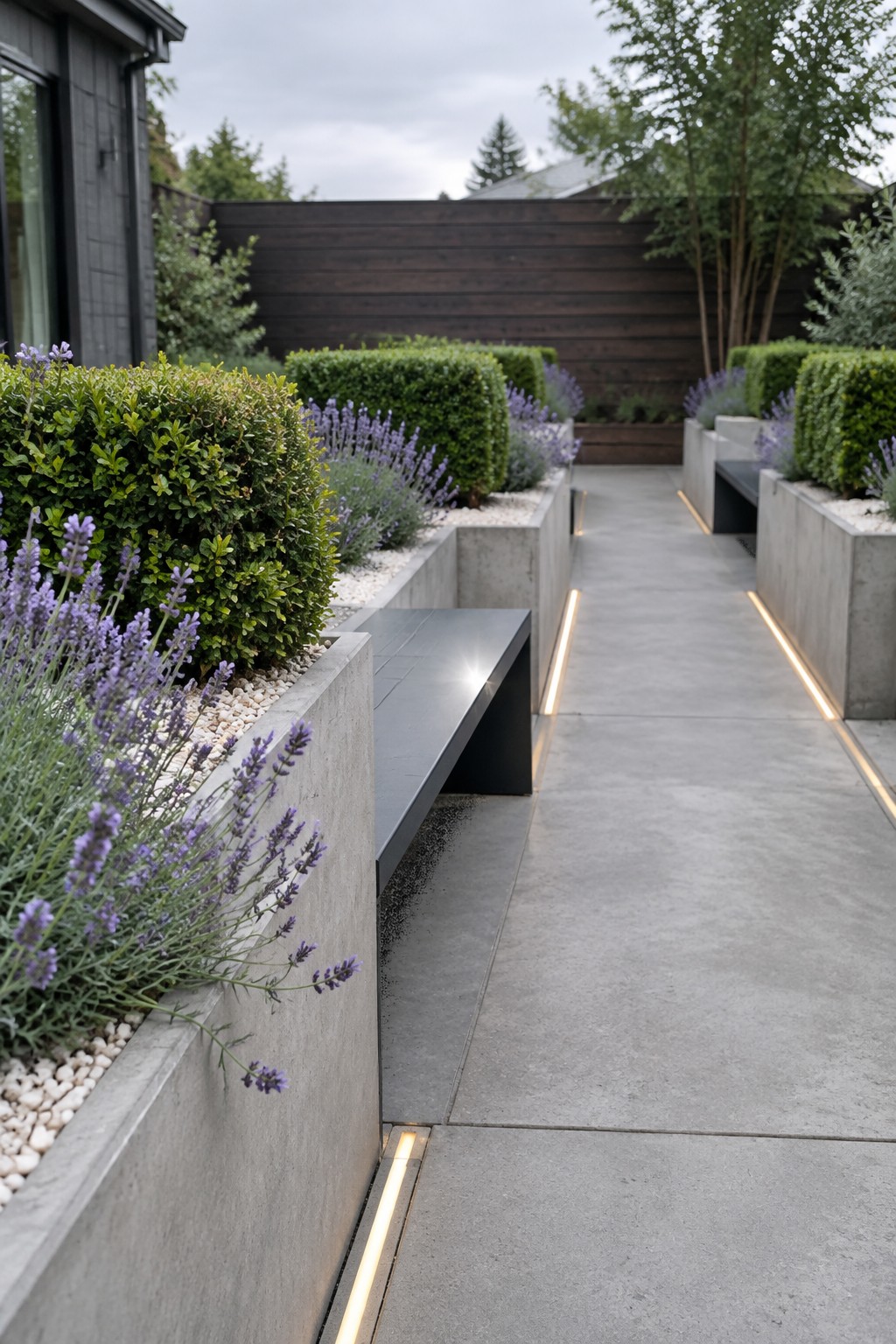
A straight path through structured planting makes a garden easier to navigate and gives the beds a tidy shape. Lavender brings a softer edge to clipped boxwood, so the layout feels orderly without looking too rigid.
For a similar effect, plant lavender along the front of boxwood beds and keep the path wide enough for comfortable walking. This works especially well in a narrow side yard or a small courtyard. Leave enough space for the lavender to spread without spilling too far onto the paving.
Use Stone Steps to Follow a Sloped Garden
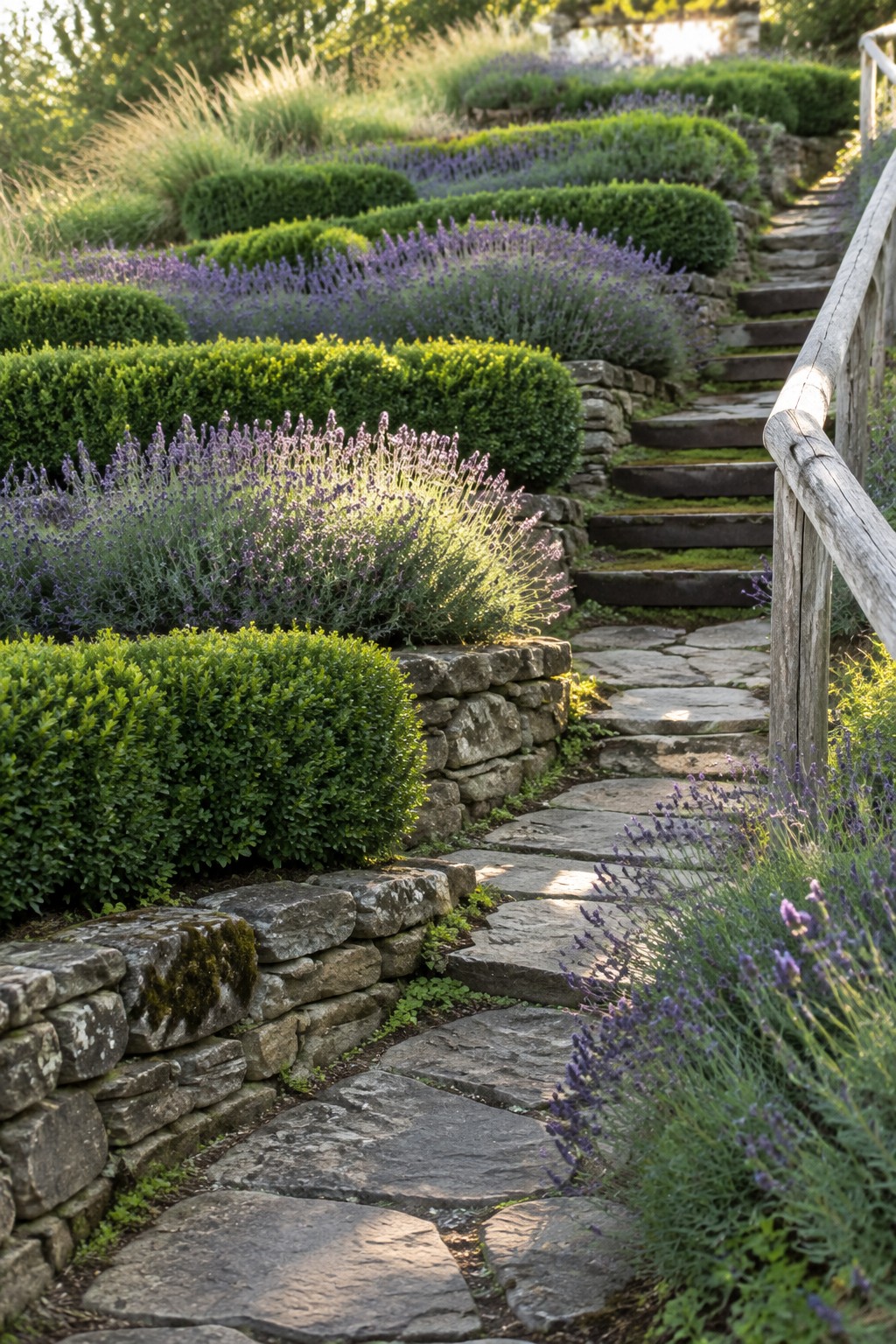
Stone steps make a sloping garden easier to walk through while keeping its planting beds connected. Here, the steps lead into a winding flagstone path, so the route feels like part of the garden rather than a separate staircase.
This approach works well on uneven ground where a path needs to climb between planting areas. Set the steps securely and keep their rise consistent, then use low-growing plants such as lavender and clipped boxwood alongside the route without crowding the walking space.
Use Raised Beds to Organize Lavender and Boxwood

Raised beds give lavender and boxwood a clear structure, which is especially useful in a narrow garden. The straight-edged metal planters keep the planting orderly while leaving a simple path through the middle.
This layout works well in small courtyards or along the side of a home. Keep the path wide enough to walk comfortably, and leave room for lavender to spread without crowding the boxwood.
Use Boxwood to Create Formal Garden Beds
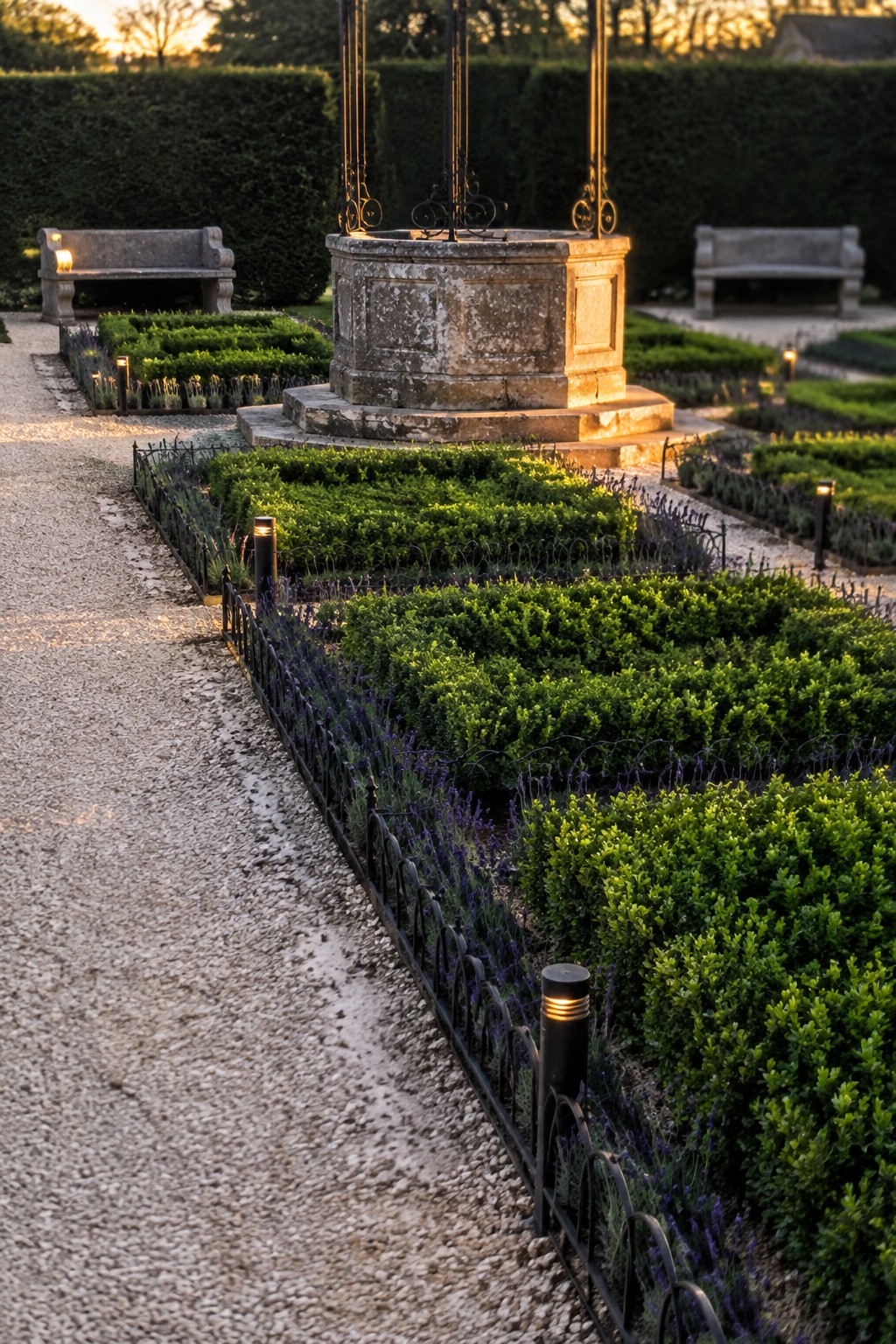
Boxwood clipped into neat shapes gives garden beds a clear, orderly structure. A narrow border of lavender adds color around the shrubs without making the layout feel busy.
This approach works well in a traditional garden where you want the planting to look tidy through much of the year. Keep the beds easy to reach for trimming, and leave enough space between the boxwood and lavender so neither crowds the other.
Use Gravel Paths to Divide Garden Beds
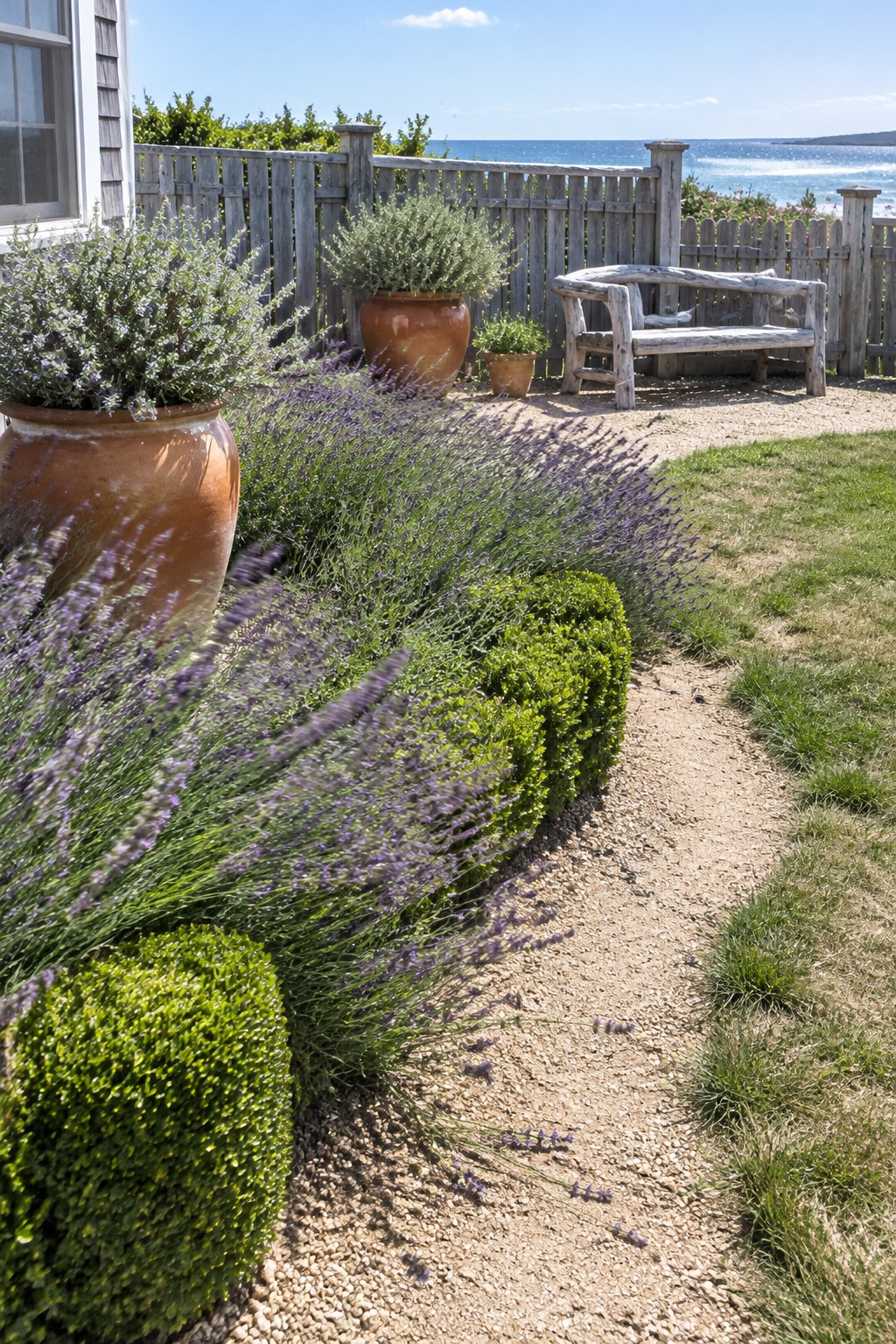
A gravel path gives a planted garden a clear route without making the yard feel overly formal. Here, it separates the lavender and rounded boxwood from the lawn, while the loose stone suits a casual coastal garden.
Use a path like this to make a narrow bed easier to reach and maintain. Keep its width comfortable for walking, and edge it well so gravel stays out of the lawn.
Use a Brick Path to Give Garden Beds Shape
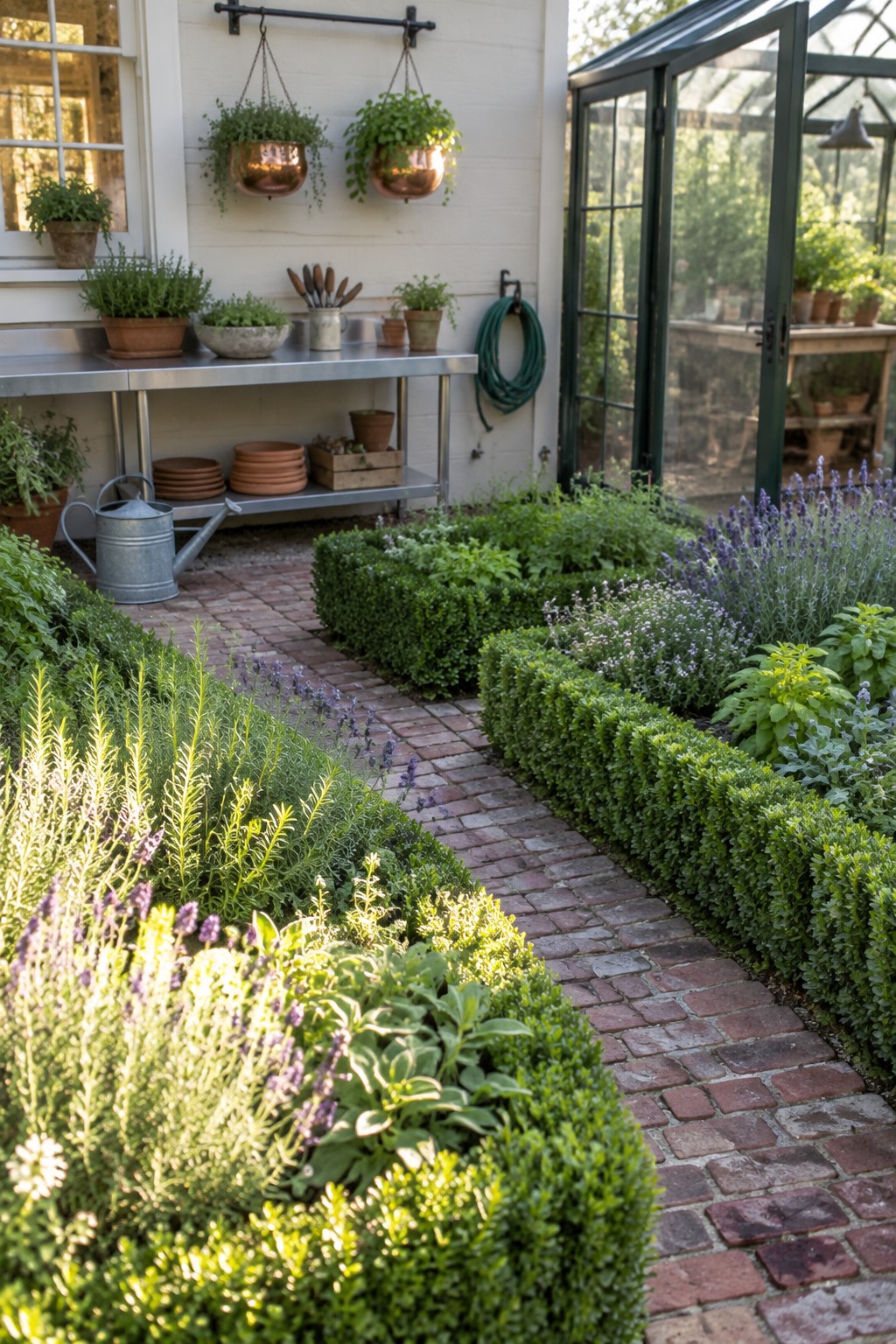
A brick path gives a garden a clear route while helping nearby beds feel organized. The curved line works especially well beside clipped boxwood and loose lavender, since it gives the softer planting a tidy edge.
Use this approach in a narrow side garden or near a greenhouse, where a defined path makes it easier to move through and tend the plants. Choose brick that suits the house, and leave enough room for comfortable walking.
Use Lavender and Boxwood to Screen a Pool Patio
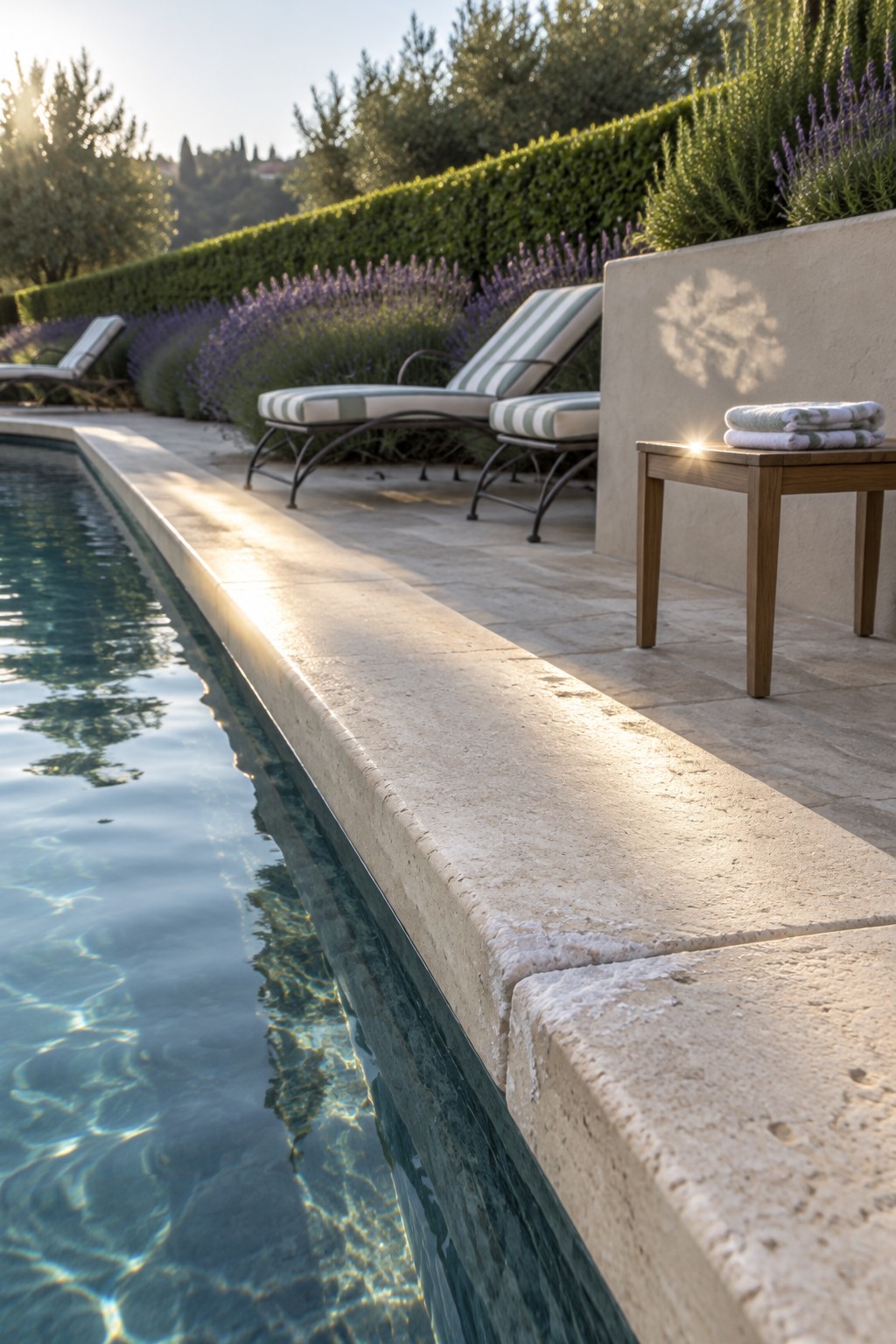
Lavender and clipped boxwood can give a pool area a clear edge without making it feel closed in. A low row of purple blooms in front of a taller hedge adds color and helps mark where the patio ends and the garden begins.
This layered planting works well beside a pool or terrace where you want some privacy but still need an open feel. Leave enough space between the plants and the seating area for easy access and upkeep.
Use a Straight Path to Organize Garden Beds
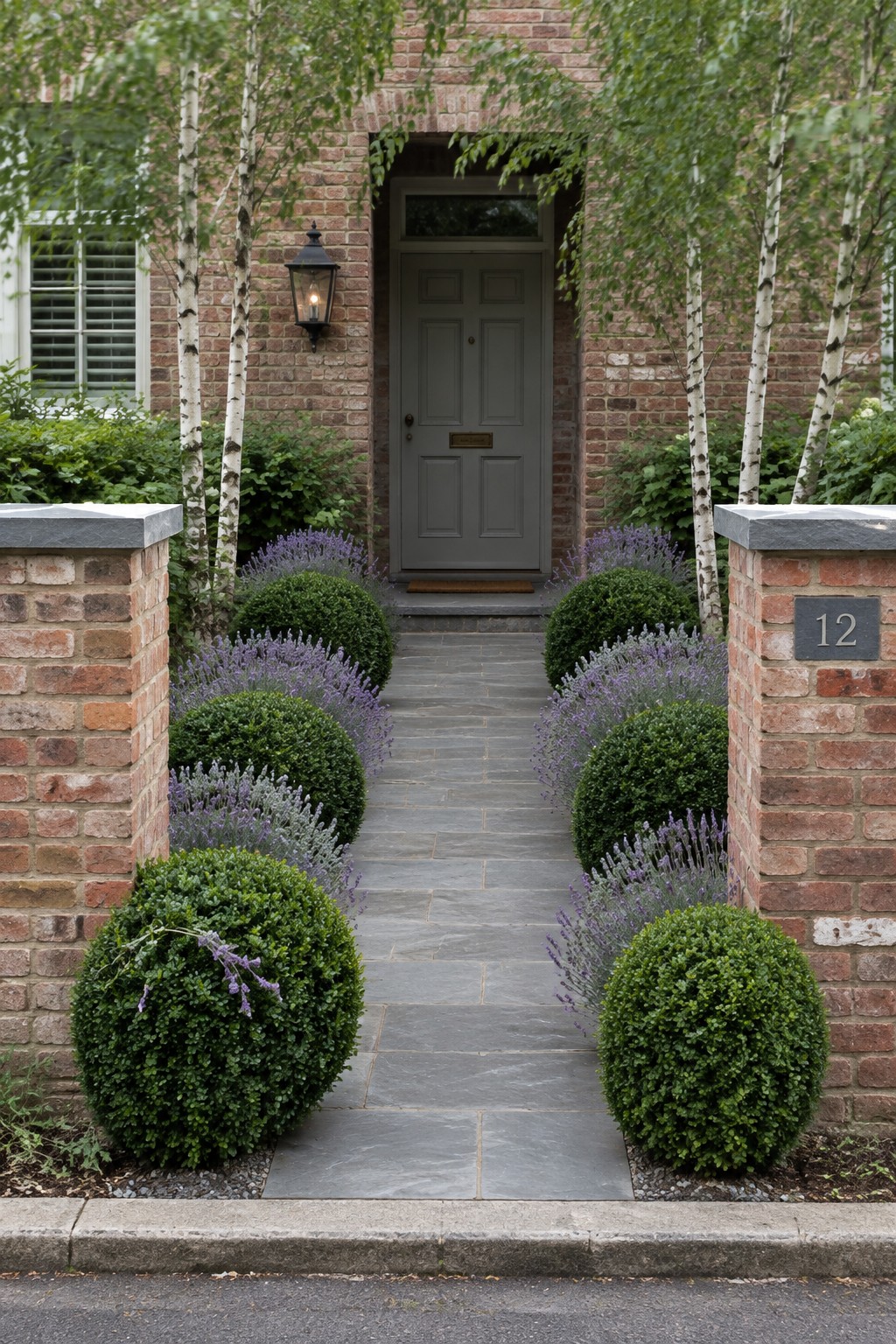
A straight stone path gives a front garden a clear structure and makes the entry easy to reach. Rounded boxwoods and lavender repeat along its edges, so the planting feels orderly without looking too stiff.
This layout suits a narrow approach to a front door, especially where a simple route through the garden is useful. Keep the path wide enough for comfortable walking, and leave room for the plants to grow without spilling too far over the paving.
Use Stepping Stones to Guide a Garden Path
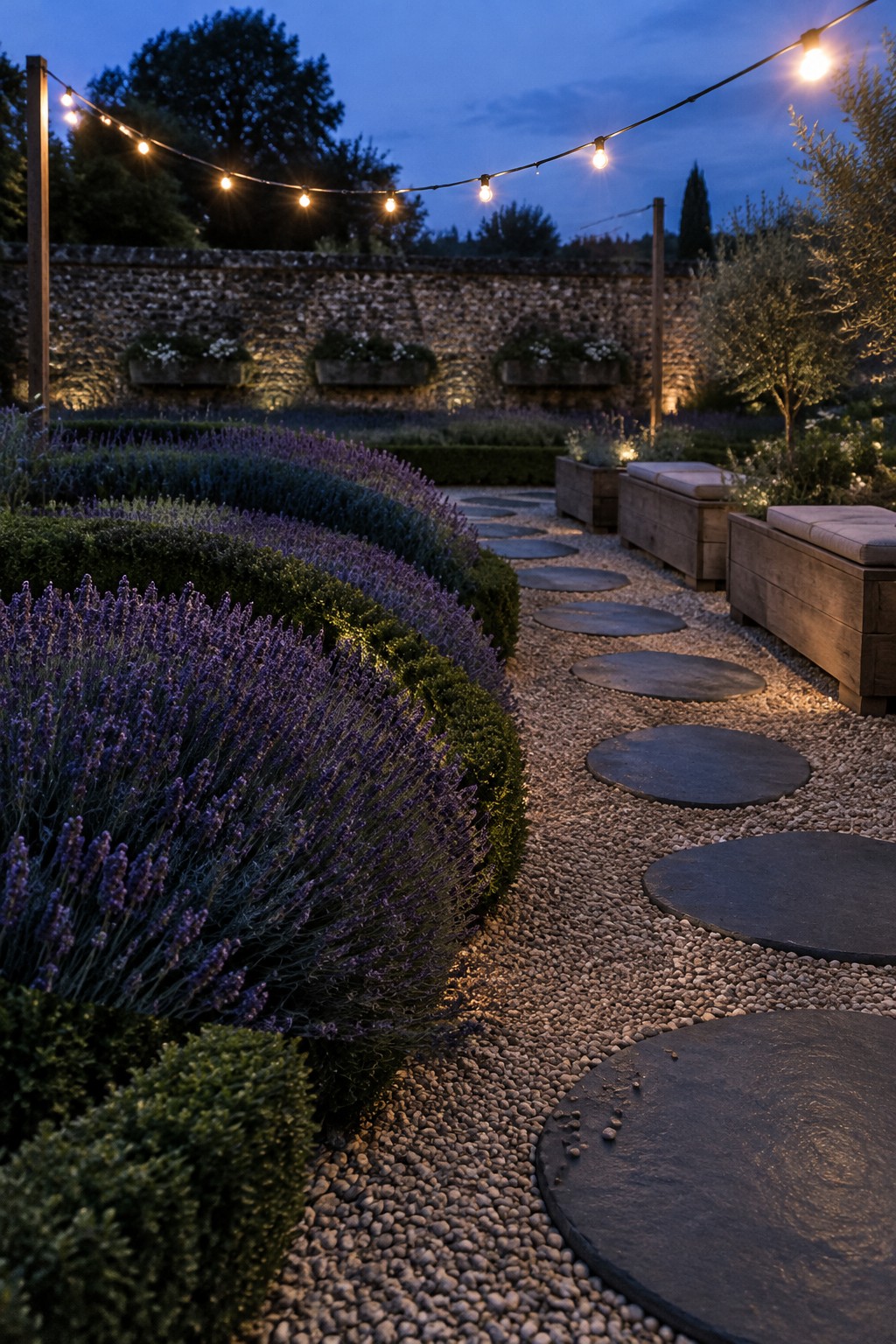
A gravel path with broad stepping stones gives a garden a clear route without making it feel too formal. The stones also help break up the gravel, while nearby lavender and clipped boxwood keep the planting beds looking orderly.
This approach works well in a narrow side garden or a space that needs a simple walkway through planted beds. Set the stones far enough apart for comfortable steps, and choose a gravel size that stays in place underfoot.
Use a Narrow Water Channel to Divide Garden Beds

A narrow water channel can give a formal garden a clear center line. Here, lavender borders the channel while clipped boxwood shapes the beds around it, making the planting feel organized without relying on a path through the middle.
This layout suits a compact courtyard or enclosed garden where a straight feature can help the space feel longer. Keep the channel narrow enough to leave room for planting, and choose plants that tolerate the moisture and upkeep involved.
Use a Circular Layout for a Garden Focal Point

A circular bed can give a formal garden a clear center without making the planting feel stiff. Here, low boxwood edges define the rings, while lavender adds a softer band of color around the central stone urn.
This layout works well in an open spot where people can see the bed from several directions. Keep the rings broad enough to maintain, and use clipped boxwood to make the curves easy to read as the plants grow.
Use Low Hedges to Define a Garden Bed
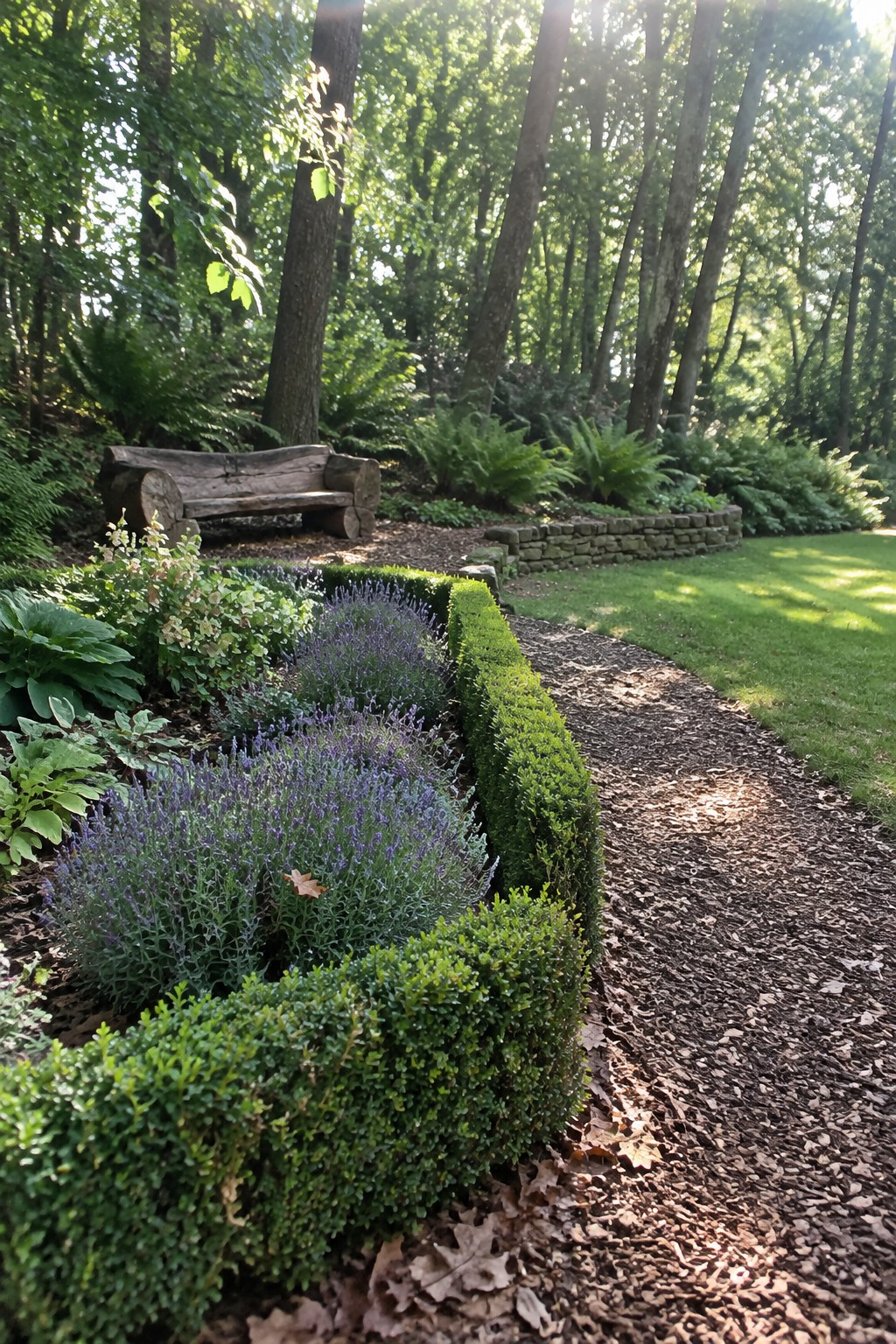
Low boxwood hedges give a garden bed a clear edge and help it look organized, even when the planting inside is informal. Here, the clipped border sits beside lavender, making the bed’s shape easy to see.
This approach works well along a path or lawn where you want a neat boundary without a tall fence. Keep the hedge low enough to see the flowers, and leave room for it to widen as it grows.
Use Stepping Stones to Link Garden Beds to the Entry

Large stepping stones set in gravel make a clear route to the door while leaving room for planting on either side. Lavender and clipped boxwood give the path a tidy structure without making the garden feel too formal.
For this approach, leave enough space between stones for a comfortable stride and keep the gravel level around them. It works especially well in a narrow side yard where a full paved walkway would take up too much room.
Use a Gate to Mark the Garden Path
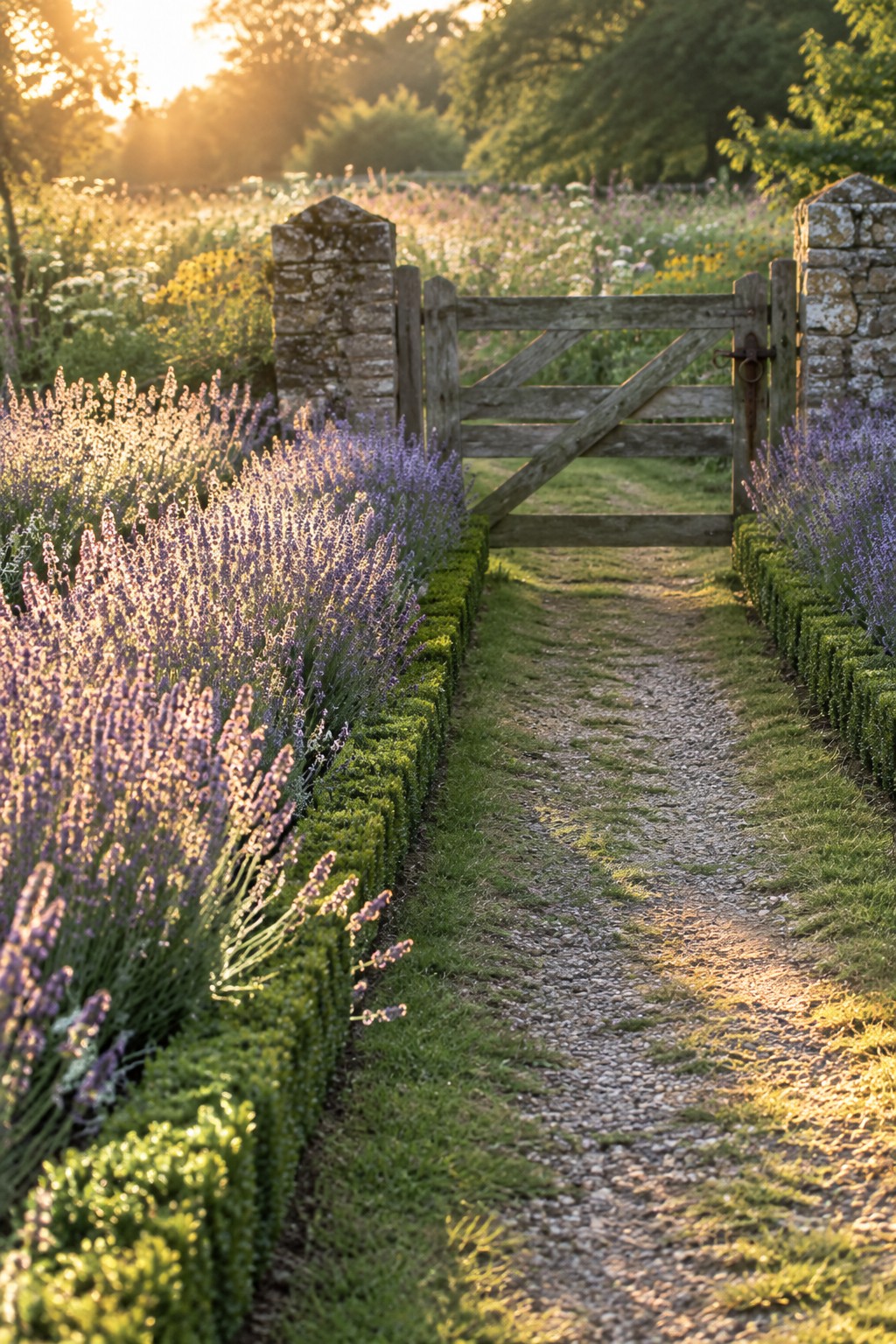
A simple wooden gate gives a garden path a clear beginning and end. Set between stone posts, it adds structure to informal planting without making the route feel too rigid.
For a similar look, let low boxwood define the path and use lavender along its edges. Keep the gate wide enough for easy access, especially if you need to move garden tools through it.
Use Planters to Structure a Rooftop Garden
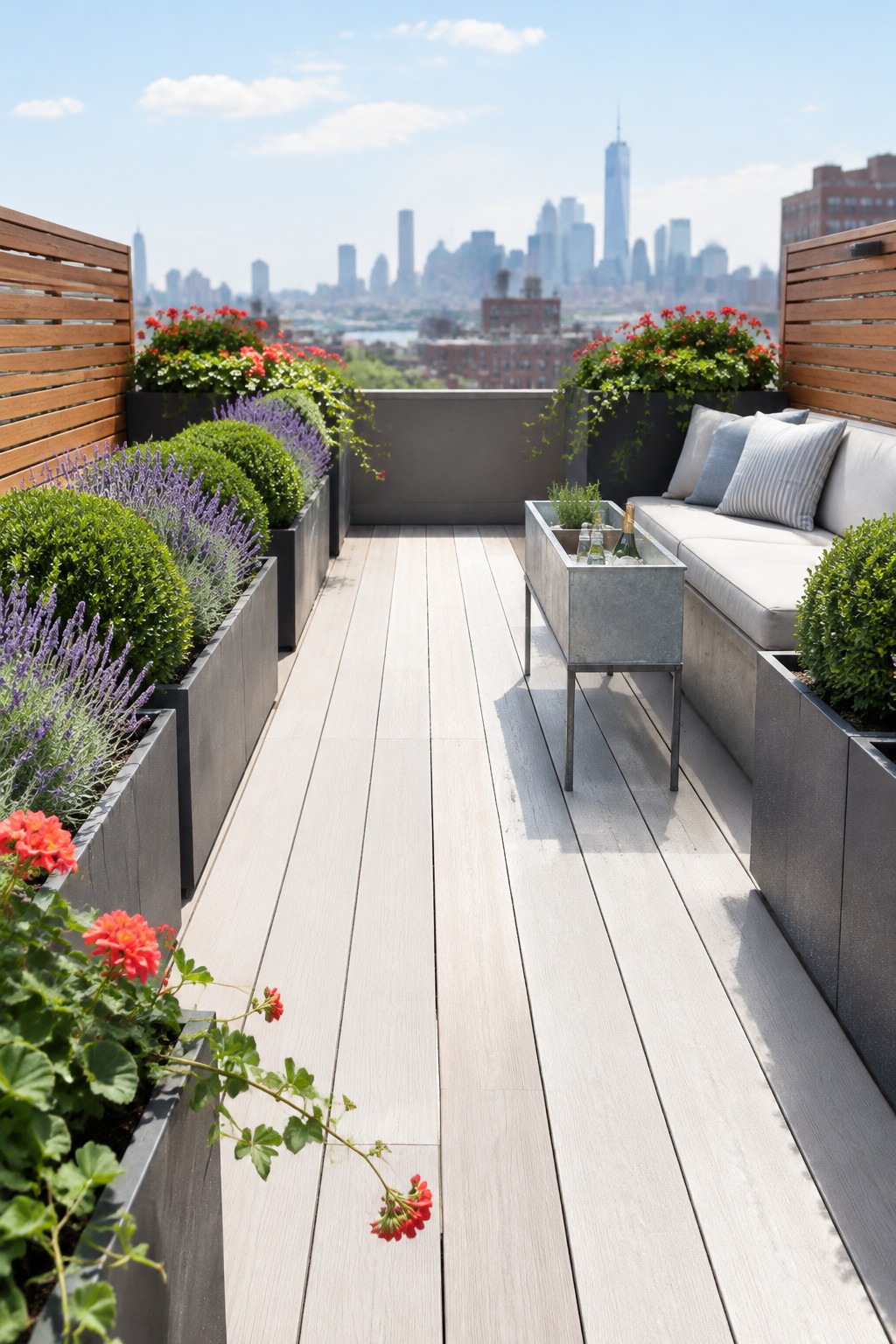
Raised rectangular planters can give a rooftop garden a clear layout without taking away its open feel. They keep shrubs and flowers in defined beds, while the planting adds greenery along the edges of the space.
Use this approach on a narrow terrace or balcony where in-ground beds are not an option. Choose planters that leave enough room for a comfortable walkway, and mix compact boxwood with lavender for a tidy planting scheme.
Use Repeated Planting to Structure a Gravel Bed
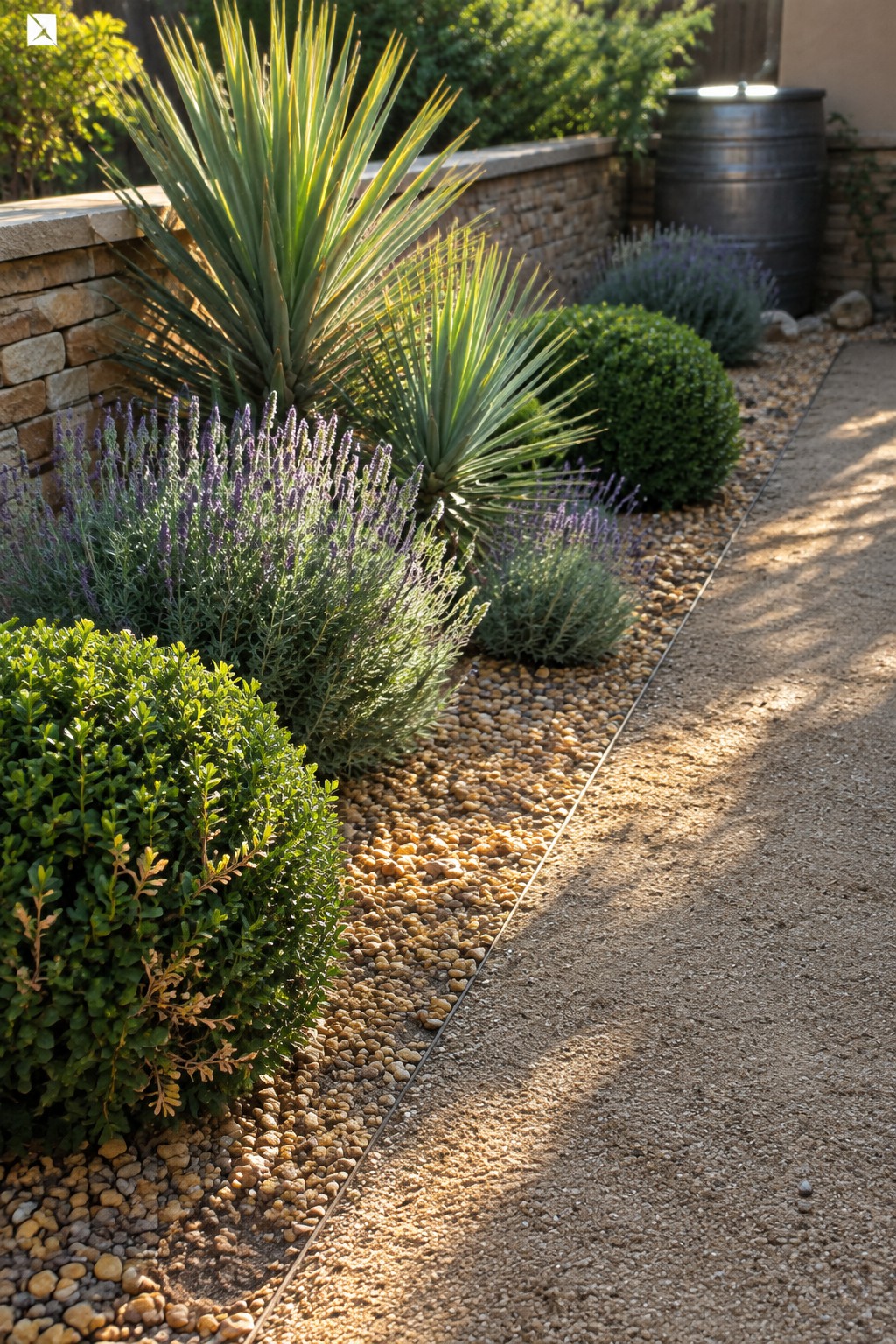
Repeating rounded shrubs and lavender through a gravel bed gives the planting a clear rhythm. The shapes keep the area looking organized, while lavender brings a looser edge that suits a relaxed, low-water garden.
Use this approach along a walkway or beside a retaining wall, leaving enough room for each plant to reach its mature size. Gravel helps keep the bed tidy, but it needs a stable edge so stones do not spill onto the path.
Use Planters to Bring Lavender and Boxwood to a Balcony

Copper railing planters make it possible to grow a tidy mix of lavender and boxwood in a narrow outdoor space. The clipped greenery gives the planting a clear shape, while lavender can spill over the edges.
This approach suits a small balcony where there isn’t room for garden beds. Choose planters that fit securely on the railing, and leave enough space to walk past them comfortably.
Use a Stone Path to Organize Garden Beds
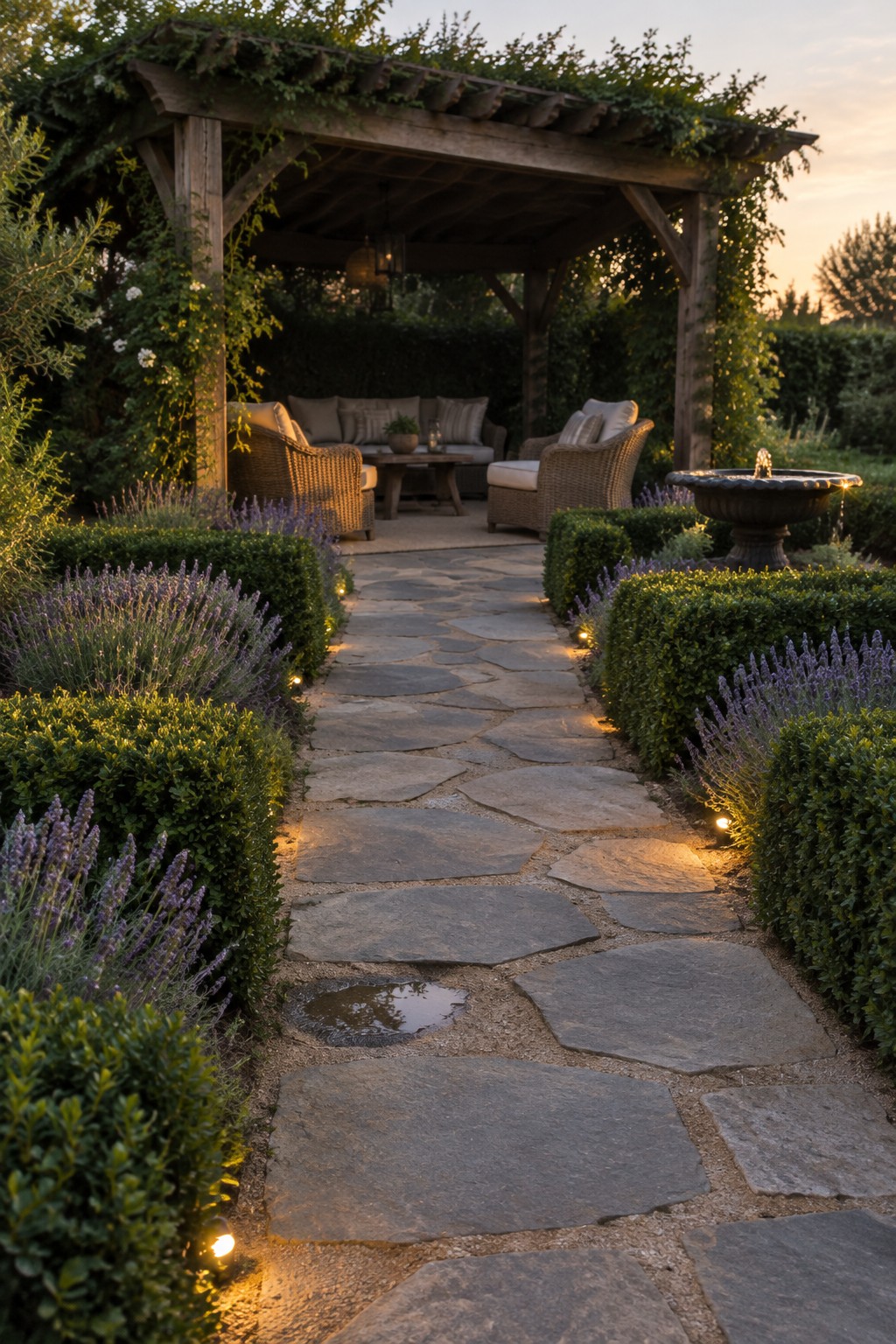
A stone path gives a garden a clear route while helping nearby beds feel orderly. Here, lavender and clipped boxwood line the stepping stones, so the planting has structure without looking too stiff.
This approach works well in a cottage garden or along the way to a seating area. Keep the stones wide enough for comfortable walking, and repeat the same few plants along the edges for a tidy look.
Use Lavender and Boxwood to Organize a Small Garden

A clear path and neatly clipped boxwood give this compact garden a simple structure, while lavender brings softer color along the edges. The mix keeps a small space orderly without making it feel too formal.
Use boxwood in low beds or short rows to mark the main route, then plant lavender where it has room to spread and catch the sun. Keep the path wide enough to walk comfortably, especially if the garden also needs space for a table.
Frequently Asked Questions
Q: How far apart should I plant lavender and boxwood?
A: Give each plant enough room to reach its mature width, rather than packing them tightly for an instant full look. Check the spacing on the plant labels, and leave a little breathing room so lavender gets good airflow and boxwood is easy to trim.
Q: Will lavender grow well in a partly shaded bed with boxwood?
A: Lavender flowers best in full sun and may become sparse or floppy in too much shade. If the bed gets only a few hours of direct sun, place lavender in its brightest spot and use boxwood to fill the shadier sections.
Q: How do I keep lavender from getting swallowed by boxwood?
A: Keep the boxwood clipped to a size that suits the bed, and don’t let its branches spread over the lavender. Prune lavender lightly after flowering to keep it compact, but avoid cutting deep into old, woody stems.
Q: Can I plant lavender and boxwood in the same soil?
A: They can share a bed, but lavender needs especially sharp drainage and dislikes soggy roots. If your soil stays wet, raise the bed or plant the lavender in a slightly elevated pocket with gritty, well-draining soil.
