


I’ve found that front yards feel most grounded when lavender outlines the main pathways and beds, letting the plants’ natural spread create a loose structure over a few seasons.
Those silver-green mounds hug edges without the rigidity of boxwoods or stones.
In my yard, I tucked clusters along the walkway to the porch steps, and they’ve filled out to draw the eye right where it should go.
That first bloom catches everyone driving past.
Layering it like that in your layout rewards you with a calmer curb over time.
Lavender-Lined Stone Pathway
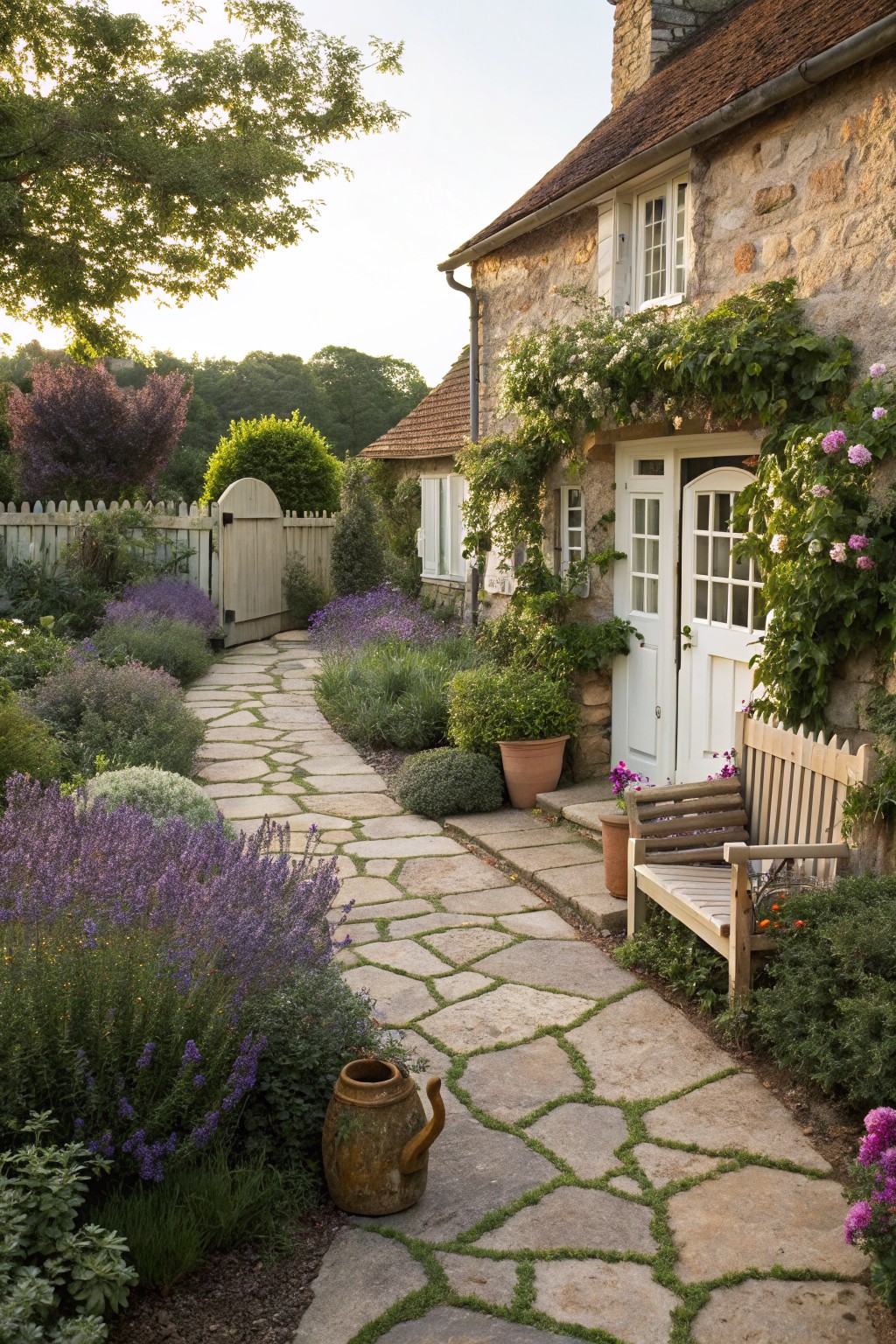
One simple way to make your front yard feel more welcoming is a winding stone path edged with lavender. It draws folks right to the door without feeling too straight or formal. The lavender bushes add that soft purple color and a nice smell when you brush by them. Plus the uneven stones give it a natural cottage look that fits older homes well.
You can lay this out in smaller yards too just keep the path narrow and curve it a bit for interest. Plant lavender along both sides in low beds so it doesn’t block the way. Add a bench near the end like in this setup for a spot to sit. It works best in sunny spots since lavender likes that and stays low fuss once it’s going.
Gravel Pathway Lined with Grasses
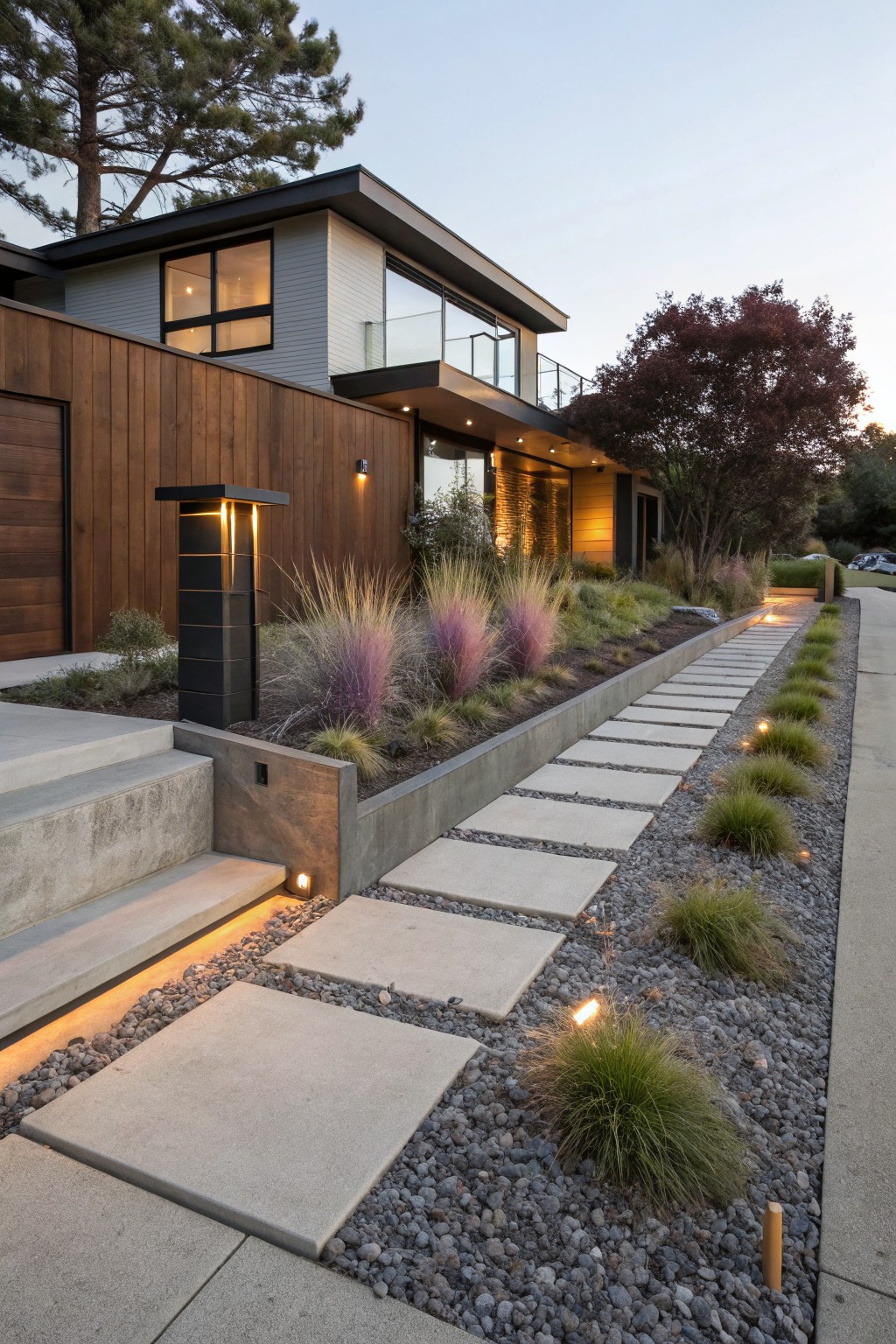
A simple gravel path like this one uses large concrete pavers spaced out in a bed of small rocks, with tall grasses planted right along the edges. It leads straight from the street to the front steps, keeping things open and easy to walk. The grasses sway a bit in the breeze, giving that relaxed yard feel without much upkeep. Those purple-toned ones add a soft color that fits right in at dusk.
You can pull this off in any front yard with a straight shot to the door, especially if you want low-water plants. Just line up the pavers every few feet for footsteps, fill around them with gravel to cut down on weeds, and tuck in drought-friendly grasses like fountain grass. Skip tight borders. Add low lights along the way if you like the glow at night. Works best on modern or simple homes where you don’t want fussy flower beds.
Lavender-Lined Coastal Path
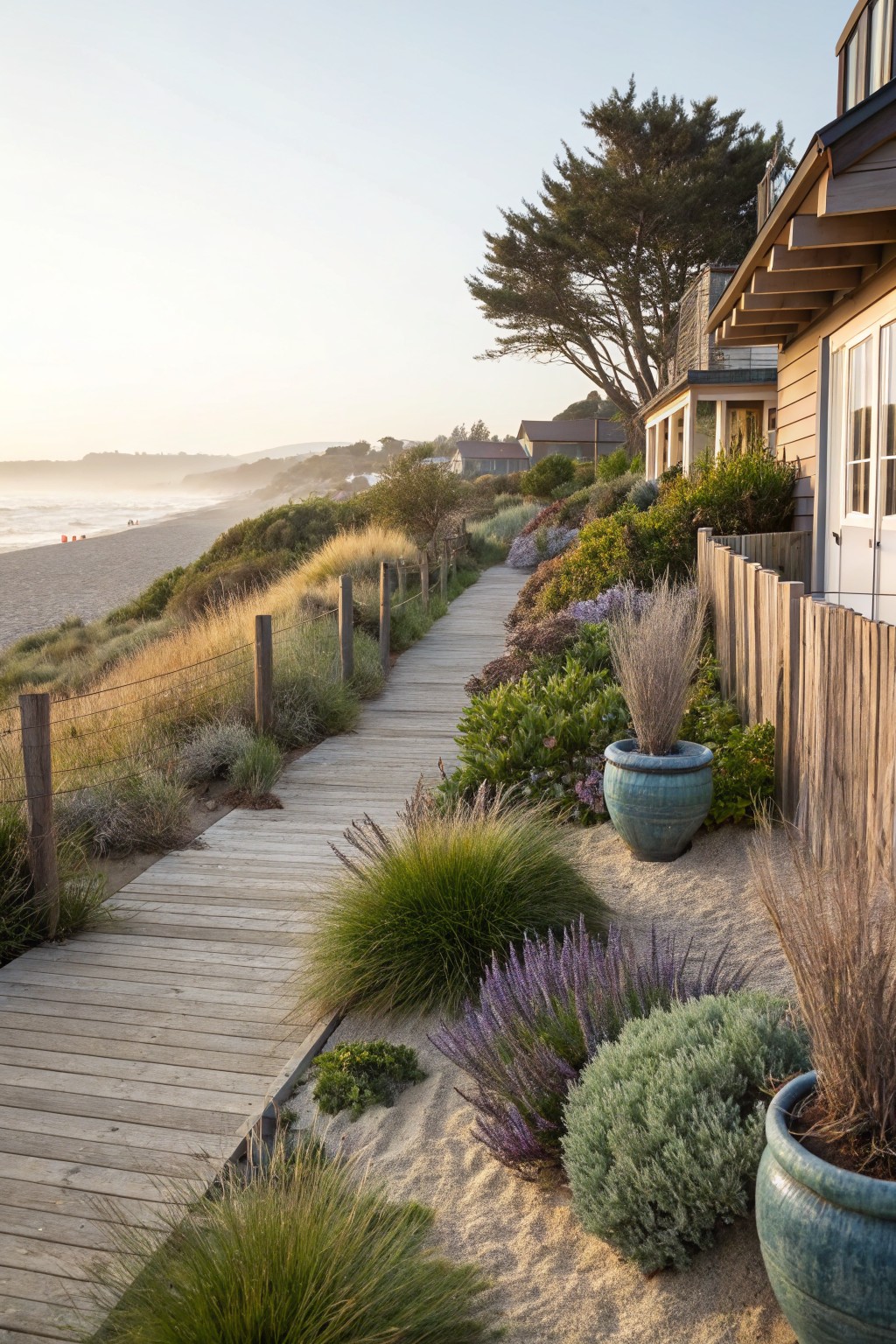
A wooden boardwalk path like this one runs right along the dunes, edged with clumps of lavender and soft beach grasses. It pulls off that relaxed coastal vibe without looking too fussy. The lavender adds those pretty purple spikes that hold up in salty air and wind, while the grasses sway and fill in the sandy spots naturally.
You can recreate this in a front yard heading to your beach house or even a dry inland entry. Stick lavender in drifts next to the path, pair it with tough natives like toetoe or fescue. It suits low-water spots best… just watch for too much shade where lavender might flop. Keeps things easy and always a bit wild.
Lavender-Lined Brick Pathway
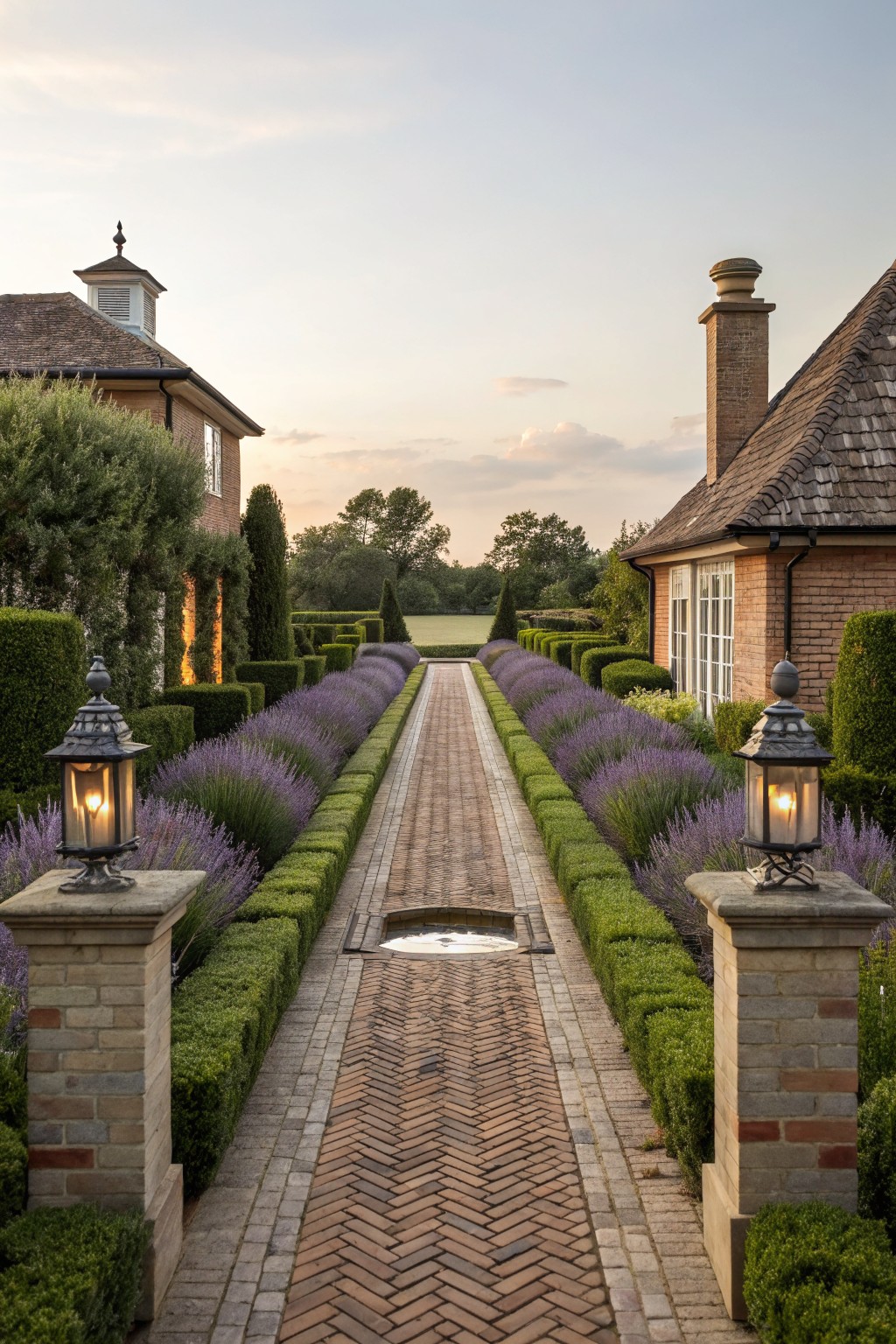
A simple brick path edged with rows of lavender plants makes for an easy way to add calm to your front yard. The purple blooms line both sides neatly, paired with clipped boxwood hedges that keep things structured without much fuss. Stone lanterns on brick pillars light the way softly, especially nice at dusk. It’s that relaxed garden feel people chase, with the lavender scent hitting you as you walk.
This setup works best leading up to your front door or gate, on homes with a bit of English garden style or classic brick. Plant lavender about a foot back from the path edge, and keep the hedges trimmed once a year. Skip it if your yard’s too shady, since lavender needs sun. Easy to copy on a smaller scale too.
Terraced Lavender Beds on Stone Retaining Walls
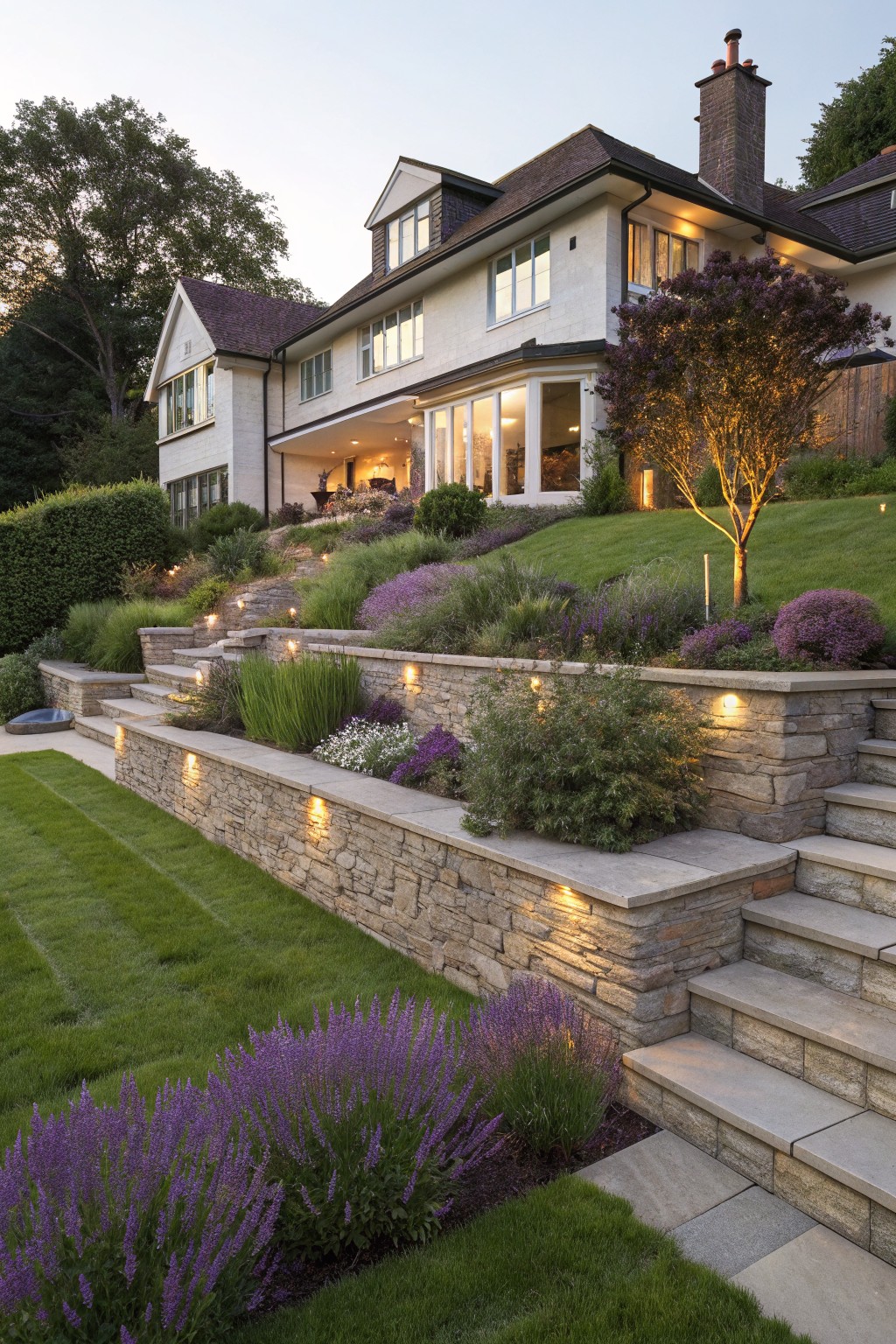
Slopes can be tough in a front yard. But terracing them with low stone walls turns the problem into pretty garden rooms. Here lavender fills the beds right up against the walls. The purple spikes soften the hard stone and spill over the edges a bit. Those little wall lights make it glow at dusk too.
This works best where your yard drops away from the house. Stack the walls two or three high with wide steps between. Plant lavender varieties that mound nicely, like the ones shown. Keep paths clear for walking up. Suits homes on a hill… just check your soil drains well or the roots might rot.
Lavender-Lined Gravel Path
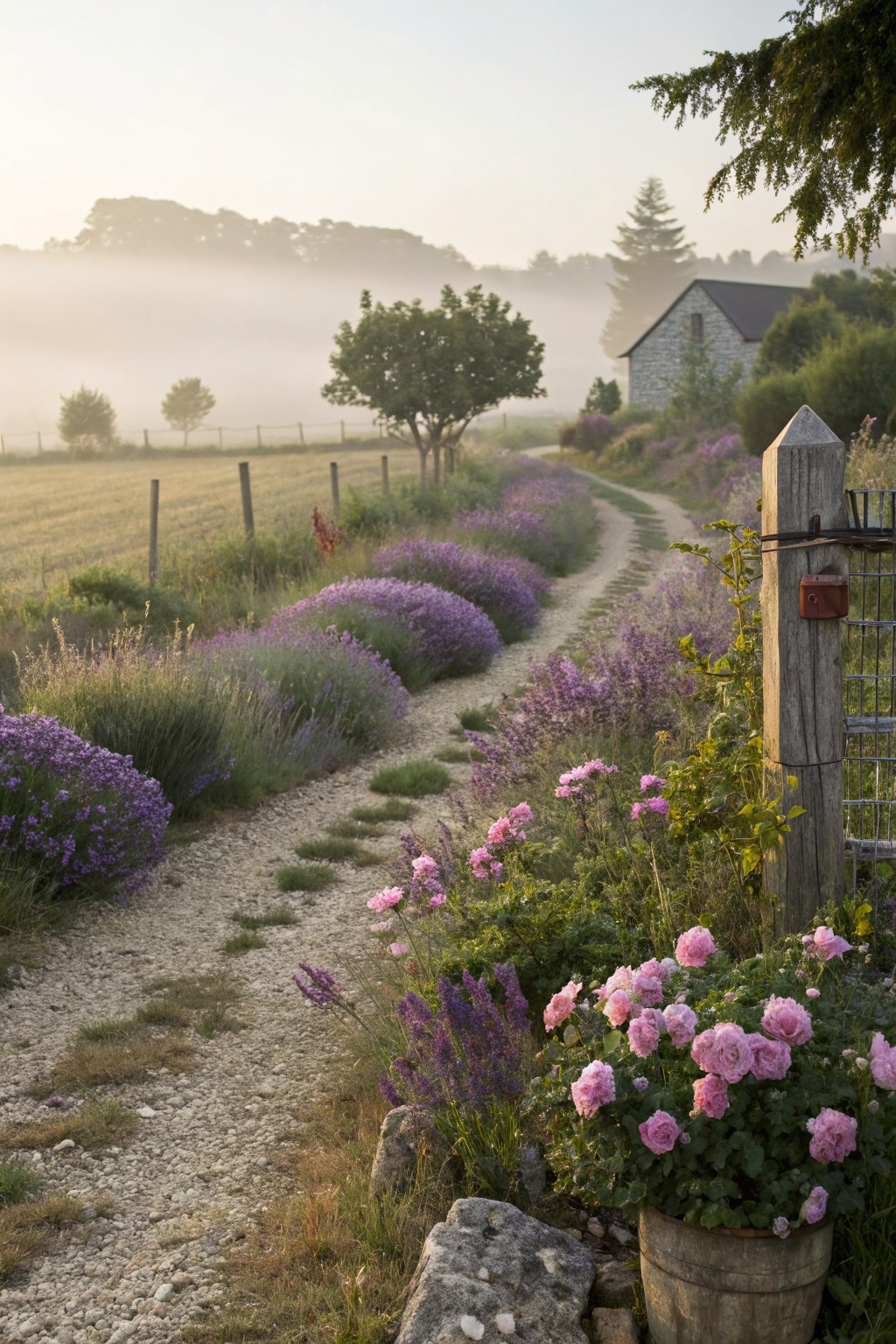
A gravel path like this one, edged tightly with lavender bushes, pulls you right into the garden without trying too hard. The soft purple rows mix with a few pink roses by the gate, keeping things calm and country-fresh. It’s that easy rhythm that makes a front yard feel lived-in and welcoming.
Plant lavender along both sides of a simple path in your front yard, especially if you have a gate or open field view. It suits older homes or rural spots best, stays low-maintenance once established. Watch the spacing though… too tight and it crowds the walk.
Stepping Stone Path with Lavender Borders

A simple way to guide people to your front door is with large square pavers set right into gravel beds, lavender tucked along both sides. It keeps the walk feeling loose and easy, not like a stiff sidewalk. The lavender adds that soft purple touch without much upkeep, and the gravel fills in smooth between steps.
This setup works great in sunny, dry front yards where you want low water use. Go for pavers in a neutral stone color to blend with the house, and plant lavender varieties that thrive locally. Just leave enough space between stones so feet land naturally, maybe 2 feet or so.
Lavender Borders Along a Gravel Path
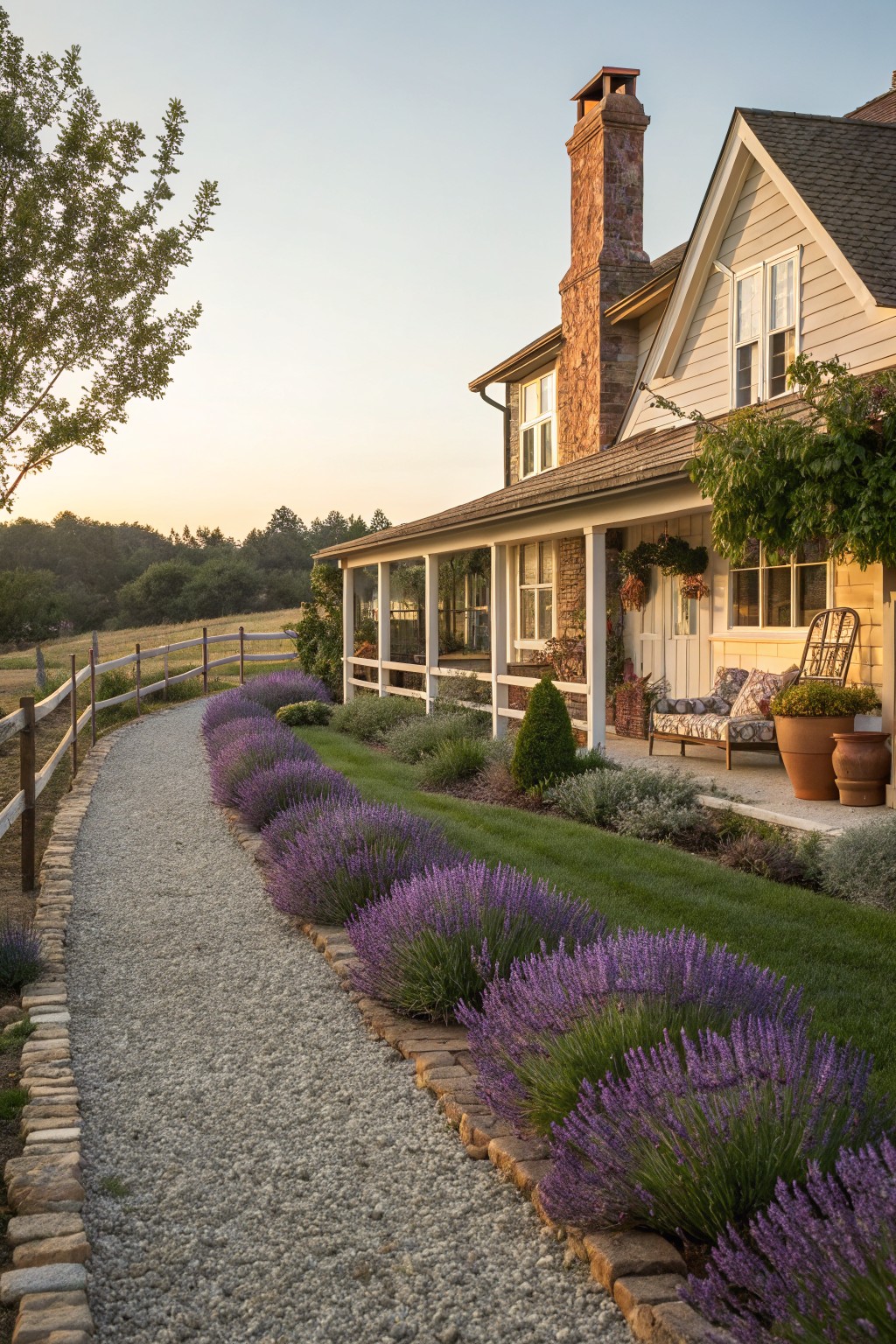
A gravel path edged with full lavender beds makes for an easy front yard walk that feels calm and welcoming. The purple blooms hug the stones close, giving a natural border without much fuss. You get that nice scent too when the wind hits, and it pulls the eye straight to the porch without overpowering the yard.
This works best on country homes or cottages with some open space out front. Lay down gravel for the path, then plant lavender in simple beds along both sides, maybe 2 feet wide. Keep the plants shaped back once a year. It suits sunny spots, stays low maintenance, and ties the house to the garden nice.
Planter Surrounded by Lavender
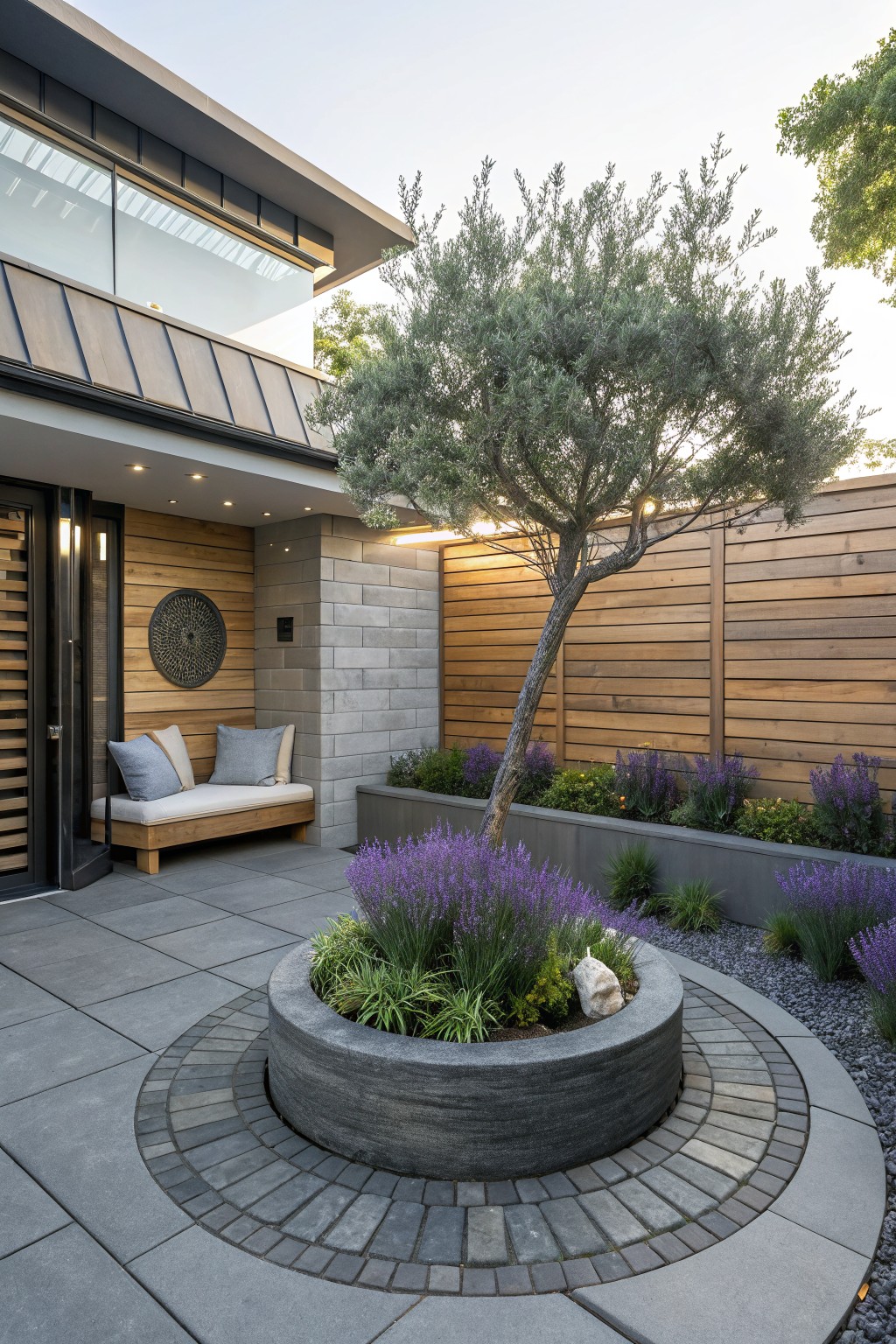
One simple way to add calm to your front yard is a big round stone planter right in the middle of the paved area. Fill it with grasses and a few rocks, then plant lavender all around it in low raised beds. That purple color pops against the gray stone and pavers. It pulls focus to the entry without trying too hard, and the scent hits you as you walk up.
This works best in sunny spots near the house door, maybe 6 to 8 feet across for the whole circle. Line the beds with lavender varieties that stay compact. Pair it with a bench nearby for sitting. Good for modern homes or smaller lots. Just keep the lavender trimmed so it stays neat.
Lavender in Corten Steel Planters

Corten steel planters work really well for front yards like this one. They’re placed right along the concrete steps and path, filled with lavender, tall grasses, and some low shrubs. That rusty metal patina fits right in with the plants, and it keeps everything looking neat without much upkeep. The lavender adds that soft purple color and scent, making the entry feel more welcoming and calm.
You can use these planters to edge any walkway or frame steps leading to your door. They suit modern or minimalist houses best, especially in areas with dry summers where lavender thrives. Just make sure the beds drain well so the plants don’t get waterlogged. (One tip: source corten from a local metal shop to save on shipping.)
Lavender Lined Path to the Entry
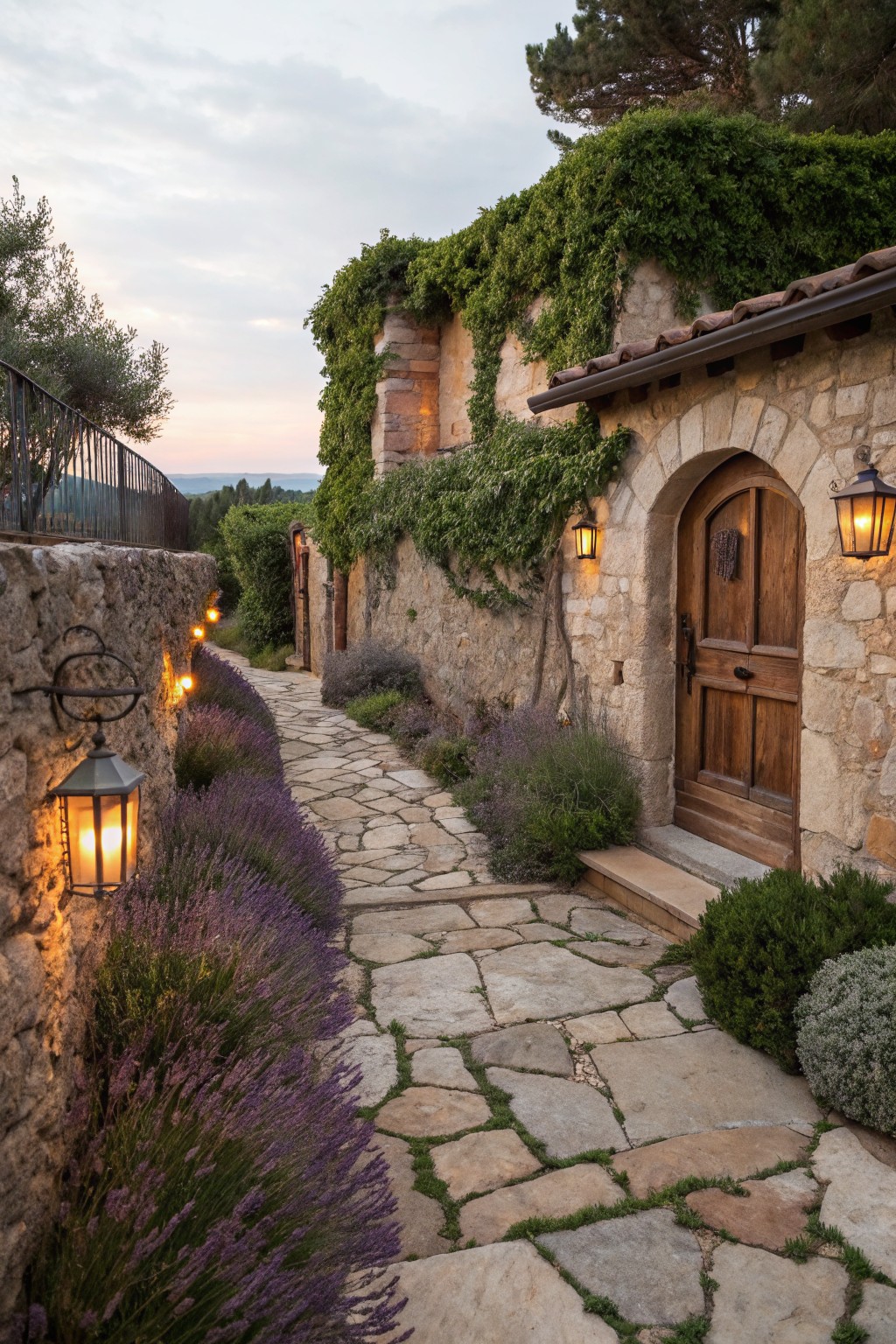
A simple stone path winding through beds of lavender makes for an easy front yard welcome. It pulls your eye right to the door without being too fussy. Those soft purple blooms along the edges give off that calm, country feel, especially with a few lanterns lighting the way at dusk.
This setup works best in smaller front yards or along a side entry where you want some guidance without blocking the view. Go for low-growing lavender varieties that won’t flop over the path, and keep the stones irregular for a natural look. It suits older homes with stone or stucco walls… just trim the plants back once a year to stay neat.
Lavender-Lined Winding Path
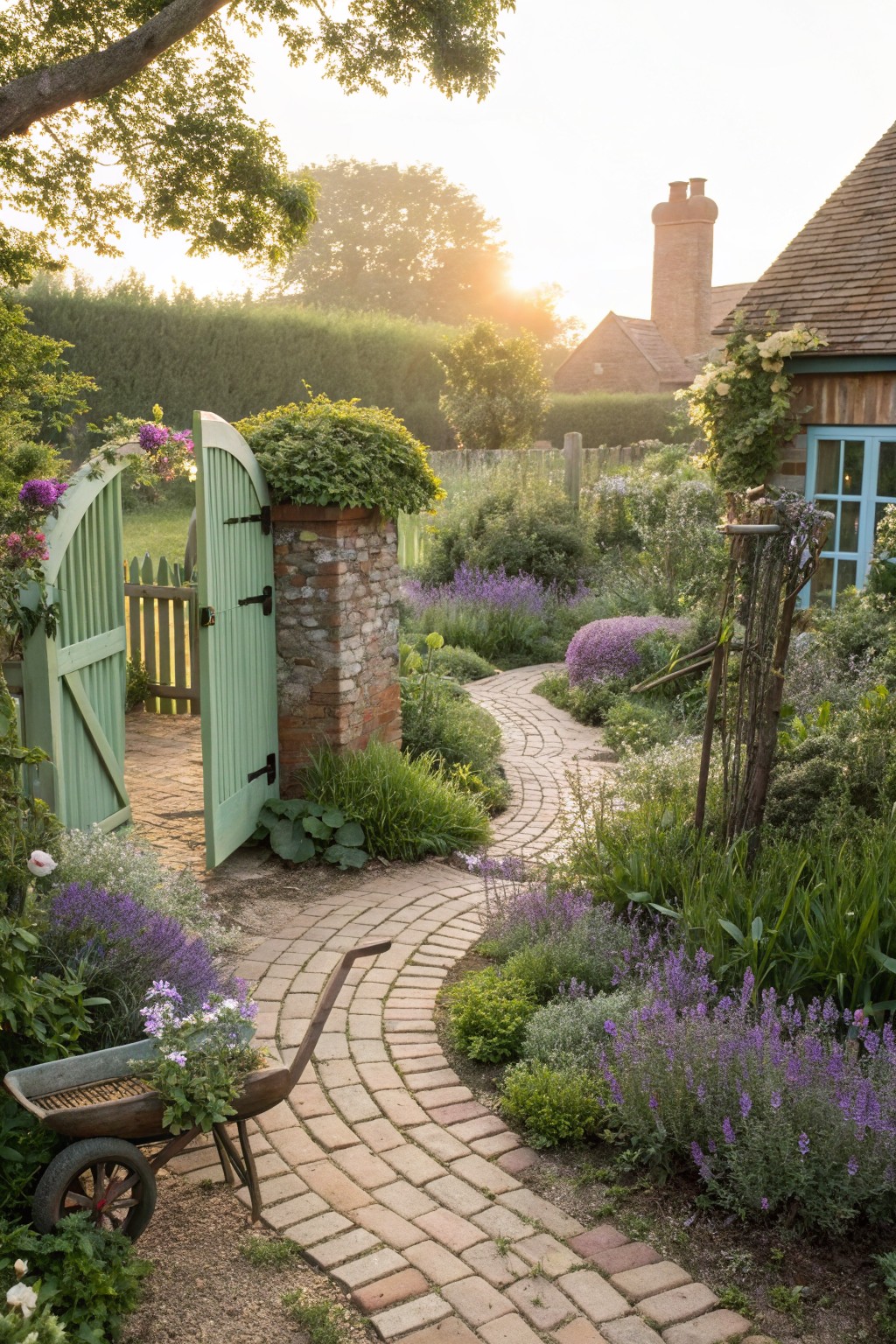
A simple winding brick path like this one, edged in soft lavender, makes your front yard feel calm and welcoming right away. The gentle curves guide folks naturally toward the house without any rush, and those purple blooms add color plus a nice scent on warm days. It’s that easy flow that gives the whole garden a lived-in, relaxed look.
Try this in a cottage-style front yard or anywhere with room for a meandering walk. Use old bricks for the path to keep costs down, then plant lavender along both sides mixed with a few tough perennials. It works best in full sun… just trim back the lavender in spring to stay neat. Avoid straight lines here. Curves keep it interesting.
Lavender Along Entry Steps
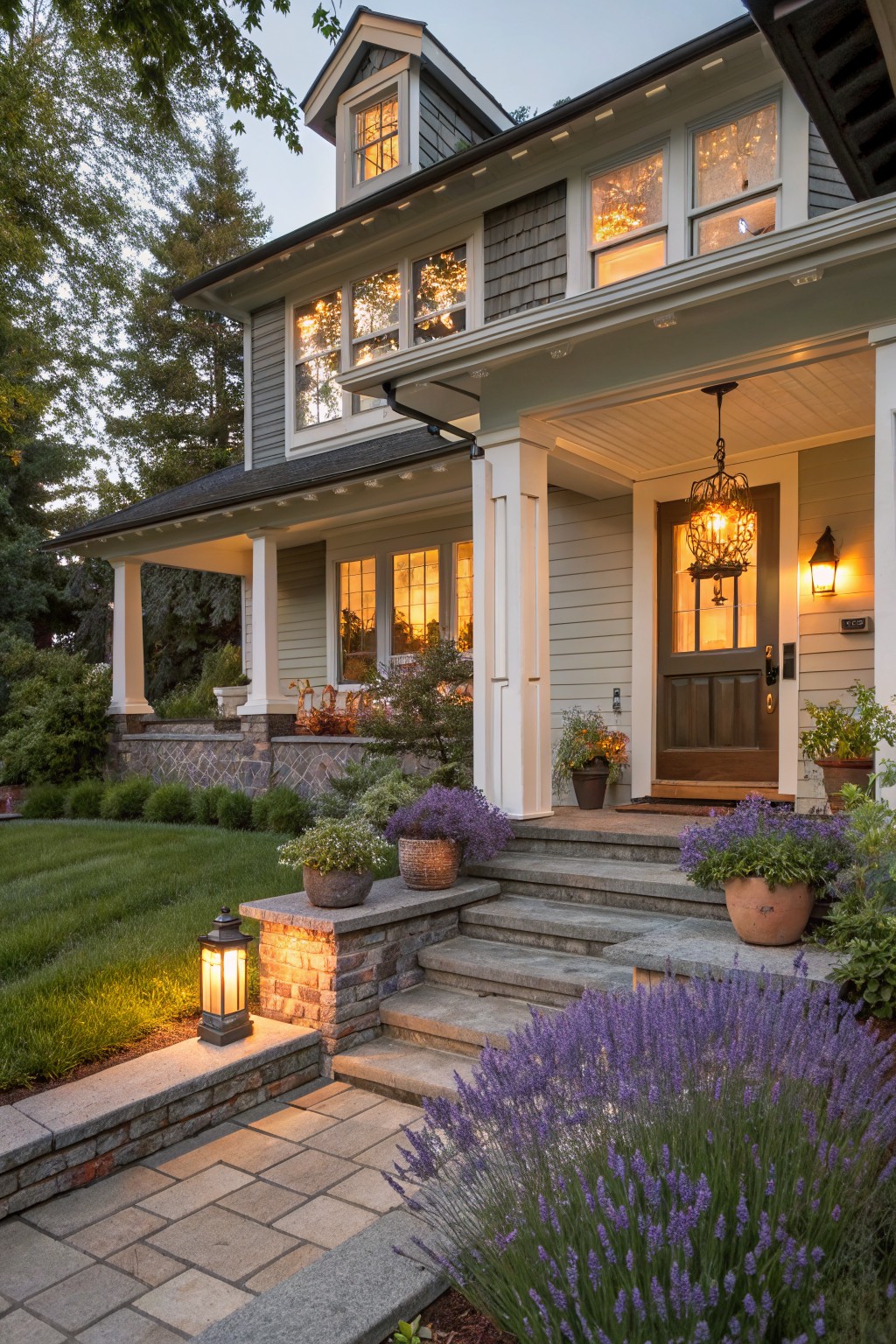
Big sweeps of lavender planted right beside the front steps make a simple but effective welcome. The purple blooms soften those stone edges and lead your eye up to the porch without much fuss. It’s that relaxed vibe people chase, especially when the evening light hits and the scent kicks in.
This works best on homes with a few steps to the door, like this one with its classic porch setup. Tuck the lavender into beds along both sides of the path, maybe add a pot or two nearby. Keep it low-water once established, and it ties the yard right into the house entry.
Lavender-Lined Slate Pathway
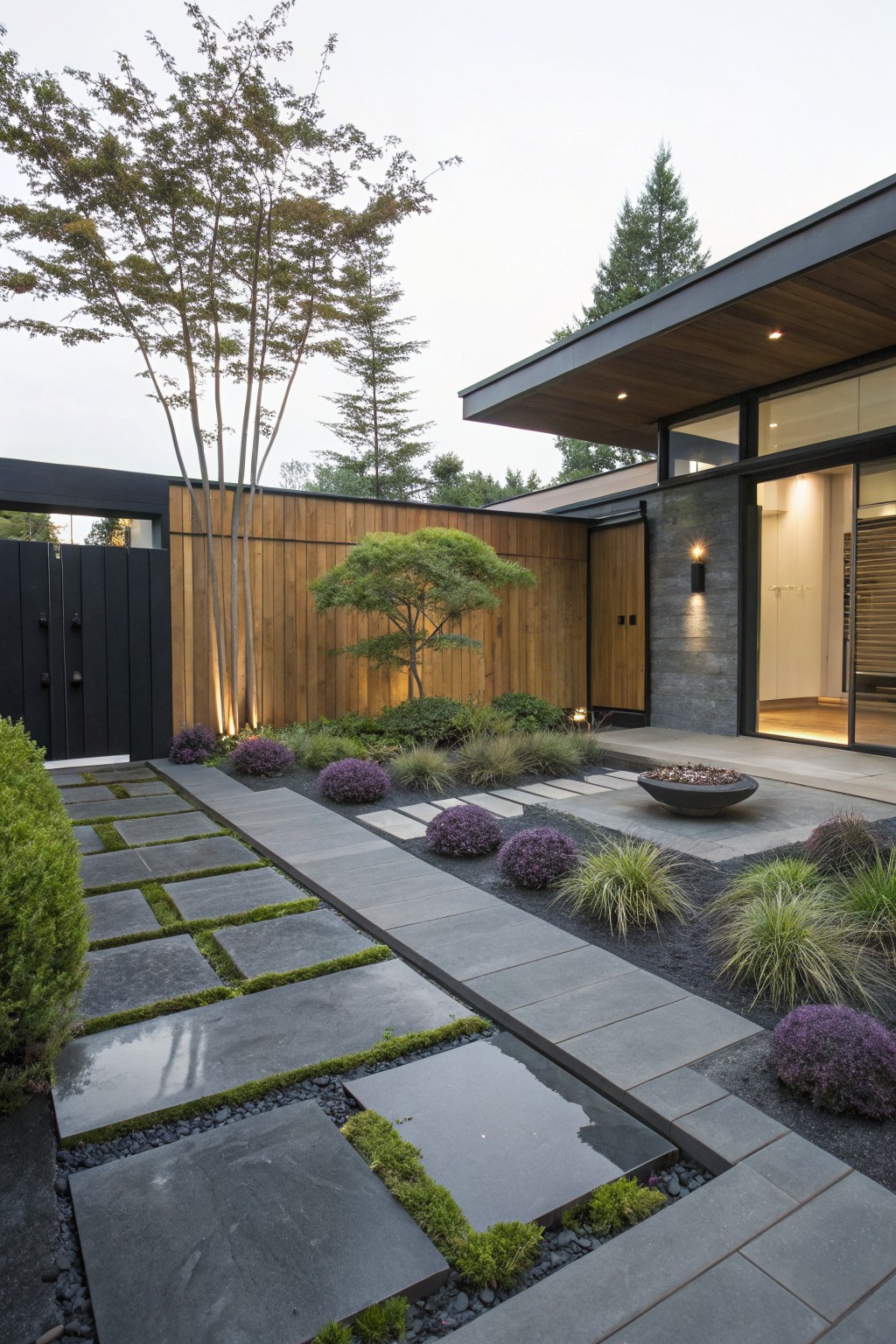
One easy way to relax a front yard is with a wide path made from big dark slate slabs set right into gravel. Here moss grows in the gaps for a natural touch, and low mounds of lavender sit along the edges with some feathery grasses. It pulls your eye straight to the entry without feeling too fussy.
This setup works best on flat spots near a modern house where you want low upkeep. Skip tight edging, just let the plants spill over a bit. Gravel drains fast after rain, and lavender brings that calm scent on warm days. Good for smaller yards too.
Lavender-Lined Flagstone Path
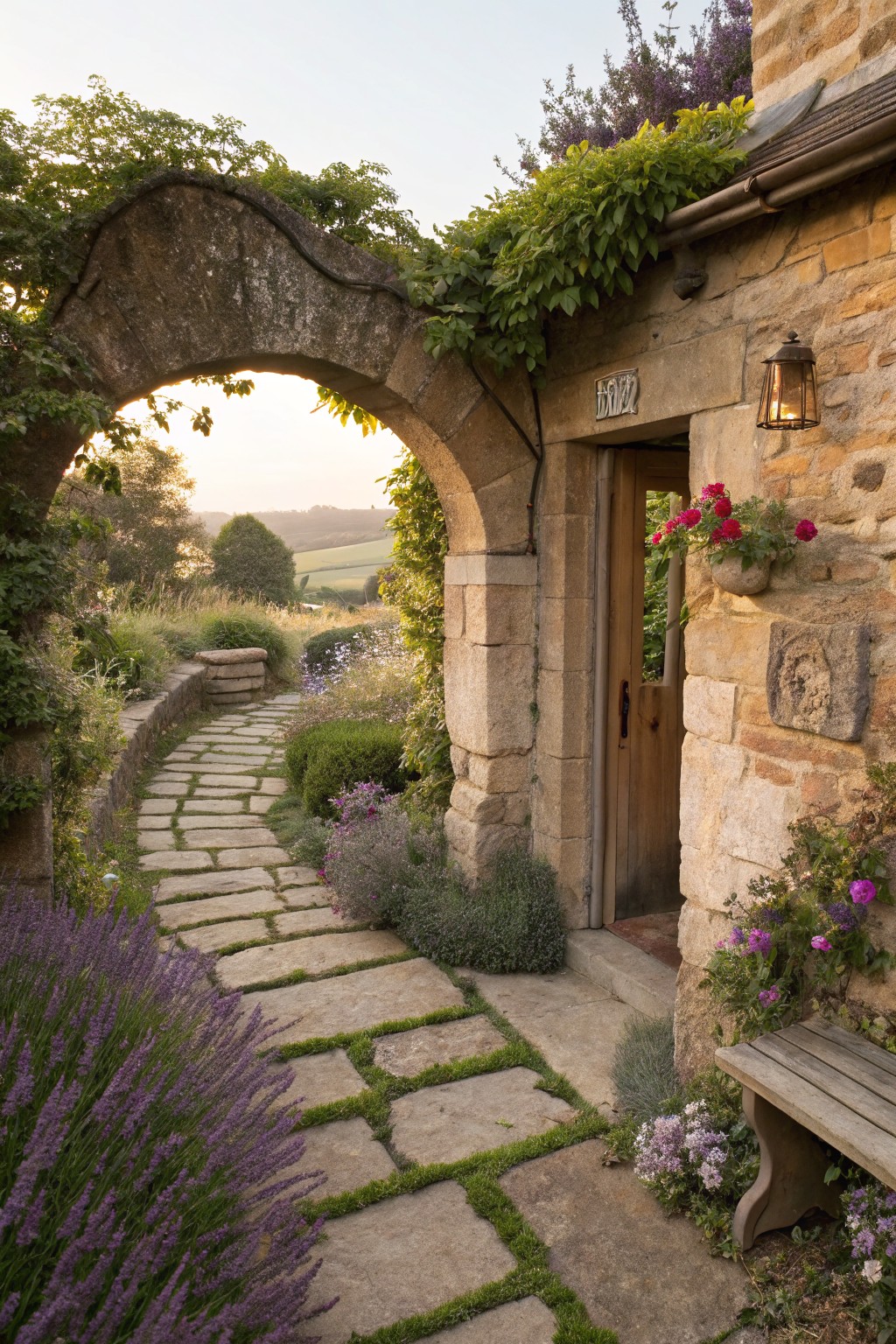
A flagstone path like this one edged in tall lavender bushes makes the walk to your front door feel easy and calm. The uneven stones fit right into a natural garden setting, and the lavender adds soft purple color without much effort. It ties the house entry into the yard in a quiet way.
This works best around older stone homes or cottages where you want a relaxed front approach. Plant lavender along both sides of the path, spacing the stones so grass can fill in. Tuck a wooden bench at the end for a spot to pause. Just trim the lavender once a year to keep it tidy.
Stone Pathway Lined with Lavender
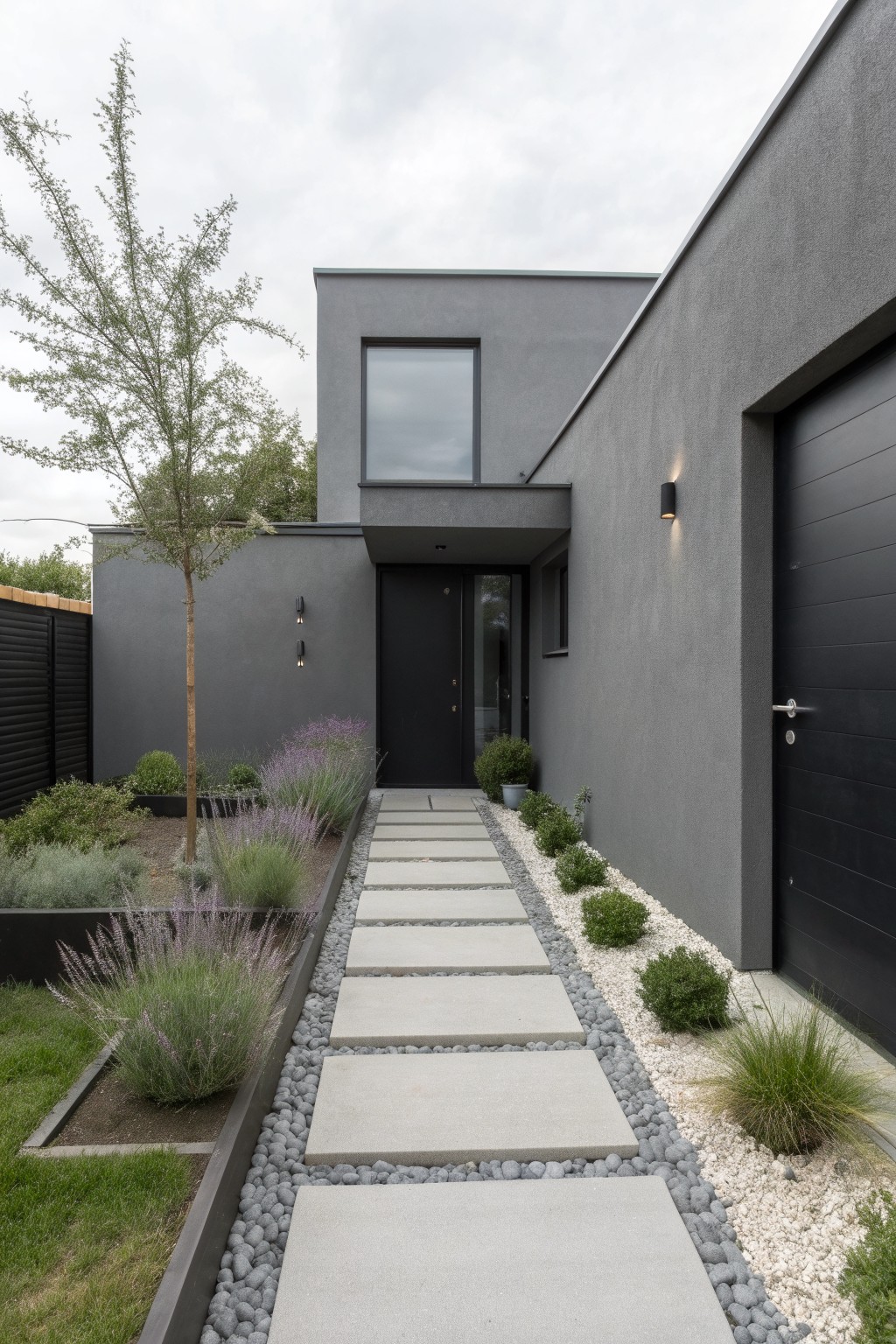
One easy way to guide people right to your front door is a straight stone path like this. The large concrete slabs keep it simple and modern. Lavender plants line both sides, tucked into gravel beds that make the whole thing feel calm and low fuss. It softens the look of a plain house exterior without much work.
This setup works great for smaller front yards or modern homes. Lay the slabs with space between them, fill with pebbles, and plant lavender along the edges. It handles dry spots well and smells nice when you walk by. Just trim the plants once a year to keep it neat.
Winding Stone Path Through Lavender Beds
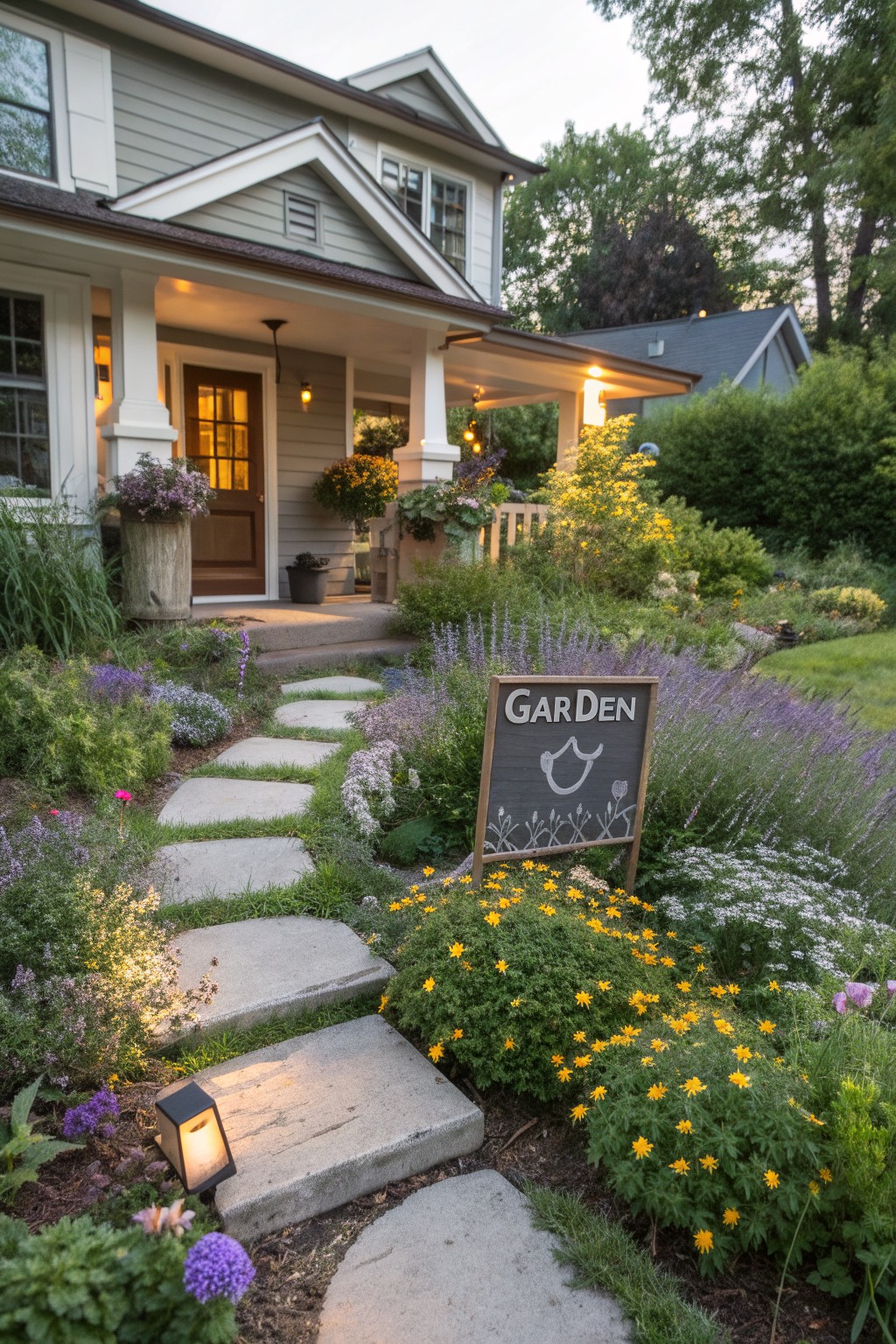
A simple stone path like this winds gently from the street to the front porch, edged with tall lavender and patches of yellow flowers. It turns the walk to your door into something relaxed and inviting, more like strolling a country garden than marching up a driveway. That soft curve keeps it from feeling too straight or formal.
Set one up in your front yard where you have good drainage and sun for the plants. Line the path with lavender for color and that nice smell when you brush by, then fill gaps with easy perennials. It suits older homes with porches best, or any place you want a calmer entry without much upkeep.
Lavender-Lined Curved Path
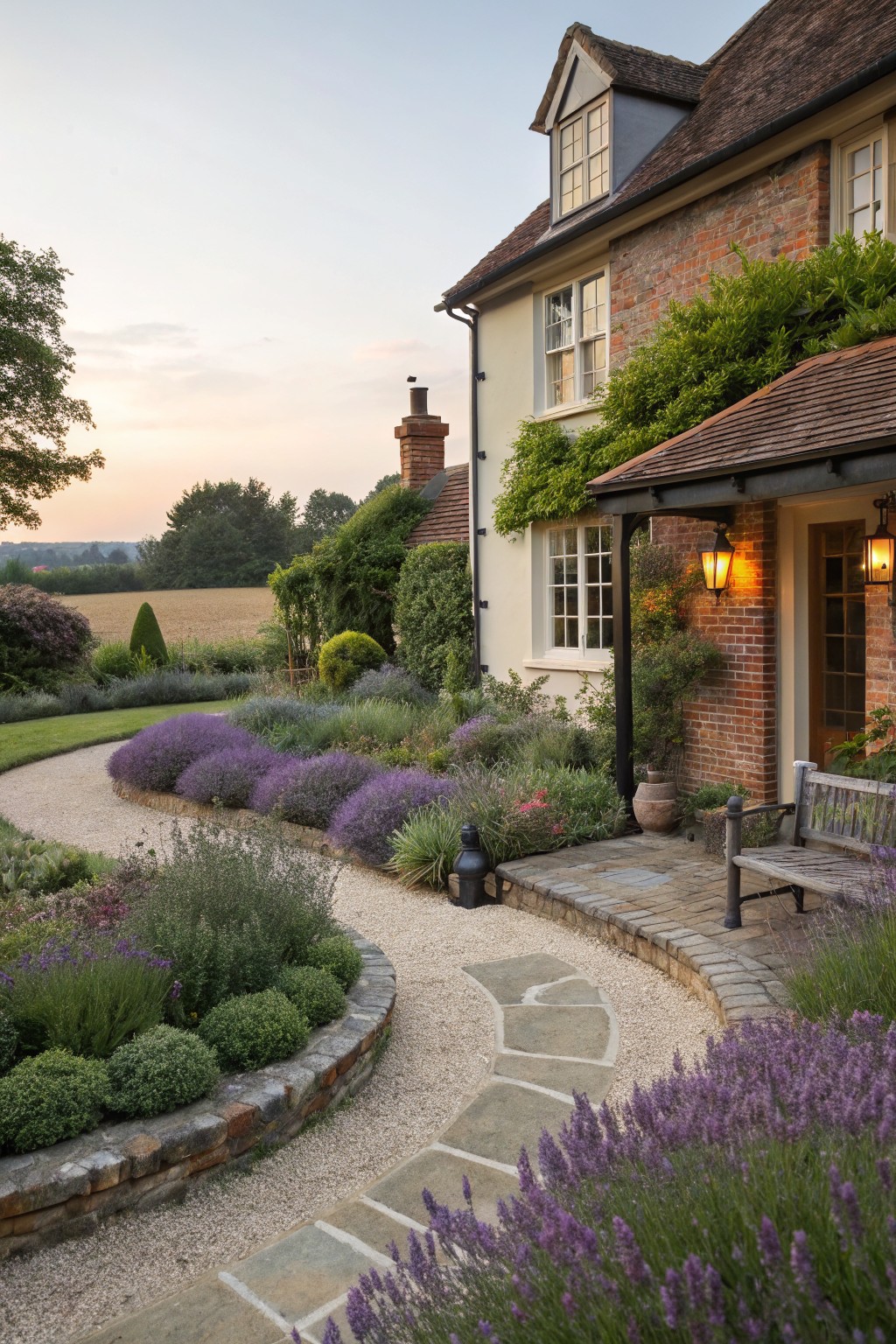
A simple gravel path that curves gently through the front yard makes the walk to your door feel easy and welcoming. Thick borders of lavender on both sides catch the eye with their soft purple color and scent, especially in the evening. It turns a plain approach into something relaxed and pretty without much upkeep.
This setup works best in front yards with some open space, like around older homes or cottages. Line the path with low lavender plants and a few round shrubs for shape, then let grass or gravel fill in. Keep the curve natural so it guides people in, but watch that the lavender doesn’t spread too far onto the walk.
Frequently Asked Questions
Q: When should I plant lavender for the best shot at that dreamy front yard vibe?
A: Plant in early spring or fall. Roots settle in before summer heat or winter chills hit. Your lavender will reward you with quicker blooms.
Q: My soil is kinda heavy and clay-like. Can lavender handle it?
A: Work in some sand or gravel to loosen it up first. Lavender hates soggy feet, so good drainage keeps it happy and blooming. Skip this and you risk root rot.
Q: How much sun does lavender need to look its best?
A: Give it full sun, at least six hours a day. Less light means leggy plants and fewer flowers… not the relaxed look you want.
Q: How do I prune lavender so it stays bushy and pretty?
A: Snip back by one-third right after it flowers. And shape lightly in early spring. This keeps the relaxed fullness without bare spots.
