

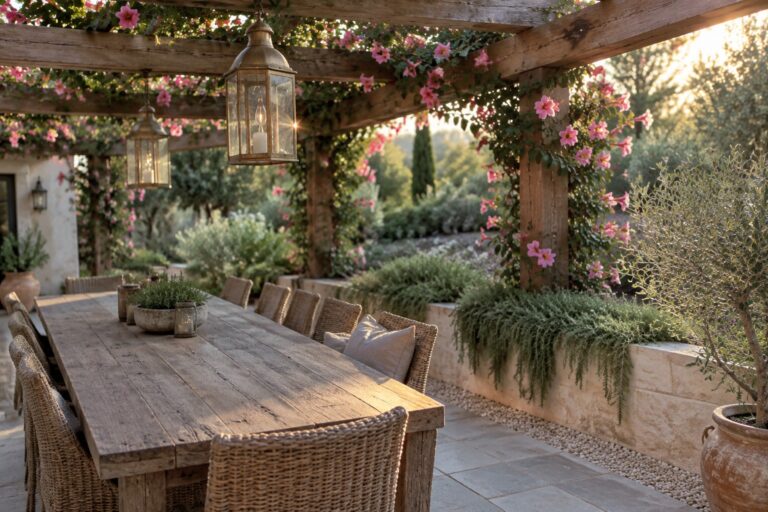
Mandevilla can bring a lot of color to a yard, but it works best when the planting has room to climb and a clear structure to follow.
I find that the first thing people notice is often how the vine frames a trellis or softens a pergola, so placement matters as much as the flowers.
On a patio, a well-positioned planter can add shade and privacy without making the space feel crowded, while along a path, the same plant can guide the eye through the garden.
The ideas ahead show different ways to use mandevilla with trellises, patios, and pergolas, with details you can adapt to your space and growing conditions.
Grow Mandevilla Over a Pergola
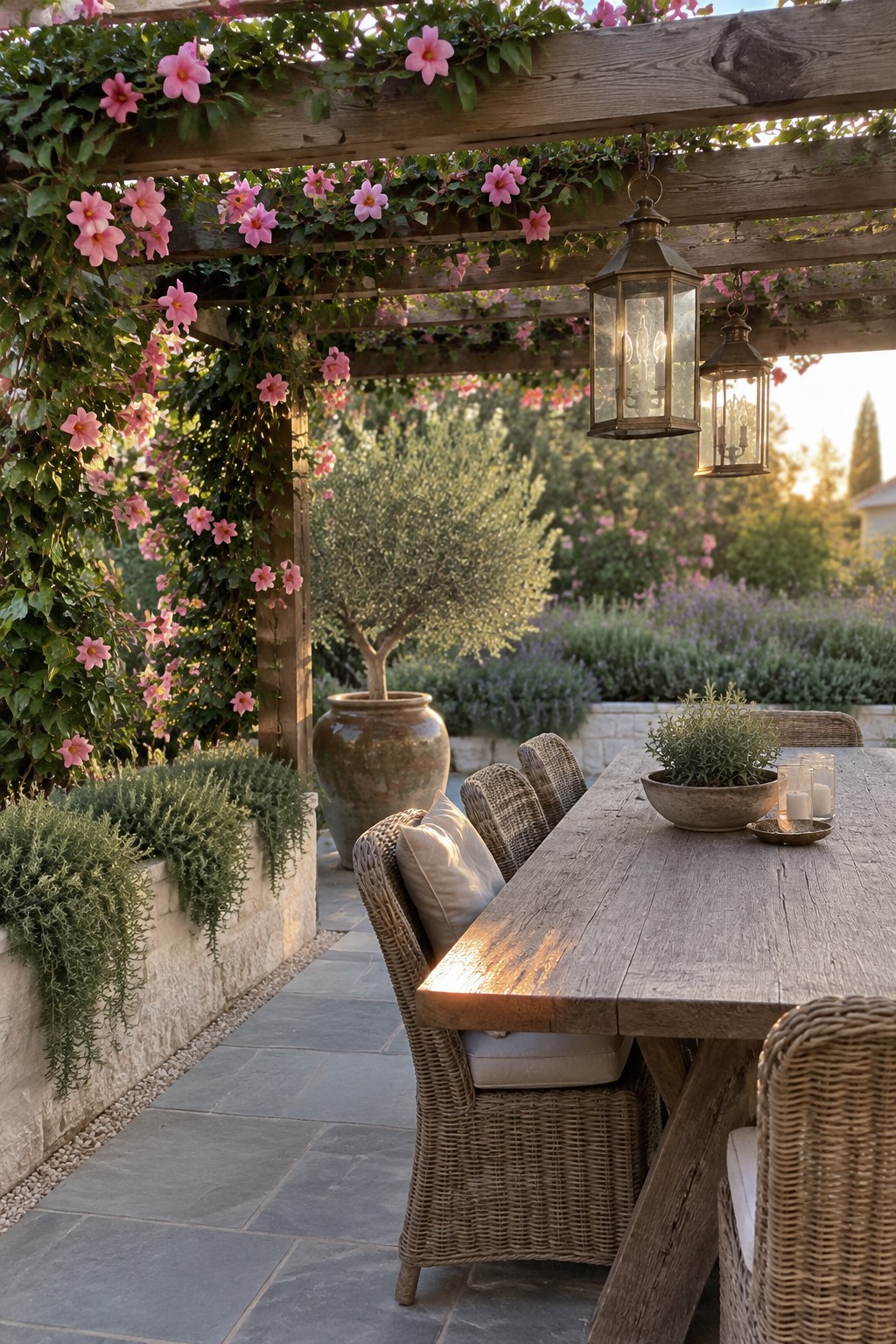
A pergola is a practical place to grow mandevilla because its open beams give the vine room to climb and spread. The flowers can bring color overhead and along the posts, while the structure helps define an outdoor dining area.
Plant mandevilla near a sturdy post and guide new growth onto the beams as it lengthens. This works well on a patio that gets plenty of sun. Leave enough room for chairs and walking paths, and check that the pergola can support the vine as it grows.
Grow Mandevilla Over a Pergola
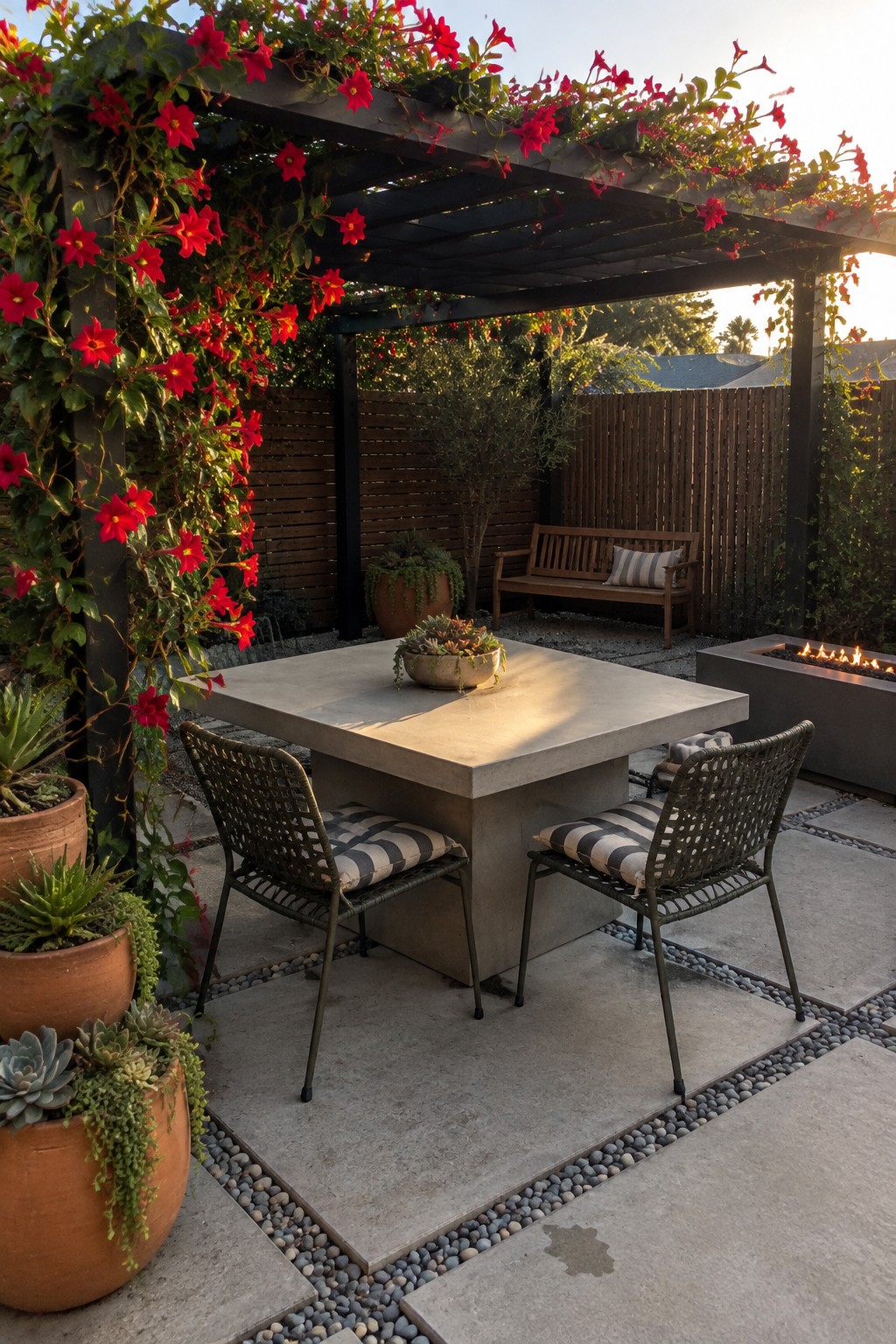
A pergola can give mandevilla a sturdy place to climb while providing shade for an outdoor dining area. The flowering vine brings color overhead without taking up much patio floor space.
Train the stems along the beams and check them regularly so they do not crowd the seating area. This works well on a sunny patio, but make sure the structure is strong enough to support mature vines and that the plant gets the warmth and sun it needs.
Use a Flower-Covered Arch to Mark a Garden Path
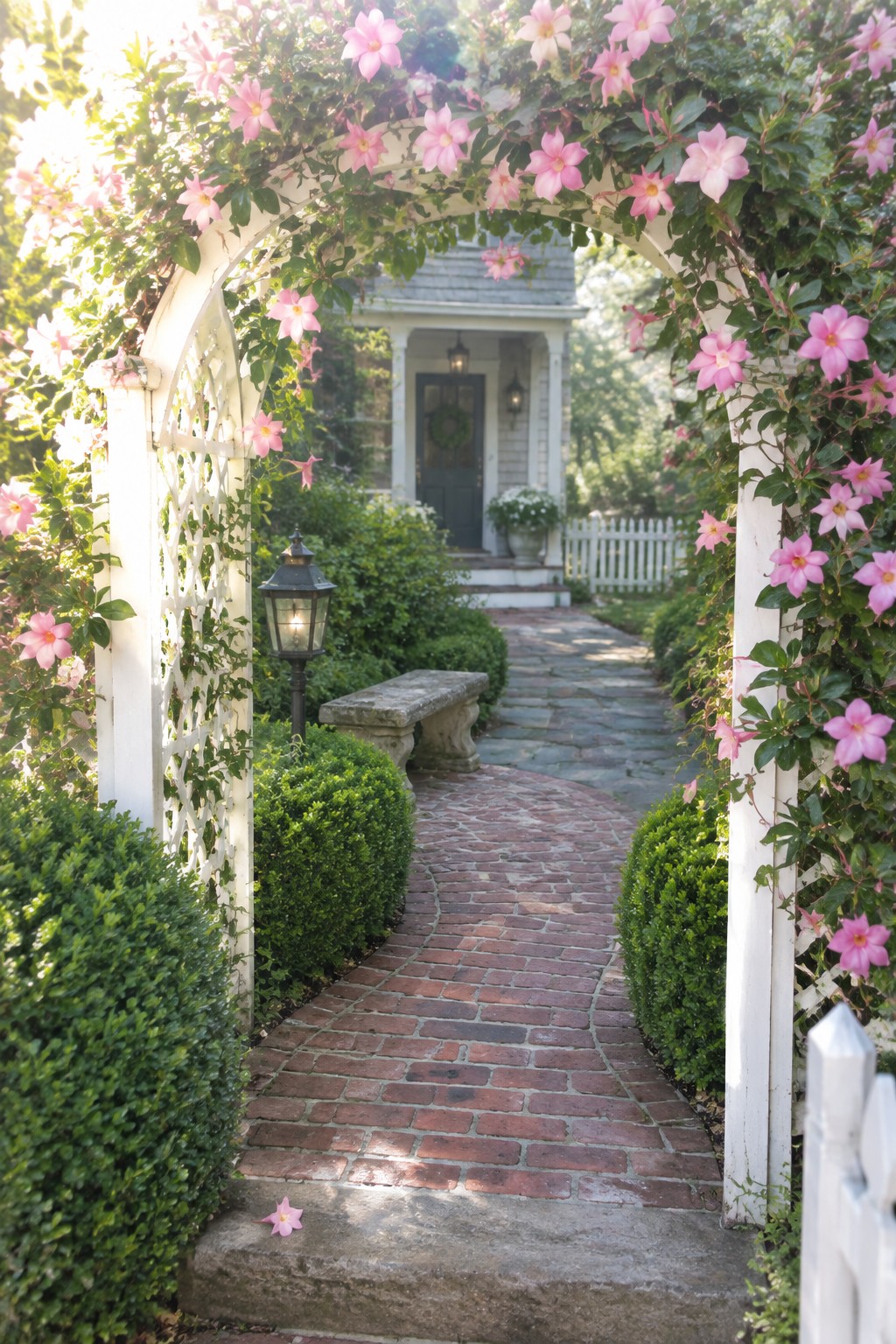
A trellis arch gives a garden path a clear beginning and helps lead the eye toward a destination. Mandevilla can grow over the structure and bring color overhead without taking up much room along the path.
Use a sturdy arch where the path meets a gate or garden entrance, and guide the vines along its sides as they grow. Leave enough clearance for people to walk through, and prune regularly so the flowering growth does not crowd the walkway.
Add a Pergola for Poolside Shade
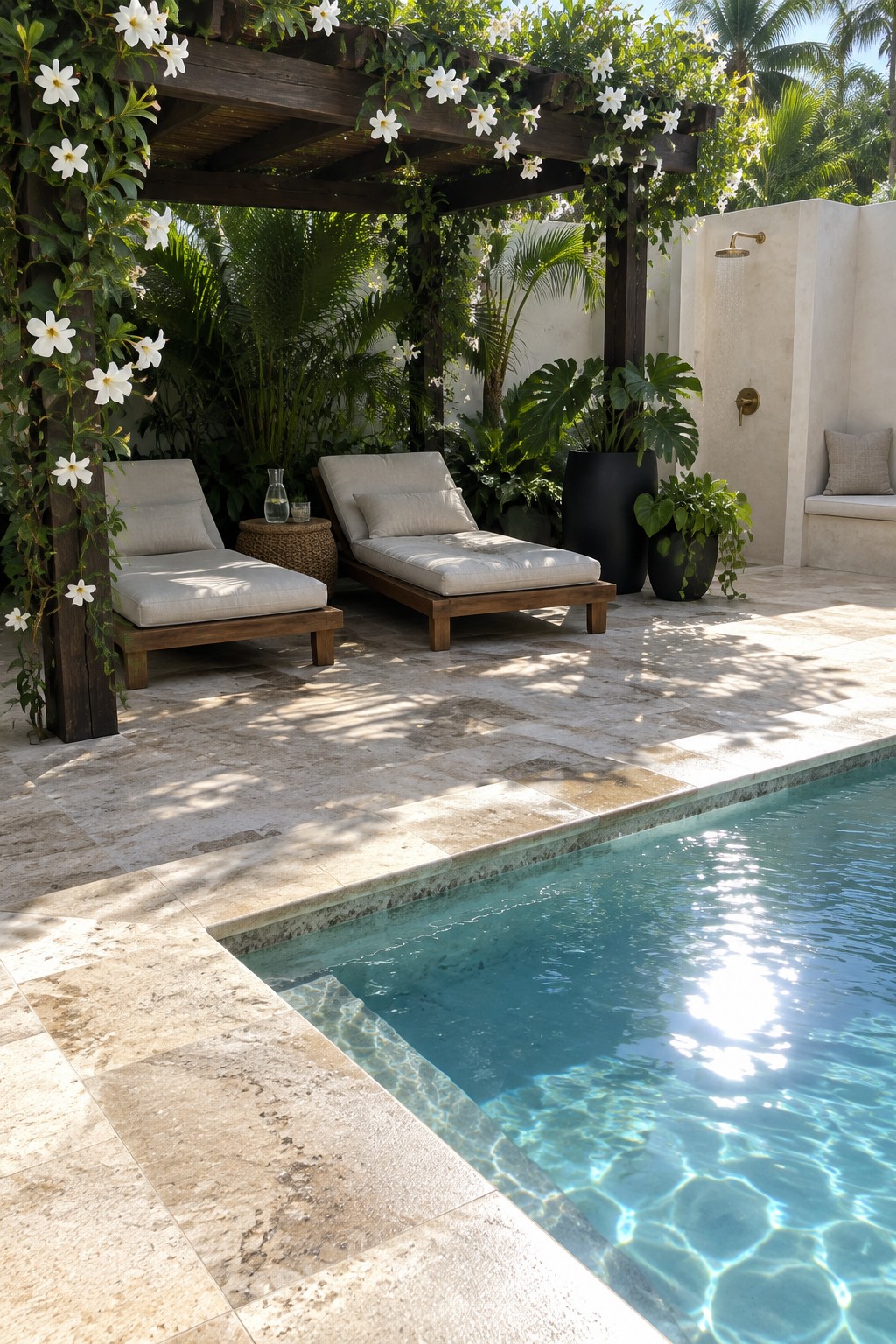
A pergola can make a poolside seating area more comfortable by giving loungers a patch of shade without closing off the space. Letting mandevilla climb the posts adds flowers overhead and makes the structure feel at home in the garden.
Use a pergola where people want to sit near the pool but still enjoy an open-air feel. Give mandevilla sturdy support and room to grow, and keep the planting clear of walkways and the pool edge.
Use a Trellis to Add Privacy to a Small Patio
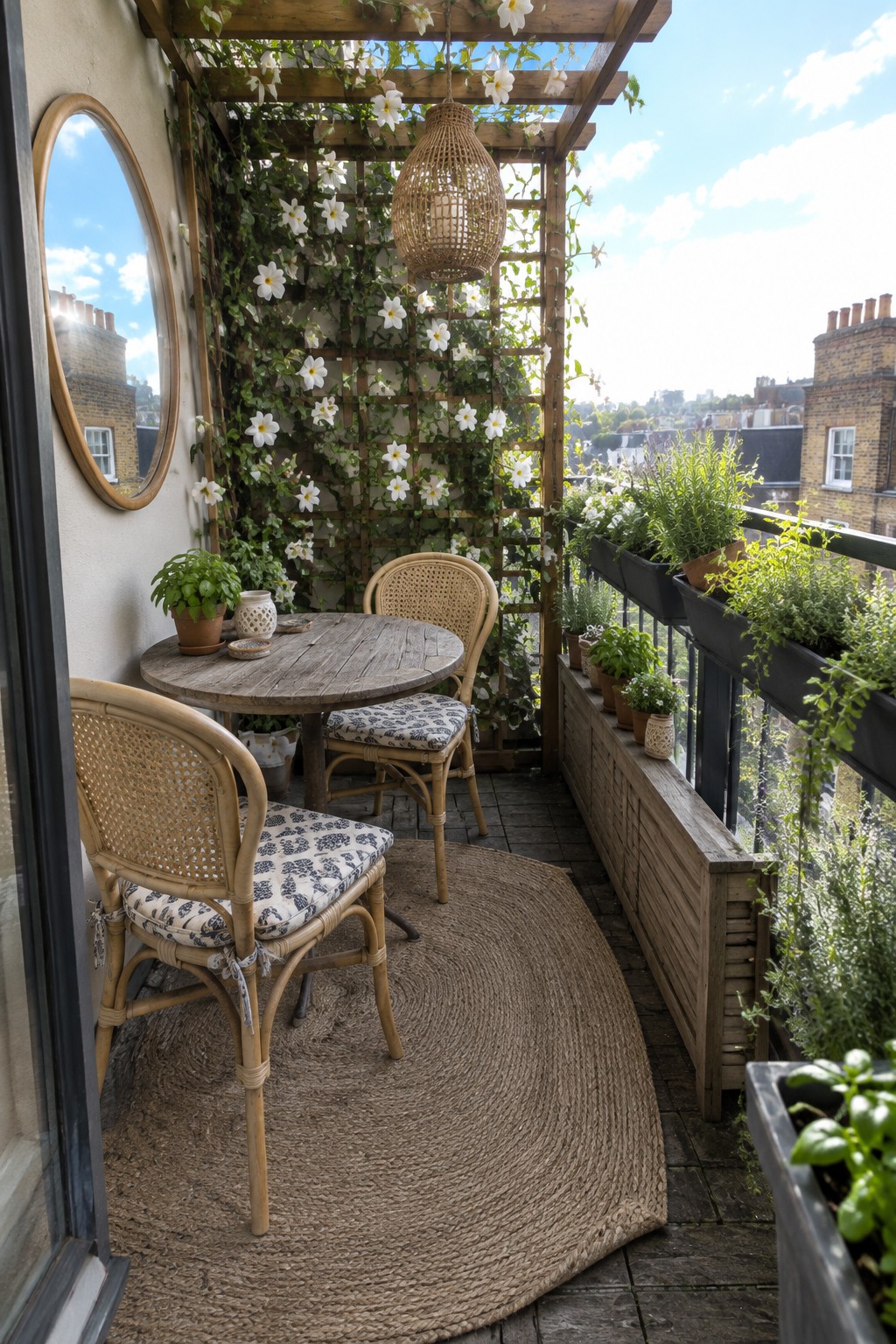
A trellis gives mandevilla a place to climb while helping a compact patio feel more sheltered. It can also bring flowers up to eye level, so you get more from a narrow space without using extra floor area.
Set the trellis along a wall or at the end of a balcony, and guide the vine as it grows. Leave enough room to reach the plant for watering and pruning, and check that the structure is secure before the vine gets heavy.
Add Mandevilla to a Patio Pergola
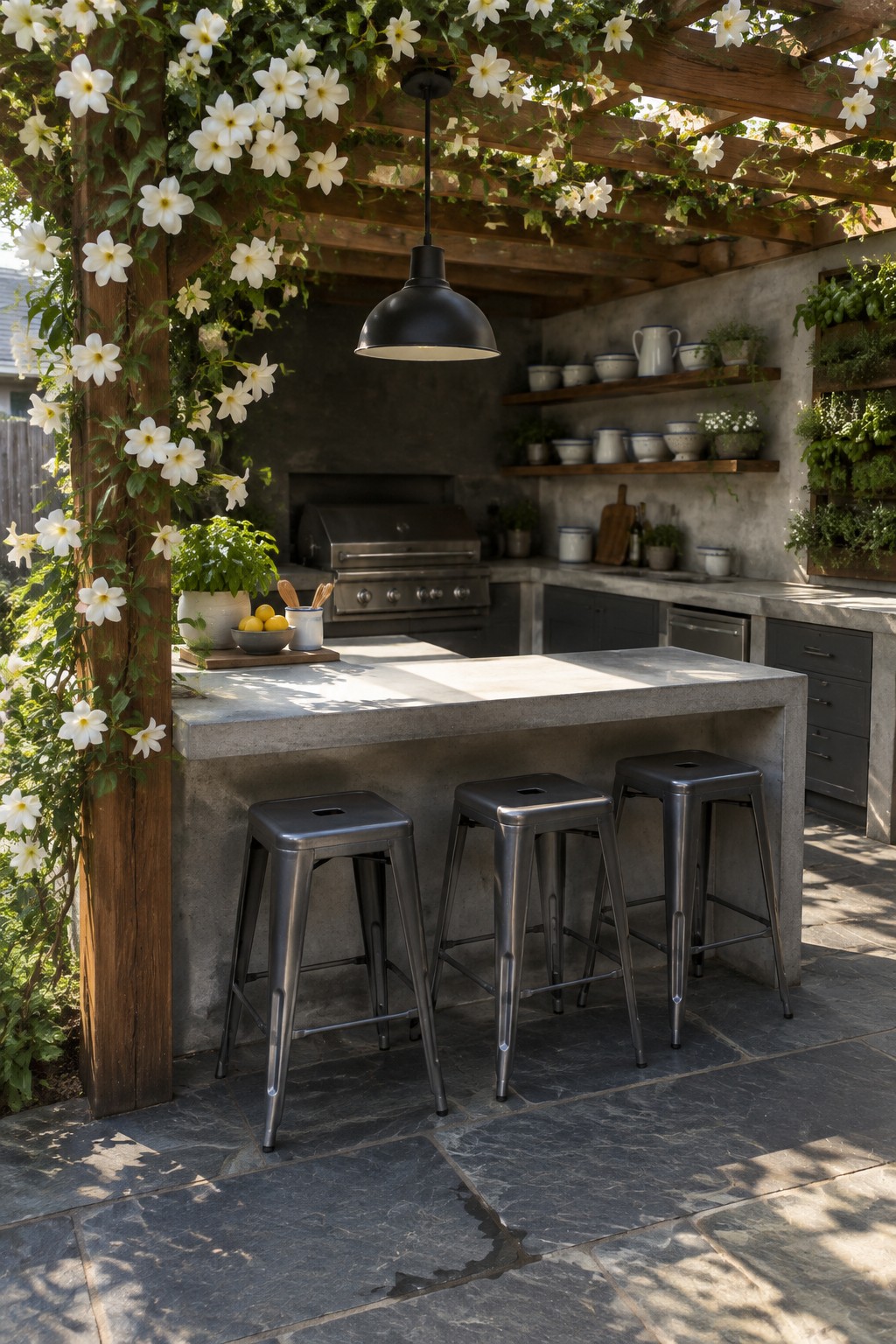
A pergola can make an outdoor kitchen feel like a more settled part of the yard, and flowering vines help connect its wooden structure to the garden. Mandevilla is a good fit for this kind of setup because its blooms can bring color overhead and along the posts.
Train the vine up a sturdy support, and leave enough room to reach the grill and work surfaces. This idea suits patios that need a little shade and a strong garden connection, but keep the plant clear of hot cooking areas.
Use a Flower-Covered Arch Along a Garden Path

A flower-covered arch gives a garden path a clear shape and makes the walk through the yard feel more intentional. Mandevilla can climb over a sturdy arch, adding blooms overhead without taking up much room beside the path.
Use this idea where the path has enough width for people to pass comfortably, and train the vines along both sides as they grow. The arch needs solid support, since mature mandevilla can become heavy.
Train Mandevilla Along a Patio Wall
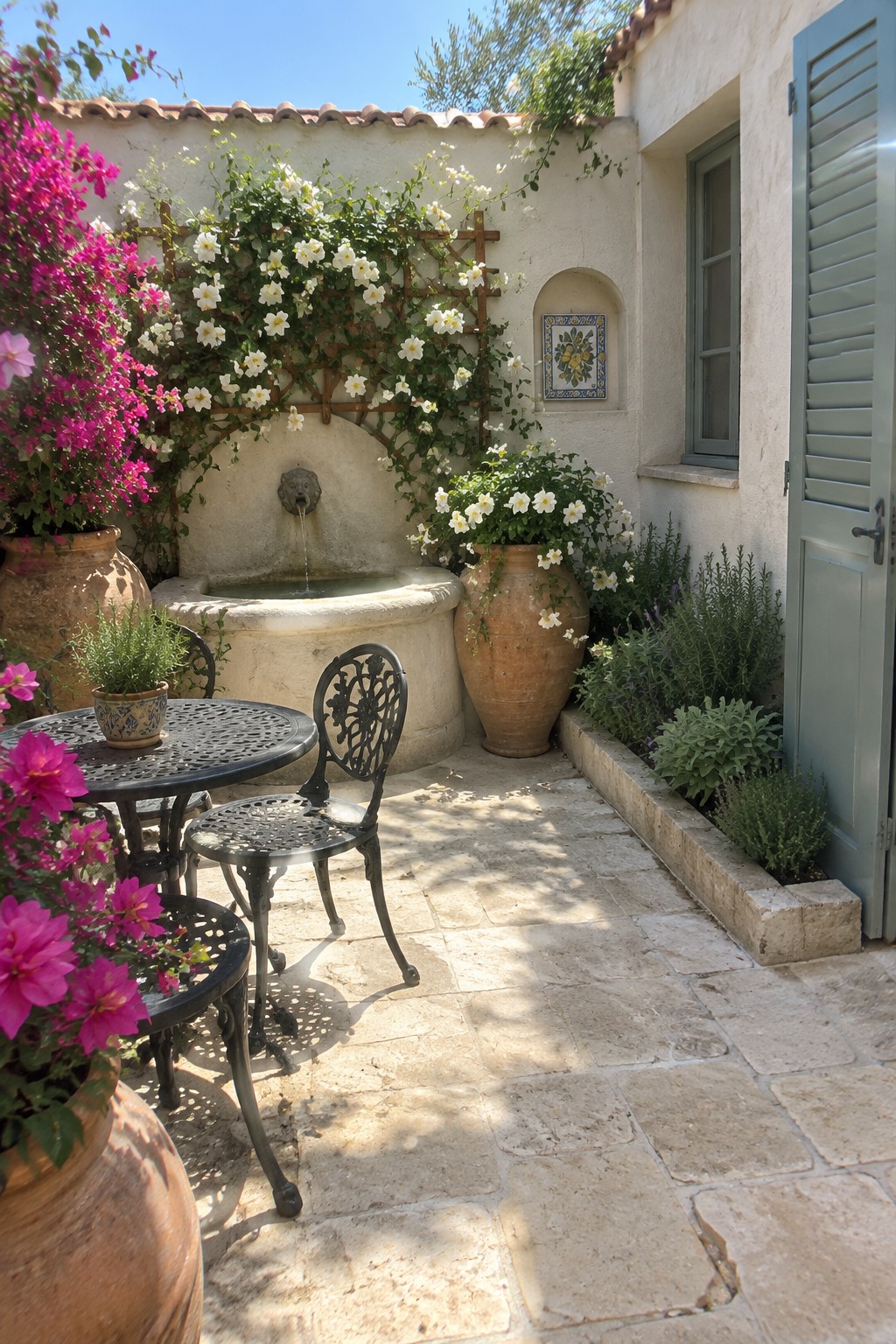
A wall trellis gives mandevilla a place to climb without taking up much patio floor space. The flowers can add color to a small seating area, while the vine brings a little greenery to a plain wall.
Use a sturdy trellis fixed securely to the wall, and leave room for air to move around the plant. This approach suits a courtyard or narrow patio, but keep the vine clear of windows and doors so it does not get in the way.
Train Mandevilla Along a Patio Pergola

A pergola can give mandevilla a sturdy place to climb while providing dappled shade for an outdoor dining area. The overhead greenery and flowers make the seating area feel connected to the garden without taking up space around the table.
Plant mandevilla near a pergola post and guide the new growth up the support as it grows. This works well over a patio table, but leave enough room to pull chairs out and check that the structure can support the mature vine.
Let Mandevilla Climb a Patio Pergola
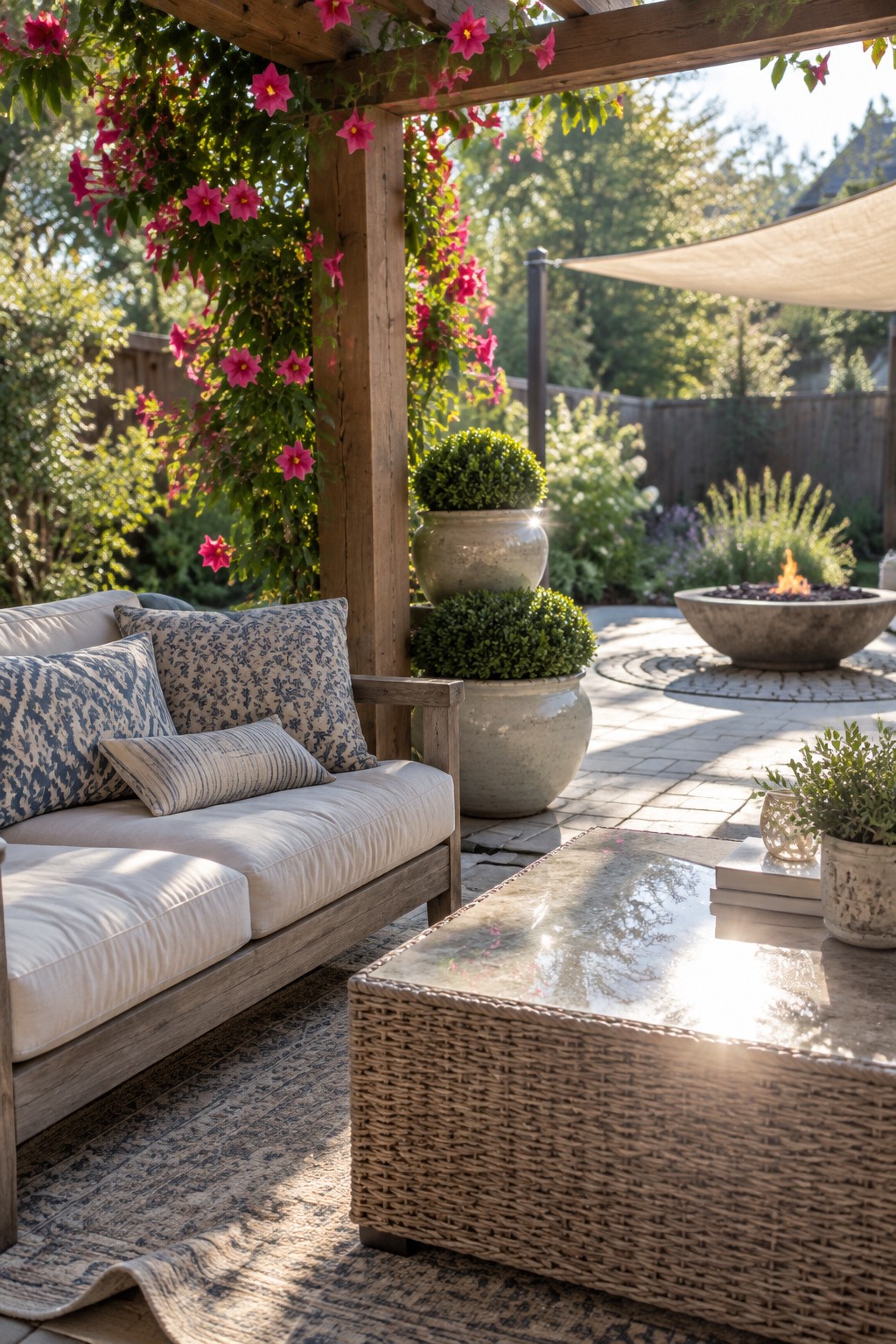
A pergola can give mandevilla a sturdy place to climb while bringing flowers into the seating area. The wood structure adds useful overhead definition, and the vine makes a plain support feel more connected to the garden.
Train mandevilla up a pergola post and along the beams, tying stems loosely as they grow. This works well over a patio sofa or another spot where you want some greenery overhead. Leave room for airflow, and check that the structure can support the mature vine.
Use Mandevilla to Make a Patio Feel More Private
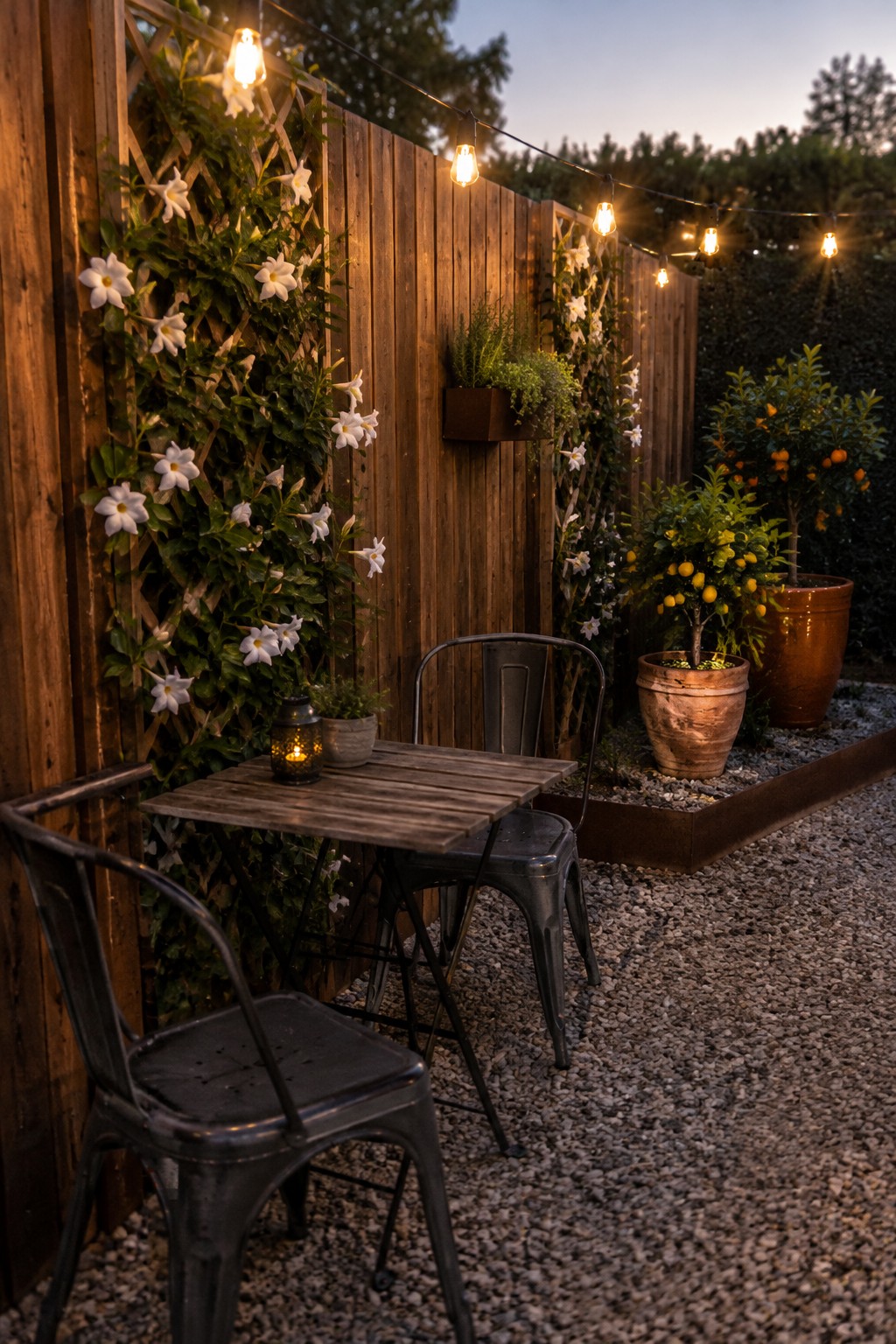
Training mandevilla along a patio fence gives the seating area a bit more cover without taking up floor space. Its leafy growth and white flowers can make a plain fence feel more like part of the garden.
Use a sturdy trellis or wire supports to guide the vines, and leave room for air to move around the plants. This works well in a small patio where a little privacy is welcome but a solid screen would feel too bulky.
Train Mandevilla Along a Garden Walkway

A narrow walkway can feel more tucked away when mandevilla grows along a sturdy trellis beside it. The flowers bring color close to the path, while the vertical growth makes good use of a small garden space.
Choose a trellis that can handle mature vines, and leave enough room for people to pass without brushing against the plants. This approach works well along a side yard or a narrow garden path, especially where a wall or fence offers support.
Use a Pergola to Define a Rooftop Seating Area

A pergola can make a rooftop patio feel like a proper outdoor room. Train mandevilla along its posts and overhead beams to add leafy cover and bright flowers around the seating area.
This works especially well where there is room for a few distinct seating spots. Leave enough open space for people to move around, and guide the vines along sturdy supports so they do not crowd the furniture.
Create a Shaded Garden Seating Area
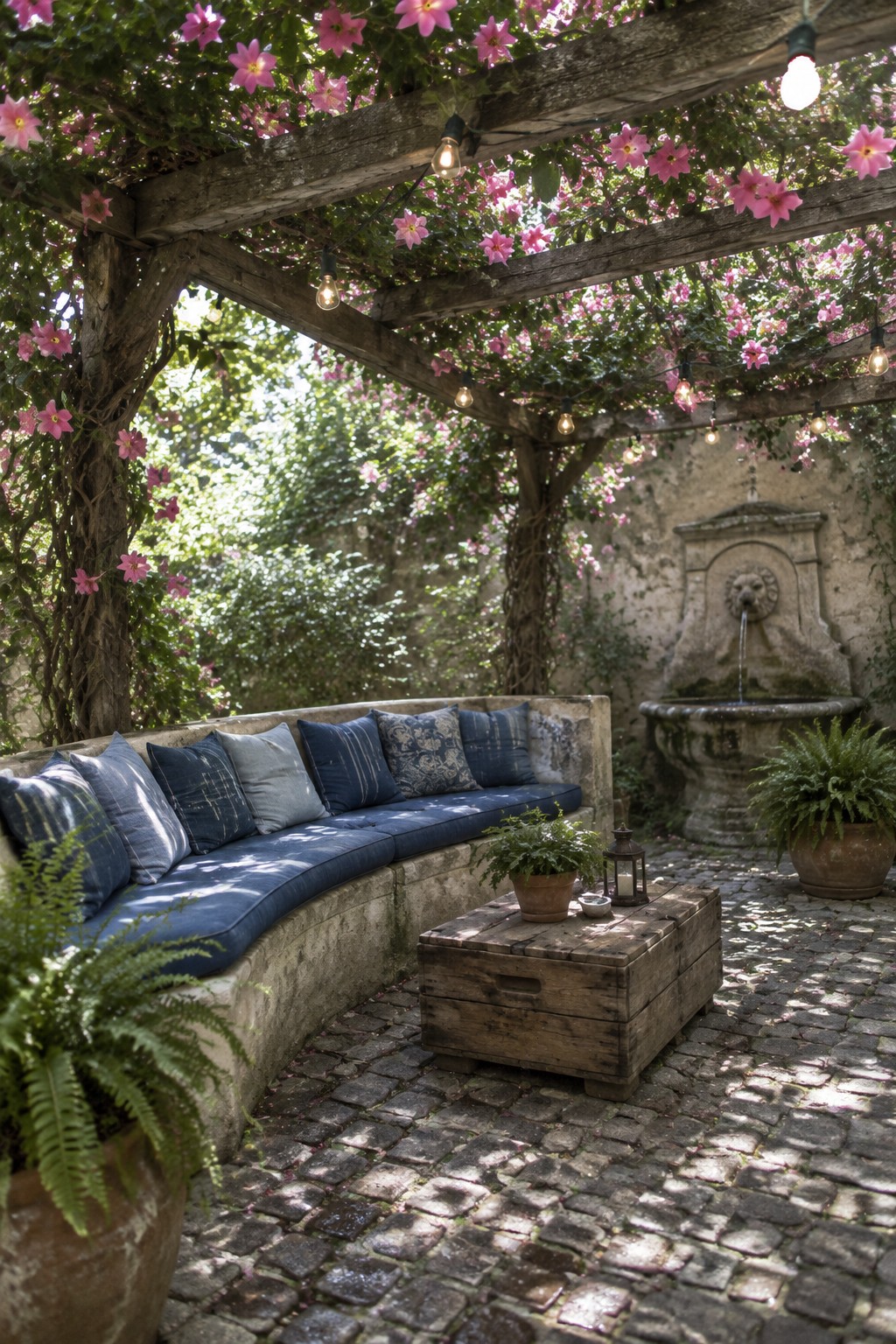
A pergola can make a patio feel like a proper place to sit, especially when climbing flowers grow across its beams. The overhead greenery provides some shade, while the structure helps define the seating area.
For a similar setup, place a built-in bench or outdoor sofa beneath the pergola and train mandevilla along the supports. Make sure the vine has room to grow and that the seating still gets enough airflow.
Grow Mandevilla Around a Welcoming Porch

Training mandevilla up porch posts is an easy way to bring flowers close to the front door. The climbing vines add color to the entry without taking up much floor space, and the white blooms stand out against the light-painted wood.
Use sturdy posts or a simple trellis for support, and leave room to reach the door and mailbox. This works especially well on a covered porch, where the vines can climb vertically while pots of flowers fill the space below.
Create a Shady Garden Seating Spot
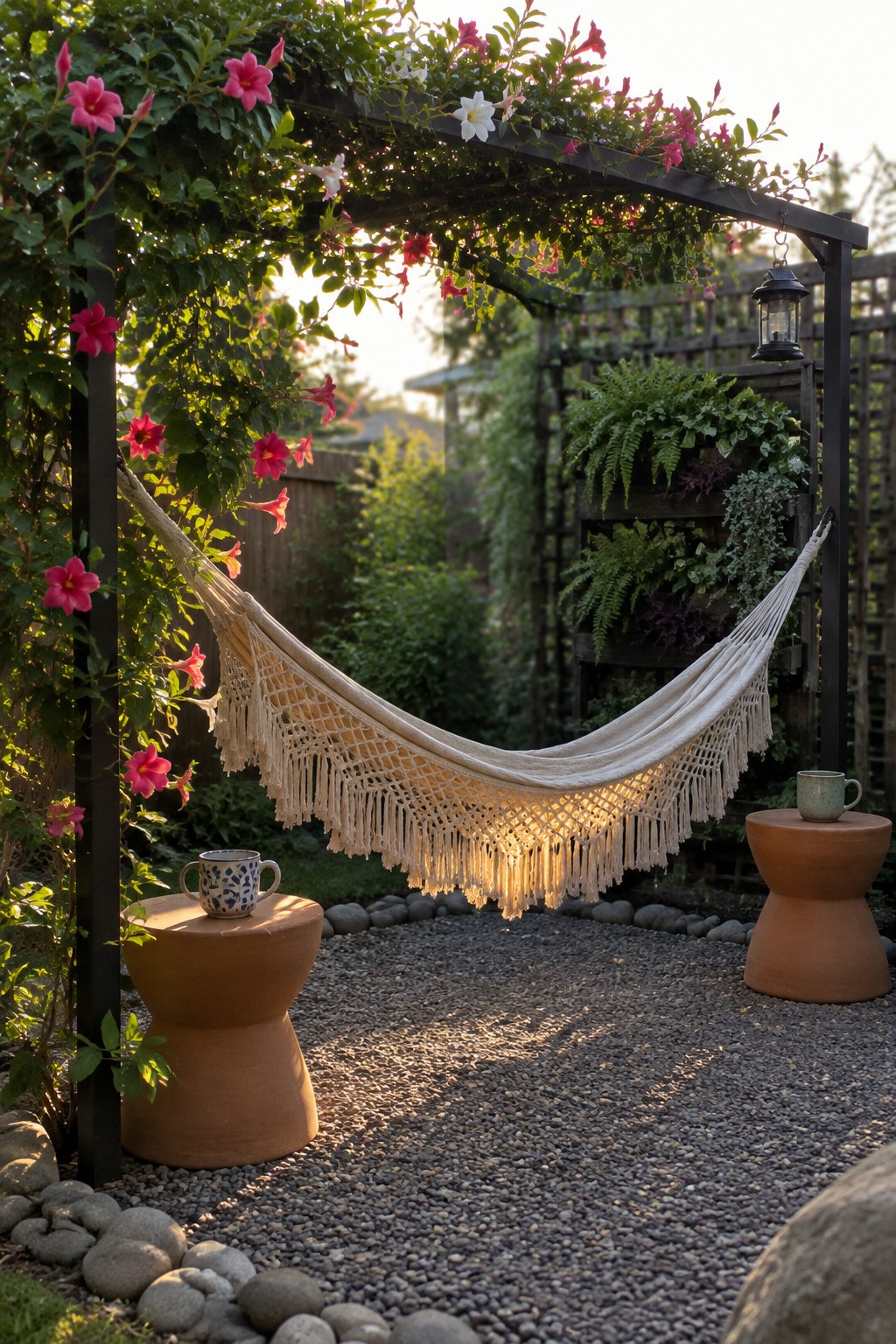
A pergola can turn a small patio into a comfortable place to sit, especially when mandevilla grows across the top and provides some shade. The flowering vines also make the structure feel connected to the garden.
Use a sturdy pergola and give the vine room to climb, while keeping the seating area open enough to move around. This works well in a compact yard where you want a quiet place to relax without building a large deck.
Use a Flowering Trellis Along a Patio Path

A trellis covered in mandevilla can turn a narrow patio path into a more private garden walkway. The vertical planting keeps flowers close to the route without taking up much ground space, and the long run of blooms gives the path a clear edge.
Use a sturdy wall-mounted or freestanding trellis beside a gravel path, leaving enough room for people to pass and for the plants to be tended. Mandevilla needs support as it grows, so guide new vines along the trellis and check that the spot gets enough sun.
Create a Shaded Outdoor Dining Area
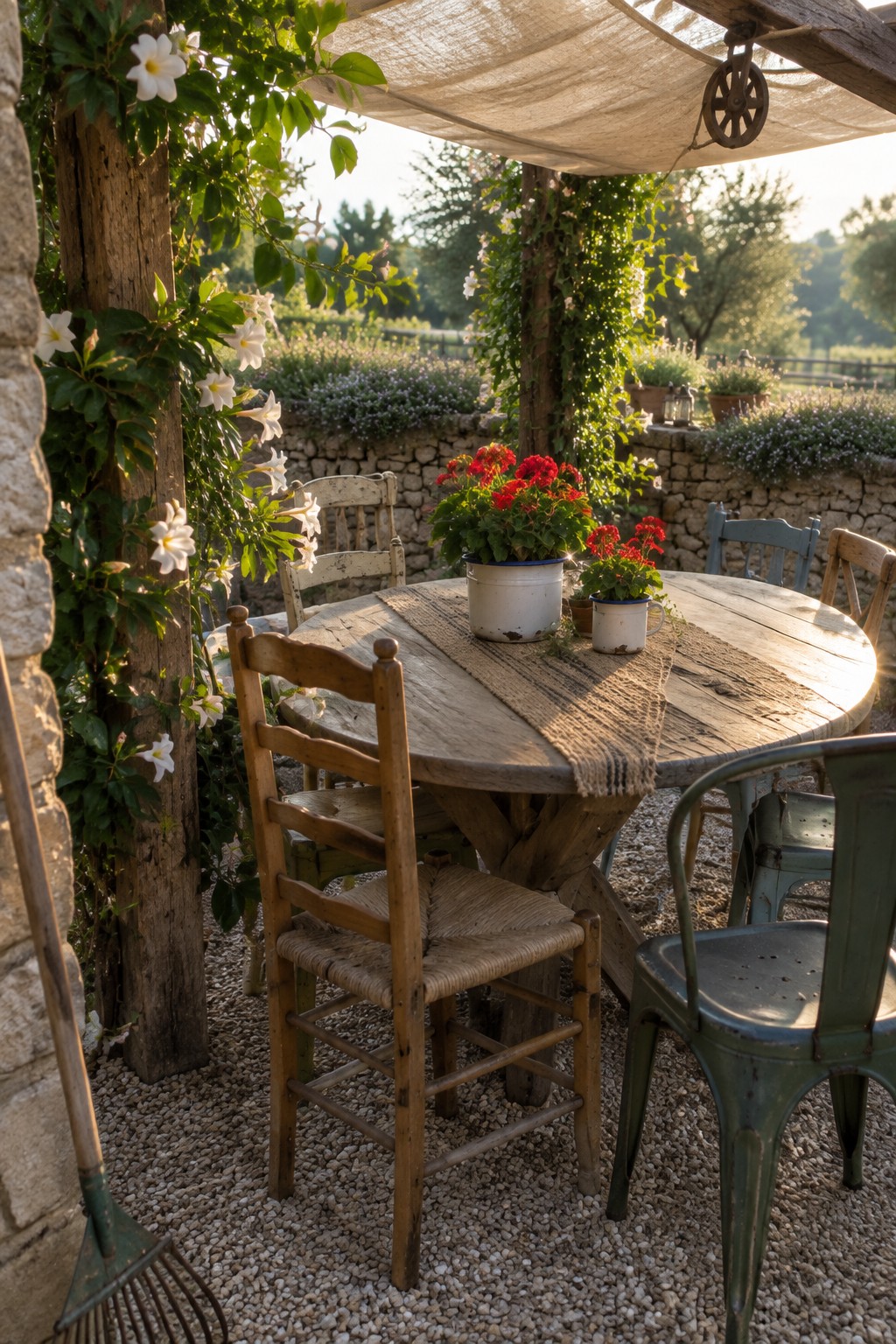
A simple shade canopy can make an outdoor dining spot comfortable enough to use through the warm part of the day. Here, mandevilla climbing the wooden supports brings greenery around the seating without taking space away from the table.
This setup suits a small patio or garden terrace where you want a clear place to eat and sit. Train mandevilla up the posts, and leave enough room around the table for chairs to move easily.
Frequently Asked Questions
Q: Can mandevilla grow in a pot on a patio?
A: Yes. Choose a pot with drainage holes and give the plant a sturdy trellis or obelisk to climb. A container also makes it easier to bring mandevilla indoors before cold weather.
Q: How much sun does mandevilla need to flower well?
A: Give it a sunny spot with about six hours of direct light a day. In very hot climates, a little afternoon shade can help keep the leaves from wilting.
Q: Do I need to train mandevilla onto a pergola or trellis?
A: Yes, since its stems won’t cling to supports on their own. Gently weave new growth through the structure or tie it loosely with soft garden ties.
Q: Can I plant mandevilla in the ground year-round?
A: Only where winters stay warm enough for this tender vine. In colder areas, grow it in a container and move it to a bright, sheltered spot when temperatures drop.
