

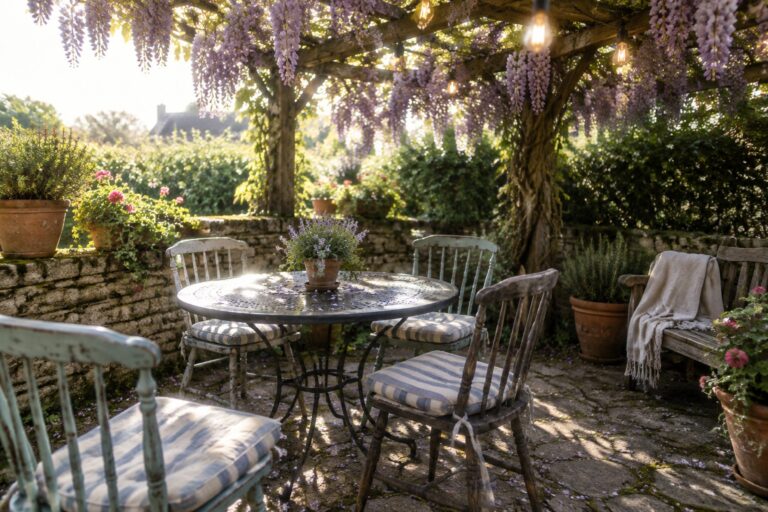
Wisteria can make a patio feel sheltered and intimate, but where it grows matters just as much as its flowers.
I find it works best when the planting frames a seating area without blocking paths or making the space feel crowded.
A pergola or trellis can guide the vines overhead, while lower plants and clear edging help define the patio’s shape.
It also helps to plan for mature growth, since wisteria can quickly outgrow a structure or creep toward gutters and fences.
The most useful ideas are the ones that balance romance with room to sit, move, and enjoy the garden.
Make Wisteria Part Of The Patio Structure
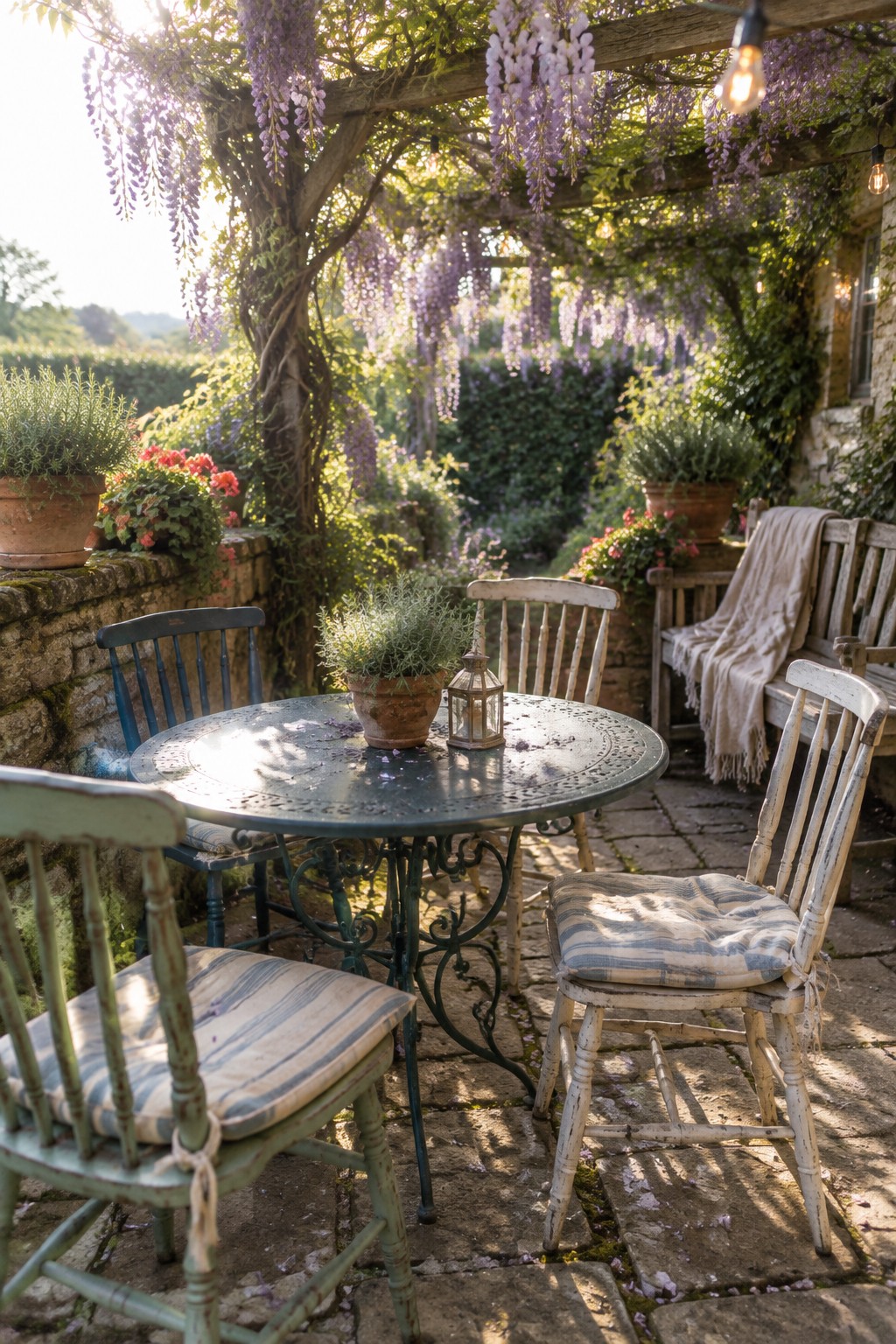
Let wisteria grow over a sturdy pergola to make a patio feel like a garden room. The overhead flowers give the seating area a clear boundary while still letting it feel open.
This works well above an outdoor dining spot or a small seating area beside the house. Use a strong support built for mature vines, and leave enough room to prune the growth so it does not crowd the chairs.
Make a Narrow Patio Work for Dining
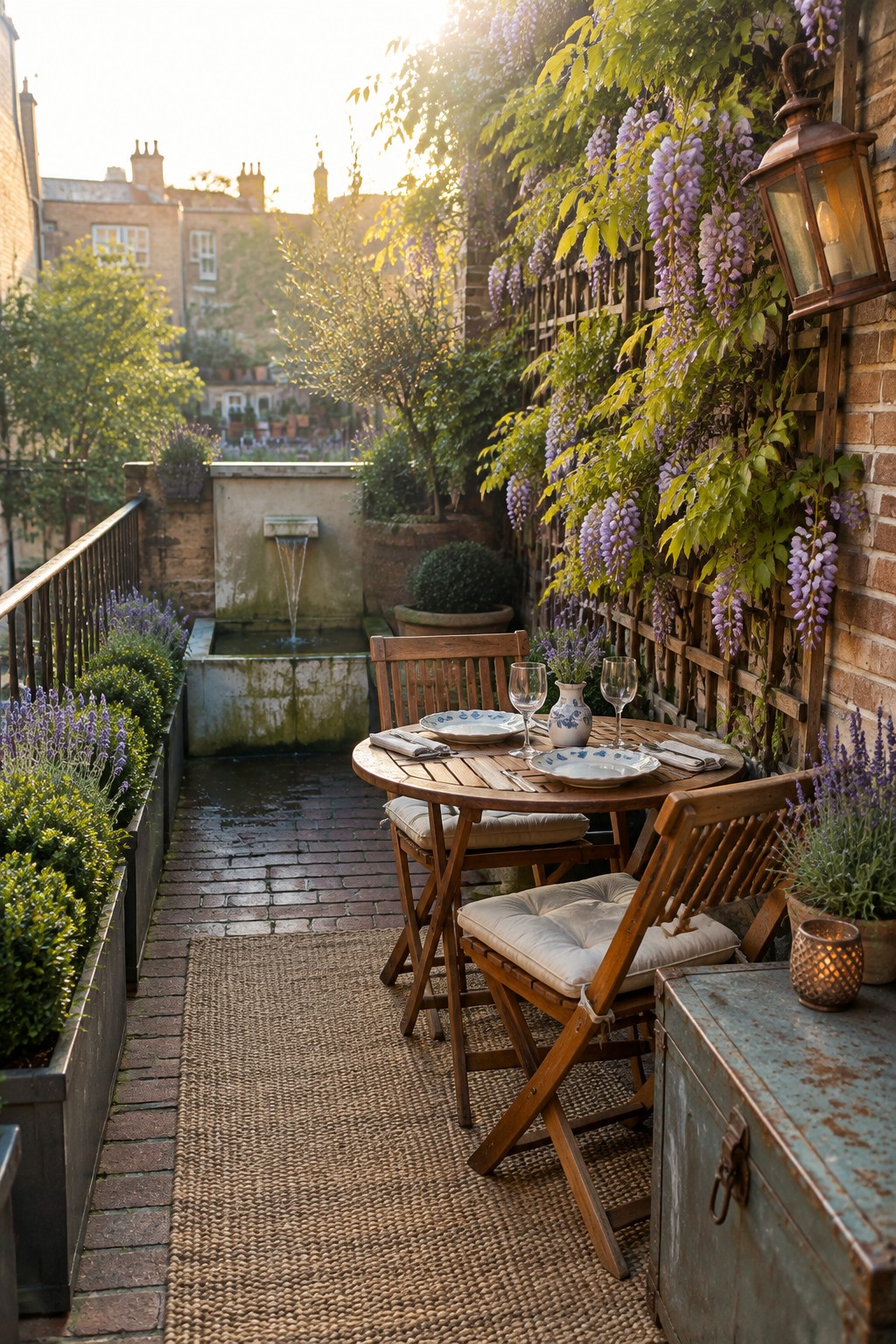
A narrow patio can still fit a proper dining spot if the table sits along one side and leaves a clear route through the middle. Here, the wooden table and chairs make room for an outdoor meal without blocking the brick path.
This layout suits a townhouse courtyard or a small terrace. Choose chairs that tuck in neatly, and keep larger planters to the edges so the walkway stays open.
Make Wisteria Part Of The Patio Shade

A pergola covered in wisteria can make an outdoor dining area feel more tucked away without closing it off. The flowers overhead bring a soft, seasonal look, while the open sides let the patio stay connected to the garden.
This works especially well over a dining table or a small seating area. Train the vines along a sturdy pergola, and keep up with pruning so they do not crowd the space or block too much light.
Let Wisteria Shade the Seating Area
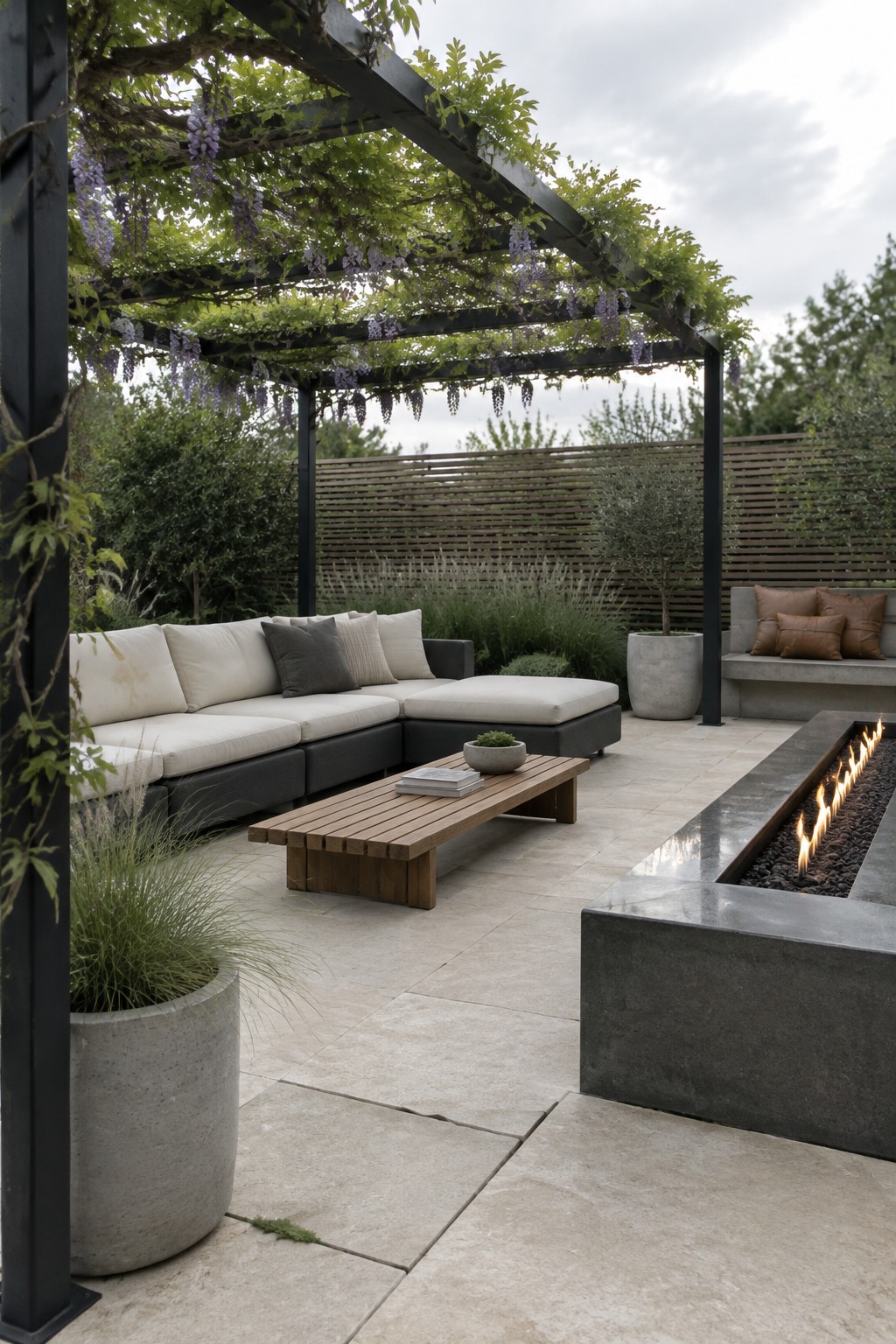
A pergola covered in wisteria can make a patio seating area feel sheltered without closing it off. The hanging flowers add seasonal color overhead, while the open sides keep the space connected to the garden.
Train the vine along a sturdy pergola above a sofa or dining spot, and leave enough room for the mature growth. Wisteria needs regular pruning to keep it in bounds, so it suits a patio where you can easily reach the structure for upkeep.
Add A Garden Bench To The Patio

A simple bench can make a patio feel like a place to linger, especially when wisteria grows overhead. The flowers give the seating area a garden-like setting, while the bench takes up less room than a full outdoor sofa.
Place the bench where the vines offer some shade, and leave enough space to walk around it. A cushioned seat suits a sheltered patio, but choose outdoor fabric if rain can reach it.
Create a Shaded Patio Seating Area
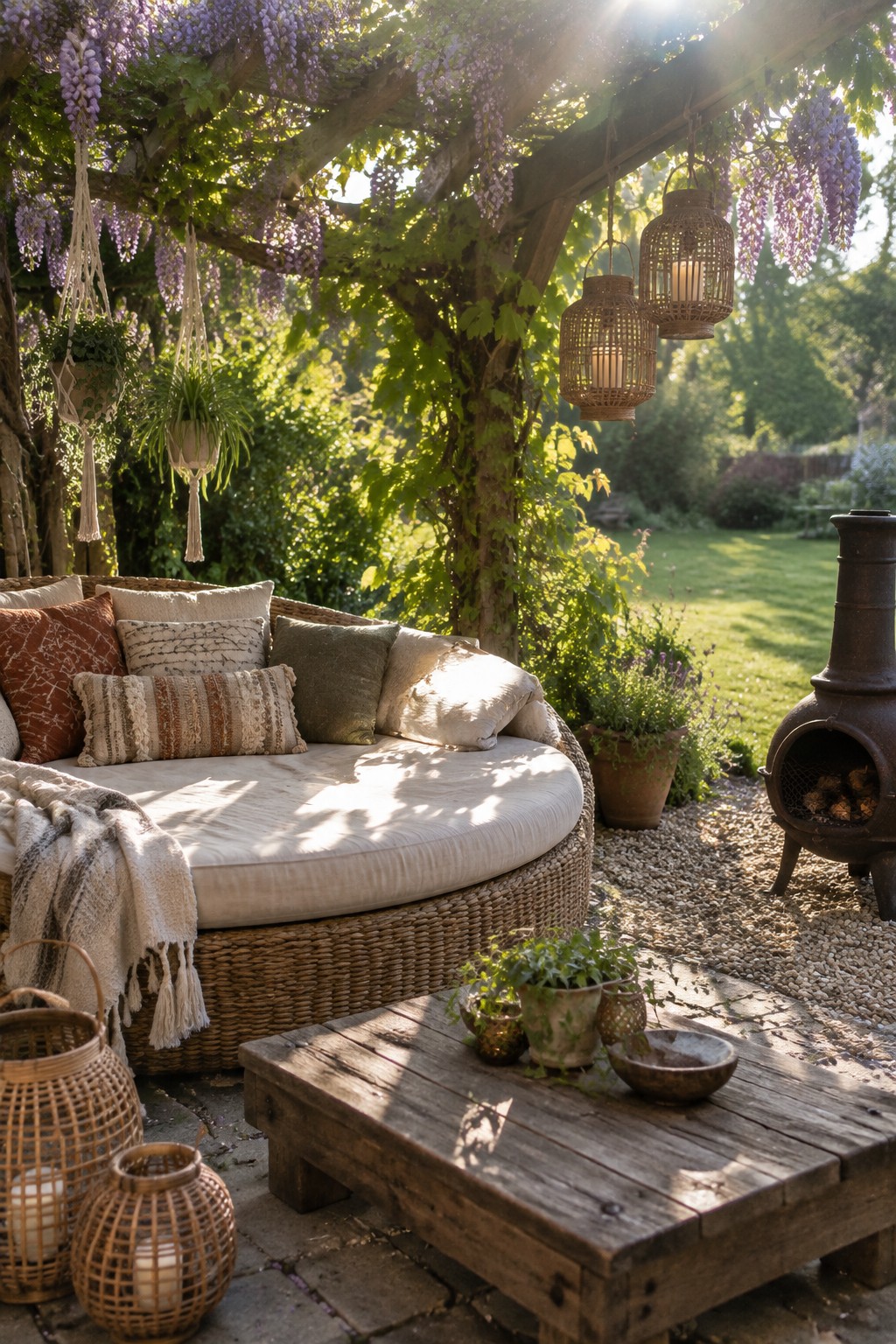
Wisteria can make a patio seating area feel tucked away without adding a solid roof. Let the vine grow across a sturdy pergola above the seating, where its leafy canopy provides dappled shade and its hanging flowers become part of the setting.
A curved outdoor sofa works well beneath this kind of structure, especially in a garden where people gather to sit and talk. Leave enough room around the furniture for easy movement, and keep the vine trimmed so branches do not crowd the seating.
Add A Pergola For Patio Shade
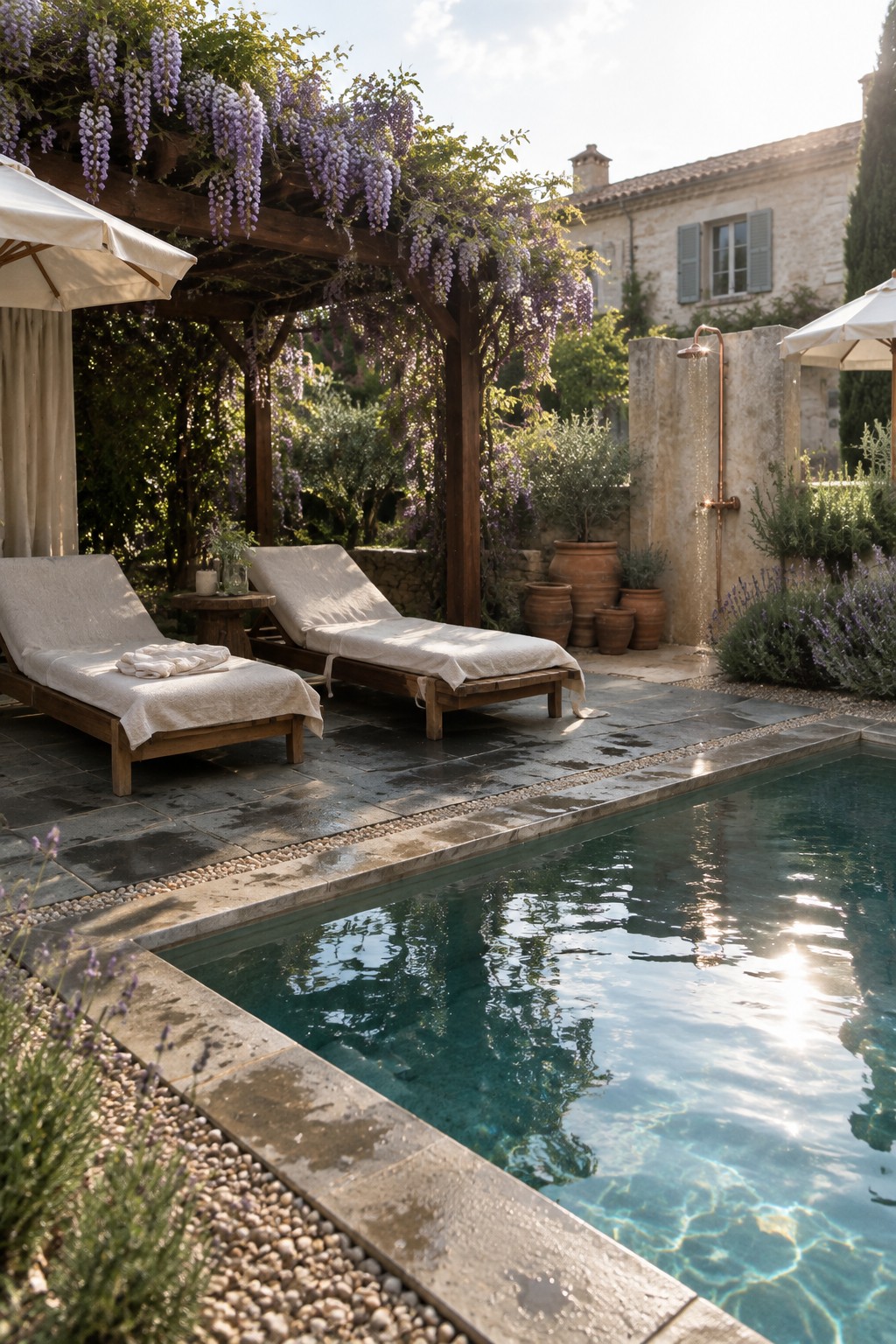
A pergola can make a patio more comfortable by giving wisteria a structure to climb and creating shade over the seating area. Its overhead branches help define a place to rest without closing it off from the garden.
Use sturdy supports that can handle the weight of mature wisteria, and leave enough room for regular pruning. This works well over a patio seating area, especially when you want filtered shade rather than a fully covered roof.
Use Wisteria to Create a Garden Dining Nook
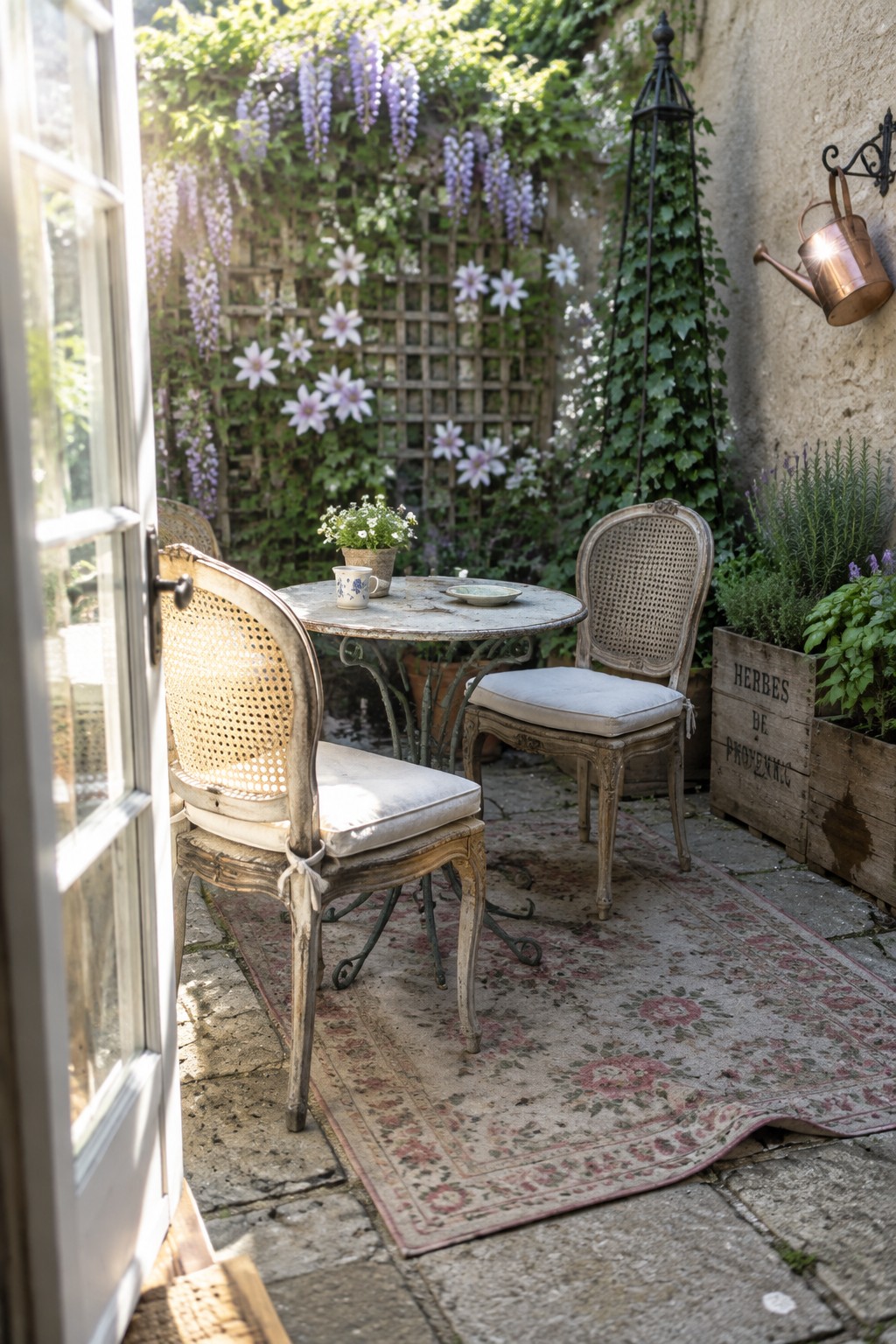
Wisteria can make a small patio feel like a tucked-away place to eat. Letting it grow over a trellis behind the table gives the seating area a leafy backdrop without taking up much floor space.
This works well in a narrow courtyard where there is room for a compact table and a few chairs. Train the vine along a sturdy support, and keep it pruned so it does not crowd the seats or block the walkway.
Use a Pergola to Define Patio Zones
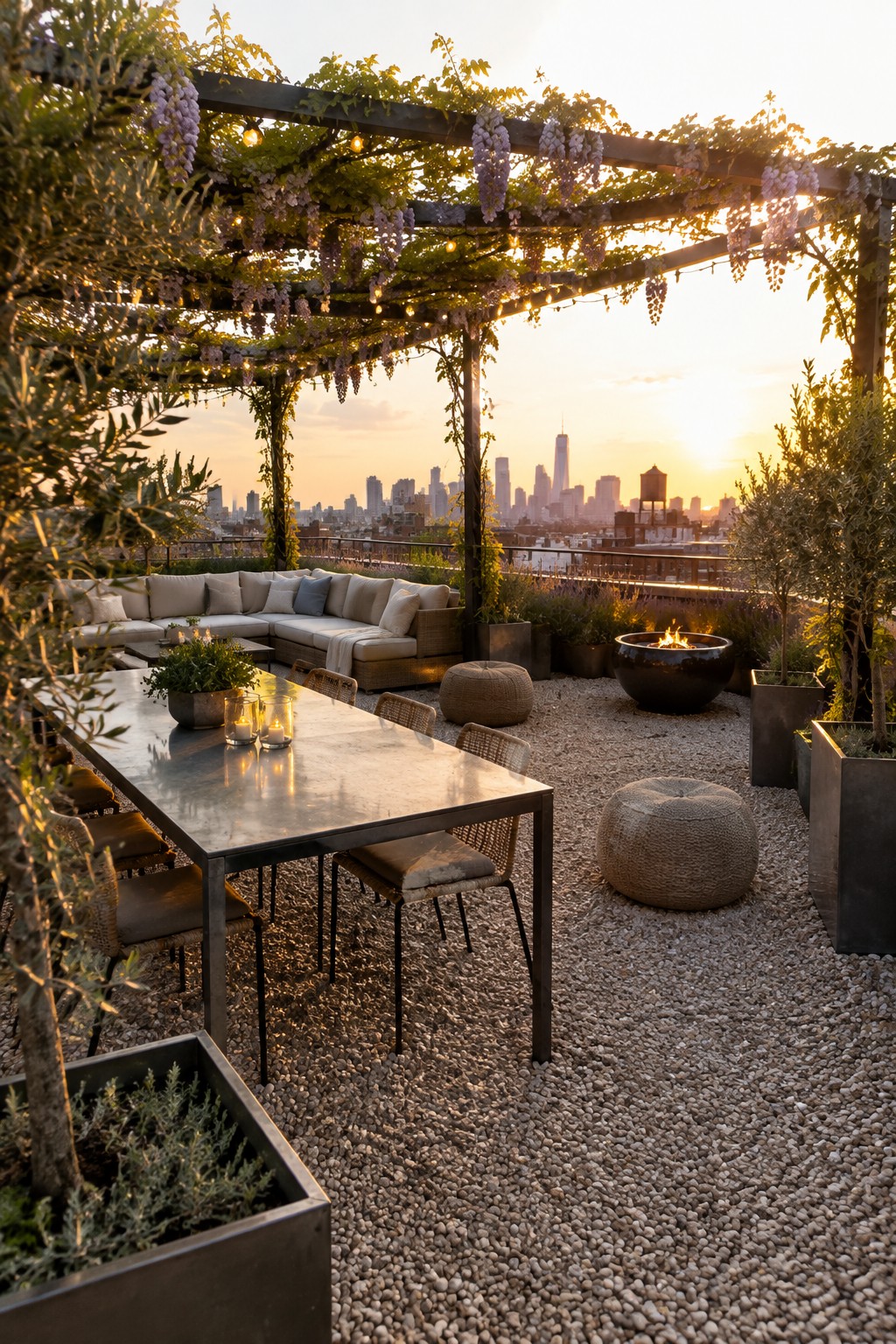
A pergola can make a large patio feel more organized by giving the dining and lounge areas a shared overhead structure. Wisteria growing across the beams brings shade and gives the different seating spots a natural connection.
Use sturdy supports that can handle mature vines, and leave enough room for people to move between the table and lounge area. This setup suits a rooftop or open terrace where you want distinct places to eat and relax.
Use Wisteria to Shade an Outdoor Dining Area

A vine-covered pergola can make patio dining more comfortable while giving the space a clear, tucked-away feel. Wisteria is especially suited to this kind of structure, where its hanging blooms can provide shade above a long table.
Use sturdy beams that can handle the mature vine, and leave enough room for airflow and pruning. This setup works well in a courtyard or along a patio wall, but keep the dining area bright enough that it does not become too dark.
Set Up a Dining Area Beneath Wisteria
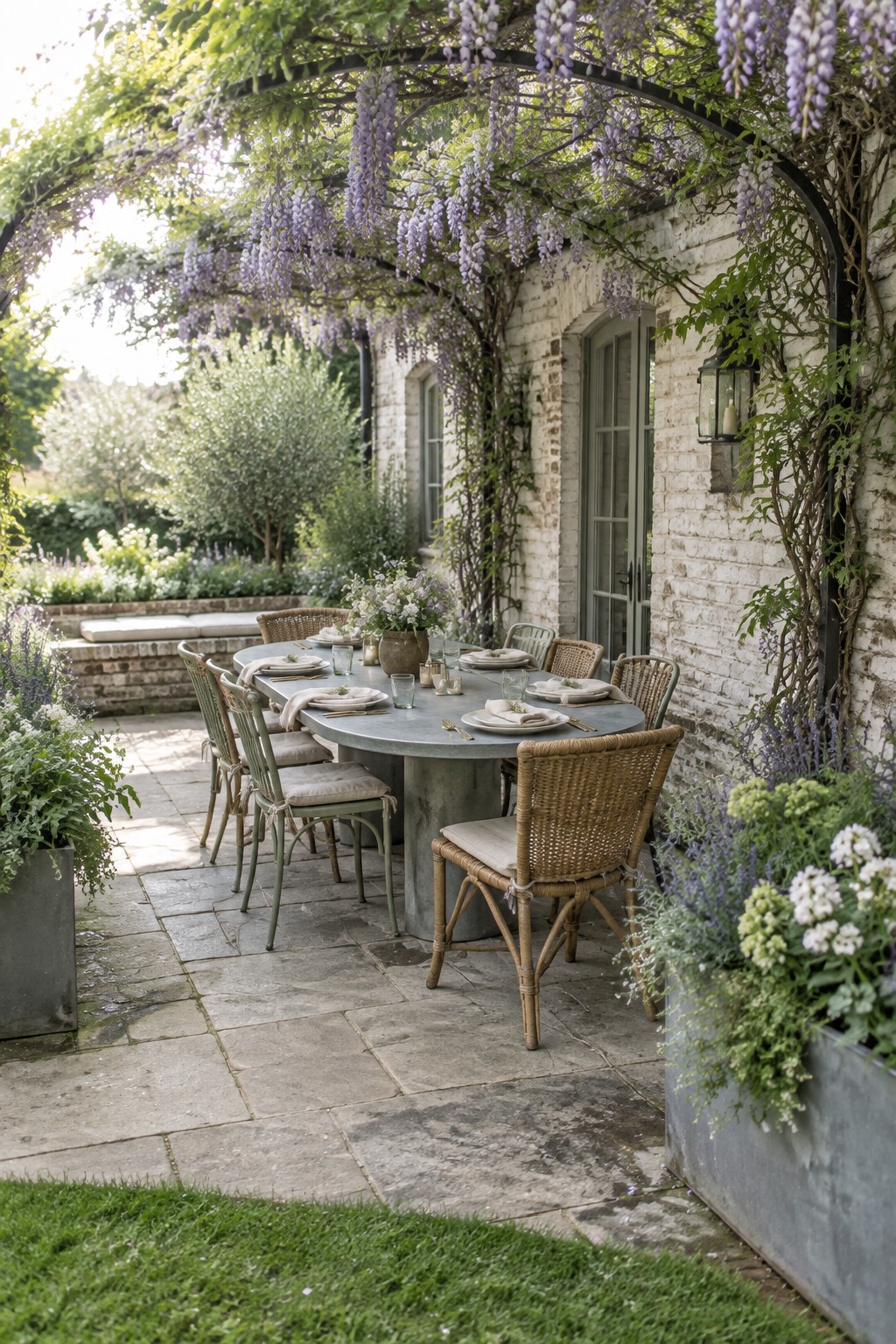
A dining table beneath a wisteria-covered pergola makes a patio feel like a natural place to gather. The overhead vines provide shade, while the open sides keep the seating connected to the garden.
This works well on patios beside the house, especially when there is enough room to pull chairs back comfortably. Choose sturdy outdoor furniture and keep the vine growth trimmed around the table so it does not crowd diners.
Use Wisteria to Mark the Garden Entrance
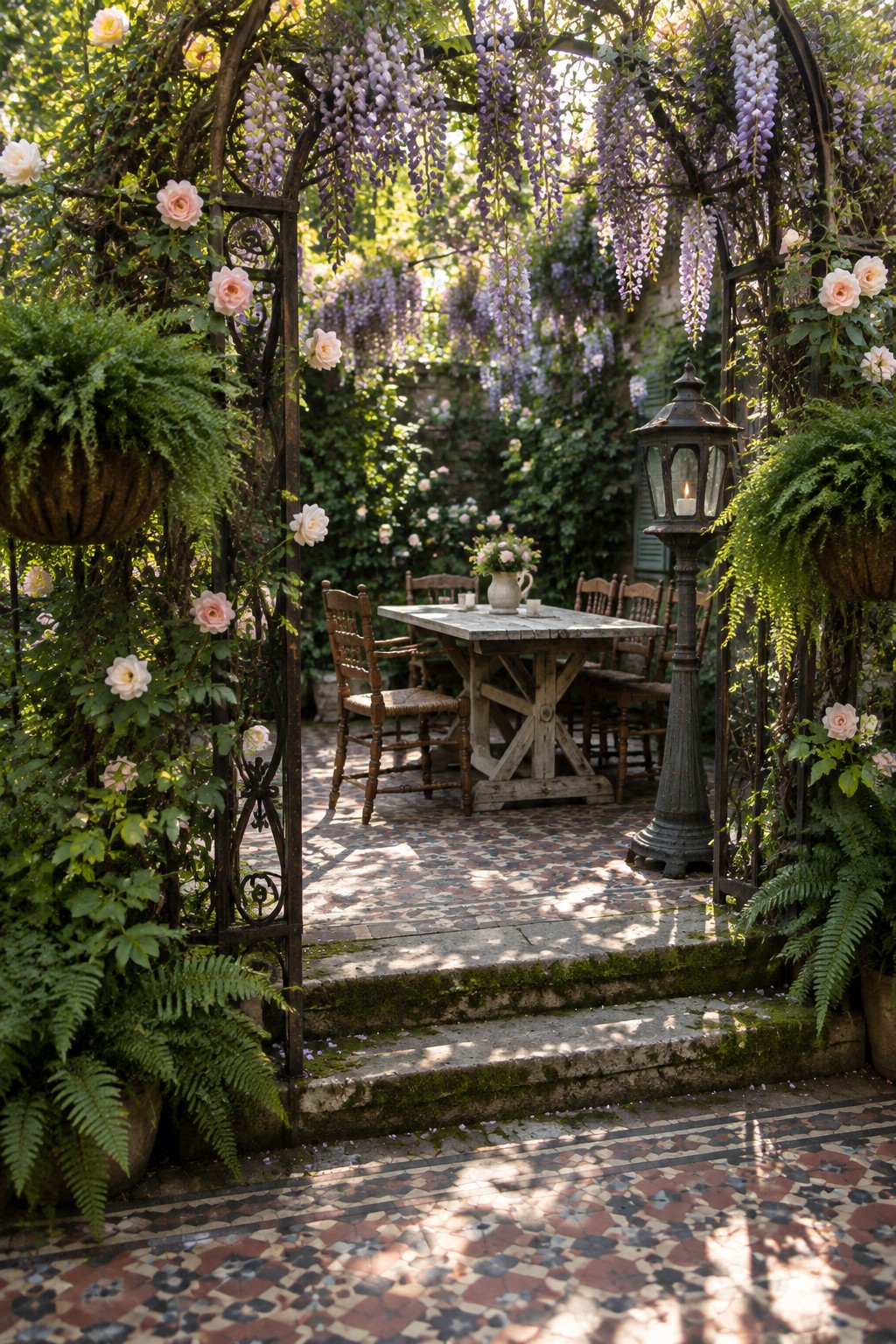
A wisteria-covered garden arch can make a patio feel like its own little outdoor room. It gives the seating area a clear entrance, while the hanging flowers bring the planting overhead rather than keeping it all at ground level.
This works especially well for a tucked-away patio at the end of a path. Train wisteria along a sturdy metal or timber arch, and prune it regularly so it does not block the way or spread too far over nearby seating.
Add a Fire Pit to a Wisteria Patio
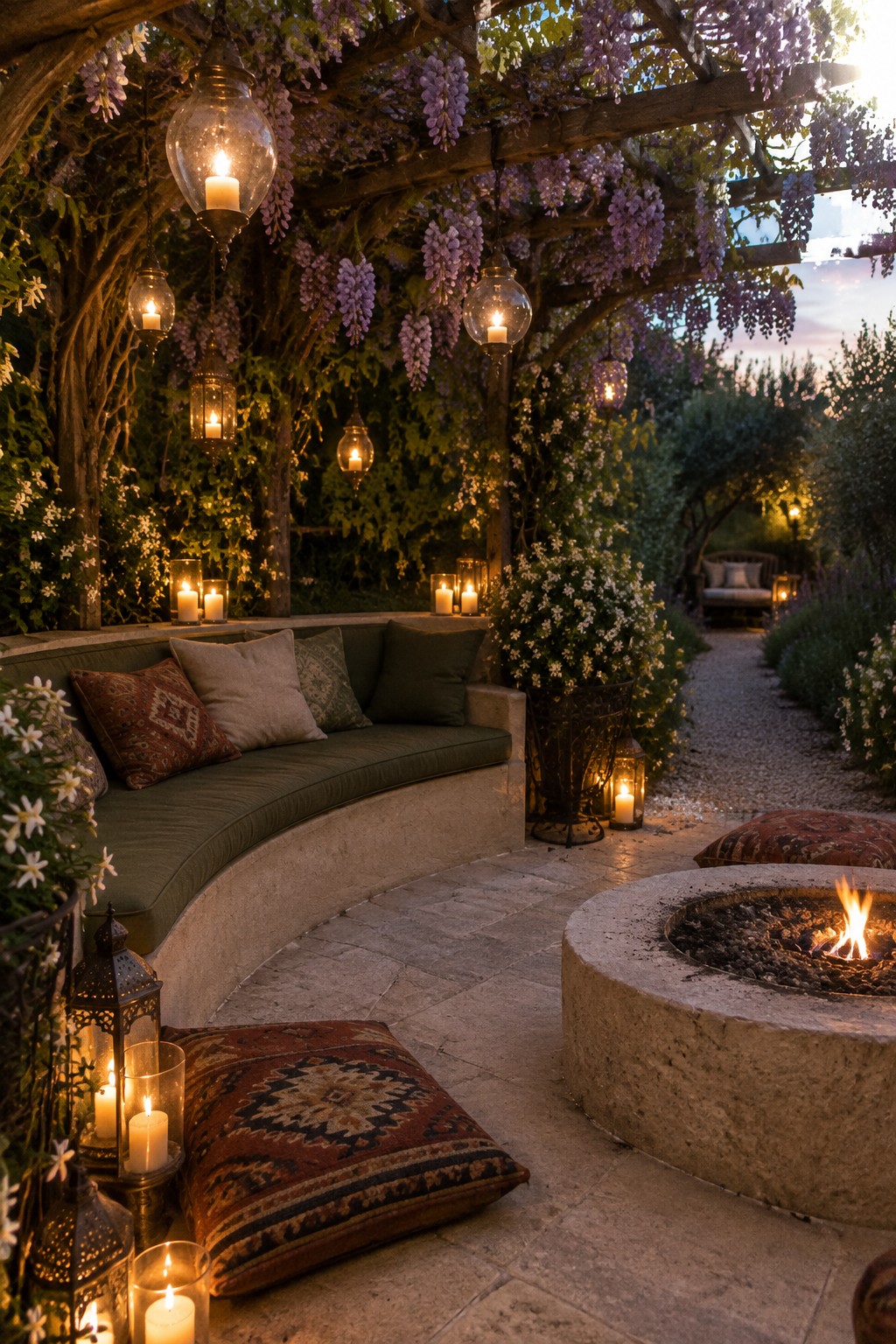
A fire pit gives a patio seating area a clear place to gather, and it makes the space useful after the sun goes down. Here, a round stone fire pit sits beside a curved built-in bench beneath wisteria, so people can sit close to the warmth without blocking the garden path.
Keep enough room around the fire pit for chairs or cushions and for people to move safely. It works best where the patio has a durable, nonflammable surface, with hanging wisteria kept well clear of the flames.
Let Wisteria Shade a Patio Lounge

A wisteria-covered pergola can make an outdoor seating area feel like a natural extension of the patio. The overhead growth gives the lounge a little shade and helps define the space without closing it off.
For a similar setup, place comfortable seating beneath a sturdy pergola and train the vine along its beams. Wisteria grows vigorously, so leave room for regular pruning and make sure the structure can support mature growth.
Use Wisteria To Create a Garden Path
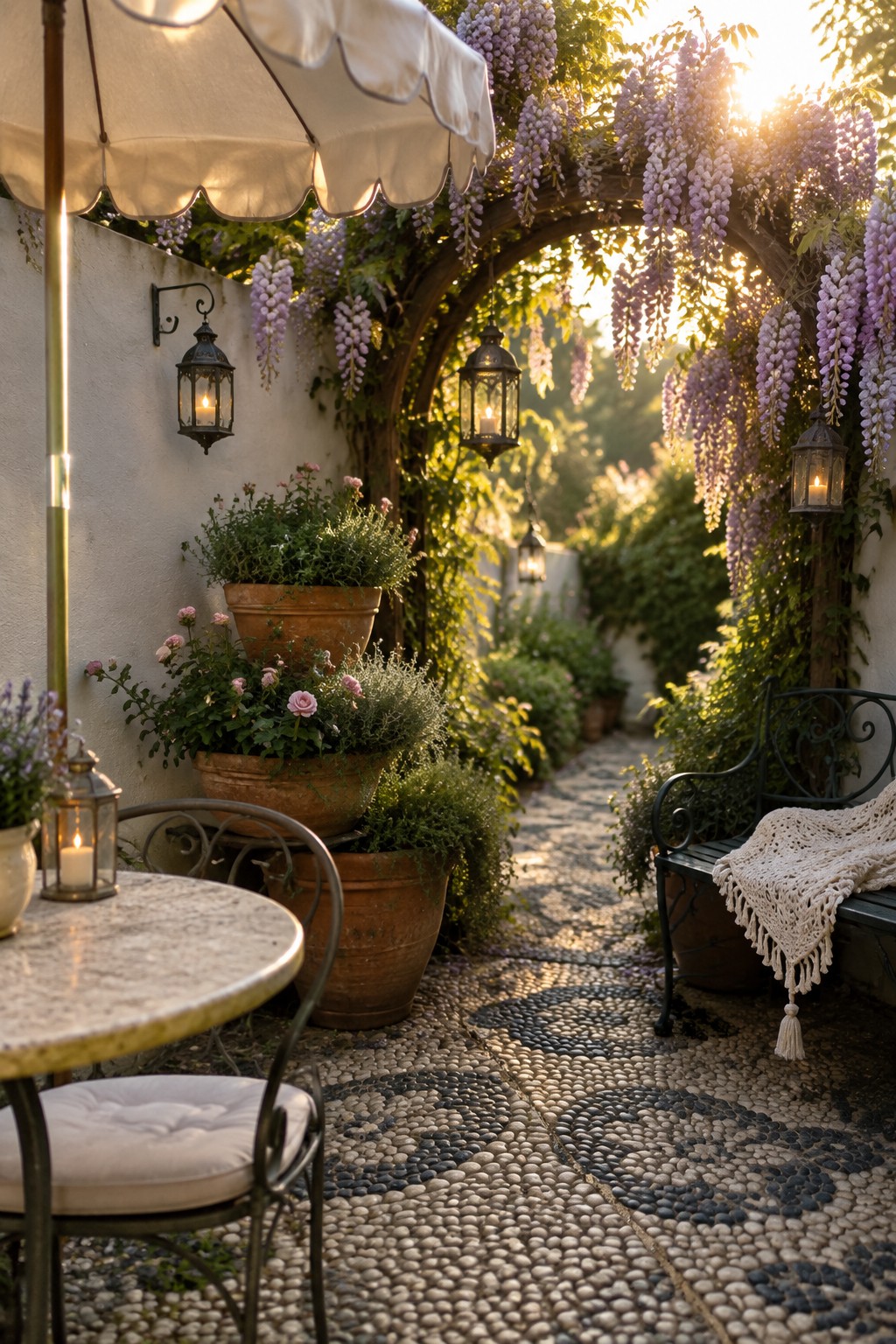
Wisteria can turn a simple walkway into a clear route through the garden. Trained along an overhead arch, it gives the path a leafy ceiling and makes a small patio feel connected to the rest of the yard.
For a similar effect, guide the vines over a sturdy structure beside a narrow stone path. Keep the growth trimmed enough to leave room to walk, and choose a spot where the arch will not block access or shade plants that need full sun.
Use a Garden Path to Lead to the Patio

A flagstone path can make a patio feel like part of the garden instead of a separate spot. Here, the stepping stones lead beneath a wisteria-covered pergola toward a small seating area, giving the route a clear destination.
For a similar effect, let the path curve or narrow as it approaches the patio, and use plants along its edges to blend it into the yard. Keep the walking surface stable and wide enough for everyday use, especially if the stones are irregular.
Use Wisteria to Shade a Patio Dining Area

A wisteria-covered pergola can make an outdoor dining spot feel tucked away without closing it off from the garden. The overhead vines provide dappled shade, while the open sides keep the patio pleasant and airy.
Set a table beneath a sturdy structure where the vines can climb, and leave enough room to pull chairs back comfortably. Wisteria can grow vigorously, so choose a strong support and keep up with pruning to prevent the branches from crowding the seating.
Frequently Asked Questions
Q: Can wisteria grow over a patio pergola without taking it over?
A: Yes, if you prune it regularly and give it a sturdy pergola to climb. Tie the main stems where you want them, then trim back wandering shoots so the canopy stays open and the patio still gets light.
Q: How far should I plant wisteria from the patio?
A: Plant it far enough away that the trunk and roots won’t press against paving or nearby walls as they grow. Leave room for the mature vine, and train its branches toward the pergola rather than letting them spread across the patio.
Q: Will wisteria grow well in a pot beside a patio?
A: It can, but choose a large, heavy pot with good drainage and expect to water and prune more often than you would with an in-ground vine. A compact variety is easier to manage in a container.
Q: What can I plant beneath wisteria for a romantic patio feel?
A: Try shade-tolerant plants such as ferns or hostas, especially where the pergola casts a deep shadow. Keep the planting low so fallen petals and leaves are easy to sweep up.
