

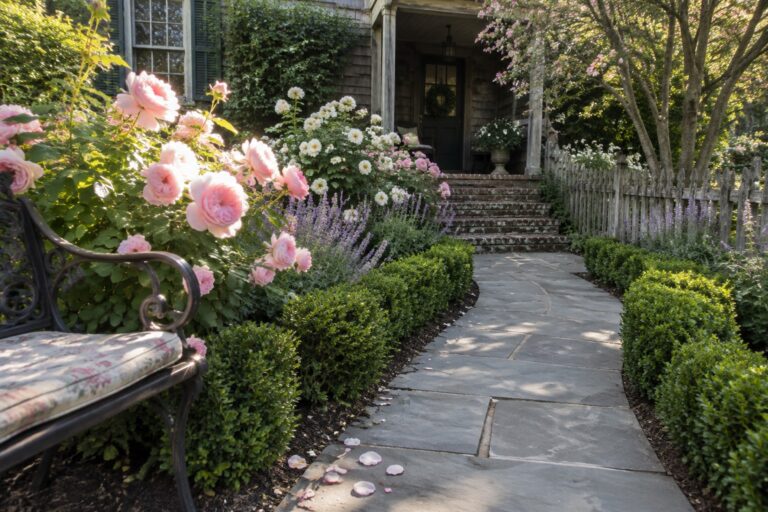
A rose bed can give a front yard a softer, more settled look, but its shape matters as much as the flowers themselves.
I find that the view from the sidewalk is often the first test: roses should frame the entry without hiding the house or crowding the path.
Curved edges, clear walkways, and a mix of heights can help the planting feel connected to the facade rather than added as an afterthought.
The best layouts also leave room for pruning and let the bed change gracefully as the roses grow.
I’d save the ideas that suit the home’s scale and try those first, adjusting the plants and edging to fit the yard.
Use a Curved Path Through the Rose Bed
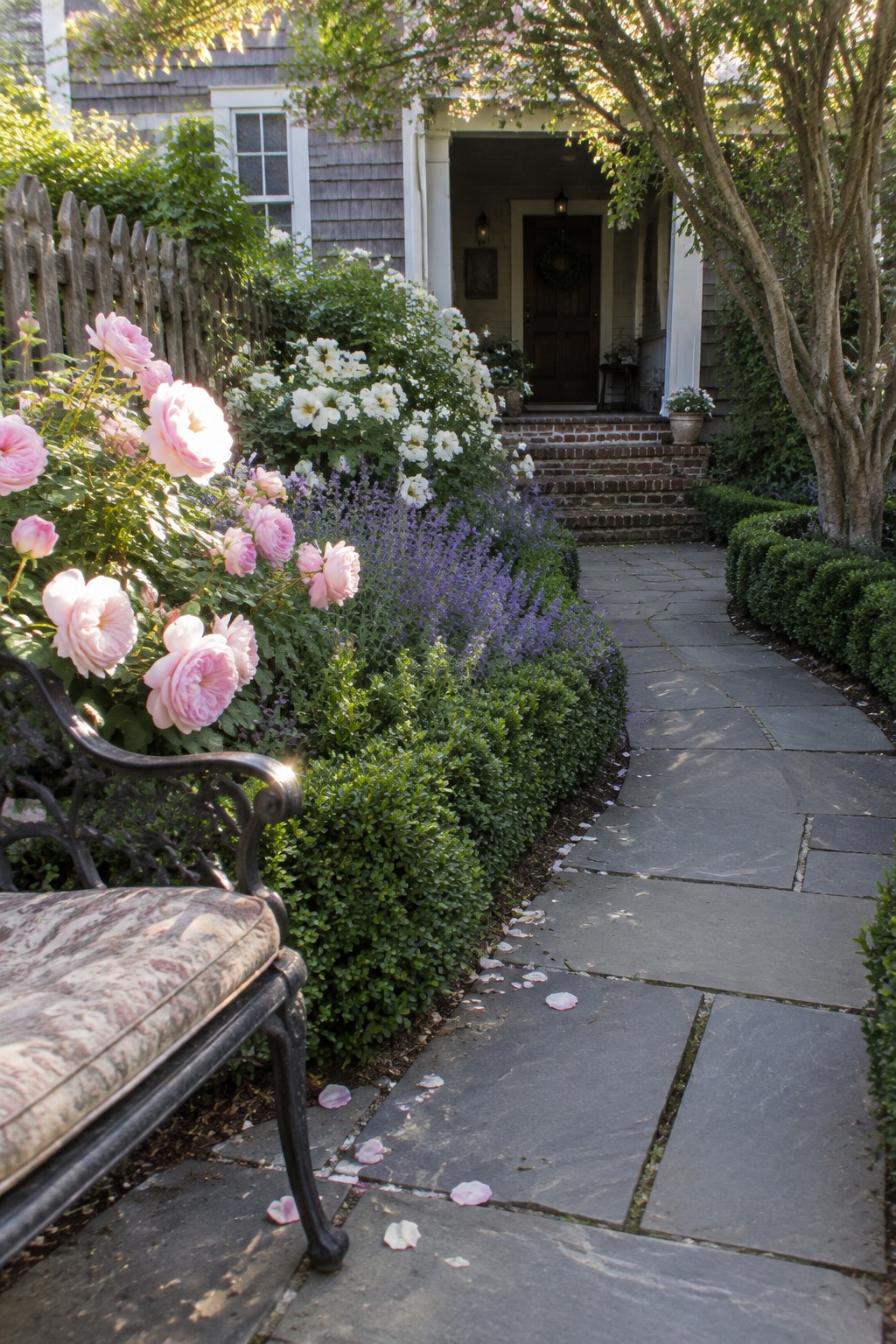
A gently curving stone path can make a front garden feel less like a straight route to the door and more like part of the planting. Pink roses along the edge bring color close to the walkway, while the bend gives the garden a relaxed shape.
This approach suits a cottage-style entry or a yard with room for a wider bed. Leave enough space for comfortable walking, and choose sturdy paving that stays even underfoot. A few rose petals on the stones are lovely, but the path still needs to be easy to sweep.
Use a Gravel Path Through Rose Beds
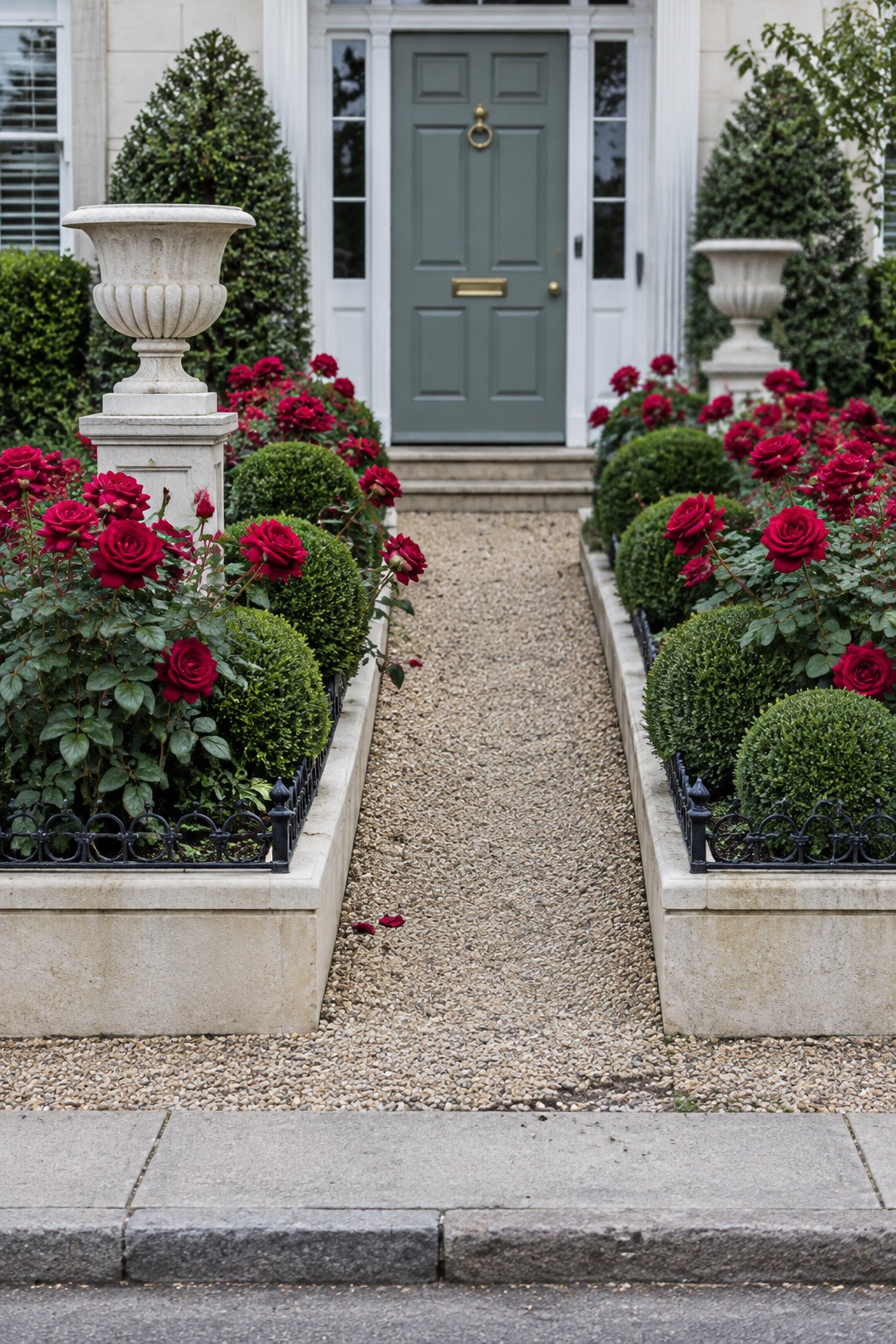
A gravel path gives a front rose garden a clear route to the door while keeping the planting beds in focus. It suits traditional homes especially well, and the loose surface feels less formal than a solid stone walkway.
Keep the path wide enough for comfortable access, and use a firm edge to stop gravel from spilling into the beds. Deep red roses beside clipped green shrubs make a simple, orderly planting scheme.
Layer Roses Along a Cottage Garden Bed
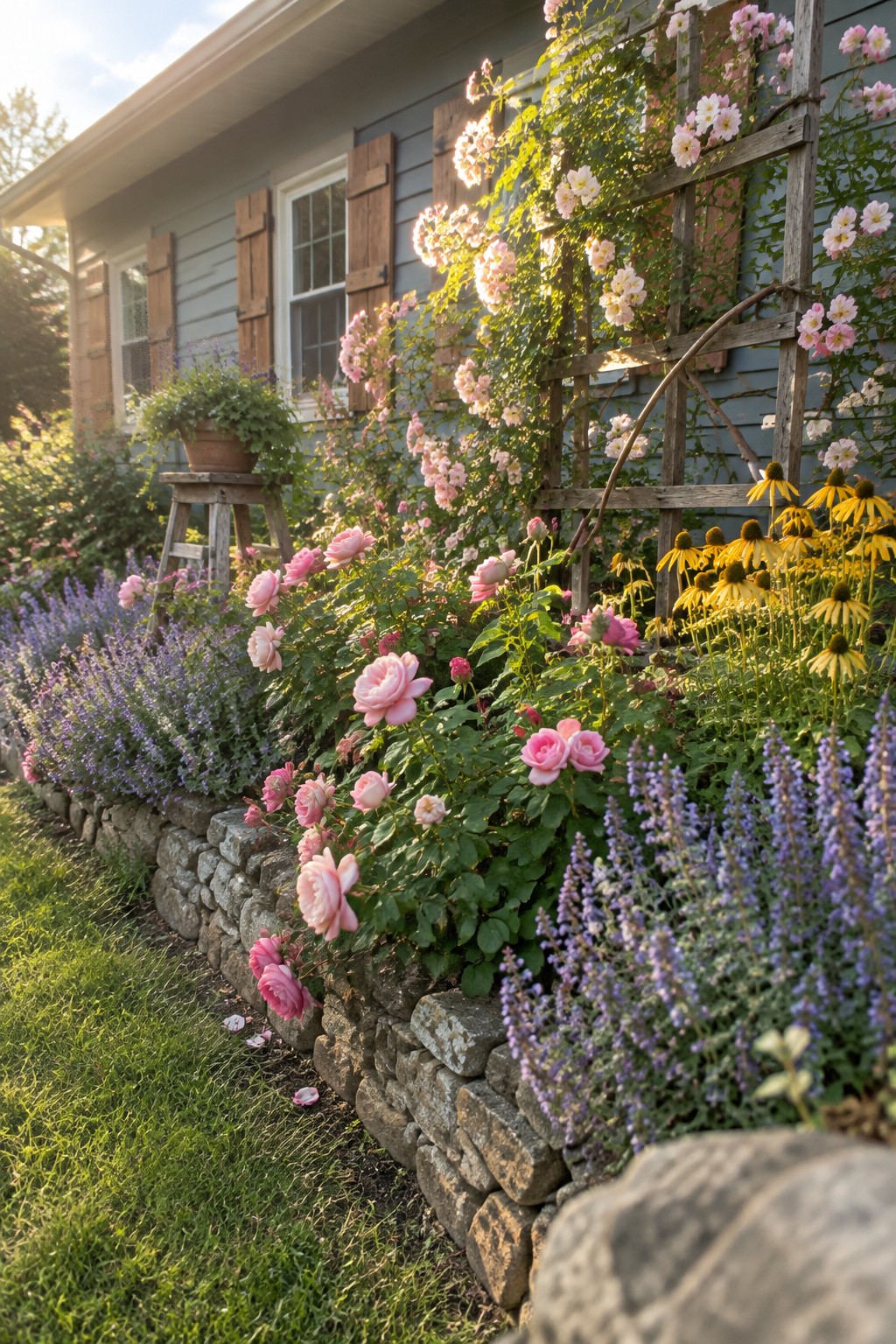
A layered flower bed lets roses take center stage while smaller plants fill in around them. Here, pink roses grow among low purple flowers and taller yellow blooms, giving the planting a relaxed cottage-garden feel.
Use this approach along a house wall or garden border, placing roses where they have room to spread and tucking shorter plants near the edge. Leave enough space between varieties for airflow and easy pruning.
Use a Raised Bed for Front Yard Roses

A raised flower bed gives roses a clear place in the front yard and makes the planting feel tidy beside the house. A low concrete wall can also keep gravel and soil from spreading onto the walkway.
This approach works well along a modern facade or anywhere the ground needs a defined edge. Plant roses in small groups and leave enough room between them for airflow and pruning.
Plant Roses Along the Front Walk
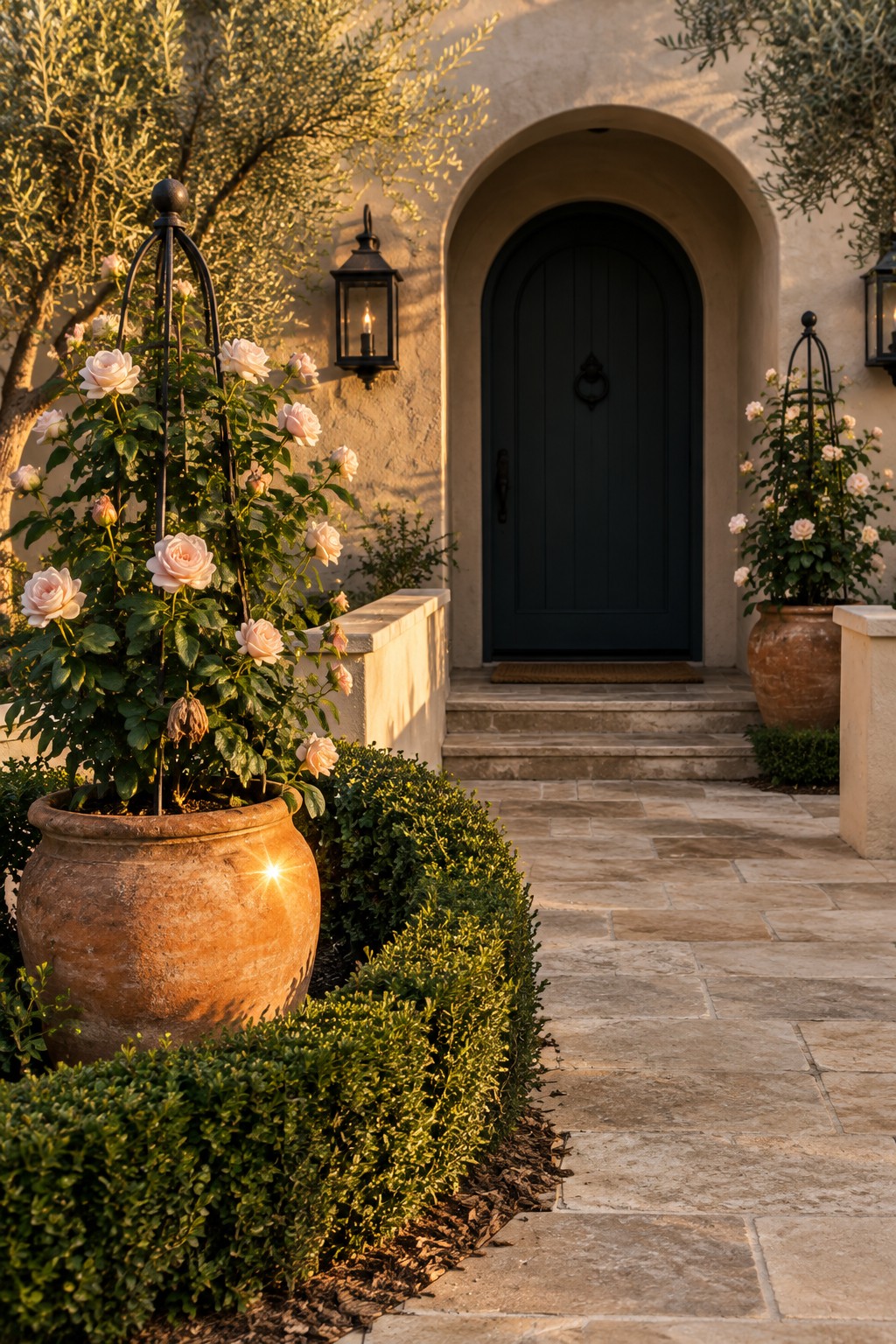
A rose bed beside the front walk is an easy way to make the entrance feel cared for. The flowers add color close to the house, while a clear stone path keeps the planting from getting in the way.
Use a compact bed along one side of the walk, and leave enough room for people to pass comfortably. A large pot can hold a rose if you have limited space, but make sure it has good drainage and enough room for the roots.
Use Brick Paths to Shape Rose Beds
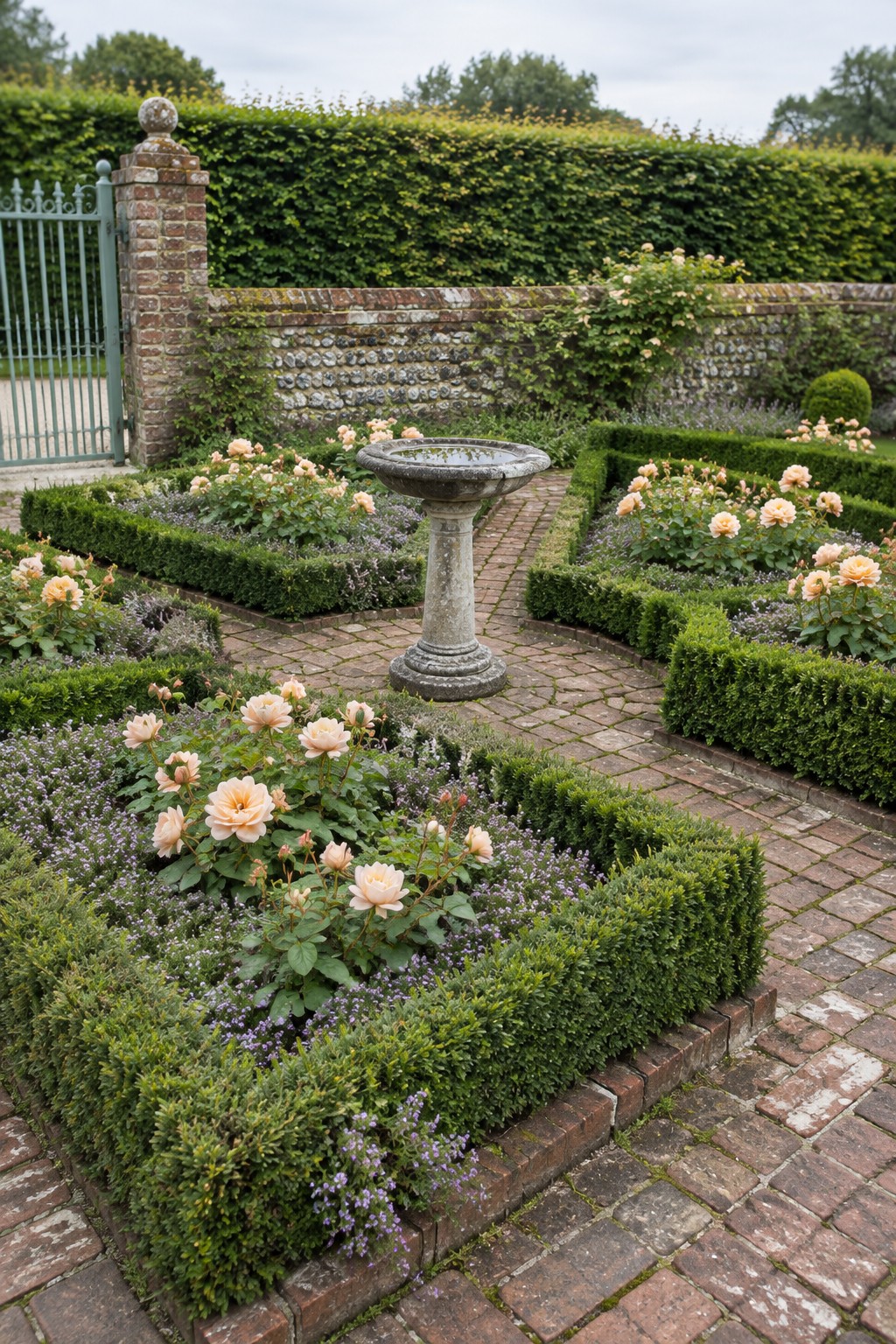
Brick paths give a formal rose garden a clear layout and make it easier to reach each bed for pruning and care. Here, the paths divide the planting into neat sections, while low clipped hedges keep the edges tidy.
This approach works well in a front garden with enough room for a few distinct beds. Choose paving that suits the age and style of the house, and leave paths wide enough to walk along comfortably.
Plant Roses Along a Garden Path
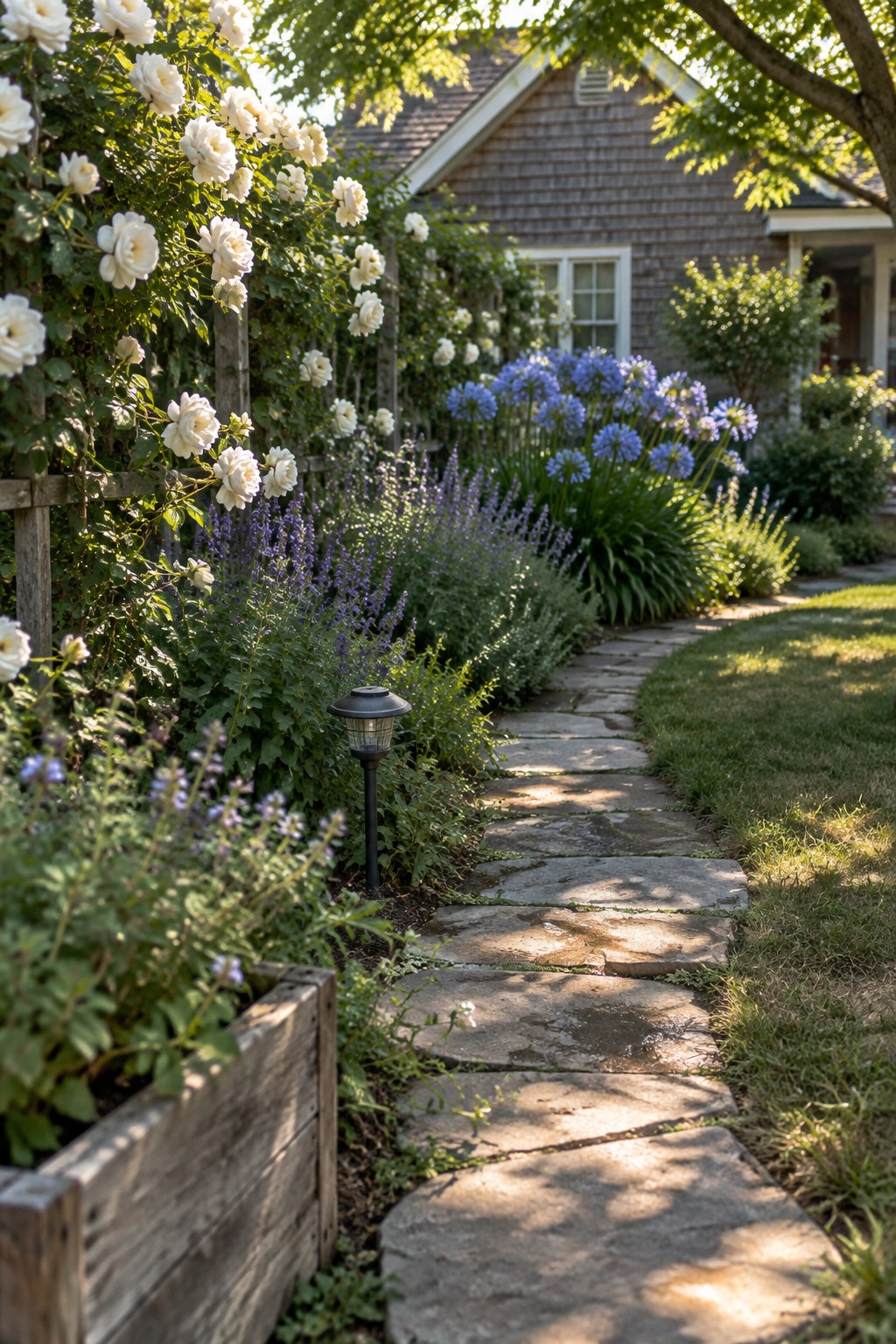
A stone path can make a rose bed feel like part of the route to the front door, rather than a separate patch of planting. Roses planted close to the path bring flowers within view, while other plants can fill in the bed around them.
This layout suits a cottage-style garden where there is room for a gently winding walkway. Leave enough space for roses to spread without crowding the stones, and keep the path wide enough to walk comfortably.
Train Roses Along a Brick Wall
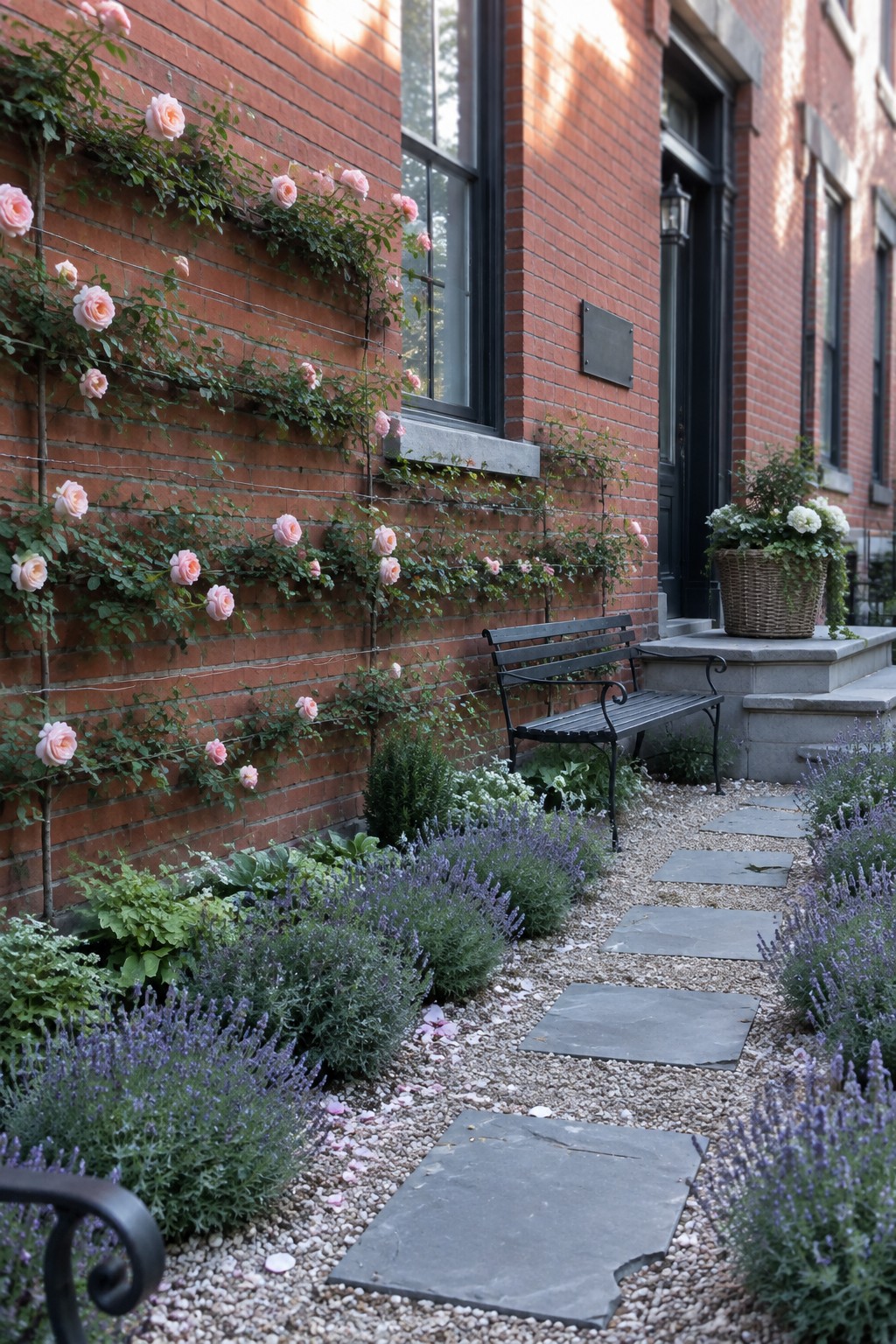
Training climbing roses along a brick wall makes good use of a narrow space and gives a front garden a clear planting structure. The long lines of the wall help guide the roses, while the blooms bring color close to the house.
Use a sturdy trellis or horizontal wires to support the canes, and leave enough room for air to move around the plants. This approach works well beside a walkway or at a small entry, but roses will need regular pruning to keep the path clear.
Use a Wood Walkway Beside the Rose Bed
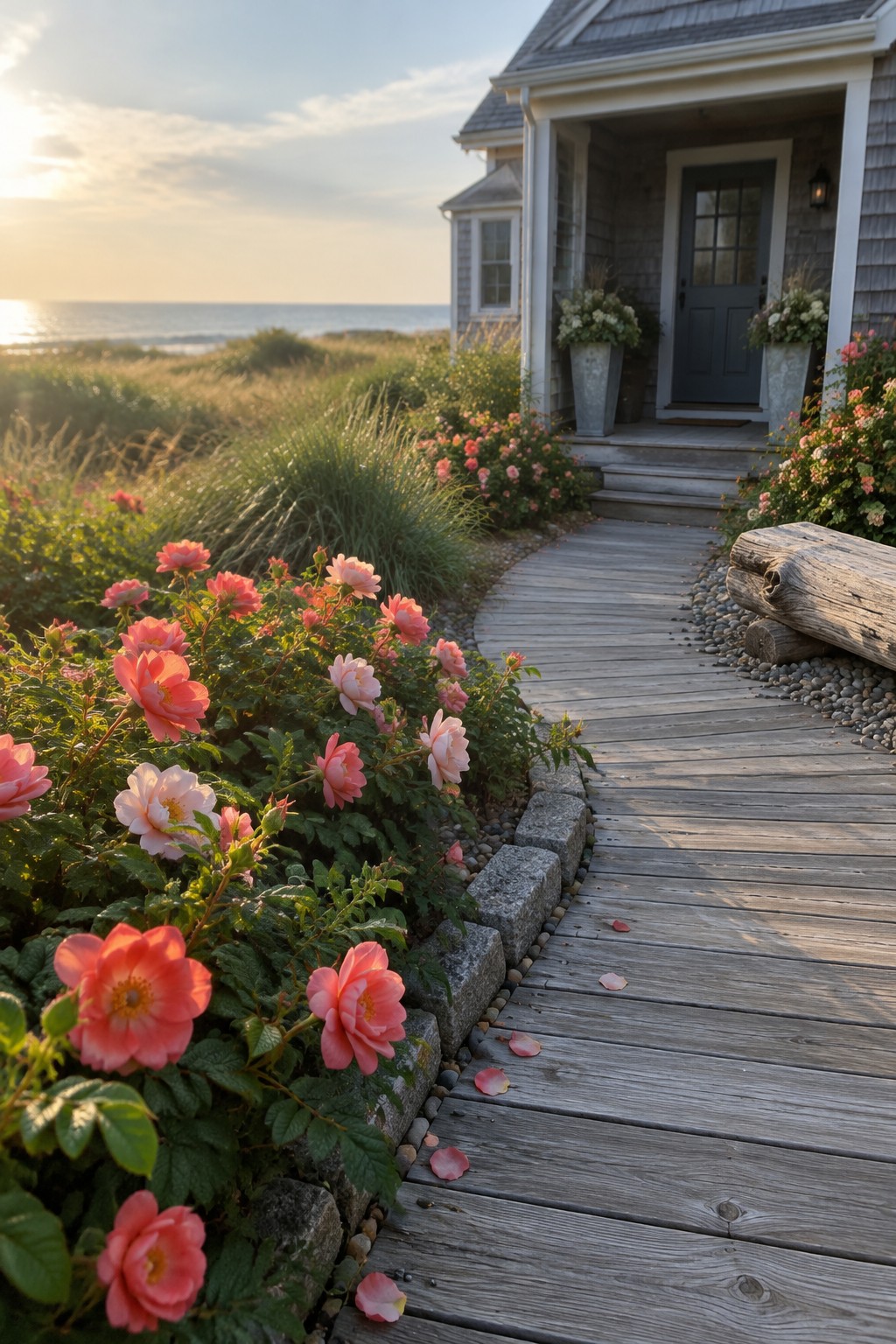
A simple wood walkway gives a front garden a clear route to the door while letting roses spill along the edge. The boards feel less formal than stone, which suits a cottage or coastal-style home.
For a similar look, keep the path wide enough for comfortable walking and use a firm, even surface. Plant roses along just one side if the entry is narrow, so the walkway stays easy to use.
Use Metal Edging for a Raised Rose Bed
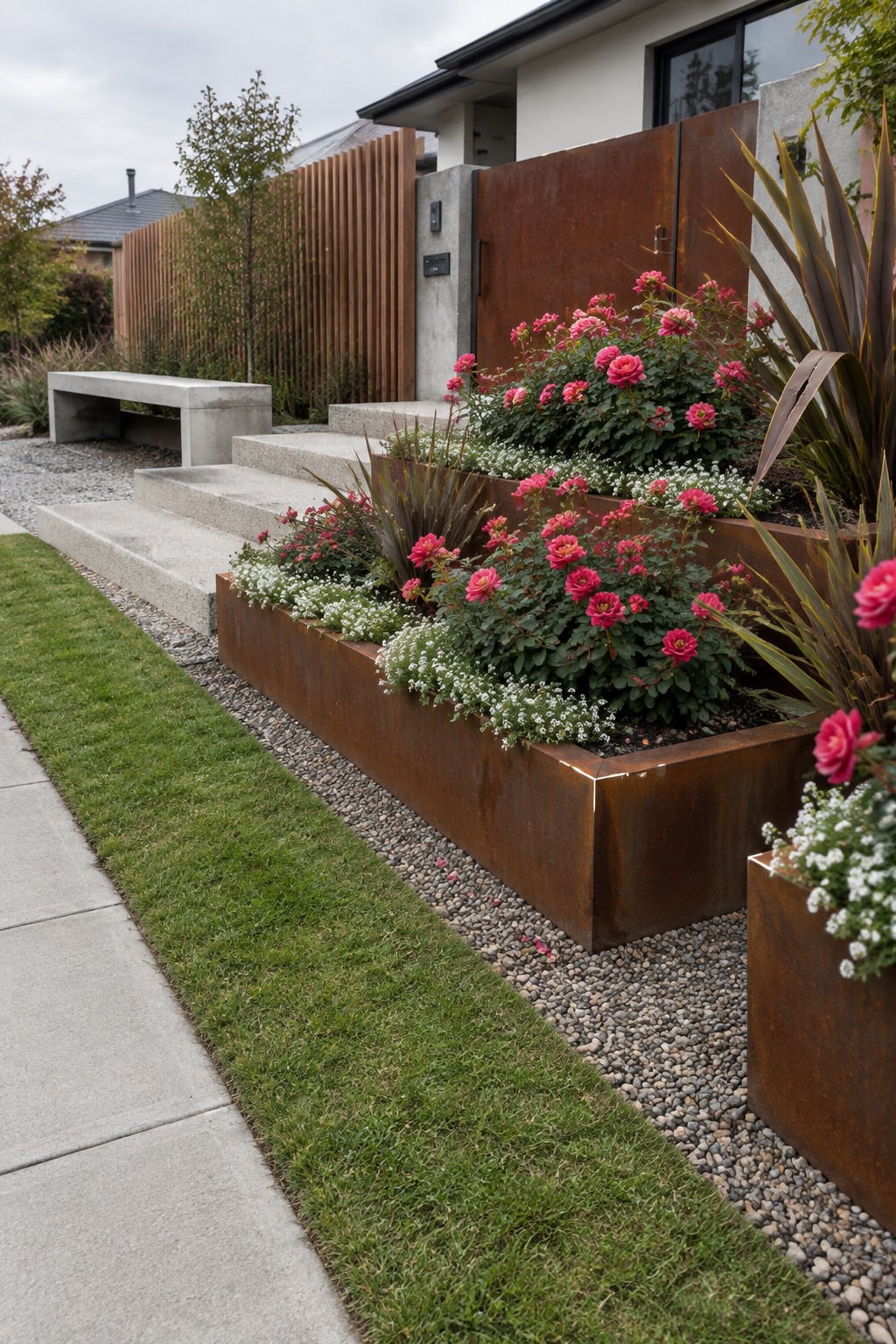
Raised metal planters give front-yard roses a clear shape and keep the planting neatly contained. Rust-colored steel works especially well beside concrete steps or a simple home exterior.
Use a raised bed where the ground is uneven or where you want the roses to sit above a gravel border. Leave enough room for mature plants, and check that the bed drains well so water does not collect around the roots.
Use a Rose-Covered Arbor to Shape the Flower Bed
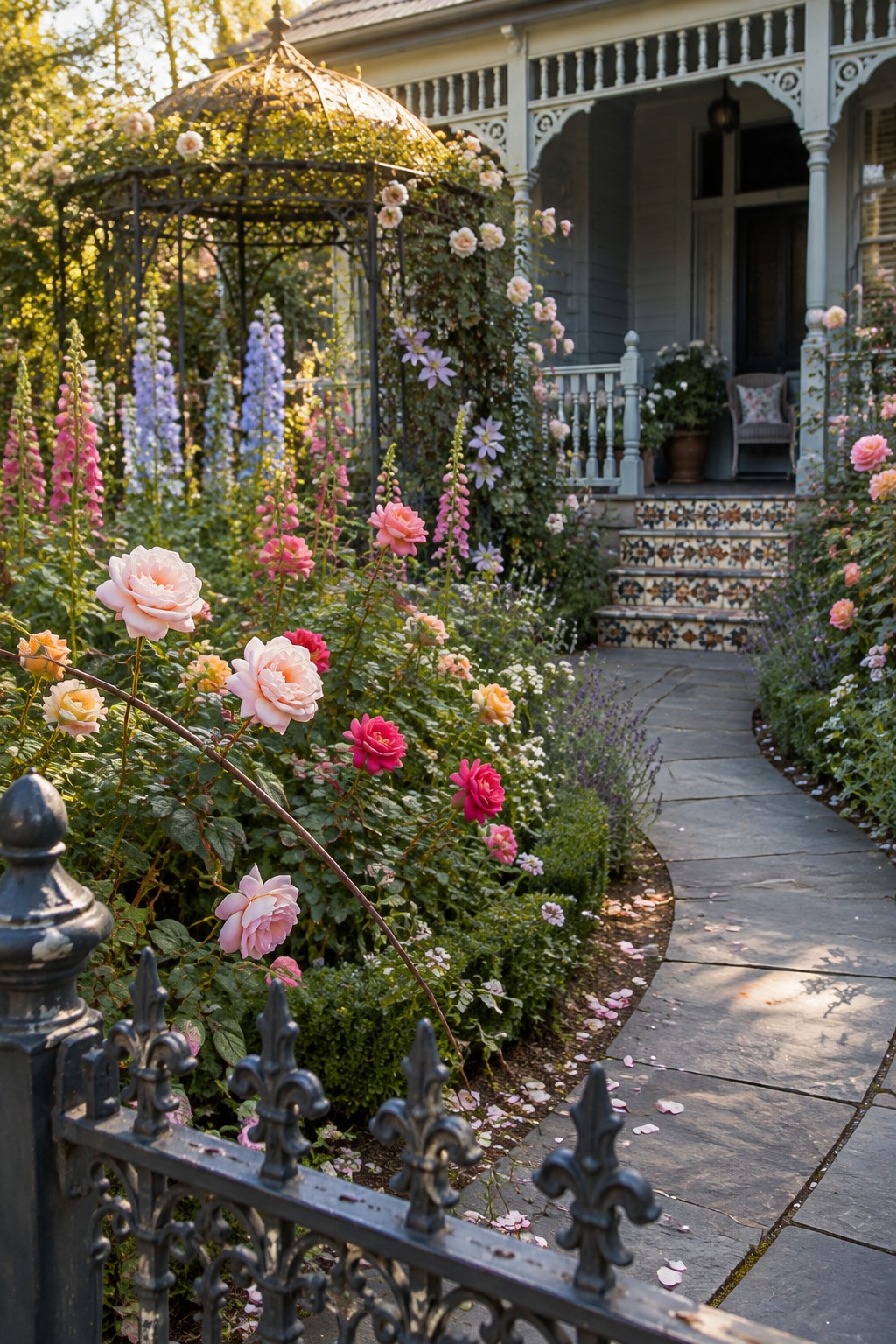
A rose-covered arbor gives a front garden a clear focal point and a little height. It also makes the flower bed feel like part of the home’s entrance rather than a row of plants along the path.
Choose a sturdy arbor and train climbing roses over it, leaving enough space for them to grow without blocking the walkway. This works especially well beside a porch or front path, but keep an eye on thorny stems near places people pass.
Use Gravel to Set Off Front Yard Roses
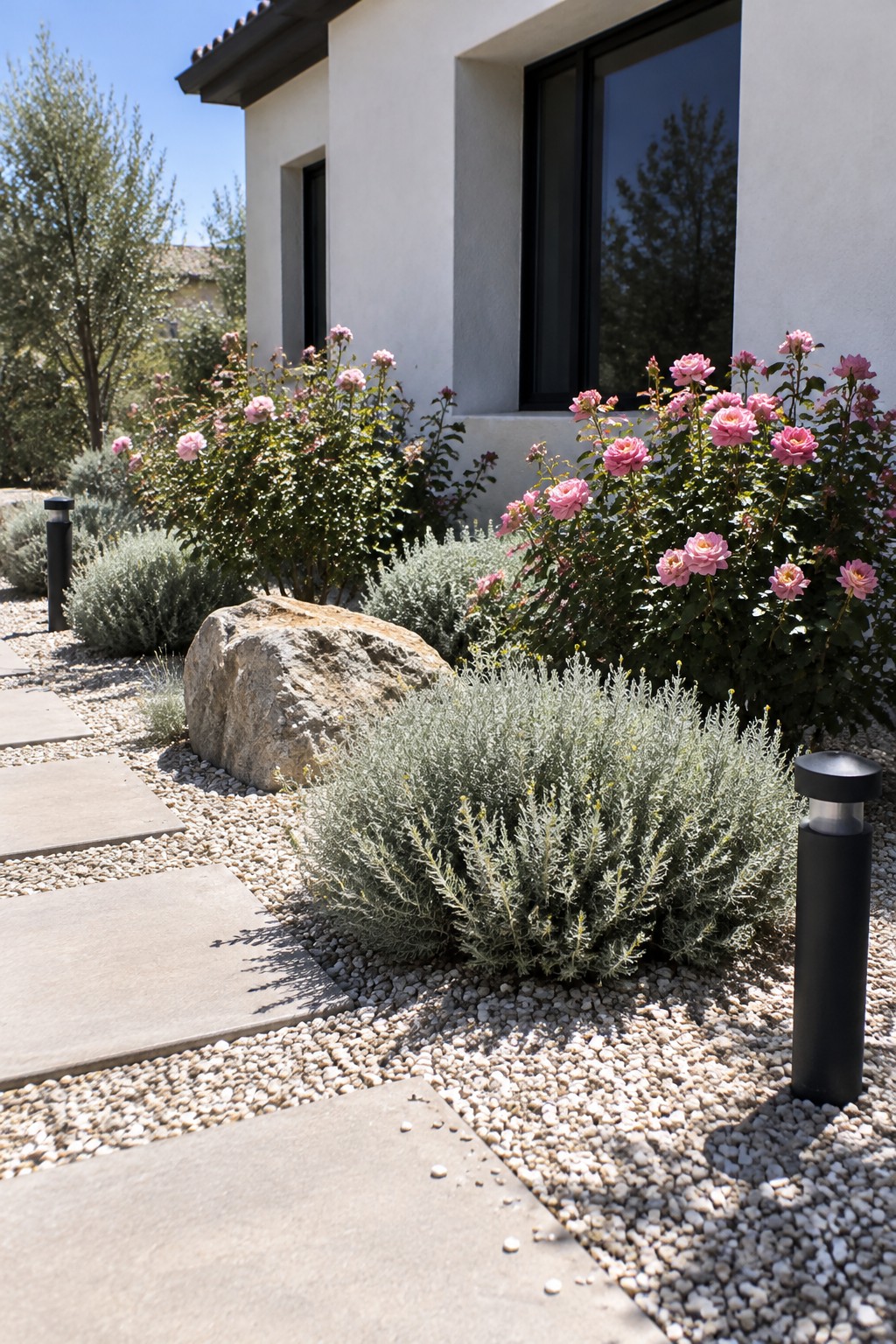
A gravel bed gives roses a tidy place to grow while keeping the planting simple. The pale stones make pink blooms easy to notice, and they suit homes where a neat, low-water landscape is preferred.
Use gravel around rose shrubs, leaving enough open soil at each plant for watering and feeding. A few large stepping stones can guide the way through the bed, but avoid spreading gravel right against rose stems.
Mix Roses With Other Flowers in a Front Garden
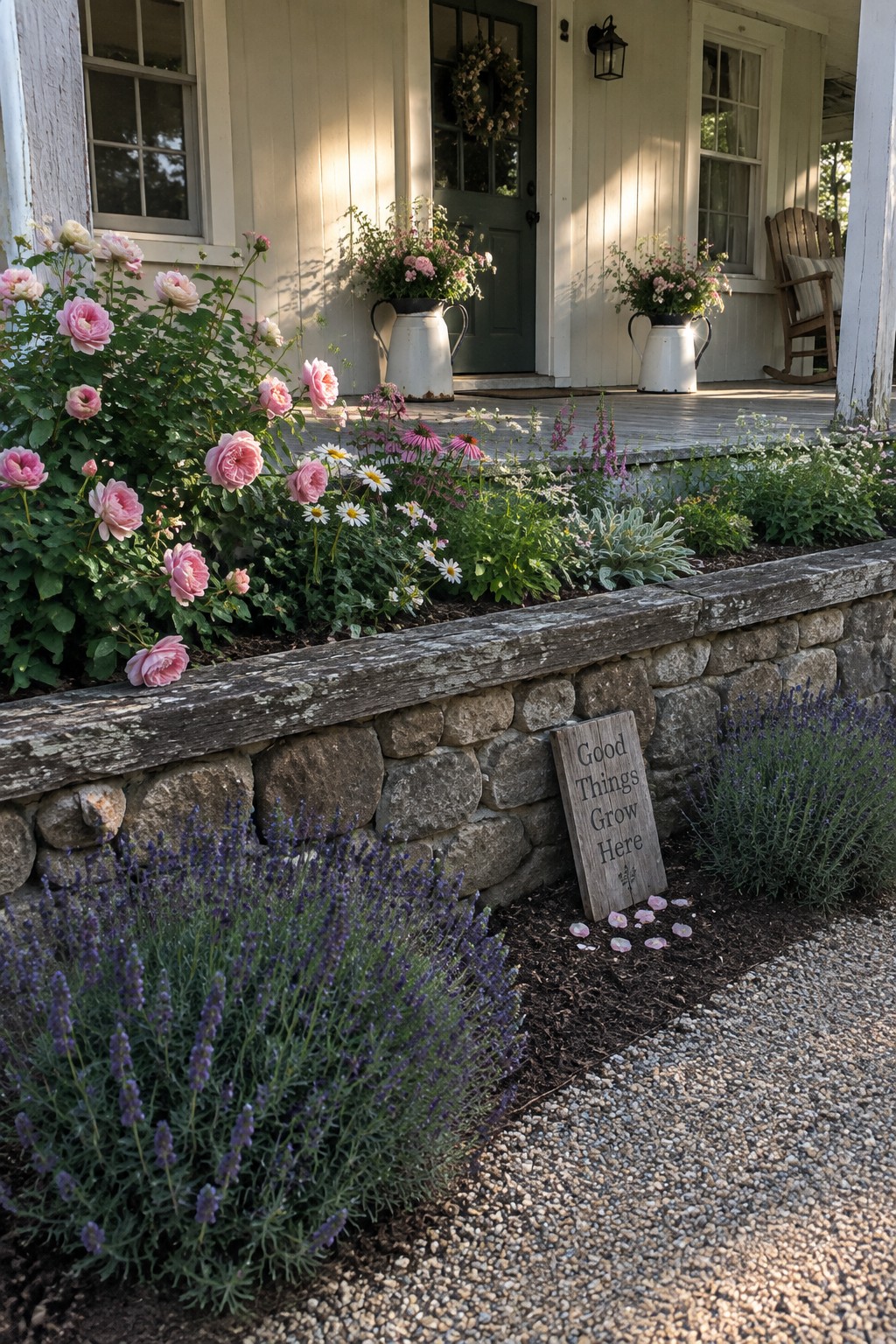
A rose bed can feel more relaxed when roses share space with smaller flowers and low-growing plants. Here, pink roses mix with daisies and lavender, giving the planting a varied look while keeping roses as the main feature.
Use this approach along a front walk or beside a porch, where a mixed bed can make the entrance feel cared for without looking formal. Leave enough room around rose bushes for airflow and pruning, and choose companion plants that suit the same amount of sun.
Use a Brick-Edged Bed for Front Entry Roses
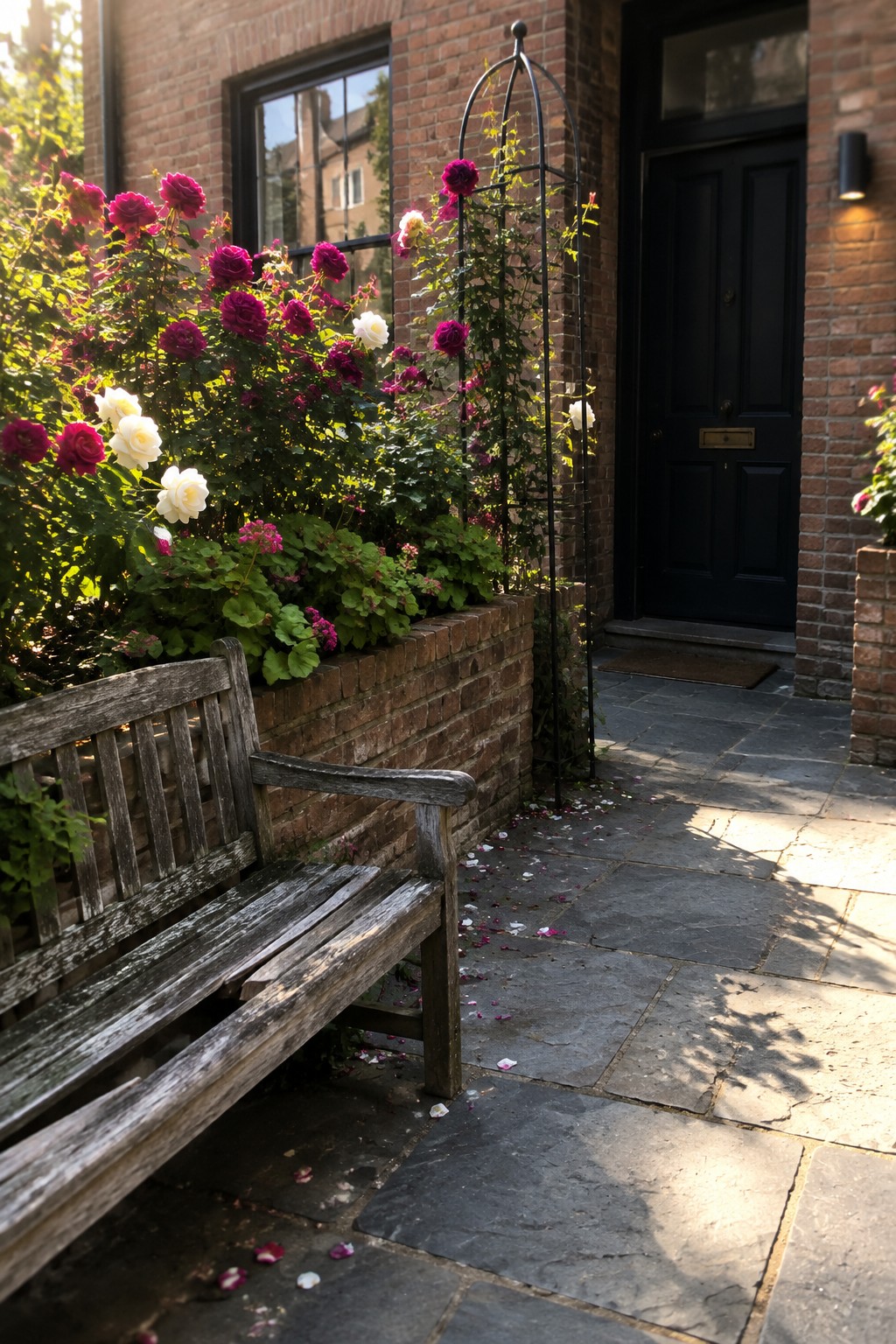
A low brick edge gives a rose bed a neat shape beside the front entry. It also makes the planting feel like part of the house rather than a garden added later.
This approach suits older brick homes especially well. Keep the edge low so it does not hide the roses, and leave enough room for the path to stay clear as the plants grow.
Use Raised Planters to Layer Front Yard Roses
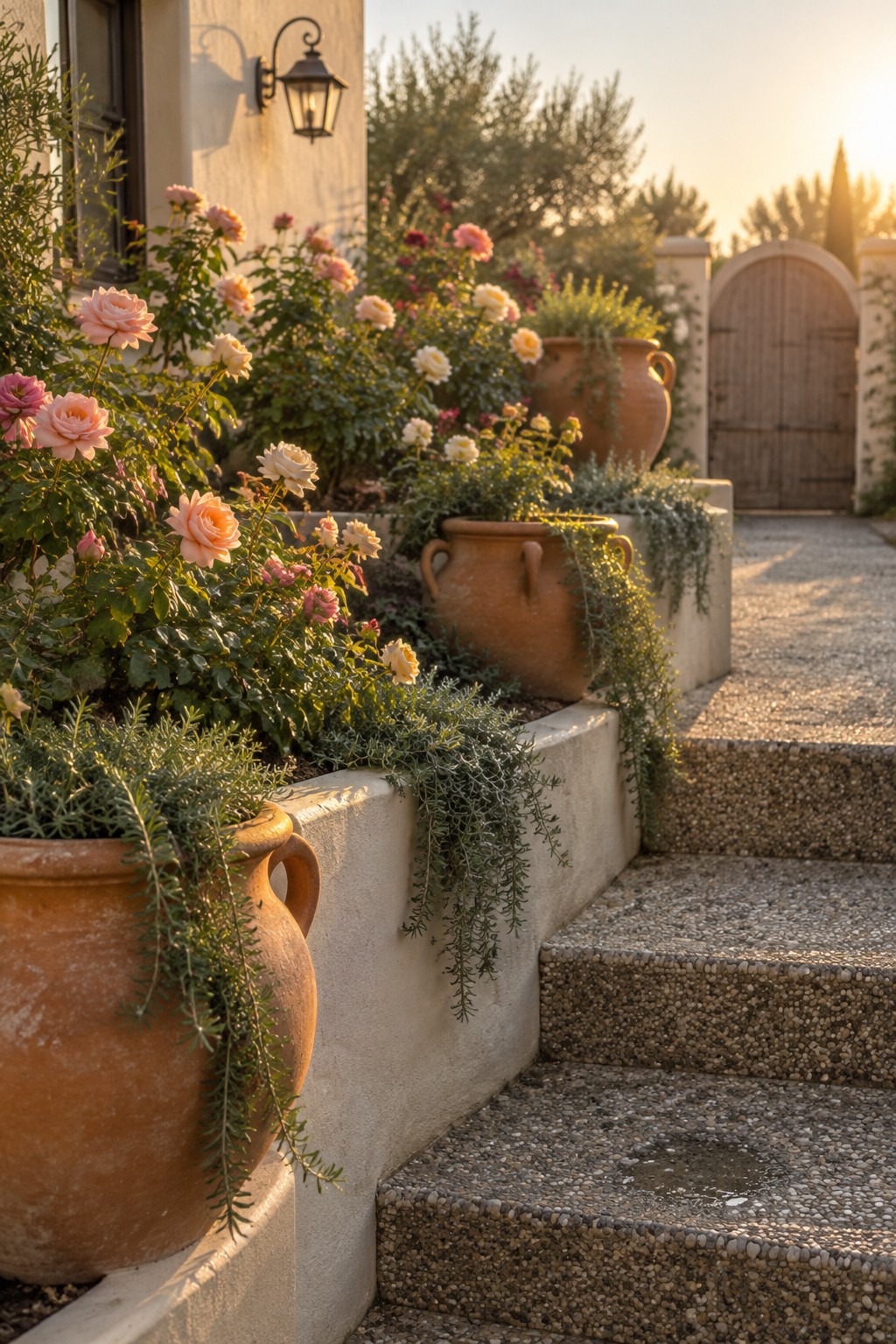
Raised planters give a rose bed a clear edge and let you bring flowers closer to the path or entry. The change in height also makes a small front garden feel more organized without needing a complicated layout.
Use low masonry beds along a walkway or steps, and mix roses with a few trailing plants near the edge. Leave enough room for pruning and airflow, since crowded roses are harder to care for.
Use a Curved Brick Edge for Front Yard Roses

A curved brick retaining wall gives a rose bed a clear shape without making it feel too formal. The gentle bend also works well beside an entry path, where a straight-edged bed might look a little stiff.
Use the wall to hold a raised planting area near the front door, and let roses spill slightly over the edge. Leave enough room for mature plants and keep the path wide enough to walk comfortably.
Train Roses on a Wooden Trellis
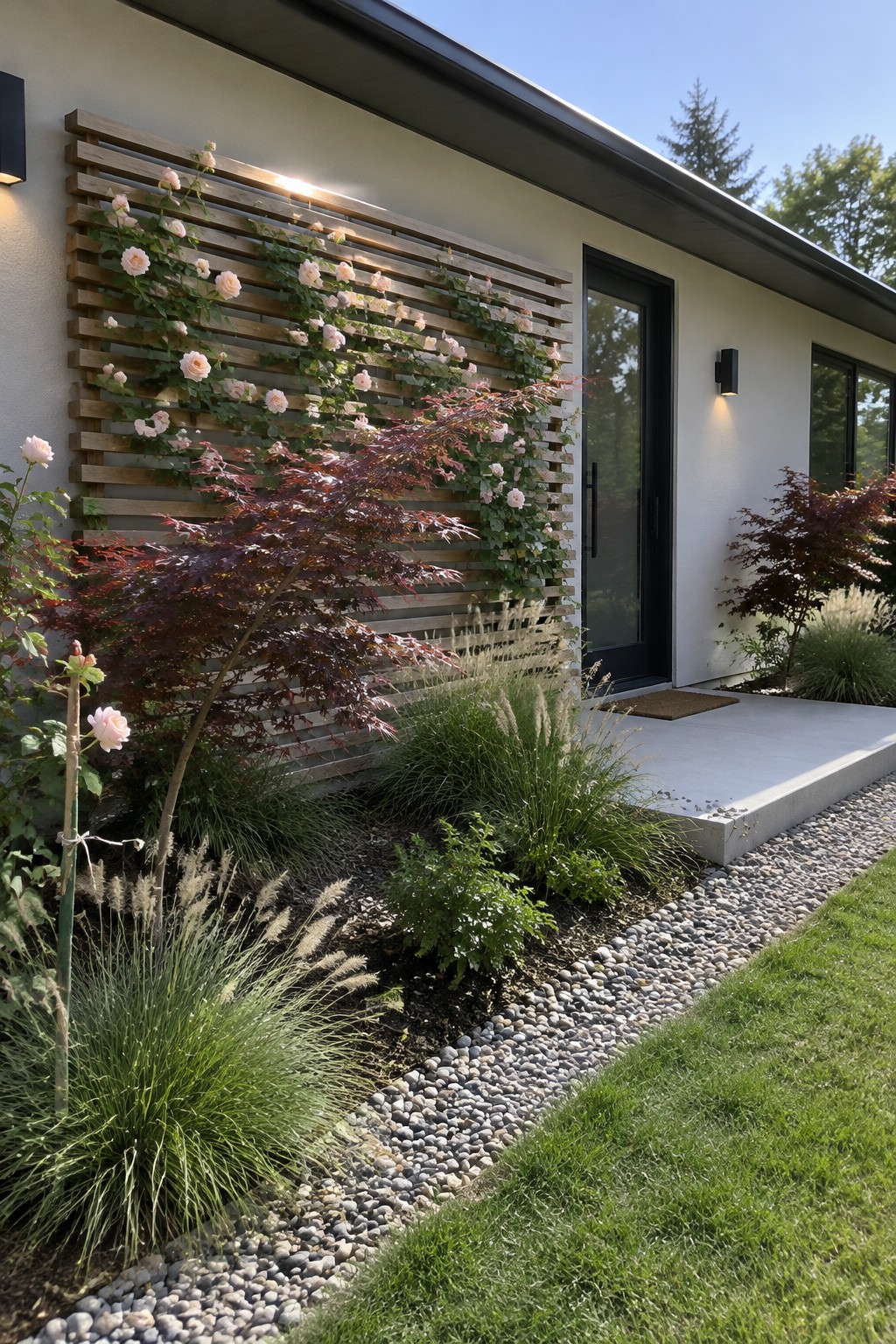
A wooden trellis gives climbing roses a place to grow while making a flower bed feel more organized. It also brings the planting up onto the house wall, which is useful when a narrow front garden has little room for spreading shrubs.
Choose a sturdy trellis and leave a small gap between it and the wall so air can circulate. Tie young rose canes loosely as they grow, and leave space around the base for other plants without crowding the roots.
Use a Flower-Covered Arbor Along the Garden Path
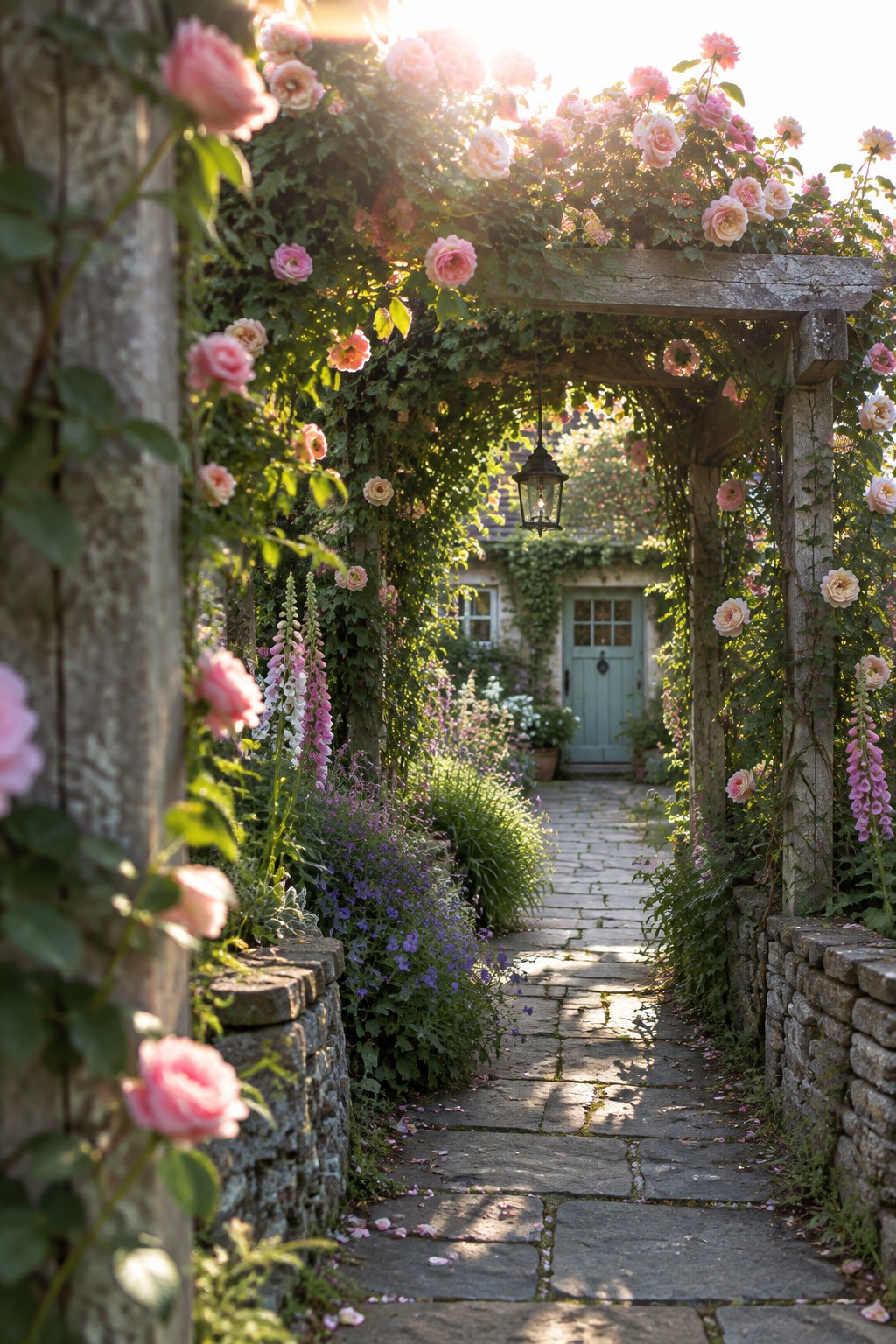
A rose-covered arbor gives a front garden path a clear sense of direction. The overhead planting makes the walkway feel like part of the garden, while the roses bring color up above the flower beds.
This idea suits a cottage-style entry or a path leading to a front door. Train climbing roses along a sturdy arbor, and leave enough room for people to pass comfortably. Prune regularly so the arch stays open and the walkway does not become crowded.
Shape Rose Beds Along a Stepped Front Walk
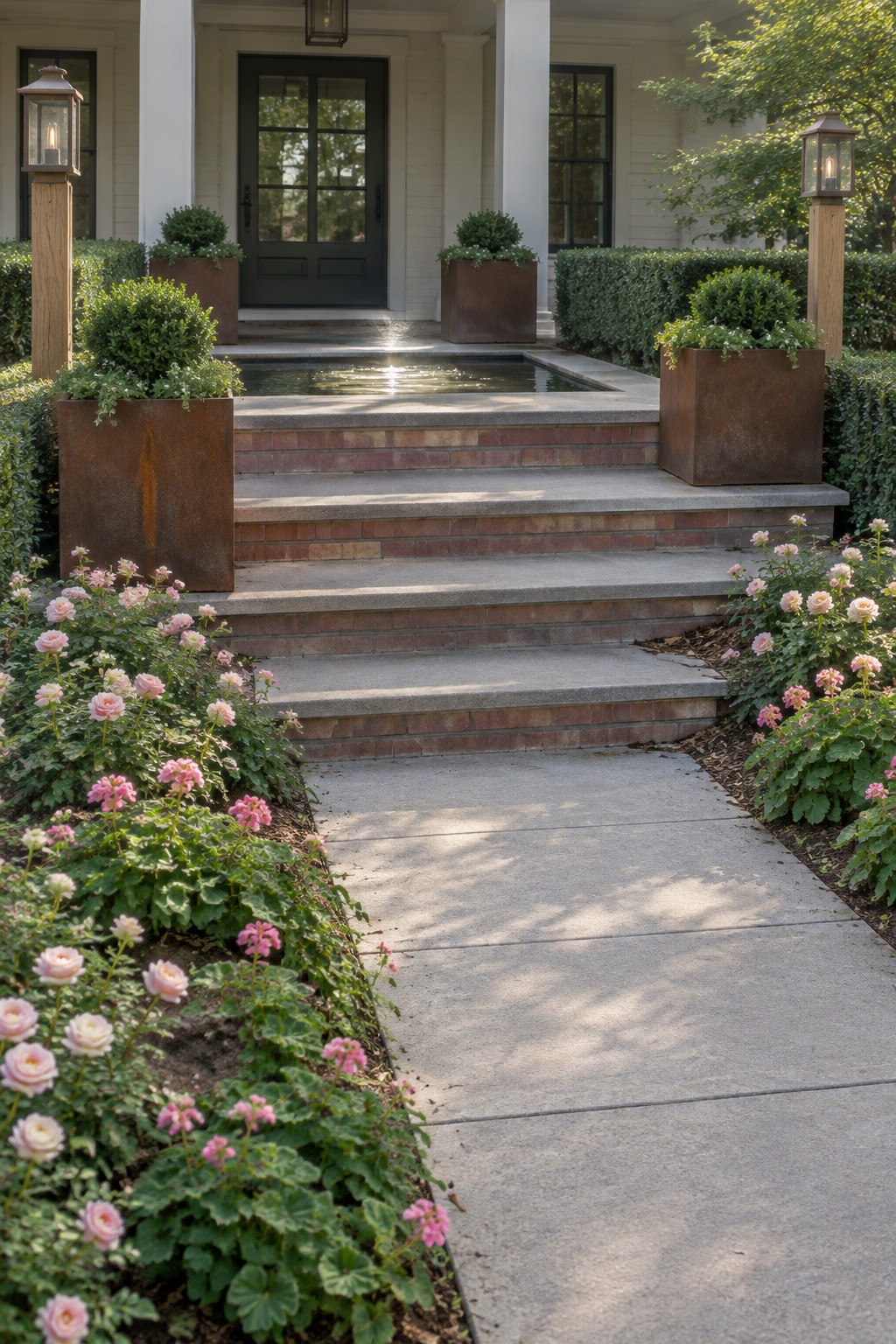
A gently curving walk can give a rose bed a clear shape while leading visitors toward the front door. Roses planted along both sides make the route feel established, and the steps provide a natural pause before the entry.
This layout suits a front yard with a noticeable change in height. Keep the path wide enough to walk comfortably, and leave room between roses and the paving so branches do not crowd the steps.
Use Stone Steps to Work With a Sloped Rose Bed
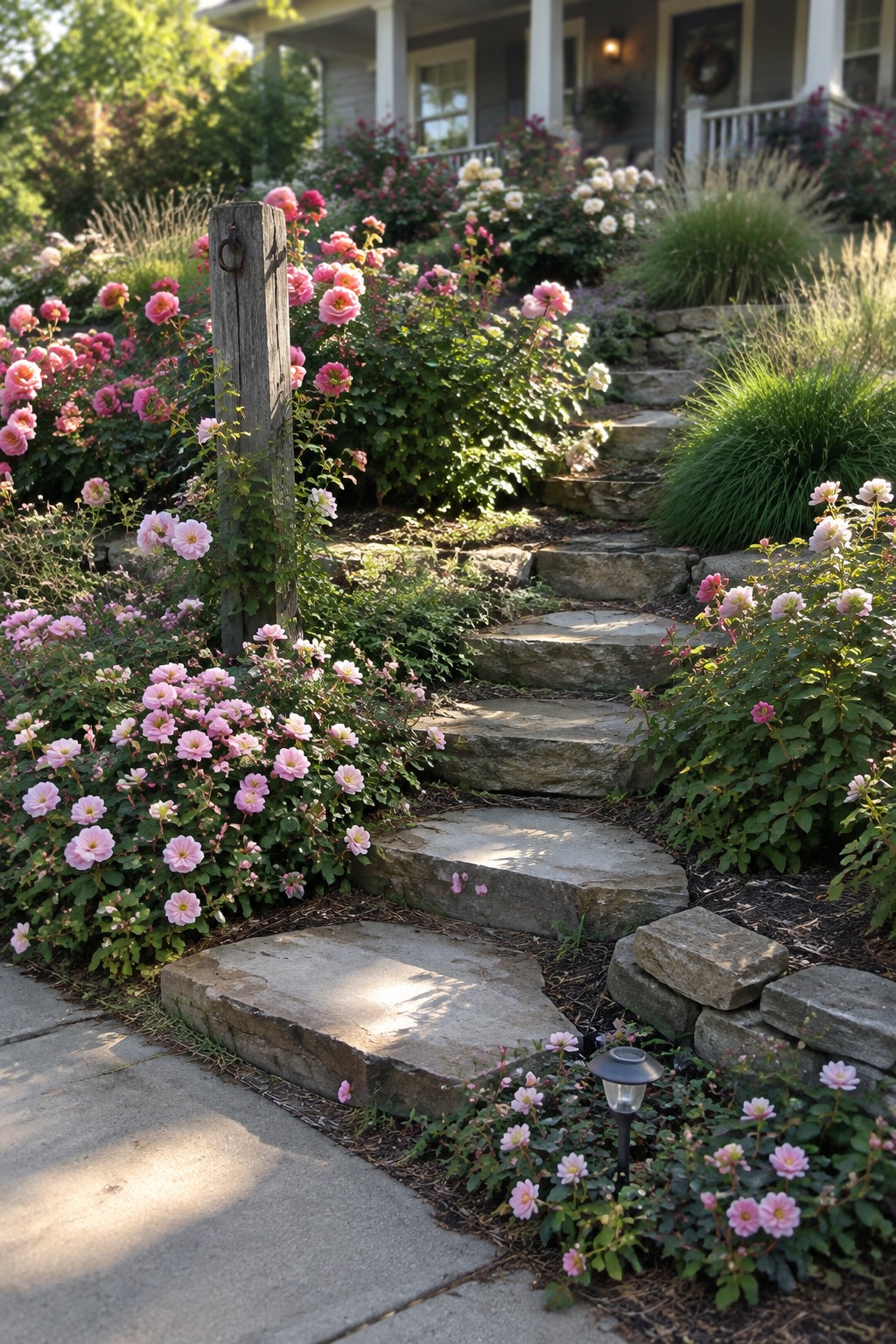
Stone steps make a sloped front garden easier to walk through while giving the planting a clear shape. Roses can spill along the sides, so the path feels connected to the flower bed rather than cutting through it.
Use broad, stable stones and keep the rise comfortable, especially on a route used every day. This approach suits a front yard with a natural grade, but leave enough room beside the steps to prune roses and keep the path clear.
Frequently Asked Questions
Q: How many rose bushes should I plant in a front-yard bed?
A: Start with the space each rose needs at its mature size, rather than squeezing in extra plants for an instant full look. Leave room for air to move between bushes and for you to reach in for pruning.
Q: Can I mix roses with other flowers in the same bed?
A: Yes. Low-growing flowers and herbs can soften the edges, while roses stay the main attraction. Keep neighboring plants from crowding the rose stems, and choose companions with similar sun and watering needs.
Q: How do I keep a rose bed looking tidy near the front walkway?
A: Choose compact varieties, then trim branches that lean into the path. A neat border or a layer of mulch also helps the bed look cared for without adding much upkeep.
Q: Will roses grow well beside the shaded side of my house?
A: Roses flower most reliably with several hours of direct sun, so a deeply shaded spot may leave you with fewer blooms. If that area gets morning sun, try a shade-tolerant variety and watch how it does through the season.
