

I have walked past my own side yard for years without really seeing it as anything more than a narrow strip of grass that collected leaves.
Once I cleared the clutter and added a simple path, the space started to feel like it belonged to the rest of the yard instead of sitting apart from it.
A bench tucked against the fence gave me a reason to stop there on warm evenings.
Small changes like that often matter more than big plans.
I keep a few of these ideas in mind now whenever I look at other quiet corners around the house.
Turn A Narrow Side Yard Into A Usable Path
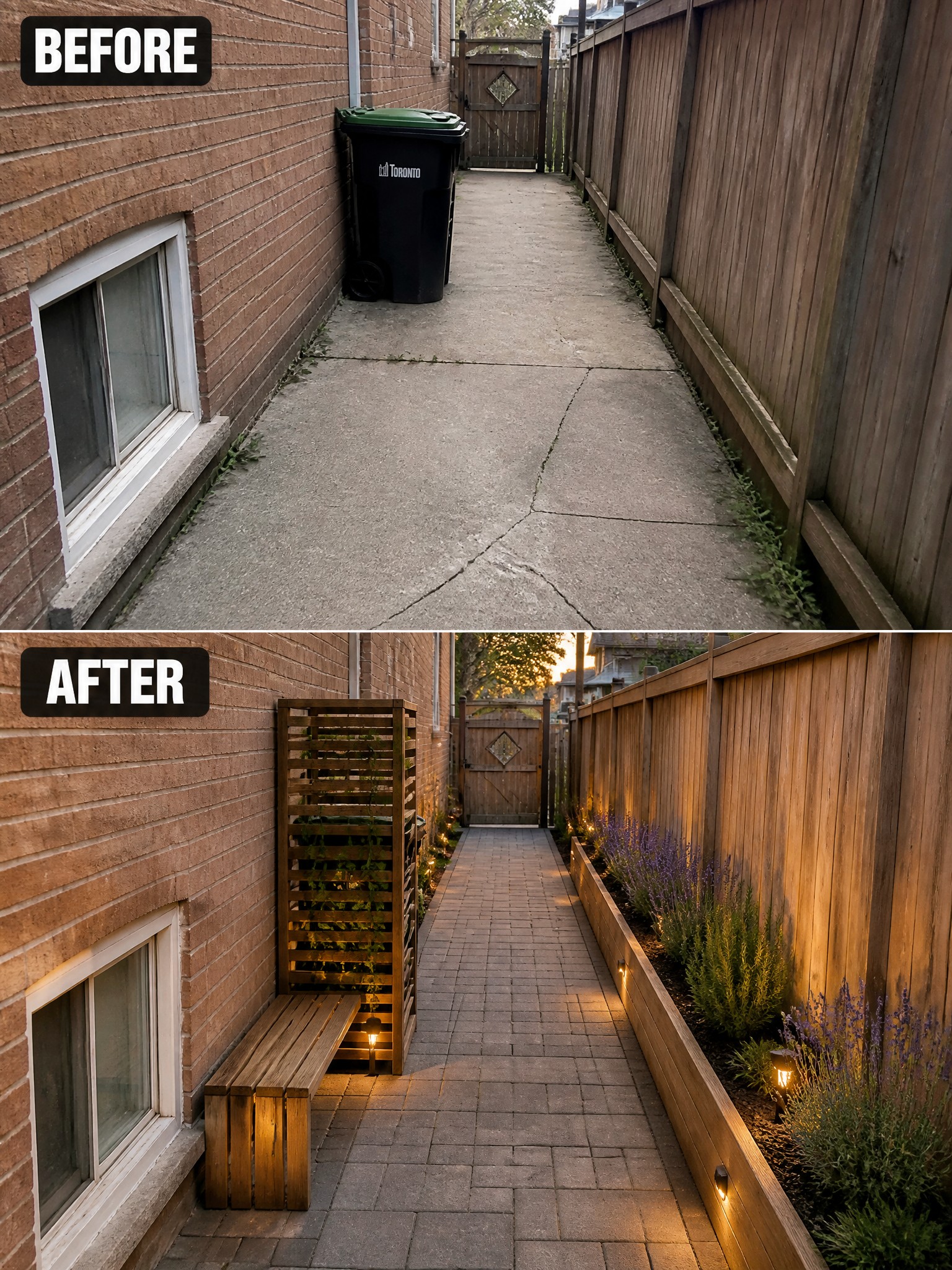
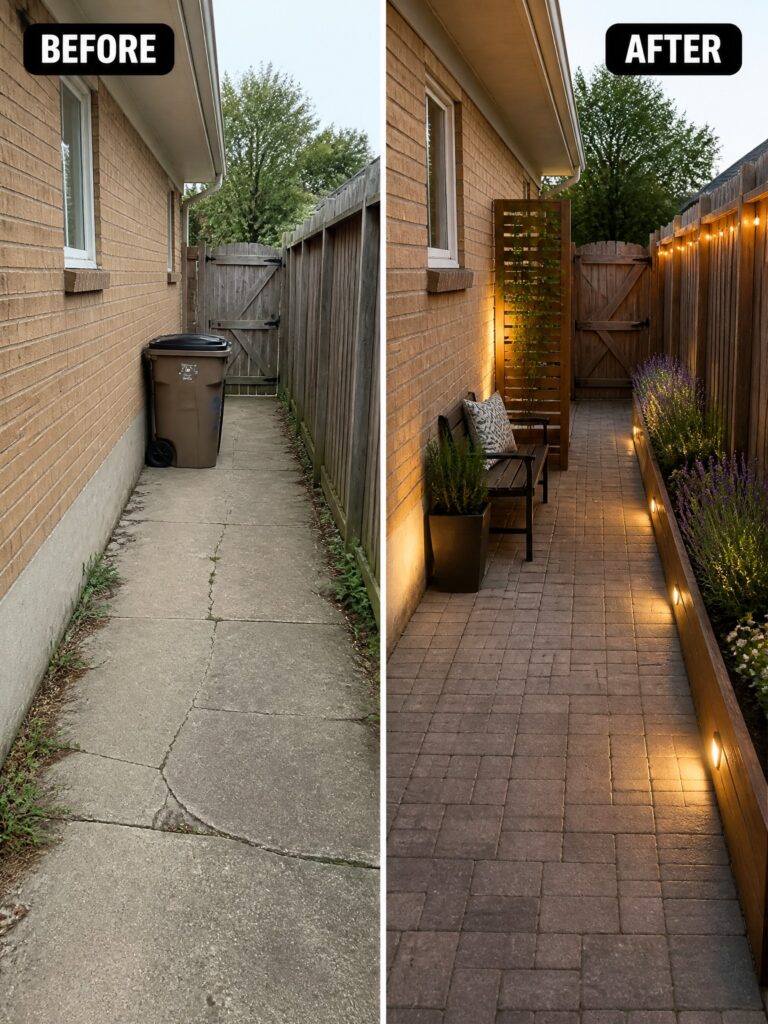
A plain concrete walkway next to the house often gets ignored, but adding a bench and raised planters along one side gives it real purpose. The new brick path, simple wooden bench with trellis, and low planter boxes turn the space into a defined route instead of leftover ground.
This idea suits homes with tight side yards that still need a way to move through them. Keep the bench and planters on one side only so the path stays clear, and use lighting along the edge if you want the area to feel safe after dark.
Add Structure To An Overgrown Side Yard
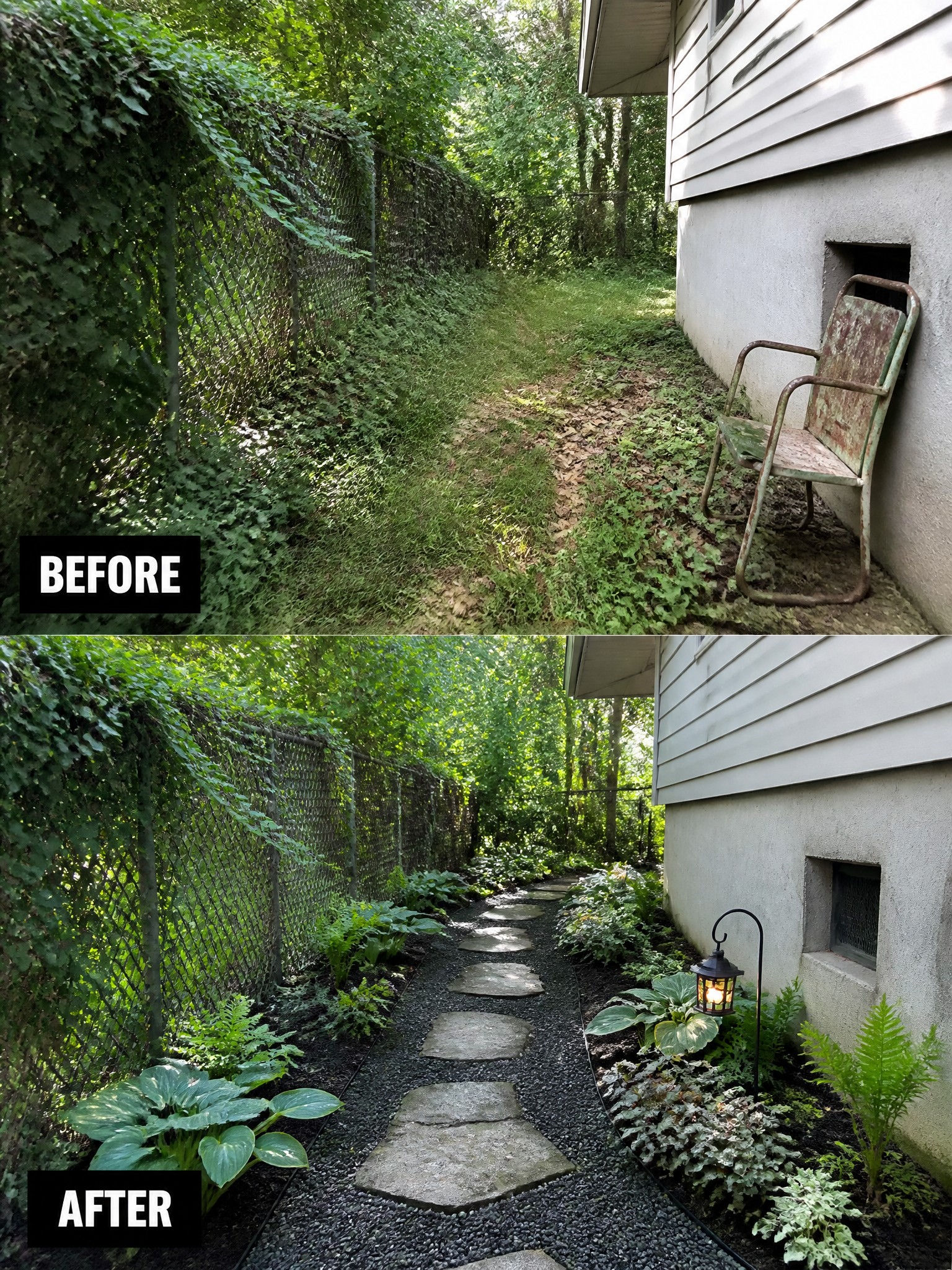
Clearing the weeds and ivy first made room for a simple gravel path edged with stepping stones. The planted borders on both sides give the narrow space shape and keep it from feeling like a leftover strip of dirt.
This idea works best along the side of a house where the ground stays shady and damp. Lay landscape fabric under the gravel to cut down on weeds, and pick plants that stay low and spread slowly so the path stays easy to walk through.
Hide Utility Equipment With A Lattice Screen
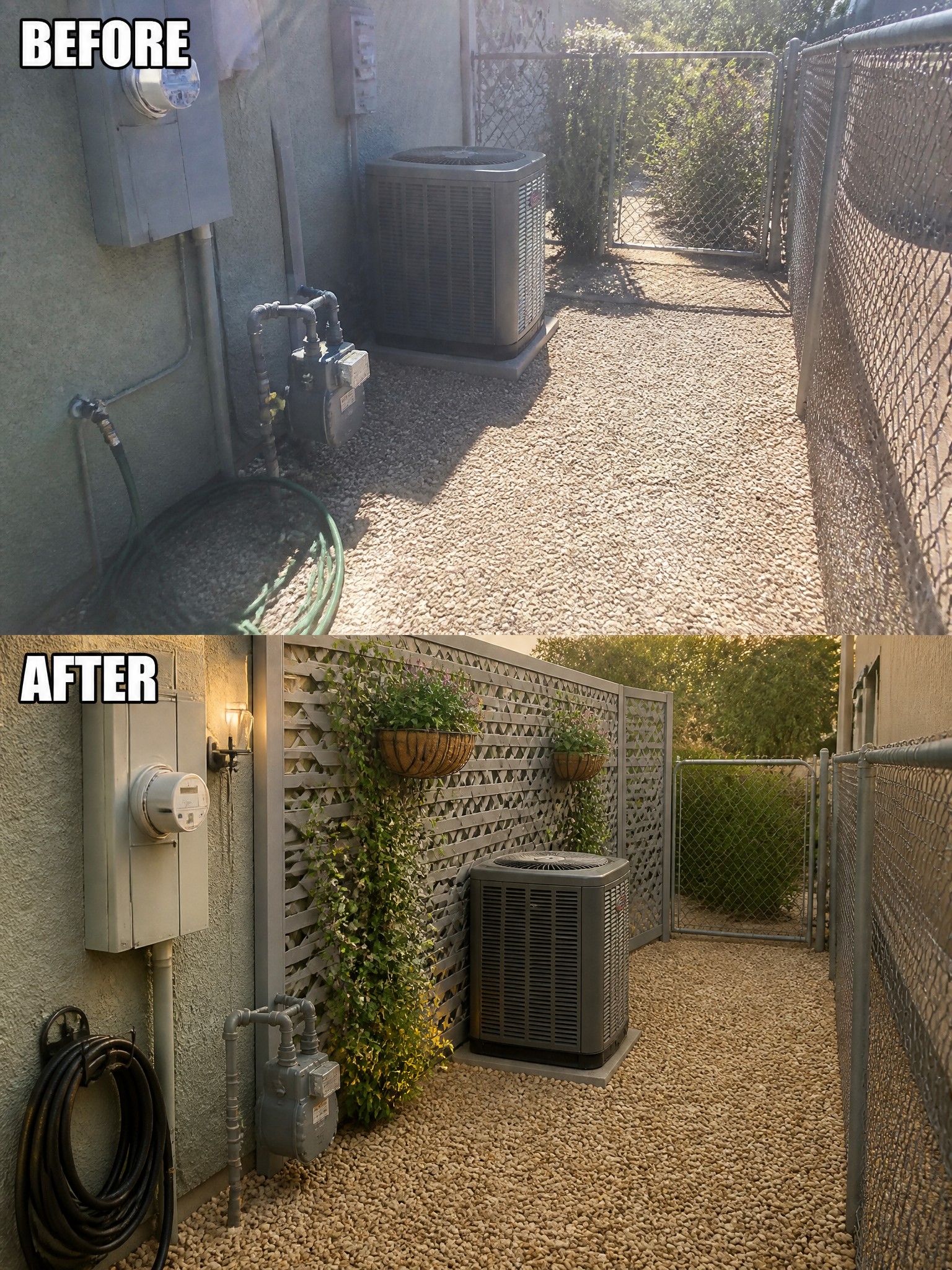
A narrow side yard often ends up as the spot where all the utility boxes and pipes collect. Adding a simple lattice screen gives the area a defined edge and hides the equipment without blocking access. The before photo shows everything sitting out in the open on the gravel. In the after photo the screen with hanging baskets and vines pulls attention away from the meters and creates a much tidier view.
This idea suits small side yards where you still need to reach the equipment for readings or maintenance. Set the screen a short distance from the wall so air can move around the air conditioner. Choose a sturdy outdoor material and let the vines fill in over time. It keeps the space looking planned without adding a lot of extra features.
Turn A Narrow Side Yard Into A Green Path
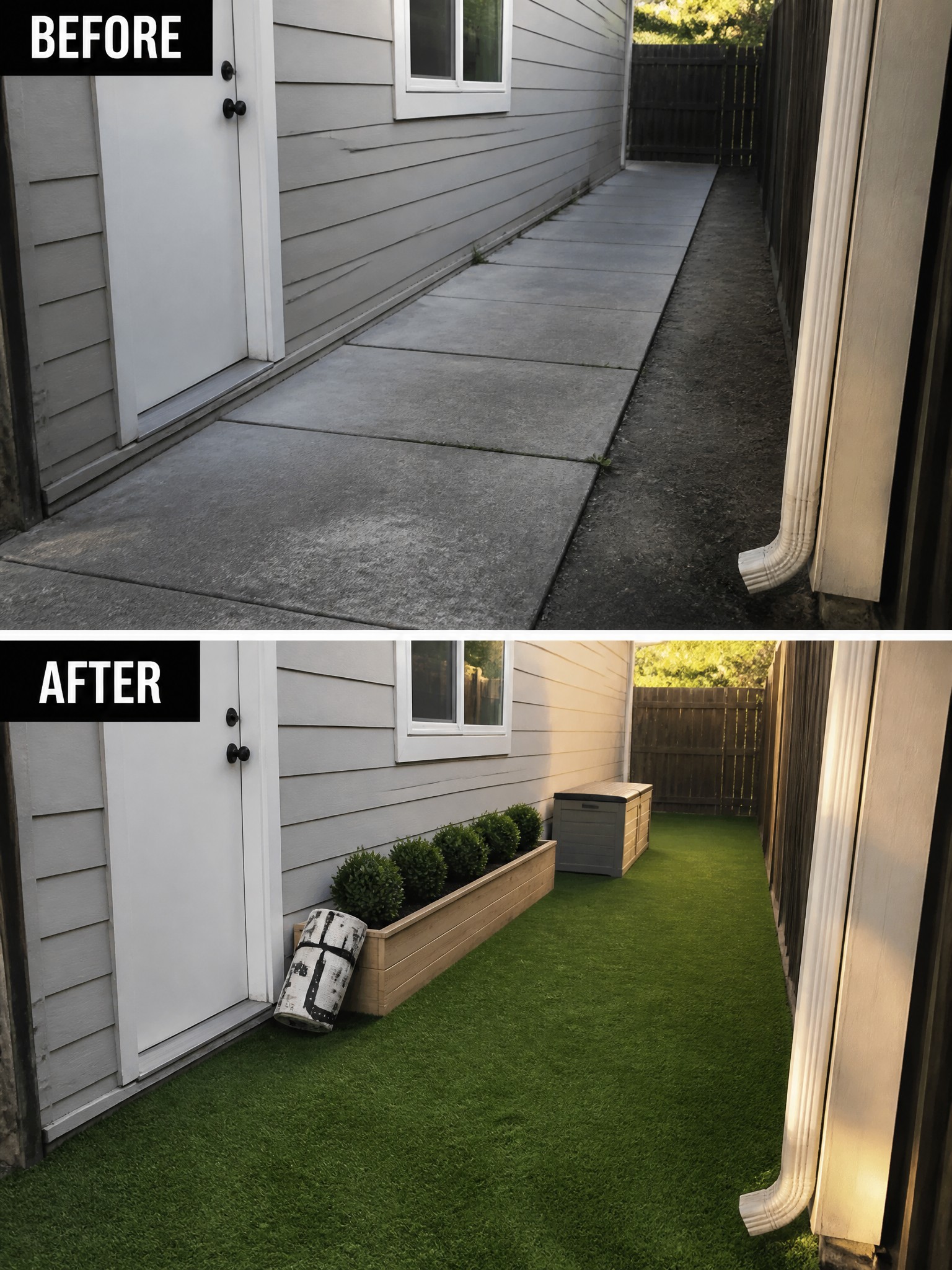
A long concrete walkway next to the house often feels like wasted space. Replacing most of the concrete with artificial turf and adding one raised planter softens the look and makes the area feel like part of the yard instead of just a passage. The change turns a bare, hard surface into something people actually want to walk through.
This idea works best on narrow lots where real grass would be hard to maintain. Keep the planter low and simple so it does not crowd the walkway, and choose turf that matches the light in your yard. A small storage box at the far end can hold tools without adding clutter.
Paint A Plain Fence To Refresh The Whole Yard
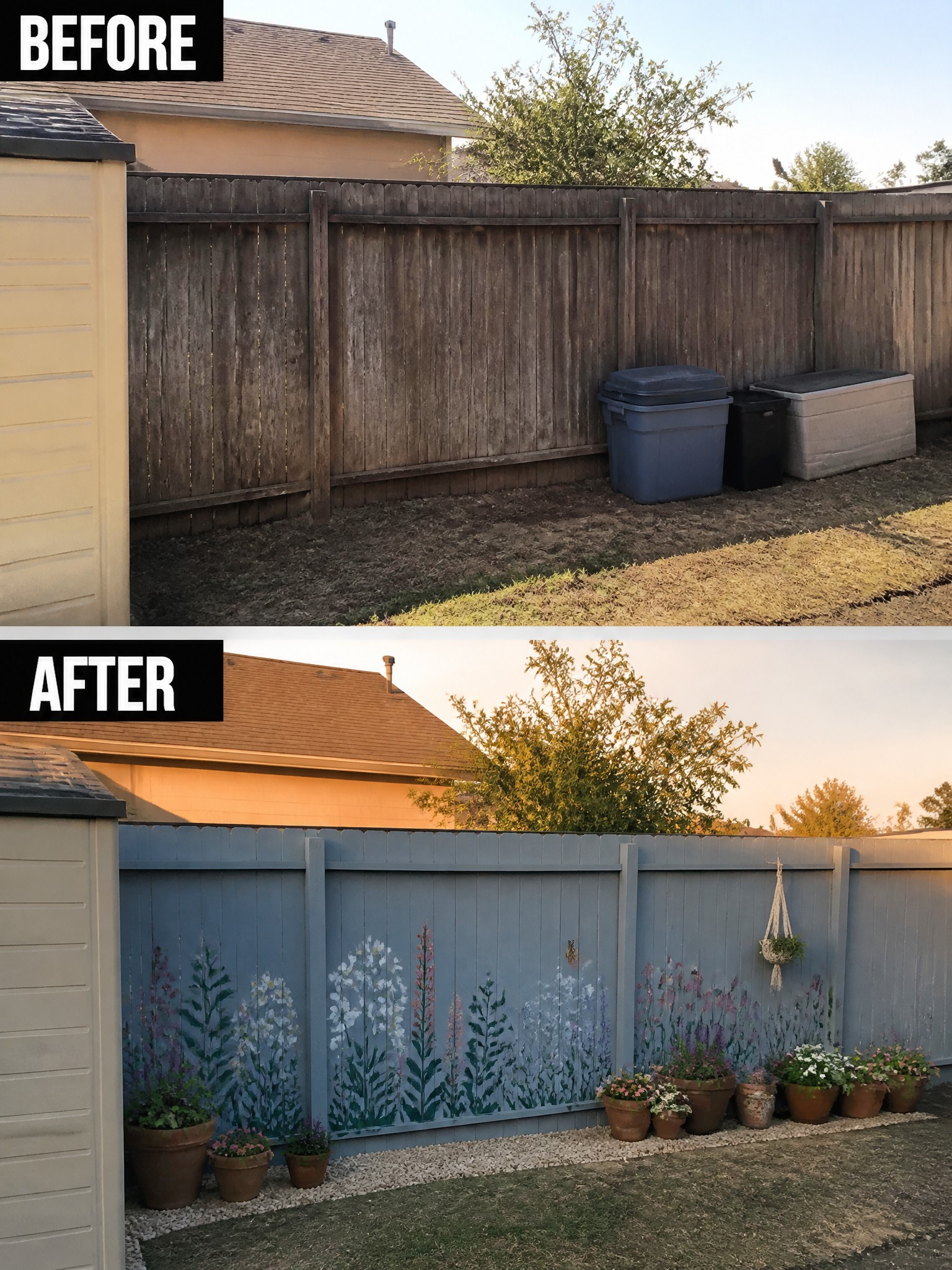
A plain wooden fence next to bare dirt can make a side yard feel like wasted space. Painting the fence a soft color and adding a simple plant border instantly makes the area look cared for and intentional. The gravel strip along the base keeps things tidy while the pots add height and color without needing a full garden overhaul.
This approach works well on narrow side yards or back fences that get little attention. Start with a good cleaning and a coat of exterior paint, then use a few large pots and some gravel to create a clean edge. It keeps the space open for walking while giving the eye something pleasant to land on.
String Lights Make A Narrow Side Yard Feel Usable
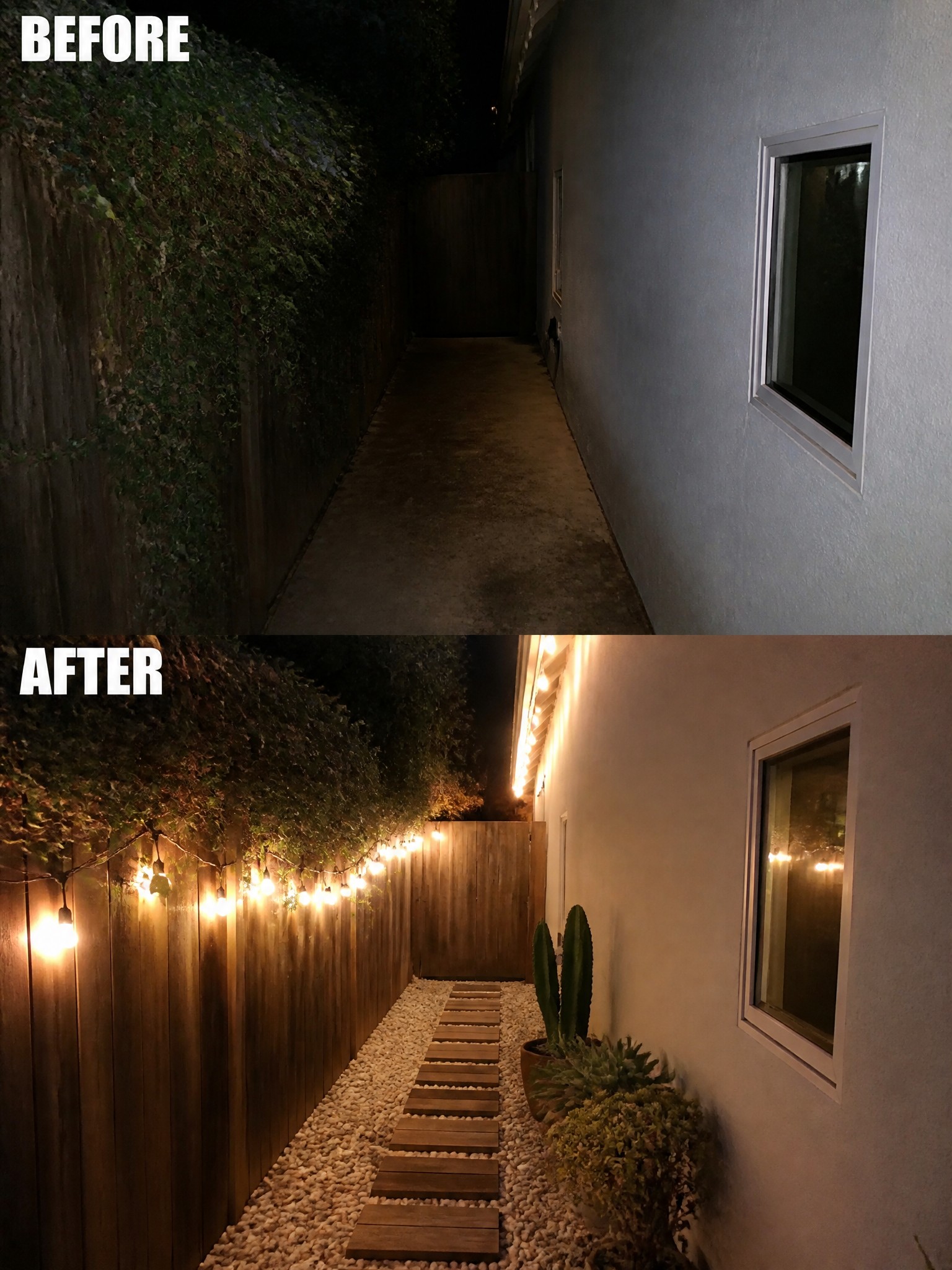
A dark concrete path between a fence and house wall often gets ignored because it feels closed in and hard to navigate at night. Running string lights along the fence and laying down gravel with simple wood planks creates a clear route that draws people through without needing a full rebuild.
This idea suits long, tight side yards where the goal is basic function first. Focus on lights that can handle weather and keep the path surface even so it stays practical for walking through.
Add A Paver Path To Organize A Narrow Side Yard
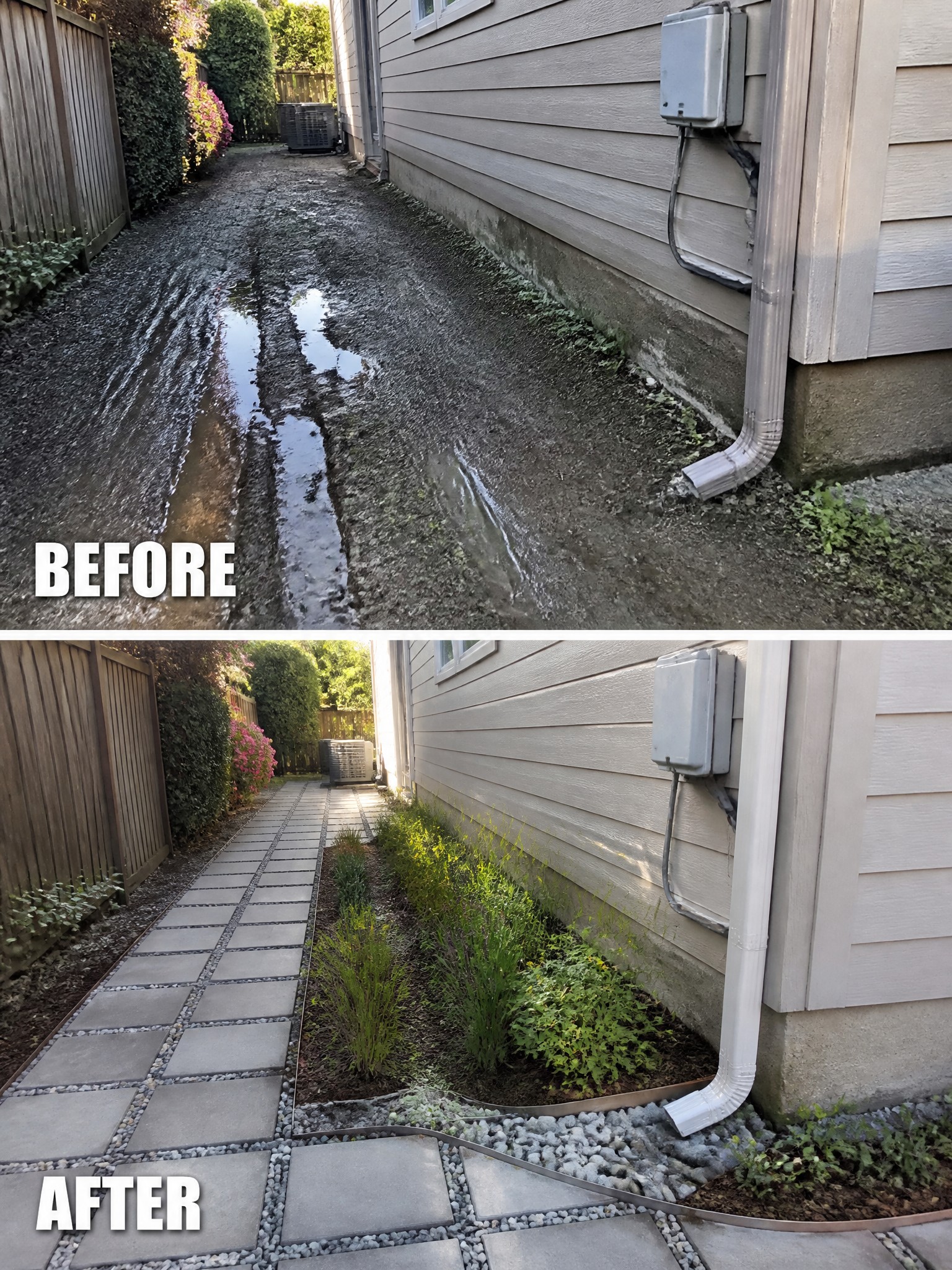
A muddy side yard with standing water is hard to use and looks neglected. Adding a simple paver path with gravel edges and planted borders turns the space into a clear walkway that stays dry and easy to walk on. The key change is replacing the uneven dirt with structured materials that direct water away and give the eye something to follow.
This idea works well on long, tight spaces between a house and a fence. Start with basic grading and edging before laying pavers so water drains properly. Keep the planting simple and low so the path stays the main feature and movement through the yard feels natural.
Use Raised Beds To Organize A Narrow Side Yard
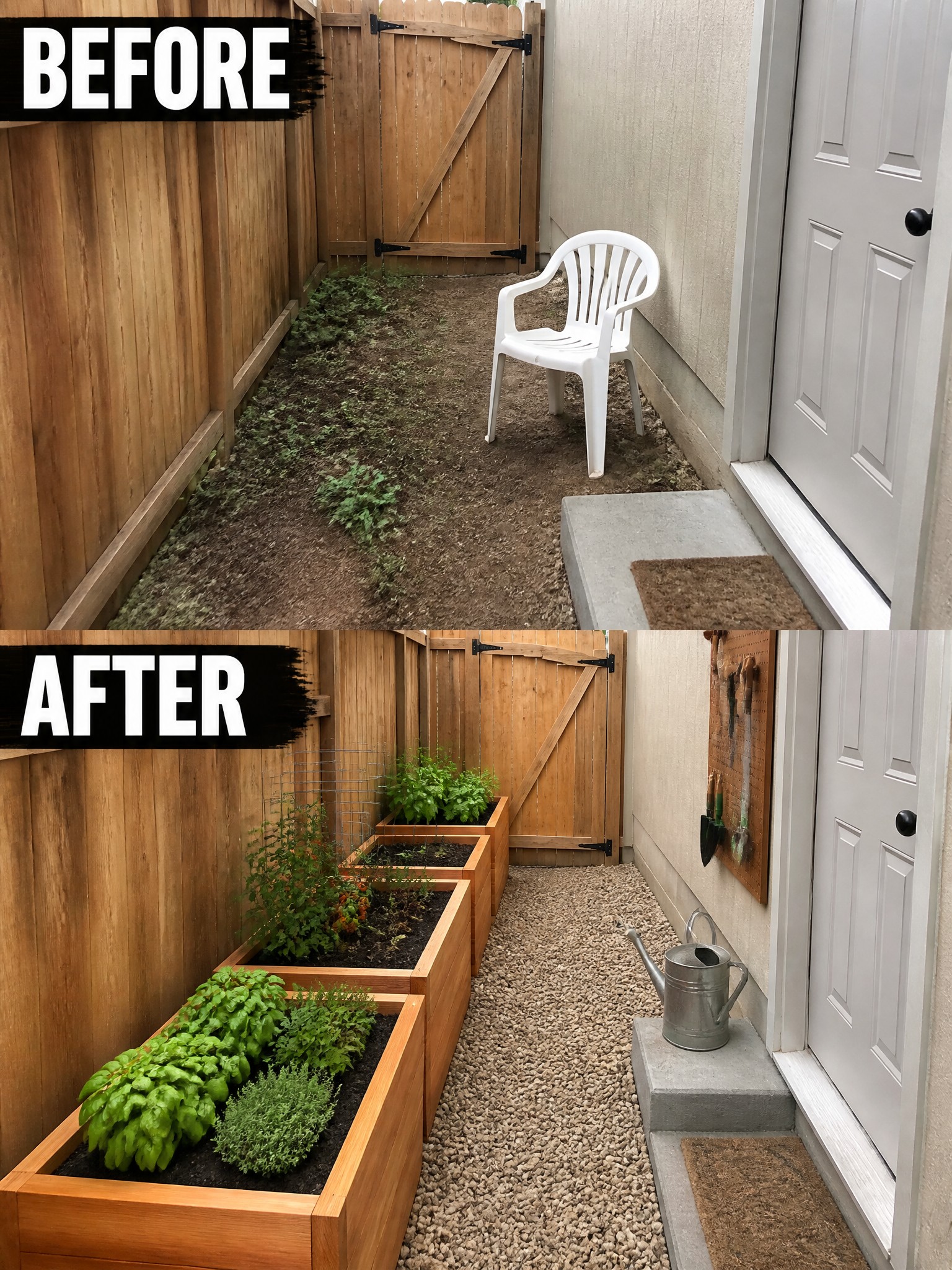
A narrow side yard often ends up as wasted space because the ground is hard to work and nothing feels defined. Raised beds solve that by lifting the planting area, giving you good soil to work with, and creating clear rows that make the whole strip feel intentional instead of leftover.
This idea suits homes with tight side access or poor native soil. Keep the beds a comfortable width for reaching across, leave enough room between them for a simple gravel path, and choose one or two materials that match the house so the new garden feels like part of the property instead of an afterthought.
Turn A Narrow Side Yard Into A Seating Area
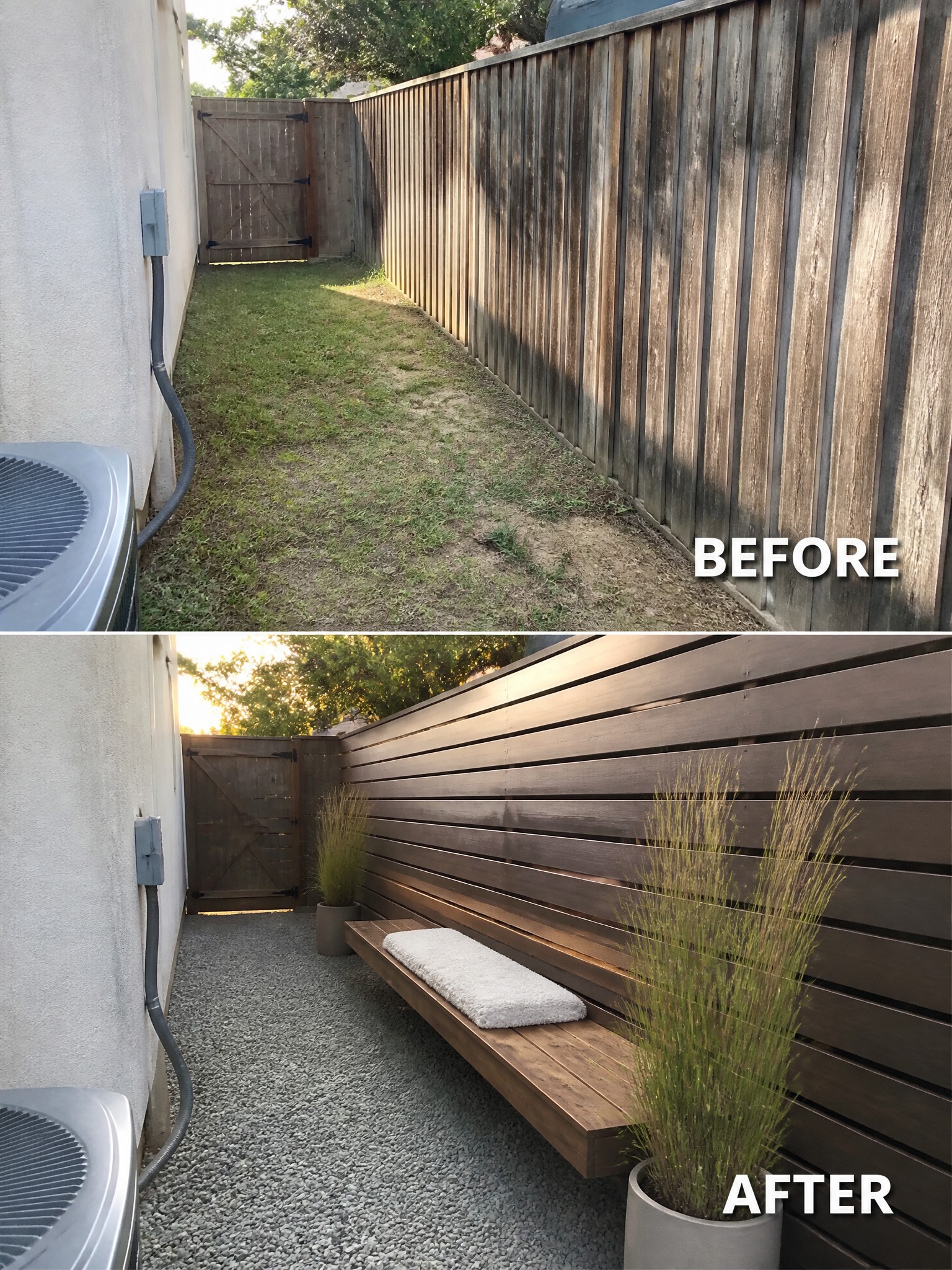
A long strip of patchy grass next to the house often gets ignored because it feels too tight for anything useful. Adding gravel creates a clean, level surface that handles foot traffic and keeps mud down. A simple bench along the fence then gives the space a clear purpose without crowding the walkway.
This approach works well on any side yard that runs between the house and a fence or neighbor. Stick to weatherproof materials and keep the planting minimal so the area stays easy to maintain. One bench and a few tall pots are often enough to make the space feel intentional instead of leftover.
Add Structure To A Side Yard With A Paved Path
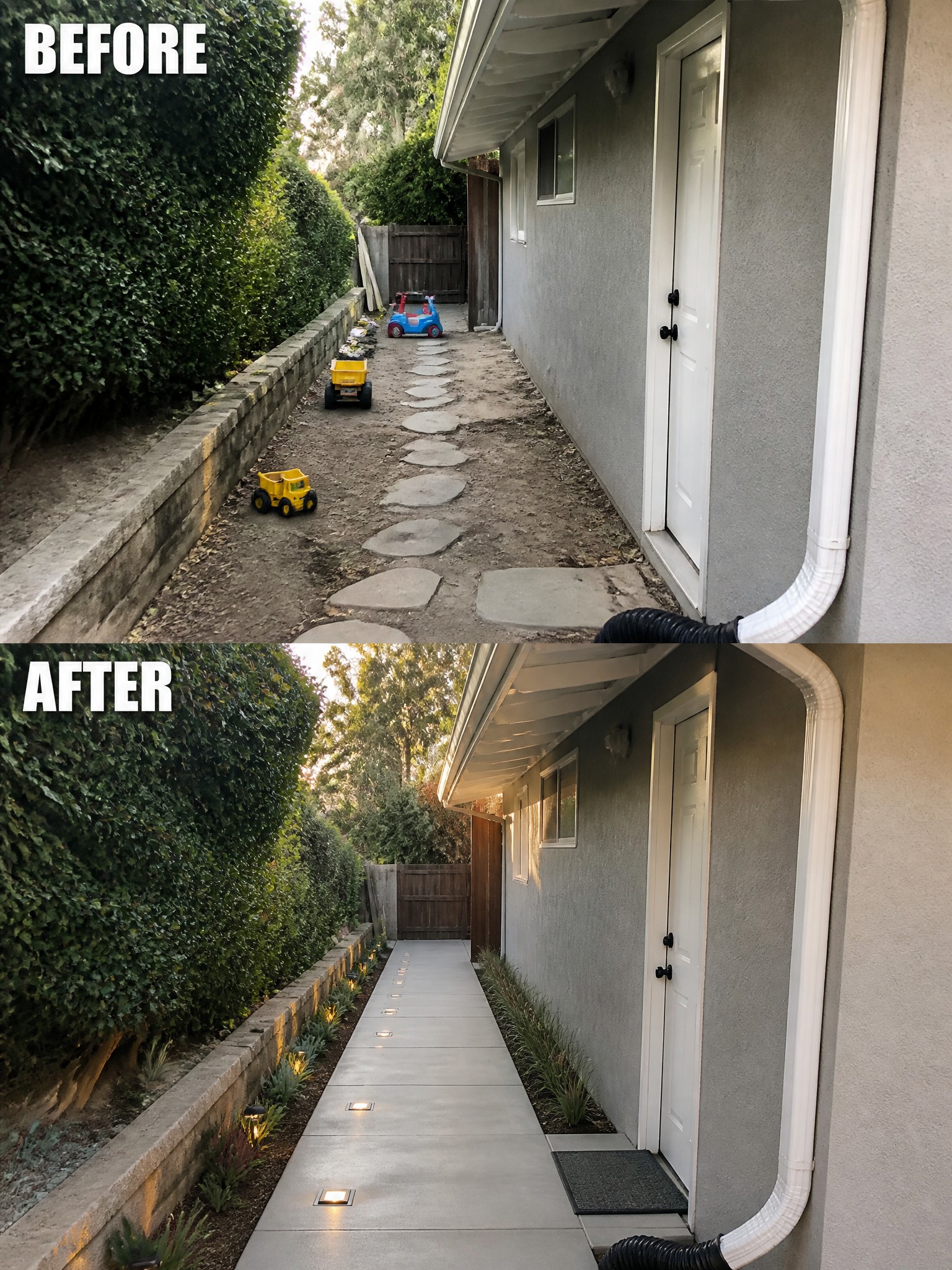
A side yard often becomes a catch-all for dirt, scattered toys, and uneven stepping stones that never quite feel finished. Replacing the loose path with a solid concrete walkway and adding planted borders along the edges turns the space into something you can actually use instead of just pass through.
This idea works best on narrow lots where the main goal is a clear route rather than a seating area. Keep the planting simple, add a few low lights for safety at night, and make sure the path stays wide enough for easy movement.
Turn A Narrow Side Yard Into A Cozy Outdoor Room
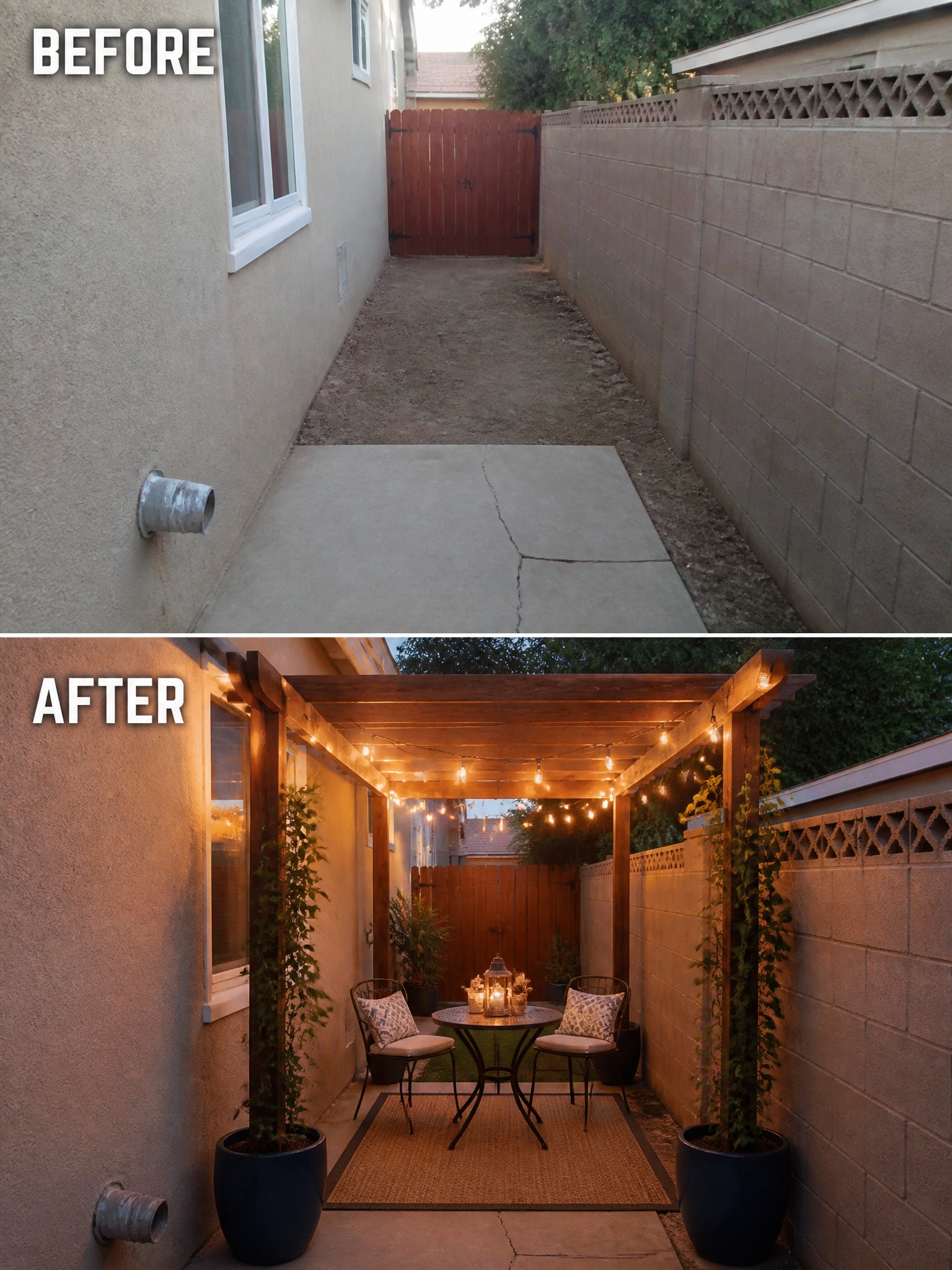
A narrow side yard usually ends up as wasted space because it feels too tight and exposed. Adding a pergola with string lights and a simple table and chairs creates a defined spot that actually invites people to sit. The rug helps mark the area while the overhead structure gives it a sense of enclosure without closing it in.
This works well in side yards that run along the house and already have some concrete or hard ground. Keep the seating compact so there is still room to walk past, and use tall pots along the edges to add greenery without crowding the path.
Replace Struggling Grass With Gravel In A Narrow Side Yard
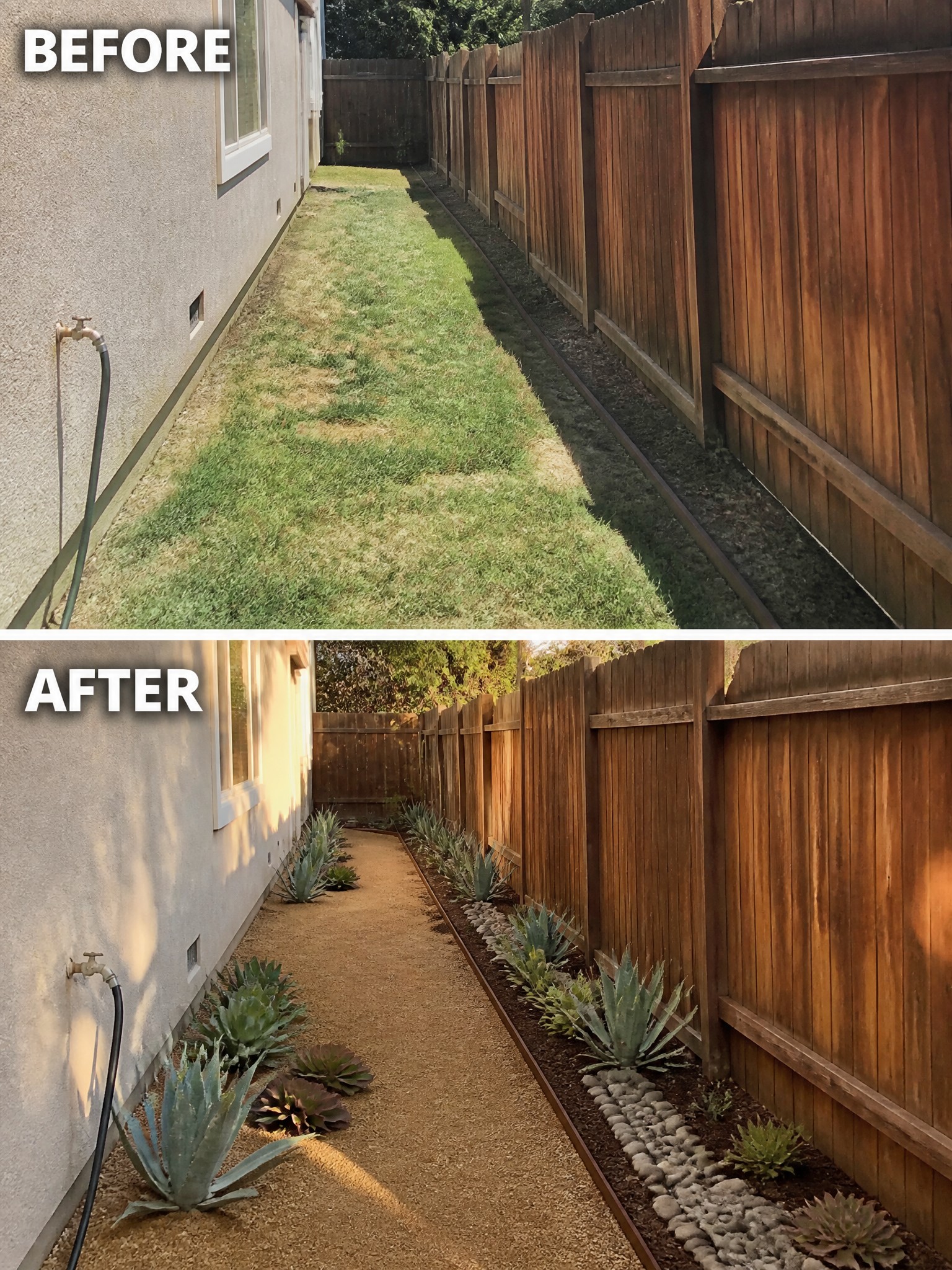
A narrow side yard like this often ends up as patchy grass that is difficult to mow and never looks settled. Switching the lawn to gravel creates a simple path that stays neat, drains well, and cuts down on maintenance.
This idea works best in tight spaces between the house and fence where grass struggles. Lay down solid edging first to hold the gravel, then add a few low-water plants along the house side. Leave enough width for walking so the area stays usable instead of feeling crowded.
Turn A Narrow Side Yard Into A Play Zone
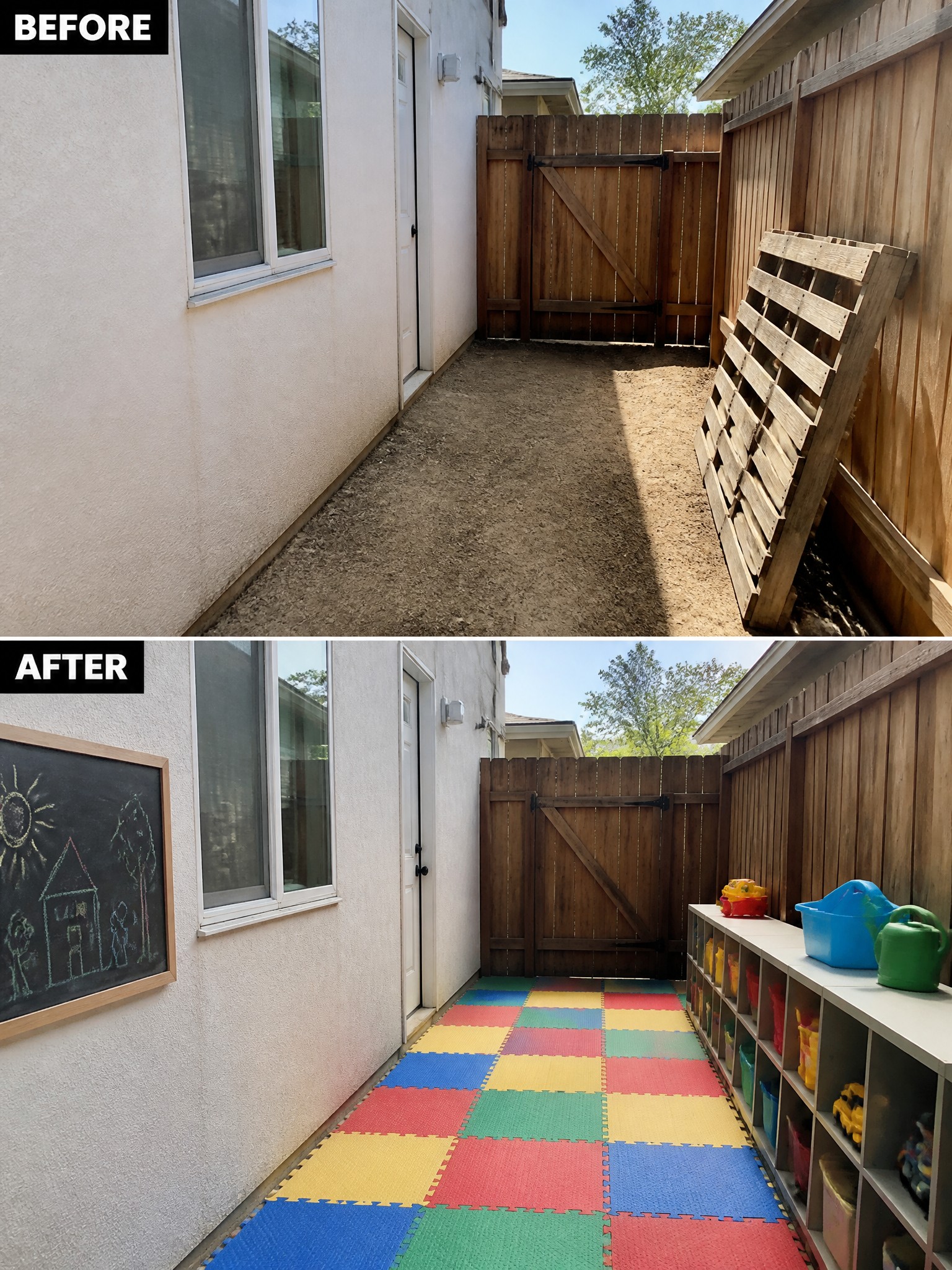
A bare dirt path next to the house often gets ignored because it feels too tight for much use. Laying down interlocking foam mats instantly changes that by creating a clean, soft surface that works for kids without needing major construction.
This approach works well on long, narrow lots where full patios feel out of reach. Start with the flooring to define the space, then add low storage along one side so toys stay contained and the area stays usable even on busy days.
Add A Garden Border To A Narrow Side Yard
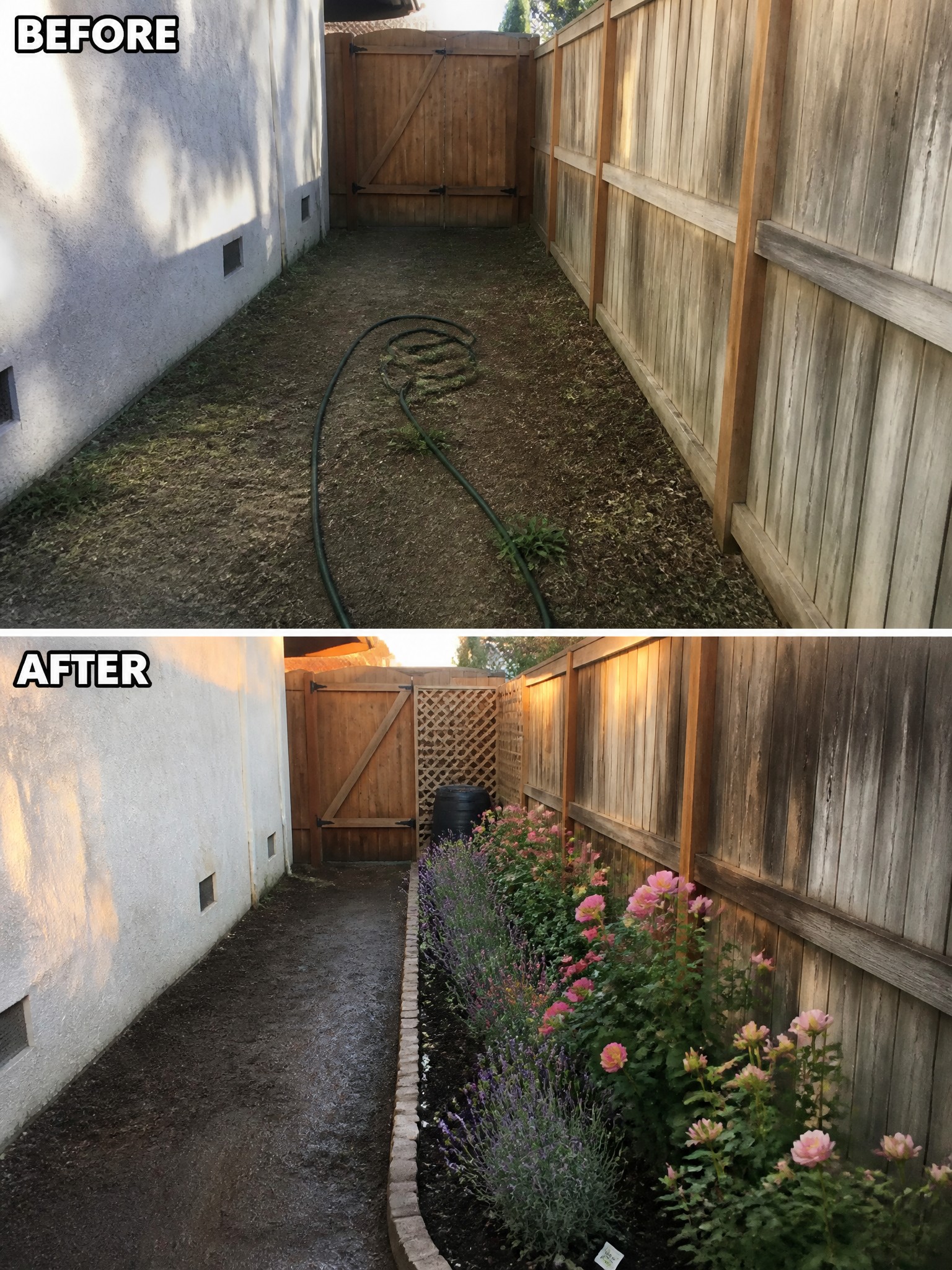
A narrow side yard often ends up as nothing more than a dirt path between the house and the fence. Adding a planted border along one side gives the space purpose and makes it feel finished instead of forgotten. The simple change here is the addition of a brick-edged bed filled with flowers and shrubs that runs the full length of the fence.
This approach works best in tight side yards where you still need room to walk through. Use low edging to keep the bed shape clear, then pick plants that match the light and soil conditions. The result keeps the path usable while turning the strip into something you actually want to look at.
Add Shelves To A Fence For Vertical Planting Space
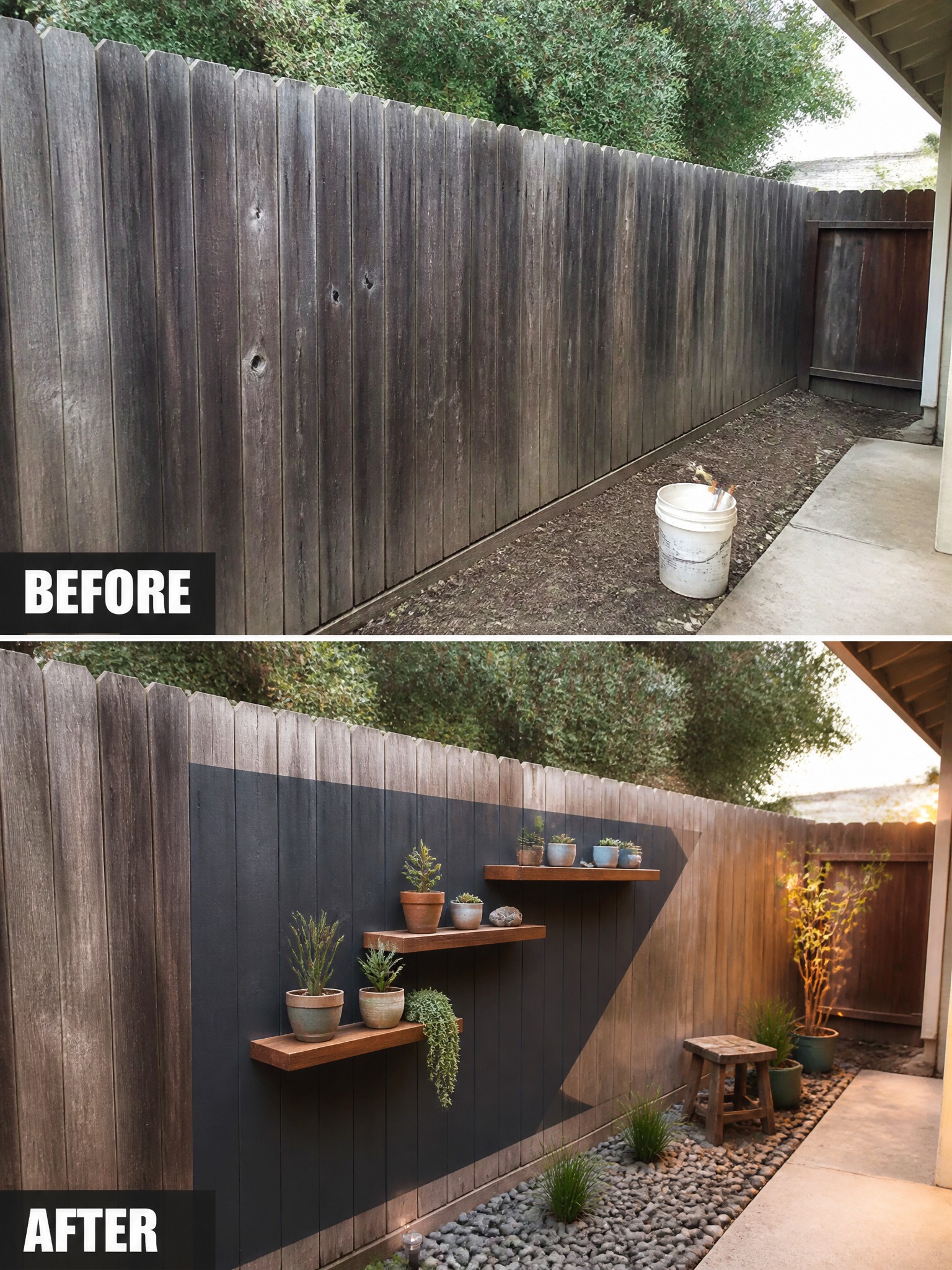
A narrow side yard often ends up as just a strip of dirt along a fence. Painting a section of the fence dark and adding a few wooden shelves turns that blank wall into a place for potted plants. The gravel bed at the base keeps the ground tidy and gives the plants a clear border.
This approach works well in tight side yards where there is not much floor space. Start with one or two shelves at different heights, then add plants that can handle the light in that spot. Keep the number of pots small so the area stays easy to walk past and maintain.
Add Gravel And Stepping Stones For Side Yard Structure
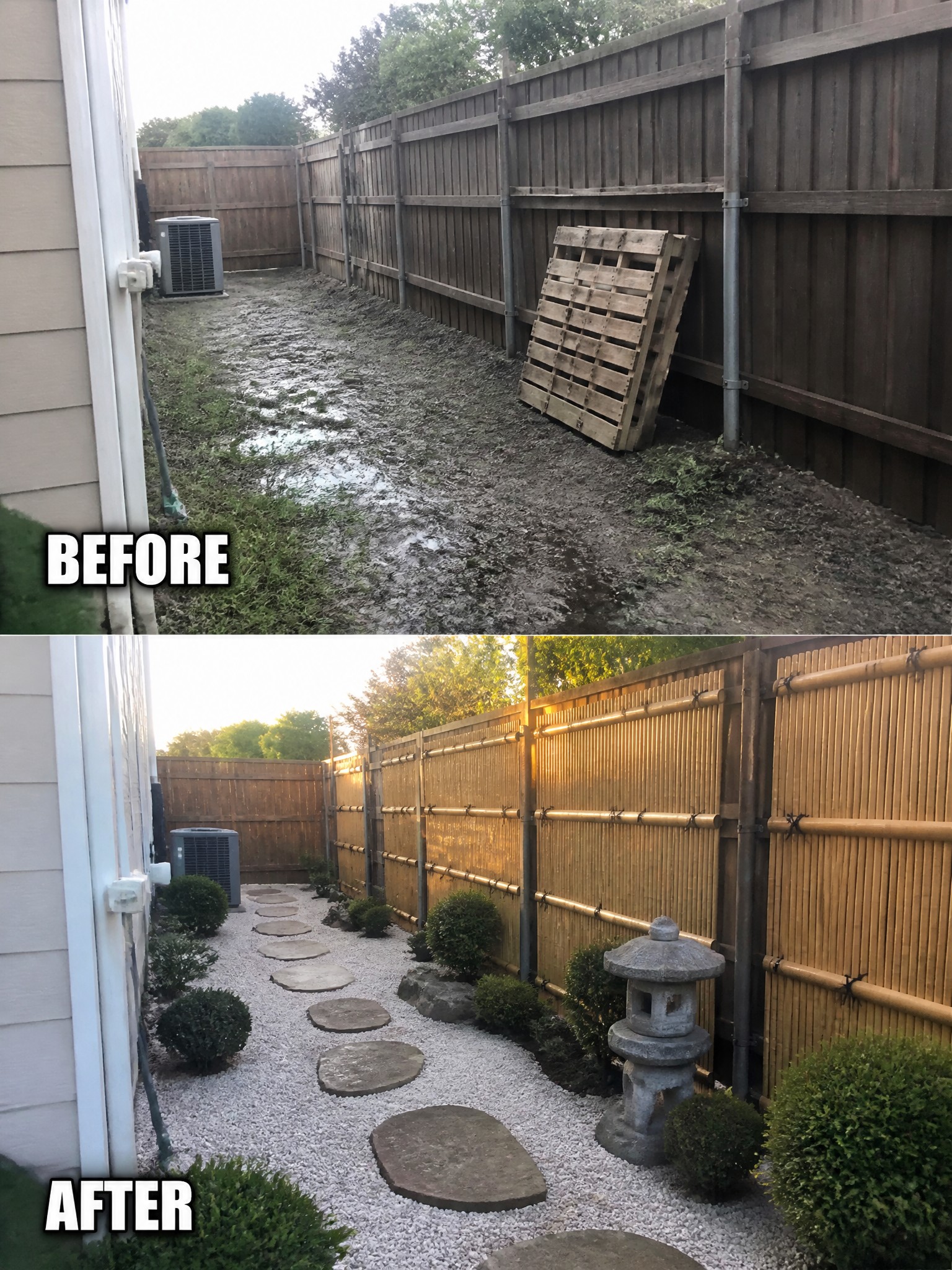
A side yard that stays muddy and hard to walk through often needs basic structure before anything else. Laying gravel with stepping stones creates a clear path that drains better and turns the space into something you can actually use instead of avoiding.
This idea fits narrow strips beside the house where grass never takes hold. Clear the area first, add a barrier underneath the gravel, and keep the plantings simple along the edges so the path stays the main feature. It works in most homes with tight side yards and keeps the space looking neat without constant upkeep.
Define The Foundation With Simple Planting Beds
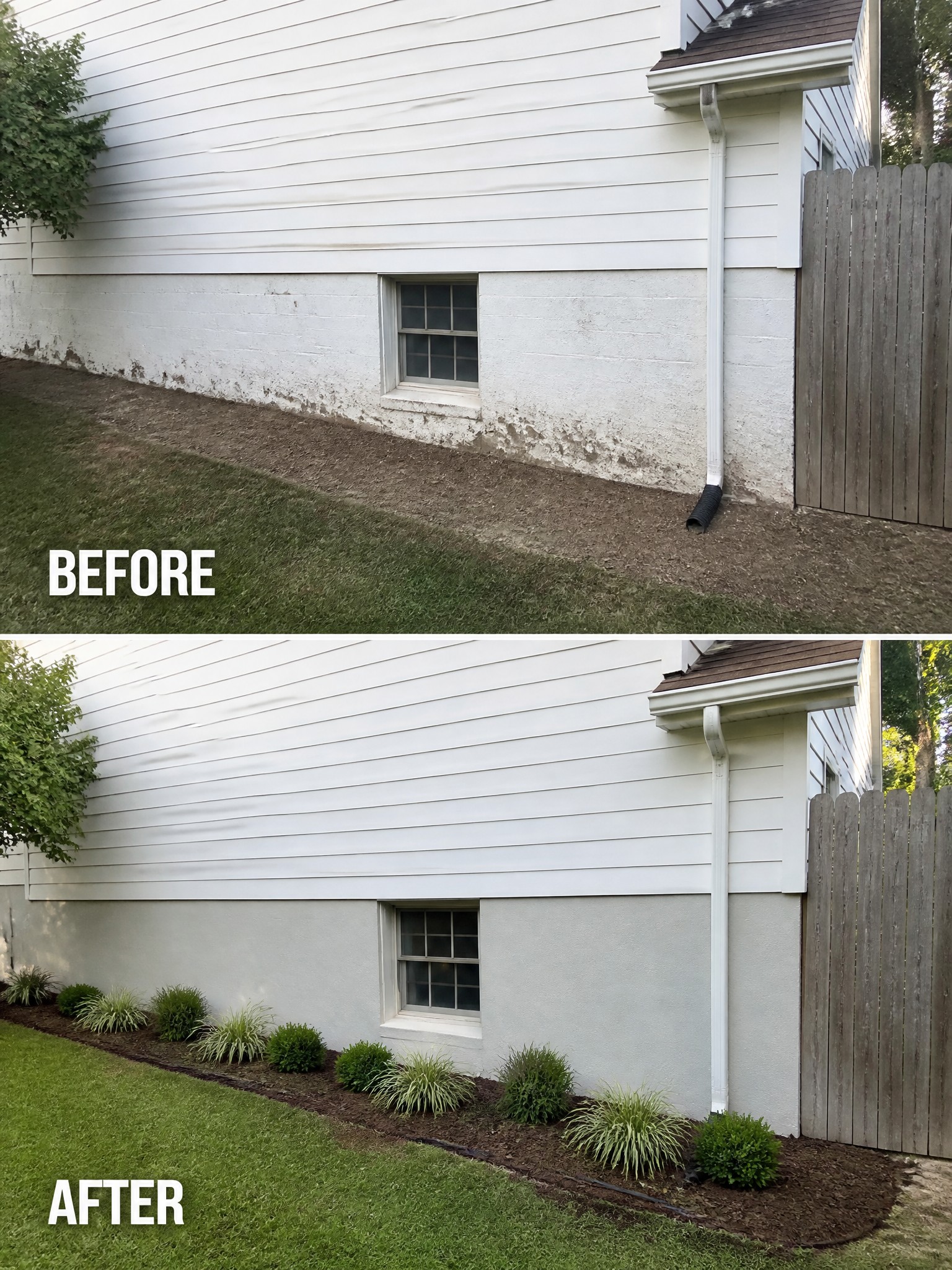
A bare dirt strip along the side of a house often looks unfinished and collects mud after rain. Adding a clean edge, fresh mulch, and a row of shrubs and grasses turns that neglected strip into a deliberate border that frames the house and keeps the foundation area tidy.
This approach works especially well on narrow side yards where there is little room for big features. Start by establishing a clear bed line with edging, lay down weed barrier and mulch, then choose compact plants that can handle the available light. The result feels intentional without requiring a large budget or constant upkeep.
Add String Lights To Refresh A Narrow Side Yard
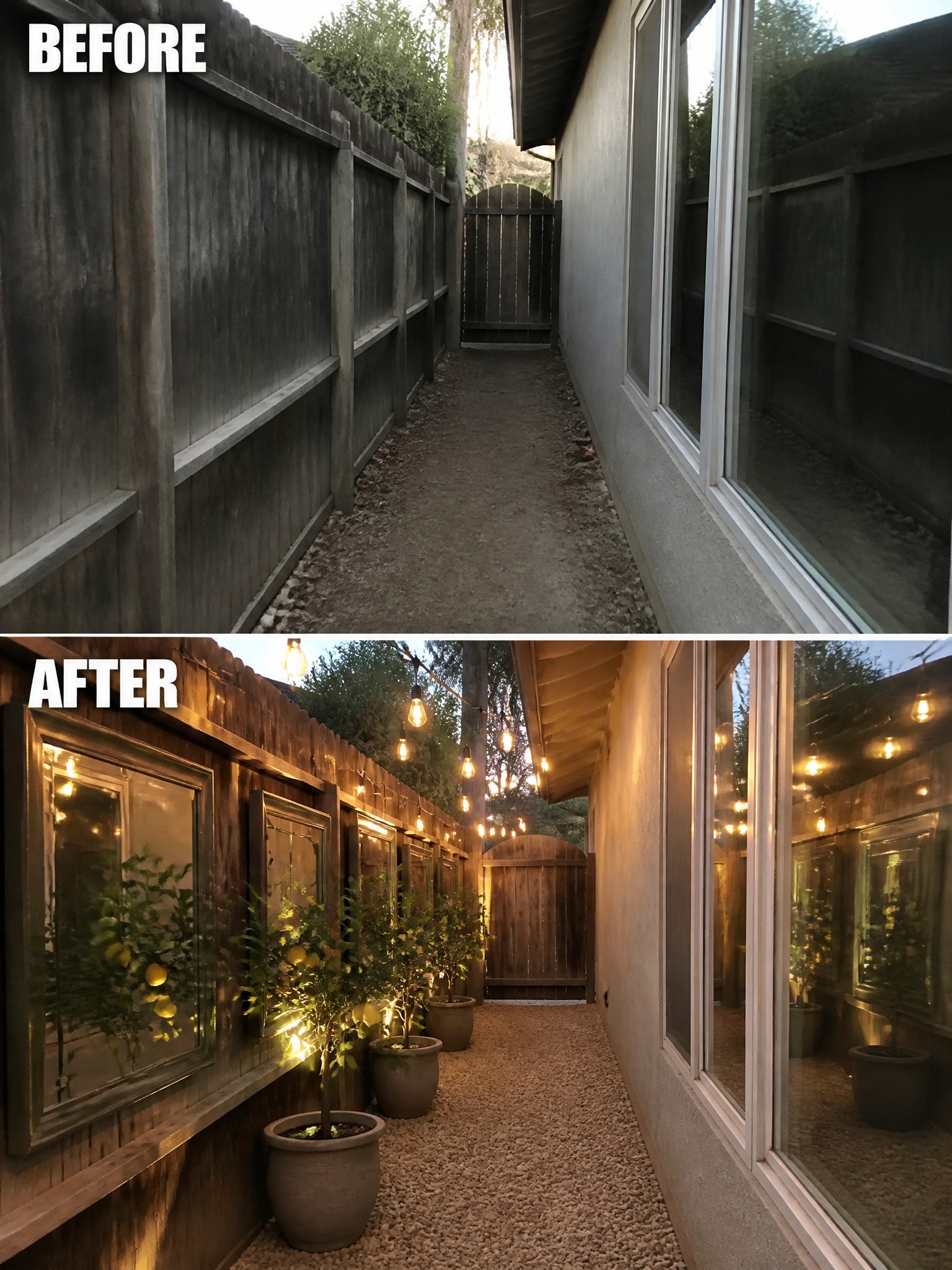
A plain dirt path running beside the house often gets ignored because it feels too tight and bare. Stringing lights overhead and adding a few large planters along the fence gives the space a clear purpose and makes it feel like an actual part of the yard instead of leftover ground.
This approach works well on any long, narrow side yard that connects the front to the back. Start with the lights so the area feels usable at night, then add a handful of pots in one or two sizes. Keep the path clear and use gravel or mulch to stop mud from tracking in.
Add Raised Planters To Define A Side Yard
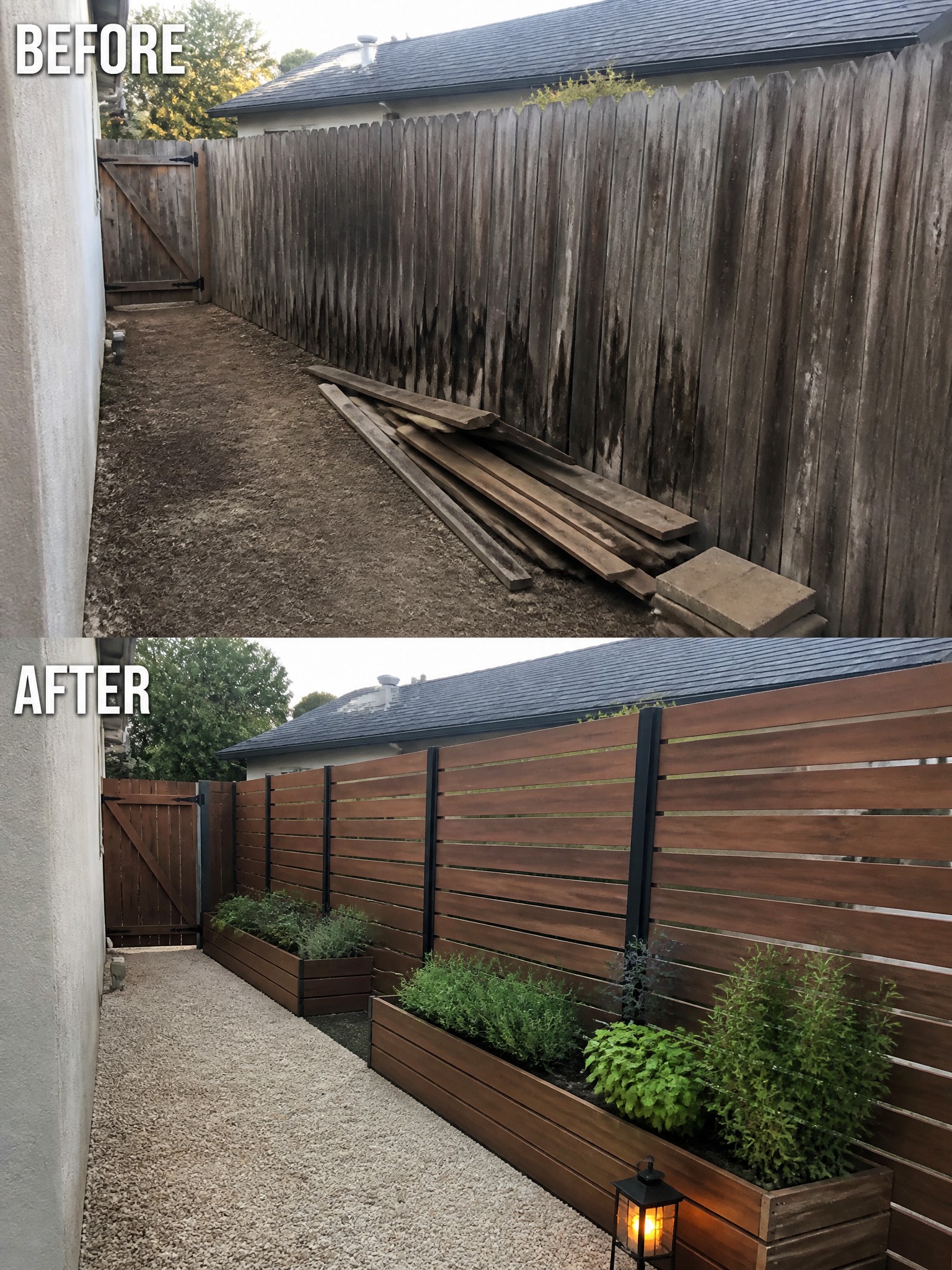
A narrow side yard often ends up as leftover space with just dirt and an old fence. Adding a row of raised planters gives the area clear edges and turns the path into something that feels more intentional. The simple switch from bare ground to planted boxes makes the whole strip look planned instead of forgotten.
This idea works best on long, tight yards where you still need room to walk through. Keep the planters the same height and material so the line stays clean, and choose plants that fill in without spreading onto the path. Start with the planters and gravel base before adding anything else.
Add Built-In Storage To Make A Side Yard Usable
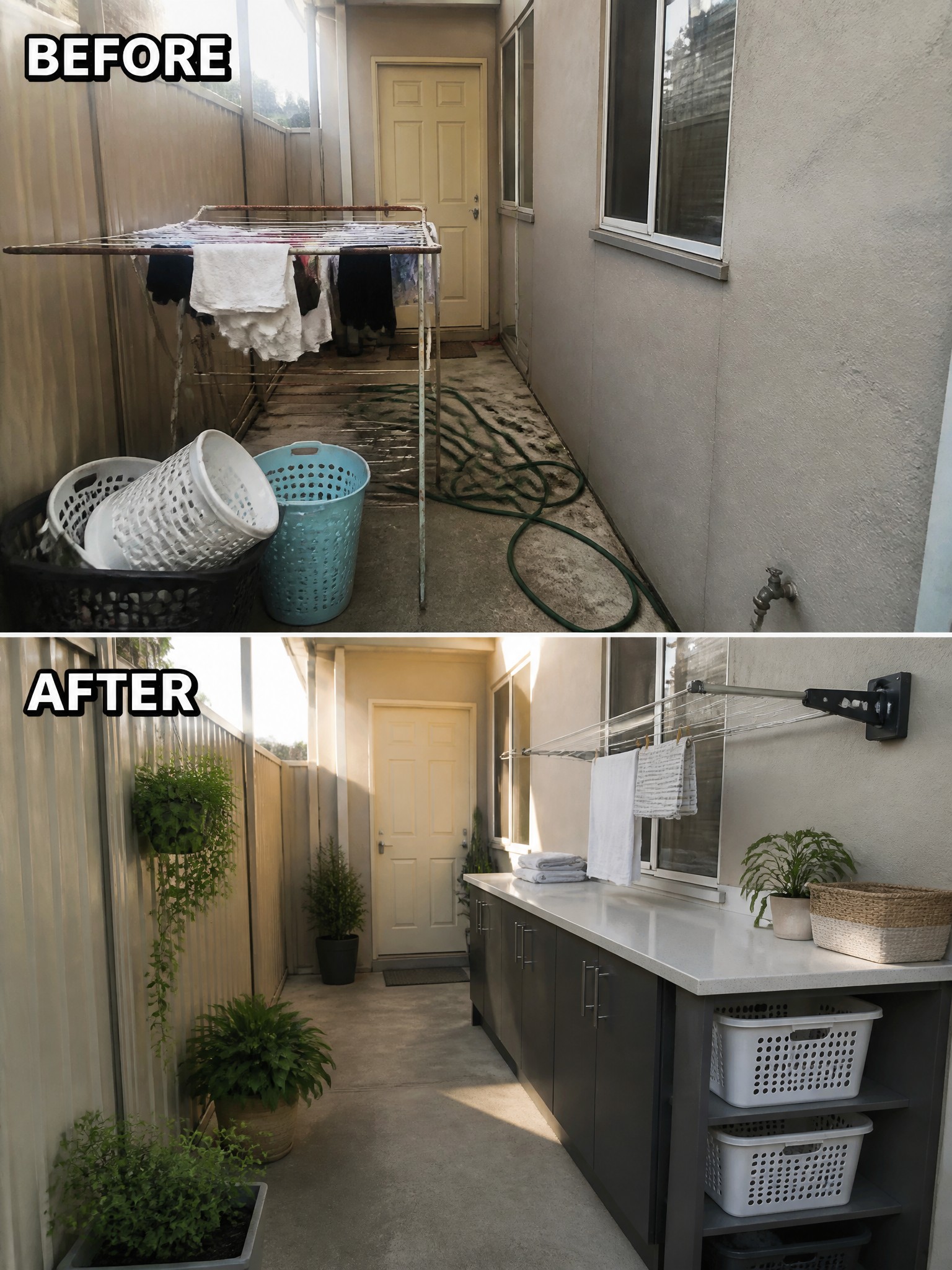
A narrow side yard often ends up as a dumping ground for laundry baskets and hoses because there is no clear place to put anything. The fix here was installing a run of simple gray cabinets with a countertop along one wall. That single change turned the space from a cluttered walkway into a spot where baskets, towels, and plants all have a home.
This approach works best in tight outdoor passages where you need to keep things organized but still have room to walk through. Start by clearing the area completely, then measure for cabinets that sit against the house without blocking doors or windows. Weather-resistant materials and a few potted plants keep the look clean without adding much maintenance.
Frequently Asked Questions
Q: Can I really fit a seating area in such a tight side yard? A: Pick a narrow bench or a couple of stools tucked against the house wall. Add a small side table and you have a spot to sit without blocking the path.
Q: What plants work best if the side yard gets little sun? A: Go for shade lovers like ferns or hostas in pots. They thrive with minimal light and bring life to the space right away.
Q: How do I stop the dog from turning my new side yard into a mud pit? A: Lay down some gravel or mulch paths first. Then add a few raised beds or containers to define the areas he should avoid.
Q: Do these ideas cost a lot to pull off? A: Start with what you have on hand like old crates for planters. Buy just a few new plants or lights each season to spread out the expense.
