

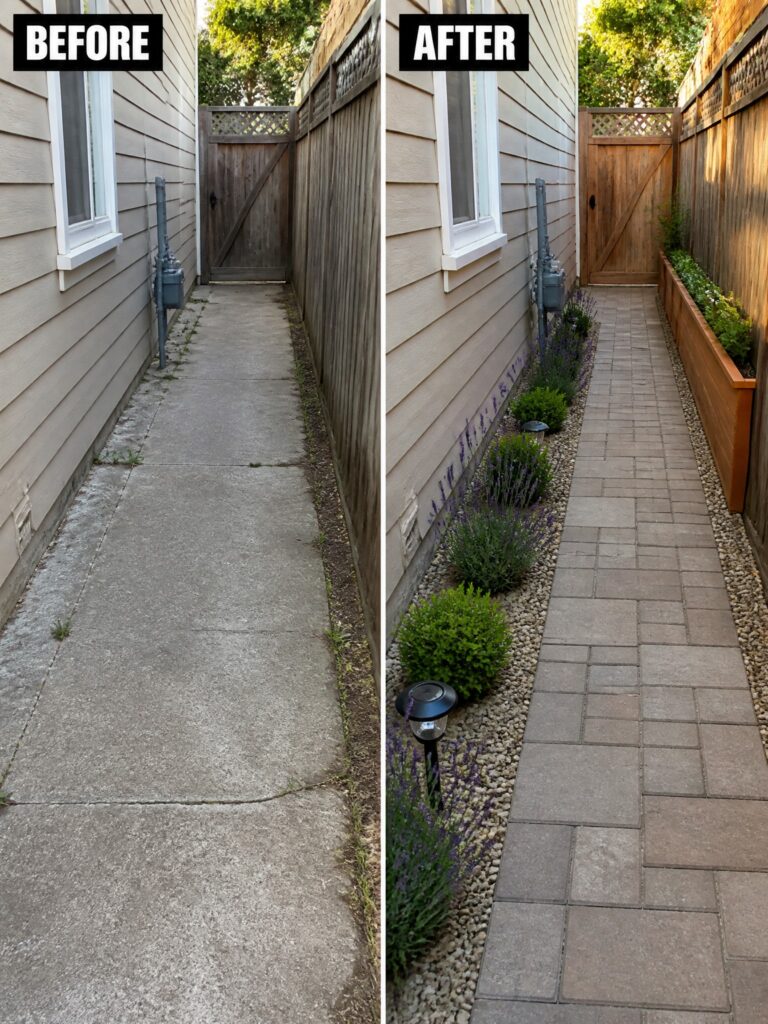
Side yards tend to collect debris and odd growth because they are hard to reach with regular mowing.
A bit of planning around what will actually grow there without constant fuss changes how the whole side of the house feels.
I usually test a few edging ideas first since they give structure right away.
Planting in layers, starting with taller screening plants and then lower ground cover, fills the space without making it crowded.
Those adjustments often turn a forgotten strip into something that adds privacy and a bit of order to the property.
Create Structure In Narrow Side Yards With Gravel And Plants
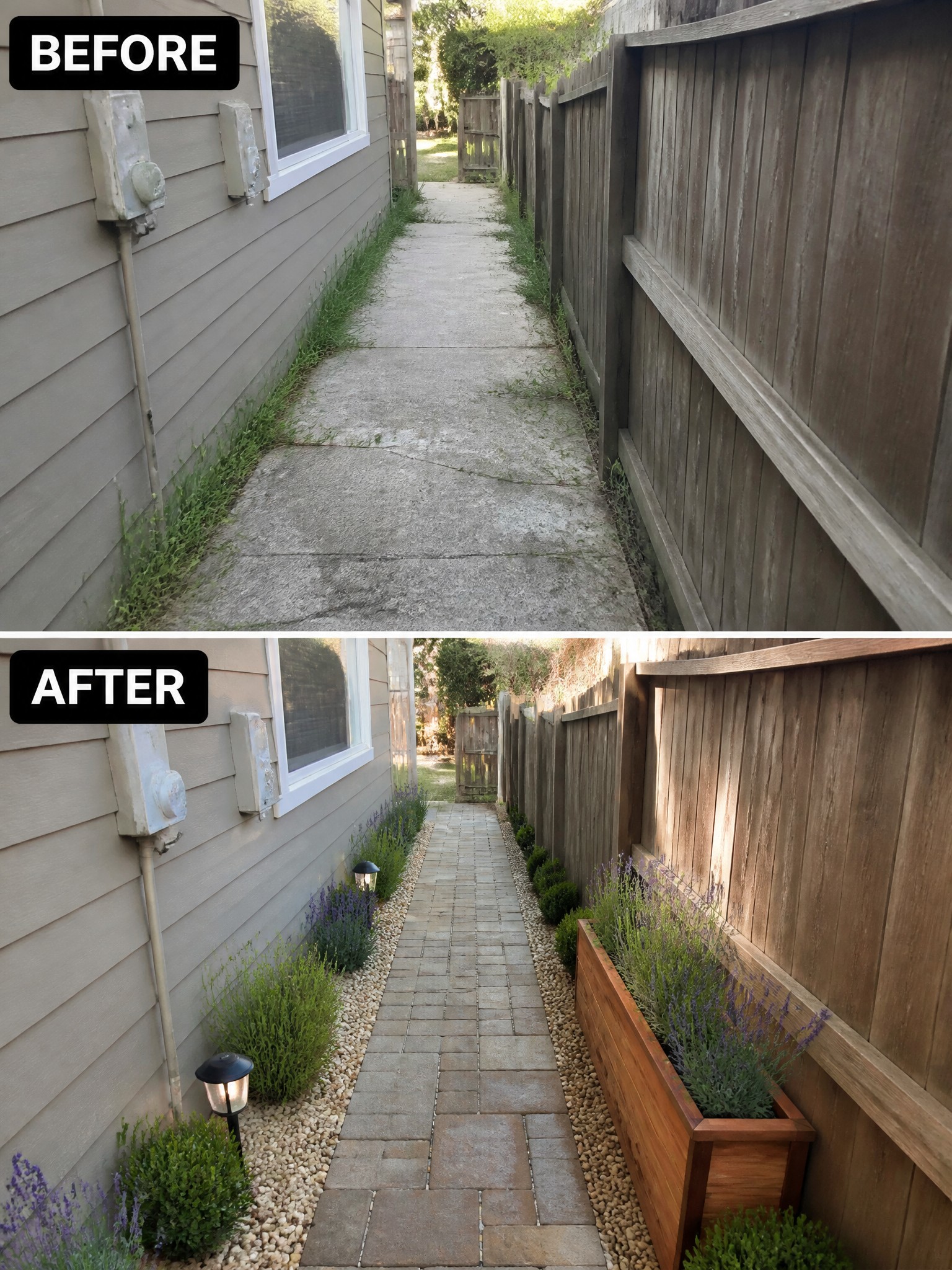
A narrow side yard often ends up as just a strip of cracked concrete with weeds creeping in from both sides. Adding a clean gravel border on each side and filling it with low shrubs and lavender gives the space clear edges so it stops feeling like leftover space. The path itself looks more intentional once the planting frames it on both sides.
This approach works especially well on tight lots where the house sits close to the fence. Keep the plants low and contained so they do not crowd the walkway, and use gravel instead of mulch if drainage is an issue. The result is a side yard that feels maintained rather than forgotten.
Add Structure To An Overgrown Side Yard
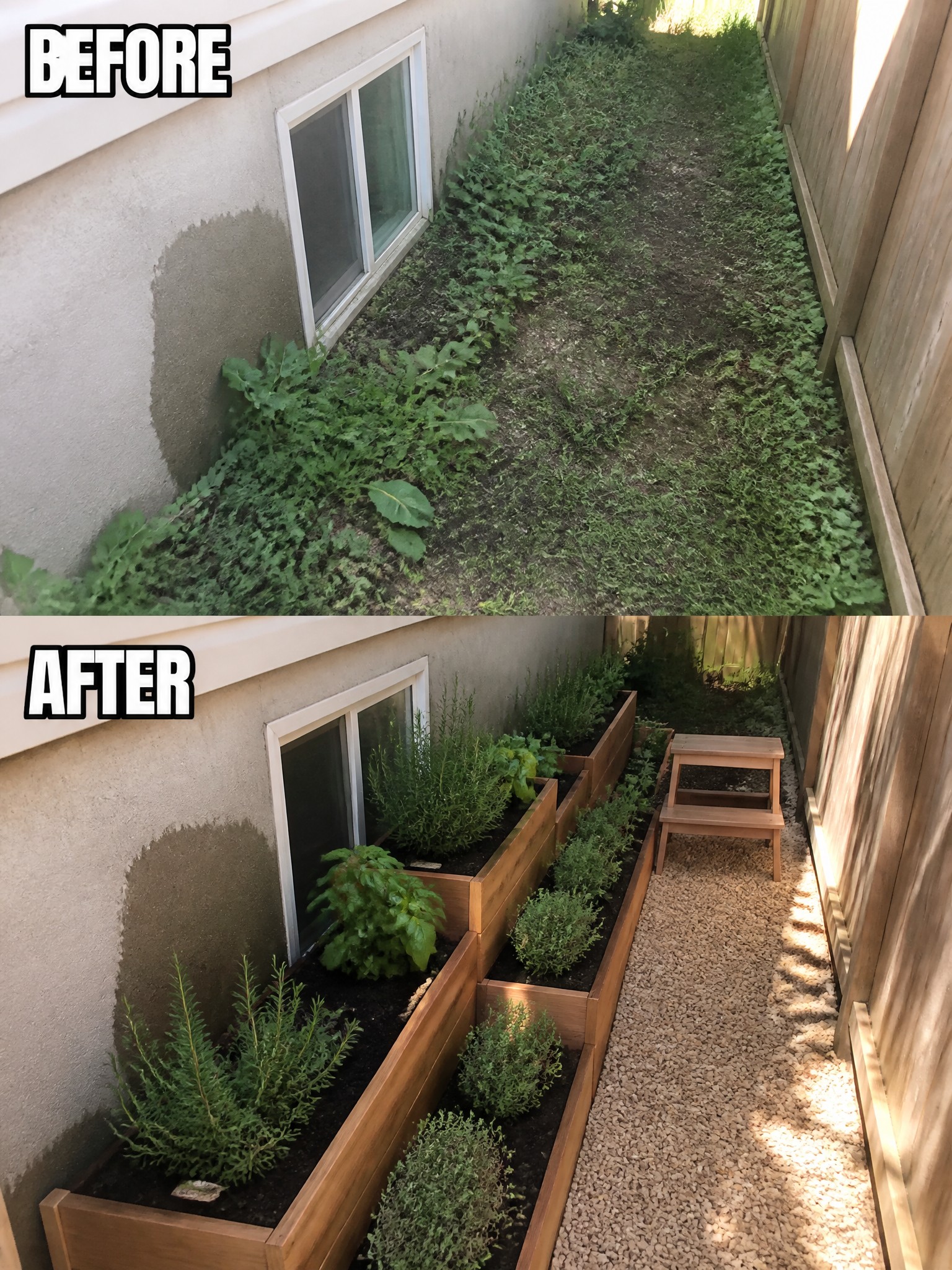
A narrow side yard often ends up neglected because it feels too tight for normal planting. Clearing the weeds first and installing raised beds gives the space clear purpose and stops plants from spilling everywhere. The beds keep soil contained, make watering easier, and turn the area into a productive strip instead of a weedy gap.
This idea works best on homes with long, skinny side yards that get some sun. Keep the beds narrow enough to leave a walking path, and use gravel or mulch between them so the space stays clean and accessible. Start with just a few beds before adding more features.
Screen Off Utility Areas With A Gate
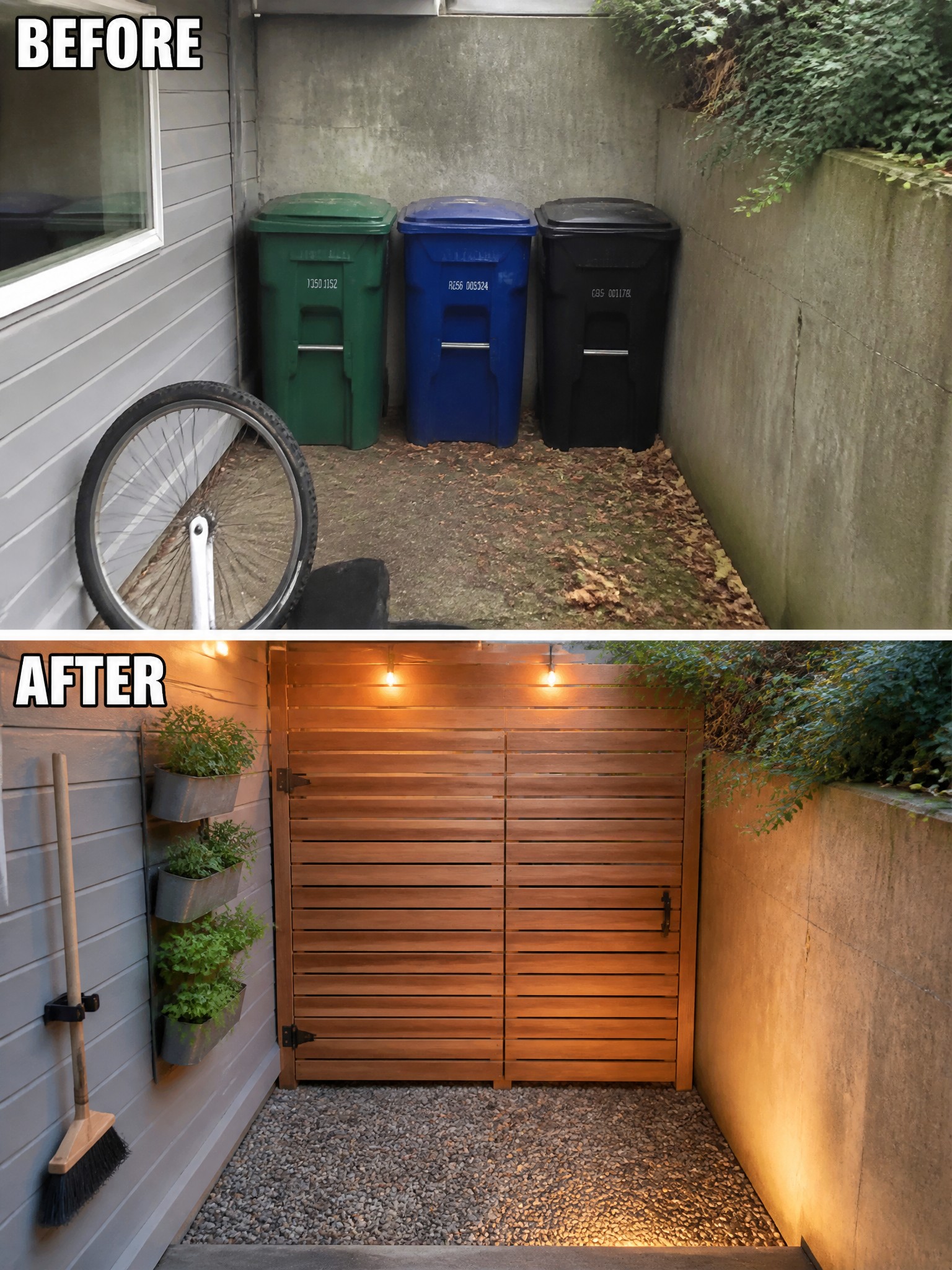
A narrow side yard often ends up as a catch-all for bins and clutter. Adding a simple wooden gate across the opening hides the mess and turns the space into something more contained. The gravel underfoot replaces the patchy dirt and leaves, while the gate itself gives the area a clear boundary without closing it off completely.
This approach works well in tight gaps between houses where full landscaping is not practical. Keep the gate simple with horizontal slats so air and light still move through, and use the wall space inside for a few mounted planters if you want a bit of green. Start with the gate and gravel before adding anything else.
Turn Bare Concrete Into A Simple Outdoor Seating Area
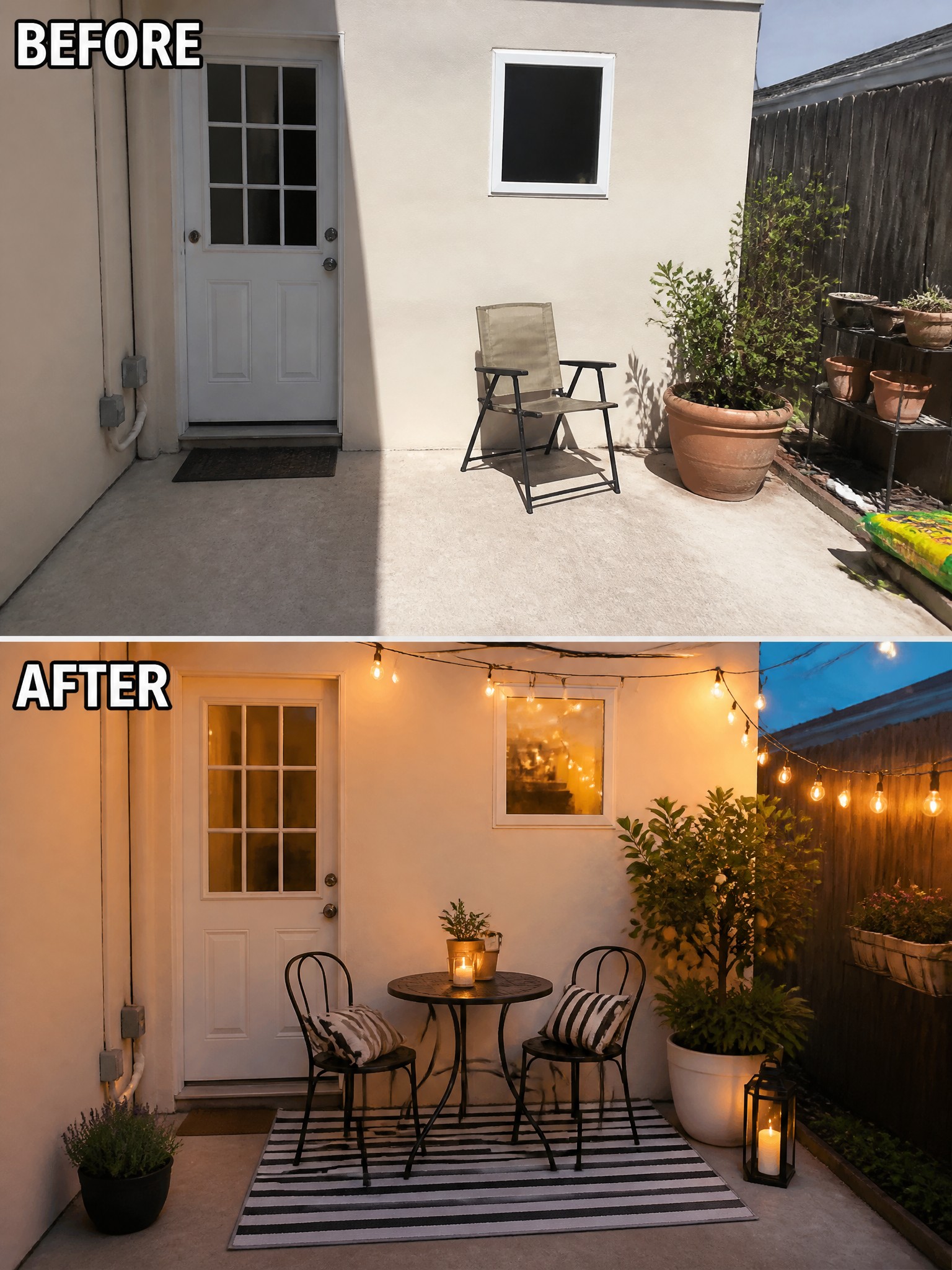
A plain side yard with nothing but concrete often sits unused because it feels unfinished. Adding a rug to mark the floor and string lights overhead instantly makes the space feel like a real room instead of leftover ground. The table and chairs then have a reason to be there.
This approach works best in narrow gaps between the house and fence where bigger projects will not fit. Keep the furniture small, choose weatherproof pieces, and run the lights along the wall or fence so they do not get in the way. Start with the rug and lights before buying anything else.
Add A Pollinator Border To A Narrow Side Yard
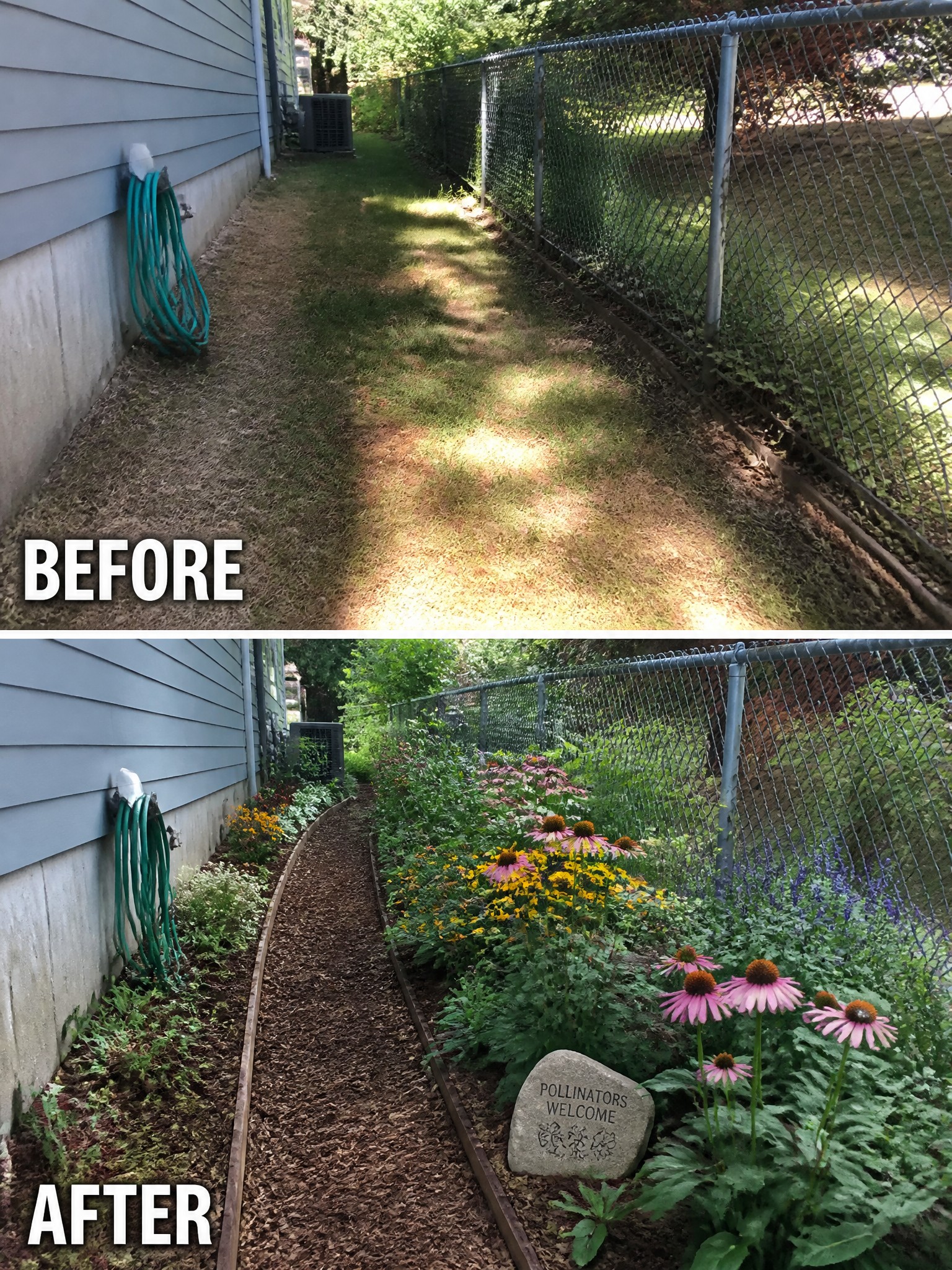
Side yards often get ignored because they feel too narrow or awkward to do much with. Here the strip along the house went from bare dirt and patchy grass to a simple planted border with mulch and flowers that draw in bees and butterflies.
This idea works best when the space gets at least a few hours of sun. Clear the ground first, add edging if you want a tidy line, then fill in with easy perennials. The path stays open for walking while the planting gives the area a purpose without crowding it.
Add A Trellis And Vines To A Bare Fence
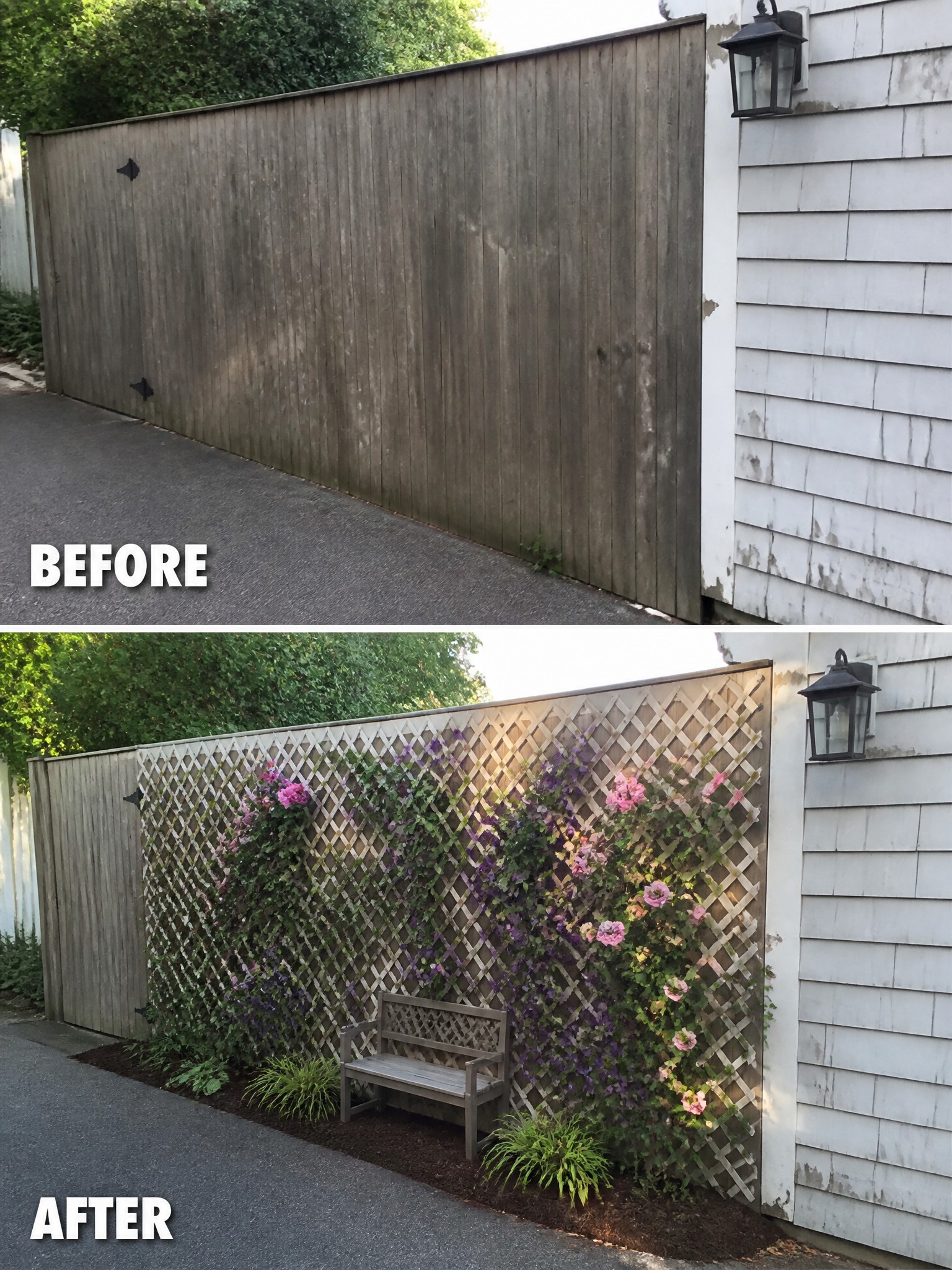
A plain fence along a side yard often looks flat and unfinished. Adding a lattice panel and letting climbing plants grow over it gives the space structure and color without needing a lot of width. The change turns an empty stretch of wood into a living screen that softens the view and adds a bit of privacy.
This idea works best in narrow gaps where you want something green but cannot fit full garden beds. Attach the trellis to the fence first, then choose vines that match your sun and climate. Keep the planting simple at the base so the area stays easy to walk past.
Clean Up A Narrow Side Path With Gravel And Pavers
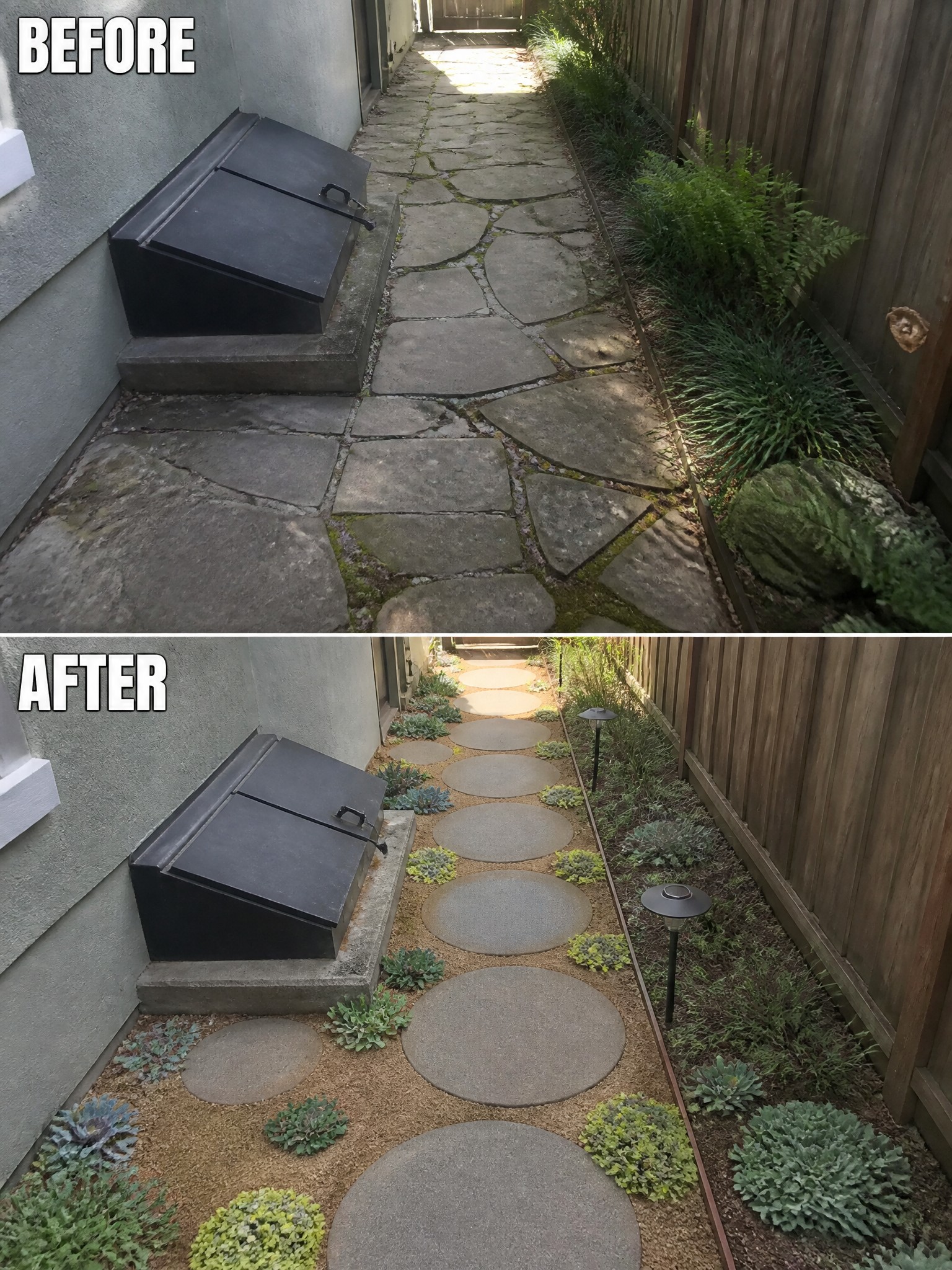
A narrow side yard often turns into an awkward strip that gets messy over time. The path here went from uneven stones lost in weeds to a gravel surface with round stepping stones set in a clear line. That shift makes the space feel planned and much easier to walk through.
This idea suits homes with tight gaps between the house and fence where grass struggles. Clear the old growth first, then use gravel to control weeds and add stepping stones for a simple walking surface. Keep the planting low so the path stays open and does not feel crowded.
Shape A Narrow Side Yard With Edging And Planting
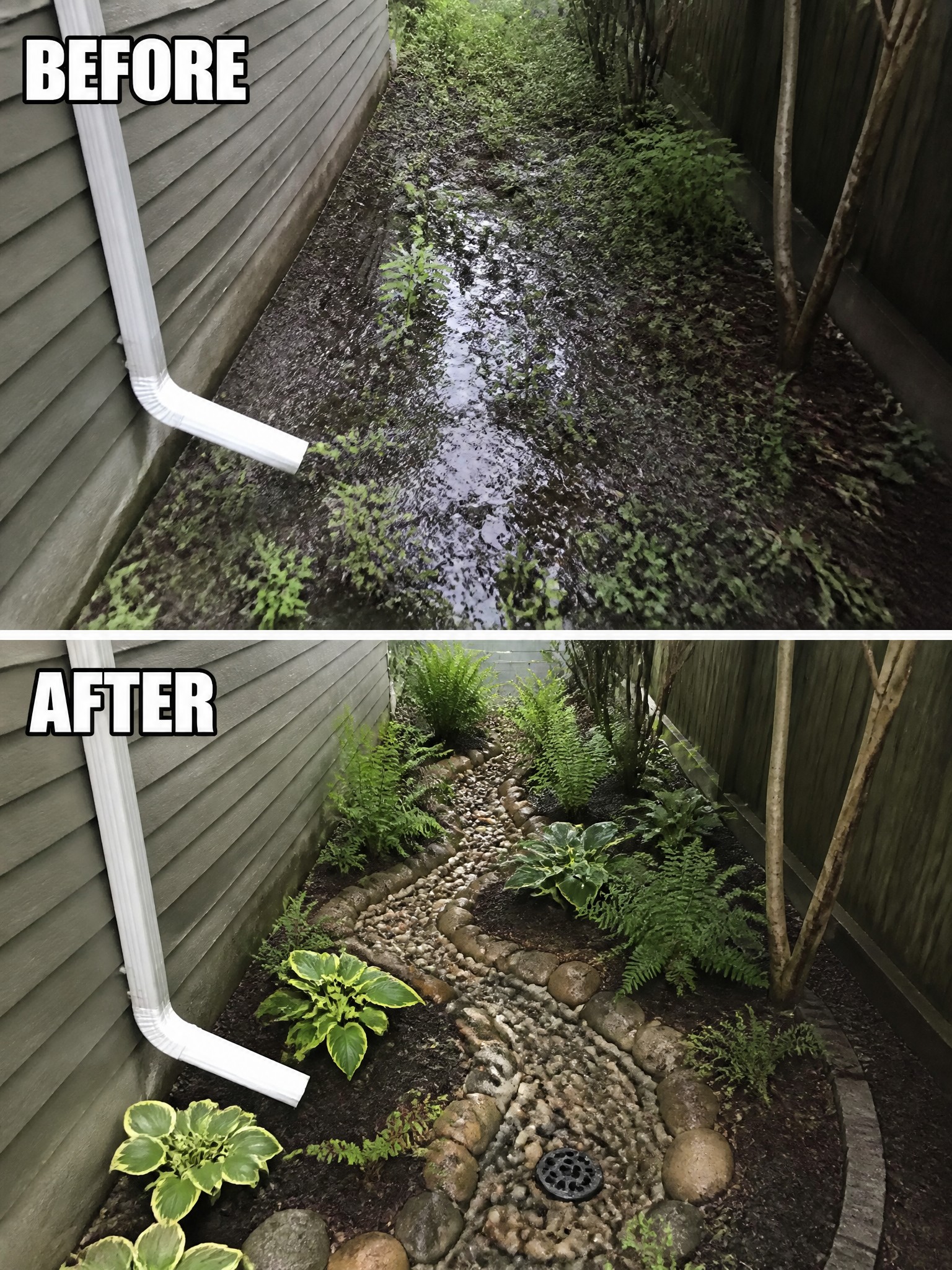
A narrow side yard often ends up as a soggy strip of mud and weeds because nothing holds the space together. Adding a simple rock border and gravel path gives the area clear lines so water drains properly and plants have room to grow without taking over. The before photo shows how quickly the space turns into standing water when left open. The after shows how the same gap becomes usable once the edges are set.
This approach works best on homes where the side yard sits between the house and a fence. Start with cleanup and drainage before choosing plants. Use low edging like river rock or pavers to keep the beds in place, then fill with tough shade plants that can handle wet soil. The goal is to create a path you can walk through without sinking or tripping over roots.
Add Raised Planters To Give A Side Yard Purpose
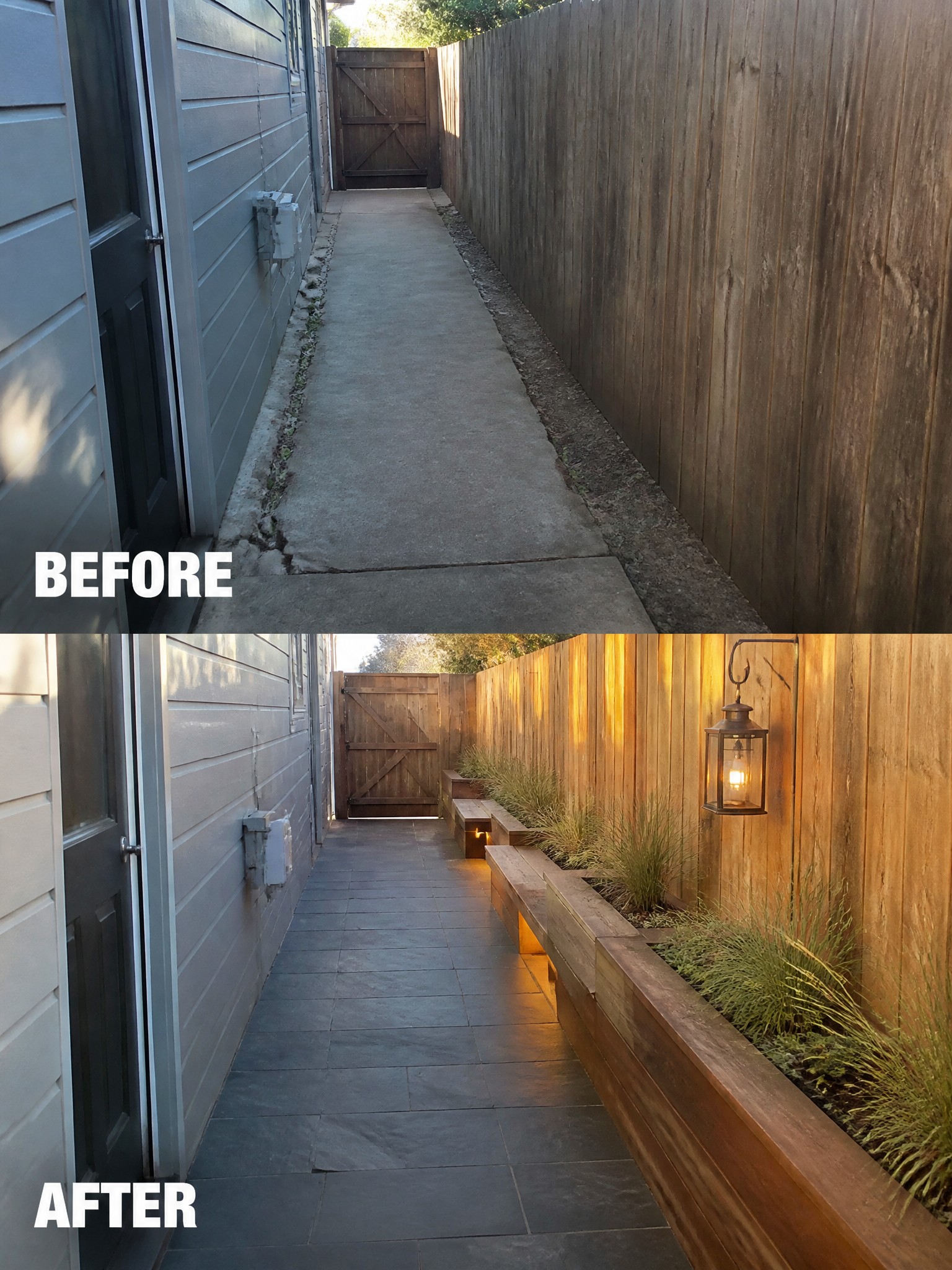
A narrow side yard often ends up as nothing more than a strip of concrete between the house and the fence. In this case, the space stayed empty until raised wooden planters were added along one side. The new planters double as benches, the path was switched to pavers, and a single lantern was mounted on the fence. Those few changes turned the gap into a defined walkway that actually feels intentional.
This approach works well on long, tight side yards where there is no room for larger furniture. Keep the planters narrow enough to leave walking space, and choose plants that stay contained. Lighting helps if the path is used at night. Start with the planters and seating first, then add paving if the original surface feels too plain.
Define A Narrow Side Passage With Gravel And A Gate
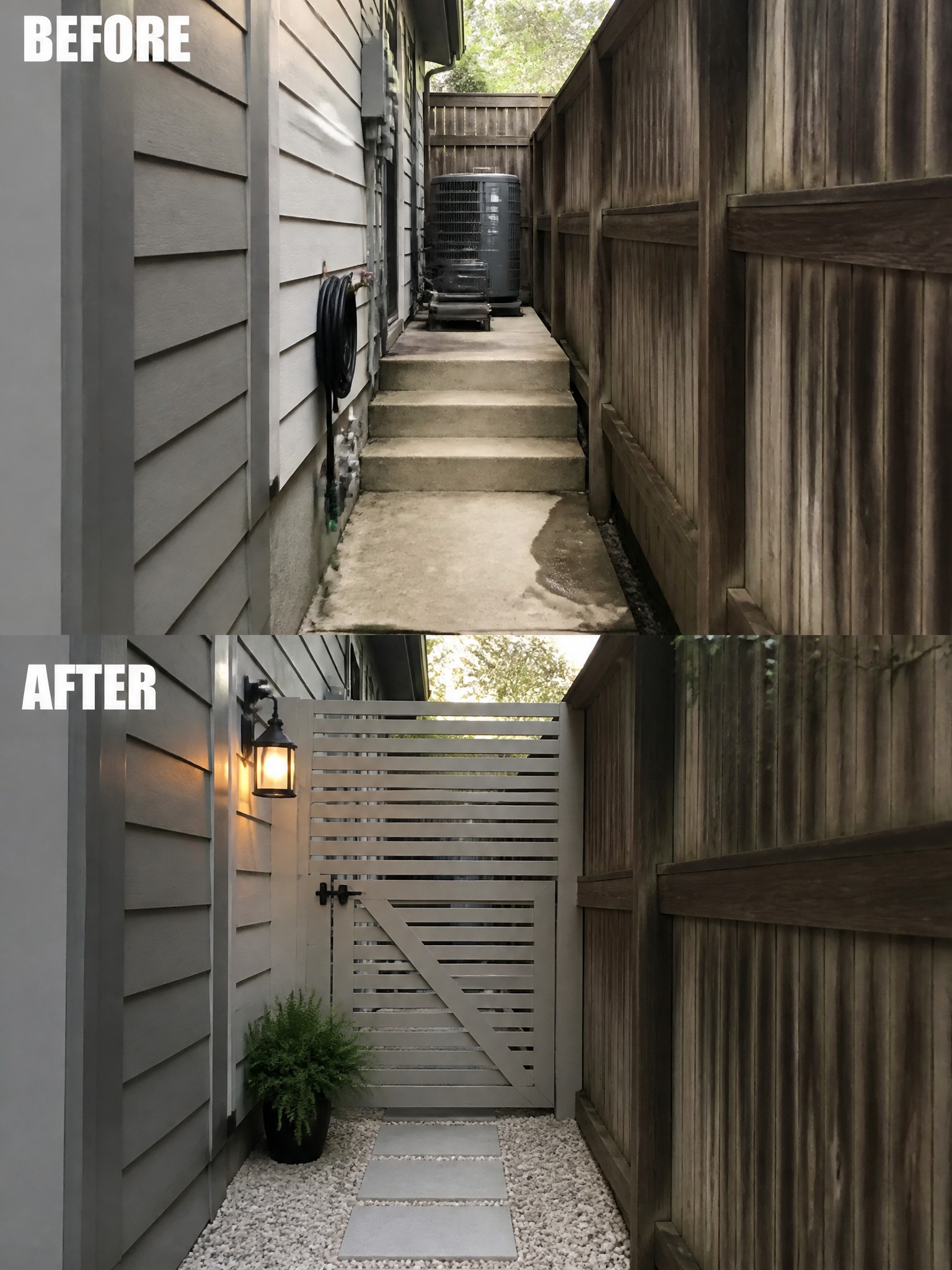
Many side yards end up as plain concrete strips that feel more like a service corridor than part of the yard. Adding a simple gate at the front and replacing the open concrete with gravel and stepping stones gives the space a clear boundary and makes it feel more finished.
This idea suits homes where the gap between the house and fence is too narrow for big planting beds. Focus first on cleanup and a basic gate to create separation, then keep the ground cover low so the path stays easy to walk through year round.
Build Tiered Planters To Organize A Sloped Side Yard
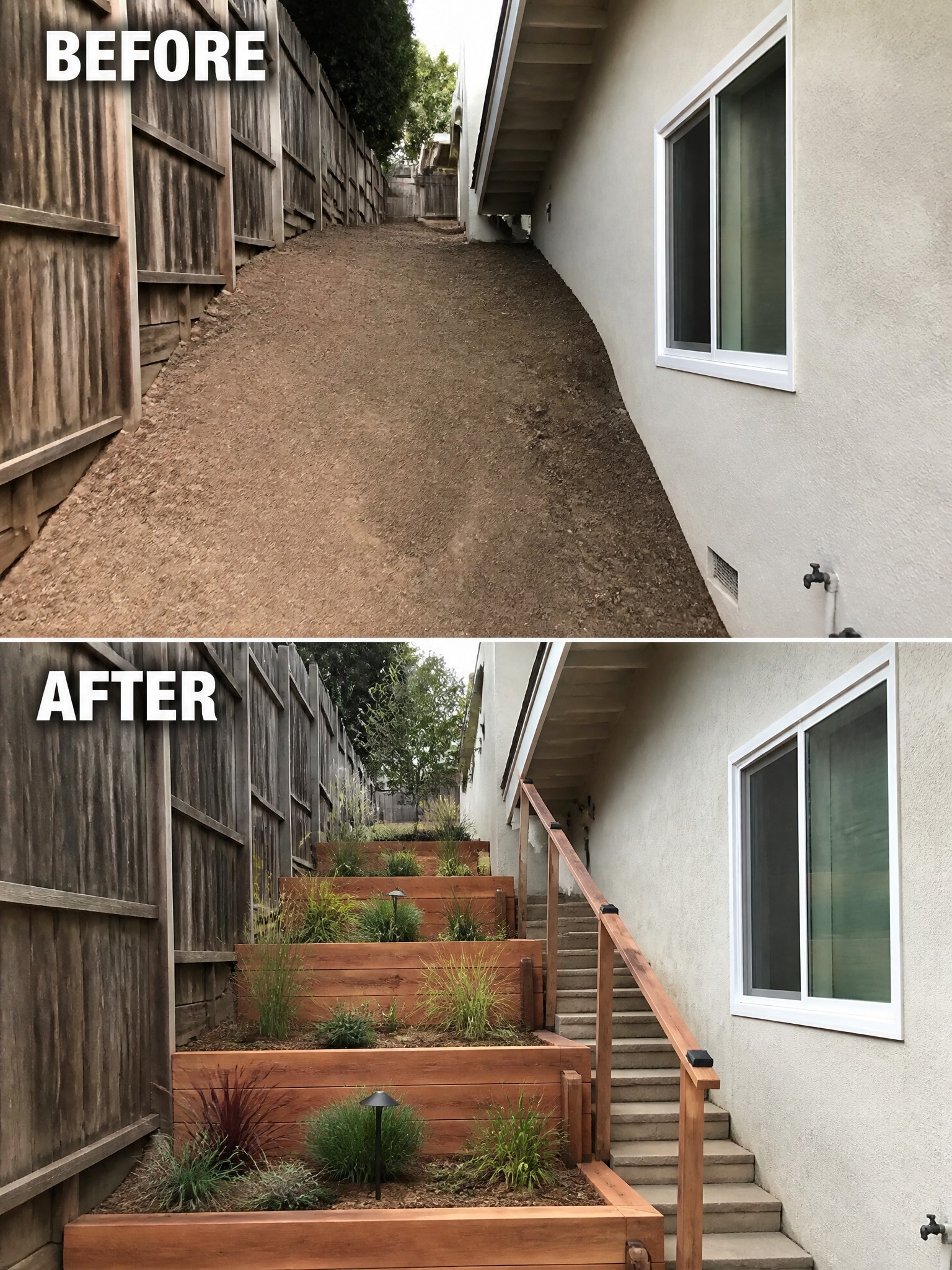
A bare dirt slope next to the house usually ends up ignored because it is hard to walk on and offers no real purpose. Adding a run of tiered wooden planters gives the slope clear levels, holds the soil in place, and turns the space into a planted strip that still leaves room to pass through.
This idea fits narrow side yards where flat ground is limited. Use simple stacked lumber for the boxes, backfill with decent soil, and plant tough grasses or shrubs that need little water. Keep the tiers low enough that they do not block light or access, and add a handrail on any stairs so the path stays practical.
Add Planting And Lights Along A Fence
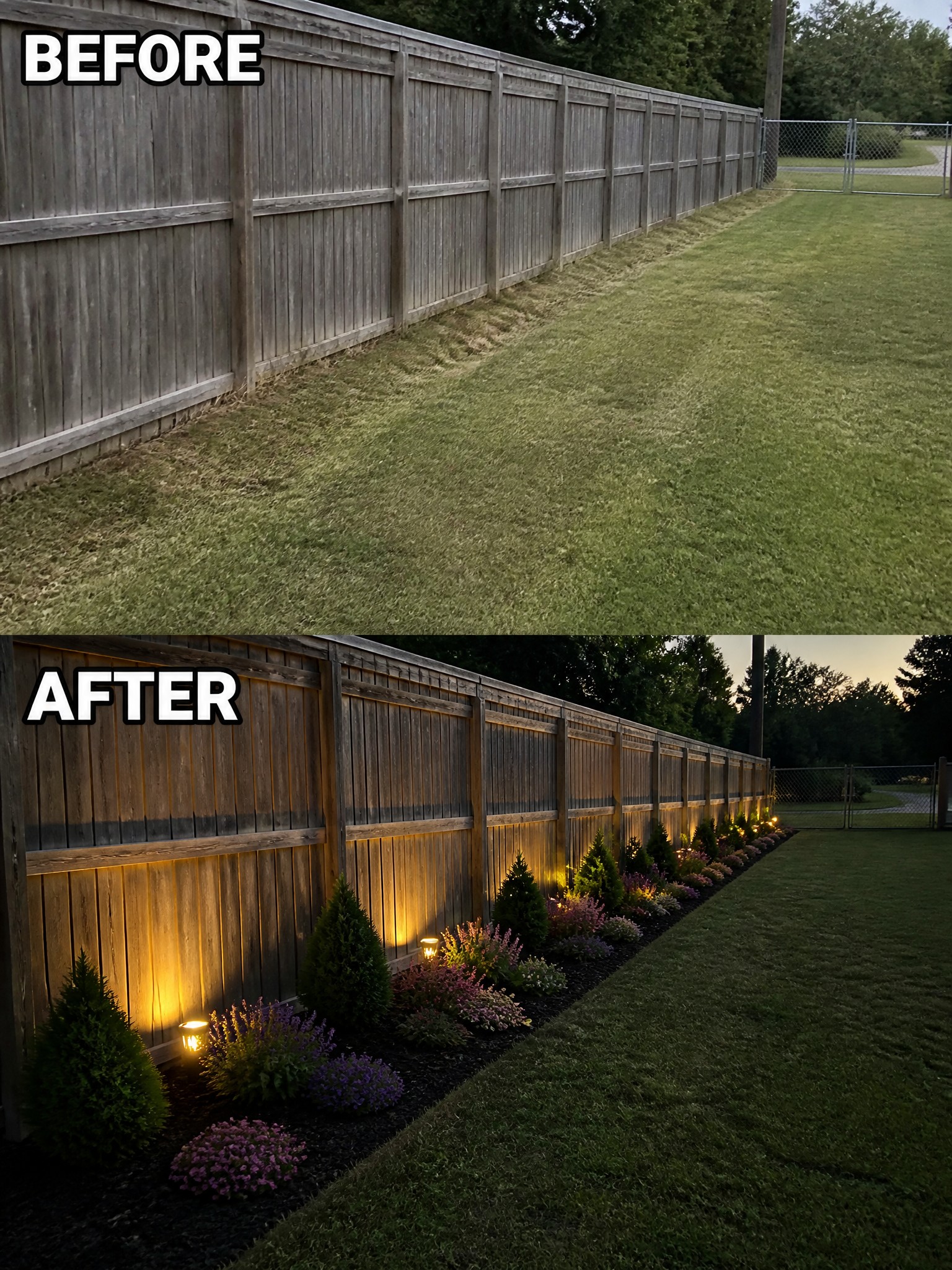
A plain stretch of grass next to a long fence often looks unfinished. Adding a narrow planted bed with low shrubs, flowers, and a few ground lights that wash up the boards gives the fence a clear role and turns the side yard into something you actually notice.
This idea works best on narrow strips where you still need room to walk. Keep the plants under two feet tall so the path stays open, use mulch to hold the bed together, and space the lights every few feet for even glow. It suits homes with long side yards that get little use but could feel more cared for with one simple change.
Turn A Concrete Side Yard Into A Green Strip
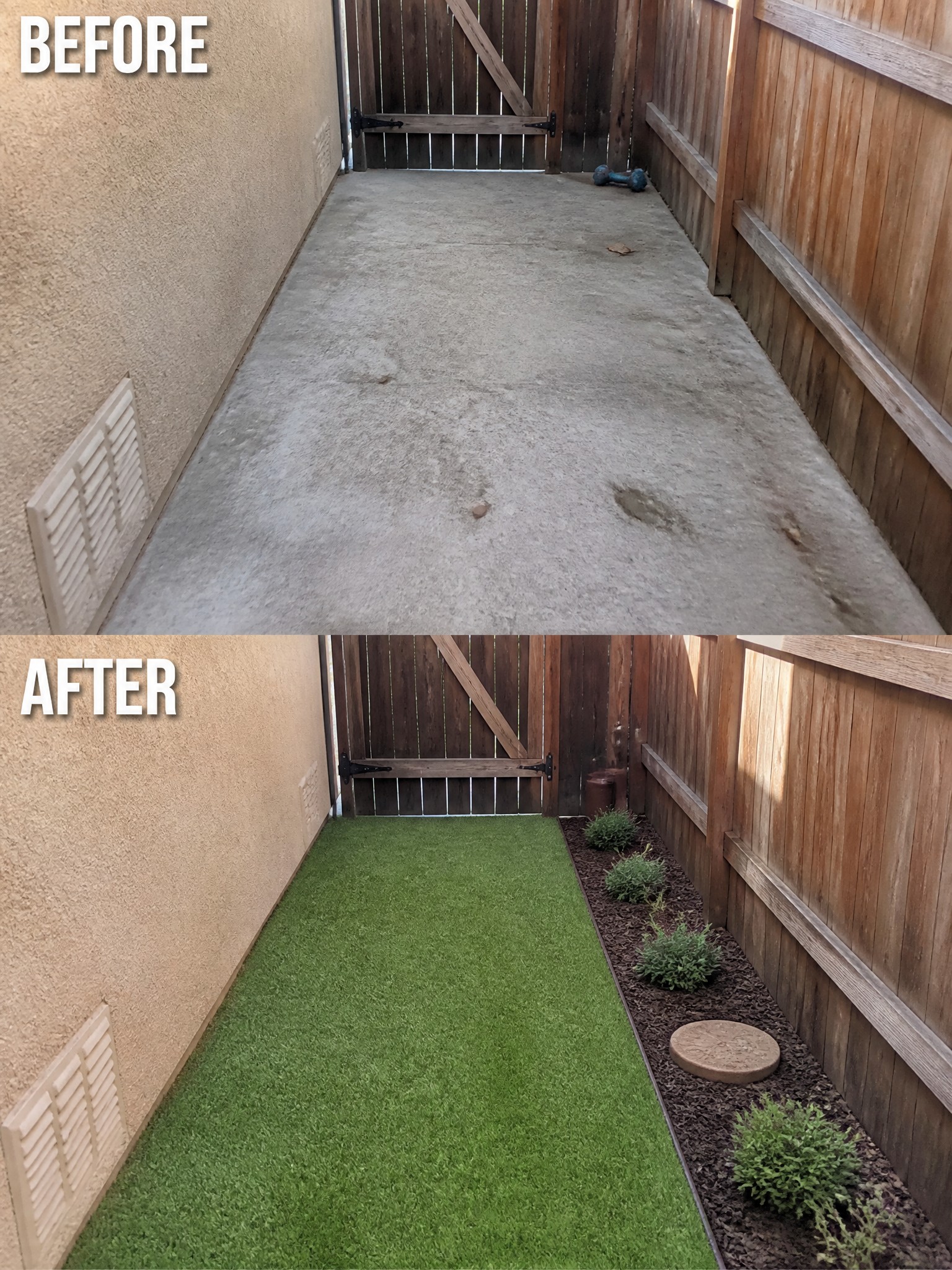
A narrow side yard with nothing but old concrete often ends up ignored. Laying turf across the main walkway and adding a planted border along one fence turns the space into something that feels intentional instead of leftover.
This idea works best in tight gaps where you still need a clear path. Keep the turf width practical for walking, then use a simple mulch bed with a few shrubs to soften the fence line. It adds color and structure without requiring much ongoing work.
Clear Overgrowth Before Adding Structure To A Side Yard
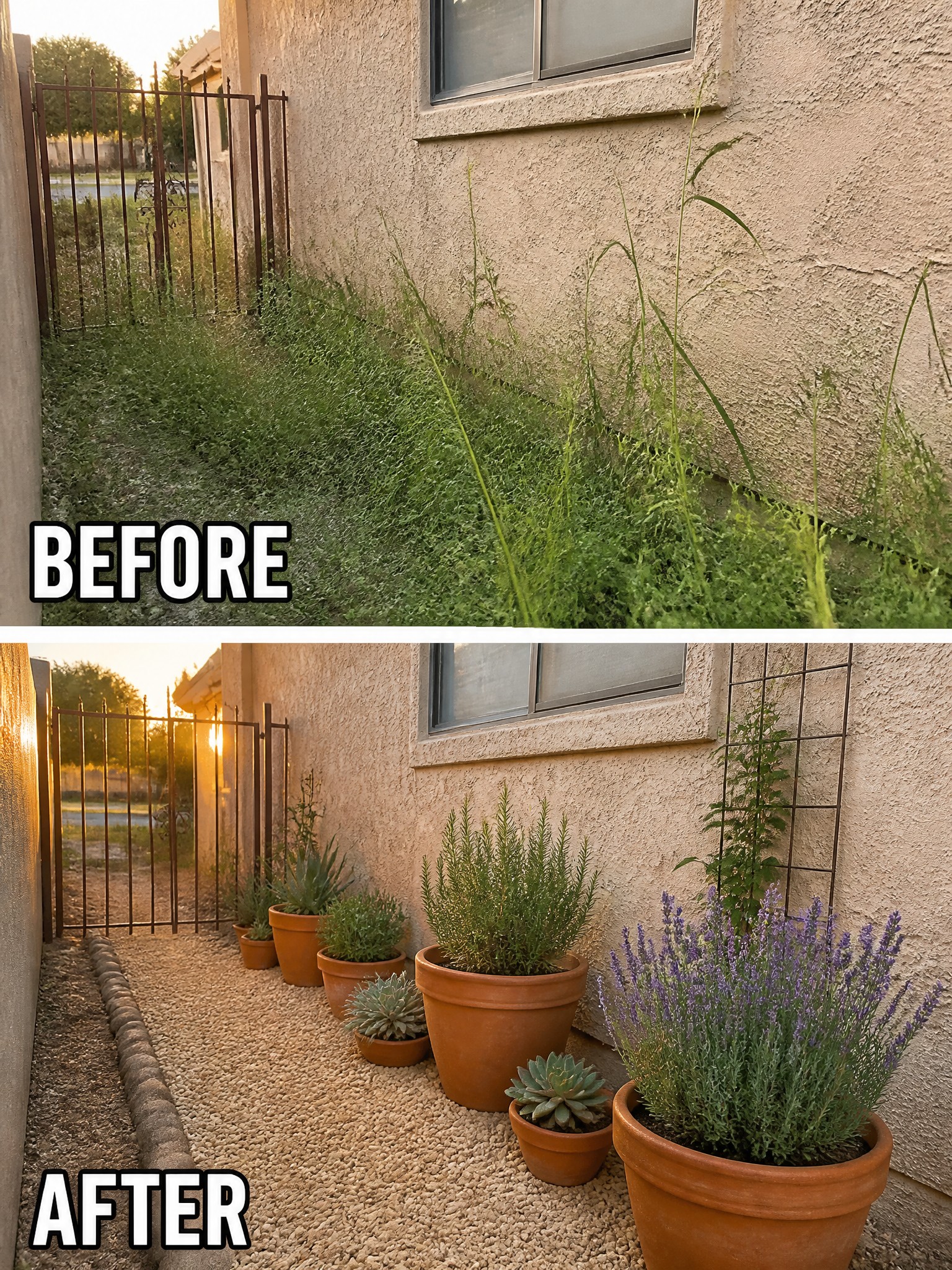
Starting with a full cleanup makes the biggest difference in a narrow side yard. Once the weeds are gone, a simple gravel base and a line of pots turn the space into something usable instead of just a forgotten strip along the house.
This idea suits homes with tight side gaps where digging beds is not practical. Stick to matching pots in one or two sizes, space them evenly, and keep the planting simple so the area stays open for walking through.
Turn A Narrow Side Yard Into A Cozy Seating Spot
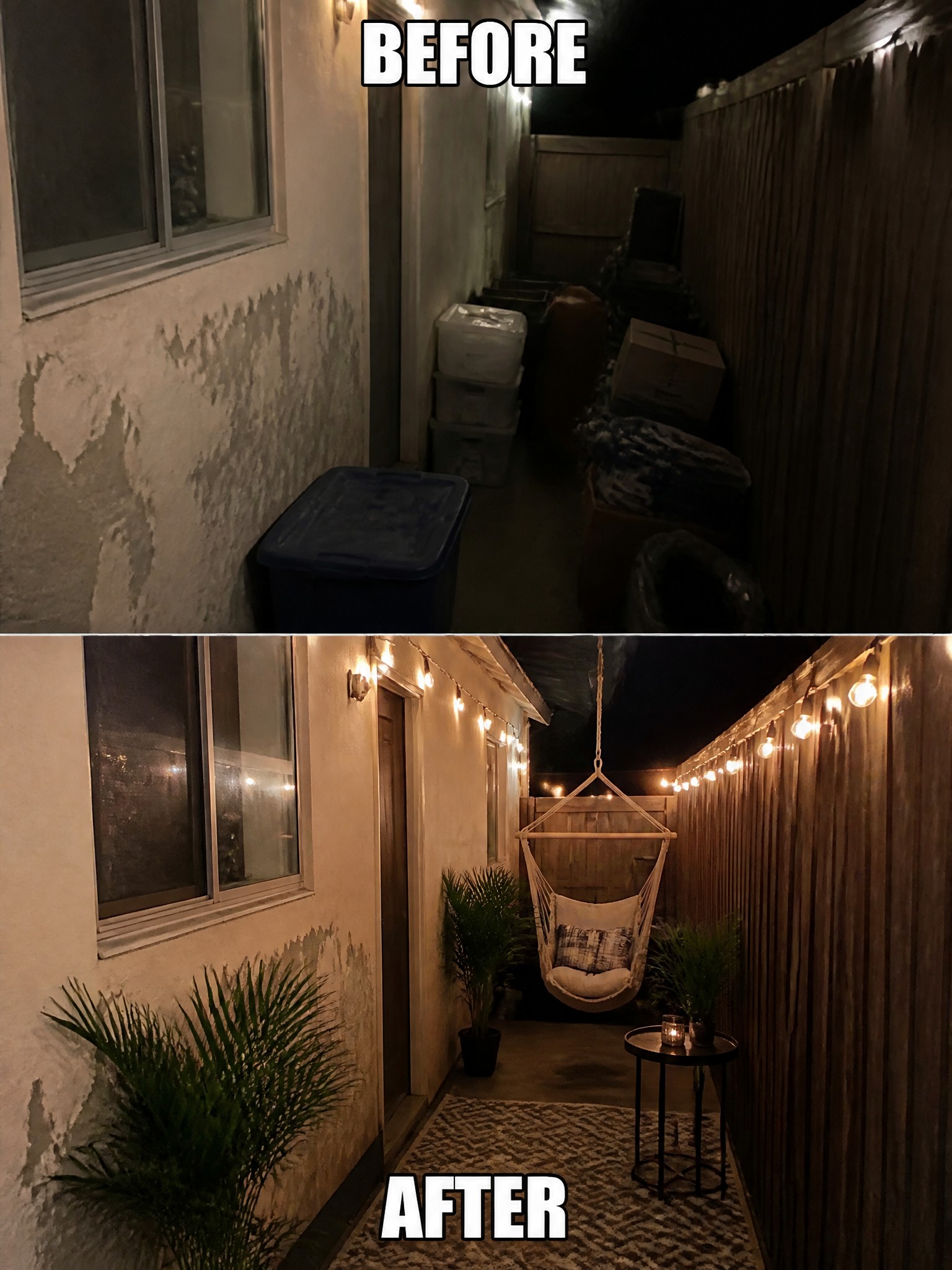
A narrow side passage often ends up as a storage zone because it feels too tight for anything else. Clearing out the bins and boxes first makes room for simple seating and lets string lights run along the fence to create a calm evening spot instead of a dark walkway.
A hanging chair and one small rug are usually enough to define the space without blocking movement. This idea works best on homes with long, skinny gaps where full furniture sets would feel cramped. Focus on weatherproof pieces and keep the path clear so the area stays practical.
Add Wall Storage To Make A Narrow Side Yard Useful
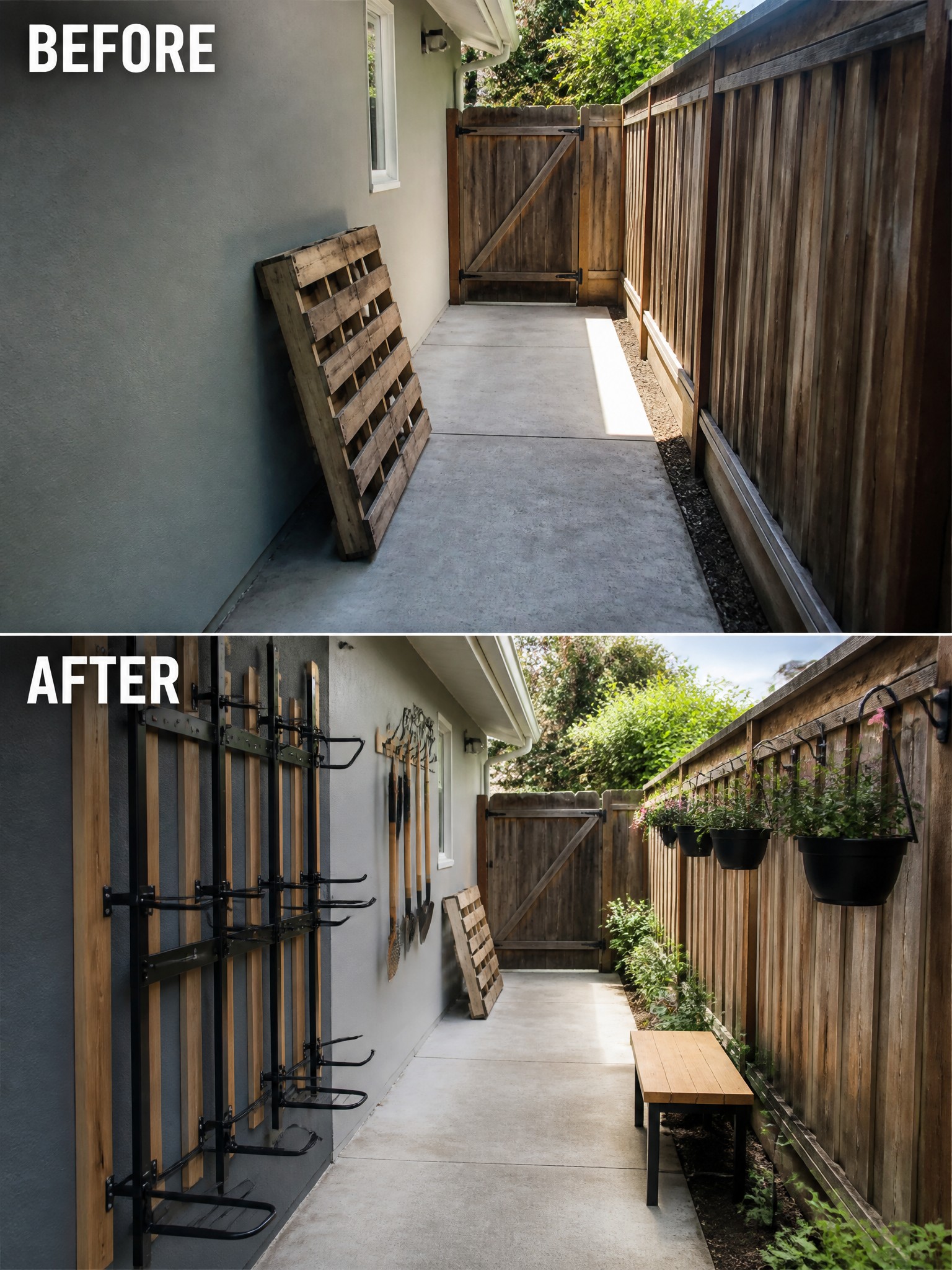
A narrow side yard often ends up as nothing more than a concrete path with random items leaning against the wall. Mounting simple racks and hooks on the house side turns that empty wall into useful storage for tools and gear. The change is small but it keeps everything off the ground and makes the space feel intentional instead of forgotten.
This idea works well on homes with tight side yards where floor space is limited. Start by clearing the path, then install sturdy racks at different heights so tools stay organized and easy to reach. A single bench at the end gives the area a clear purpose without crowding the walkway.
Add A Stepping Stone Path Through A Side Yard
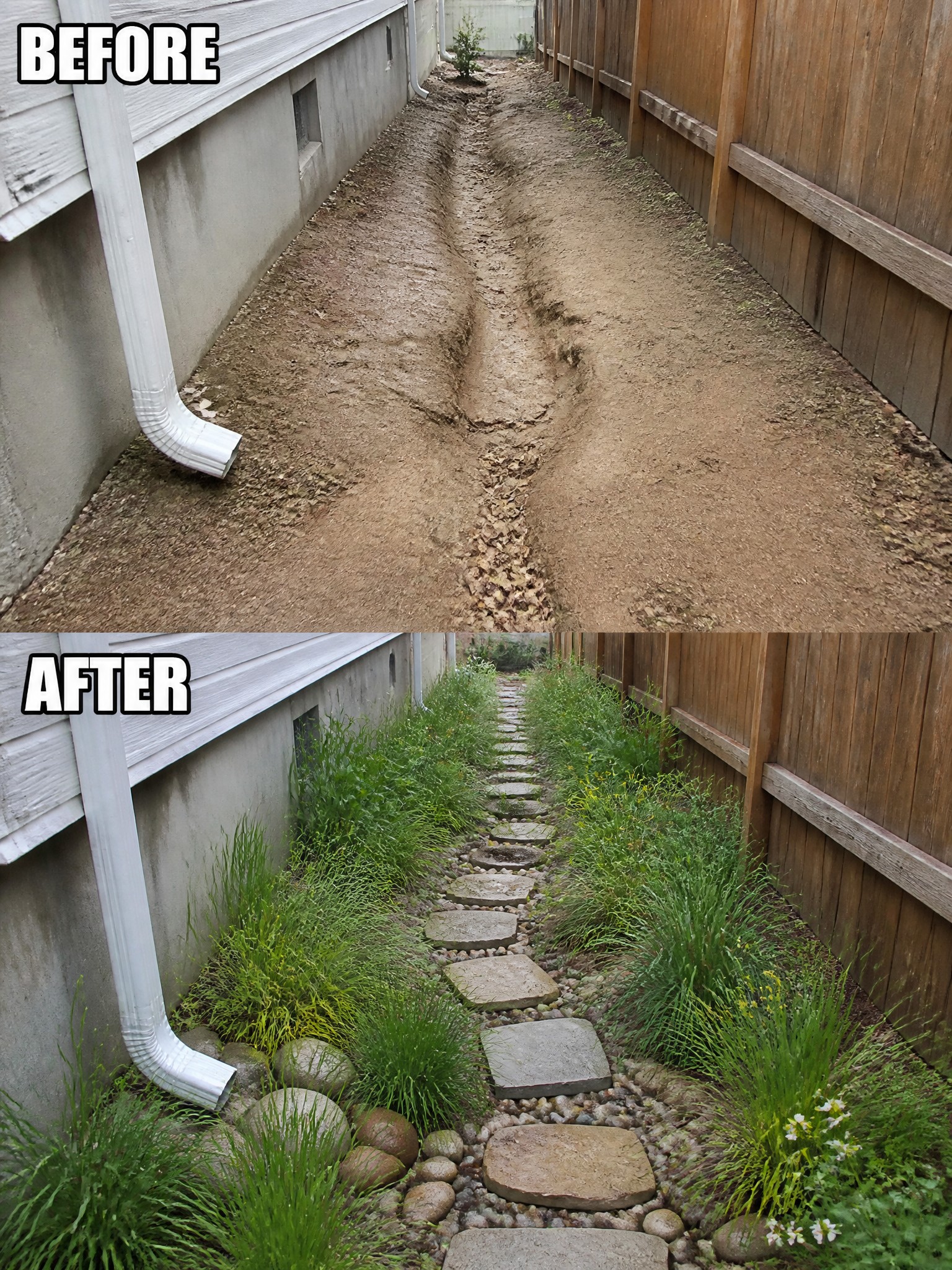
A narrow side yard often turns into a bare strip of dirt that gets muddy and hard to walk through. Placing stepping stones with gravel between them creates a solid path and gives the whole area a finished look without needing a lot of space.
This idea works best in tight gaps where you need a clear walkway but still want some planting along the edges. Keep the stones spaced for easy steps and use low plants on either side so the path stays the main focus.
Add Defined Garden Beds Along A Narrow Side Path
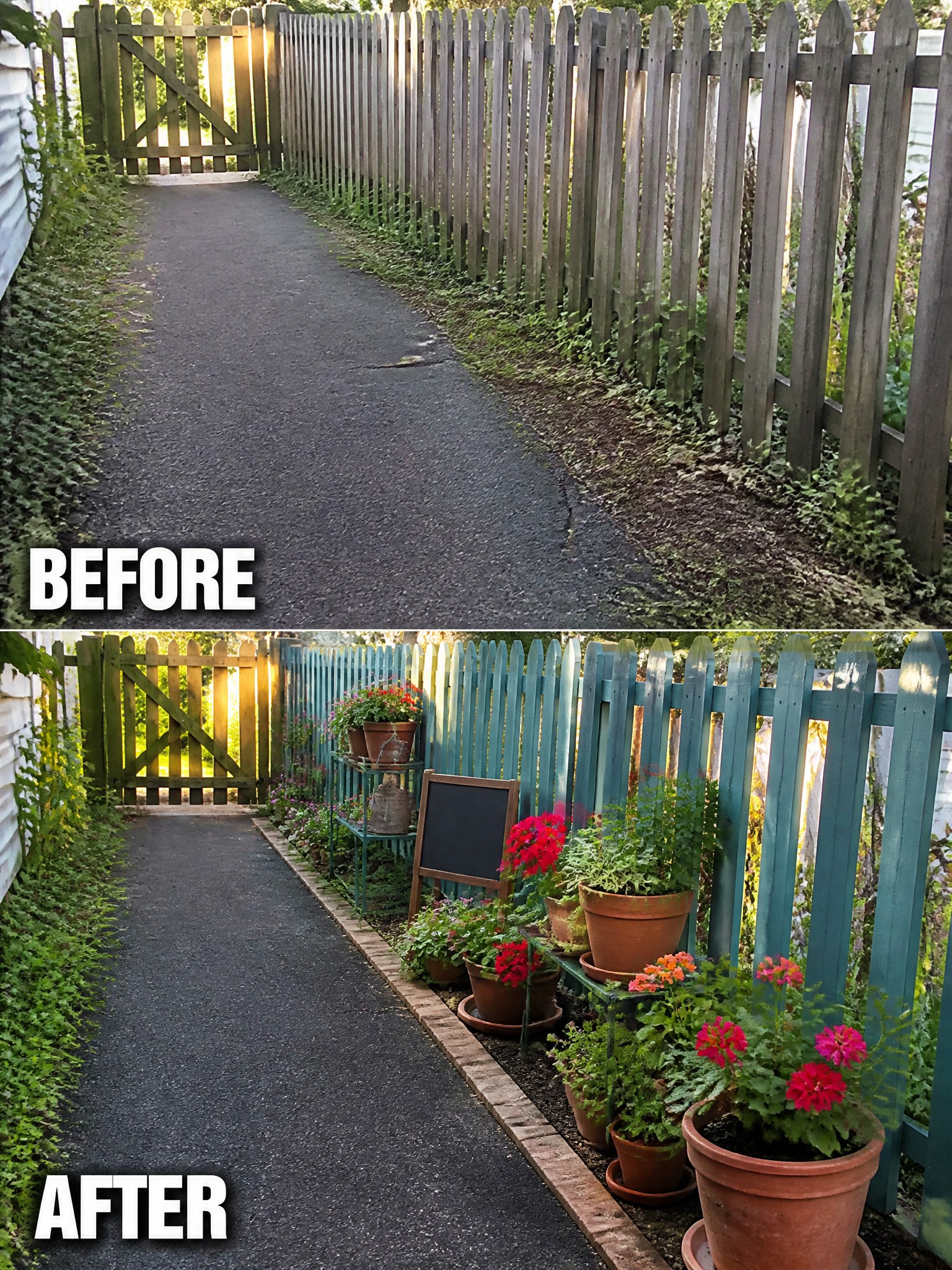
A narrow side path can feel like leftover space until you give it clear edges. Adding a simple brick border and a few plant stands turned the weedy strip into a proper garden bed that makes the walk feel more finished.
This idea works best in tight side yards where you still need to keep the path usable. Start with edging to set the line, then fill in with pots at different heights so the bed stays low maintenance and easy to adjust over time.
Frequently Asked Questions
Q: My side yard has poor soil. What should I do first?
A: Test a small spot by digging a hole and checking how water drains. Mix in compost if it feels heavy or rocky. Then choose plants that match what you have instead of fighting it.
Q: Can these ideas work on a tight budget?
A: Use free or cheap materials like leftover bricks for edging. Start with seeds for ground cover rather than buying full plants. Many of the projects rely on rearranging what you already own.
Q: Will adding anything block access to my utilities back there?
A: Keep paths clear and mark any access points before you build. Choose movable planters so you can shift them later if needed.
