

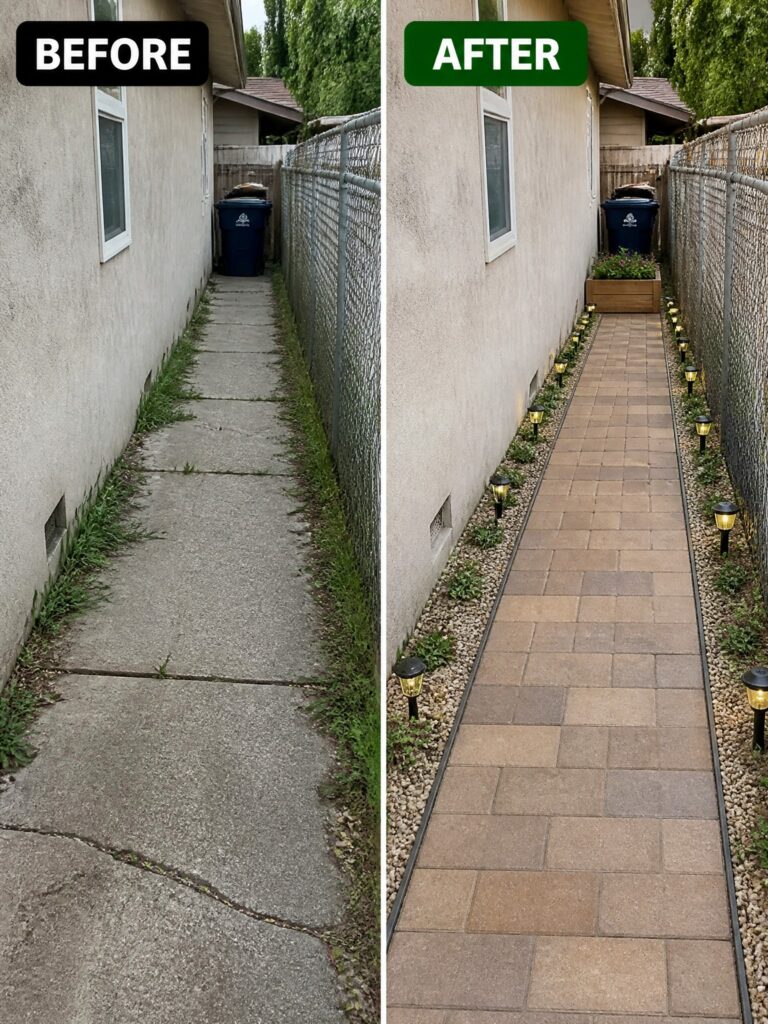
Side yards often end up as the part of the property where things get stored or just left alone because the shape feels too tight for anything else. I have found that clearing a narrow path and adding one small seating spot can make the area feel like it belongs to the rest of the house instead of sitting off to the side. Focusing on access and a bit of shade first usually leads to better results than trying to squeeze in extra plants right away. It is satisfying to pass by that strip now and see it holding a purpose rather than just filling the gap between fences. A few of these ideas seem worth trying out in stages to see what actually fits how we move through the yard.
Define A Narrow Side Yard With Pavers And Lights
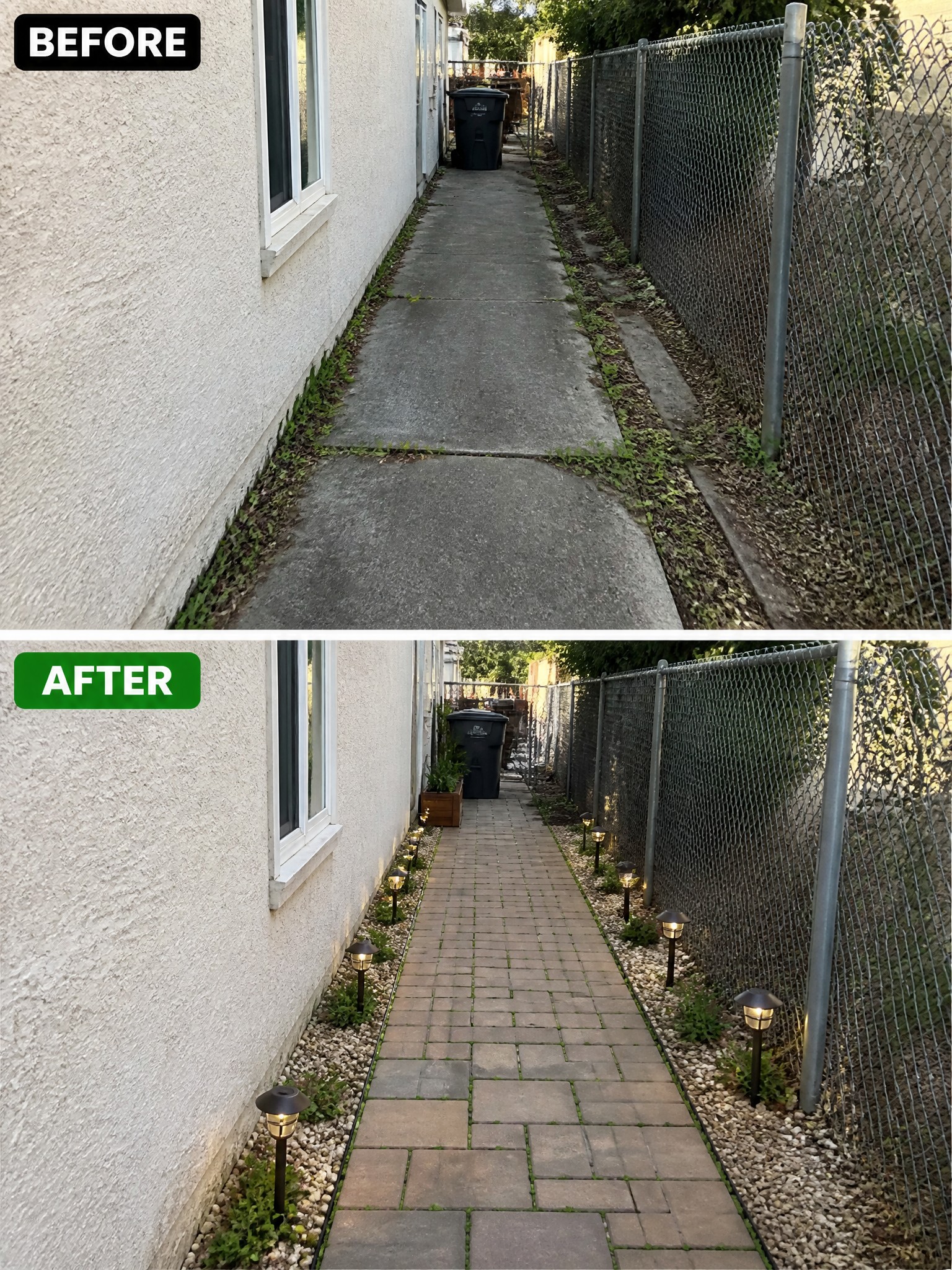
A side yard path often ends up as the most neglected part of the yard. Switching from plain concrete to brick pavers creates a solid walking surface, while gravel borders keep the edges clean and stop weeds from creeping back in. A simple line of solar lights along both sides makes the path usable after dark without any wiring.
This idea works best on long, narrow passages where you want function without crowding the space. Focus first on the paving and edging, then add lights spaced evenly so they guide the way. It keeps maintenance low and turns an awkward strip into a proper walkway.
Add Raised Beds To Organize A Narrow Side Yard
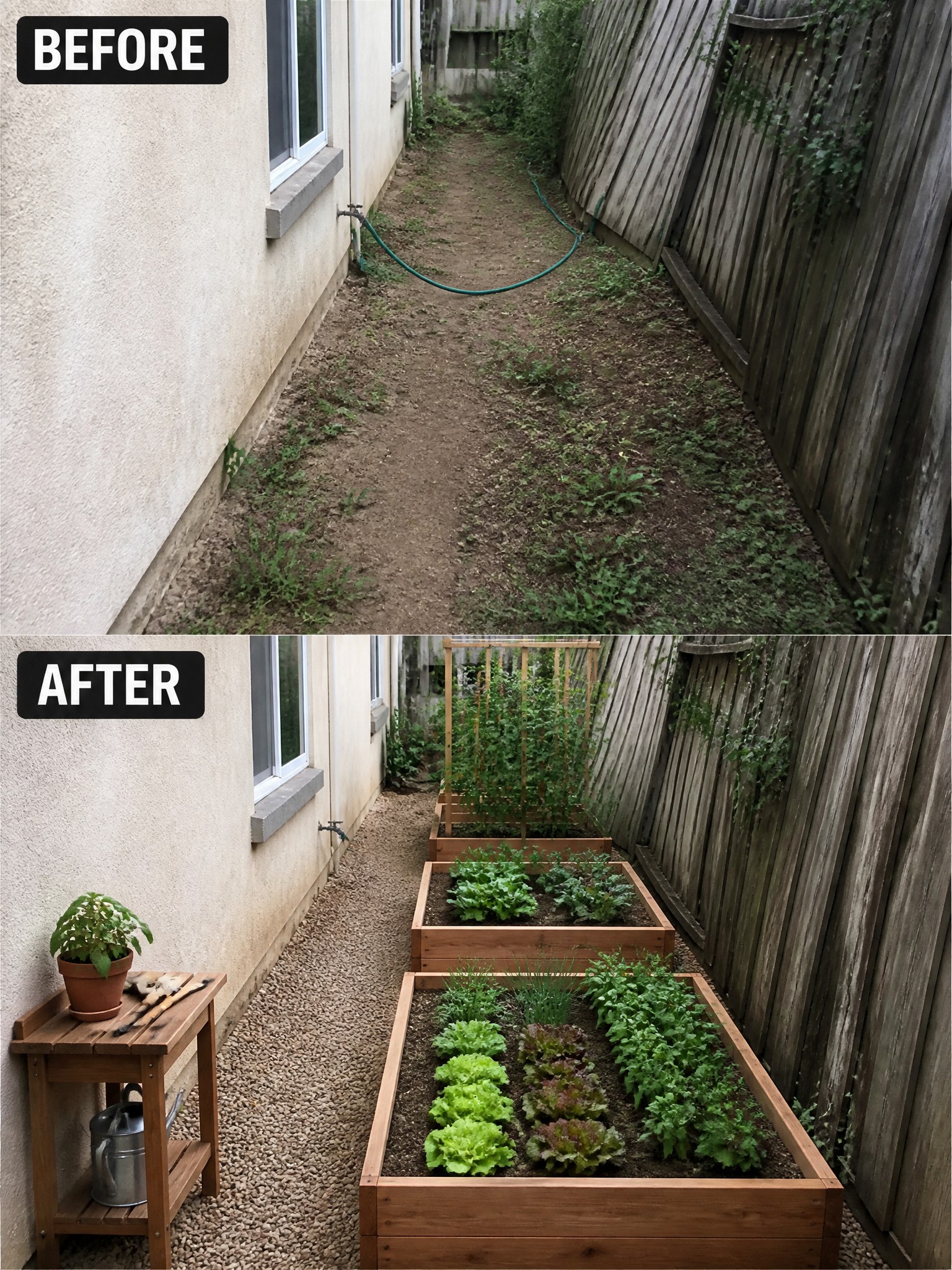
A long, narrow side yard often gets ignored because the space feels awkward and hard to keep clean. Here the dirt path and weeds were replaced with simple raised beds that line up neatly along the fence. The beds create order, keep plants off the ground, and turn the strip into a place where vegetables and herbs can actually grow.
This idea works best in tight yards where you still need room to walk. Build a few basic beds from cedar or similar wood, set them at a comfortable height, and use gravel for the path so it stays dry. It suits homes with limited backyard space and gives you a productive garden without taking over the whole yard.
Turn A Narrow Side Yard Into A Seating Area
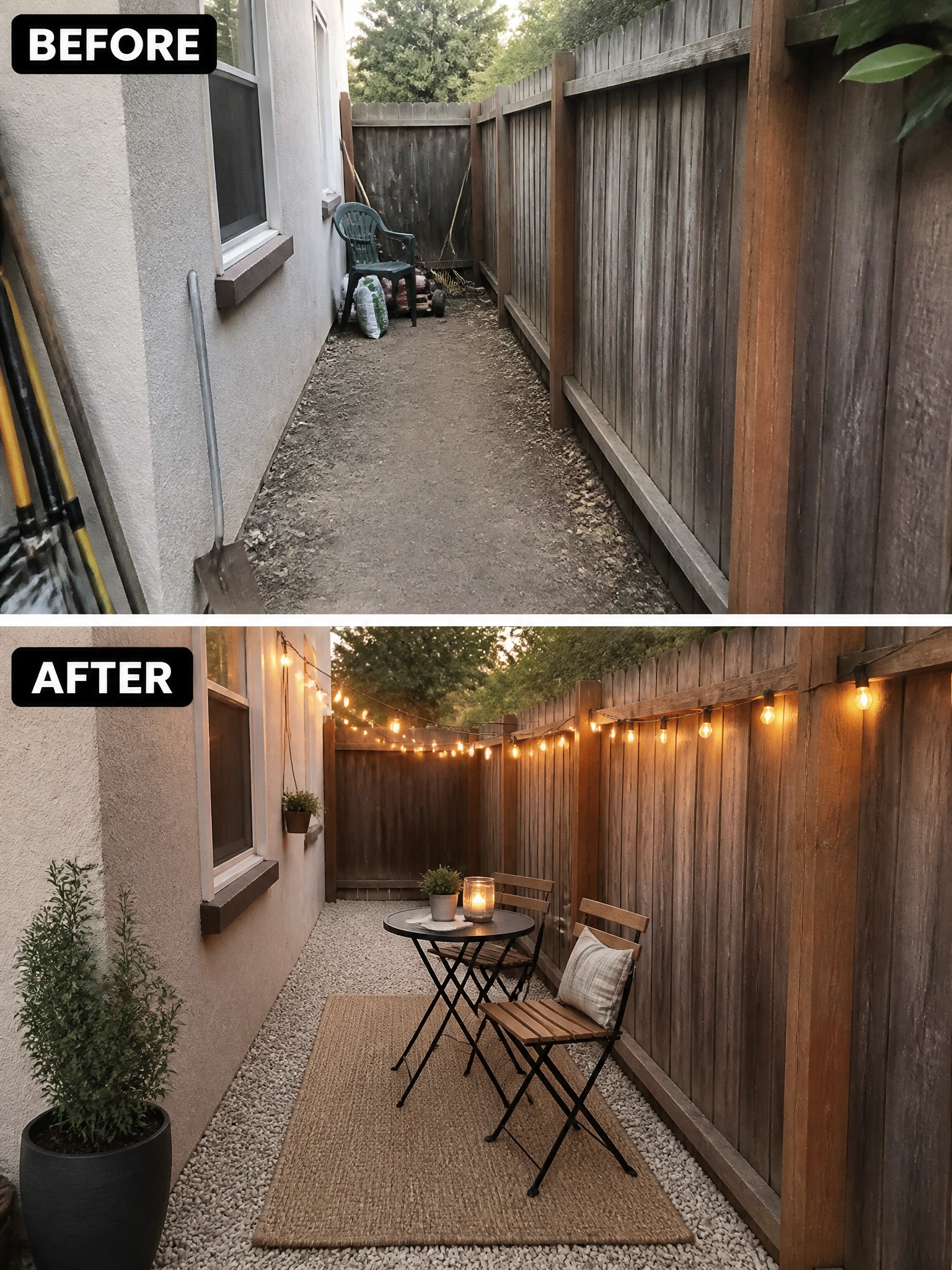
A narrow side yard often sits unused because it feels like leftover space. Clearing the clutter and adding a small table with chairs plus string lights overhead made the area feel like an intentional spot instead of a walkway.
This approach works best when the furniture stays compact and the rug defines where the seating belongs. String lights add the main sense of enclosure without needing tall structures, and a few potted plants soften the edges. The same idea suits any long, tight side yard where a full patio would not fit.
Turn A Plain Fence Into A Vertical Garden
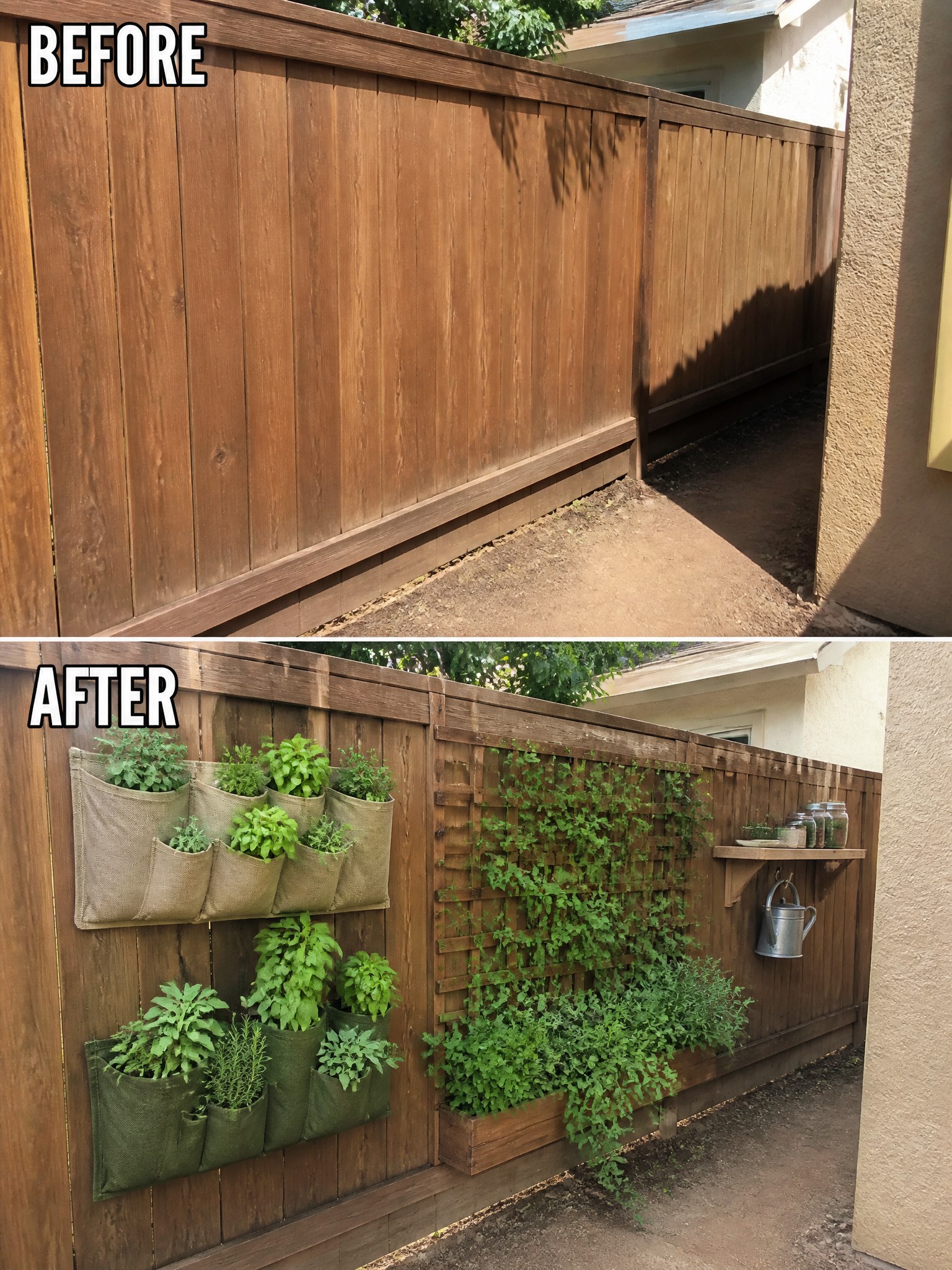
A blank fence along a side yard usually just sits there taking up space without adding much. Hanging fabric planters on one section and adding a simple trellis for vines on another turns the fence into a growing surface that makes the narrow area feel more useful.
This idea works best in tight side yards where there is little room for ground beds. Start with a few pockets for herbs or small plants and let the vines fill in the trellis over a season or two. Keep the rest of the fence clear so the planted area stays the main focus.
Turn A Narrow Side Yard Into A Deck Walkway
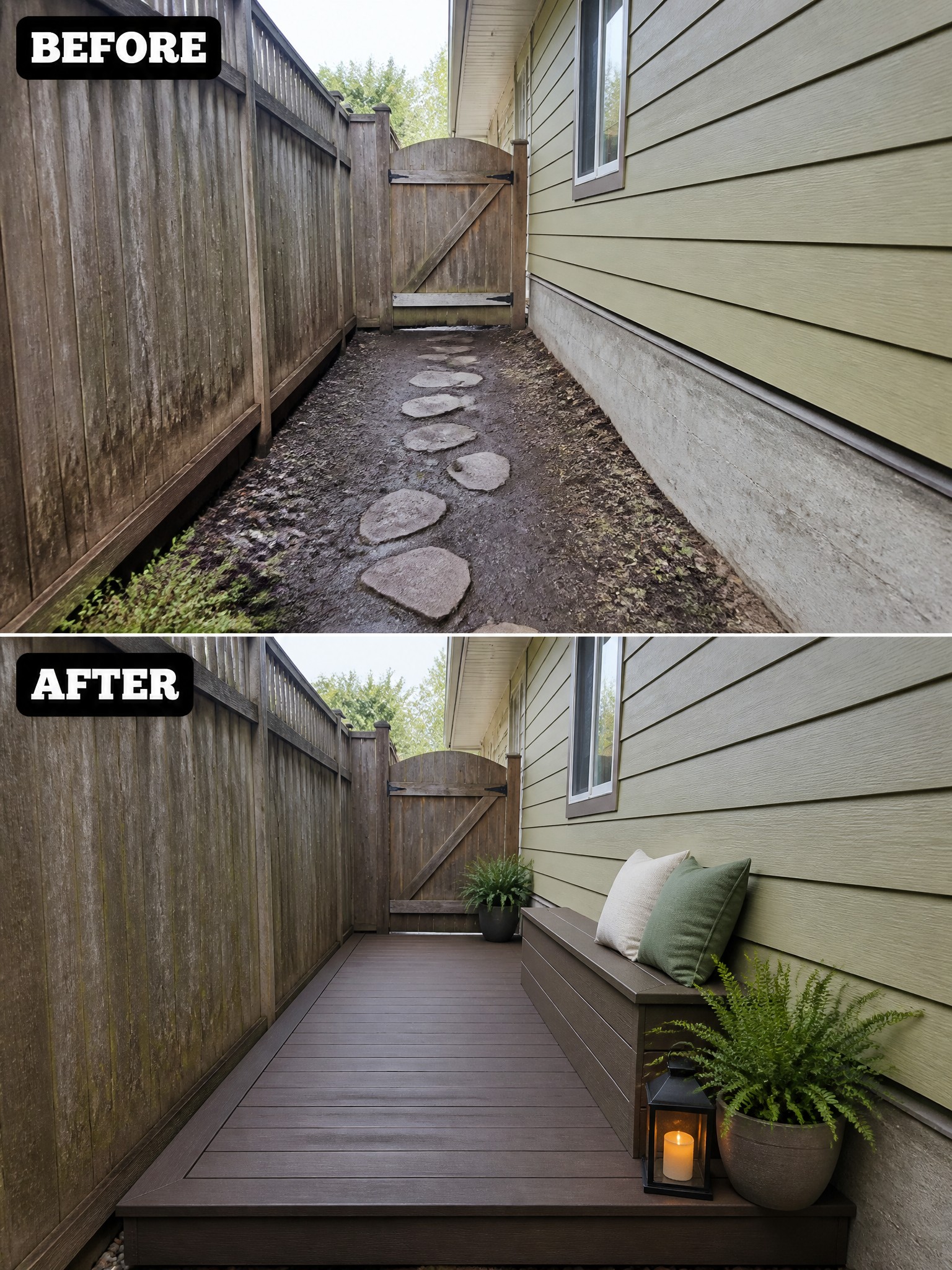
A narrow side yard often ends up as wasted space because the ground stays muddy and hard to walk on. Adding a simple deck turns the area into a clean path that stays usable in any weather. The built-in bench along the house wall also gives the space a place to sit without taking up extra room.
This approach works well on homes where the side yard connects the front and back. Keep the deck width narrow so it still leaves room to move, and choose weatherproof materials for the bench and seating. A few potted plants and one light source can make the walkway feel finished without crowding it.
Turn A Narrow Side Yard Into A Seating Area
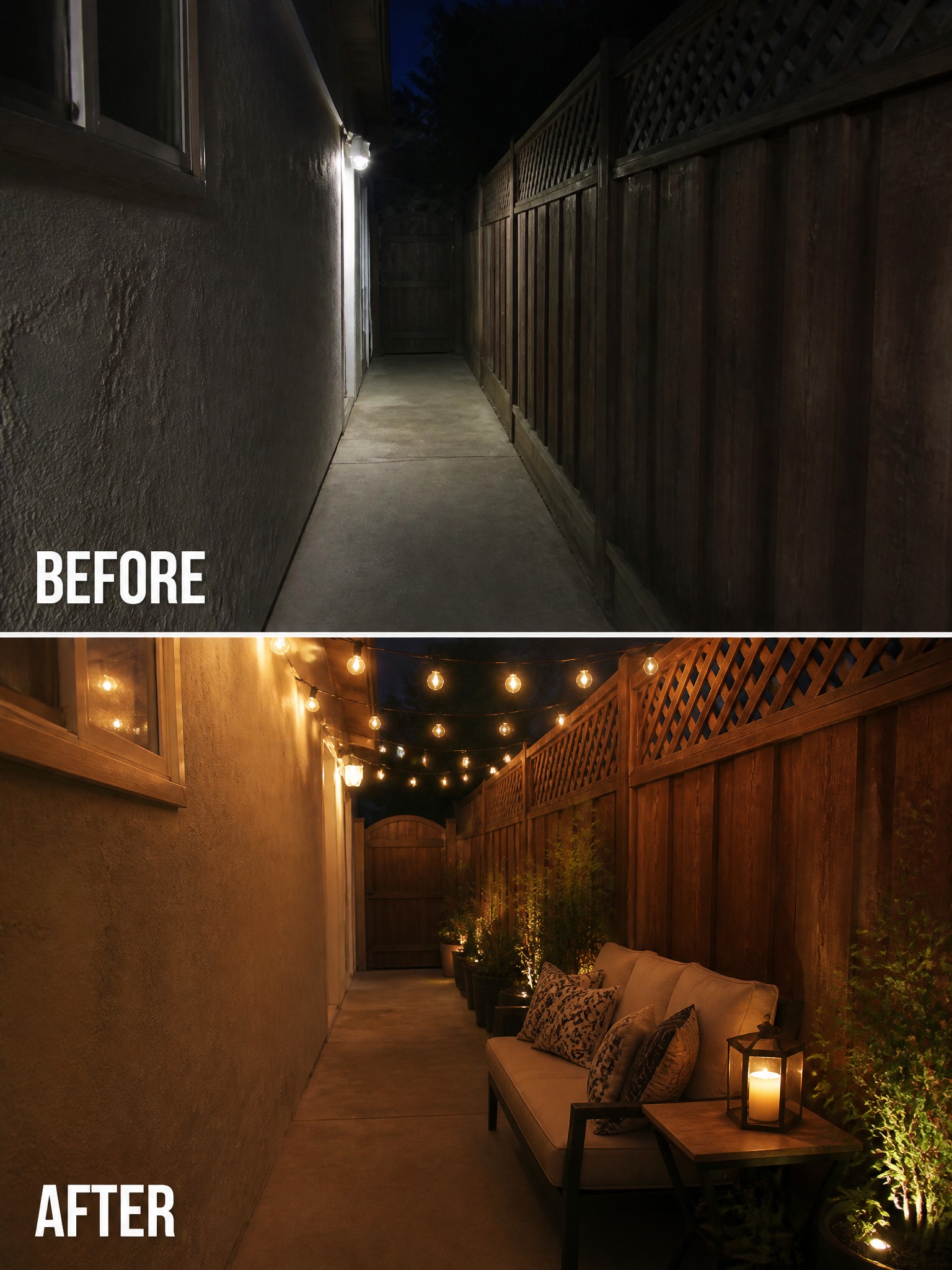
Many side yards stay empty because they feel too tight and dark for anything useful. Stringing lights overhead and placing a simple bench or sofa along the fence turns the space into a spot where people can actually sit.
This idea works best on homes where the fence runs close to the house. Keep the seating low and the path clear so the area stays easy to walk through. Focus the lights and any small tables right around the seating so the rest of the yard does not feel crowded.
Use Stepping Stones To Give A Side Yard Path Structure
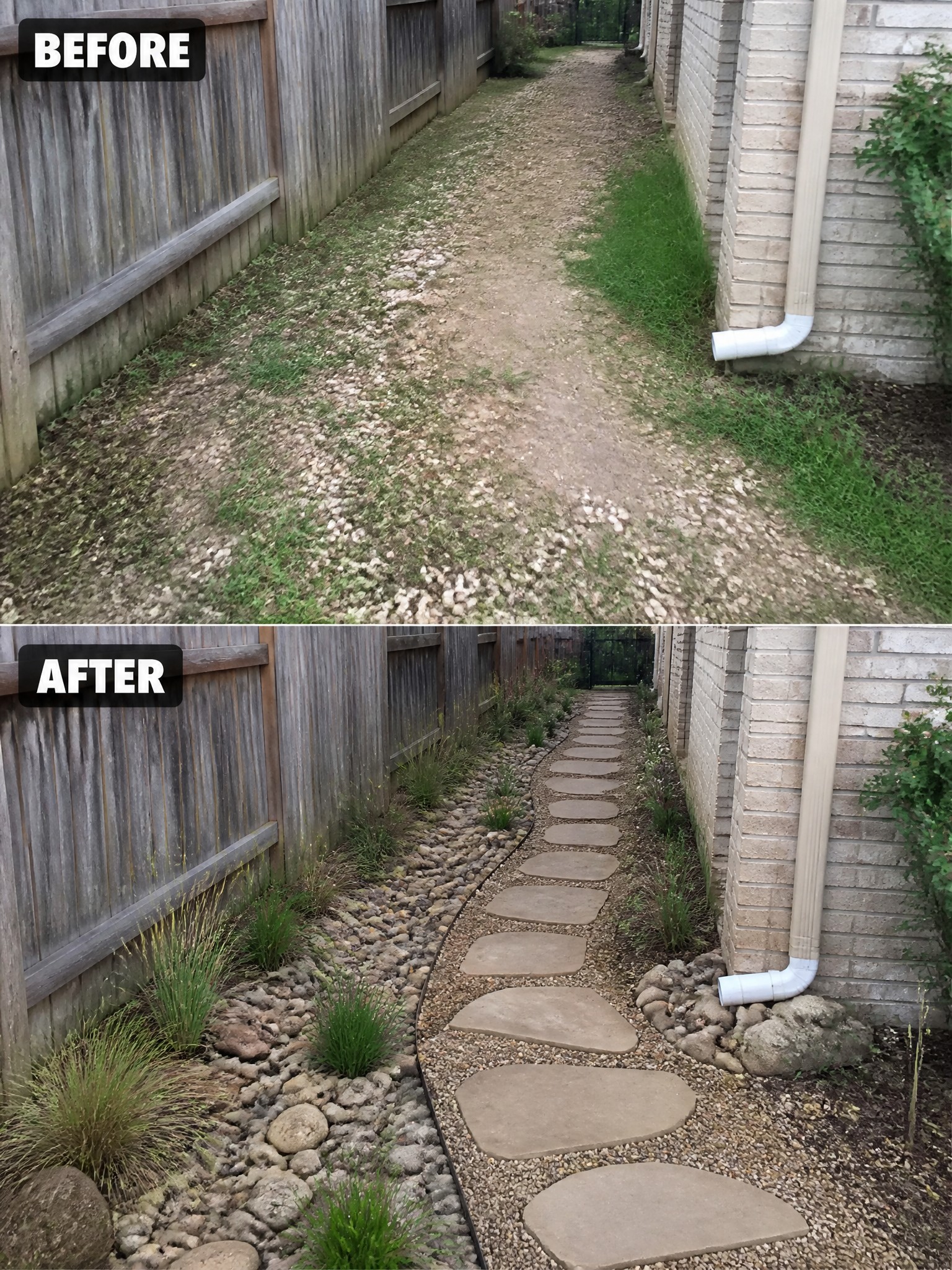
A narrow side yard often ends up as an afterthought, with just a worn dirt path and scattered weeds. Laying down stepping stones creates a clear walking route while the gravel on either side keeps the area from looking messy and helps with drainage.
This approach suits homes with tight side yards where you still need access to the backyard. Focus first on clearing the ground and setting a slight curve if the space allows, then choose stones large enough to step on comfortably. Keep plantings simple along the edges so the path stays the main feature.
Add A Covered Structure To Organize A Side Yard
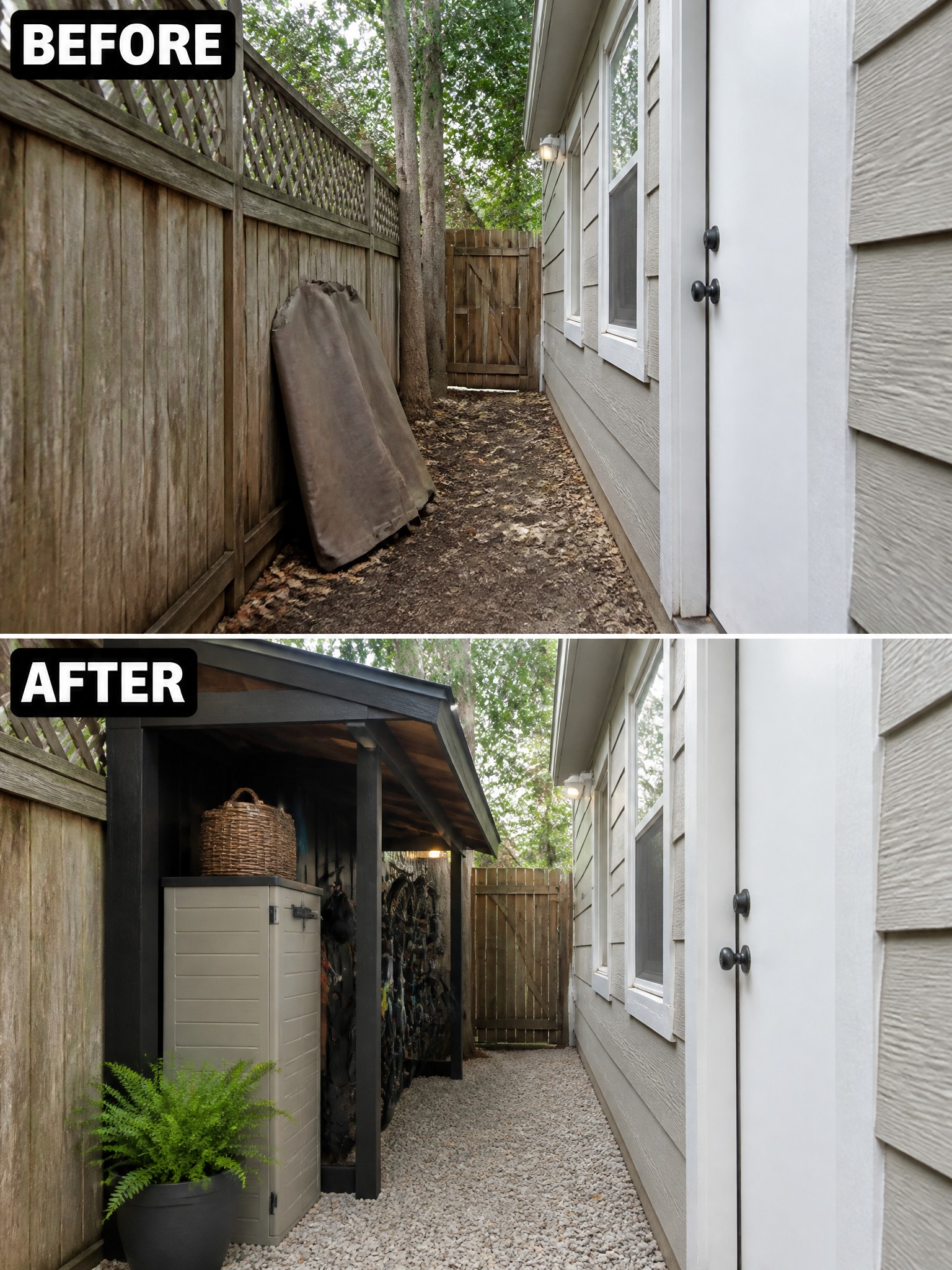
A narrow side yard often becomes a catch-all for odds and ends that have nowhere else to go. Adding a simple covered structure gives the space a clear job by creating room for storage bins, bikes, and tools while keeping them protected and out of the main walkway.
This idea suits homes with tight side passages where full rooms or patios would not fit. Keep the structure basic, use gravel underfoot for better drainage, and place the largest storage piece against the back wall so the path stays clear.
Add Lattice Fencing To Create Privacy In A Side Yard
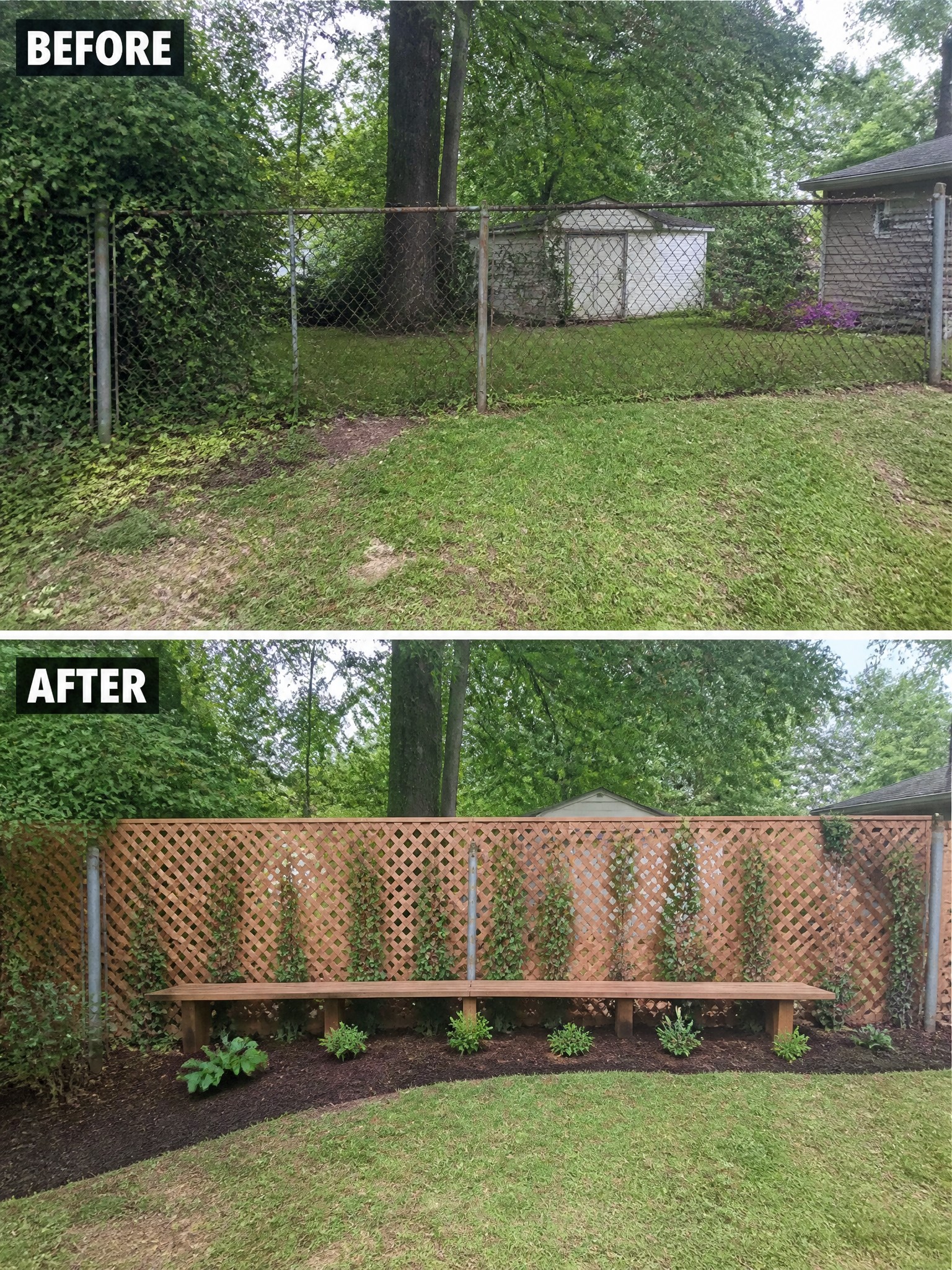
A chain link fence leaves a side yard feeling exposed and unfinished. Replacing it with wood lattice panels gives the space a clear boundary while still letting light through. Adding a simple bench at the base turns the area into a place where someone can actually sit.
This approach works best on narrow side yards that run along a property line. Keep the fence height modest so it does not overwhelm the space, then use mulch and a few low plants along the bottom to soften the base. The result feels planned without requiring a large budget or complicated layout.
Create A Path Through A Narrow Side Yard
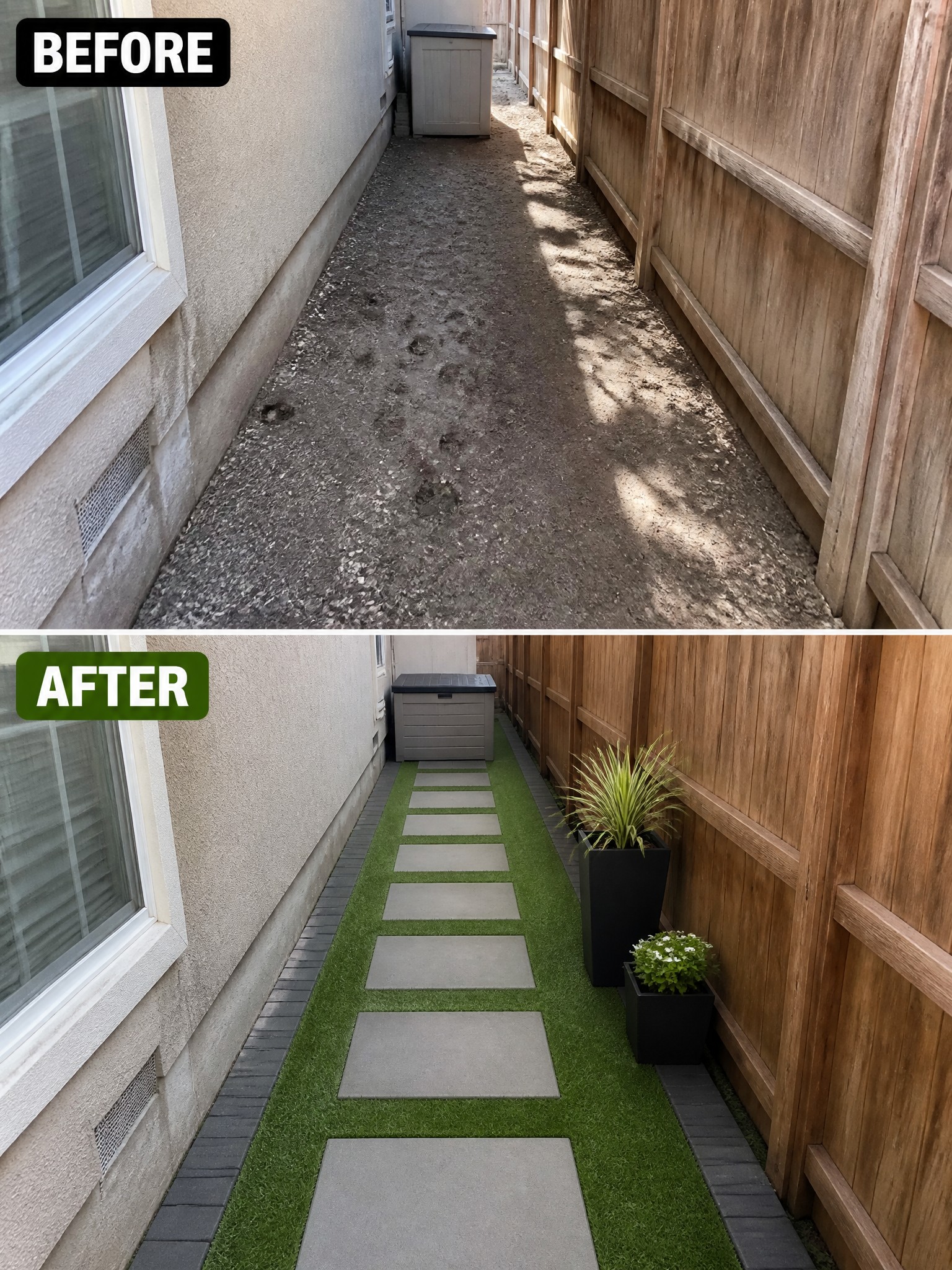
A bare dirt strip between the house and fence often gets ignored because it feels like wasted space. Adding a straight line of pavers over artificial turf gives the area a clear purpose and makes it easy to walk through without tracking in mud. The change turns the side yard from an afterthought into a simple, functional route.
This idea works best on long, narrow lots where you need access to the backyard but do not want to spend much on full landscaping. Keep the planting minimal, such as a couple of pots along the fence, so the path stays open and easy to maintain. Focus first on the ground surface before adding anything else.
Add A Potting Bench To Make Your Side Yard Useful
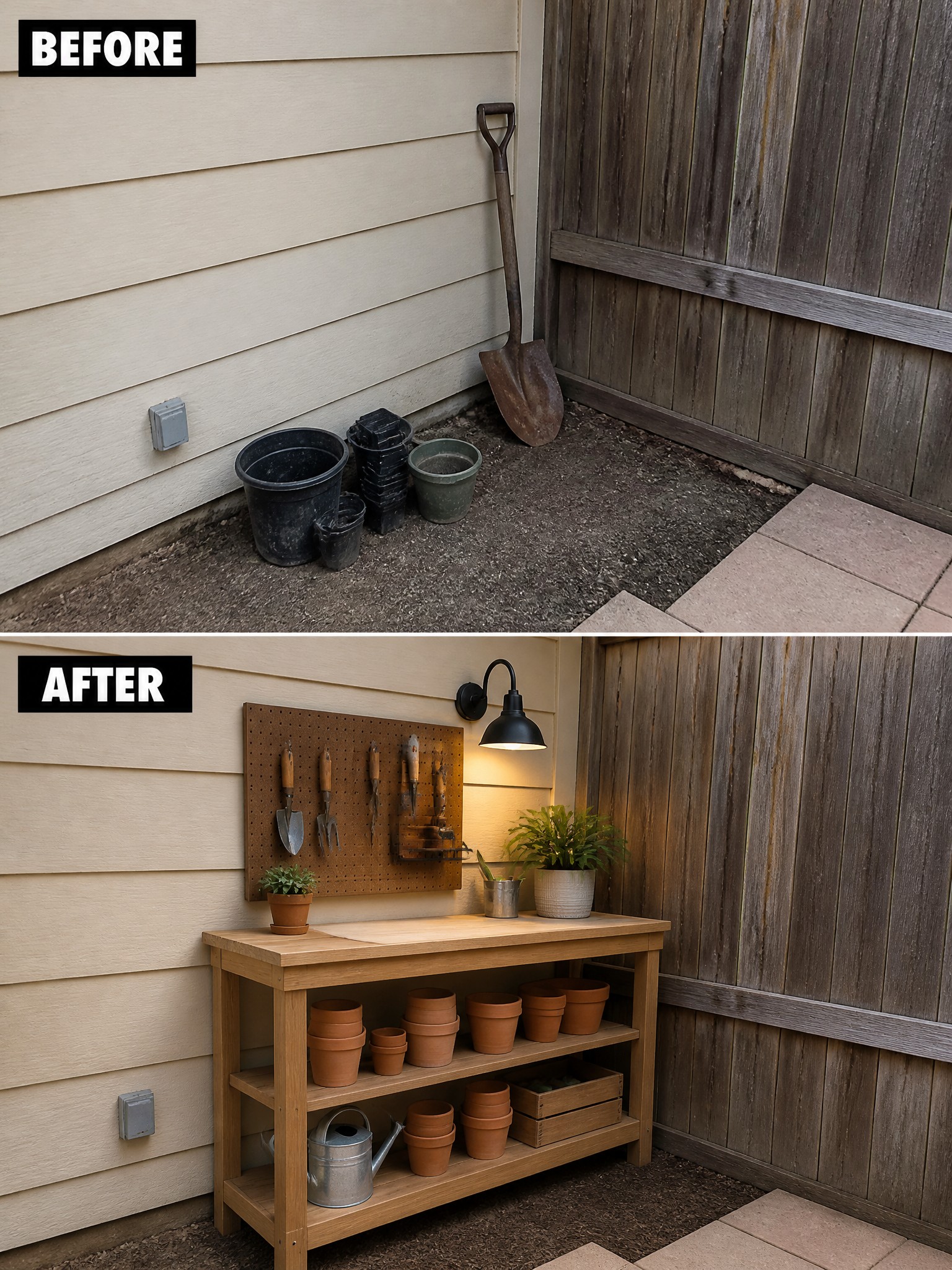
A side yard often becomes a dumping ground for extra pots and tools because it has no real purpose. A basic wooden bench with open shelves below and a pegboard on the wall above turns the same spot into a working area where everything stays in reach and off the ground.
This idea fits narrow side yards best, especially on homes where gardening happens regularly. Choose a bench that leaves room to walk past and add one light so the space stays usable after dark. Keep the lower shelves for pots and supplies you use often and resist adding too many extras that could crowd the walkway.
Give Weathered House Siding A Fresh Coat Of Paint
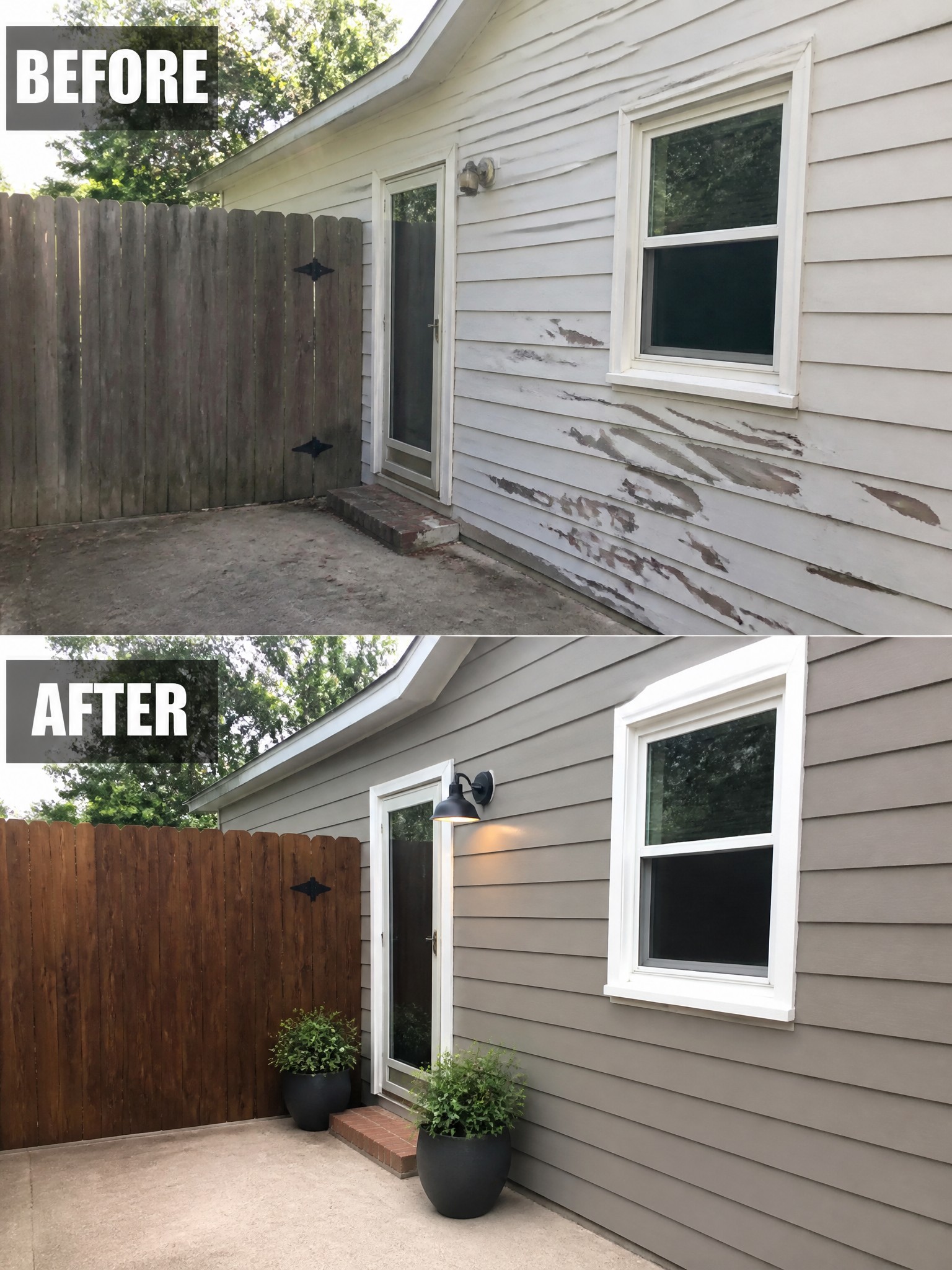
A side wall with peeling paint can make the whole area feel neglected even when the rest of the yard is fine. A simple repaint in a solid new color, plus fresh white trim, instantly cleans up the look and pulls the house and yard together. The change from the worn white surface to a consistent gray tone shows how much difference one coat can make.
This approach works well on any side of the house that faces a fence or patio space. Start with a thorough cleaning and repair of loose boards, then pick a color that ties in with the fence or nearby structures. Adding a couple of large planters at the base helps soften the wall without taking up much room.
Add Structure To An Overgrown Side Yard
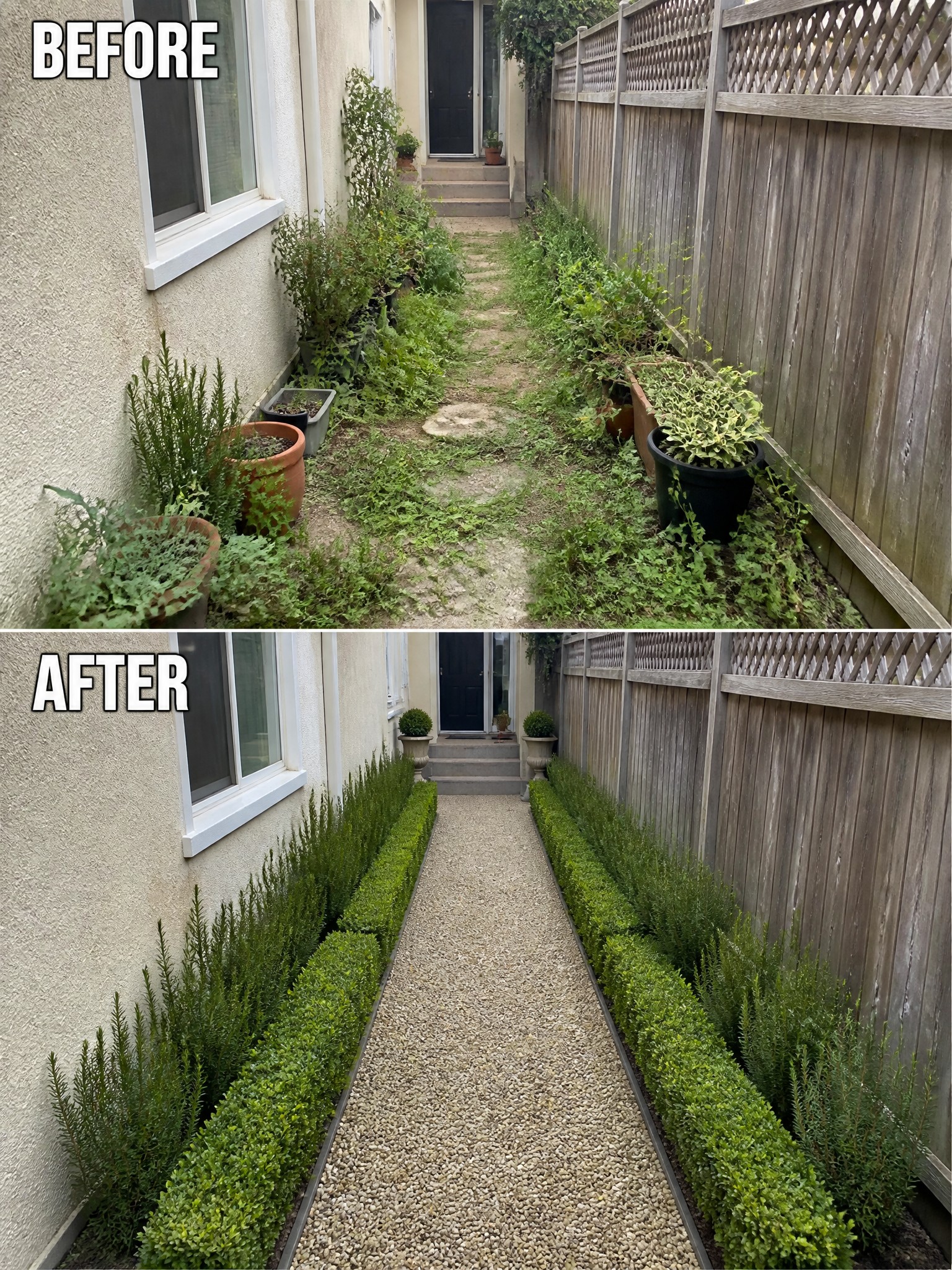
Side yards often turn into weedy strips because they get ignored. Clearing the growth and adding a gravel path with rows of simple hedging gives the space a clear purpose and makes it feel maintained rather than forgotten.
This idea works best on narrow passages that connect the front and back of the house. Gravel handles foot traffic and drainage without much upkeep, and repeating one or two sturdy plants keeps the look consistent. Keep the planted edges narrow so the path stays usable.
Add Terraced Beds To A Sloped Side Yard
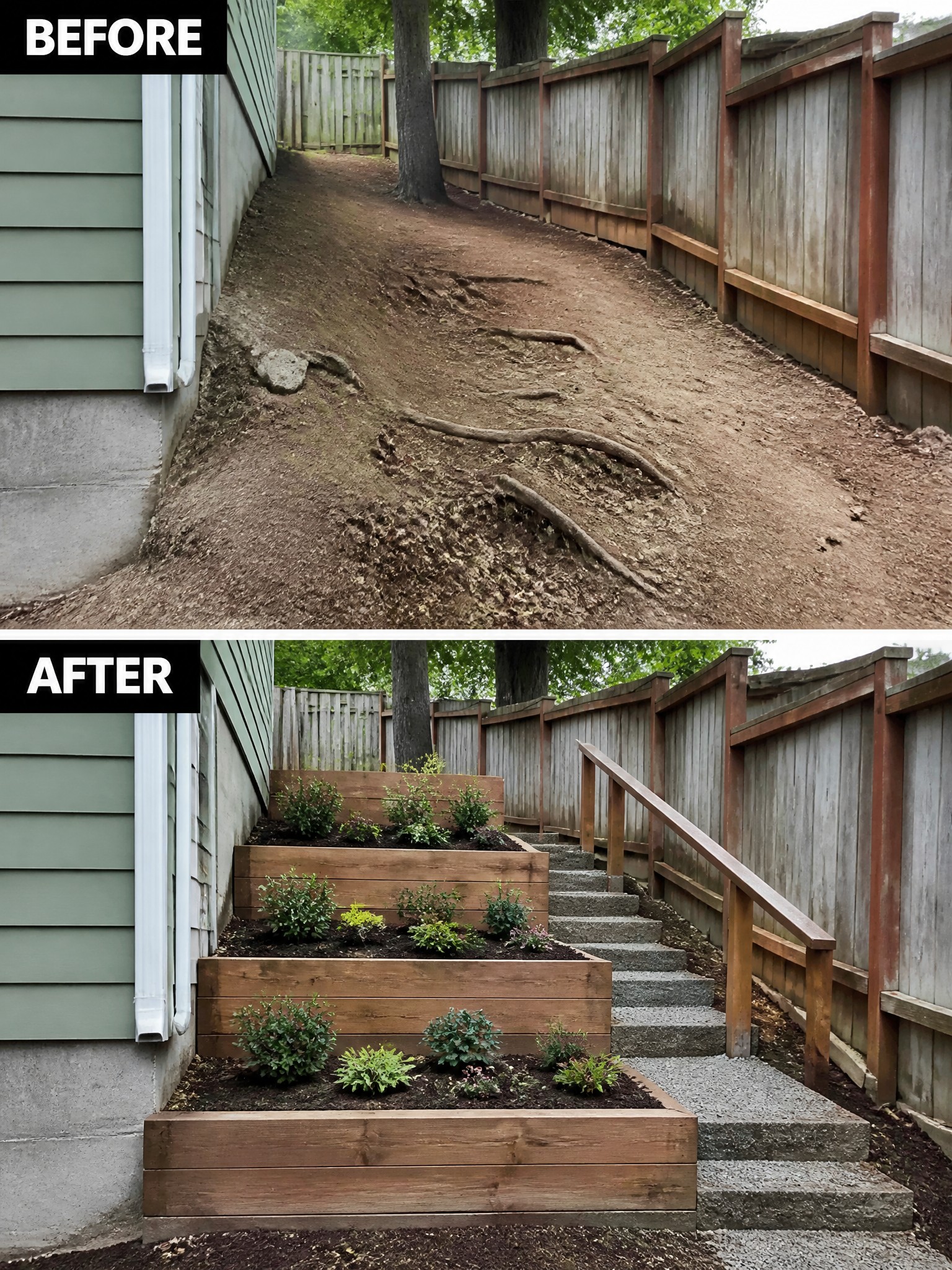
A bare muddy slope next to the house often gets ignored because it is hard to walk on or plant. Terraced wooden boxes turn the slope into flat garden beds while the new stairs give safe access from top to bottom.
This idea suits homes with narrow side yards that connect the front and back. Build the boxes first so the soil stays in place, then add the steps. Gravel on the treads helps with drainage and keeps the path from getting slick after rain.
Collect Rainwater And Shape A Side Yard Garden
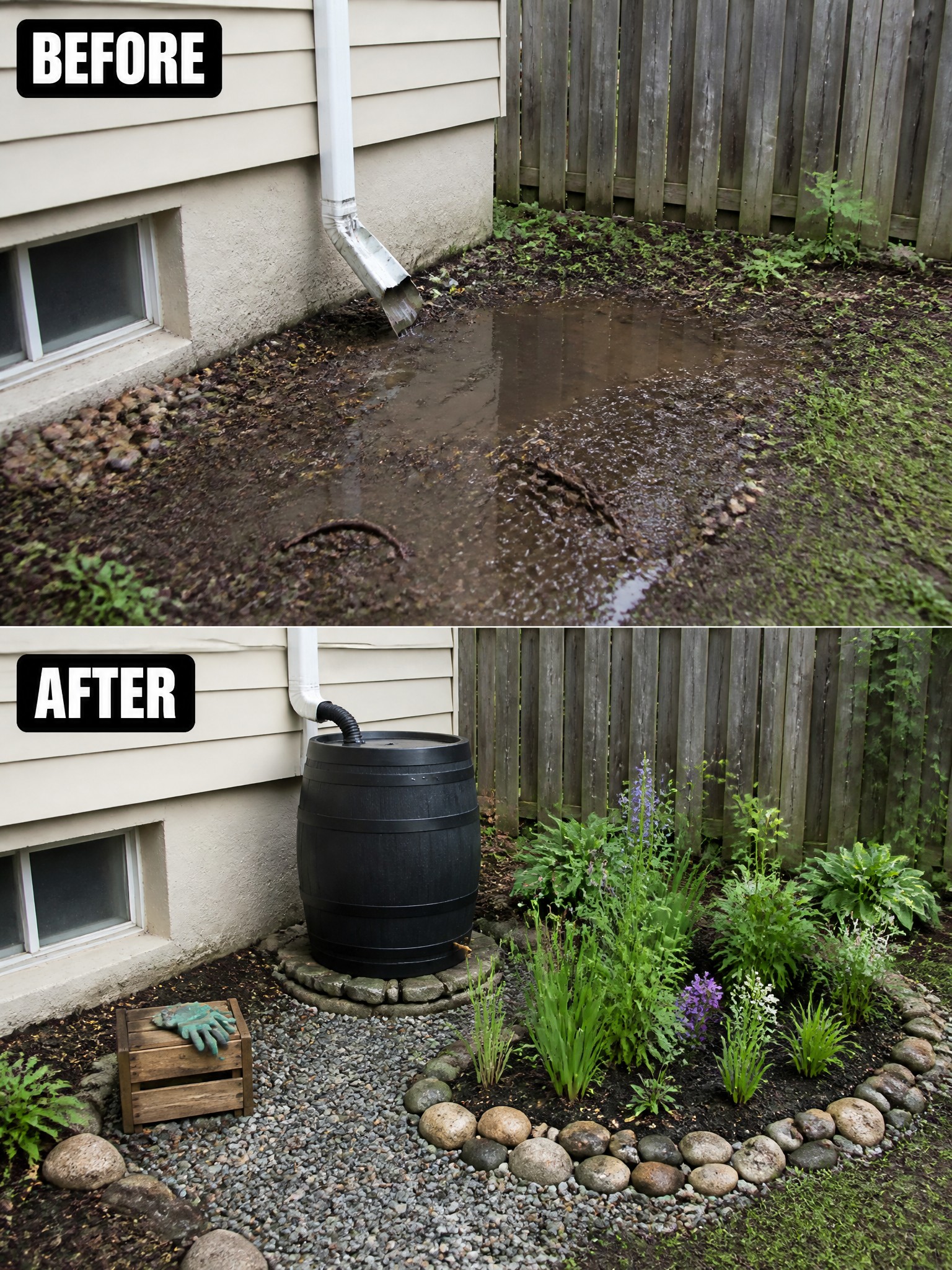
A downspout dumping water straight onto bare ground often leaves a soggy, muddy patch that never dries out. Adding a rain barrel catches that flow at the source, while simple rock edging and gravel create a clean border that keeps the rest of the yard from washing away. The result is a small space that finally feels intentional instead of neglected.
This approach works well along narrow side yards or any spot where runoff creates problems. Start with the barrel to control the water, then add basic edging and a few plants suited to the light. Keep the gravel layer thin enough for drainage but thick enough to stop mud from showing through.
Turn A Narrow Side Yard Into A Seating Area
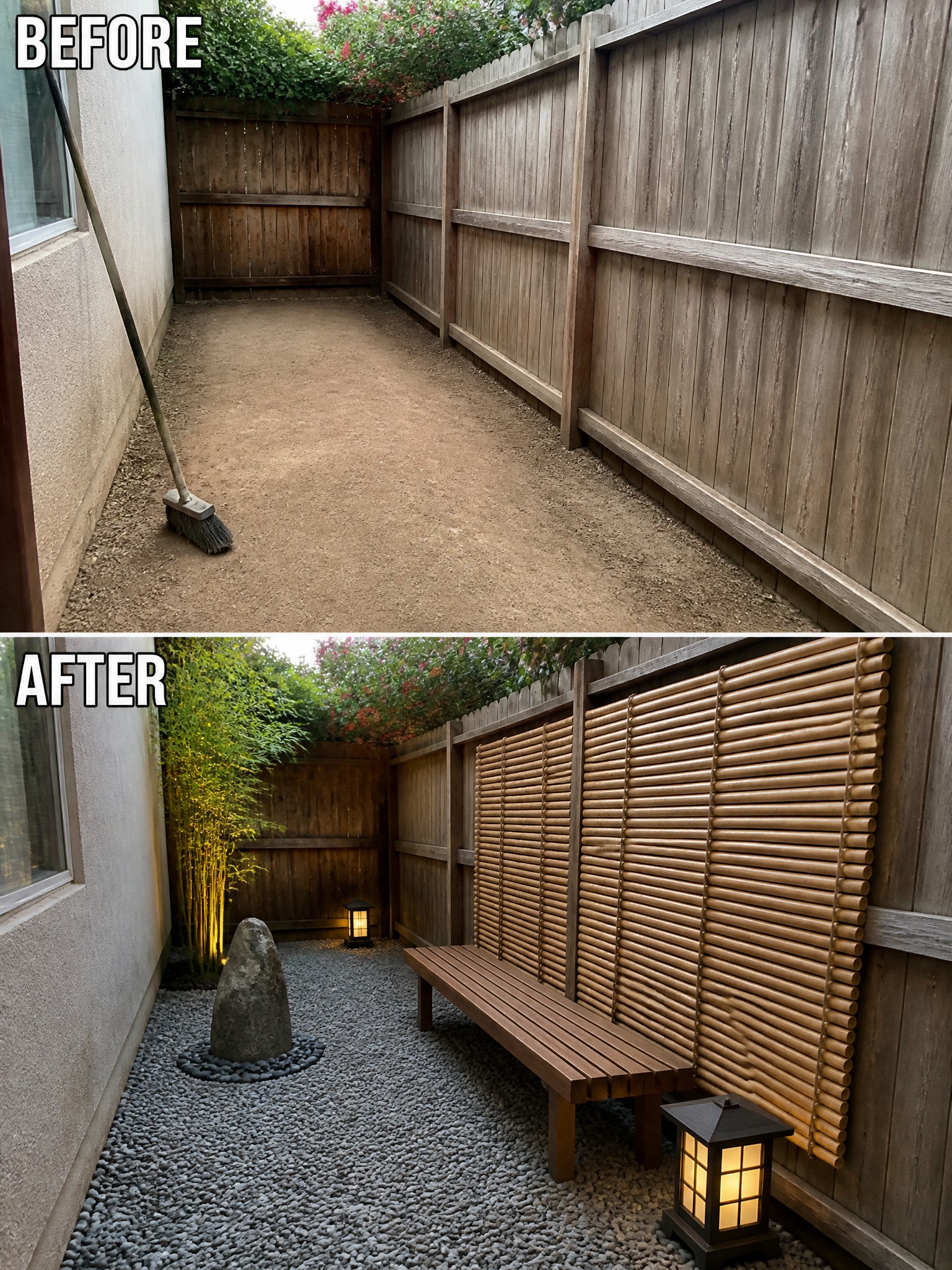
A narrow side yard often stays empty because it feels too tight for anything useful. Laying gravel across the dirt gave the space a clean, defined floor, and placing a simple wooden bench along the fence turned it into a spot where someone can actually sit. A few plants and lanterns add just enough interest without making the area feel crowded.
This idea works best in long, slim yards next to the house where full landscaping would feel overwhelming. Keep the ground cover simple and choose one main seating piece that fits the width. Leave room to walk through so the space stays practical instead of turning into storage for extra furniture.
Turn A Bare Patio Into A Simple Outdoor Kitchen
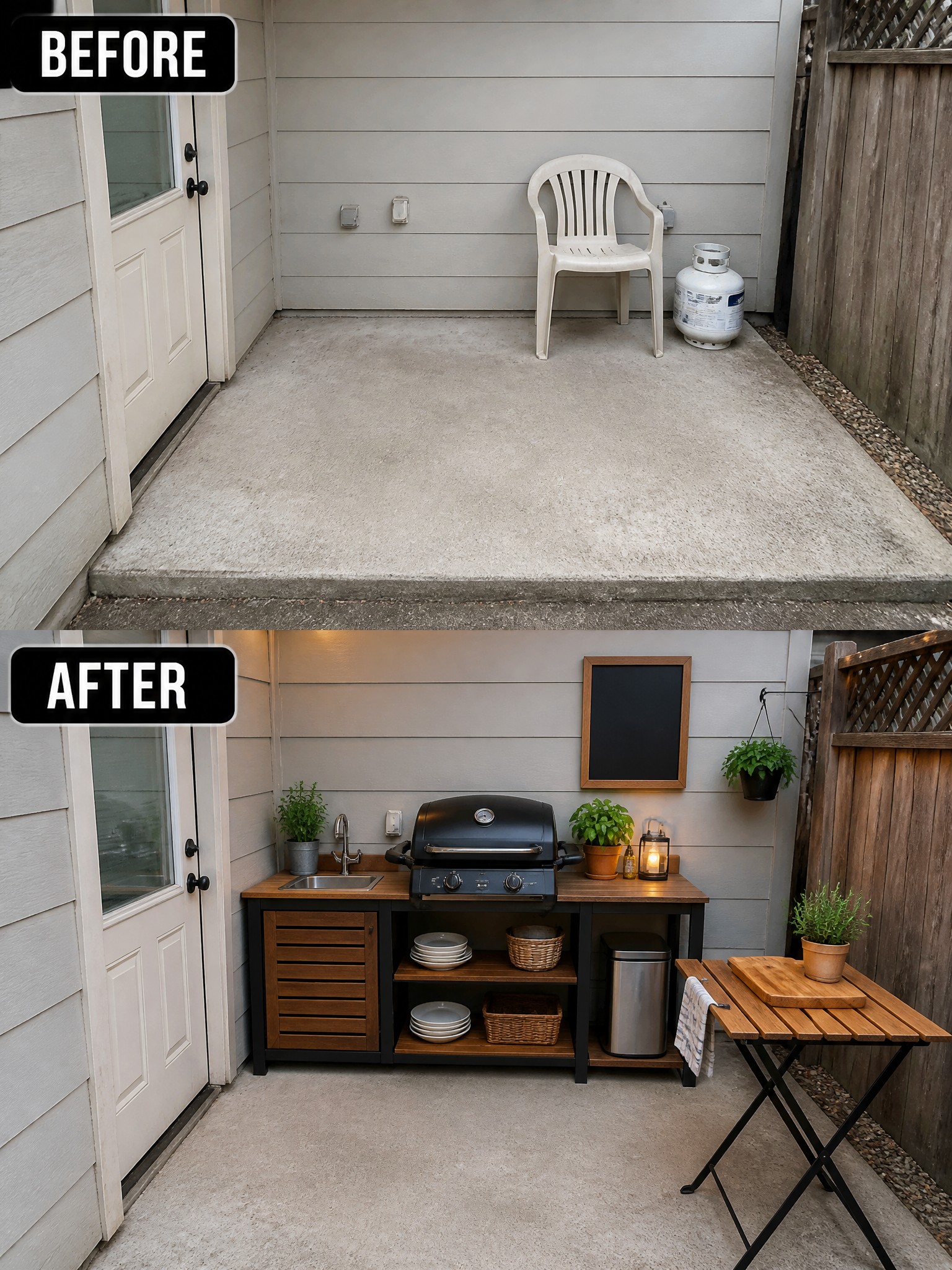
An empty concrete pad next to the house rarely gets used on its own. Adding a basic counter with a grill, sink, and open storage underneath turns the space into a place where meals can actually happen. The change gives the area a clear function instead of leaving it as leftover ground.
This idea works best on narrow side yards or small back patios where full decks feel like too much. Keep the counter short enough to leave walking room, and choose weatherproof materials from the start. A small folding table next to it can handle overflow dining without crowding the main area.
Add Wall Storage To Make A Side Yard Functional
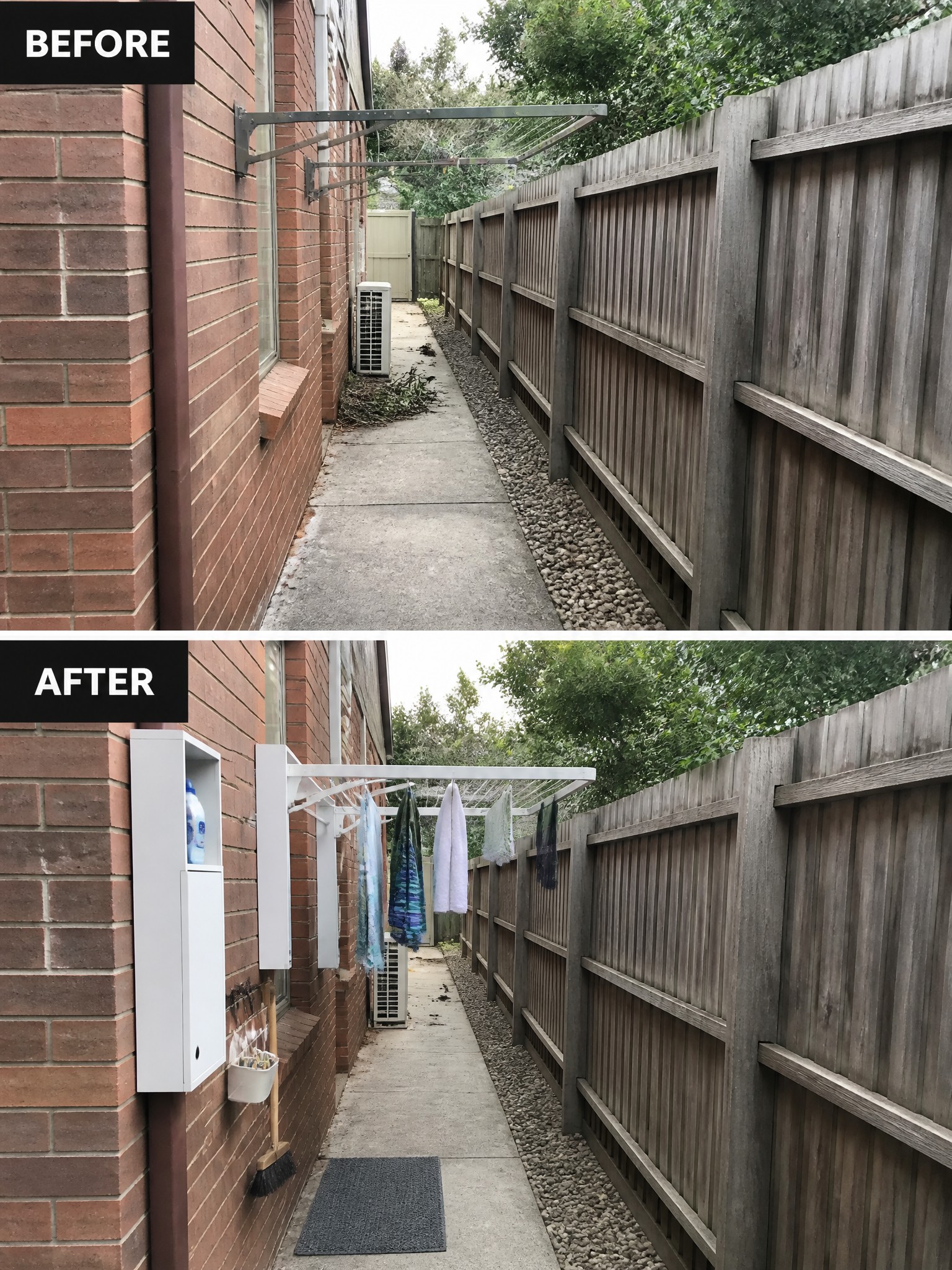
A narrow side yard often gets used as nothing more than a walkway and a spot for the clothesline. Mounting a simple cabinet on the wall creates useful storage without crowding the path, and the addition of a small mat helps mark the area as more than just leftover space.
This idea works best on homes where the side passage runs close to the house and gets regular foot traffic. Keep the storage unit shallow, use hooks for brooms and small items, and choose a finish that blends with the exterior so the whole area stays tidy and practical.
Frequently Asked Questions
Q: Is there anything I can do if my side yard is only a few feet wide? A: Focus on a simple gravel path with potted plants on one side. Add a bench at the end if space allows. This turns the strip into a walkway you actually use.
Q: What about water pooling in the side yard after storms? A: Slope the ground slightly away from the house before adding any new surface. Then lay down gravel or stepping stones to let water drain through. You avoid mud and keep the area walkable year round.
Q: How do I add privacy to my side yard without a tall fence? A: Grow climbing vines on a trellis or choose dense shrubs that stay narrow. These soften the space while blocking the neighbor’s view. Start with fast growers like ivy if you want quick coverage.
