

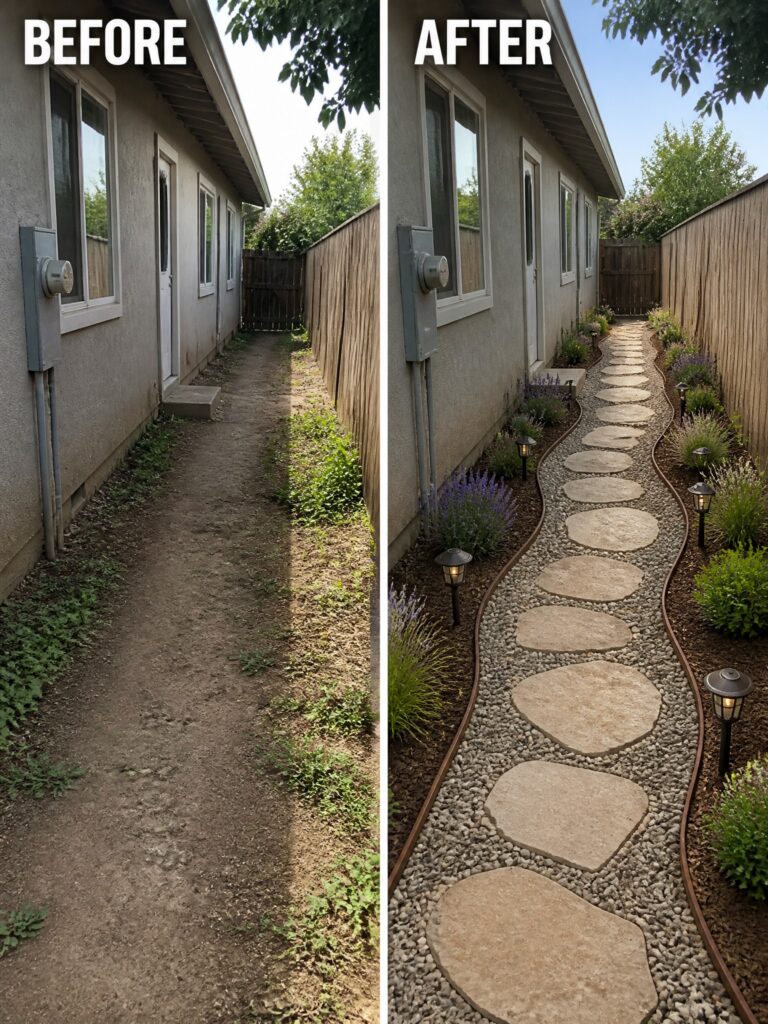
Side yards tend to become the spot where extra stuff gets stored or where the lawn just runs out without any clear purpose.
Putting in a path changes how the space works by guiding movement and keeping feet out of the mud after rain.
That one change matters more than it seems.
Layering plants along the edges then adds depth and softens the view from the windows.
I usually start with the path layout first when I work on these spots because everything else follows from there.
Add A Defined Path To A Narrow Side Yard
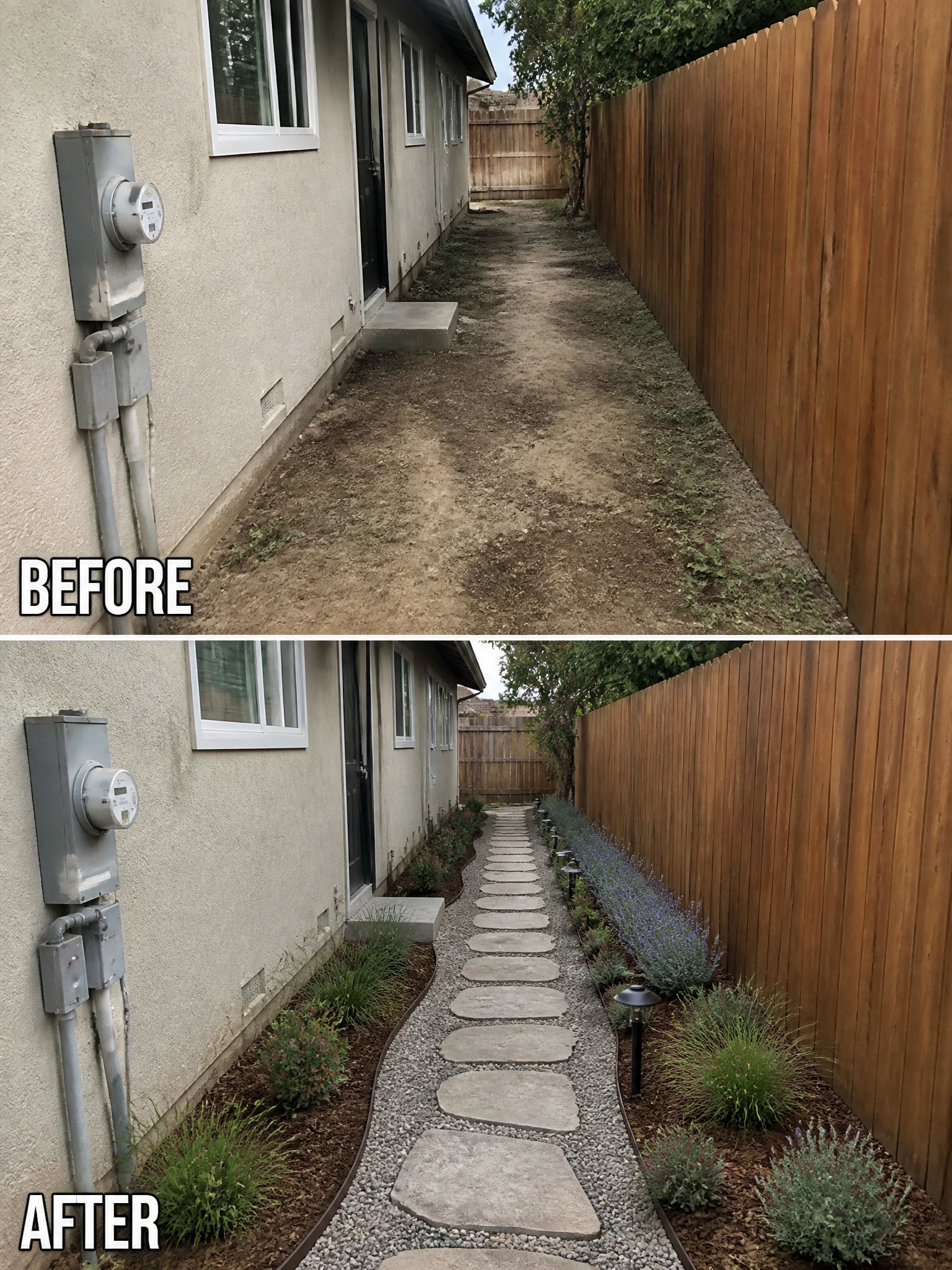
A bare dirt strip next to the house often gets ignored because it feels like wasted space. Laying down gravel with stepping stones creates a clear walkway that stays usable in any weather and gives the area a finished look without needing a lot of room.
This idea works well on long, narrow side yards where you need access to the backyard. Keep the path width comfortable for walking, use simple edging to hold the gravel in place, and add low plants along the fence so the beds stay low maintenance.
Add Structure To An Overgrown Side Yard
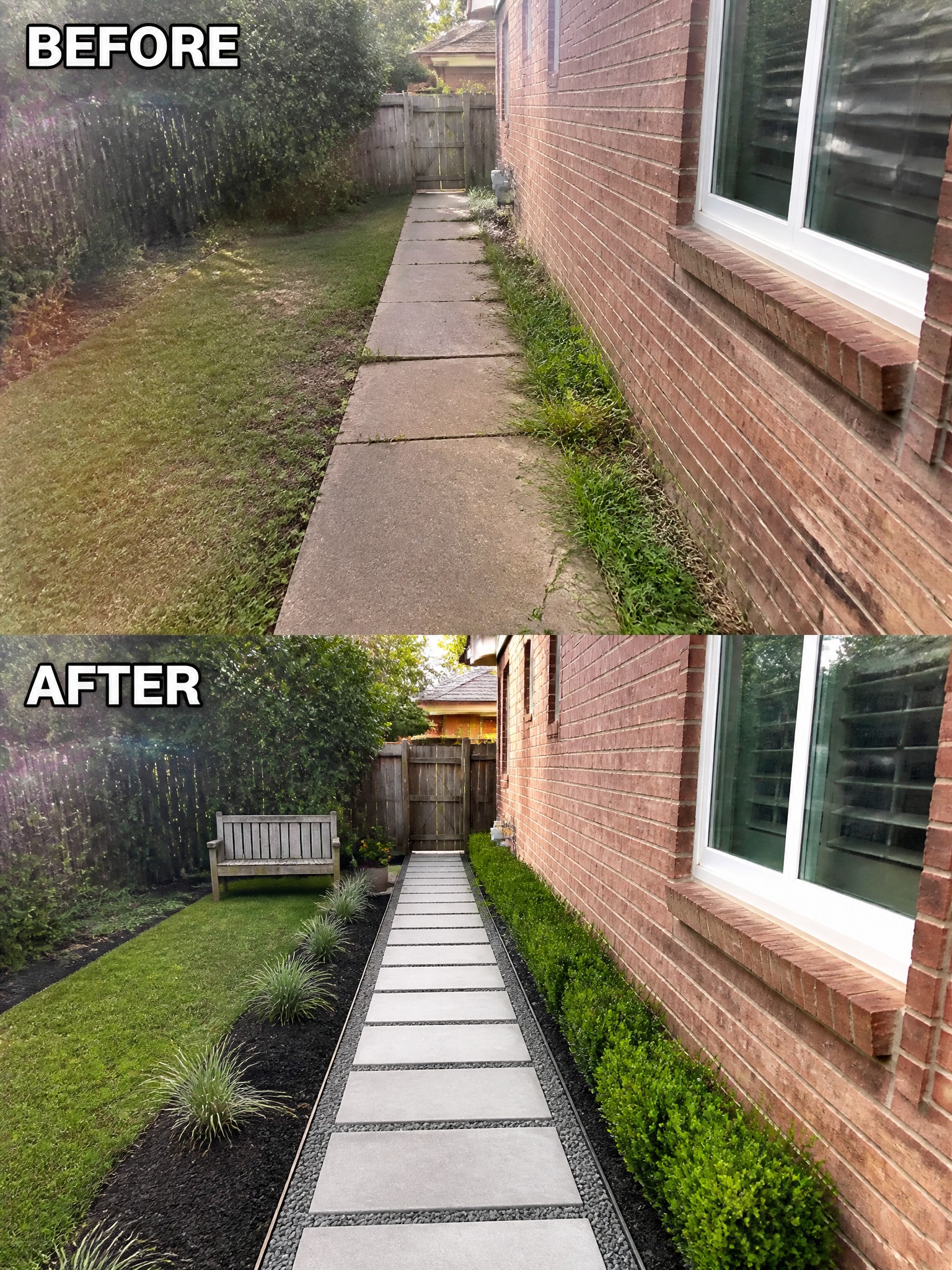
A long, narrow side yard often turns into an afterthought with just a strip of grass or weeds running beside the house. The change here comes from laying a straight paver path in gravel and adding planted borders on both sides, which turns the space from messy to organized without making it feel crowded.
This idea suits homes where the side yard mainly serves as a walkway but could use more shape. Keep the path width practical for walking, use gravel to hold everything in place, and stick to low plants so the beds stay neat and do not block movement.
Add A Defined Path To An Overgrown Side Yard
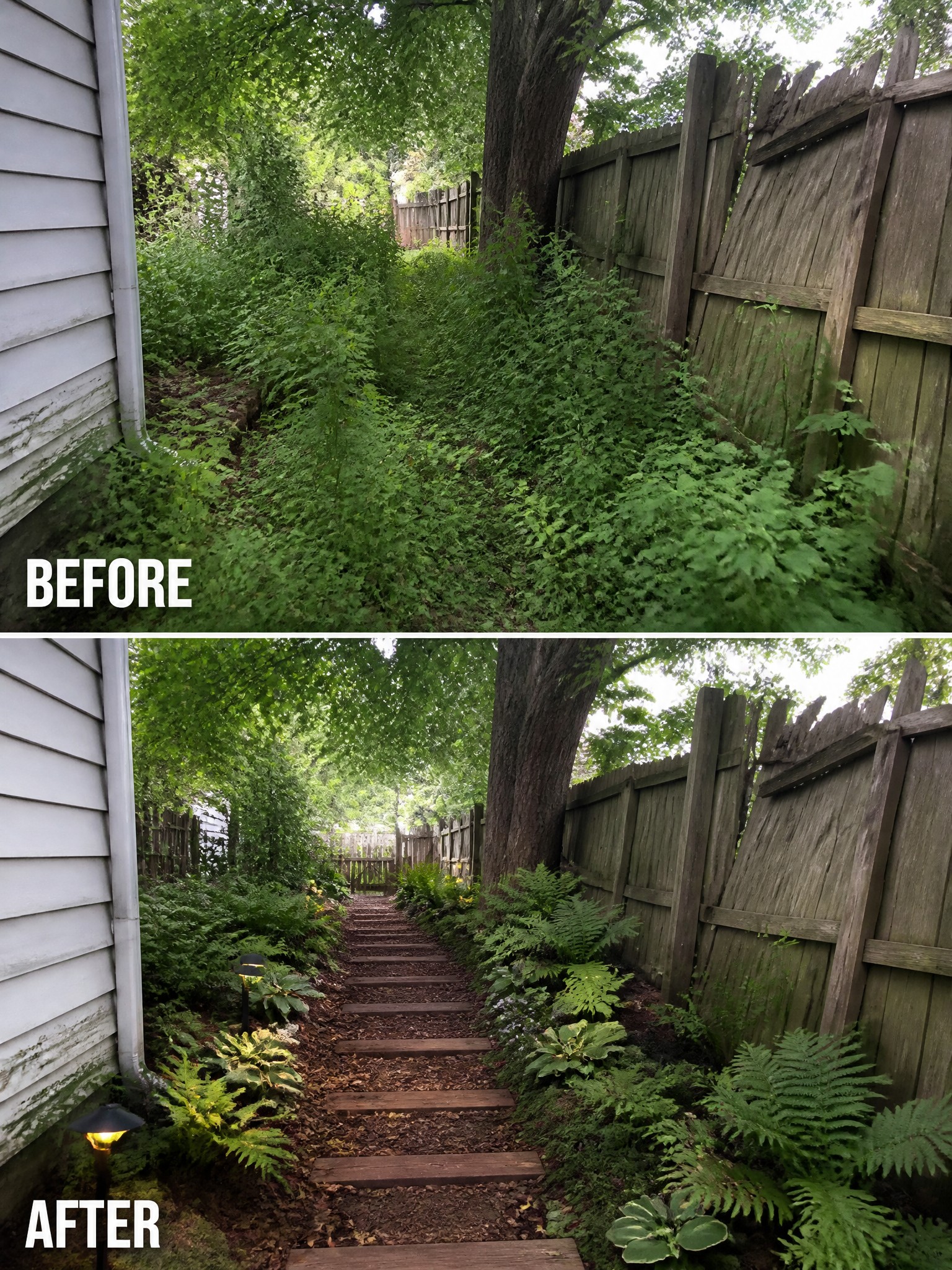
The side yard was choked with weeds and low branches, so walking through it felt like pushing through a thicket. Adding wooden steps and clearing space along the edges made the narrow strip feel open and easy to use.
This approach works best in tight areas between a house and a fence. Start by cutting back the overgrowth completely, then build a simple path with steps or gravel before planting the borders with ferns and hostas that handle shade.
Add A Defined Path Through A Narrow Side Yard
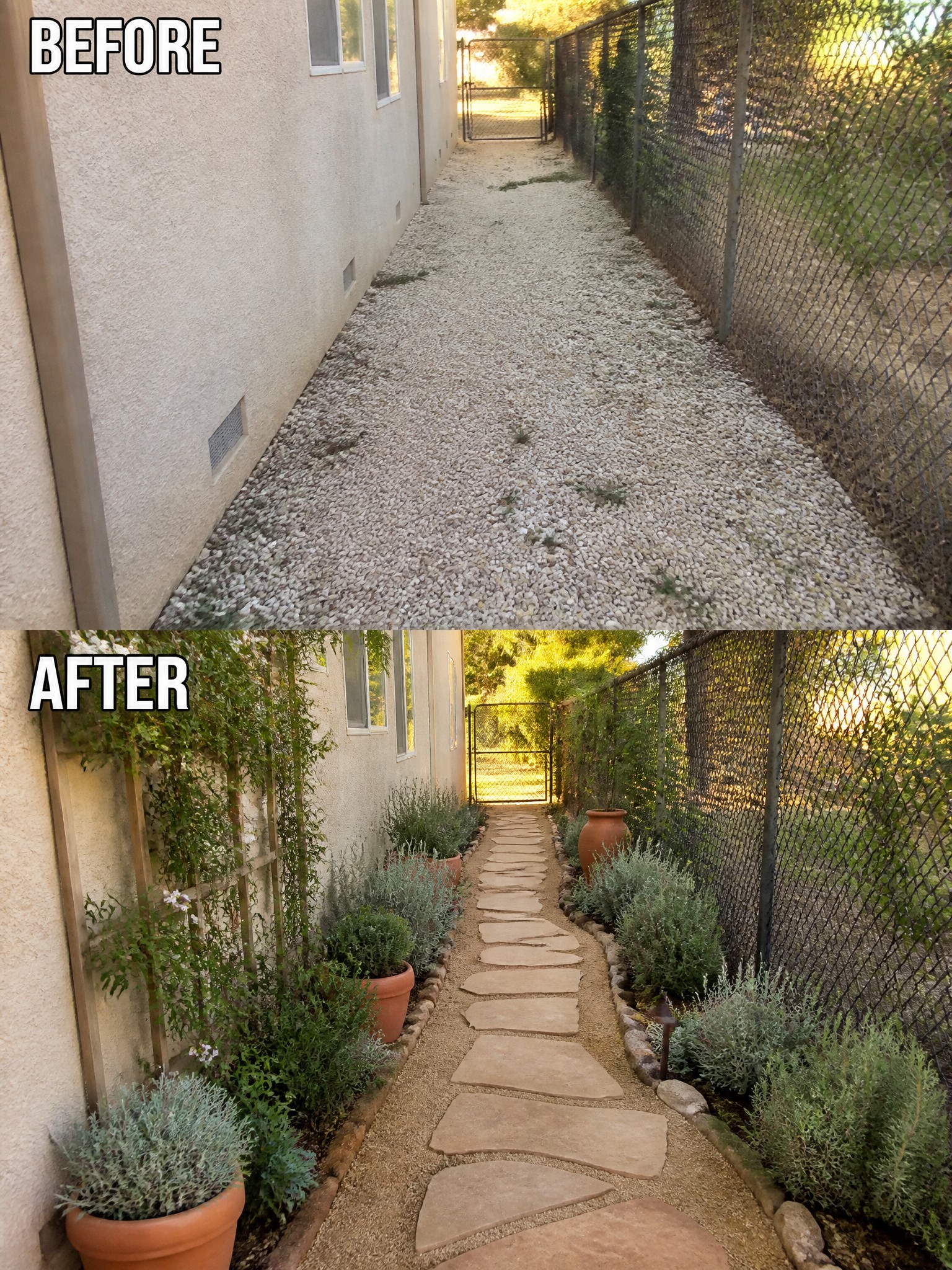
A narrow side yard often ends up as nothing more than a strip of gravel. Laying down a simple stone path gives the space a clear purpose and makes it feel intentional instead of leftover.
This approach works well on any long, tight area between a house and a fence. Choose flat stones that sit level with the ground, then add low shrubs and potted plants along the edges to soften the look and keep the walkway from feeling too stark.
Add Raised Beds And A Path To A Narrow Side Yard
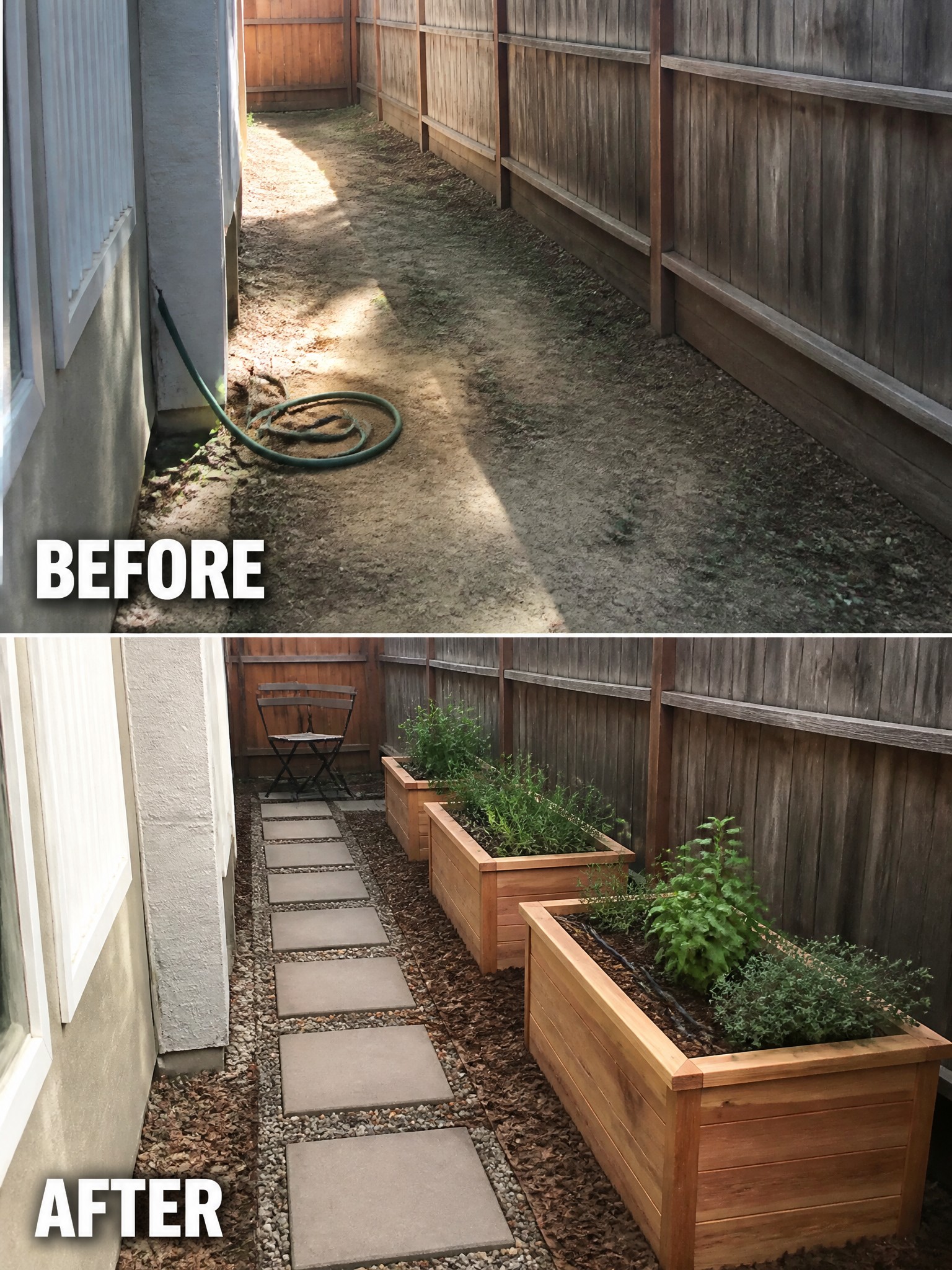
A long strip of bare dirt next to the house rarely gets used. Placing a row of raised beds along the fence and adding a simple stepping stone path gives the space clear purpose and makes it much easier to walk through without tracking in mud.
This idea works especially well on narrow lots where every foot counts. Keep the beds at a comfortable working height, use gravel or mulch between the stones to control weeds, and plant herbs or vegetables that benefit from being close to the house.
Add Garden Arches To Shape A Narrow Side Yard
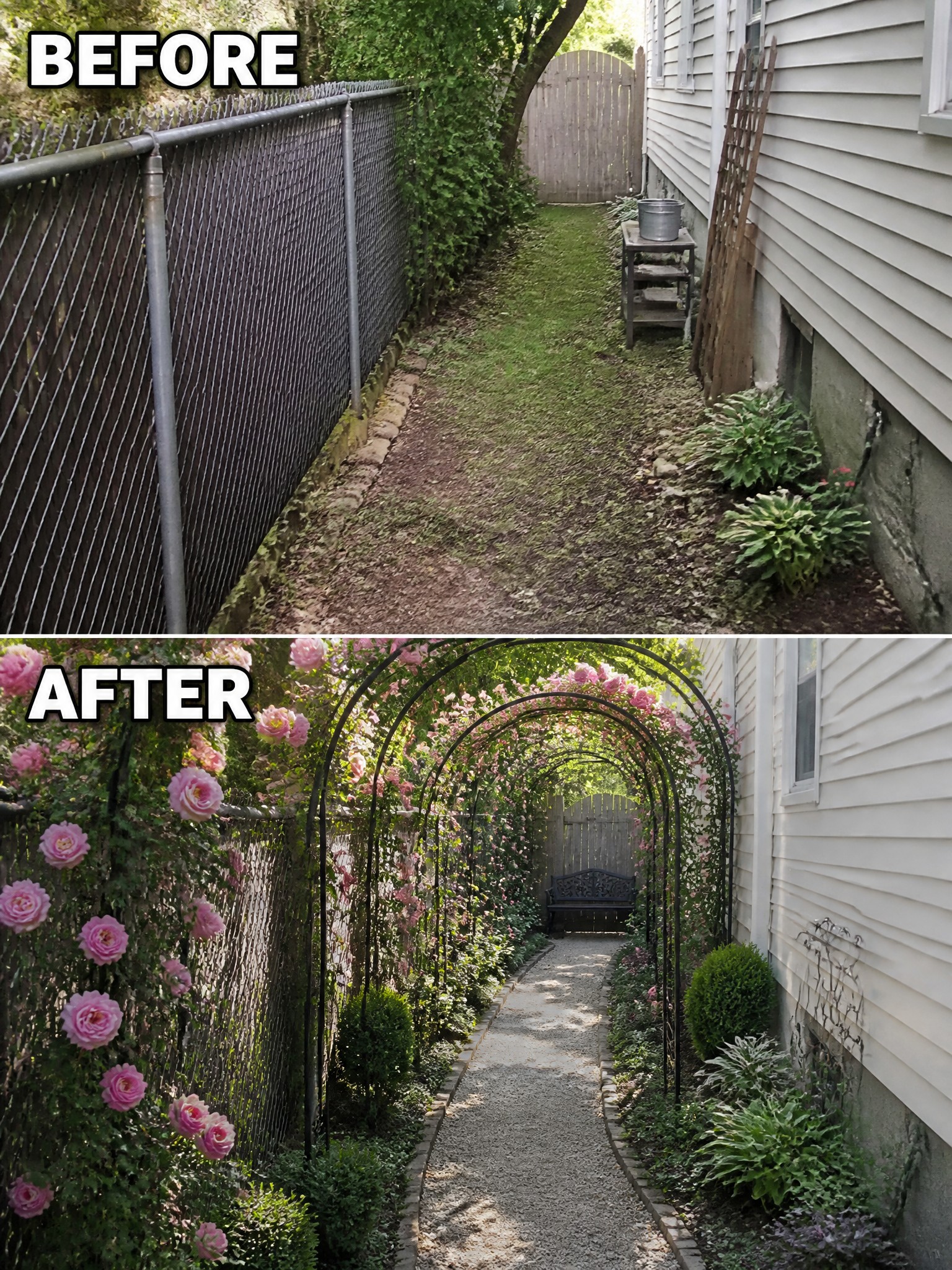
A narrow side yard often gets ignored because it feels like leftover space between the house and the fence. Running a row of simple metal arches down the path gives it structure right away. Once climbing roses cover the arches, the area changes from a plain strip into a defined garden walkway that feels intentional.
This works best on long, straight side yards where you need vertical interest without taking up much width. Start with a basic gravel or mulch path so water drains and the ground stays firm. Space the arches evenly, then let the plants grow to fill the gaps. Keep the side beds narrow so there is still room to walk through.
Add A Path To Give A Narrow Side Yard Purpose
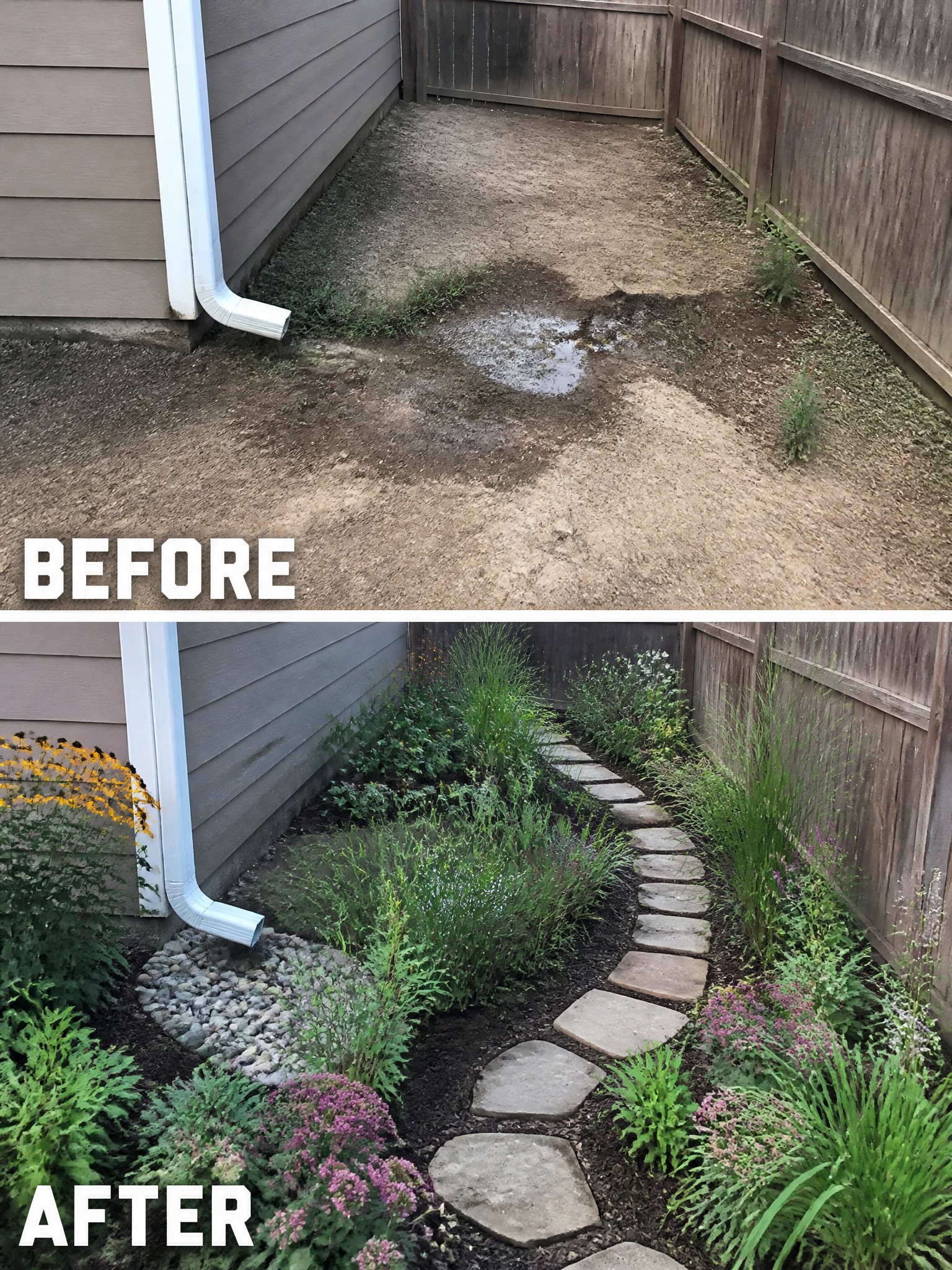
A bare side yard often stays unused because there is no clear way to walk through it or reason to spend time there. Adding a simple stone path creates access and breaks up the space into manageable planting areas on either side. Mulch and layered plants then keep the beds looking intentional instead of just leftover dirt.
This approach works well on long, narrow strips between a house and fence where space is limited. Start with the path to solve drainage and foot traffic first, then fill in plants that suit the light conditions. Keep the beds a consistent width so the walkway stays comfortable to use.
Define A Narrow Side Yard With Stepping Stones And Planting
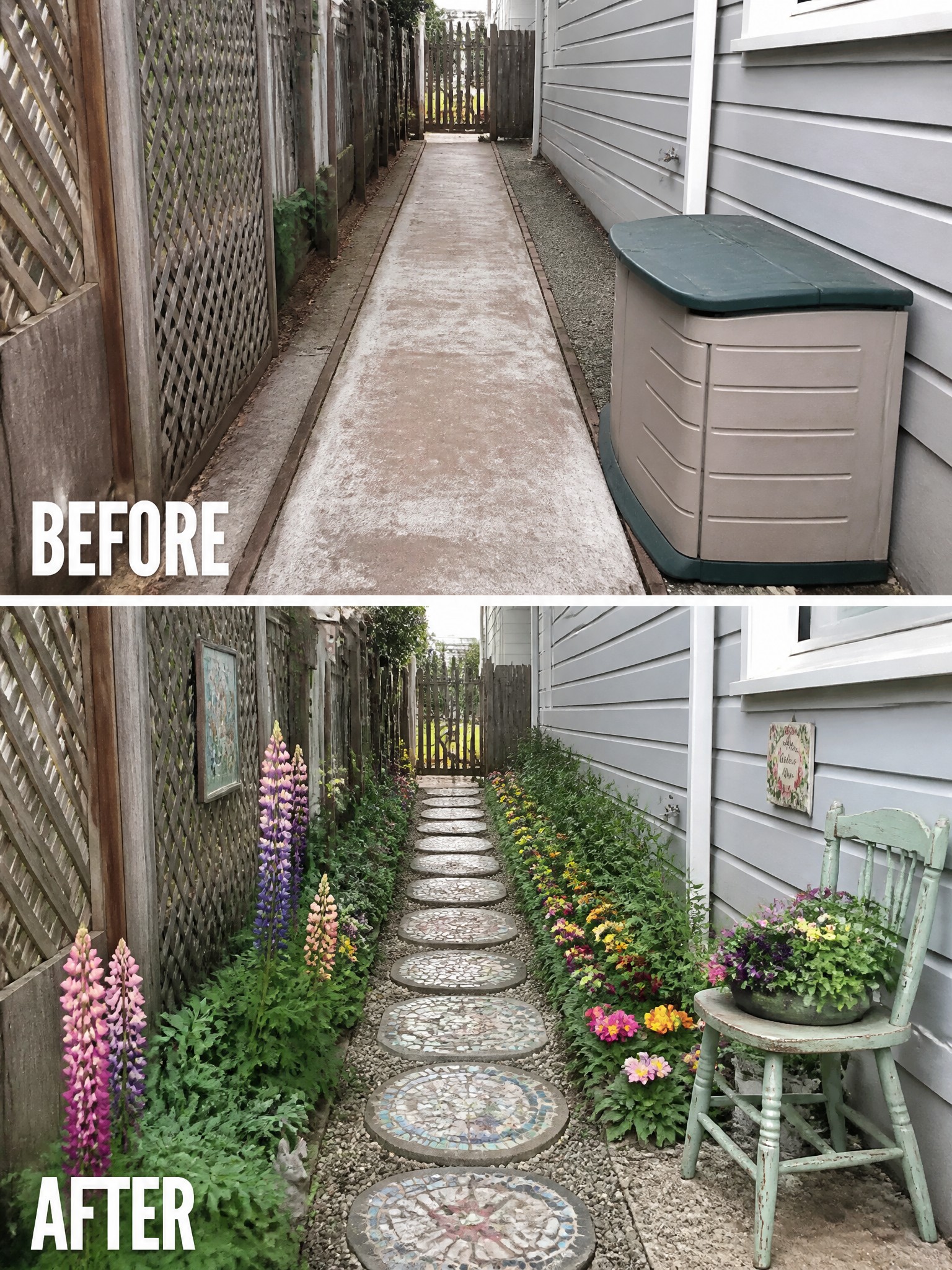
A narrow side yard often gets ignored because it feels like leftover space between the house and the fence. Laying down a line of stepping stones creates a clear path through the area, while planting along both edges turns the strip into a garden instead of just gravel and weeds.
This idea works best in tight side yards where there is not much room for big features. Keep the planting simple, repeat a few colors, and make sure the stones sit level so the path is easy to walk. The result feels planned without needing a lot of width or budget.
Define A Narrow Side Yard With A Gravel Path And Planting
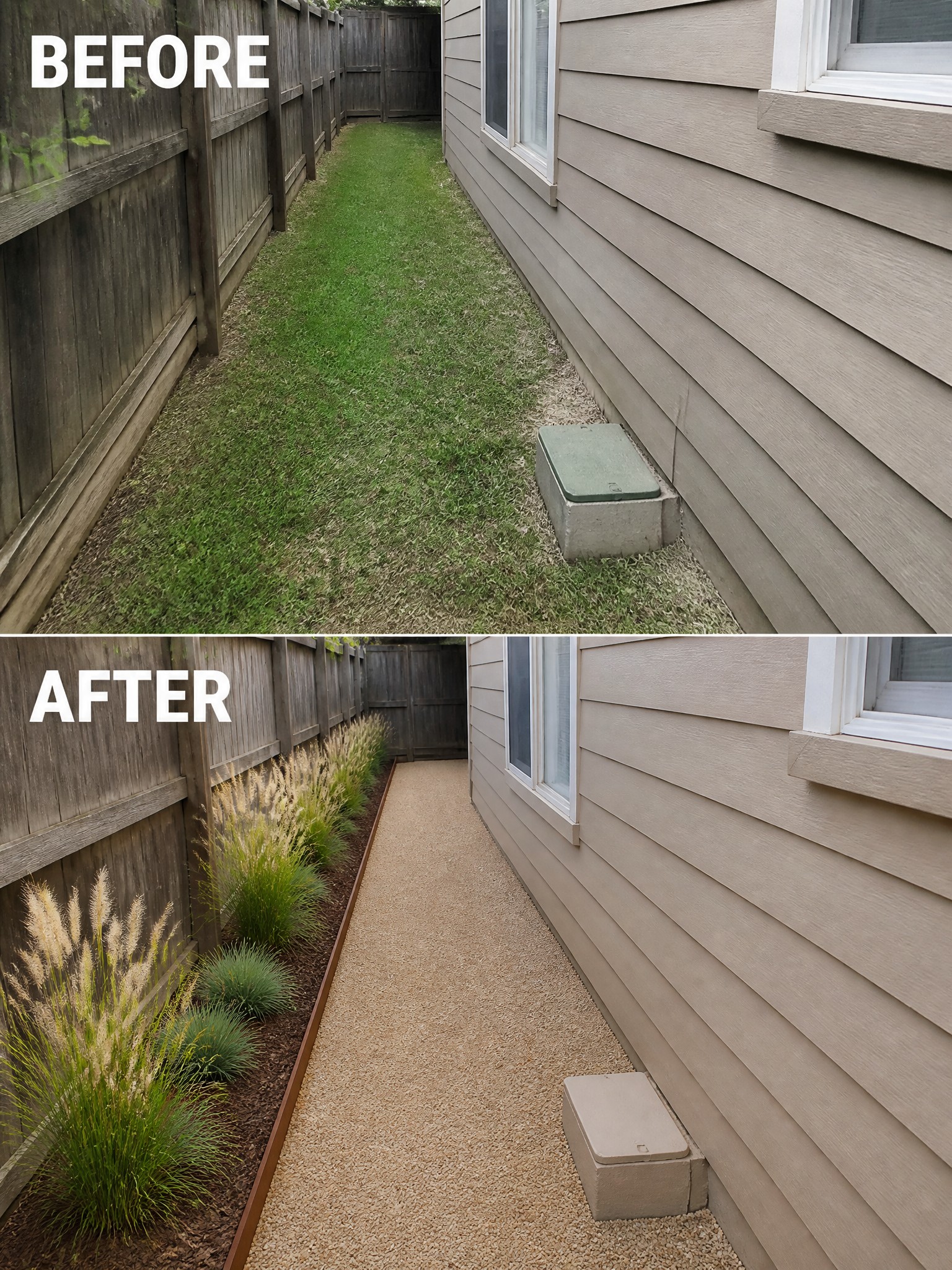
A long strip of grass squeezed between the house and fence rarely gets much attention. Laying down a gravel path with simple edging and a planted border gives the space a clear purpose while keeping the house wall accessible for maintenance.
This idea suits homes where the side yard serves mainly as a walkway. Focus first on defining the edges so the path stays contained and the planting bed does not creep onto the gravel. Tough grasses work well here because they handle the narrow width and partial shade without constant upkeep.
Define A Narrow Side Yard With A Path And Planting Beds
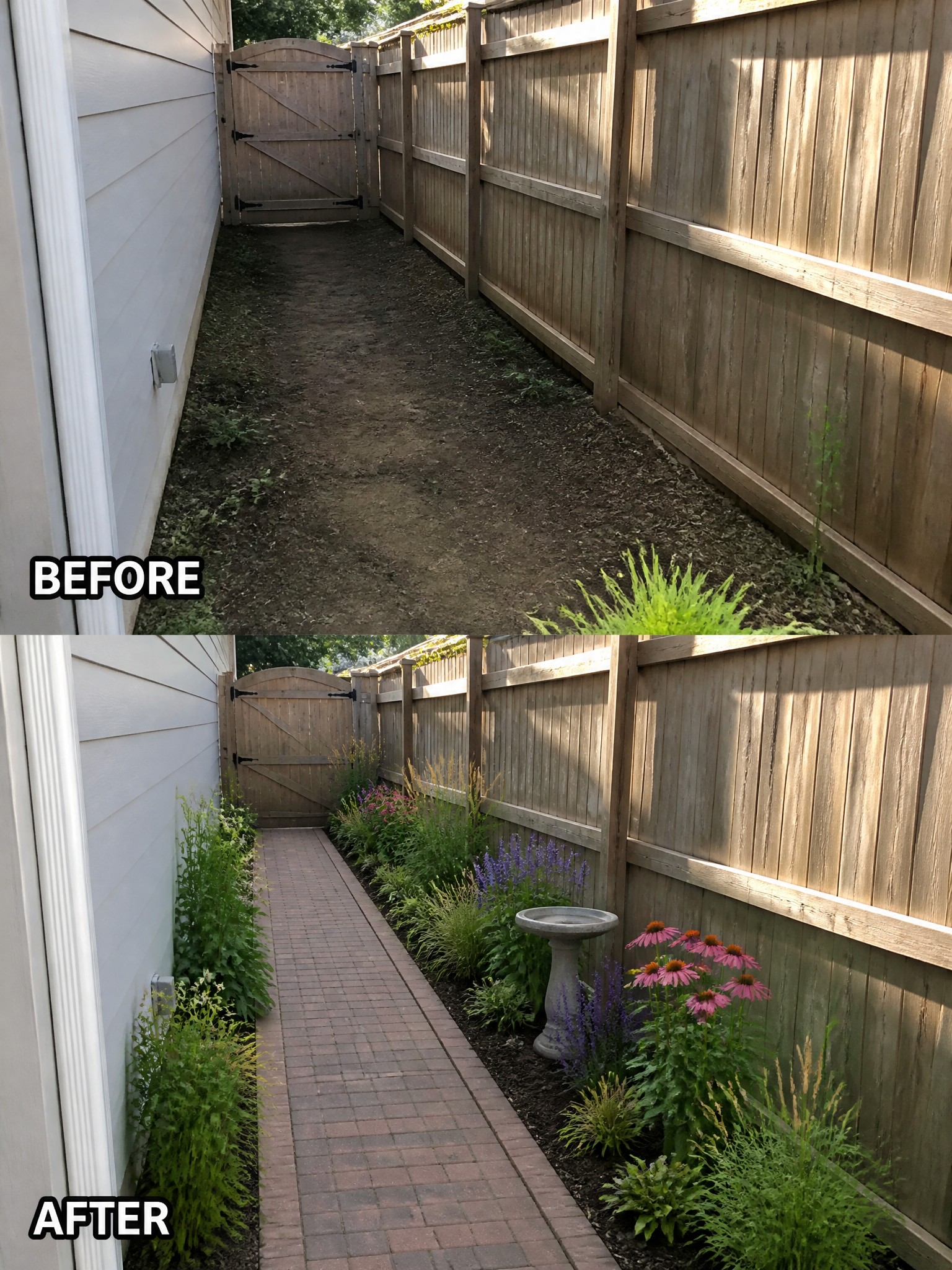
A bare dirt path between the house and fence often feels like wasted space. Adding a simple brick walkway gives the area a clear route while the mulched beds on either side turn the leftover strips into planted borders. The result makes the side yard feel intentional instead of forgotten.
This approach works well on long, narrow lots where you still need access to the backyard. Keep the path width comfortable for walking and choose low-maintenance plants that stay within the beds. Start with the path first, then fill in the planting so the whole strip stays tidy and easy to maintain.
Add Structure To A Sloped Side Yard
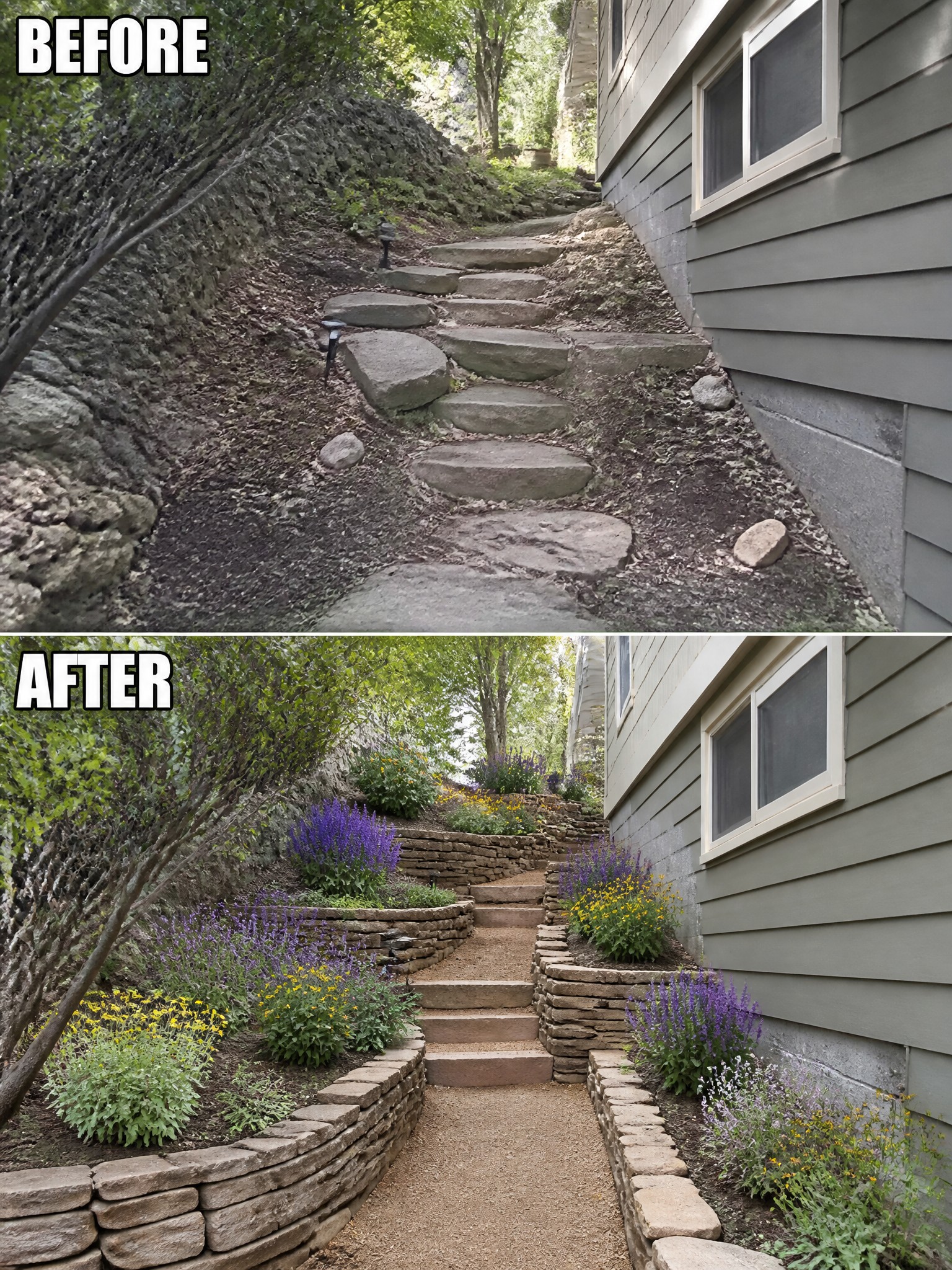
A steep, uneven side yard often ends up as a messy path that is hard to walk or maintain. Stacking low stone walls along the slope turns the bare dirt into a series of flat beds that hold soil in place and give plants room to grow beside a clear gravel walkway.
This idea suits homes with narrow side yards that drop away from the house. Build the walls first to match the grade, then choose sturdy perennials that fill in quickly without constant trimming. The result is a space that stays neat and usable instead of turning into a weedy slide.
Add Raised Planters To Define A Narrow Side Yard
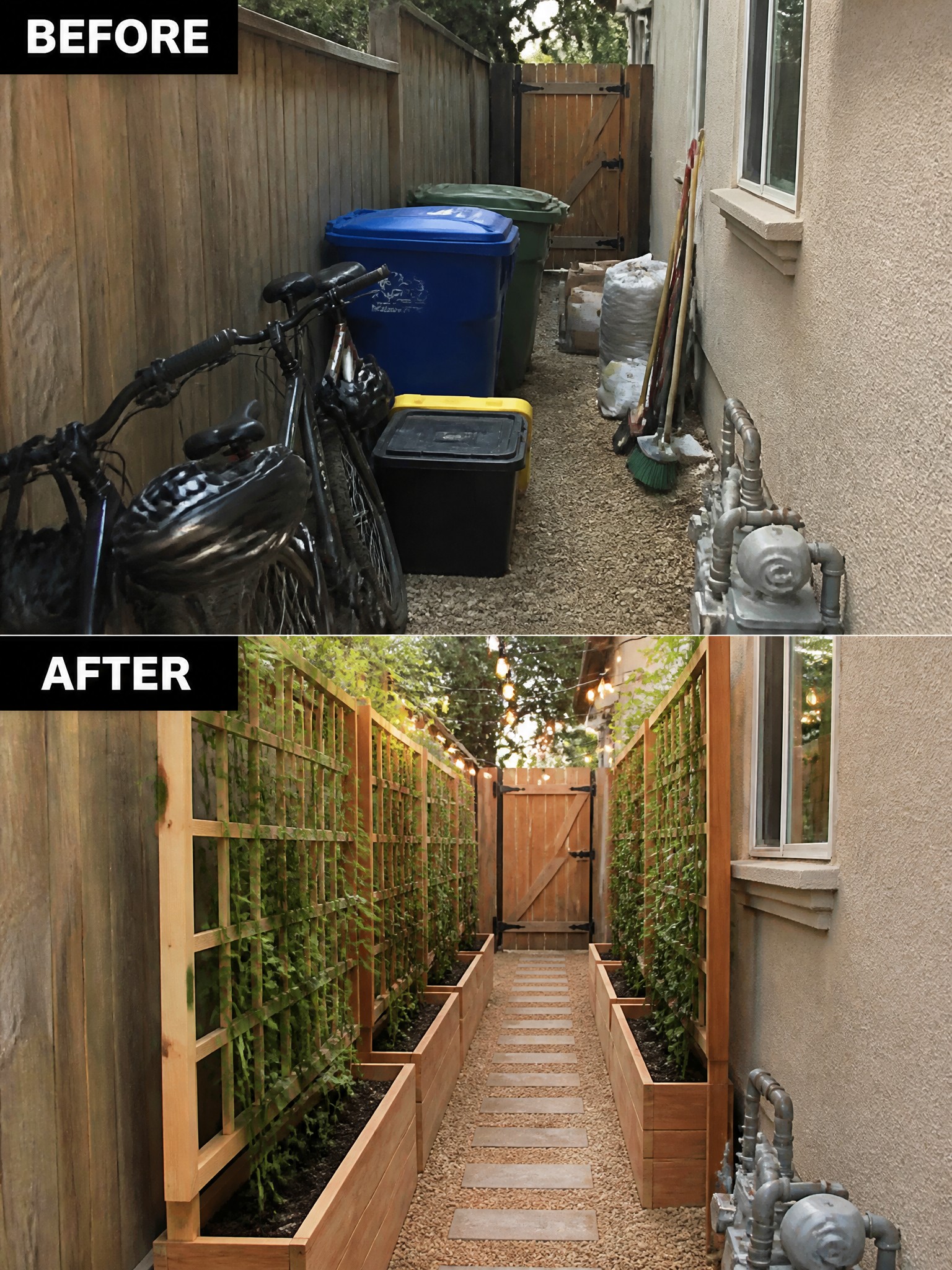
A side yard that gets used mainly for storage often stays messy because it lacks any real structure. Raised planters with trellises along both sides create clear edges, give the space purpose, and turn a gravel strip into a usable path.
This works especially well on narrow lots where you still need room to walk through. Keep the beds fairly deep for soil but not too wide, choose climbing plants that cover the lattice quickly, and add simple stepping stones so the center stays clean and dry.
Use A Grid Paver Path To Soften A Narrow Side Yard
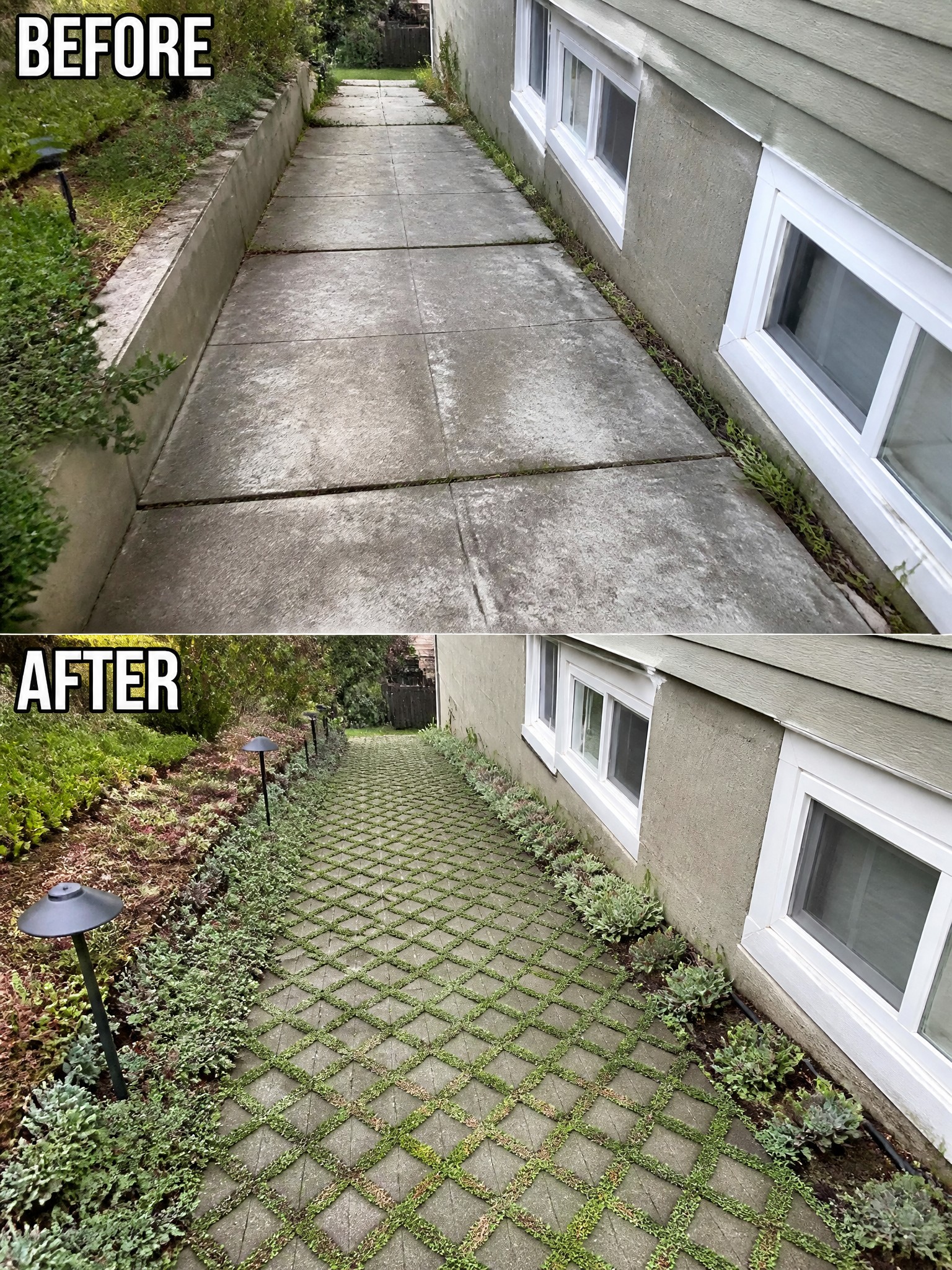
A solid concrete path often makes a side yard feel like a leftover space. Switching to a grid of pavers lets small plants fill the gaps and turns the walkway into something that feels more connected to the garden. The edges were also planted with low ground cover, which keeps the whole strip looking intentional instead of just functional.
This approach works well on long, narrow lots where you still need a clear route but want to avoid a harsh strip of gray. Start with a simple paver layout that matches the width you need for walking, then choose plants that can handle some foot traffic and the local conditions. It keeps the space usable while adding just enough greenery to make the side yard feel like part of the overall landscape.
Add A Path And Planting To A Narrow Side Yard
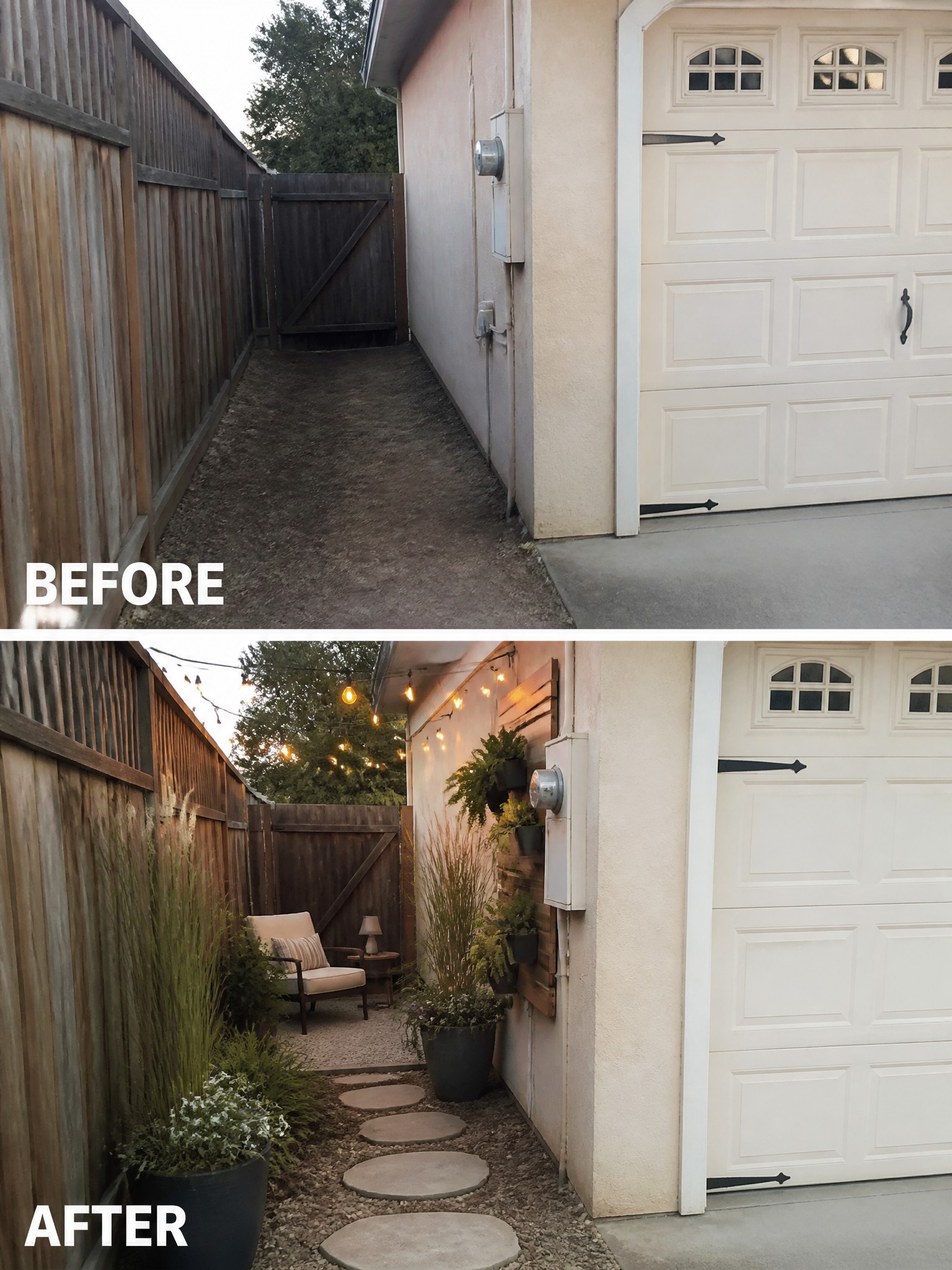
A narrow side yard often ends up as wasted space because it feels too tight and plain. Adding a simple stepping stone path gives the area a clear route, while a few larger plants and some vertical planting soften the walls and make the space feel intentional instead of leftover.
This approach works well on any long, skinny lot where the side yard connects the front and back. Start with the path first so you know how much room is left for planting, then choose a few tall grasses or shrubs that can handle the light conditions. Keep the rest of the ground covered in gravel or mulch to cut down on weeds.
Create A Defined Path Through A Narrow Side Yard
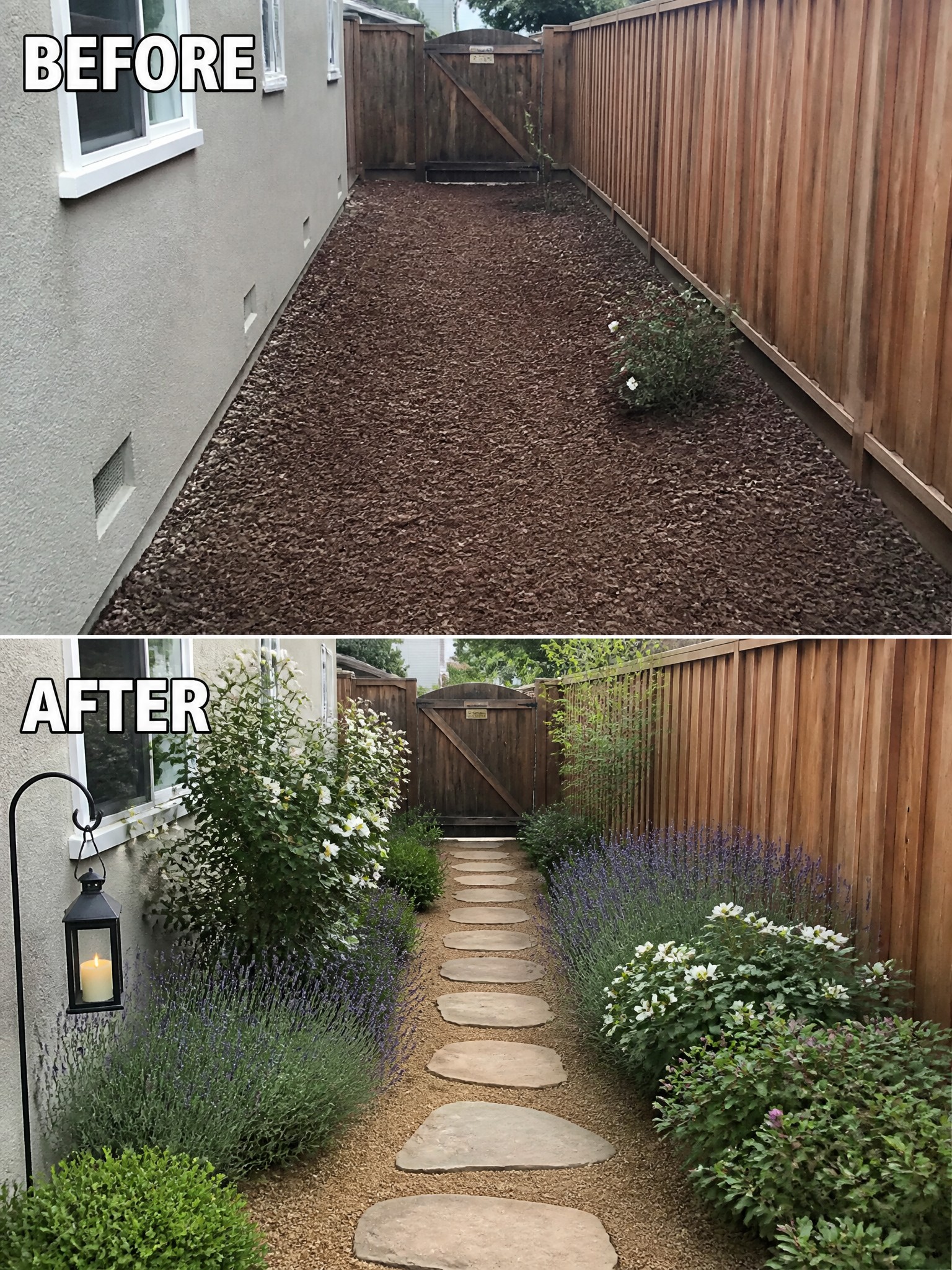
A narrow side yard often ends up as a forgotten strip of mulch or dirt. Adding a simple stepping stone path gives the space a clear purpose and makes it feel intentional instead of leftover. The stones create a walkway that draws the eye forward while leaving room for planting on both sides.
This approach works well on long, tight areas between a house and a fence. Start with the path first so you know where to place the plants. Low shrubs and lavender along the edges soften the fence and keep the walk feeling open without crowding it. The same idea works on any slim side yard where you want to encourage movement instead of just filling space with ground cover.
Turn A Bare Side Yard Into A Usable Garden Path
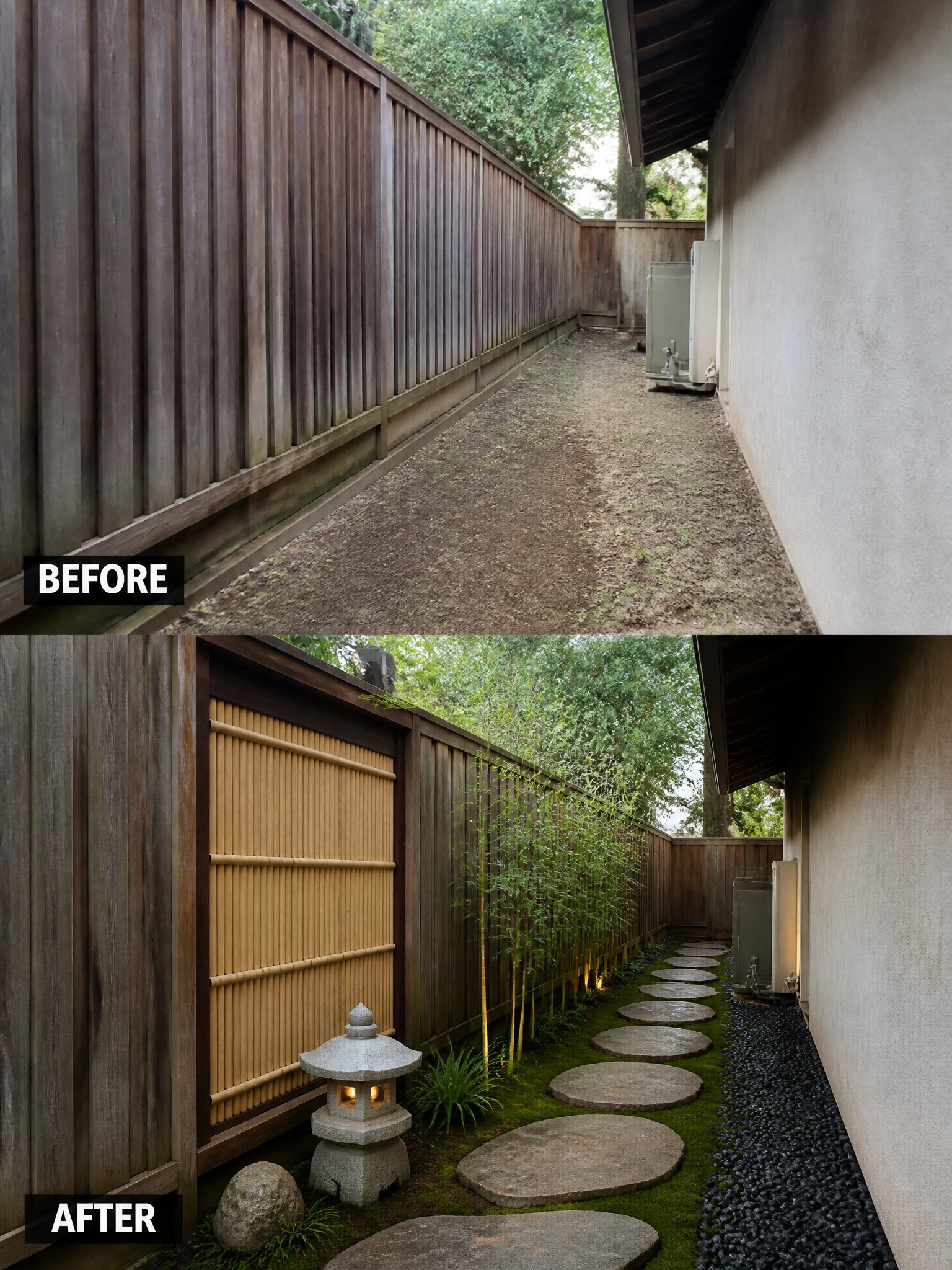
A long, narrow side yard with nothing but dirt and fencing often ends up ignored. Adding a stepping stone path and a row of tall planting gives the space a clear purpose and makes it feel connected to the rest of the yard.
This idea works best on homes where the side passage is too tight for seating but still wide enough to walk through. Lay the path first to set the route, then add vertical screening like bamboo along one fence to soften the view. Keep the planting simple so the path stays the main feature and the space does not feel cramped.
Add A Path And Planting Beds To A Narrow Side Yard
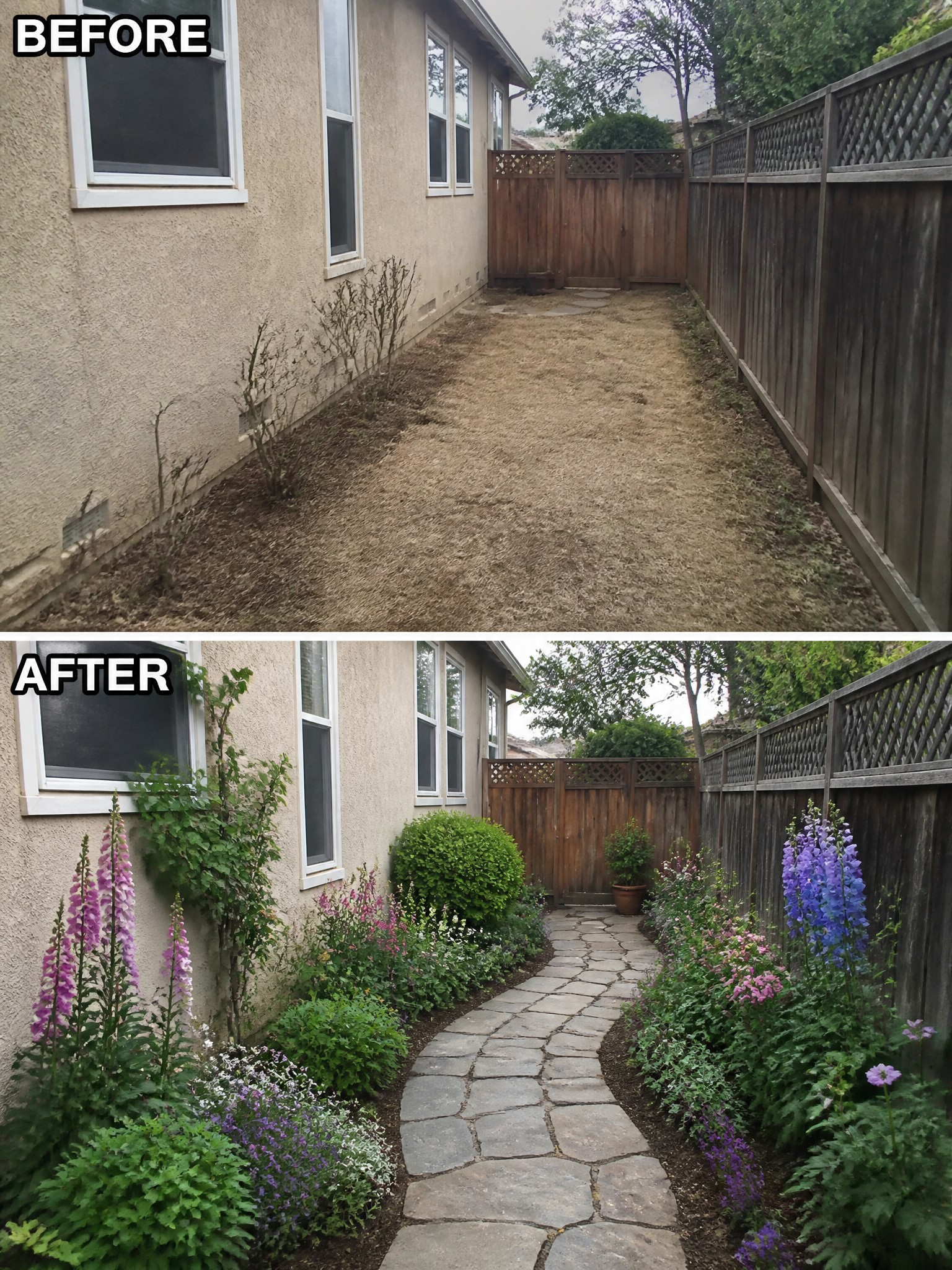
A side yard that is just bare dirt and a few struggling plants often gets ignored because it feels like leftover space. Laying down a stone path gives the area a clear route, while adding planted beds along the house and fence turns the whole strip into something usable instead of empty.
This approach works best on long, narrow lots where you need to move between the front and back without walking on mud or weeds. Keep the beds fairly narrow so the path stays comfortable to walk, and choose a mix of shrubs and flowers that can handle the shade or sun the yard actually gets.
Define A Narrow Side Yard With Pavers And Planting Beds
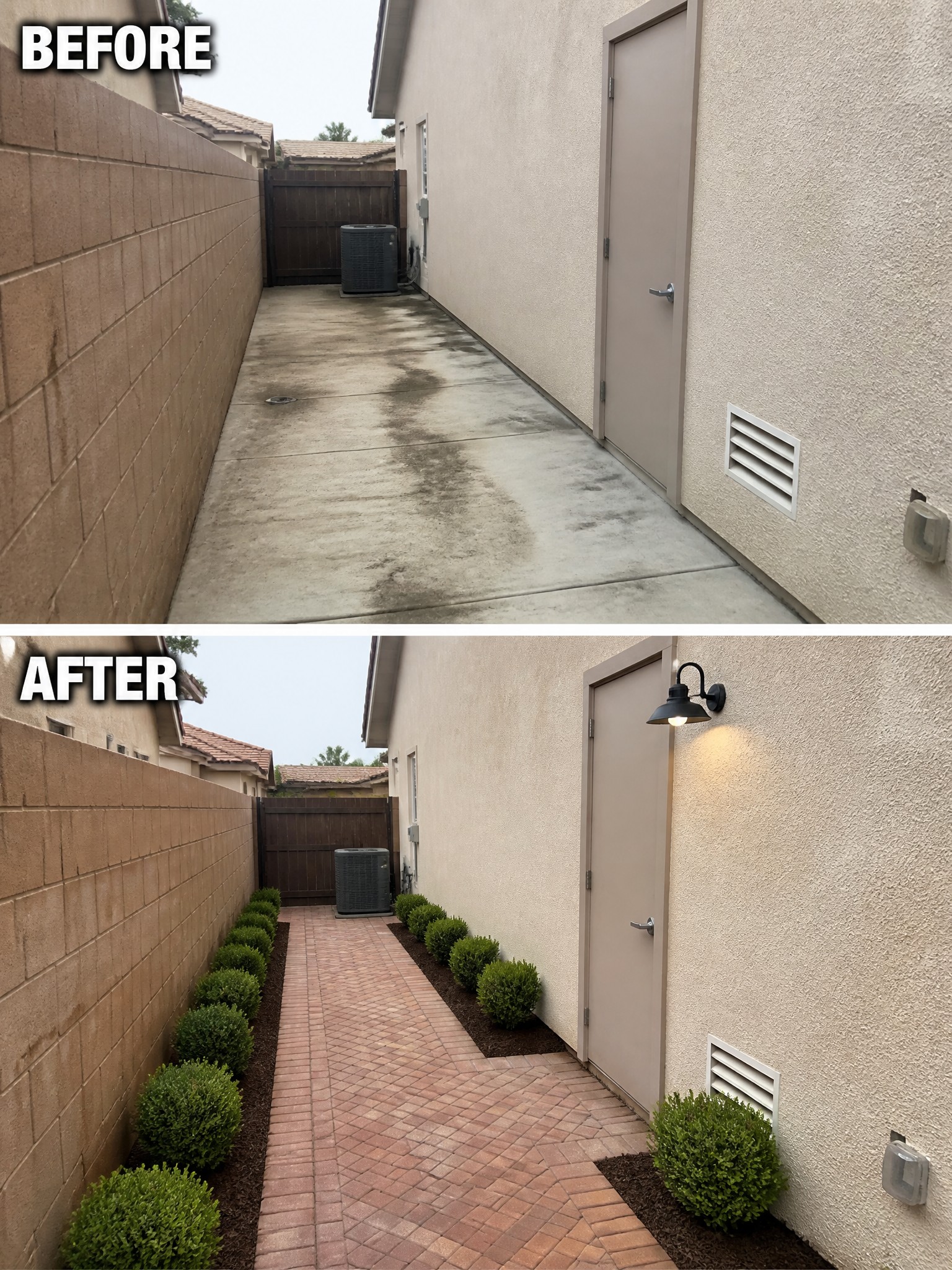
A plain concrete walkway often leaves a side yard feeling like leftover space. Replacing it with brick pavers and adding low planting beds on both sides gives the area a clear purpose and makes the narrow passage feel more intentional. The simple border of shrubs keeps the look tidy without crowding the walkway.
This approach works well on long, tight side yards where you need a clean path but still want some greenery. Start with the hardscape to set the shape, then add a single row of shrubs or ground cover along each edge. Keep the beds narrow so the path stays usable and the plants do not block access to doors or utilities.
Add A Simple Path To Structure A Narrow Side Yard
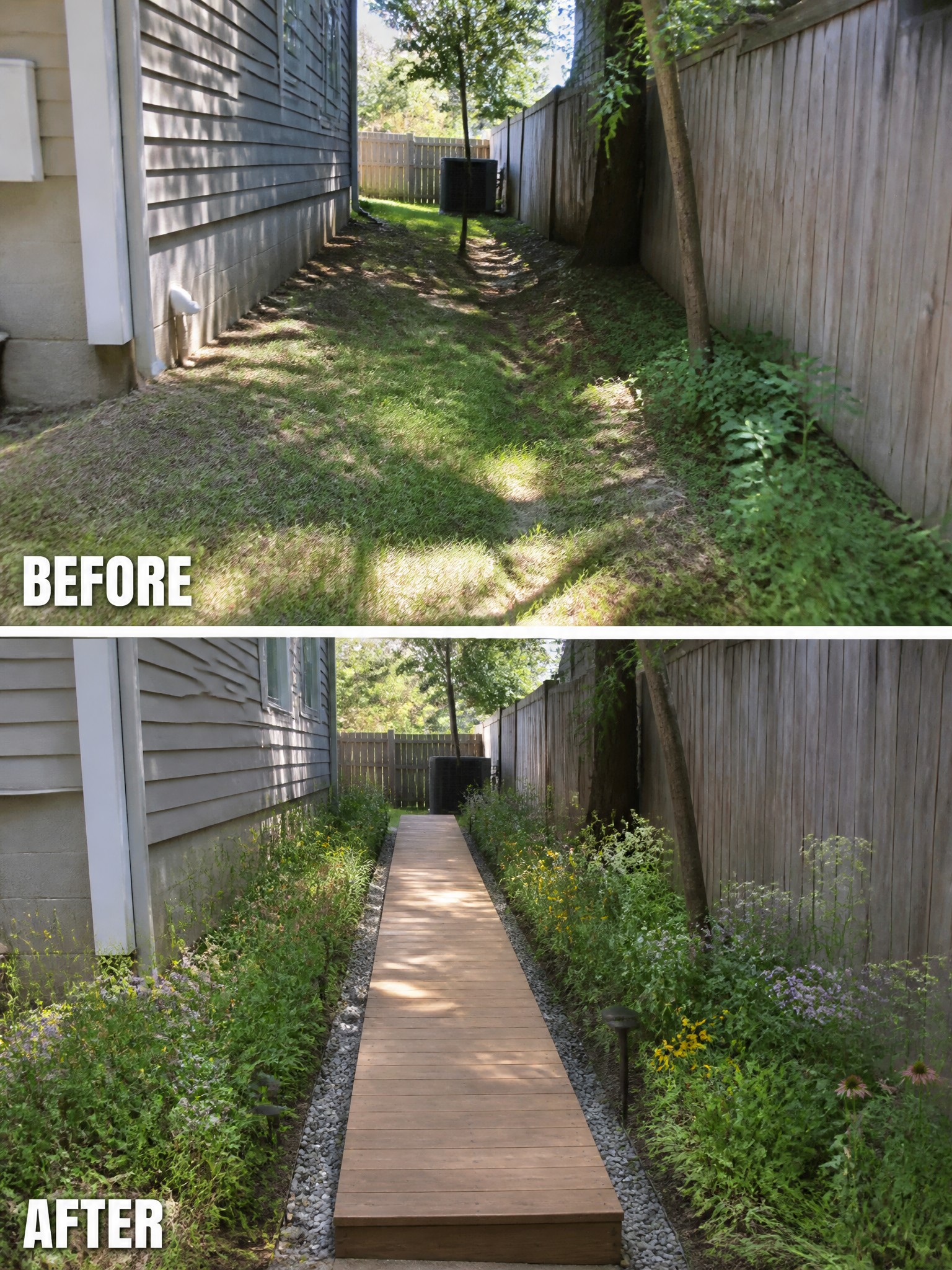
A narrow side yard often ends up as a strip of grass that gets mowed but never really used. Adding a straight wooden walkway with gravel on both sides gives the space a clear purpose and makes it easy to walk through without tracking mud or stepping on plants.
This approach works best in tight areas between a house and a fence where you still need access to the backyard. Lay the path first to set the layout, then plant along the edges with low-maintenance perennials that can handle partial shade. Keep the beds narrow so the walkway stays open and functional.
Add A Gravel Path And Planting Beds To A Narrow Side Yard
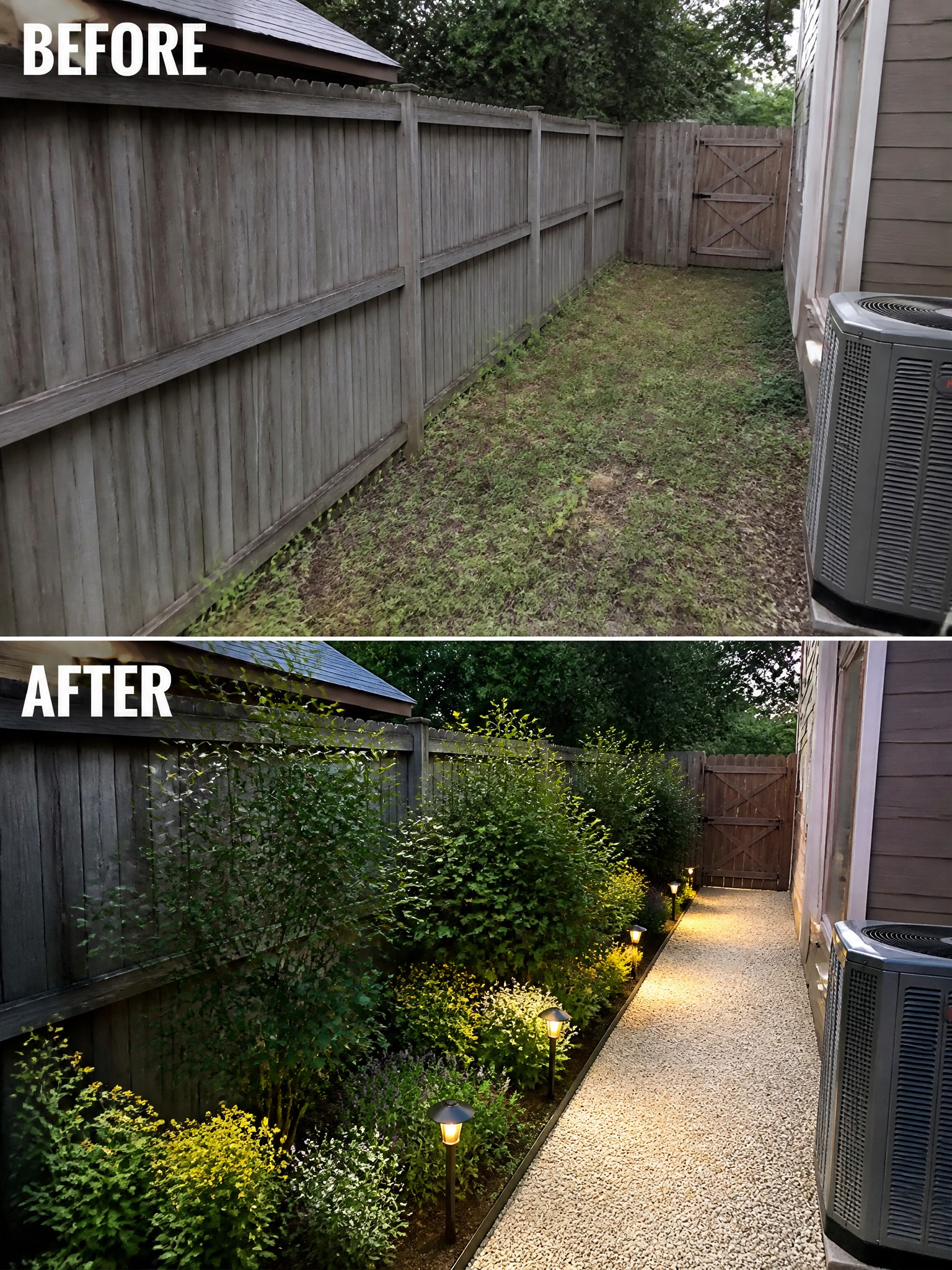
A narrow side yard often ends up as wasted space because it feels too tight and hard to maintain. Laying down a simple gravel path gives the area a clear purpose and creates room for planting beds along the fence. The gravel keeps the walkway dry and low maintenance while the beds turn the fence line into a planted border instead of just a strip of weeds.
This approach works well on homes where the side yard is the main route to a gate or backyard. Start by clearing the ground and edging the beds so the path stays defined. Choose a mix of taller shrubs and lower perennials to add layers without crowding the walkway. The lights along the path make the space usable after dark and help it feel more intentional.
Define A Narrow Side Yard With A Path And Lighting
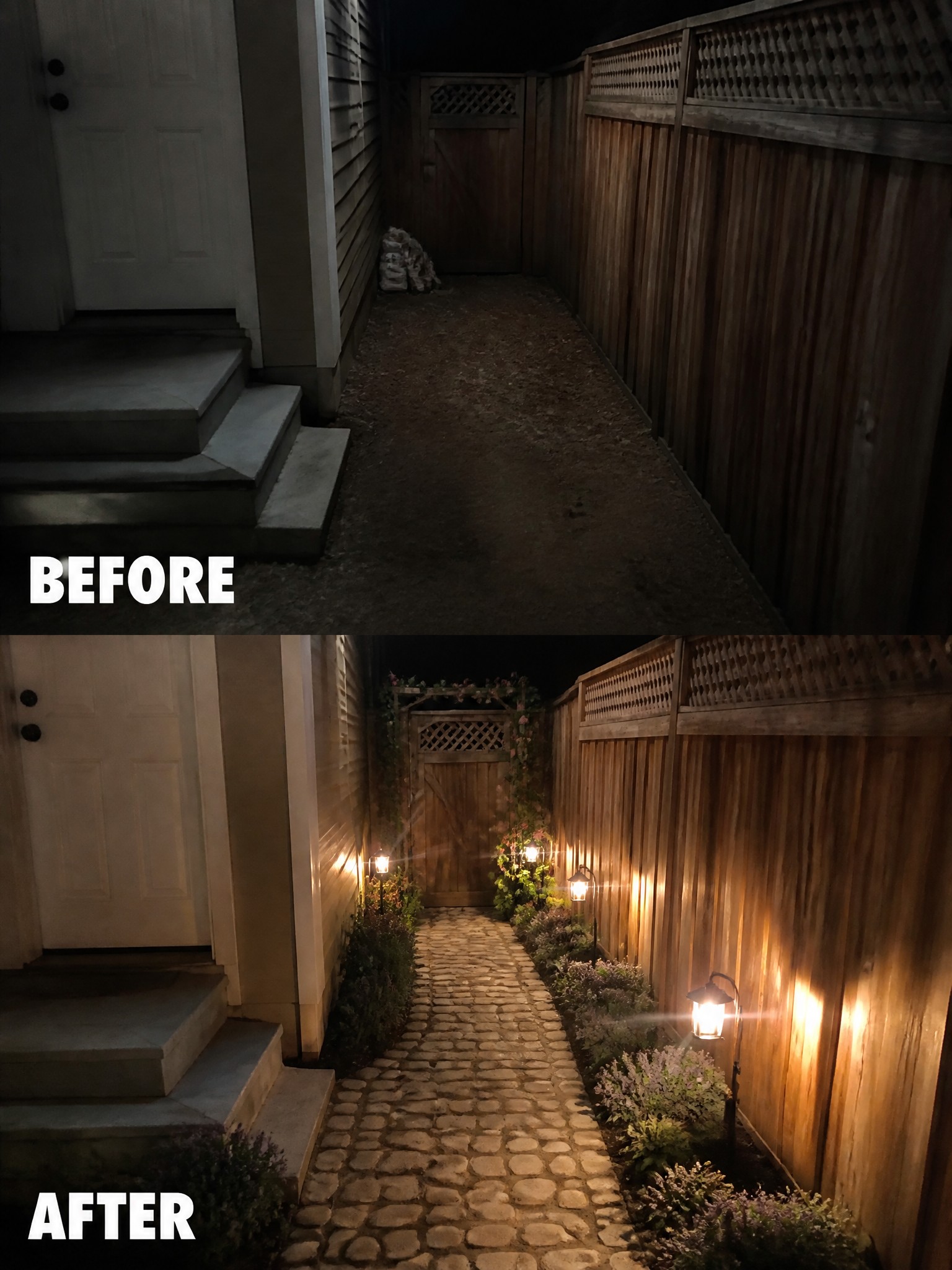
A bare dirt path next to a fence often feels like wasted space because nothing gives it shape. Adding a simple stone path with low lights and planting along the edges turns the area into a clear walkway that people actually want to use. The change makes the side yard feel intentional instead of leftover.
This idea works best on narrow lots where you need to keep the middle open for walking. Start with the path to set the route, then add a few lights so the space feels safe at night. Keep the planting low and repeat the same type of light to avoid crowding the area.
Define A Narrow Side Yard With Raised Planters
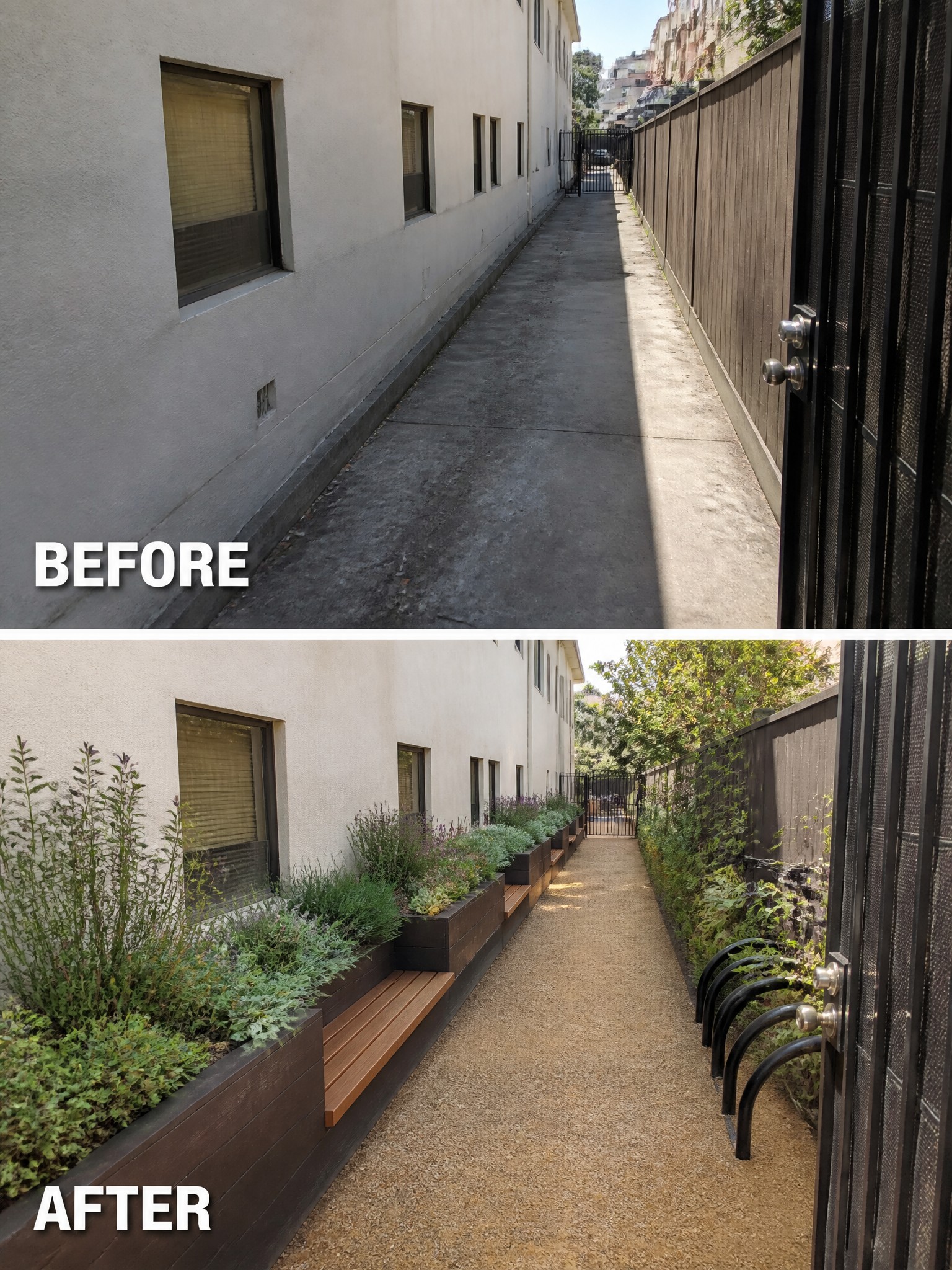
A long, empty side yard often stays unused because it feels like leftover space with nothing to hold your eye. Adding a row of raised planters along one wall gives the area clear structure and turns the path into something you actually want to walk through. The wooden boxes also create built-in seating without crowding the walkway.
This approach works well on narrow lots where a full garden would feel cramped. Keep the beds low enough to sit on, fill them with a mix of taller plants and ground cover, and use gravel or decomposed granite on the ground so the whole area stays low-maintenance.
Frequently Asked Questions
Q: How do I pick a path width that still leaves room for planting on both sides?
A: Measure your side yard first and aim for a path no wider than four feet. This leaves space for flowers or shrubs without crowding the walkway. Test it by laying out a hose to see how it feels.
Q: Will tree roots from nearby plants damage a gravel path over time?
A: Most small shrubs won’t cause issues if you plant them a few feet away. Gravel shifts naturally so roots rarely break through. Just avoid aggressive trees right next to it.
Q: How long before the new plants fill in and make the side yard look complete?
A: Give them a full growing season to settle. Water regularly at first and they will spread faster than you expect.
