

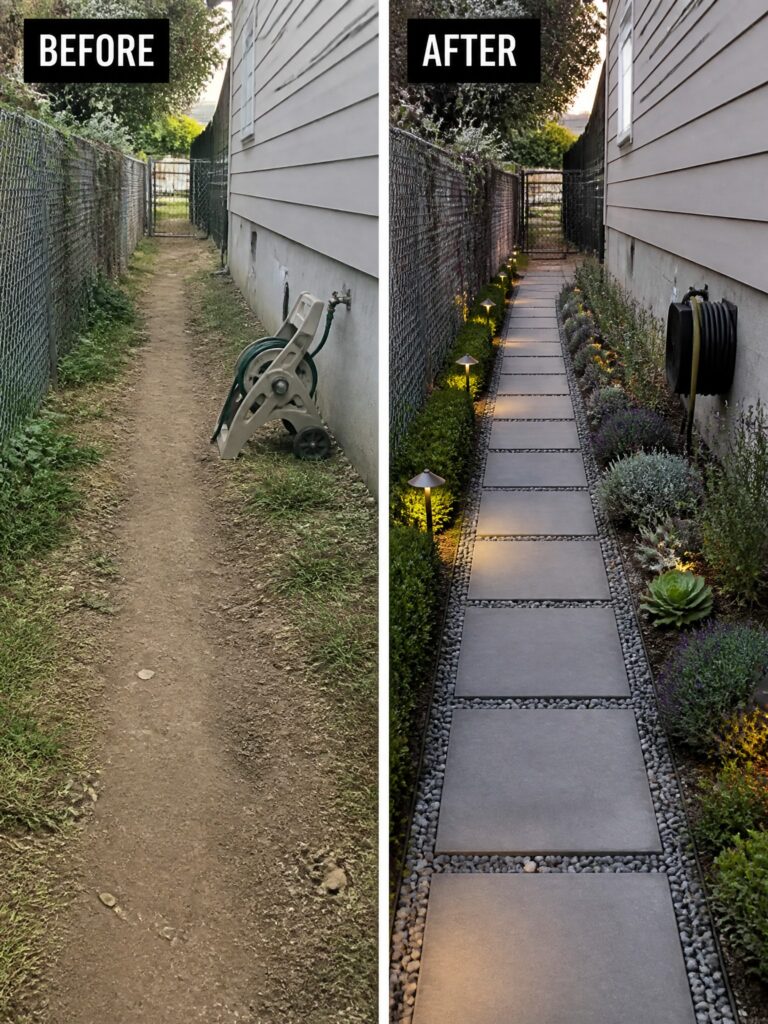
I often notice how side yards end up as narrow strips of grass that no one tends to, even when the rest of the yard gets regular attention. A simple border or a few shrubs can tie the side of the house back into the rest of the property without requiring major work. It feels satisfying when those forgotten edges stop looking neglected. I usually check the ground slope and existing edging first before deciding what to plant or pave. Those adjustments help the whole exterior read as more complete when you walk around the house.
Create Structure In An Overgrown Side Yard With A Path
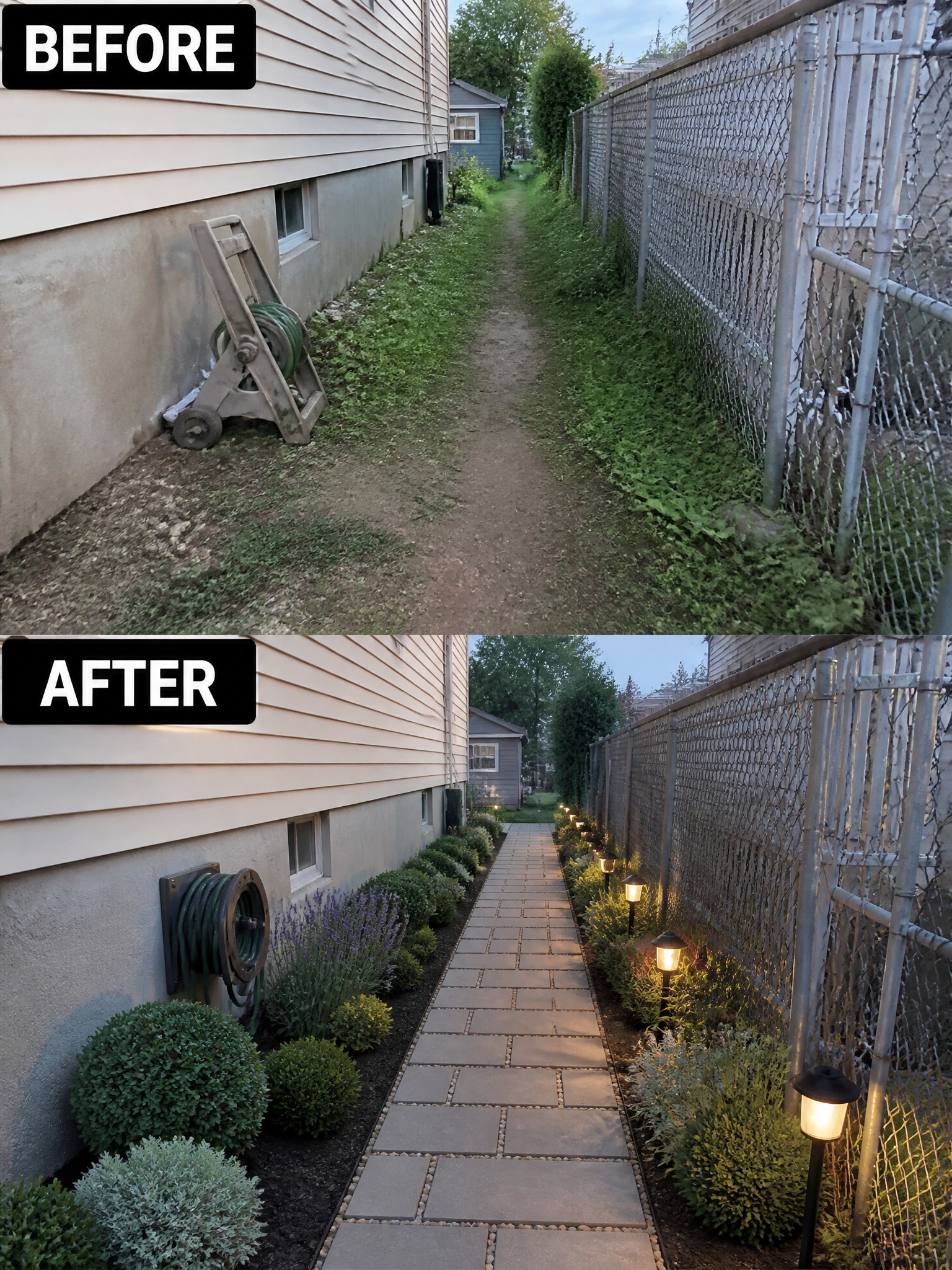
A narrow side yard often ends up as wasted space because it gets overgrown and hard to walk through. Laying down a simple paver path gives the area a clear purpose while keeping the house wall and fence line tidy. The biggest change here is how the dirt trail and weeds were replaced with a straight walkway and planted borders that make the whole side feel intentional.
This approach works well on long, tight lots where you need access to the backyard without fighting through grass. Start by clearing the overgrowth, then add the path before planting low shrubs and flowers along the edges. Outdoor lights along one side help at night and keep the space feeling finished without crowding it.
Turn An Overgrown Side Yard Into A Cozy Seating Area
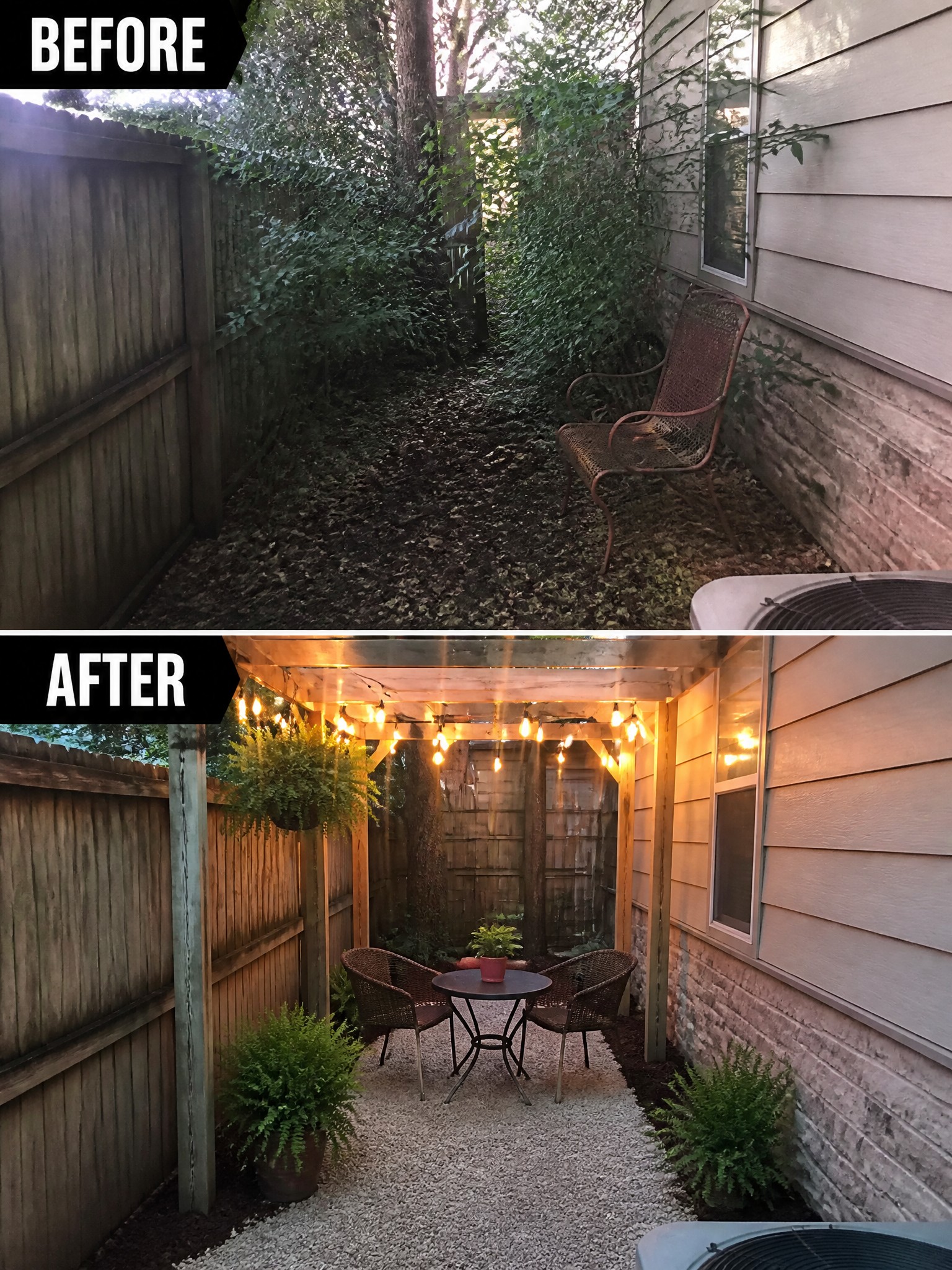
A narrow side yard often ends up as wasted space filled with weeds and random furniture. Clearing the overgrowth and adding a simple pergola with string lights turns it into a defined outdoor room where people can actually sit.
This idea works well on homes with tight side yards between the house and fence. Start with a basic structure for overhead cover, then add gravel for a clean floor and a small table with chairs. Keep the furniture scale modest so the space still feels open enough to walk through.
Replace A Concrete Side Path With Stepping Stones
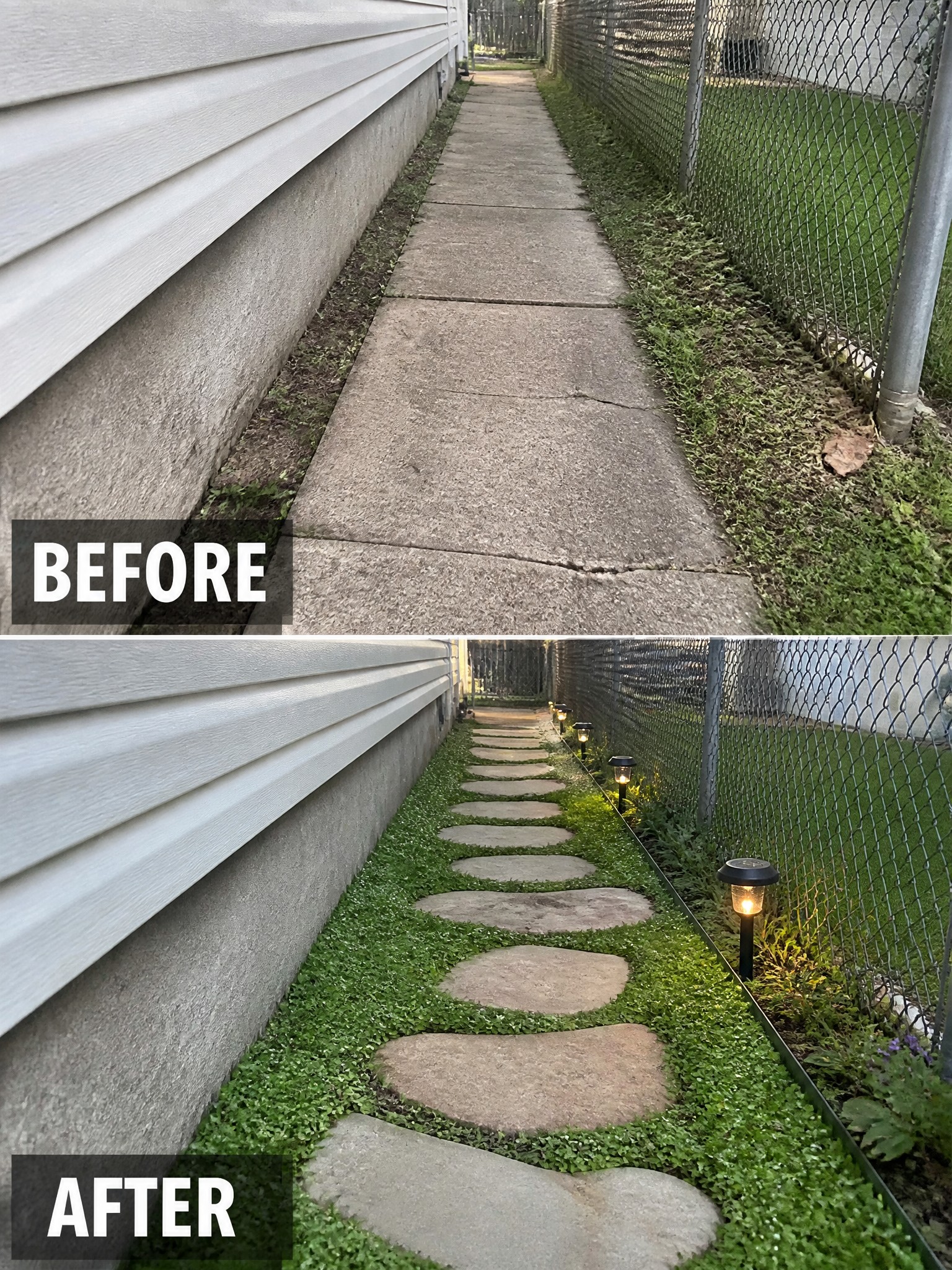
A narrow side yard often ends up as just a strip of concrete between the house and the fence. Replacing that solid path with stepping stones set into low ground cover breaks up the hard surface and gives the space a softer, more planted feel. The change also makes the walkway feel intentional instead of leftover.
This approach works well on long, tight side yards where a full path can feel too wide. Keep the stones irregular in shape and space them so the ground cover can fill in between them. Add a simple edge and a few low lights if you want the path to be usable after dark.
Add Raised Beds To A Narrow Side Yard
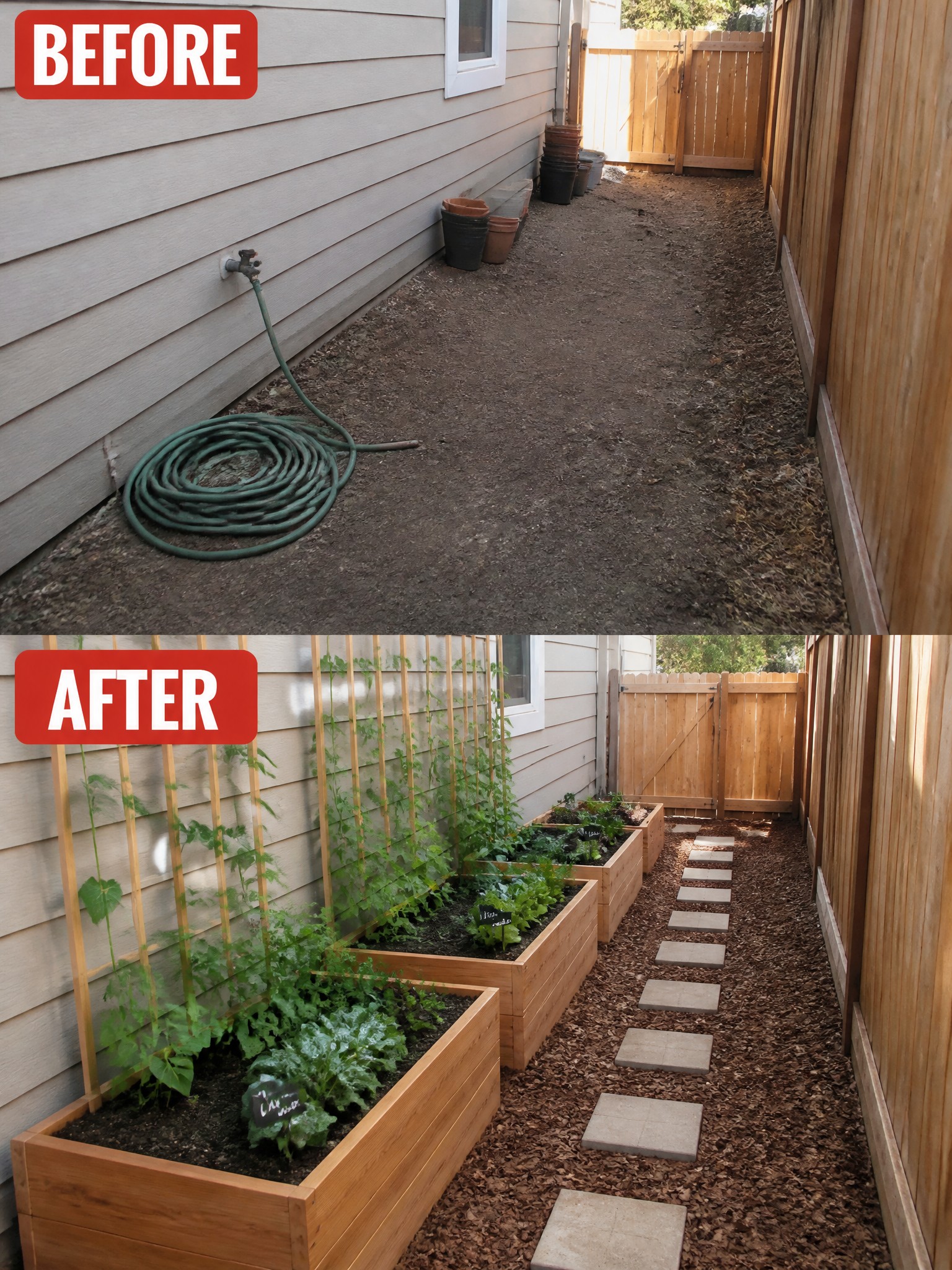
A narrow side yard often ends up as wasted space because the ground stays bare and hard to manage. Raised beds solve this by giving the area clear boundaries, better soil, and room to grow vegetables or herbs without fighting the existing dirt. In this case the change from an open dirt path to boxed beds with simple trellises made the space feel intentional instead of leftover.
This approach works well on any long, tight side yard where you want food production without losing walking room. Start with beds sized to leave a clear path down the middle, then add vertical supports only where plants need them. Keep the beds a consistent height and material so the whole run looks planned rather than patched together.
Add Privacy And Structure To A Narrow Side Yard
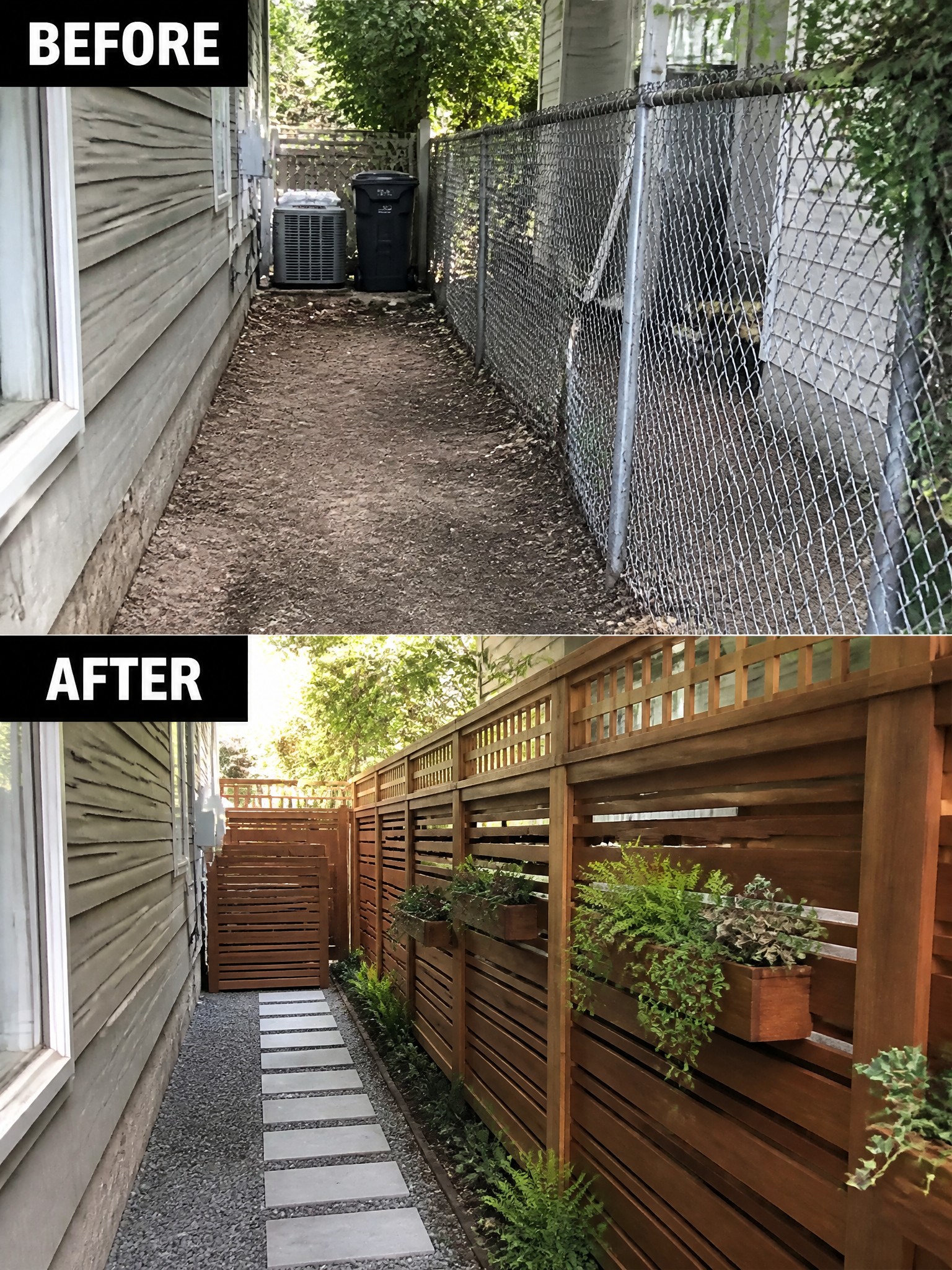
A narrow side yard often ends up as leftover space with a basic chain link fence and a worn dirt path. Replacing the fence with horizontal wooden slats creates a solid boundary that feels more intentional while still letting in some light and air. The new gravel path with stepping stones then gives the area a clear walking route instead of leaving it as loose dirt.
This approach works best on homes where the side yard sits between the house and a neighboring property. Focus first on the fence height and style so it matches the scale of the space, then add the path material and a few simple plants along the edge. Keep the design simple so the passage stays usable and does not feel cramped.
Define A Side Yard With Pavers And Lighting
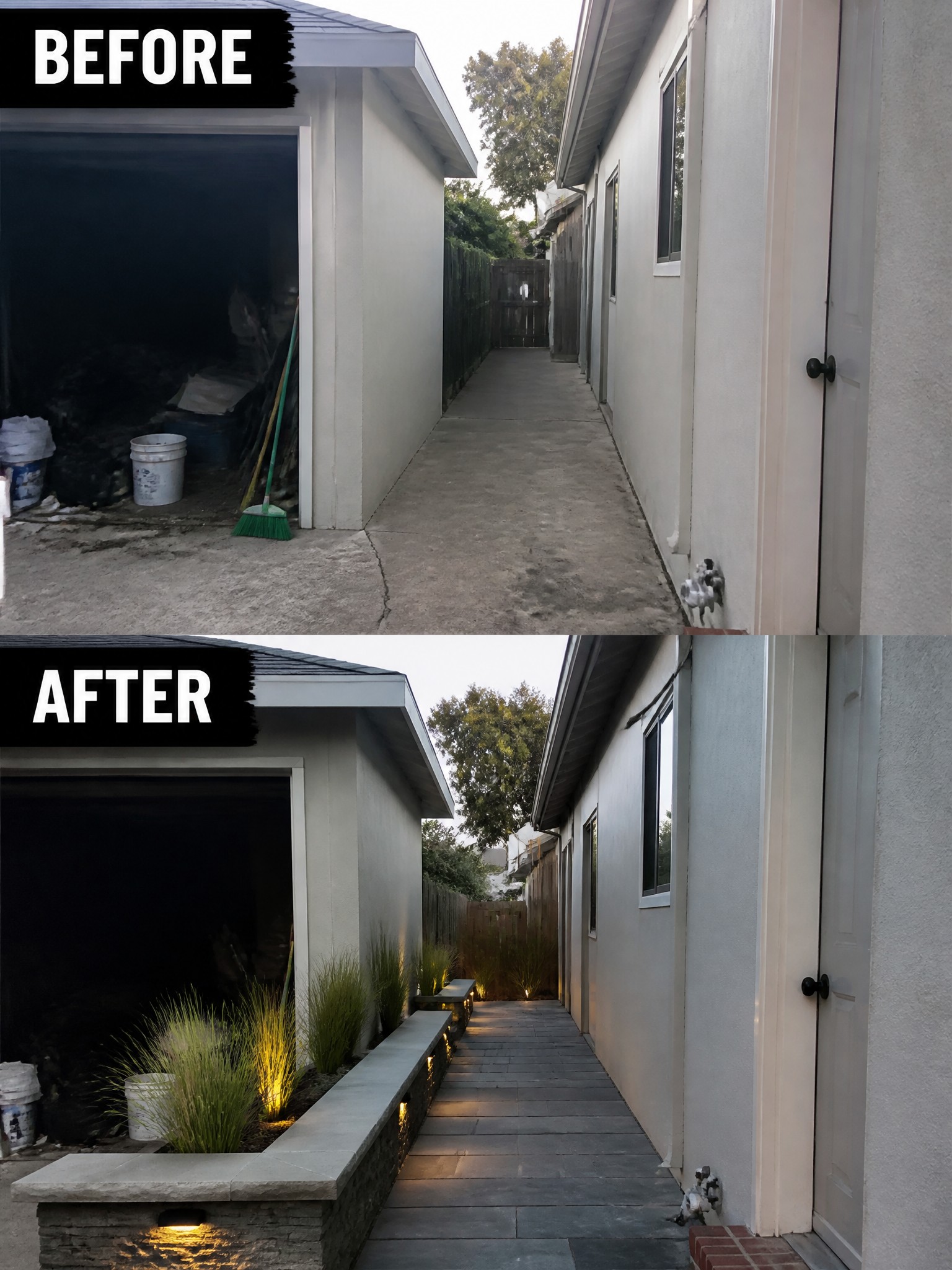
A plain concrete side yard often feels like leftover space, but laying pavers and adding a low built-in planter with lights gives it clear purpose. The change from an open, cracked path to a structured walkway makes the area feel finished and easier to walk through at night.
This idea works best on narrow passages where you want better access without crowding the house. Keep the planting simple, use low-voltage lights along the base of the planter, and make sure the pavers sit level so water drains away from the foundation.
Define A Narrow Side Yard With A Path And Lighting
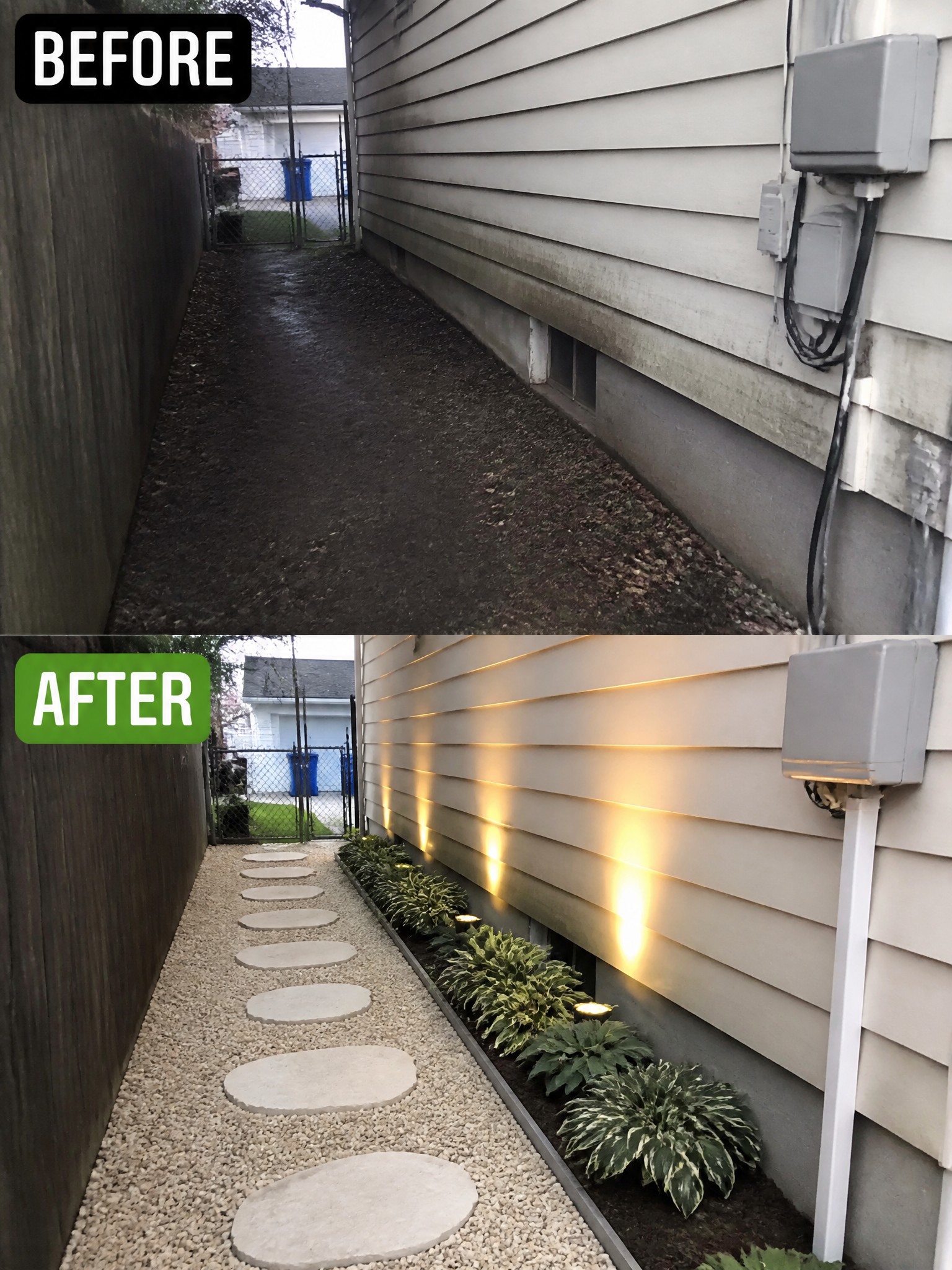
A side yard like this often ends up as bare dirt that stays muddy after rain. Adding a gravel base, stepping stones, and a planted strip along the house gives the space a clear purpose and keeps feet out of the mud. The low lights tucked into the bed also make the area feel safer and more finished once the sun goes down.
This approach works best on narrow lots where the side yard serves as the main walkway between front and back. Keep the planting low so it does not crowd the path, and choose lights that aim downward to avoid glare into windows. Start with the hard surface and edging before adding plants so the layout stays practical year after year.
Add A Shed To Organize Side Yard Clutter
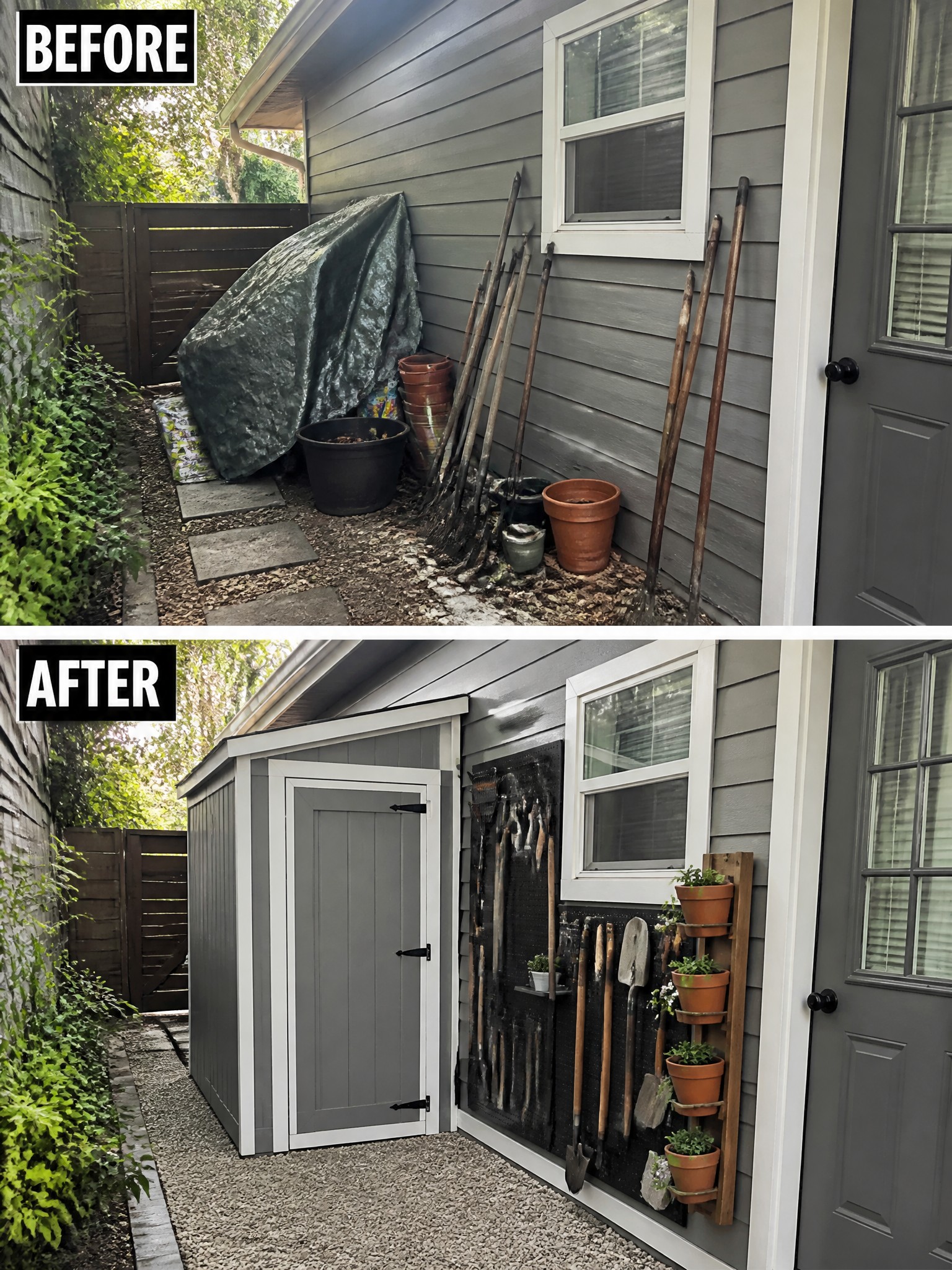
A small shed can quickly fix a side yard that has become a dumping ground for tools and pots. Here the addition of the shed pulled most of the loose items out of sight while a simple wall rack kept the rest in order and off the ground.
This idea suits homes with narrow side passages where clutter builds up fast. Size the shed to leave walking room, then use a basic pegboard or rack for tools you reach for often so the area stays usable instead of turning messy again.
Define A Narrow Side Yard With A Simple Path
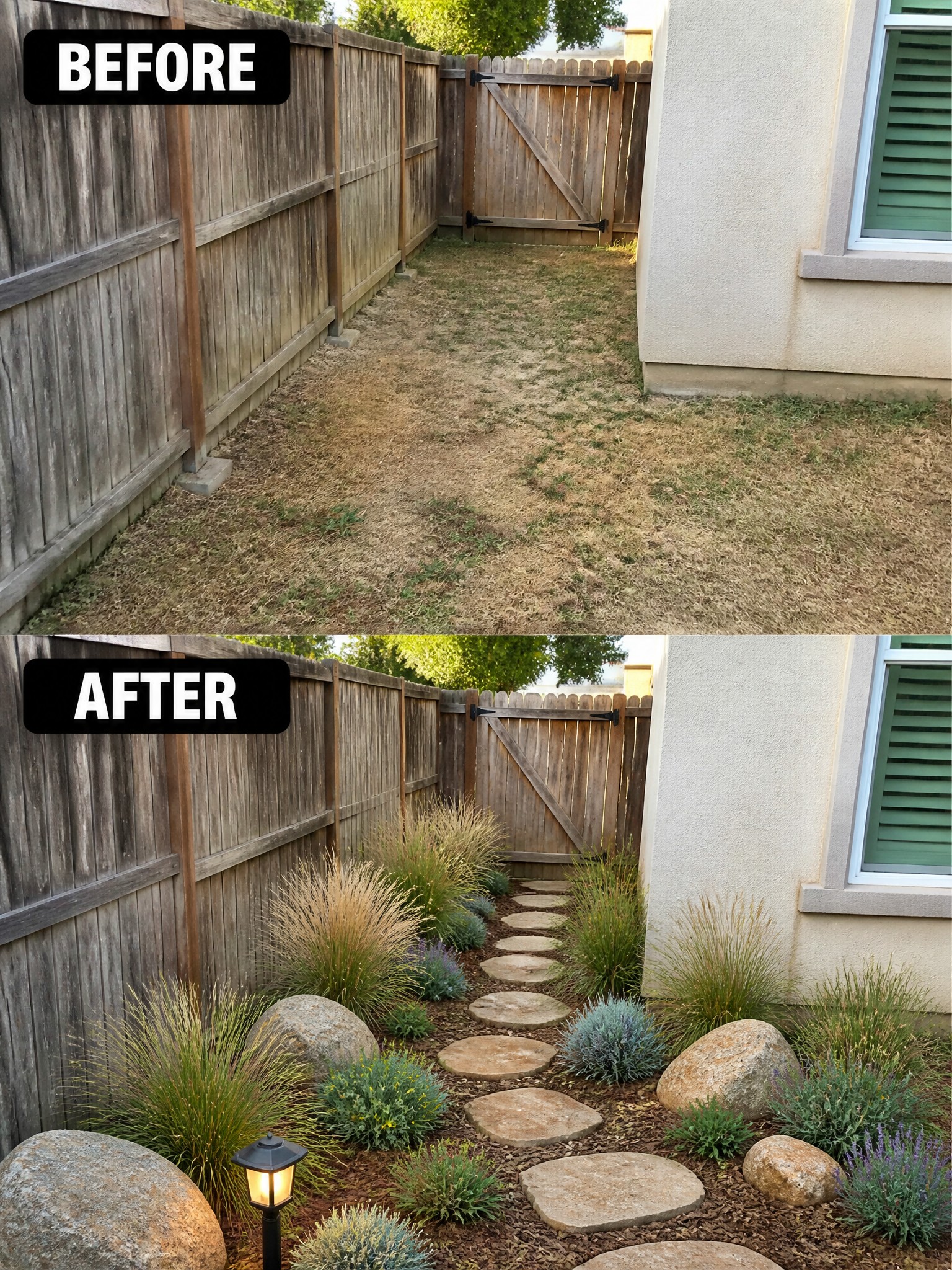
A bare dirt strip along a fence often ends up as wasted space that feels forgotten. Adding a row of stepping stones creates a clear route through the area, while planting on either side turns the leftover ground into something intentional instead of just empty.
This approach works best on narrow side yards where you need to keep access open but still want the space to look finished. Start with the path to set the layout, then add a few larger plants and rocks to soften the edges without crowding the walkway.
Turn A Narrow Side Yard Into A Seating Area
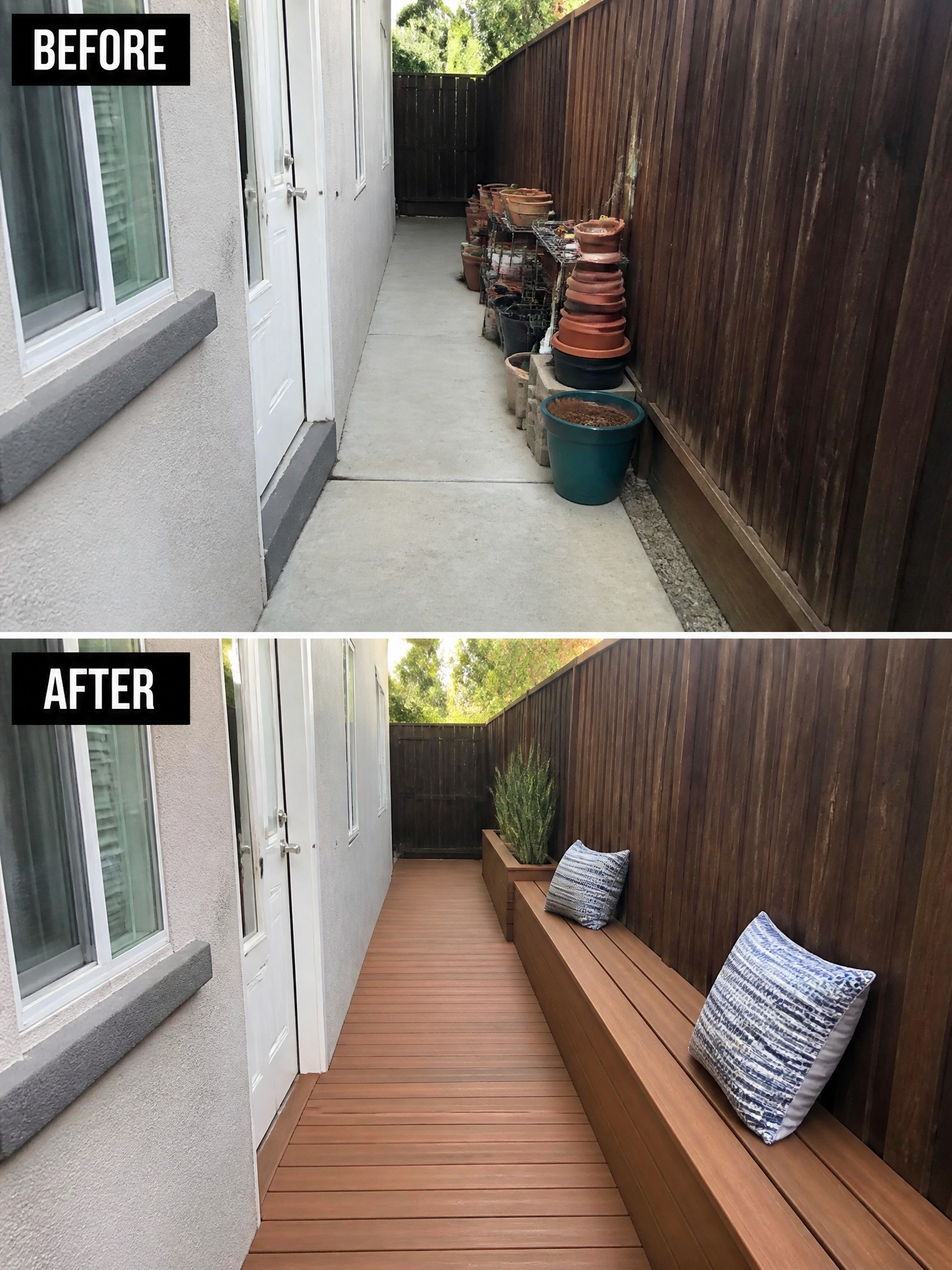
A narrow side yard often ends up as leftover space that collects clutter. Replacing the bare concrete with decking and adding a built-in bench along the fence gave the area a clear purpose without making it feel crowded.
This idea works best on long, tight passages where you need seating but do not want to block the walkway. Keep the bench low and shallow, use the same material for the deck and seat, and add just a couple of weatherproof cushions so the space stays practical year-round.
Hide Utility Lines With A Planted Screen
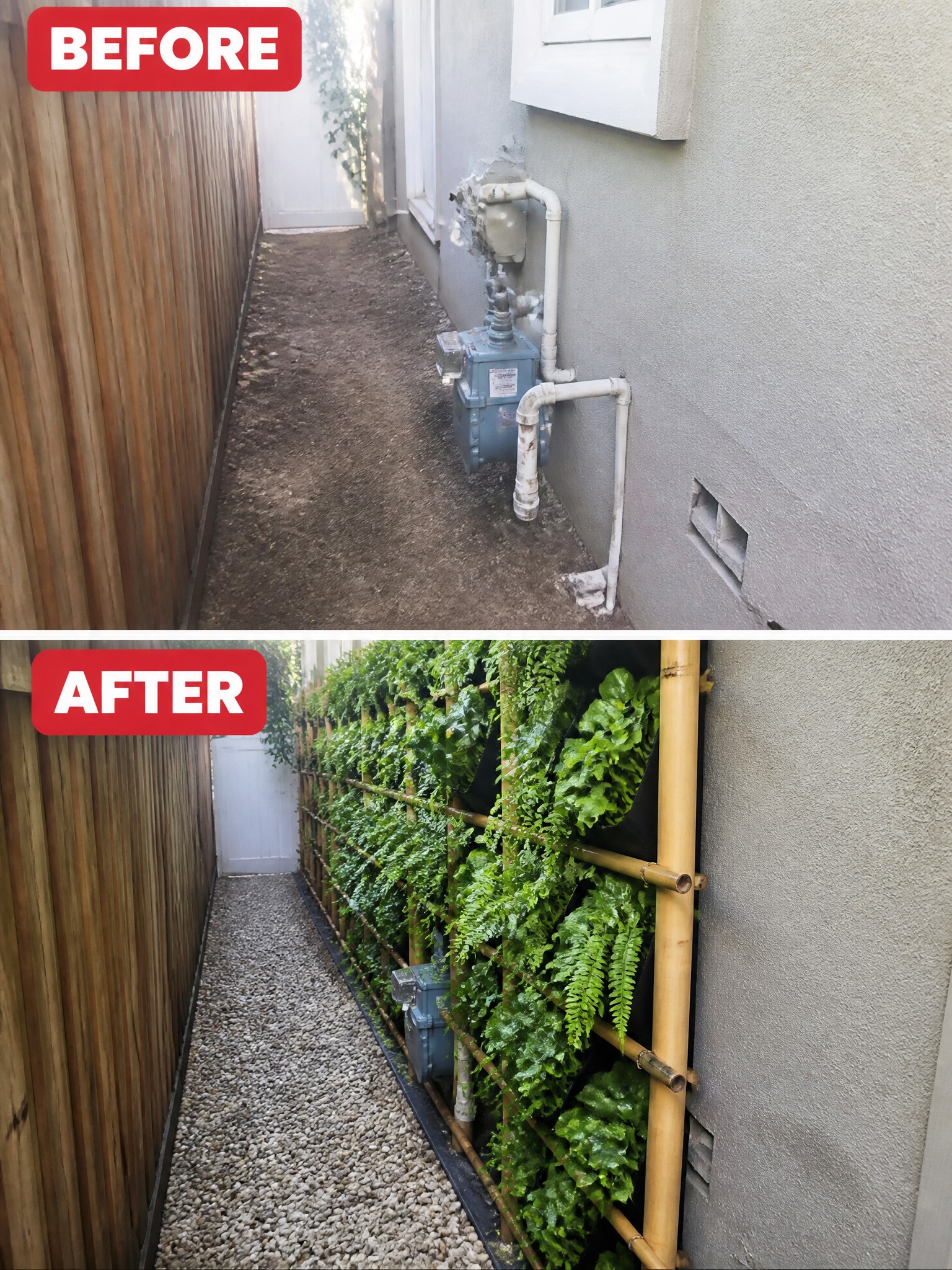
A narrow side yard often ends up as wasted space because of exposed pipes and meters. Adding a simple bamboo frame with pockets for plants covers those fixtures while turning the wall into a green surface. The gravel path keeps the ground clean and easy to walk on, which makes the whole area feel more finished instead of neglected.
This approach works well on homes where the side passage is tight and you want to keep access to the utilities. Start with a sturdy frame that stands a few inches away from the wall, then choose plants that handle the light conditions in that spot. Keep the planting simple so you can still reach the equipment when needed.
Use Lighting To Define A Side Yard Path
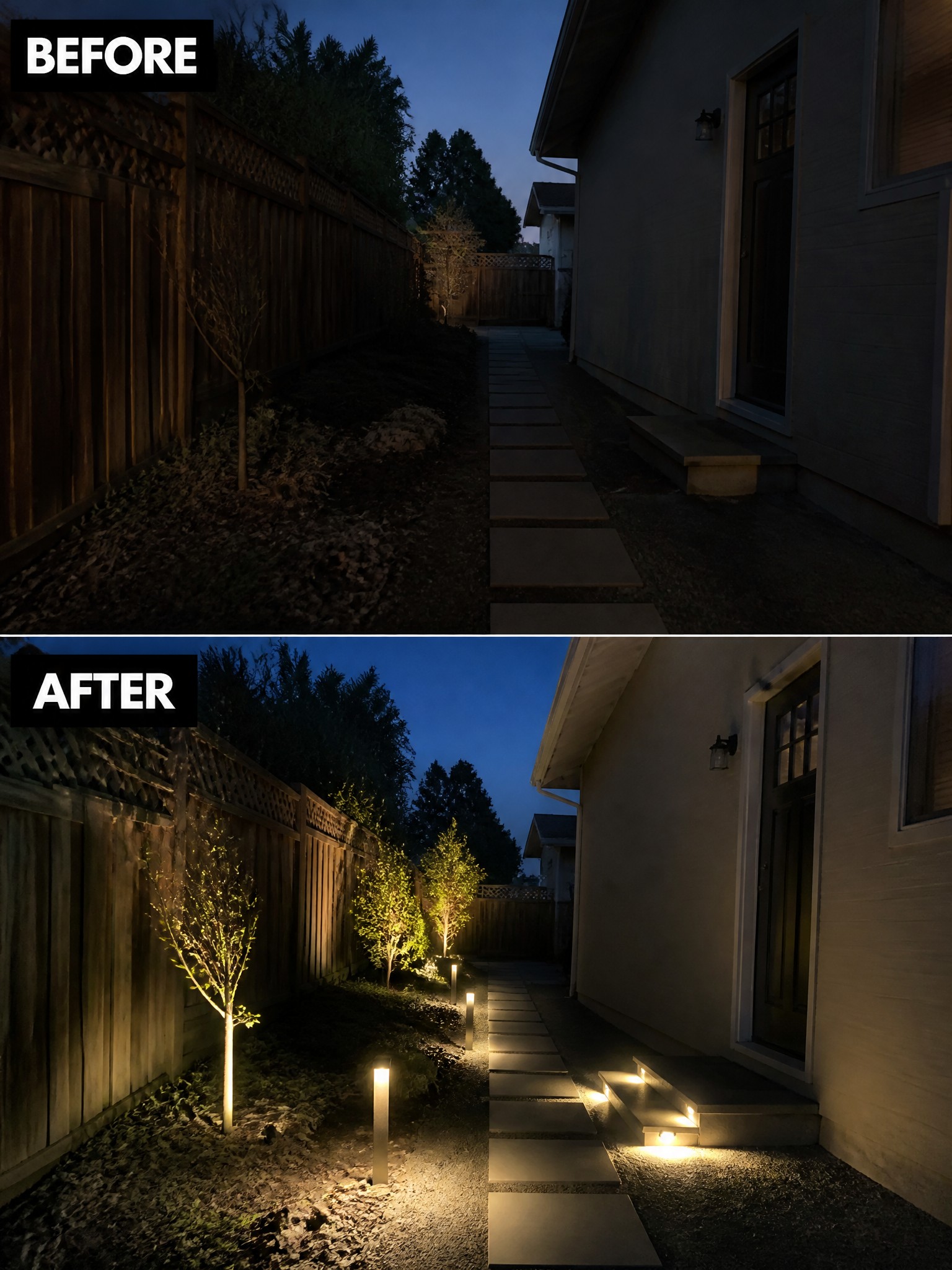
Side yards often feel like leftover space because they stay dark and undefined once the sun goes down. Adding a few path lights and uplights on small trees gives the area clear shape and makes it feel like an intentional part of the yard instead of an afterthought.
This works especially well on narrow lots where you want to guide movement without adding bulky features. Place low path lights along the walkway first, then add one or two uplights at the base of trees or shrubs. Keep the fixtures simple and focused on function so the light does the work without drawing attention to the hardware itself.
Update An Old Fence To Refresh A Side Yard
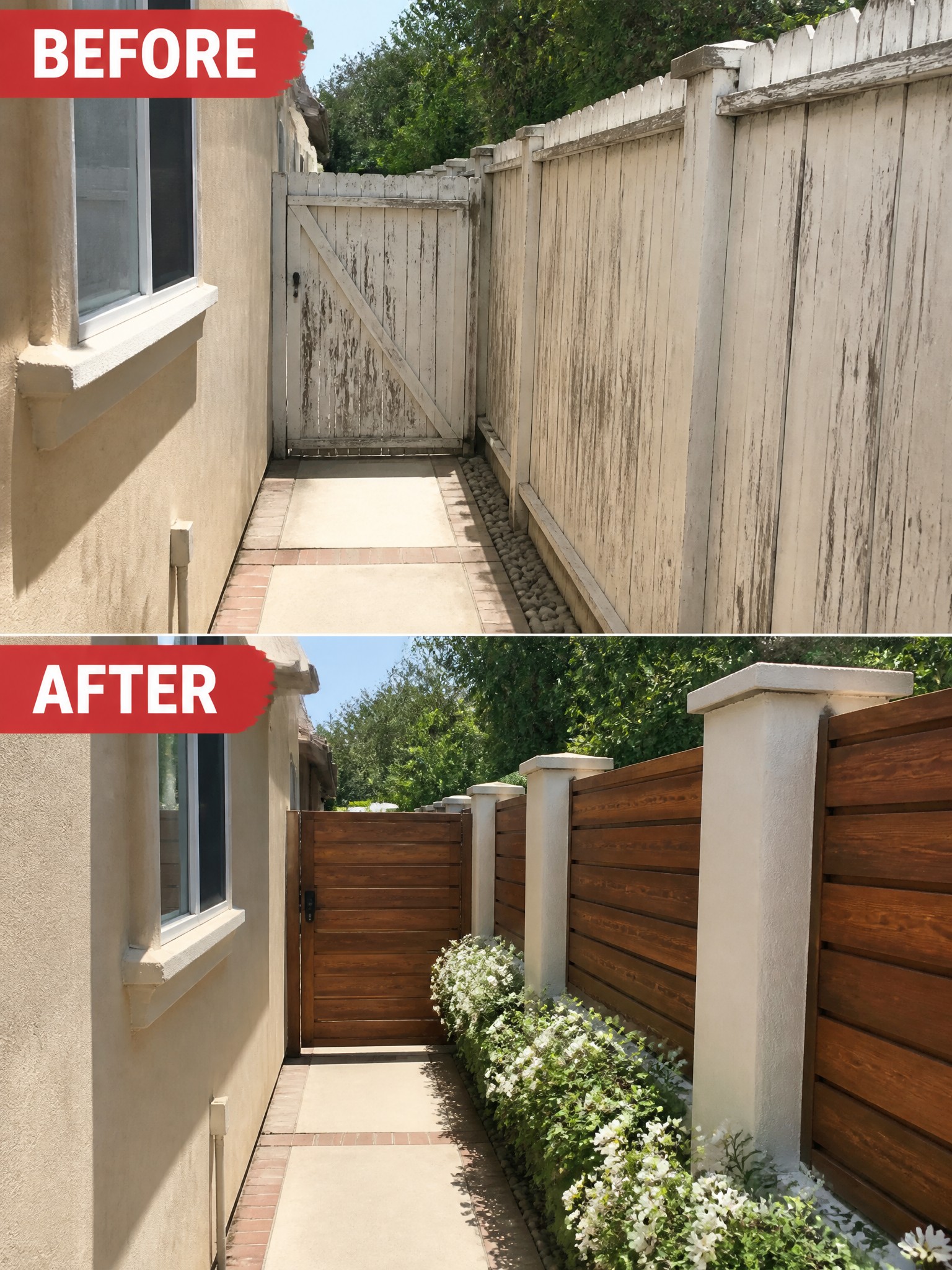
A weathered fence often makes a narrow side passage feel forgotten. Switching to a fresh fence with horizontal boards and solid posts creates a stronger frame for the space, while a simple line of low plants along the edge adds softness and keeps the path feeling open.
This idea suits homes where the side yard is mostly a walkway. Start with the fence as the main structure, then add compact border plants that can handle the sun and stay neat. Keep the colors and materials close to the house so the whole area looks planned rather than patched together.
Create A Defined Path In A Narrow Side Yard
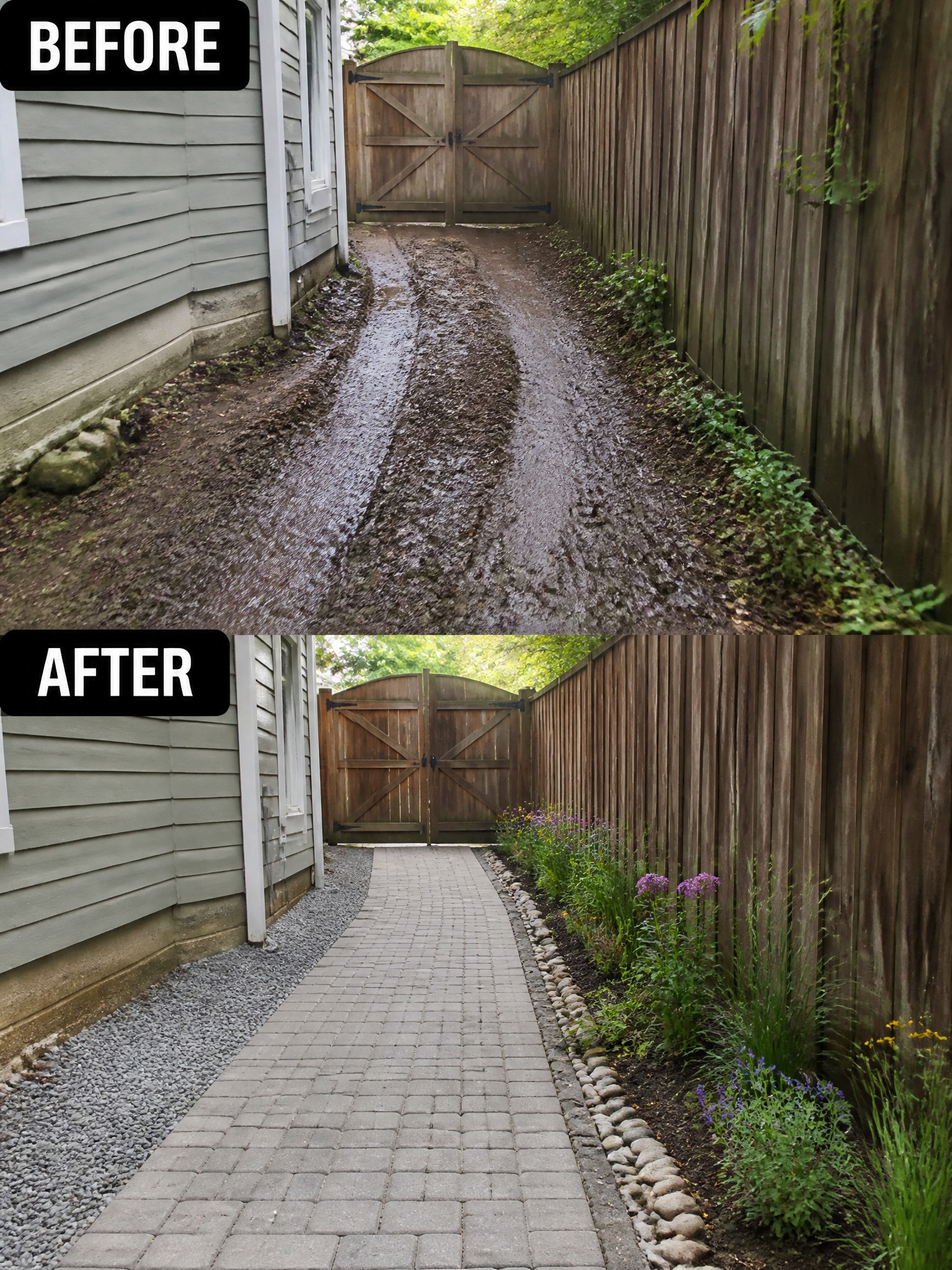
A muddy, rutted side path makes the space feel neglected and hard to use after rain. Switching to pavers gives the yard a solid walkway that stays clean and functional while also making the whole area look more intentional.
This idea works best on homes with tight side passages that still need regular access. Keep the path width practical, add a simple gravel edge for drainage, and plant a narrow border along the fence to soften the look without crowding the walkway.
Refresh The Exterior With Paint And Foundation Plants
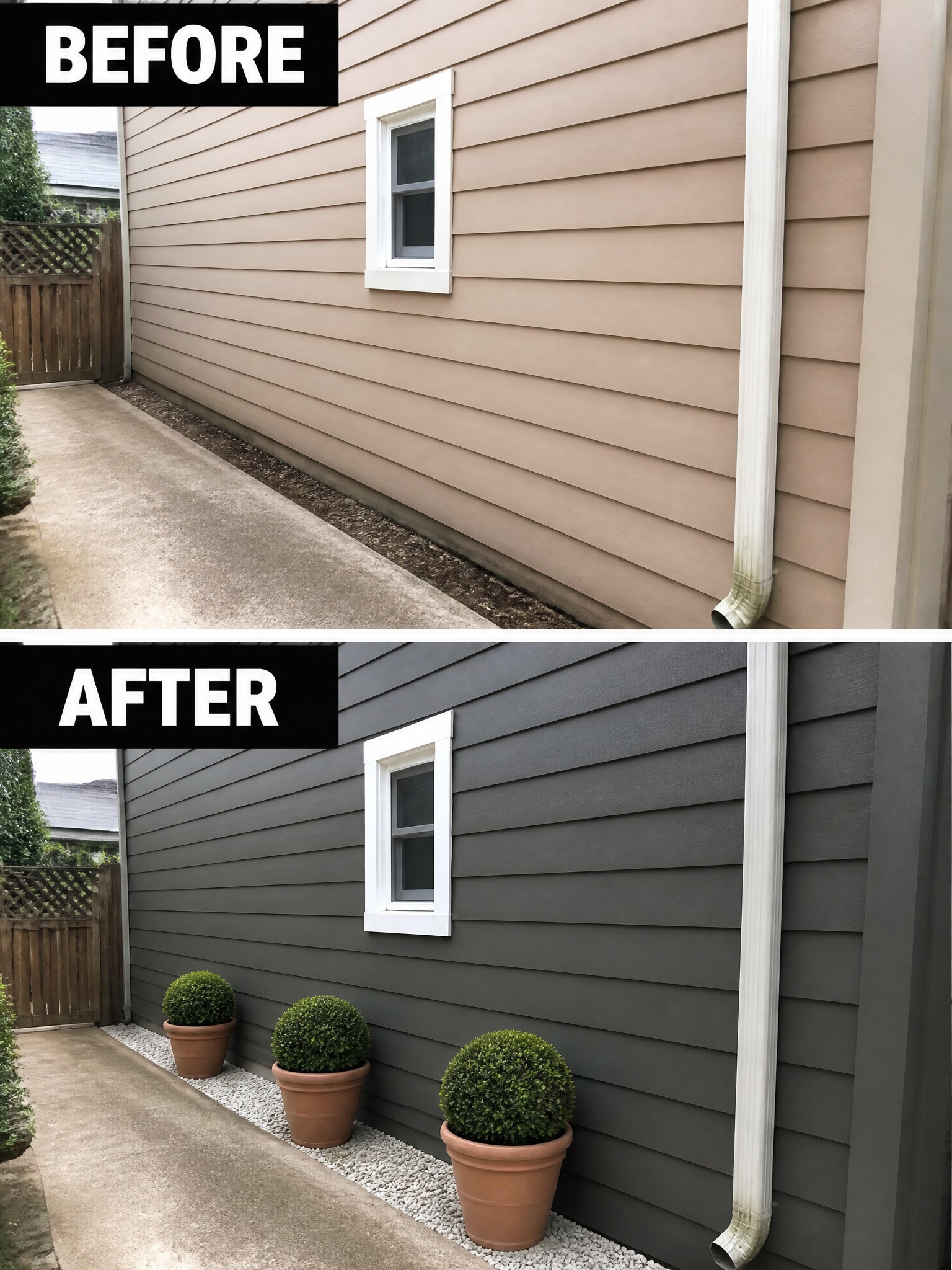
A simple color change on the siding can make a side wall feel much more intentional. In this case the house went from a light beige to a deep charcoal gray, which immediately gave the area more weight and made the small window stand out. Adding a clean gravel strip with a few large pots of shrubs then finished the base of the wall and kept the look from feeling bare.
This approach works well on narrow side yards or any stretch of siding that feels flat. Start with a thorough power wash, choose an exterior paint with good coverage, and keep the planting simple so the new color stays the main feature. Use pots that can handle weather and repeat the same plant or pot style for a tidy result without crowding the walkway.
Define A Narrow Side Yard With A Simple Paver Path
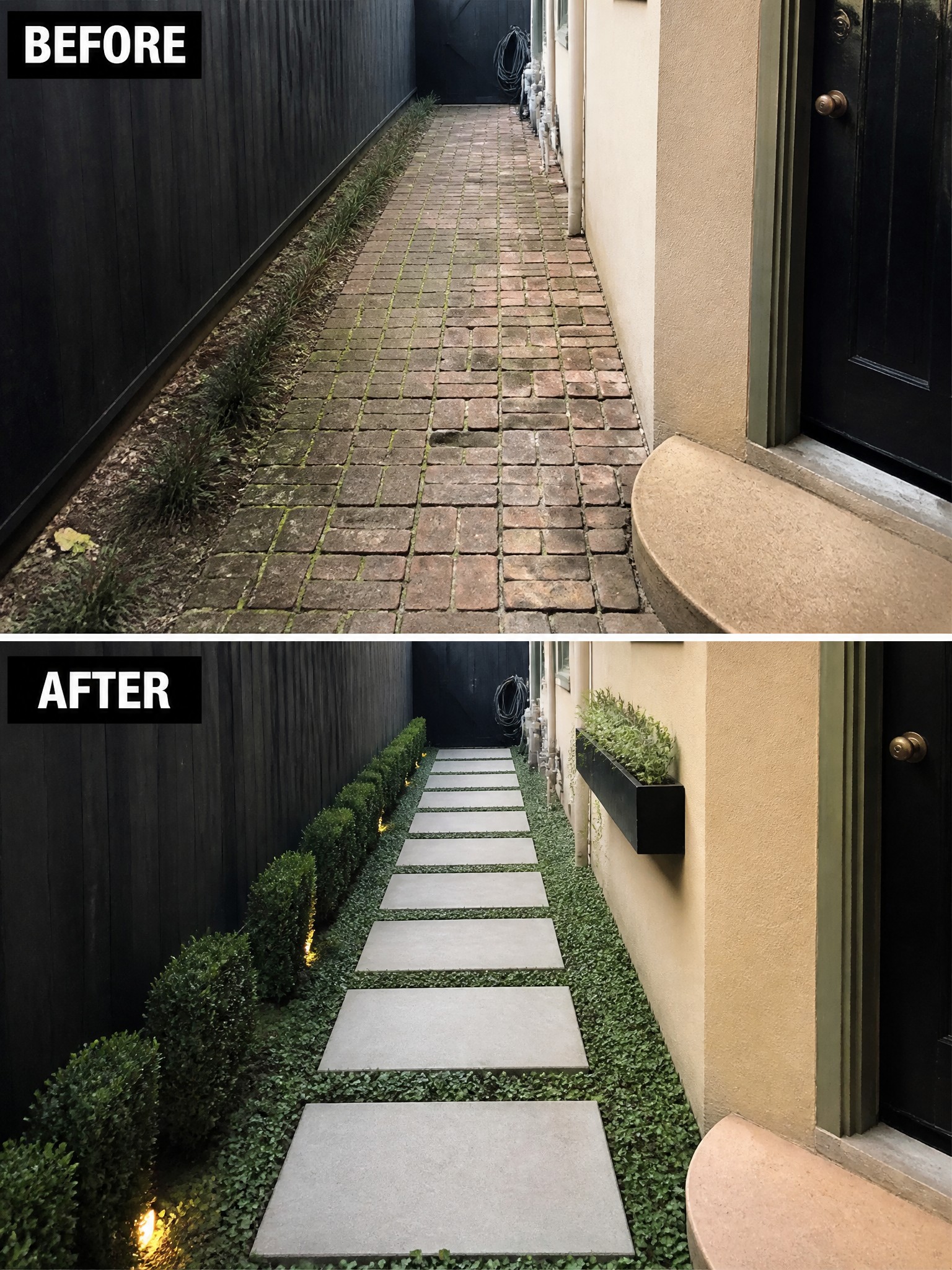
A narrow side yard often ends up as an afterthought, with an old brick path that gets weedy and uneven over time. Replacing it with large, evenly spaced pavers set into low ground cover gives the space a clear, intentional line. Adding a row of clipped shrubs along one edge and a few low lights keeps the look neat without crowding the walkway.
This approach works well on any tight passage between houses or along a fence line. Start by clearing the old surface completely, then lay the pavers on a simple gravel base so water can still drain. Low boxwood or similar shrubs planted at regular intervals give the path shape, while the ground cover fills in the gaps and softens the edges. Keep the planting simple so the path remains the main feature.
Hide Utility Areas With A Lattice Screen
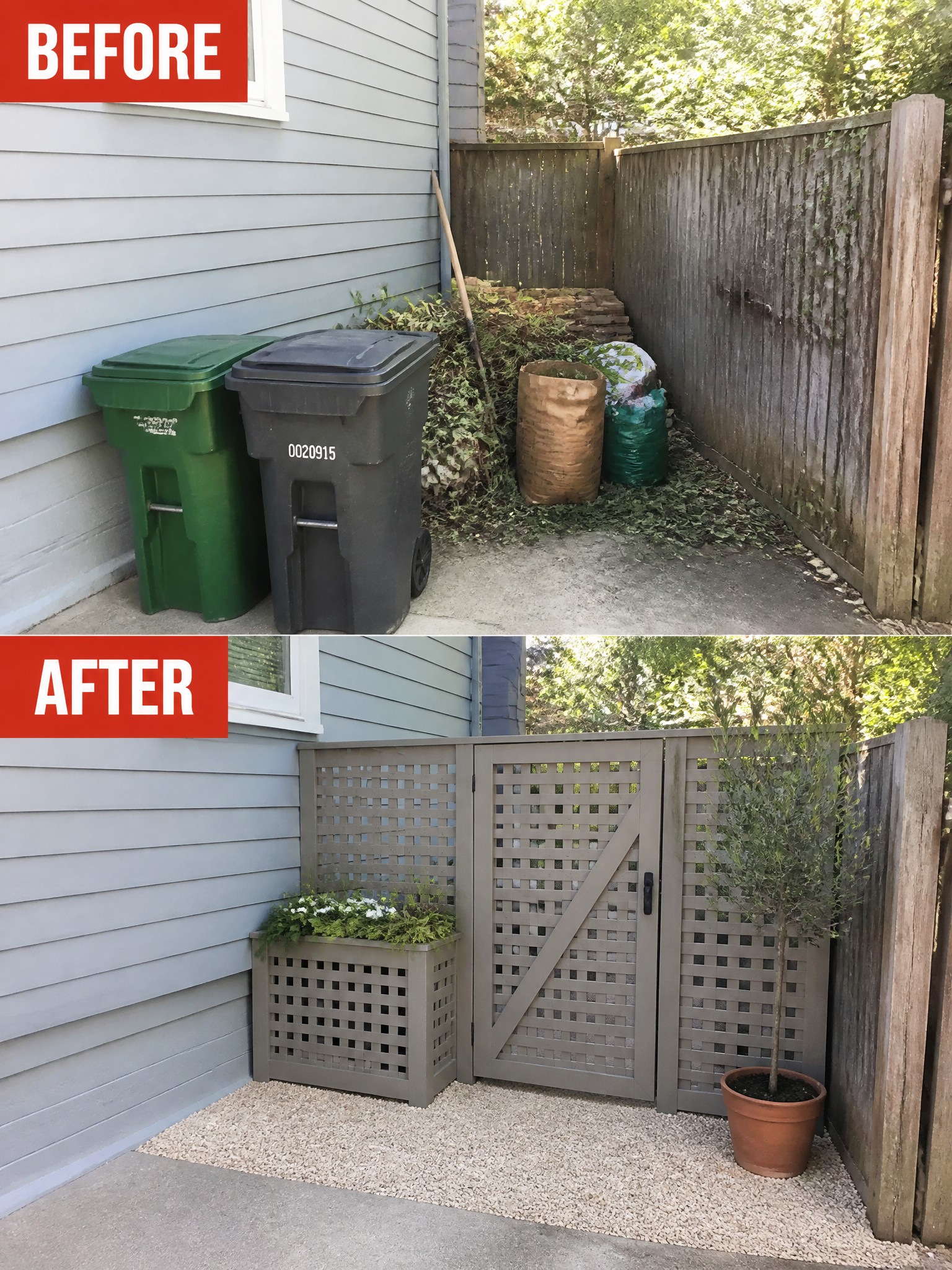
Side yards often collect trash bins and random items because there is no clear boundary. A lattice screen with a gate creates a simple wall that keeps those items out of view while still allowing access when needed.
This idea works best on narrow strips beside the house where full fencing would feel too heavy. Measure the length first, pick a material that matches your existing fence or house trim, and add one or two planters in front so the screen feels like part of the landscape instead of just a barrier.
Add Structure With Garden Beds In A Narrow Side Yard
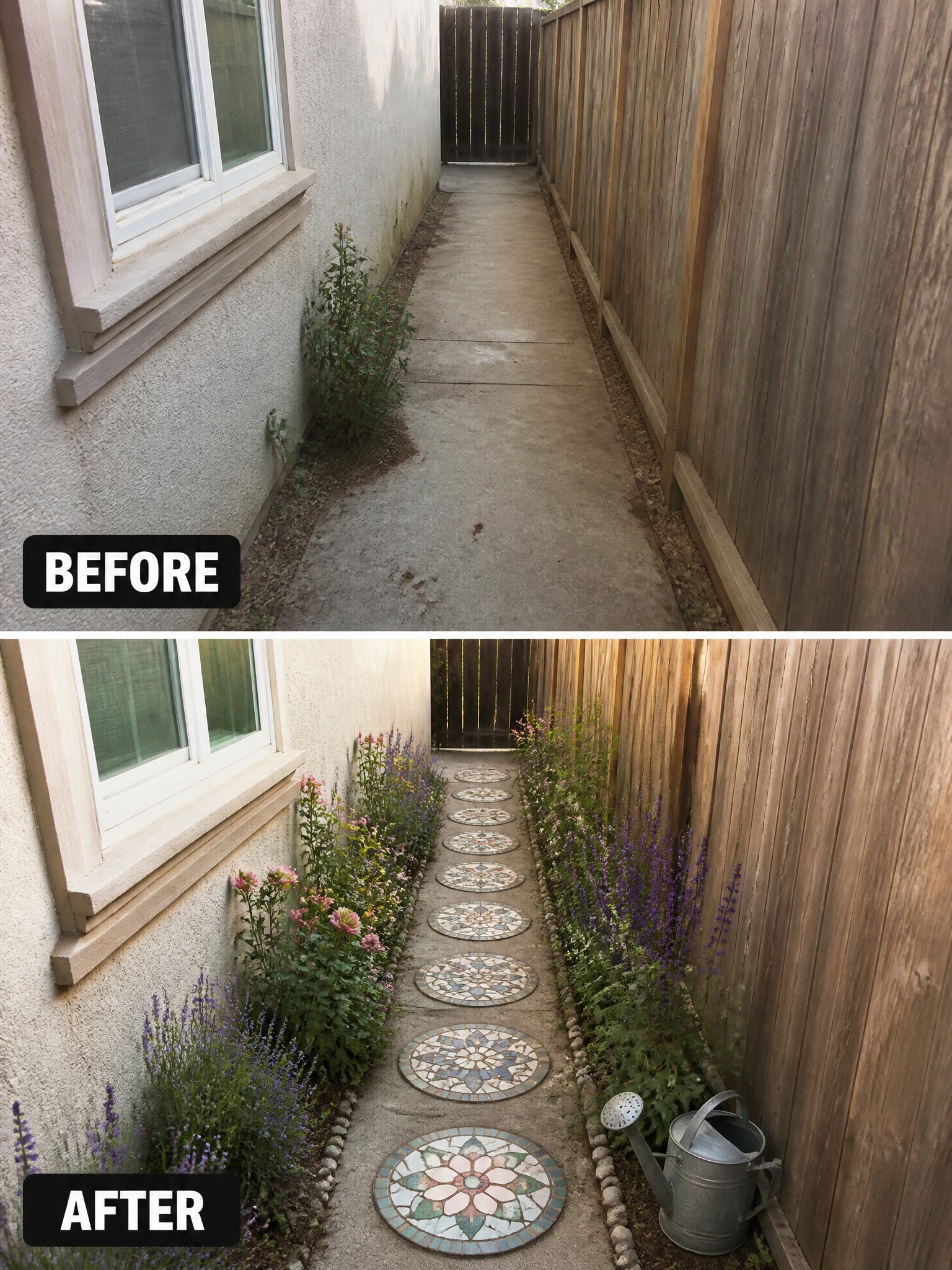
A narrow side yard often stays plain because there is not much room to work with. Adding low beds on both sides of the path and laying circular stepping stones gives the space clear shape and turns a bare walkway into something that feels planned.
This idea works best on homes where the side yard is used as a route from front to back. Keep the beds narrow, repeat one style of paver, and use a simple border like river rock so the path stays easy to walk and does not feel crowded.
Add Retaining Walls To Shape A Sloped Side Yard
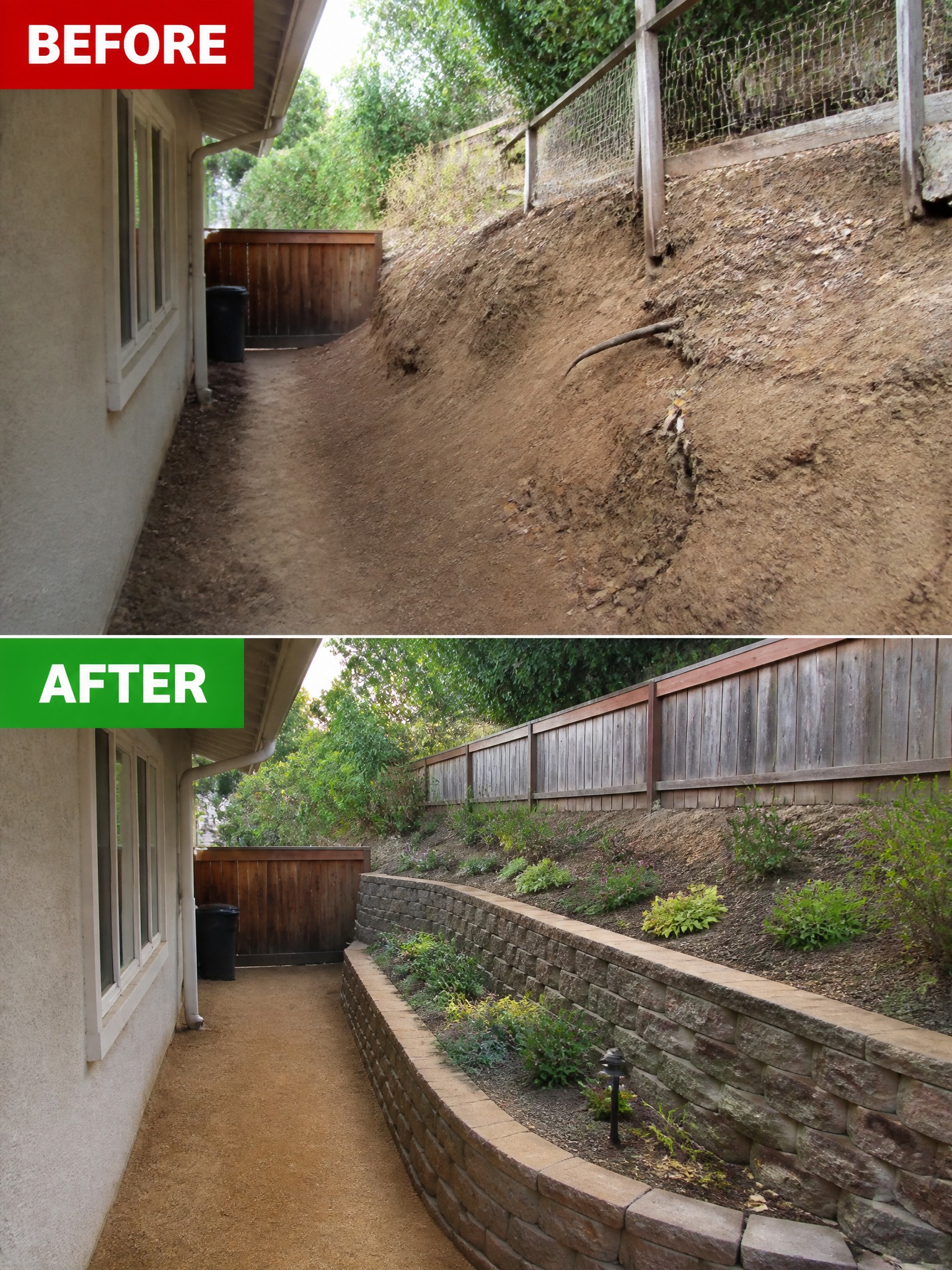
A steep bare slope next to the house often leads to erosion and wasted space. Building a low retaining wall turns that slope into level planting beds that stay put and look intentional. The wall holds the soil in place while the added plants fill in the terraces and soften the whole area.
This approach works well on narrow side yards where flat ground is limited. Start with a solid wall material that matches your house, then plant in layers so nothing feels crowded. Leave enough room along the path for walking, and choose plants that can handle the light and drainage in that spot.
Add An Arbor To Define A Side Yard Path
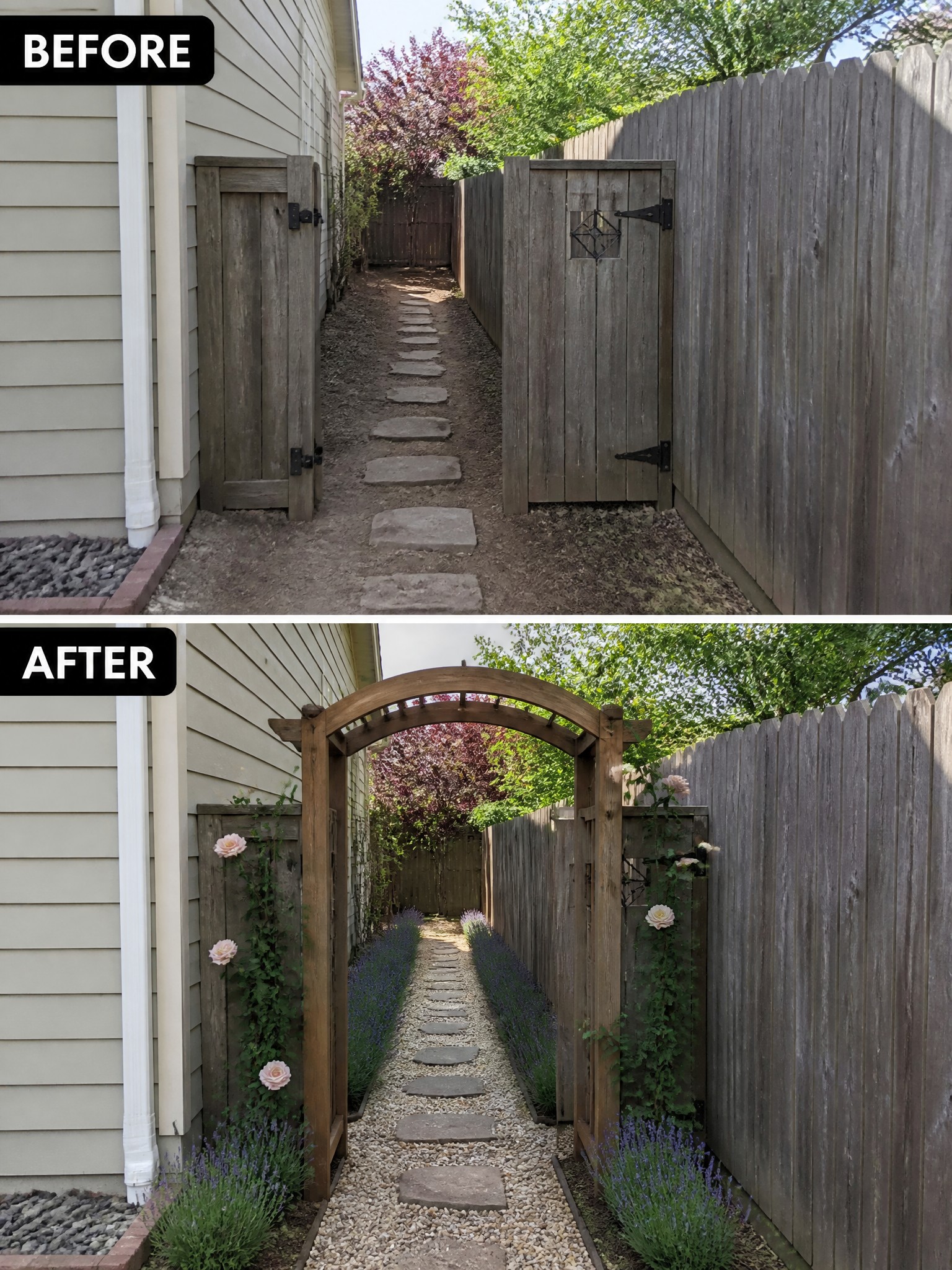
A simple arbor at the entrance and some border planting can turn a narrow dirt path into something that feels more finished. In this case the gates went from plain wood to being softened with climbing roses, and the loose stepping stones were set into gravel with lavender running along both sides.
This approach works best on side yards that feel like leftover space. Keep the arbor scale modest so it does not crowd the walkway, and choose plants that stay fairly narrow. Start with the structure and a few repeating plants rather than trying to fill every inch at once.
Frequently Asked Questions
Q: Which ideas work if my side yard stays narrow and tight?
A: Focus on vertical elements like a slim trellis or hanging planters. A narrow path of stepping stones also opens things up fast. Skip anything that spreads wide.
Q: How often will I need to water new plants in that spot?
A: New plants need water a couple times a week at first. Once they root in, most can handle less. Group them by water needs so you do not overdo it.
Q: Can I add seating without losing all the open space?
A: Pick a single bench that tucks against the house or fence. It gives you a spot to rest without blocking the path. Foldable chairs work too if you want flexibility.
Q: What if the ground slopes and feels uneven?
A: Level small sections with soil or gravel as you build. Terraced beds can turn the slope into an asset. Start at the bottom and work your way up.
