

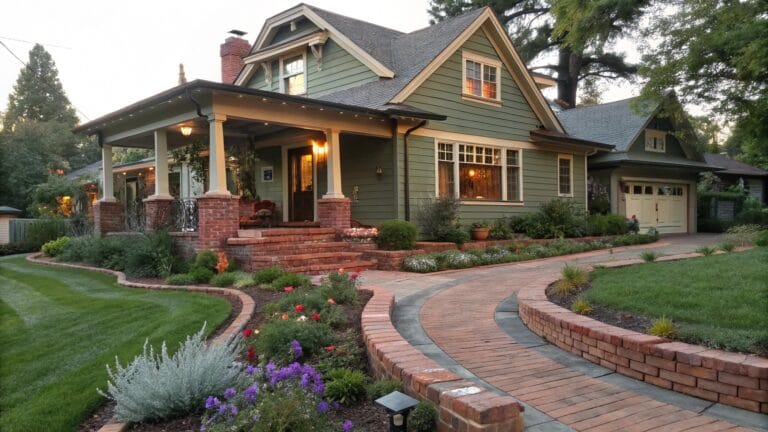
I always notice how a crisp garden edge makes the whole bed look intentional instead of accidental. Over the years I’ve shaped my own borders and seen neighbors tackle theirs too.
The setups that hold up best blend right into the landscape with stones or bricks that weather naturally over time. Plastic strips often look cheap and buckle after one season. I plan to borrow the gravel trench idea for my front path this weekend.
Brick Walkway with Plant Edging
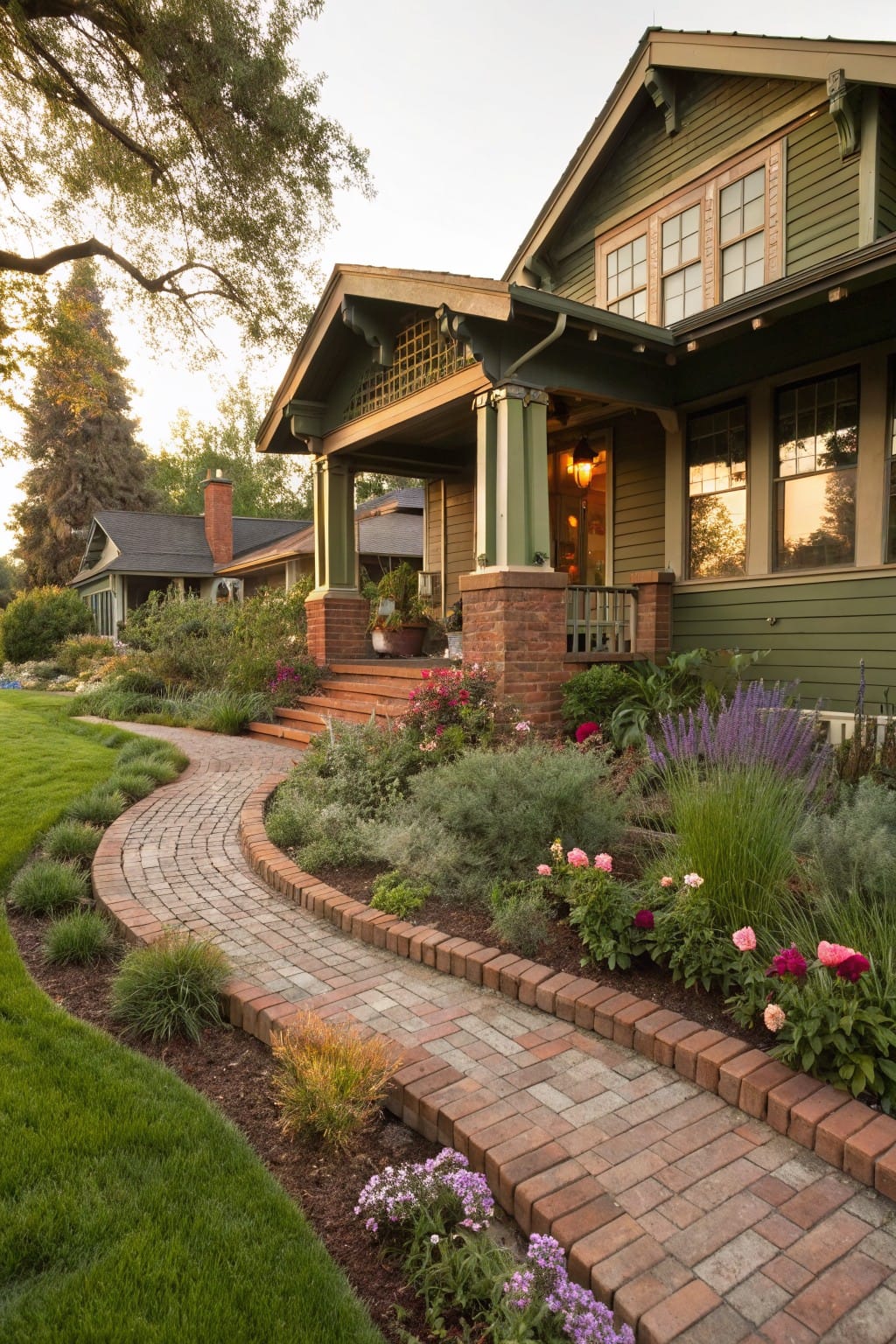
A brick walkway like this one winds gently through the front yard, edged close with grasses, perennials, and low shrubs. The plants hug the path without spilling over, making a clean line between lawn and garden. It feels casual yet put-together, guiding folks right to the porch steps without looking stiff.
You can lay this out in a weekend using basic bricks on sand. Curve it to fit your yard’s shape, best for homes with room for a meandering approach. Stick to tough plants that won’t need constant trimming. Avoid super straight lines unless your space is tight.
Wood Edging for Garden Beds
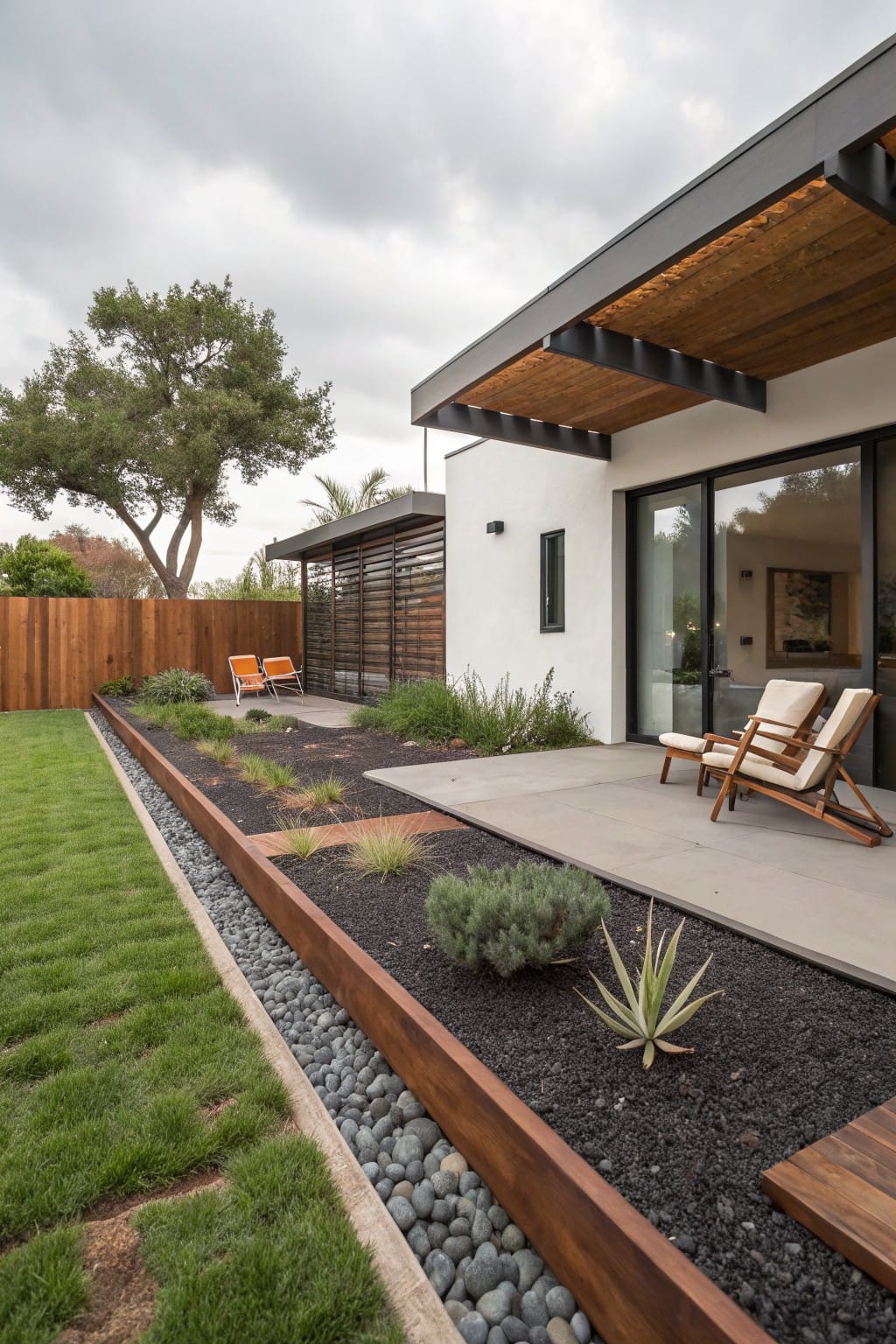
Simple wood boards make a strong edge around these garden beds. They hold back the black gravel mulch and plants like agave while keeping everything neat next to the lawn. Pebbles fill the gap between the wood and grass for a clean finish that lasts.
You can put this in most backyards over a weekend. Dig a trench along your beds, level it, and nail short wood lengths into place. Use treated lumber so it holds up. It suits sunny spots with low-water plants best. Just check drainage so the wood stays dry.
Stone Path Edged with Flowers
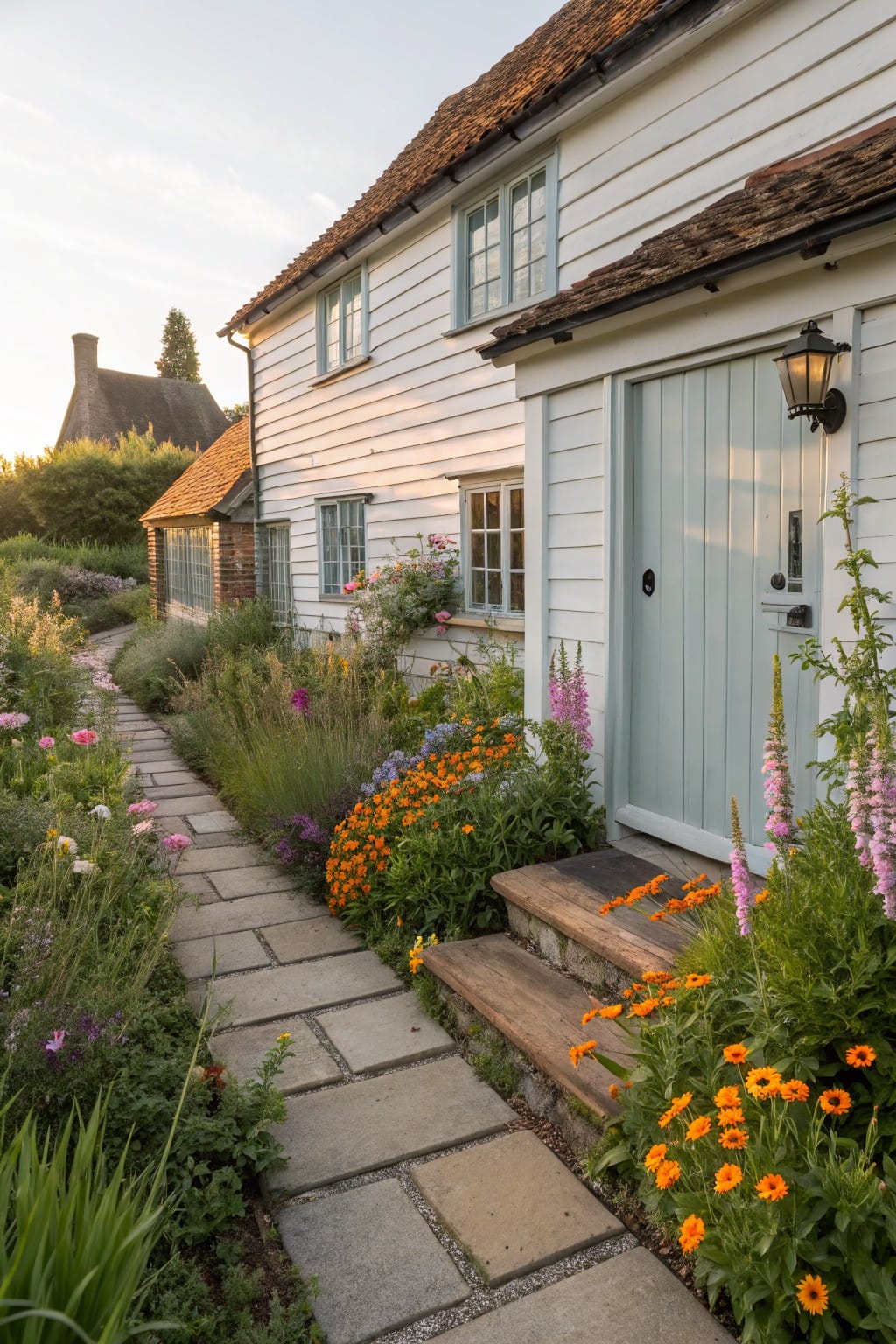
A stone path like this one makes getting to the front door feel easy and pretty. The pavers run right through beds packed with flowers, mostly tall ones like foxgloves in pink and purple next to orange blooms. It keeps things simple but hides bare dirt and pulls your eye along without trying too hard.
You can set this up in a weekend on most front yards, especially older houses with some charm already. Lay flat stones in a gentle curve, then plant perennials tight along both sides. It suits cottage styles best. Just leave enough path width, about three feet, or folks might knock petals loose.
Wooden Log Garden Edging
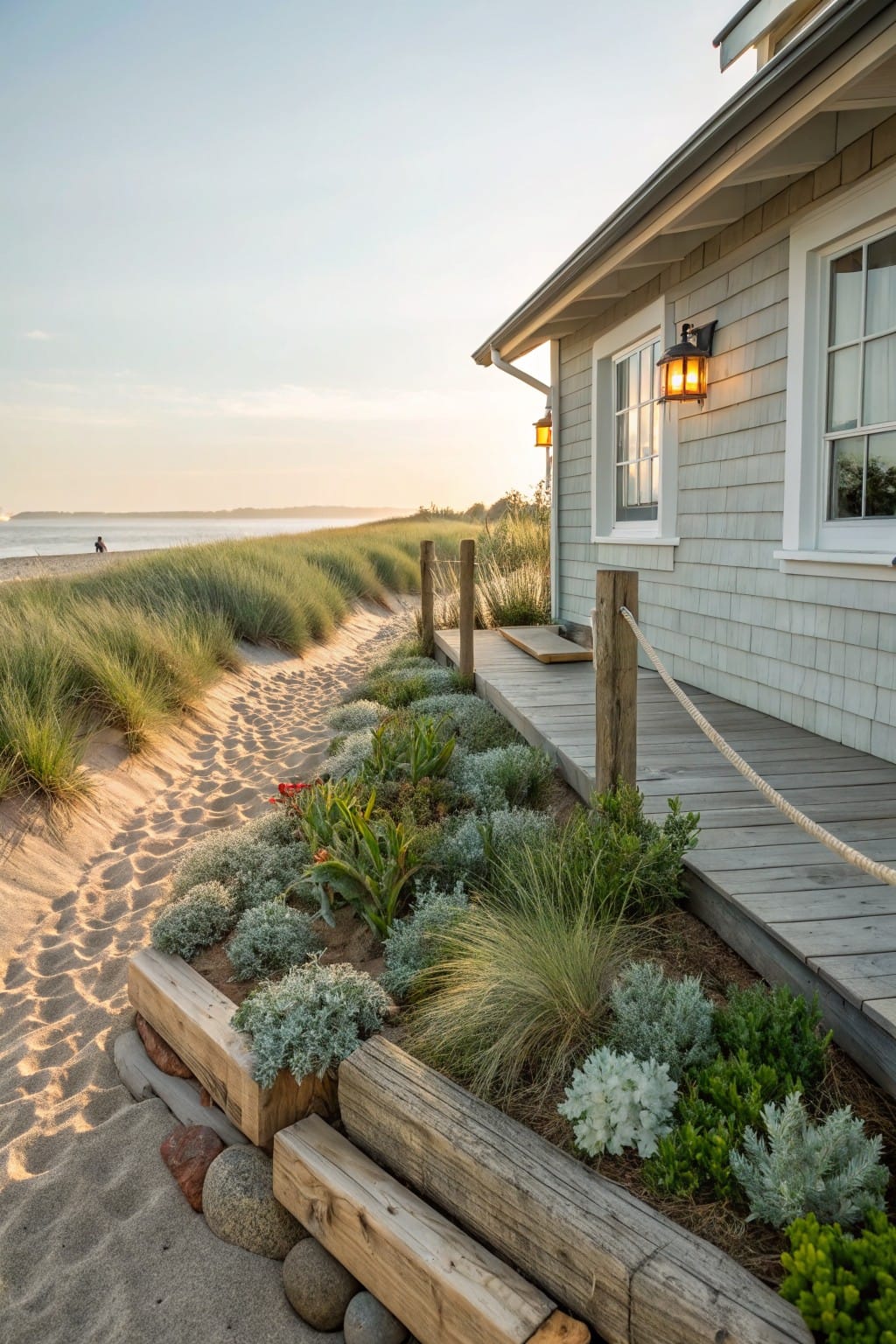
Stacking rough-cut wooden logs makes a simple edging that holds back sand and soil around low garden beds. It works well in beach yards because the wood weathers to match the natural look, and plants like beach grasses and succulents fill in easy without much fuss. No need for fancy cuts or mortar.
Hunt for untreated logs at a lumber yard or use thick branches you find nearby. Line them up two or three high along a path or yard border, tamp soil behind to hold them steady. This suits sandy lots or casual coastal homes best. Just check they drain well so rot stays off.
Paver and Pebble Driveway Edging
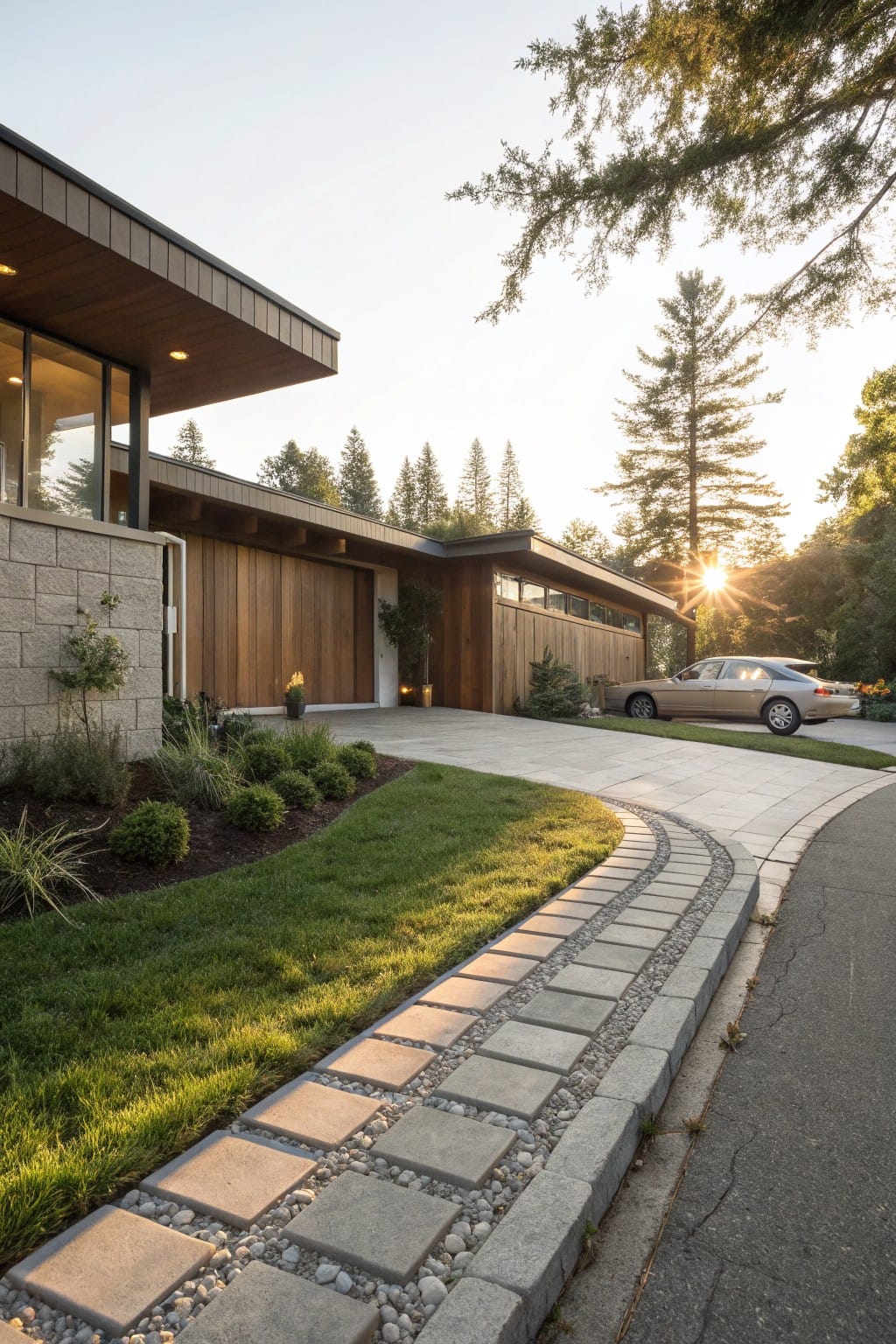
One clean way to edge a driveway is lining it with large square pavers, then filling the gap to the grass with small pebbles. You see it here curving smoothly along the pavement. It holds everything in place during rain or foot traffic. Keeps the lawn tidy without looking fussy.
This works best where grass bumps up against a driveway or path. Suits most homes, even older ones with straight lots. Dig a shallow trench about six inches wide. Drop in the pavers edge to edge. Rinse in pebbles and water to settle. Skip mortar if you want it loose for easy fixes.
Wooden Raised Beds for Garden Edging
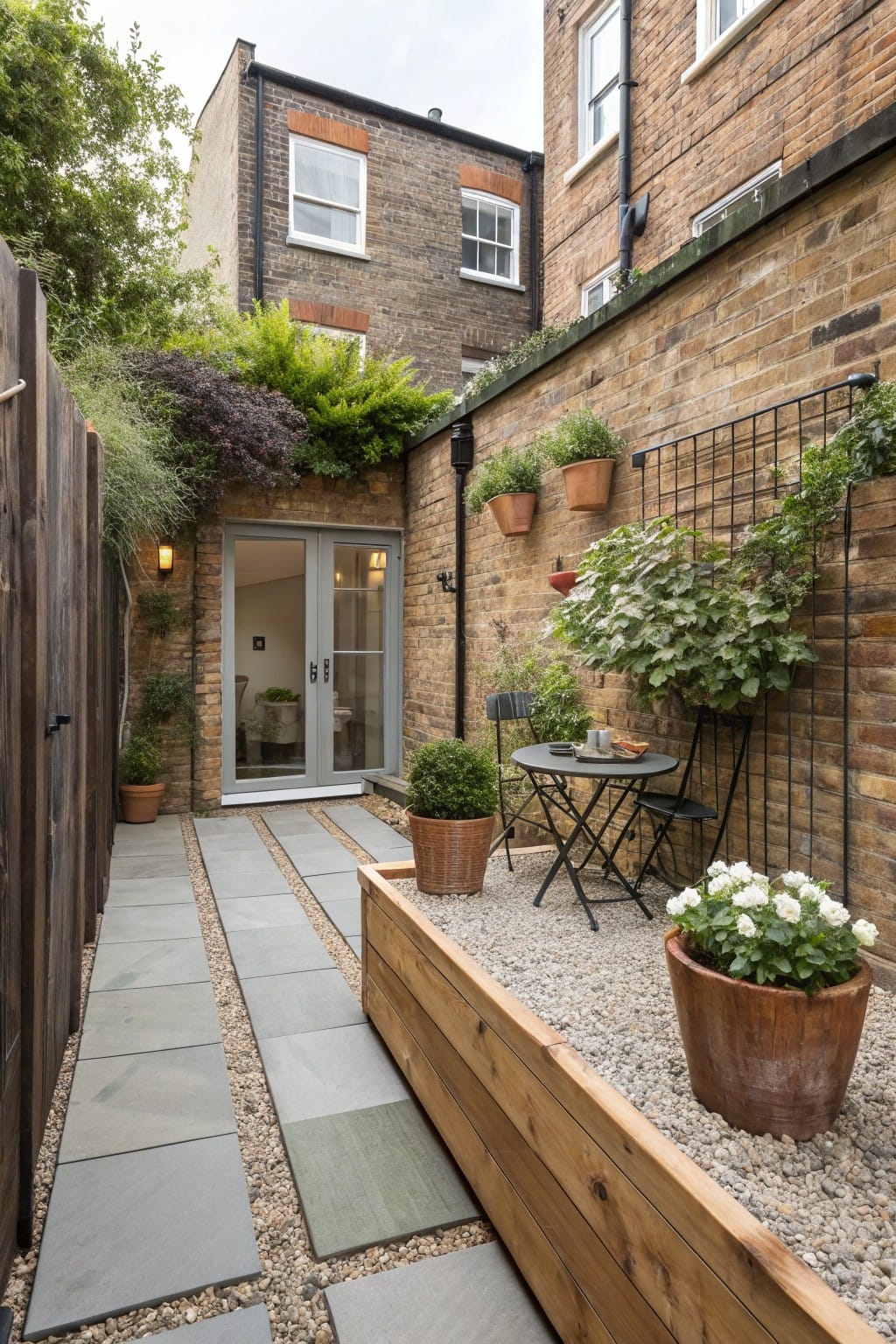
A wooden raised bed like this one runs right along a gravel patch next to the path. It holds back the loose stones and gives plants a clean spot to grow. Folks like how it keeps things tidy without looking too fussy, especially in a snug yard.
Put these beds wherever you have gravel or mulch meeting a walkway or lawn. They suit older brick homes or tight city gardens best. Use pressure-treated lumber, nail it together square, and fill with soil. Watch the height though. Too tall and it starts feeling like a wall.
Boxwood Edging for Paths

Boxwoods make a solid choice for edging garden paths. You see it here along a curving stone walkway that leads straight to the front door. The round trimmed shrubs keep everything neat and contained. They frame the path without overpowering it. Folks like how they stay green year round.
Plant them along any walkway in your yard. Small ones go in quick over a weekend. They suit older homes or formal front entries best. Mulch between them and the path stones to cut down on weeds. Trim a couple times a year.
Gravel Edging for Stone Paths
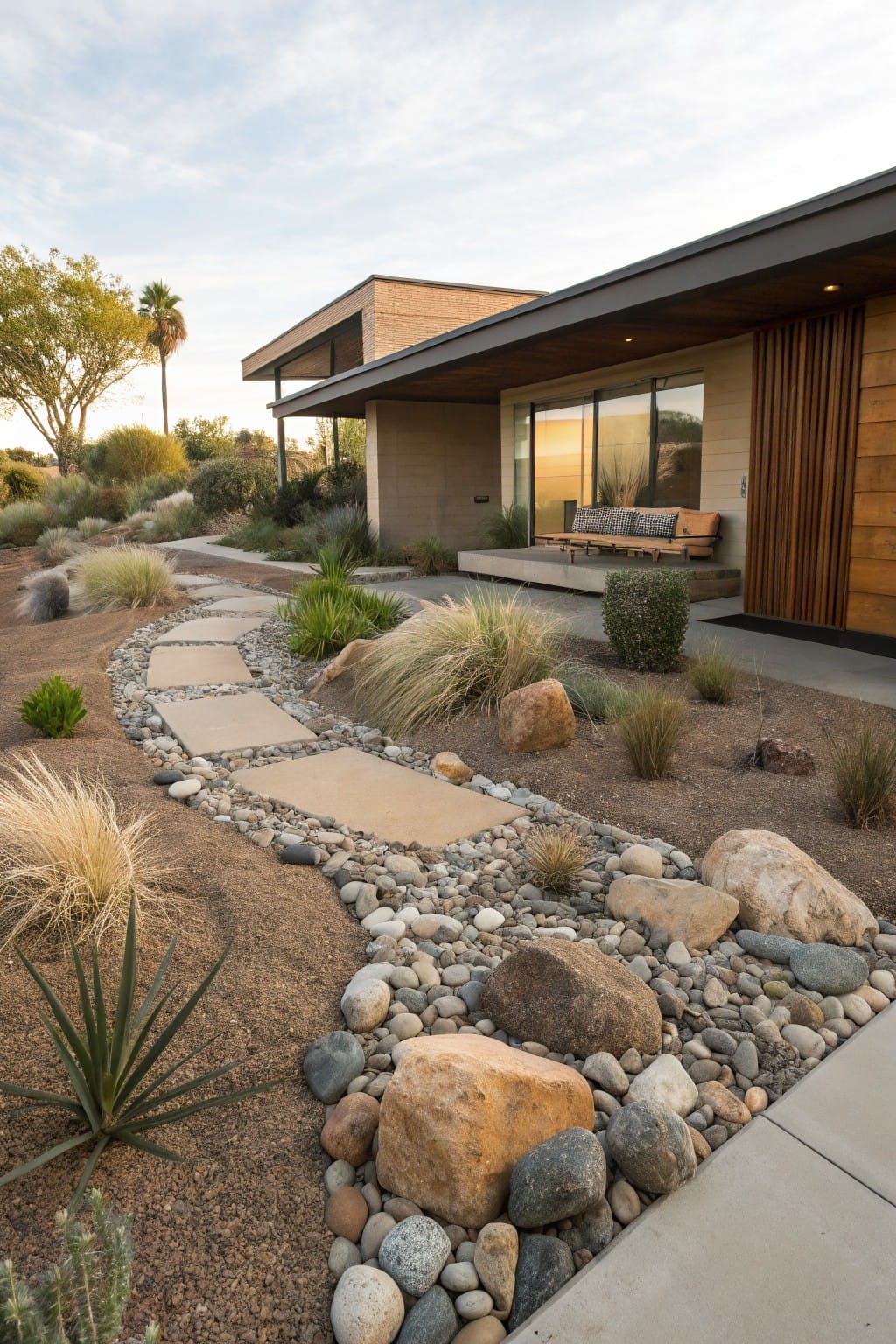
A gravel bed around large stone pavers makes a clean, low-fuss path that winds through the yard. It stands out because the stones give solid footing while the gravel softens the edges and lets water drain right in. Folks like how it fits dry gardens without needing much upkeep.
This works best in sunny spots with poor soil or where you want to skip mowing. Start by marking your curve, dig shallow for the gravel base, set the stones with gaps, then pile on river rocks and a few boulders to hold shape. Suits modern homes or any place aiming for simple yard lines… just watch for shifting gravel on slopes.
Painted Rock Path Edging
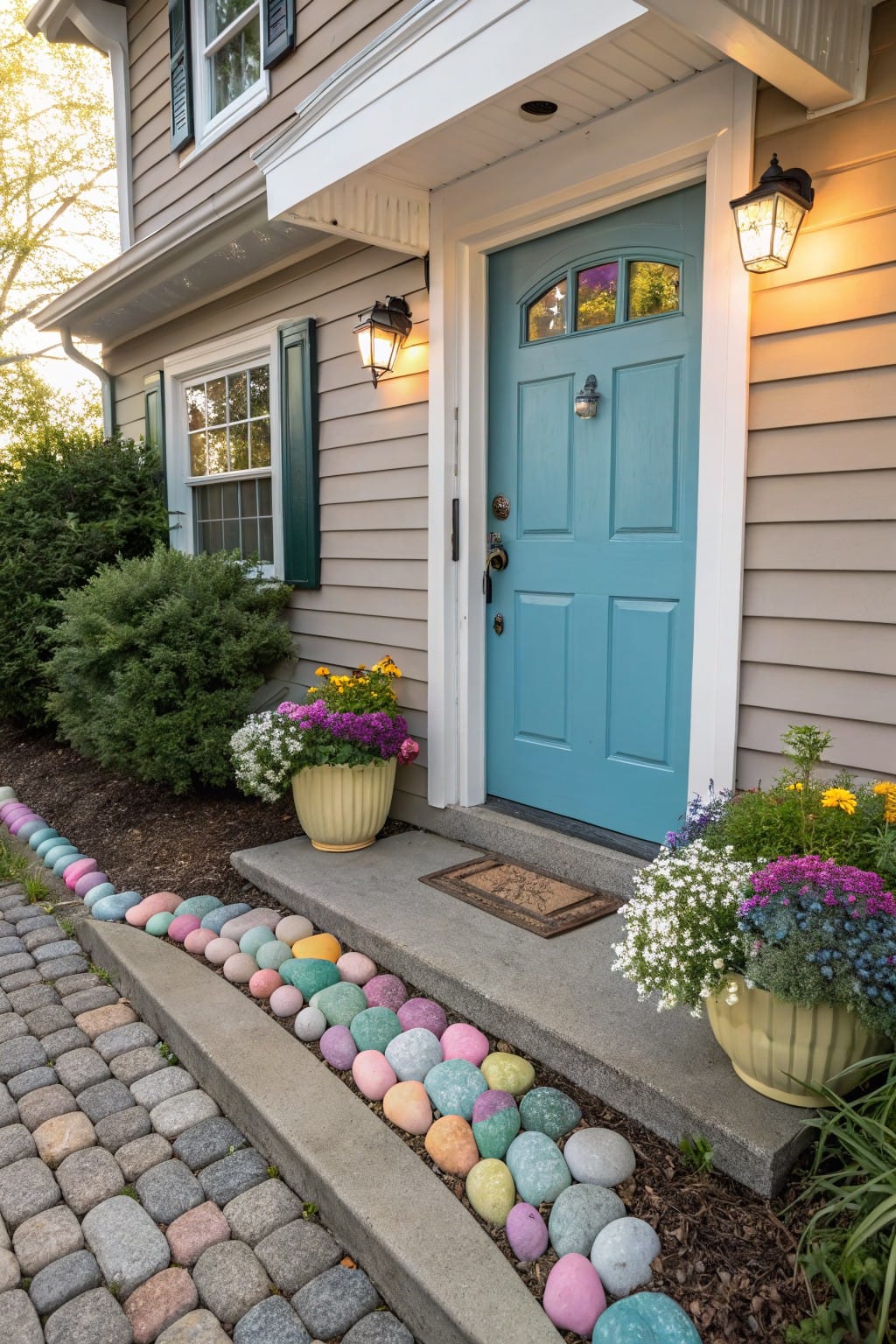
One easy way to edge a garden path is lining it with smooth rocks painted in bright colors. Folks like this because it brings a playful touch to the yard without much work. You just paint ordinary rocks in pastels or bold shades, like the pinks, blues, and yellows running along this cobblestone walkway. It perks up a plain path and keeps mulch or dirt in place.
Grab rocks from your yard or a nearby creek, clean them up, and use outdoor acrylic paint. Lay them along the edge of paths or steps, maybe curving them for fun. This works best in front yards on cozy homes where kids play around. Just seal the paint so colors last through rain.
Stepping Stone Path in Gravel
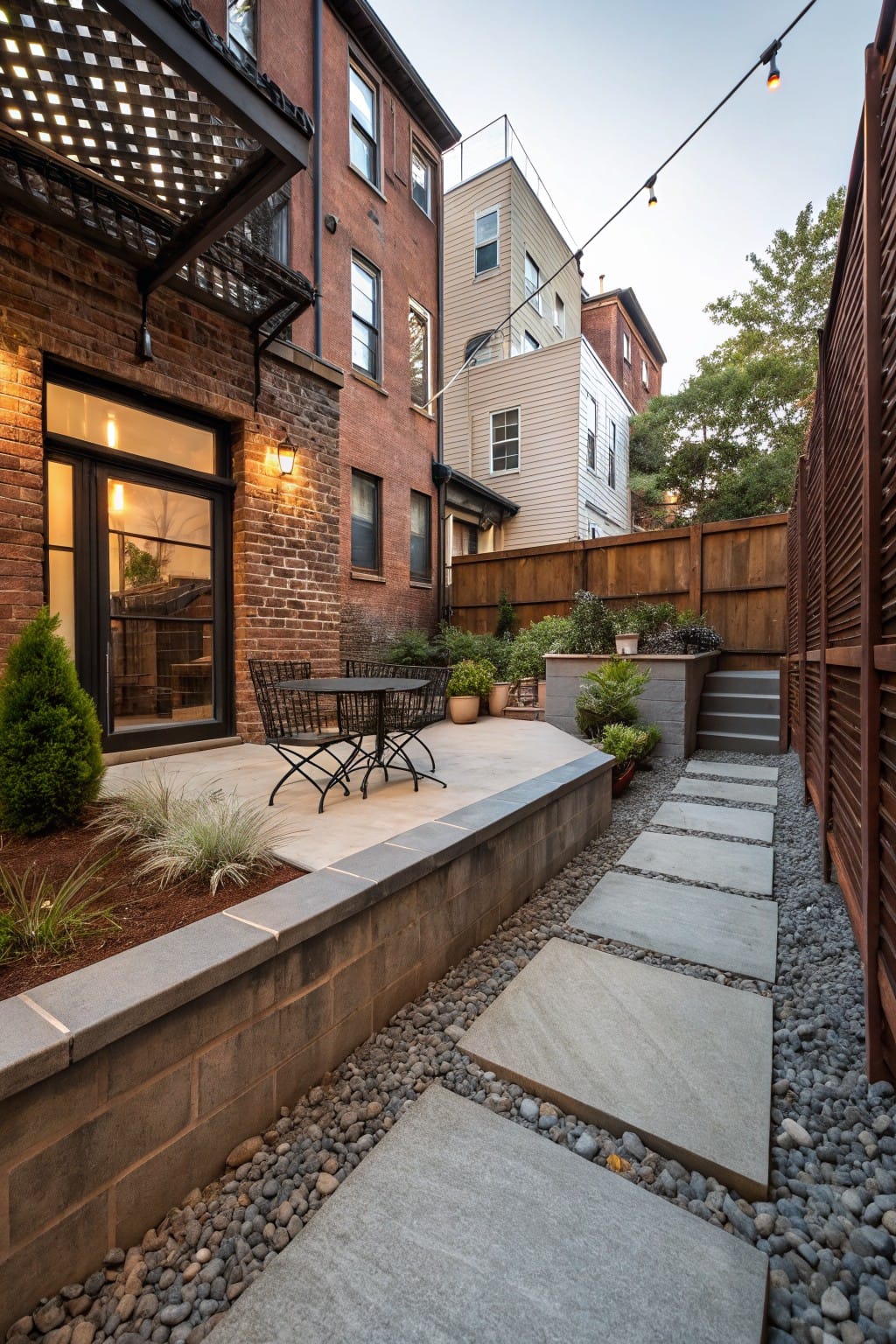
A path like this sets large flat stones into a loose gravel bed. It runs alongside the patio and planted edge here. The gravel fills in around the stones to keep weeds down and let water drain fast. Simple to look at, holds up in wet weather.
Lay it out in narrow yards or back alleys where full paving costs too much. Grab stones and pea gravel from a yard center, level the dirt base, then set them in place over a weekend. Suits older brick homes best. Skip it on slopes unless you tamp well.
Stacked Timber for Raised Garden Beds
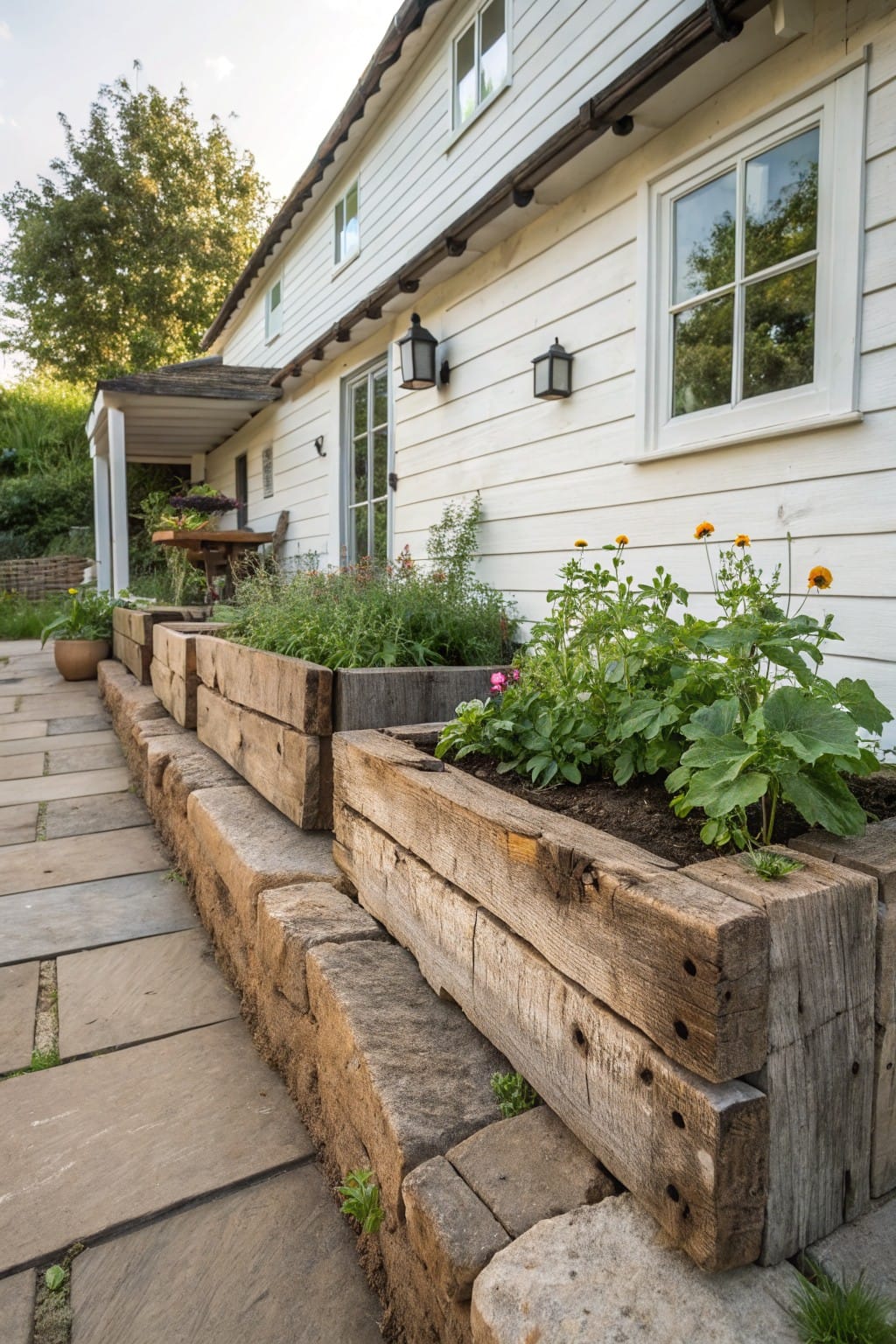
One straightforward way to edge a patio or walkway is stacking old timber beams into raised beds. You see it here along a house side, holding herbs, greens, and flowers that spill over nicely. The wood’s rough texture fits right in without much fuss, and it keeps soil off the stone path.
These beds work great next to a house or fence where you want planting close by. Grab reclaimed railway sleepers or beams from a salvage yard, stack two or three high, and secure them. Fill with good soil for veggies or perennials. They suit cottage-style yards best. Just treat the wood first to last longer.
Picket Fence Garden Edging
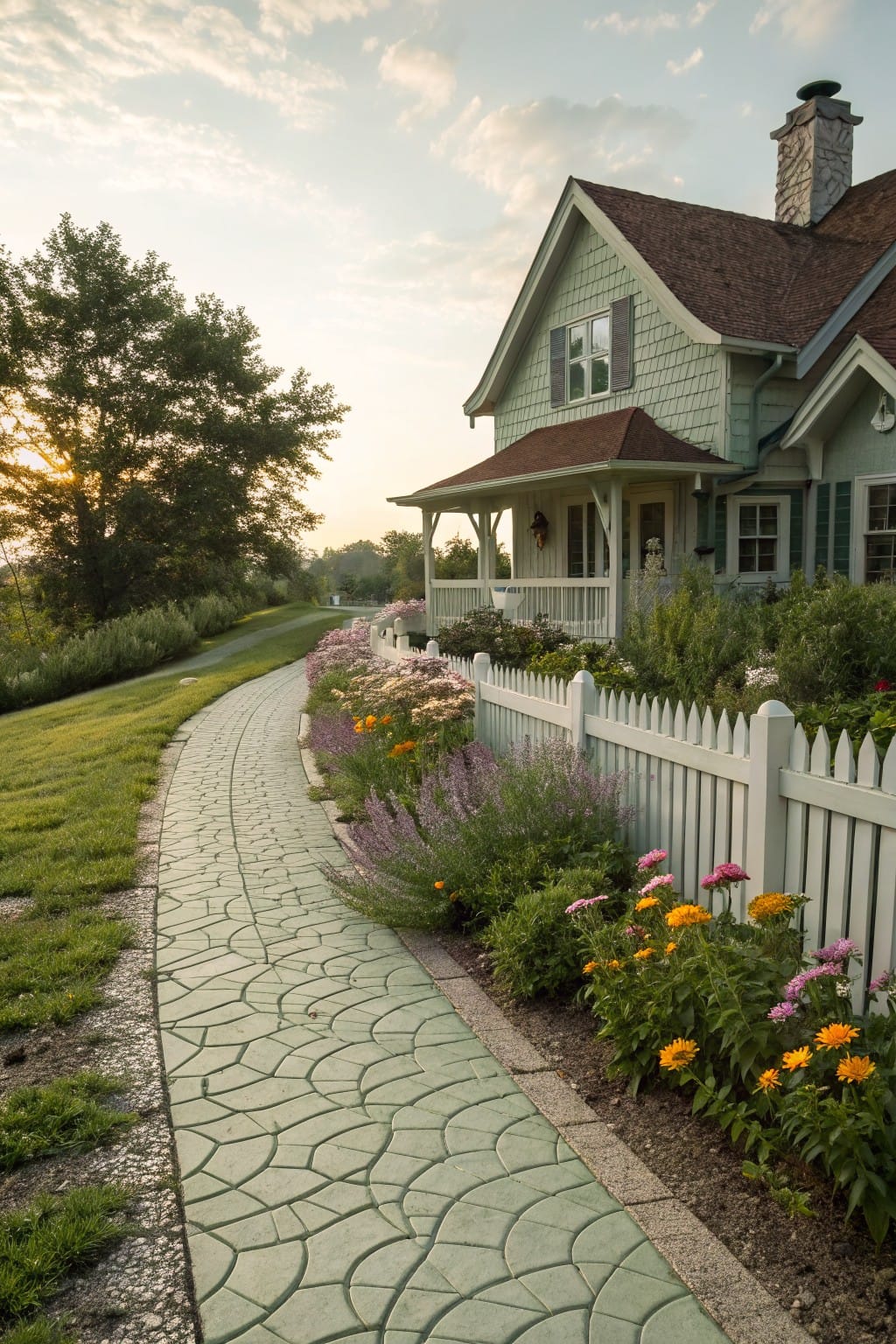
A white picket fence makes a friendly border for garden beds right along a walkway. It keeps things neat without looking stiff. In this setup, flowers like zinnias and lavender spill over just enough to soften the look. Folks like it because it’s classic and lets plants show off.
Put it next to a path in a front yard or side garden where you want some charm. It works on older homes or cottages with a bit of grass and perennials. Keep the fence low, about two feet, so it doesn’t block views. Skip it in super modern yards… might feel out of place.
Pebble Borders for Garden Edges
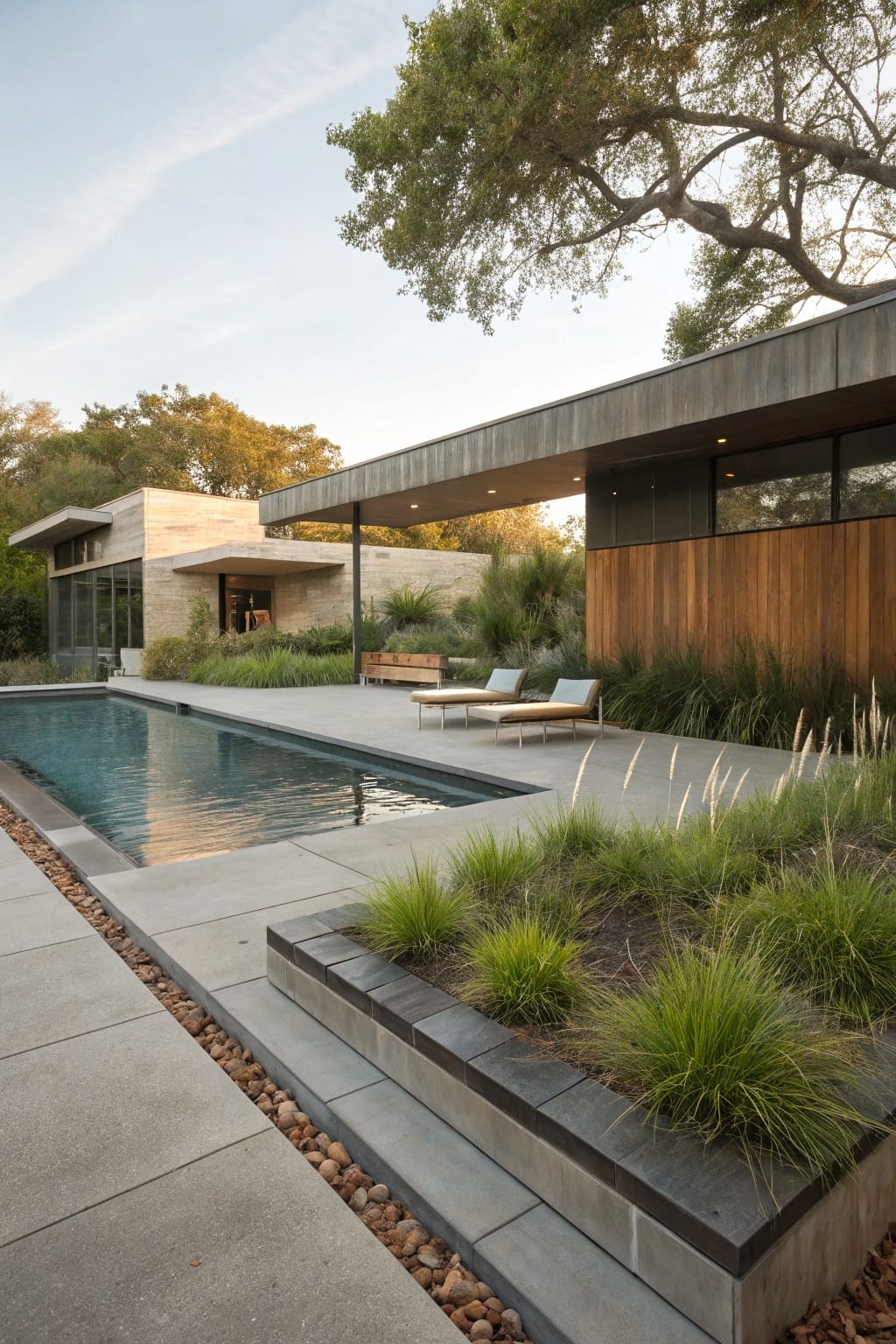
Pebbles make a straightforward edging choice around patios and pools. In this setup, they run along concrete paths and at the base of grass planters. The look stays neat and low fuss. It pulls the hard surfaces together with the plantings without overpowering anything.
Lay them in a narrow strip next to walks or beds. Dig a shallow trench first, add landscape fabric to block weeds, then dump in washed pebbles. This works well by modern homes or anywhere with clean lines. Skip it if your yard floods a lot. Pebbles can wash away.
Stone Wall Edging for Paths
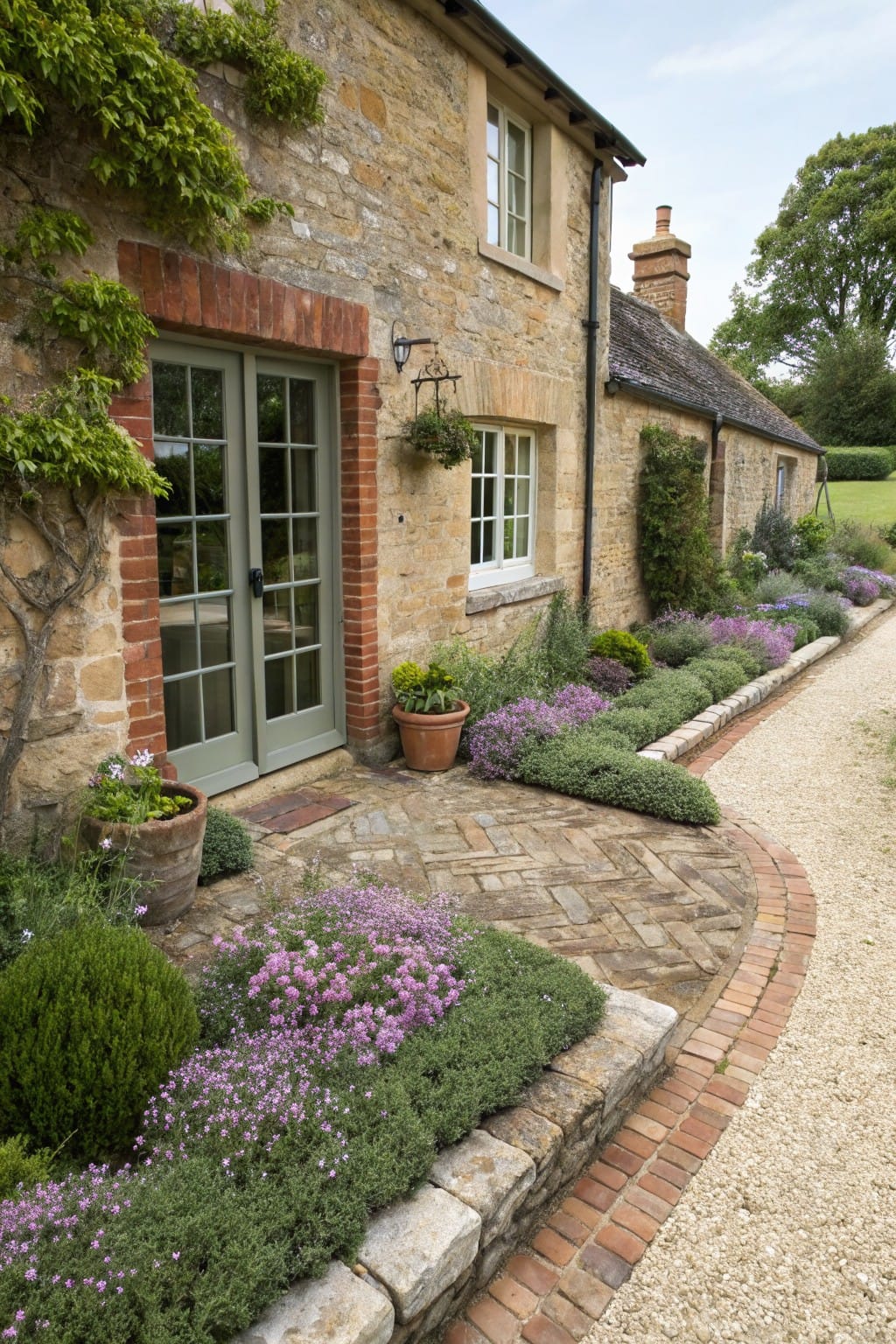
One straightforward way to edge a garden path is with low stone walls. They hold back gravel or mulch nicely and let trailing plants hang over the edge. In this setup around an old stone house, the walls match the building and make the path feel settled in. It’s a clean look that doesn’t need much upkeep.
You can build these using flat fieldstones or whatever stones you find locally. Set them on a gravel base for drainage, then tuck in tough plants like thyme or lavender. They suit cottage yards or any spot with a country feel. Just keep the walls low, under a foot high, so they stay easy to step over.
Simple Pebble Path with Wood Edging
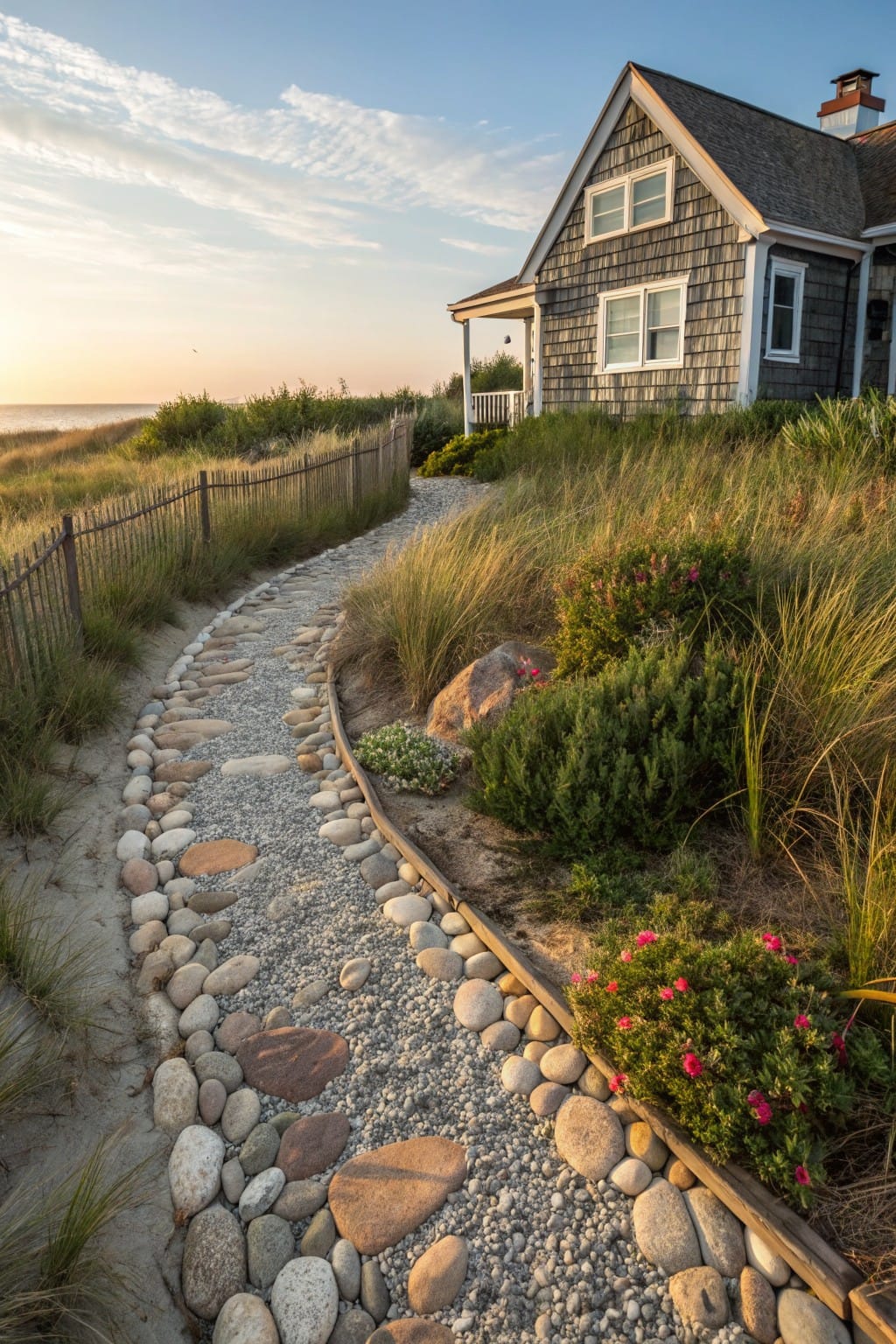
A pebble path edged with wood timbers makes a clean line through tall grasses. It keeps the casual beach feel without much work. The mix of smooth stones and rough wood fits right into dune yards. Folks like how it guides you to the house without looking too fussy.
Use this edging where you want a low path from the yard to your door. It suits older cottages or any spot with sandy soil. Lay down landscape fabric first. Then add gravel base, pebbles, big flat stones for steps, and nail the timbers in place. Watch the drainage so water doesn’t pool.
Wooden Stepping Stone Garden Path
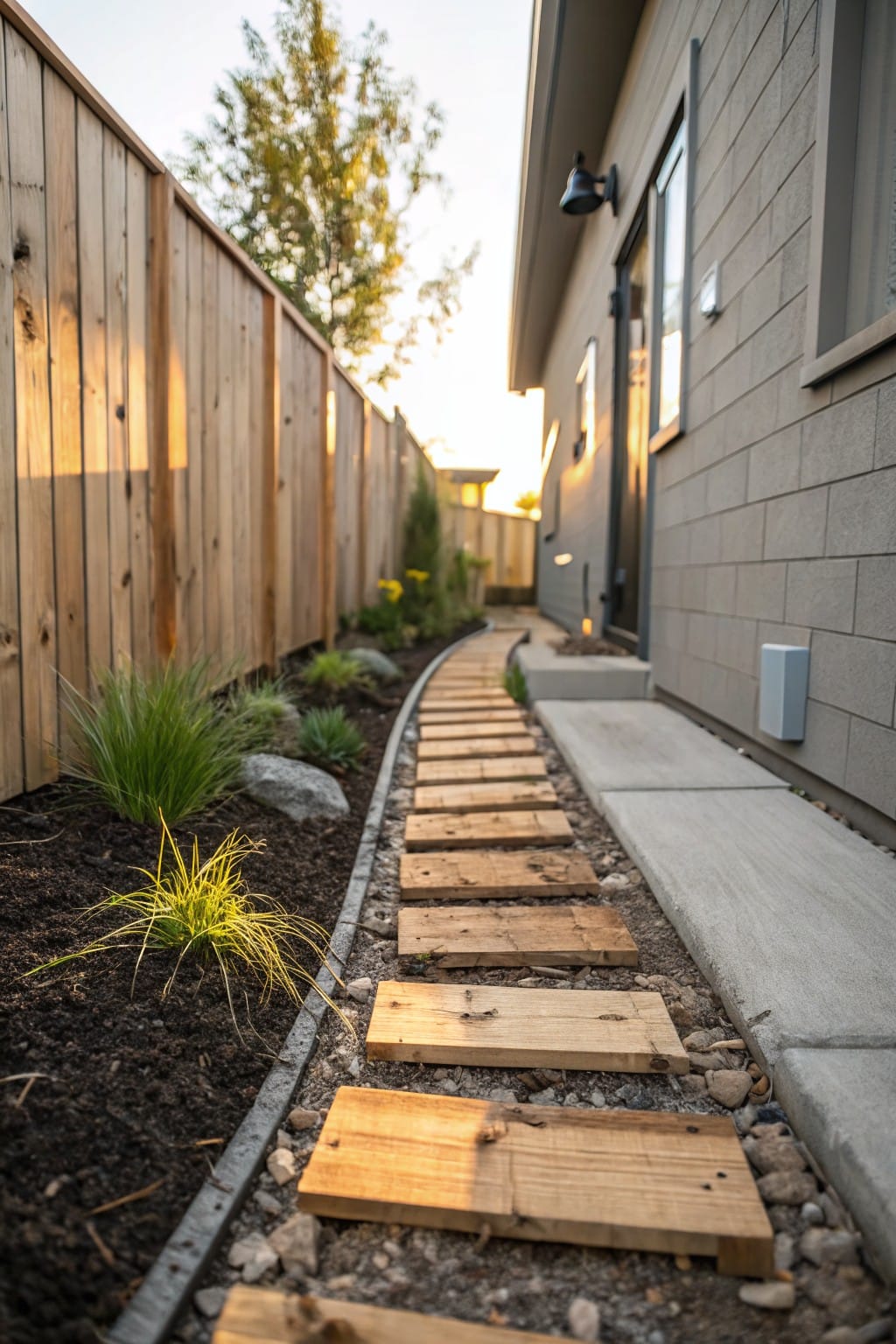
A simple path like this uses rough-cut wooden slabs set right into the gravel. It curves along the edge of a garden bed planted with grasses and rocks. What stands out is how easy it feels. No fancy paving needed. Just wood that blends with the yard.
Lay these slabs in a weekend along a side yard or backyard walk to the door. They work best next to a fence or house wall where you want to keep feet out of the dirt. Grab cedar boards from a lumber yard, cut to fit, and space them for your stride. Watch for rot in damp spots. Treat the wood first.
Stone Garden Edging with Built-In Lights
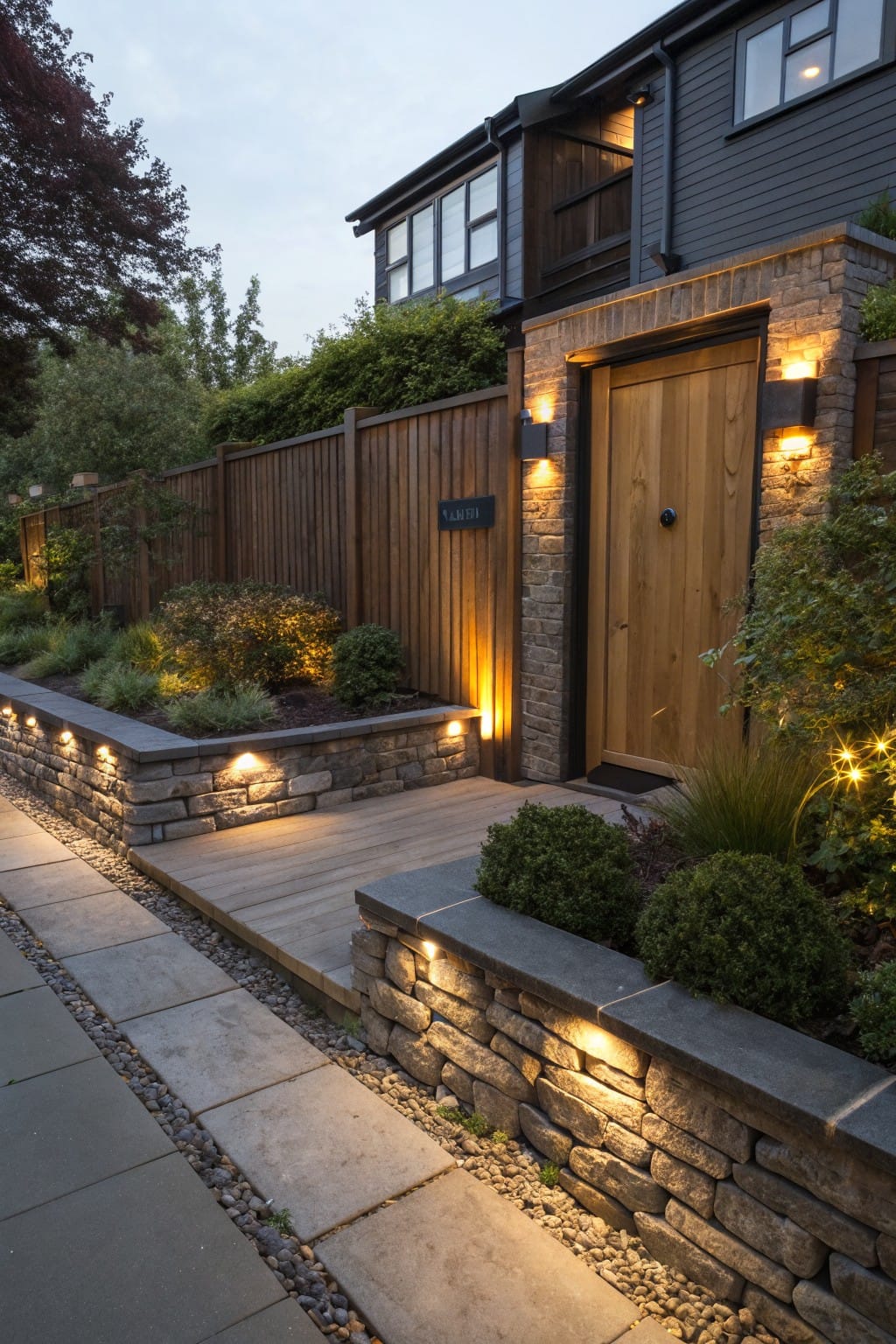
Stone walls like these make solid garden edging. They hold back soil and plants while letting you tuck in small lights right along the base. That warm glow shows off the path at dusk without being too bright. It’s a simple way to make your yard feel put together after dark.
You can build these over a weekend using stacked fieldstone or retaining wall blocks. They’re best along walkways or sloped spots where you need to define edges. Pair with gravel or pavers, like here leading to a deck step. Skip it if your ground is dead flat… might look overdone.
Raised Succulent Beds with Brick Edging
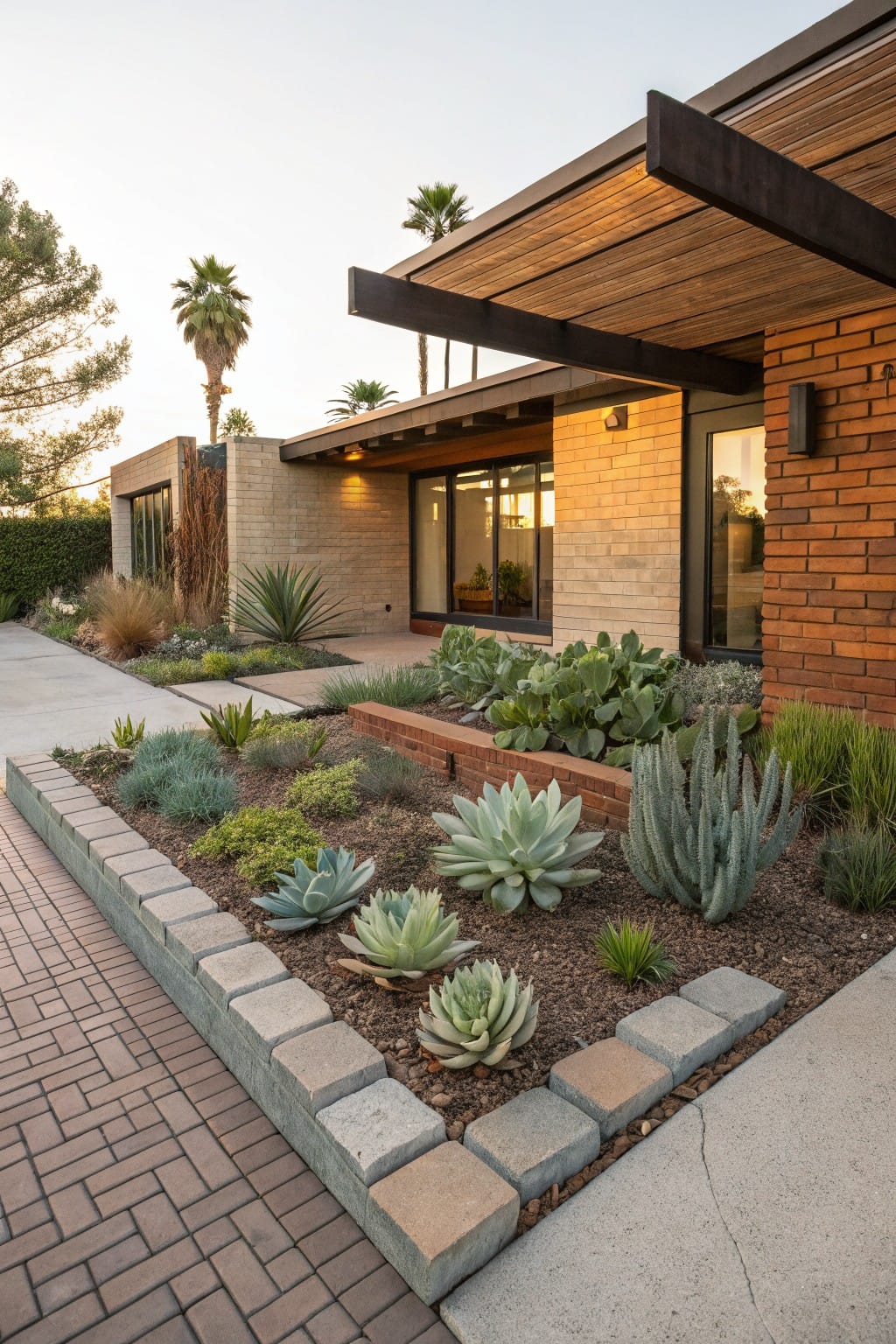
Raised beds like these use everyday bricks and concrete blocks to hold back low-water succulents along a walkway. They give your yard a neat, finished look without much fuss. The plants spill over just enough to feel natural, and the setup works well in dry spots where grass struggles.
Line them next to paths or driveways in sunny yards. Grab bricks from a local supplier, stack them two or three high with gravel inside for drainage. Suits modern homes or ranch styles best. Skip it if your soil stays soggy.
Frequently Asked Questions
Q: Do I need fancy tools for these edging projects?
A: Most ideas use basics like a shovel, gloves, and a mallet. Rent a sod cutter if you’re edging a big area, but handsaws or even a handsaw works for trimming wood or rope. Skip the power tools unless you love them.
Q: What’s the quickest fix for a sloped yard?
A: Stack bricks or stones and backfill with gravel. It locks in place fast and drains well. Pound a stake or two behind for extra hold.
Q: How do I stop weeds sneaking through?
A: Tuck cardboard or landscape fabric under the edging before you set it. Wet it down so it molds to the ground. Top with mulch… weeds hate that combo.
Q: Can I use stuff I already have around the house?
A: Old bricks, leftover pavers, or even wine bottles shine here. Clean them up, lay them snug, and tamp soil around the base. Instant upgrade, zero shopping trip.
