

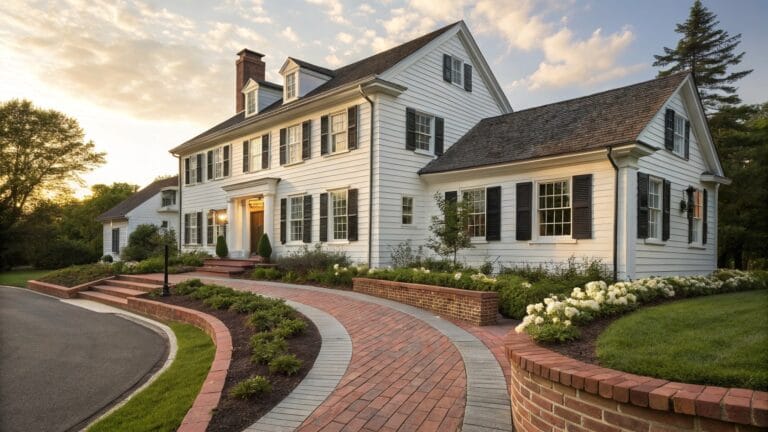
I’ve noticed brick edging on older homes gives gardens that lived-in charm you can’t fake with modern stuff. It works when the layout echoes the house’s lines, creating flow from driveway to door without drawing attention to itself.
Gardeners mess it up by cramming in mismatched bricks that pull focus from the plants. Basketweave holds up best in my book. Those reliable patterns make timeless curb appeal feel within reach for everyday yards.
Brick Pathways Through Flower Beds
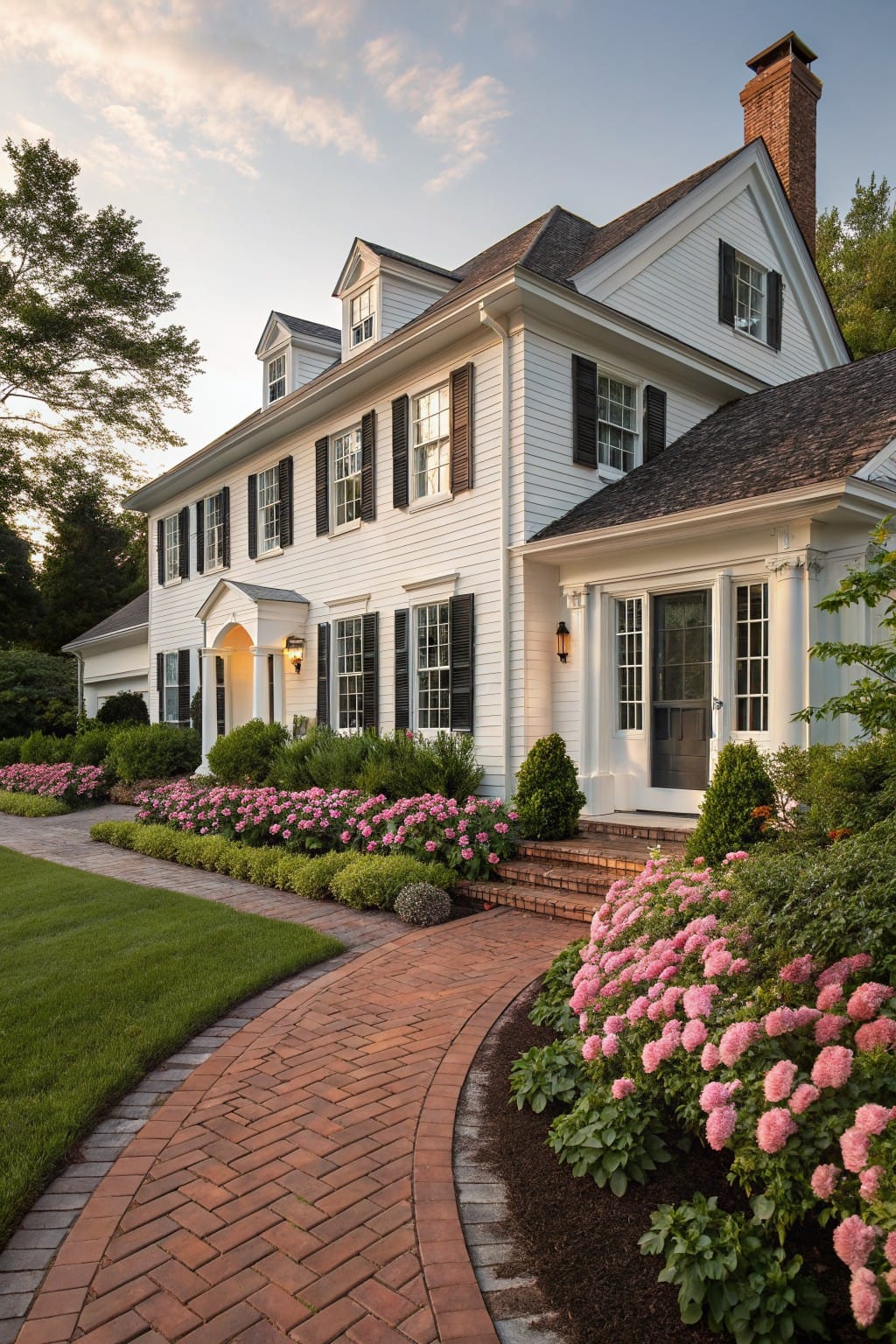
A brick walkway running right through the front garden beds makes a yard feel put together. Here it curves gently past big pink hydrangea bushes and clipped green shrubs, pulling your eye to the house door. That path keeps things neat while letting the plants spill over a bit. It’s a classic setup that looks good year round.
Try this on homes with some character, like colonials or craftsman styles. Edge the path with bricks set in a zigzag pattern, then fill the beds with tough bloomers like hydrangeas. It suits sloped lots too, as long as you grade for drainage. Skip it if your yard is mostly shade.
Brick Pathways Edging Garden Beds
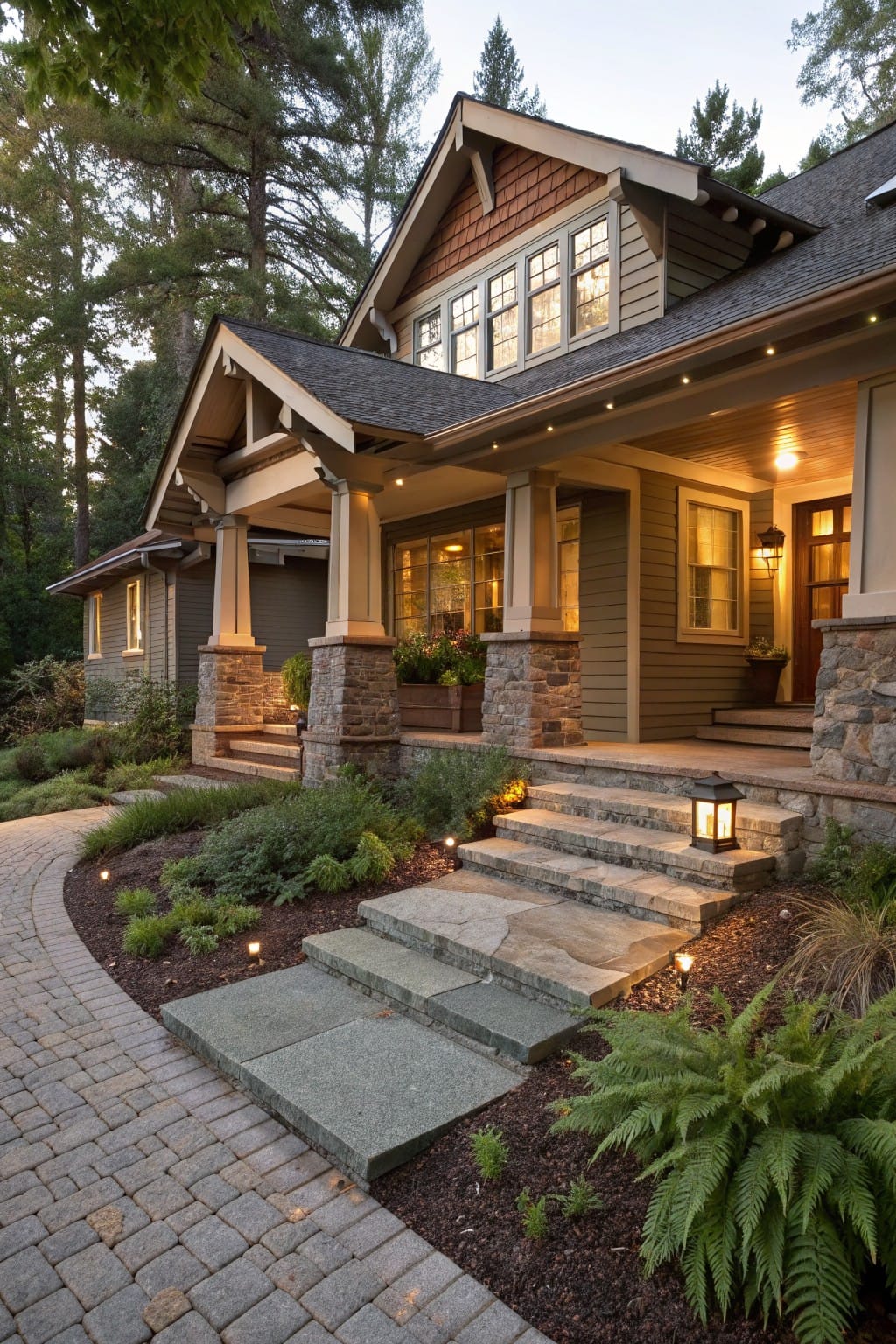
A simple curved brick pathway like this one makes a great border for garden beds right along the front walk. It keeps the mulch and plants neatly in place while guiding folks up to the porch steps. The gentle curve softens everything and fits right in with the surrounding trees and low shrubs.
This works best on yards with some natural slope or wooded edges. Lay the bricks in a loose pattern to match stone accents on the house. Skip it if your yard is super flat or formal. Just watch the drainage so water doesn’t pool along the edges.
Brick Edging for Raised Garden Beds
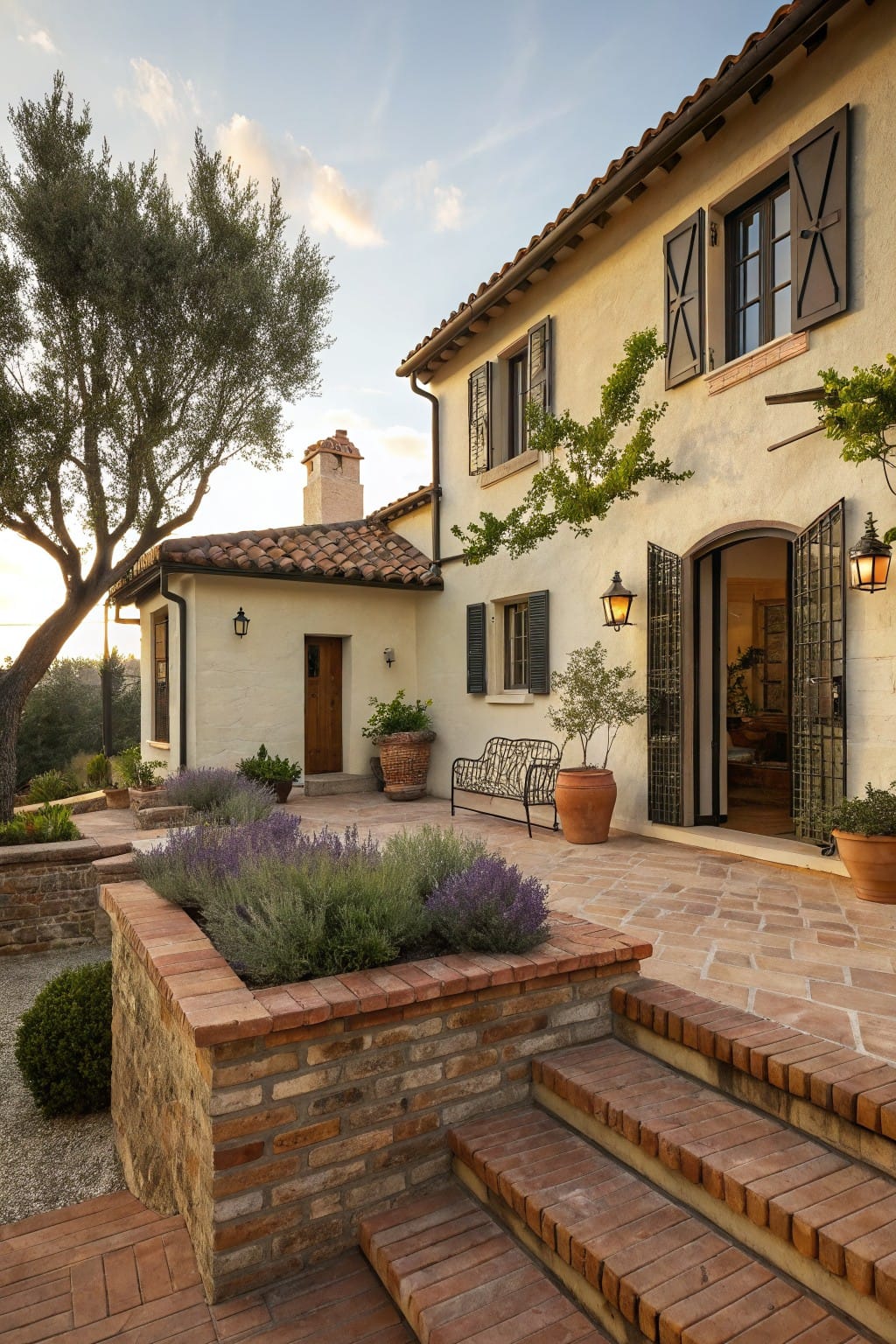
Brick edging works well for simple raised beds right next to patios. You build a low wall from standard bricks, fill it with soil, and plant things like lavender or low shrubs. It keeps everything tidy while letting plants spill over a bit for that lived-in look. The brick picks up on other stonework around the yard without overpowering it.
This setup suits homes with tile patios or terracotta floors, like in warmer spots. It fits cottage or old-world styles best. Stack the bricks a couple courses high for beds up to a foot deep, and add gravel underneath for drainage so roots don’t rot. Watch the height though. Too tall and it starts looking like a real wall instead of edging.
Brick Walls Topped with Boxwoods
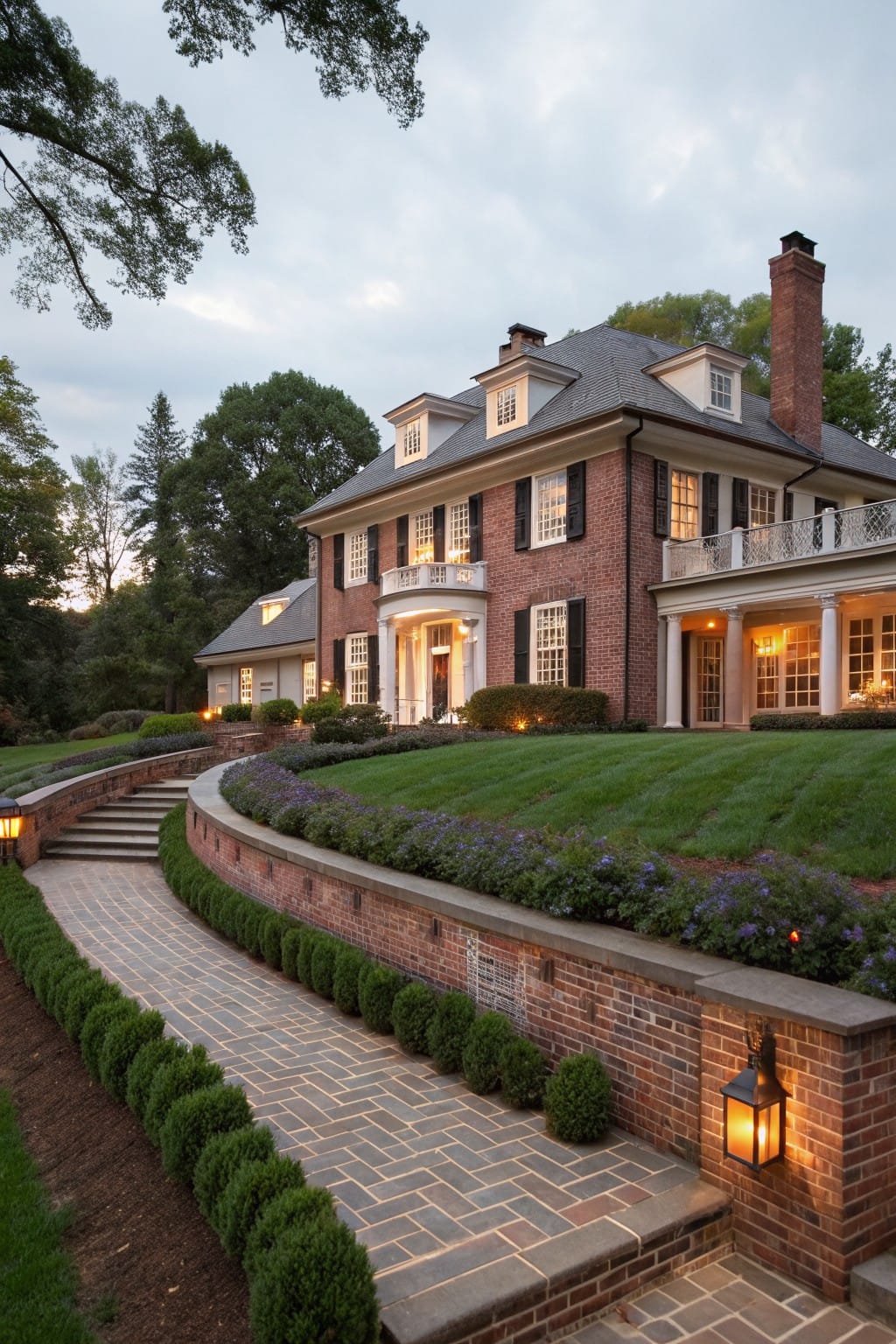
Low brick walls like these make a simple, sturdy edge for garden paths. They hold back the slope while rows of round boxwoods sit right on top, neat and green year-round. That combo gives your front yard a tidy, welcoming look that fits right with a traditional house.
Put them along a curved walk up to your entry, especially if you’ve got a gentle hill. They suit older brick homes best, paired with stone steps. Trim the boxwoods a couple times a year to keep the shape… and pick bricks that match your house so it all blends.
Brick Edging for Raised Beds
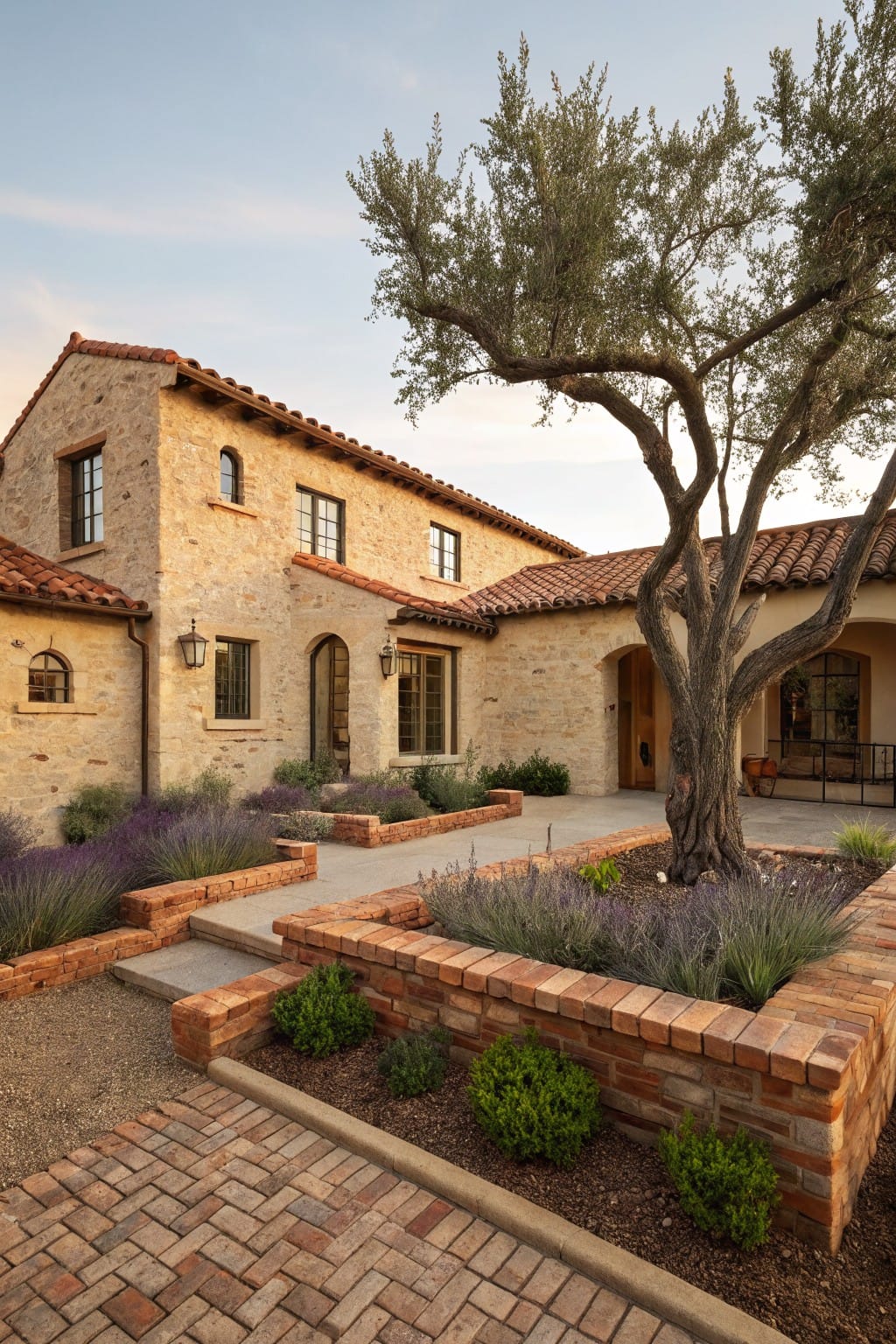
Brick makes solid garden edging when you stack it into low retaining walls for raised beds. These keep soil in place and let plants like lavender spill over just a bit for color along a walkway. The neat lines match up well with house foundations, giving everything a finished look without much fuss.
Try this where your front path hits the entry steps, on homes with stone or stucco siding. It works in dry yards too, since the raised soil drains fast. Go two or three bricks high at most. Plant tough stuff that won’t flop out, and watch weeds stay put.
Brick Edging for Gravel Paths
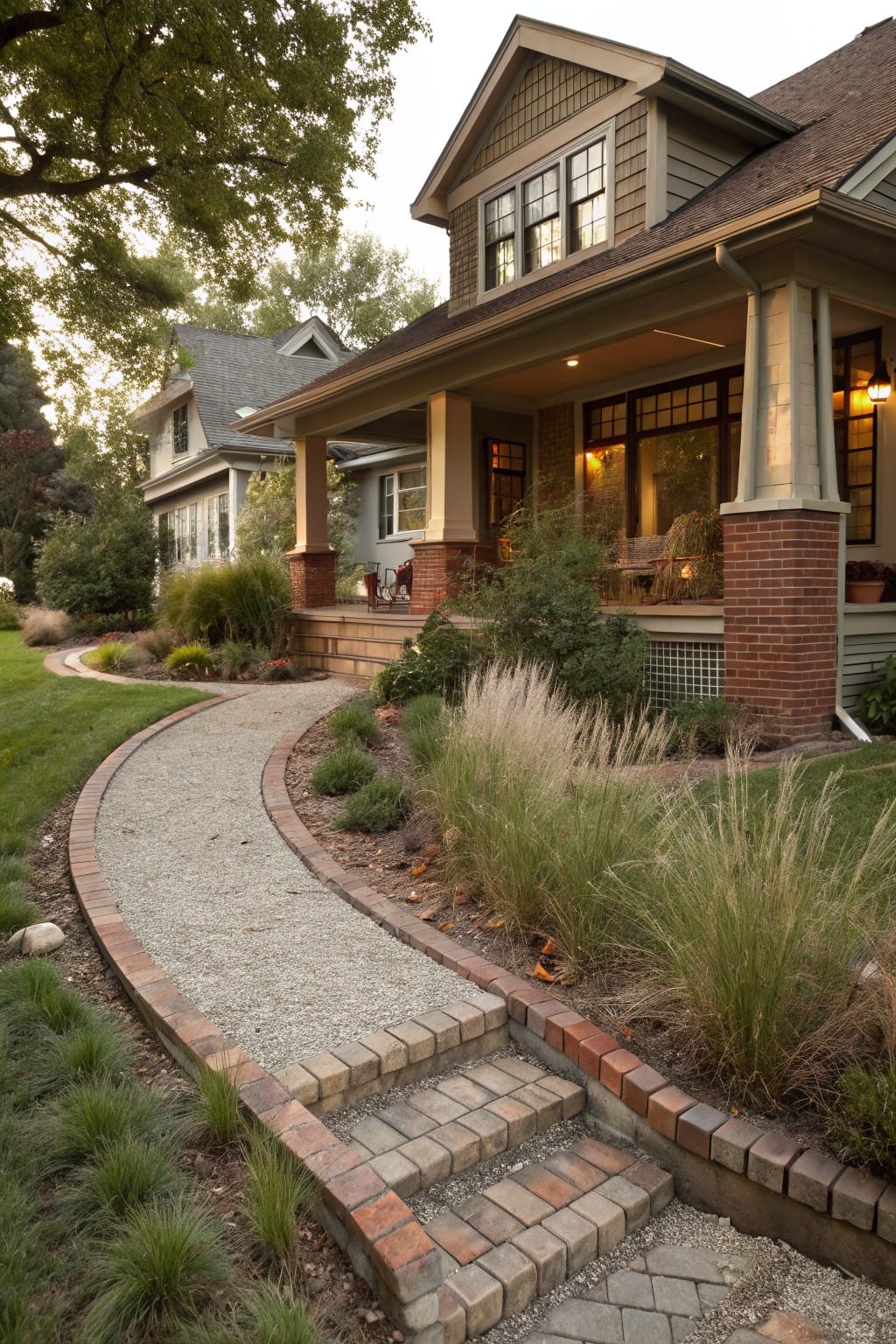
Brick edging works great along gravel walks. It holds the loose stones right where you want them and sets off the plants nicely. You see it here curving through the yard with tall grasses on one side. That simple border adds order without much upkeep.
Try it on paths that lead to your front steps. It fits older homes or any place with a bit of lawn and garden beds. Pick bricks that match your house color if you can. Just make sure the edging sits low enough to mow over easily.
Brick Edging for Curved Paths
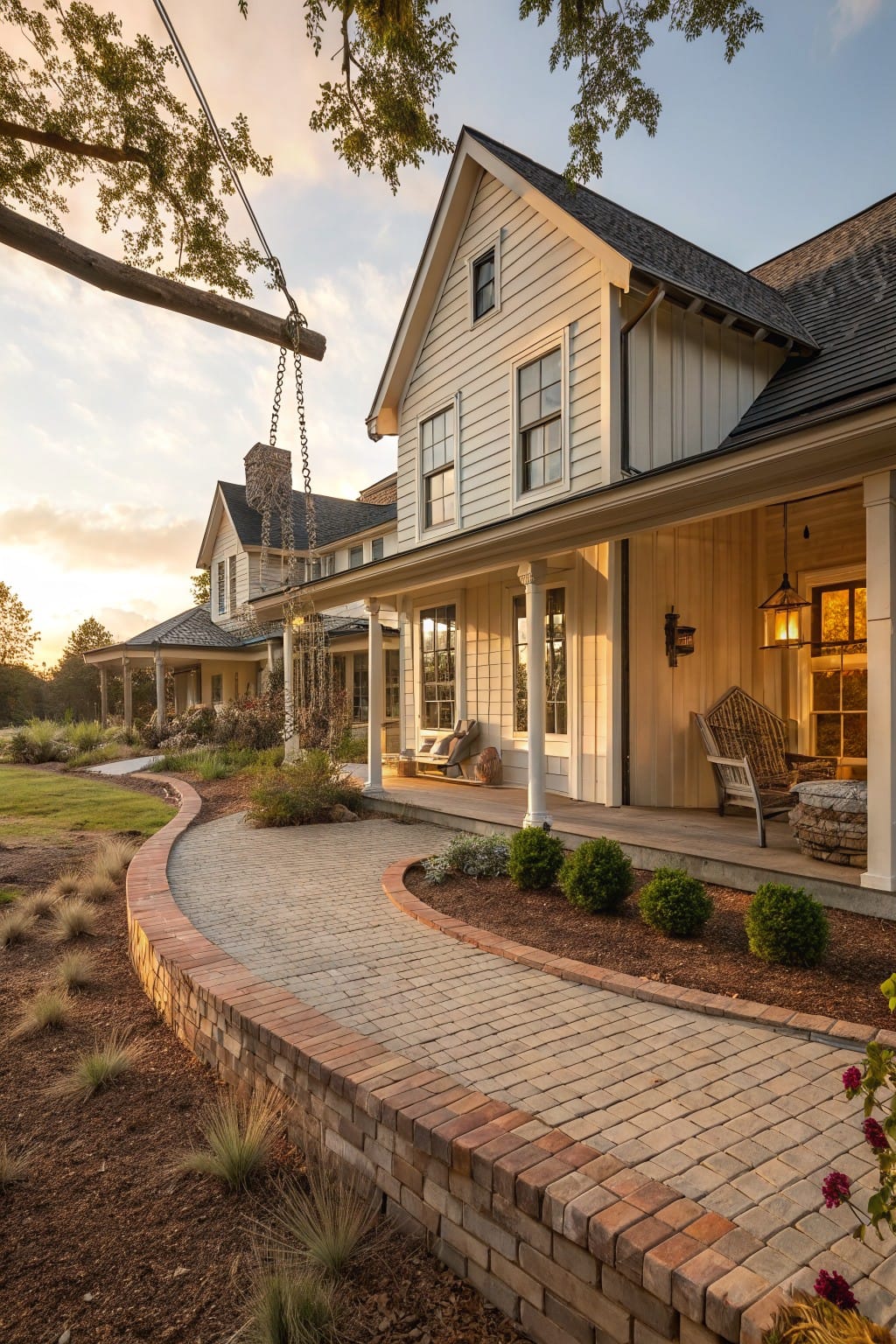
Brick edging works well when you shape it into a low curve along a walkway. It holds back soil and mulch from the path, keeping everything tidy as you walk up to the house. Folks like how it adds a bit of structure without looking too stiff, especially with grasses and low shrubs tucked in beside it.
Put this kind of edging to use on a gentle curve leading from the street or driveway to your front porch. It suits older farmhouses or craftsman homes in yard with some slope. Go for standard red brick to blend in, and set it just an inch or two above grade so it sheds rain easy.
Herringbone Brick Garden Paths
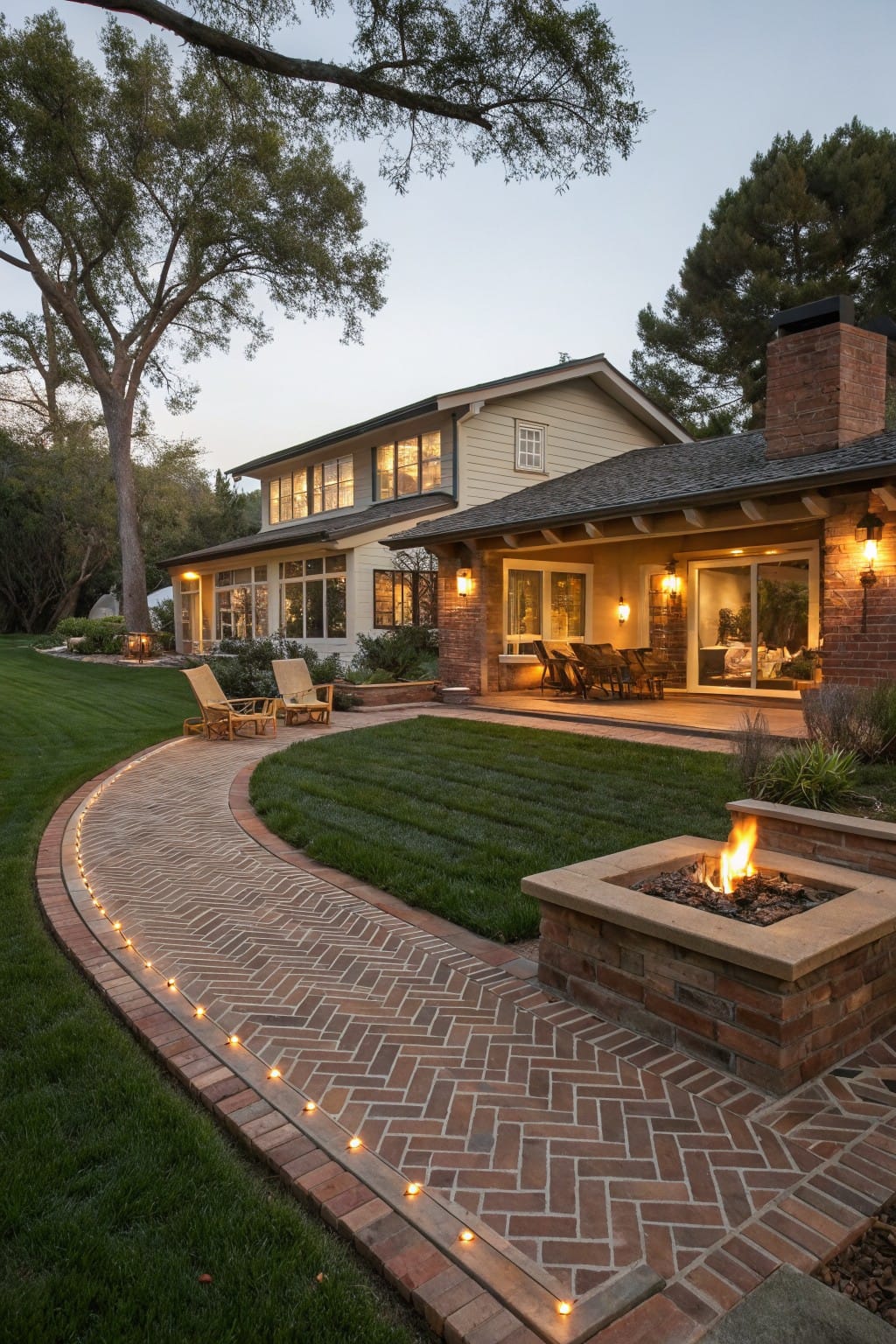
A herringbone brick path winds through the lawn like it’s been there forever. The zigzag pattern adds just enough texture to catch your eye, especially with small lights tucked along the edges for nighttime glow. It pulls everything together without stealing the show from the house or plants.
Lay this out in bigger yards to link the patio to other spots, like a fire pit or seating area. It fits older homes with some character, maybe Craftsman or ranch style. Keep the curve gentle so it feels natural, and skip the lights if you want simpler upkeep.
Brick Paths Through Dunes
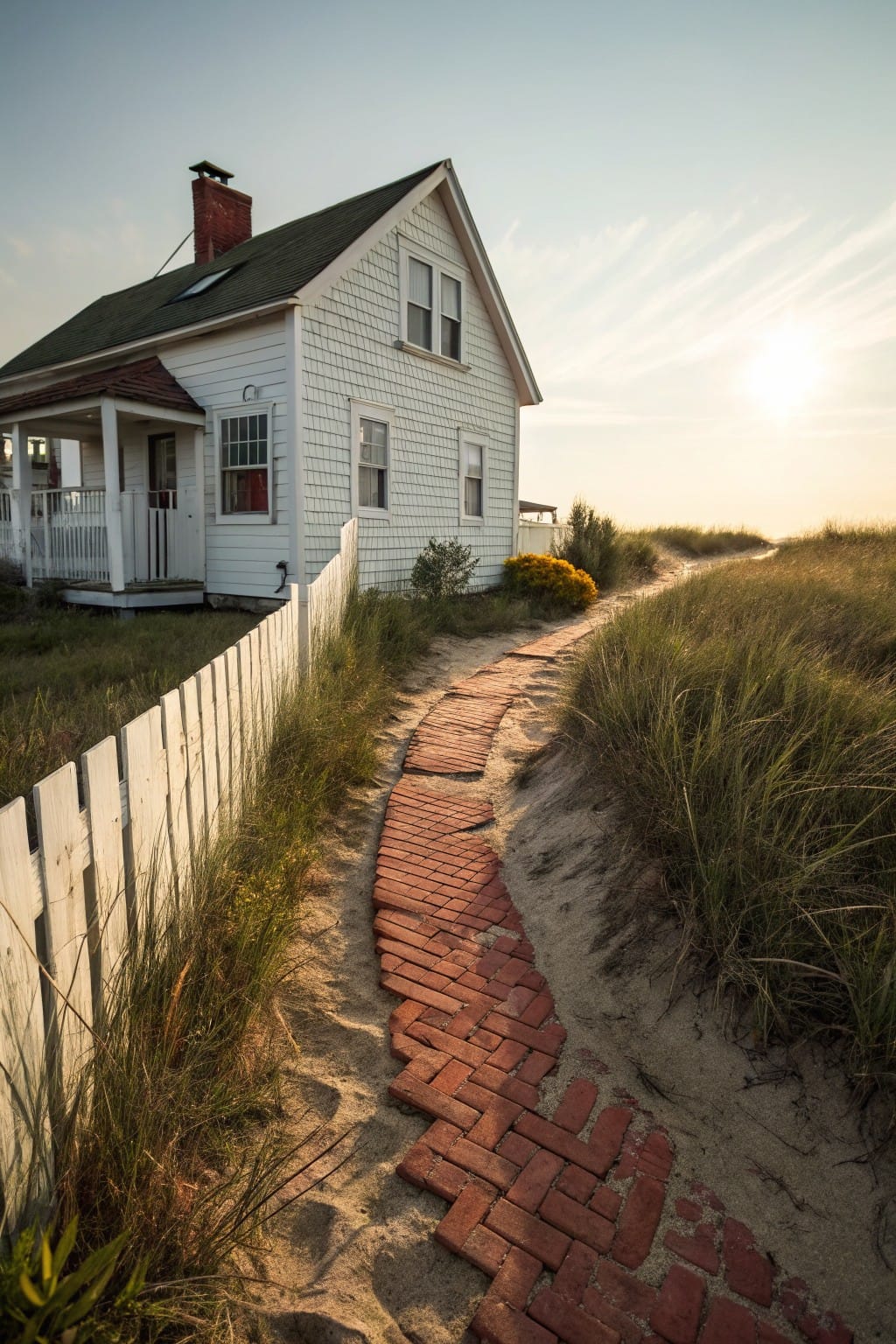
A brick path running through sand and beach grass adds a steady guide in loose coastal yards. It keeps the natural feel while making it easy to get from house to beach. Folks like how the bricks hold up to foot traffic and weather without looking too formal.
This setup fits older beach cottages best, especially where dunes shift a bit. Use standard red bricks laid in sand for curves that match the land. Pair with a simple fence if you want. Just rake out sand buildup once a year.
Ferns Along Brick Steps
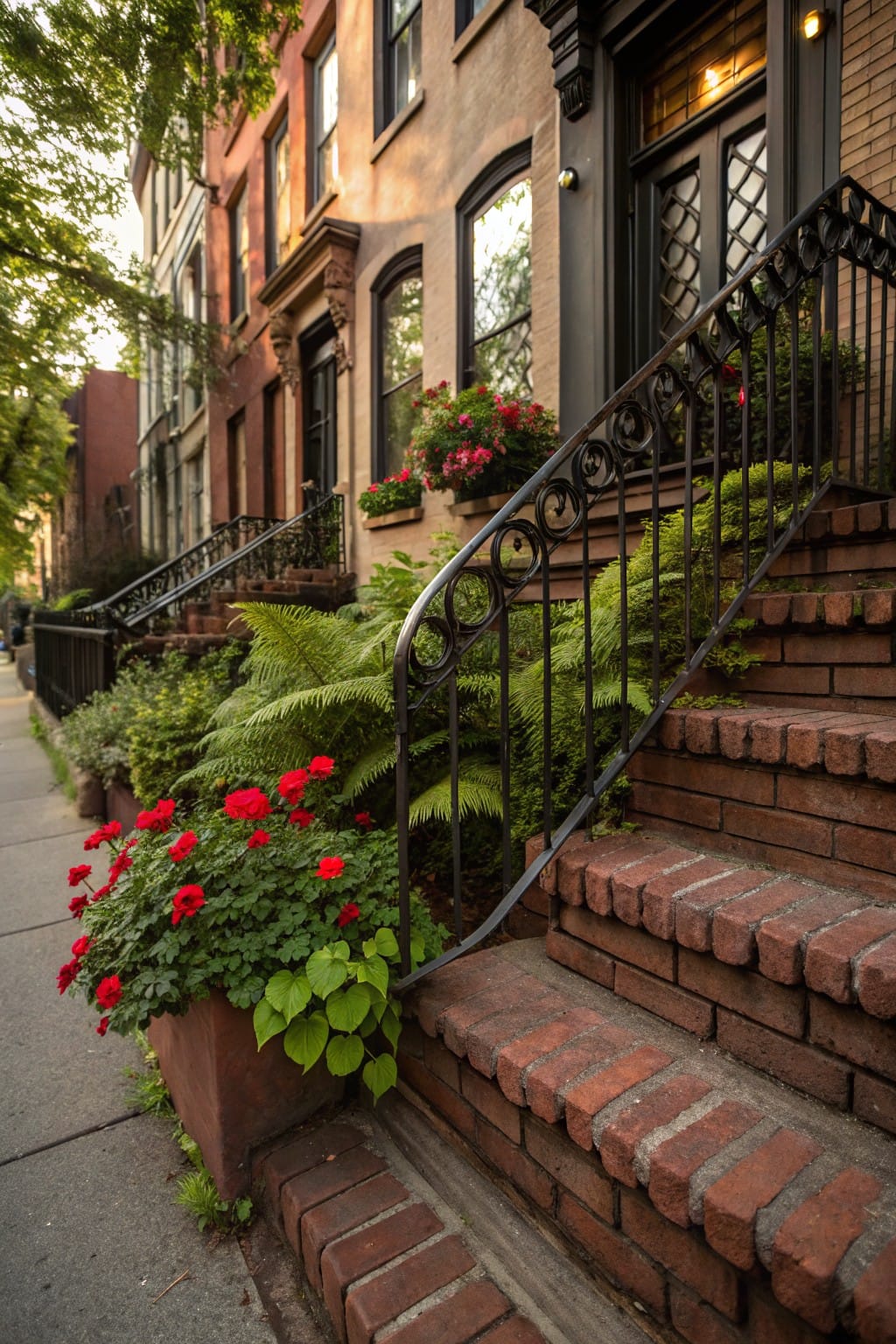
Brick steps get a soft touch when you edge them with ferns. The green fronds spill right over the iron railings, hiding the hard sidewalk edge and making the whole entry feel more welcoming. A few red geraniums nearby keep the color simple and bright.
This setup shines on row houses or any narrow city lot where space is tight. Plant the ferns in the ground strip at the base or in low pots, then let them fill in over time. It suits older brick homes best, especially in shady spots, but trim back once a year to keep things neat.
Brick Edging Along Driveways
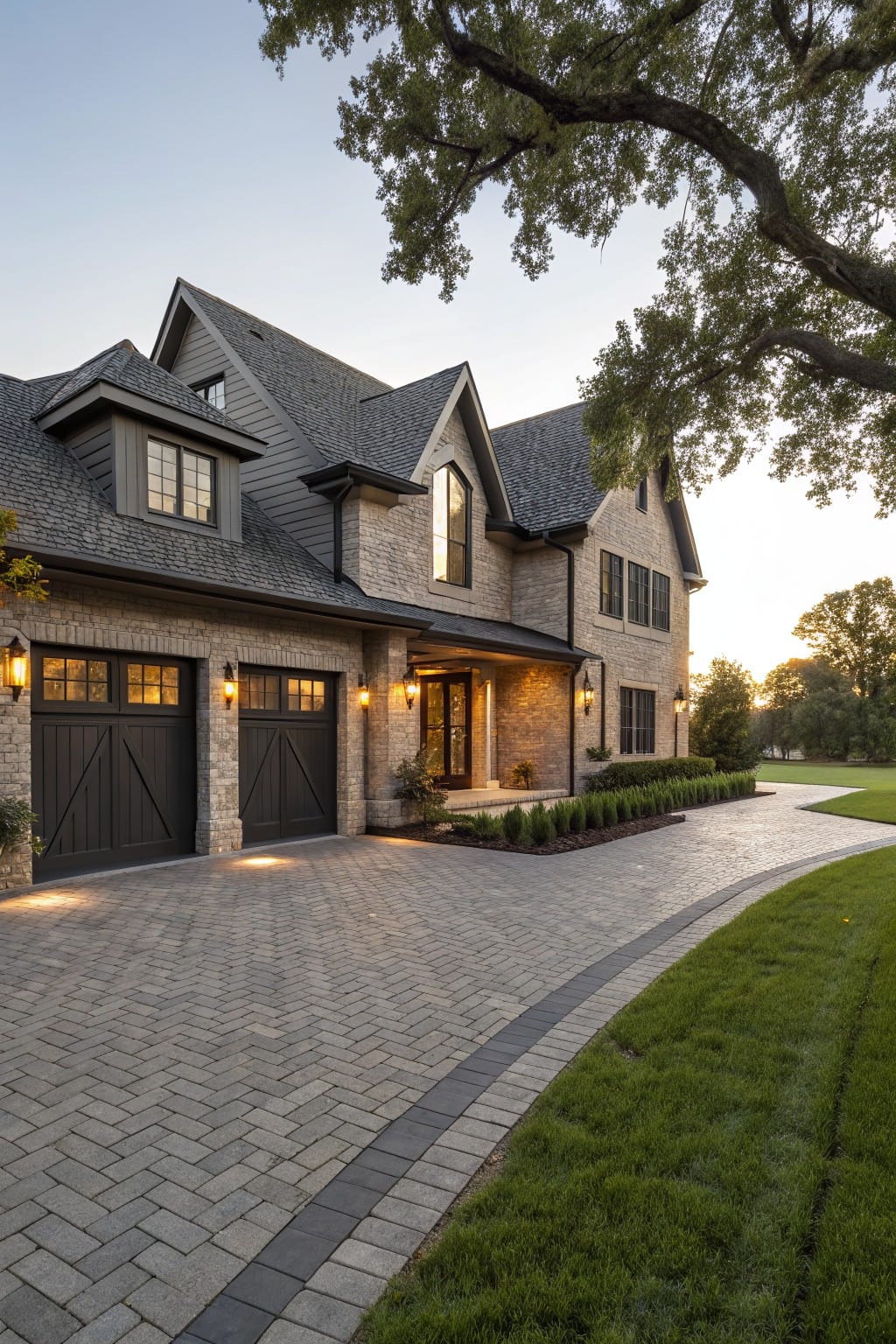
A simple dark brick border runs right along this light paver driveway. It keeps the grass lawn separate and crisp. That clean line makes the whole front yard look put together. No mess where pavement meets grass.
You can add this edging to straight or curved driveways. It fits older brick houses best. Pick bricks close to your home’s color so it blends. Watch the slope to avoid water pooling there.
Brick Raised Beds Line Garden Paths
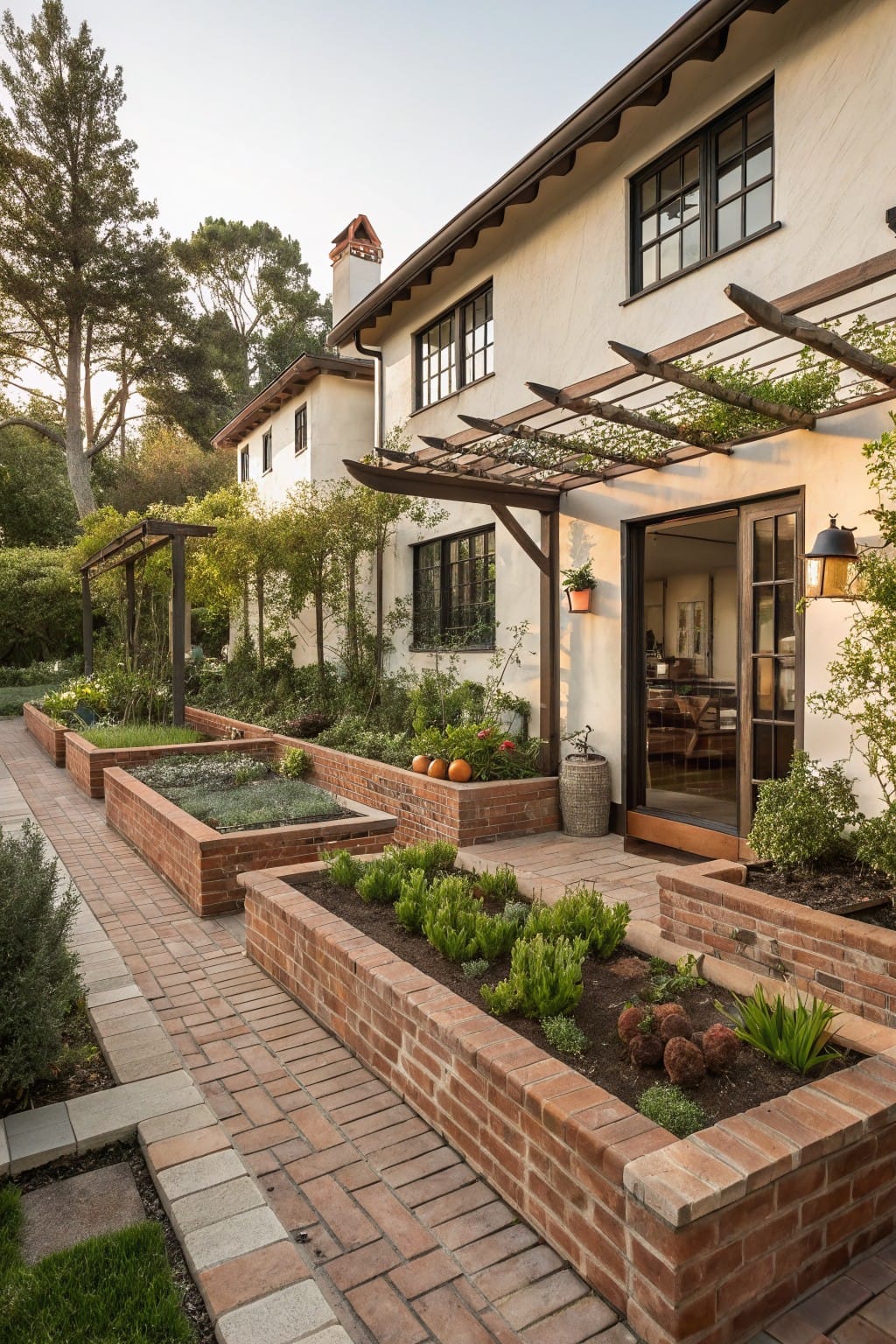
Brick raised beds work well when you line them up along a path like this. They keep plantings neat and contained, so the garden stays organized even as things grow. You see herbs, greens, and even a few pumpkins tucked in there, all held back by those sturdy brick edges. It’s a simple way to add structure without much fuss.
These beds suit homes with a traditional side yard or patio entry, especially where you want to bridge the house and garden. Build them about knee-high with reclaimed bricks for that worn-in look, and fill with whatever suits your spot. Just make sure the path stays wide enough to walk comfortably, or it can feel squeezed.
Brick Edging Along Garden Paths
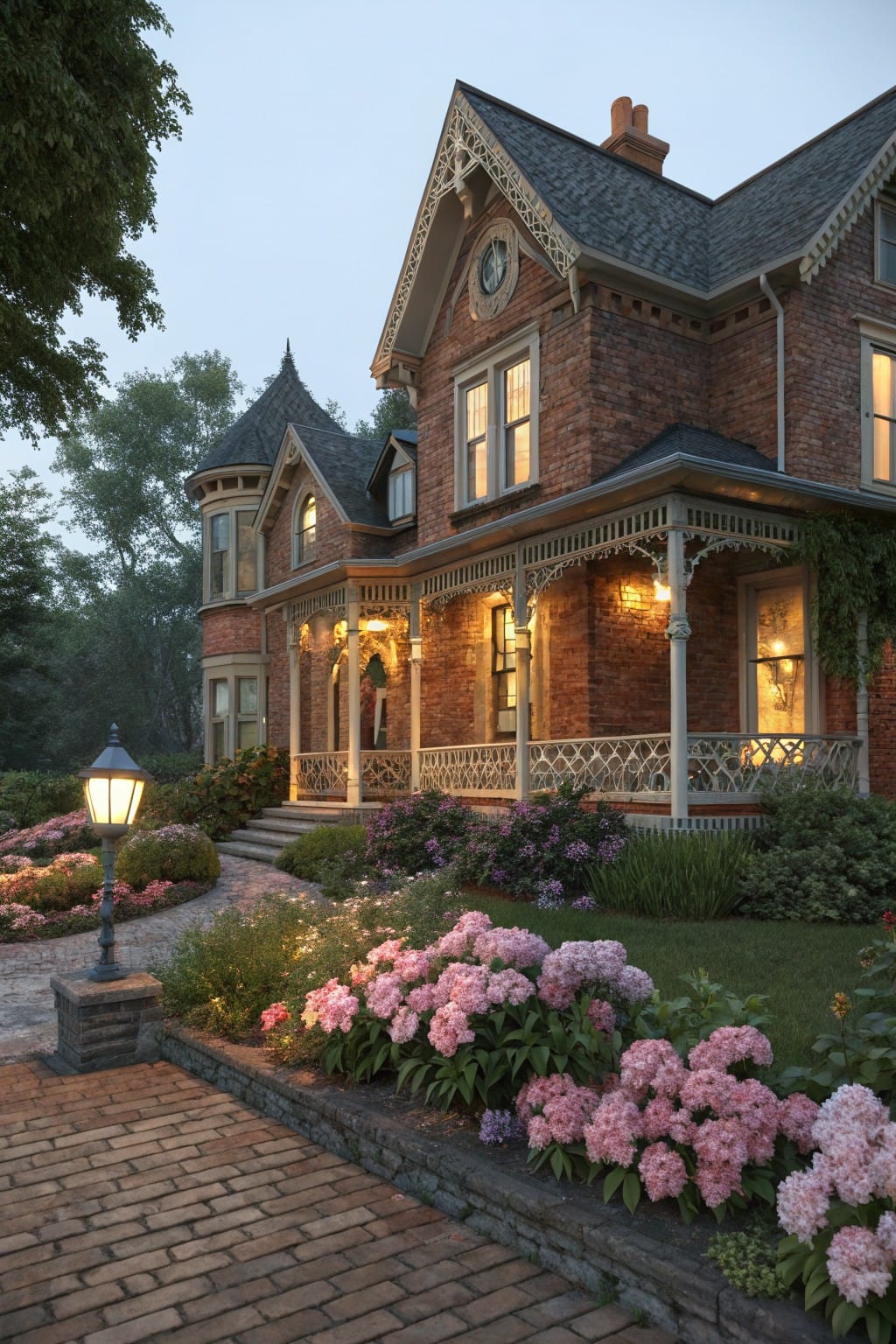
A low brick wall running beside a walkway makes a solid edge for garden beds. It keeps everything neat while letting plants like those big pink hydrangeas tumble over the top. That simple line draws the eye right up to the house without much fuss.
This edging suits homes with a bit of character, especially where you want curb appeal that lasts. Lay the bricks in a running bond for stability, and fill the beds with repeat bloomers. Skip it on super steep slopes though. The wall needs to hold soil back year after year.
Brick Garden Edging Along Driveways
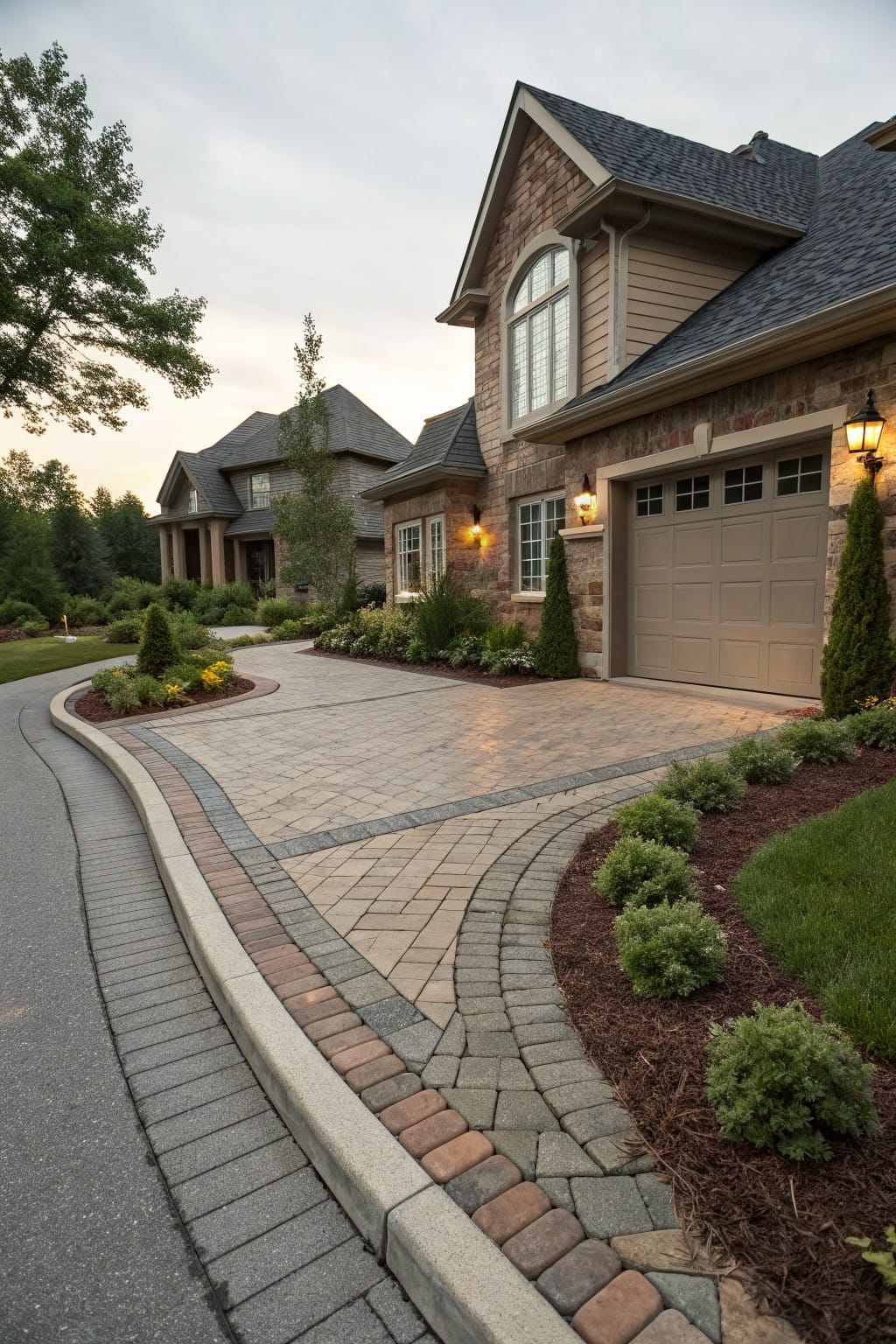
Brick edging works well when it runs right along a driveway like this one. The pavers form a clean border between the curved drive and garden beds packed with shrubs. It holds back mulch and soil, making the whole front yard look put together without much upkeep.
Try this on homes where the driveway sweeps in from the street. It suits yards with room for planting strips on both sides. Pick bricks that echo your house color to blend it all. Just make sure the edging sits level so wheels don’t catch on it.
Brick Edging for Garden Paths
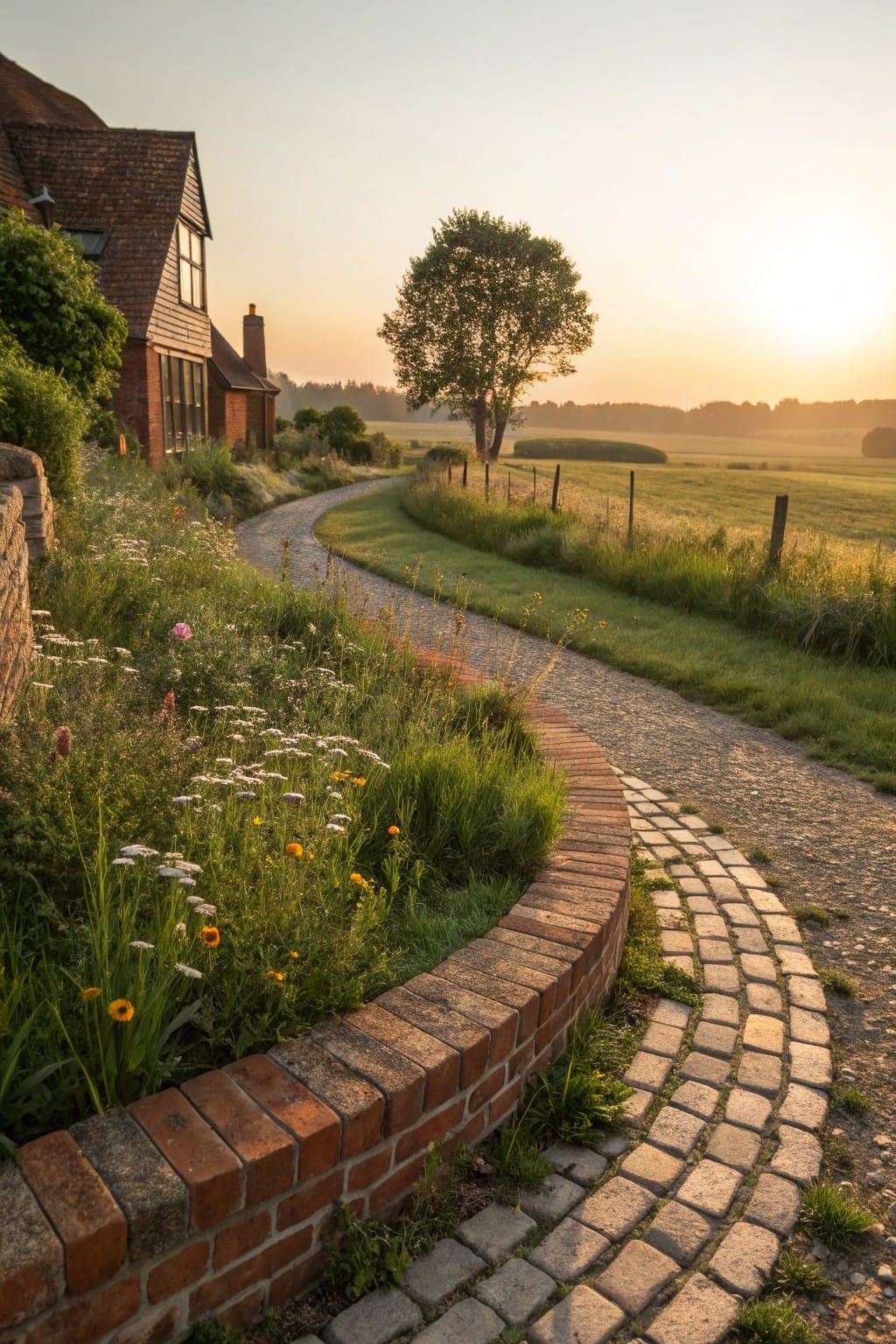
Brick edging turns a plain garden path into something that feels right at home in an old yard. A low brick wall hugging the curve of a gravel walkway keeps plants in check and gives the whole area a tidy shape. It stands out because it’s sturdy yet blends with the garden, not fighting the flowers or grass around it.
You can use this along winding paths near a house or back toward a fence. It suits cottage-style homes or any spot with soft plantings. Go for weathered bricks to match an aged look. Watch the height though. Too tall and it crowds the walk.
Poolside Brick Edging
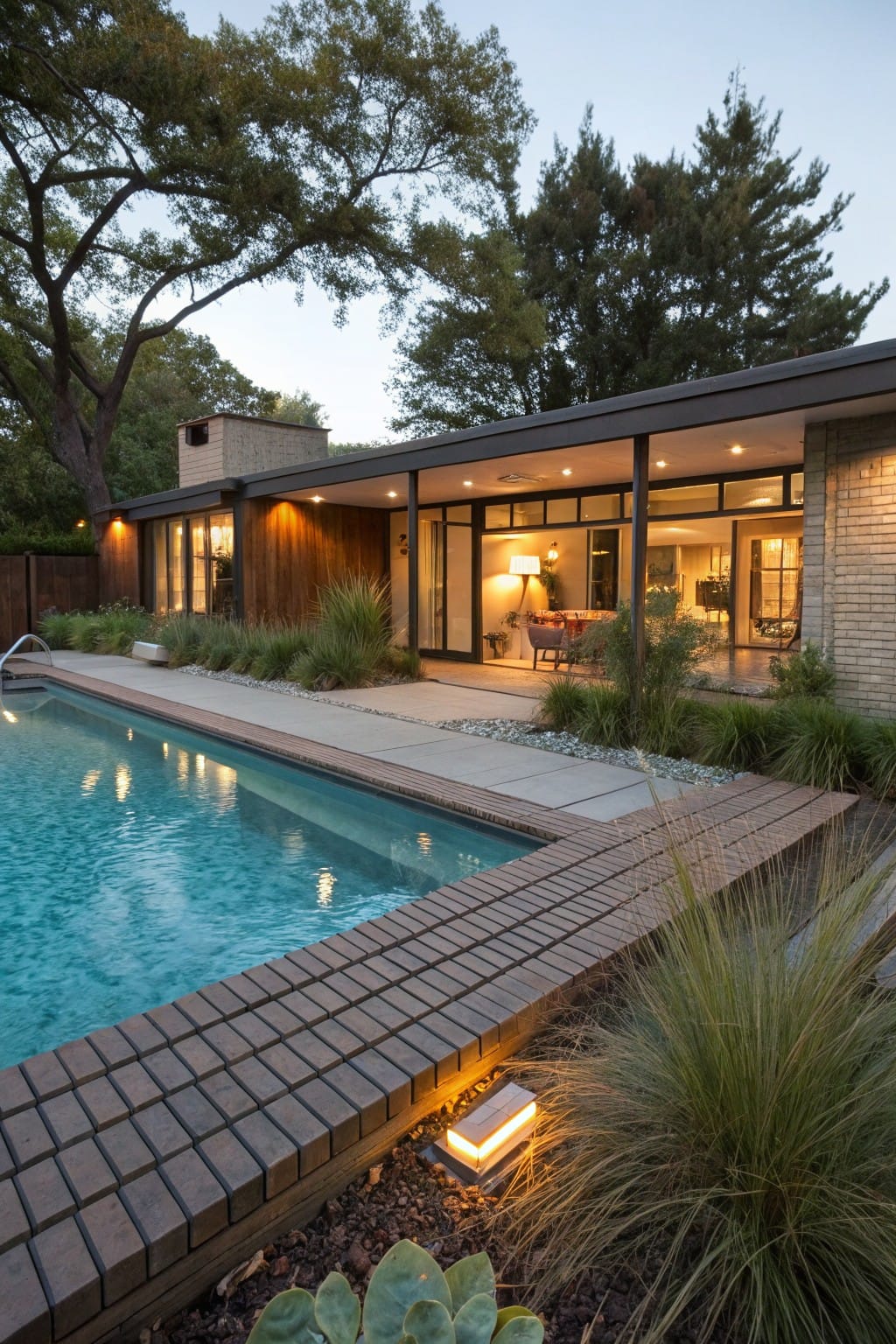
Brick edging runs right along the pool in this yard, setting off the water from the deck and plants nearby. It keeps things neat without overpowering the space. That warm tan brick picks up tones from the house wall and looks steady against the blue pool.
You can add this edging to any backyard pool setup, especially where the deck meets grass or low plants. It fits ranch houses or simple modern ones best. Just match the brick color to your home so it ties together, and keep plantings low so they don’t hide the edge.
Brick Edging for Curved Garden Paths
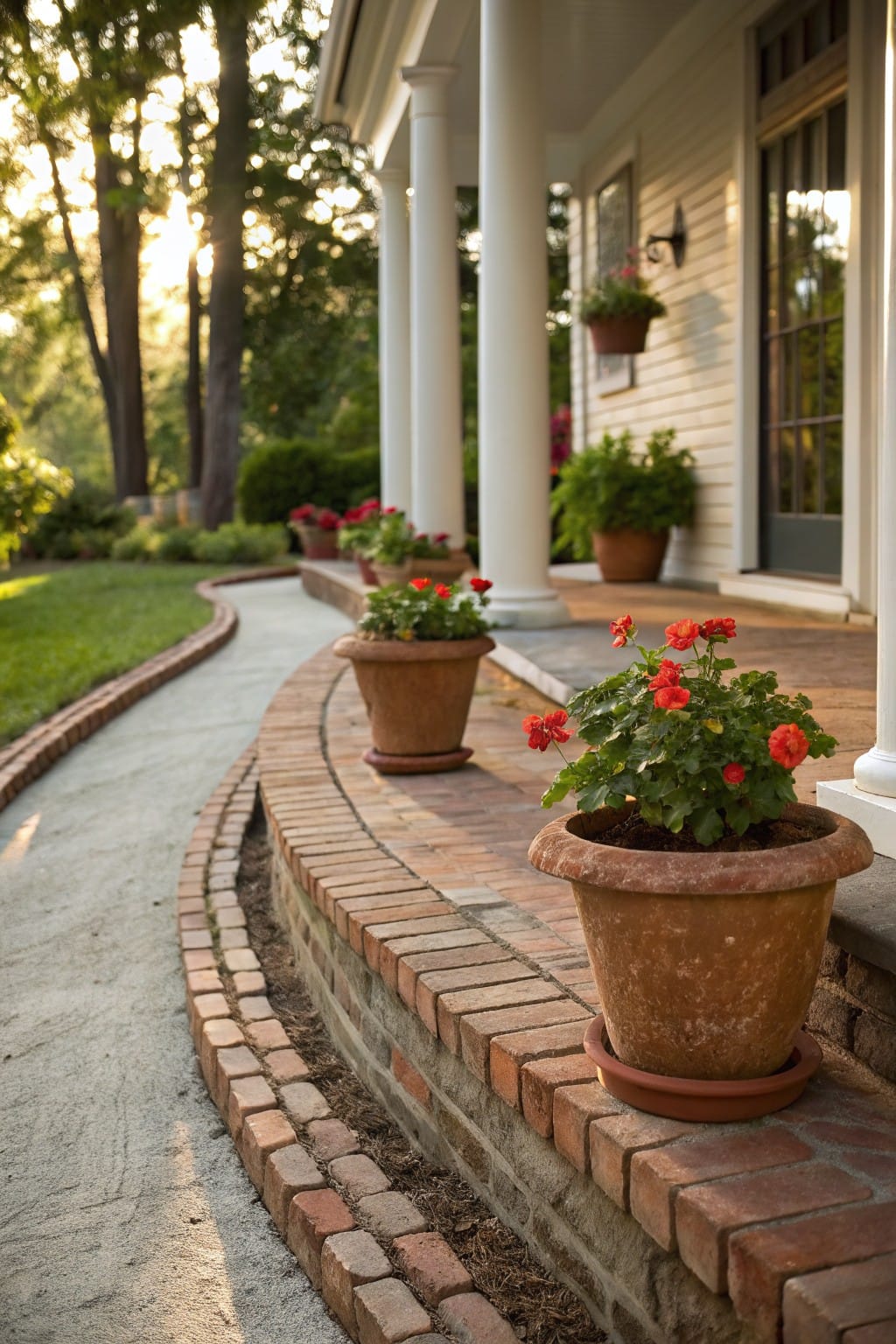
One straightforward way to boost curb appeal is brick edging along a curved garden path. It keeps everything neat without much fuss. The bricks form a clean border that follows the path’s gentle bend right up to the house steps. Folks like how it looks classic and holds up over time. No need for fancy materials.
This works best in front yards with some slope or around traditional homes like colonials. Lay the bricks flat along one or both sides of gravel or mulch. Make sure the base is level so they don’t shift. Pair it with simple plantings nearby. Avoid straight lines if you want that soft, welcoming feel.
Brick Retaining Walls on Slopes
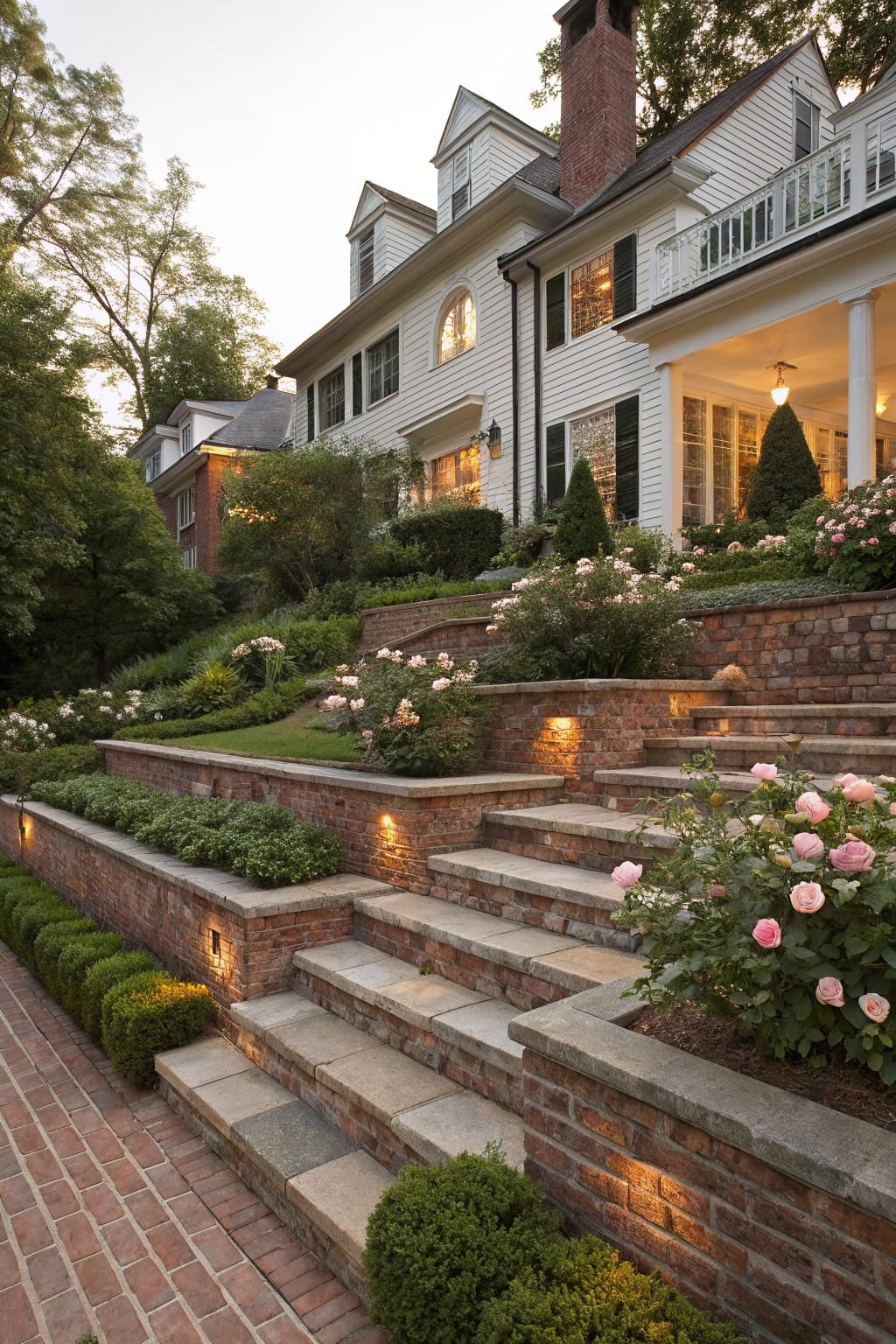
Sloped yards can be tough to work with. But brick retaining walls fix that problem nicely. They create flat terraces for planting and steps, like you see here with pink roses tumbling over the edges. It’s a classic way to make the yard look put-together without fighting the hill.
These walls work best on older homes with some traditional style. Use them along pathways or to hold back soil near the house. Keep the bricks a soft red to blend with stone steps. Just make sure good drainage so water doesn’t pool behind them.
Frequently Asked Questions
Q: How deep should I dig the trench for brick edging?
A: Dig down about 4 to 6 inches deep. That gives enough room for a sand base to keep things level and stable. Pack the sand tight before laying bricks.
Q: Do I need mortar, or can I just use sand?
A: Skip the mortar for most garden edges. Sand or gravel works fine. It lets bricks shift a bit with frost and still look sharp. Just sweep more sand in the joints each spring.
Q: What if my yard slopes? Will bricks stay put?
A: Bricks handle slopes great if you step them down gradually. Cut the trench to follow the contour, and use landscape fabric underneath to block weeds. And check levels often as you go.
Q: How do I stop weeds from popping up between bricks?
A: Lay down landscape fabric before the sand base. Top joints with fine sand or polymeric sand that hardens up. Pull any strays early, and hit them with vinegar spray.
