

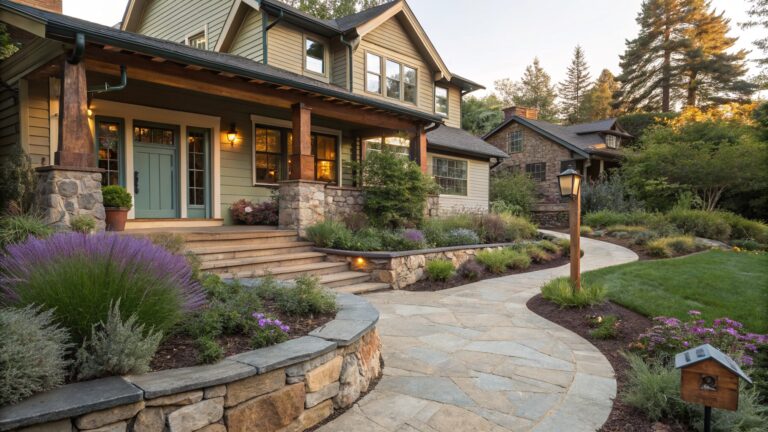
I’ve spent enough time reshaping my own garden beds to know that edging does more than just contain the chaos. I gravitate toward borders made from local stone because they settle into the soil naturally over time. Elaborate patterns look sharp at first but usually warp under foot traffic or rain. Practical edges shine when they pair clean lines with tough materials that laugh off seasons of wear. A handful in this set make me want to grab my shovel.
Natural Stone Edging for Pathways
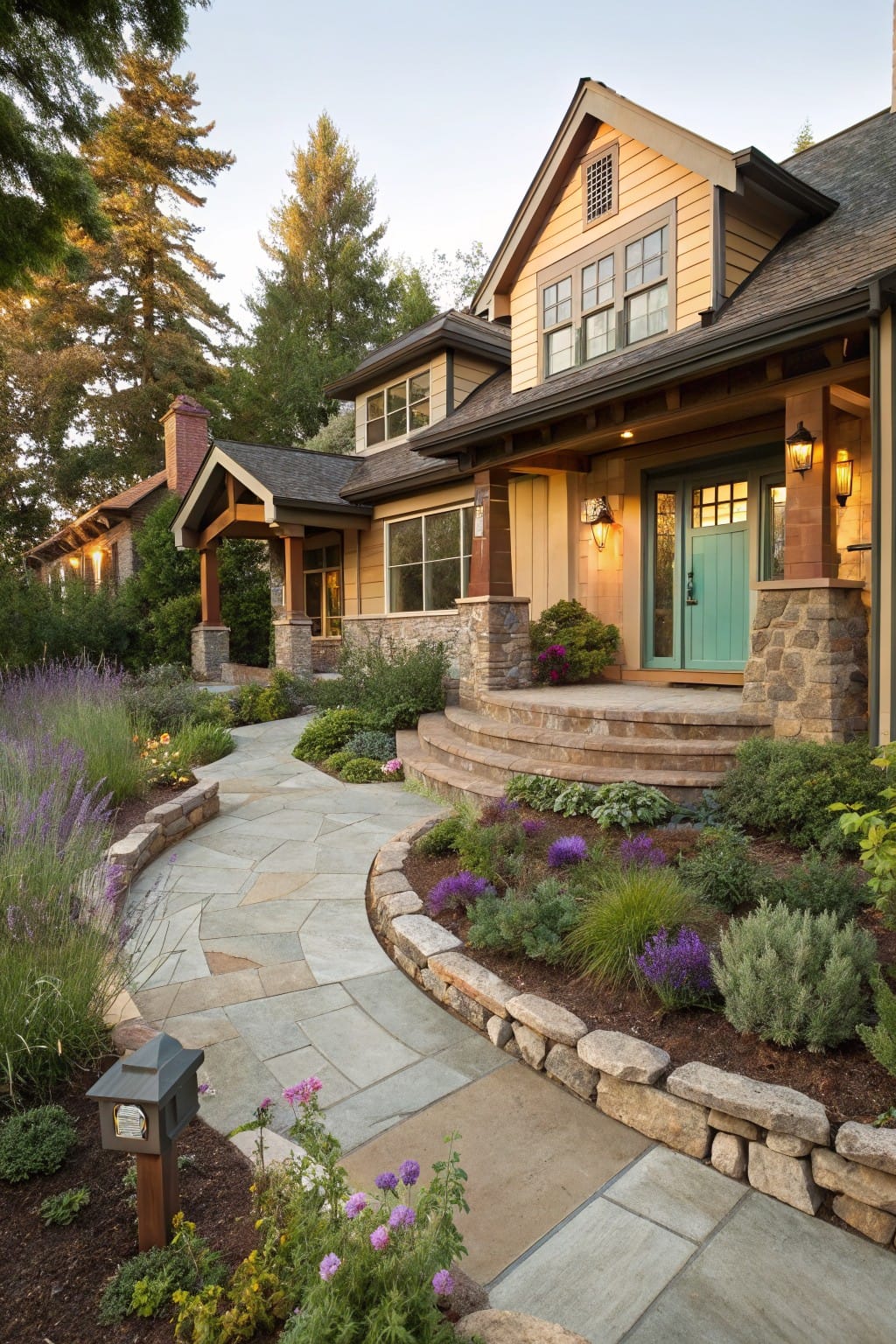
One straightforward landscaping idea is edging paths with natural stone. You stack irregular fieldstones into low walls right along the walkway. It holds back soil and mulch while giving a clean border to plants like lavender and grasses. Folks like how it blends into the yard without looking forced.
This edging works well on curved paths leading to a front entry. Try it in yards with some slope or wooded edges. It suits craftsman homes or older properties best. Source stones locally to keep costs down. Watch that you level the base so stones stay put over time.
Concrete Edging Along Pathways
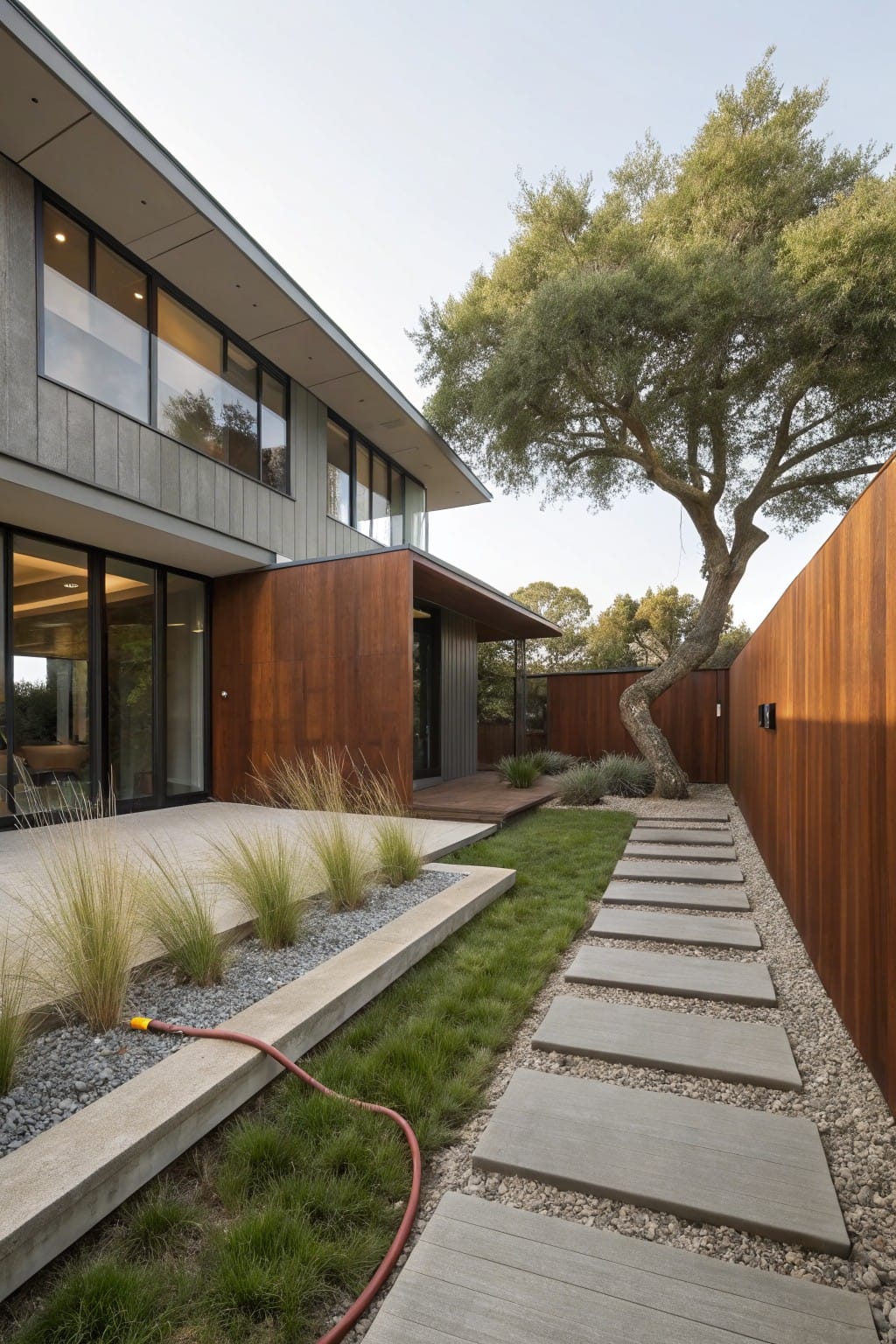
Concrete edging like this keeps things tidy around paths and lawns. Here it’s formed into low troughs filled with gravel and planted with tall grasses. That setup guides your eye right to the house entry while holding back the grass without much upkeep.
Try it where you have narrow side yards or want to define a walkway to the back door. It fits modern homes best but works on ranch styles too. Keep the beds shallow for easy weeding and pick grasses that don’t flop over the path.
Timber Retaining Walls for Driveway Gardens
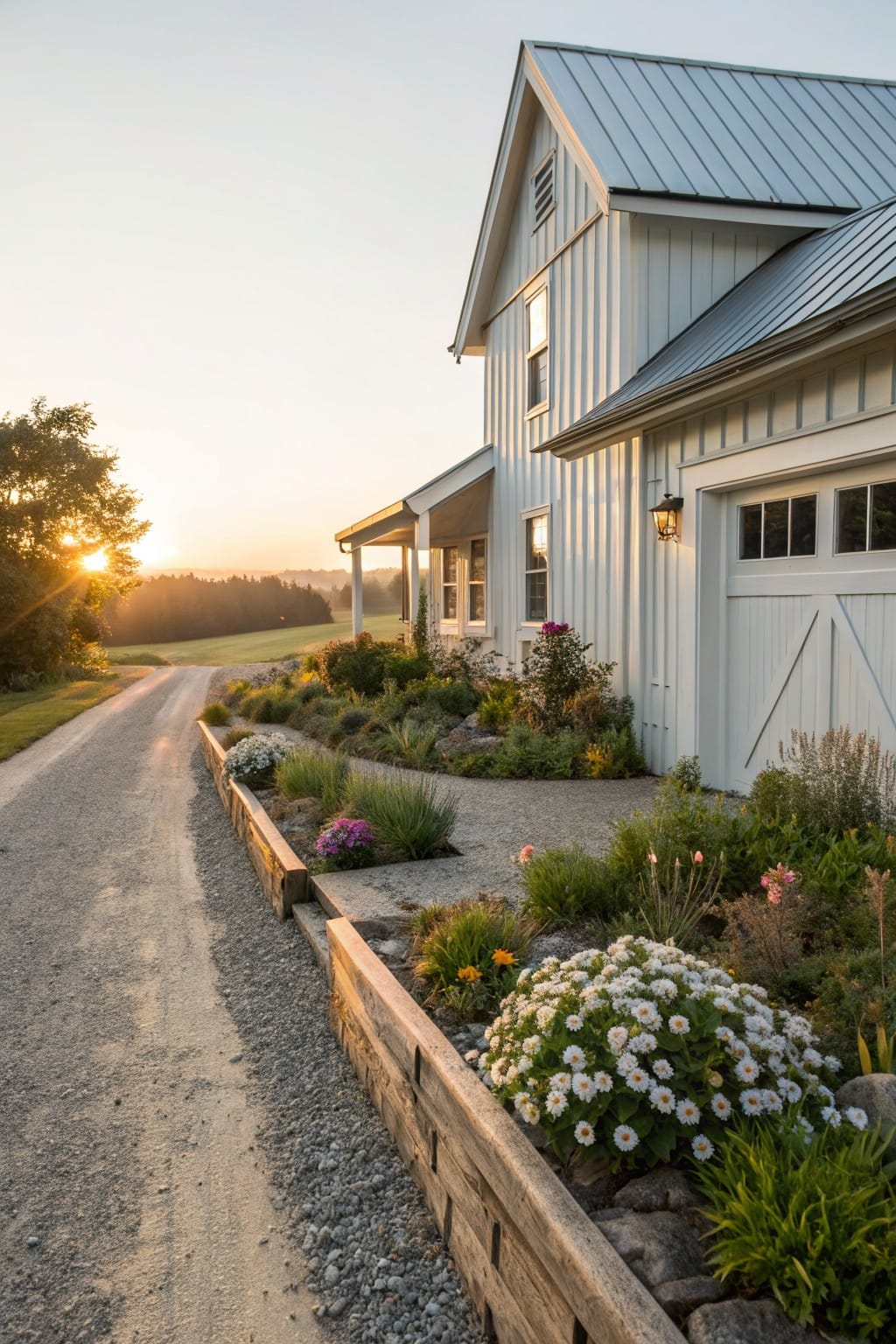
One straightforward way to edge a driveway is with timber retaining walls. These low wooden walls hold back soil and create neat garden beds right along the gravel path. They give the yard some structure without much fuss. In this setup, the walls support a mix of plants like white daisies and tall grasses that spill over just a bit. It keeps everything looking tidy while letting the driveway breathe.
This edging works best on sloped lots or where you want to soften a plain gravel drive. Use pressure-treated timber for longevity, stack it two or three courses high, and backfill with good soil. It’s a good fit for farmhouses or cottages with casual yards. Just make sure to level the base well or it might shift over time.
Natural Plant Edging for Paths
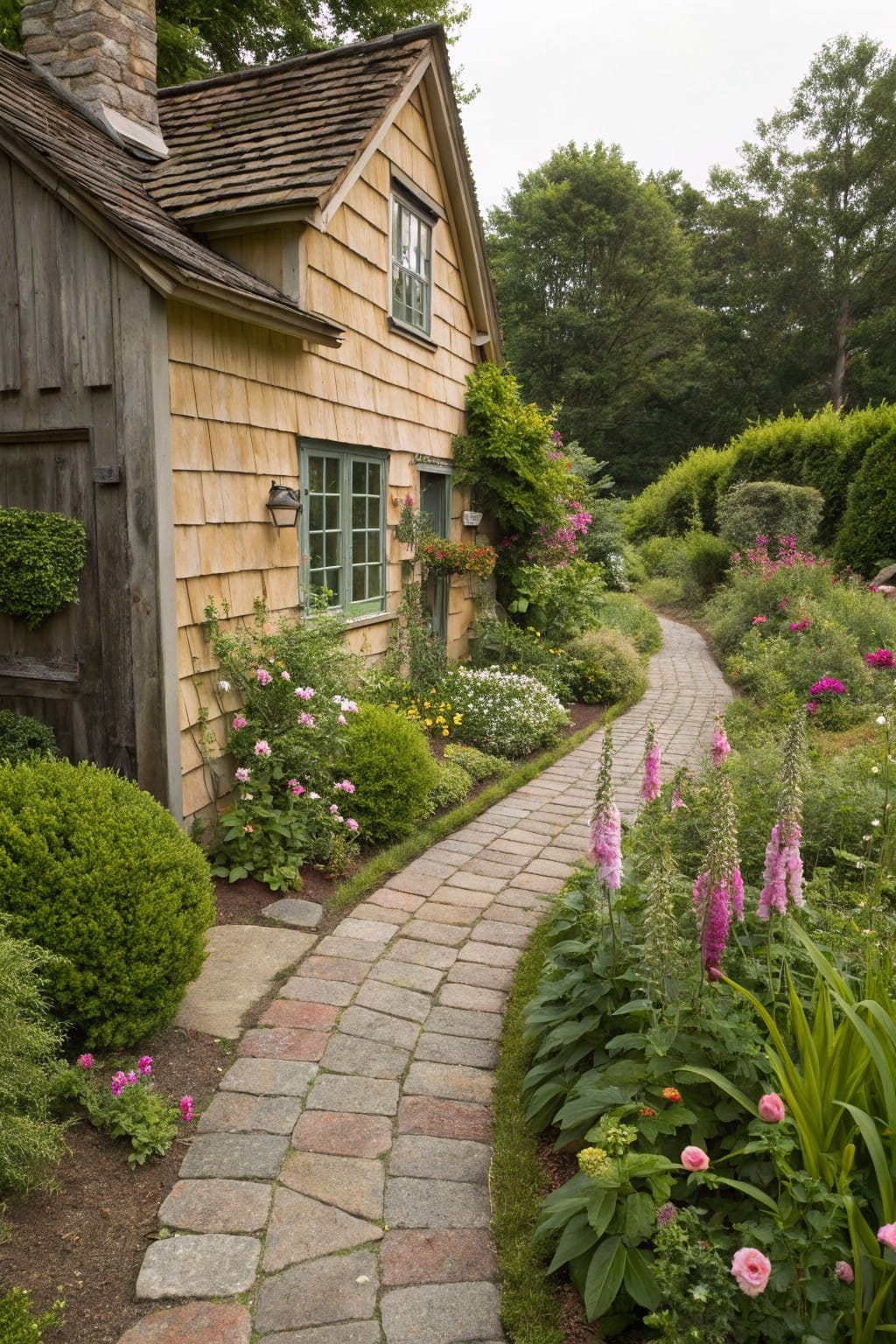
One simple way to edge a garden path is with low plants and shrubs. You see it here along this brick walkway. Boxwoods and flowers like foxgloves hug the edges. It keeps things neat without stone or metal borders. The look feels cottage-like and grows with the yard.
This works best for front walks on smaller properties. Plant tough perennials and evergreens that won’t flop over the path. Trim them back once a year. It suits older homes with some character. Just pick plants that match your sun and soil… or it might turn into a mess.
Rope and Post Path Edging
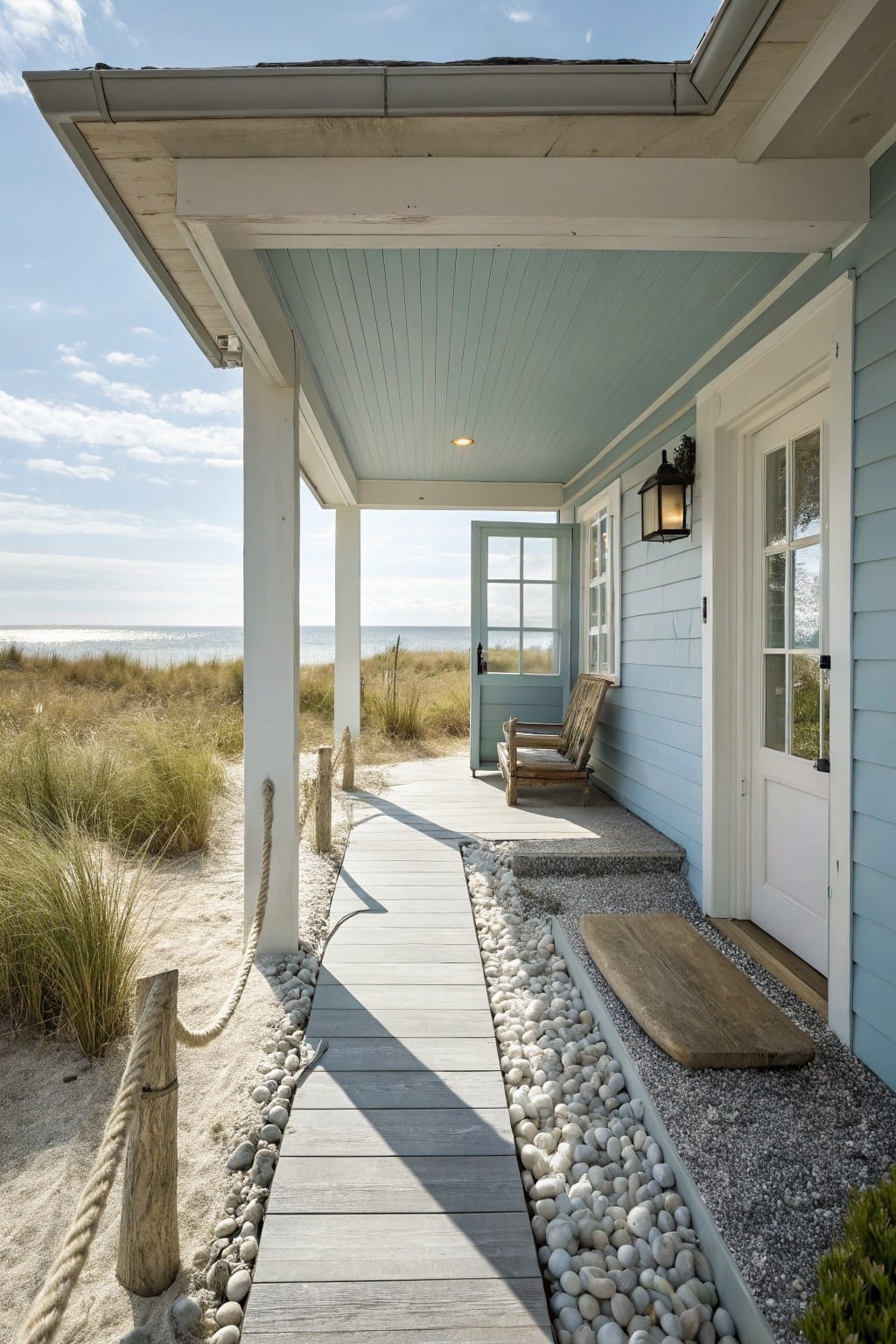
Rope strung tight between wooden posts makes a simple border for paths through sand or grass. It holds back beach grass and keeps feet on the walkway without much upkeep. Folks like it because it’s cheap and fits right into coastal spots like this one, where the rope runs alongside a boardwalk to the porch.
Set it up in front yards or gardens with soft edges, like around cottages or beach houses. Bury posts a foot deep for stability, then tie on nautical rope. Skip it in high traffic areas, though, since it can snag. Works best where you want a casual, low fence feel.
Low Shrubs as Patio Edging
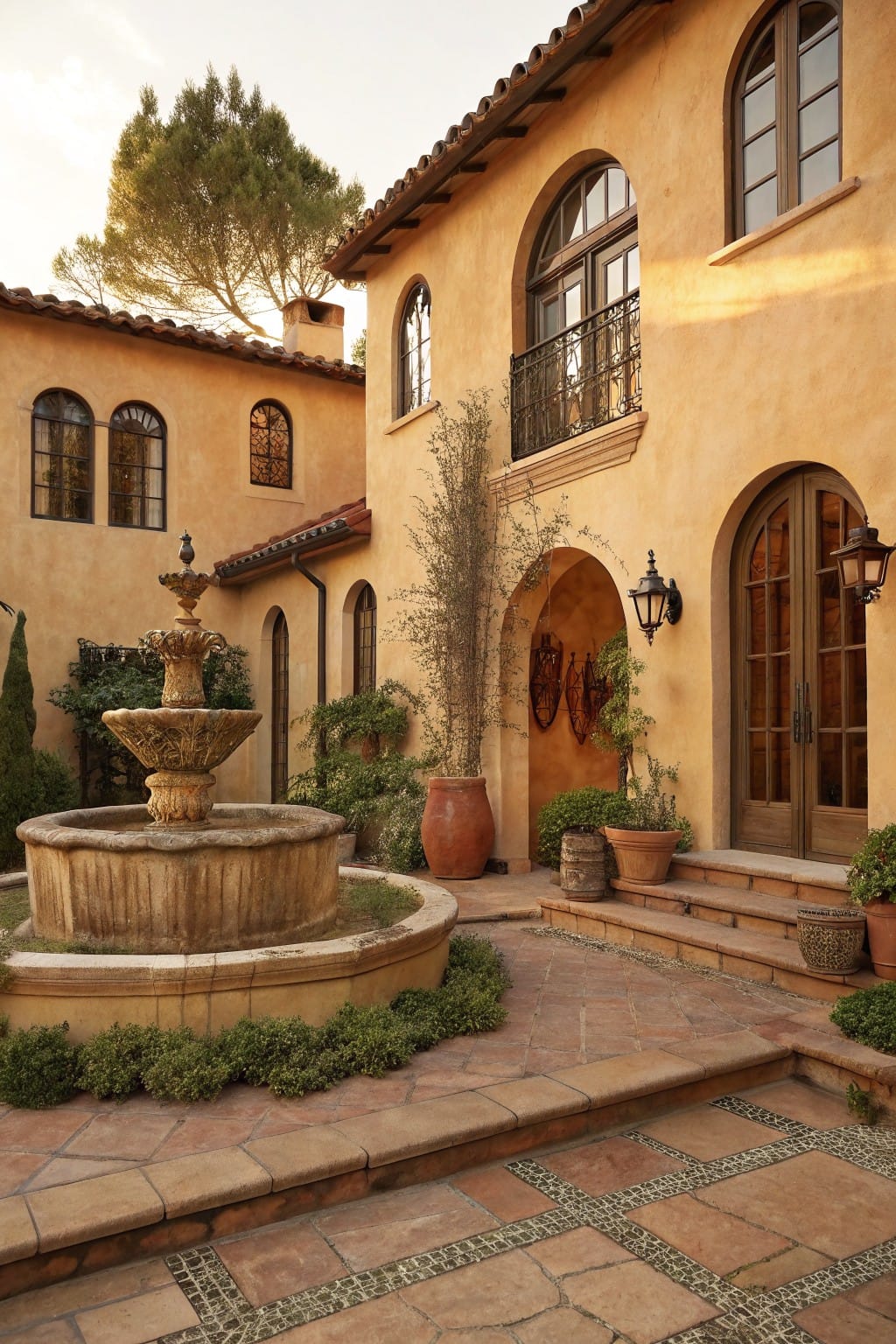
One straightforward landscaping trick is planting low shrubs tight along patio edges. They create a clean border that separates the walking area from plant beds without any fancy materials. Here the green shrubs wrap around the fountain base and line the tile path. It keeps the space looking tidy and holds back taller plants from spilling over.
This edging suits courtyards or smaller patios near the house, especially on warmer style homes. Go with slow-growing evergreens that take drought okay. Plant them a foot or so from the pavers so roots don’t lift things up. Trim once a year if needed.
Stepping Stones in Gravel Beds
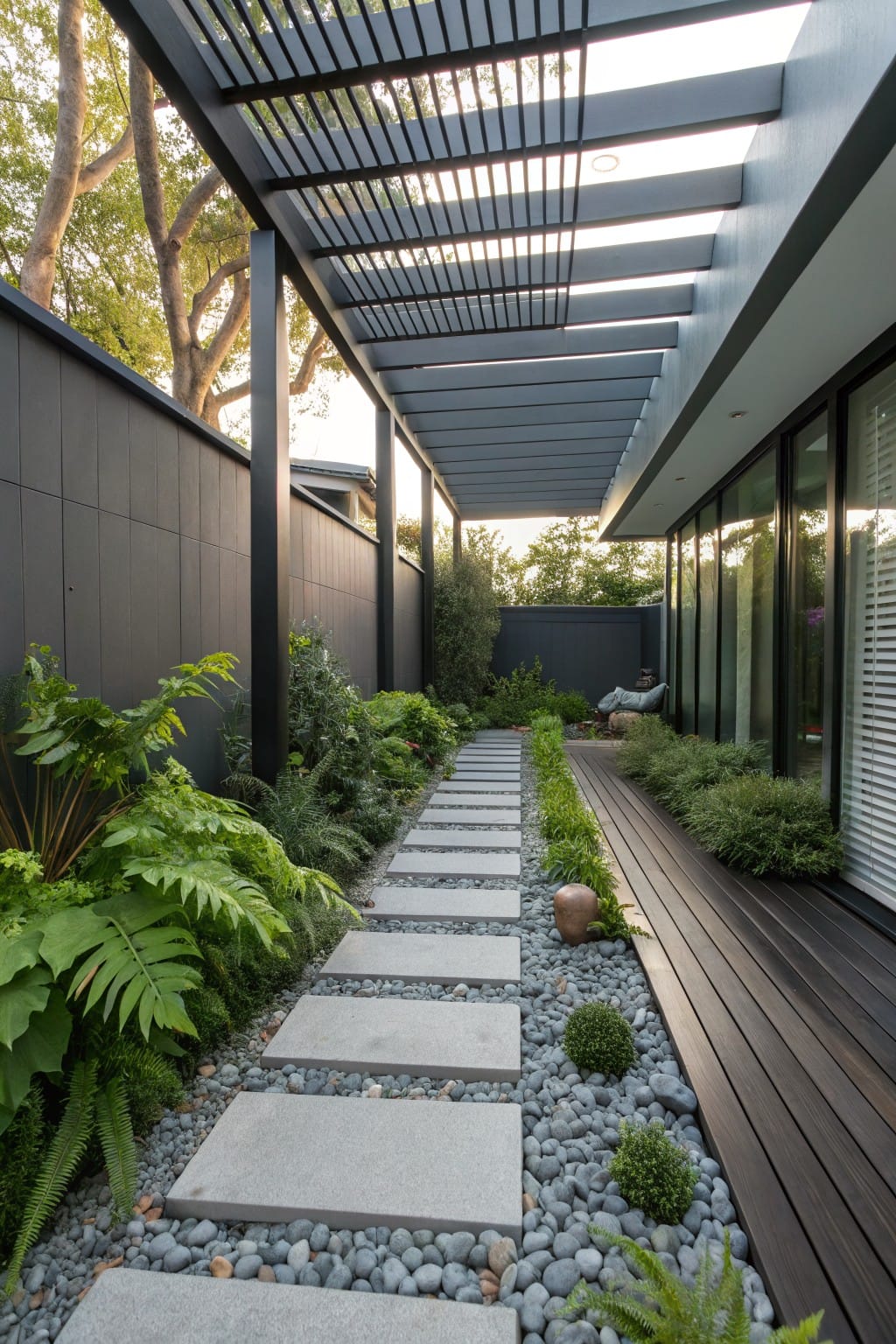
One straightforward way to edge a walkway is to fill the path area with smooth pebbles and drop in large stone slabs for steps. This keeps things neat and simple. The gravel fills gaps, lets rain soak in quick, and gives room for low plants like ferns to tuck right along the sides. Folks like it because it looks sharp without a lot of weeding or edging work.
You’ll see this setup shine in skinny side yards, guiding you from gate to patio or back door. It fits modern houses with clean lines, or even older spots needing a fresh path. Use gray river rocks and hefty concrete pavers for that look. Level the ground first. Watch for spots where water pools, though. Add a little sand under the gravel if needed.
Pool Edging with White Pebbles
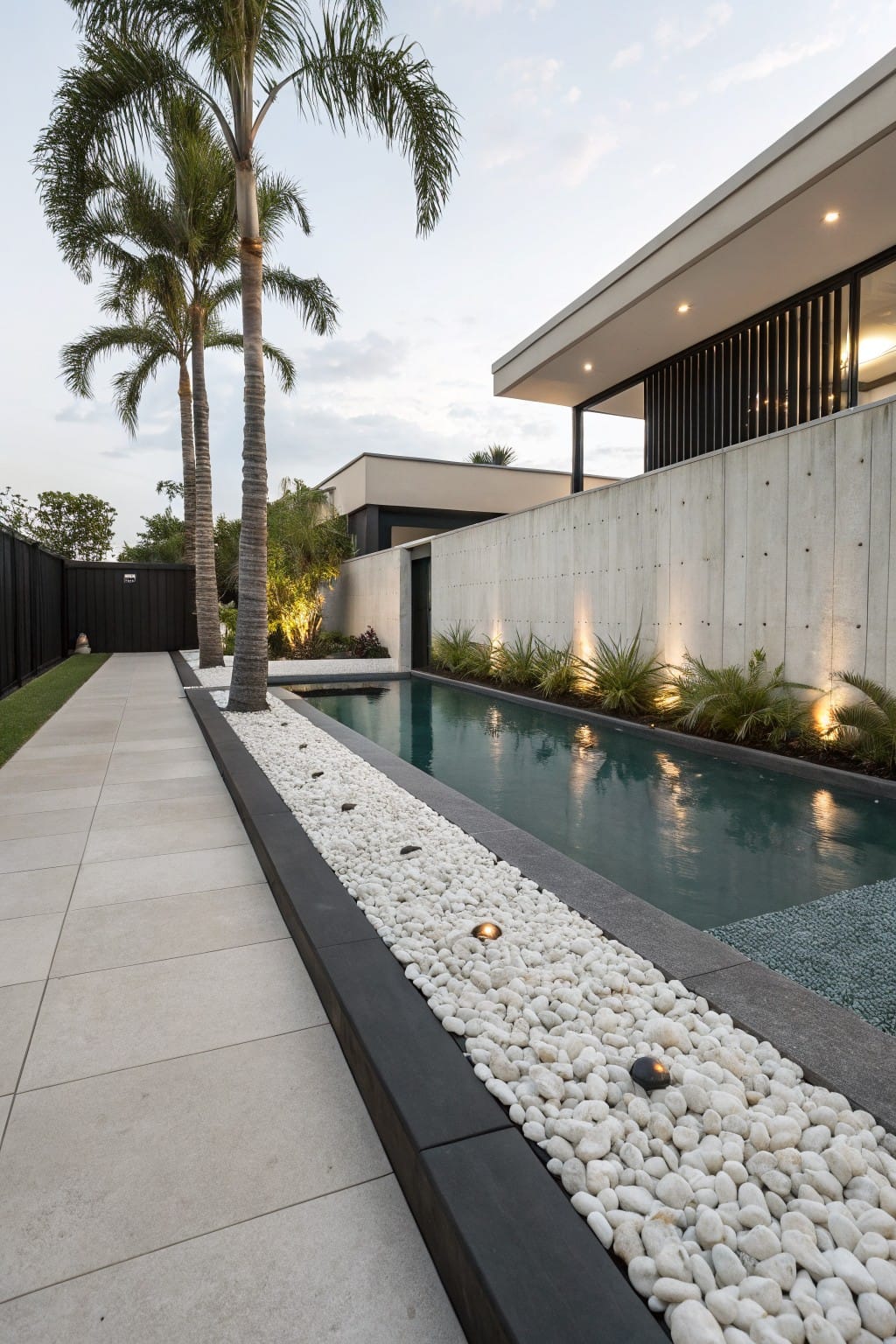
White pebbles make a simple, clean edge along this poolside path. They sit neatly between a black trim and the tiles, keeping dirt and grass from creeping in. Plus, those little low lights tucked into the pebbles light up the area at night without much fuss.
This edging works best in backyards with pools or straight walkways. It suits modern homes or spots with palms and grasses nearby. Just make sure the pebbles are big enough so they don’t shift around too much, and rinse them off now and then.
Gravel Paths with Stone Edging
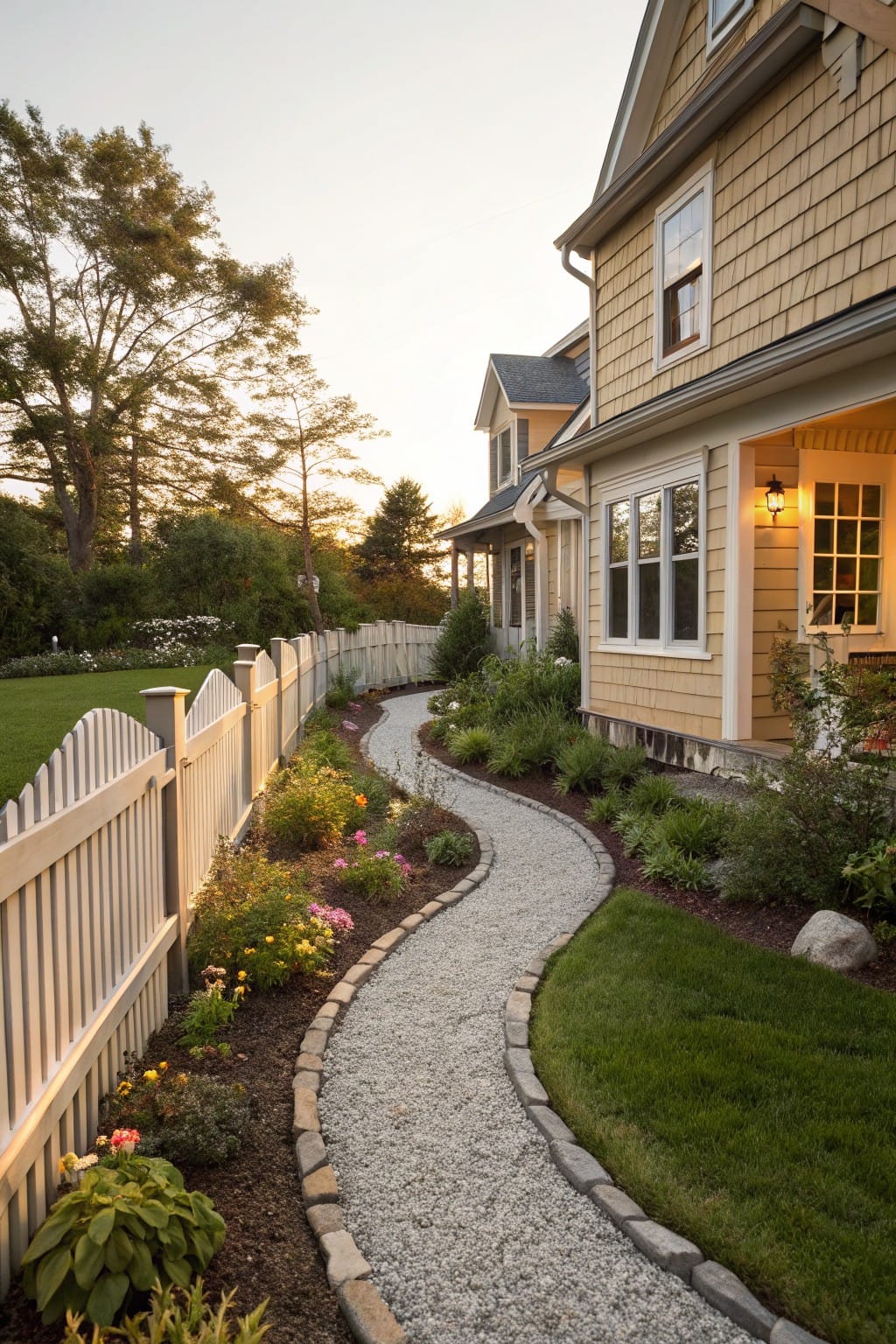
Gravel paths edged with stone make a lot of sense for garden walkways. They keep the loose stones in place and give a clean line that looks good year-round. In this setup, the gentle curve fits right into the yard, and a few plants along the edge fill it out without overpowering things.
You can put one of these in front of a house or along a side yard, especially where traffic is light. They suit older homes with some lawn and beds, or any spot needing a simple route to the door. Watch that the stones sit level, or weeds might creep in over time.
Recycled Glass Bottles as Garden Edging
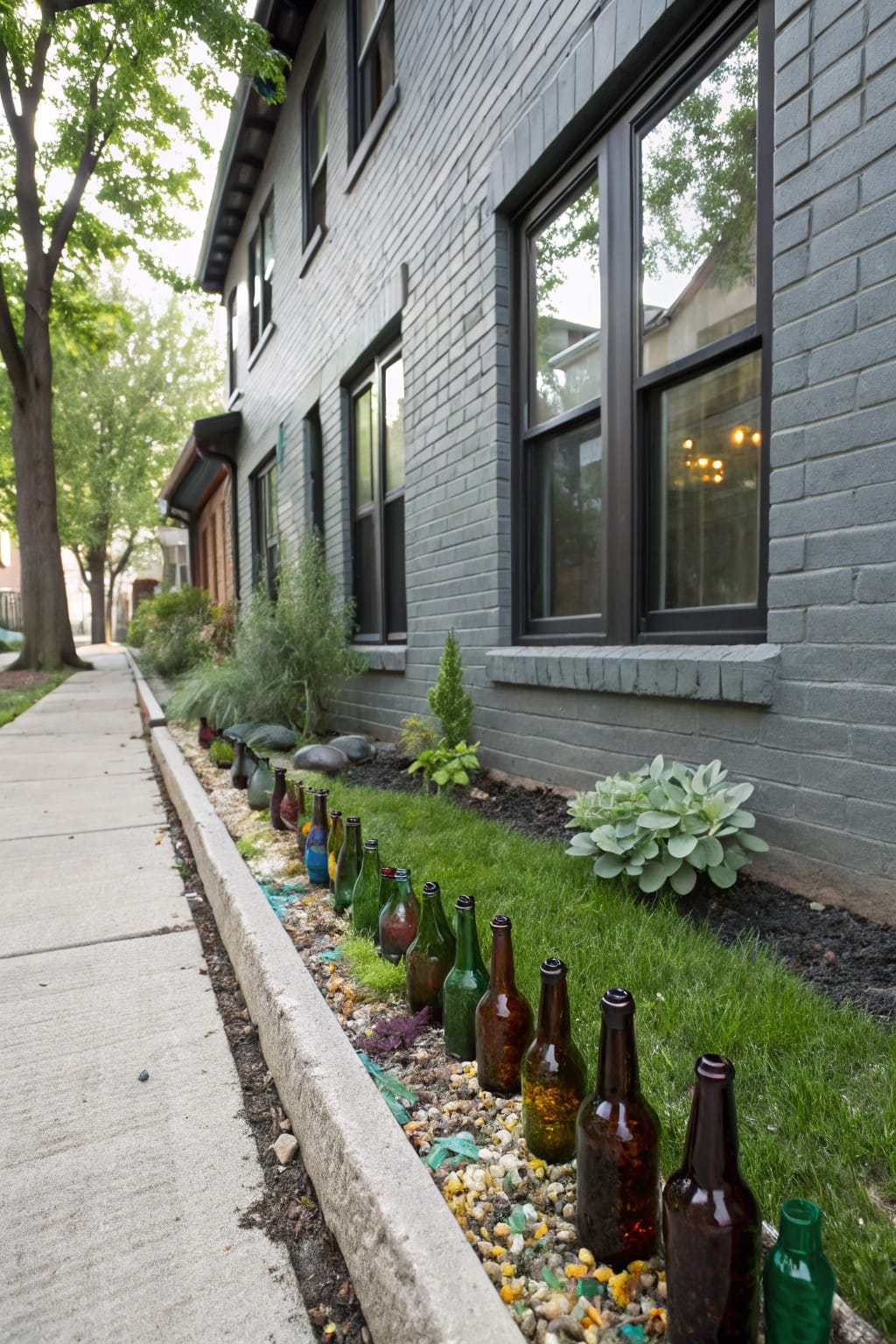
Old bottles make a fun, practical edging for planting strips. Homeowners stick them neck down into the soil or concrete to hold everything in place. The mix of browns, greens, and clears adds color that catches the eye along a plain sidewalk. It’s cheap too. Collect empties from parties or recycling, clean them up, and go.
This idea fits narrow beds between the street and house, like in front yards with grass and low plants. It suits older neighborhoods or simple brick homes. Bury the necks a few inches deep so they stay put. One thing. Glass can break if you bump it hard, so keep heavy equipment away.
Natural Stone Edging for Garden Paths
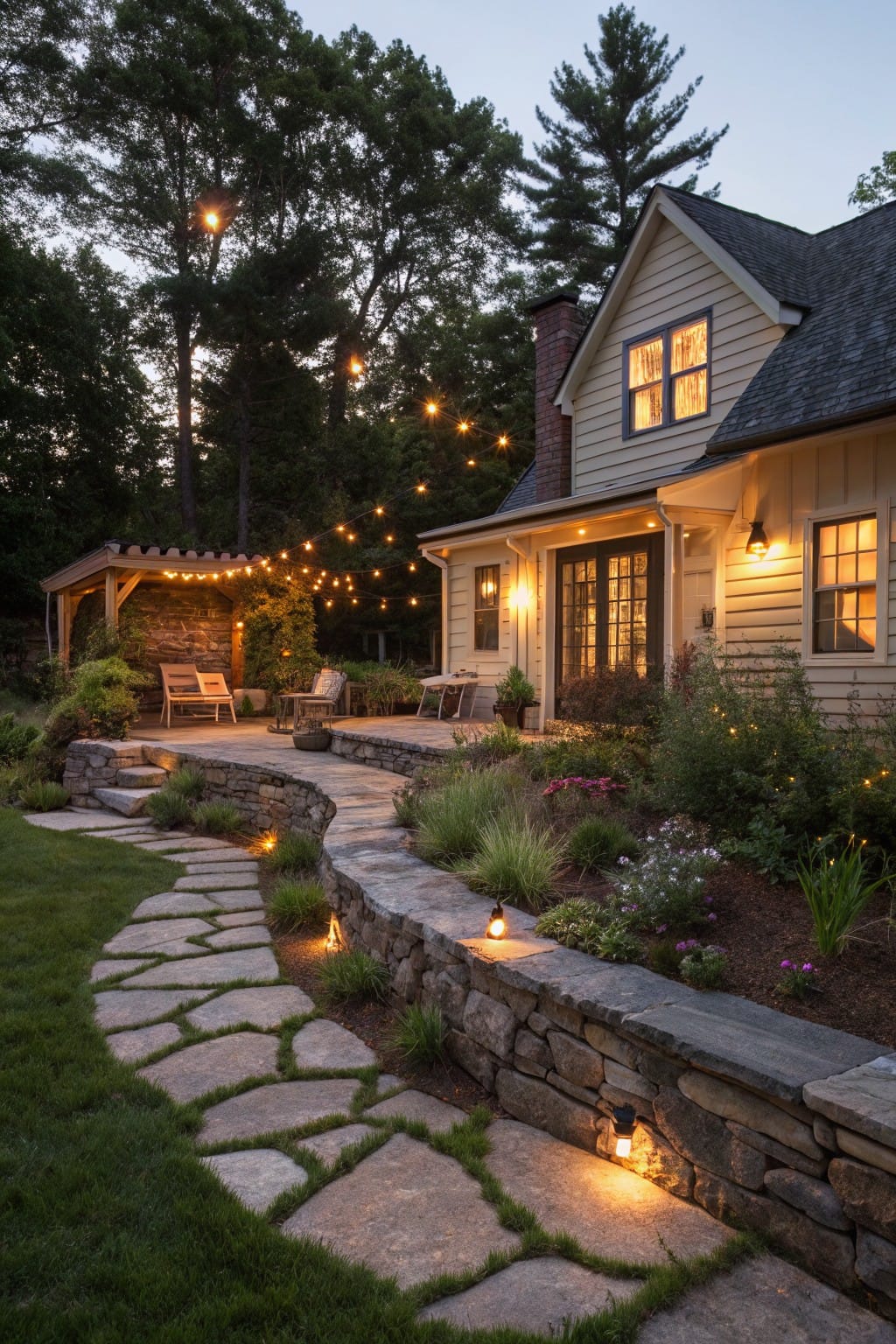
Low natural stone walls make solid edging for garden paths. They hold back soil on slopes and keep mulch or grass from creeping over. In this yard, the dry-stacked stones follow a winding flagstone path just right. Plants soften the edges, and a few lanterns light the way at dusk.
Build these walls yourself if you have flat rocks on hand. They’re best for yards with some grade, like heading up to a patio or house. Fits older homes or wooded lots. Skip mortar for that rough look, but pack the base tight so it stays put.
Concrete Retaining Walls for Slopes
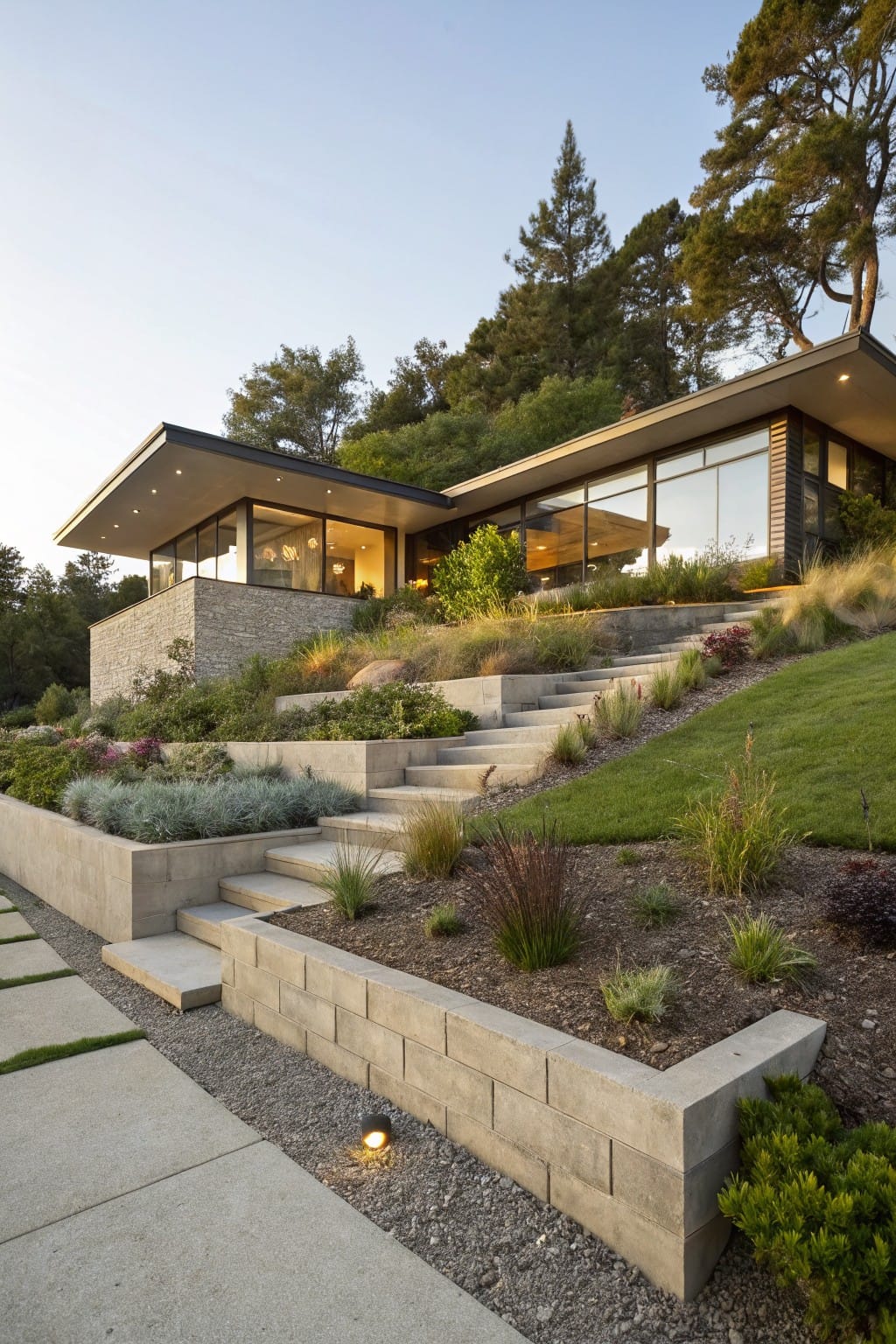
Concrete retaining walls like these work great on hillsides. They use simple block construction to hold soil in place and create flat terraces for planting or walking. In this setup, steps are built right into the walls, so you can climb up without extra paths. Grasses and low shrubs tucked along the edges keep it from looking stark, and it all blends with the natural slope.
Try this in yards with a good drop, maybe 4 to 10 feet, where erosion or mowing gets tricky. It suits casual modern homes or ones tucked into wooded lots. Stack standard concrete blocks with gravel backfill for drainage, then add steps every few feet. Skip mortar if you want a looser look, but check local codes for taller walls.
Winding Stone Paths in Meadow Gardens
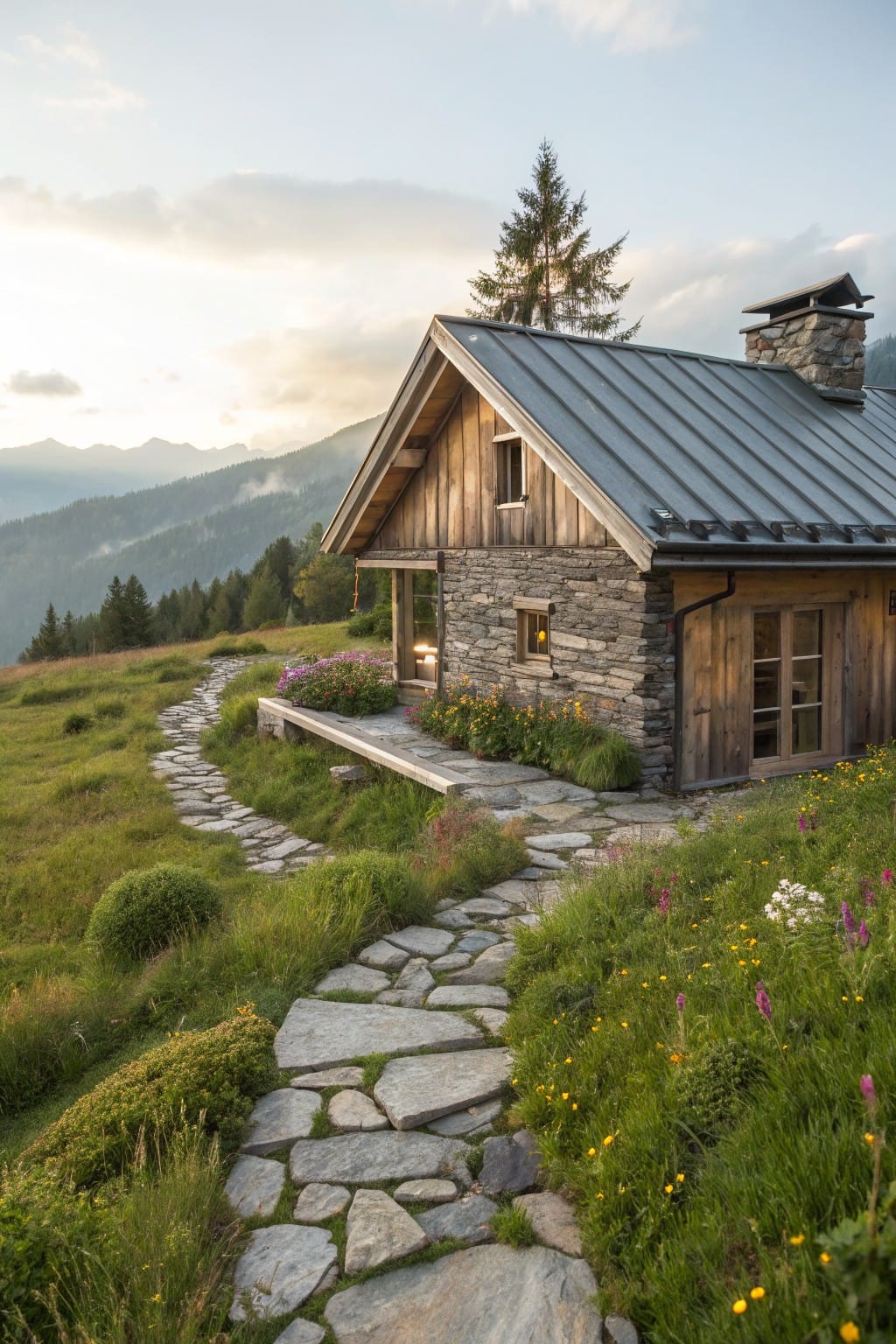
Nothing beats a simple stone path that winds through tall grass and wildflowers to your front door. It keeps things practical by guiding foot traffic without a lot of mowing or upkeep. Folks notice how the flat stones just sit there, edged by whatever’s growing up around them. Makes the yard feel like it’s always been that way.
Try this in bigger yards or sloped spots where straight lines won’t cut it. Source local flat rocks, lay them loose where people walk, and plant natives in the gaps. Suits cabin-style homes best… watch for uneven steps if your ground’s really hilly.
Brass Edging on Curved Paths
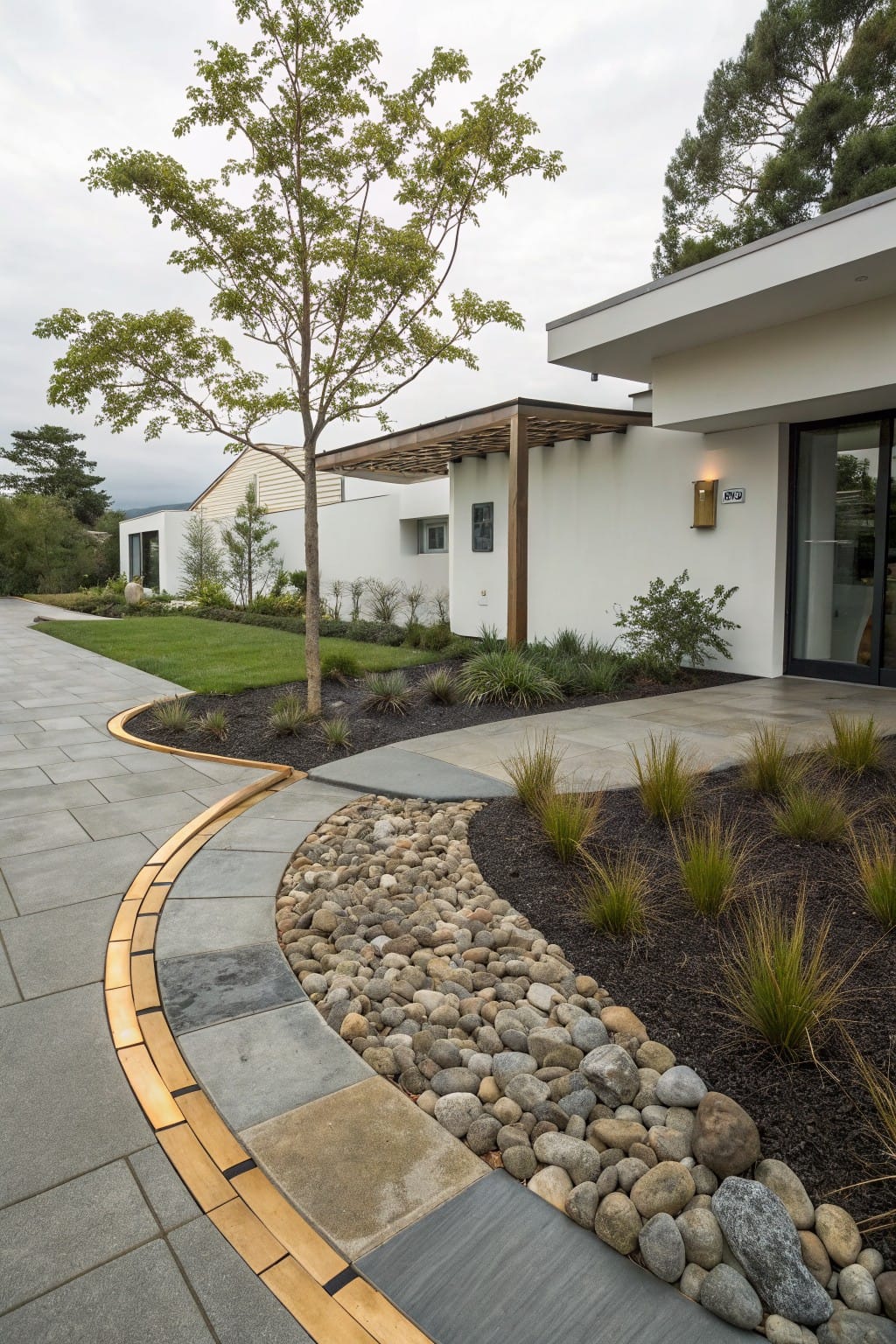
Thin brass strips make a sharp, clean edge along this curved stone walkway. They tuck right into the gray pavers, holding back the loose pebbles and mulch on the outside. Homeowners go for this because it keeps everything neat without much upkeep, and that bit of gold color perks up the plain path.
You can add it to any front yard path or driveway edge. It suits modern houses or simple yards best. Just use outdoor-grade brass so it doesn’t tarnish fast, and set it deep enough to stay put. Skip it if you have heavy foot traffic… might wear quicker there.
Raised Beds Along Patio Edges
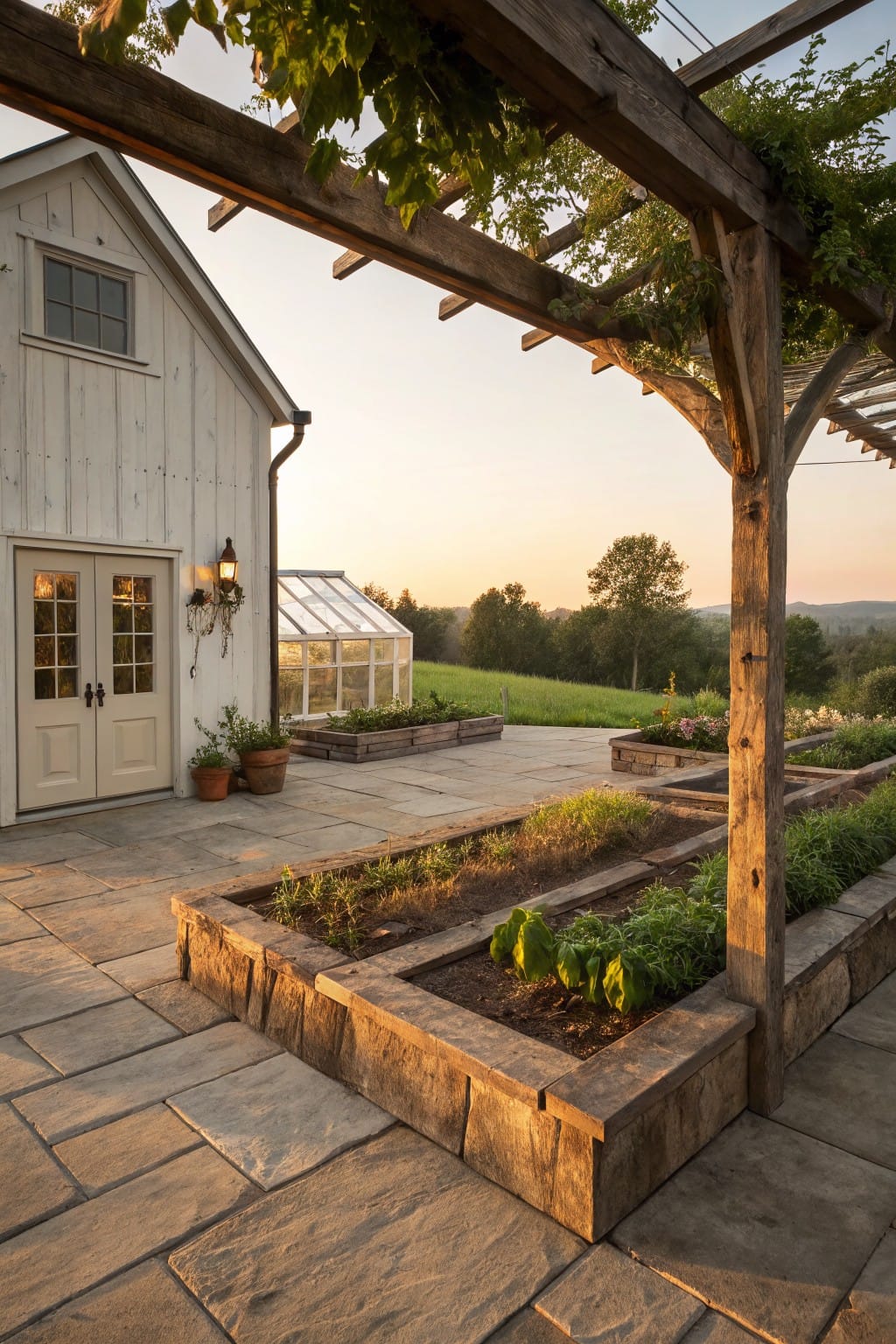
Raised beds made from stacked stone blocks work well as edging right next to a patio. They hold back soil and plants without spilling over onto the pavers. You get neat garden rows that feel part of the outdoor space, like the veggie beds tucked against the stone walkway here.
Put these along the side of your patio where you want to grow herbs or vegetables close to the house. They suit sloped yards or flat ones, especially around sheds or greenhouses. Stack local stone for a sturdy look that lasts. Just level the base first, or things might shift over time.
Concrete Edging with Recessed Lighting
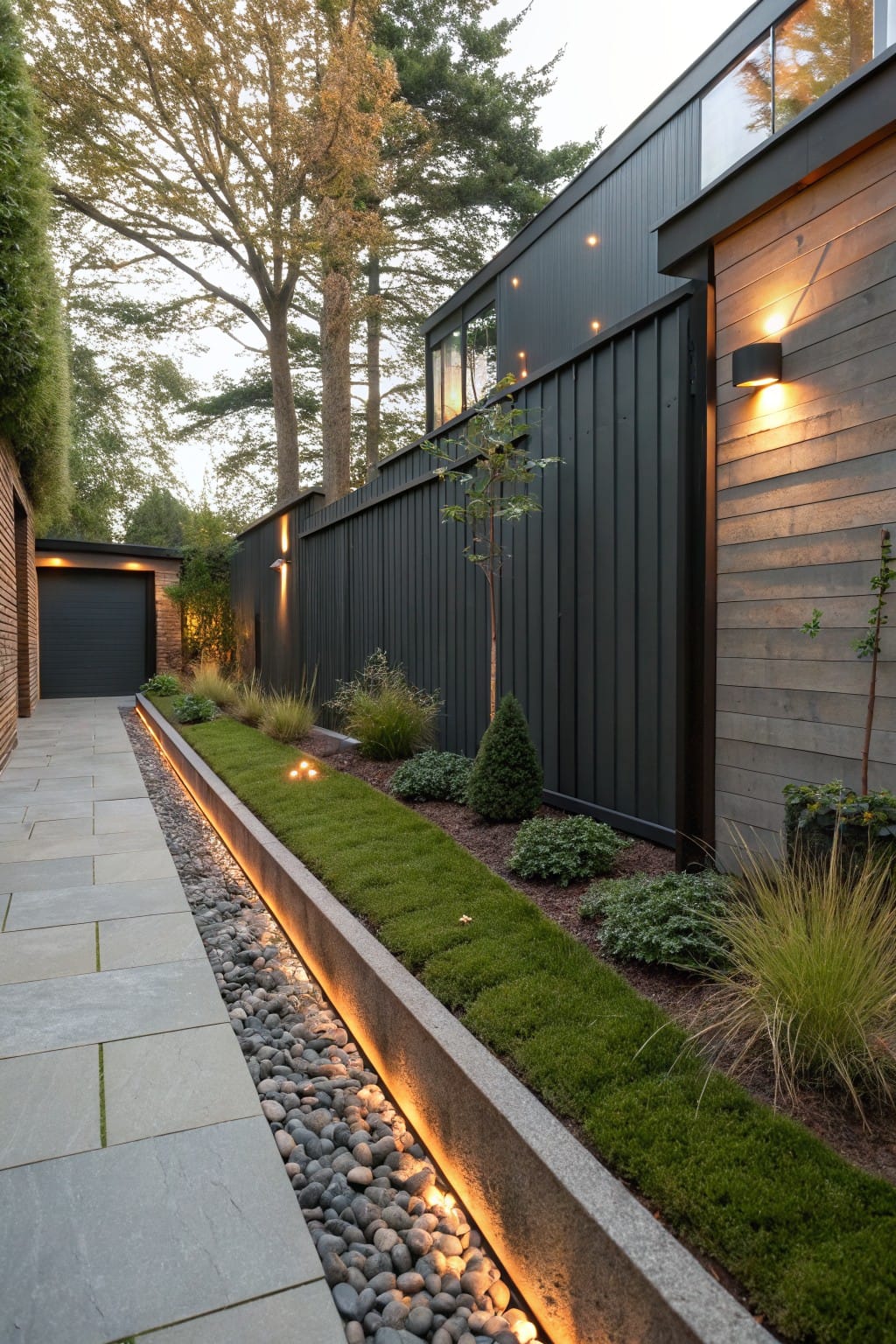
A concrete edging strip runs right along this walkway, with small LED lights set into the base so they glow upward at night. That low light guides your steps without being too bright. The edging holds back a narrow band of grass, pebbles, and low plants, keeping everything neat and simple next to the house siding.
You can do this in a side yard or path to a garage door. It fits modern or clean-lined homes best, especially where space is tight. Use precast concrete sections if pouring your own feels like too much work, and stick to drought-friendly plants in the bed to cut down on upkeep.
Terraced Stone Retaining Walls
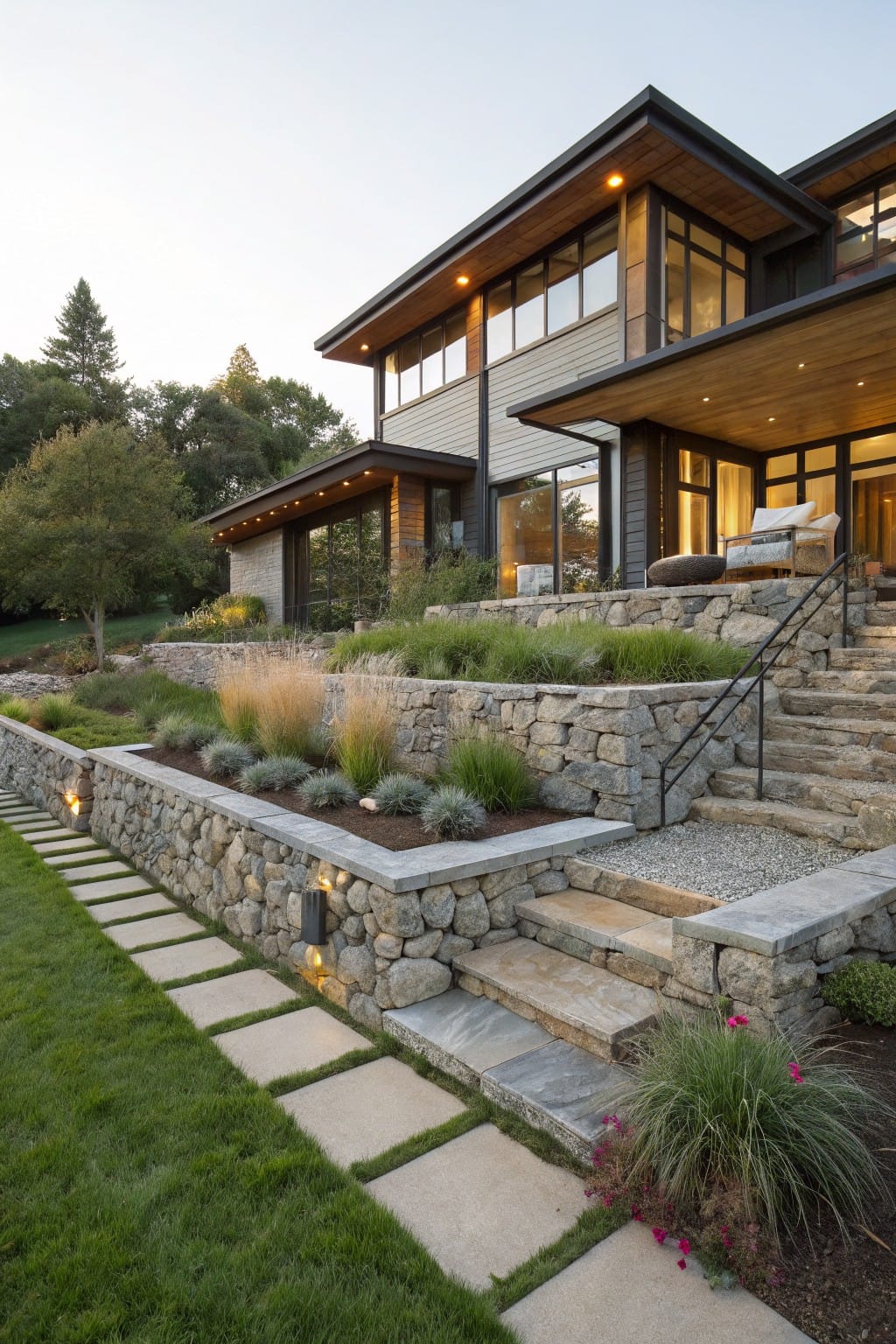
Sloped yards can be tricky to work with. They erode easy and feel hard to garden on. These layered stone walls fix that by stepping down the hill into usable terraces. Rough fieldstone stacked up holds soil back while grasses grow right out of the top and sides. It keeps things stable and gives a natural look that fits right in.
Stack your own with rocks from nearby if you can find them. Add steps between levels for easy walking up. Tough plants like switchgrass do well here and need little care. This setup suits homes on hillsides, especially ones with clean lines. Watch the water flow though. Poor drainage can push walls out over time.
Illuminated Pebble Trench Edging
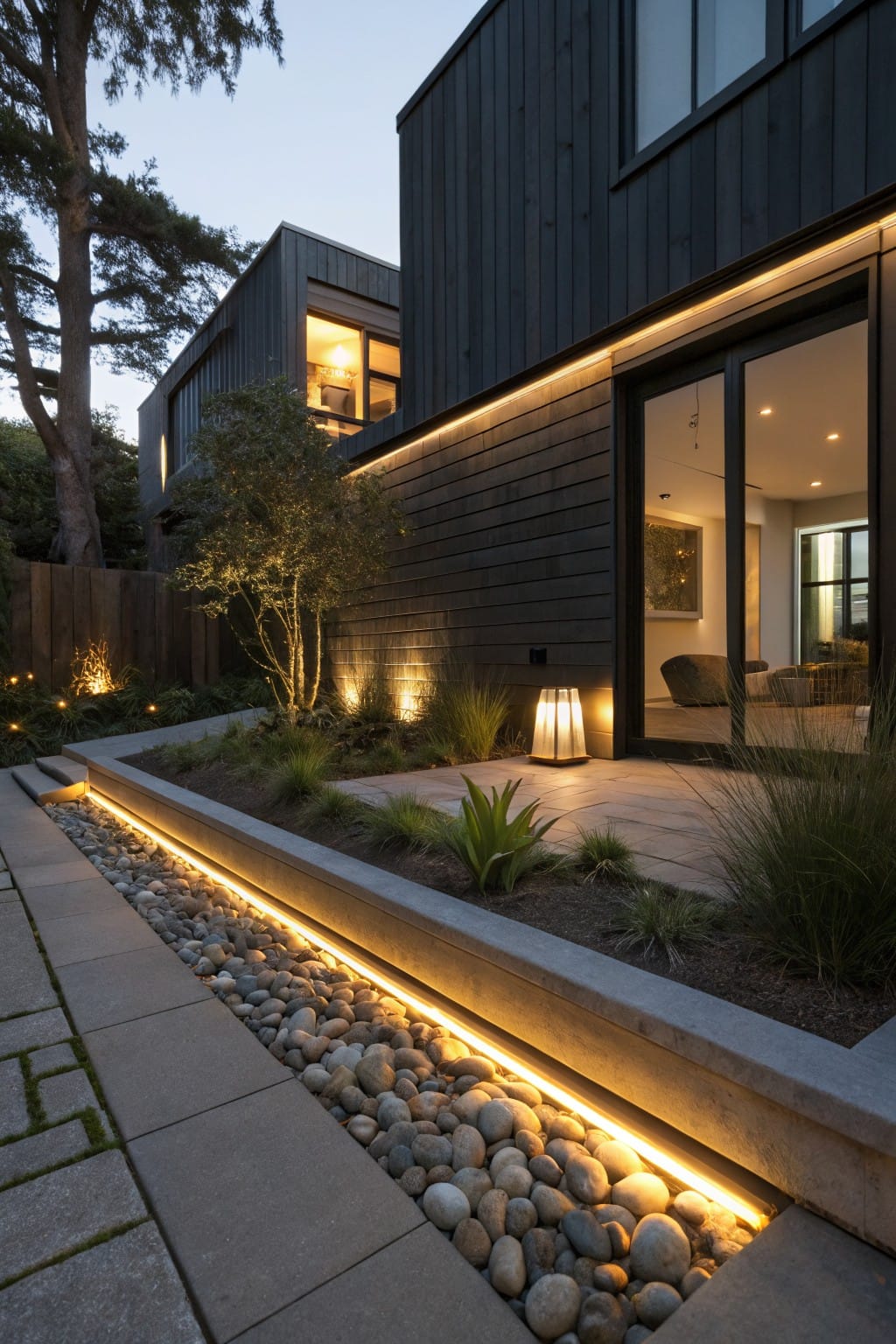
A simple trench filled with pebbles runs right along the edge of a concrete walkway, with LED strips tucked in below to cast a warm glow up through the stones. It keeps mulch or soil from spilling onto the path, and that soft light turns a plain border into something practical at night. Homeowners like how low-maintenance it stays, just rake the pebbles now and then.
This works well in backyards with clean lines, like next to a patio or heading toward house doors. Fill a 4-inch deep cut edge with rounded river rocks, add waterproof LED tape, and seal the concrete lip. Suits modern homes or any yard with grasses nearby. Skip it on steep slopes, though… pebbles might shift.
Frequently Asked Questions
Q: How deep do I need to dig for most of these edging ideas?
A: Dig a trench about 4 to 6 inches deep around your beds or paths. This depth keeps the edging stable and lets roots stay put. Push soil back in firm and water it down.
Q: What’s the best edging for a sloped yard?
A: Choose stacked stones or bricks. They lock together naturally on angles. Backfill with gravel to stop washouts.
Q: Can I reuse old bricks or pavers for edging?
A: Grab those leftovers from your patio tear-out. Clean them up and bury halfway in a straight line. They look rustic and save you cash.
Q: How do I stop weeds sneaking through the edges?
A: Spread landscape fabric along the trench bottom first. Tuck the edging over it tight. Top with mulch… weeds hate that combo.
