


I’ve spent the past couple weekends reshaping my backyard beds, and solid edging turns a messy sprawl into something defined and walkable. I always gravitate to low stone or brick options because they wear in naturally with the dirt and grass around them. Wooden logs hold their own if you pick sturdy types and treat them against moisture, but flimsy cuts rot fast and pull the whole look down. What trips most people up is choosing edges too bold for the yard’s size, so they crowd instead of guide. Scale it right, and a few of these could sharpen your space for years.
Low Stone Walls for Garden Edging
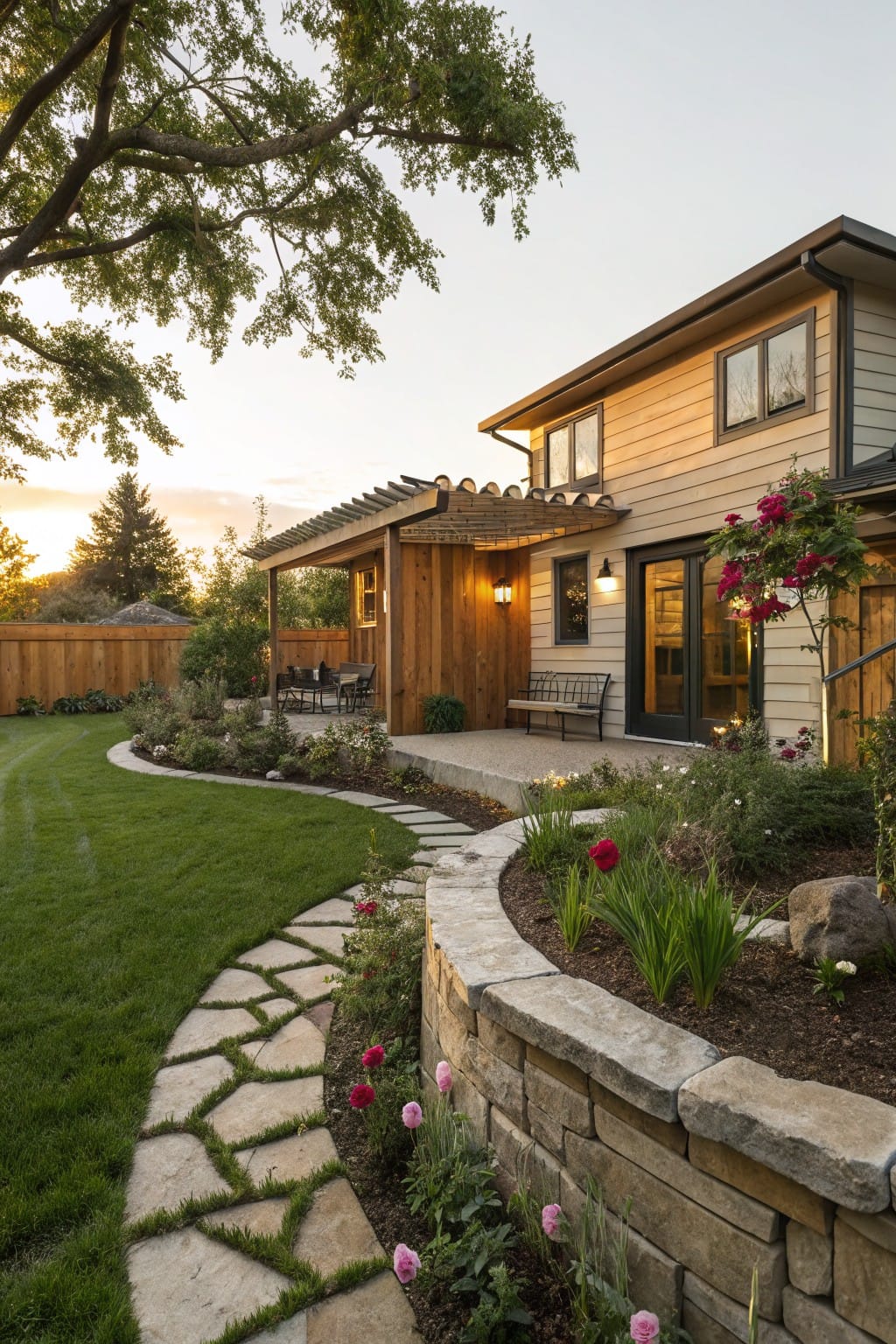
One straightforward way to define your backyard garden beds is with a low stone retaining wall. It keeps soil in place and sets off the lawn nicely. The gentle curve here follows the path, so it feels natural, not stiff. Plus, it lets you tuck in plants right along the edge for some color without spilling over.
These walls suit yards with even a little slope, or anywhere you want to separate grass from flowers and shrubs. They fit homes with wood siding or simple lines. Just make sure the stones match your local style, and keep the height under two feet so it stays friendly to walk by. Add mulch inside the beds to cut down on weeding.
Metal Edging for Garden Paths
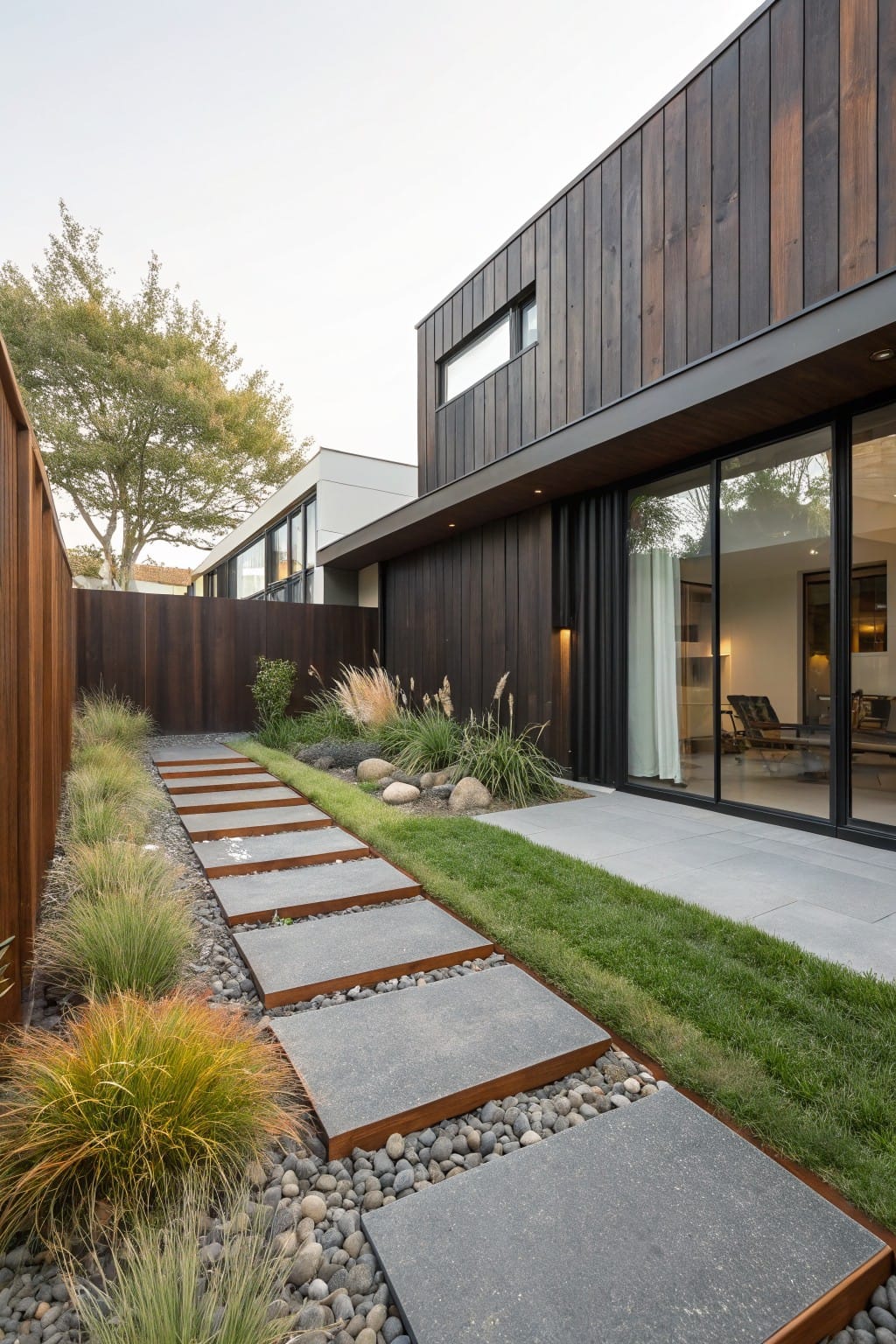
One clean way to define a backyard path is to edge concrete slabs with thin metal strips. The dark, slightly rusted metal frames each slab nicely, keeping gravel and plants right where they belong. It gives the whole path a sharp, modern edge without much fuss.
This edging suits narrow side yards or spots leading to a patio door. Go for corten steel if you like that weathered look over time. It holds up well around grasses and rocks, but make sure the ground slopes a bit for water runoff.
Brick Edging for Garden Paths

Brick edging keeps garden paths tidy and gives beds a clear boundary. Here, red bricks run alongside stone slabs in a curve that follows the yard’s shape. The plants like lavender tuck right up against it, so the edge stays crisp but the look stays soft and lived-in.
You can use this in most backyards, especially ones with a cottage style house. Set the bricks end to end or flat along gravel, stone, or even grass paths. It suits sloped spots too, since bricks hold soil back well. Just make sure they match your house bricks for a pulled-together yard.
Rope and Rock Path Edging

Rope strung between wooden posts makes a clean, low-key border for garden paths. Paired with rocks along the base, it holds back grasses and defines the route without looking fussy. Folks like it for that casual beach vibe, especially where you want something sturdy but natural.
Try it on sandy or gravel walks in coastal yards or relaxed back gardens. Space posts four to six feet apart, knot the rope tight, and stack rounded stones to fill gaps. It suits bungalow-style homes best. Just check the rope now and then, since sun fades it over time.
Raised Brick Beds for Garden Edging

Raised brick beds like these give your backyard plantings a solid boundary. They hold back soil and mulch from spilling onto the patio or paths. Brick stands up to weather year after year. And it picks up colors from the house without much fuss.
Put them along patios in yards that lean toward Mediterranean or casual country looks. Fill with low plants, a small tree, or seasonal stuff like pumpkins. Stack the bricks a foot or so high for easy reach when weeding. Skip if your soil stays soggy. Drainage matters.
Raised Wooden Garden Beds
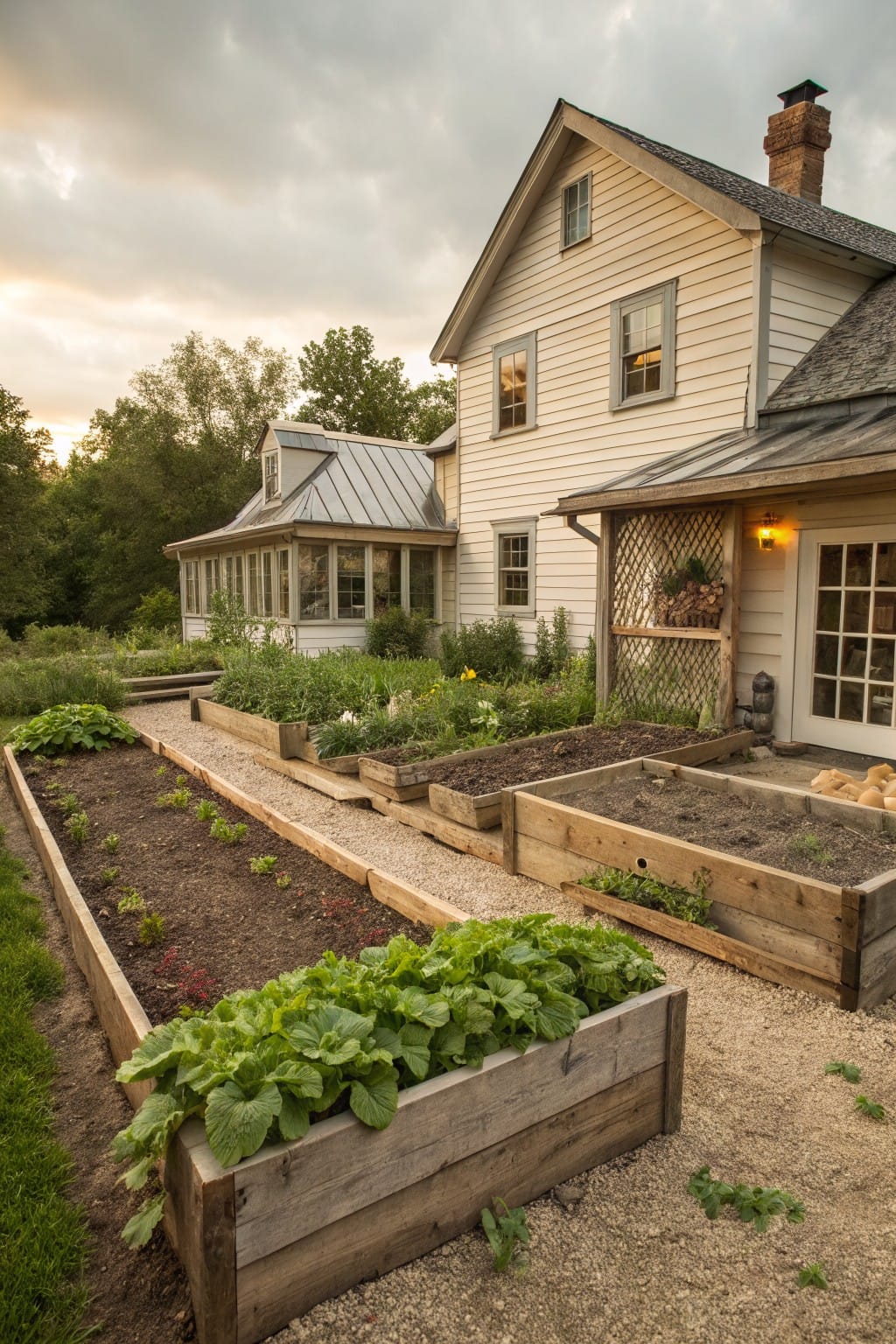
Raised beds built from rough wood like this make garden edges simple and sturdy. They hold soil back from the gravel path and let you plant right up against the house without mess. Folks like how they turn a patchy yard into neat rows that are easy to tend.
Stack a few along a walkway in your backyard for the best setup. They suit older homes with some slope or clay soil. Go for untreated lumber to avoid chemicals leaching in, and keep them about knee-high for comfort.
Rock Edging for Backyard Streams

Large boulders and smaller rocks line this backyard stream, creating a clean edge that keeps water in place and plants from spilling over. It works well because the stones look like they belong there naturally. The rough shapes blend right into the grasses and moss around them. A simple wooden bridge crosses over without stealing the show.
You can use this edging in yards with some slope or room for a water run. It fits homes in wooded spots or with a cabin feel. Just make sure the rocks are stable so they don’t shift over time. Add low grasses along the top for a softer look.
Terracotta Pots Edge the Pathway

Big terracotta pots make a solid garden edging choice along backyard paths. They stand out with their earthy color and rough texture that fits right into gravel or stone surrounds. Filled with simple plants, these pots keep the path clear while marking off the garden beds on either side.
Set them up where you have a walkway leading to a door or seating area. They suit dry yards or homes with a bit of Spanish style. Just space them evenly and pick pots big enough to hold decent roots… smaller ones tip easy in wind.
Pool Coping with Edge Lighting
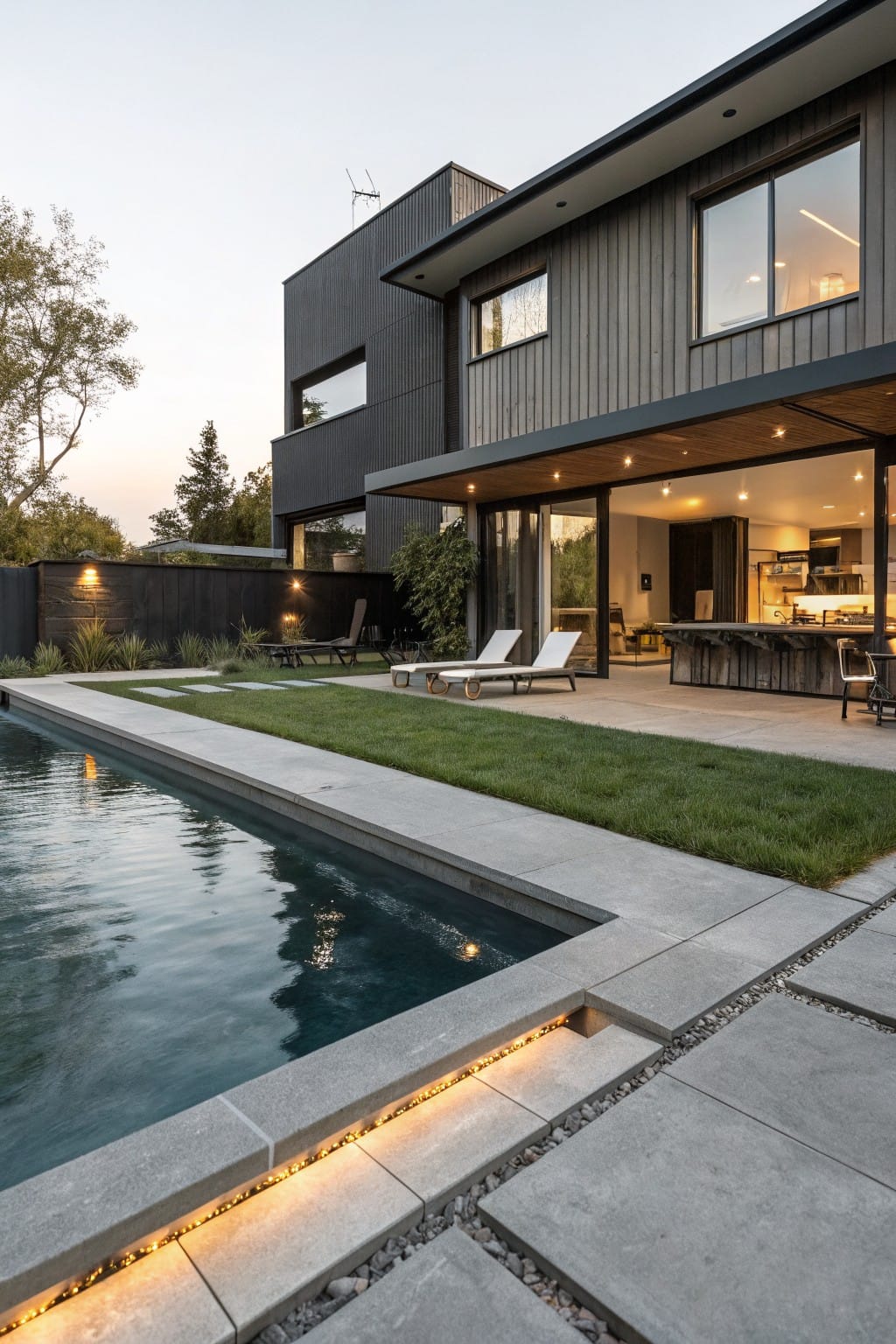
One simple way to make your backyard pool stand out comes from adding LED lights right under the coping. In this setup, the concrete edge around the pool glows softly at night. It draws a clean line between water and deck without any fuss. Folks notice it right away when the sun goes down.
You can do this on most any pool shape, but it works best with straight modern edges like here. Pair it with pale concrete to keep things crisp. Just make sure the lights are sealed well against water. It suits low-maintenance yards where you want some evening interest.
Dry Stone Walls for Garden Edging

Dry stone walls offer a sturdy, natural way to edge backyard gardens. They blend right into the yard with their rough stones and moss patches, holding back grass without looking forced. Folks like them because they last for years and let plants tuck in along the base.
Stack local fieldstones without mortar to get this effect. They suit cottage yards or paths to a wooden gate best. Keep the height low for easy crossing. Watch the slope though, so stones stay put.
Picket Fence Garden Edging

Picket fence edging works well along garden paths. It keeps mulch or gravel in place while giving the yard a friendly border. The low fence lets plants spill over a bit, which softens things without looking messy.
This edging suits cottage-style yards or small backyards with winding walks. Paint it to match your house siding, like this green version. Avoid tall fences here, though. They block the view of your flowers.
Narrow Reflecting Pool Edge

A narrow reflecting pool makes a sharp garden edge between lawn and patio. It mirrors the house and trees without taking much space. Paired with big square pavers set in gravel, it guides you right to the door. Clean and quiet.
Try this in bigger backyards that get some sun. It fits modern homes best, but could work elsewhere if you skip fancy pumps. Line it with low grasses for softness. Just plan for cleaning the water now and then.
Raised Wooden Edging with Under Lights

Raised wooden beds like these run right along the deck edge. They hold back pebbles and small plants while LED strips underneath cast a gentle glow up through the stones and greenery. It’s a clean way to mark off your seating spot from the rest of the yard. That lighting turns it into something special come evening. without taking over the look.
You can build them from the same wood as your deck to blend right in. Add tough plants that don’t need much water. plus some gravel for drainage. This fits backyards with a relaxed feel. maybe near a cabin or simple patio. Just check the slope so water doesn’t pool.
Raised Beds for Garden Edging
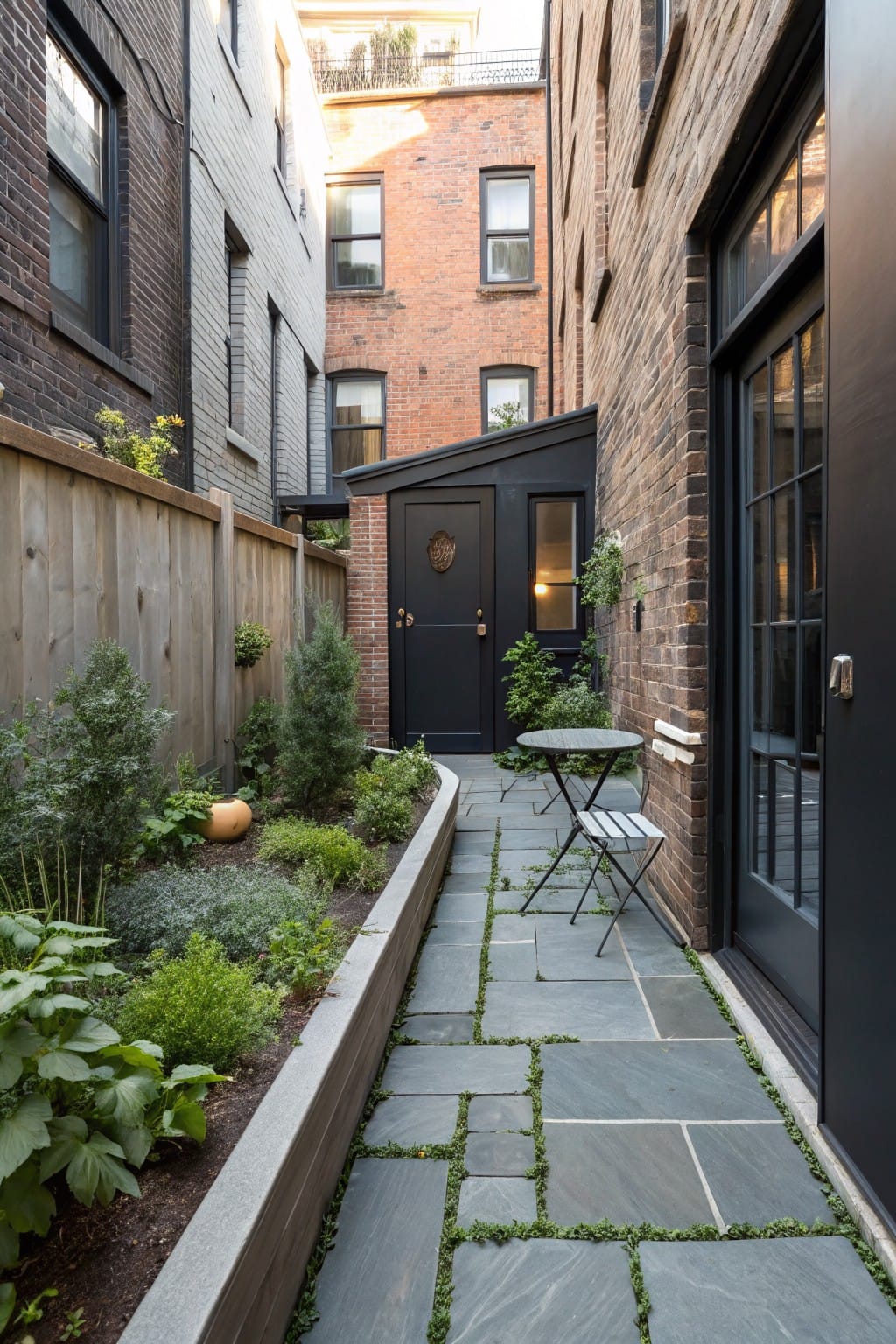
Raised beds make a simple way to edge a garden path. They keep plants in place and off the walking area. In this setup, the curved bed follows the slate path nicely. It holds herbs, greens, and even a pumpkin. The edge gives the narrow space structure without crowding it.
These work best in tight backyards like city lots or alleys between buildings. Build them with concrete blocks or wood to match your fence or walls. Plant low growers along the front so you can reach everything. Just make sure they drain well to avoid soggy roots.
Raised Wooden Beds for Garden Edging
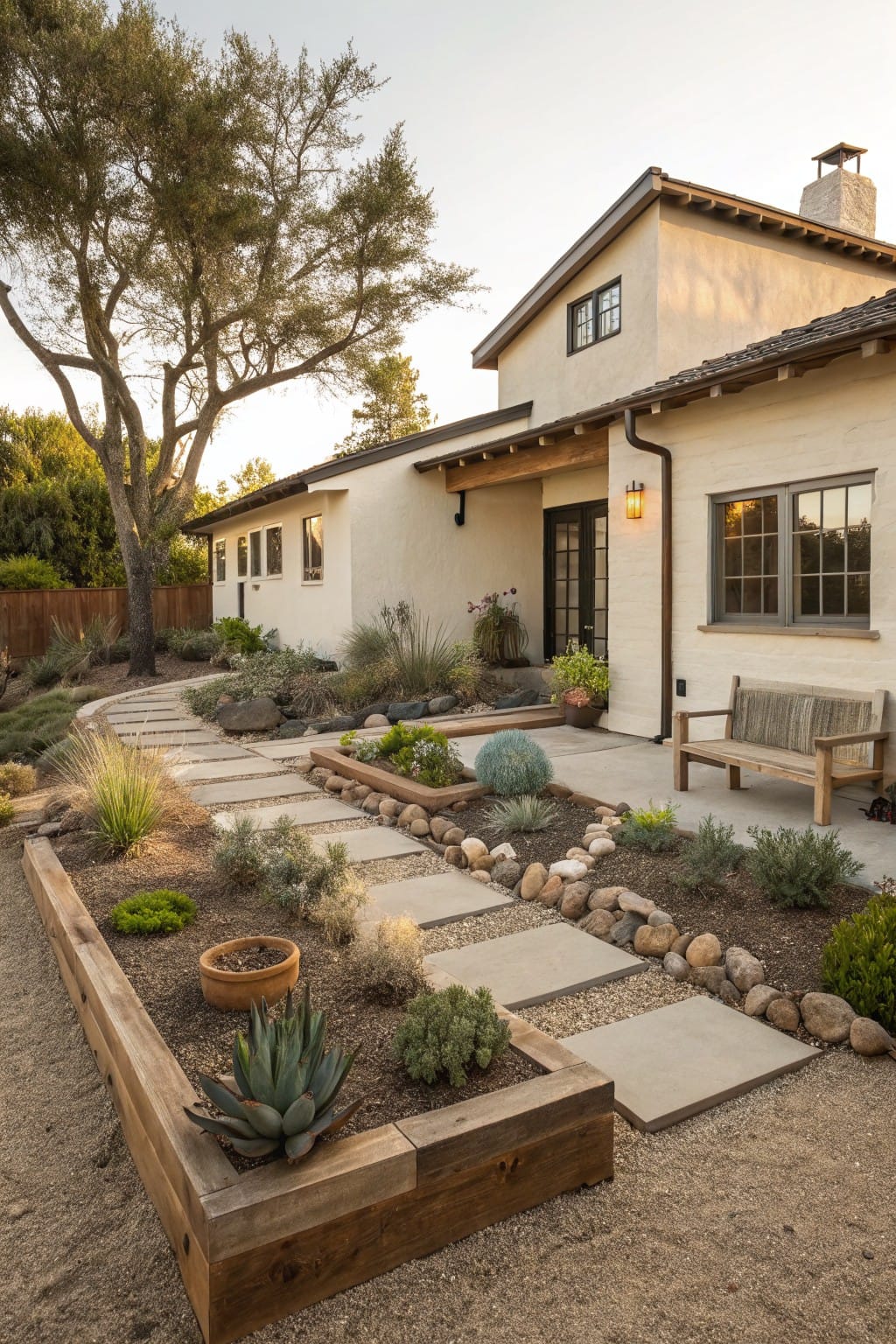
Raised wooden beds make a solid edge for backyard gardens. They keep gravel and soil in place while letting plants spill over just a bit. In this yard, the beds line a simple stone path and hold agave and other tough plants. It’s a low-fuss way to define spaces without concrete borders everywhere.
These work best in dry or sunny yards where you want drought-tolerant planting. Build them from untreated cedar or redwood to last outside. They’re right at home next to patios or paths leading to the house. Just keep the height around 12 inches so they don’t block the view… and watch for rot if your area gets a lot of rain.
Curved Paver Walkways

Curved paver walkways offer a simple way to edge backyard gardens and define open spaces. They guide traffic from the house steps to spots like a fire pit, keeping grass and plants neatly separated. The gentle curve softens straight lawn edges and adds flow without much fuss.
Try this in medium to large yards where you need to zone areas for sitting or play. Large irregular pavers pair well with a smooth stone curb along the outer edge, like you see here against the lawn. It fits casual homes with porches, but watch the scale, smaller yards can feel crowded.
Stepping Stones with Tall Grass Edging

One clean way to guide folks through a backyard lawn is with large square stepping stones set right into the grass. Tall ornamental grasses planted along both sides add soft borders that keep the path defined without hard lines. Those feathery blades sway a bit in the breeze, making the walk feel relaxed and natural.
This works best in open yards with room for plants to grow tall, say leading from the gate to a patio door. Go for tough varieties like miscanthus that handle sun and come back each year. Just mow around the stones now and then… and watch the edges stay neat on their own.
Raised Beds Edge Garden Paths

Raised wooden beds like these make a clean line between your path and planting areas. They keep sand or soil in place and give plants a spot to grow without spilling over. Simple. Sturdy. And they let the path stand out.
Build them low and long to hug the edge of a walkway. They suit beachy yards or anywhere with loose dirt. Use untreated pine if you want a natural look that weathers over time. Just line them with landscape fabric first to hold everything back.
Tiled Edges on Raised Garden Beds

Raised garden beds get a lift when you edge them with colorful tiles. These blue ones with dot and flower patterns stand out nice against plain wood or brick sides. They make the beds feel more finished and add some handmade charm without much fuss. It’s a simple way to define your planting spots.
Try this in tight urban backyards like city row houses. Line the top rim of beds built from recycled blocks or lumber. Pick outdoor tiles that handle weather. Skip it on super steep slopes where things might slide.
Frequently Asked Questions
Q: What’s the easiest edging to try if I’m new to this?
A: Grab bricks or pavers from a local supplier. Dig a trench just deep enough to half-bury them, then tap them level with a mallet. They hold up well and look sharp right away.
Q: How do I stop weeds from popping up through my new edging?
A: Drive the edging deep into the soil, right down to the root zone. Layer cardboard or landscape fabric underneath first. Mulch on top seals the deal.
Q: Can I edge a sloped yard without it sliding?
A: Stake plastic or metal strips securely with pins every foot. Backfill heavily on the downhill side. And check it after rain to snug things up.
Q: Does wood edging rot fast outdoors?
A: Pick cedar or redwood, they naturally resist decay. Treat cut ends with sealant yearly. Swap it out every few years if you spot softening.
