


I’ve always paid close attention to how garden edging frames a front yard because it quietly shapes that first impression for visitors.
I lean toward natural stone or brick options myself since they weather nicely and blend with most homes.
Clean lines and sturdy materials keep beds tidy and stop mulch from spilling everywhere, which saves time later.
Flimsy plastics or mismatched borders tend to look sloppy after a season or two.
A couple of these ideas hit just right for real yards.
Curved Stone Walls as Garden Edging

One simple way to edge a front yard path is with a low curved stone wall. It follows the sweep of the walkway right up to the house. Folks like this because it keeps plants in place on slopes and adds some structure without looking stiff. The stones mix with nearby grasses and flowers for a natural feel.
Try this in yards with a gentle hill or where you want to direct foot traffic. It suits older homes with porches like this one. Just match the stone color to your house siding so it blends. Keep the wall low, around two feet, or it might block the view.
Gravel and Succulent Garden Edging
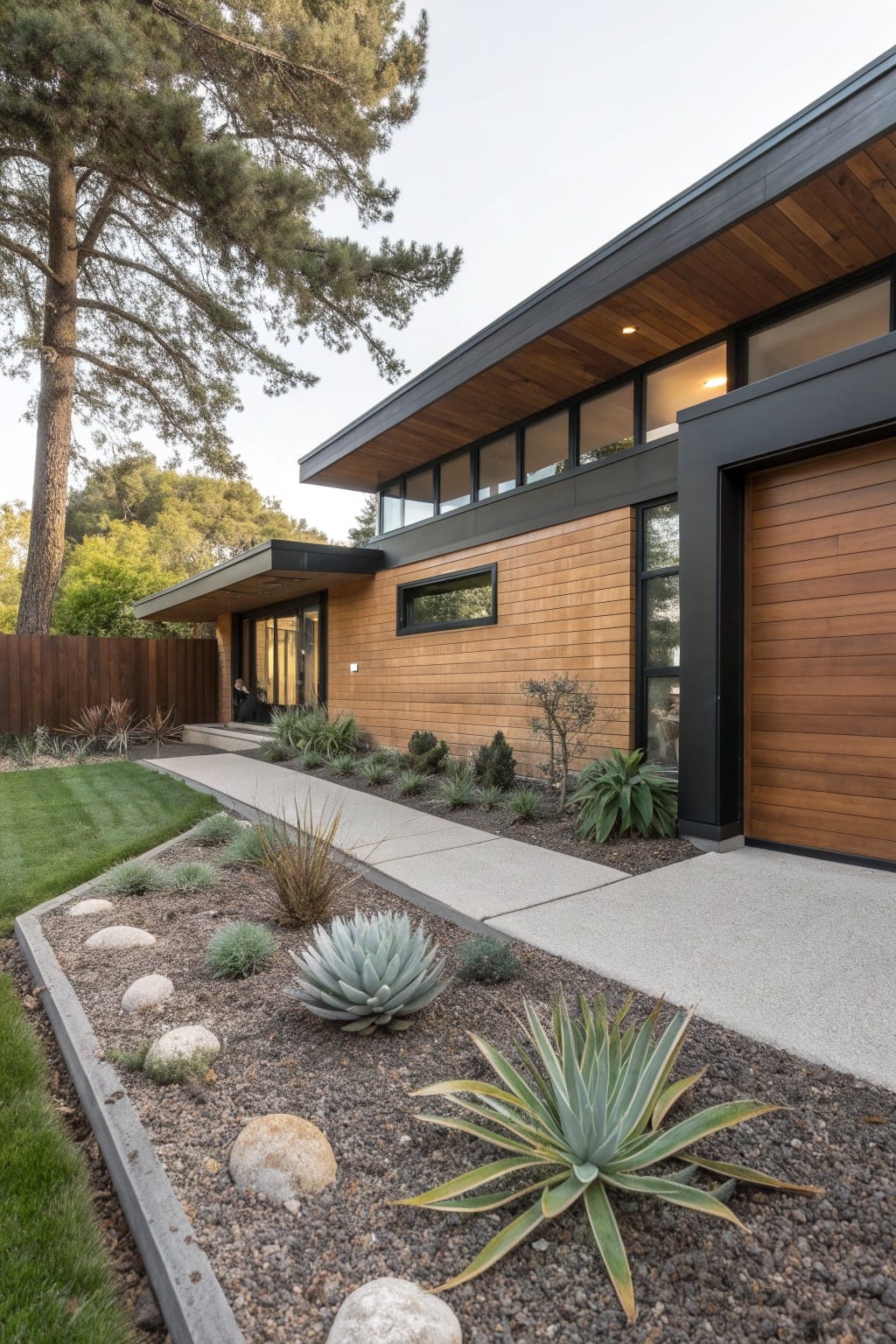
One clean way to edge a front walkway is with low gravel beds packed with tough succulents like agaves. This setup keeps things simple and low-maintenance. The dark edging holds in the gravel mulch and rocks, while the spiky plants add some height without much fuss. It fits right along a concrete path, making the walk to your door feel deliberate and sharp.
Try this in sunny yards where water is at a premium. It works best on modern homes or any place with clean lines, like next to a wood-sided house. Just space the agaves a bit apart so they don’t crowd the path, and refresh the gravel now and then to keep it tidy.
White Picket Fence Garden Edging
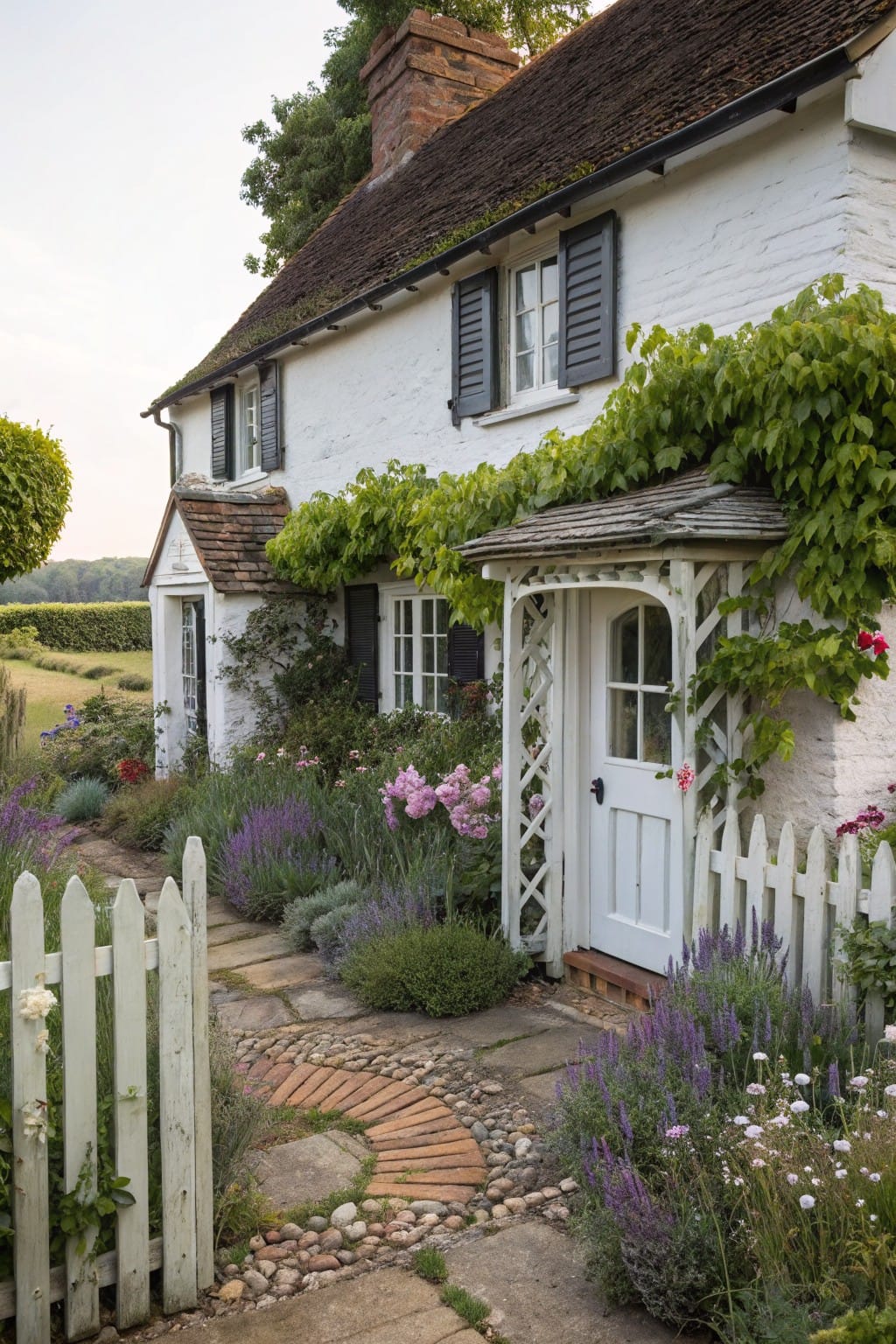
A white picket fence sets off a front garden in a friendly way. It edges the beds without hiding the plants inside. Folks notice how it lines up with a simple path, letting lavender and flowers show through the gaps.
This edging suits older homes or cottages with room for curves in the yard. Set it low around two feet high. Plant low growers like sedum or herbs along the inside to keep things full but not crowded.
Rope Fencing for Path Edges

Rope fencing strung between simple posts makes a clean edge for paths like this one. It holds back beach grasses and boulders without much upkeep. Homeowners go for it in sandy yards because it blends right into the natural look and points the way to the front door.
Put this edging along gravel walks in coastal front yards or anywhere with loose soil. It suits relaxed houses like beach cottages best. Pick sturdy natural rope and pair it with big round stones. Just check the posts stay firm so the rope doesn’t droop.
Boxwood Edging Along Pathways

One straightforward garden edging idea is lining your walkway with low boxwood hedges. They create neat borders that guide the eye right to the front door. Paired with a stone path like this one, the clipped shapes add structure without much fuss.
These hedges work best on larger front yards where you want a formal touch. Trim them a couple times a year to keep the lines sharp. They suit stone or brick homes nicely, but watch for boxwood blight in damp spots.
Raised Beds Along the Front Path

Raised wooden beds like these make a clean edge for your walkway. They hold back the plants and gravel while letting flowers spill over just enough. Full of marigolds and lavender here, they add color right where people walk up. Keeps everything looking tended without much work.
Set them knee-high along any gravel or stone path to the porch. Suits older farmhouses or cottages with room out front. Use rough pine boards for that natural look, fill with tough bloomers, and refresh the soil yearly. Skip paint, let the wood weather.
Lavender Edging Along Front Paths
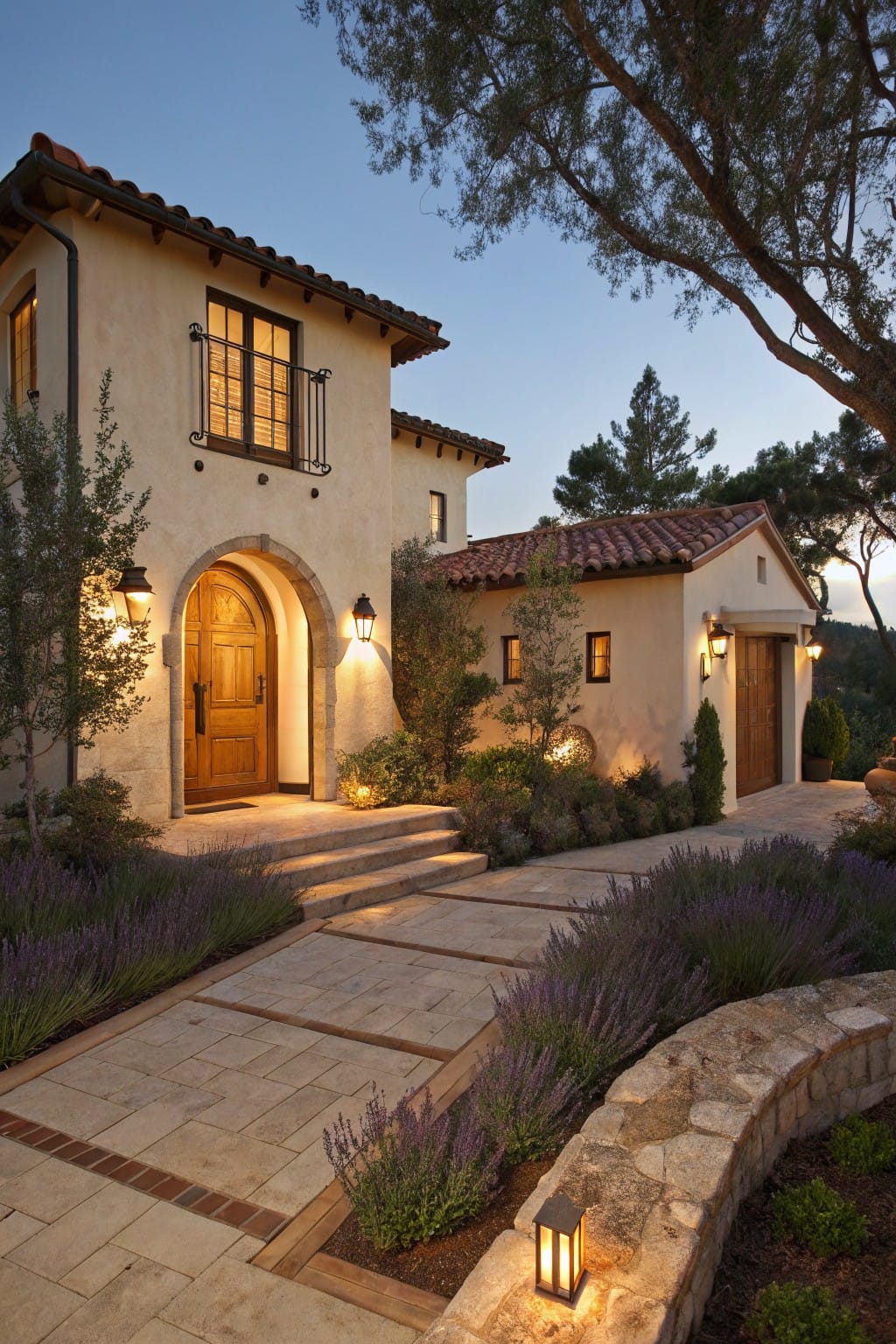
One simple way to edge a front path is planting lavender right along both sides. Like here with the stone pavers. The low purple blooms add color without getting in the way. Plus they smell good when you walk by.
This idea fits homes with a warm stucco look or drier yards. Space the plants about a foot apart so they fill in over time. They need full sun… keep that in mind or they might get leggy. Easy to trim back if they spread a bit.
Boxwood and Hydrangea Edging for Front Paths
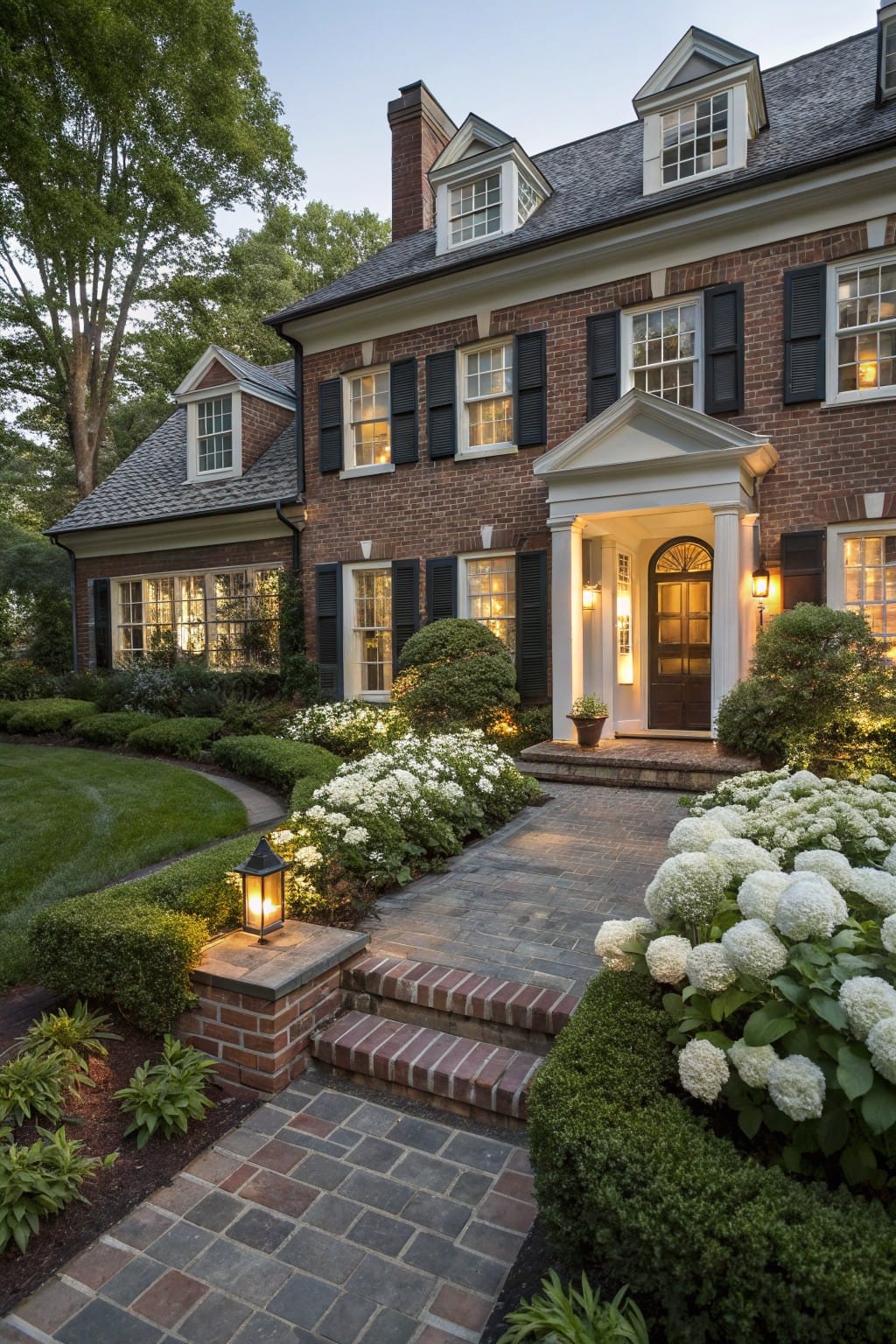
One straightforward way to make your front walk stand out is edging it with boxwoods and hydrangeas. These plants hug the path nicely, like in this setup where low boxwoods form a neat border and big white hydrangea blooms spill over just a bit. The combo keeps things tidy but soft, and it leads the eye right to the door without much fuss.
This edging works best on homes with some structure, like brick or colonial styles, where you want a formal feel in the yard. Plant boxwoods close together for that clipped look, then add hydrangeas behind for summer flowers. Keep the path brick or stone to match. Watch the scale though… too big shrubs can crowd a narrow walk.
Seashell Garden Edging

Seashell edging works well for paths that lead right to the house. It pulls in that beach feel without much work. Folks scatter the shells along a walkway, like the wooden one here next to a cabin. The pinkish shells stand out just enough against sand or gravel.
This idea suits front yards with a casual look, especially coastal spots or dry areas. Lay shells thick along path edges to hold back mulch or dirt. It fits small cottages or bungalows best. Refresh them now and then if rain scatters them.
Rock and Gravel Edging for Pathways

One simple way to edge a front walkway is with river rocks and gravel, mixed in with flat stepping stones. This setup softens the line between lawn and path. It looks natural and holds up well without constant trimming. Folks like how it guides visitors right to the door.
Try this on a gentle curve toward your entry. It fits older homes or cottages with open yards. Tuck in some tall grasses or a small fountain for extra life. Just make sure the gravel drains fast so it stays tidy after rain.
Black Retaining Walls for Garden Edging

Low black retaining walls make a clean edge for front yard gardens. They keep soil and grass in place along paths, like the sleek setup here with concrete pavers leading to the house. The dark color stands out against green lawns and plants. It gives a sharp, modern look without extra work.
Use these walls on sloped yards or level ones. Plant ornamental grasses on top so they spill over a little. They fit homes with simple lines best. Go for smooth concrete or stone that won’t crack easy.
Stone Retaining Walls for Sloped Yards
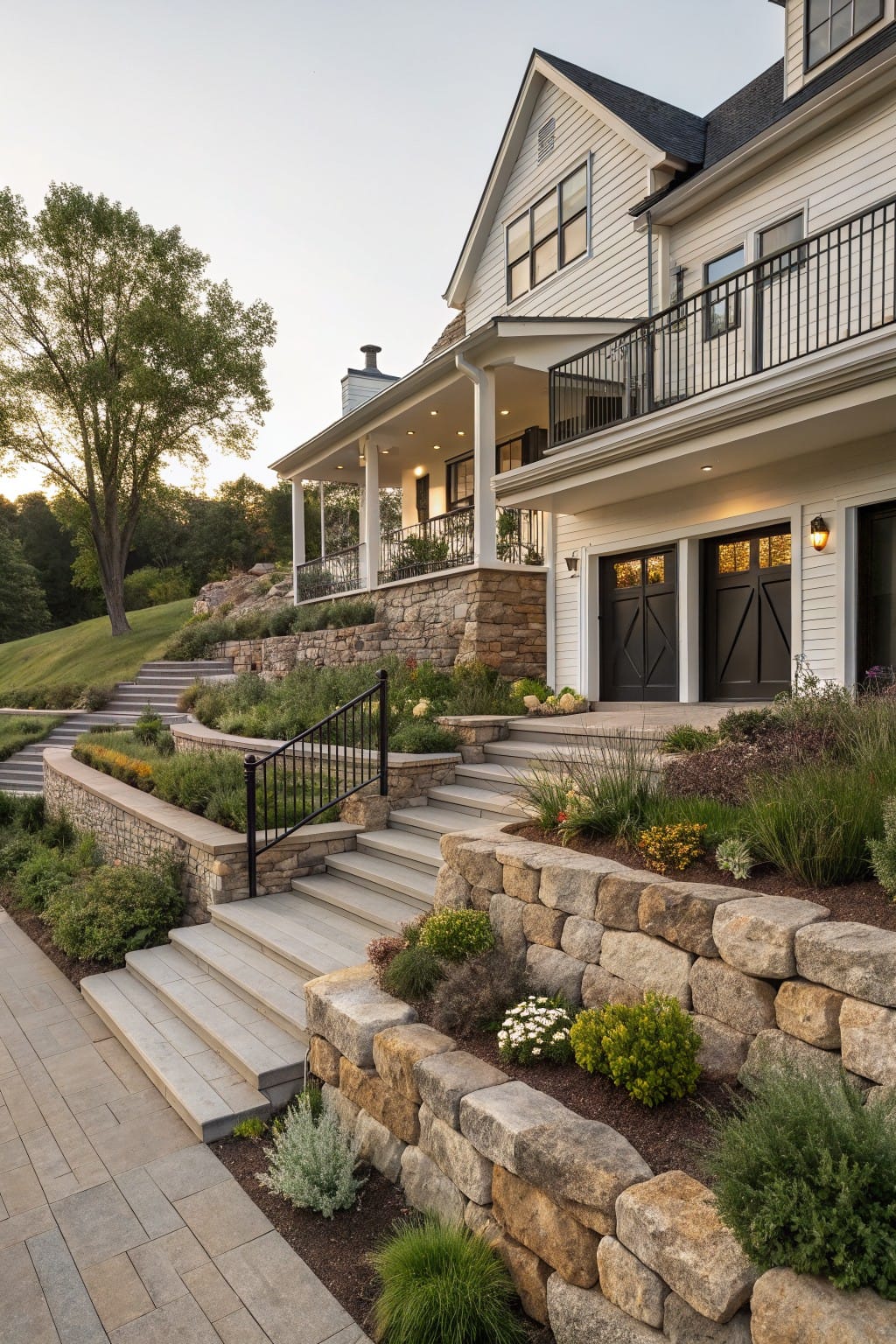
Sloped front yards can be tough to work with. Stone retaining walls fix that by carving out flat spots for gardens and paths. Rough fieldstone stacked without mortar gives a natural look. Plants spill over the edges, softening the stone just right.
These walls suit homes on hills, especially farmhouse styles like this one. Use local stone to blend in. Keep walls under three feet high unless you add reinforcement. Steps between levels make it easy to reach the house door.
Large Terracotta Pots Line the Entry Path
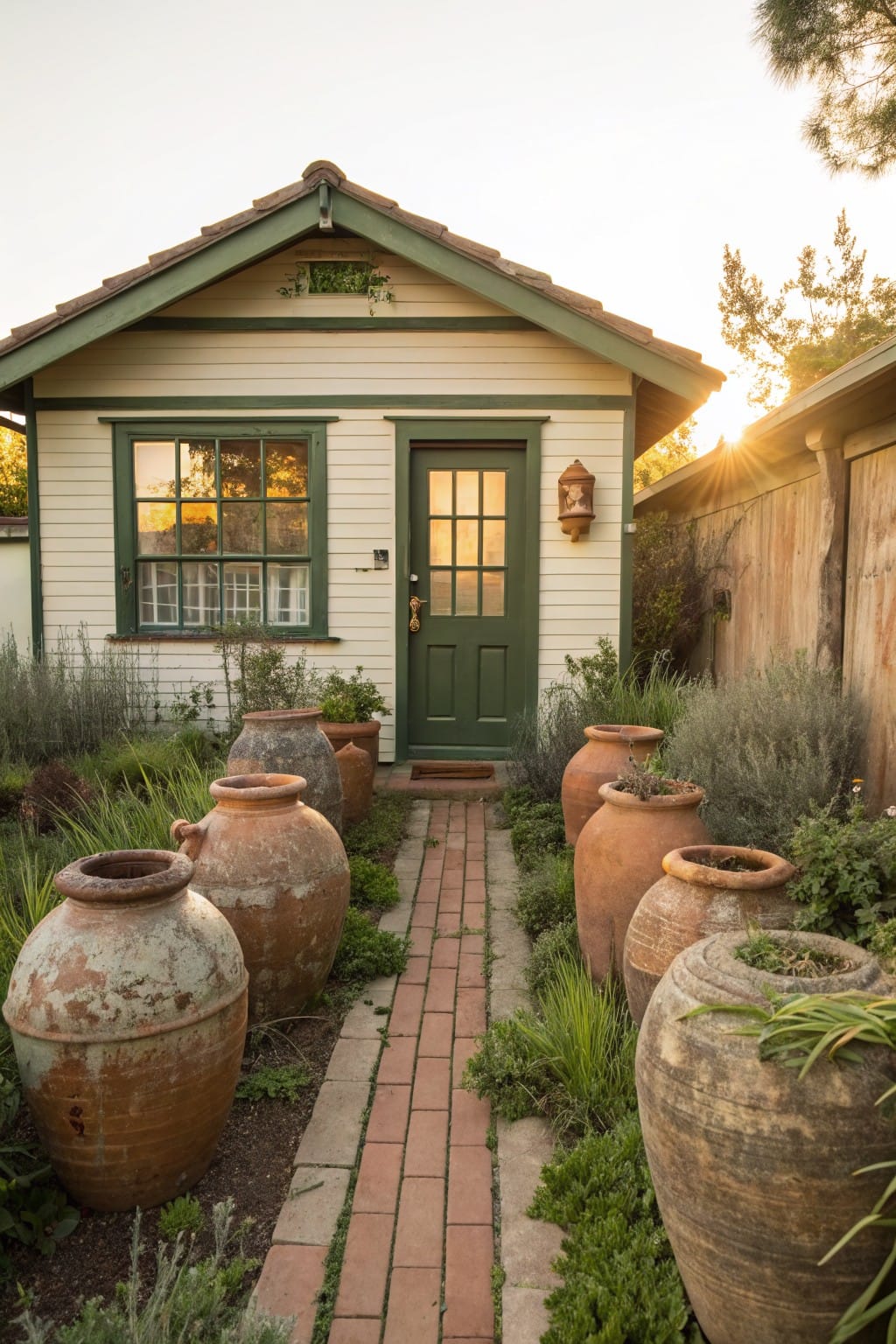
Big terracotta pots make a simple front path feel special. Here they flank a brick walkway right up to the green door. The weathered look of the pots picks up on the house’s craftsman style and ties into the garden plants around them. It’s an easy way to frame the entry without hard edging.
This idea fits cozy front yards on older homes. Go for oversize pots, maybe two feet tall, and plant them with grasses or herbs. Skip shiny new ones… aged ones settle right in. Keep the path swept so folks can walk easy.
Wooden Raised Beds for Yard Edging
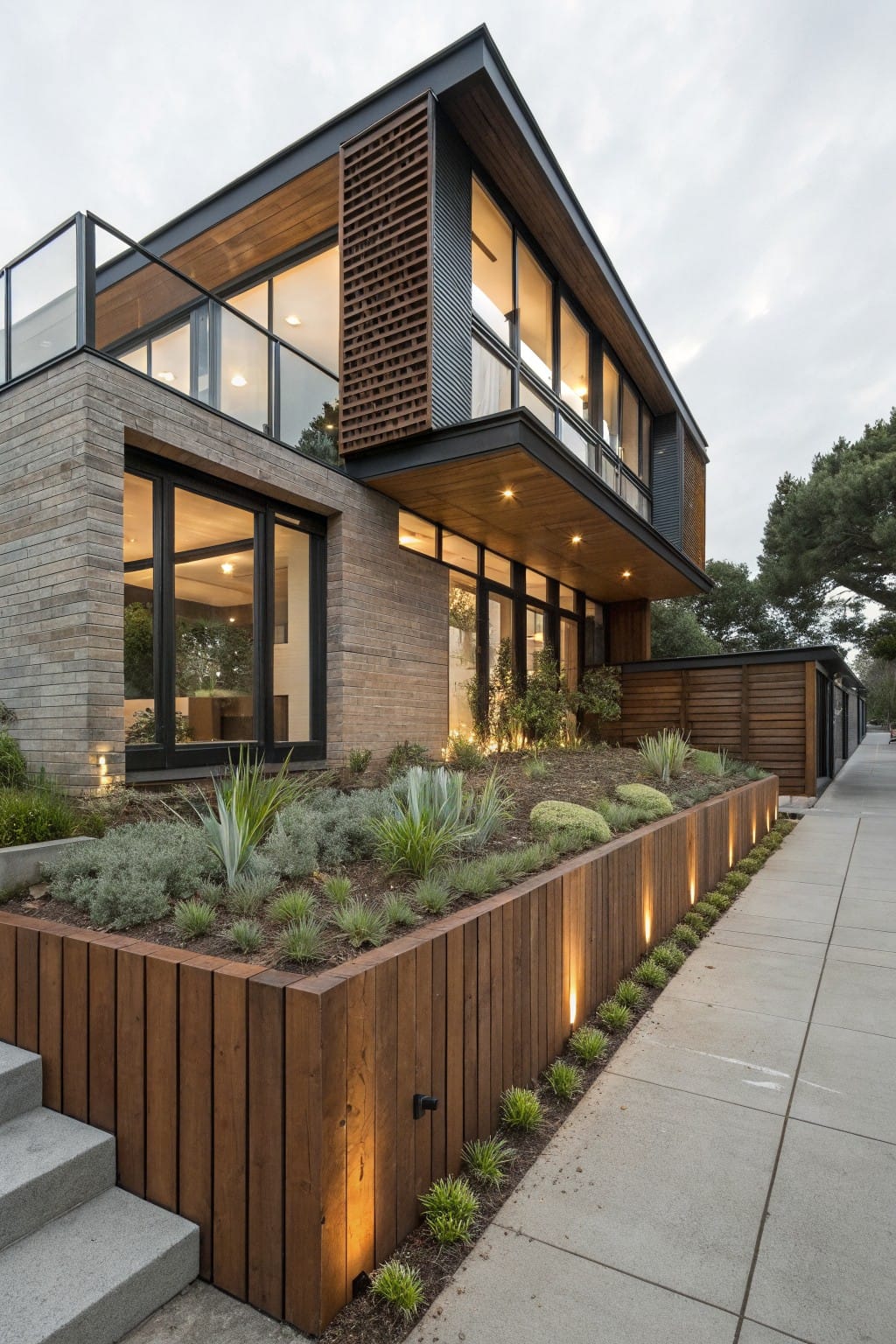
One simple way to edge your front yard is with raised wooden beds right along the sidewalk. These beds hug the path nicely, filled with tough plants like agave and succulents that don’t need much water. The warm wood tone picks up on other parts of the house, and built-in lights along the edge make it look good even at night.
This setup works best on sloped lots or narrow front yards where you want to add planting without taking up walkway space. Use cedar or redwood for the wood so it holds up outside. Keep the plants low-growing to avoid blocking the view of your house. Just watch the drainage so water doesn’t pool in the beds.
Mosaic Tile Accents in Garden Edging
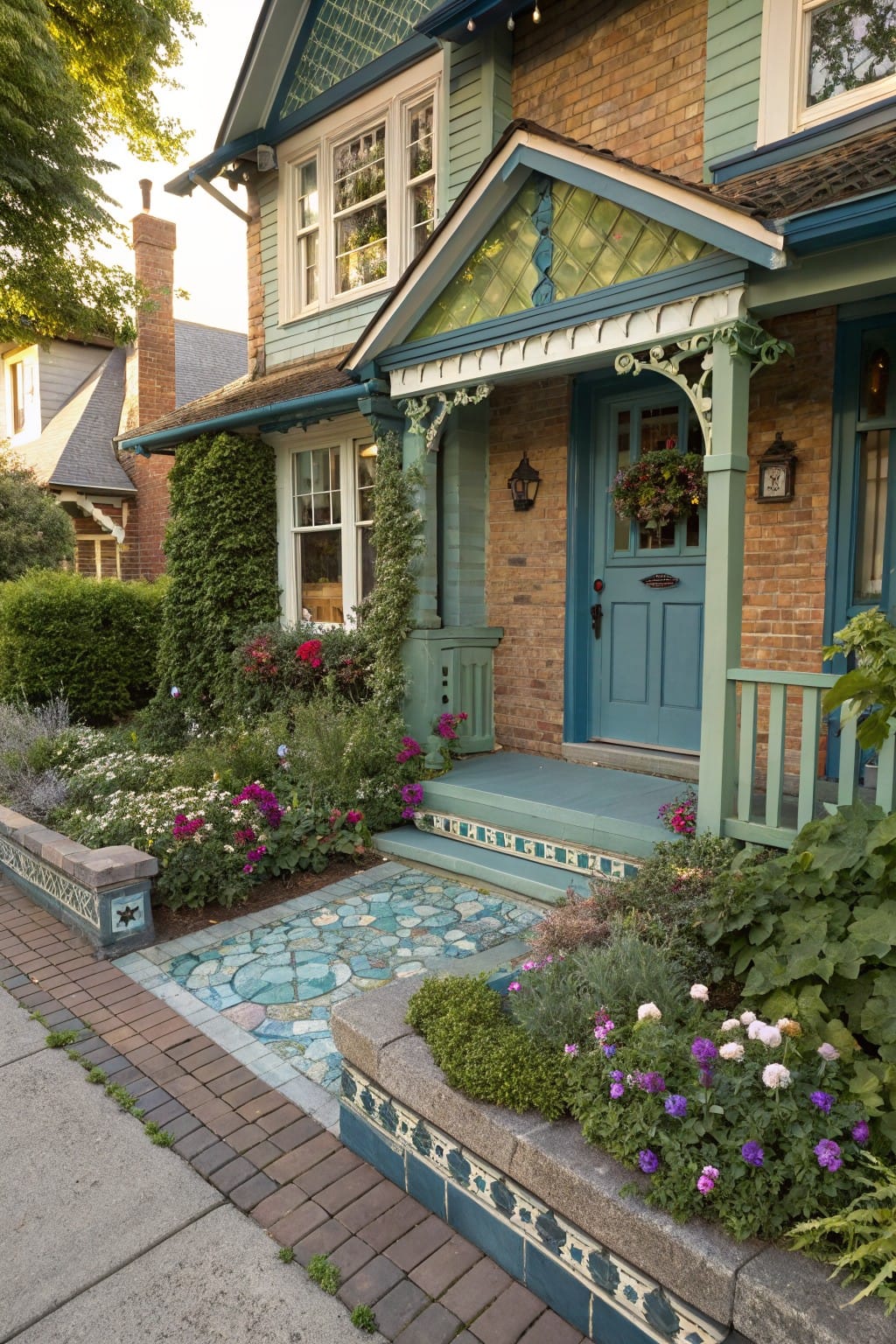
One simple way to boost curb appeal is adding mosaic tile details to your garden edging and entry path. Like the blue tiles here on the steps and borders around the flower beds, it brings pattern and color right where people walk up. These accents hold up well outdoors and make a plain walkway feel special without much fuss.
Try this on homes with front porches or cottage vibes, especially if your yard is small. Pick weatherproof ceramic tiles in soft blues or greens to match brick or stone paths. It works best leading straight to the door. Just seal them good so they don’t get slippery in rain, and keep plants trimmed back from the edges.
Raised Planters Along Front Steps

Raised planters hugging the entry steps offer a simple way to edge your front yard with greenery. Here, a low concrete bed packed with succulents and low plants runs tight against the stairs. It frames the path nicely and brings life right to the door without taking up walkway space.
This setup suits rowhouses or urban homes with short front yards. Build the beds from concrete or stone to match the steps. Stick to tough, low plants that handle foot traffic nearby… and trim them back now and then.
Garden Edging with Stone Walls and Boulders

One solid way to edge front yard beds is with low stone retaining walls topped by big boulders. It gives a natural, sturdy border that holds back soil and plants without looking forced. In this setup, the walls follow the curve of the driveway nicely, and that large boulder adds real weight to the edge. Folks like it because it fits right in with stone houses and keeps things low fuss over time.
Try this where you have a slope or winding path up to the house. It works best on bigger lots with room for oversize rocks, especially if your home has a rustic or Mediterranean feel. Pair it with tough plants like succulents so you aren’t weeding all summer. Just make sure the stones are set firm to avoid shifting.
Mosaic Tile Garden Paths
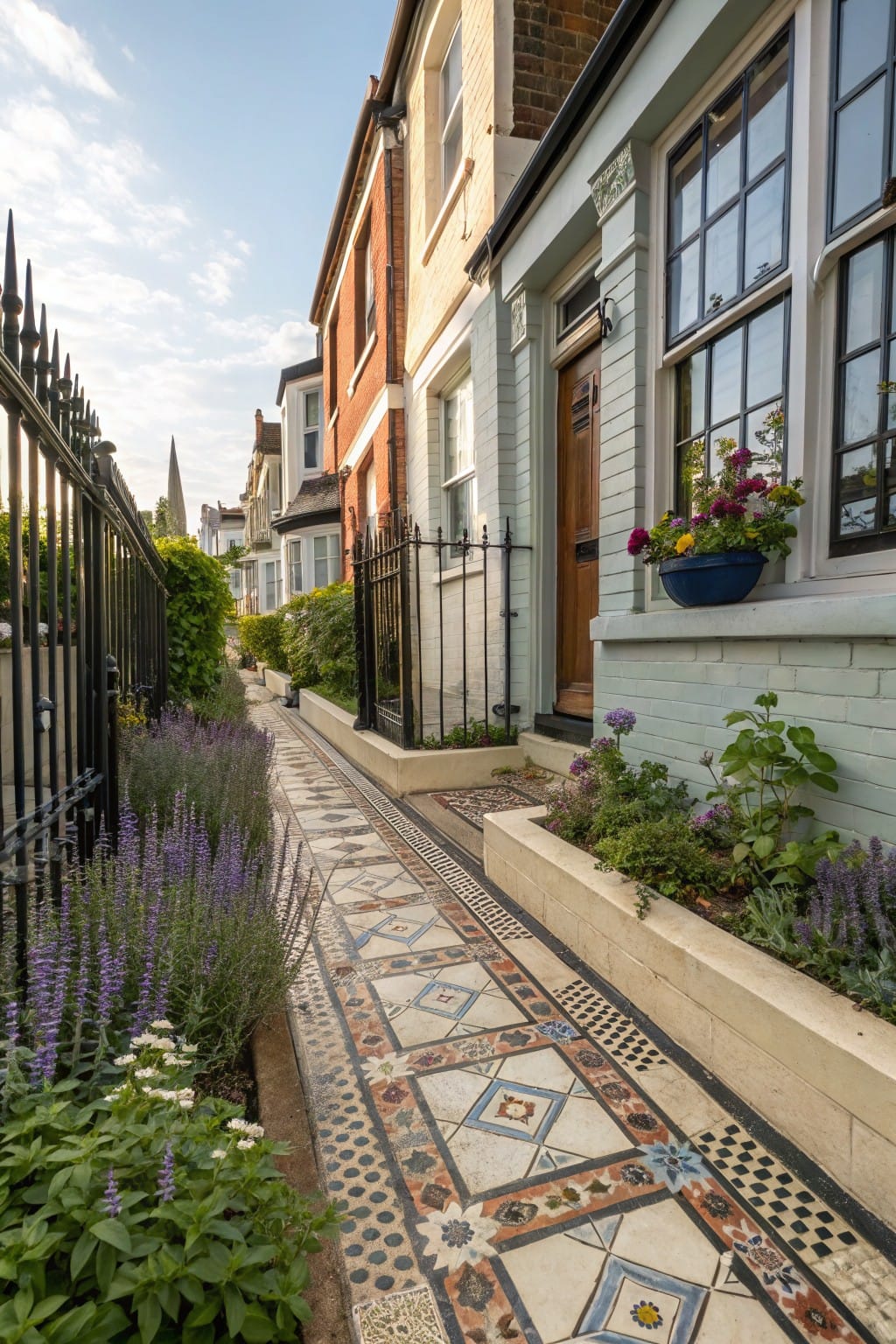
A front path paved in colorful mosaic tiles can really set your home apart. The patterns here mix blues, reds, and whites in a way that feels old-world yet fresh. Edged with simple plants like lavender, it guides folks straight to your door without much fuss.
This setup suits narrow yards in front of row houses or older homes. Lay the tiles along your walkway, then tuck in tough edging plants that won’t mind some foot traffic. Trim them back now and then. Keeps everything tidy.
Dry-Stacked Stone Walls as Garden Edging

One simple way to edge a front yard garden is with a dry-stacked stone wall. These walls use local rocks stacked without mortar, which gives a natural look that fits right into sloped or coastal spots. In this setup, the stones hold back soil while letting grasses spill over the top. It keeps things tidy without much upkeep.
This edging works best on hillsides or where you need to manage erosion. Pair it with tough plants like sea grass or blue fescue that match your area. It suits homes with clean lines, like farmhouses or cottages. Just make sure the stones are big enough to stay put… smaller ones shift over time.
Curved Brick Garden Edging

One simple way to edge a front yard path is with curved brick sections that double as planters. They hug the walkway here, holding back soil and plants without straight harsh lines. That gentle curve softens things up. And since the brick echoes the little shed’s walls, it all ties together nicely.
Put this edging along paths that wind toward your entry or gate. It suits cottage homes or any yard with room for borders. Go for reclaimed bricks if you can, to keep costs down. Just level the base well, or it might shift over time.
Stepping Stones Set in Gravel
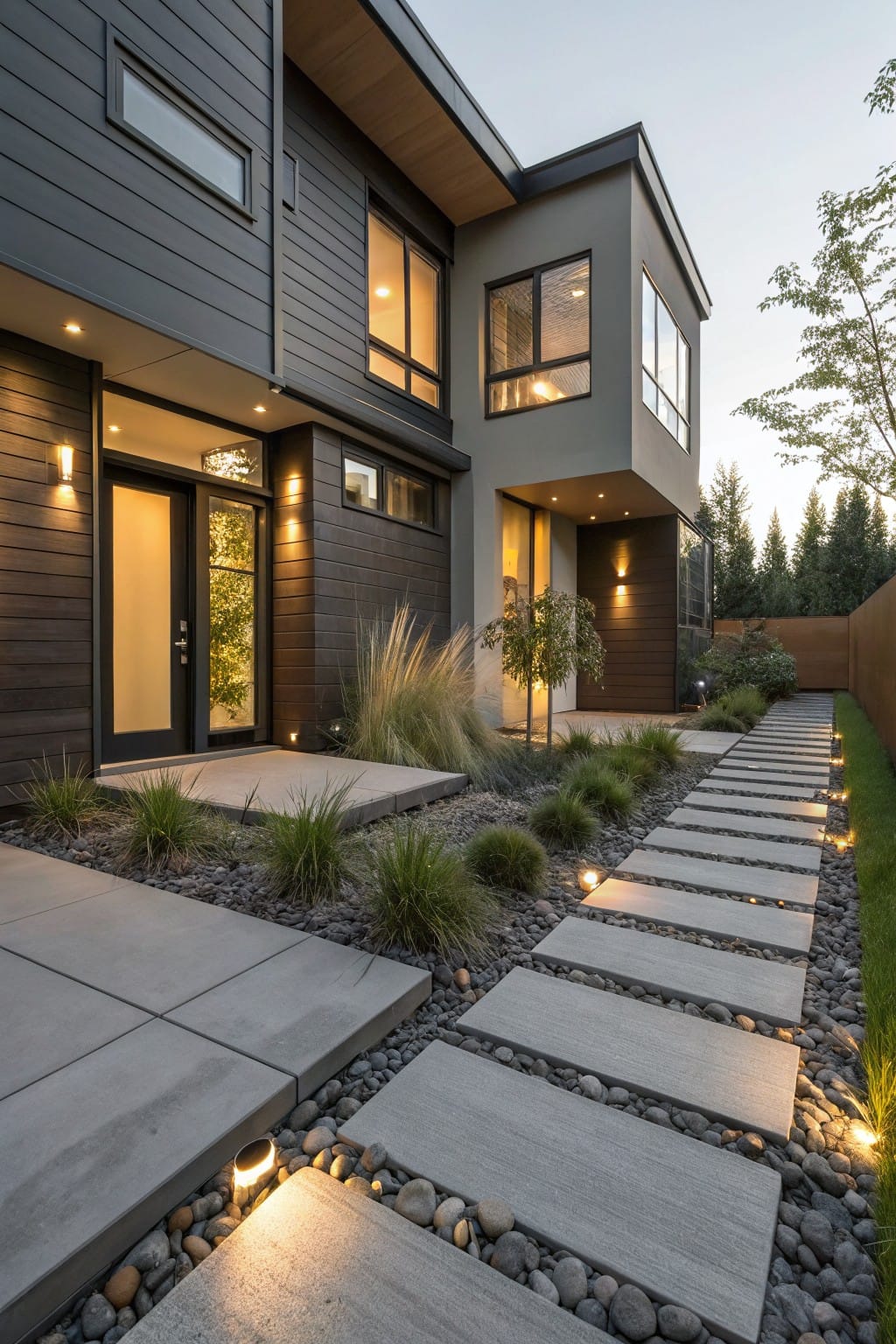
A simple front path like this uses large concrete stepping stones placed right into a gravel bed. Grasses line the edges for a bit of green without much trimming. The low path lights turn it practical after dark, and it pulls the eye straight to the door. Folks like how it stays tidy year-round.
Try this in a side yard or straight to the entry on homes with straight lines. It works best where water isn’t an issue. Skip it on steep spots, though. Good gravel drainage keeps water from pooling.
Low Stone Walls for Path Edging

A low dry-stacked stone wall edges this front path nicely. It holds back the soil and plants without blocking the view, and lets flowers like those pink roses tumble over the top. That keeps the walk to the door feeling easy and lived-in, especially around older homes.
Try it where your path curves or meets the house. Stack fieldstones you find nearby, no mortar needed if the ground stays dry. Suits cottage-style places or any yard wanting a bit of structure amid the planting. Just keep the wall under two feet high so it stays friendly.
Frequently Asked Questions
Q: Which edging works best if my yard has a slope?
A: Go for metal or plastic strips. They flex just enough to follow the contour but stay firm against soil push. Stake them every foot or so to lock everything in place.
Q: How do I dig the trench without wrecking my back?
A: Mark your line with string and spray paint first. Use a half-moon edger or flat spade to slice the sod in short strokes. Water the ground a day before so it gives way easier.
Q: What’s the best way to block weeds along the edging?
A: Layer landscape fabric under the edging before backfilling. Top the beds with two inches of mulch right up to the edge. Pull any strays by hand weekly at first.
Q: Can I edge my beds on a tight budget?
A: Scavenge bricks from old walkways or tear out extras from your backyard. Lay them flat in the trench for an instant upgrade. And fresh gravel mulch makes them pop even more.
