

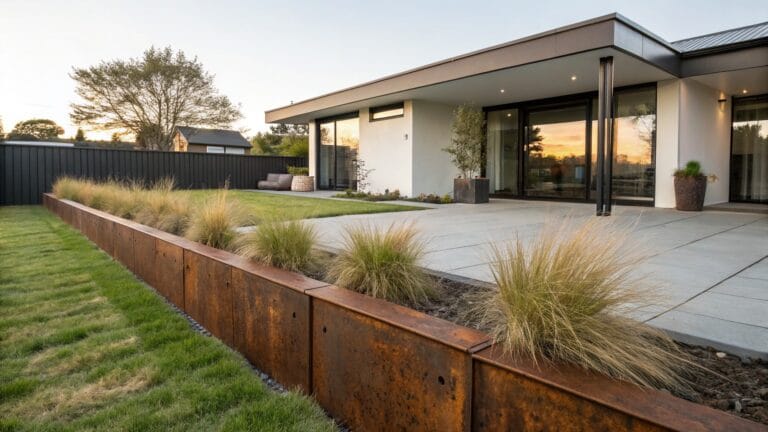
I’ve spent a few weekends reshaping the borders in my backyard, and I’ve realized garden edging does more for a clean look than I first thought. It works best when the materials blend with the soil and plants instead of stealing the show.
I tend to skip those fussy stone piles that end up looking cluttered after a season. Straight lines from corten steel or reclaimed bricks hold up well and keep things sharp. A few of these ideas feel right for borrowing into everyday yards like mine.
Corten Steel Garden Edging
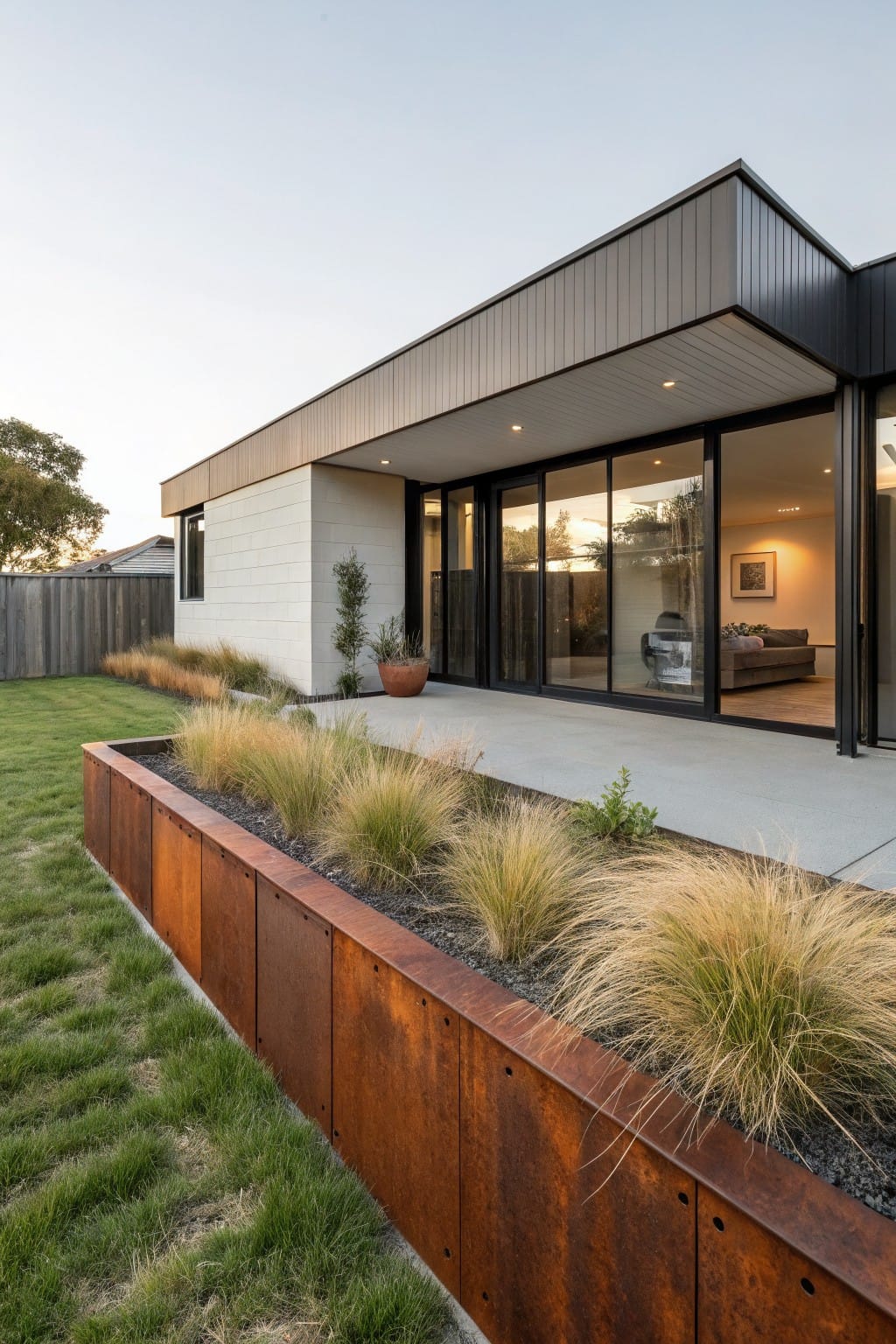
Corten steel makes for tough raised edging that holds back soil and plants along a lawn edge. The rusty patina adds a bit of color without overpowering the yard. It fits right in with modern houses that have clean lines and concrete paths.
Put this edging where you need a low-maintenance border between grass and patio areas. It suits flat backyards on smaller lots. Go for real corten so it develops that rust naturally, and keep an eye on runoff near plants that might not like metal traces.
Raised Concrete Edging with Gravel Fill
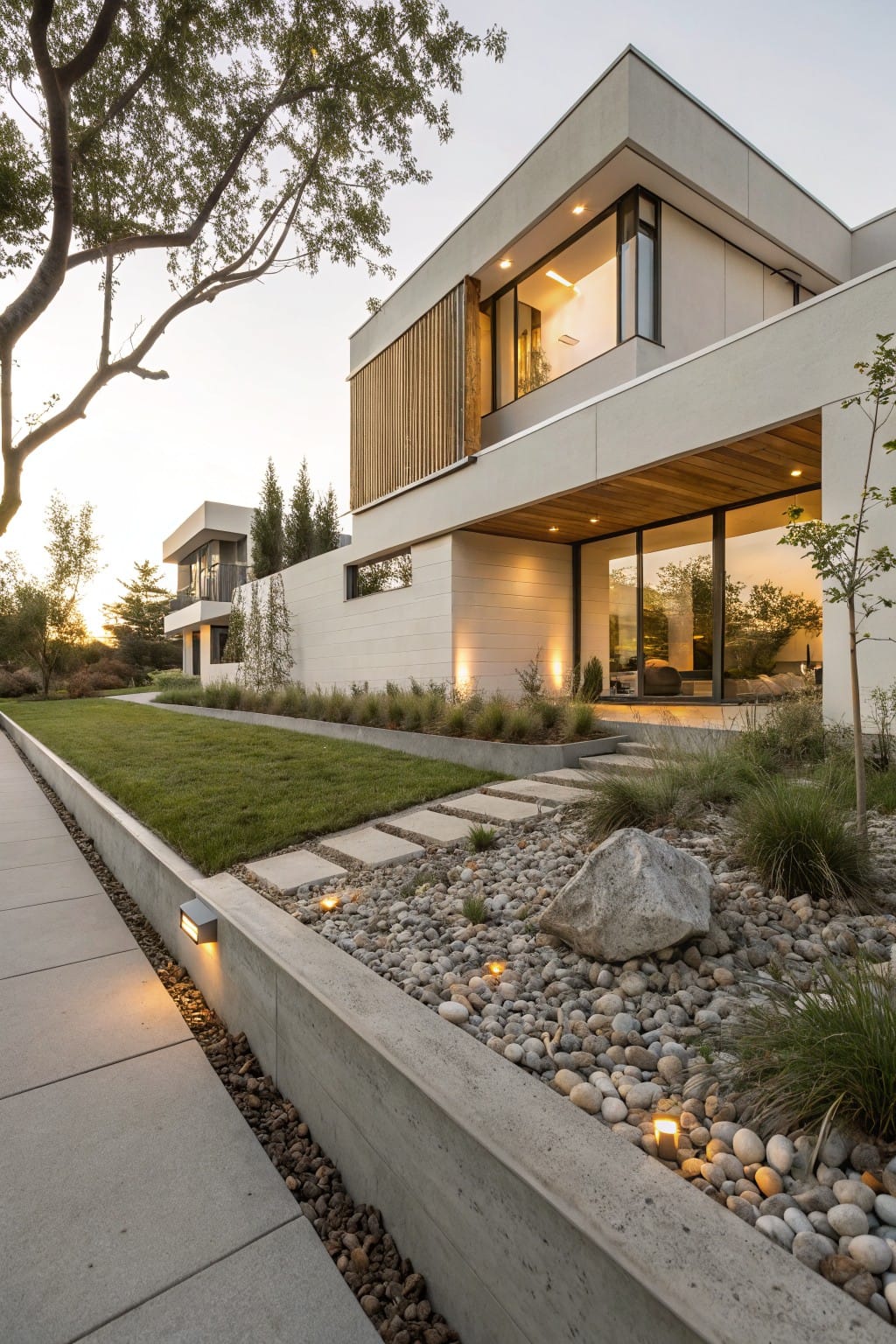
Raised concrete edging like this makes a yard look sharp without much upkeep. It runs along the sidewalk and lawn edge, holding back grass on one side and gravel mulch on the other. The simple blocky shape fits right into modern homes, and filling it with pebbles plus some grasses keeps weeds down while letting water drain easy.
You can use this edging anywhere you want clean lines between lawn and planting beds. It suits flat or gently sloped front yards best, especially with stucco or clean-lined houses. Go for poured concrete if you want it custom, or stack precast blocks. Just make sure the gravel is coarse enough so it doesn’t wash away in rain.
Stone Pathways with Gravel Edges
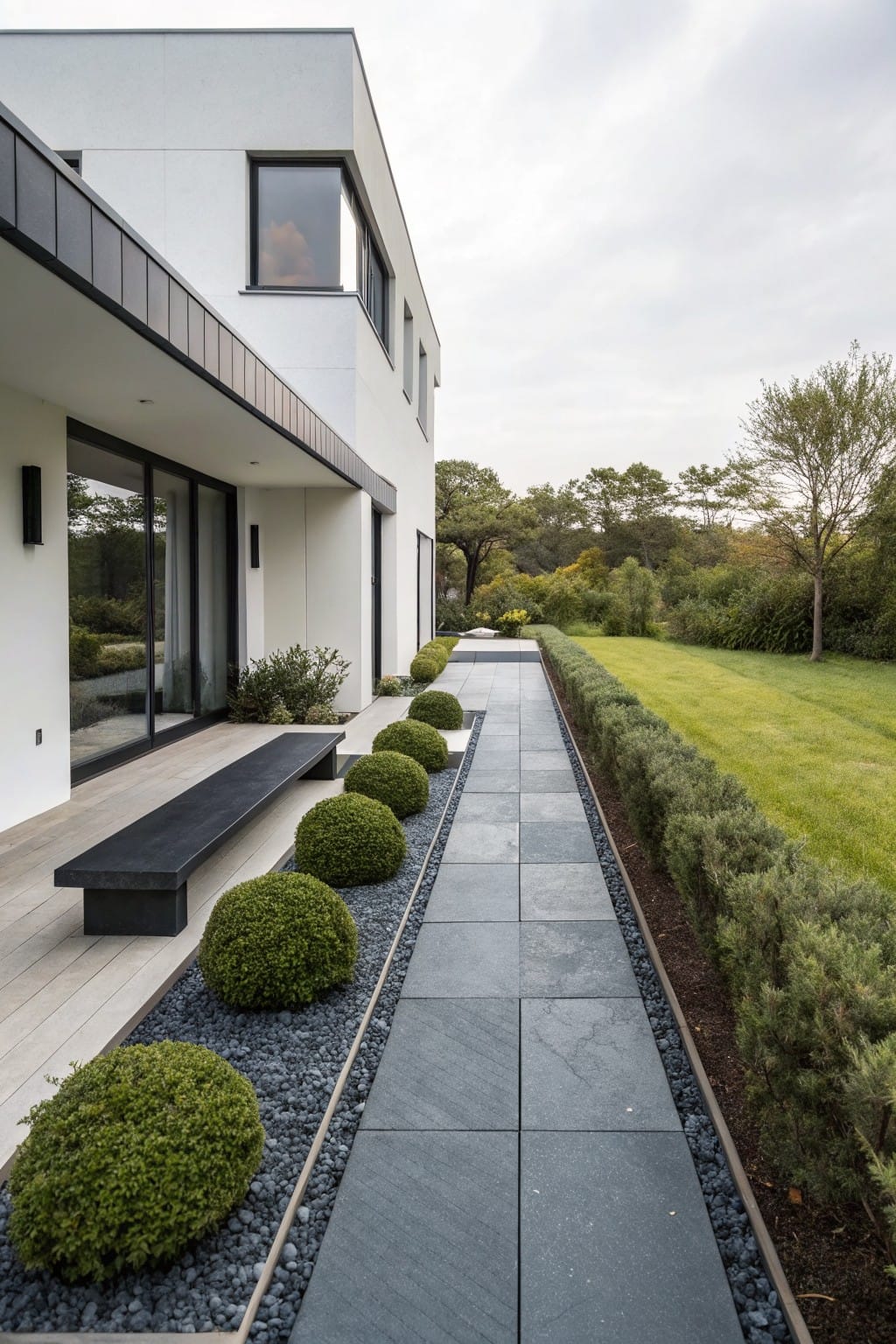
One clean way to finish off a backyard path is to run a narrow gravel strip right along the edge of the stone tiles. Here it’s dark slate pavers paired with fine black gravel that keeps the lawn from creeping in. Those round boxwood balls spaced along it add just enough green structure without fuss. It makes the whole walkway feel sharp and put-together, especially next to a modern house like this one.
You can pull this off in smaller yards too, since gravel drains well and boxwoods stay neat with minimal trimming. Works best on flat ground where you want low upkeep. Go for larger pebbles if you have kids running around, or finer ones for that sleek look. Just make sure the gravel sits below the path level so it doesn’t scatter.
Modern Pathways with Grass Between Pavers
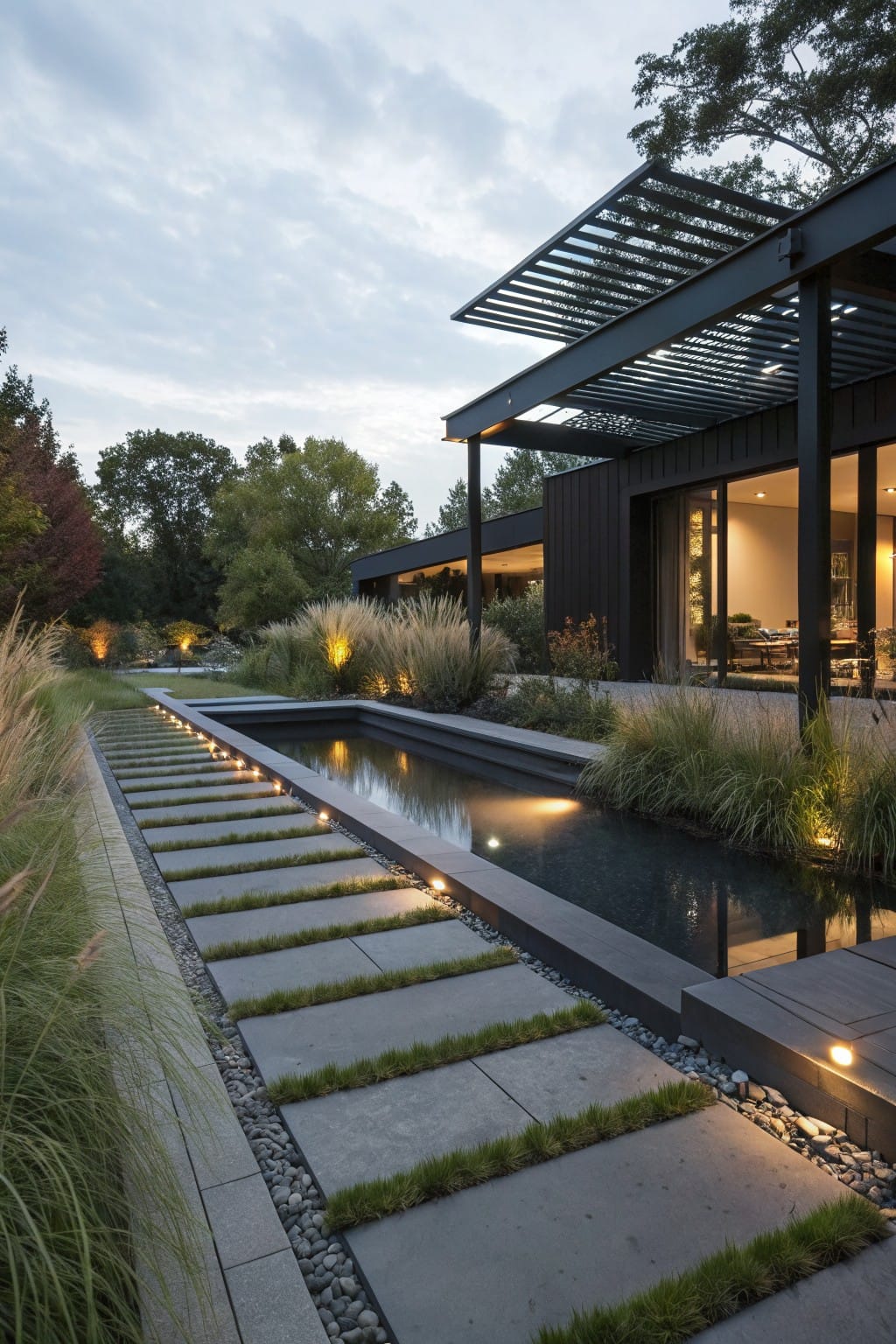
Big concrete slabs laid with gaps filled by grass make a straightforward path that fits right into a backyard setup. It keeps things neat and modern without much upkeep. In this yard, the path runs alongside a slim water channel, pulling your eye toward the house while the grass softens those hard edges just enough.
Try it leading from the lawn to a patio door or seating area. It suits flat yards on midcentury or new builds, especially where you want low mowing. Pick durable pavers and drought-tolerant grass so it stays looking good year-round.
Raised Wooden Retaining Walls
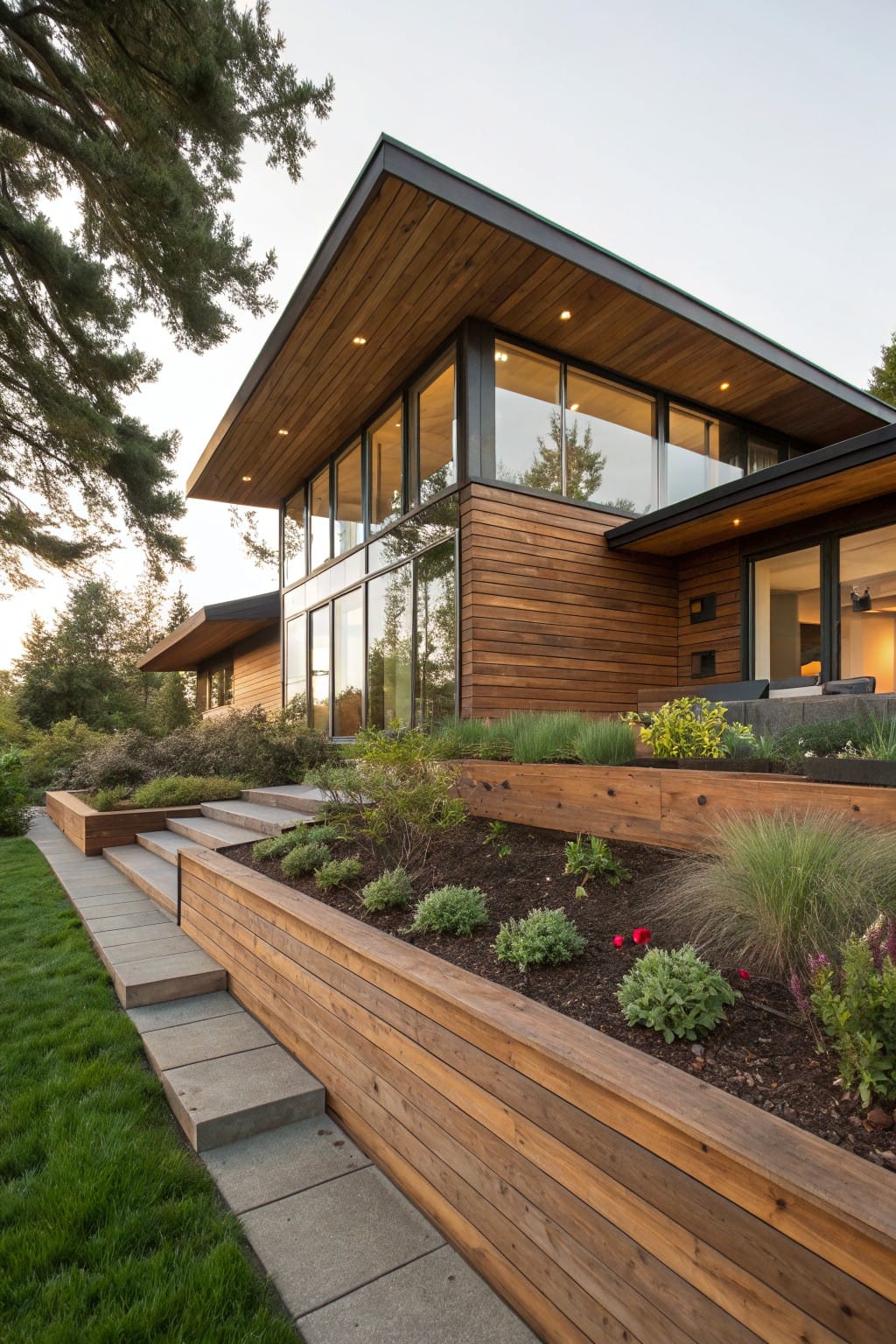
Wooden retaining walls like these turn a sloped yard into neat planting zones. The cedar boards match the house siding perfectly, so everything feels connected. They hold soil in place while letting grasses and shrubs spill over the edges a bit. It’s a clean look that works without much fuss.
These fit best on hillsides where you need to level things out for paths or lawns. Build them sturdy with good drainage underneath. They suit modern homes or any place with wood accents. Just seal the wood to last through wet weather.
Pavers Set in Gravel
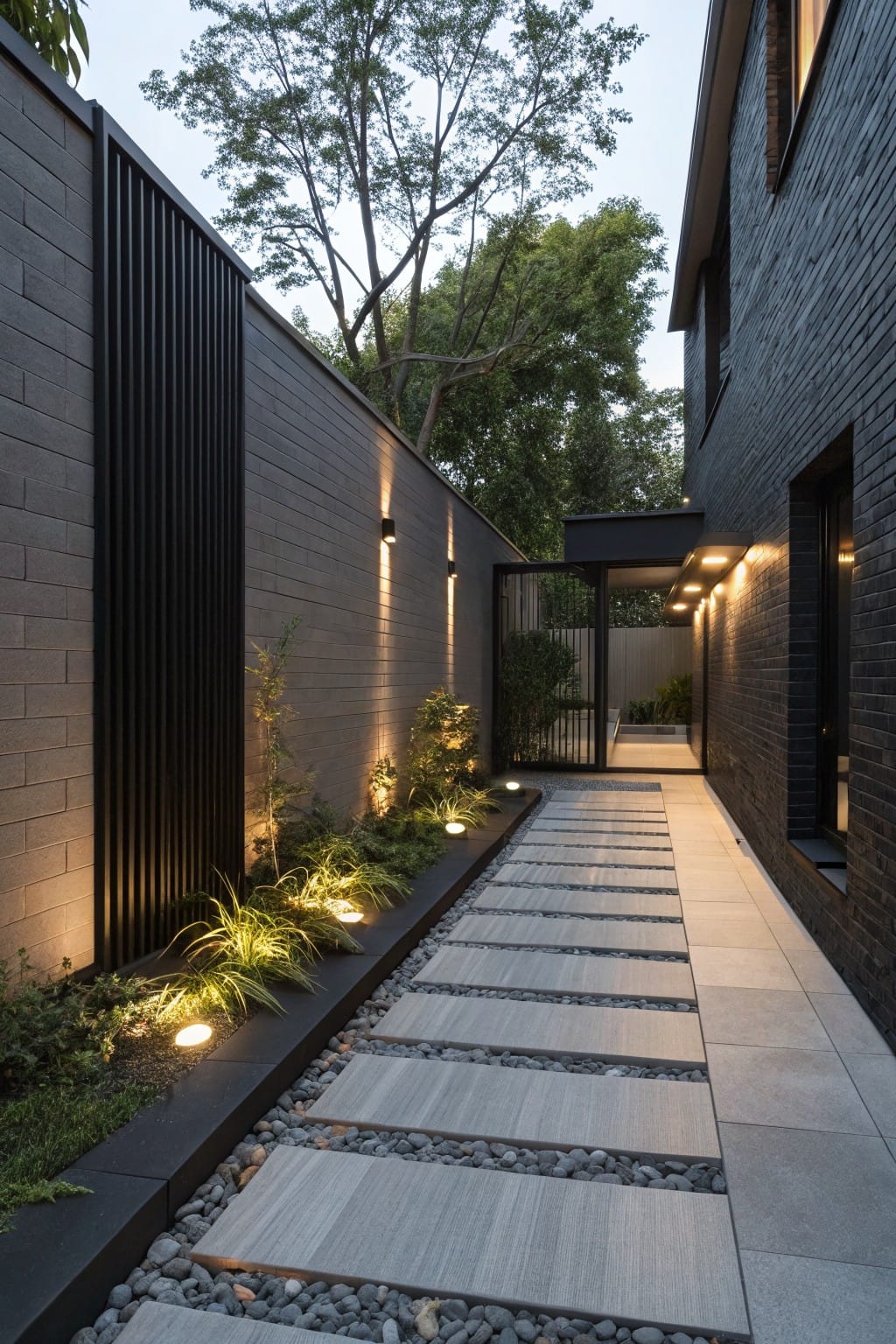
One straightforward garden edging idea is laying big stone pavers with gravel filling the gaps between them. It keeps the path looking sharp and modern, especially when you add low plants along the side. The gravel lets water drain right through, so no puddles after rain, and it stays neat without much upkeep.
This works best in narrow side yards or leading to a back door, like on homes with clean brick or block walls. Pick smooth pebbles to match the sleek feel, and maybe add ground lights for evenings. Just make sure the base is level first, or the pavers might shift over time.
Natural Stone Retaining Wall Edging
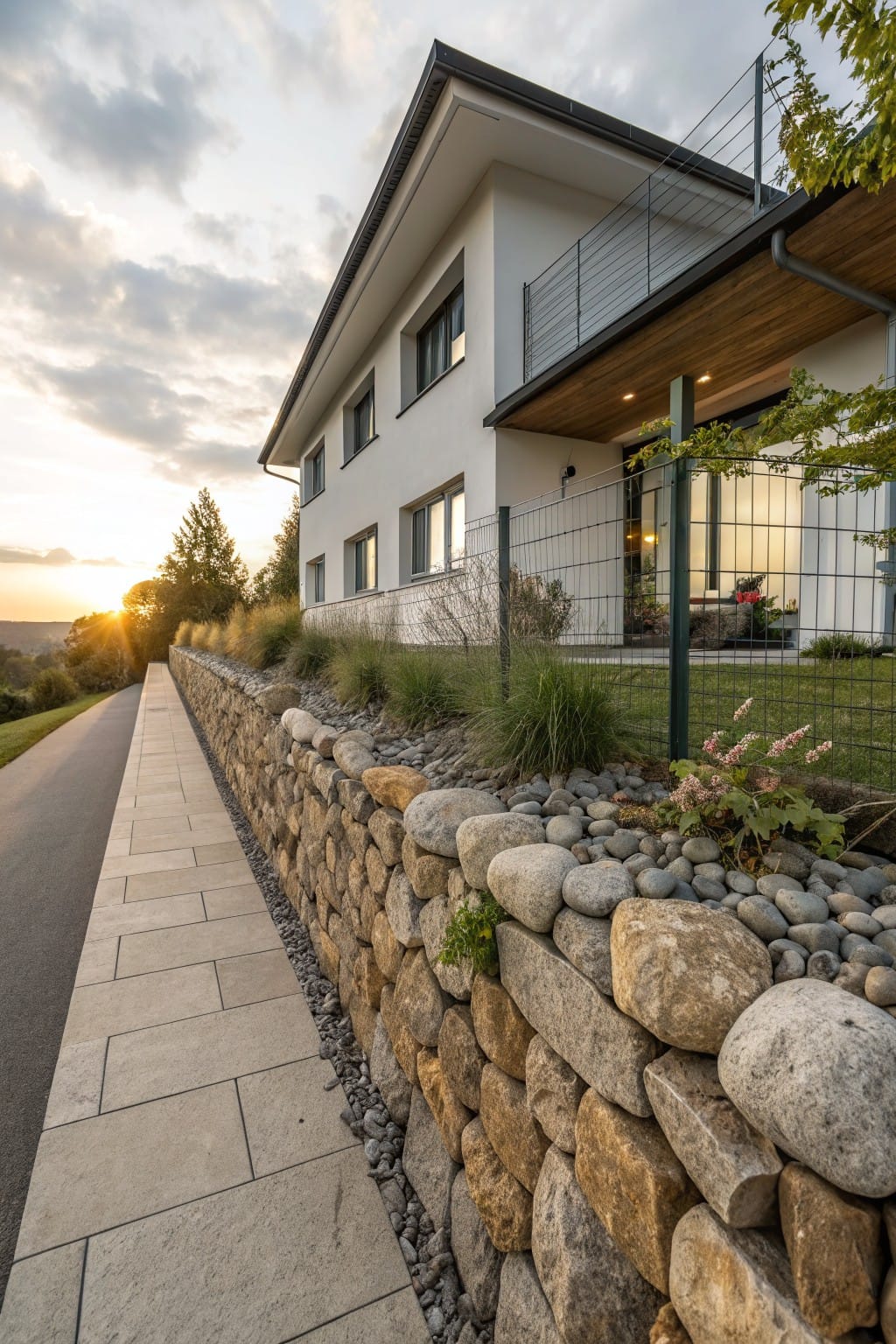
A simple dry-stacked stone wall makes a solid edge for gardens on a slope. It holds back the soil without much fuss and lets grasses and small plants tuck right into the gaps. That mix of rough stones, pebbles at the bottom, and a few green shoots poking out gives a tidy look that fits right into the landscape.
Put this along pathways or yard edges where you need to manage a drop-off. It suits hillside lots or any spot with uneven ground. Grab local fieldstones if you can, pile them up loose, then fill in with gravel and drought-tough plants. Keeps weeds down too, but check it now and then for shifting stones.
Raised Beds Edge the Garden Path
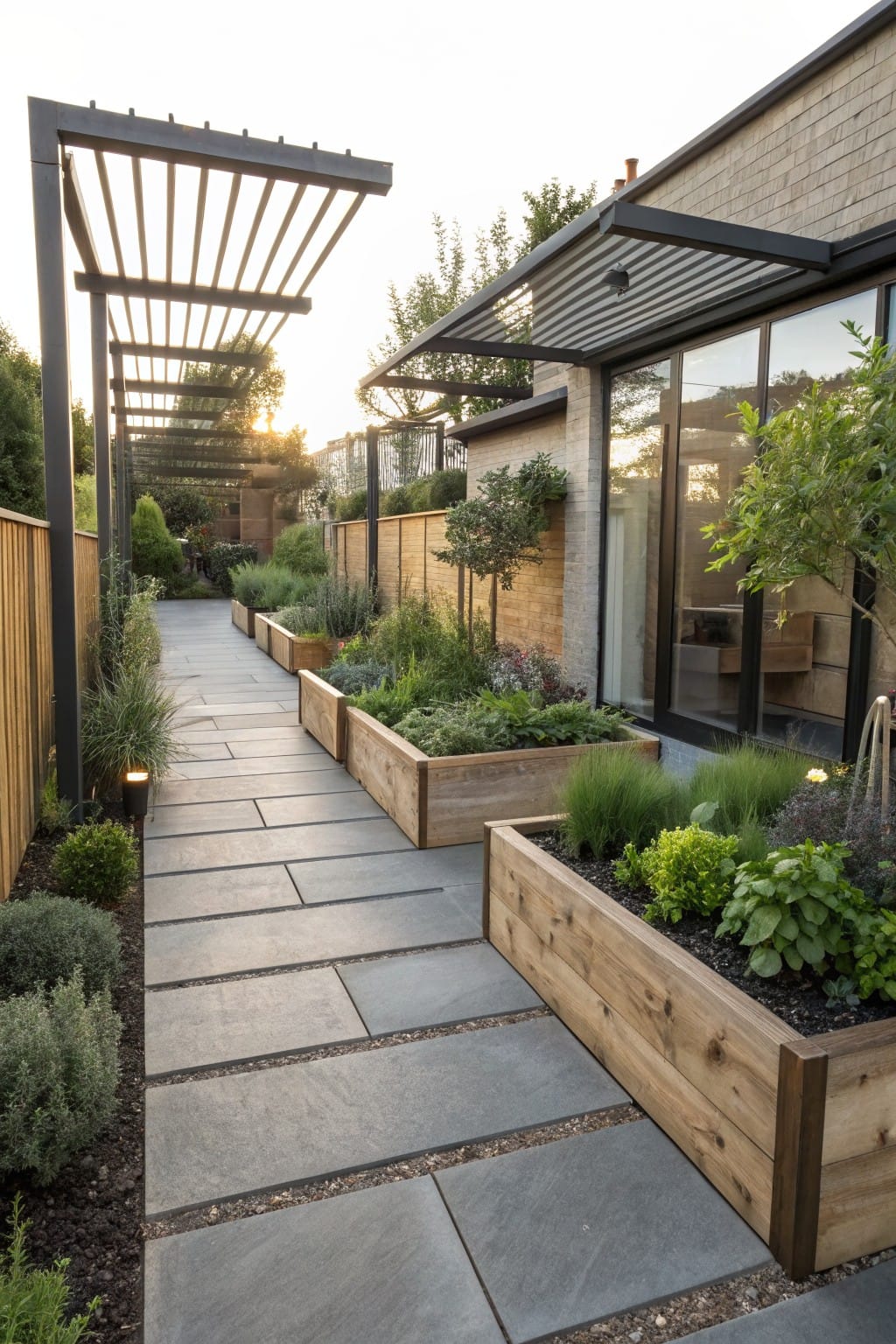
Raised wooden beds make a smart edging choice for backyard paths. They hug the walkway tight, keeping plants off the stones and giving the whole space a clean, organized look. You get low-maintenance borders that double as planters for herbs or perennials, and the natural wood warms up hard surfaces like slate without overpowering them.
This idea fits narrow side yards or paths leading to a patio door. Build beds knee-high from cedar or pine, set them flush against the path edge, and fill with soil that drains well. It suits modern homes with brick or stucco walls… just check local wood treatments to fend off rot over time.
Raised Beds with Pebble Edging
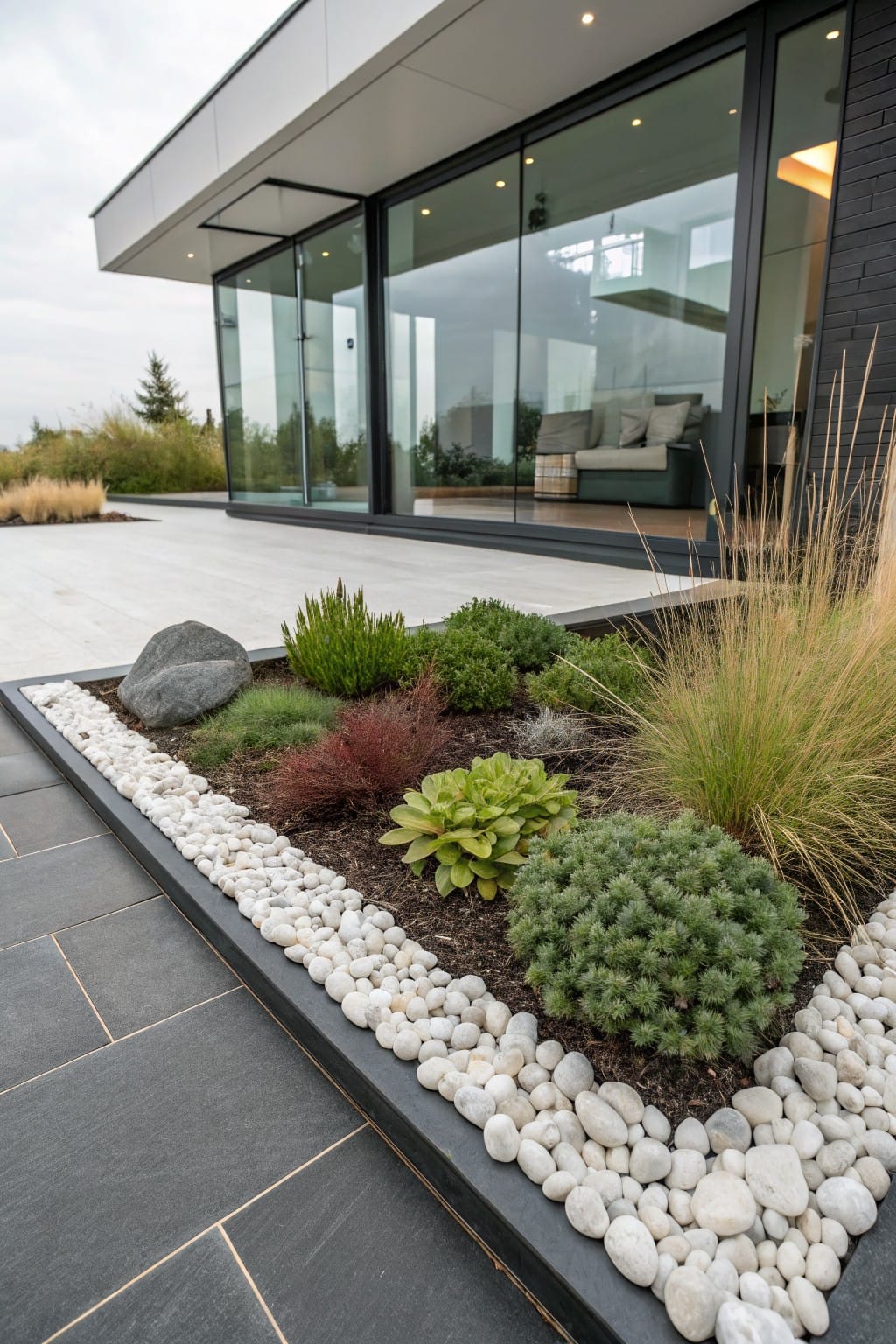
One clean way to finish off a backyard patio is with raised beds edged in white pebbles. They hold back the soil and plants nicely, keeping that sharp line between hardscape and planting. You see grasses, succulents, and a big rock tucked in there. It gives a modern look without much fuss.
Put these beds right up against patios or walkways on flat yards. They suit homes with simple lines, like ones with glass walls or wood decks. Go for drought-tolerant plants so it stays low upkeep. Watch the pebbles don’t shift if you have kids running around.
Raised Stone Edging with Recessed Lights
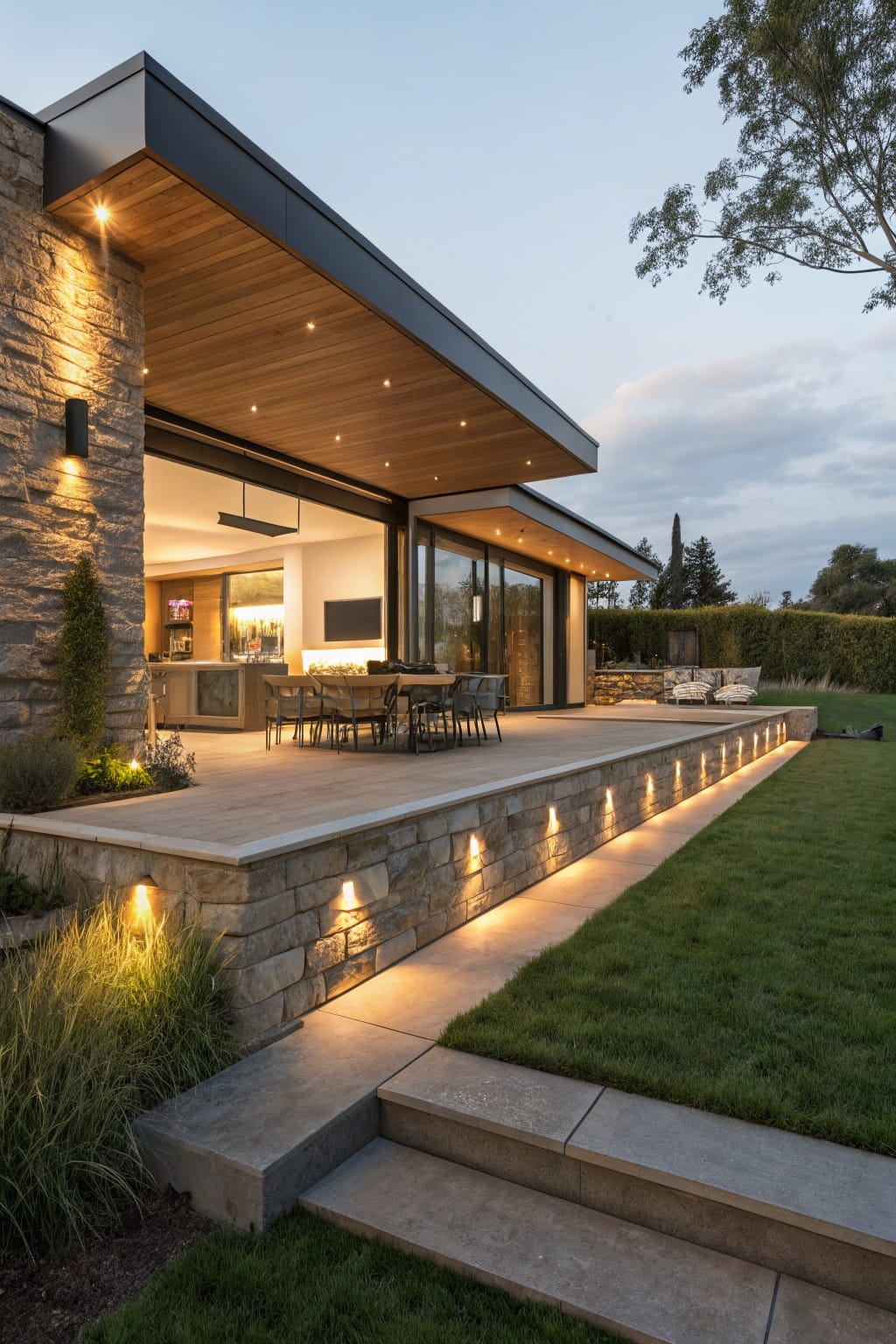
One clean way to finish off a backyard patio is with low stone retaining walls that hold back the lawn. Here, the walls run right along the deck edge, and recessed lights built into the stone throw a soft glow at dusk. It keeps everything neat and adds a bit of nighttime usability without much fuss.
This edging works best on yards with a drop from the patio to the grass. It suits modern homes with stone or wood details already. Go for natural stone blocks for a solid look, and use low-voltage LEDs so wiring stays simple. Skip it if your slope is too steep, though, unless you build higher.
Pebble Edging for Garden Paths
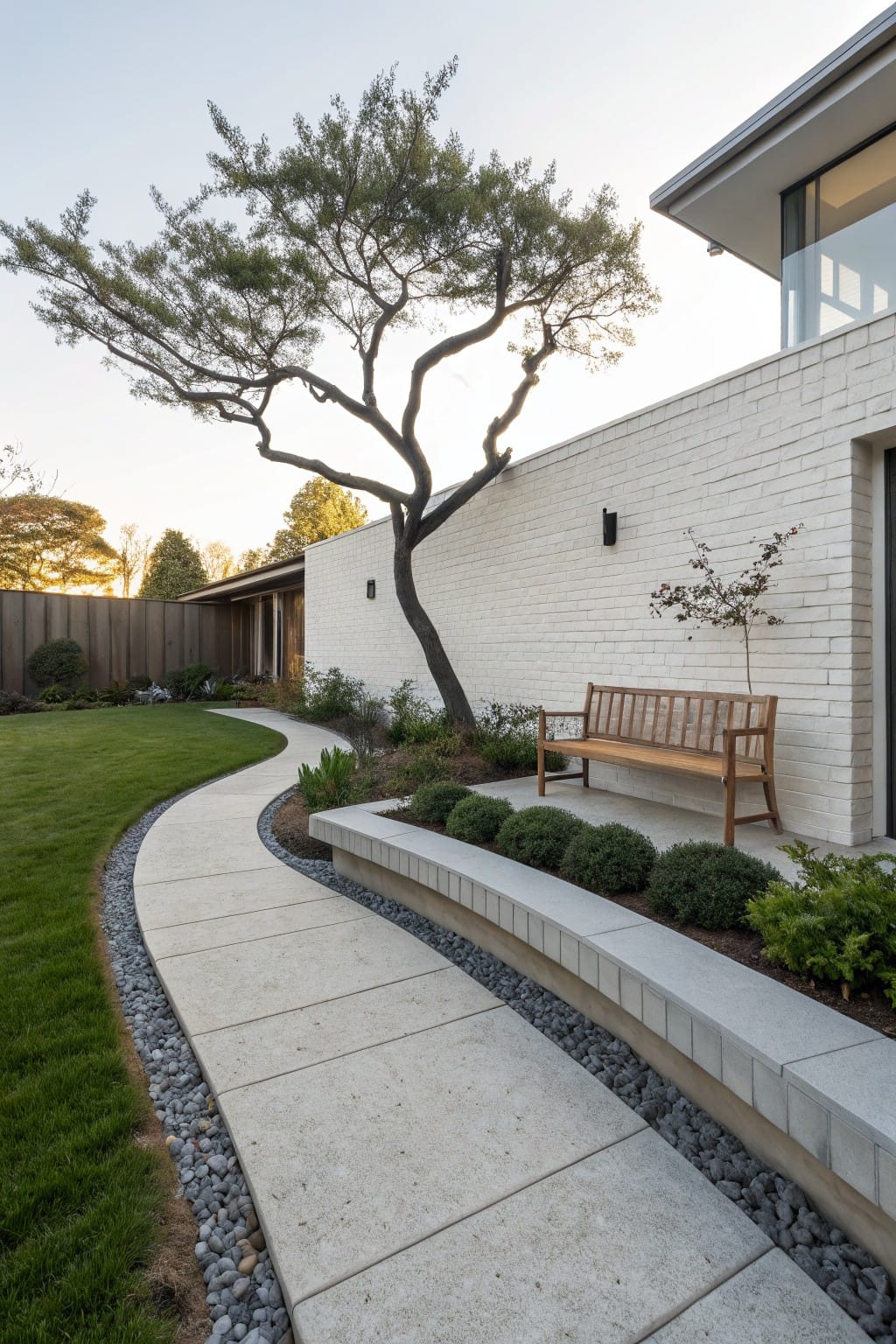
A simple way to finish off a garden path is to border it with pebbles. In this setup, a smooth concrete walkway curves through the grass, with a neat row of small rounded stones right along the edge. It gives a clean look that separates the path from the lawn without much fuss, and the pebbles add a bit of texture that feels right for modern yards.
You can pull this off in most backyards, especially where you want a path to lead to a seating spot or door. Lay down concrete or pavers first, then add about four inches of pebbles next to it, maybe held by a low curb. It works best on gentle curves. Just keep the pebbles topped up now and then, or weeds might creep in.
Metal Channel Garden Edging
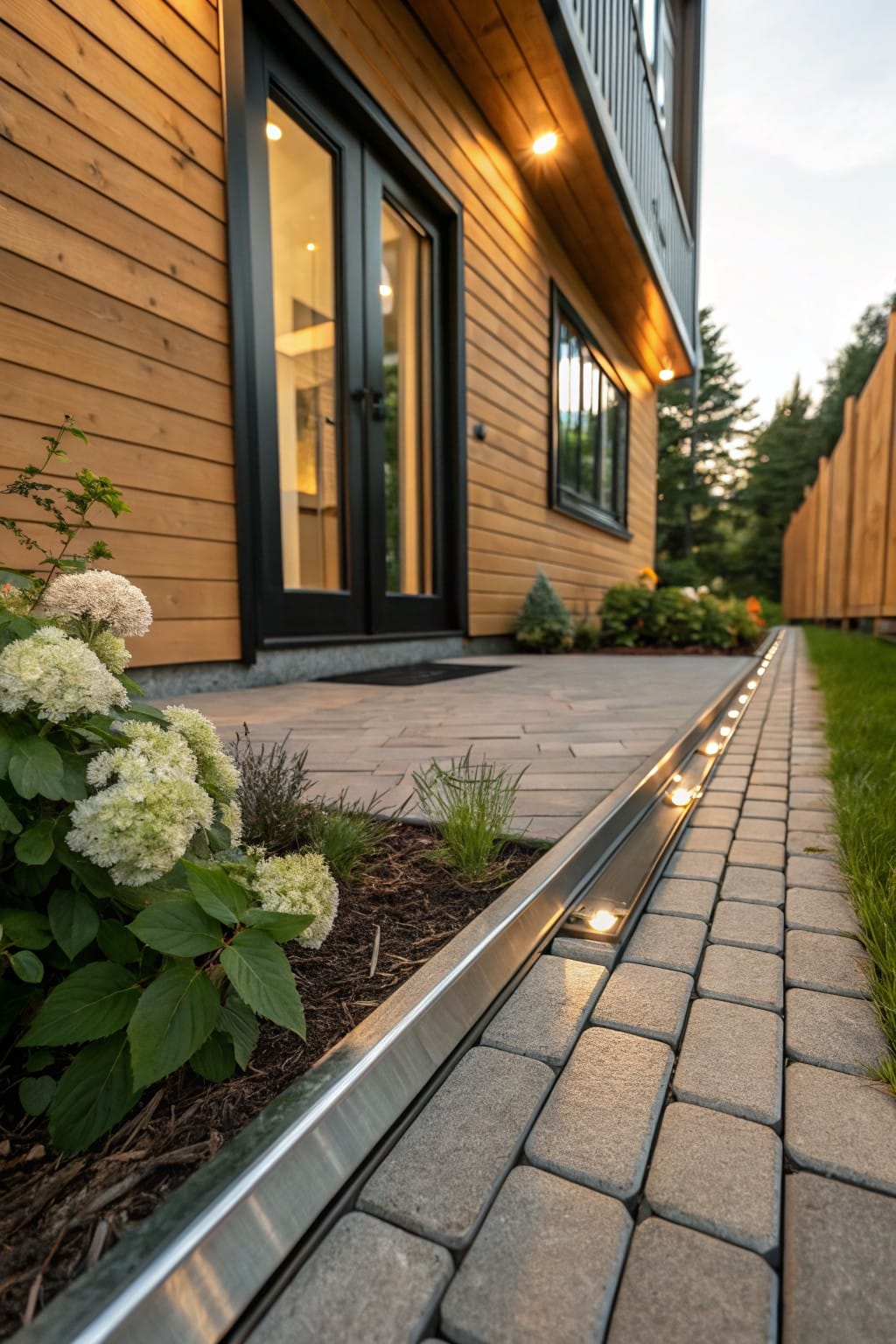
A metal channel like this one runs right along the edge of the patio pavers. It keeps the mulch and plants in the bed from spilling over, giving a sharp, finished look that’s easy to maintain. Those small lights set into the channel light up the path at dusk without extra fixtures cluttering things.
You can use it anywhere you want a clean divide between hardscape and planting beds. It suits modern backyards with simple layouts, especially near wooden houses or patios. Set it flush with the ground for good drainage, and pick a finish that blends with your stones.
Flagstone Walkways Edged by Grasses
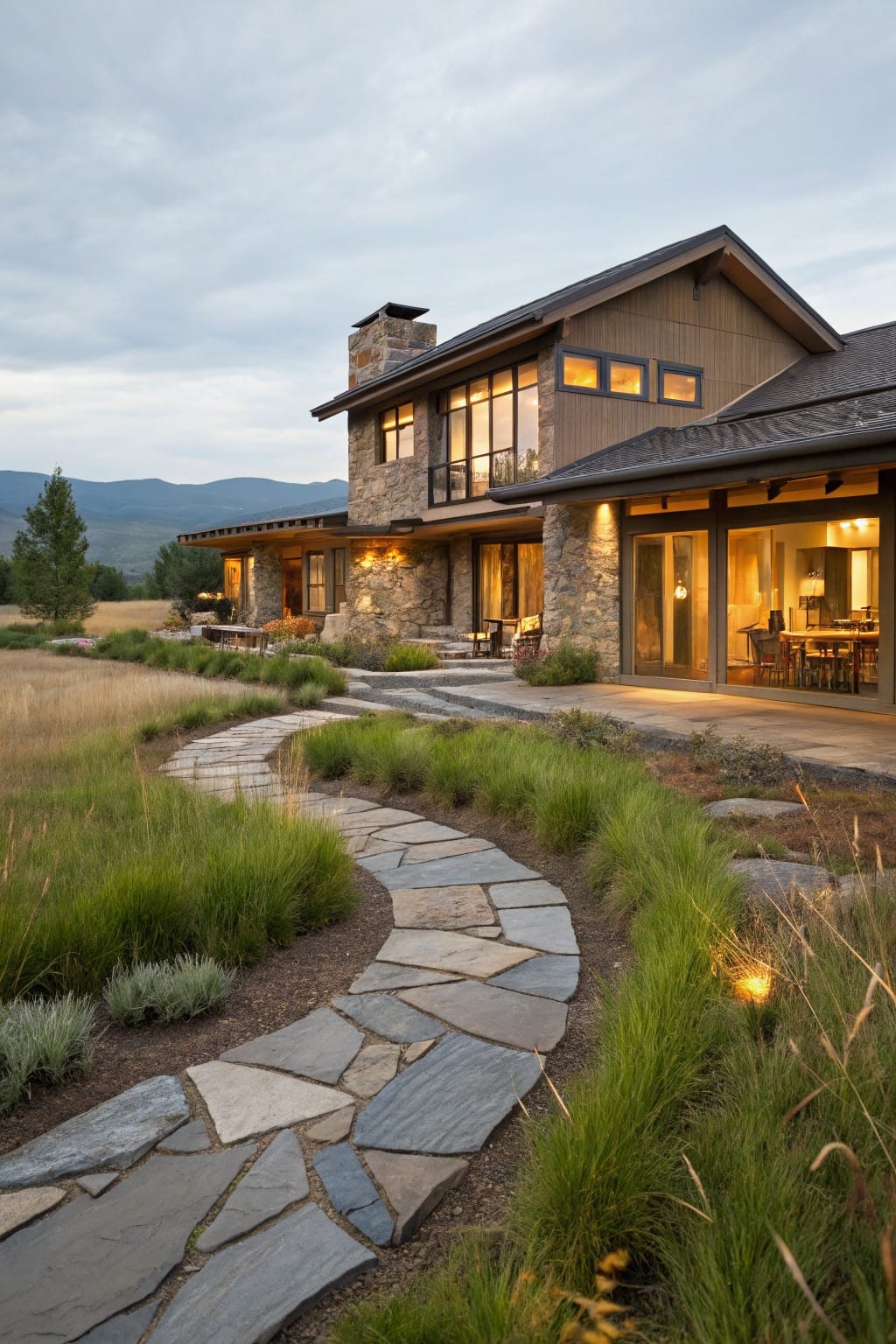
A good garden path doesn’t need fussy borders. Just set flagstone slabs into the ground and let grasses grow up around the edges. Like this winding walkway through tall, feathery plants. It keeps things simple and blends the path right into the yard.
This works best in bigger backyards with a natural feel. Space the stones so grass fills the gaps, maybe add low plants along the sides. Suits homes near fields or woods. Watch that the stones stay even, or folks might stub a toe.
Grass Edging Next to Wooden Decks
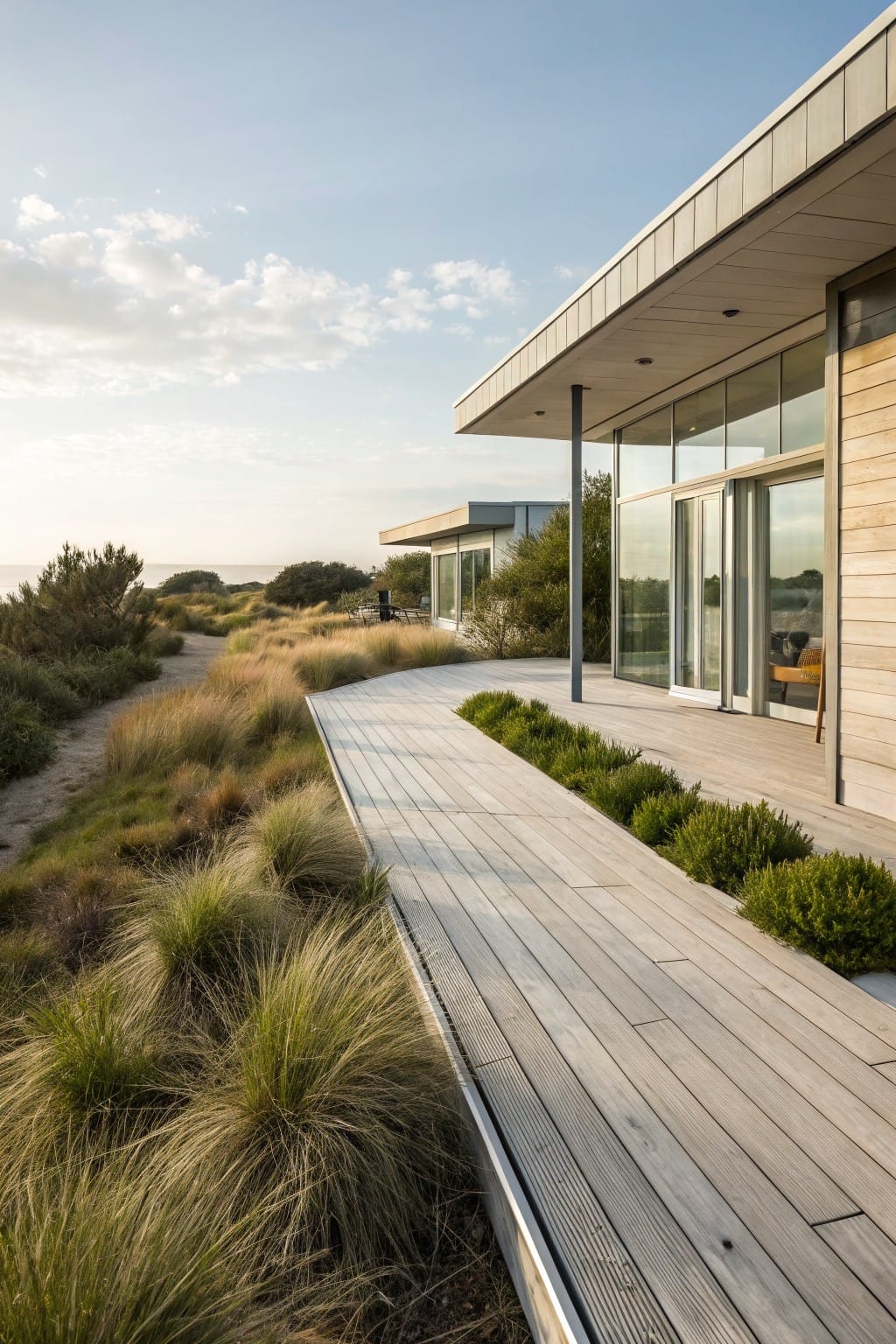
A wooden deck like this one runs straight along the house, with tall grasses planted tight against the edge. It keeps things neat while letting the yard feel wild and open. Folks like how it blends the built part with the plants without any fussy barriers.
Try it where you have a side yard or path to the back. It works best on sloped ground or sandy spots, matching native grasses to your area. Just make sure the deck sits a bit higher so water drains away from the house.
Stone Retaining Walls for Garden Edging
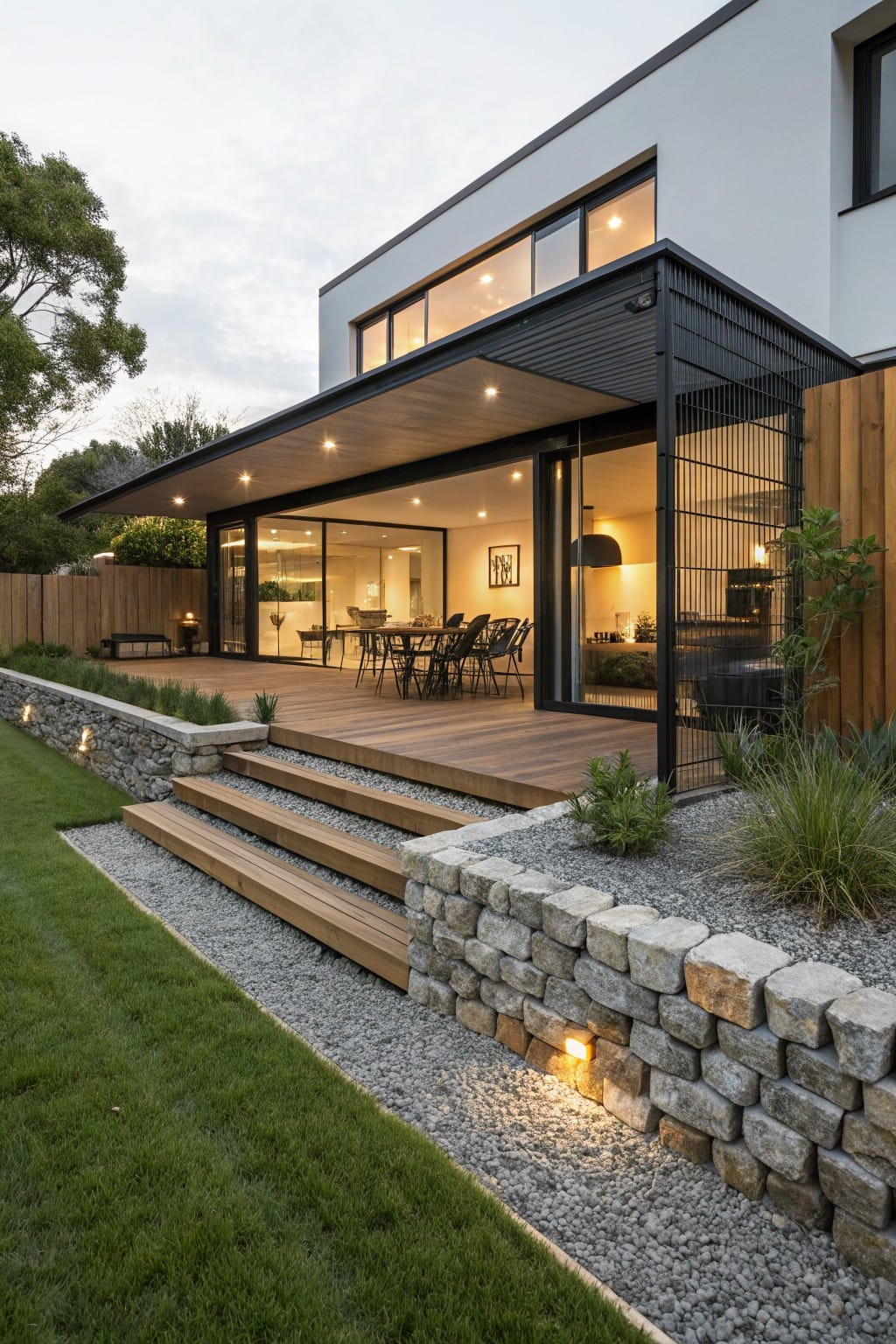
Low stone retaining walls offer a solid way to edge garden beds, particularly where the yard slopes up to a deck or patio. They hold back soil without much fuss and create clean lines that separate grass from gravel or plant areas. The rough texture of the stone fits right into a backyard setting, and small lights tucked into the wall add a soft glow at night.
This edging idea shines in yards with some elevation change. Stack local fieldstone for an easy build that blends with nature, then fill beds with gravel and low plants like grasses. It pairs well with modern houses that have wooden decks. Just make sure the wall drains well to avoid wet spots behind it.
Raised Concrete Edging for Garden Paths
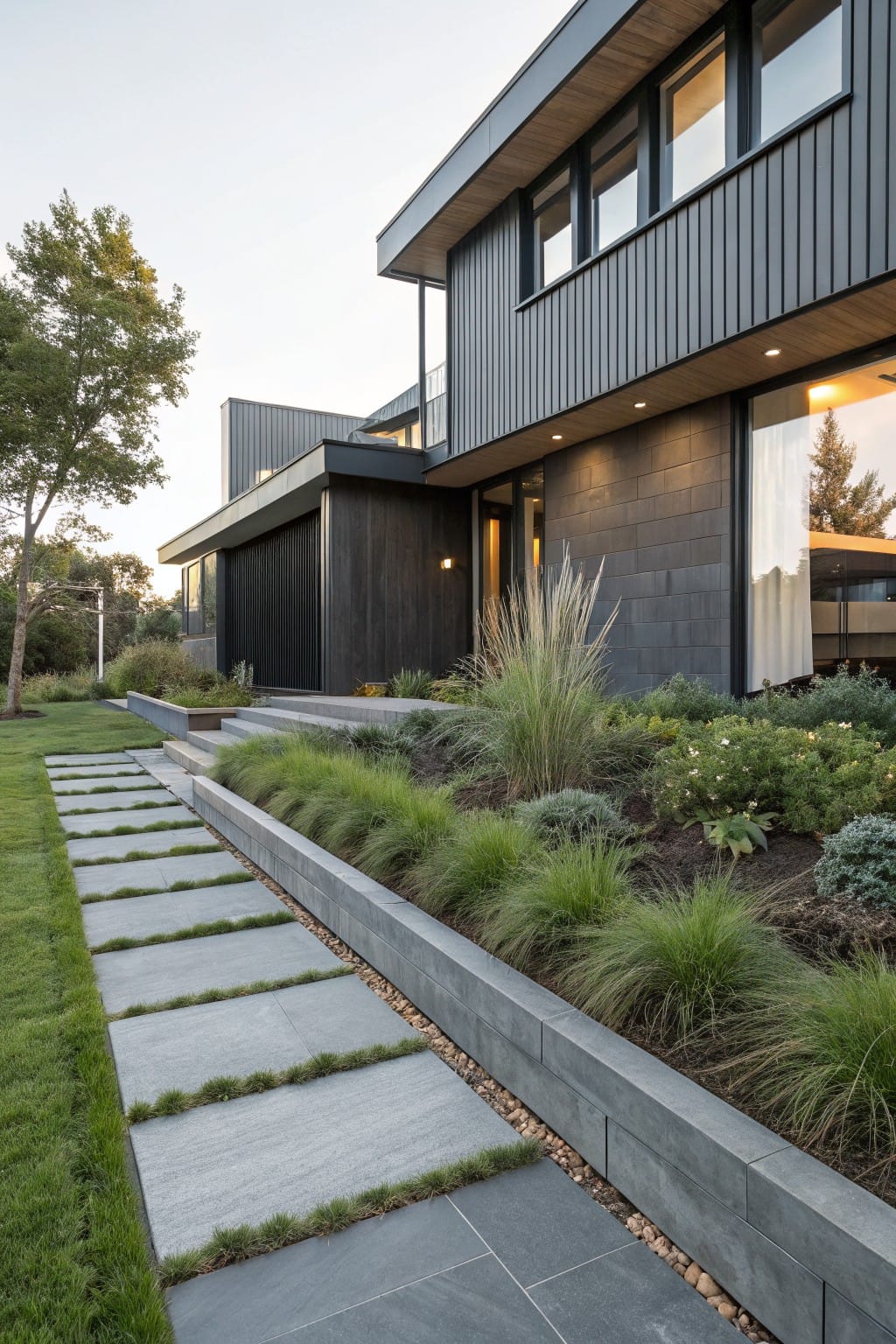
Raised concrete edging like this makes a strong border between your path and the planting beds. It holds back soil and plants without much fuss, and the tall grasses add some height without overwhelming the clean lines. Folks like it because it ties right into the house steps and keeps the lawn looking sharp.
You can use it along any walkway in a backyard with a bit of grade change, or even on flat ground for definition. It suits modern homes with gray or dark siding best. Go for concrete that matches your steps, plant drought-tolerant stuff in the beds, and add gravel at the base for drainage.
Black Planters Line Garden Paths
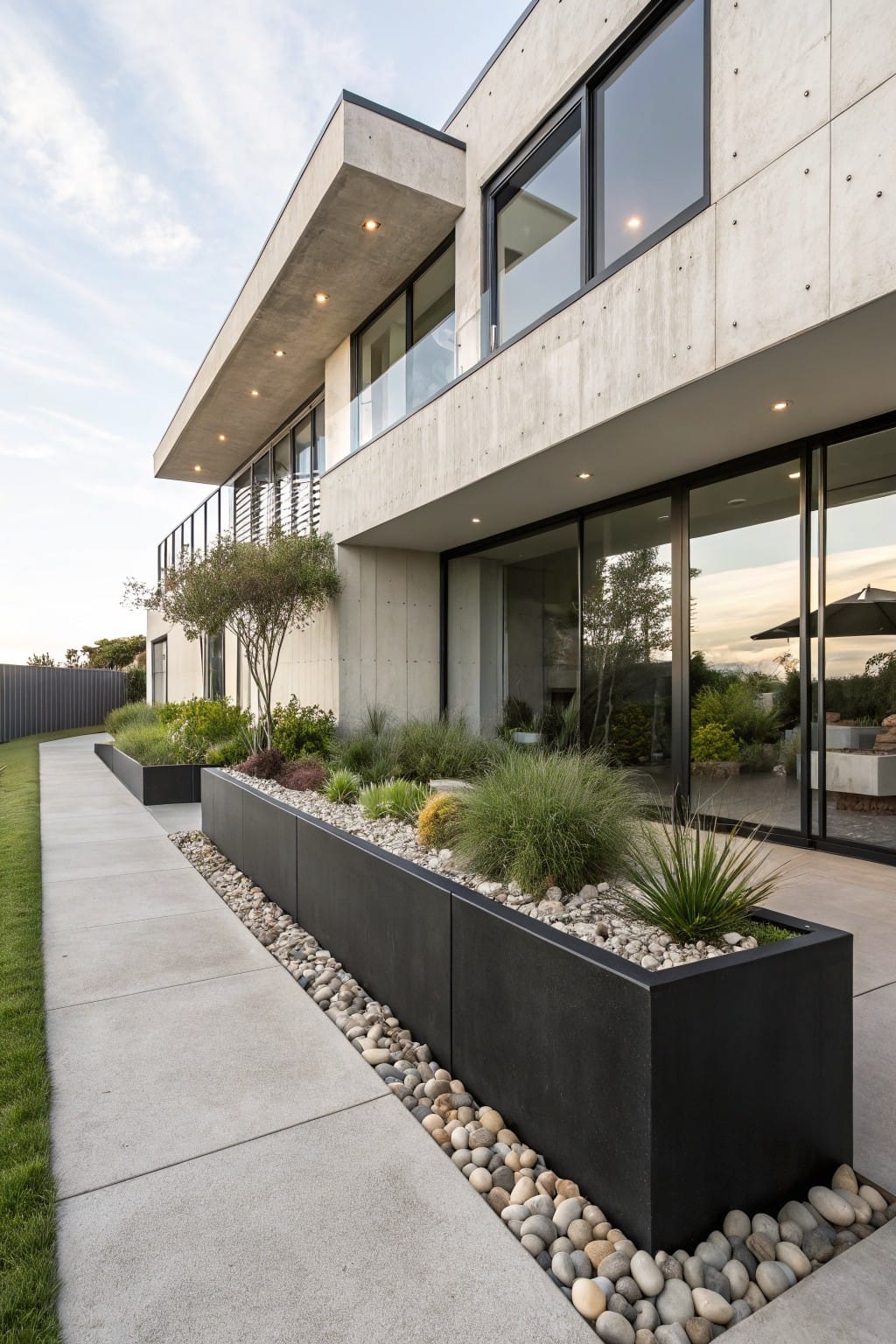
Tall black concrete planters make a strong edge for paths like this one running alongside the house. Filled with grasses and pebbles, they stand out against the concrete walkway and lawn. The dark color picks up on modern architecture without much fuss.
This edging works best in yards with clean lines, say next to a sleek patio or driveway. Line them up straight for that sharp look. Use tough plants that don’t need daily care. Scale them to your space so they don’t overwhelm a narrow path.
Raised Timber Garden Edging
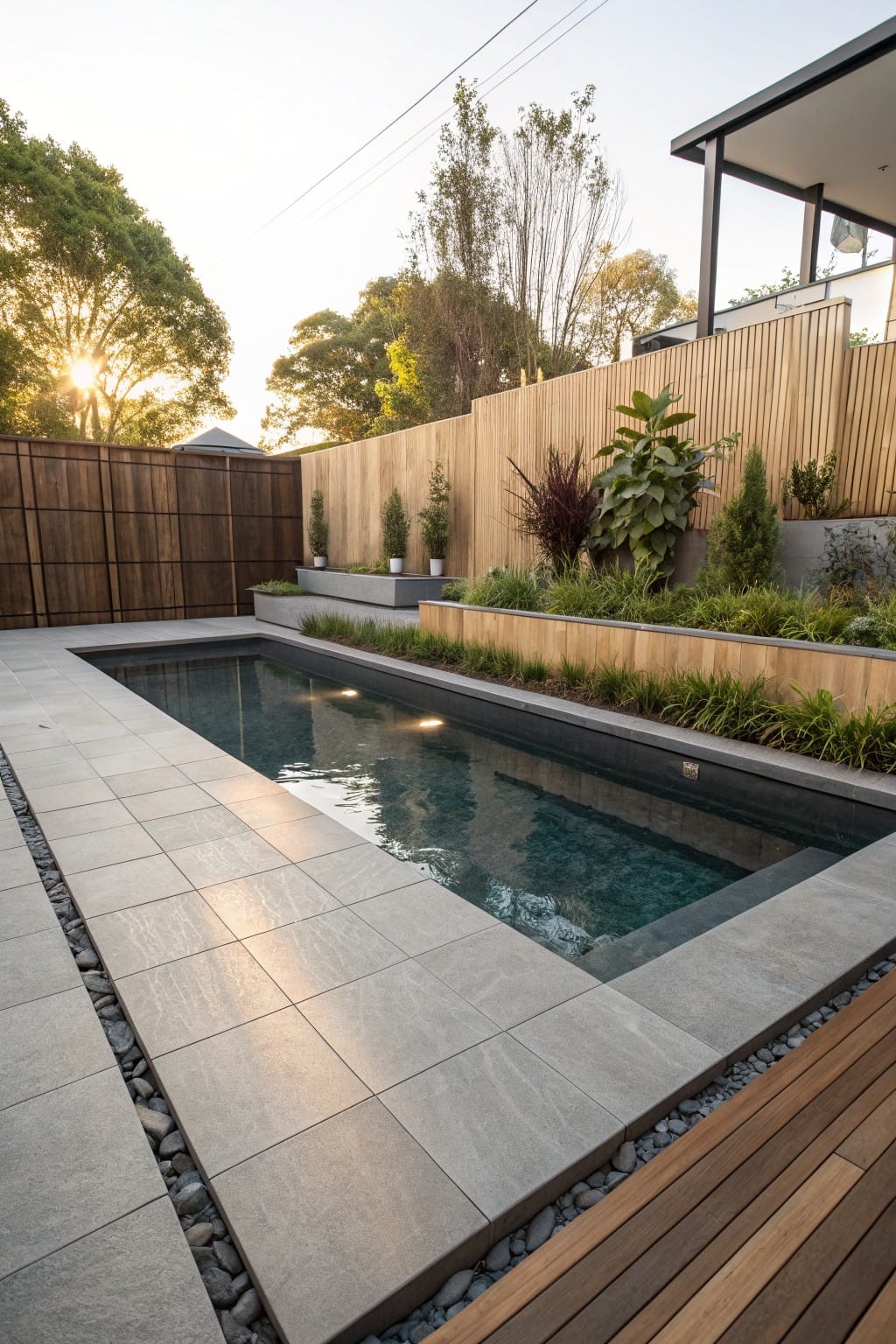
Raised timber edging like this keeps garden beds tidy and separate from hardscaped areas. It frames the plants nicely, giving everything a clean modern finish without much fuss. The wood sits at just the right height to hold back soil and grasses, and it blends well with fences or decks nearby.
This works best in backyards with pools or patios, especially narrow spots where you need clear lines. Go for treated timber that matches your outdoor woodwork. Keep an eye on drainage so the beds don’t get too wet next to water features.
Pavers with Grass Between Them
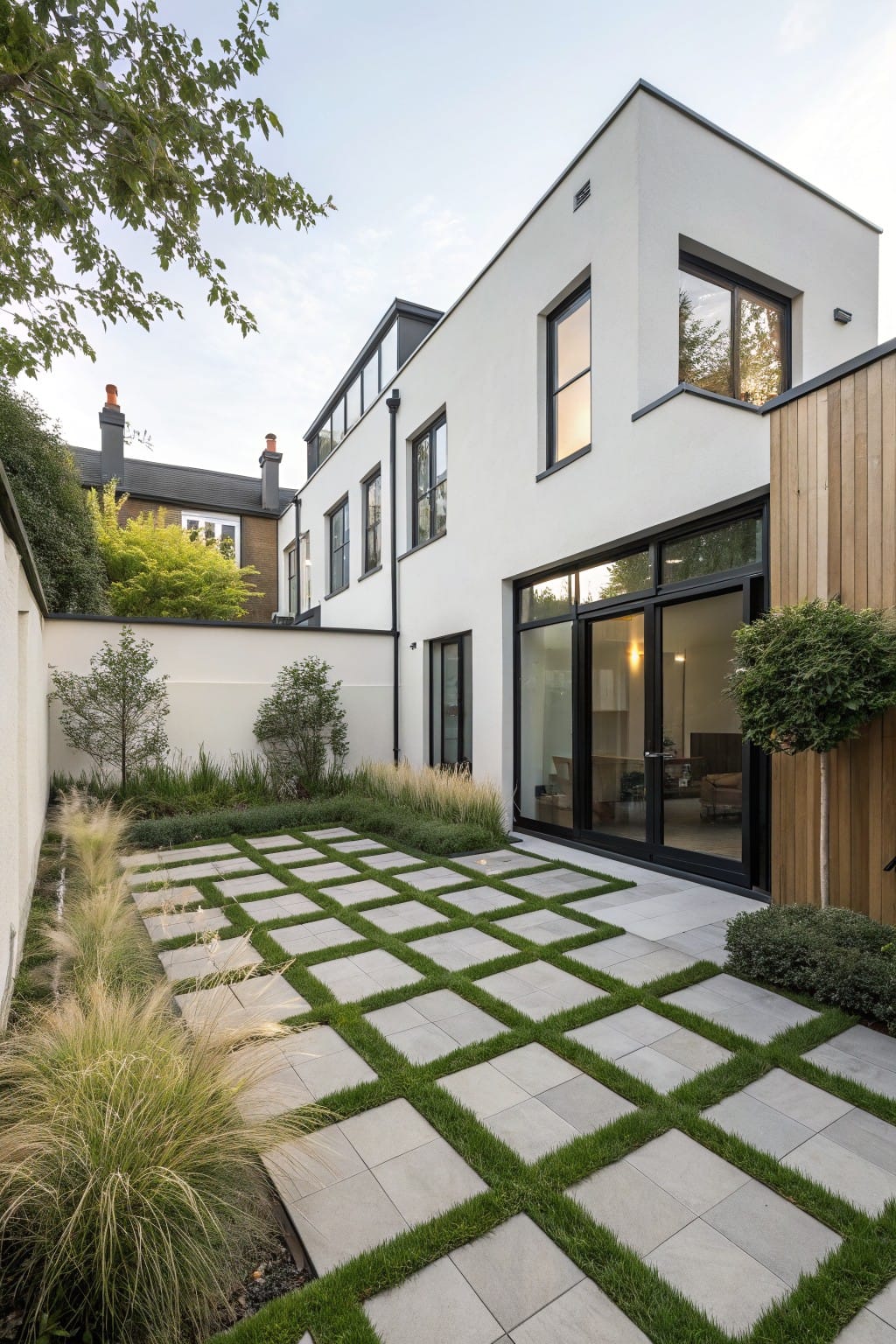
This patio layout uses big square concrete pavers arranged in a grid, with fresh grass filling every gap. It pulls off a clean modern vibe without going all hardscape or all lawn. The repeating pattern stands out right away, especially next to plain white walls and those tall grasses around the edge.
Put this in a smaller yard or one tied to a sleek house addition. The grass lets rainwater soak in easy, and you only trim those strips now and then. Go for larger pavers if you want that bold scale… smaller ones might feel fussy. Works best where you want walkable space that still feels like a garden.
Pebble Trench Edging with LED Lights
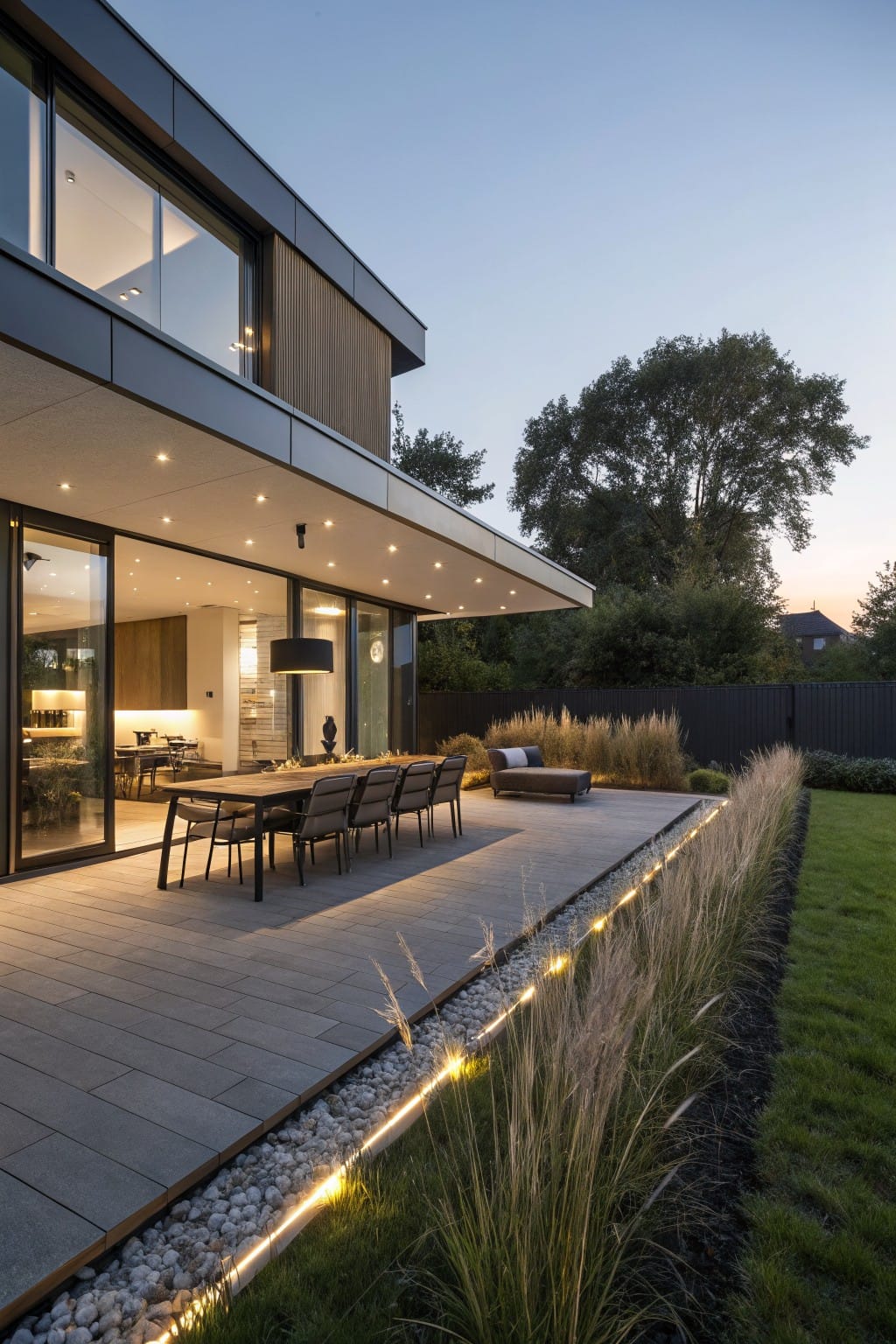
One clean way to finish off a patio is with a narrow trench of white pebbles right along the edge. Tuck in a slim LED strip for low lighting that runs the whole length. It keeps the hard surface separate from the grass without looking busy, and those lights come on at dusk to mark the space nicely.
This setup works best on flat backyards with stone or concrete patios. Plant tall grasses just behind the pebbles for some height and screening. Skip it if your yard slopes much, since the trench needs to stay level. Most folks can handle the digging and wiring themselves on a weekend.
Water Channel Garden Edging
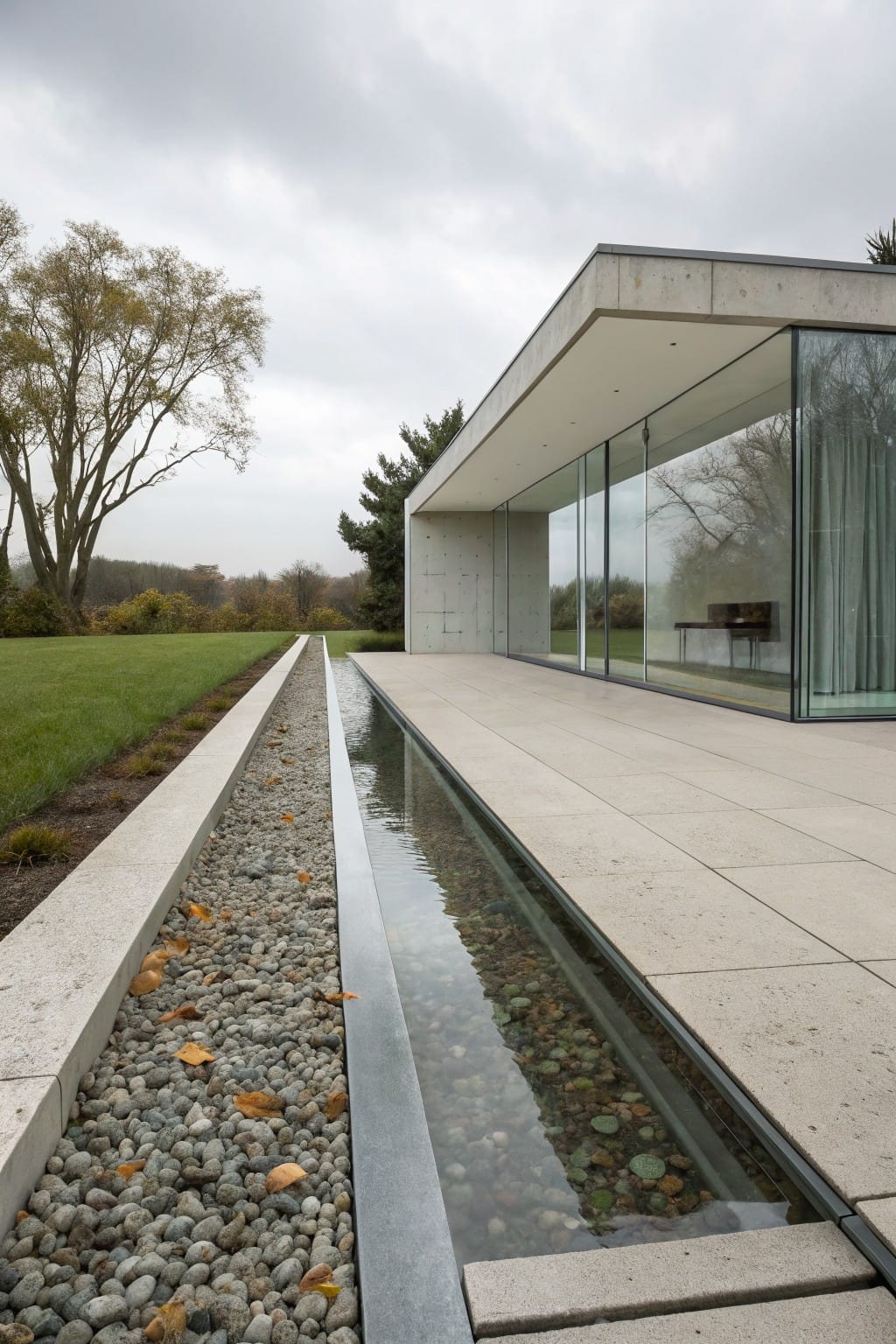
A narrow water channel makes for sharp garden edging. Here it’s tucked between the lawn and patio tiles. Pebbles line the bottom and water flows gently over them. That setup keeps grass from creeping over. Plus the shimmer from the water gives a quiet modern feel to the yard edge.
Try this where you need a clean break between turf and hardscape. It fits backyards around sleek houses best. Run a recirculating pump so it stays simple to tend. Skip it if your spot floods easy.
Frequently Asked Questions
Q: How deep should I dig the trench for edging strips?
A: Aim for 4 to 6 inches deep on most soils. That anchors the edging firmly against shifting. Tamp the bottom flat before dropping it in.
Q: Can I mix metal and stone edging in the same yard?
A: Go for it if the heights match up. Metal gives crisp lines, stone adds texture. Just bury the joints so they blend smooth.
Q: What’s the fastest way to install edging on a slope?
A: Stake it every two feet to hold the angle. Backfill from the bottom up. Water settles the soil quick.
Q: How do I stop weeds from popping through the edging?
A: Lay landscape fabric under mulch along the edge first. Overlap the fabric a bit onto the bed side. And pull any strays before they root.
