

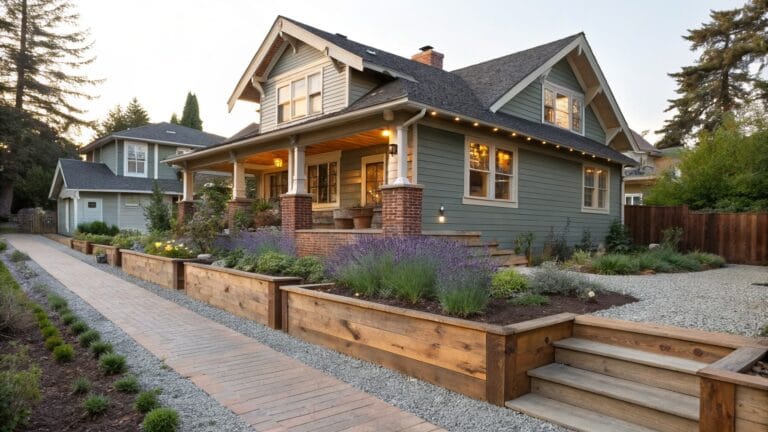
When I first built my raised garden beds, I noticed how much the edging influenced whether the layout felt tidy or chaotic. I lean toward simple wood or stone borders because they settle into the landscape without drawing too much attention. These ideas succeed when the materials echo the garden’s natural flow and stand up to rain and roots over time. They tend to disappoint if the edging overwhelms the beds or starts crumbling after one wet season. A few really deserve a spot in any backyard plot.
Wooden Raised Beds for Yard Edges
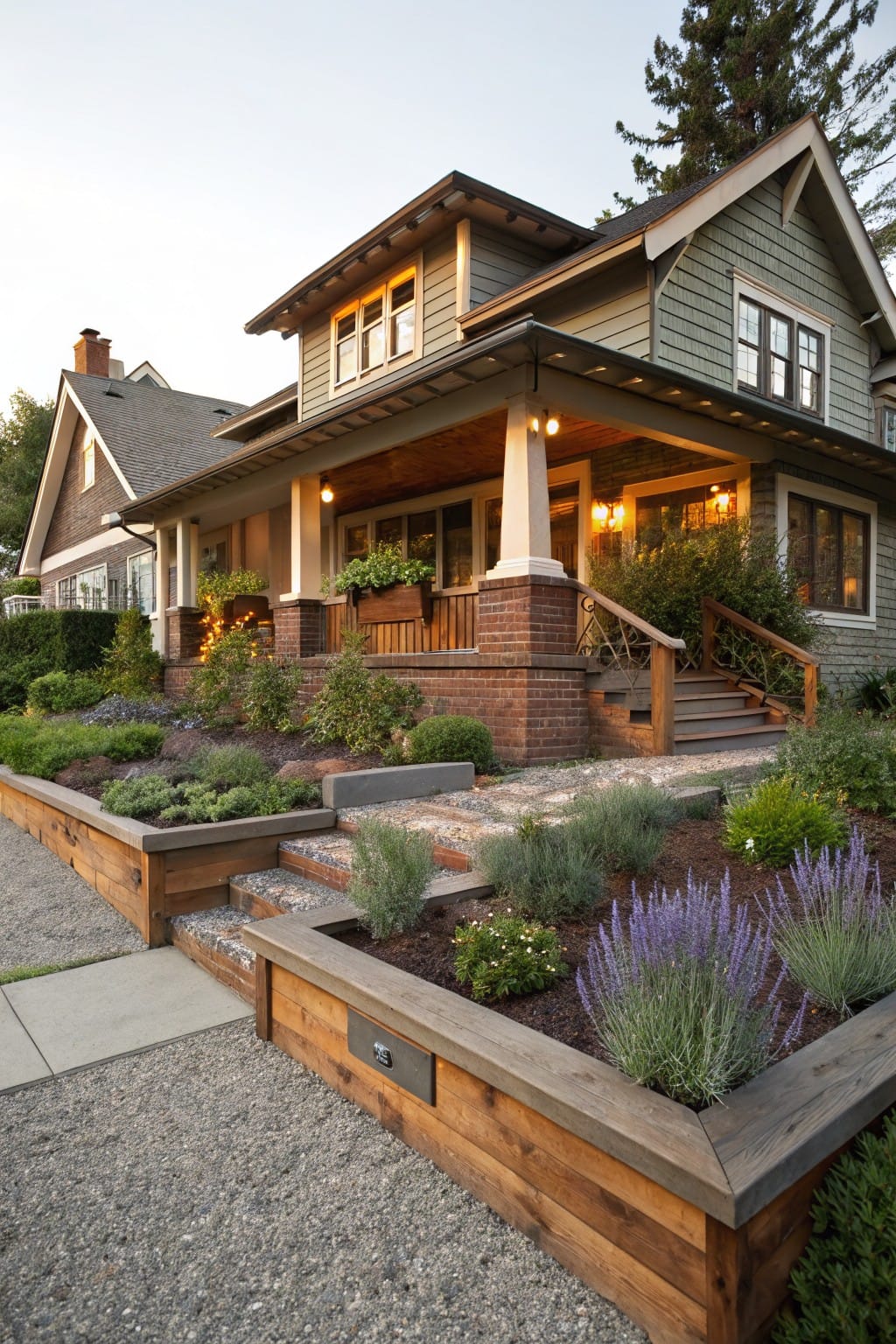
Wooden raised beds make it easy to keep front yard plantings neat and under control. They form clean borders that hold soil in place and let you group plants like lavender without spillover. The simple wood frames add a sturdy look that fits right in with paths and steps.
Put these beds along walkways or near house entries where you need defined lines. They work well on mild slopes or in smaller yards, especially around older homes. Go for naturally rot-resistant wood like cedar, and keep heights low so they don’t block the view.
Raised Beds Lining Pathways
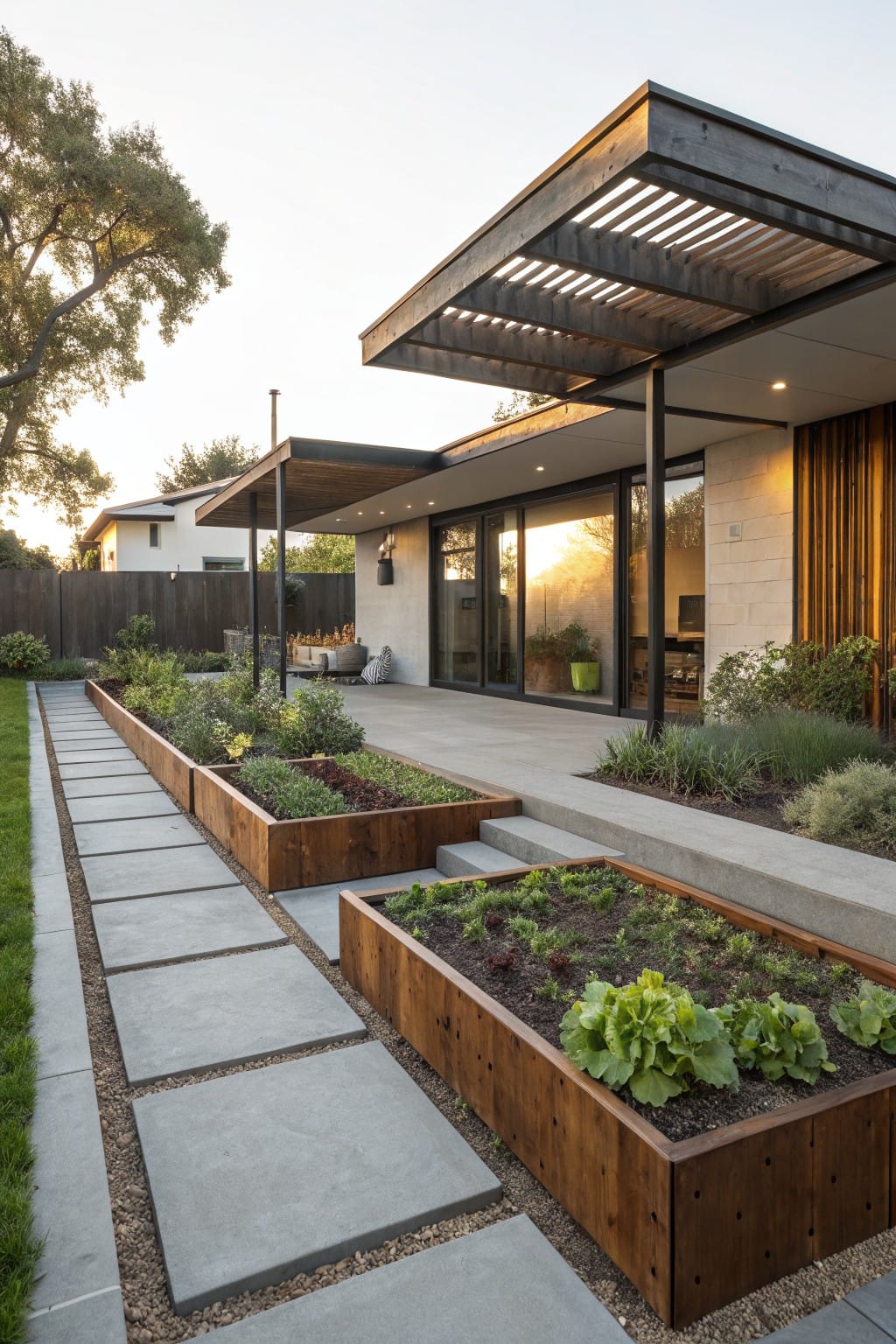
One practical way to tidy up garden paths is lining them with raised beds. These wooden boxes sit flush against the stone pavers, growing herbs and veggies like lettuce in neat rows. It creates a straight, organized edge that guides you smoothly toward the house patio.
This setup suits backyards with a patio or deck entrance. Build the beds from treated wood to last, keep them low enough for easy picking, and plant compact crops. Works on flat yards mostly. Watch the drainage though, or you’ll have soggy soil.
Stone Wall Edging for Raised Beds
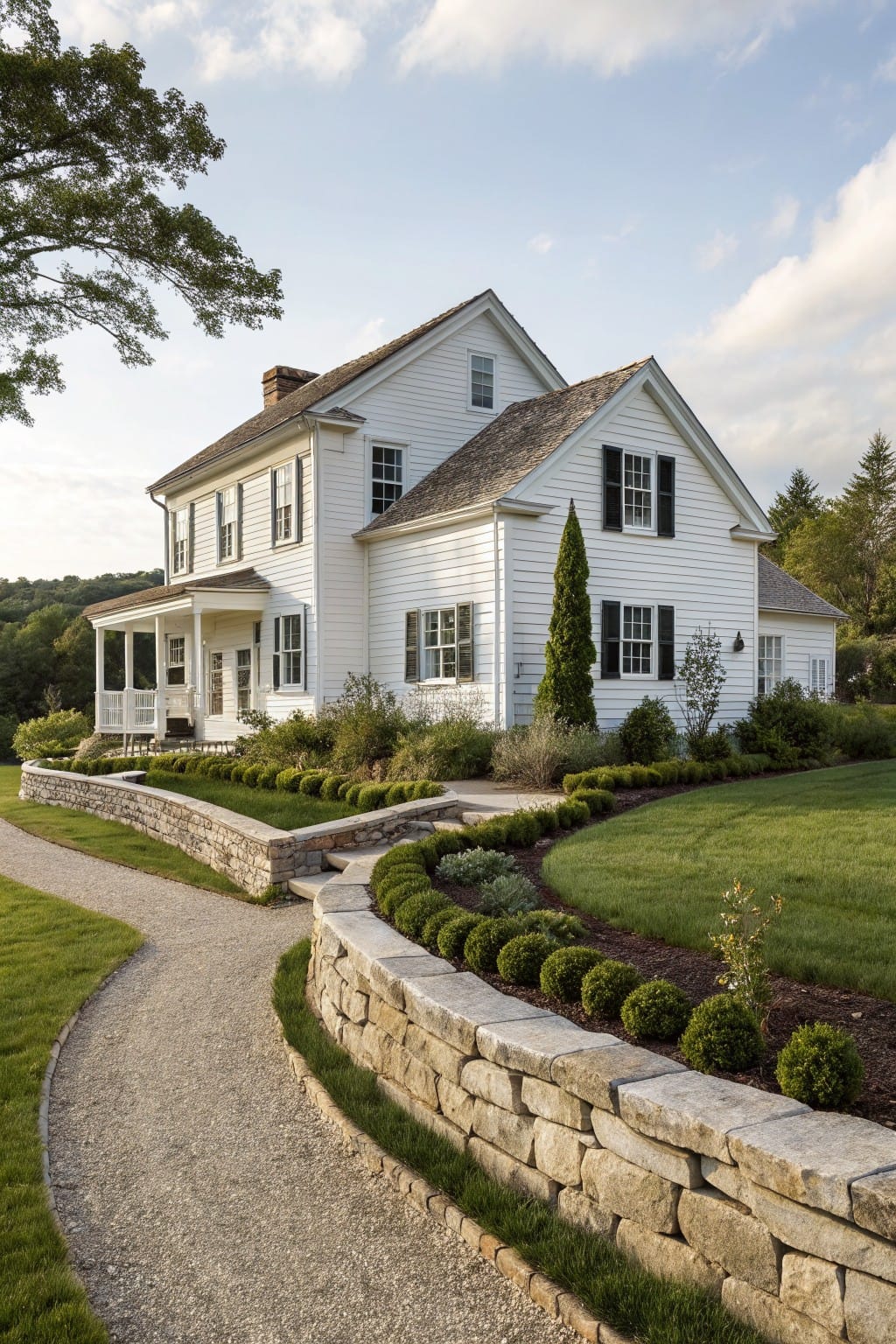
A low dry-stacked stone wall works well as edging for raised garden beds. It holds back soil nicely and gives beds a solid border that looks right at home next to a house path. Here the wall curves gently with boxwoods planted along the top for extra neatness.
Put this kind of edging where you need to level a sloped yard or frame a walkway. It fits older farmhouses or cottages with room for plants. Stack local fieldstone if you can. Just check that water drains away from the wall base.
Terracotta Raised Beds Along Stone Paths
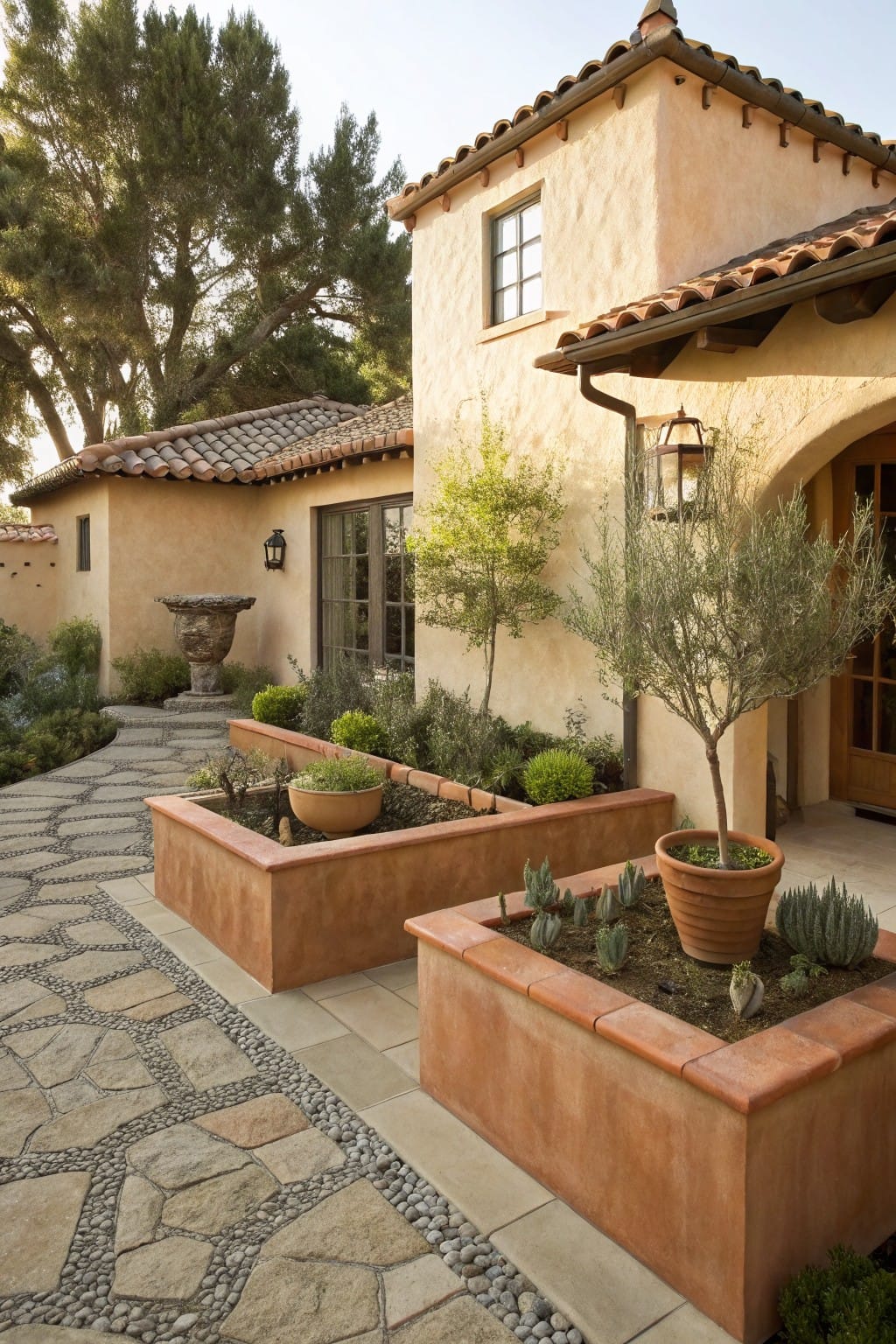
Raised garden beds like these, built from terracotta blocks, run right along a winding stone path to the entry door. They keep plantings contained and tidy, matching the house’s warm stucco and tile colors for a pulled-together look. No sprawling edges here. Just neat borders that guide the eye without trying too hard.
Use this setup where you want low-maintenance borders in a sunny spot. Succulents and drought-tolerant plants fill them perfectly, and it suits Southwestern or Mediterranean-style homes with gravel or stone paths. Skip it on super-shady lots, though. The material holds heat.
Stone Retaining Walls for Raised Garden Beds
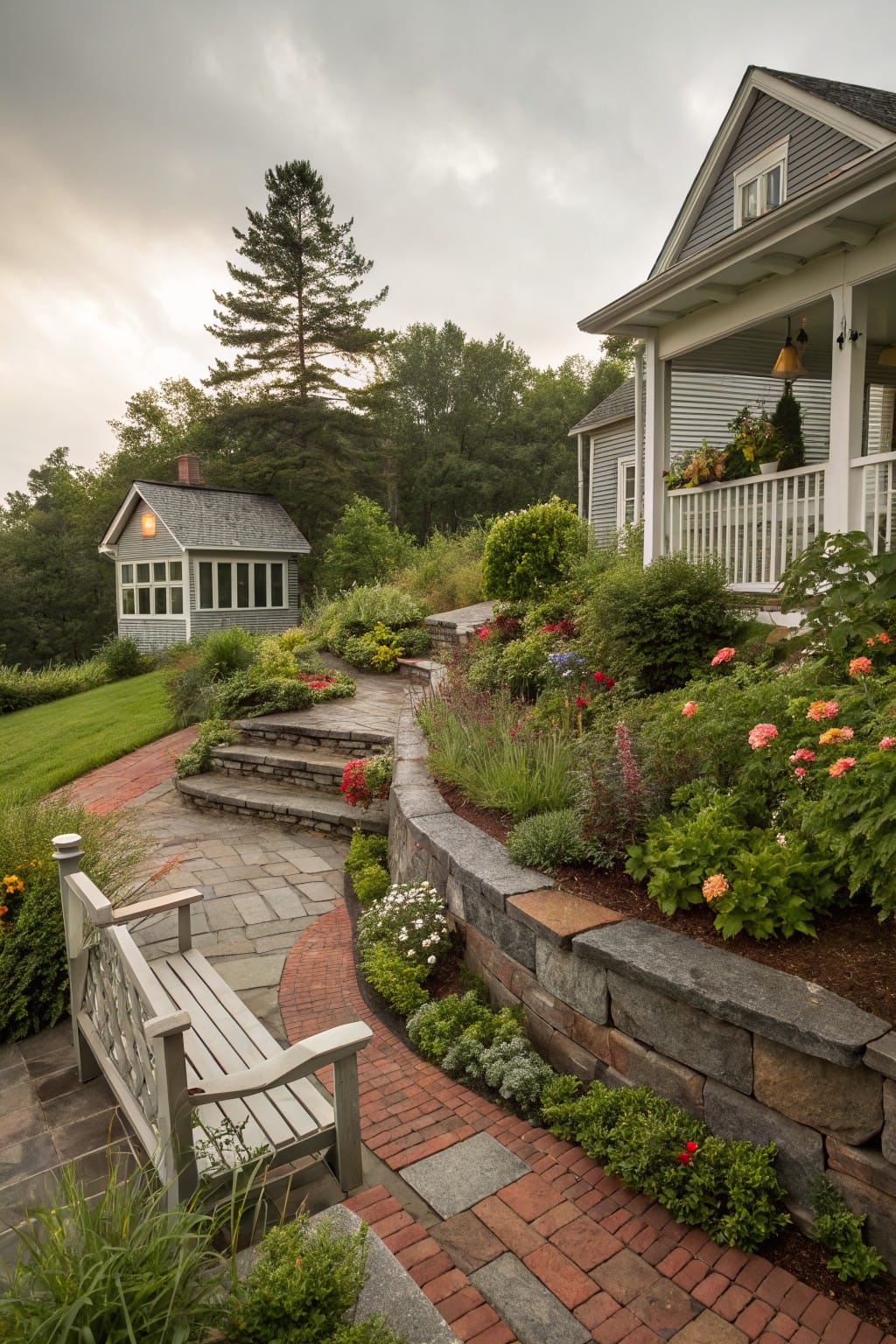
Stone retaining walls turn sloped yards into neat raised garden beds without much fuss. They hold soil in place firm and let flowers and plants hang over the edges for a soft look. That simple stack of rocks creates levels that make planting easy and keeps everything from washing away in rain.
These walls fit right in around country homes or wooded lots where you want low upkeep. Stack local fieldstone dry or with a bit of mortar, and pair it with a brick path like the one winding up here. Watch the height though. Taller walls need good drainage behind them to stay solid.
Raised Beds with Metal Edging
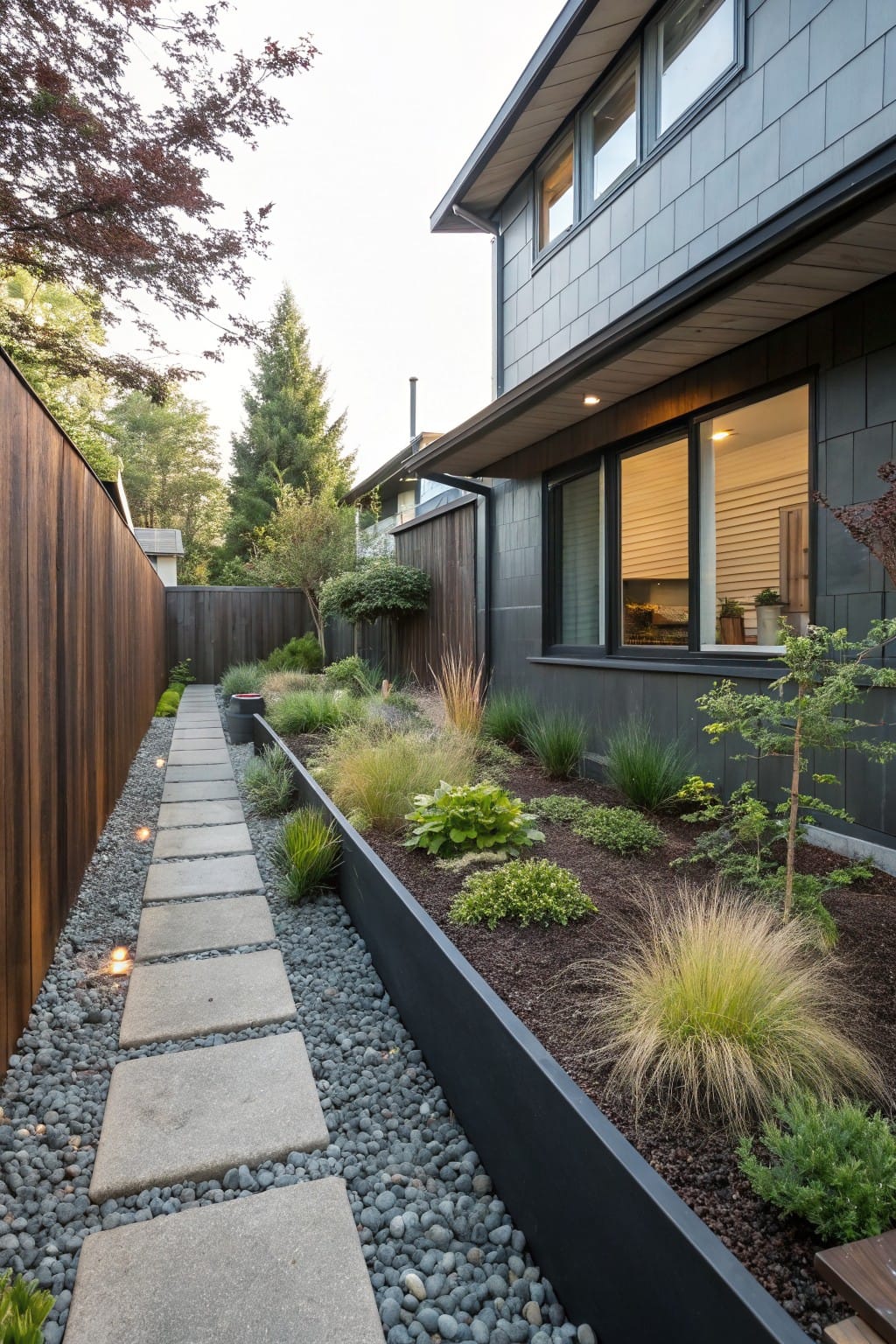
One practical way to edge raised garden beds is with simple metal borders. Here they run right along a gravel path in a side yard. The black metal keeps soil and plants neatly in place. It gives a clean look without much upkeep. Grasses and low shrubs fill the beds nicely.
This edging works best in tight spaces like pathways or next to fences. It suits modern homes with dark siding. Install it by bending sheet metal into shapes and securing it to the ground. Just make sure there’s good drainage so water doesn’t pool. Easy to do yourself on a weekend.
Raised Concrete Beds Along Pathways
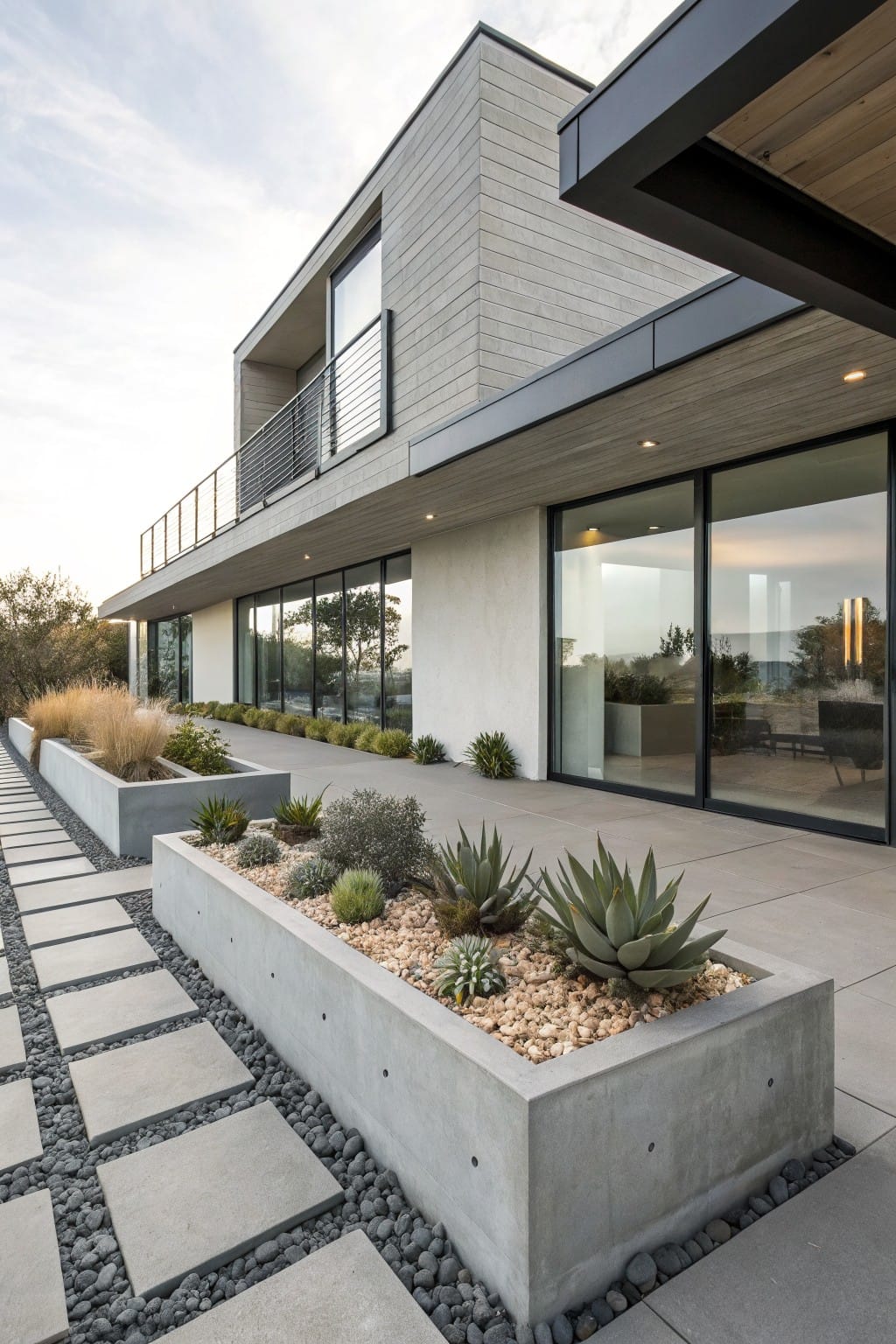
One straightforward way to keep a walkway neat is lining it with tall concrete raised beds. They hold plants and gravel in place without spilling over. In this setup, succulents and grasses fill the beds, giving a clean, low-water look that fits right with modern homes.
Put these beds next to paths leading to doors or patios. They suit sunny yards with dry-loving plants best. Just check drainage so water doesn’t pool. Simple concrete keeps costs down too.
Brick Edging for Raised Garden Beds
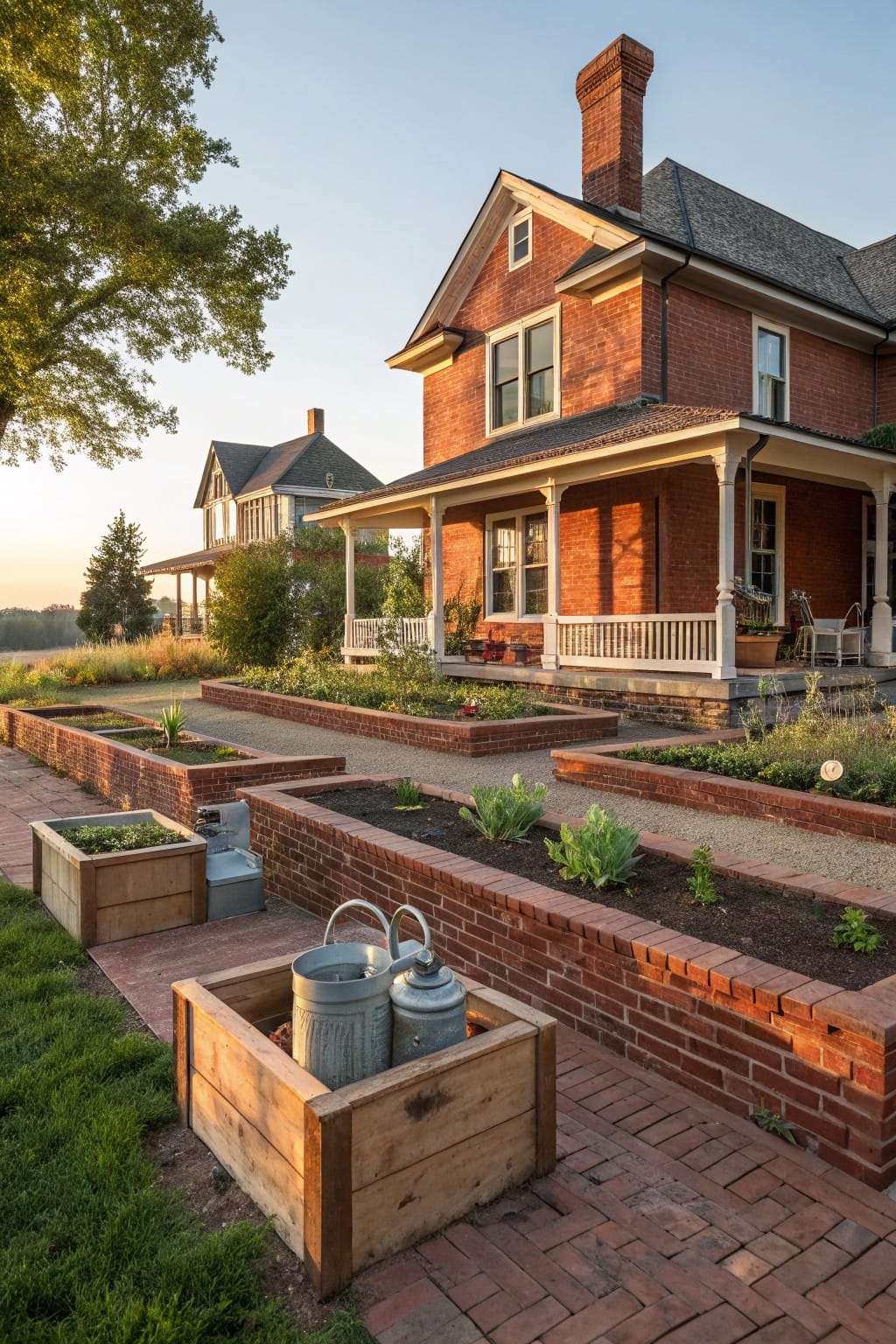
Brick makes a solid choice for edging raised garden beds. It ties right into the house if you have brick siding like this one does. The low walls keep soil in place and give everything a tidy look without much upkeep. You get neat paths between beds too. Folks like how it holds up year after year.
Try this setup along the side or back of your home where you want veggies close by. It works best on level ground near a porch or patio. Match the brick color to your house for that pulled-together feel. Just make sure you have good drainage so water doesn’t pool. Add a wooden box here and there for tools like those old watering cans.
Woven Edging on Raised Garden Beds
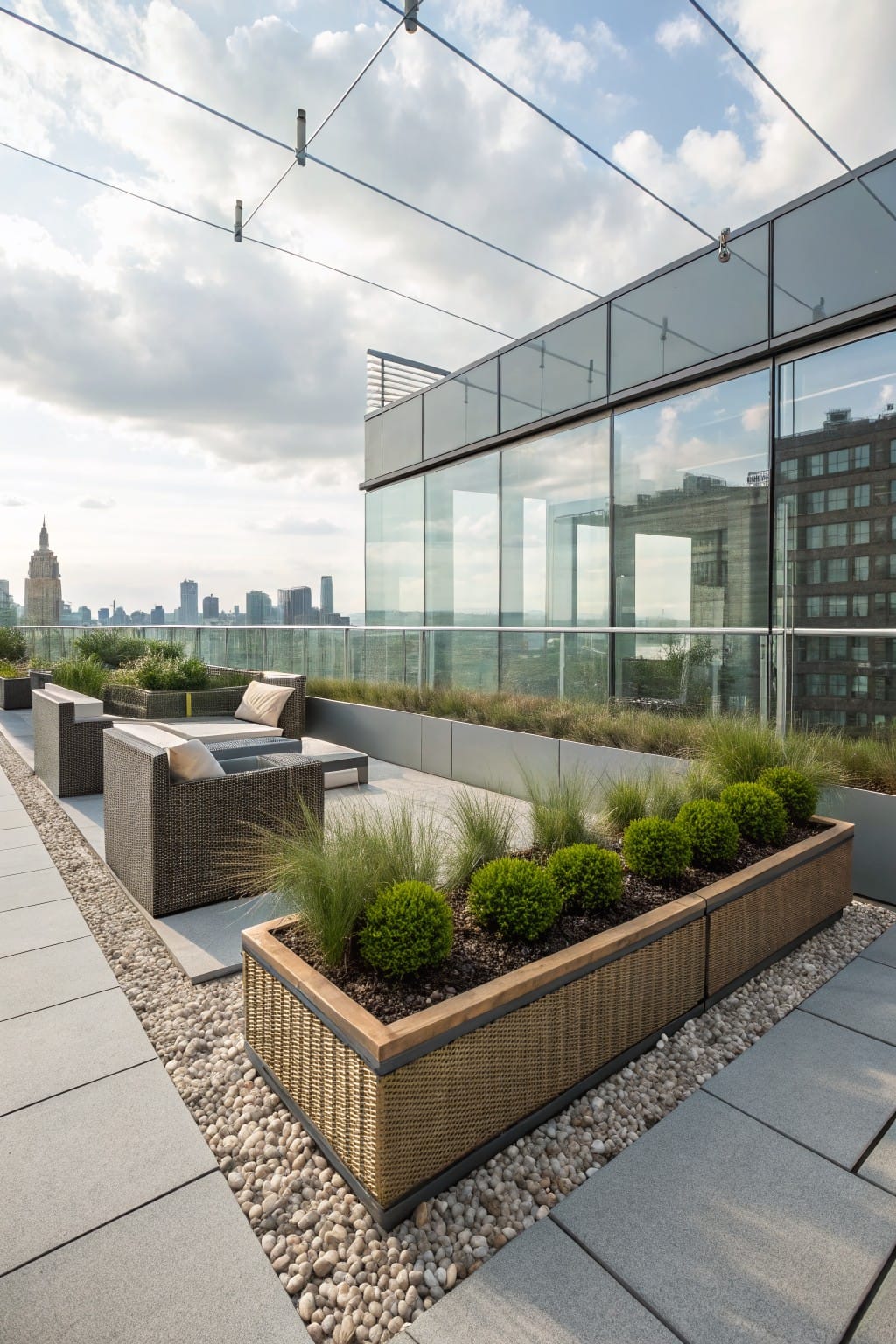
Woven edging around raised garden beds keeps plantings neat without looking too stiff. The rattan-like wrap over wood frames blends right in with grasses and low shrubs. It holds soil back clean along gravel paths. Folks like how it softens hard surfaces a bit.
Put this edging on rooftop terraces or narrow patios. It suits city homes with limited yard space. Pick weatherproof weaves so they last. Avoid overcrowding beds. Keep paths wide enough to walk.
Rope and Post Edging for Raised Garden Beds
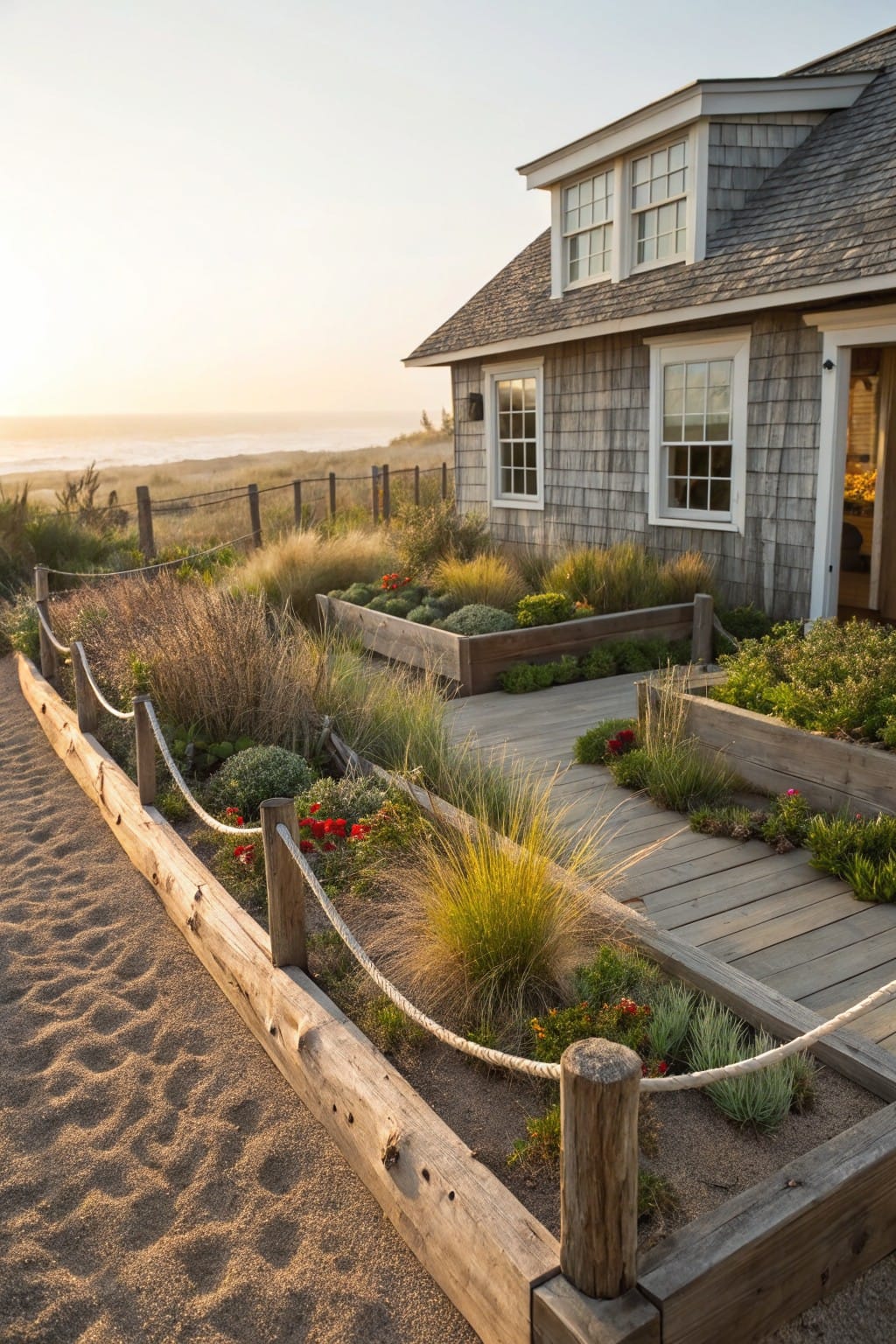
One practical way to keep raised garden beds looking sharp is to add simple rope strung between wooden posts. It works well along sandy paths or loose soil, holding back plants without much fuss. The weathered wood and rope give a casual beach feel that doesn’t overpower the yard.
This edging suits coastal homes or any spot with dunes or poor soil. Set the posts firm into the ground, then loop the rope loosely. It holds up okay in salt air if you pick sturdy rope, but check it now and then after storms.
Raised Beds Edged with Dark Stone Blocks
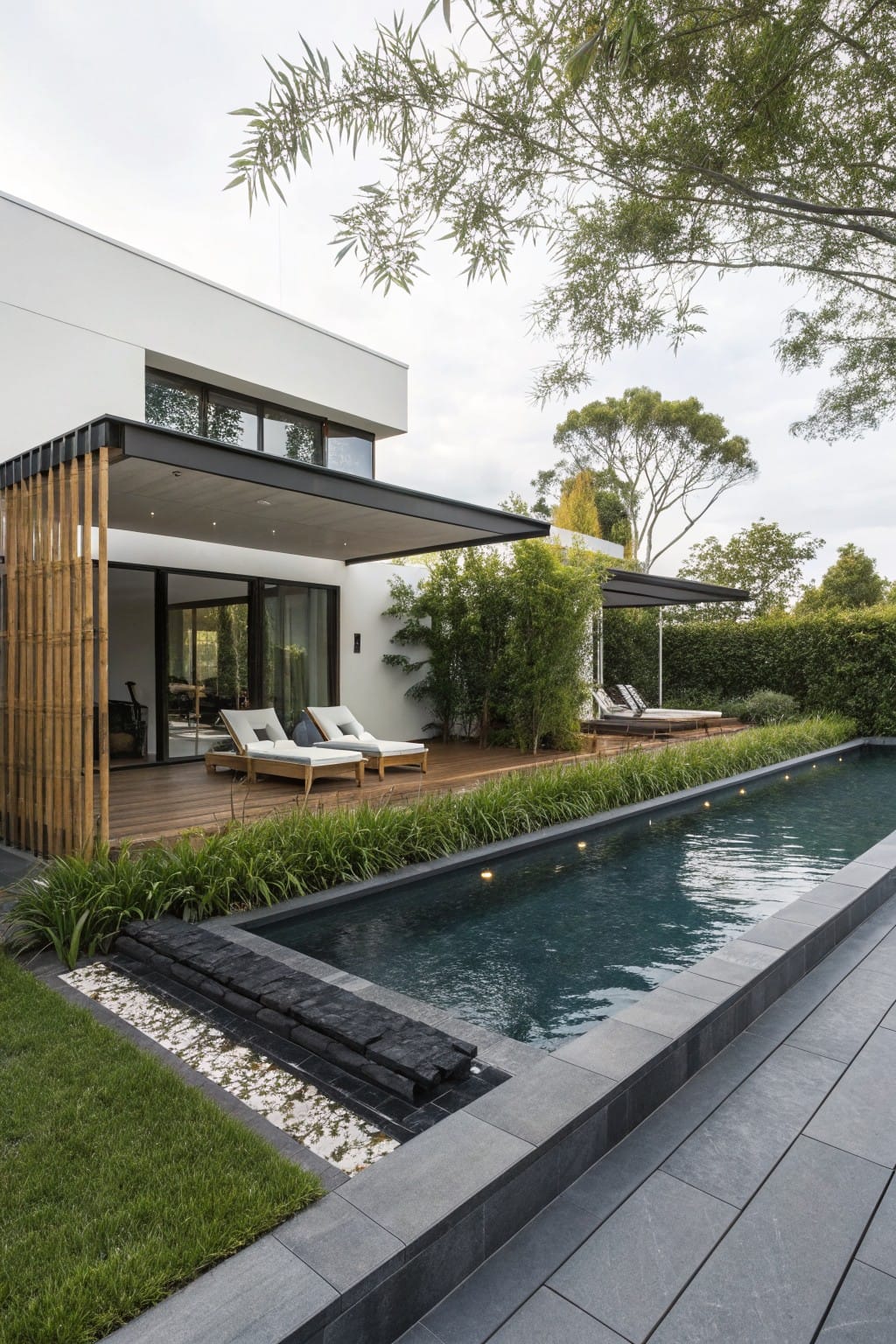
One practical way to edge raised garden beds is with these low dark stone blocks. They form a solid border that holds back soil and plants without much fuss. In this yard, the blocks run right along the pool edge, keeping grasses neatly in place while the pebbles below add a clean finish.
This edging works best next to patios, decks, or water features where you want a sharp line between hard surfaces and planting. It suits modern homes or any yard needing tidy separation. Just pick blocks that match your stone paths to avoid a patchwork look.
Stone Retaining Walls for Raised Garden Beds
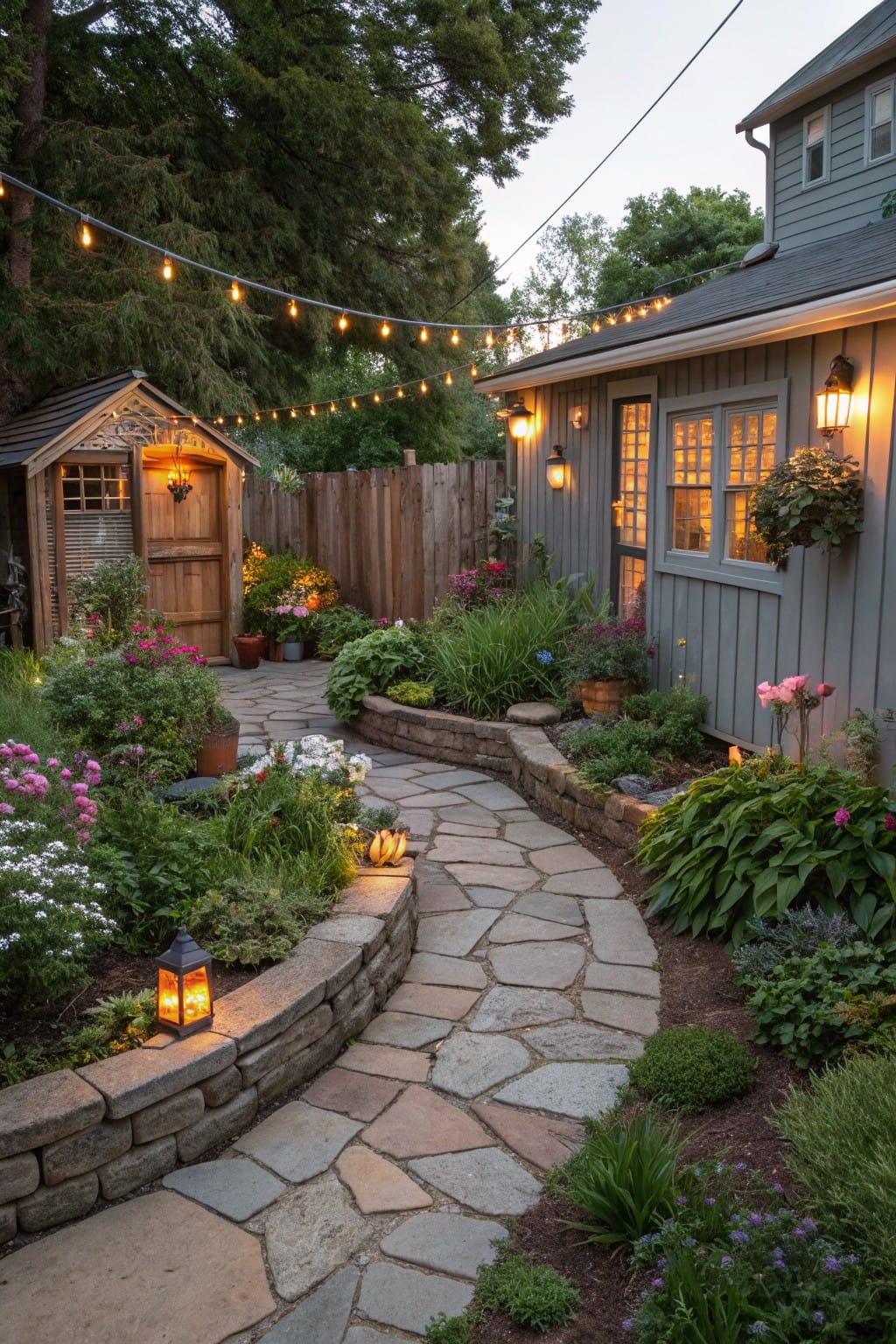
One practical way to edge raised garden beds is with low stone retaining walls. They hold back soil neatly and give your yard a clean, sturdy look. In this setup, the walls follow a winding flagstone path, keeping plants in place without much fuss. Folks like how it separates the path from the beds so you can walk without stepping on flowers.
These walls work best in sloped yards or where you want to build up soil levels. Stack natural stone blocks or use precast ones for easier work. They suit cottage-style homes or simple backyards. Just make sure the stones drain well to avoid soggy roots… a common headache otherwise.
Boxwood Hedges in Brick Raised Beds
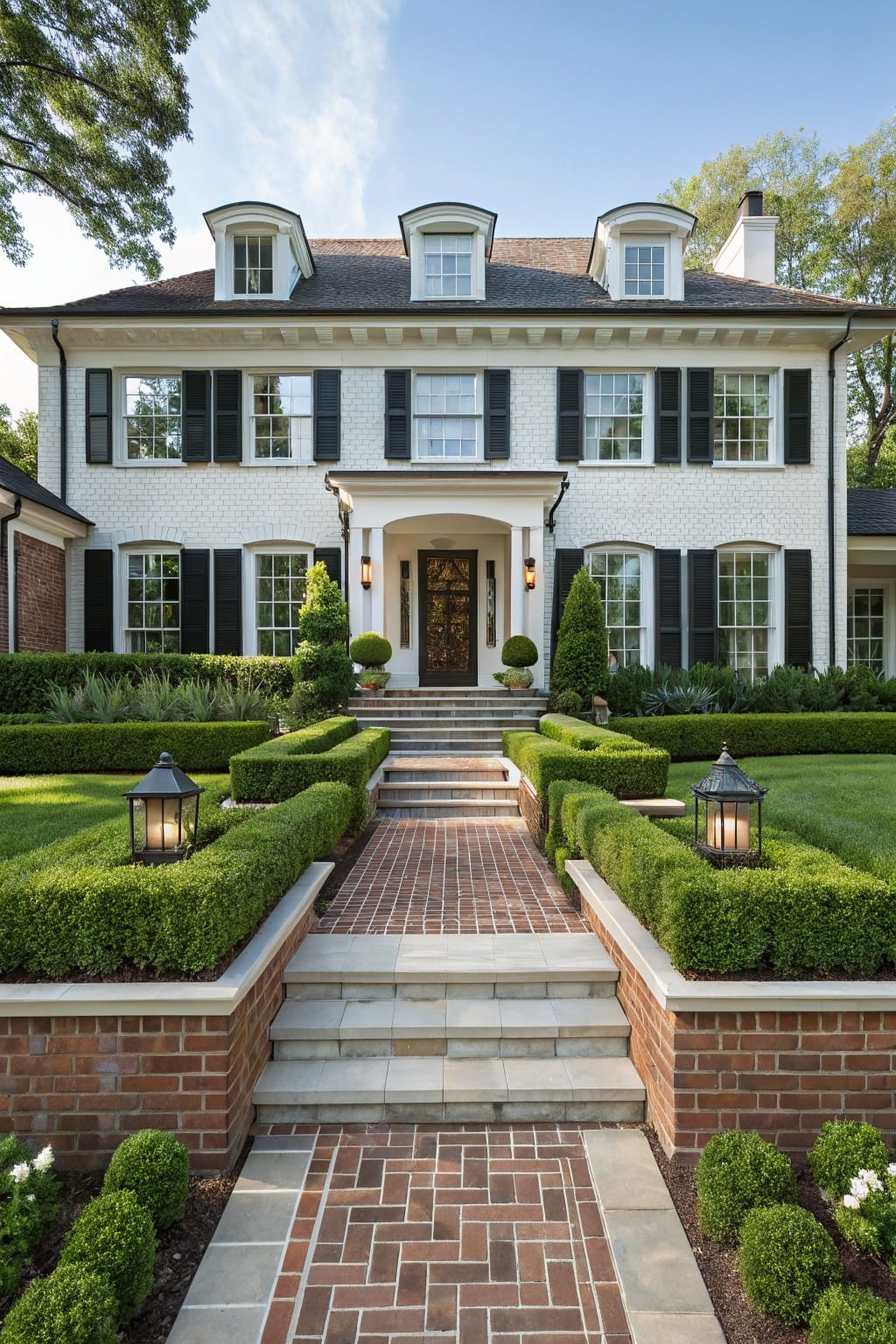
One practical way to edge raised garden beds is planting neat boxwood hedges inside low brick walls. You see this along a brick walkway here, where the trimmed green plants stay low and uniform. It gives a tidy frame that fits right with a traditional home front. Folks go for it because boxwoods hold their shape well and the brick adds a solid base that won’t shift over time.
Try this in front yards with straight paths or formal layouts. It suits colonial style houses or bigger lots where you want some structure without much upkeep. Just pick slow-growing boxwoods and trim them a couple times a year. Keep beds shallow, maybe a foot high, so the edging doesn’t overwhelm the walk.
Concrete Block Raised Garden Beds
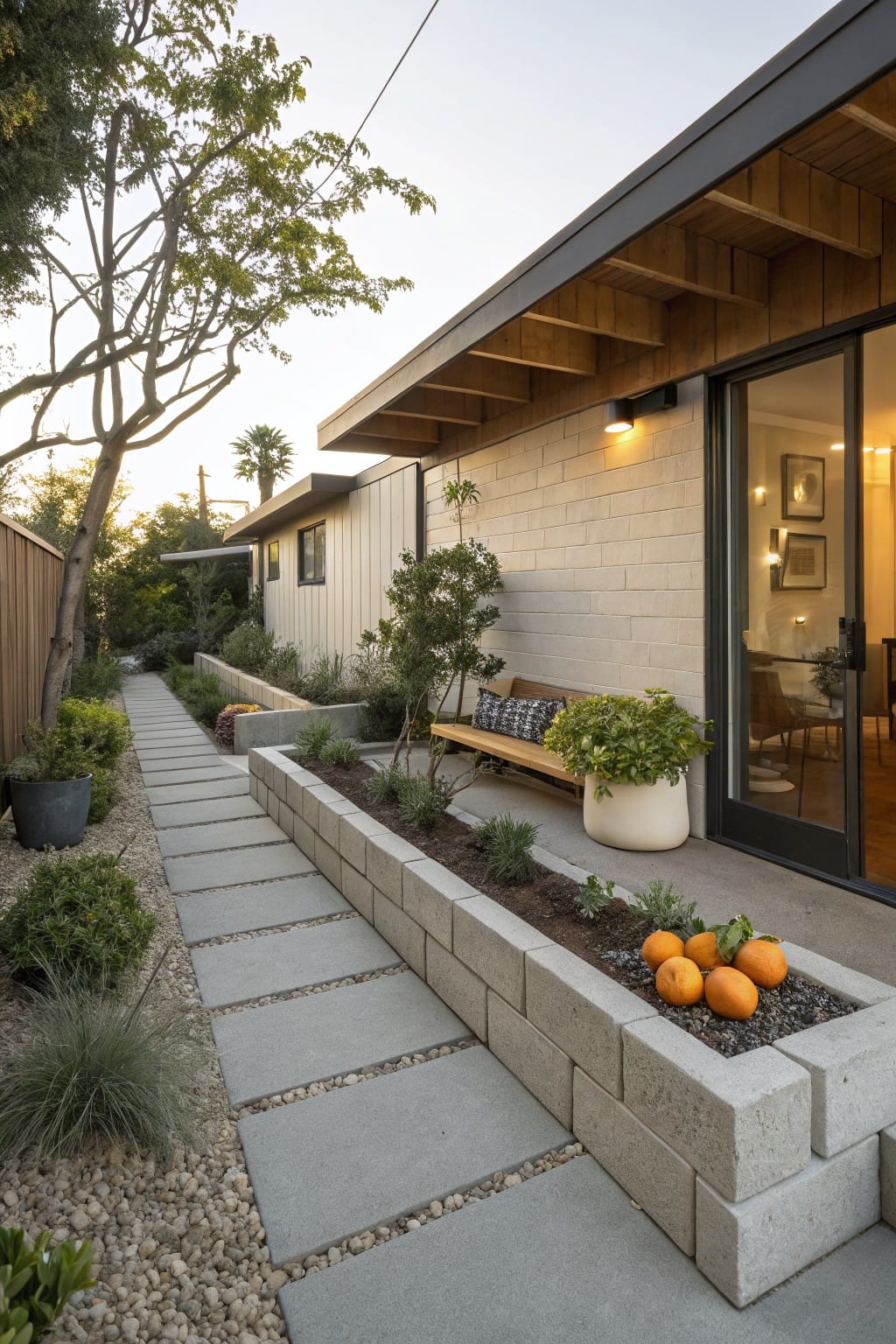
Concrete block raised garden beds make a clean edge along pathways. They’re sturdy and let you grow right up to the walk without spilling over. In this setup, the blocks hold soil for herbs, flowers, and even fruit like those ripe oranges. It’s a simple way to add planting without taking up extra yard space.
These work best in side yards or narrow spots next to the house. Stack standard blocks two or three high on level ground, fill with good soil, and plant low growers. They suit modern or midcentury homes with clean lines. Just make sure good drainage or the roots might rot. Easy to build yourself on a weekend.
Raised Garden Beds with Stone Edging
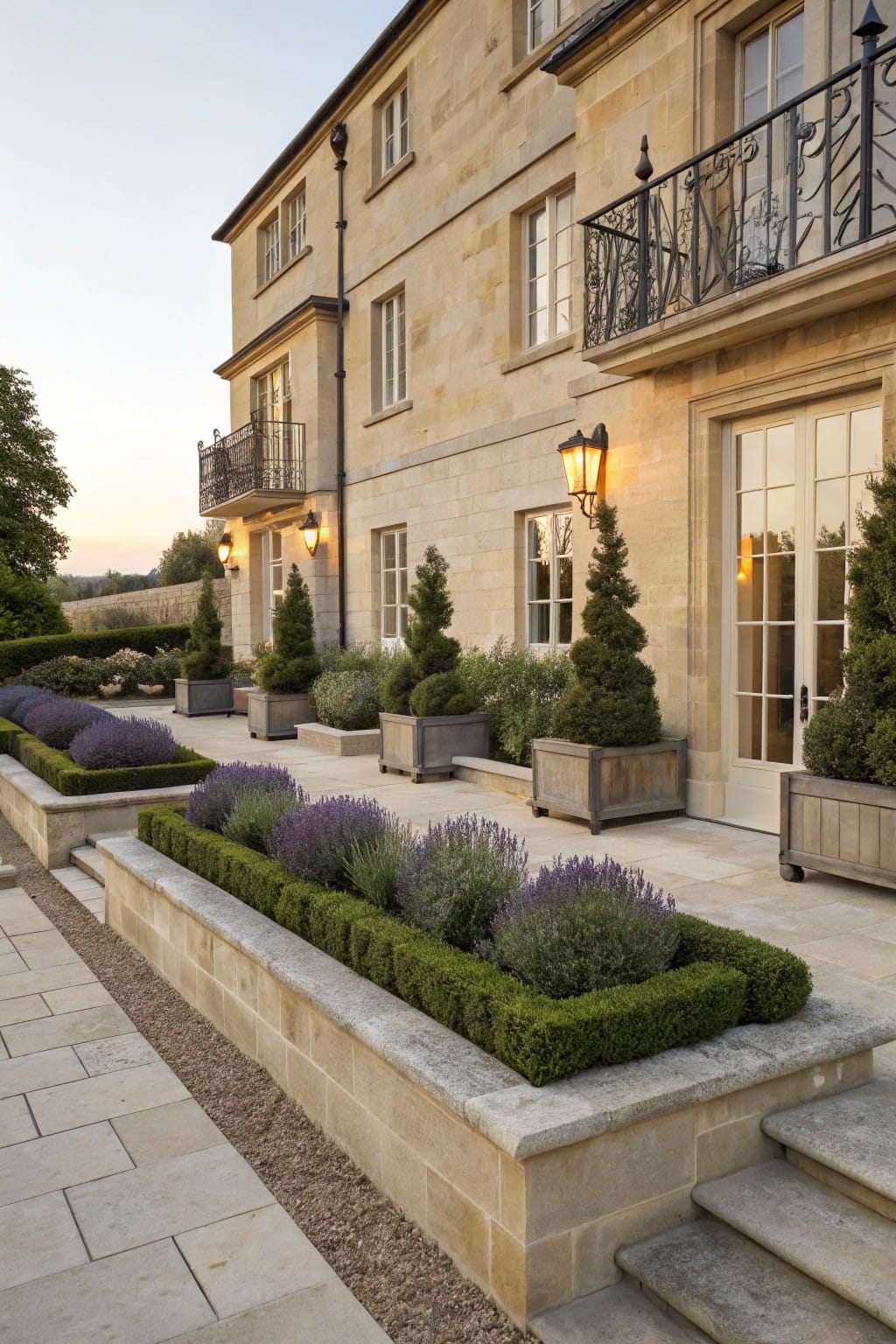
One practical way to edge raised garden beds is with low stone walls that match your house. Here they run right along the patio edge, holding back neat boxwood hedges and lavender. It keeps the beds contained and gives a clean line that ties into the stone building without much fuss.
This works best next to patios or walkways where you want a formal look that lasts. Use local stone if you can, for that natural fit. Suits older homes or any yard aiming for structure, but keep the walls under two feet high unless you have room to spare.
Gravel Paths Between Raised Beds
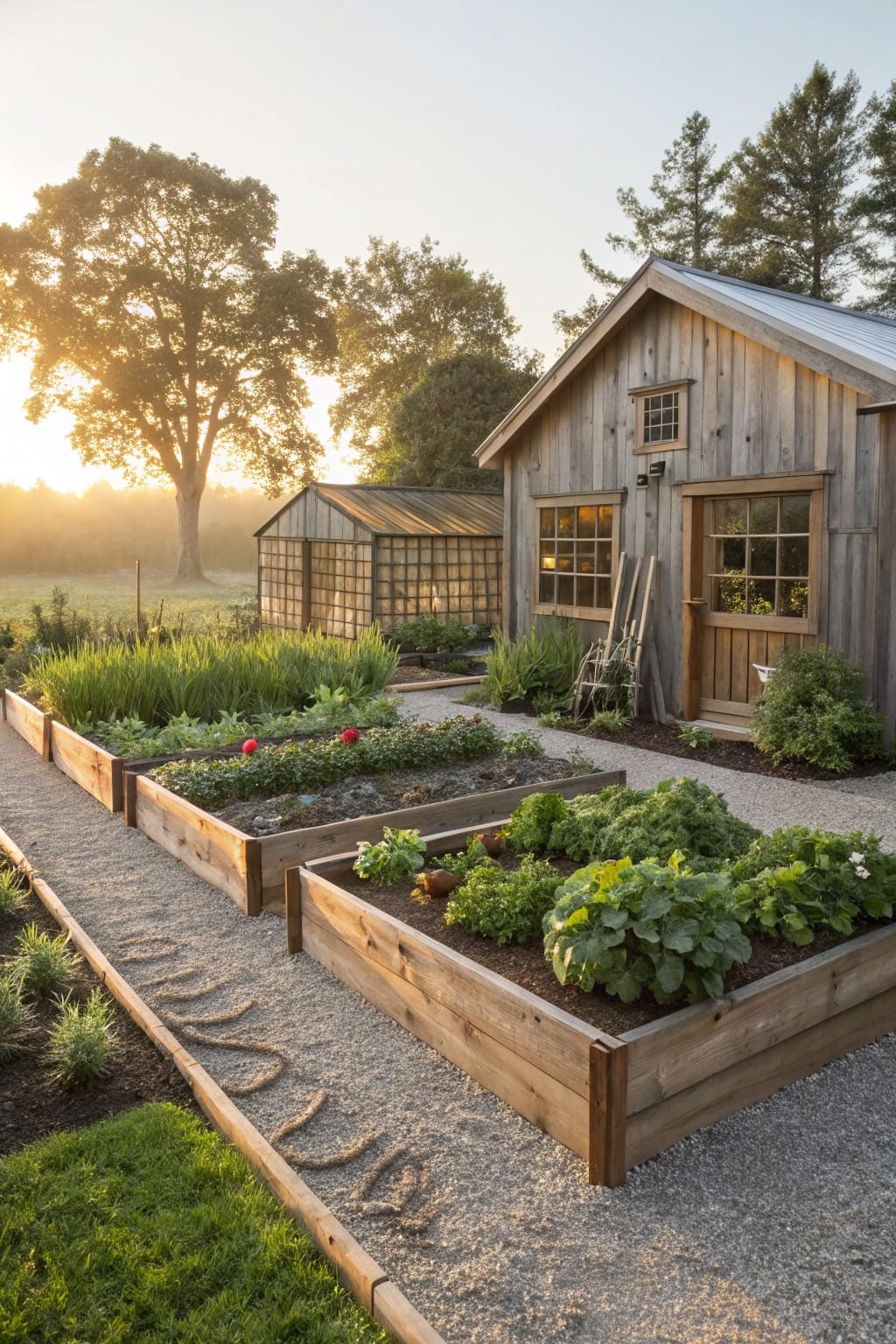
Straight gravel paths like these do a fine job of edging raised garden beds and keeping everything in line. They give the beds clear boundaries, so plants don’t spill over, and the whole setup looks put-together right from the start. No fancy borders needed. Just simple gravel that lets you walk between beds without stepping in dirt.
Put these paths to work in any backyard veggie patch or near a shed or greenhouse. They suit sloped yards well since gravel drains fast after rain. Line the bottom with fabric to stop weeds, then top with pea gravel. Watch the paths don’t get too wide, or they’ll eat up planting space.
Raised Beds Edged in Concrete Blocks
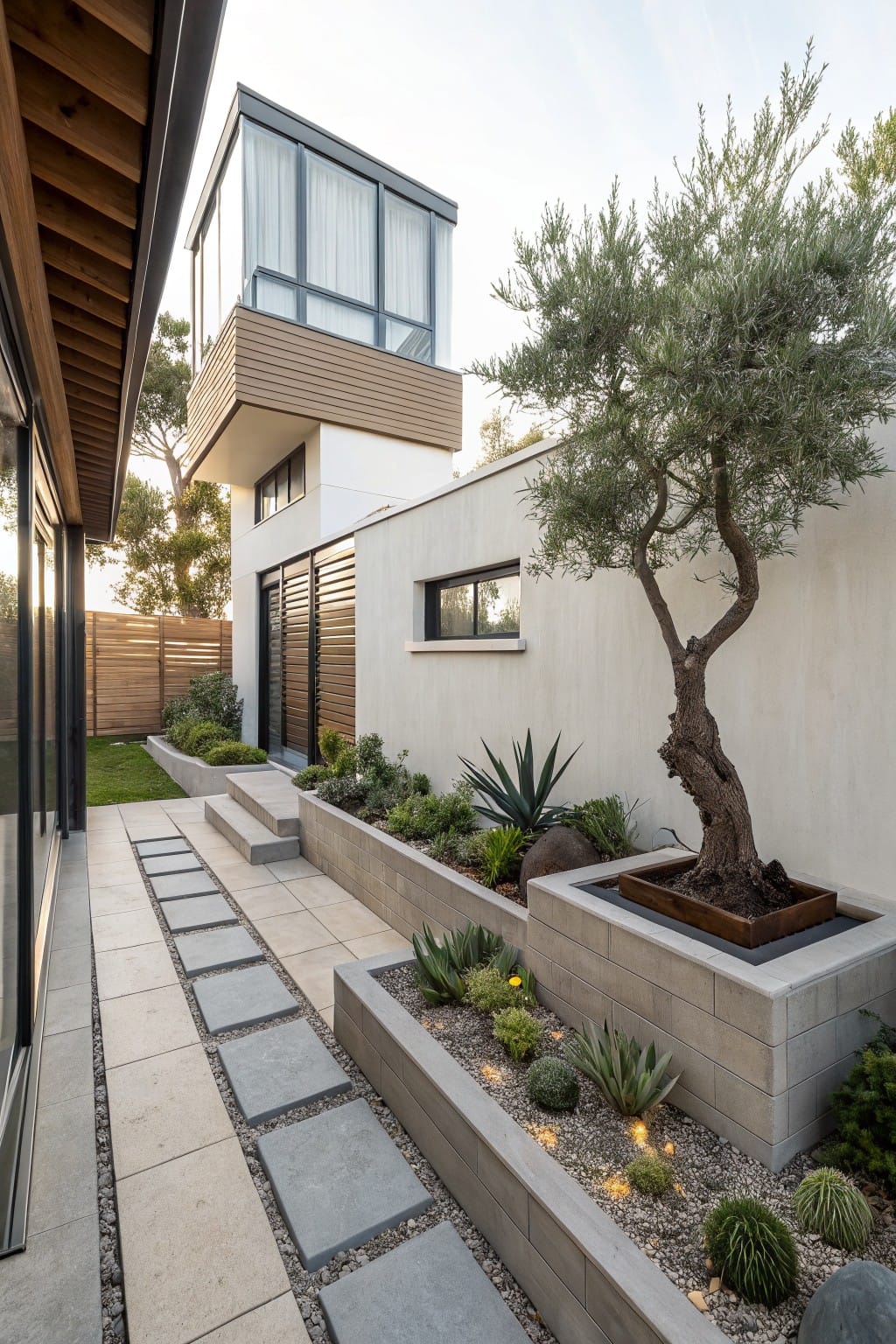
Concrete blocks make sturdy edging for raised garden beds. They stack easily into low walls that keep soil in place and give a neat border. Along this walkway, the beds hold gravel mulch and plants like agave and succulents. That setup looks sharp without much upkeep.
Use this in side yards or tight spots by the house. It fits homes with simple lines or poor soil. Stack the blocks two or three high, fill with well-draining mix. Watch drainage though. Wet roots rot those tough plants fast.
Stone Edging for Raised Garden Beds
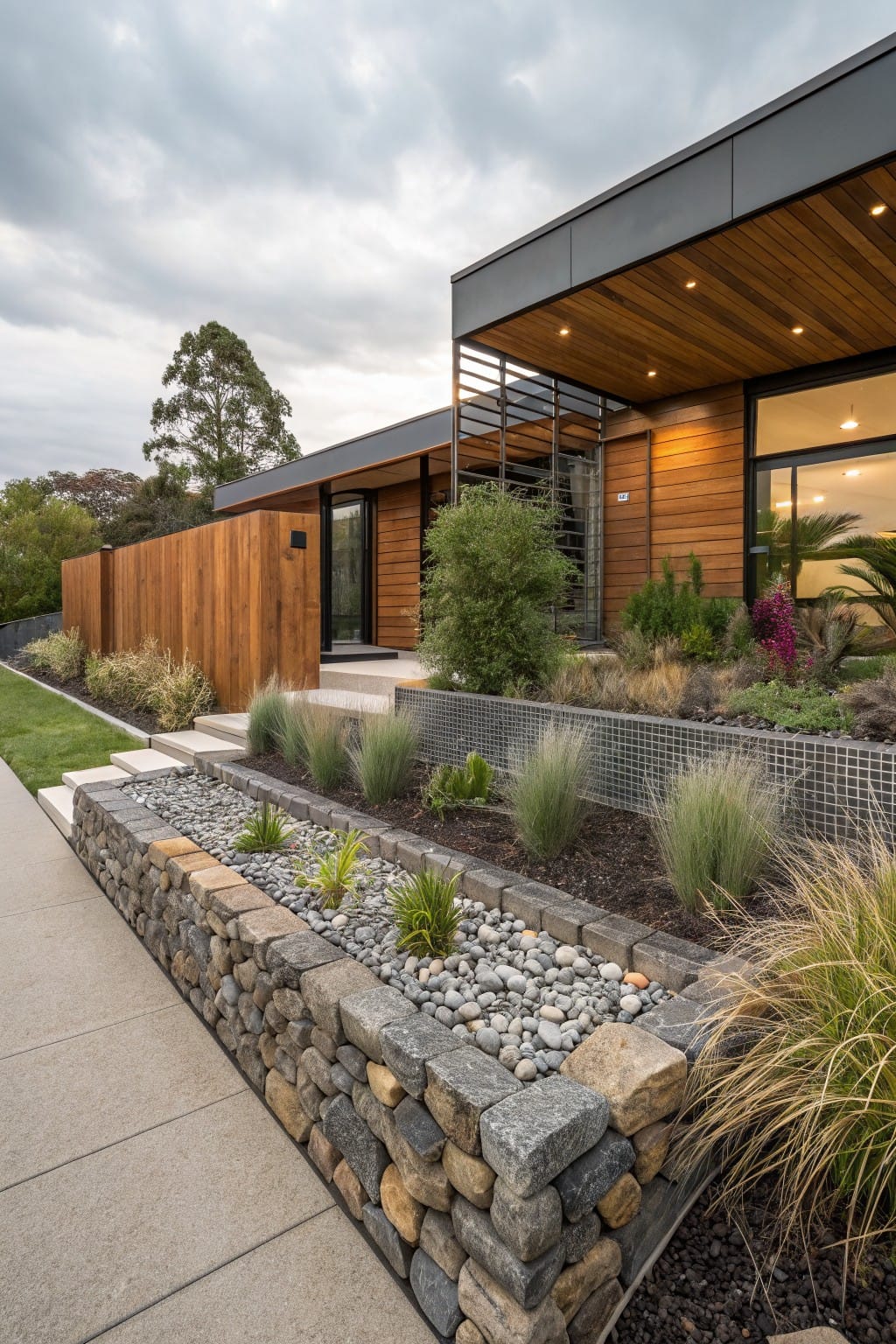
One straightforward way to edge a raised garden bed is with a low dry-stacked stone wall. It gives a natural, sturdy look that holds back soil without much fuss. In this setup, irregular stones fit together casually, and inside you have gravel mulch with tough grasses poking through. Folks like it because it blends right into the yard, especially along a walkway or near the house.
You can use this edging in sloped yards or anywhere you need to level things out a bit. It works well on modern homes or older ones with a casual vibe. Pick local stones for a cheaper price and better match. Just make sure the base is solid so it doesn’t shift over time… and go easy on the plants if you’re in a dry spot.
Perforated Metal Beds Edge Pathways
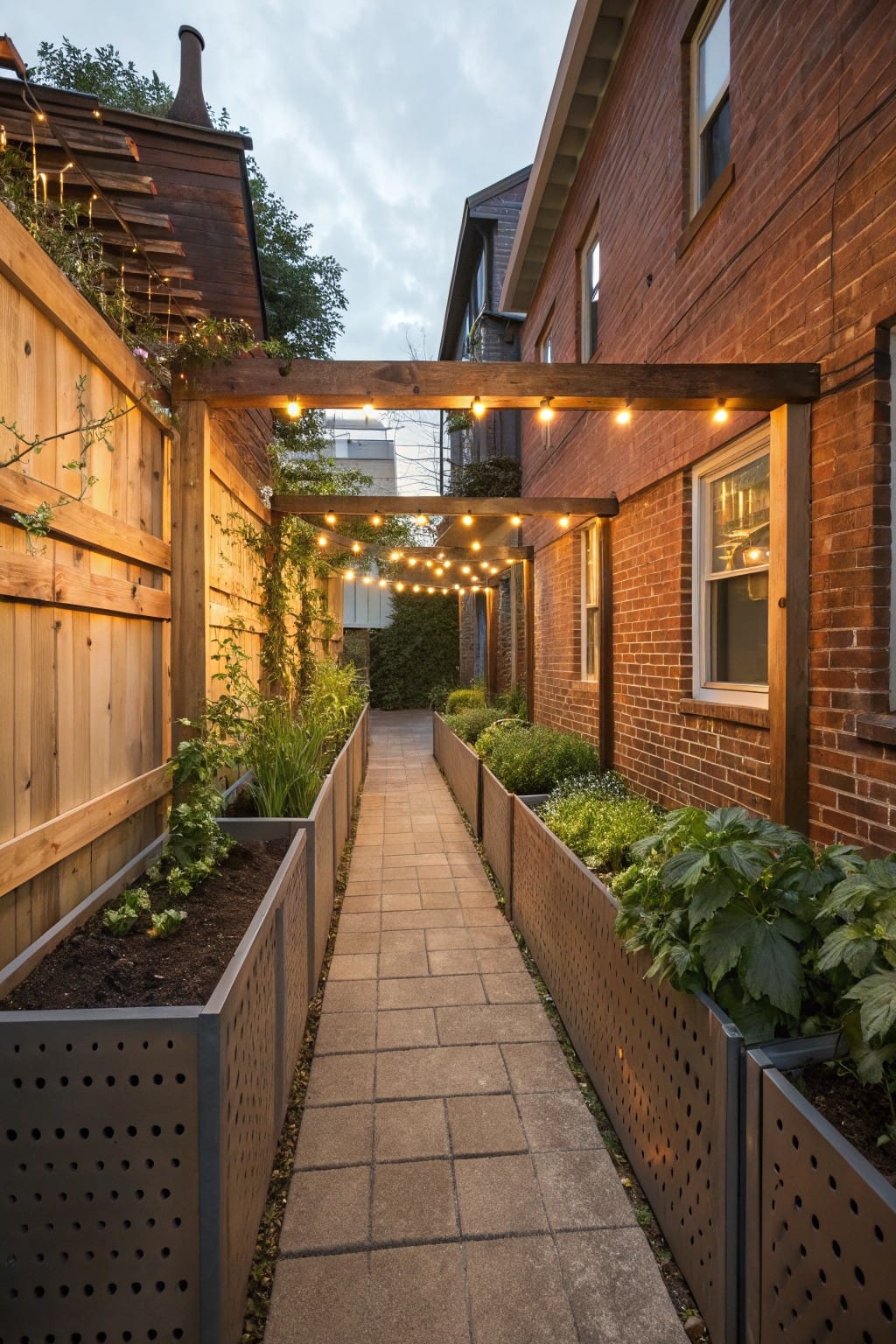
These perforated metal raised beds line both sides of a walkway and keep everything neat. The holes in the sides let excess water drain out fast, so roots stay healthy without soggy soil. Plants like herbs and greens fill them up, spilling over just a bit for a lived-in feel. Against a plain fence and house wall, they add structure without taking up room.
Try this in tight side yards or alleys where you want to grow food close to the house. Pavers down the middle make it easy to walk through. It fits older brick homes or any setup with not much space… just check that the metal holds up to your weather. Overhead string lights turn it nice at night.
Terraced Raised Beds with Stone Walls
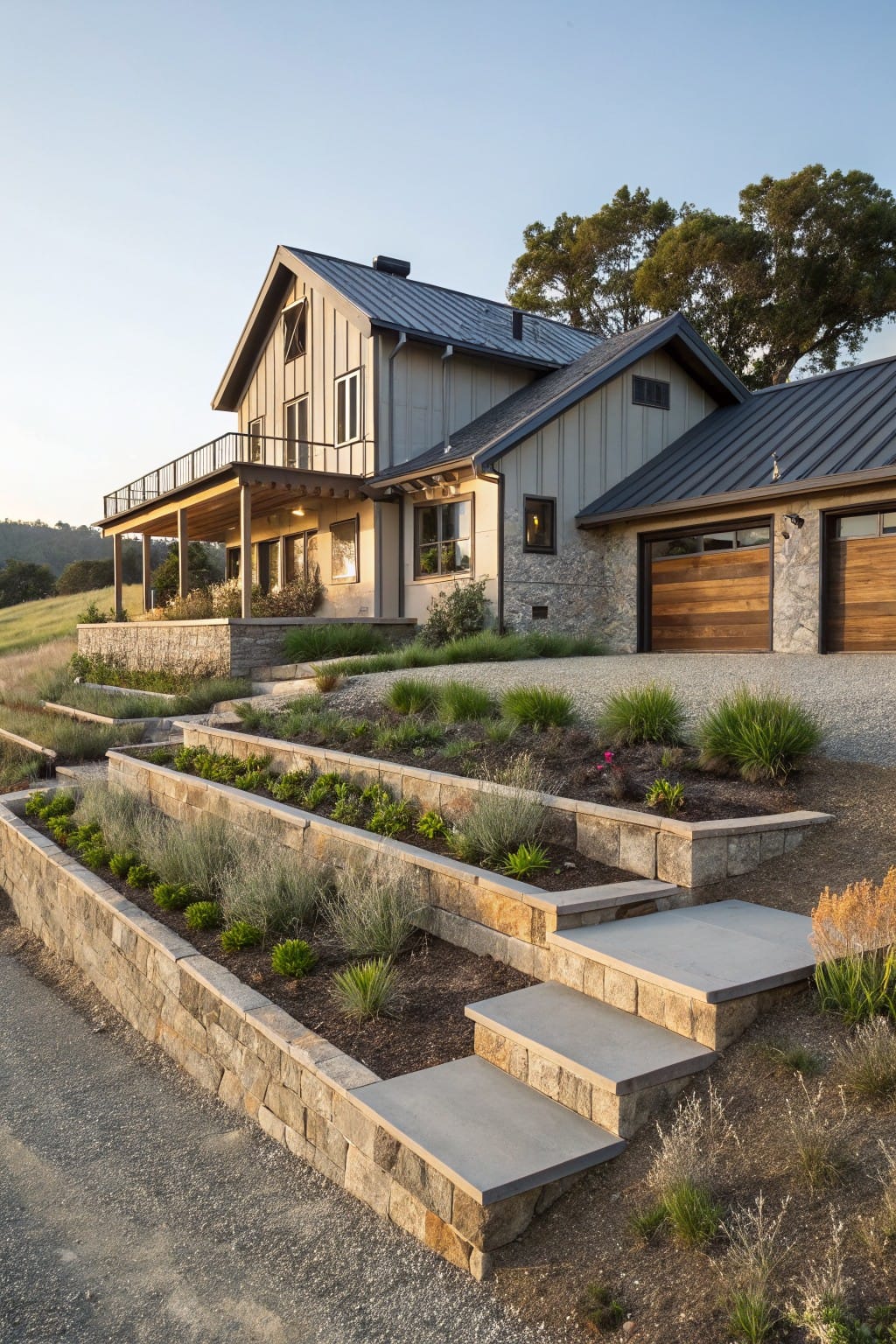
Sloped yards can be tough to garden. But stacking natural stone into terraced raised beds turns that problem into neat planting levels. The walls hold back soil while letting plants spill over the edges a bit. It keeps everything looking tidy without much upkeep.
This idea fits homes on hillsides, especially ones with a rustic or modern farmhouse style. Use dry-stacked local stone so it blends with the ground. Just check drainage first, or water might sit and cause issues down the line.
Frequently Asked Questions
Q: How do I stop grass from creeping into my raised beds?
A: Bury your edging at least 4 inches deep all around the bed. Pack soil tight against it from the outside. That blocks roots cold.
Q: What’s the fastest edging for a beginner?
A: Pound in some landscape timbers or logs. They flex for curves and hold soil back right away. Skip bricks if you hate mortar.
Q: Can I use wood edging in a damp yard?
A: Go for cedar or redwood, they resist rot better than pine. Treat the bottoms with sealant before install. And refresh every year or so…
Q: How do I fix uneven ground before edging?
A: Rake out high spots and fill lows with topsoil. Tamp it flat with your feet or a board. Water lightly so it settles true.
