

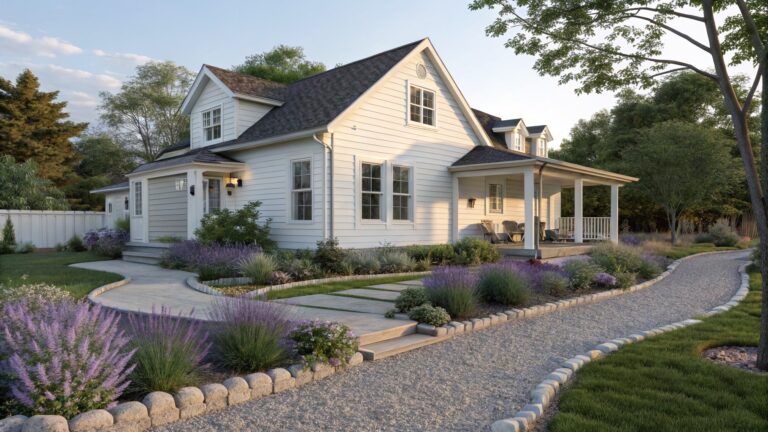
I’ve spent enough time fussing over flower beds to know a smart border makes all the difference in keeping things neat.
I lean toward using reclaimed bricks in my own yard because they ground the plants without pulling focus.
Borders work when they echo the garden’s rhythm and shrug off weeds or weather.
The failures come from stuff like painted wood that peels or intricate metal that rusts unevenly.
One gravel and river rock combo stands out as worth stealing for its quiet hold.
Winding Gravel Paths with Stone Edging
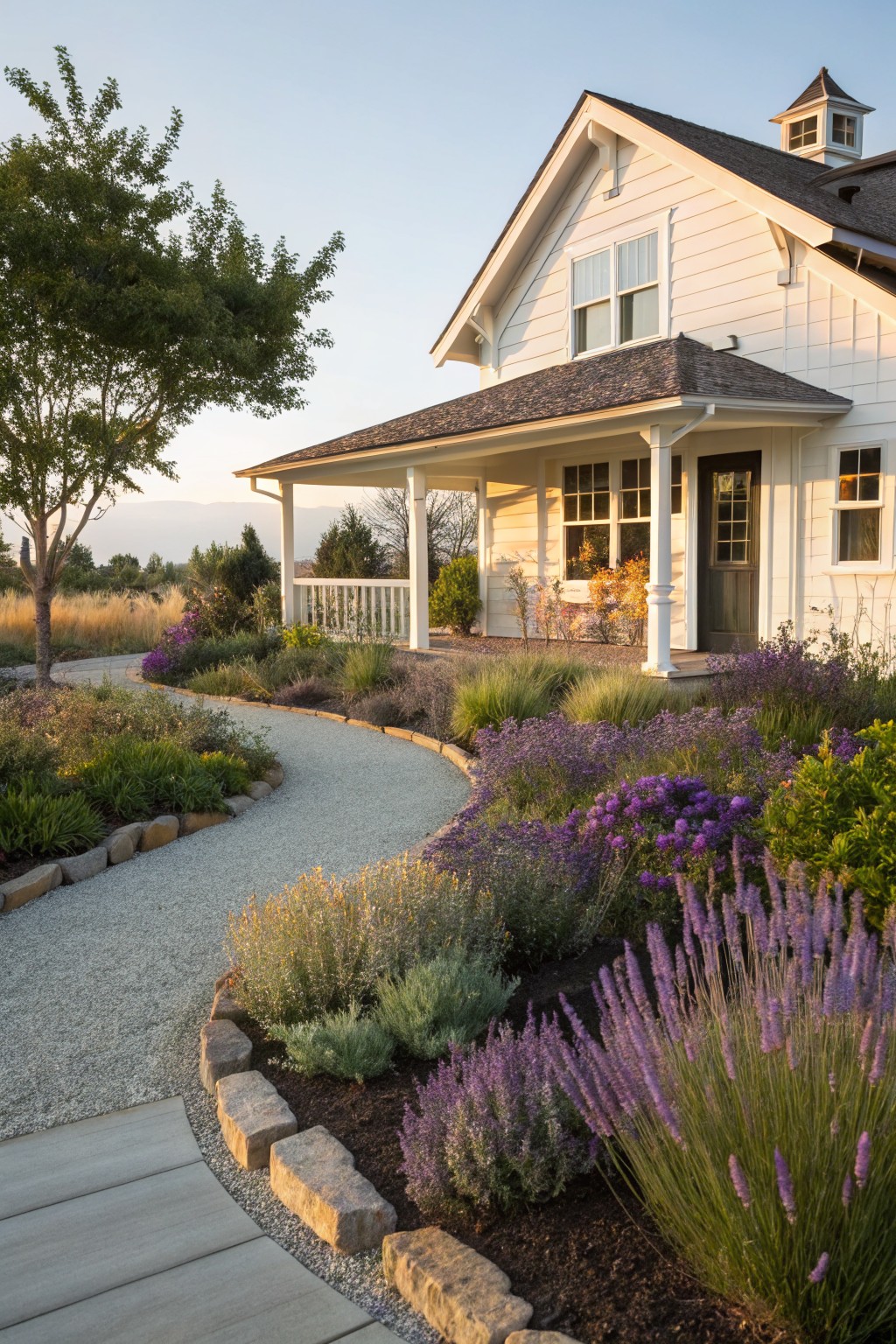
Gravel paths like this one make a yard feel welcoming without a lot of upkeep. The gentle curve leads right to the front door, and those rough stone blocks along the edge hold everything in place. Purple lavender and tough grasses fill in the beds, giving color that lasts through dry spells.
This setup works best around casual homes with bigger lots. Lay down gravel over a weed barrier, set the stones to curve naturally, and plant drought-tough stuff like lavender or sedum. Just keep an eye on drainage so water doesn’t pool. Easy to do yourself in a weekend.
Raised Metal Borders for Walkway Beds
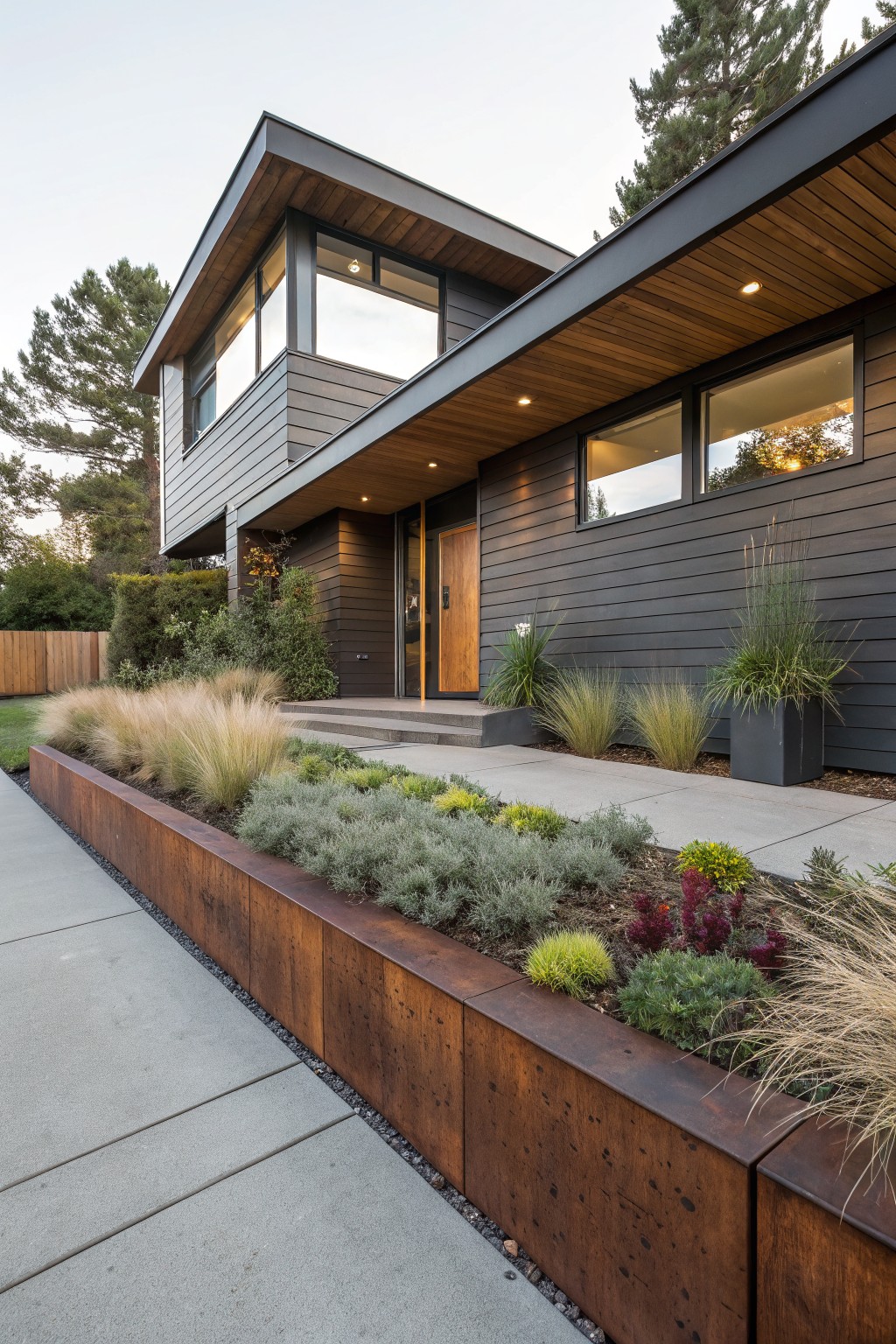
Raised metal borders like corten steel make a strong edge for flower beds right along your walkway. That rusty finish blends with the outdoors over time and holds back plants without wood rot or crumbling stone. Here it’s packed with grasses and low succulents that barely need water or trimming.
Line them up next to concrete paths leading to your front door, especially if your house has a modern side. They suit sloped yards or tight spaces where you want structure but not fussy upkeep. Pick plants that match your climate, and keep an eye on runoff from the rust.
Ornamental Grasses Along Brick Paths
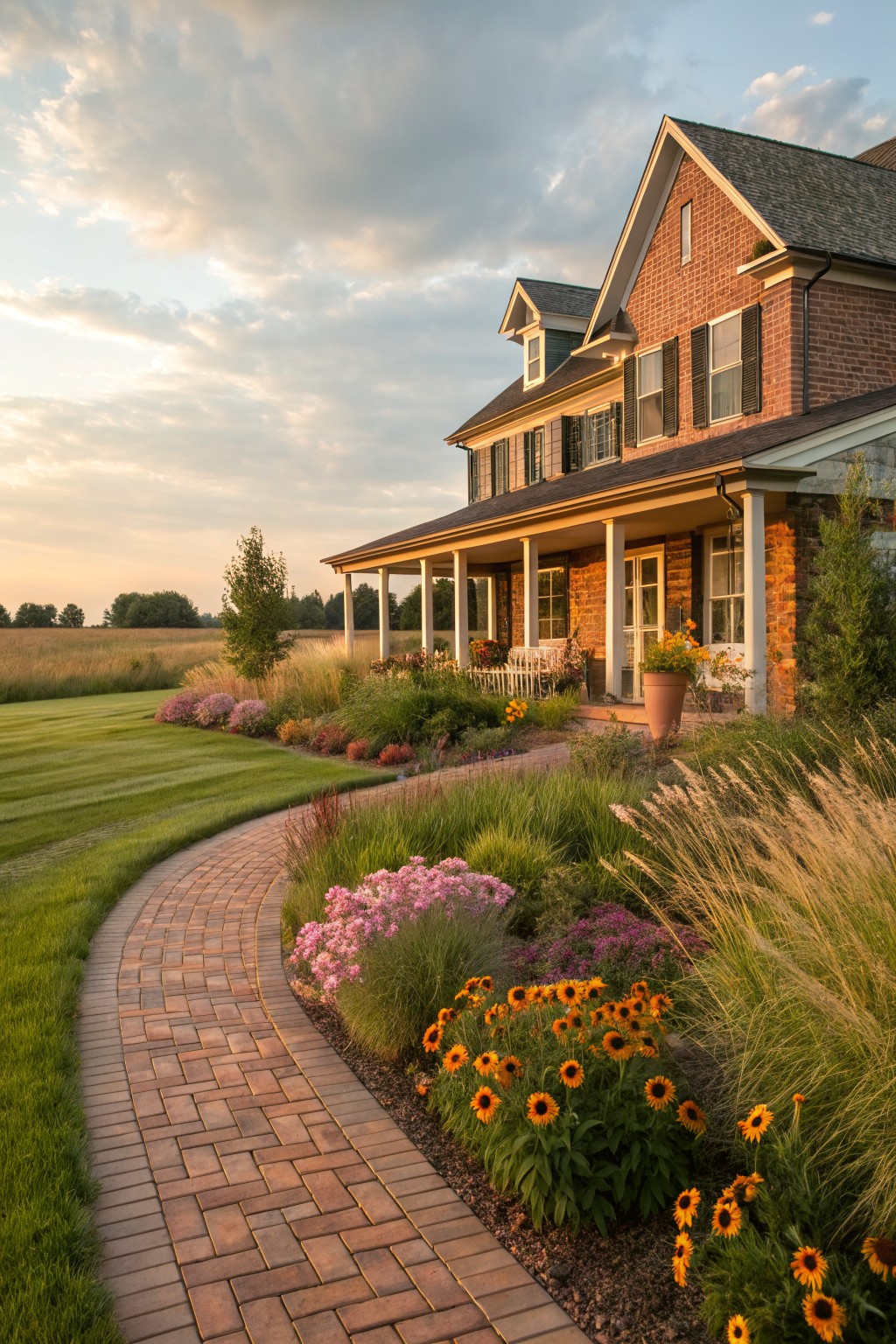
One easy way to border a walkway is with clumps of ornamental grasses mixed in with a few colorful perennials. You see tall switchgrass swaying next to sunflowers and pink blooms here, all hugging a simple brick path. These plants fill out fast, need no deadheading, and hold their shape through fall. They give that soft edge without much work.
Try this in your front yard where the path curves toward the house. It suits bigger lawns with full sun, and brick paths like this one pair right up. Just plant in groups for bulk, cut grasses back in spring, and watch weeds stay down. Not bad for steady color all season.
Rock and Pebble Flower Bed Borders
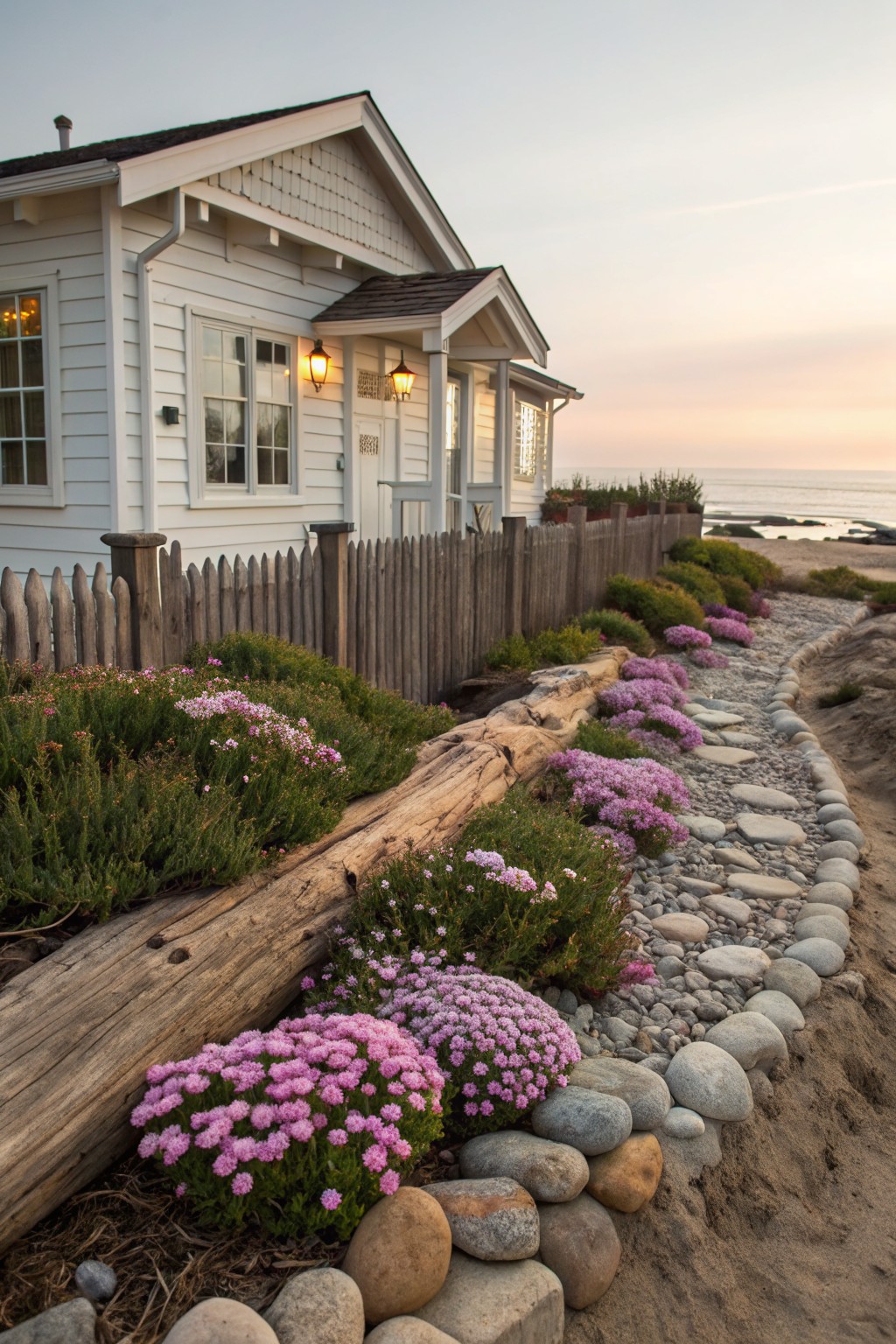
Smooth pebbles and larger rounded rocks make a clean edge for flower beds without any fussy upkeep. You see it here holding back low-growing pink ice plants and tough shrubs along a sandy path. That simple line keeps mulch or soil in place. A weathered driftwood log tucked along one side gives it a beachy feel too. Folks like how it looks put-together but stays easy.
Try this in dry yards or coastal spots where water is short. It suits cottage homes near the water best. Lay down landscape fabric first if weeds bug you. Then set the rocks in place and plant drought-tough stuff like ice plant. Watch the drainage though. Poor spots can drown roots quick.
Raised Concrete Borders for Planting Beds
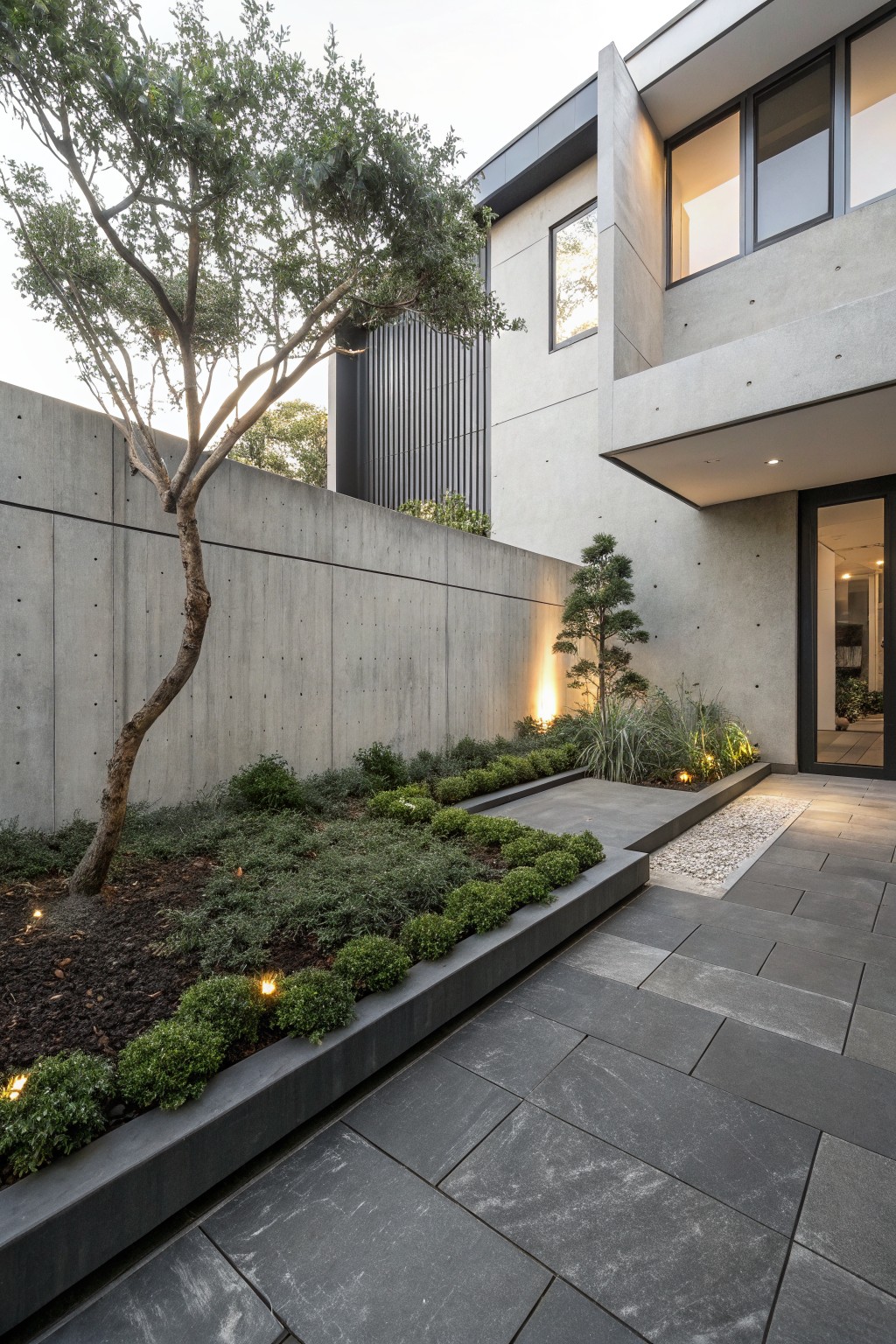
Raised concrete borders like these make flower beds easy to manage. They hold back the soil and plants neatly, so you don’t have to edge with a trimmer every season. Boxwoods and grasses fill the beds here, staying low and shaped without much fuss. It ties right into a concrete house wall too.
Put these borders along paths or entries where you want clean lines. They suit modern homes or tight yards best. Just slope the inside a bit for drainage, or plants might sit too wet.
Stone Retaining Wall Flower Bed Borders
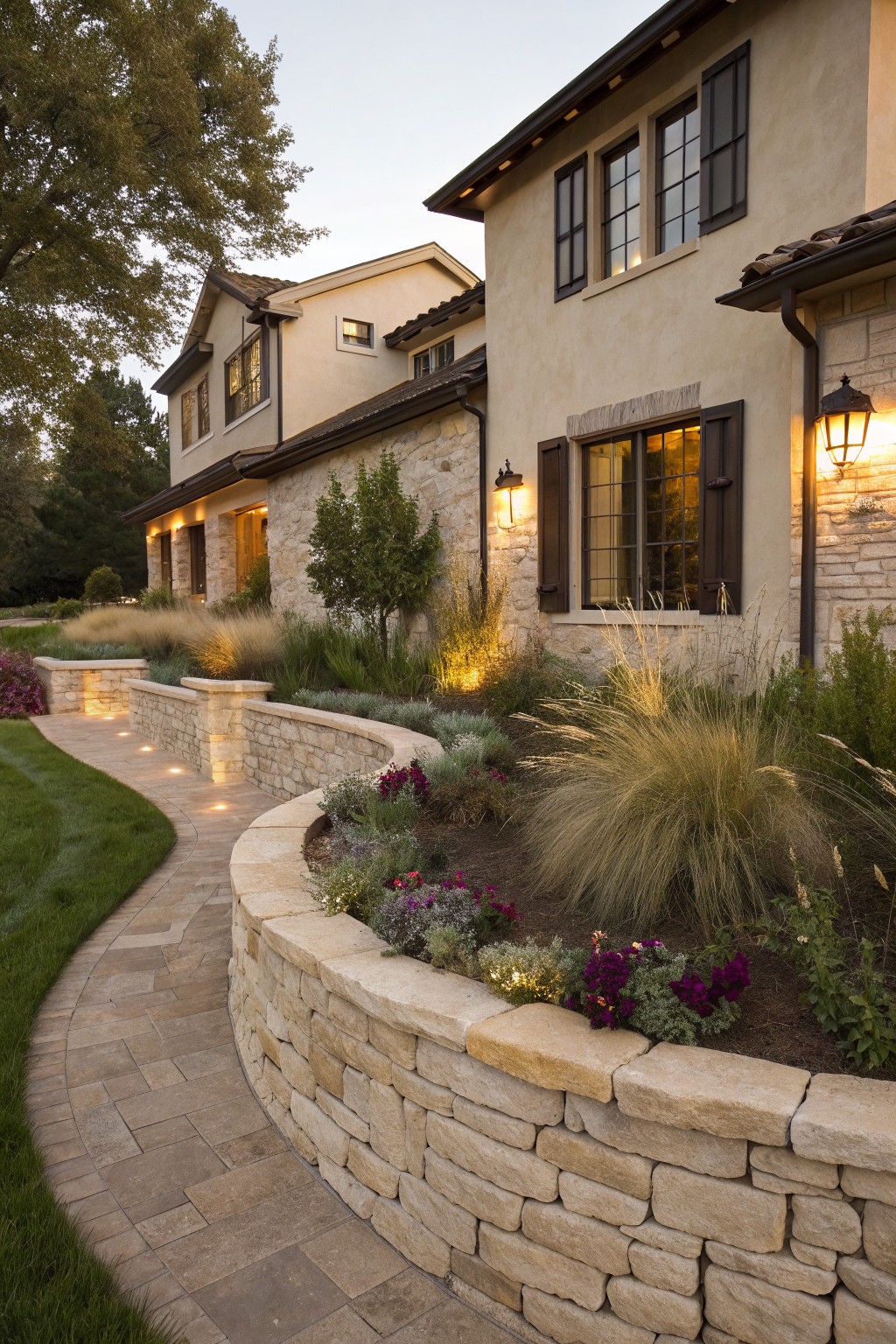
Stone retaining walls work well as borders for flower beds because they keep soil from spilling over and create a solid edge that blends with the yard. The natural look of stacked stones fits low-maintenance plants like ornamental grasses and perennials. It gives structure without needing constant trimming.
Use this idea along pathways or on slight slopes where you want to define the bed shape. It suits homes with stone or stucco siding. Go for native plants to keep upkeep low, and add path lights for evenings. Just make sure the wall drains well to avoid plant rot.
Metal Edging for Gravel Beds
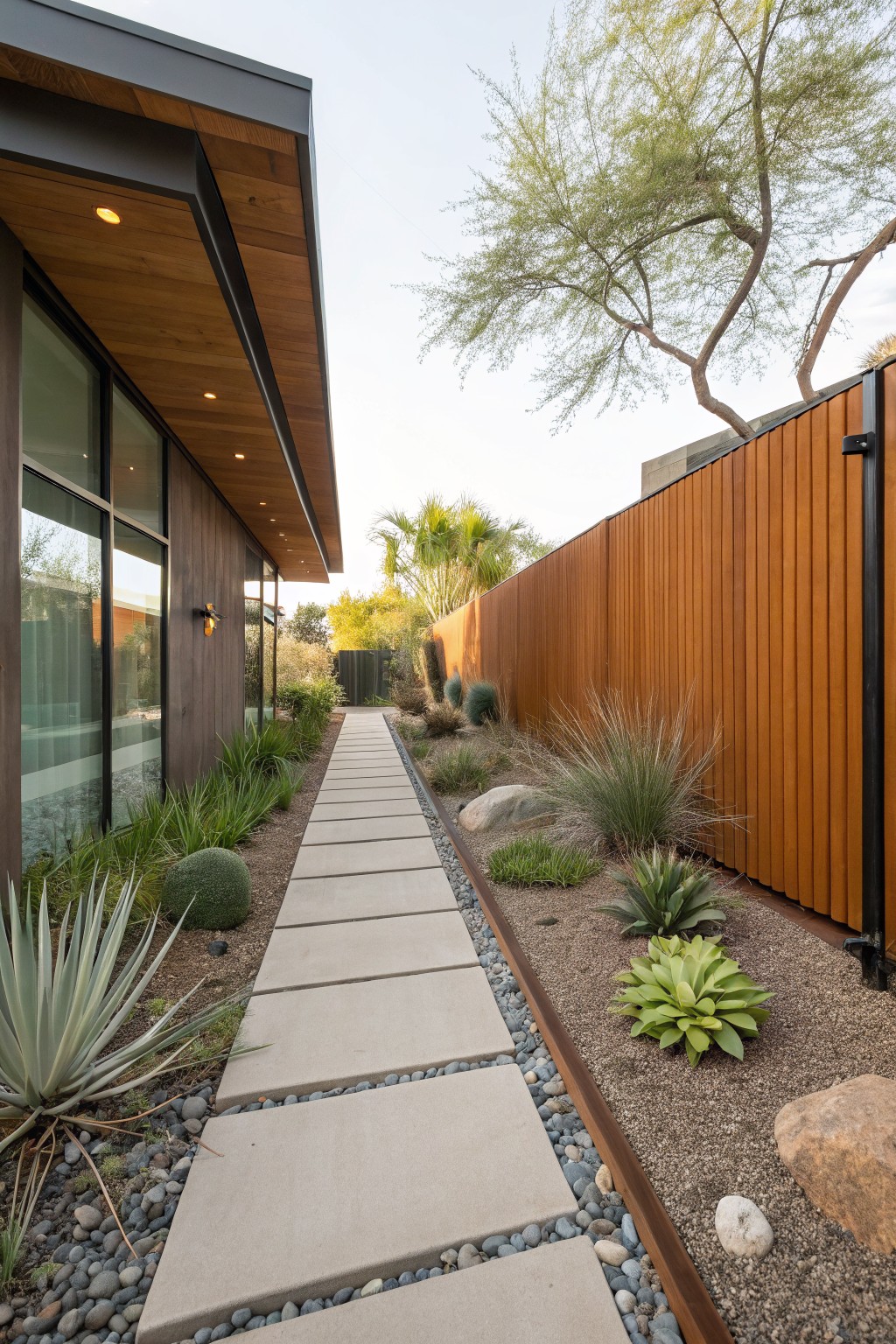
One clean way to border flower beds is with slim metal edging around gravel mulch. It holds the loose stones in tight and sets off low-water plants like agave and grasses without much fuss. In this yard, the edging runs right along a simple walkway, keeping the bed neat even as plants fill out over time.
Put it to work beside paths or house walls where you need definition but not high upkeep. It suits sunny yards or dry climates best, pairing well with concrete pavers and boulders for weight. Go for powder-coated steel to avoid rust, and keep plantings sparse at first.
Purple Flower Beds Along Porch Steps
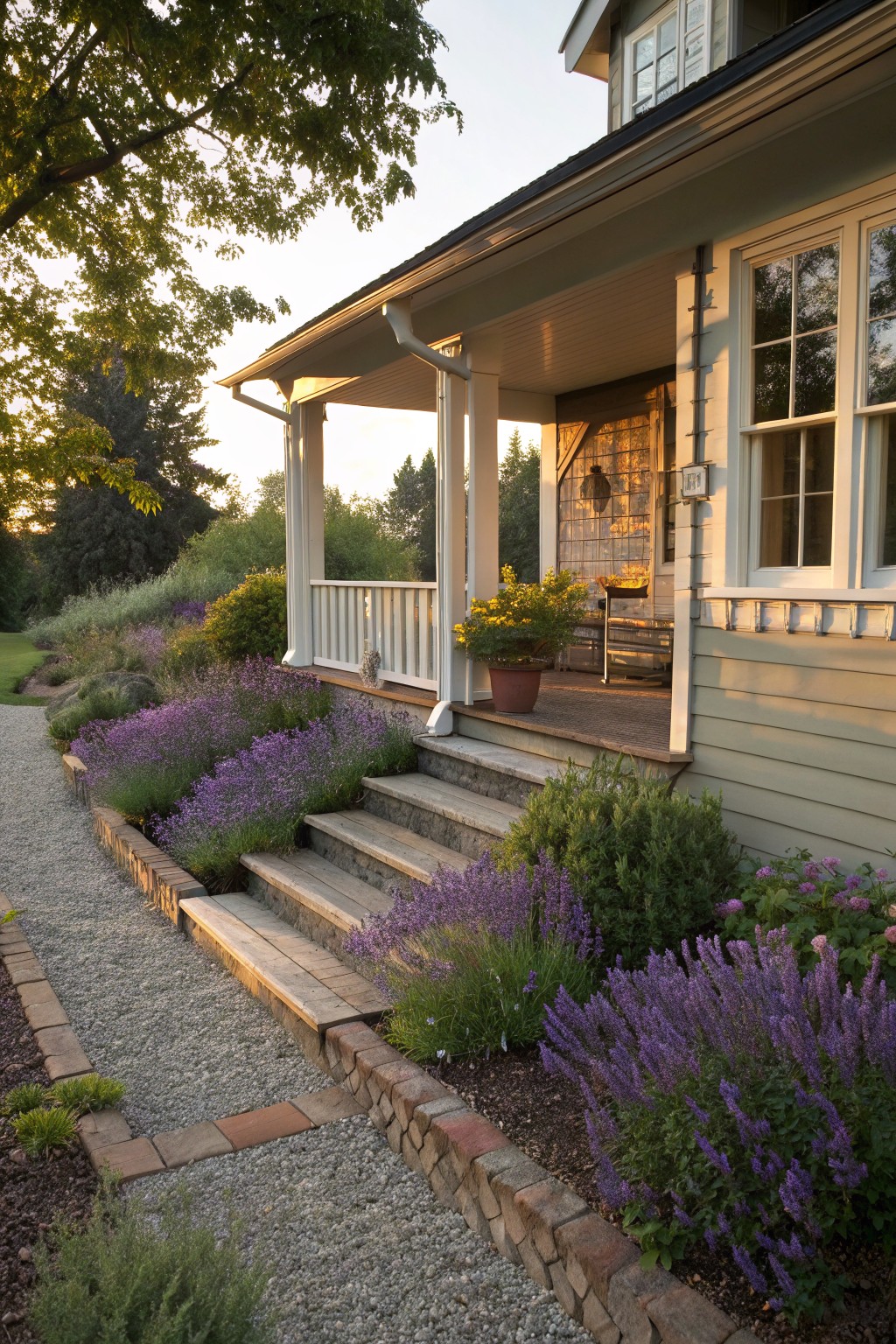
Purple flower beds tucked right along the steps to a porch create an easy path that draws folks right up to the door. You see it here with repeating clumps of those tough purple blooms, maybe lavender or salvia, spilling over low stone edges. They add color without taking over, and the mass planting keeps it simple looking from the street.
Try this where you’ve got steps or a walkway up to the house, especially on craftsman-style homes or older places with some slope. Pick perennials that handle dry spells well so you aren’t out there watering all summer. Keep the beds edged neat with bricks or rocks, and it’ll stay low fuss year after year.
Curved Stone Flower Bed Borders
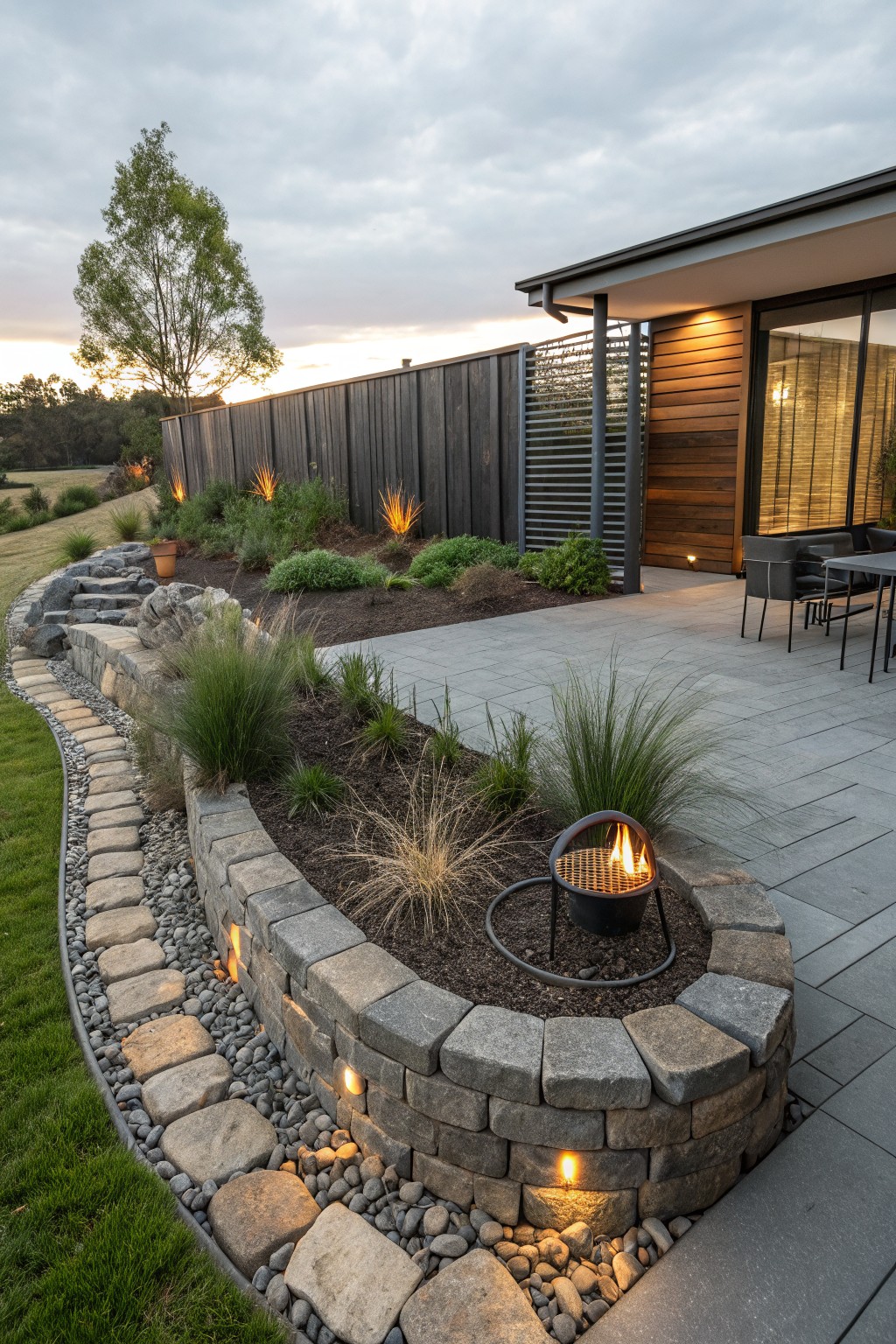
A curving wall made from rugged stone blocks makes a solid border for flower beds. It holds soil in place while letting you tuck in easy grasses that wave in the breeze. This keeps things low fuss since the plants handle drought and don’t need deadheading or pruning much. Built-in lights along the base give a soft glow come evening.
Put these borders next to patios or along paths where you have a little slope to work with. They suit modern homes or any yard wanting clean lines without high upkeep. Pick stones that match your area, fill with tough perennials, and make sure water drains away fast. Simple shapes like this curve fit most spots.
Stepping Stone Paths in Gravel Beds
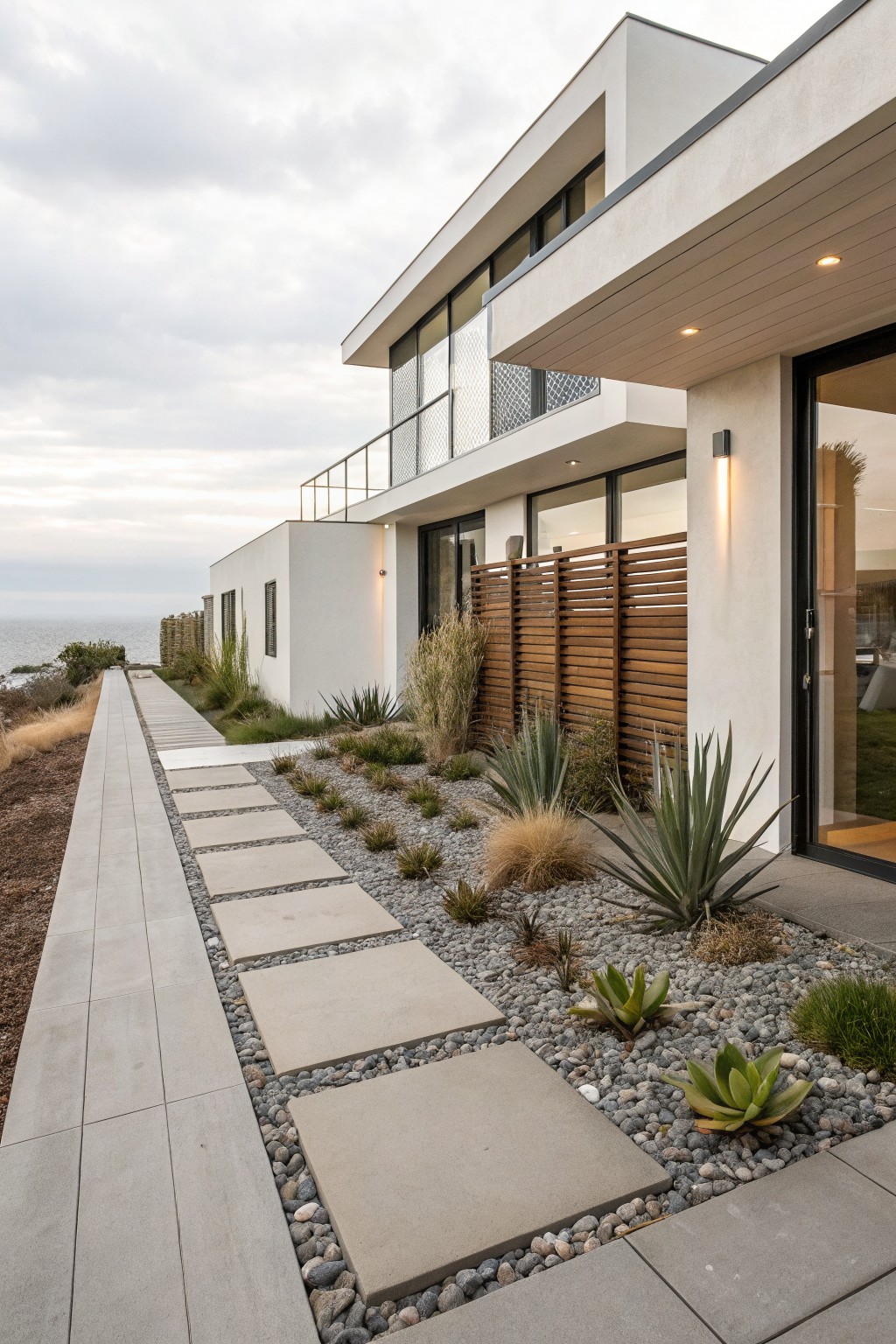
Big concrete stepping stones set into gravel beds make for an easy walkway that doesn’t need constant upkeep. Tuck in a few succulents like agaves between the stones and gravel stays put. It gives a clean path without mowing or edging every week.
This works best along the side of a house or to the front door in sunny dry yards. Space the stones wide enough for comfortable steps. Pick low-water plants that match your climate. One thing. Skip it in wet areas where gravel might wash out.
Stone Retaining Walls for Entry Beds
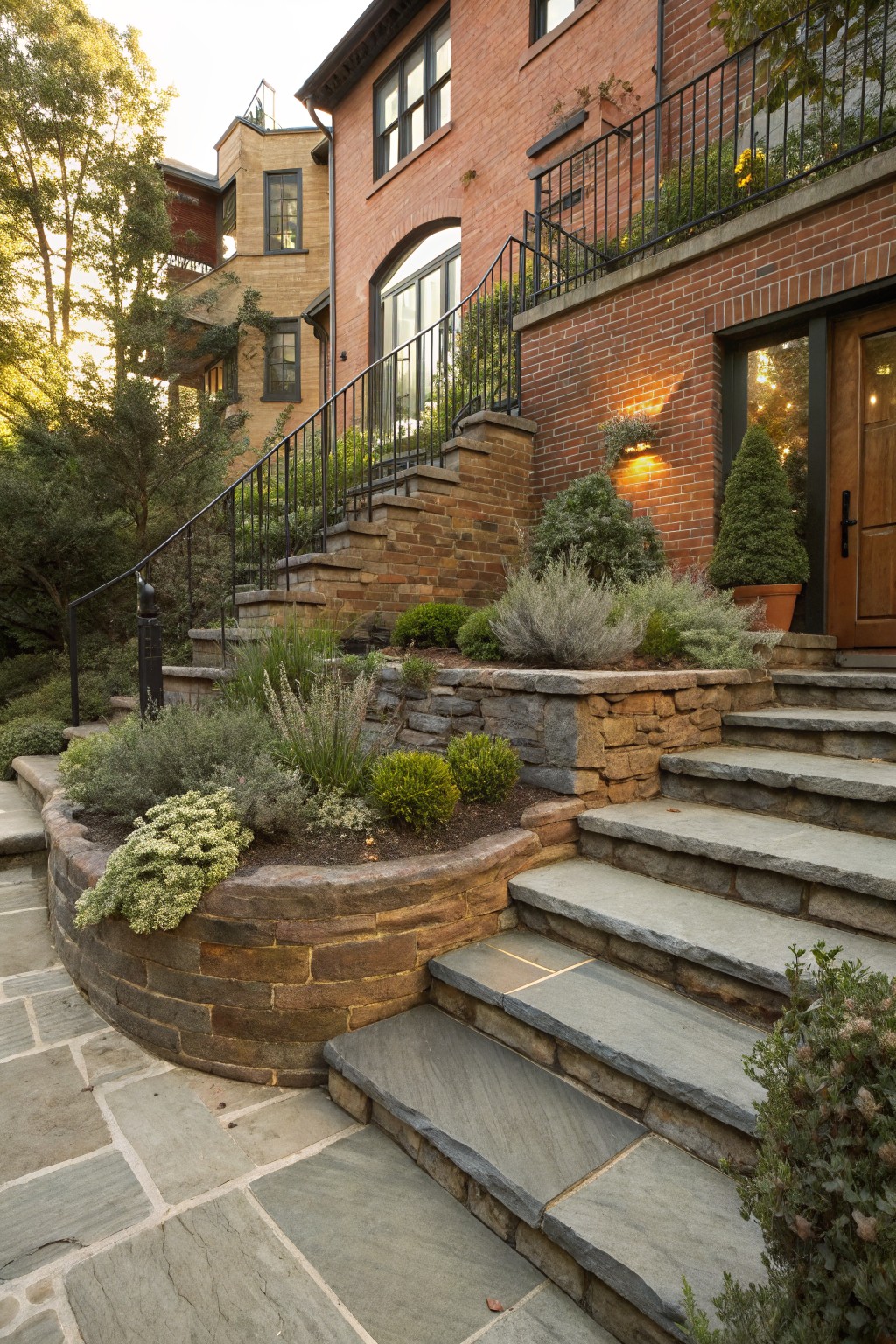
One straightforward way to border flower beds is with low retaining walls made from natural stone. They hug the sides of front steps nicely, like these slate ones, holding back soil for plants such as lavender and boxwood. The stone gives a sturdy look that fits older brick homes, and drought-tolerant choices mean less upkeep once established.
Use this in yards with a slope toward the house, where it keeps soil from washing down. Match the stone color to your siding or steps for a pulled-together feel. Go for rounded edges if you want it softer. Watch the drainage though. Poor spots can lead to root rot.
Driveway Borders with Ornamental Grasses
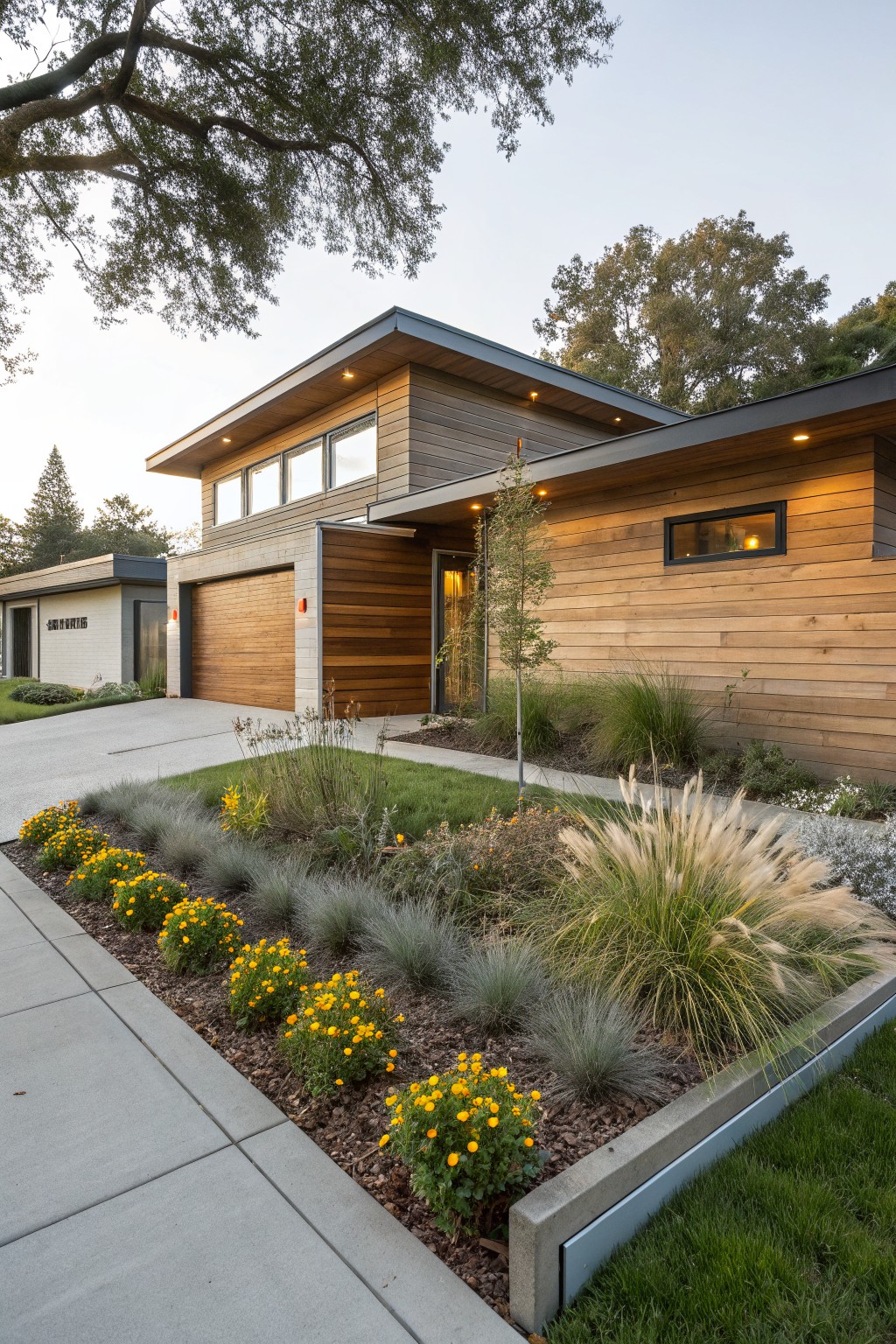
One straightforward way to finish off a driveway is to run flower beds along the edge, packed with tall grasses and bright yellow flowers. These beds stand out because they add color and texture without needing constant care. The grasses sway a bit in the breeze, and the flowers pop against the mulch. Folks like how it looks tidy yet natural.
Set these borders up where your driveway meets the lawn, especially on homes with clean lines. They suit sunny spots and hold up in dry weather. Keep the edging simple, like concrete, and top with bark mulch to cut down on weeding. Watch for too much shade though. Grasses won’t thrive there.
Flower Borders Along Entry Steps
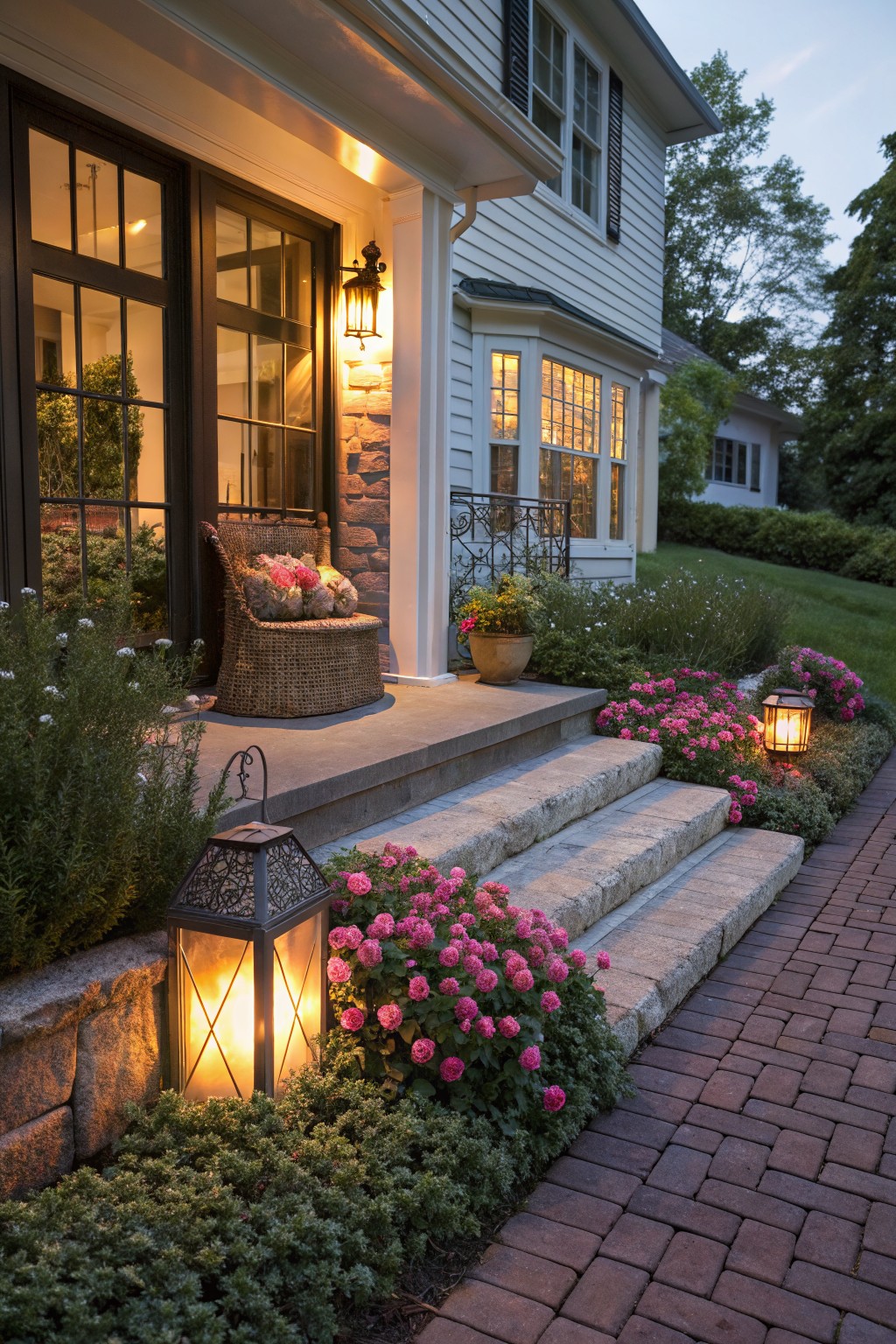
One straightforward landscaping idea is to plant flower beds tight along your stone entry steps. The low pink blooms and shrubs here hug the edges nicely, turning plain steps into something welcoming without a lot of fuss. These borders fill in quick and keep the hardscape from looking stark.
Go for tough perennials or small shrubs that don’t need constant deadheading. They suit homes on a gentle slope or with a formal front path, like this shingled house. Mulch well to hold in moisture, and you’ll have color most of the summer. Watch the scale so plants stay under two feet tall.
Raised Wood Planters Along Walkways
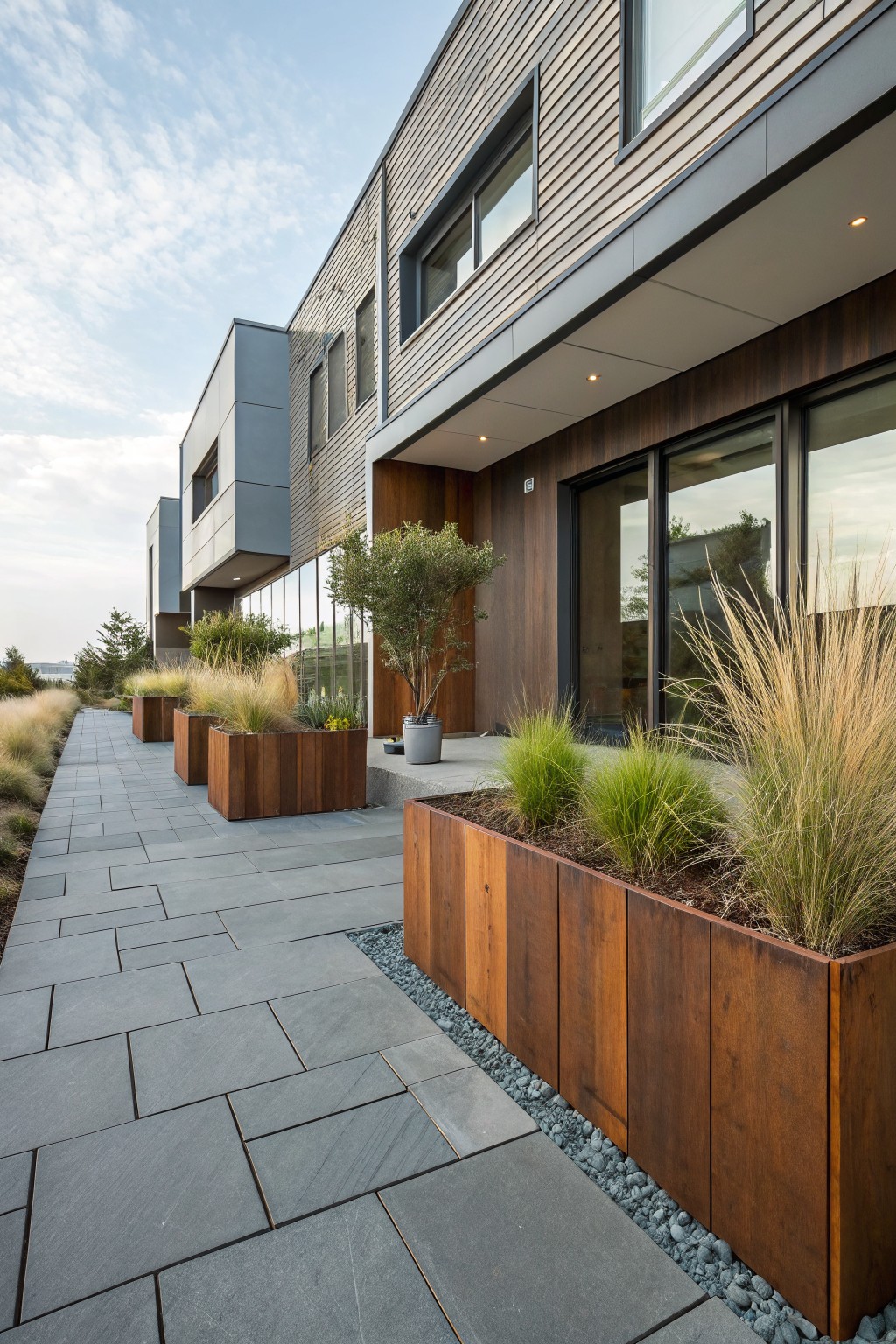
Long wooden planters running right beside a stone path make a solid border that’s simple to pull off. Stuff them with ornamental grasses that barely need water or trimming, and you get clean lines guiding folks to the door. These setups stay sharp through seasons without much work.
They suit modern houses or any yard with straight paths, especially where space is tight. Use cedar or treated wood to hold up outside. Just keep the path material plain so the planters stand out, and plant tall grasses to fill them quick.
Raised Brick Borders for Flower Beds
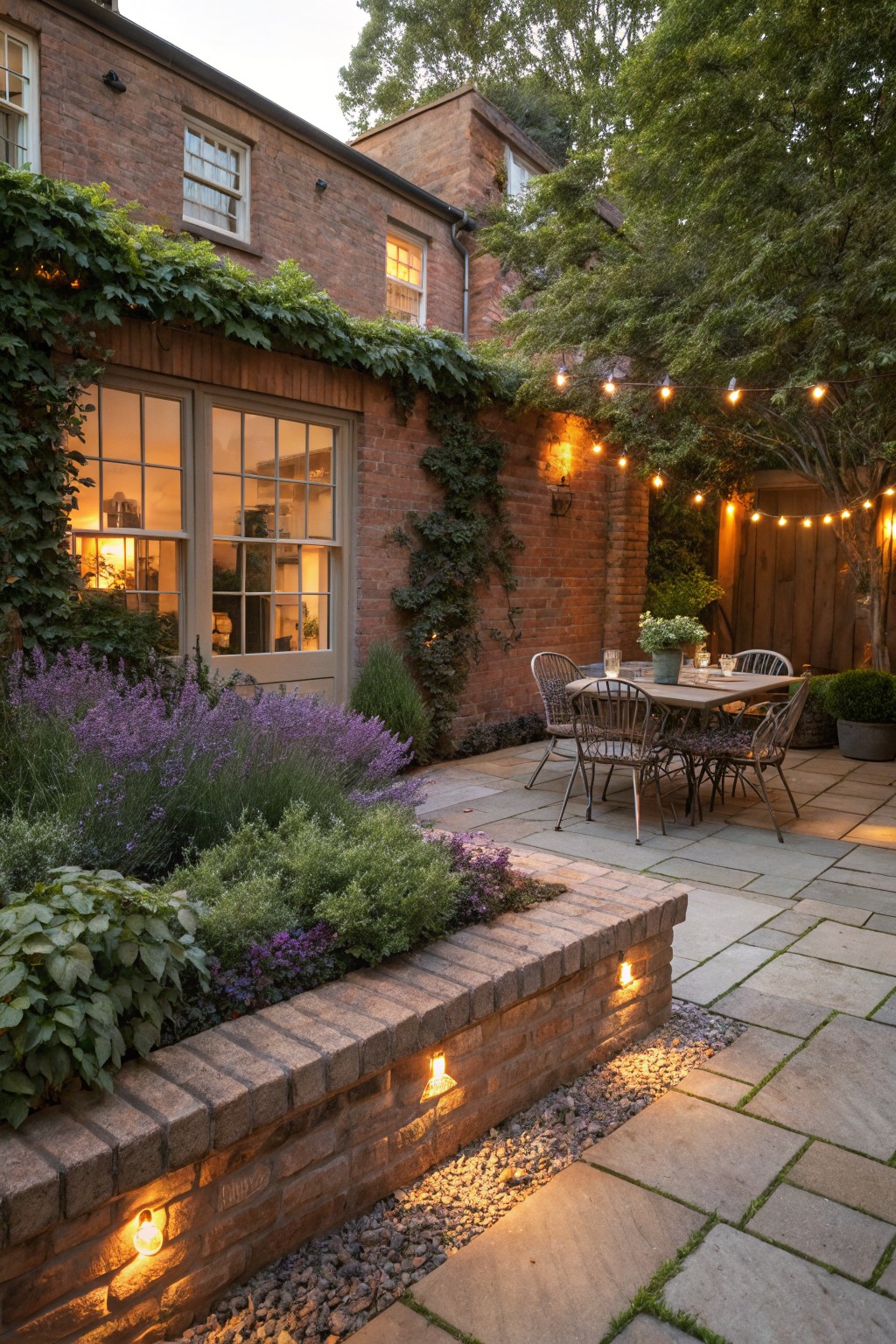
One simple way to edge a patio or walkway is with low raised brick beds. They give plants a neat boundary and let you fill them with tough growers like lavender that don’t need much fuss. In this setup, the bricks match the house wall nicely, keeping everything looking pulled together without extra work.
These borders work great around smaller patios or dining spots where you want some green but not a full garden to tend. Stack bricks a couple courses high, fill with soil, and plant perennials that spill over a bit. They suit older brick homes best. Just make sure there’s decent drainage so roots don’t sit wet.
Gravel and Lavender Beds Along Entry Stairs
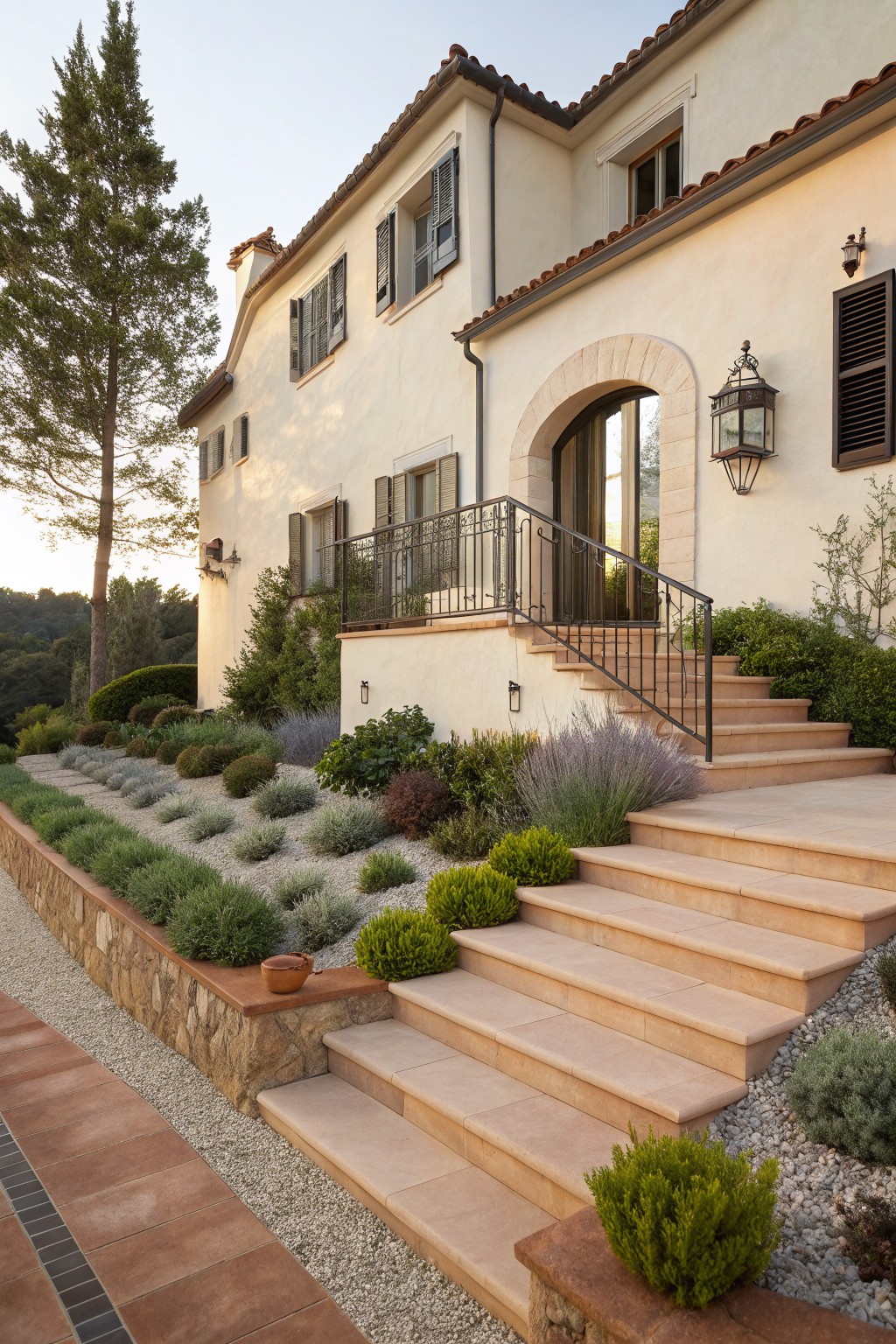
Gravel beds filled with lavender and other tough plants make a clean border for stairs or paths. They stay neat without much fuss. The gray gravel sets off the purple lavender blooms nicely, and everything drains well so roots don’t rot.
Put these beds where you have a slope or steps to the house. They suit sunny spots and dry yards best. Line the edge with stone blocks to hold it in place. Skip thirsty flowers that need constant water.
Ornamental Grasses Line Driveway Edges
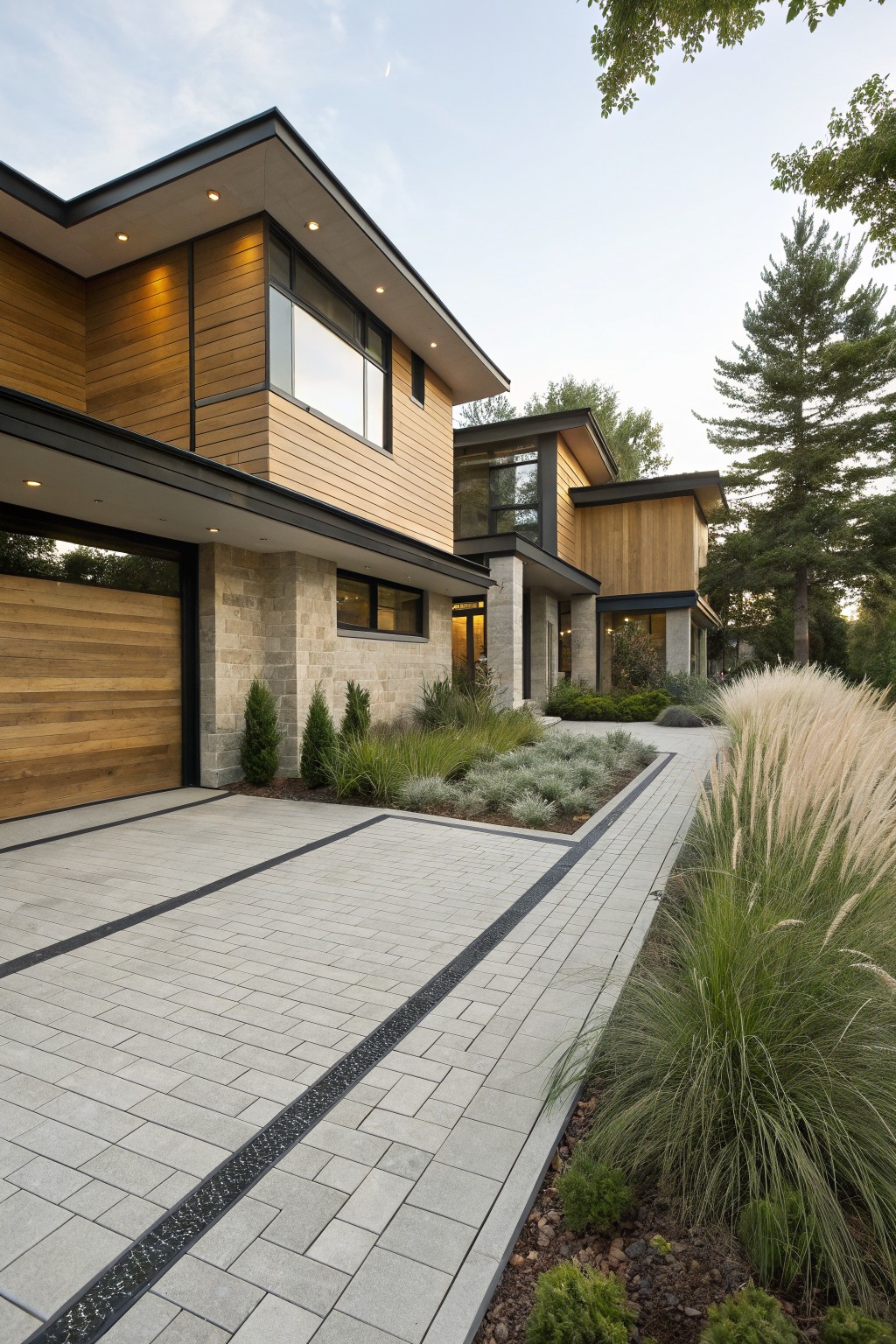
Tall ornamental grasses make a good low-maintenance border for driveways and paths. They stand up nicely against plain pavers, adding some sway and height without a lot of trimming. You see it here softening that wide gray driveway, keeping things neat but natural.
Set them along any paved edge where grass or mulch meets hard surfaces. They fit modern houses best, or anywhere with room for three-foot plants. Pick tough kinds like miscanthus that handle drought okay, and keep them from seeding everywhere.
Cobblestone Paths with Raised Bed Borders
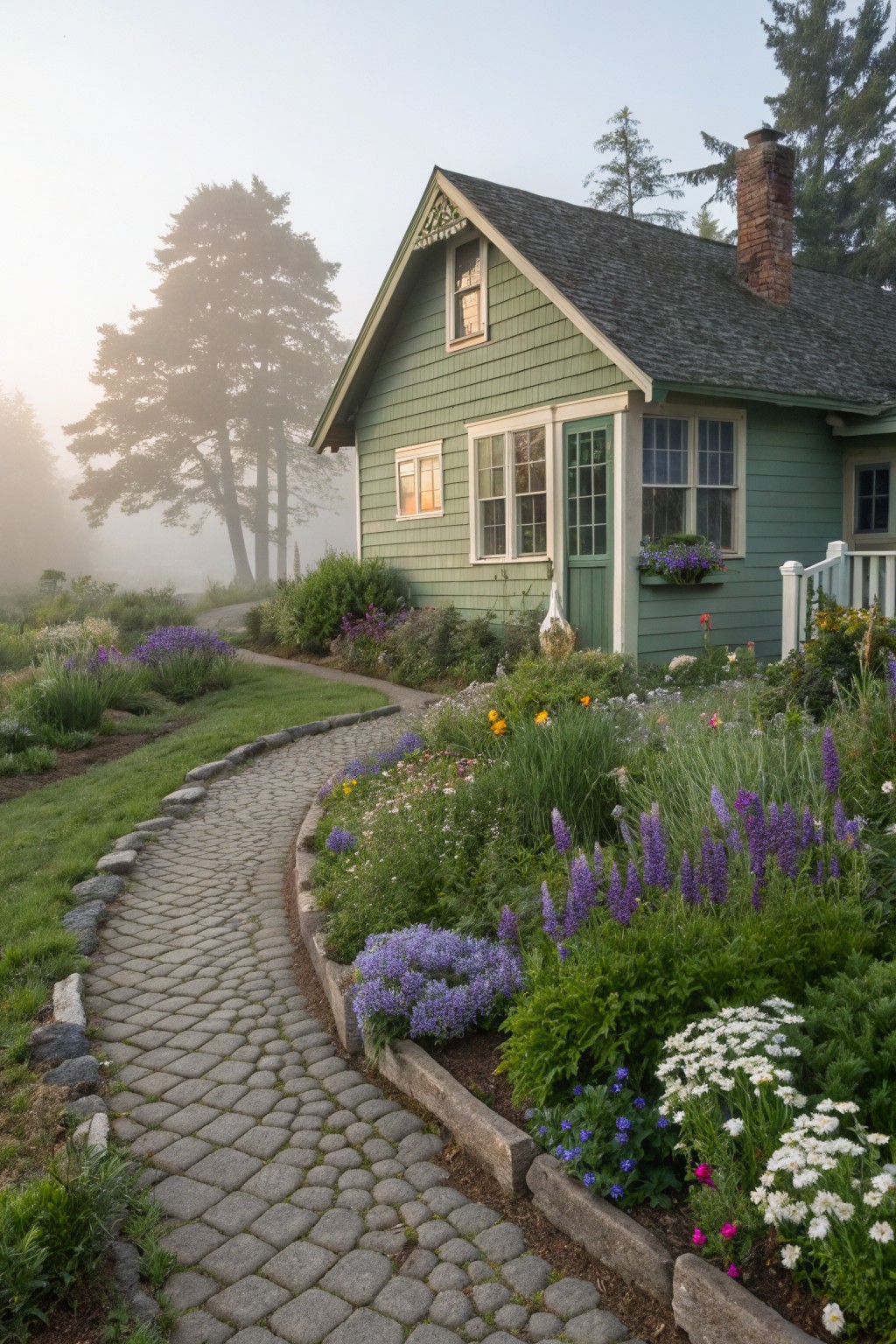
A winding cobblestone path like this one makes a natural guide to your front door. The raised beds along both sides, edged with simple timber, hold back soil and let flowers spill over without much upkeep. Perennials such as lavender and daisies fill the space and return year after year.
This works best in front yards around cottages or older homes. Start with the path to set the curve, then add 12-inch-high beds using rot-resistant wood. It handles gentle slopes well… just ensure good drainage so roots don’t sit wet.
Metal Planters for Border Beds
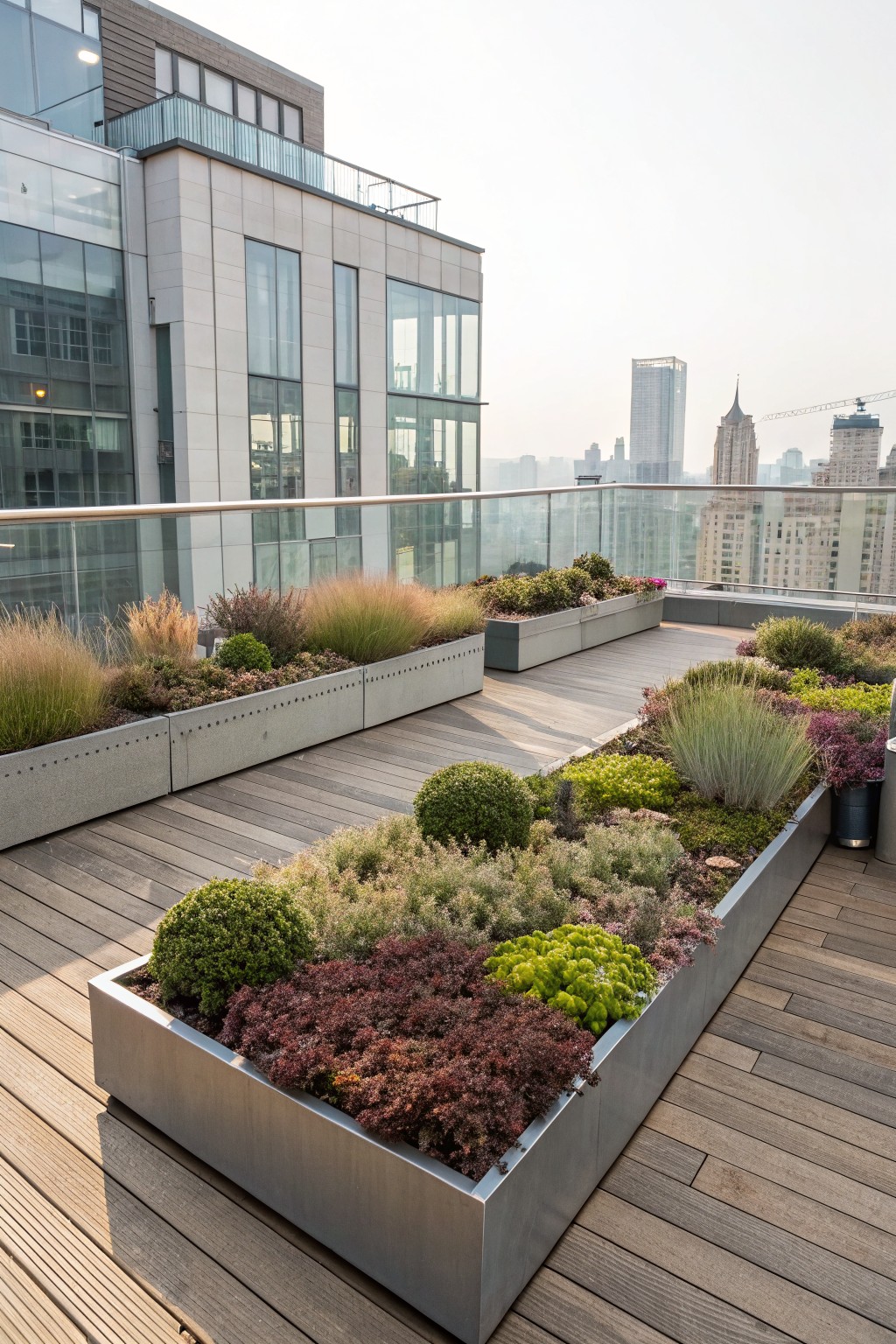
Metal planters like these make simple borders for flower beds. They’re tough, hold up outdoors year-round, and let you fill them with low-water plants such as grasses and sedums. No digging or weeding much. Just a clean edge that fits right on a deck.
Line them up along walkways or patio sides where space is tight, like balconies or rooftops. They suit city homes or modern builds best. Pick ones with good drainage holes… or add some gravel at the bottom.
Simple Lavender Borders Along Paths
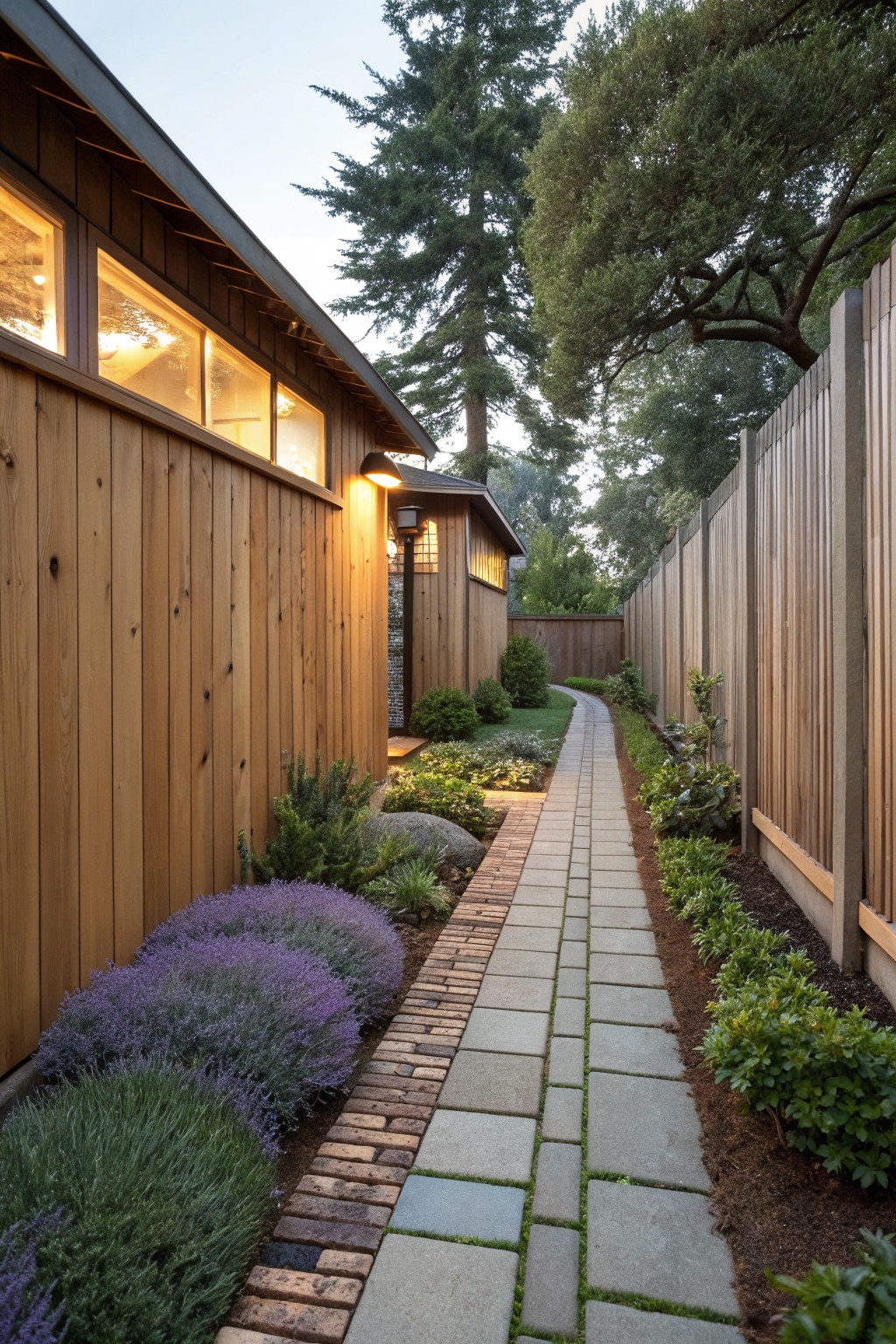
Lavender makes a great low-fuss border for flower beds next to walkways. You see it here planted in soft clumps right up against the brick edge of the path. It stays compact, blooms reliably with those pretty purple spikes, and fills in without spreading everywhere. Plus, the scent is a nice bonus when you brush past.
Try this along side paths or garden routes where you want definition without daily work. It suits sunny yards with decent drainage, like near a house foundation. Space plants about 18 inches apart, mulch lightly, and shear them once a year after flowers fade. Skip it in shady spots, though. Lavender needs sun to thrive.
Agaves as Border Plants
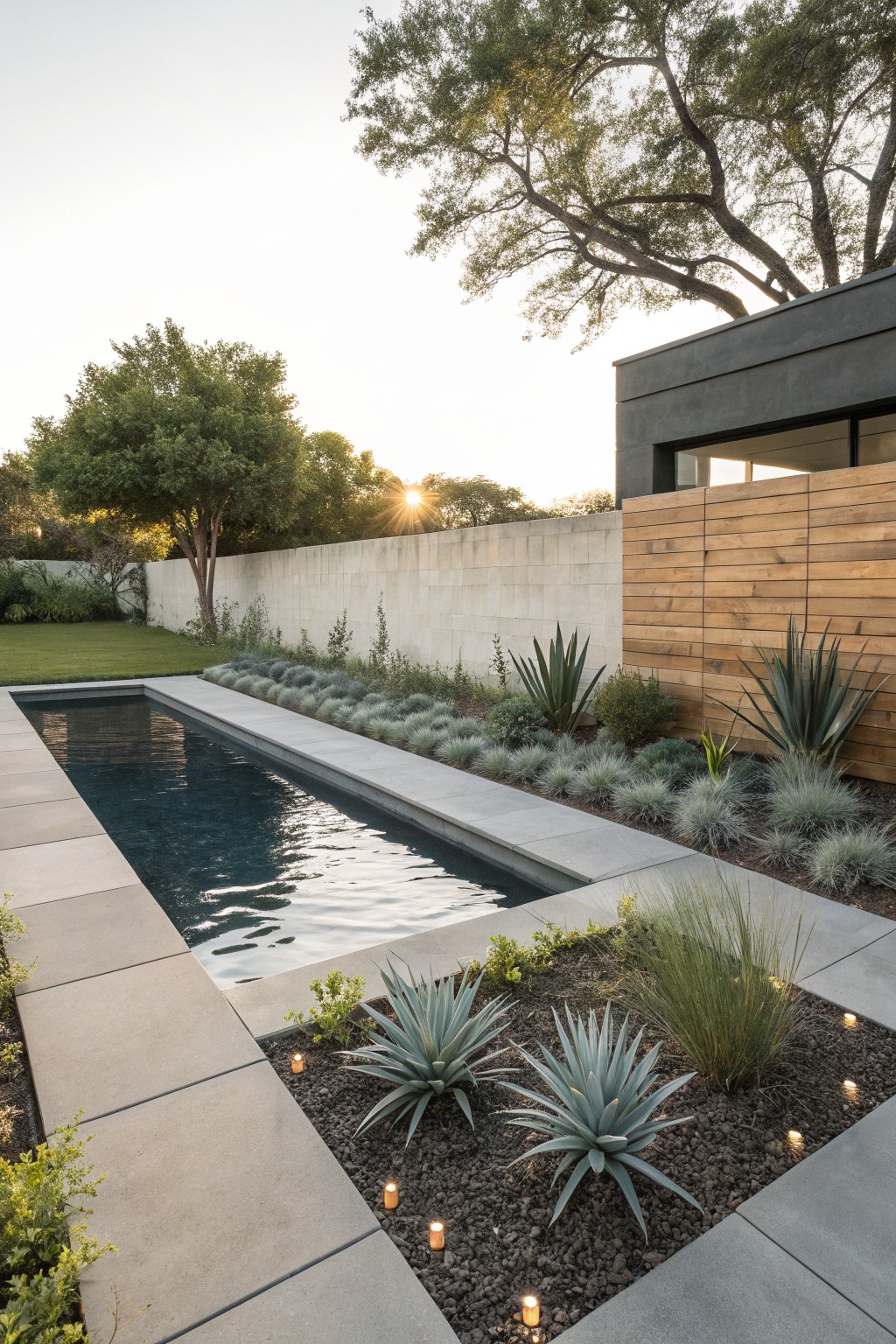
Agaves make great borders for paths and pools like you see here, tucked into gravel along concrete edges. They’re tough, need little water once established, and their spiky shapes add structure without fuss. That bold form stands out against hard surfaces and keeps things looking sharp year-round.
Try them in sunny yards with modern or minimalist vibes, spacing a few big ones with smaller grasses for fill. Suits dry climates best, but watch the points near walkways. Mulch with gravel to cut weeds even more.
Tall Grasses for Flower Bed Borders
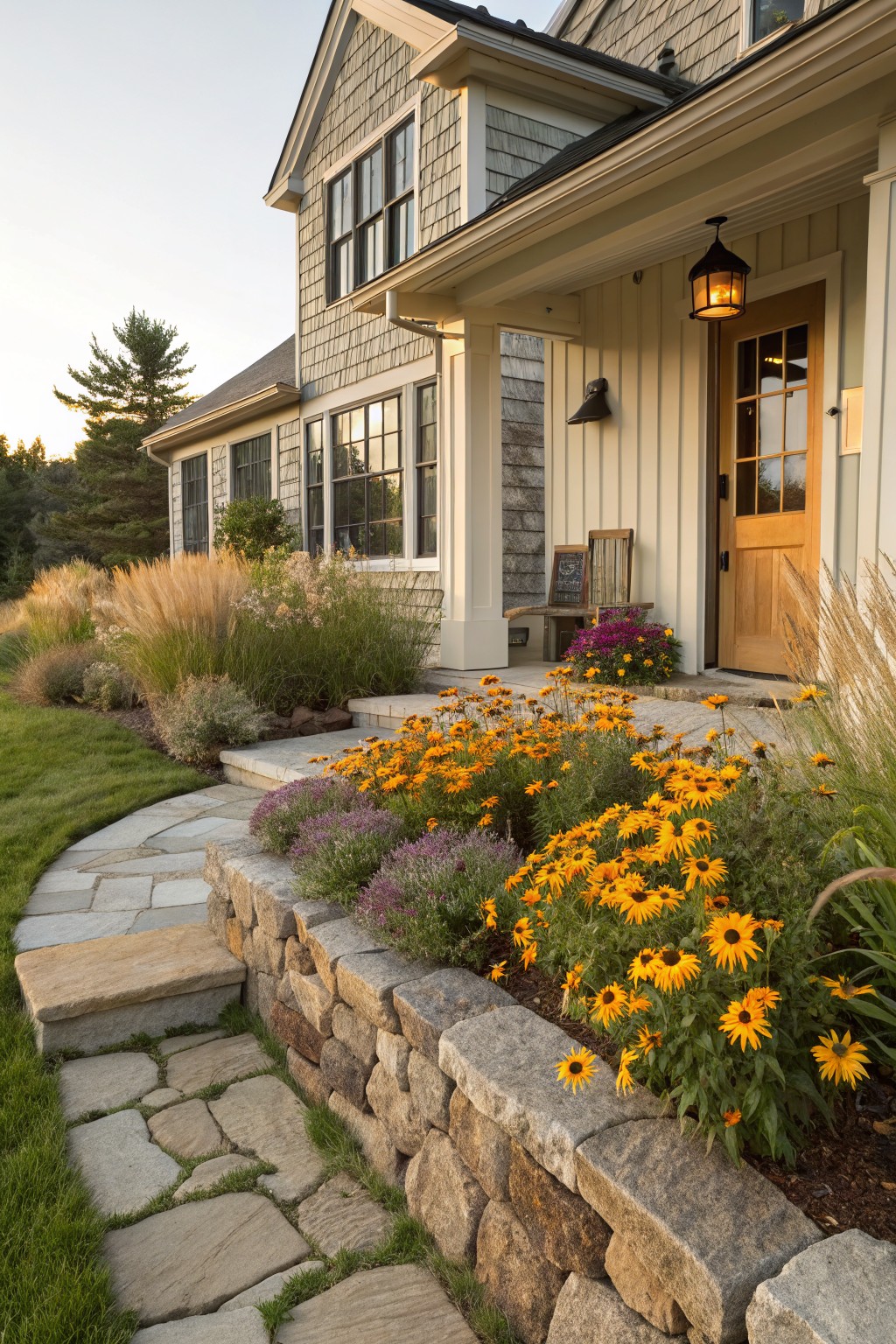
Tall ornamental grasses make great borders for flower beds around entry paths and steps. You see them here mixed with patches of black-eyed Susans and lavender, creating that soft, natural edge without much fuss. Once they’re in, they mostly take care of themselves, adding height and movement while hiding the bases of stone walls or fences.
This works best for homes with a relaxed look, like cottages or farmhouses, where you want some wildness up front. Plant the grasses in back rows against hard edges, tuck in colorful perennials closer to the path. Pick tough varieties that don’t spread too fast, and cut them back in early spring to freshen up.
Frequently Asked Questions
Q: Do these borders actually save time on weeding? A: They do, because a good edge stops weeds cold before they invade your flowers.
Just refresh the mulch or gravel layer each spring, and you stay ahead of the game. Q: What’s the fastest way to edge a bed if I’m short on time? A: Snag some plastic or metal edging strips from a garden shop. Push them into the soil along your bed’s outline, and tamp down the dirt. You’ll tidy things up in under an hour. Q: Can I mix a couple ideas from the list without it looking weird? A: Pick ones with similar heights and colors, like pairing low stones with mulch. Lay them out dry first to test the flow. It gives your yard personality instead of chaos. Q: What if my yard gets a lot of shade? A: Go with wood chips or rubber mulch borders. They break down slow and block light to smother weeds. And they handle damp spots without rotting quick.
