


Gardens often lose definition when plants spill over edges and paths fade into the grass.
I usually begin by sorting out the basic layout and trimming back whatever has grown out of place before adding anything new.
Clearing clutter and reshaping lawn lines tends to make the whole area feel more usable right away.
Those early adjustments create room for better planting choices that hold up through the seasons.
Small fixes like these add up quickly.
Clear Overgrown Beds Before Adding New Plants

Overgrown garden borders often look worse the longer they sit untouched. Clearing out the weeds and tall growth first makes it possible to reshape the bed and add mulch, which instantly gives the area a cleaner outline and stops the mess from spreading.
This works especially well along fences where plants tend to take over. Keep the bed narrow enough to maintain easily, use a simple metal edge to hold the mulch in place, and plant in small clusters rather than filling every inch. The result stays neat without constant work.
Create A Defined Path With Simple Edging

A patchy lawn and worn dirt trail can make the side of a house feel neglected. Switching to a gravel path with rock borders gives the space clear shape and keeps the lawn from creeping back in. The planted strip along the foundation also becomes easier to maintain once it has a firm edge.
This idea works best in narrow side yards or along the back of a house where foot traffic needs a set route. Lay the edging first, then fill the path and add plants on the outer side. Keep the beds fairly narrow so they stay easy to weed and water.
Turn A Cluttered Patio Into A Simple Seating Spot
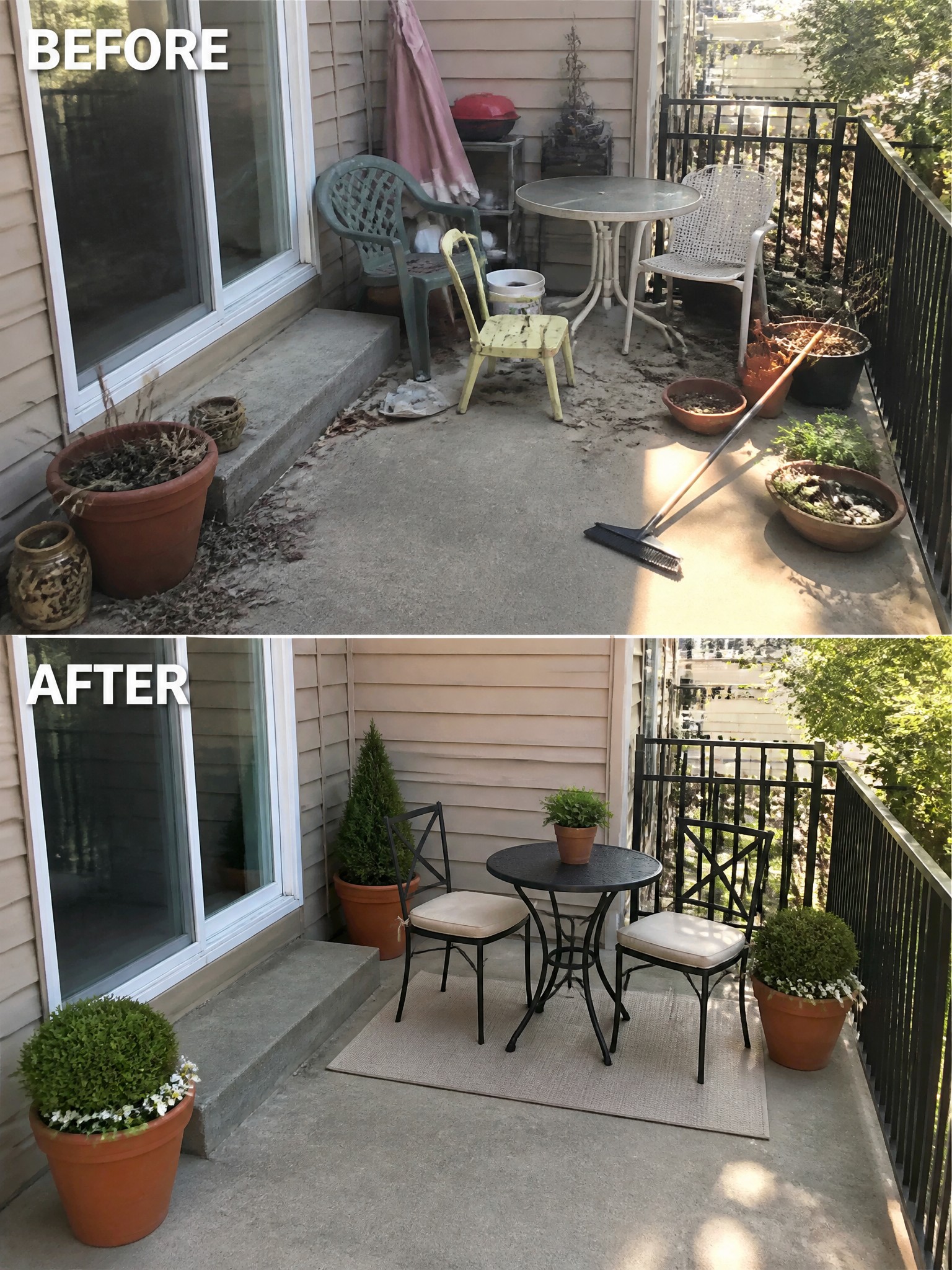
A messy patio often feels unusable because there is no clear spot to sit. Clearing away the scattered pots and old furniture first made room for one small table and two chairs placed on a rug. That single change turned the concrete into a place people actually want to use.
The same idea works on any small patio or deck. Start by removing everything that does not serve a purpose, then add just enough furniture to define one seating zone. Keep the scale modest so there is still space to walk around the chairs.
Add Structure To An Overgrown Fence Line

Clearing heavy vines and leaf buildup first makes the biggest difference. Once the fence is visible again, a simple trimmed hedge and a row of low lights create a clean edge that follows the path without looking busy.
This approach works well along side yards or driveways where you need order but still want some greenery. Start with removal, add a low evergreen hedge for shape, and finish with a few lights spaced evenly so the line stays easy to maintain year after year.
Define Garden Beds With Simple Edging

Overgrown plants right against the house can make the whole side of a home look neglected. Adding a clear stone edge and cleaning up the bed gives the area structure right away. The window box helps tie the planting to the house without needing a full redesign.
This idea works well along any foundation where grass creeps in or weeds take over. Start with the border first so the bed has a set shape, then fill in with mulch and a few repeating plants. It keeps the look neat even when you cannot spend much time on maintenance.
Add Edging To Clean Up Garden Paths

A winding stone path often looks messy when grass creeps right up to the edges and the shape feels loose. Adding a simple border along both sides gives the path a clear shape and makes the whole yard feel more put together. The change here shows how a dark edging strip and a neat strip of low groundcover can turn an uneven walkway into something that looks planned.
This idea works well in any yard where the paths already exist but need better definition. Start by laying the edging first, then fill the new border with grass, groundcover, or mulch so the path stands out. It keeps foot traffic contained and makes mowing or trimming much easier later on.
Add Structure To An Overgrown Slope

A bare slope often stays weedy because nothing holds the soil or gives plants a clear place to grow. Wooden raised beds and gravel changed that here by turning loose dirt into a series of level planting zones that stay neat and drain well.
This idea works best on sloped yards where flat ground is limited. Build the beds first to create the shape, then add gravel to cut down on weeds and keep the look clean. Stick to plants that match your watering habits so the beds stay manageable over time.
Turn A Bare Backyard Corner Into A Fire Pit Seating Area
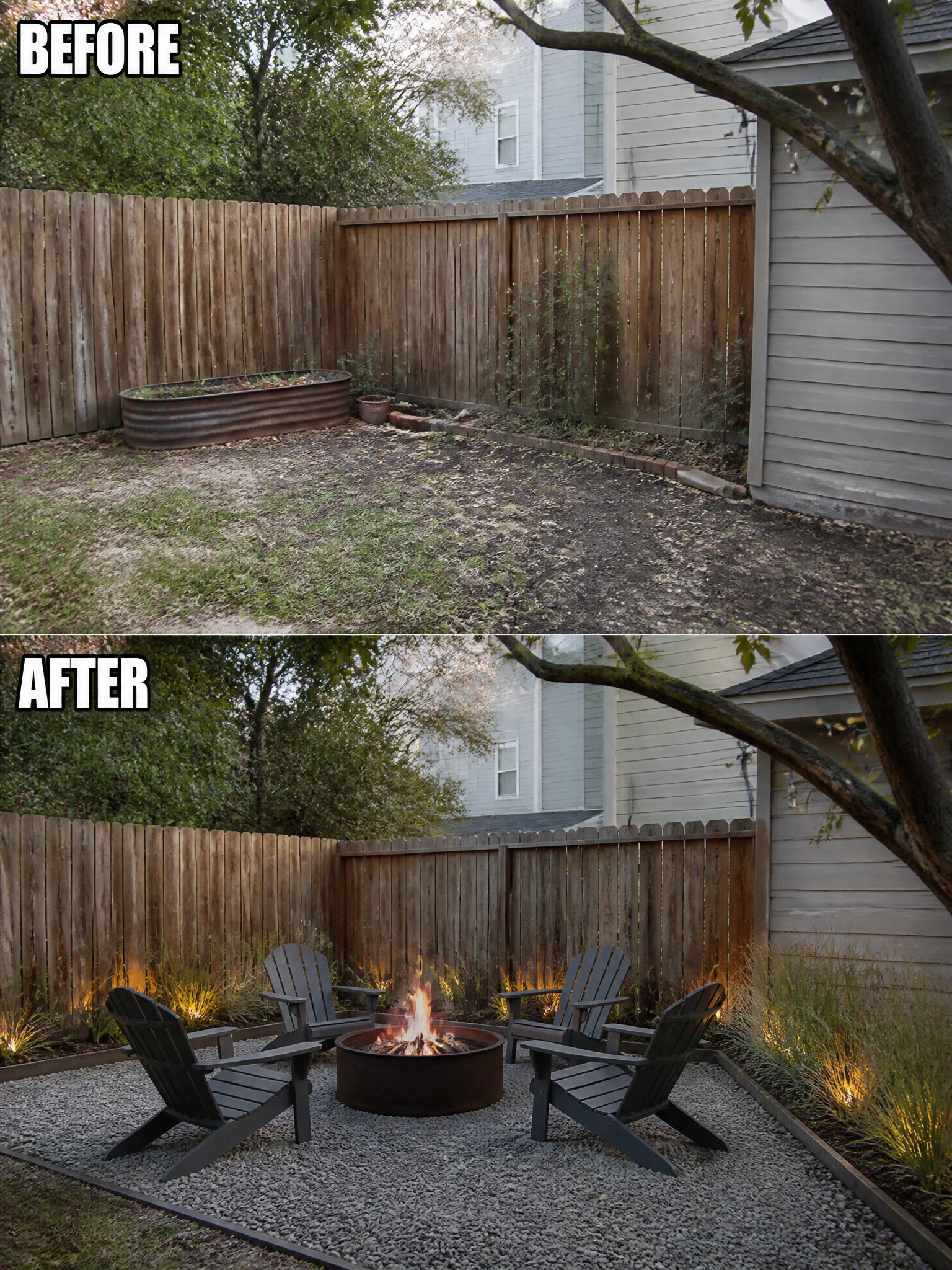
Many backyards have a patch of dirt or grass that never gets used because nothing defines it as a place to sit. Adding a fire pit with a gravel base and a few chairs turns that empty spot into a real gathering area where people can spend time outdoors.
This idea works best in smaller yards or side spaces where you want one clear zone rather than spreading furniture everywhere. Start with the fire pit and seating first, then add simple border lighting so the area feels finished after dark without needing a lot of extra planting.
Add Structure To An Overgrown Backyard With Raised Beds

A messy yard with weeds, scattered tools, and no clear layout is hard to use or enjoy. Adding raised beds and laying down gravel creates order and turns the space into something you can actually work in. The beds keep plants contained while the gravel gives a clean surface that separates the growing areas from the paths.
This approach works well in small or medium backyards where you want a simple garden without a full redesign. Start by clearing the area first, then decide on bed sizes that leave enough room to walk around. Gravel is practical because it drains well and keeps weeds down, though you may need to top it up every couple of years.
Add Structure To An Overgrown Backyard

Raised beds give an overgrown garden a clear purpose and make it much easier to manage. Instead of letting plants sprawl everywhere, the wooden frames create separate growing zones that keep weeds down and give each crop room to grow.
This idea works best in smaller yards where space feels limited. Start with the beds first, then fill them with good soil and mulch. The clean lines make the whole area look intentional even before the plants fill in.
Add Defined Edges And Lighting To A Garden Path

An overgrown path can make the whole yard feel neglected. In this case, the stone walkway went from being covered in moss and weeds to having clean borders and small lights along the sides. The edging keeps the plants from spilling onto the stones, and the lights make the path usable after dark without adding clutter.
This idea works well on any straight or gently curving walkway that leads to a door or seating area. Start by clearing the edges and adding a simple border material like brick or stone, then place low lights every few feet. It keeps the focus on the path itself rather than trying to decorate the whole garden at once.
Create A Simple Potting Bench For Garden Tools

A cluttered side area next to the house often ends up as a dumping ground for tools and pots. Adding a basic wooden bench with open storage below and a pegboard back turns the same spot into a place where everything has a home. The bench keeps supplies off the ground and makes it easier to find what you need without stepping over a wheelbarrow or loose rakes.
This idea works well beside a shed, garage, or back door where gardening happens regularly. Start with a sturdy bench sized for the space, then add hooks or a pegboard for hand tools and labeled bins for soil and smaller items. Keep the layout simple so there is still room to move around the bench when you are carrying pots or bags.
Define Garden Beds To Clean Up An Overgrown Yard

One of the quickest ways to improve a messy front garden is to give the beds clear borders before worrying about new plants. The wild growth along the house was left in place but contained with a simple fence and a gravel path that keeps everything from spilling onto the driveway.
This idea works well on narrow strips next to driveways or house foundations. Clear out the worst of the overgrowth first, then add edging to set the shape. Once the beds have definition, you can plant more selectively and keep the whole area looking intentional instead of chaotic.
Add Structure To A Sloped Backyard

A steep dirt slope is hard to plant and even harder to maintain. Building simple wooden retaining walls creates flat beds that hold soil in place and give you clear planting zones. The stone steps add easy access without needing a full retaining wall system.
This approach works best on yards where the grade makes mowing or weeding difficult. Keep the walls low, repeat the same timber material, and plant the beds densely so the slope reads as intentional rather than leftover space.
Clean Up An Overgrown Border With Structured Planting
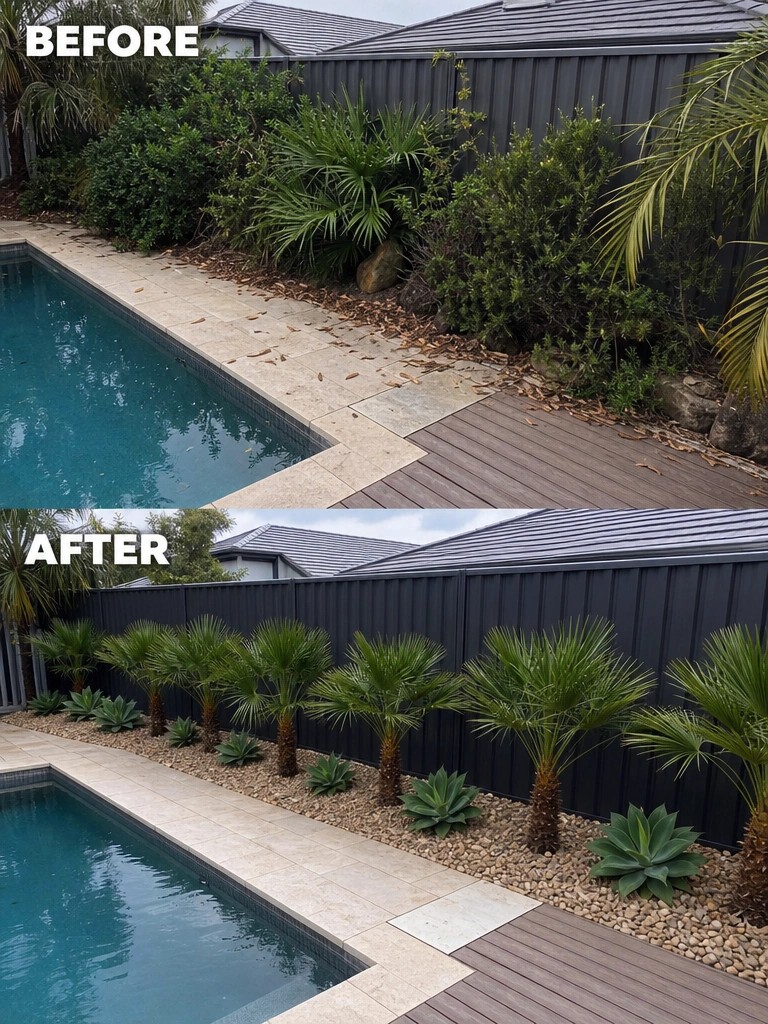
A messy mix of shrubs and ground litter can make even a nice pool area feel neglected. Replacing that growth with a repeating row of palms and succulents set in gravel gives the space a much tidier edge without adding a lot of new features.
This idea works best along fences or pool decks where you need low care and clear lines. Start by removing the old plants, then use gravel to hold the soil in place and keep the look consistent as the new plants fill in.
Use Gravel To Clean Up An Overgrown Slope

An overgrown rocky slope often looks messy because weeds and random plants fill every gap. Adding a layer of gravel creates a clear surface that stops the weeds from spreading and gives the area a much neater finish. The plants then stand out instead of getting lost in the tangle.
This approach works well on slopes or rocky spots where a full lawn is not practical. Start with a good cleanup, lay landscape fabric if needed, and choose plants that handle the conditions. Gravel also helps with drainage and keeps maintenance low once everything is in place.
Hide Outdoor Bins Behind A Simple Wooden Screen

An open compost bin or trash container can quickly make a backyard feel cluttered. In this case the before photo shows the bin sitting exposed against the fence with tools and debris around it. The after photo shows the same area looking much cleaner once the bin was enclosed in a wooden slatted structure that matches the fence.
This approach works well in small yards where you want to keep things neat without building a full shed. A basic wood screen gives you storage access while keeping the view tidy. It is especially useful along a fence line or next to the house where the bin tends to stand out. Use weather-treated wood and keep the design simple so it blends with existing structures rather than competing with them.
Turn An Empty Gravel Area Into A Seating Spot

A plain stretch of gravel in front of the house often gets ignored because it feels like leftover space. Adding a small table and two chairs turns it into a place where someone can actually sit with a coffee or watch the street. The potted tree brings a bit of height without needing new beds or major digging.
This idea works best on small front plots where a full patio would feel cramped. Keep the furniture light so it can be moved if needed, and choose pieces that handle weather. Start with a quick cleanup of weeds and edges before bringing anything in, since the seating will look better against a tidy base.
Use String Lights To Make A Pergola Feel Cozy

A pergola that sits empty often feels like wasted space, especially when vines take over and the deck looks neglected. Adding simple string lights under the beams and a few cushions on the bench turns the same structure into a place where people actually want to sit in the evening. The lights create a soft overhead glow that makes the area feel finished without needing much else.
This idea works best on decks or patios that already have some overhead structure. Start with the lights first, then add just enough seating and a couple of plants so the space stays open and easy to move through. It suits homes where the outdoor area is used mainly after dark and keeps the focus on comfort rather than filling every corner.
Create Defined Garden Beds Along A Fence Line
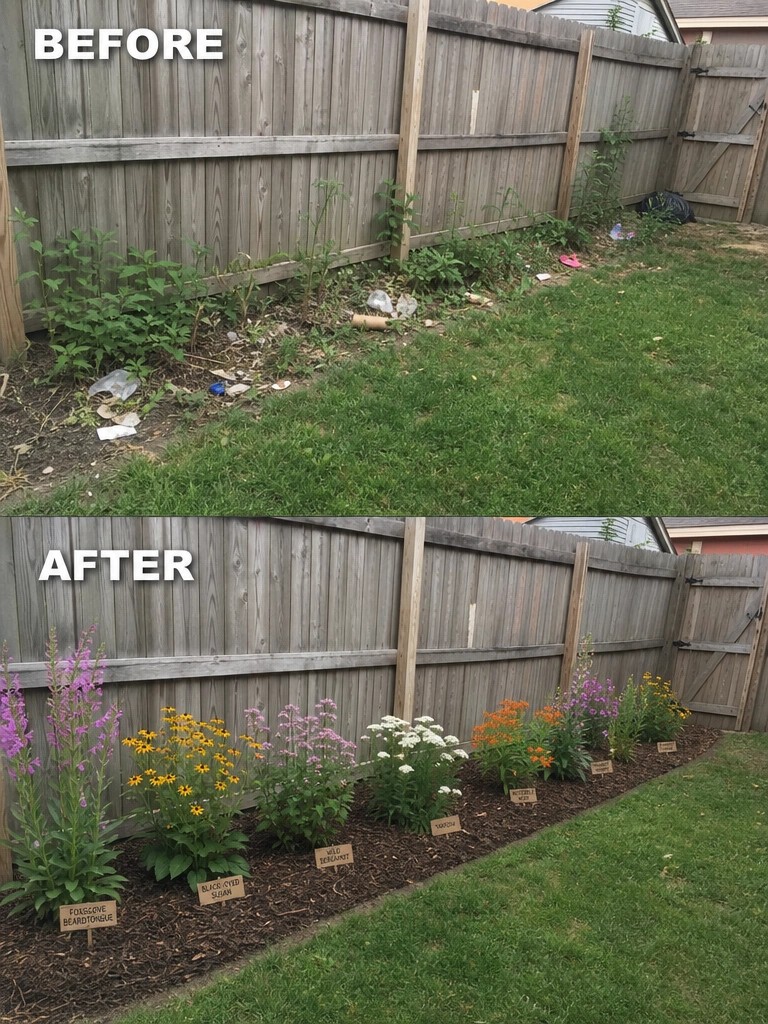
An overgrown strip along a fence often makes the whole yard feel neglected. Clearing the weeds and trash, then adding a clean edge with mulch and a row of plants, turns that same space into something that looks planned instead of forgotten. The mulch keeps the beds looking tidy while the plants give the area a clear purpose.
This idea works well in any yard where the fence line runs straight against the lawn. Start by removing the overgrowth completely before you plant, then keep the beds narrow enough that mowing stays simple. It suits smaller backyards especially, since the structure makes the space feel more organized without needing a lot of extra features.
Add Defined Garden Beds To Frame A Front Walk

Overgrown shrubs can quickly crowd a simple concrete path and make the entry feel neglected. In this case the main change was replacing the tall, messy bushes with lower shrubs, hostas, and small flower clusters that sit neatly along both sides of the walk. The added gravel edging keeps the beds in place and gives the whole front a much cleaner line.
This idea works well on any narrow front walk where the planting has gotten out of hand. Start by cutting back the largest plants, then lay out simple bed shapes that follow the path rather than fighting it. Keep the new plants in scale so they do not block the door or walkway, and use one consistent edging material so the beds read as intentional instead of scattered.
Build Seating Around Your Fire Pit

Adding built-in benches around a fire pit turns a basic patio into a space people actually want to use. The before photo shows a few loose chairs scattered around the stones with no real structure. Once the L-shaped bench and side planters were added, the whole area felt finished and ready for sitting.
This idea works best in smaller yards where you want to keep the fire pit as the focus without crowding the space with extra furniture. Start by building the benches to match the curve or shape of your fire pit, then add cushions that can handle weather. It keeps the layout simple and leaves room to move around the seating.
Frequently Asked Questions
Q: Where should I begin if my garden feels totally overgrown?
A: Clear out dead plants and random clutter first so you can see the actual layout. Then tackle one border or corner at a time instead of trying to fix everything at once.
Q: What quick change helps a garden look cleaner without much work?
A: Lay down a simple path using stepping stones or mulch. It stops people from trampling plants and gives the space an organized feel right away.
Q: How do I stop weeds from ruining the fresh look after a makeover?
A: Pull them as soon as they pop up during your regular walks outside. A thin layer of mulch around new plants also cuts down on how often they return.
