


Gardens often end up looking scattered when planting areas blend into the lawn without any real structure to hold them in place.
I have found that adding raised beds gives the space a clearer layout from the first season onward.
The beds keep soil contained and make it simpler to adjust spacing or add edging as things grow.
Over time that kind of framework lets the rest of the garden settle into a more workable shape instead of spreading out randomly.
A few of the setups here are straightforward enough that I would test them first in my own yard.
Add Raised Beds To Organize An Overgrown Yard

Raised beds give a neglected yard a clear purpose without needing a full redesign. The before photo shows a weedy space with one crooked bed along the fence, while the after shows several matching beds set in a row with a gravel path running between them. This simple change turns random growth into something you can actually use and maintain.
The idea works well in small or medium backyards where grass has taken over and there is no real planting structure. Start by clearing the worst areas first, then place the beds so you can reach them easily from a path. Gravel or mulch between the beds keeps things tidy and stops weeds from creeping back in.
Terrace A Sloped Yard With Stone Raised Beds
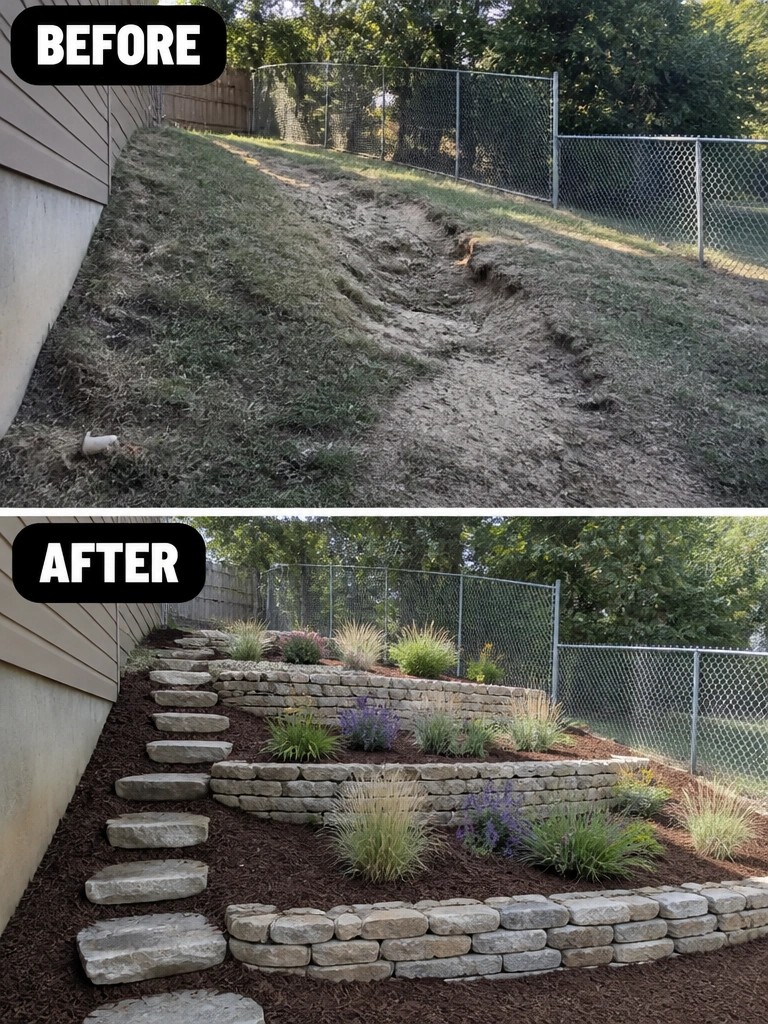
A steep, washed-out slope is hard to use and hard to maintain. Adding low stone retaining walls turns the hill into a series of flat, planted beds that stay in place and give the garden clear shape. The steps make it easy to walk through and care for the plants.
This approach works well on any backyard with a noticeable grade. Start with the walls to hold the soil, then fill the beds with good soil and mulch. Keep the planting simple at first so the beds can settle before you add more.
Use Raised Beds To Add A Bench Seat

Raised beds can turn a plain strip of concrete into a place where people actually want to sit. In this case, the beds run along the house wall and hold a simple bench between them, which gives the area structure while still leaving room for plants.
This idea works best on long, narrow spaces next to the house where you need both planting and seating. Build the beds at a height that feels comfortable for sitting, keep the bench material simple, and stick to one or two repeating colors so the whole setup stays easy to maintain.
Replace Wooden Raised Beds With Metal Ones

Wooden raised beds often start out fine but fade and rot after a few seasons. Switching to metal beds keeps the same garden layout while giving the whole space a cleaner, more finished look that holds up better over time.
This change works well along a fence or narrow side yard where the beds need to stay practical. Stick with a few matching sizes, add fresh soil, and keep the planting simple so the beds stay easy to reach and maintain year after year.
Use Raised Beds To Bring Order To A Narrow Side Yard
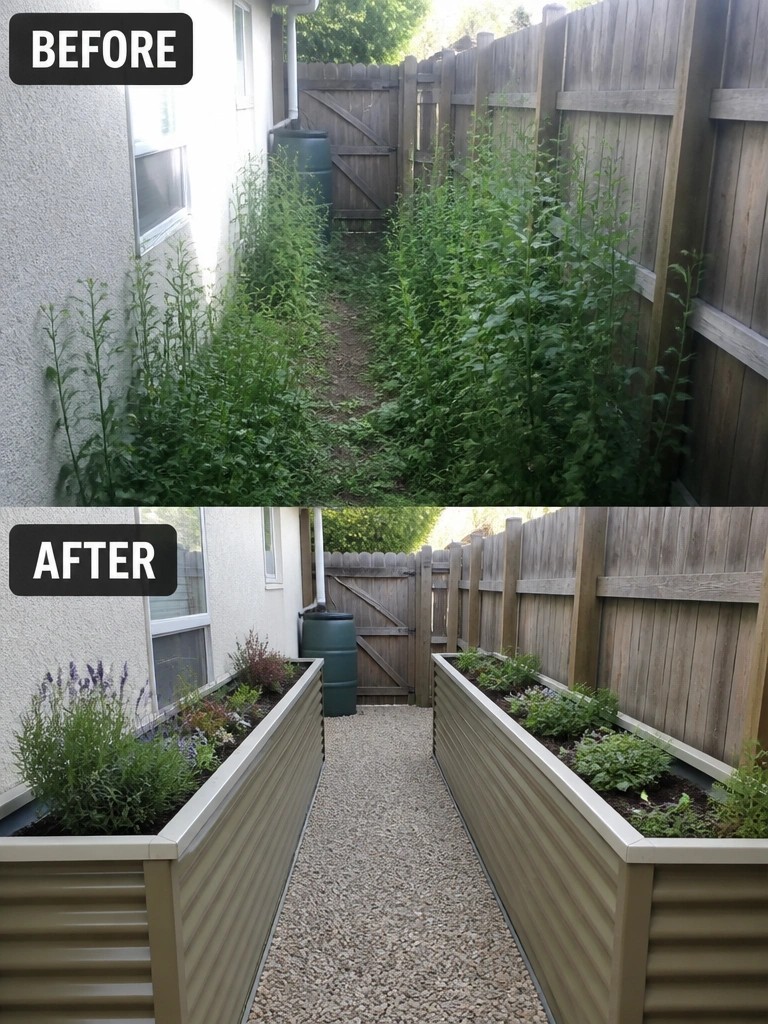
An overgrown side yard often turns into a neglected strip that is hard to keep under control. Adding raised beds along both sides creates clear boundaries, turns the space into a usable path, and keeps planting contained so weeds have less room to spread.
This idea works best in narrow areas between a house and a fence where soil is poor or access is limited. Clear the overgrowth first, then choose beds that leave enough room for a simple path so the space stays practical rather than crowded.
Add Raised Beds To Give Shape To A Messy Border

An overgrown strip along a fence often looks worse the longer it sits. Clearing the weeds and adding a low stone border turns that same space into something that feels intentional instead of neglected. The raised edge keeps soil in place and makes planting much simpler on future seasons.
This approach works well along paths, fences, or the side of a house where the ground slopes or stays uneven. Start with the edging first, then fill in with soil and a mix of taller and lower plants so nothing crowds the walkway. Keep the beds narrow enough that you can reach everything without stepping inside.
Add Raised Beds With Trellises For Better Garden Structure

The before photo shows a scattered collection of pots and one low bed along the fence. The after shows how switching to a few metal raised beds with tall wooden trellises attached to the fence turns the same spot into a clean, usable growing area. The vertical supports let plants climb instead of sprawl, and the beds keep everything contained and easy to reach.
This approach works well in small yards or along a fence line where ground space is limited. Start with the beds and trellises first, then fill in smaller pots on a simple shelf if you still want more room for herbs or young plants. Keep the number of beds modest so you can still move around the space without crowding.
Add Raised Beds To Give Your Garden Clear Structure
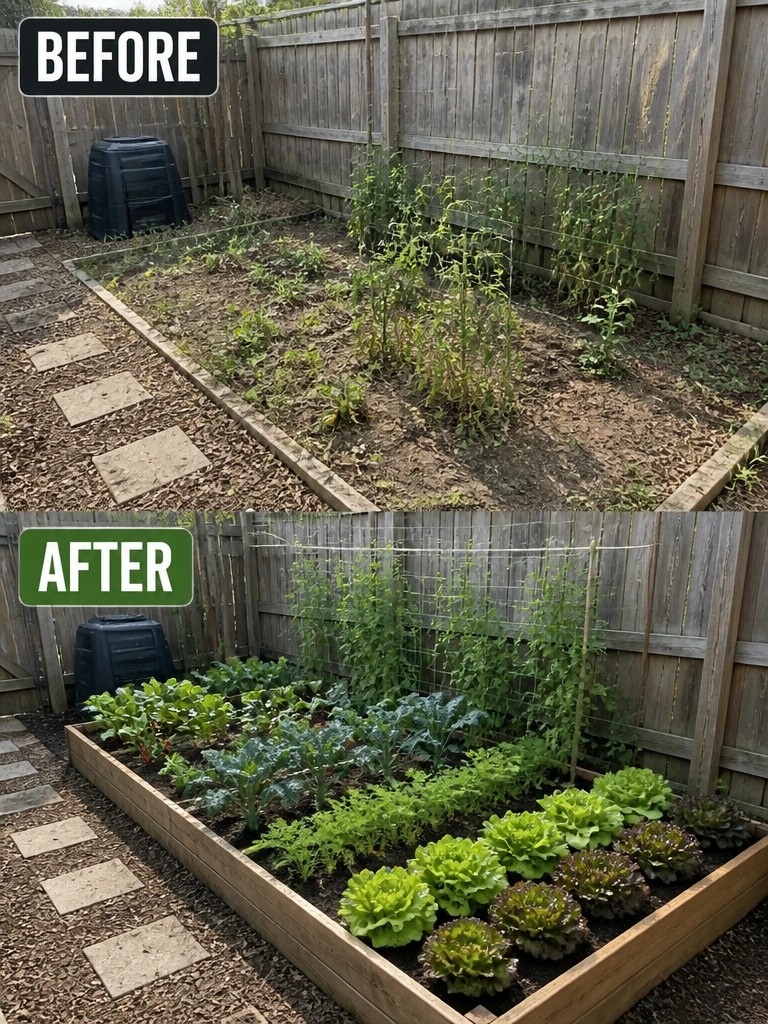
A messy garden patch often feels overwhelming because plants spread in every direction with no real edges. Adding raised beds changes that by creating clear lines and keeping everything contained in one defined area.
This approach works especially well along a fence or in a narrow yard where space is limited. Start with simple wooden frames, improve the soil inside them, and plant in rows so you can reach everything without compacting the ground.
Add Raised Beds To Shape An Empty Backyard
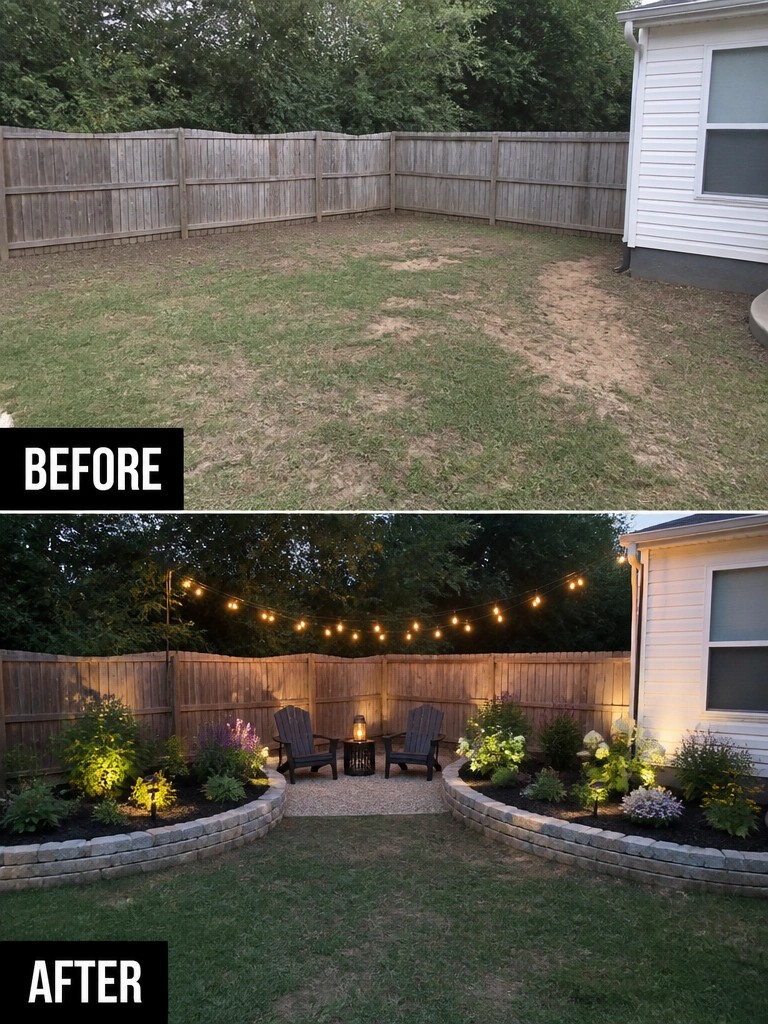
A bare yard with nothing but grass and dirt can feel unfinished and hard to use. Adding raised beds gives the space clear edges and turns random ground into actual garden areas. The stone borders here create planting zones that stay neat while leaving room in the middle for seating.
This approach works well in small or medium backyards where you want planting without losing open space. Start with the beds first so the layout feels planned, then add simple lighting and a few chairs. The beds also make it easier to control soil and watering, which helps the plants stay healthy over time.
Add Raised Beds To Turn A Plain Patio Into A Garden

An empty concrete patio often sits unused because it has no real purpose. Raised beds solve that by giving the space clear planting areas and making it feel more like a garden than just a hard surface.
This idea works best on balconies, rooftops, or small terraces where in-ground beds are not possible. Keep the beds along the edges so there is still room to walk and add a simple seat or two only after the planting is in place.
Paint Raised Beds To Give Your Garden A Fresh Look
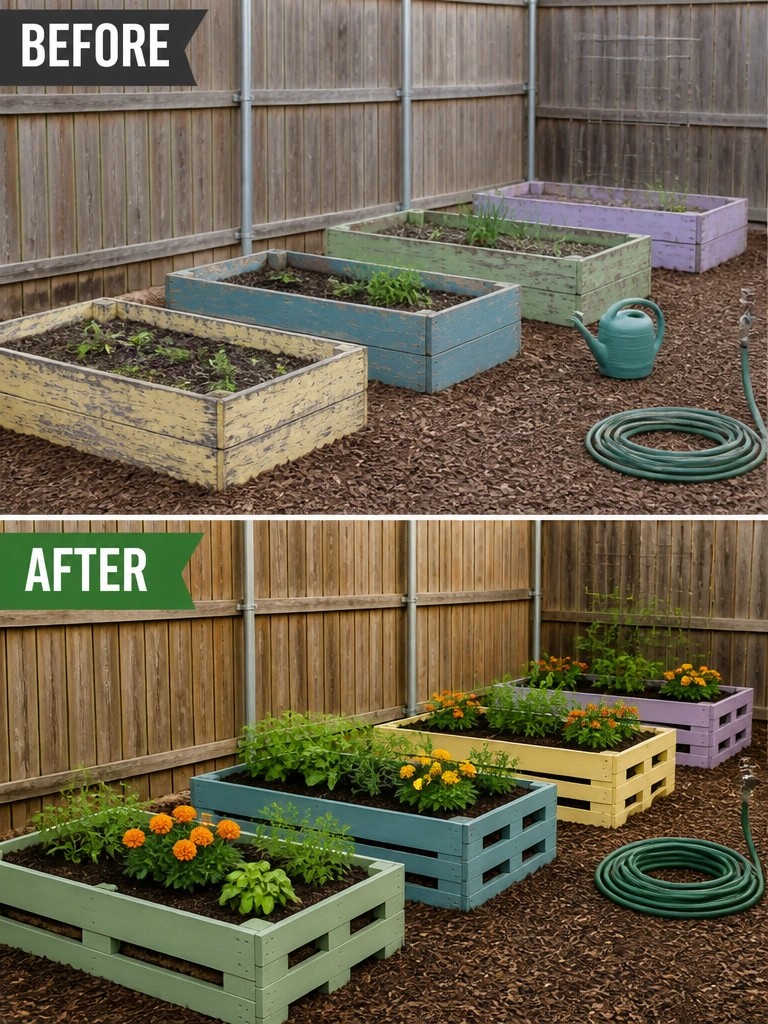
Painting old raised beds is one of the simplest ways to make a garden feel more put together. In the before photo the beds looked scattered and worn, while the after shows them in soft matching colors that make the whole space look cleaner and more intentional.
This works well in small yards or side gardens where you want structure without spending much. Stick to two or three colors that go with your fence or plants, and focus on the beds that sit closest to the house or main path first.
Add Raised Beds To Shape An Empty Backyard
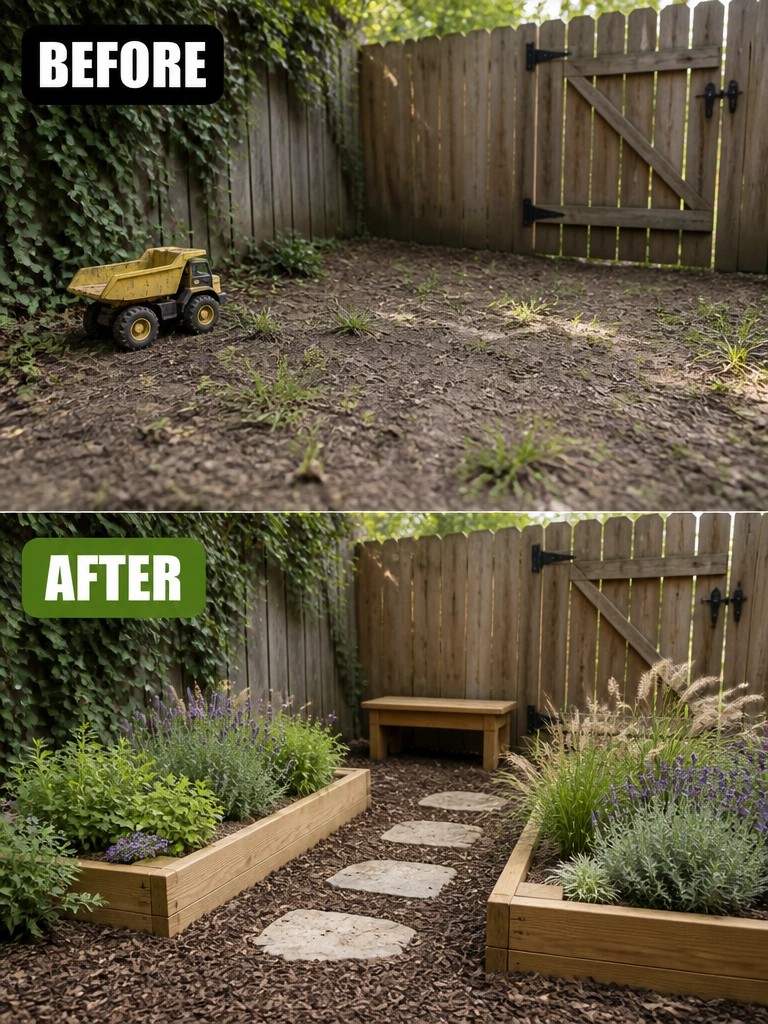
A bare patch of dirt next to a fence rarely feels like a garden. Raised beds fix that by giving the space clear edges and a place to grow plants without dealing with compacted soil or constant weeds. The beds also make the whole area look intentional instead of leftover.
This approach works best in small fenced yards where you want to keep things tidy. Line up the beds along the borders, leave room for a simple path down the middle, and you end up with a space that is easier to maintain and more pleasant to use.
Add Raised Beds To Give A Backyard Structure
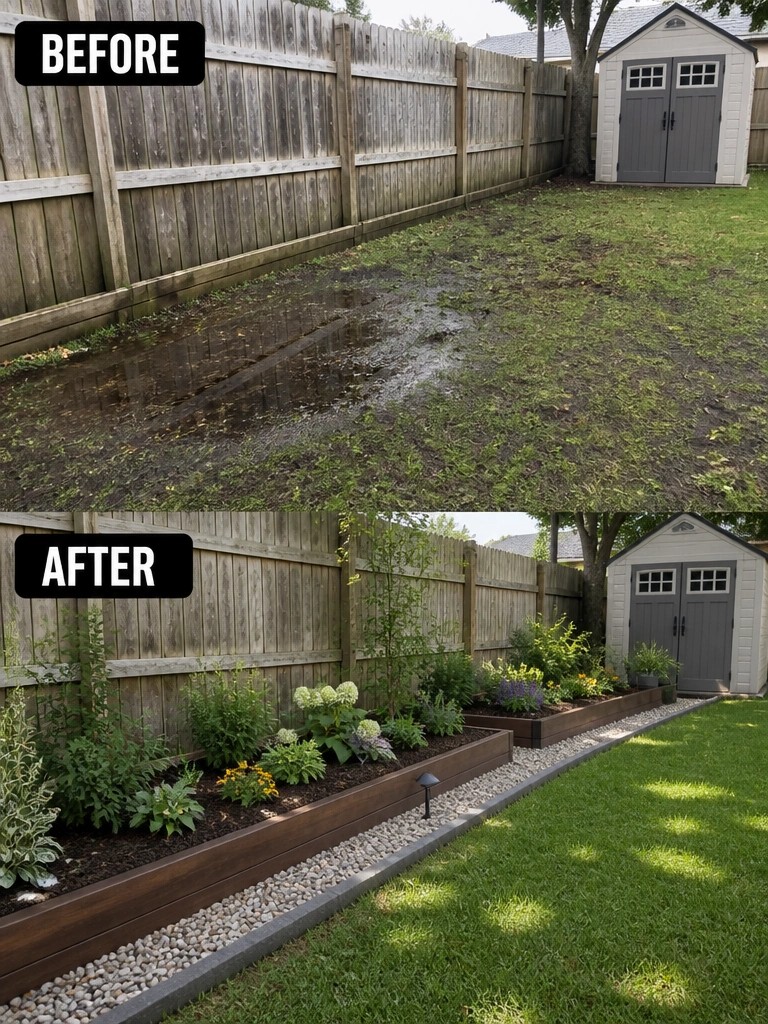
Raised beds turn a sloppy strip of yard into something that feels planned rather than leftover. The beds keep soil contained, give plants room to grow, and create a clean line that separates the garden from the grass.
This approach works best along fences or property edges where the ground tends to stay wet or weedy. Use simple wood frames, add a gravel strip in front, and keep the plantings modest so the beds stay easy to maintain. It gives the whole yard a finished edge without needing a full redesign.
Bring Structure To An Overgrown Garden With Raised Beds

An overgrown yard often feels like one big mess because there is no clear edge between grass, weeds, and planting. Raised beds fix that by giving every plant its own defined space and turning the ground into simple paths that stay walkable. The change from loose growth to contained beds immediately makes the whole area look intentional instead of neglected.
This approach works best in small to medium backyards where you want vegetables, herbs, or flowers without fighting constant weeds. Start by clearing the worst of the overgrowth first, then place the beds so there is still room to move between them. Metal or wood frames keep the look simple and let you control the soil quality from the start.
Add Simple Edging To Define Garden Beds

An overgrown backyard often looks messy because there is no clear line between grass, dirt, and planting areas. Adding a low stone edge creates that line right away. Here the mossy ground was replaced with neat borders that hold soil in place and give the new plants a settled look.
This idea works best along fences or around trees where you want planting without filling the whole yard. Start with cleanup, then lay edging in a gentle curve so the beds feel natural rather than stiff. Keep the beds narrow enough that you can still reach the plants easily from the path.
Add Structure With Raised Garden Beds
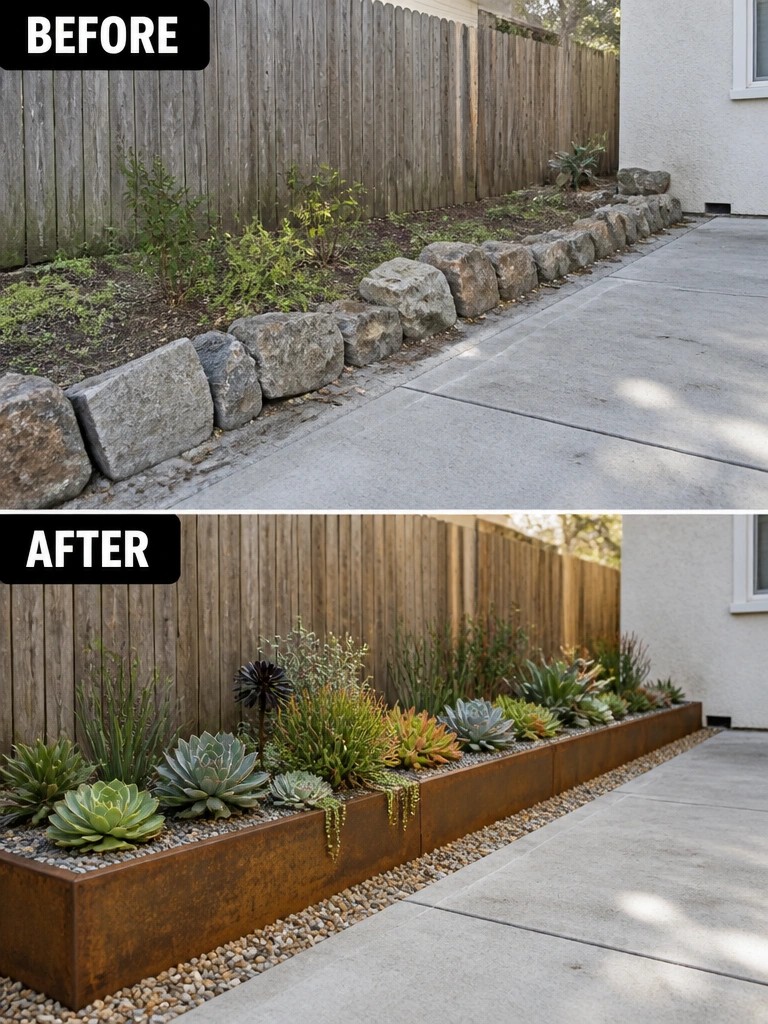
A loose line of rocks and scattered plants along a fence rarely looks intentional. Switching to long raised beds gives the same narrow strip a clear shape and keeps the planting contained so it stays neat over time.
This works best next to paths or fences where you need low edging that still allows for decent soil depth. Stick with one or two bed heights, use gravel to finish the ground around them, and choose plants that stay in scale so the beds do not feel crowded.
Add Raised Beds To A Sloped Yard

A steep, weedy slope is hard to use and harder to maintain. Building raised beds in tiers turns that same space into a workable garden. The beds hold the soil in place, create flat planting areas, and give you clear paths between them.
This approach works well on any noticeable slope where regular in-ground beds would wash out or feel awkward. Start with the biggest level changes first, then fill in with soil and simple planting. Keep the path width comfortable so you can reach every bed without stepping on the soil.
Add Raised Beds To Turn Bare Ground Into A Garden

A bare dirt patch next to a fence does not offer much for growing, but adding raised beds changes that quickly. The beds give the space clear edges, hold better soil, and let you plant densely without worrying about the original ground conditions.
This idea works best in small side yards or back corners where space is limited and the soil needs improvement. Measure along your fence first, build or buy beds that sit level, and keep the center area open for walking or seating so the garden stays usable rather than crowded.
Frequently Asked Questions
Q: How deep should I make the beds for root crops like carrots?
A: Aim for twelve to eighteen inches. That gives the roots space to grow straight down without resistance from the bottom. Shallower beds work fine for greens but will stunt longer veggies.
Q: Can I build these over an existing lawn without digging it all up first?
A: Lay down cardboard or newspaper to smother the grass. Then build the frame right on top and fill with soil. The grass breaks down over time and turns into extra nutrients.
Q: What happens if the beds sit in a low spot that collects water?
A: Raise them higher or add drainage holes near the base. Standing water can rot the wood and drown roots fast. Pick a higher spot in your yard if possible to avoid constant fixes.
Q: How do I stop soil from washing out the sides after heavy rain?
A: Pack the soil firmly when you fill the beds. A thin layer of mulch on top also holds everything in place. Replenish the mulch each spring as it breaks down.
