


Many gardens end up looking a bit bare because the initial planting does not account for how plants grow and fill space over a few seasons.
I usually start by sorting out the basic structure with paths and borders before thinking about what to add in terms of flowers or ground cover.
Fewer plants can still create a full look.
Choosing varieties that spread on their own helps cover ground without constant replanting or extra care.
Testing a couple of these ideas in my yard has shown me how small shifts in layout make a real difference in how the space feels day to day.
Define The Lawn With Ground Cover Plantings

A patchy lawn with bare spots makes the whole front yard feel unfinished. In this case the fix was simple. The owners replaced the struggling grass with dense ground cover that fills the space and creates clear borders along the walkway.
This approach works well on small front yards where a full lawn is hard to maintain. Start by clearing the worst areas, then plant low spreading varieties that stay green and need little mowing. The result looks intentional without requiring constant upkeep.
Add Structure To An Overgrown Garden Bed

An overgrown bed often looks messy because plants grow at different heights and spread without any plan. Clearing everything out and starting with a simple layout of shrubs and grasses makes the area feel intentional and much easier to maintain.
This approach suits homes with foundation plantings or narrow beds along walkways. Pick low-maintenance varieties that fill in nicely and use mulch to hold the soil in place.
Add Defined Borders To A Bare Backyard
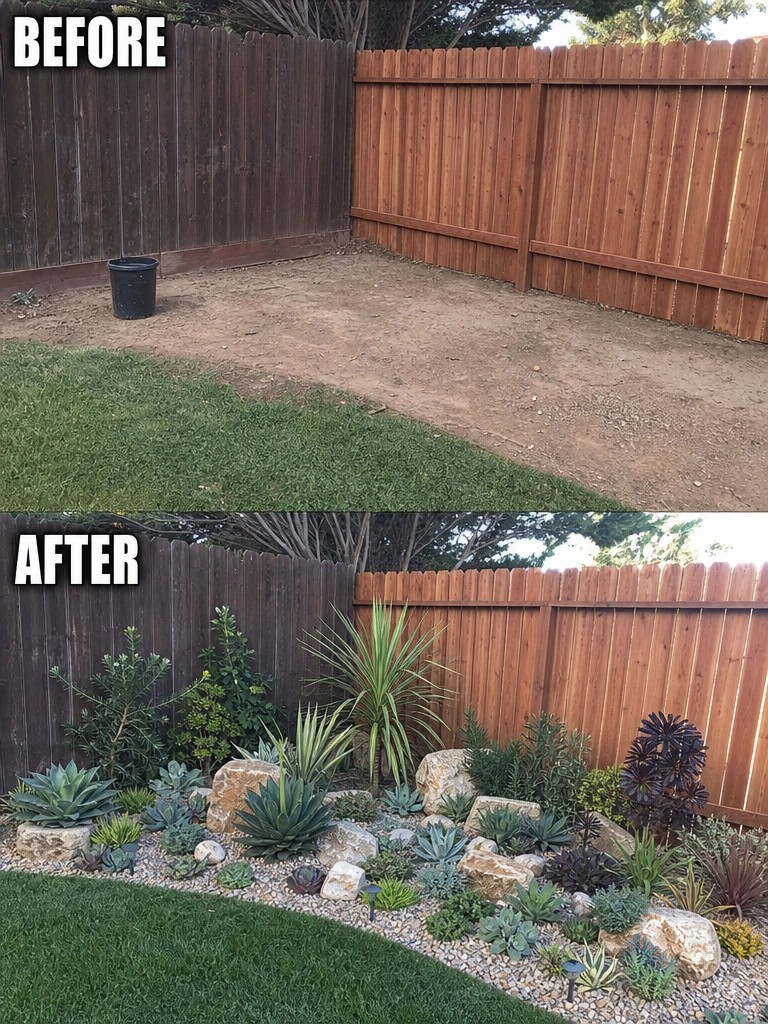
A bare dirt strip along a fence often leaves the yard feeling unfinished. The change here comes from laying gravel and rocks to form a clear bed, then filling it with low growing plants that need little water or trimming once established.
This idea suits small yards or side areas where you want structure without adding much work. Clear the ground first, use gravel to keep weeds down, and pick plants that match your climate so the border stays neat on its own.
Add Structure To An Overgrown Backyard
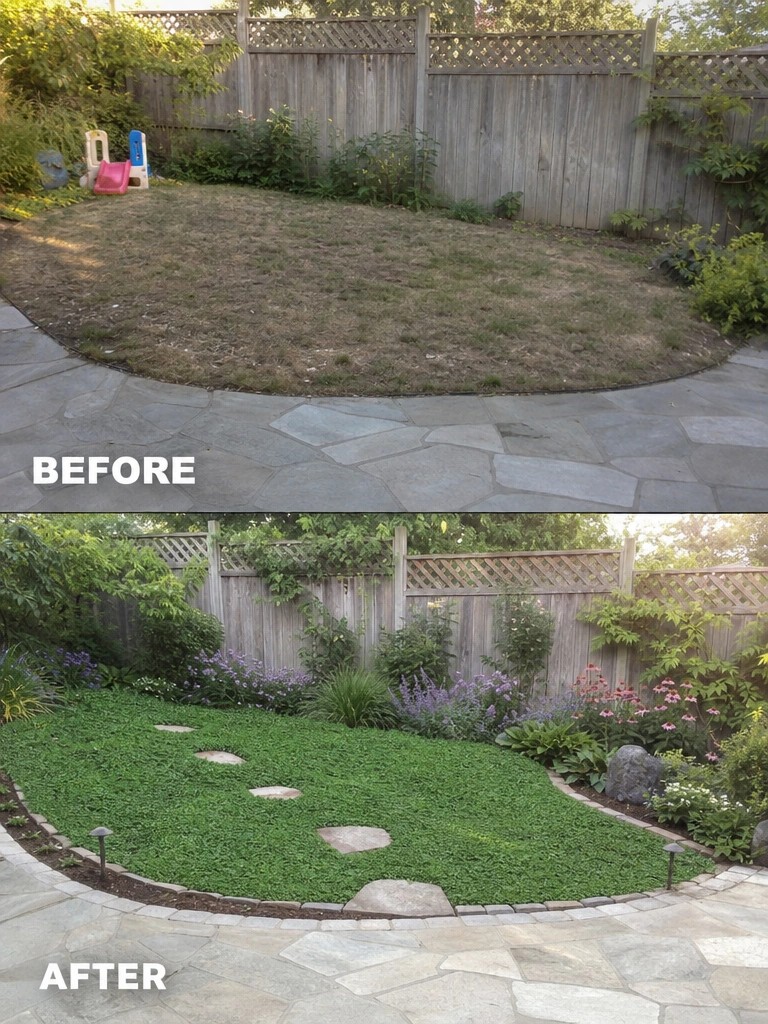
A patchy lawn with no clear shape is hard to enjoy. Adding a clean edge and defined borders turns the same space into something that feels intentional and easier to maintain. The before photo shows mostly bare ground with plants scattered around the sides. The after photo shows a neat lawn outline, stepping stones through the grass, and planted beds along the fence that give the yard a finished look.
This approach works well in small to medium backyards where the lawn is the main feature. Start by marking a simple curved or straight edge and installing basic edging before you add any new plants. Once the shape is set, filling the borders with a mix of shrubs and flowers keeps the area from looking empty while still leaving open space in the middle.
Create Defined Garden Beds With Gravel

A full lawn often takes more work than most people want to keep up with. Replacing large sections of grass with gravel beds and grouped plants gives the yard clear structure while cutting down on mowing and watering.
This idea works best in sunny backyards where you want lower maintenance without losing a planted look. Mark out simple bed shapes first, add a layer of gravel over fabric, and repeat a few plant types so the beds feel full without crowding.
Add Raised Beds To Give A Bare Strip Structure

A long strip of dirt along the house often ends up looking messy because there is nothing to hold the planting in place. Adding a pair of simple raised beds changes that right away. The beds create clear edges, keep the soil contained, and let the plants sit at a better height so the whole area feels more intentional.
This approach works well on narrow side yards or foundation lines where the ground slopes or stays weedy. Keep the beds low and the same material so they blend with the house, then fill them with a mix of shrubs and perennials that can handle the light. Once the beds are in, the rest of the yard needs far less cleanup to look finished.
Layer Plants To Fill A Bare Border
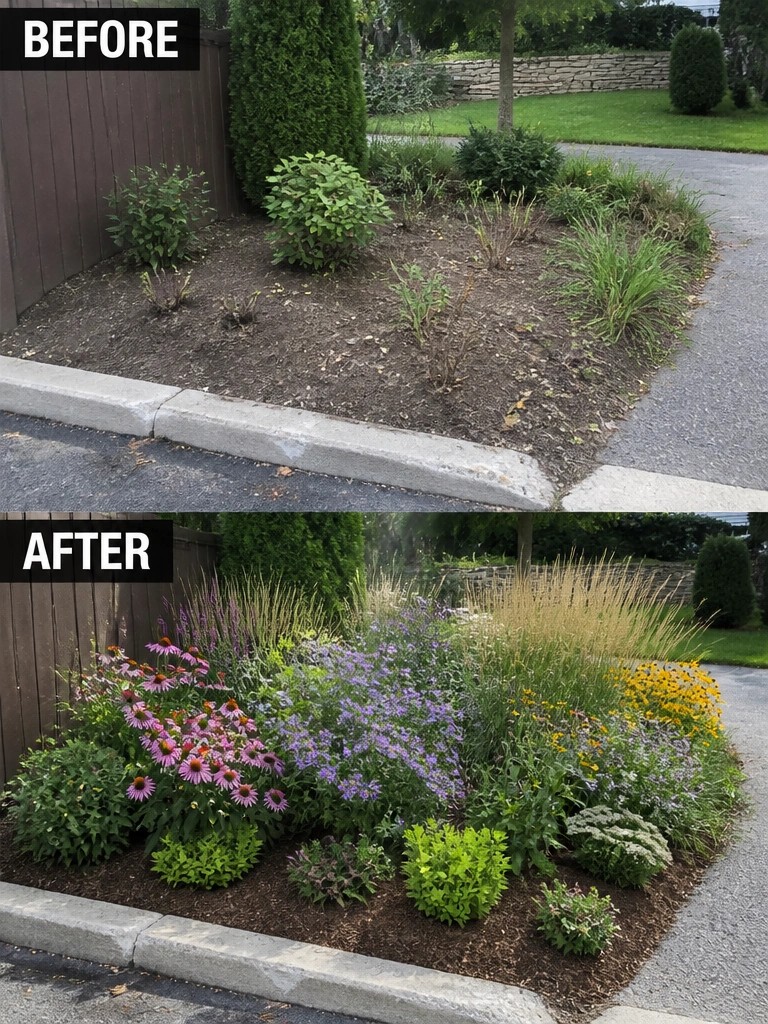
A thin strip of dirt and weeds next to a driveway can look empty for years. Adding layers of taller grasses in the back, mid-height flowers in the middle, and low shrubs in front turns the same space into something that feels full and intentional with very little ongoing effort.
This works best in narrow beds along fences, curbs, or property lines where you want color without daily fuss. Choose a handful of reliable perennials that spread on their own, keep the tallest plants toward the back, and let the lower ones fill in the gaps over a season or two.
Replace A Solid Hedge With Layered Planting
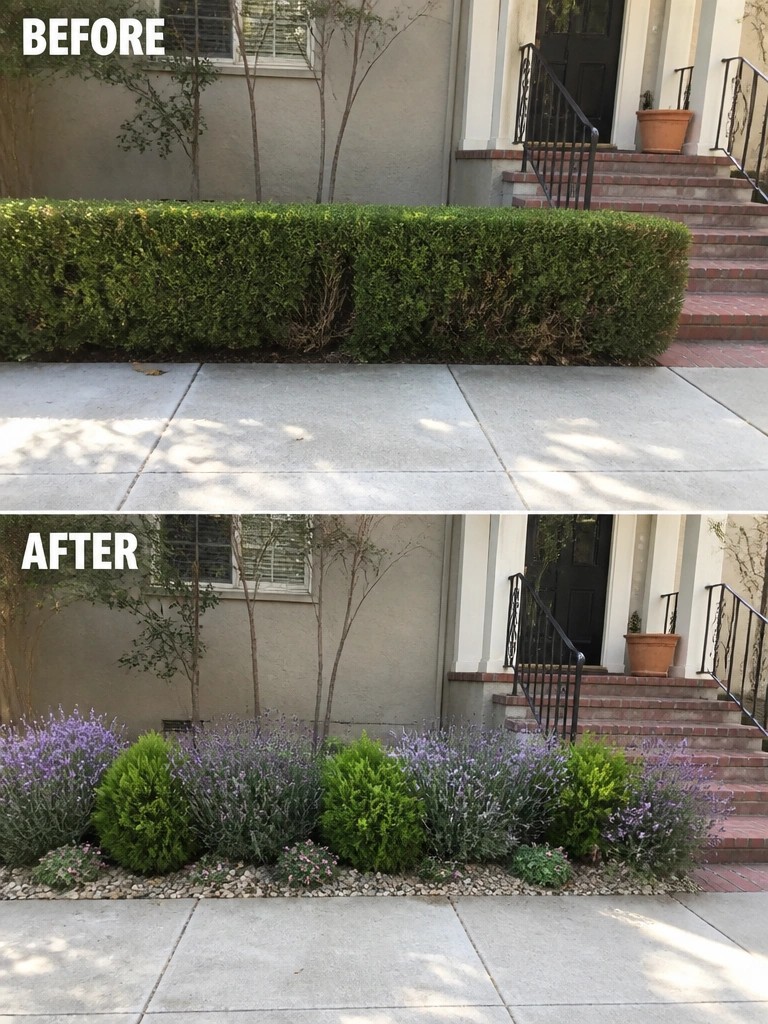
A thick hedge can start to look heavy and tired after a few years. Removing it and putting in a row of smaller shrubs and flowering plants opens up the front of the house while still keeping a clear border along the sidewalk. The new planting uses different heights and textures so the bed looks full without needing constant trimming.
This approach works well along a walkway or foundation where you want some privacy but not a wall of green. Start by clearing the old growth completely, then use a simple gravel edge to keep the bed tidy. Choose a mix of evergreen shrubs and a few perennials that bloom at different times so the bed stays interesting with less work.
Give A Small Backyard More Structure With Gravel And Pots

A plain lawn often looks unfinished in a compact yard and takes regular work to keep it looking decent. Replacing most of the grass with gravel gives the space a clear base, while large pots let you place plants at different heights without digging new beds.
This idea suits fenced backyards that need a low-maintenance seating area. Use a few big containers in varying sizes, keep the layout simple, and leave walking room around the main features so the yard stays easy to use.
Add Structure To A Bare Slope
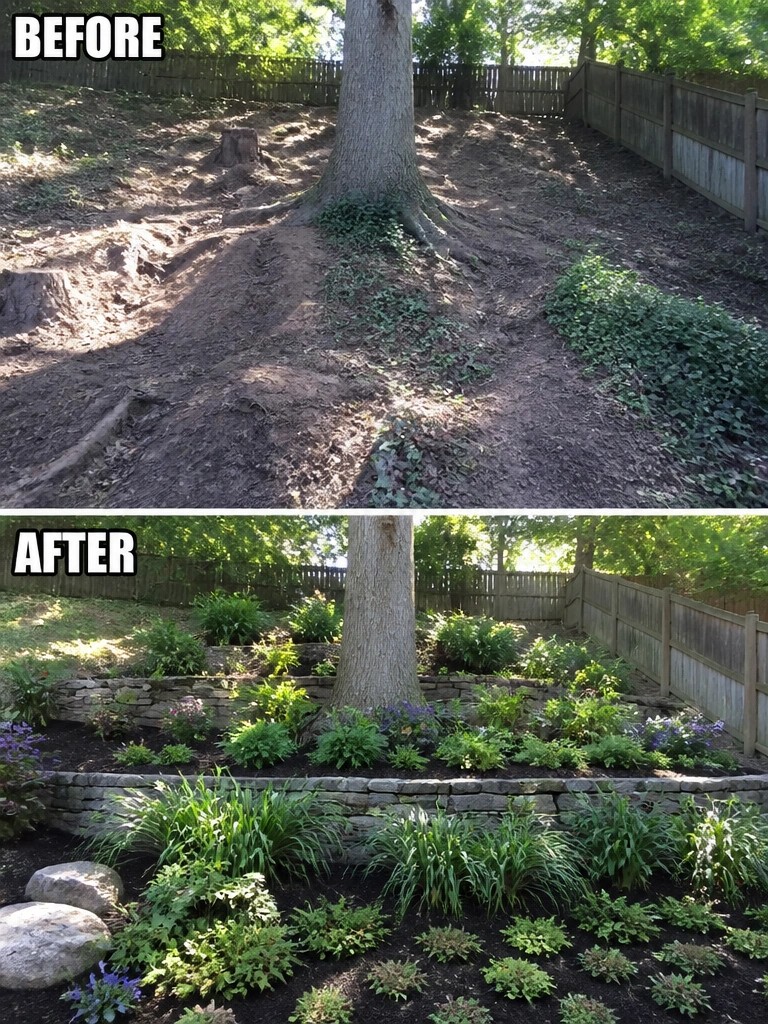
A sloped yard with exposed dirt and tree roots often stays empty because nothing holds the soil in place. Adding low stone retaining walls creates flat beds that stay put and give plants room to fill in. The change from bare ground to layered beds turns the area into something that feels intentional instead of neglected.
This approach works well on moderate slopes where you want planting space without major regrading. Start with the walls to set the shape, then fill the beds with mulch and a mix of low plants that can handle the light. Keep the beds narrow enough to reach across for weeding, and repeat the same stone or edging material so the slope reads as one organized area instead of scattered patches.
Layer Plants To Fill A Narrow Border

The front bed started with just a few small plants spaced out in plain mulch. Adding layers of different heights and textures turned the same narrow strip into a border that looks full and colorful without crowding everything together.
This approach works best along a house foundation or walkway where depth is limited. Pick a mix of taller perennials in back, mounding plants in the middle, and low grasses or ground cover in front so the bed fills in over time with minimal extra work.
Add Vertical Planting To A Fence

A plain fence often leaves the edge of a yard feeling empty even when the lawn is in good shape. Mounting small planters in rows on the fence adds height and color without crowding the ground or requiring wide beds.
This idea suits homes with limited planting space or long fence lines that need more interest. Use lightweight planters rated for outdoor use, pick hardy varieties that can handle sun exposure, and keep the base planting low and simple so the fence stays the main feature.
Give A Front Path Better Structure With Pavers
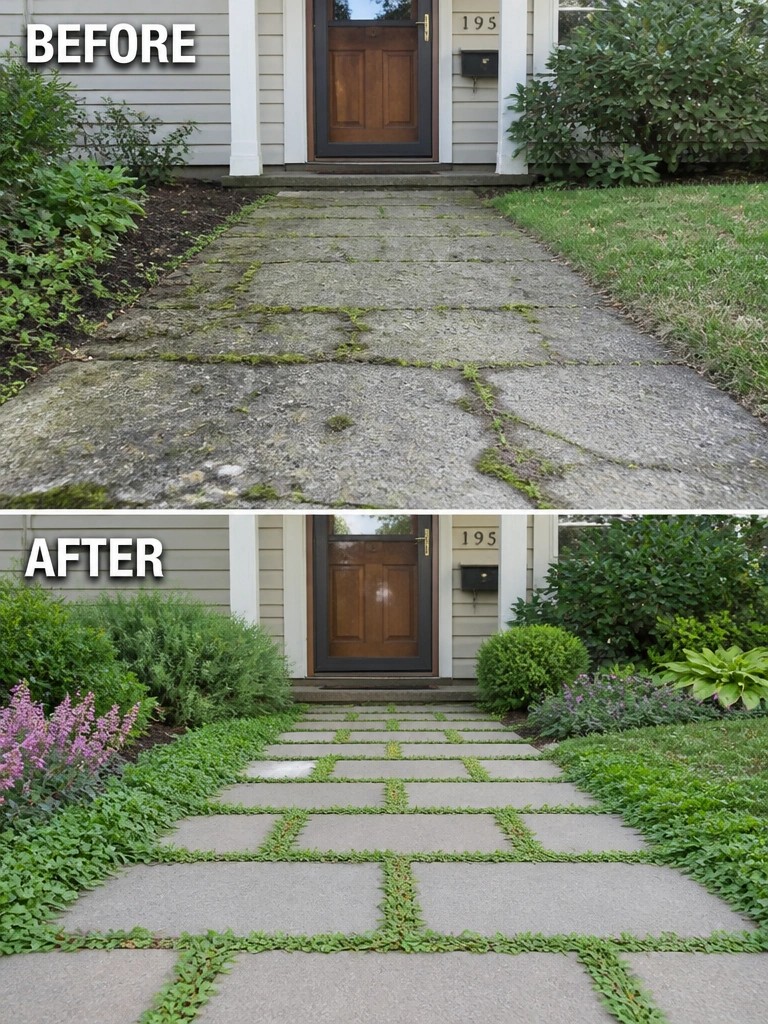
A wide slab of old concrete often ends up looking tired once moss and cracks take over. Replacing it with a grid of pavers and low ground cover between the joints gives the same walkway a clear shape while cutting down on weeding and sweeping.
This approach works well on any straight entry path that feels too plain or hard to maintain. Keep the pavers simple, choose a ground cover that stays low, and let the planting on either side stay modest so the path itself stays the main line through the garden.
Define Your Yard With Simple Garden Beds

A flat stretch of grass often feels unfinished because nothing separates the lawn from the fence line. Adding mulched garden beds along the edge gives the space clear borders and makes the whole yard look more intentional.
This approach works especially well in smaller backyards where you want some planting without losing open lawn space. Edge the beds first, lay down mulch to control weeds, and fill them with a mix of grasses and low-care perennials so the area stays tidy with minimal upkeep.
Add Vertical Planting To A Plain Fence

A blank fence with just dirt at the base can feel unfinished and flat. Mounting a row of planters along the fence adds height and turns the space into a planted feature without needing a big garden bed.
This works well on side yards or narrow areas where ground space is limited. Start with sturdy brackets and a simple irrigation line if possible, then choose plants that can handle the sun exposure in your spot. Keep the rest of the ground simple so the vertical planting stays the focus.
Replace A Patchy Grass Strip With A Gravel Planting Bed

A narrow strip of lawn right next to a pool often ends up thin and brown because of shade, splash, and constant foot traffic. Switching it to gravel with a simple mix of low plants and grasses removes the weak lawn and gives the edge a tidy, finished look that holds up better.
This idea suits any spot where grass struggles between hard surfaces. Lay down fabric and gravel first, then choose a few reliable plants that can handle the conditions. The result stays full without needing frequent mowing or watering.
Turn Bare Mulch Into Planted Beds
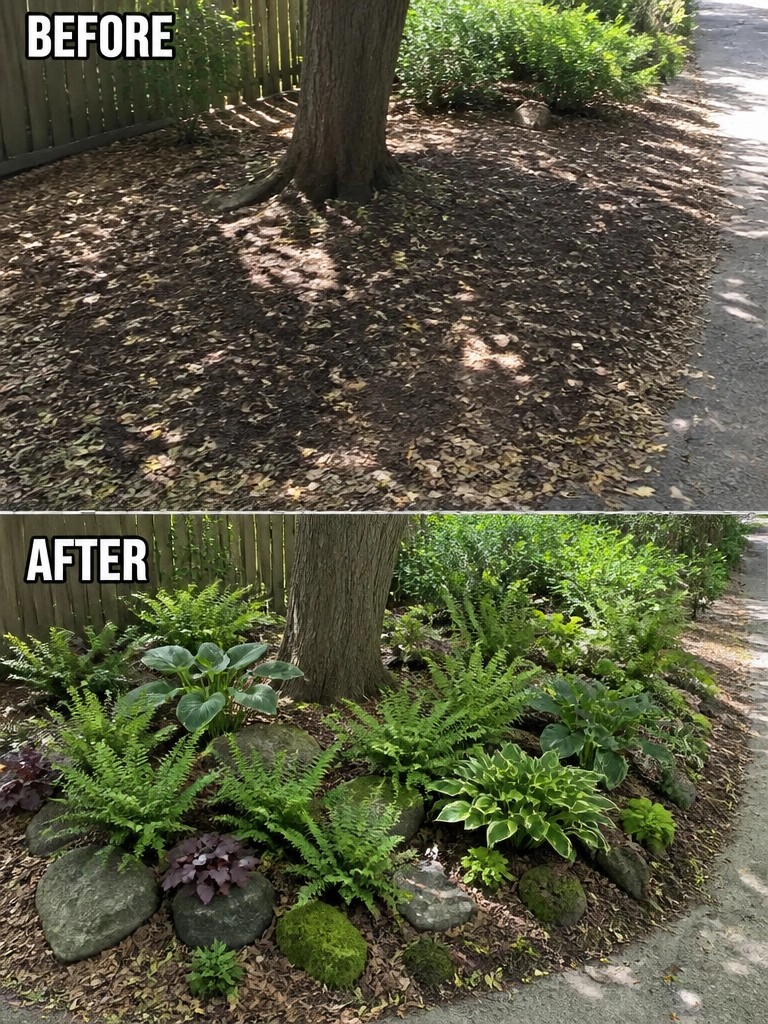
A bare patch of mulch under a tree often looks unfinished, even when the rest of the yard is tidy. Adding a few larger plants and some rocks gives the area clear shape and fills the space without much ongoing work. The change from plain mulch to a mix of ferns and hostas makes the bed look intentional instead of empty.
This approach works well in shady spots where grass struggles. Start with a few tough shade plants and a handful of rocks to hold the shape, then add smaller fillers if needed. It keeps the bed looking full while staying simple to maintain over time.
Define The House Foundation With A Planting Border
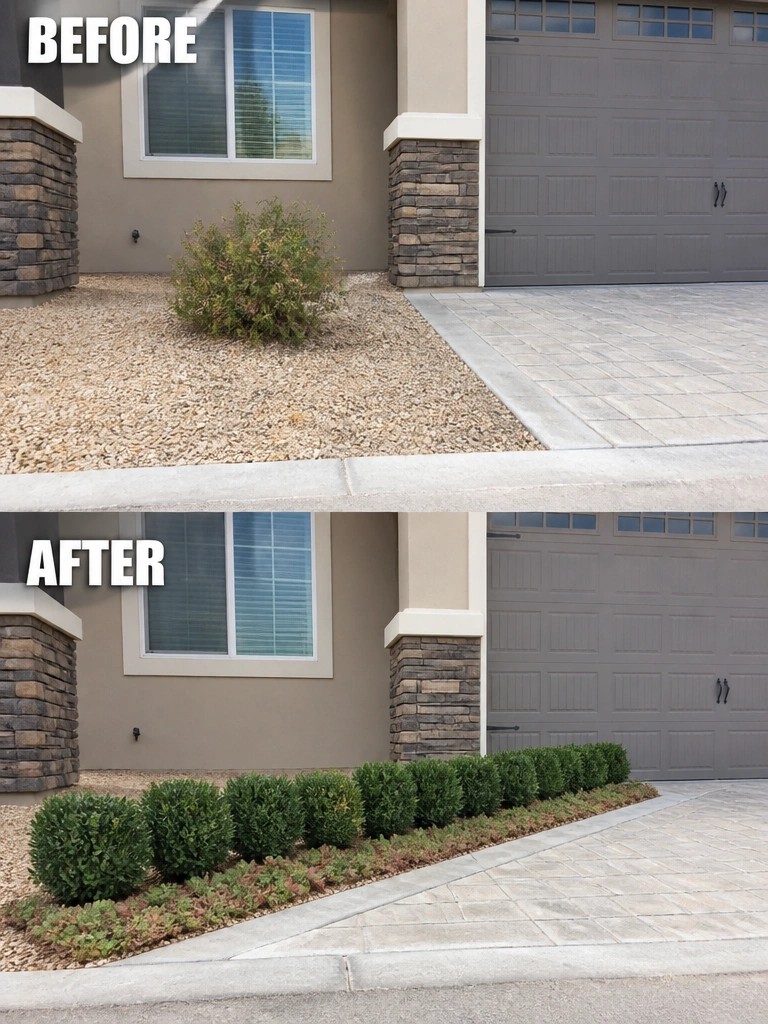
A single loose shrub sitting in gravel rarely looks intentional. Replacing it with a straight row of compact shrubs creates a clear line that ties the house to the ground and makes the whole front feel more finished.
This approach works well on any home where the foundation looks bare or the bed edges feel random. Start by deciding the depth of the border, then choose shrubs that stay under two feet so they do not block windows. Add a simple ground cover between them and keep the mulch layer even. The result is low maintenance and gives the front a tidy shape without needing constant trimming.
Use Full Planters To Give A Balcony A Lush Look

The before photo shows a few small planters spaced out along the railing with thin plantings that left the space feeling bare. The after version swaps them for larger wooden boxes that sit closer together and hold a much denser mix of flowers and greenery. That one change fills the view and makes the balcony feel more like a real garden spot.
This idea works best on balconies or small decks where you want more impact without adding furniture or big structures. Pick planters that can handle more soil and repeat a simple mix of plants that grow well together. It keeps things low maintenance while still giving the full look most people want.
Frequently Asked Questions
Q: How do I pick plants that fill space fast without a lot of watering later?
A: Choose native grasses and spreading ground covers that handle your local rainfall. They grow thicker each season and leave little room for weeds to sneak in. Add a few evergreen shrubs at the back to keep the beds looking dense year round.
Q: What works if my yard gets mostly shade and I still want it to look full?
A: Plant hostas and ferns in groups since they thrive without much sun. They multiply over time and create a layered effect with almost no extra effort. Top the soil with mulch to lock in moisture and block weeds from starting.
Q: Can I start small and still get that full garden look this year?
A: Buy young plants in bigger pots so they cover more ground right away. Space them a bit closer than usual and let them grow into each other naturally. This approach keeps the beds from looking sparse while you add more over time.
