

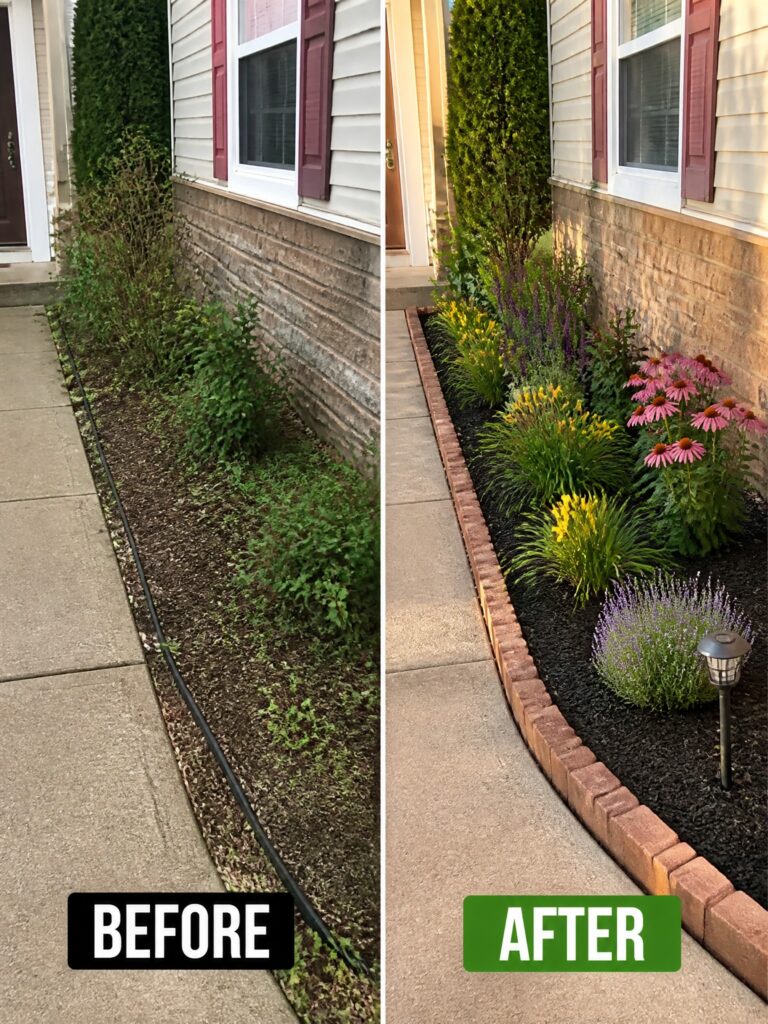
I have noticed that flower beds tend to lose their shape after a few seasons when plants sprawl and the edges fade into the grass around them. One change that has worked for me is focusing first on a clear outline and a handful of repeating plants rather than trying to fill every gap at once. These beds seem to settle into something more balanced once the basic structure is in place and the soil has had time to support new growth. A few neat rows can shift the whole look. I often try one layout tweak in my own yard before deciding what else to adjust.
Define Flower Beds With Simple Edging
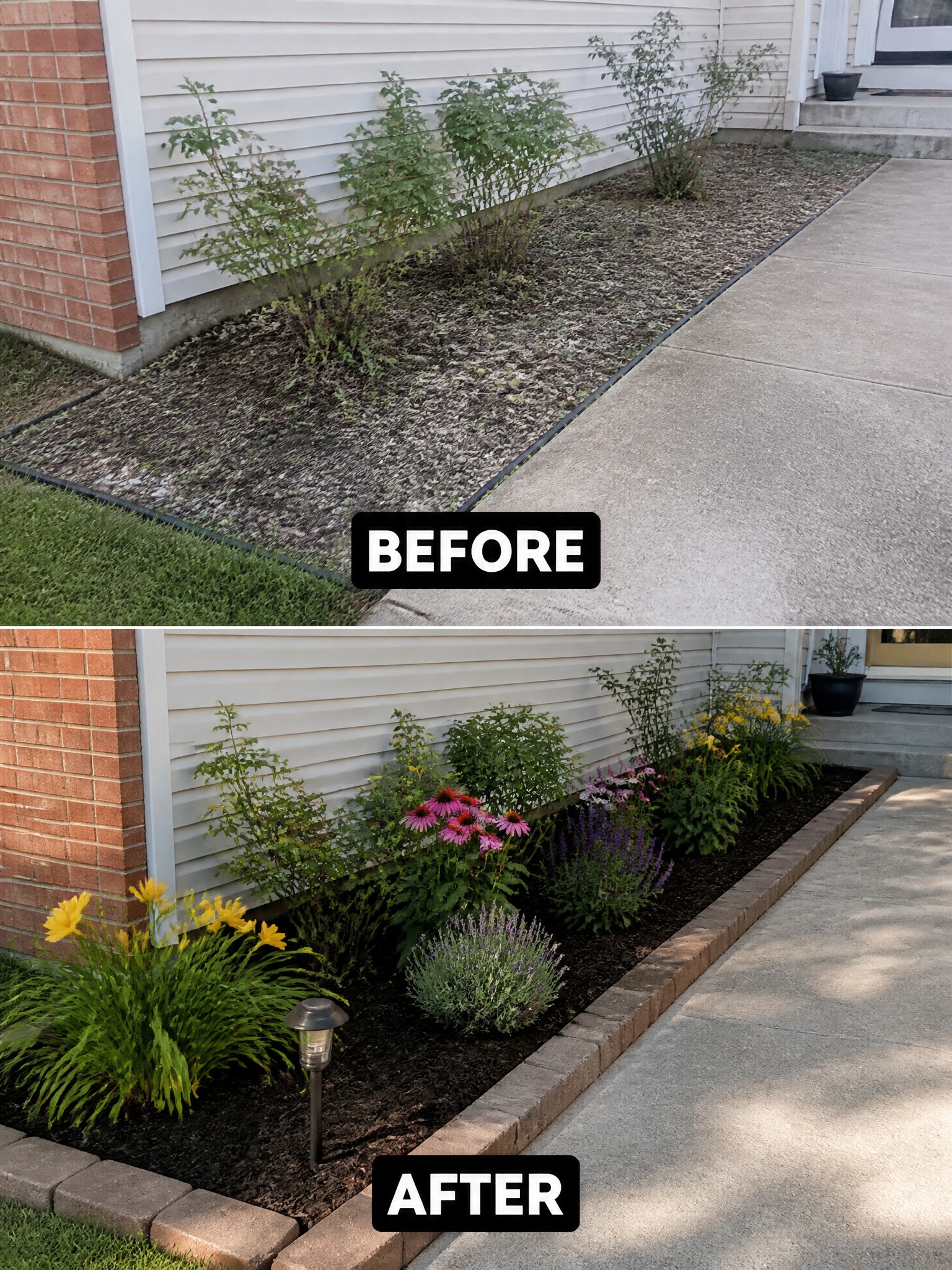
One of the quickest ways to improve a neglected strip along the house is to give the bed a clear edge before adding new plants. A low brick border turns loose mulch and scattered growth into a contained area that looks planned rather than forgotten.
This works especially well next to a walkway where the bed needs to feel intentional. Install edging that matches nearby hardscaping, refresh the mulch, and plant in layers so the bed fills in over time without spreading into the lawn or path.
Create Defined Flower Beds Along The Foundation
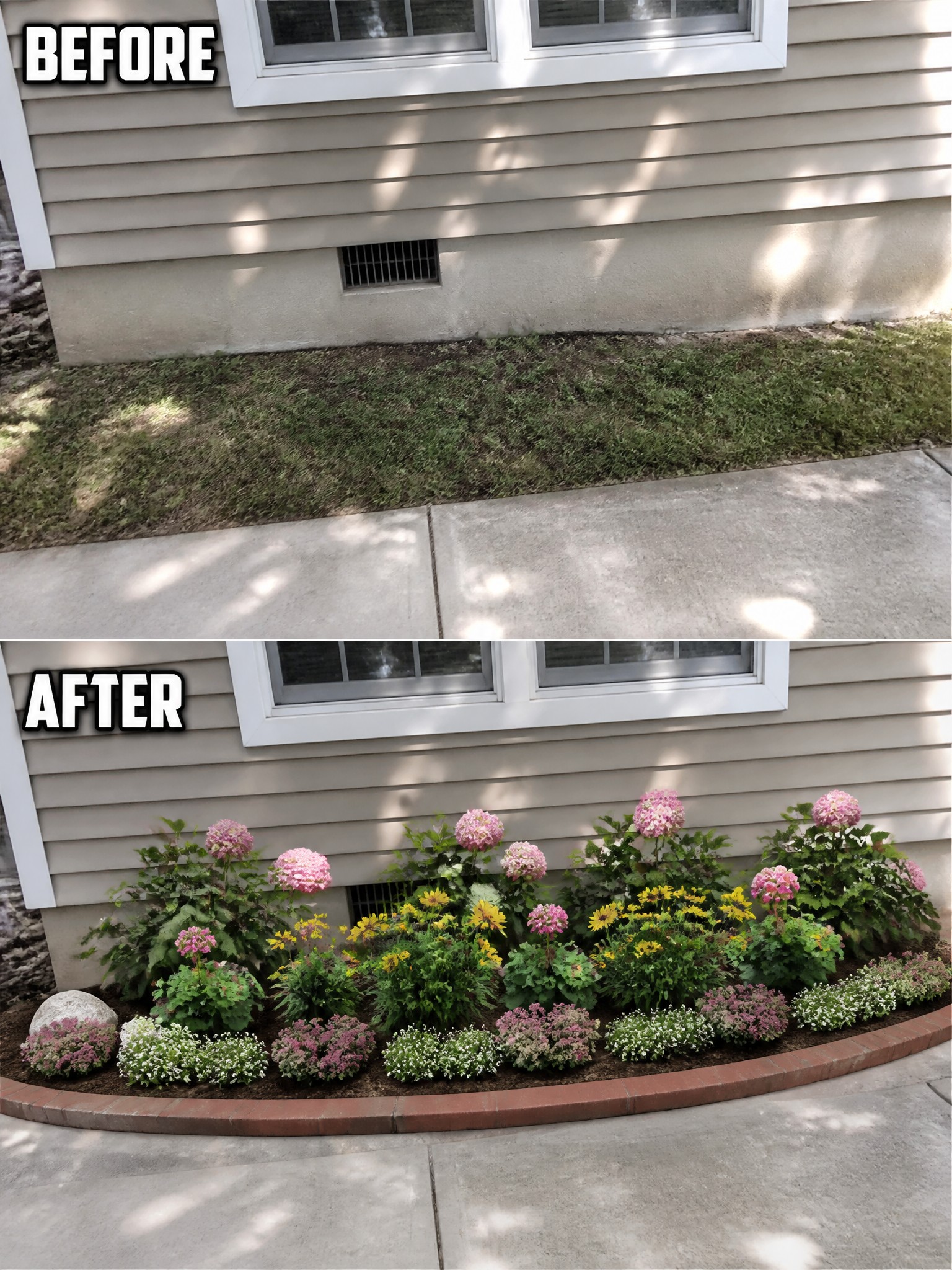
A bare strip of weeds and grass next to the house can make the whole side of the yard look unfinished. Adding a low brick edge and filling the space with mulch and layered plants turns that neglected area into a clean border that frames the house.
This idea works on any side of the home where the foundation meets the lawn. Keep the bed narrow enough to reach for weeding, repeat a few plant types instead of mixing too many, and use the edging to hold the mulch in place. It gives the yard a finished look with very little ongoing upkeep.
Add Raised Beds To Structure An Overgrown Border
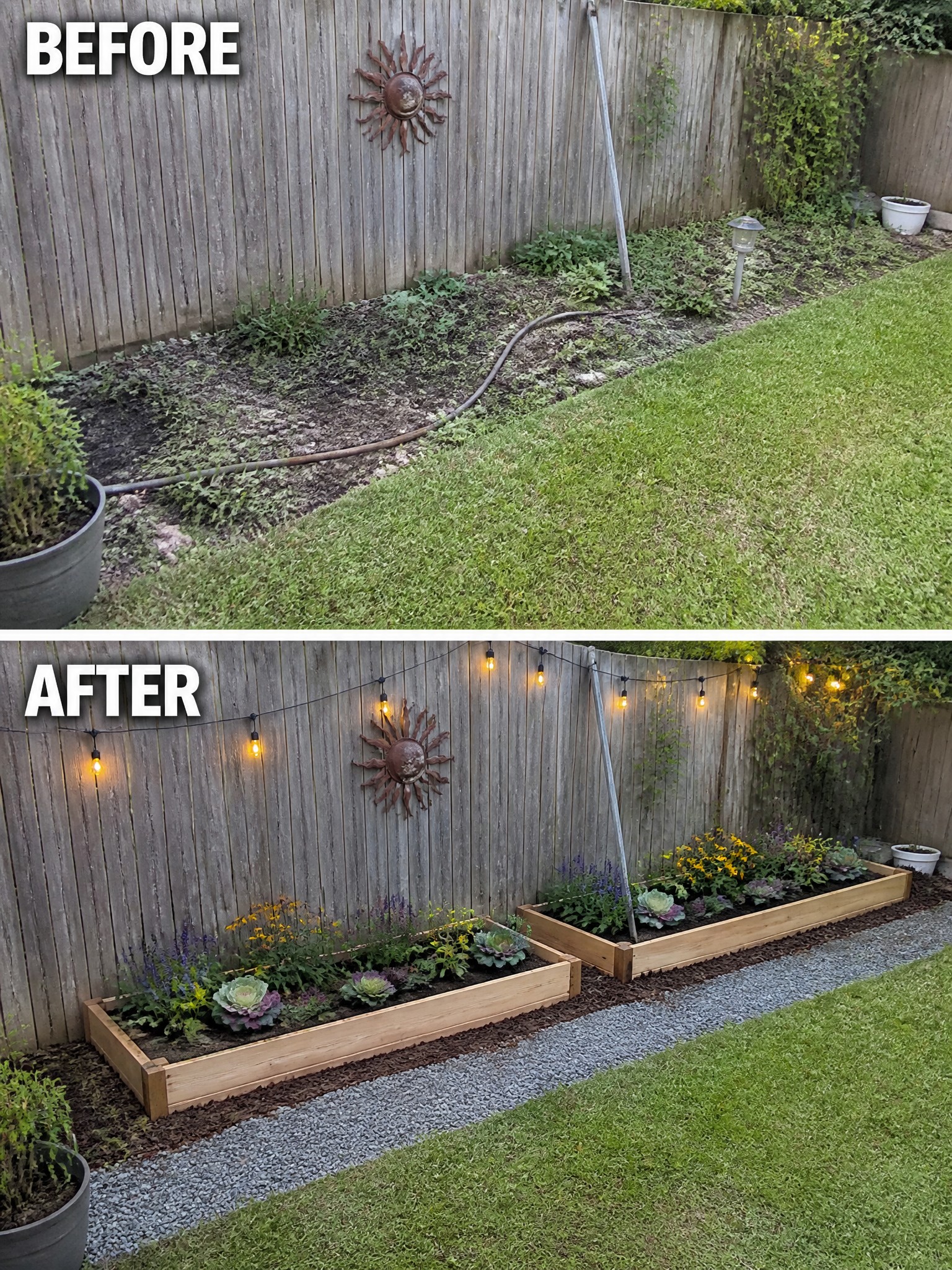
A long strip of bare dirt and weeds along a fence can look unfinished fast. Raised beds bring clear lines and make the space feel intentional instead of leftover. In this case, simple cedar boxes turned the messy edge into a neat planting area while the gravel strip kept everything from running into the lawn.
This approach works well in narrow side yards or back borders where the ground stays uneven. Start with the beds first, then add plants that match the bed size so nothing looks crowded. The same idea scales down for smaller homes or up if you want more growing room later.
Replace A Plain Rock Bed With Layered Flowers
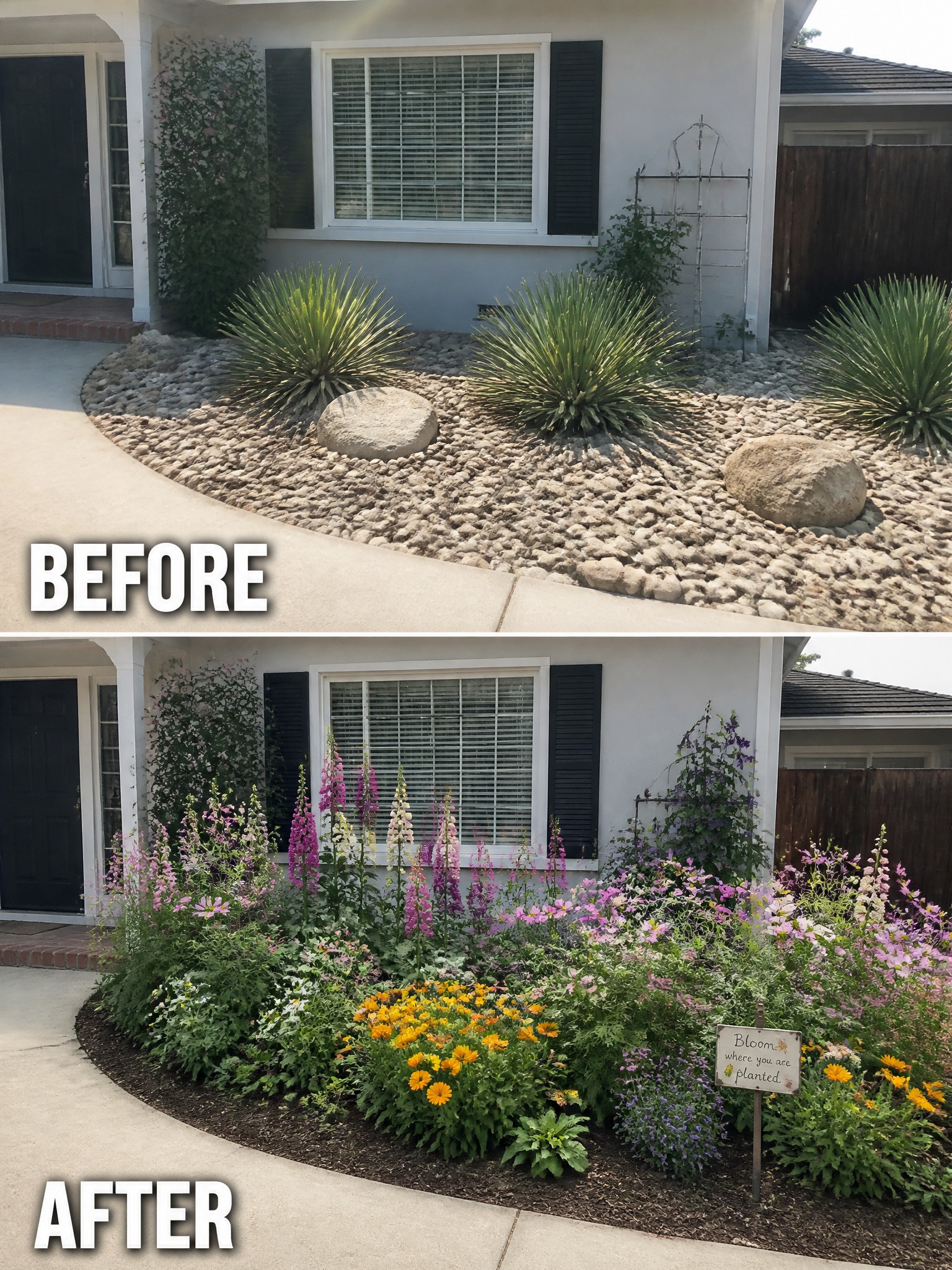
A rock bed with only a few large plants often looks empty and dry. Filling the same curved space with a mix of tall spiky flowers and lower colorful blooms changes the whole front of the house and gives it a much softer, lived-in look.
This works best along a walkway or right in front of windows where the color shows from the street. Clear the rocks first, lay down fresh mulch, and plant in layers so shorter flowers sit in front of taller ones. The result stays simple but gives far more interest than gravel alone.
Add Edging And Gravel To Shape A Foundation Bed
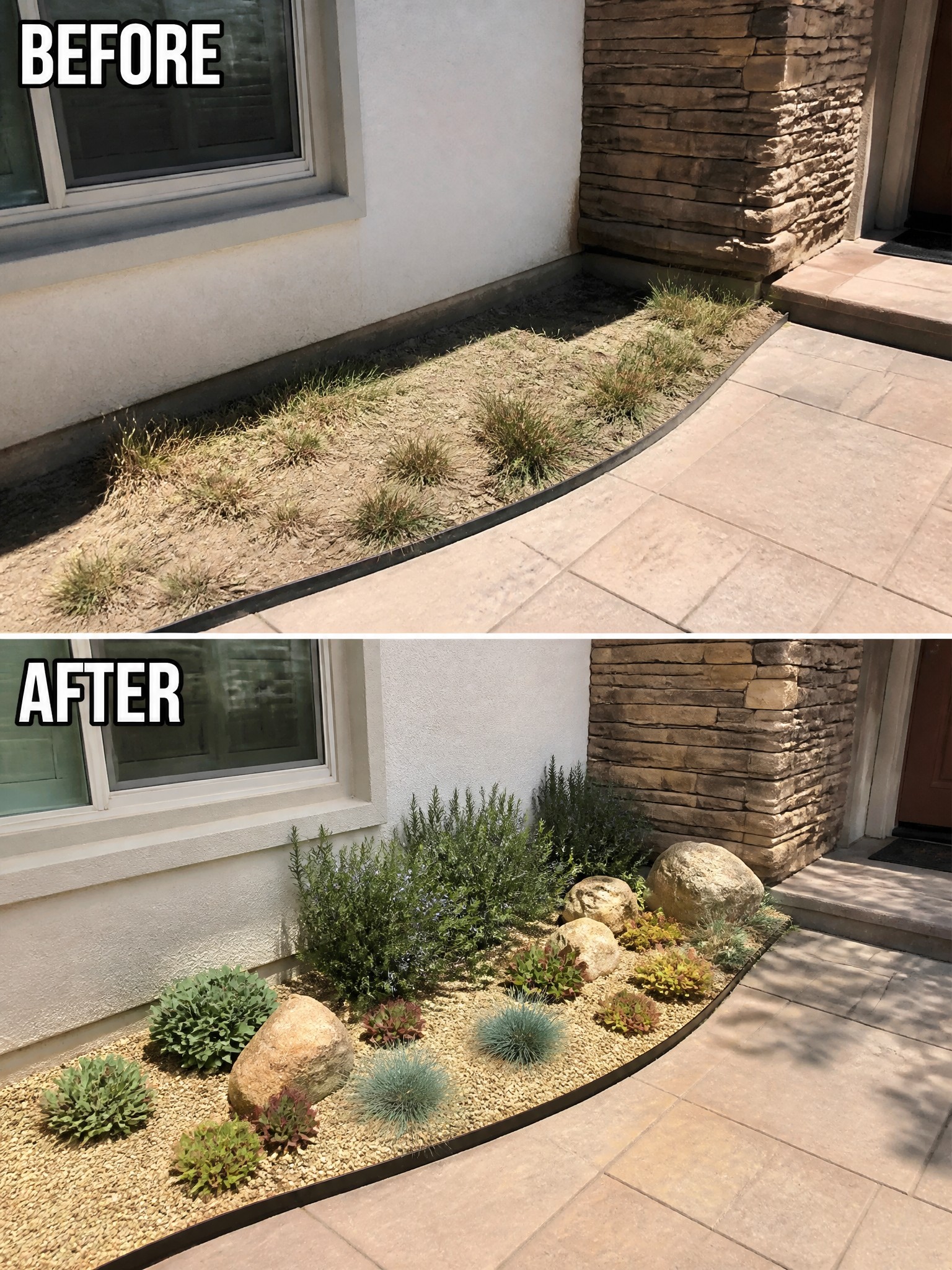
A narrow strip of dirt and weeds next to the house often looks unfinished. Adding a clean edge and a layer of gravel turns that same space into a tidy border that stays in place and needs little upkeep.
This works well along any house wall where you want low plants without constant mowing or trimming. Start with metal or plastic edging to hold the gravel, then group a few shrubs and ground covers so the bed feels planned instead of scattered.
Add Simple Landscape Lights To Your Flower Beds
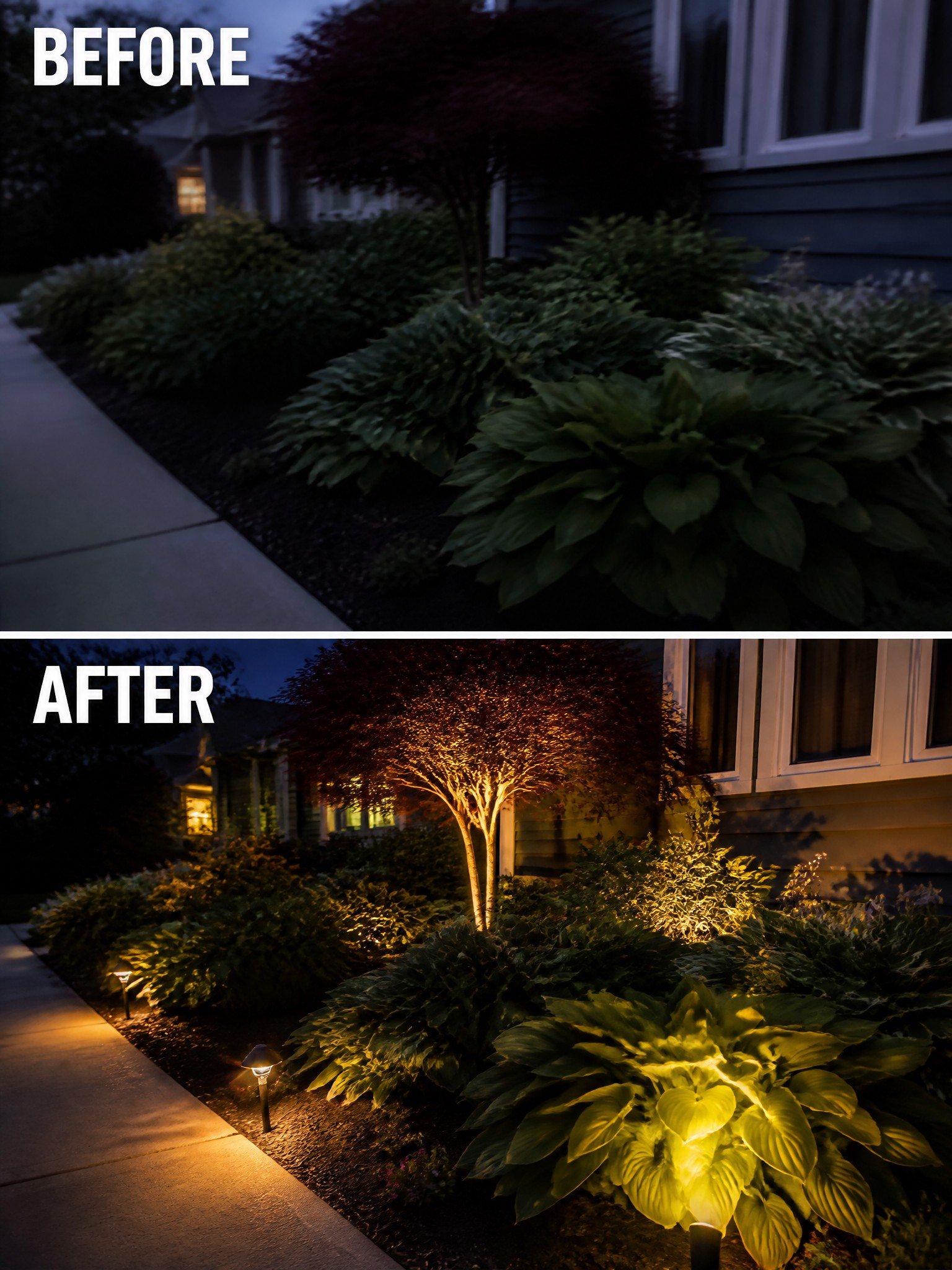
The before photo shows a dark row of plants along the house with almost no definition once the sun sets. In the after, a few low lights along the path and under the larger plants make the beds visible and give the whole side of the house a cleaner look at night.
This idea works best once your plants are already in decent shape. Place one or two lights to highlight a tree or taller shrub, then add smaller ones along the front edge of the bed. It suits homes where the yard is seen from the street or windows after dark, and it keeps the focus on the plants without needing new construction.
Add Structure To An Overgrown Side Yard
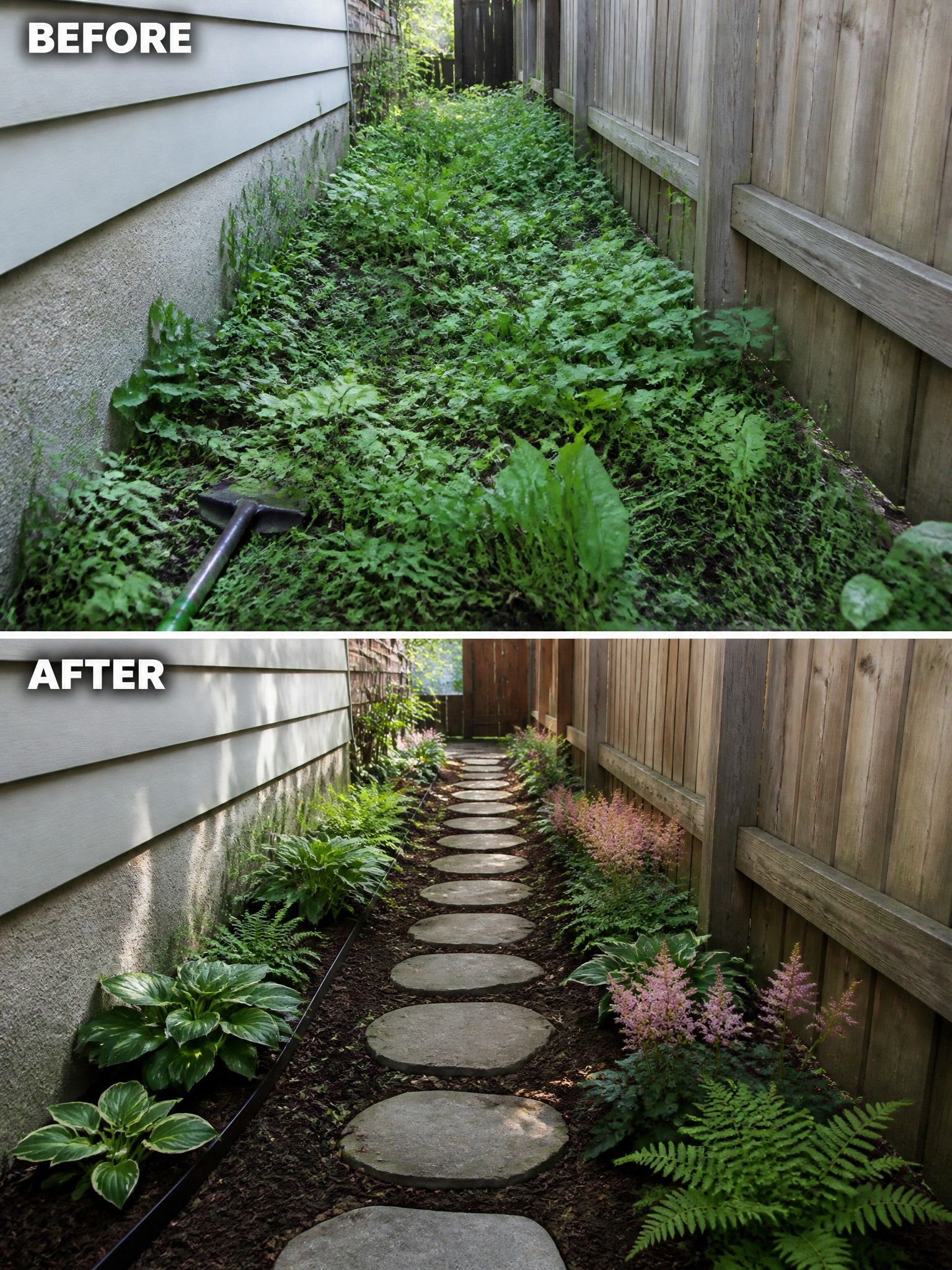
Clearing the weeds first makes the biggest difference. A row of stepping stones then turns the narrow strip into a usable walkway while giving the plants on both sides a clear edge to follow.
This approach suits tight spaces between a house and fence where everything can quickly look messy. Start with a good cleanup, lay the path, then fill the beds with shade-tolerant plants that stay contained.
Turn A Bare Slope Into Tiered Flower Beds
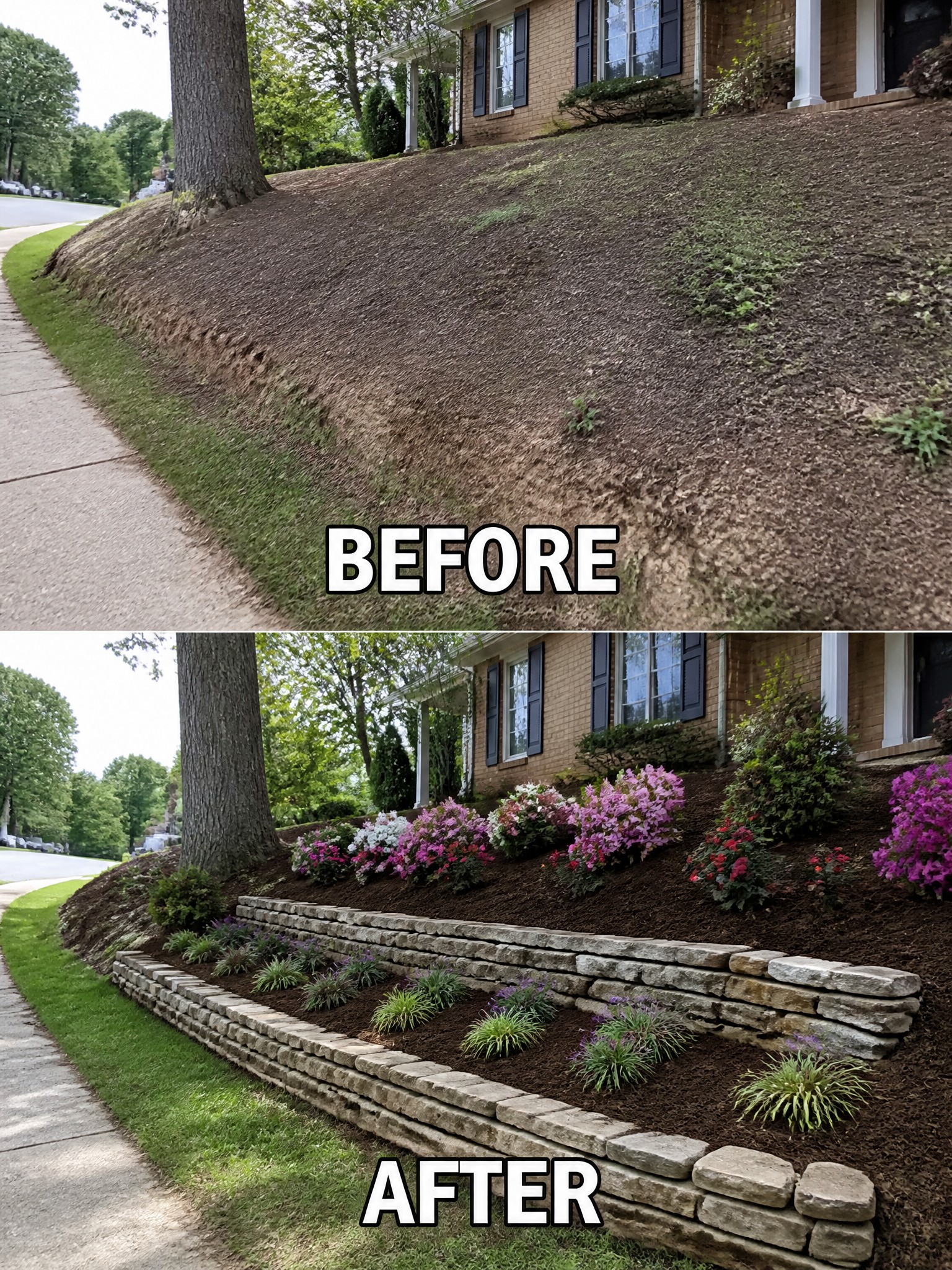
A steep bare slope often looks messy and washes out during rain. Adding low stone retaining walls turns the hill into a series of flat beds that hold soil and mulch in place so plants can settle in without sliding.
This idea suits homes with uneven yards where a single large bed would be hard to maintain. Start with the walls to set the shape, then fill each level with soil and repeat a few plant types rather than crowding in too many varieties at once.
Turn Gravel Into A Colorful Flower Bed
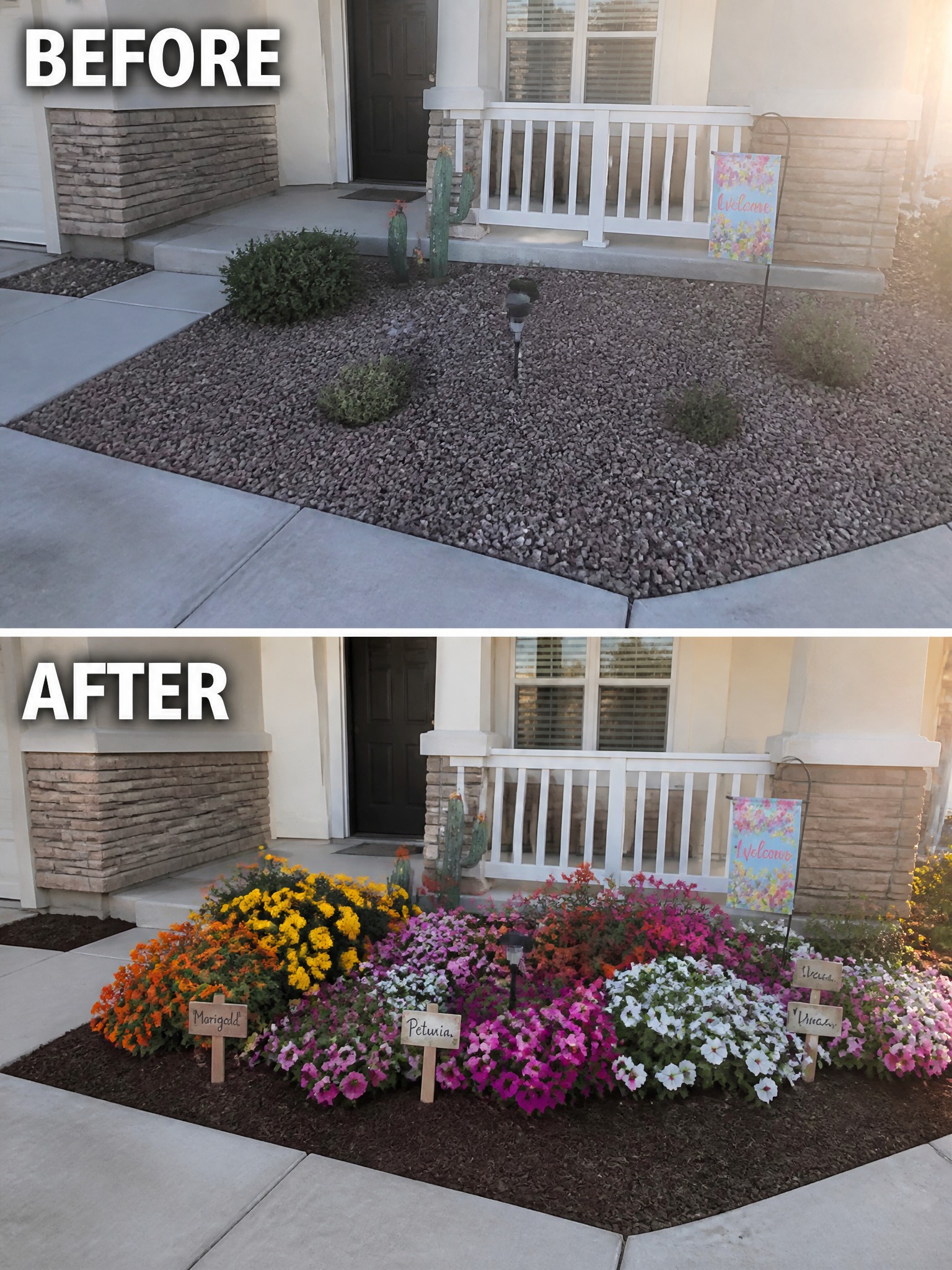
A plain gravel patch in front of the house often looks unfinished and low on impact. Filling it with rows of bright annuals changes the whole look fast. The gravel gets replaced with dark mulch, and the space becomes a solid block of color that draws attention right to the entry.
This approach works especially well along a walkway or near the front porch where people see it every day. Start with three or four types of flowers that bloom through the season, space them evenly, and keep the bed edged cleanly so it stays neat. It stays simple and affordable while giving the front yard a cared-for appearance.
Define Overgrown Flower Beds With Edging
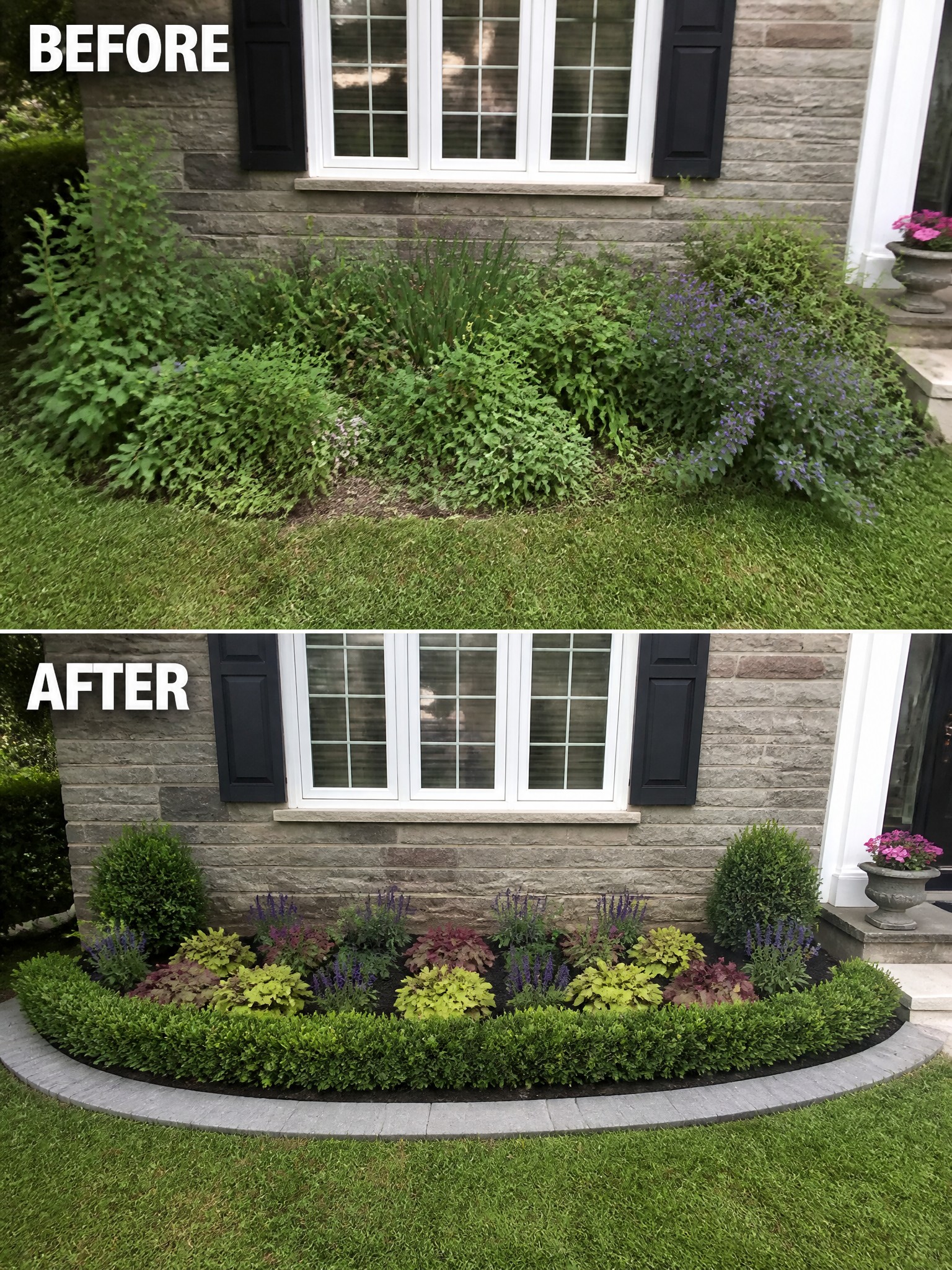
Adding a clear border is often the fastest way to fix a messy bed that has grown out of control. The plants here were thinned and rearranged just enough to create order, then framed with a low hedge and a simple stone edge that keeps everything from spilling onto the grass.
This idea works best on small beds right against the house where you want a neat look without a full replant. Start with the edging first so you can see how much space you actually have, then fill in with a mix of heights that stay in scale.
Add Trellises Along A Fence For Vertical Interest
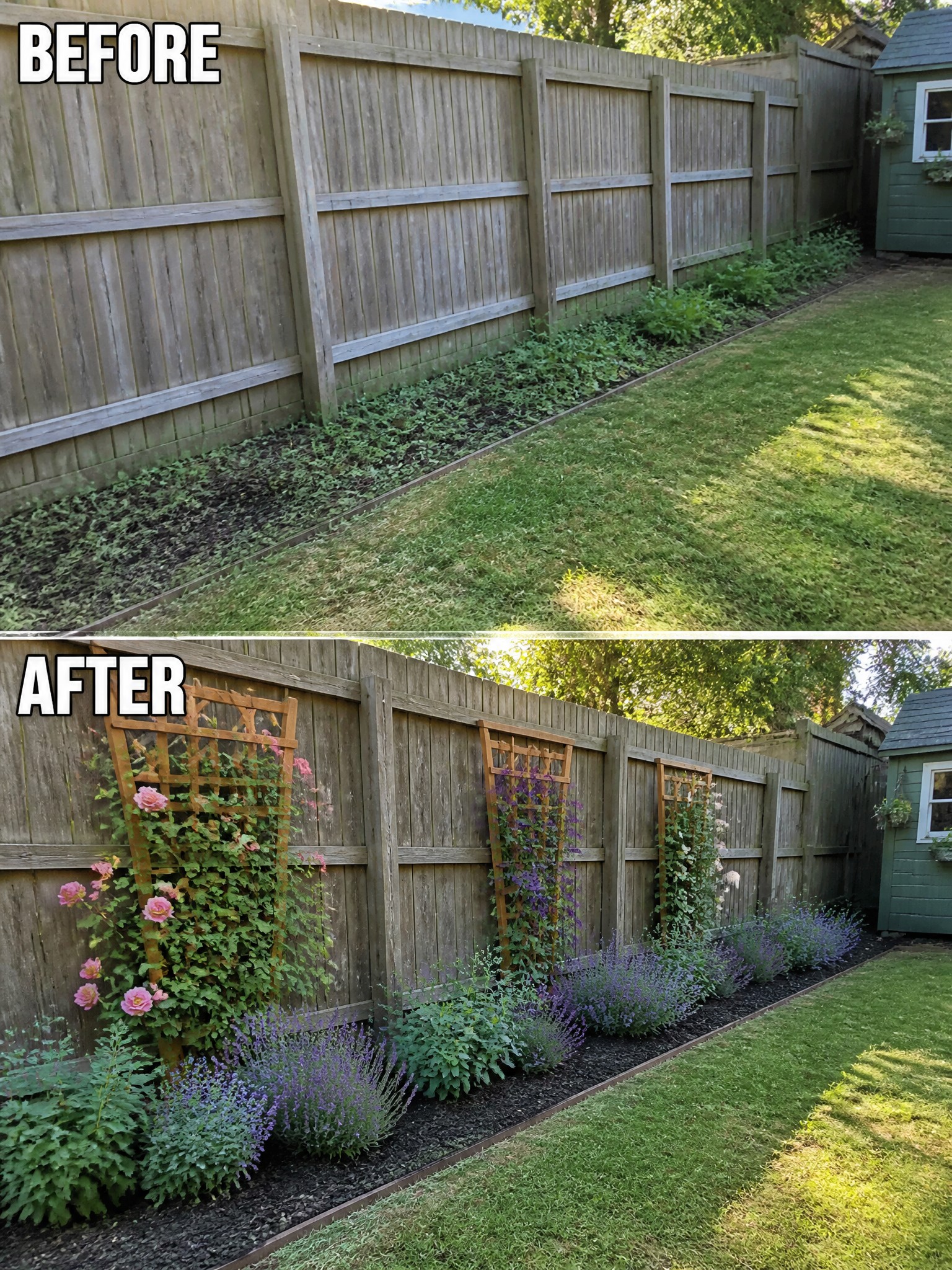
A plain fence with just grass and weeds along the base can feel unfinished. Adding a few wooden trellises with climbing roses and other vines turns that strip into a defined garden border that adds height and color right where the eye lands.
This approach suits long fence lines in smaller yards where you want impact without crowding the lawn. Start by clearing the weeds and laying mulch, then space the trellises evenly so the plants can fill in over time without looking scattered.
Fill A Bare Border With Layered Perennials
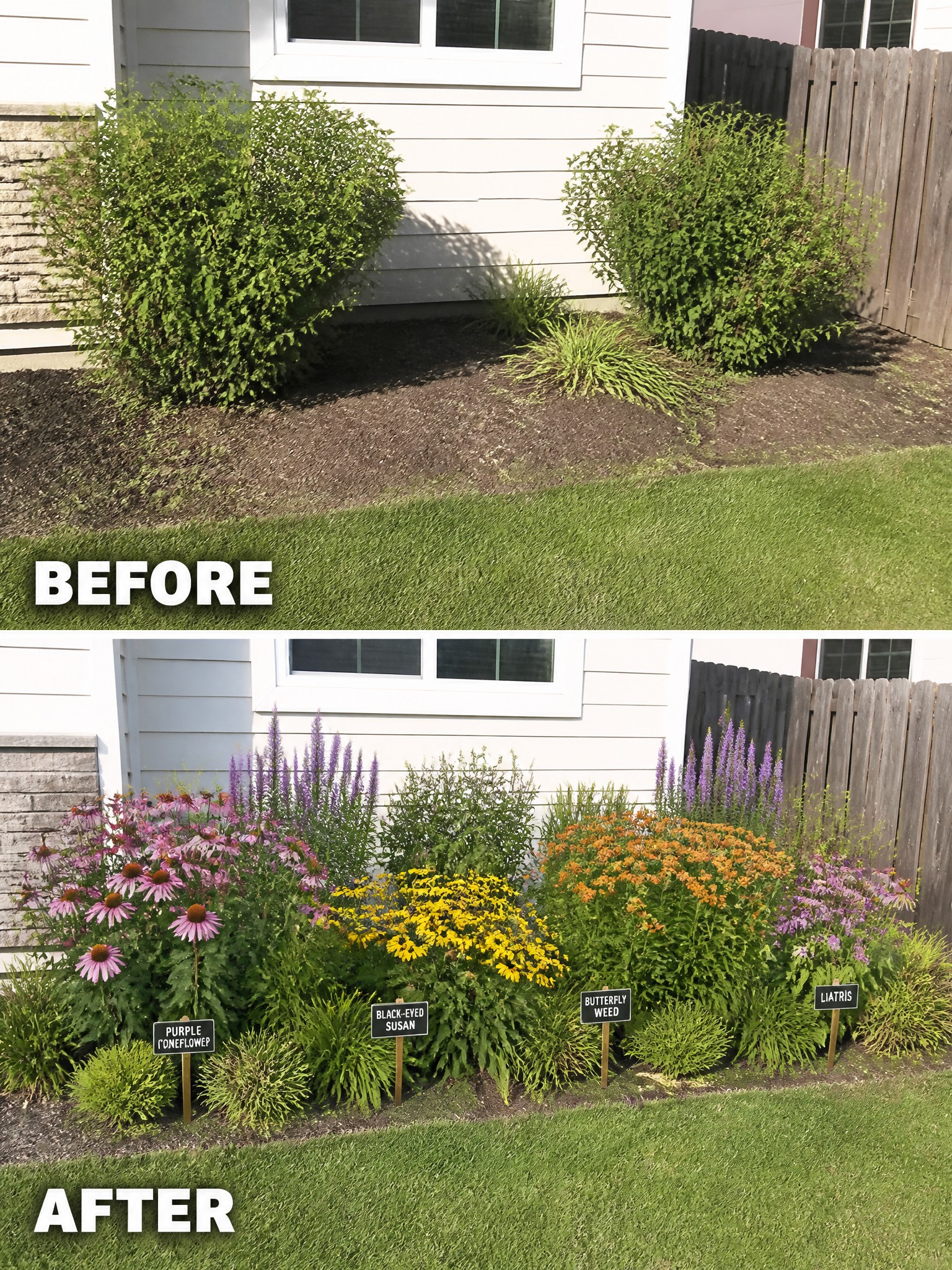
A plain strip of mulch along the house often looks unfinished, even when a few shrubs are already in place. Adding layers of perennials in different heights and bloom times turns that empty space into a full garden bed without major construction or high cost. The change here comes from grouping taller spikes behind lower spreading flowers and keeping the edge clean against the lawn.
This approach works best along a front or side foundation where the bed is narrow but visible. Start by clearing weeds and refreshing the mulch, then plant in drifts rather than single rows so the bed looks full from the start. Choose hardy varieties that return each year and match your sun exposure to keep maintenance low.
Plant A Flower Border Along The Foundation
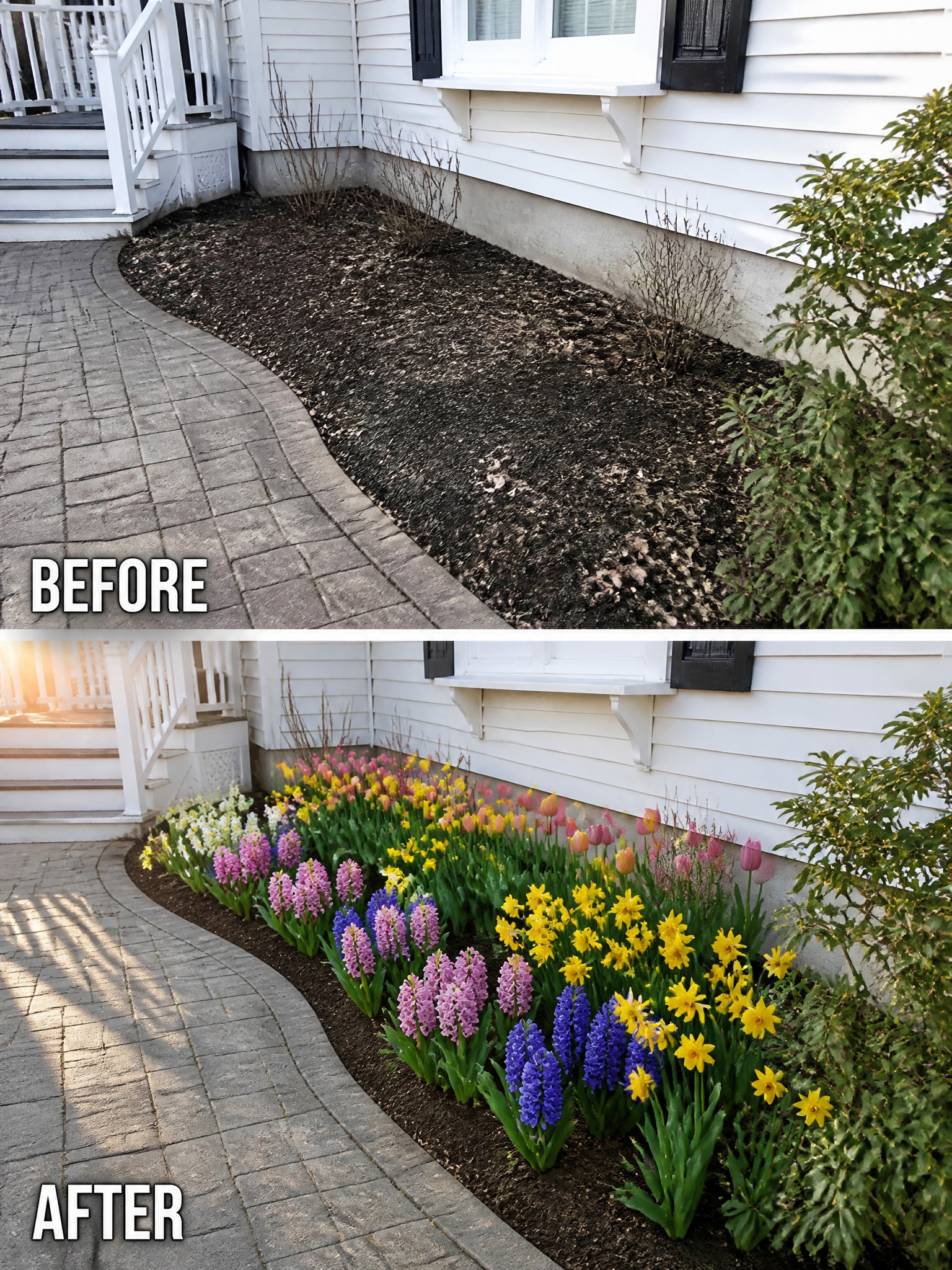
A bare strip of mulch next to the house can look flat and unfinished. Filling it with rows of spring bulbs turns that same narrow space into a bright border that leads the eye along the walkway and softens the foundation line.
This idea works best on small front-yard strips where you want color without losing walking room. Choose bulbs that return each year, keep the bed only a couple of feet wide, and plant in loose groups rather than straight lines so the bed still looks natural after the first season.
Add Defined Flower Beds Along The Foundation
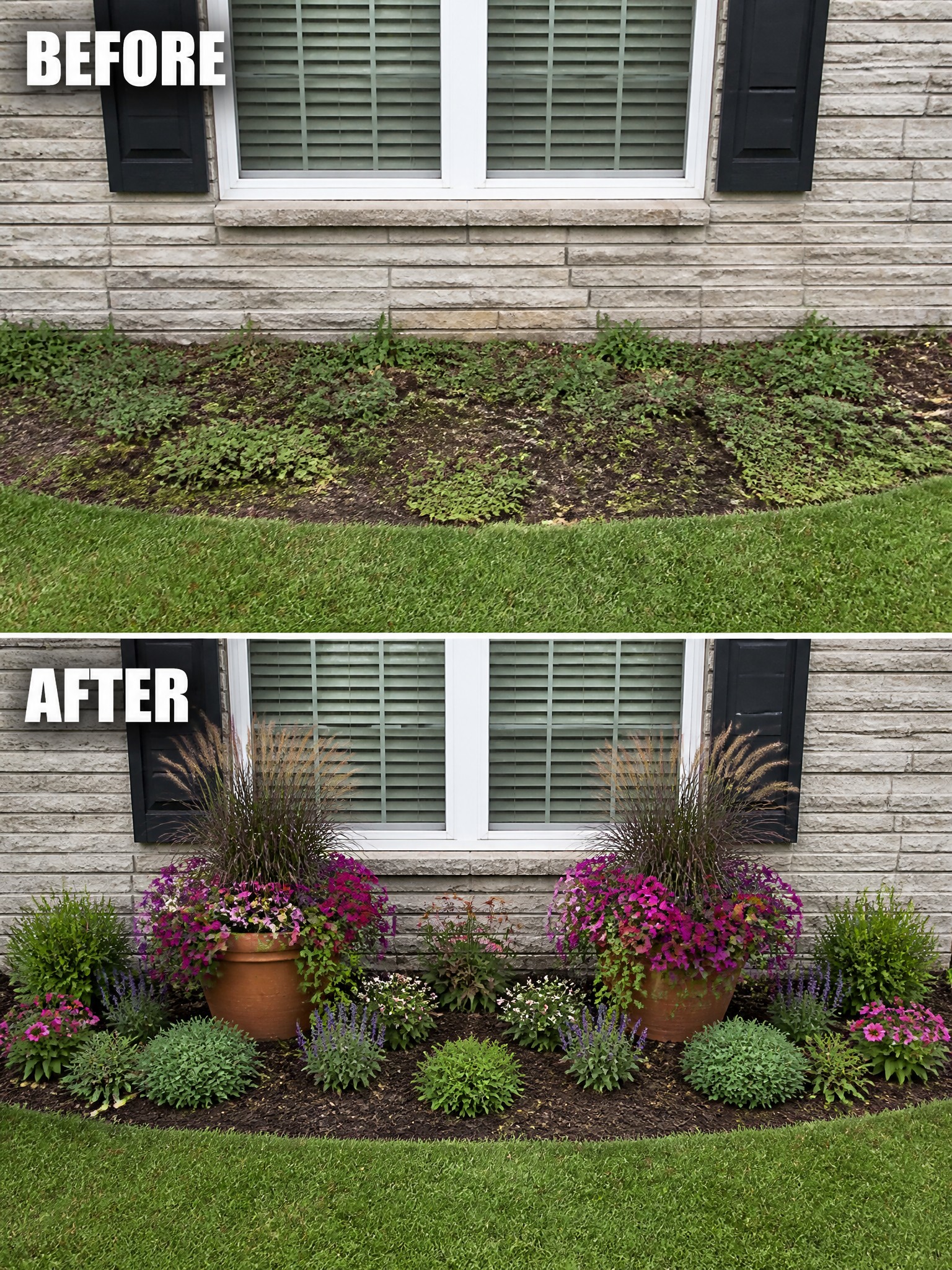
The strip under the window started as a weedy patch with no clear edge or purpose. Adding a simple border, fresh mulch, and a mix of potted plants and low perennials turned the same space into a tidy planting area that actually connects the house to the lawn.
This approach works well on any plain foundation where you want quick color without a full redesign. Clear the weeds first, lay down a clean edge, then combine a few larger pots with smaller plants in the ground so the bed looks full right away. It keeps the look neat even when the grass grows a little long between mows.
Define Flower Beds With Simple Edging
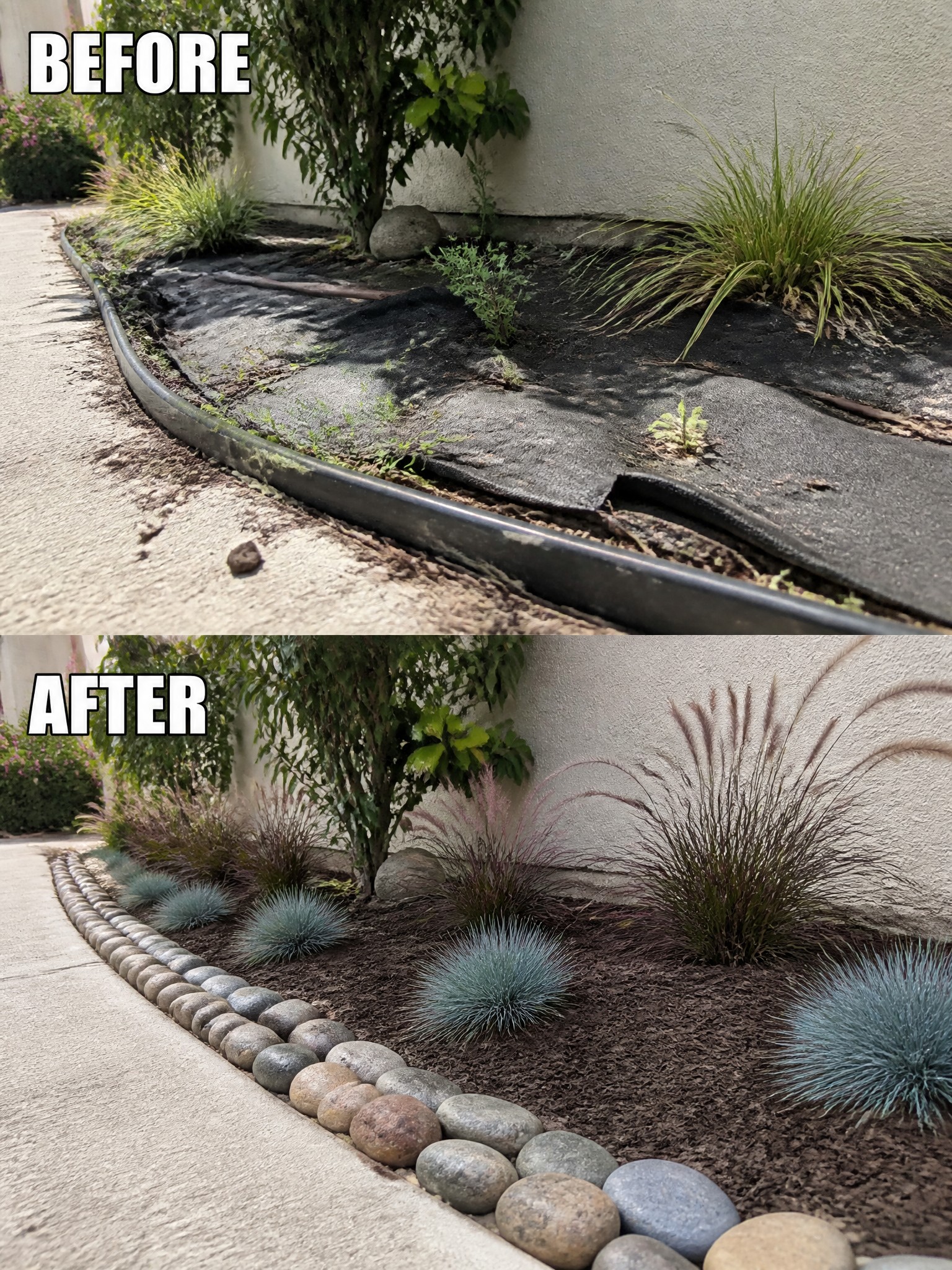
A messy bed often looks worse when the landscape fabric starts showing and weeds pop through. Adding a clear rock border and fresh mulch gives the whole area a finished shape without needing new plants right away. The change from loose fabric and scattered growth to a neat edge makes the bed read as intentional instead of neglected.
This approach works well along sidewalks or house foundations where beds have lost their lines. Start by pulling weeds and pulling back old fabric, then set the edging before spreading mulch. It keeps the bed easier to maintain and stops grass from creeping in over time.
Create A Flower Border Along The Front Of Your Yard
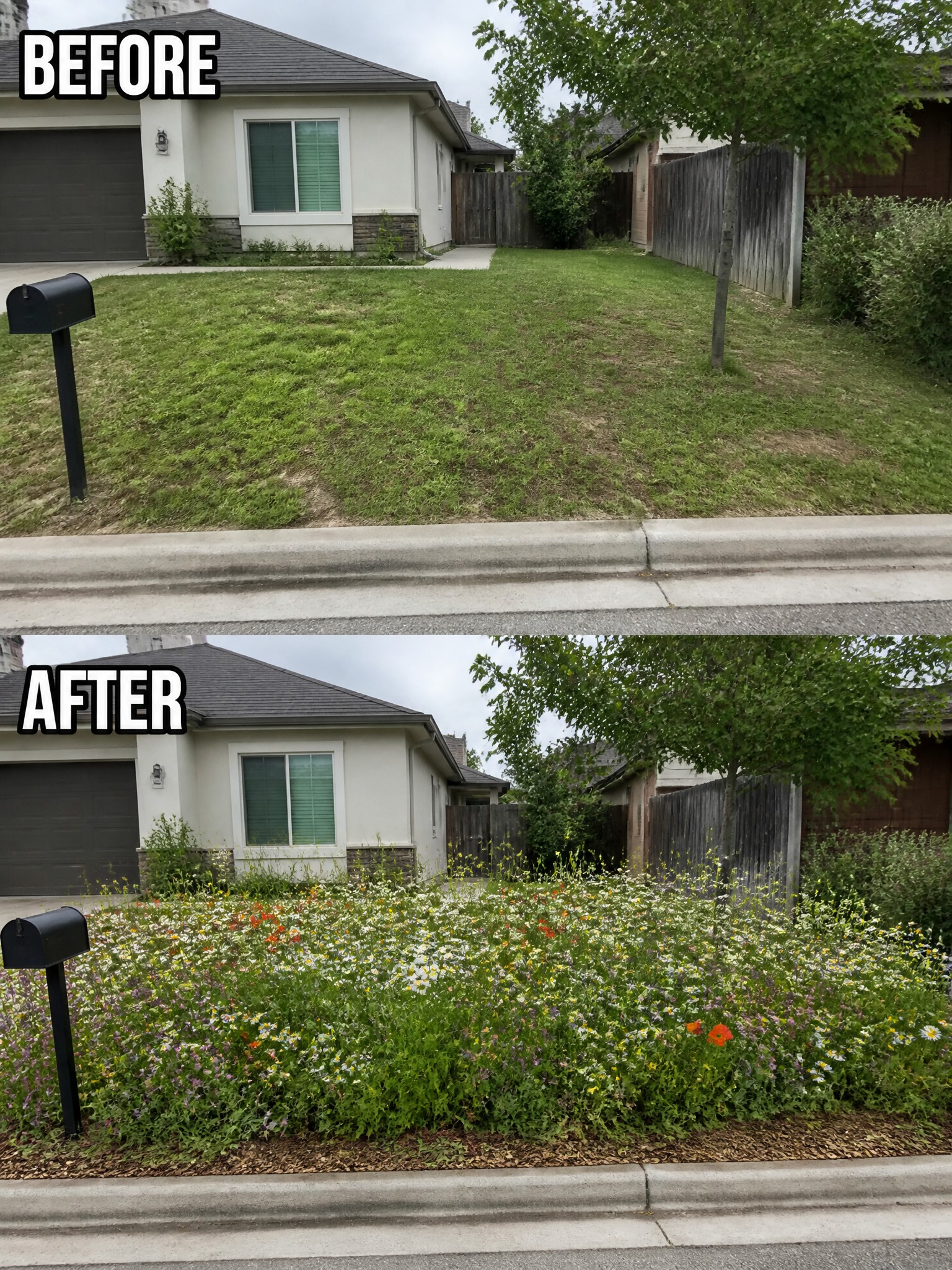
A plain strip of grass in front of the house can look unfinished. Replacing that grass with a wide flower bed gives the whole front yard more structure and color without needing a big redesign. The change from open lawn to a planted border filled with flowers and edged in mulch makes the space feel more intentional.
This idea works best along the street side where the bed can be seen from the road. Keep the planting simple with a mix of low flowers and some greenery, and use mulch to hold it together and cut down on weeds. It suits smaller front yards that need a quick visual lift without blocking the view of the house.
Add Edging To Clean Up Foundation Beds
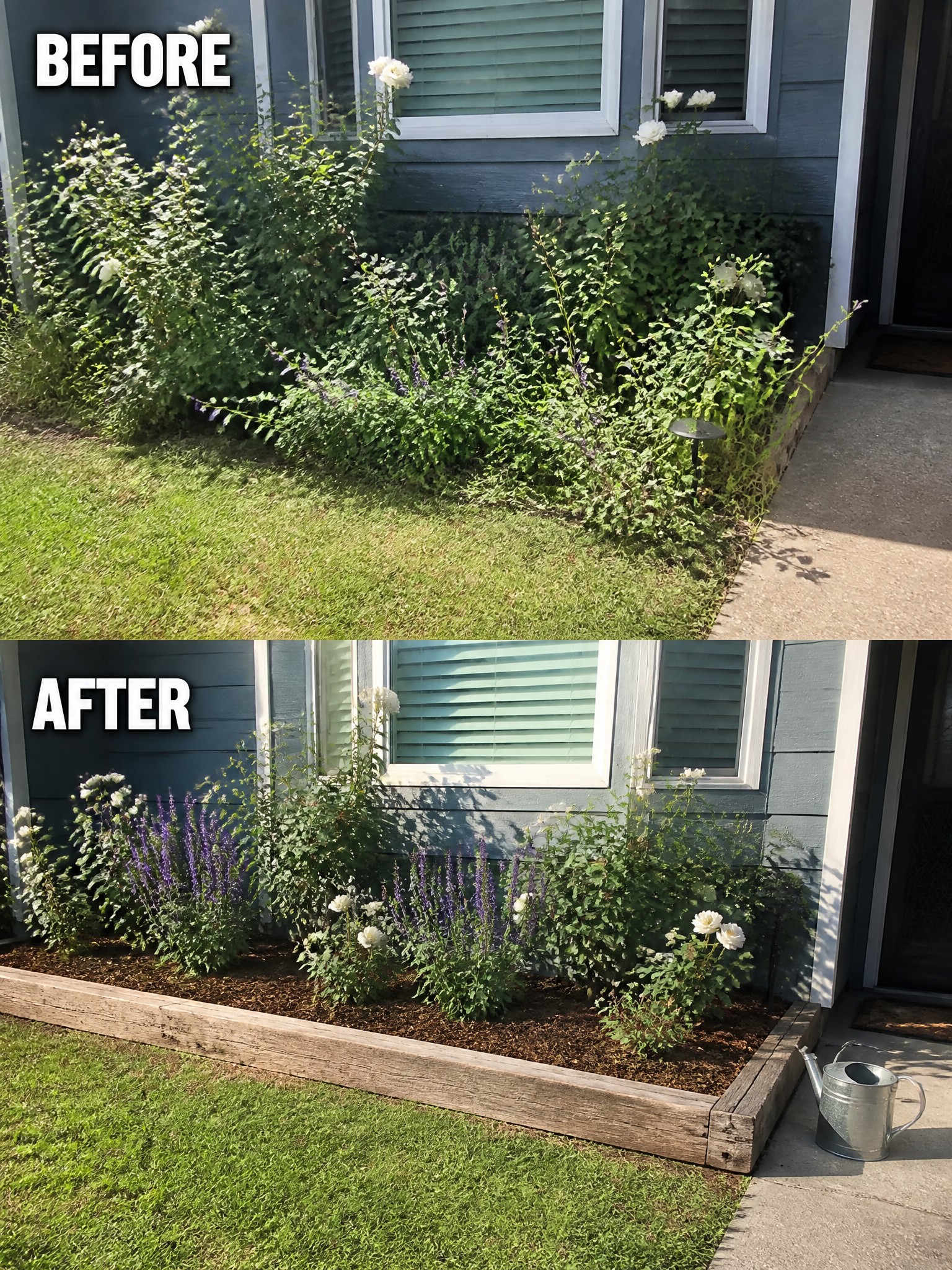
Adding a simple border turns a messy strip of plants into something that looks planned instead of forgotten. The before photo shows everything spilling onto the lawn with no clear shape. After, a low wooden edge and fresh mulch keep the bed contained and give the house a tidier base.
This approach suits older homes where the foundation plantings have grown out of control. Clear the worst sprawl first, then install basic timber edging and mulch inside the border. It keeps the job small while making the whole front look more cared for.
Add Gravel Paths To Shape Foundation Beds
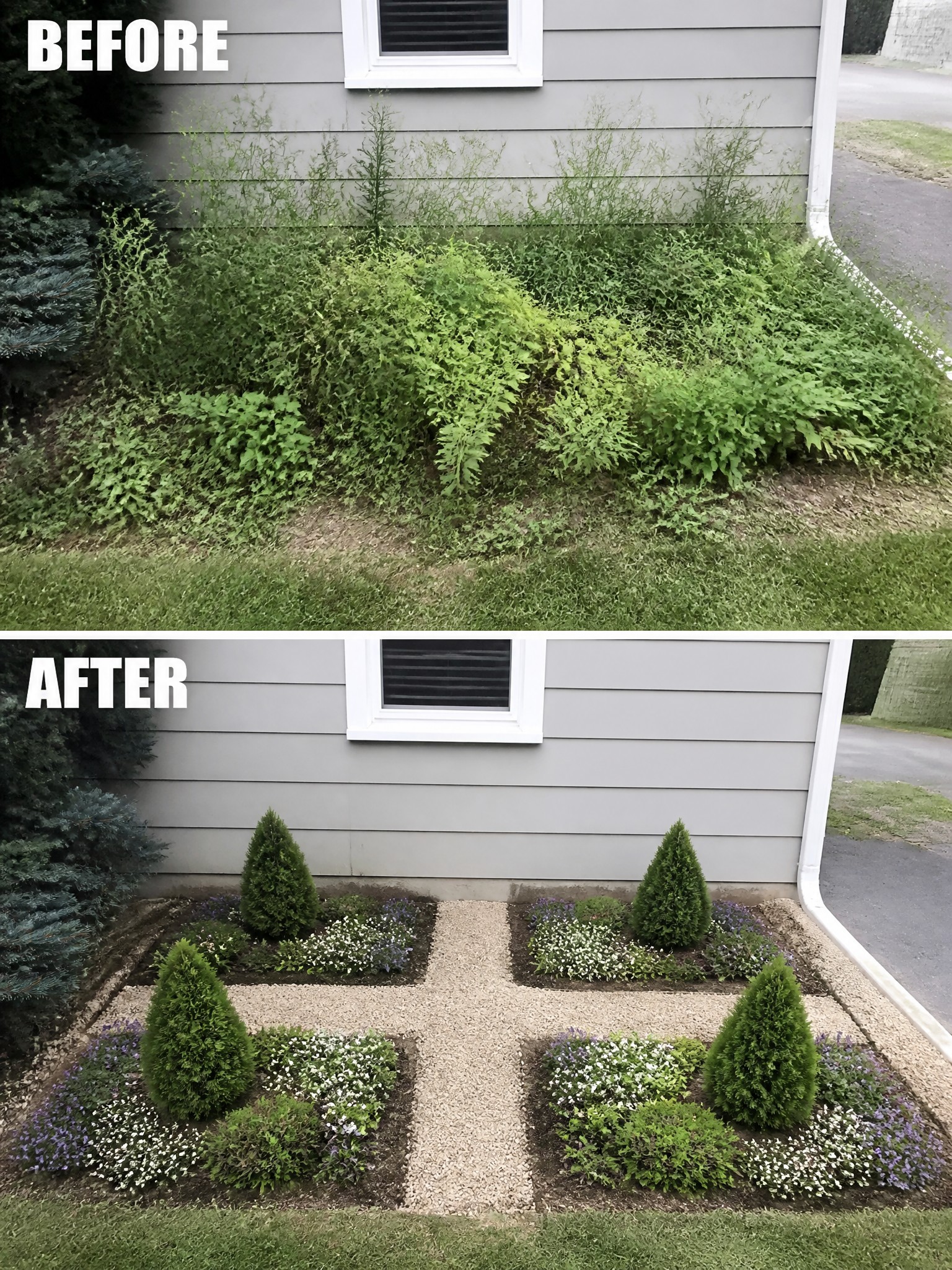
Clearing out the thick, messy growth right against the house and replacing it with a few simple beds divided by gravel makes the whole base of the siding look intentional. The gravel keeps the beds separate, stops the plants from spreading into each other, and gives the area a finished edge without needing fancy materials.
This approach works well on any side of the house where plants have grown wild against the foundation. Start by removing the old growth, lay down basic edging, then use gravel to create paths or sections that you can plant in small groups. It keeps maintenance low and prevents water from sitting against the siding.
Clear Overgrown Beds Before Adding New Plants
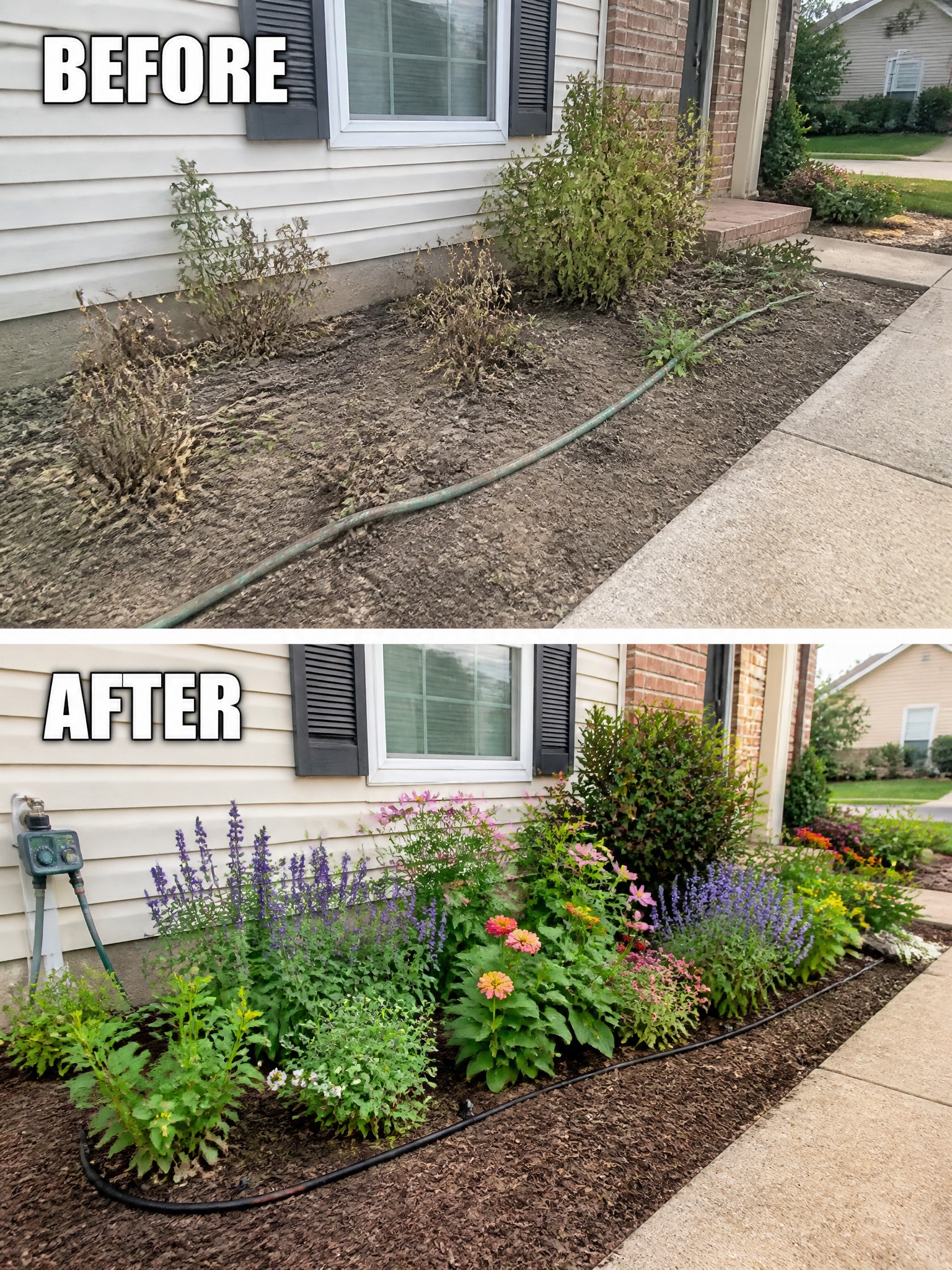
Many front beds look worse than they need to because old plants are left to die out and the soil stays bare. Clearing everything first, then laying down fresh mulch and a simple soaker hose, gives the area a clean base that makes new flowers stand out right away.
This approach works best along a house foundation where you want low plants that stay tidy. Start by removing the old growth completely, add a few inches of mulch to hold moisture and block weeds, and keep the planting simple with one or two repeating colors. The result looks planned instead of scattered, and the bed stays easier to maintain through the season.
Frequently Asked Questions
Q: Where can I grab cheap edging materials that still look nice? A: Check discount stores or construction sites for leftover bricks and stones. Scout your own yard for branches or rocks you can repurpose into borders. These options cost little but frame the beds cleanly from day one.
Q: My soil stays pretty dry. Which ideas hold up without constant watering? A: Go for drought-tolerant flowers like lavender or sedum that thrive once established. Spread a layer of mulch right after planting to lock in moisture. Water deeply a couple times a week at first until the roots settle.
Q: How do I keep new beds from looking sparse for months? A: Space plants a bit tighter than usual and tuck in fast growers like marigolds. Add a few larger starter plants mixed with seeds that fill gaps quickly. Most beds look decent by midsummer with this approach.
Q: What if weeds pop up right after I finish? A: Cover bare soil with cardboard then mulch before weeds get a chance. Spot pull any that sneak through during your normal walks outside.
