

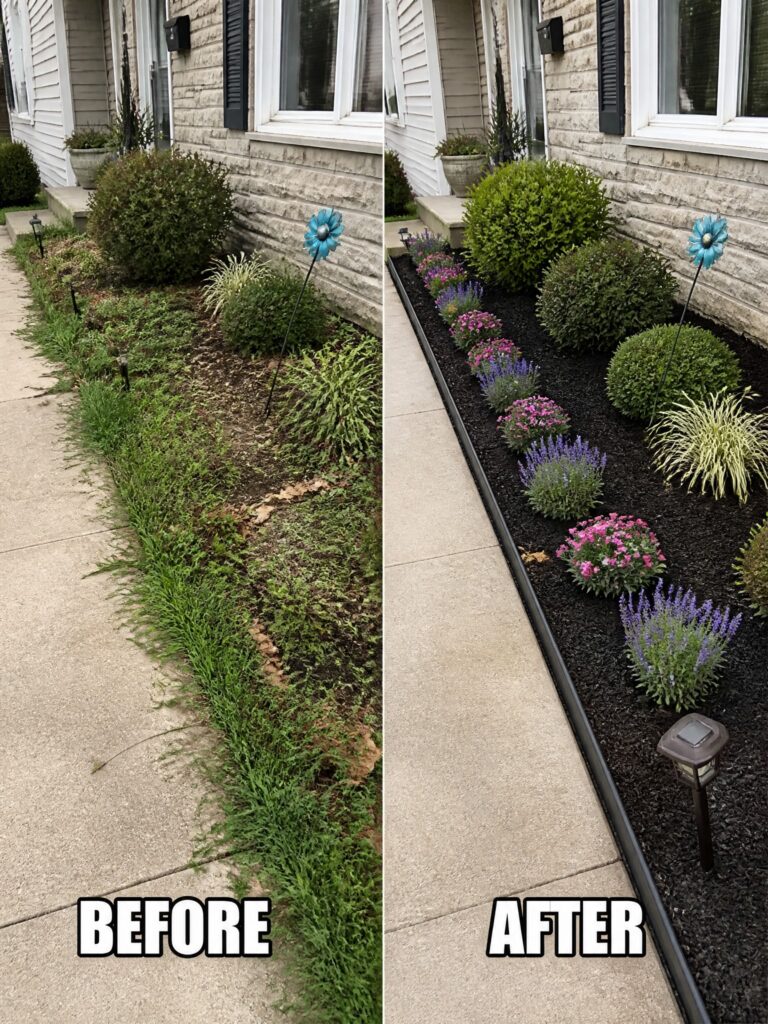
I have noticed that the garden corners I pass every day tend to lose their definition when left alone for too long, with plants spilling over what used to be clear borders.
Setting a new edge and choosing a few plants that match the existing soil conditions often brings the area back into balance more easily than expected.
The difference shows up most in how the space feels when you step outside.
I usually test one small grouping of flowers before committing to the rest of the bed.
That way the changes stay manageable and fit the way the rest of the garden has already grown in.
Add Edging To Create Defined Garden Beds
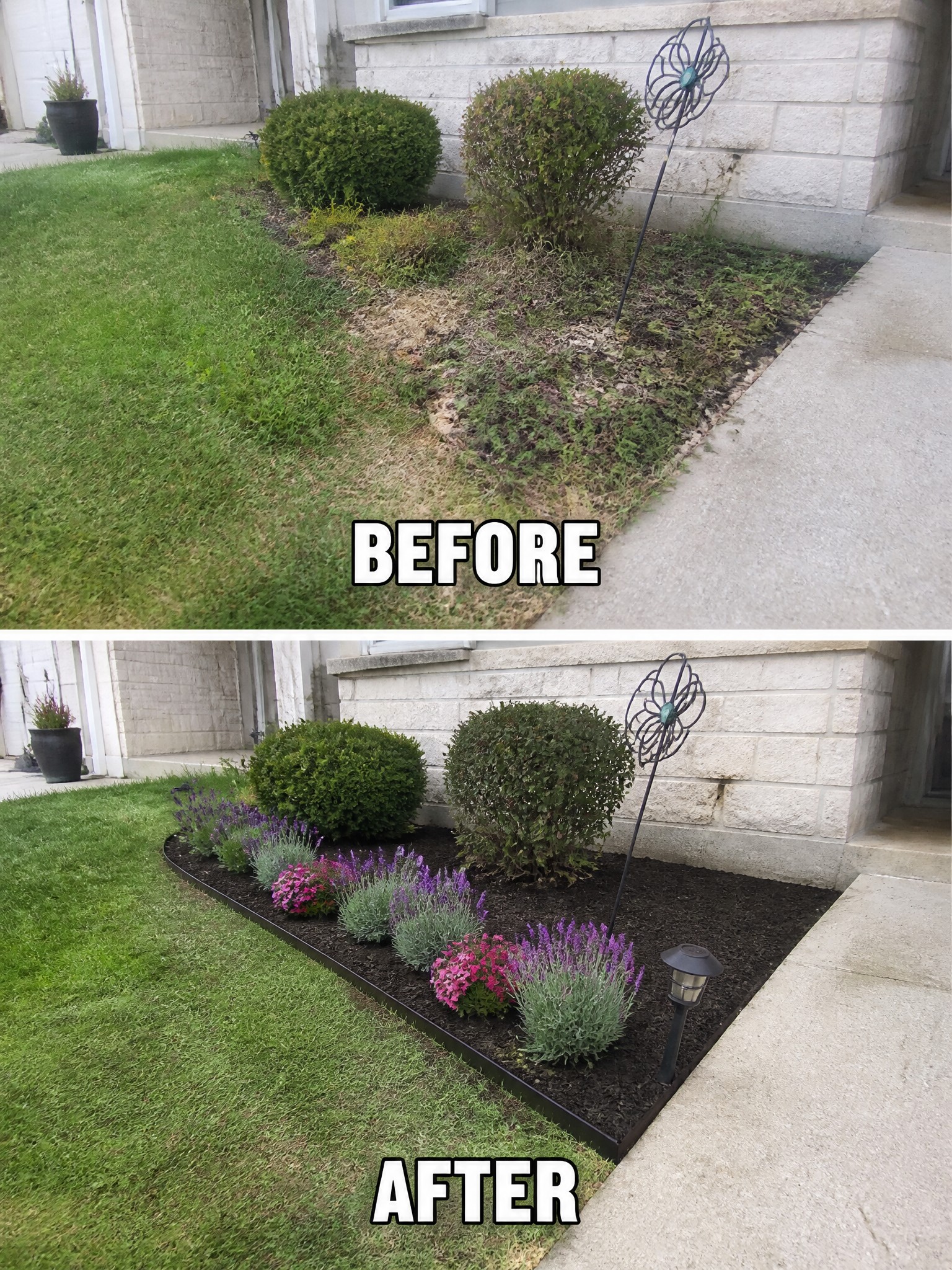
A messy strip along the house often looks worse because it has no clear boundary. Adding a simple edge and fresh mulch turns that patch into a separate garden bed, which keeps grass from creeping in and makes the plants stand out.
This approach works best on foundation areas or narrow side yards where things tend to look unplanned. Lay out the shape first, install the edging, then mulch before planting in small groups so the bed stays easy to maintain.
Add Structure To An Overgrown Backyard
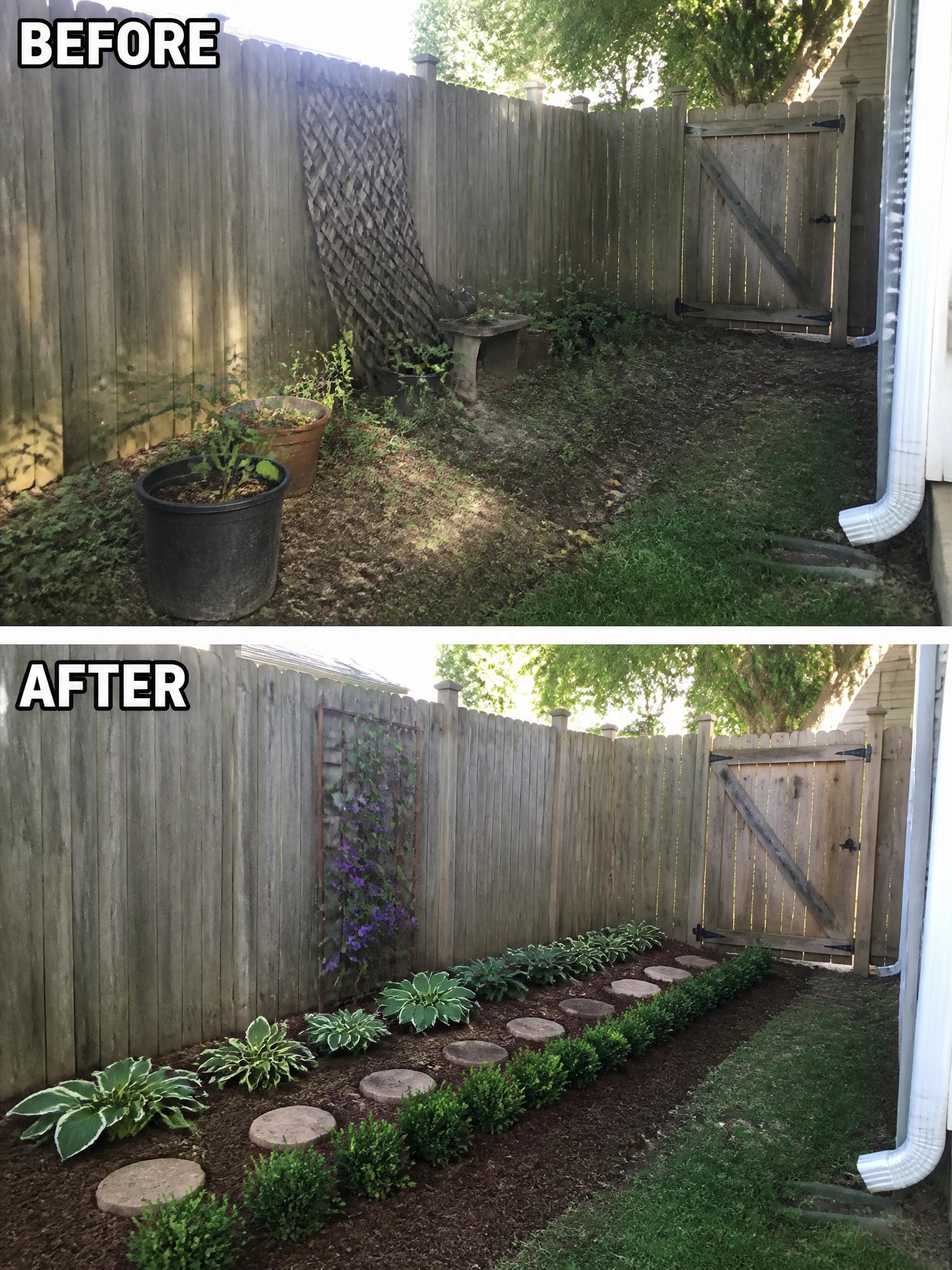
A neglected strip along a fence often ends up with random pots, weeds, and bare dirt because there is no clear plan. Clearing the clutter first and then laying down mulch with a simple row of stepping stones turns the same space into something that looks intentional and easy to maintain.
This approach works best in long side yards or back corners where you need a path or visual line without adding much furniture. Start with a clean edge, repeat the same low shrubs or hostas, and keep the planting narrow so the area still feels open.
Create A Defined Bed Around A Tree Base
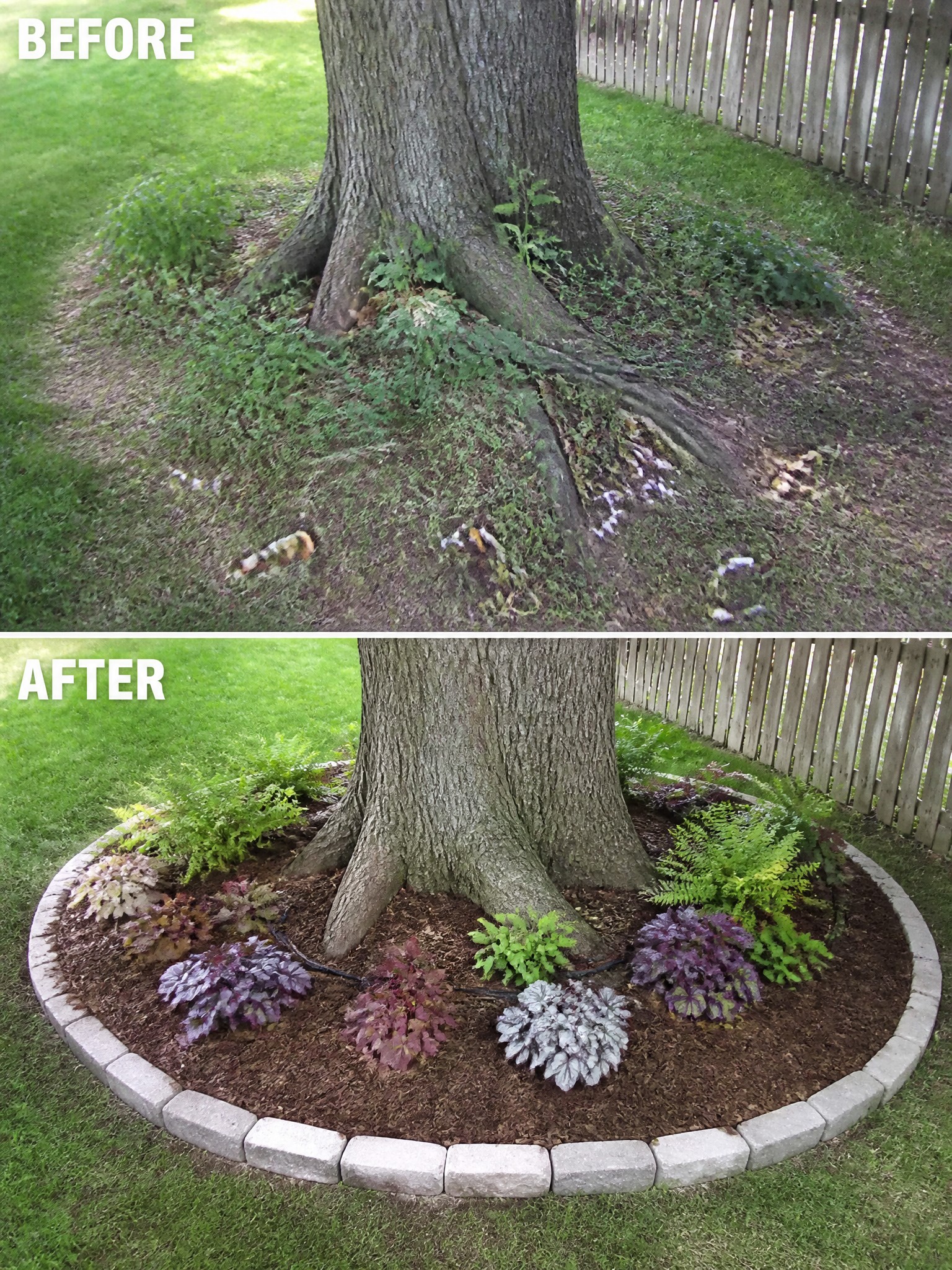
Many trees end up with weedy, uneven ground at their base because the area gets skipped during regular lawn care. Adding a simple circular border with stone edging and fresh mulch instantly cleans up the look and gives the tree a finished appearance. The plants fill in the space without crowding the roots.
This approach works best in yards with mature trees where grass struggles to grow anyway. Clear the weeds first, lay down a border that follows the drip line, and spread mulch before planting shade-tolerant perennials. Keep the bed narrow enough to mow around easily.
Add Edging To Turn A Neglected Patch Into A Garden Bed
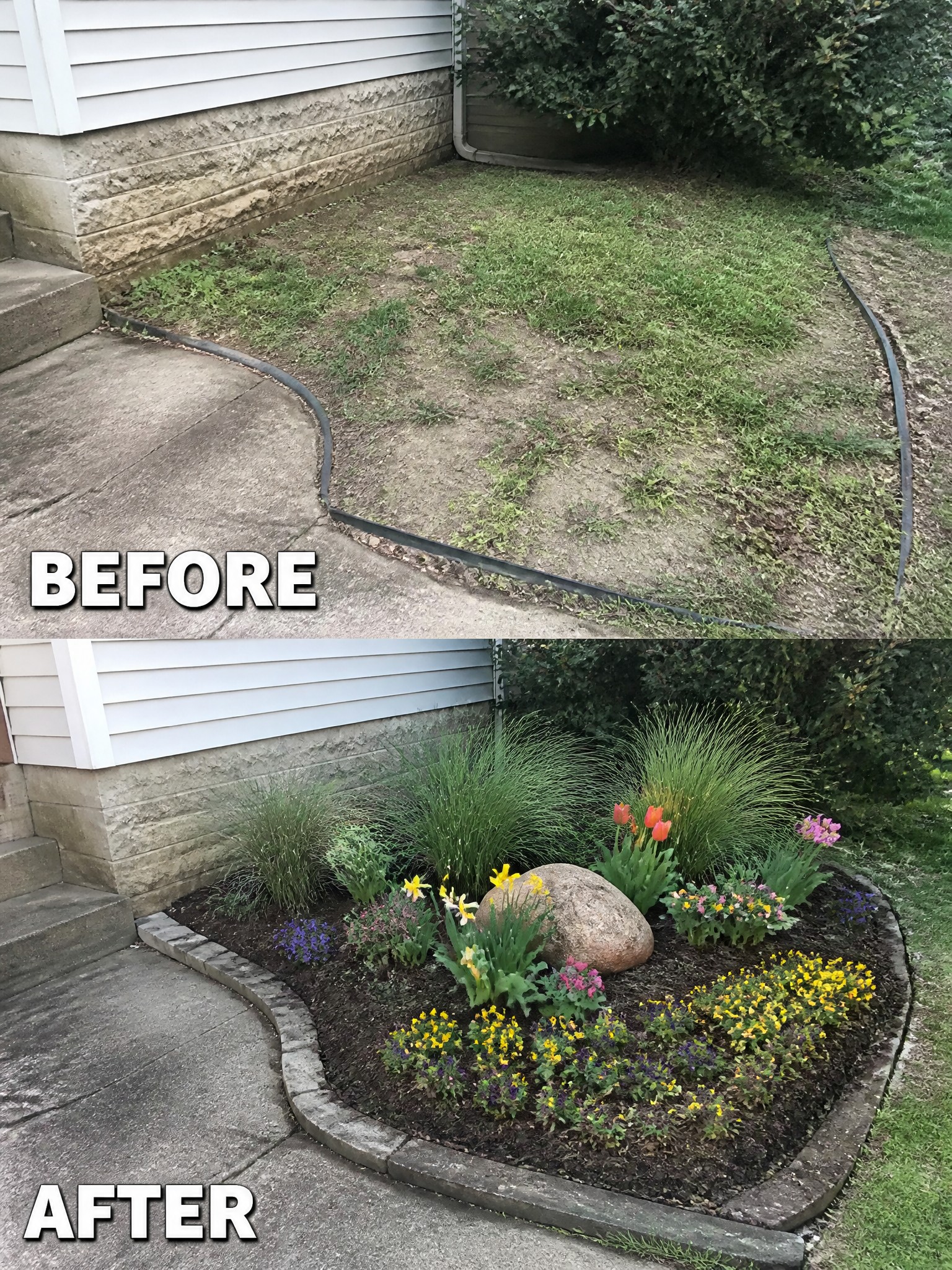
A simple border can make a big difference in a messy side area. The before photo shows a weedy, uneven stretch of ground right against the house with no clear shape. Adding a clean edge and filling it with plants and mulch gives the space structure and keeps the weeds from taking over again.
This approach works well along foundations or in narrow yard corners where grass struggles. Start by marking a gentle curve with edging, clear the worst of the weeds, then add a few layers of plants in different heights. It keeps the bed looking intentional without needing a full redesign.
Define A Neglected Border With Planting Beds
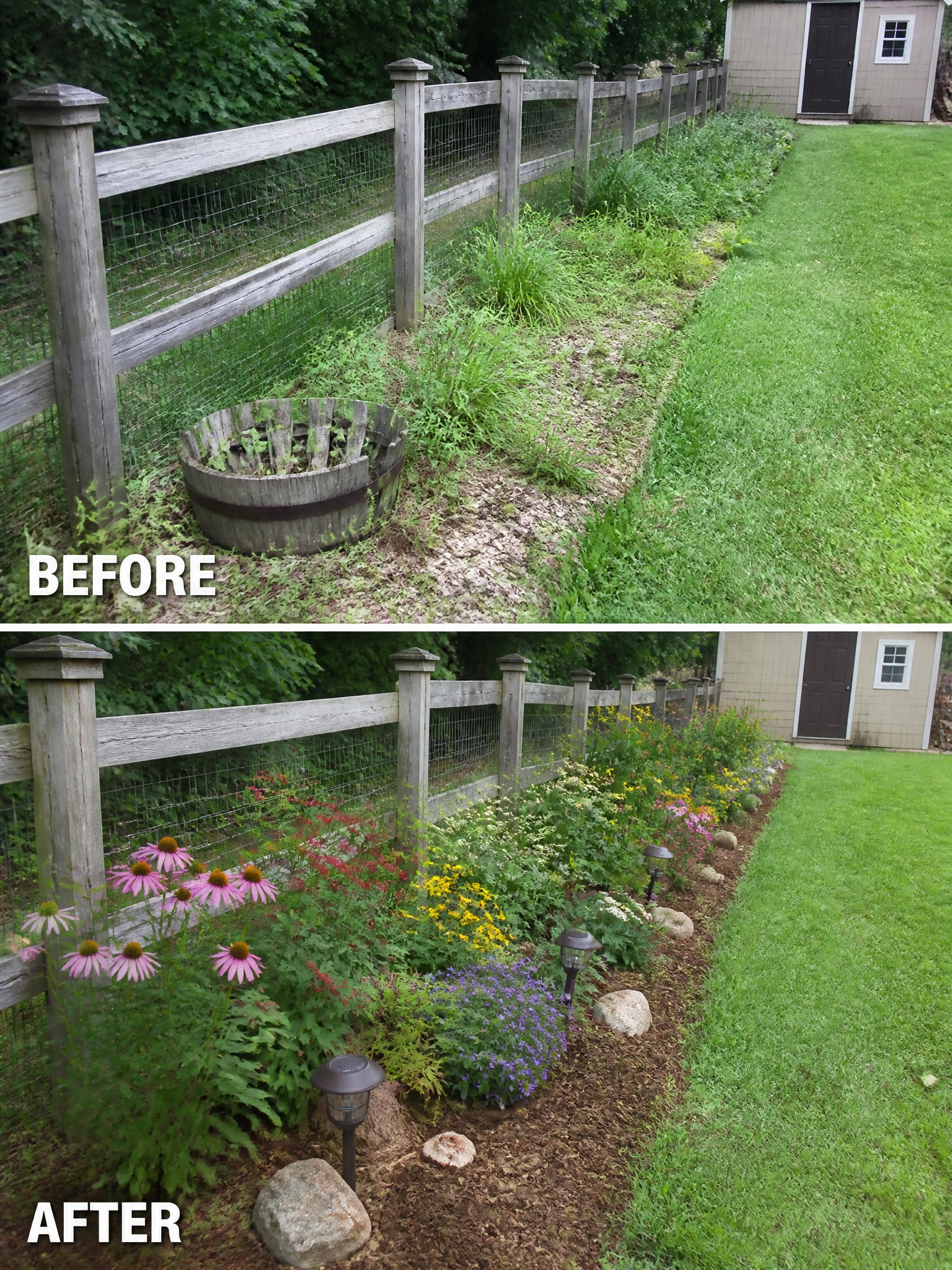
Clearing out the weeds and giving the space a clear edge makes the biggest difference here. The before shows a messy strip of grass and debris running along the fence, while the after uses mulch, rocks, and a row of plants to turn the same area into a proper garden bed.
This idea works well along fence lines or property edges where grass tends to creep in. Start by removing the overgrowth completely, then add mulch and a simple border like rocks to hold the shape. Choose a few reliable perennials that spread on their own so the bed fills in without constant work.
Add Retaining Walls To Shape A Sloped Garden Area

A bare dirt slope next to the house often stays bare because it is hard to plant and easy to erode. Building low retaining walls turns the slope into level planting beds that hold soil and give plants a better chance to grow. The change from loose dirt to stacked stone creates clear edges and makes the whole side of the house look finished.
This approach works well on any house with a noticeable drop in grade. Start with the walls first, then fill the new beds with soil and simple plants. Keep the number of plant types small so the beds stay easy to maintain. The result is a garden that feels planned instead of forgotten.
Add Simple Edging To Shape Up An Overgrown Bed
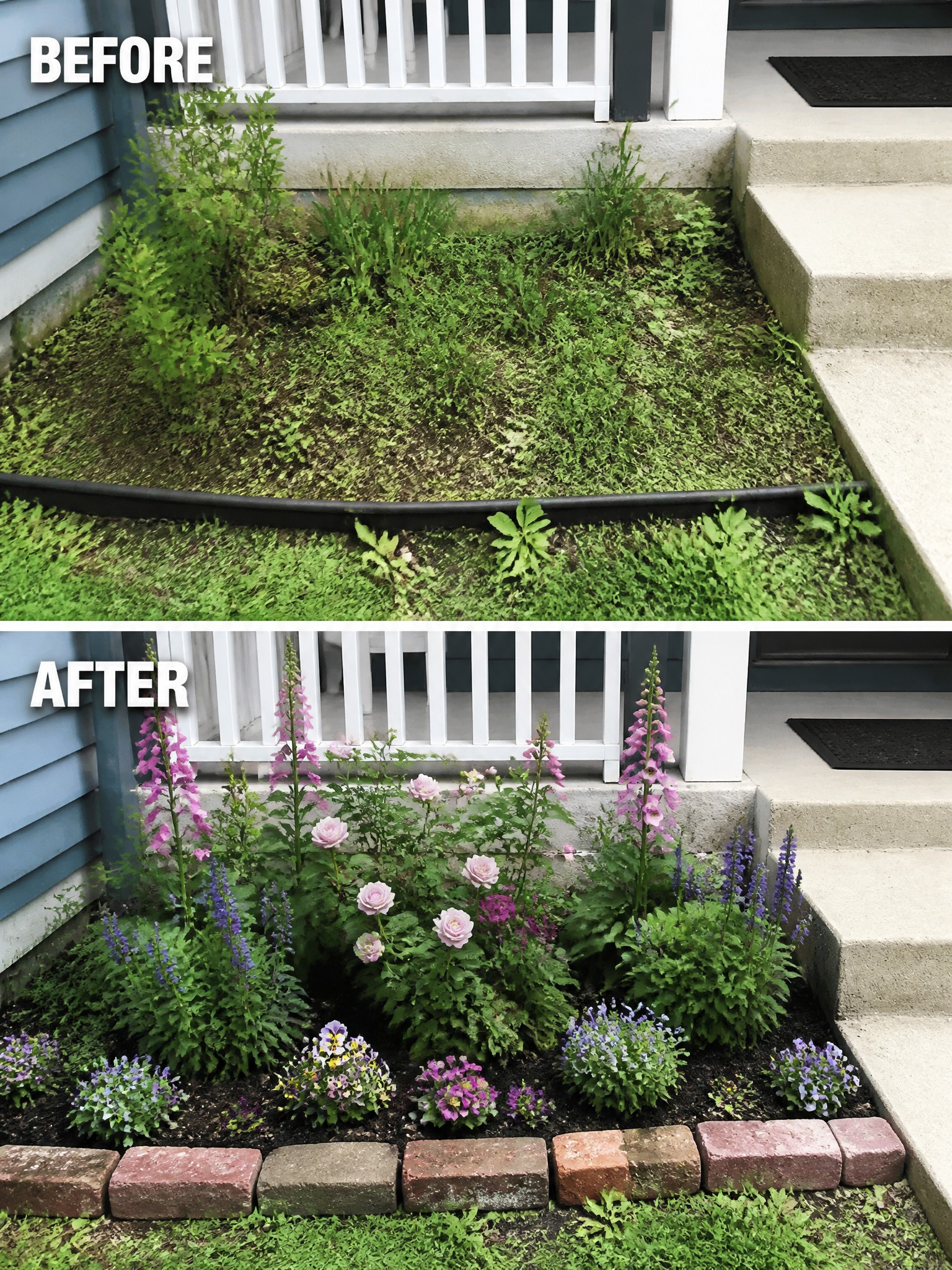
Edging turns a messy, overgrown patch into something that looks planned instead of forgotten. The before photo shows a weedy strip beside the stairs with no clear boundary. After, a line of bricks holds the bed in place and the plants sit in a neat row rather than spilling everywhere.
This idea works best in small neglected spots right next to the house or along walkways. Clear the worst growth first, then add edging before you plant. The border keeps soil and mulch from washing onto paths and makes weeding much simpler later on.
Add Defined Garden Beds To Neglected Areas
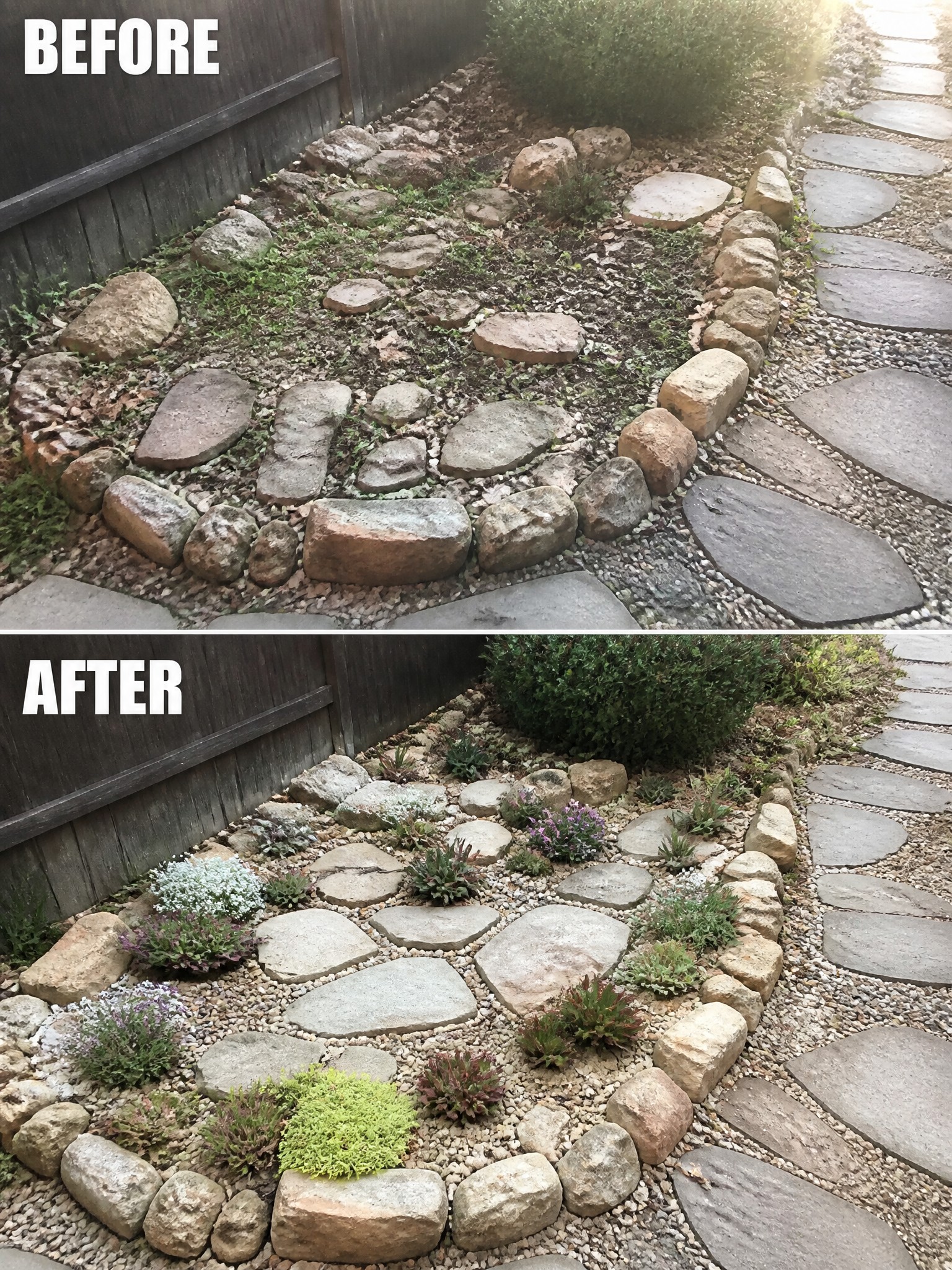
A messy patch of ground often needs borders more than it needs extra plants. The before image shows loose rocks and scattered weeds with no clear shape. After the change, the same corner has solid stone edging that holds everything in place and lets the new plants look like they belong together.
This idea suits side yards, fence lines, or any spot that gets ignored. Clear the worst of the weeds first, then lay out a simple edge with rocks or pavers before adding a few low plants that can fill in over time. The border does most of the work and keeps the area from looking random again next season.
Refresh A Worn Raised Bed With New Wood And Planting
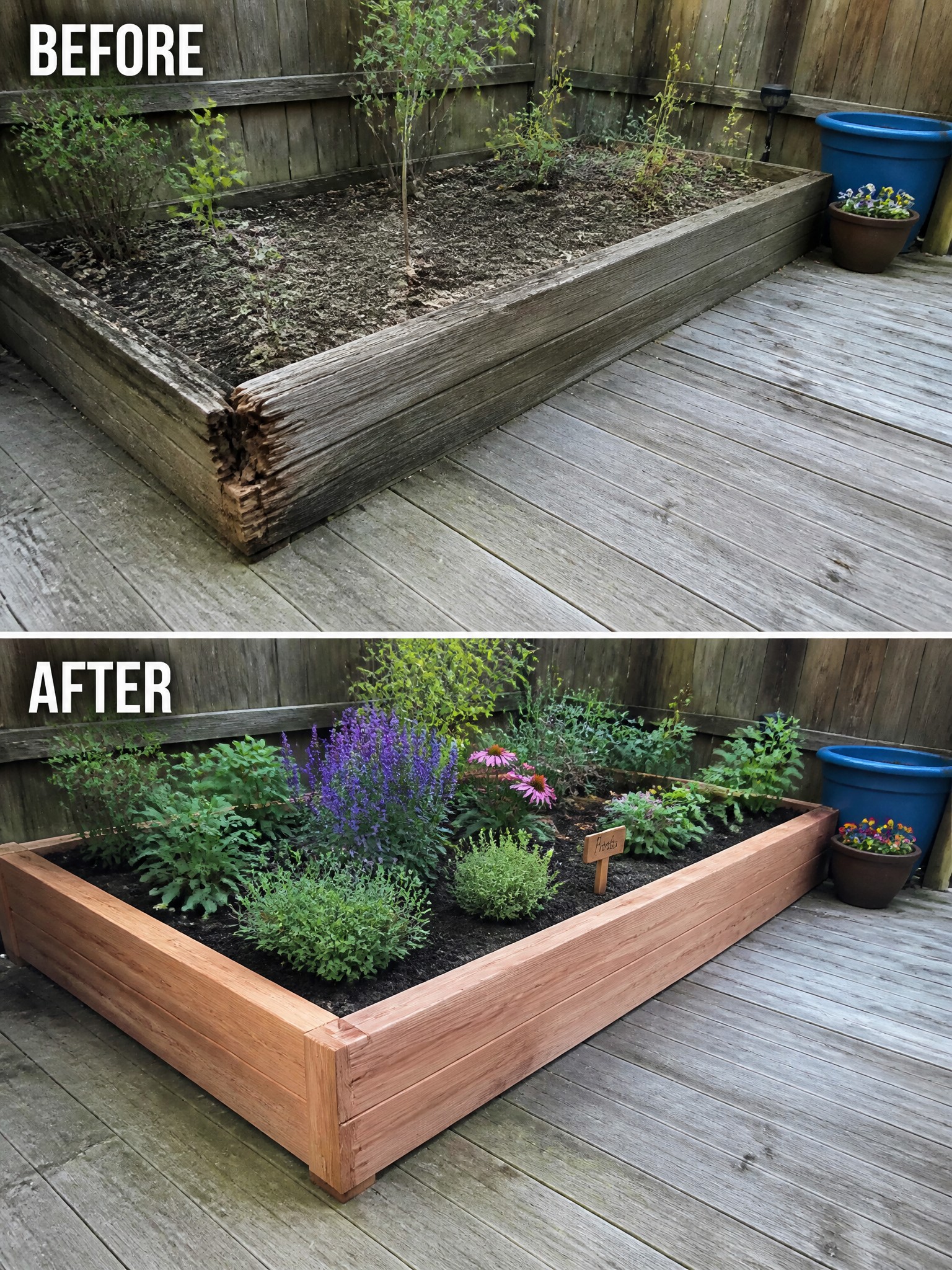
An old raised bed often starts to look tired once the wood weathers and the planting thins out. Replacing the boards with fresh lumber gives the bed a solid new frame, while adding fuller planting fills the space so the soil no longer shows through. The result feels neat and intentional instead of neglected.
This approach works well on decks or small yards where the bed is already in place. Choose rot-resistant wood, keep the same footprint, and plant in layers with a few taller flowers toward the back and lower shrubs in front. The goal is simply to restore the structure first, then let the planting do the rest of the work.
Turn A Weedy Strip Into A Defined Garden Bed

A narrow dirt edge full of weeds can make the whole side of a house look neglected. Replacing that strip with gravel and a few low shrubs gives the area clean lines and keeps it from looking wild again in a few weeks.
This works best on long, skinny spots next to driveways or foundations where full flower beds would feel too busy. Clear the weeds first, lay down a simple border, add gravel for drainage, then plant a handful of tough shrubs spaced out evenly. The result stays low-maintenance and gives the house a finished edge without much extra work.
Add Structure To A Neglected Foundation Bed
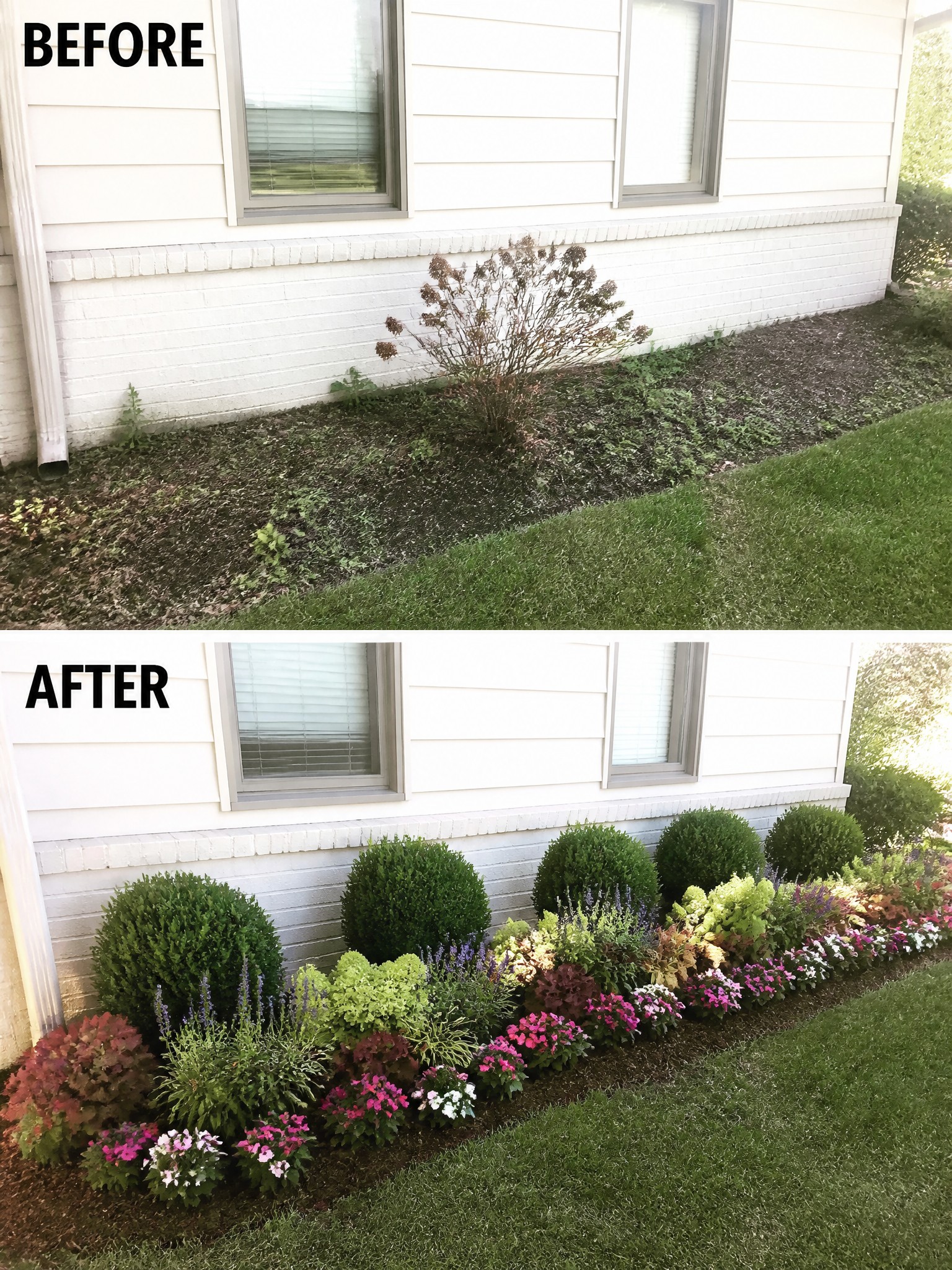
A weedy strip next to the house makes the whole side look unfinished. Removing the dead growth and putting in a row of rounded shrubs gives the area a clear edge and ties the lawn to the siding.
This idea works on any home where the foundation planting has gone wild. Start with a full cleanup, then repeat a few simple plant shapes and colors so the bed feels full without looking crowded. Keep the tallest plants toward the back and let lower flowers spill forward.
Add Defined Garden Beds Along A Fence

A bare strip of weeds and dead grass next to a fence can make the whole yard feel unfinished. Clearing that space and adding a simple planted bed with mulch and a line of stepping stones gives the area structure without needing a lot of work.
This approach works best along property lines or back fences where you want some color and texture but still need room to mow. Start with a thorough cleanup, lay down a clear edge, and choose tough plants like grasses that fill in quickly. Keep the bed narrow enough that it does not crowd the lawn.
Define A Neglected Foundation With A Simple Planted Border
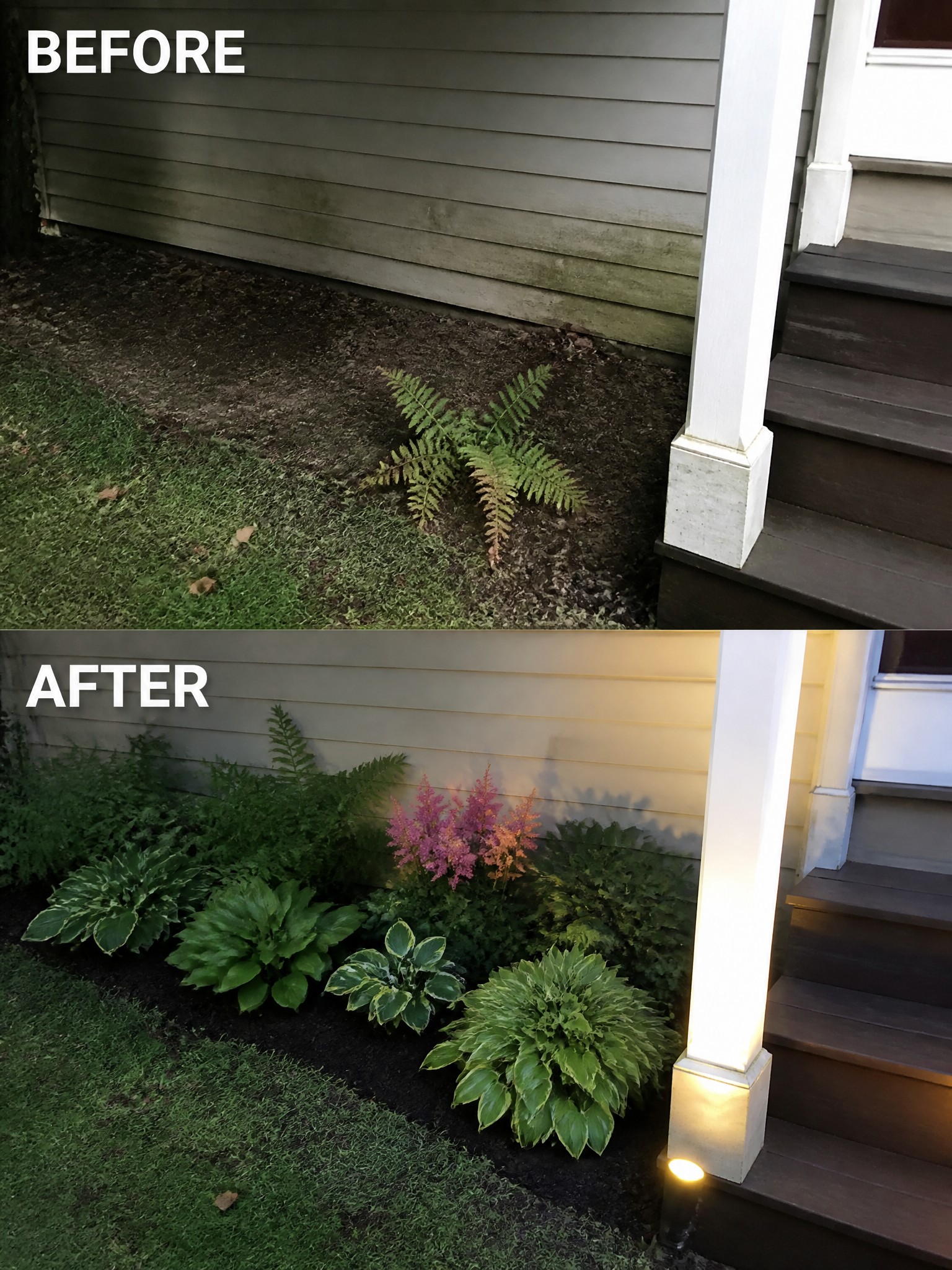
A bare strip of dirt next to the house often gets ignored until it looks worse than the rest of the yard. Clearing the weeds and adding a clean edge with mulch turns the space into a real border instead of leftover ground. Layering different sizes of hostas and ferns gives the bed weight without needing constant color.
This works best along shaded sides of the house where grass struggles anyway. Start with a few reliable foliage plants that fill in over time, then add one or two flowering types for interest. Keep the bed narrow enough to reach from the lawn side so it stays easy to maintain.
Create Defined Flower Beds In Neglected Strips
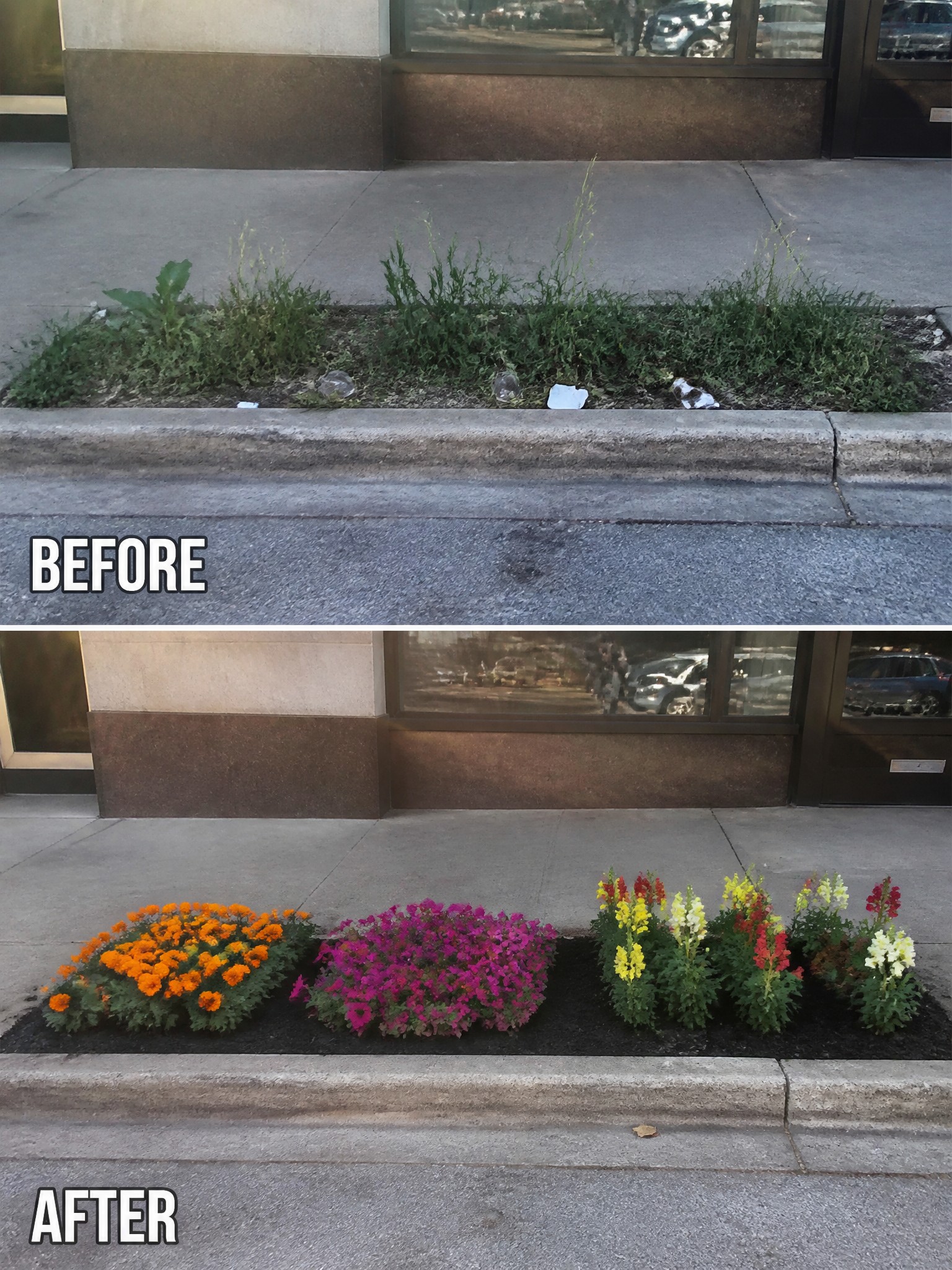
One simple way to fix a messy border is to clear the weeds first and then plant in clear groups. The strip along this sidewalk went from scattered growth and litter to three distinct beds filled with flowers set in dark mulch. That single change made the whole front look planned instead of forgotten.
This approach suits any narrow area next to a building or walkway where the ground has been ignored. Remove the overgrowth, add a layer of mulch to hold the soil, and keep the plantings in low clusters so the beds stay easy to maintain. It works on most homes without requiring new edging or big construction.
Define An Overgrown Corner With Mulch And One Focal Plant
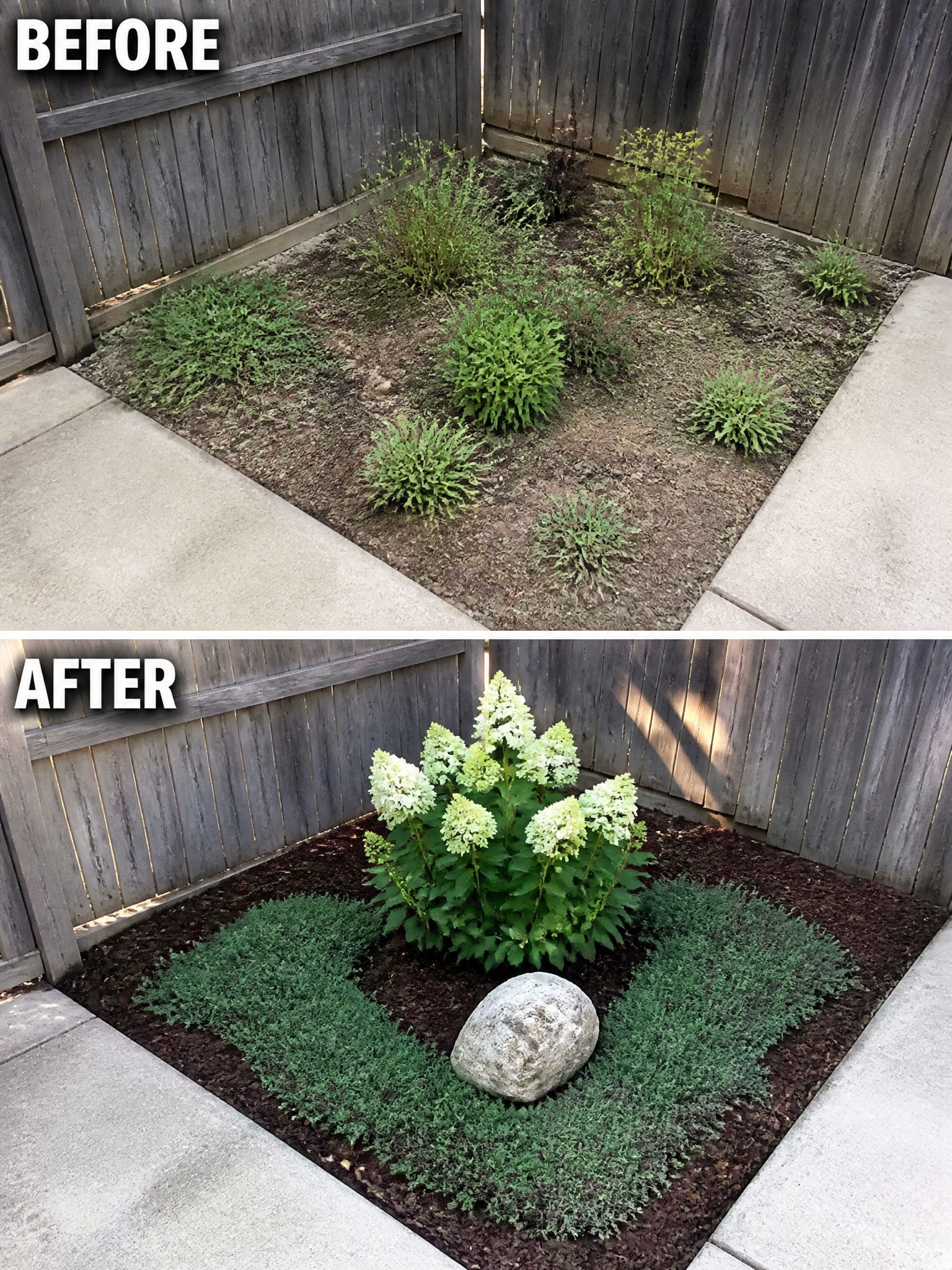
Many neglected garden spots start as a mix of weeds and random plants that never quite come together. Clearing the area and adding a layer of mulch right away gives the space a clean base and stops new weeds from taking over. Placing one larger plant in the center then pulls everything into focus, which is exactly what happened when a plain patch became a tidy bed with a hydrangea as the main feature.
This approach works well in small side yards or back corners where you want order without a lot of extra features. Keep the planting simple, use mulch to create clear edges against the concrete, and add just one or two low ground covers around the edges. The result feels planned even though the space stays small.
Define A Neglected Strip With A Simple Garden Bed
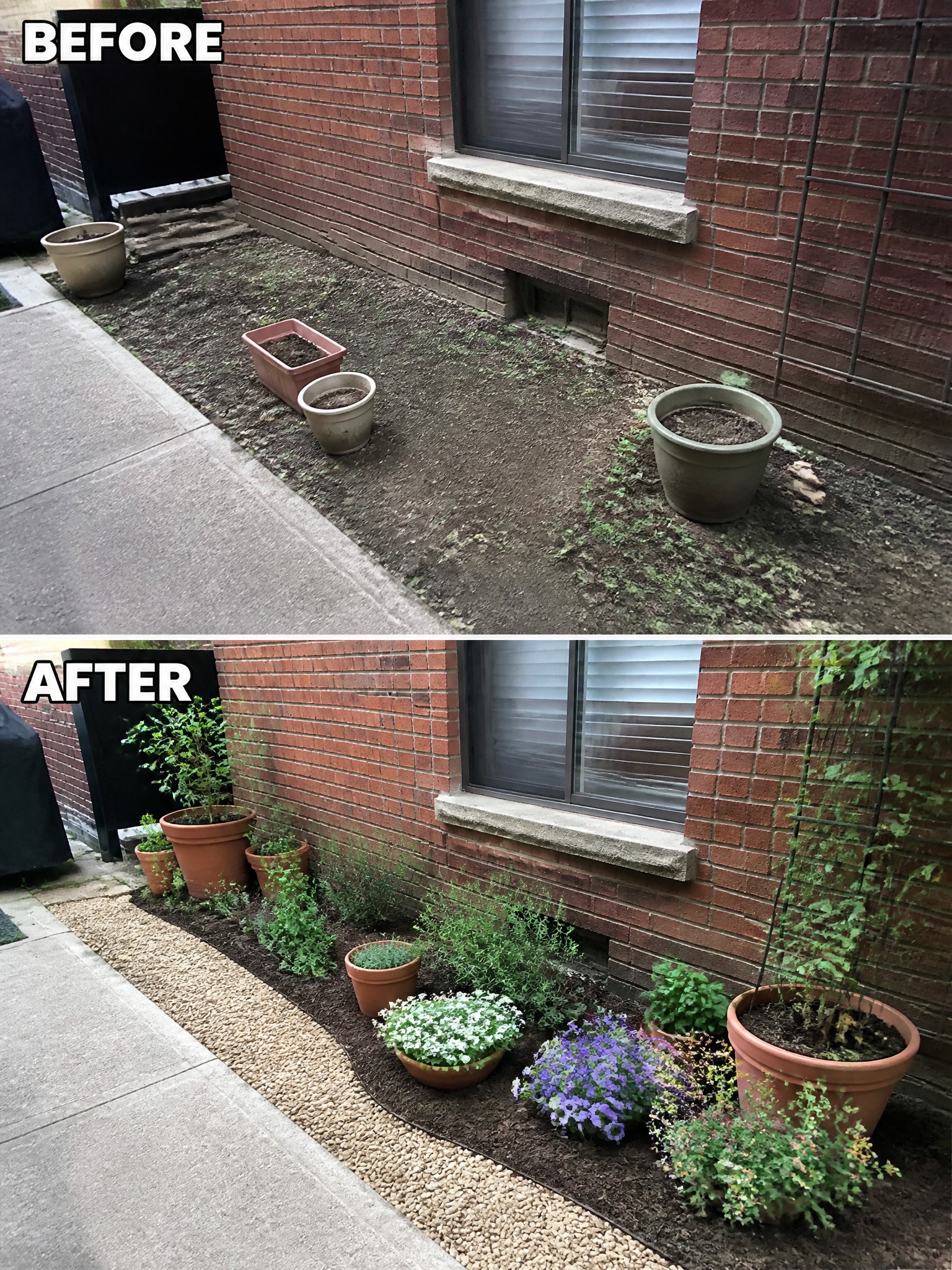
A bare dirt strip next to the house often gets ignored because it feels too narrow or awkward to use. Adding a clean edge, mulch, and a few grouped plants turns the same space into a real garden bed that looks planned instead of leftover.
This approach works best along foundations where you want low effort and clear lines. Clear the weeds first, add simple edging and mulch, then place pots in clusters rather than spreading them out. It keeps the bed looking tidy even when plants are still filling in.
Refresh A Neglected Flower Bed With Spring Bulbs
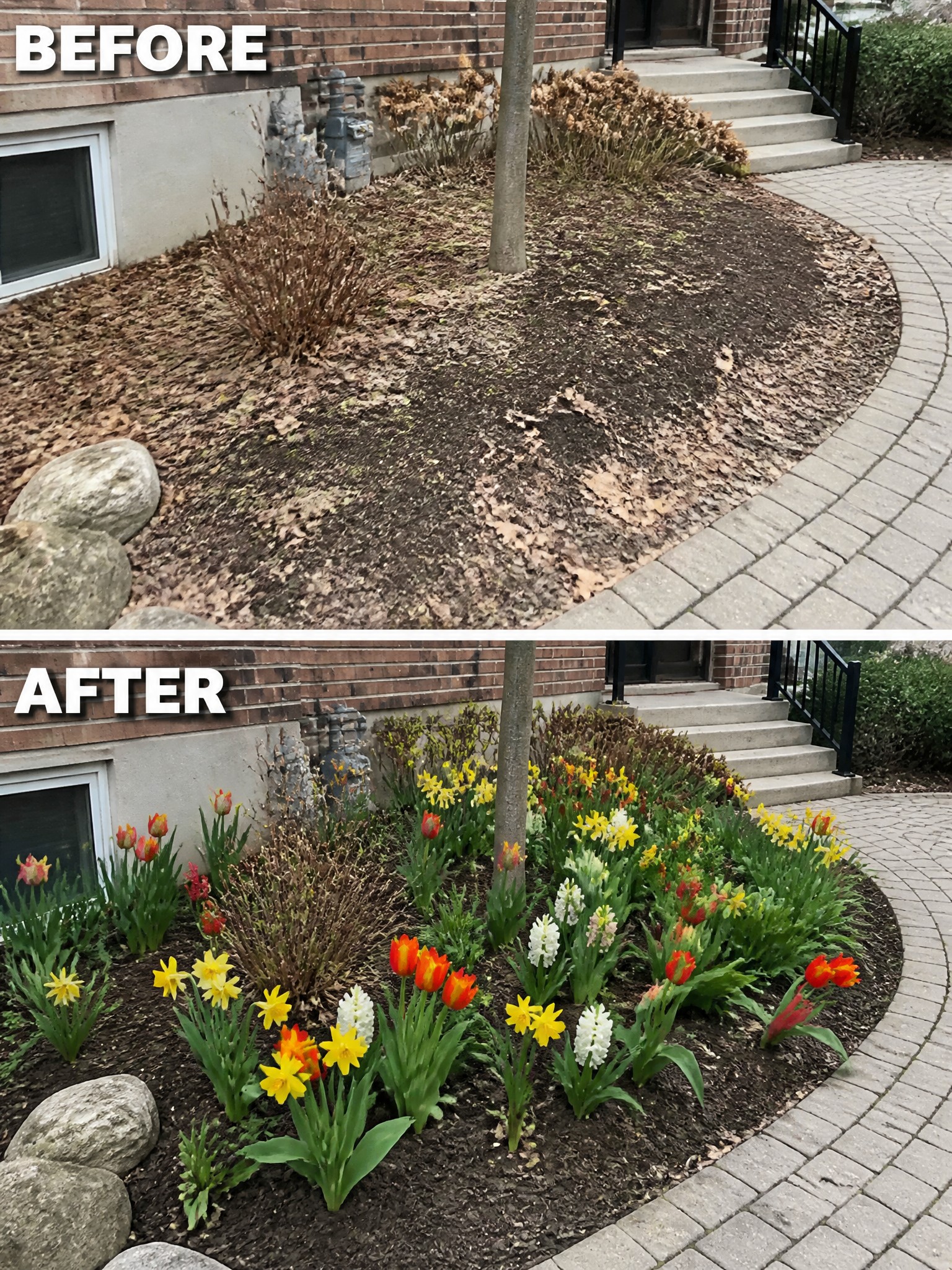
A tired flower bed often looks worse because of old growth and weeds rather than a lack of plants. Clearing away the dead material first and then adding groups of spring bulbs and early perennials turns the same patch into something that feels intentional and cared for. The change comes from filling the empty space with color that returns each year instead of leaving it to fill in on its own.
This approach works best along the front of a house or beside a walkway where the bed is seen every day. Start with a simple cleanup, then plant in loose drifts rather than straight lines so the flowers look natural as they grow. Choose bulbs that suit your climate and repeat a few colors so the bed stays easy to maintain once the blooms fade.
Add Brick Edging To Define Flower Beds
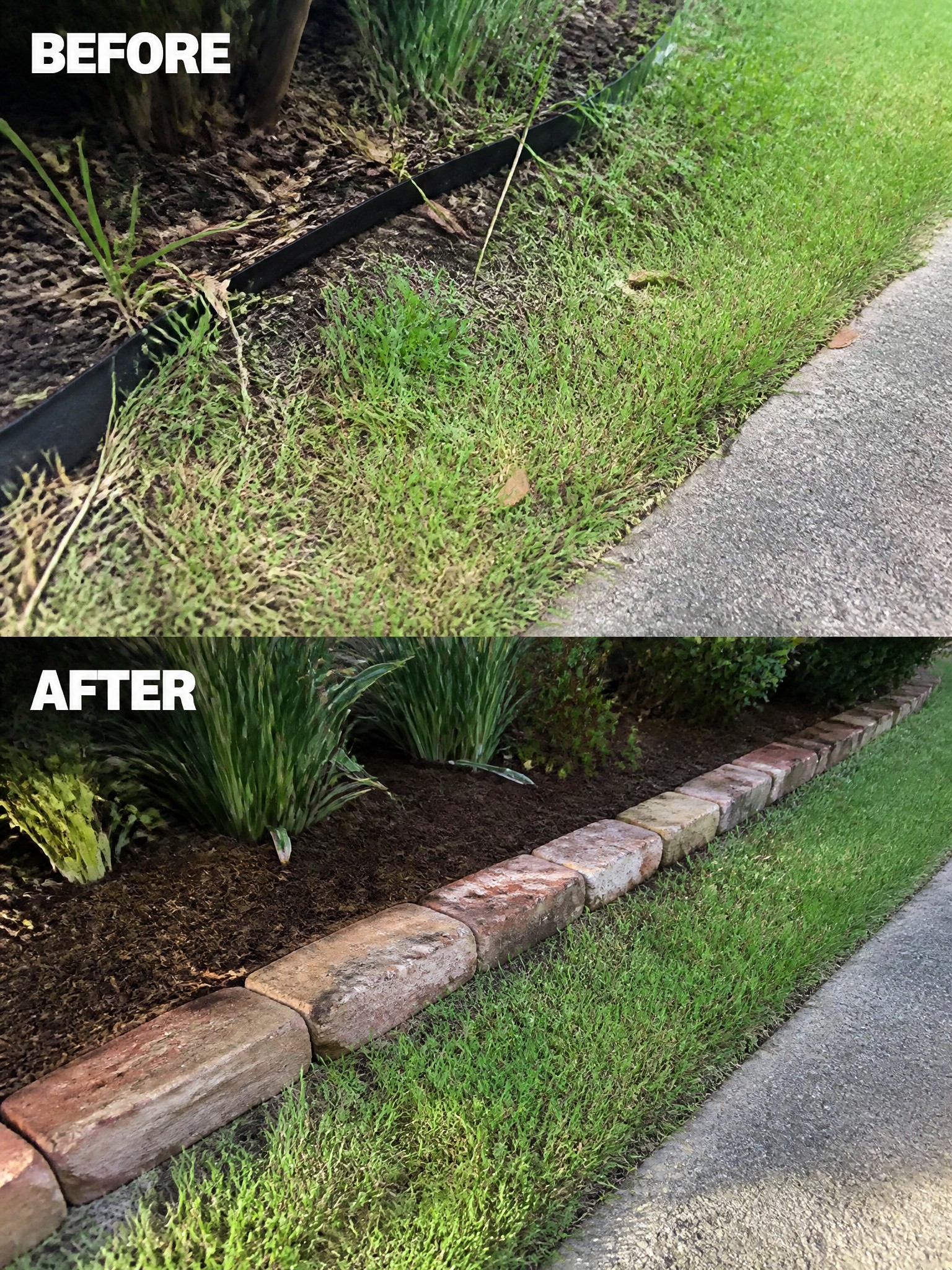
Replacing a thin plastic strip and ragged grass edge with a solid brick border brings instant order to the bed. The mulch then keeps the soil contained and gives the planting a finished base that holds up through the seasons.
This idea works best where the lawn meets a walkway or driveway and the bed has grown messy over time. Dig a shallow trench, set the bricks level, and keep the planting simple so the border stays the main feature. It suits older homes and keeps future weeding much easier.
Turn Bare Dirt Patches Into Defined Garden Beds

A bare patch of dirt right next to the house often looks unfinished and draws attention for the wrong reasons. Adding a simple border, a layer of gravel, and a few low plants gives the space clear purpose without much ongoing work. The before photo shows just uneven soil and a small clump of weeds. The after shows how a metal edge and gravel instantly clean it up while the rocks and succulents add structure.
This approach works best along foundations, near entries, or in any tight spot where grass struggles. Start with the edging and gravel base so the bed stays neat even if the plants stay small. Succulents and similar tough plants keep maintenance low and still look intentional year-round.
Give A Neglected Flower Bed Clear Structure
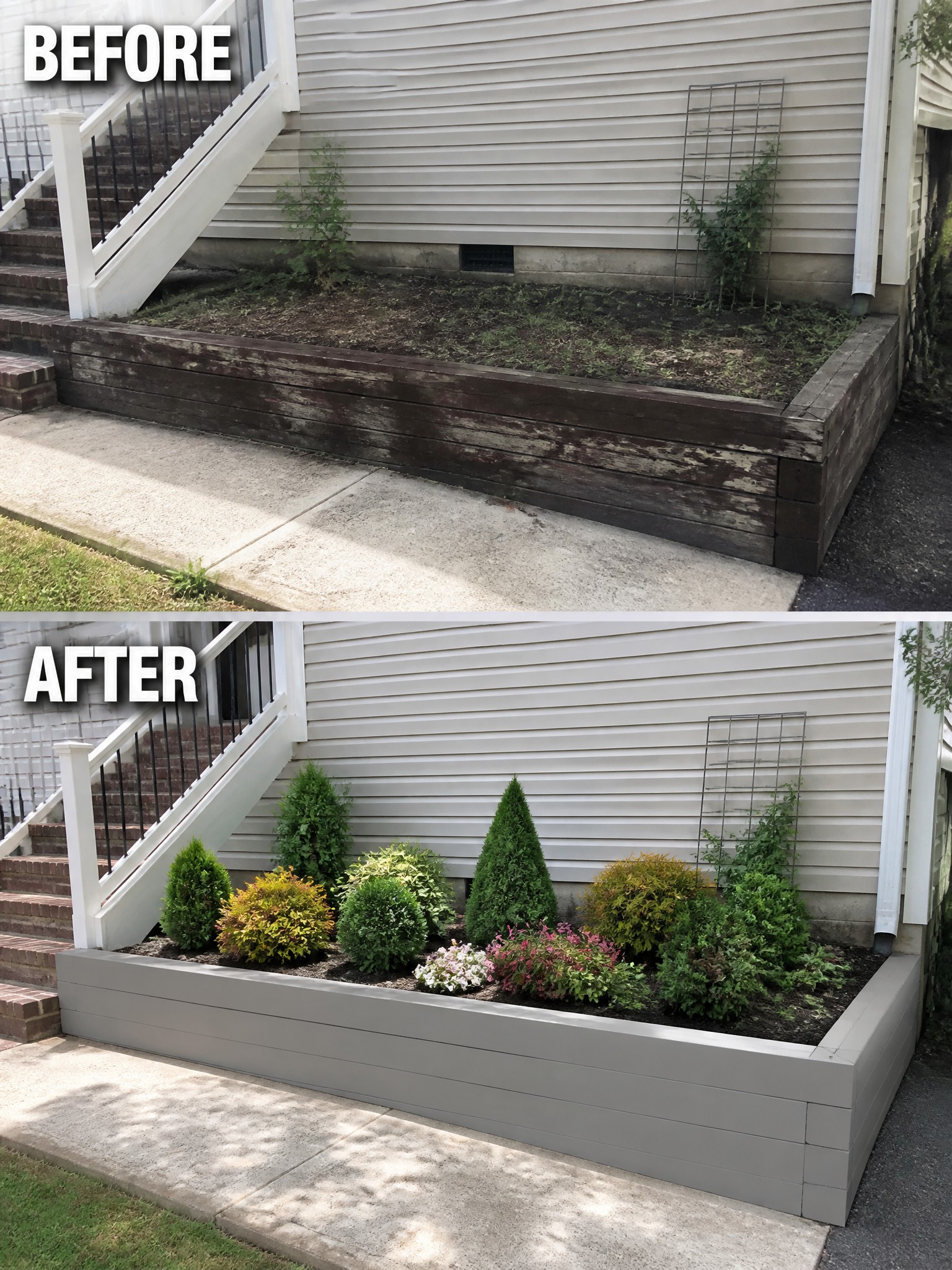
Raised beds often lose their shape after a few seasons of weeds and weather. A fresh coat of paint on the wood and a simple planting plan with evergreens and low flowers can bring the whole area back into order.
This idea suits homes with existing beds along foundations or near stairs. Start with cleaning and painting the borders, then group plants by height so the bed looks full but stays easy to care for through the seasons.
Frequently Asked Questions
Q: What plants work best if my neglected bed gets mostly shade? A: Pick shade lovers like ferns or astilbe that thrive without full sun. They fill in quickly and need less water once established. Add some mulch to hold moisture in the soil.
Q: How do I keep weeds from coming back right away? A: Lay down a thick layer of newspaper or cardboard under your mulch. This blocks light and stops most weeds from sprouting. Pull any that do appear by hand before they spread.
Q: Is it okay to start small instead of redoing the whole bed at once? A: Yes, tackle one section first to see how it goes. You can build on it later without feeling overwhelmed. This approach keeps the project manageable over a weekend or two.
