

I have noticed that a backyard often sits mostly empty because there is no clear place to pause and relax once the basic lawn work is done.
When seating gets placed with everyday routines in mind the whole area starts to feel like an extension of the house rather than leftover space.
I usually test a couple of sturdy chair ideas first to see how the layout actually works with the way we move through the yard.
Adding a low table or two near the seats tends to pull the rest of the details together without much extra effort.
That shift is what makes the change feel lasting.
Turn A Bare Patio Into A Seating Area
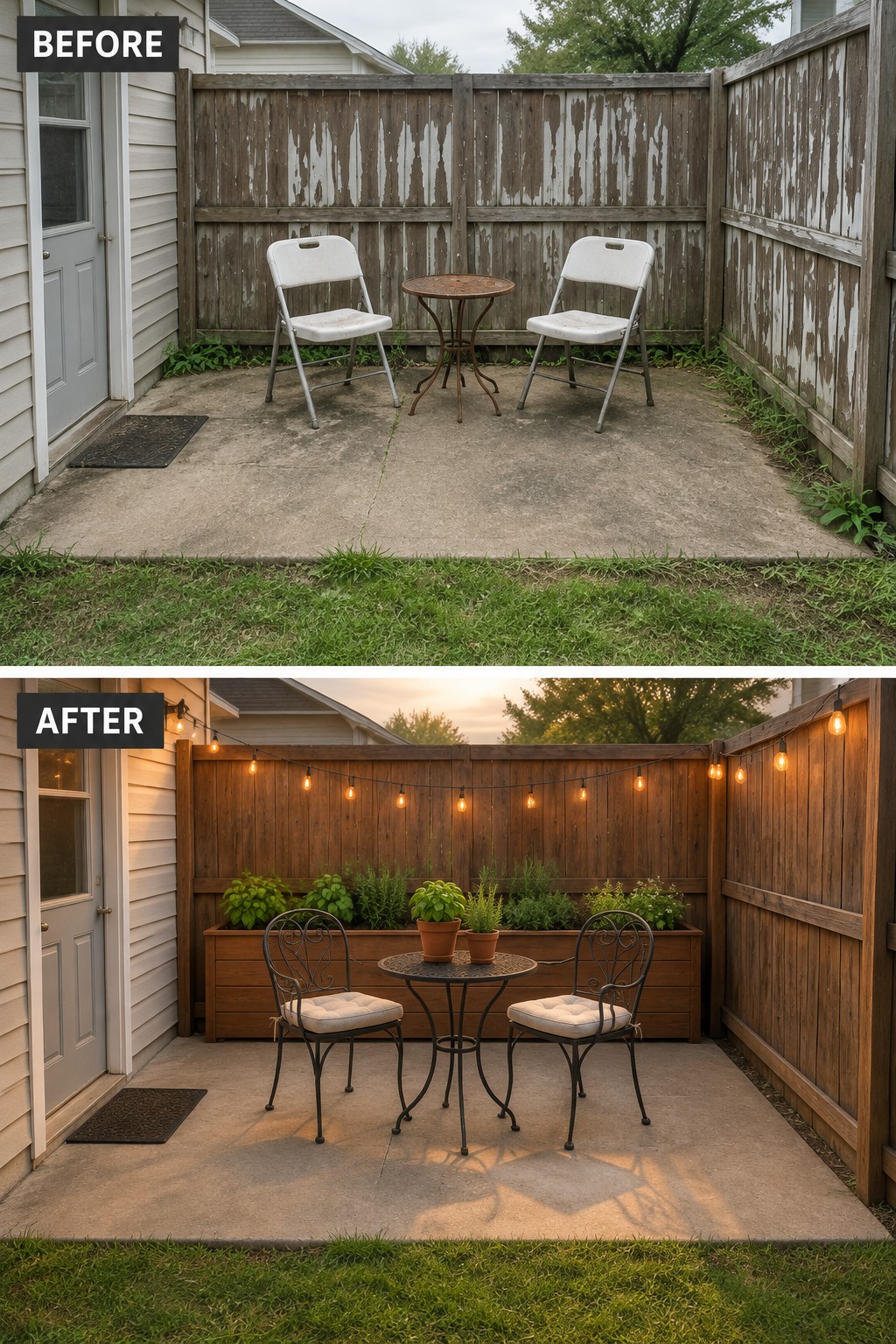
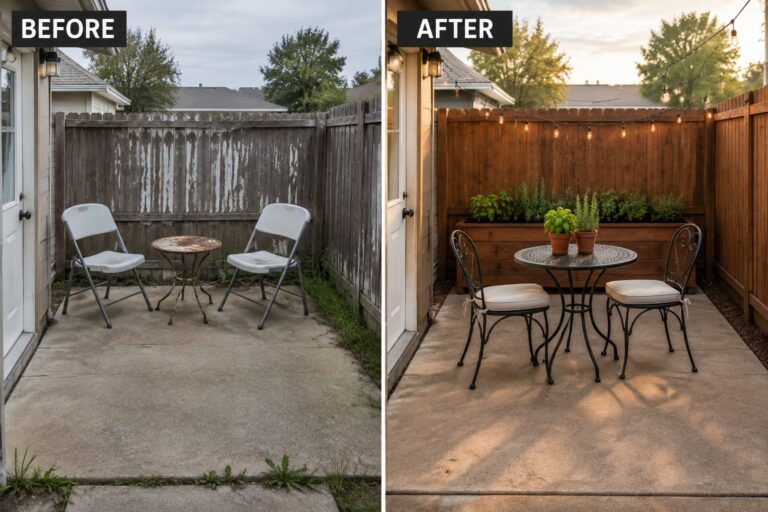
A plain concrete slab with basic folding chairs often feels like leftover space rather than a place to spend time. Adding a raised wooden planter along the fence, a pair of sturdier chairs with cushions, and string lights overhead gives the area a clear purpose and makes it feel like an outdoor room.
This approach works best in small backyards where the patio needs structure before any extra decor. Build or buy a simple planter first to anchor the seating zone, choose furniture that can stay outside year-round, and add lights that actually reach the chairs so the space stays usable in the evening.
Turn An Overgrown Backyard Into A Fire Pit Seating Area
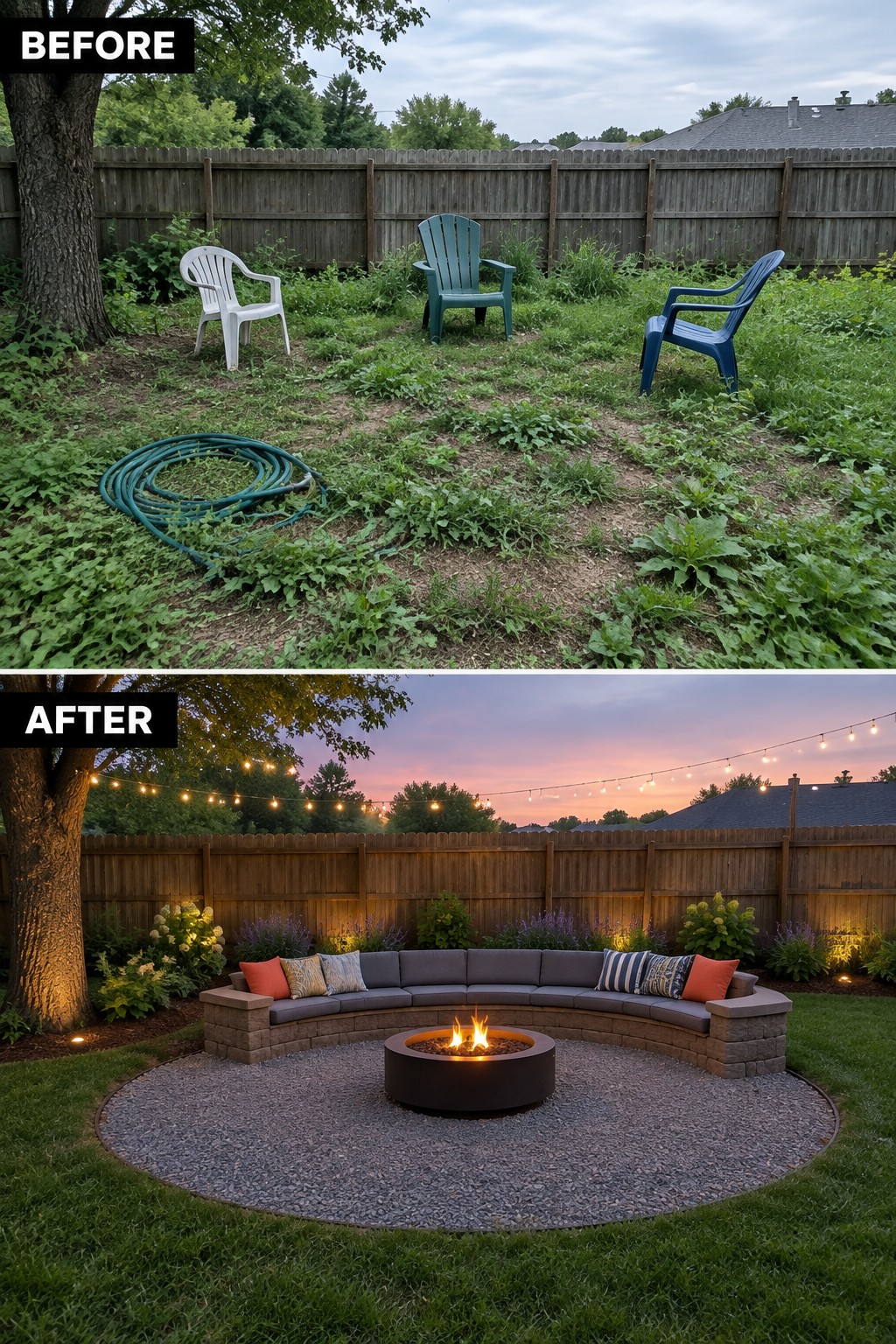
Clearing the weeds and giving the space a clear purpose made the biggest difference here. A gravel circle with a central fire pit and a curved bench turned what was just an empty patch of grass into a spot where people actually want to sit.
This approach works best in backyards that feel too open or neglected to use. Start by defining the seating zone with gravel or pavers before adding furniture, and keep the layout simple so there is still room to move around the fire pit. Weather-resistant seating and a few string lights are usually enough to make the area feel finished.
Turn A Bare Deck Into A Comfortable Seating Spot
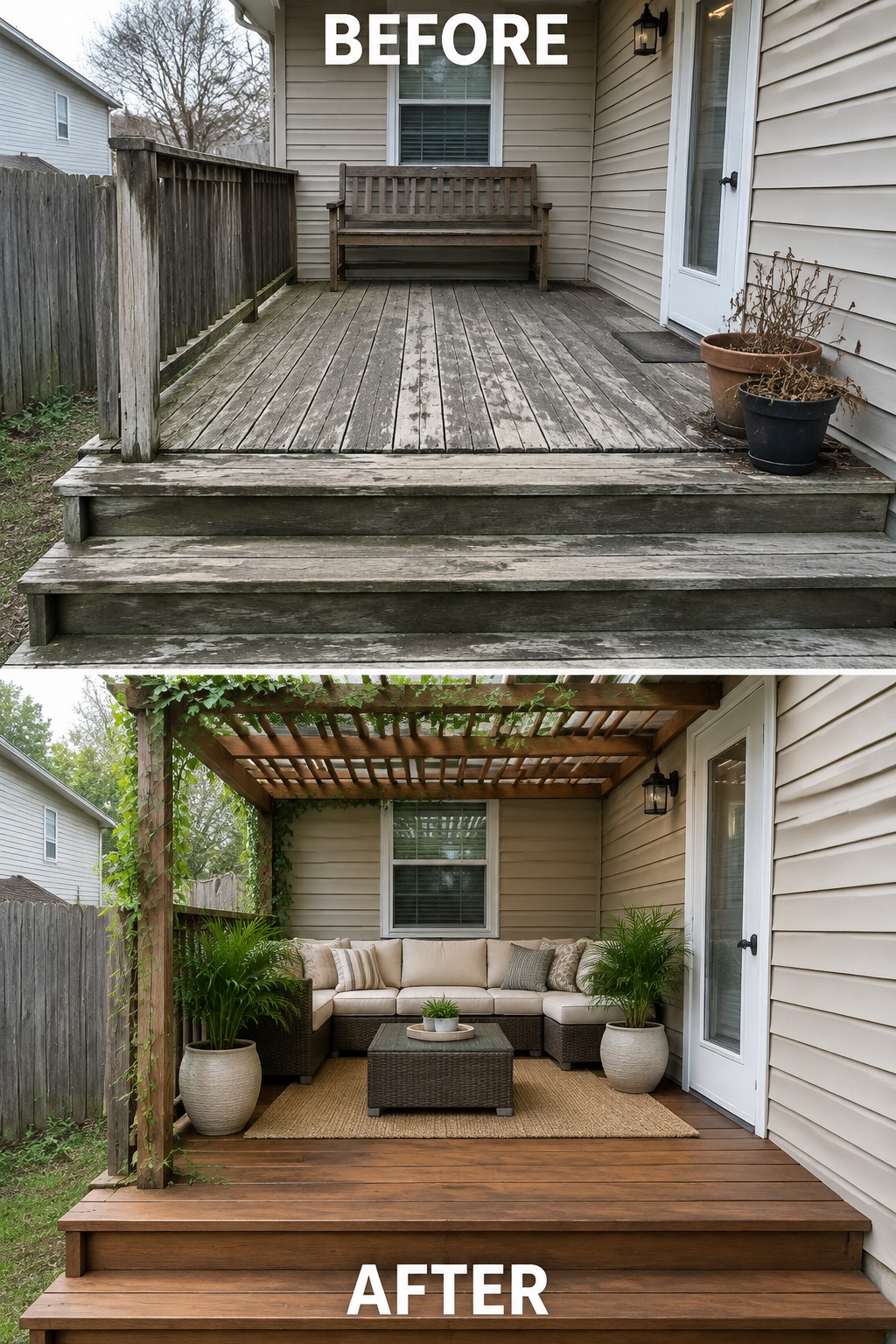
A deck that sits empty often stays that way because it lacks any sense of purpose or shelter. Adding a pergola created a clear overhead boundary and some shade, while the sectional and coffee table gave people a reason to stay outside instead of just walking through.
This idea works best on decks that already have decent structure but feel too open. Keep the furniture scale realistic so there is still room to walk around, and choose pieces made for weather. A simple rug can mark the seating area without needing walls or extra construction.
Define A Bare Patio With An Outdoor Rug
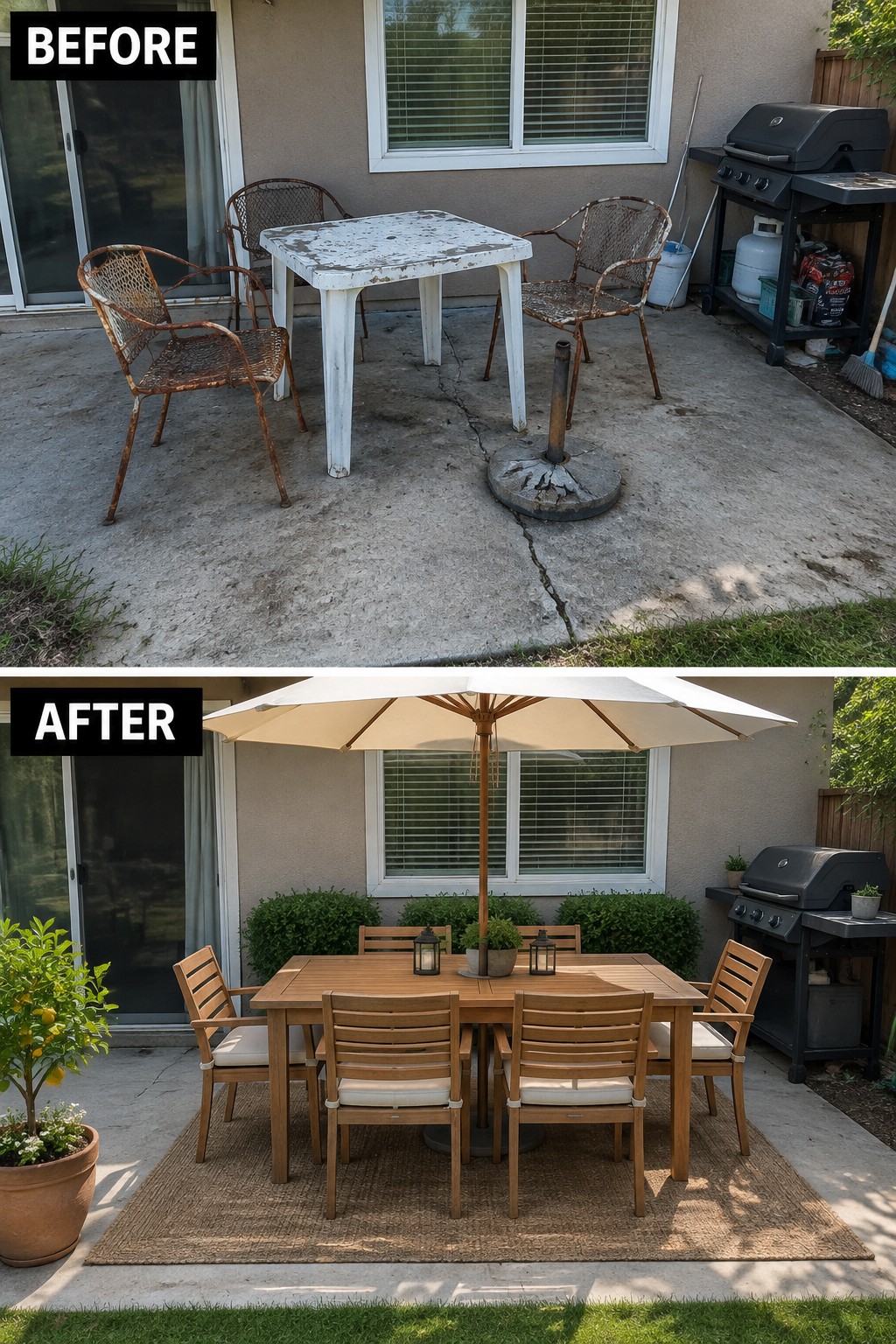
A plain concrete patio often feels unfinished when it only has a table and a few mismatched chairs. Adding a large rug under the seating group gives the space clear boundaries and makes it feel like an actual room outdoors instead of just furniture sitting on bare ground.
This idea works well on any patio that gets regular use but lacks definition. Keep the furniture scale realistic for the size of the space, choose pieces made for outdoor conditions, and use the rug as the main anchor rather than adding too many extra pieces at once.
Build Corner Benches To Turn Unused Space Into Seating
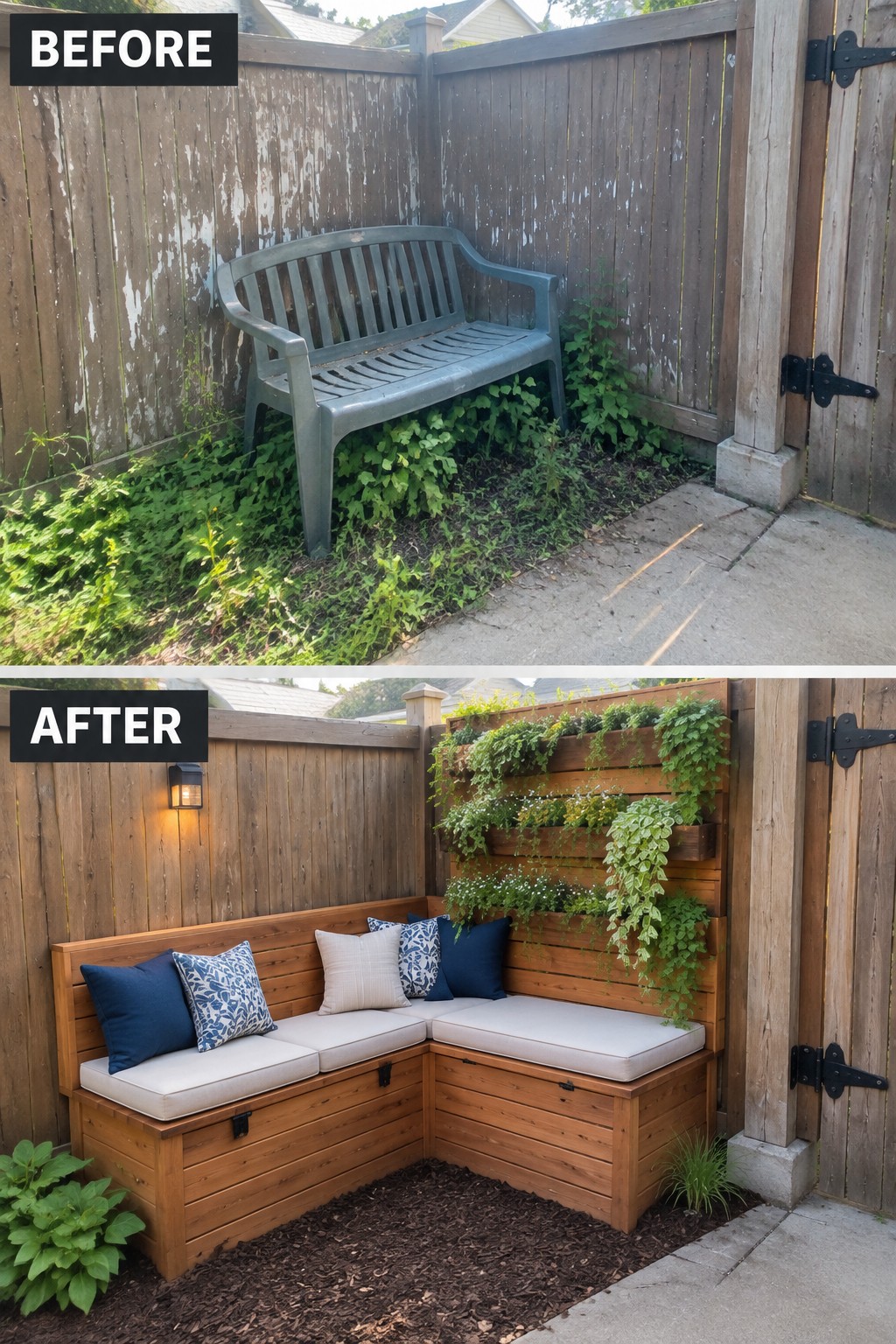
A corner that was mostly weeds and one plastic bench became a useful seating spot once simple built-in benches were added. The L-shaped wood seating defines the area, adds storage underneath, and pairs with a vertical planter on the fence to keep plants contained and off the ground.
This idea works best in small yards or tight side areas where freestanding furniture would crowd the space. Build the benches first to set the layout, then choose weather-safe cushions and repeat one wood tone so the corner feels like one piece rather than a collection of separate items.
Refresh Old Lounge Chairs With Comfortable Outdoor Seating
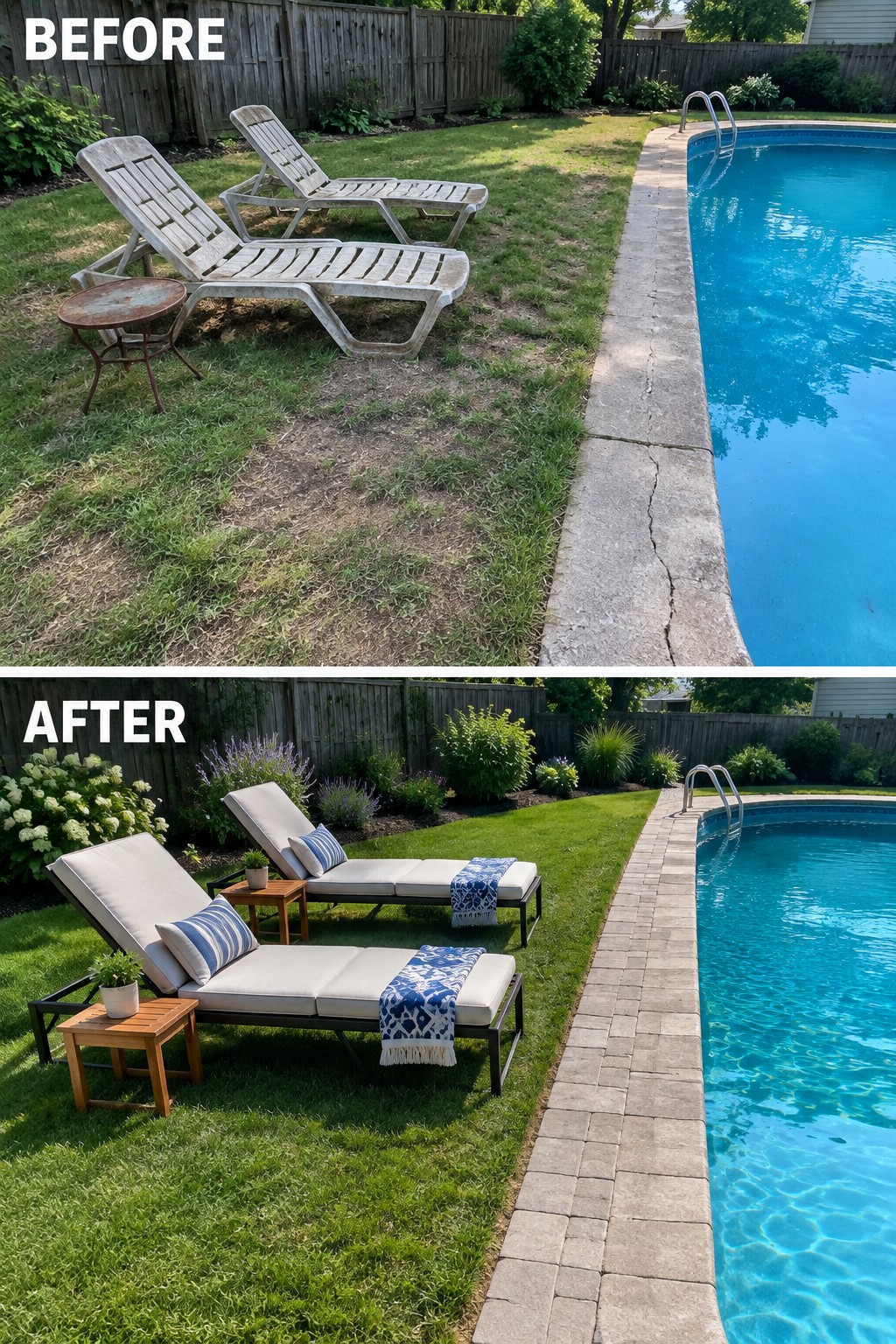
The before photo shows two weathered wooden lounge chairs sitting on patchy grass right next to the pool. In the after photo, those chairs have been replaced with modern metal-framed loungers that have thick cushions, striped pillows, and small wooden side tables. The simple swap makes the whole pool area feel like a place you would actually want to sit for more than a few minutes.
This idea works best when your current seating is still usable in structure but no longer comfortable. Focus on pieces made for outdoor use, add supportive cushions that can handle sun and water, and keep the layout open so people can move around the pool edge easily. It suits homes with existing pools or patios where the main goal is daily relaxation rather than a full redesign.
Hang A Hanging Chair To Create A Backyard Seating Nook
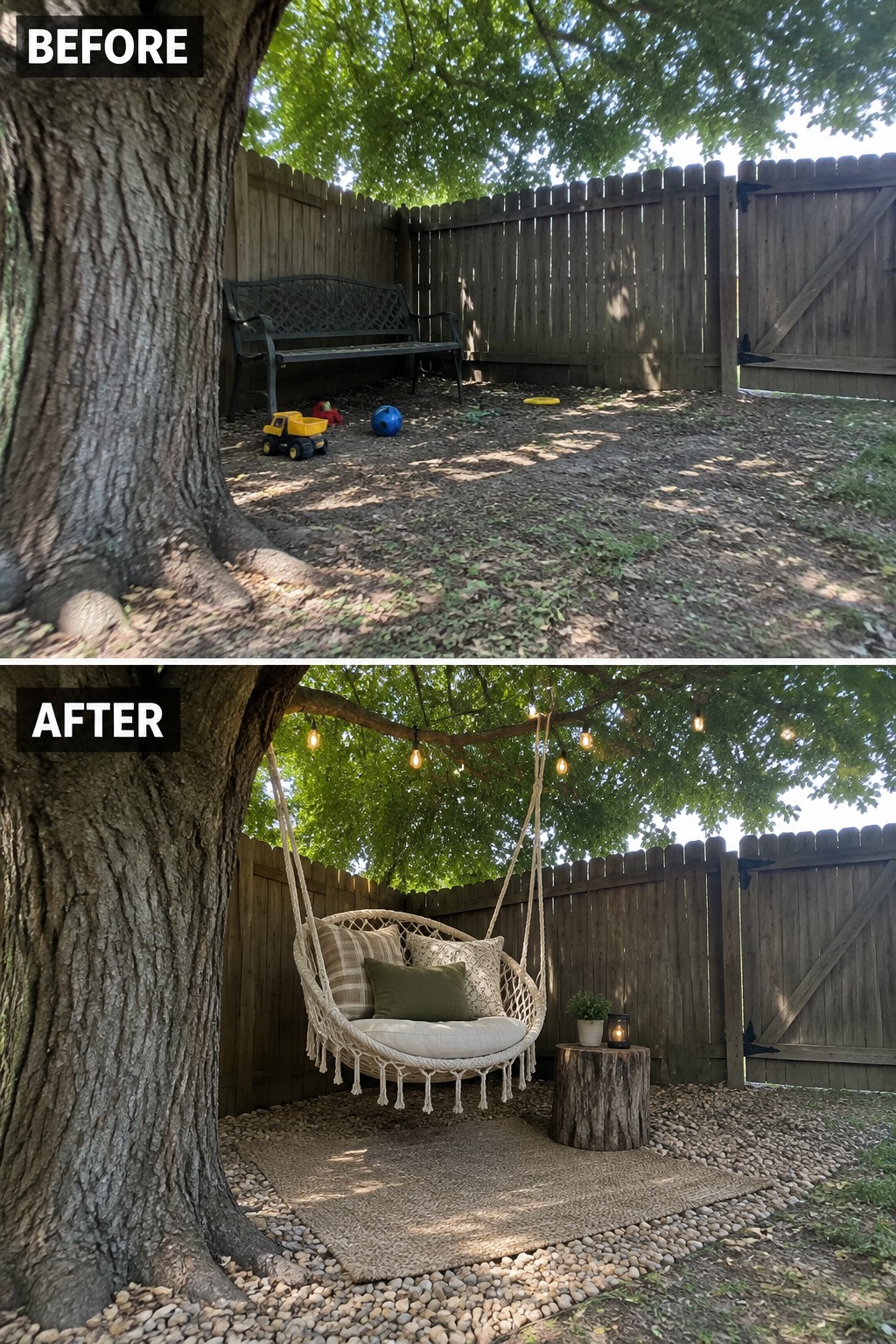
A bare patch of dirt under a tree rarely gets used. Adding one strong focal piece like a hanging chair gives the space a clear purpose and turns it into a spot where people actually want to sit. String lights overhead and a simple rug underneath help define the area without needing a full patio or deck.
This idea works best in shady corners where grass struggles and furniture might feel out of place. Start with the chair and lights, then add just enough ground cover or a small side table so the area stays open and easy to move around. It suits smaller backyards that need one usable zone rather than a complete overhaul.
Build Built-In Seating Into A Narrow Side Yard
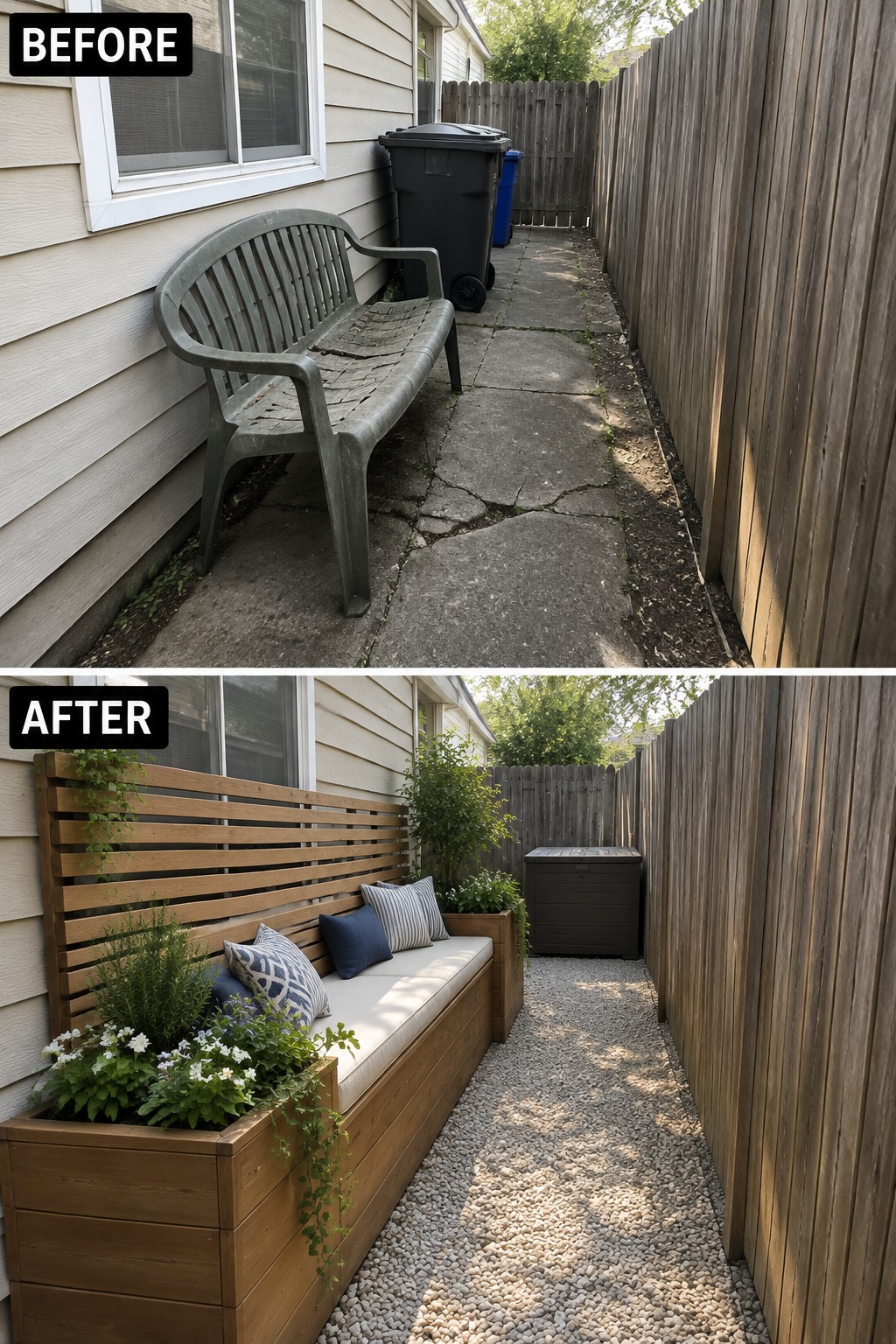
A narrow side yard often ends up as wasted space because it feels too tight for anything useful. Swapping out a single plastic bench for a long built-in wooden bench with attached planters gives the area a clear purpose and makes it feel more intentional.
This idea works well in tight passages between a house and a fence. Keep the bench depth modest so the walkway stays open, and use gravel to improve drainage without adding much cost. Focus on one main seating piece first before adding extra features.
Turn A Bare Gravel Area Into An Outdoor Seating Spot
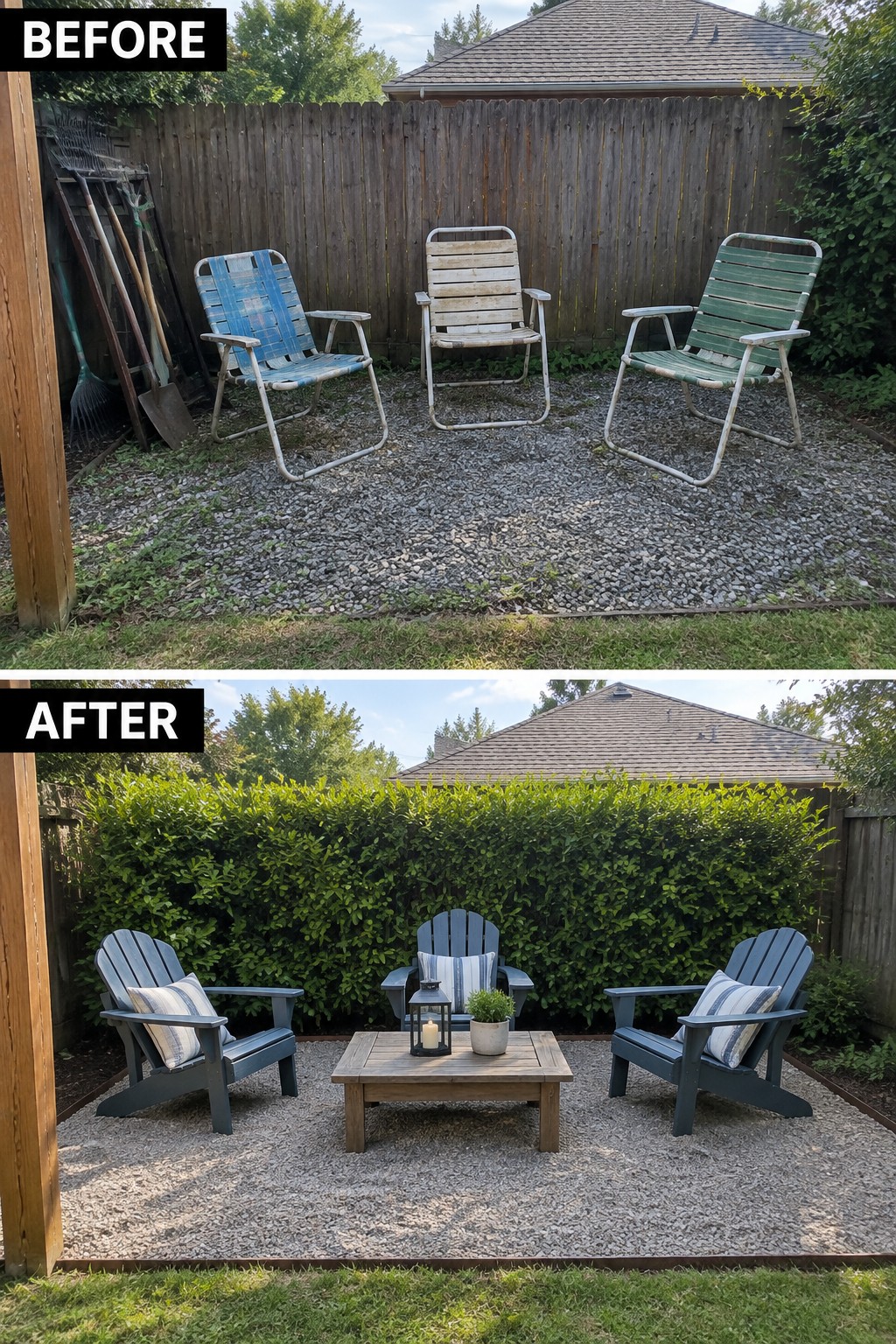
A simple gravel patch can work as an outdoor seating area once you replace the mismatched folding chairs with real furniture. In this case, three matching Adirondack chairs and a low table give the space a clear purpose instead of leaving it as a random spot to drop old seats.
This approach works best in small backyards where you already have gravel or pavers down. Keep the furniture scale modest so people can still walk around the table, and add just a couple of cushions and a lantern to make it feel finished. The hedge in the background helps too, since it gives the seating a sense of enclosure without extra structures.
Build A Deck To Create Outdoor Seating
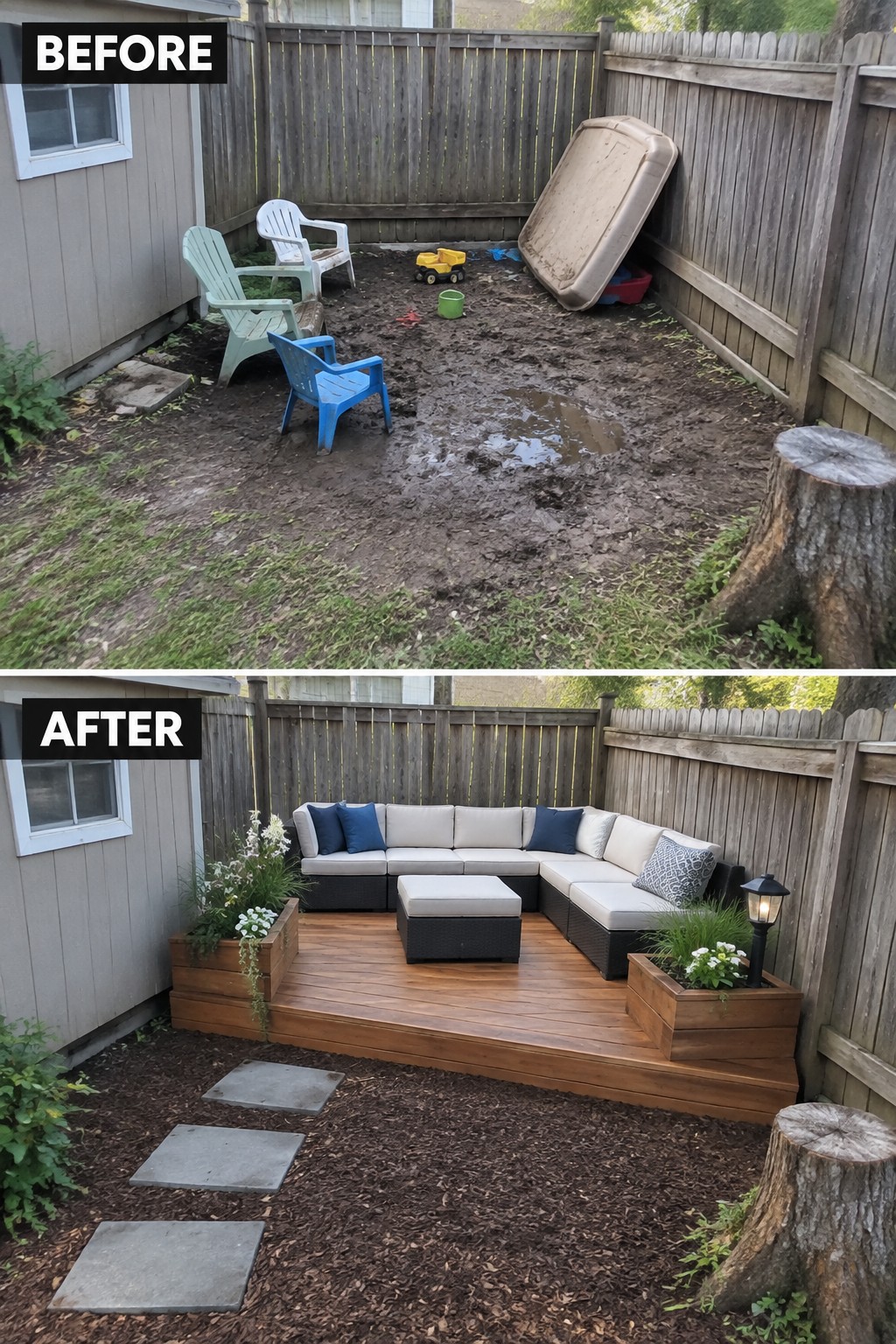
A muddy backyard with no good place to sit becomes much more usable once a raised deck is added. The wooden platform lifts the seating area above the dirt, giving the furniture a stable, clean surface that stays comfortable even after rain.
This idea works best in yards where the ground stays soft or uneven. Keep the deck size close to what your seating needs, then use a few planters at the edges to define the space without filling it up. It turns an awkward corner into a spot people actually want to use.
Turn A Neglected Porch Into An Outdoor Seating Area
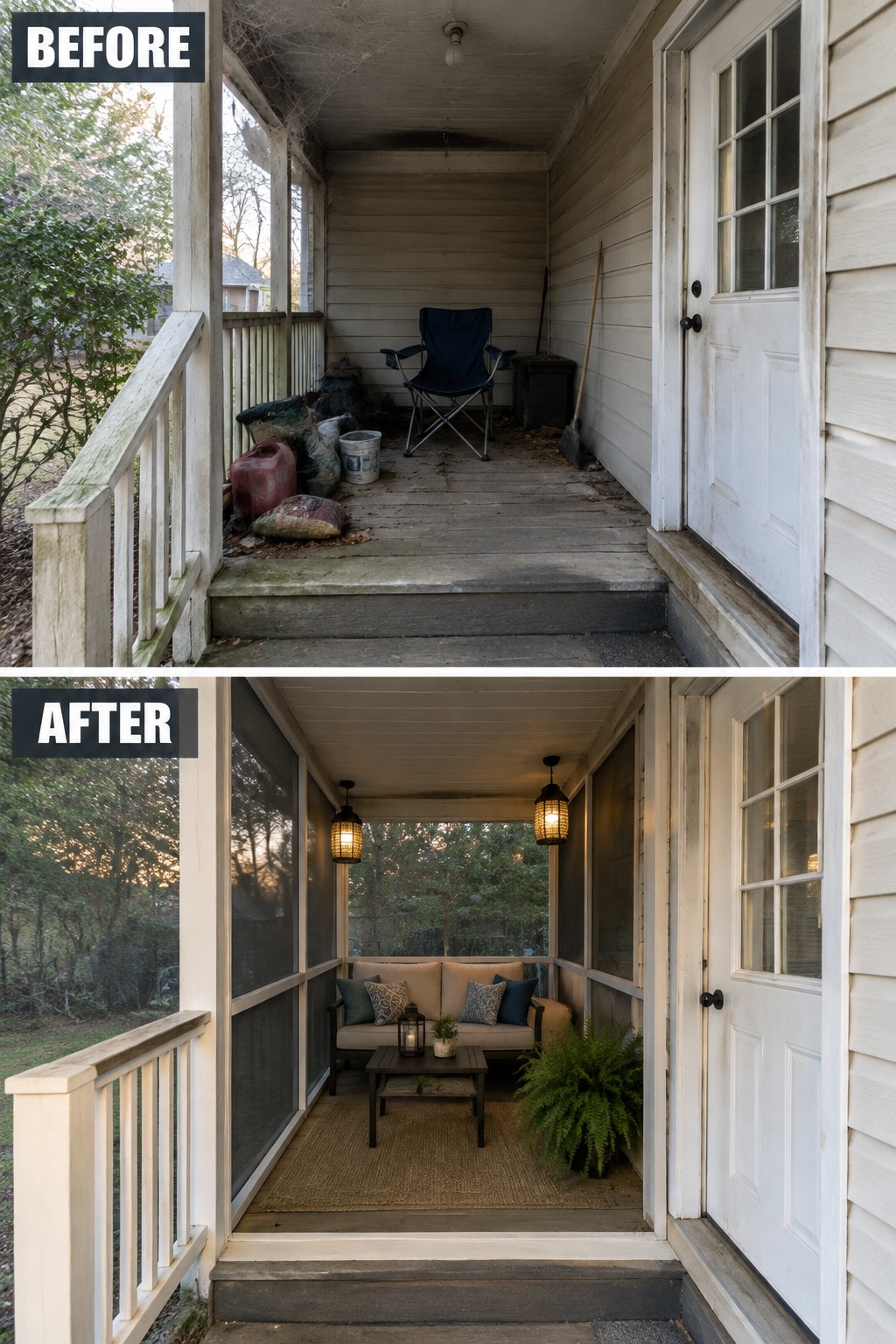
A porch that fills up with random items quickly stops feeling like a place to spend time. Clearing everything out and adding just a sofa, a small table, and a rug turns the same space into a spot where people actually want to sit.
This approach works well on covered porches that already have a roof and some protection from weather. Keep the furniture scale modest so there is still room to walk through, and choose pieces that can handle a little dampness or direct sun.
Turn A Bare Patio Into A Defined Seating Area
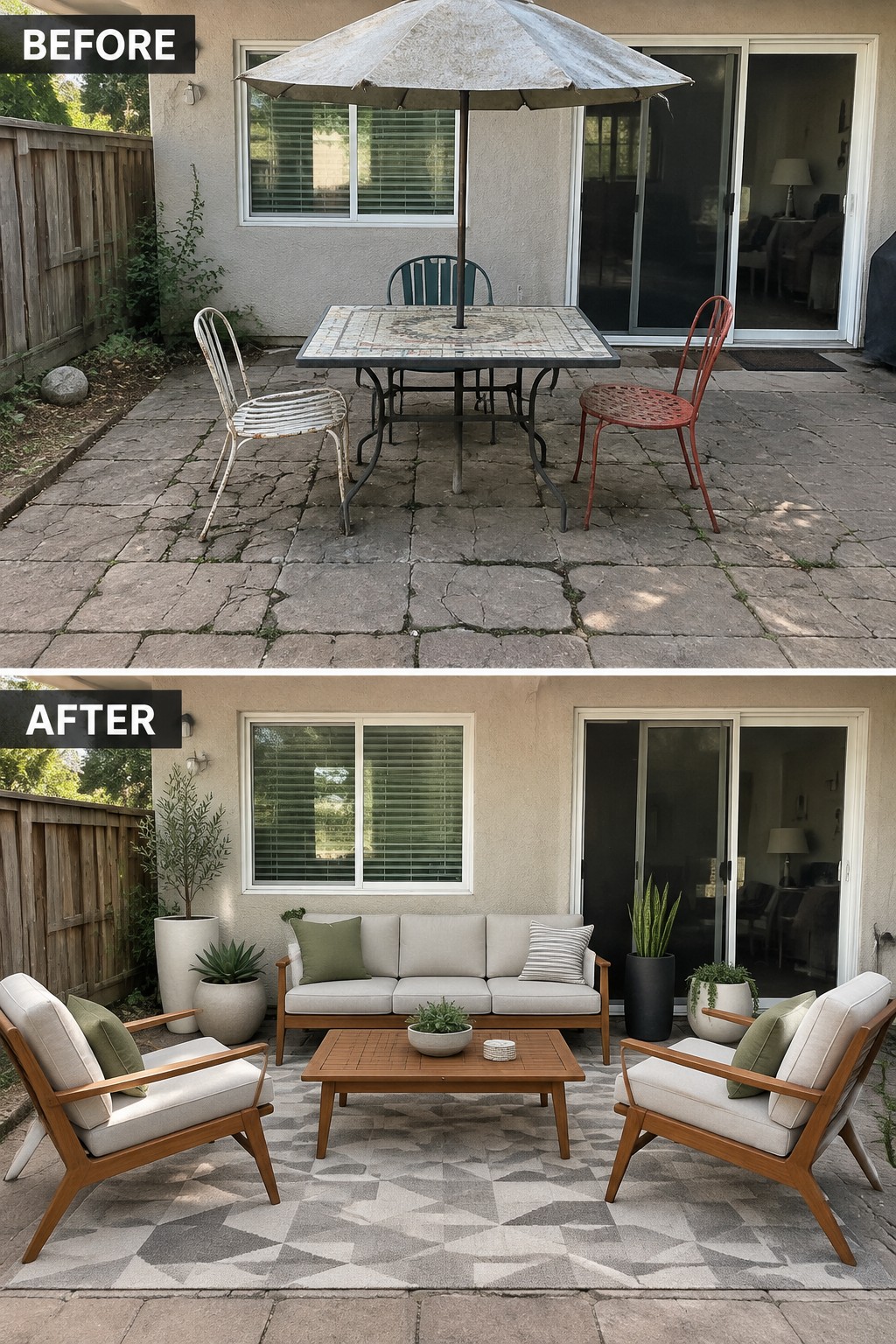
The before photo shows a wide stretch of concrete with furniture scattered around and no clear place to gather. Adding a large rug underneath the sofa and chairs creates one connected zone that feels intentional instead of leftover.
This approach works on any patio or deck where the surface feels empty. Choose a rug that can handle weather, keep the furniture arrangement tight so people can actually reach each other, and leave walking space around the edges so the area does not feel blocked.
Add A Pergola To Create A Defined Outdoor Seating Area
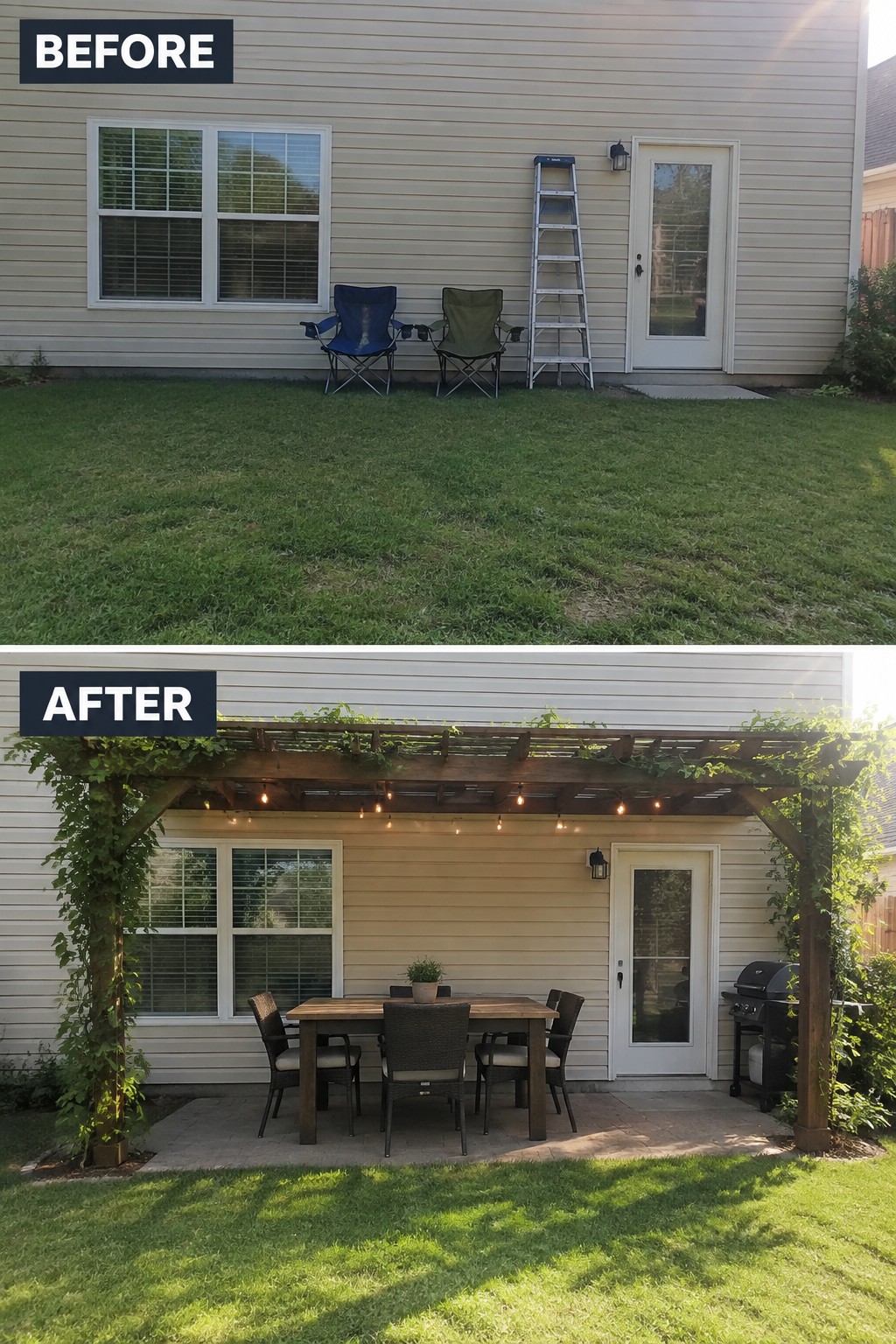
Adding a pergola gave this backyard a clear spot for sitting and eating instead of just open grass. The wooden frame with string lights creates shade and makes the space feel like a real room without walls.
This works best in yards that get a lot of sun or feel too open right next to the house. Keep the pergola simple, use sturdy outdoor furniture, and make sure the size leaves enough room to walk around the table and chairs.
Turn An Empty Backyard Into A Seating Area
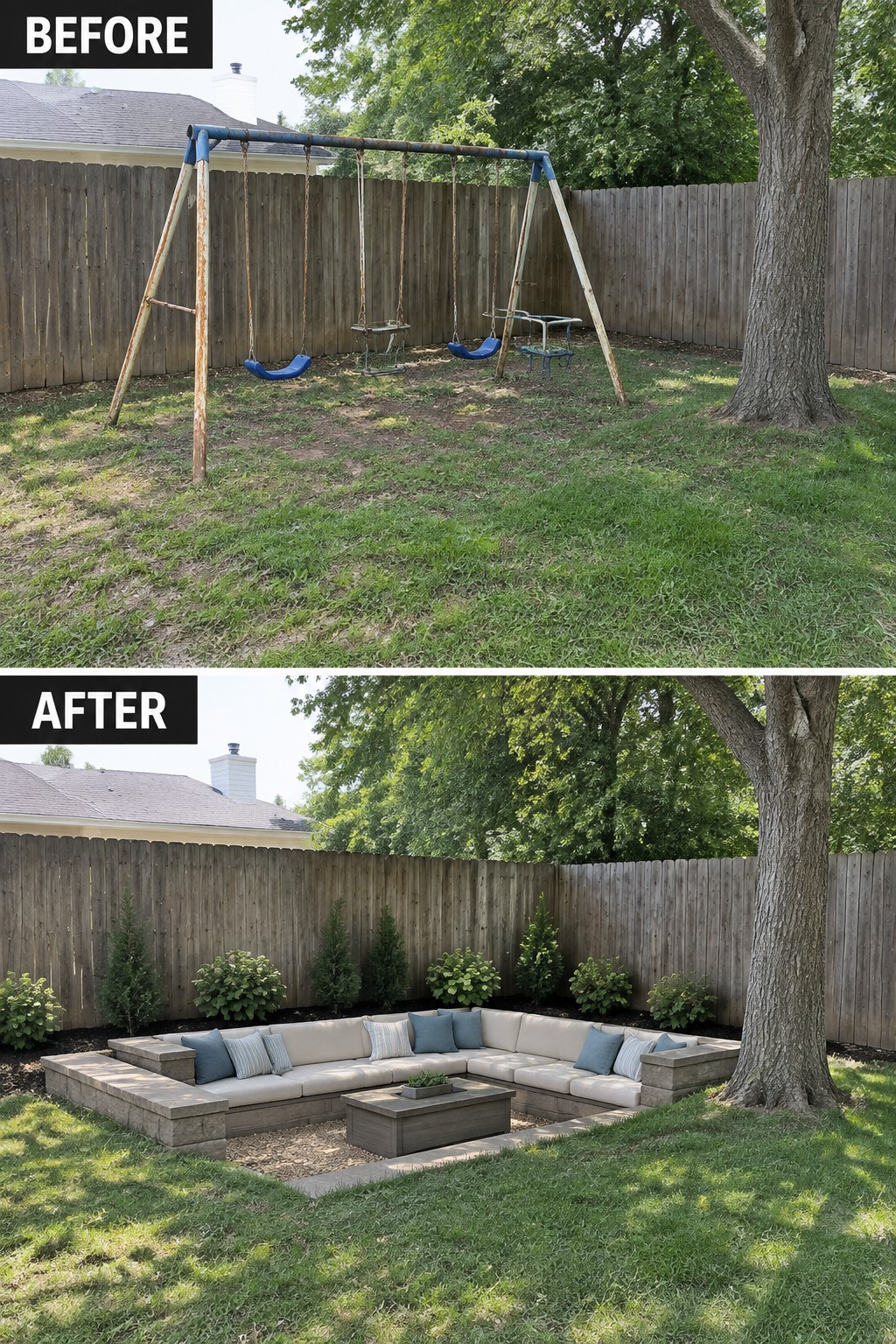
One practical way to make better use of a backyard is to remove old play structures and replace them with permanent seating. Here the swing set came out, and in its place went a built-in bench that wraps around a central fire pit table, turning open grass into a defined spot for sitting.
This approach works best in yards that already have a fence or tree line for some enclosure. Keep the seating low and the table simple so the space still feels open, and use stone or concrete for the base so it holds up to weather without much upkeep.
Turn A Bare Pergola Into A Seating Area
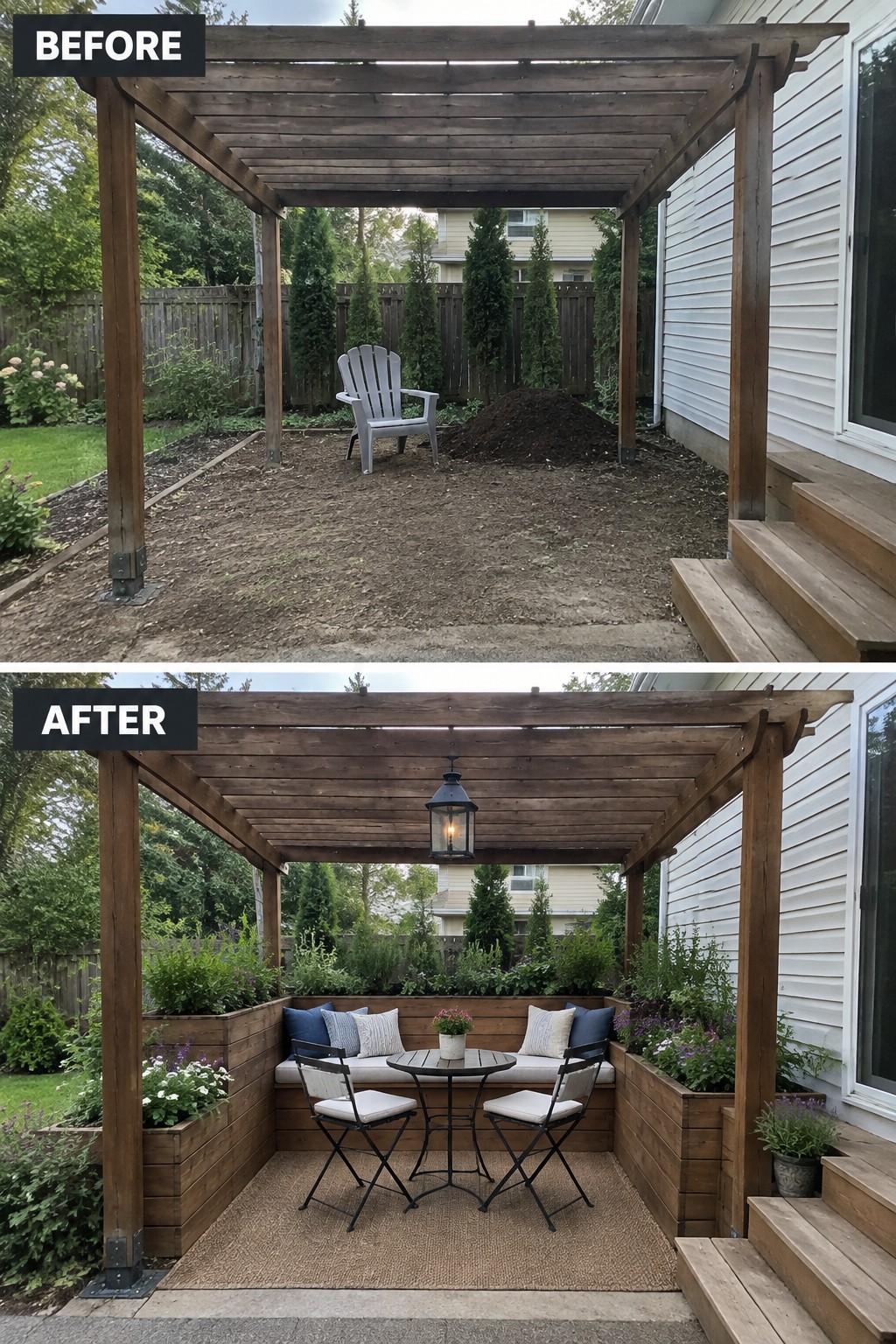
The main change here was turning an empty dirt space under the pergola into a defined seating zone. Built-in benches with attached planters gave the area structure and made it feel like an actual room instead of just open ground.
This idea works best when you already have a pergola or similar overhead structure. Start by adding seating that fits the shape of the space, then layer in a rug to mark the floor and a few plants to soften the edges. Keep the layout open enough for chairs to move around without crowding the area.
Use Outdoor Curtains To Define A Seating Area
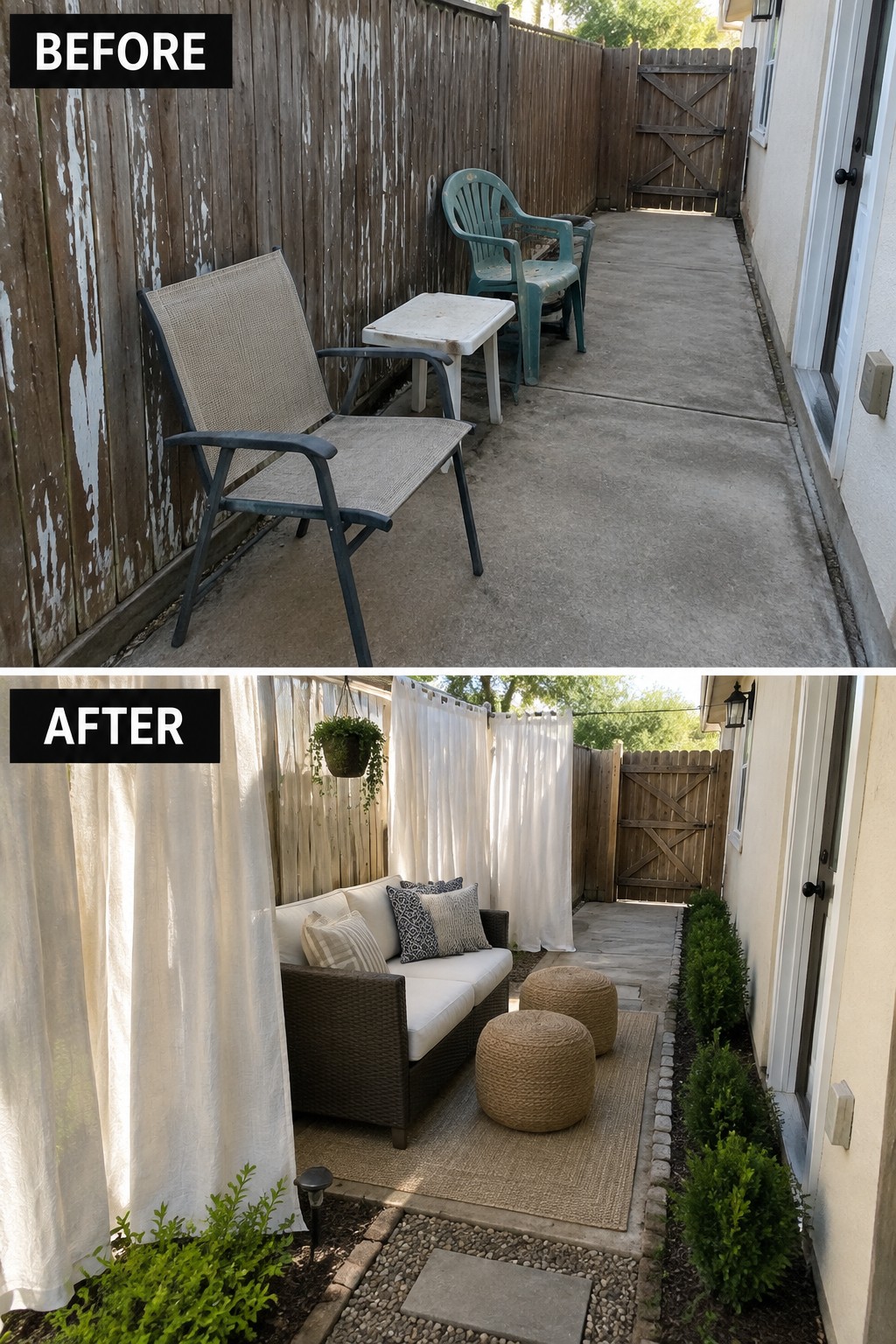
One easy way to turn a plain concrete walkway into a usable outdoor room is to add curtains. The before photo shows an open side yard with just a couple of mismatched chairs and no sense of enclosure. Hanging simple white curtains along one side created soft walls that give privacy and make the space feel more contained.
This works well on narrow patios or side yards that sit close to neighbors or feel too exposed. Run a wire or rod between the house and fence, then hang weather-resistant fabric so it can stay up year round. Add a rug underneath the furniture to mark the seating zone clearly and keep the layout practical for everyday use.
Define An Outdoor Seating Area With Pavers
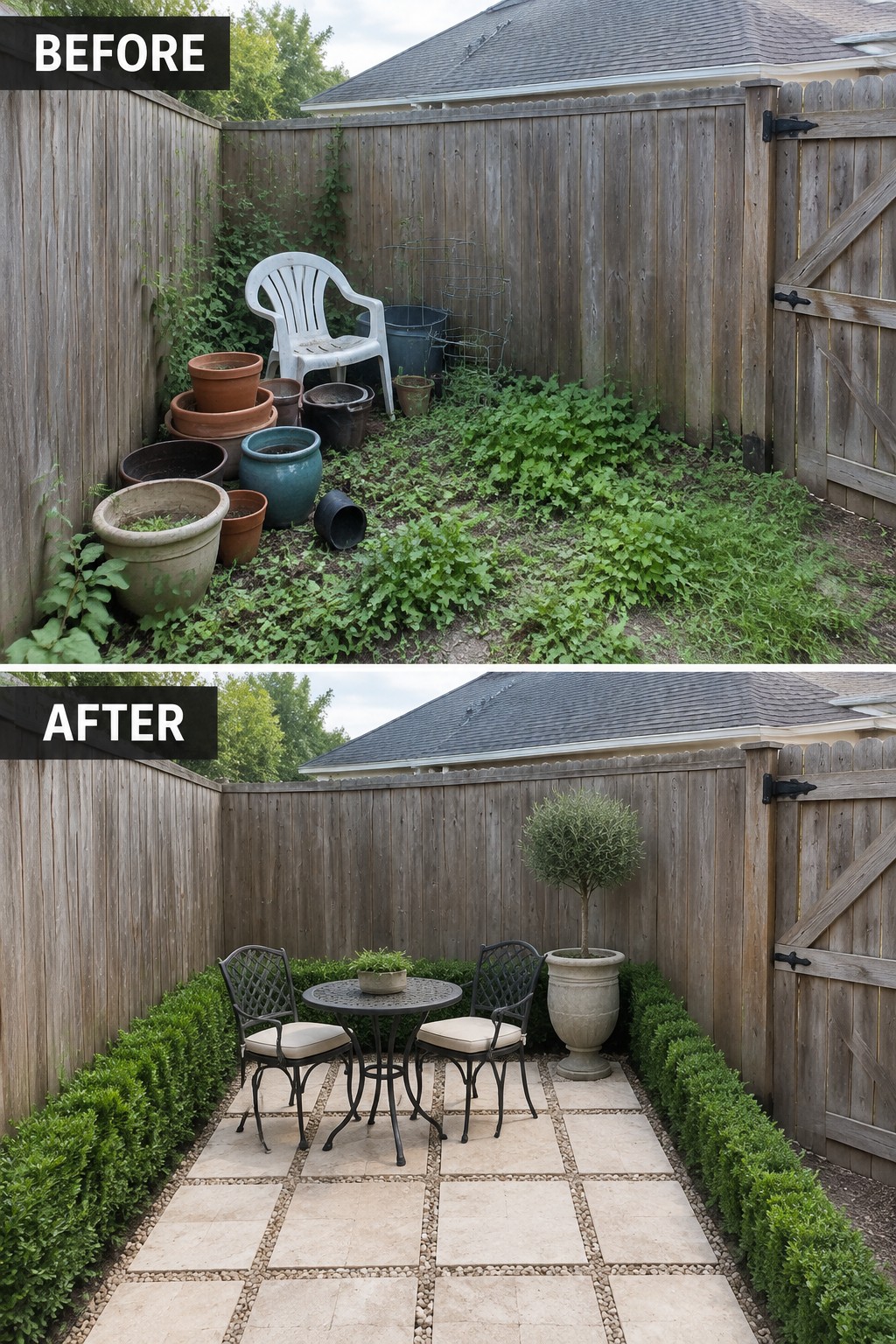
An overgrown backyard with scattered pots and no clear floor makes seating feel temporary at best. Laying pavers creates a solid, level surface that turns the same corner into a place where a table and chairs actually belong. The simple border of low hedges keeps the space contained without crowding it.
This approach works well in small or narrow yards where you need one usable zone rather than trying to fix the whole lawn at once. Start with cleanup and a basic paving grid, then add just enough furniture for two or four people. Keep the surrounding planting low so the seating area stays the main feature instead of competing with tall plants.
Frequently Asked Questions
Q: What’s the easiest way to add shade over my new seating area?
A: Hang a simple sail shade from nearby posts or trees. It blocks the sun without needing a full structure. Move it around until you find the best angle for afternoon relief.
Q: How often do I really need to clean outdoor cushions?
A: Wipe them down every couple of weeks with mild soap. Hose off any dirt or pollen that builds up. This keeps them looking fresh without much effort.
Q: Can I mix different chair styles without it looking messy?
A: Stick to one main color across the pieces. It pulls the mix together even if the styles differ.
