

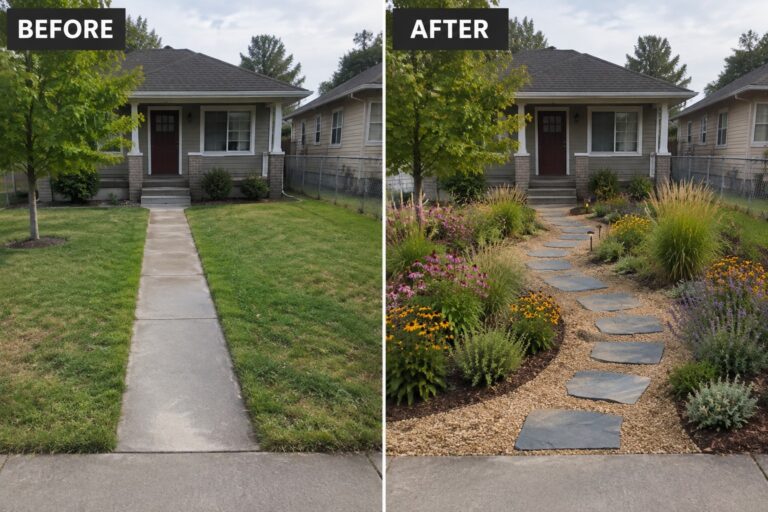
I’ve found that oversized lawns tend to look a bit empty and require constant upkeep that never quite pays off in enjoyment.
Reducing the grass area lets you add structured beds and simple paths that give the yard more shape without spending much.
Results build steadily from there.
Over time the new plantings fill gaps and create better flow across the space.
I like testing one affordable step at a time to match what the yard actually needs.
Add Garden Beds To Reduce Lawn Area
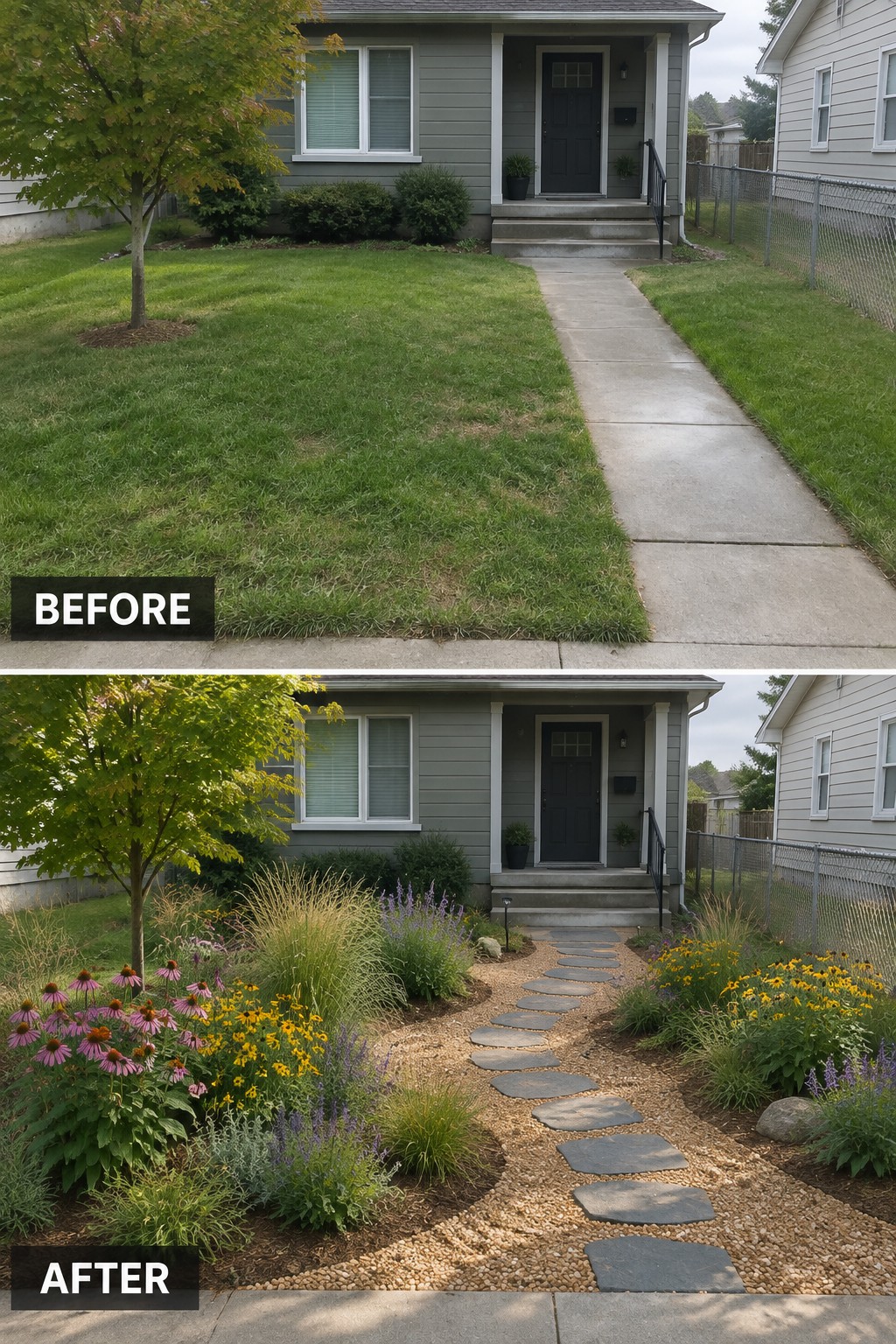
Many front yards start with a big stretch of grass and a straight concrete walk that does little to make the space feel welcoming. Replacing sections of lawn with mulched beds and a stepping stone path gives the yard shape while cutting the amount of grass that needs mowing and watering.
This approach works well on narrow side yards or any area where you want less lawn without losing a clear route to the door. Start by outlining the beds with simple edging, lay down weed barrier and mulch, then add a mix of perennials that bloom at different times so the beds stay interesting with minimal upkeep.
Replace Lawn With Pavers For A Simple Patio
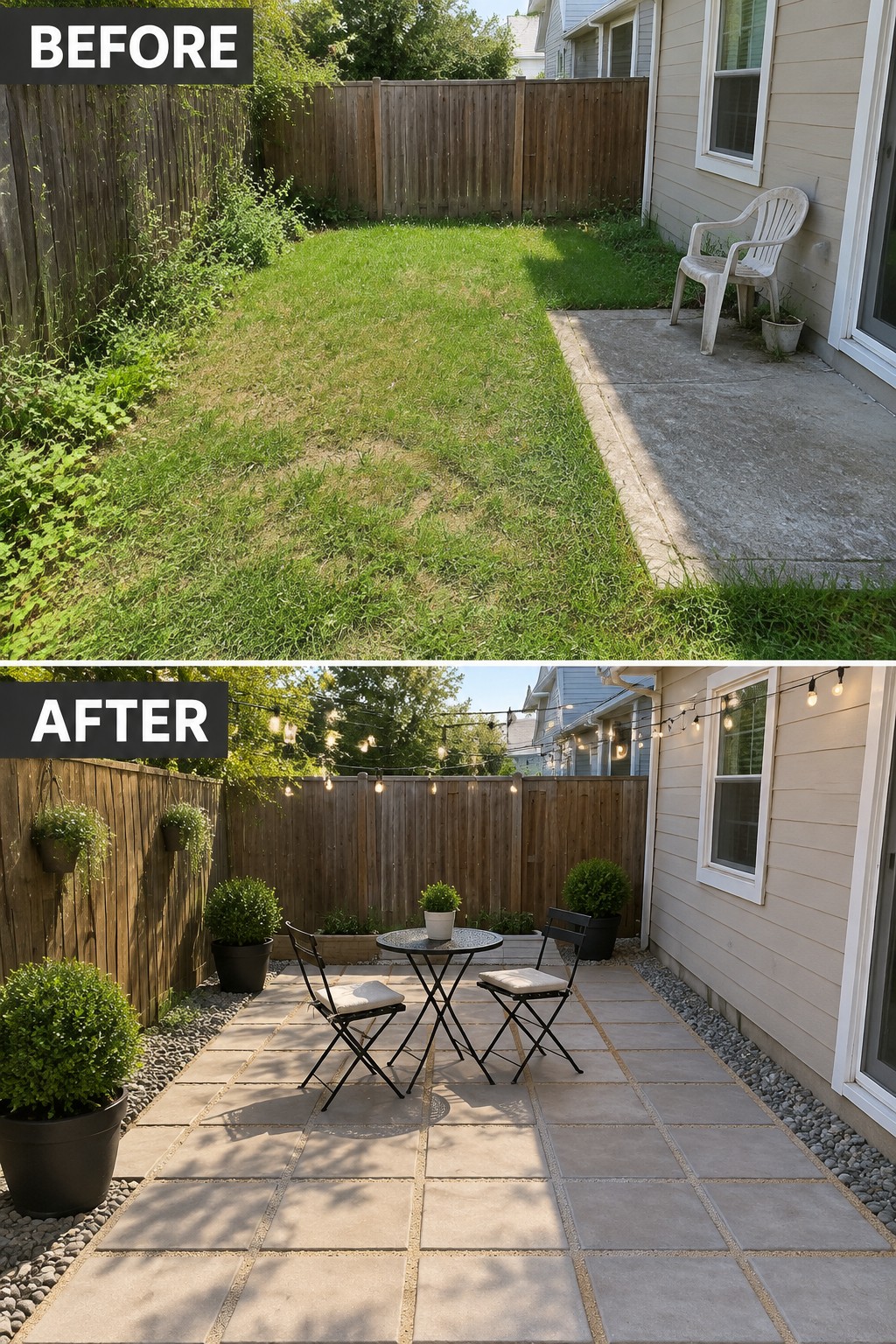
Many yards have more grass than anyone actually uses. In this case the before photo shows a long stretch of lawn that mostly sat empty. Adding a paver patio in its place gives the space a clear purpose while cutting down the area that needs regular mowing and watering.
This approach works well in smaller yards or along the back of the house where you want a place to sit without creating a huge new project. Start with a simple rectangular layout using affordable concrete pavers, keep the edges clean with gravel or river rock, and add just a couple of chairs and a small table. The result feels finished without needing a full redesign of the whole yard.
Turn Overgrown Grass Into Raised Garden Beds
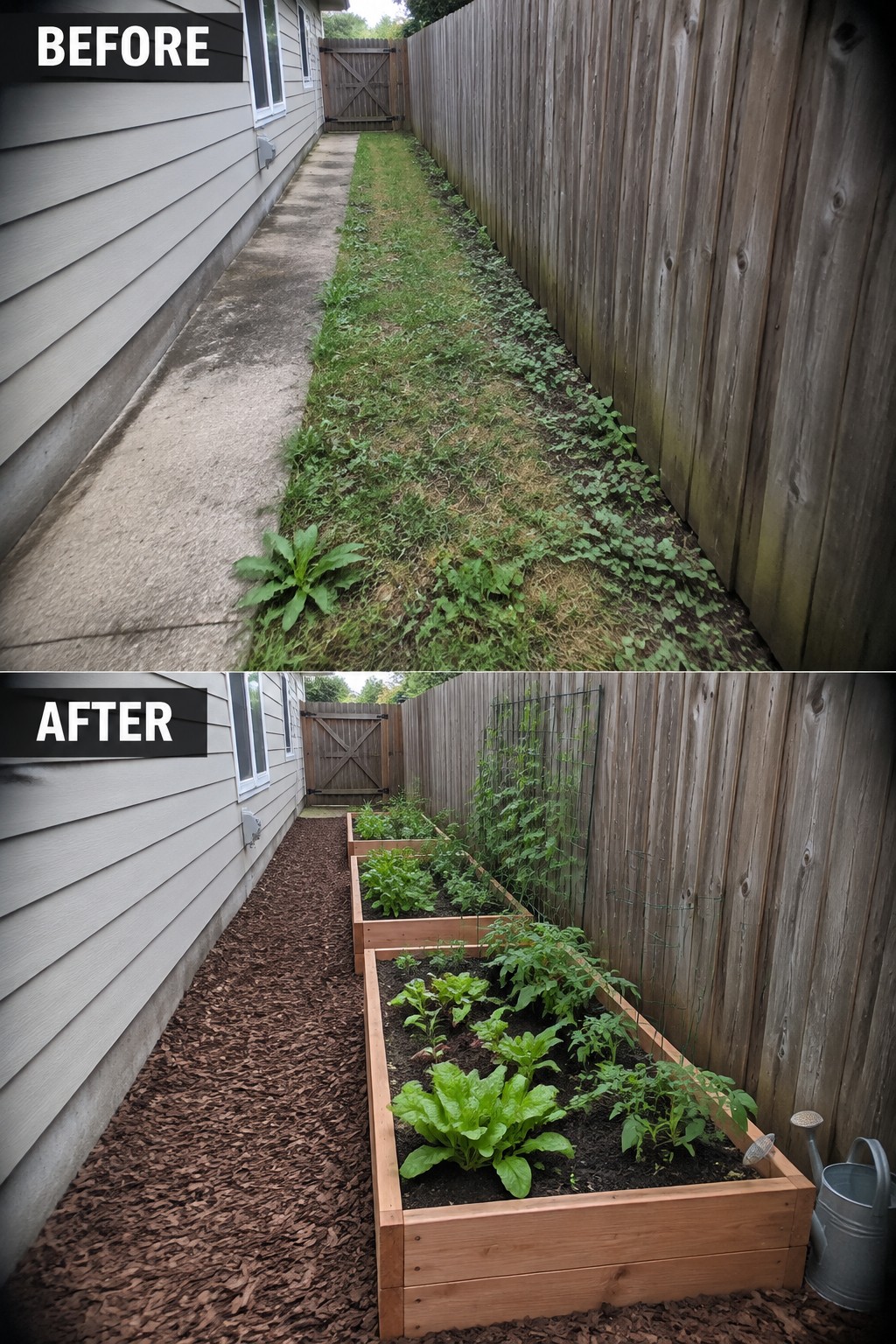
A narrow side yard full of weeds and patchy grass does not need to stay that way. Building a few simple raised beds and covering the rest with mulch turns the space into a productive garden while getting rid of most of the lawn. The change is mostly about structure. Once the beds are in place the plants have room to grow and the whole area looks intentional instead of neglected.
This works best in tight spots where a regular lawn is hard to mow and never looks good anyway. Start with one or two beds made from basic lumber, fill them with good soil, and keep the rest of the ground covered with mulch. You can grow vegetables, herbs, or flowers without worrying about grass taking over. Just make sure you leave enough room to walk between the beds and the house.
Reduce Lawn Areas By Planting Wildflowers
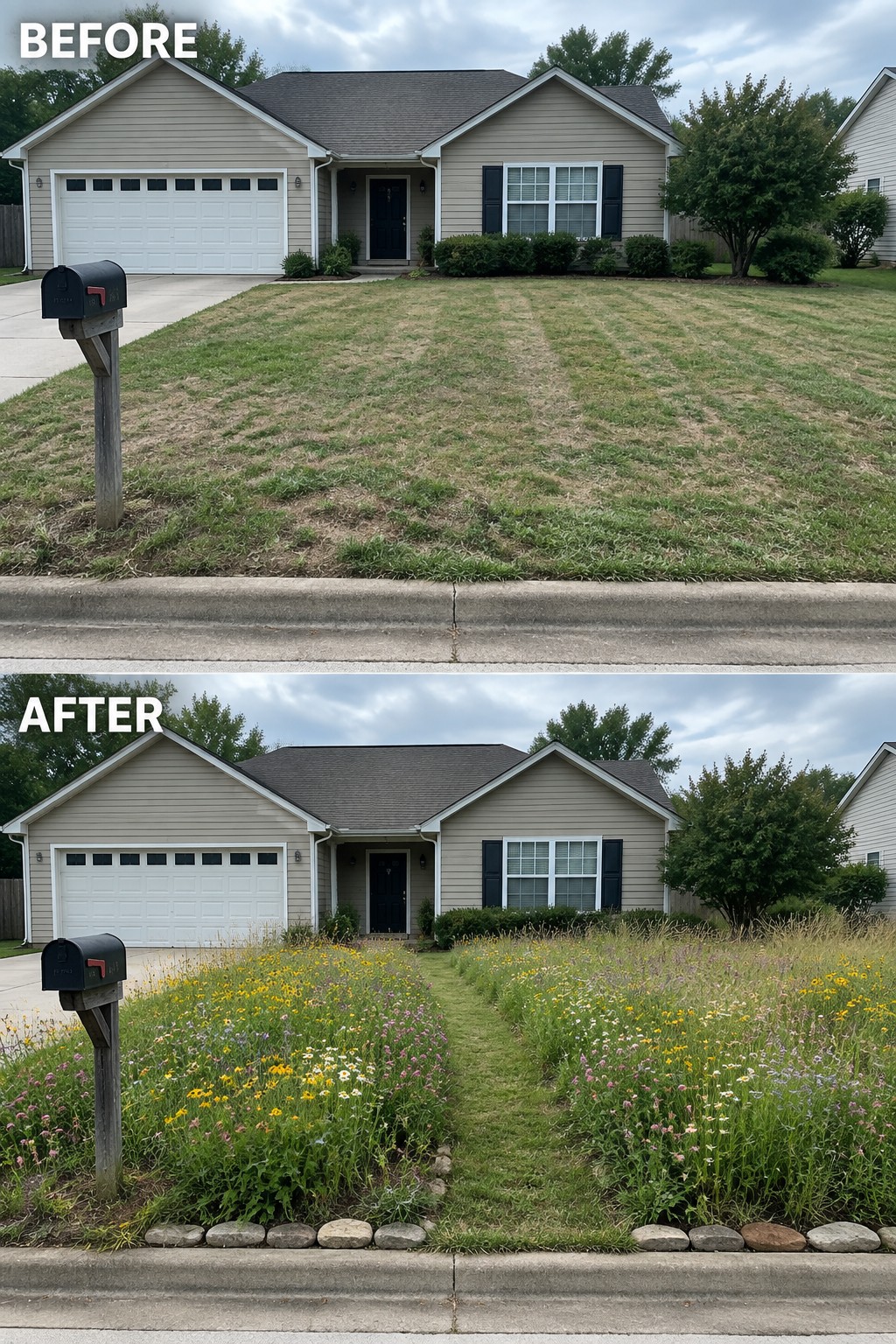
A big stretch of lawn often takes more work than it is worth. In this yard the patchy grass was replaced with wide wildflower areas on both sides, leaving just a narrow strip of grass down the middle. The result looks fuller, needs less mowing, and still gives a clear path to the house.
This approach works best on sloped front yards or spots where grass struggles. Clear the grass in sections first, sow a mix of native wildflowers, and add a simple stone edge along the curb to keep the beds looking tidy. Keep the center path wide enough for walking so the space still feels open.
Turn Part Of Your Lawn Into A Fire Pit Area

Replacing a section of grass with a gravel circle and fire pit gives you a clear spot for gatherings without leaving the whole yard as lawn. The open grass in the before photo became a defined gravel pad with a fire bowl and simple stump seats, while the remaining lawn forms a neat edge around it.
This idea works best in medium or large yards where you want less mowing and a low maintenance zone that still feels intentional. Mark out the size you need first, then use gravel or a similar material so water drains and the area stays usable year round. Keep the surrounding planting simple and repeat the same materials so the fire pit zone feels like part of the yard rather than an afterthought.
Add A Defined Border To Reduce Lawn Area
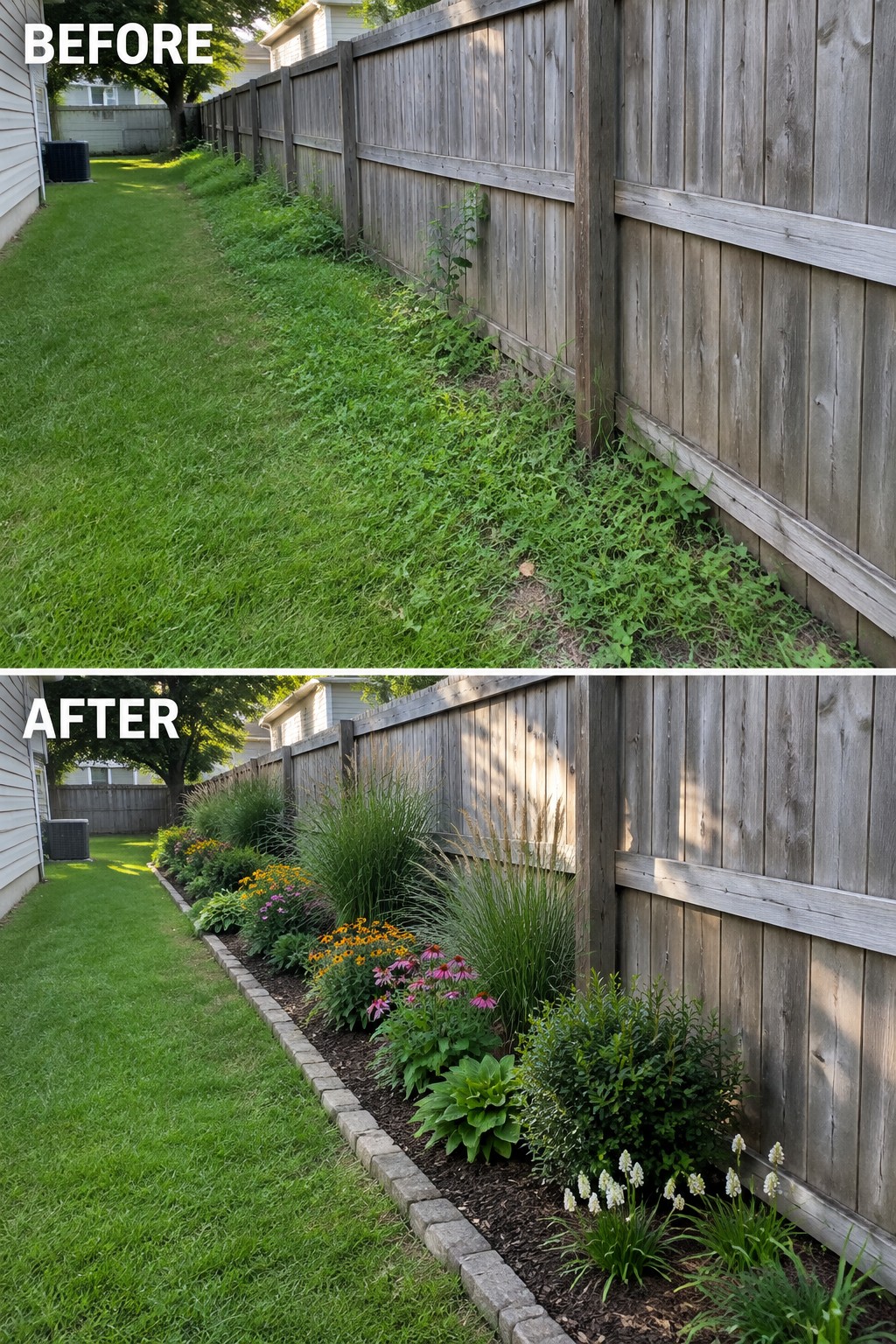
A weedy strip along a fence is one of the easiest spots to turn into a planted border instead of fighting it with the mower. Clearing the overgrowth and adding a simple edge with mulch keeps the lawn looking intentional while shrinking the area you have to maintain.
This idea works best along straight fence lines or property edges where grass gets patchy anyway. Use affordable edging like bricks, choose a handful of tough perennials and grasses, and keep the bed narrow enough to reach from one side. The result feels finished without needing a big budget or constant upkeep.
Use Pavers To Replace A Worn Path

A dirt path that gets packed down from regular use often ends up looking messy and hard to maintain. Switching it out for pavers with low ground cover planted between the stones gives the yard a clear route while shrinking the amount of grass that needs mowing and edging.
This approach works best along side yards or from a gate to the house where foot traffic is steady. Lay the pavers first to set the shape, then choose a tough creeper that tolerates some stepping on. The result is a path that stays usable in wet weather and feels more intentional than just leaving the lawn to wear down on its own.
Replace Part Of Your Lawn With A Deck
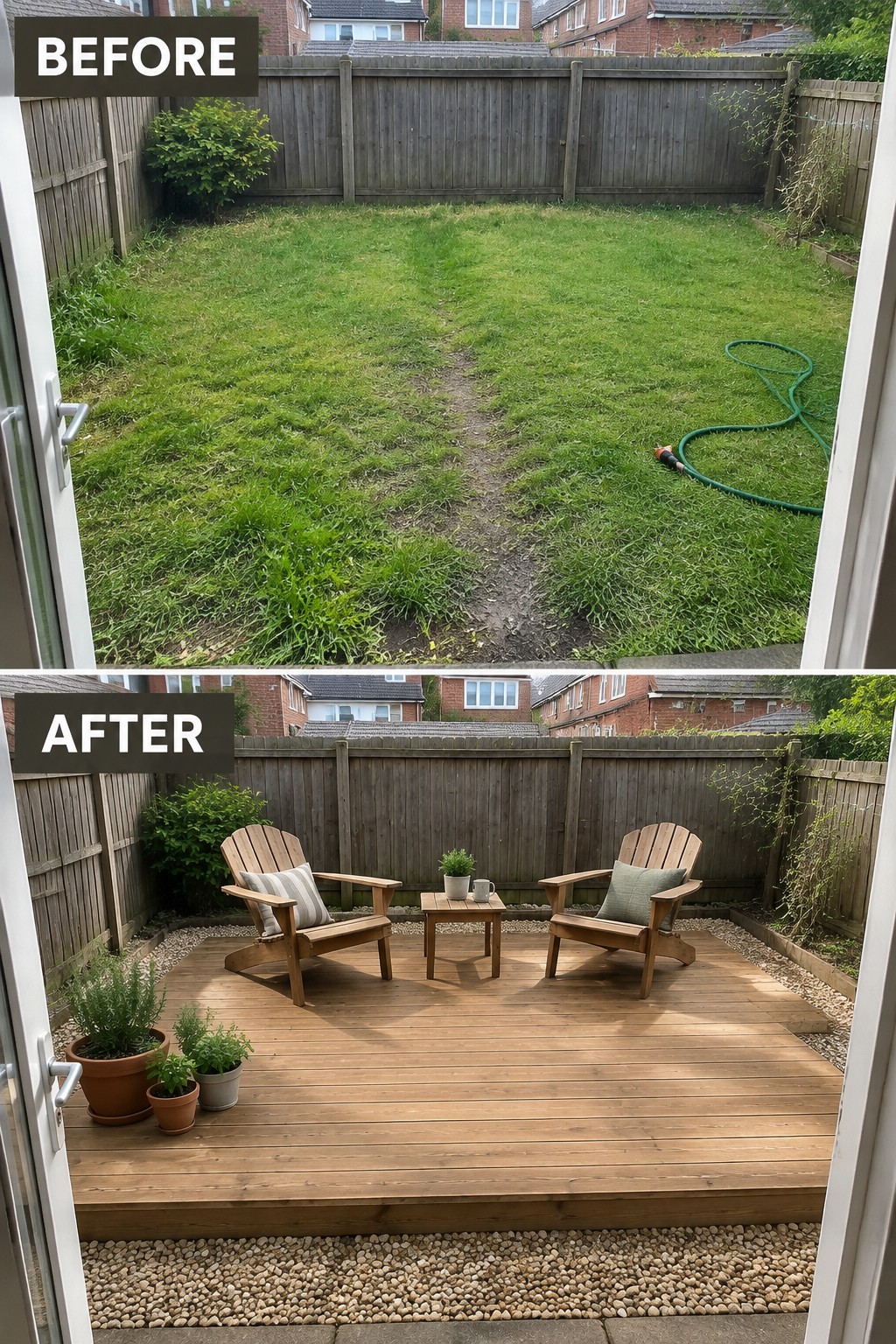
One simple way to reduce lawn area is to build a deck over the grass you rarely use. The before shows a large stretch of lawn with just a worn path through it. The after turns that same space into a wooden deck with room for chairs and a table, which cuts down on mowing while giving you a place to actually sit.
This idea works best in backyards where the lawn feels bigger than needed. Keep the deck low and simple, then add gravel around the edges so it stays clean and contained. It suits homes that want less maintenance without giving up outdoor seating, and it leaves enough grass elsewhere if you still want some open yard.
Add Raised Beds To A Sloped Yard

A sloped lawn can be tough to mow and often feels like wasted space. Here the owners built simple wooden raised beds along the slope and added a short run of stone steps. The change turns a plain grass hill into planted garden space that is easier to care for and more interesting to look at.
Raised beds are a practical way to shrink lawn area on uneven ground. They create level planting zones, improve drainage, and keep mulch in place. Start with the beds and steps first, then fill them with low-maintenance plants that suit your area. Leave a clear path around the edges so the remaining grass stays easy to mow.
Replace Patchy Lawn With Gravel Beds And Plants
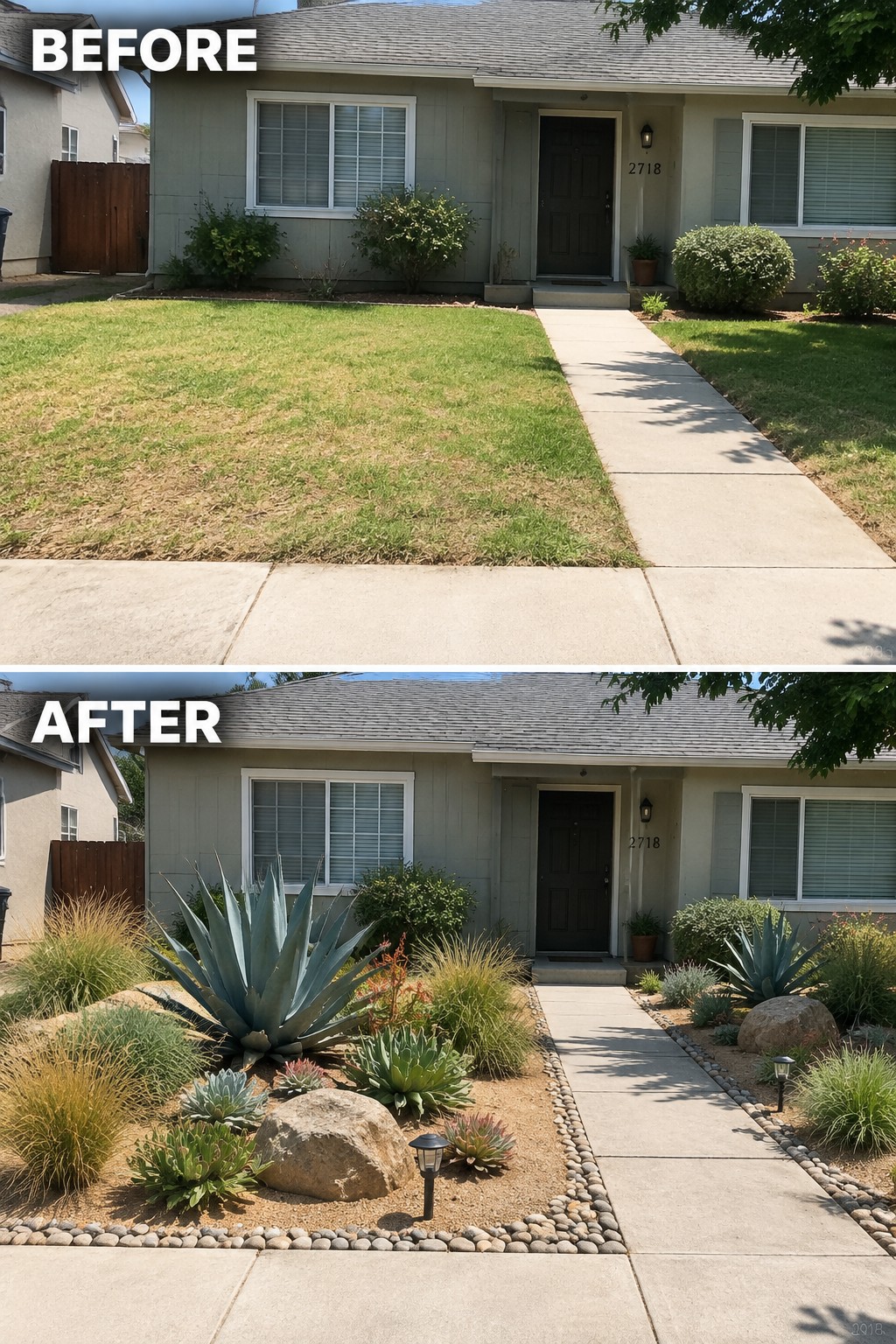
A large dry lawn often takes the most work and water in a front yard. Switching the open grass to gravel beds with rocks and succulents gives the space clear shape and cuts down on mowing and watering. The change shows how removing most of the lawn and adding a few big plants and boulders creates a tidy, settled look that still feels open.
This idea works well on small to medium lots where the lawn is mostly for looks rather than play. Start by marking simple bed shapes along the walkway, lay down gravel or mulch, then add a few larger plants and stones for structure. It suits homes that want lower water use and less weekend upkeep while keeping an easy path to the door.
Turn Part Of The Lawn Into A Mulched Play Zone
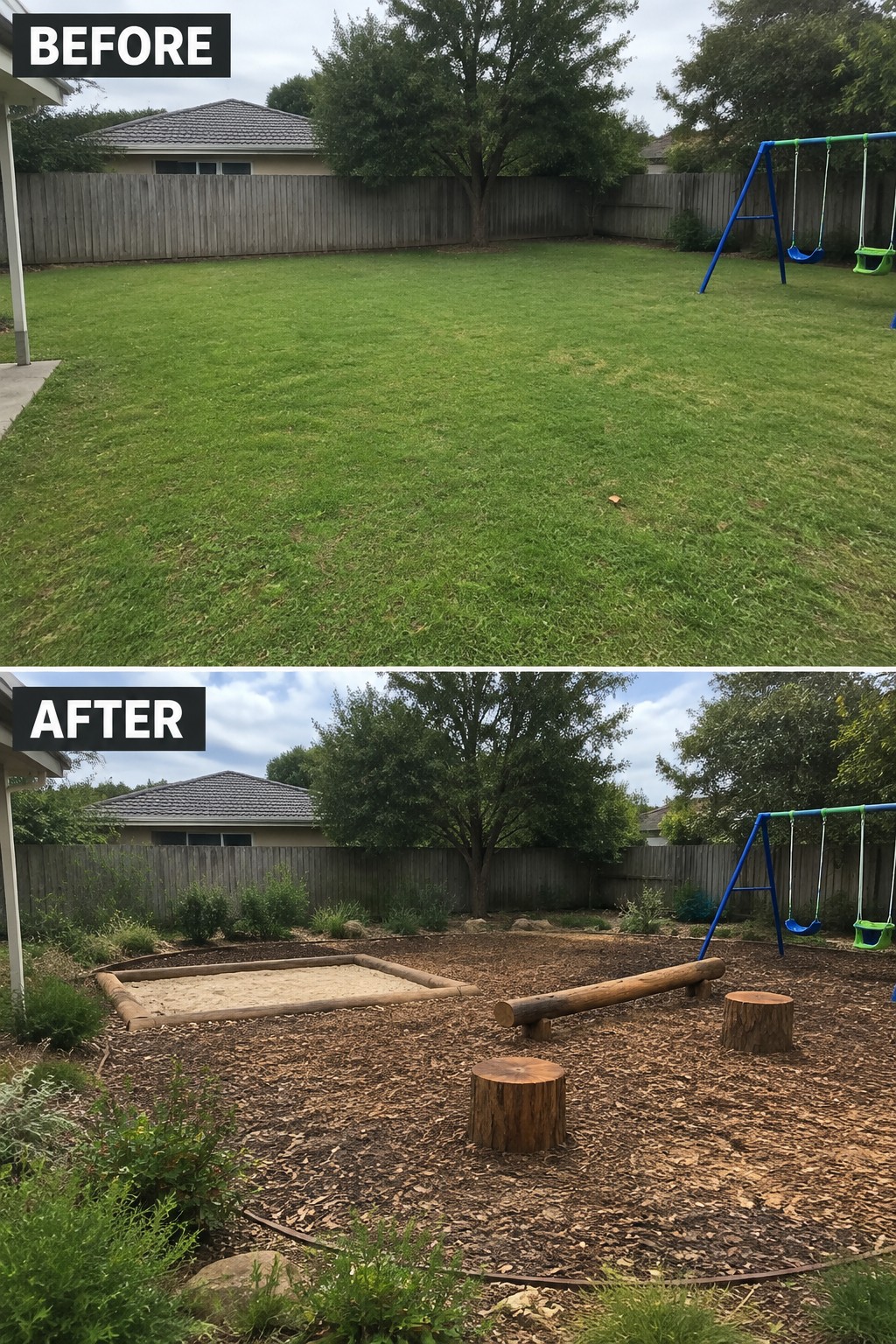
A large empty lawn can take up more space than most families actually use. Replacing a section with mulch and a few basic play elements creates a clear zone for kids while shrinking the grass you have to cut and water.
This idea suits homes with children who need room to run and climb without losing the whole yard to maintenance. Mark out the area first, add a simple timber edge, and fill it with mulch. A bordered sandpit and a couple of logs for balancing give enough structure without crowding the space or raising costs.
Replace Part Of Your Lawn With A Rain Garden
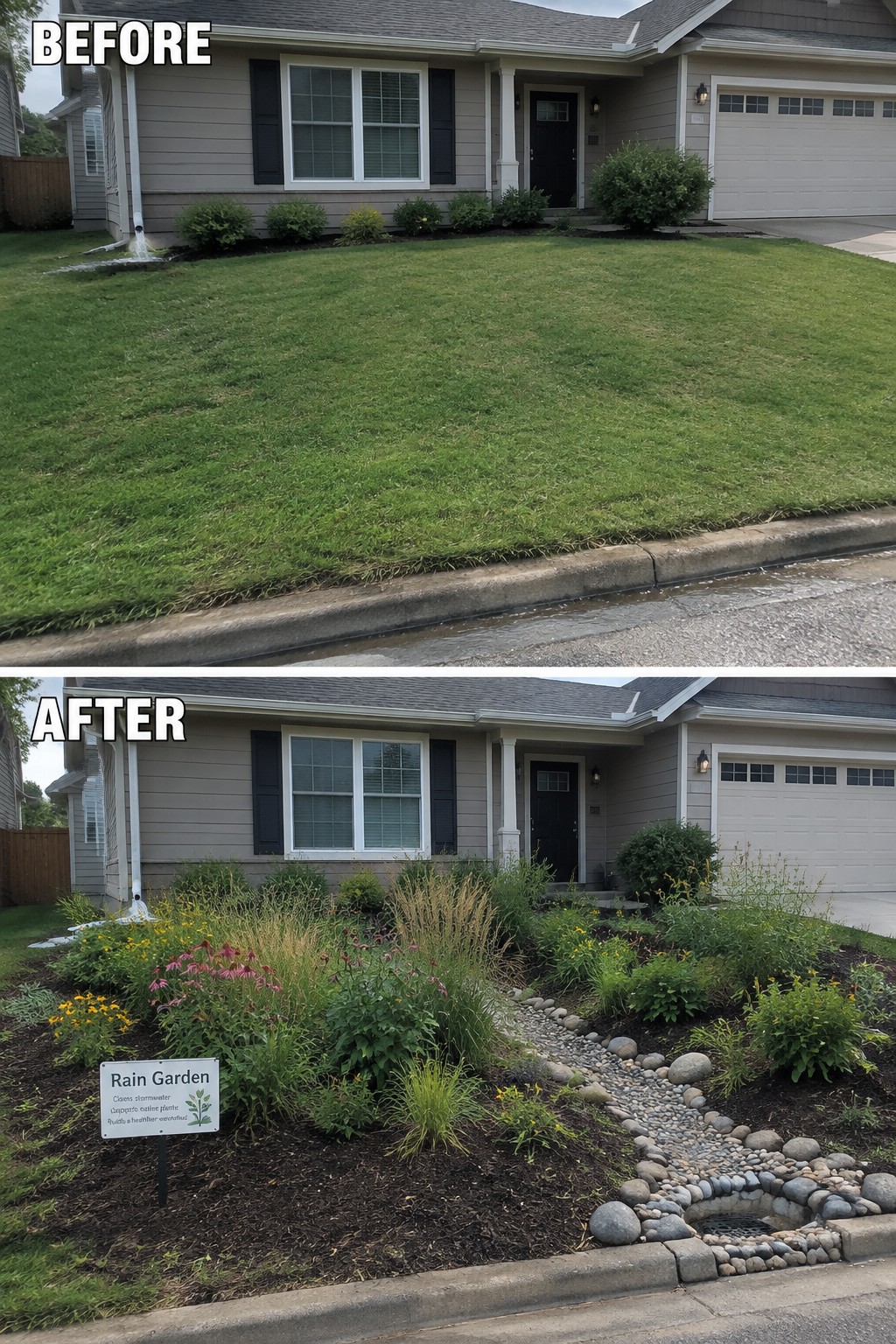
One simple way to shrink a lawn is to turn a low or sloped section into a rain garden. The before photo shows a plain grass slope that sent water straight to the street. After the change, a planted bed with native flowers, mulch, and a stone path now slows runoff and gives the yard a clearer shape.
This works best on front yards that already collect water near the curb. Pick one area, dig a shallow basin, plant wet-tolerant perennials, and edge the bed so it still looks intentional. A small path through the planting keeps the space easy to walk around and stops the new bed from feeling like random dirt.
Reduce Lawn Area With Pavers And Gravel
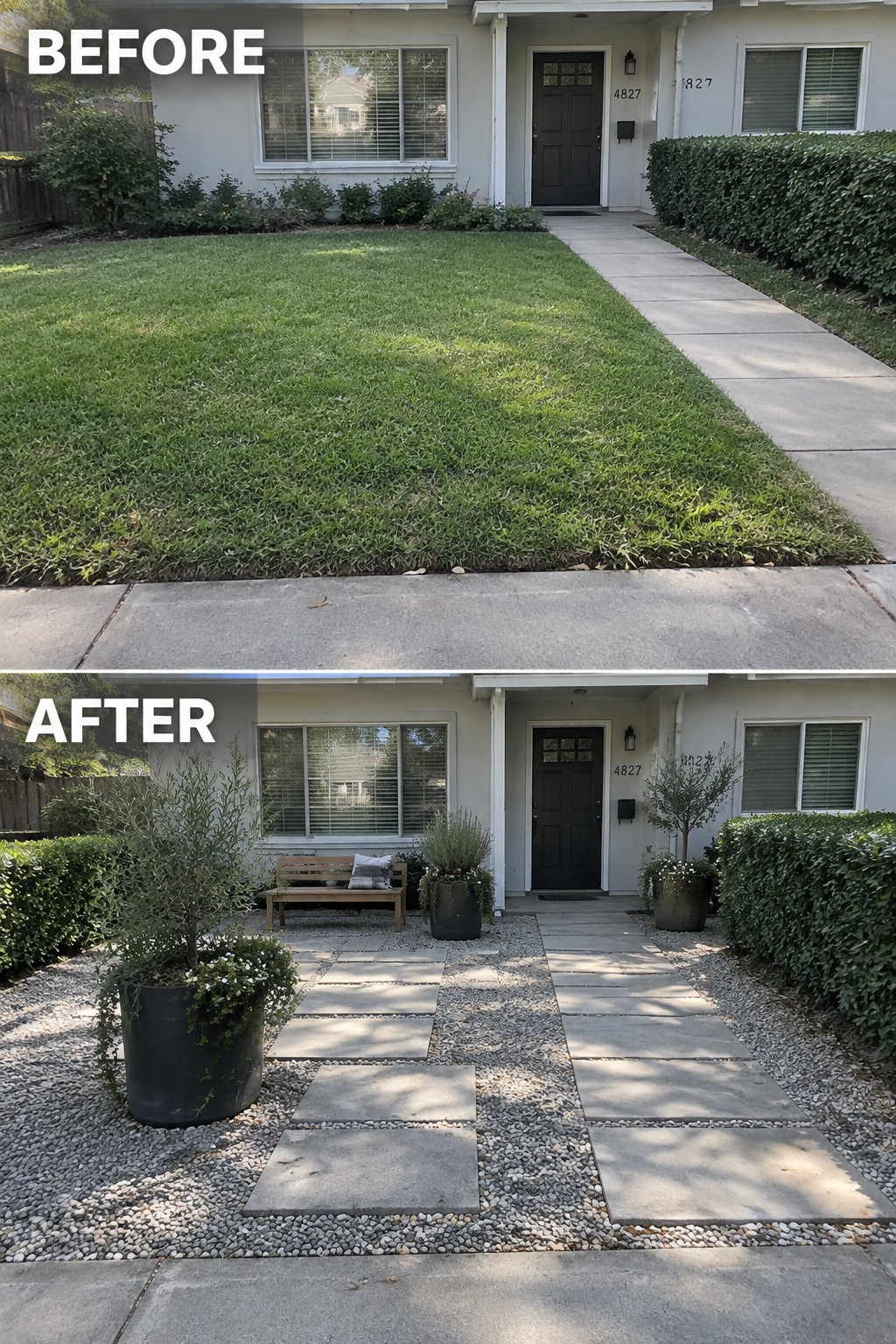
Replacing sections of lawn with gravel and pavers is a straightforward way to shrink the amount of grass you need to mow and water. Here the wide stretch of lawn was pulled back, and a gravel bed with concrete stepping stones now leads to the front door. A few large pots with plants give the entry some shape without adding more lawn to maintain.
This idea suits homes where the front yard feels too open or the grass grows right up to the house. Mark off the area you want to change, add a solid base under the gravel so it stays in place, and keep the pavers in a simple pattern that still leaves room to walk. It works best when you keep the planting light and focus on one clear path.
Replace Lawn With Raised Garden Beds
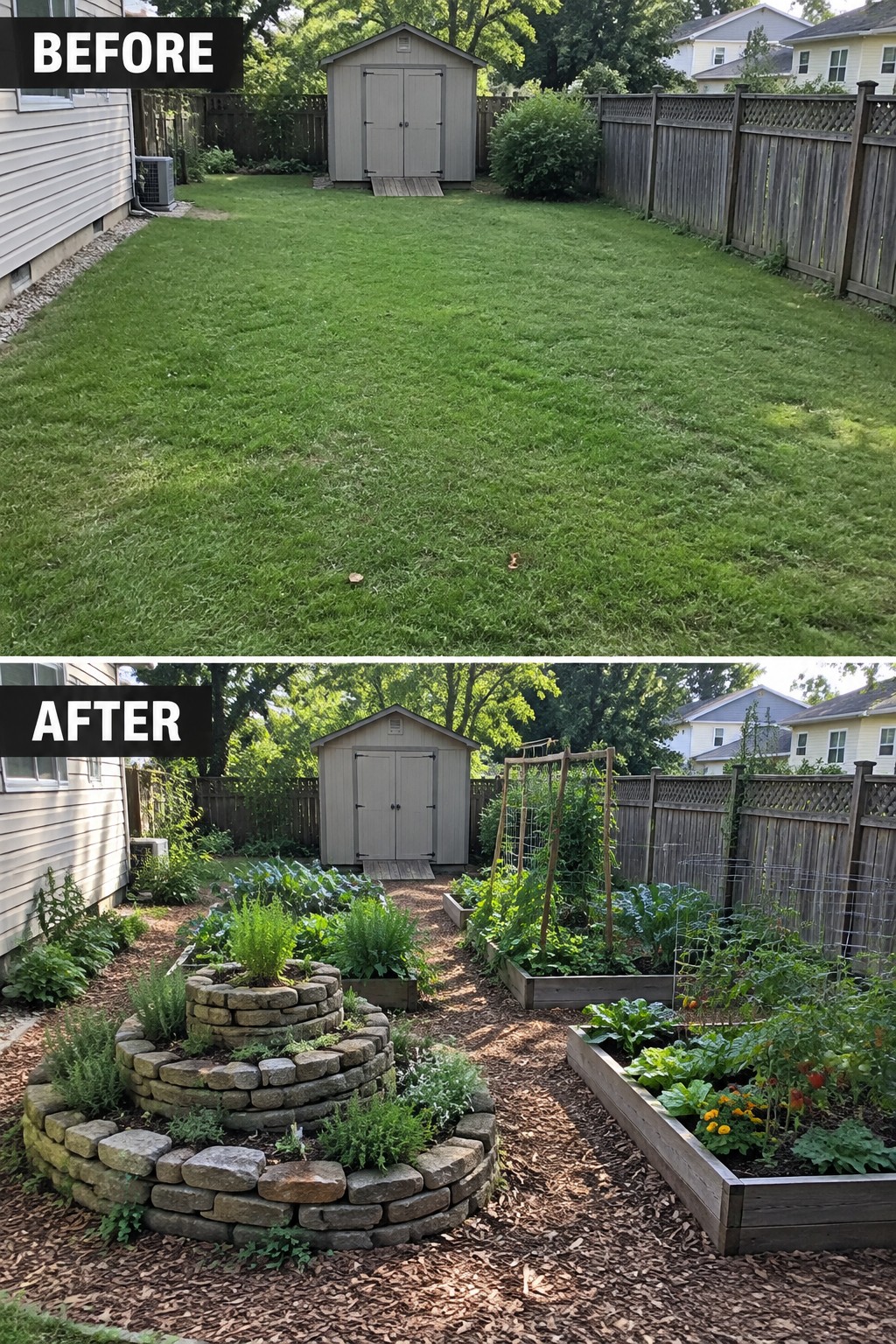
One simple way to shrink a large lawn is to add raised garden beds and a few planted zones in its place. The open grass in the before photo gave way to wooden beds and a low stone circle that break the space into smaller, more manageable sections without much hard work.
This idea works best in backyards that feel too big to maintain. Mark out a few rectangular beds first, then fill them with vegetables or flowers you actually want to grow. Mulch the rest of the area so the lawn edges stay neat and you spend less time mowing.
Replace A Narrow Lawn Strip With Gravel And Wall Planters
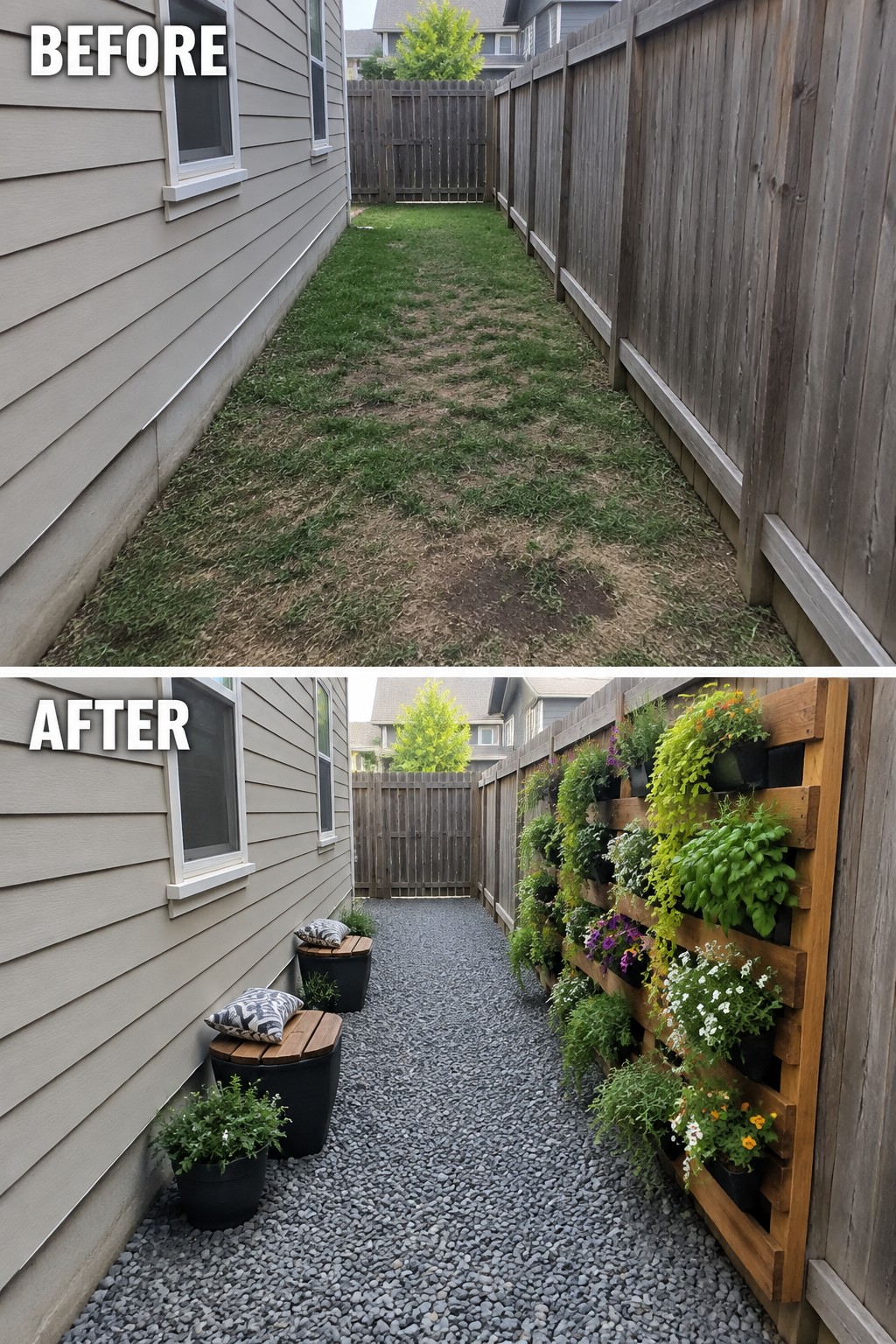
A long, thin side yard with patchy grass often ends up as wasted space that is hard to mow and never looks tidy. Switching the lawn to gravel creates a clean, low-maintenance path that is easy to walk on and keeps the area looking neat year-round. Adding a vertical planter system to the fence uses the only available wall space without crowding the narrow walkway.
This approach works best on lots where the side yard is mainly a pass-through rather than a seating area. Start with a simple gravel base and a few large planters along the house, then add a vertical garden panel if you want more planting without taking up floor space. Keep the path clear enough for foot traffic and choose plants that can handle the amount of sun the strip receives.
Replace A Narrow Grass Strip With Pavers And Planting
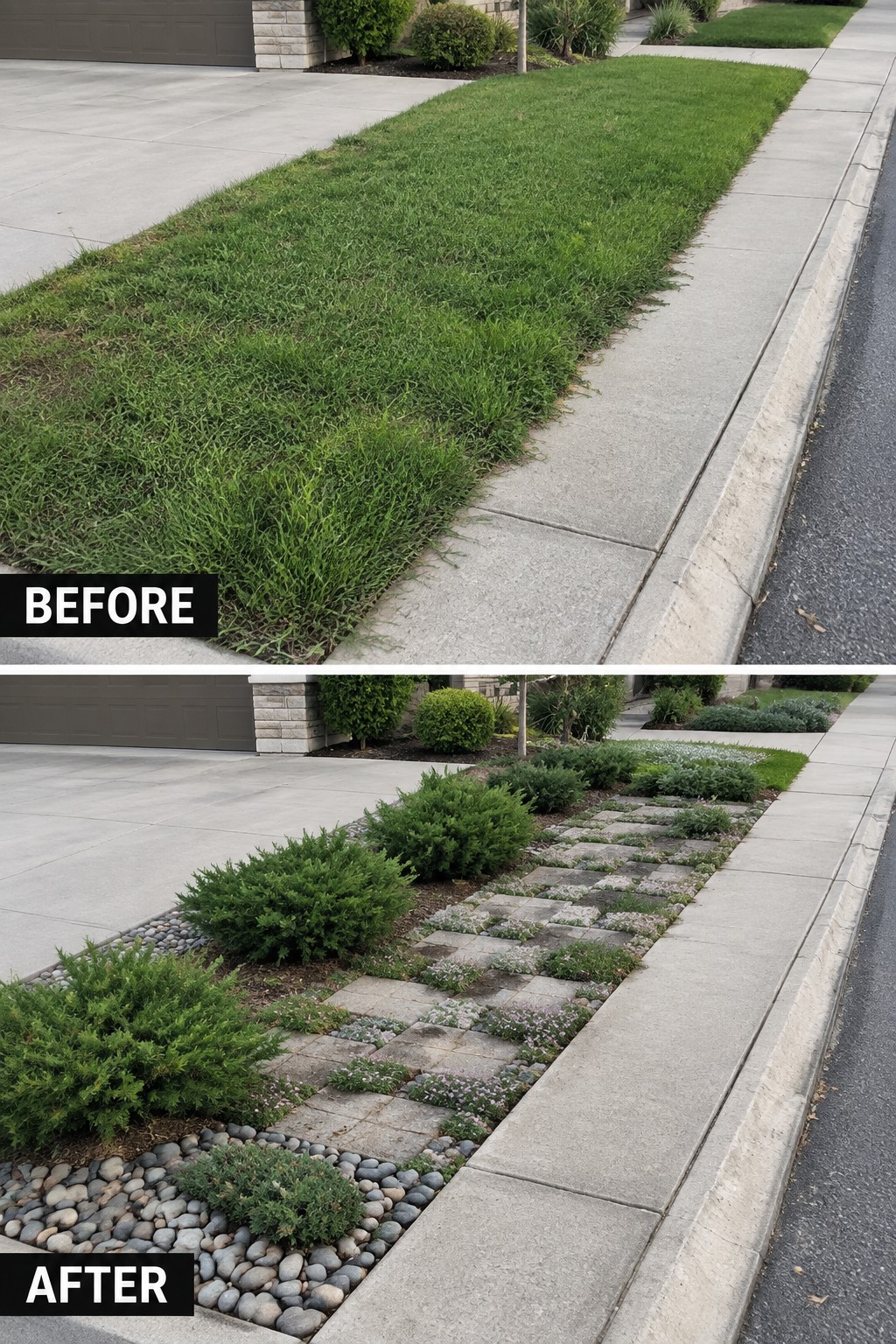
One simple way to reduce lawn area is to swap a thin strip of grass for pavers and low plants. The before shows tall grass growing right up against the sidewalk, which is hard to mow cleanly and often looks unkempt. The after uses a grid of pavers with shrubs and ground cover to create a tidy border that needs far less upkeep.
This idea works best along driveways or curbs where grass is awkward to maintain. Clear the strip first, lay pavers in a simple pattern, then add a few shrubs and rock edging. It cuts mowing and watering while keeping the front of the house looking neat.
Create A Poolside Patio From Lawn Space

Many pools sit in a stretch of grass that never quite becomes a place to sit. Here the open lawn was replaced with a curved stone patio that follows the pool edge. Two lounge chairs and a couple of pots turn the spot into a simple seating area that feels finished without taking over the whole yard.
This idea works best when you want a dry, usable spot right by the water but still need to keep some lawn for kids or pets. Lay the pavers first so the seating zone has clear boundaries, then add only the furniture you will actually use. Keep plantings low along the back so the space stays open and easy to maintain.
Add Garden Beds And A Path To Break Up A Large Lawn

A big empty lawn can feel like wasted space once you realize how little you actually use it. Adding a few mulched beds with plants and a simple stepping stone path turns the same yard into something that feels planned and easier to maintain. The before photo shows just grass and one tree. The after shows how those beds pull the eye around the yard and give it shape without needing a full redesign.
This approach works best in yards that are mostly flat grass with room to spare. Start by marking out beds in a loose curve or oval rather than straight lines, then lay down mulch to keep weeds down. The path helps connect the beds so the space still feels open but no longer blank. It suits homes with average-sized backyards where you want less mowing but still need open grass for kids or pets.
Replace Narrow Lawn Strips With Artificial Turf And Borders
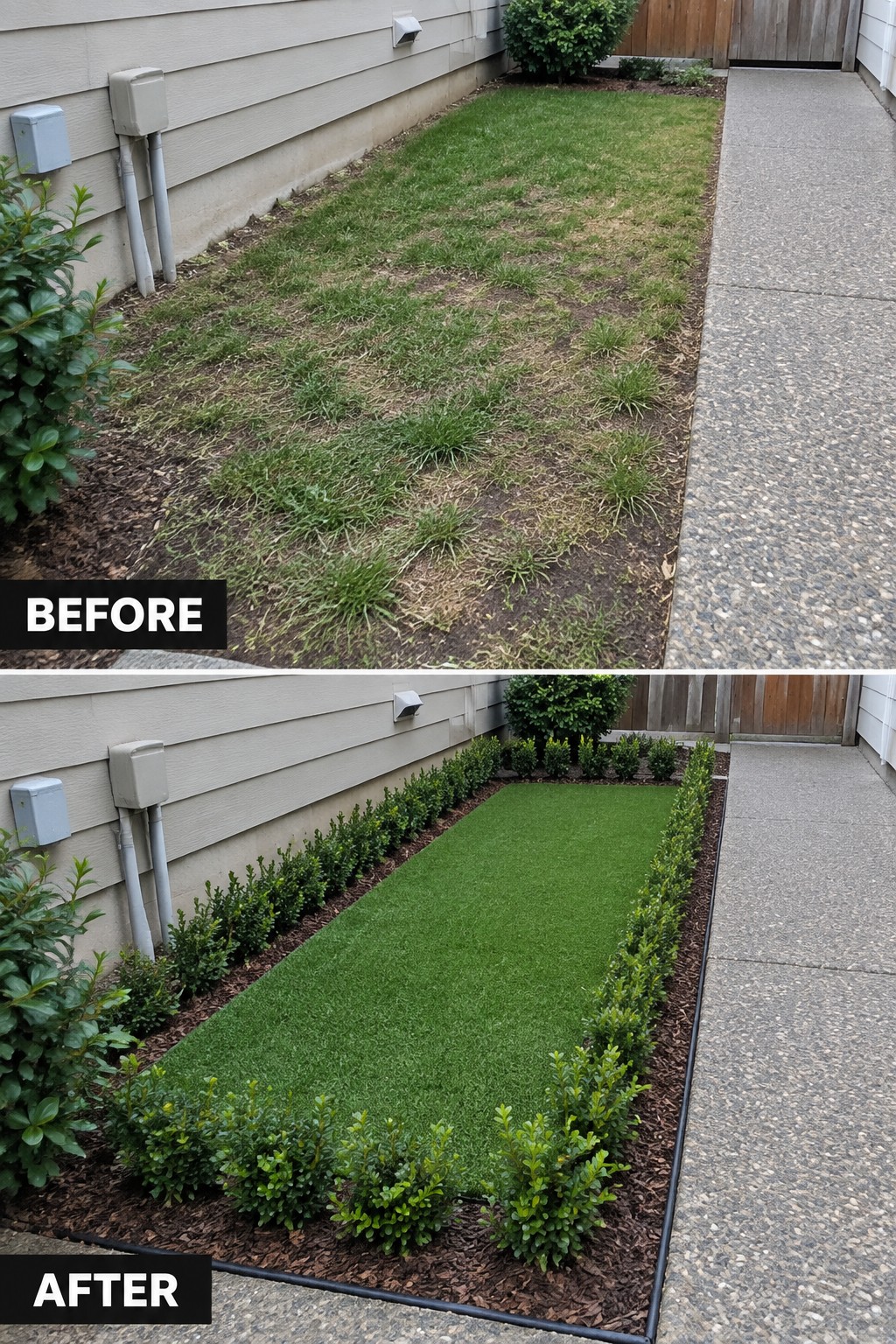
The patchy grass along the house wall was thin in spots and hard to keep looking decent. Switching to artificial turf gave the area a consistent green surface that needs little watering or mowing. A simple border of shrubs and mulch then framed the space and kept the edges tidy.
This idea suits side yards or other tight areas where real grass often thins out. Lay the turf on a level base, keep the planting strip narrow, and choose compact shrubs that stay in bounds. The result is a yard that looks finished without adding more lawn to maintain.
Frequently Asked Questions
Q: How do I keep new plants from drying out right away? A: Water them deeply but less often so the roots grow strong. Add a layer of mulch around each one to hold moisture in the ground. This helps them settle without constant attention.
Q: What works if my yard gets heavy foot traffic from the dog? A: Pick tough options like clover or stepping stones mixed in. Avoid delicate flowers in those spots. Start small and see how it holds up.
Q: Do I need to remove all the grass at once or can I do sections? A: Tackle one area at a time so you don’t get overwhelmed. This lets you learn what works in your yard before doing more.
Q: Will adding rocks or gravel cost more than I think? A: Shop around at local spots for bulk deals. Start with a small path to test the look and feel.
