

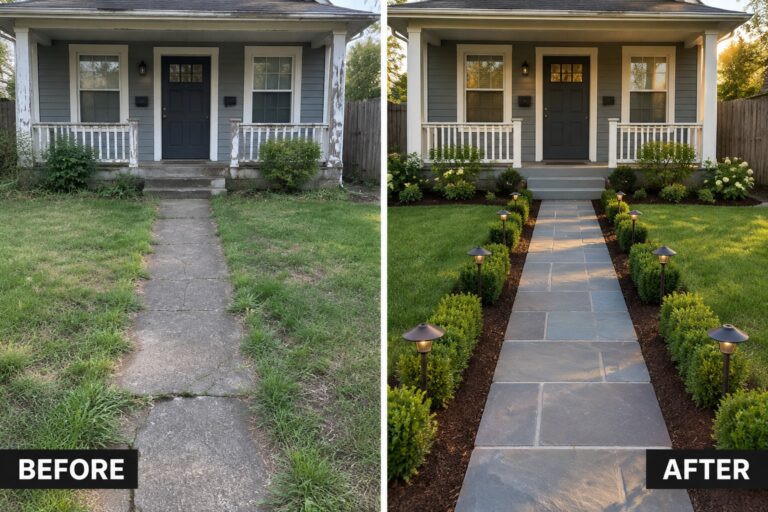
I often find that outdoor spaces start to feel more organized once you lay down a few solid paths that connect the main areas.
Using landscape pavers keeps the project manageable because they handle weather and daily use without much upkeep.
I would test a basic straight run first to see how it changes the flow before adding curves or patterns.
These paths also help define edges around beds and lawns so the whole layout looks more intentional as plants fill in.
Small changes like this add up without requiring a complete overhaul of the yard.
Define A Front Path With Landscape Pavers
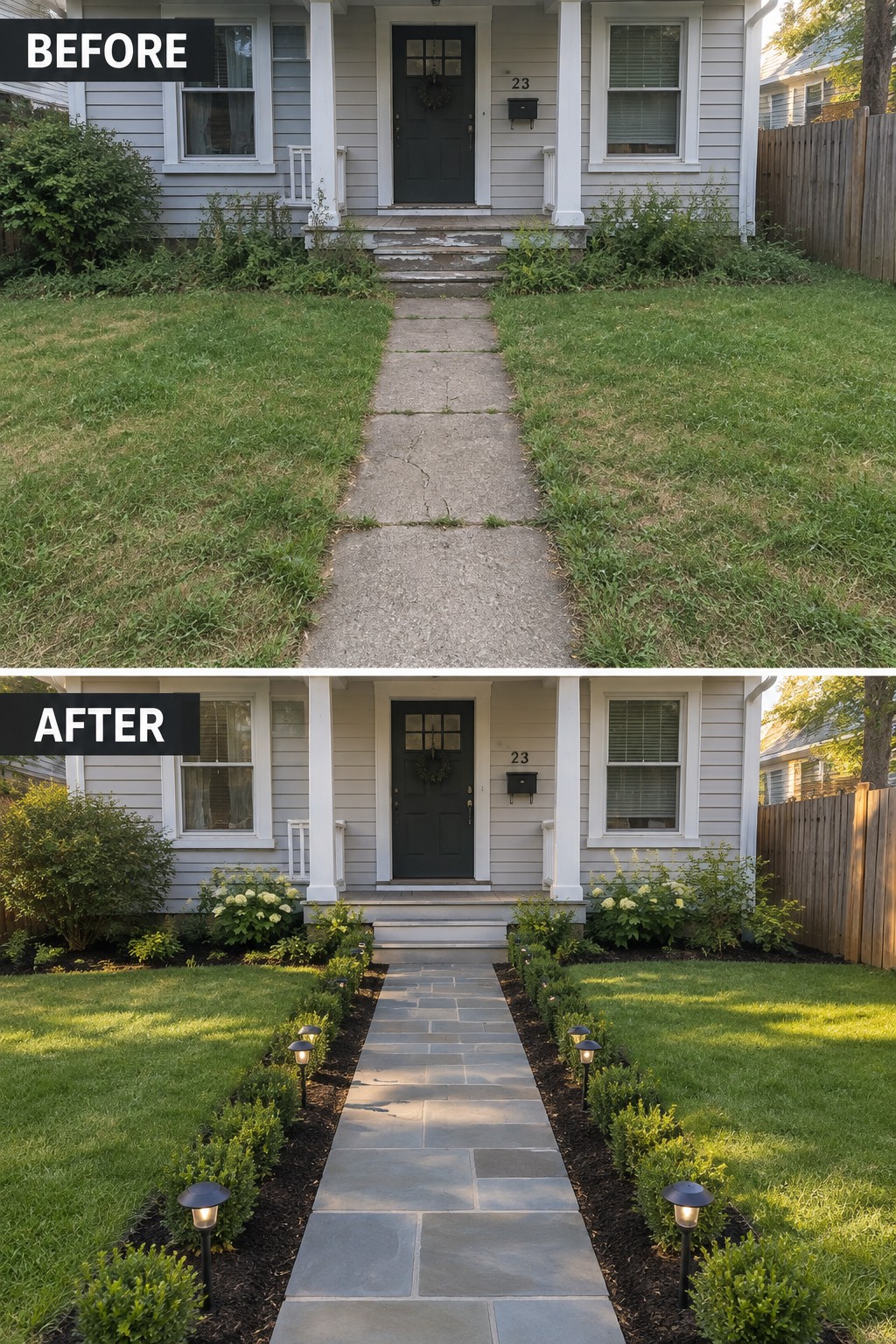
The old cracked concrete path made the front yard feel unfinished and hard to walk. Replacing it with stone pavers created a clear, stable route that also gave the lawn and plantings a clean edge to follow.
This approach suits smaller front yards where you want structure without adding too many new features. Remove the old surface first, then set the pavers in a simple pattern and line the sides with mulch and low plants so the path stays easy to maintain over time.
Use Landscape Pavers To Define A Garden Path
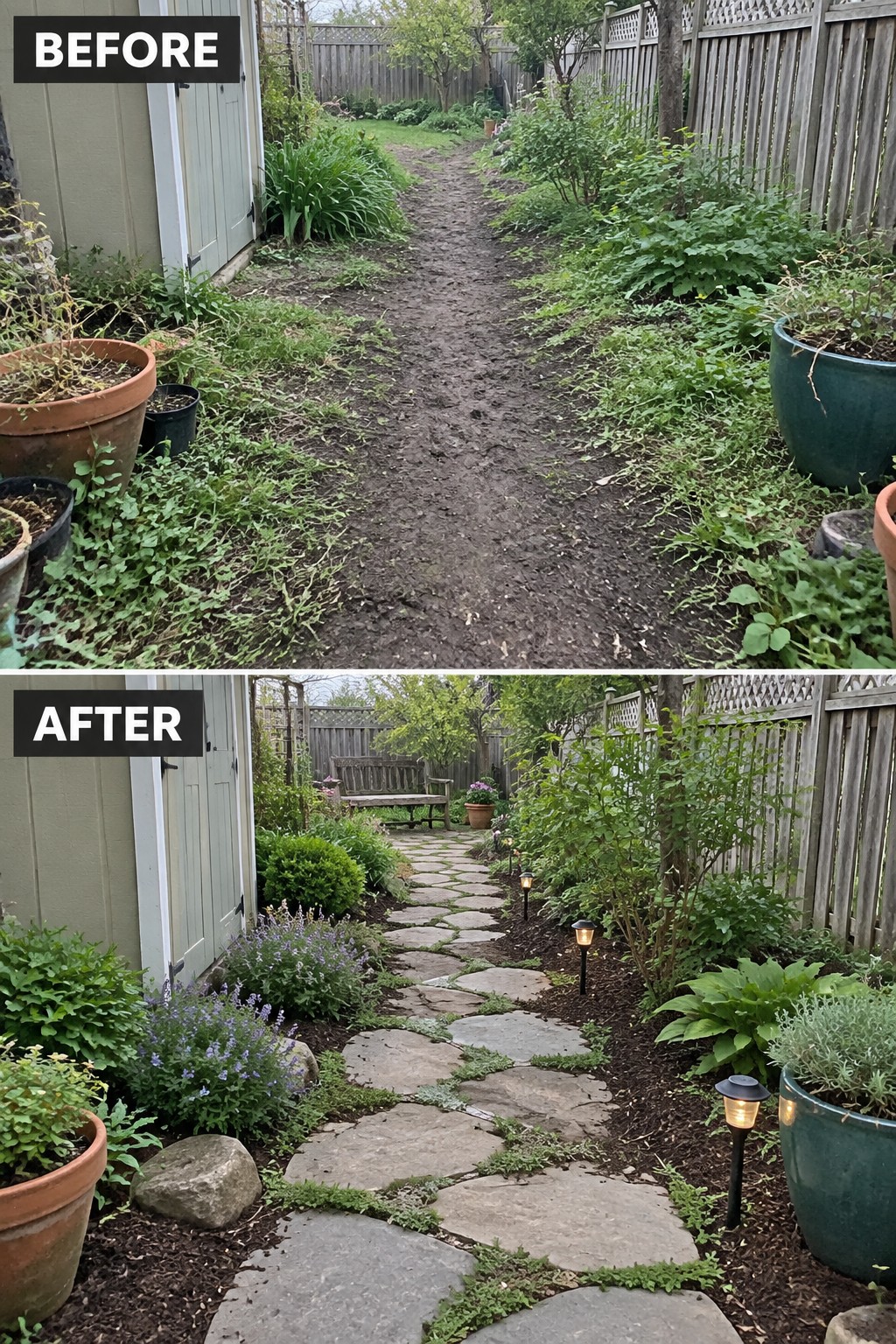
A muddy dirt trail through the yard makes walking uncomfortable and leaves the whole space feeling unfinished. Laying landscape pavers creates a solid, clear walkway that guides movement and keeps the garden beds from spilling into the path.
This idea works best in backyards where people already walk the same route every day. Clear the area first, add a simple base, and set the pavers with room for plants along the edges. It suits homes with existing fencing and beds, and it keeps the path practical even after rain.
Define A Narrow Side Yard Path With Landscape Pavers
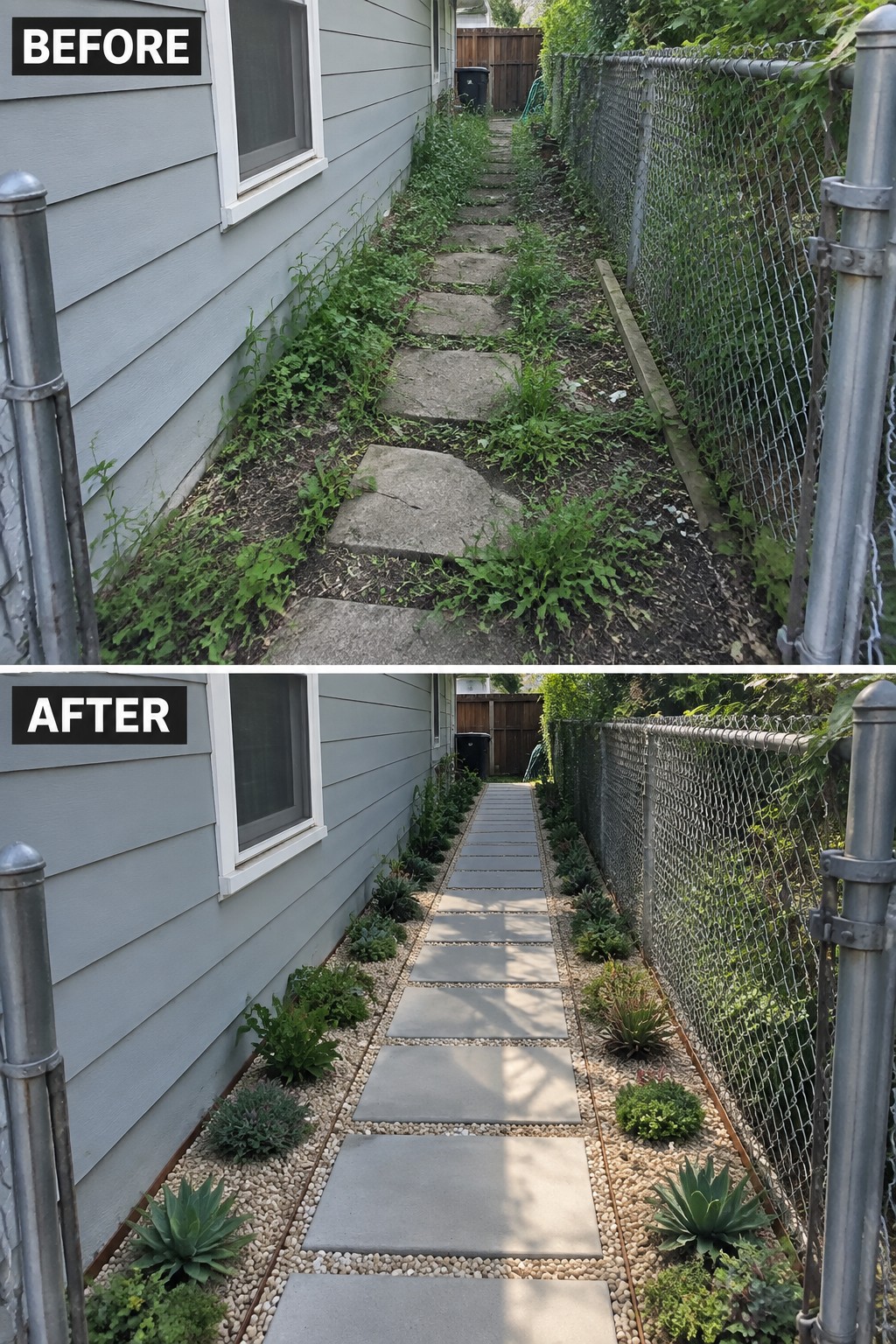
An overgrown side path with uneven stepping stones and weeds makes the whole area feel neglected. Switching to a straight row of landscape pavers set in gravel gives the space a clear route and stops the plants from creeping in. The gravel also helps with drainage and keeps the look simple.
This approach works well along the side of a house where space is tight. Start by clearing everything back to bare soil, then lay the pavers in a consistent line with enough room on both sides for low plants. Gravel fills the gaps and makes weeding easier later. It suits homes with long narrow side yards that need a practical walkway without turning the area into a full garden project.
Use Landscape Pavers To Define A Front Walkway
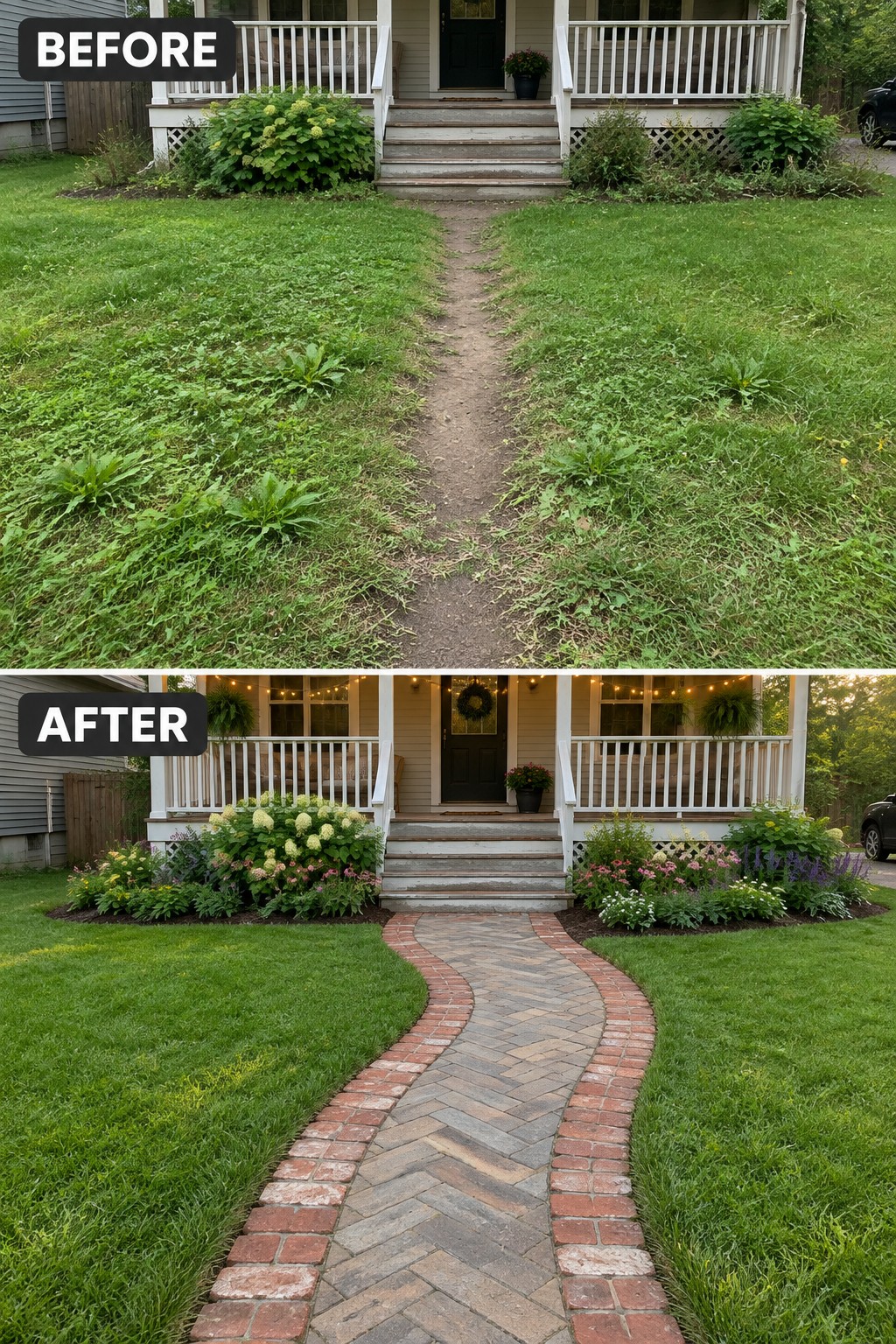
A worn dirt path through the grass makes the front yard feel unfinished and hard to keep neat. Replacing it with a brick-edged paver walkway gives the entrance clear shape and turns a muddy route into a stable, easy-to-walk surface.
This approach works best on homes where the path leads straight or gently curves toward the door. Lay the pavers first before adding plants along the edges so the walkway stays the main feature and the lawn stays contained on both sides.
Create A Defined Pathway With Landscape Pavers
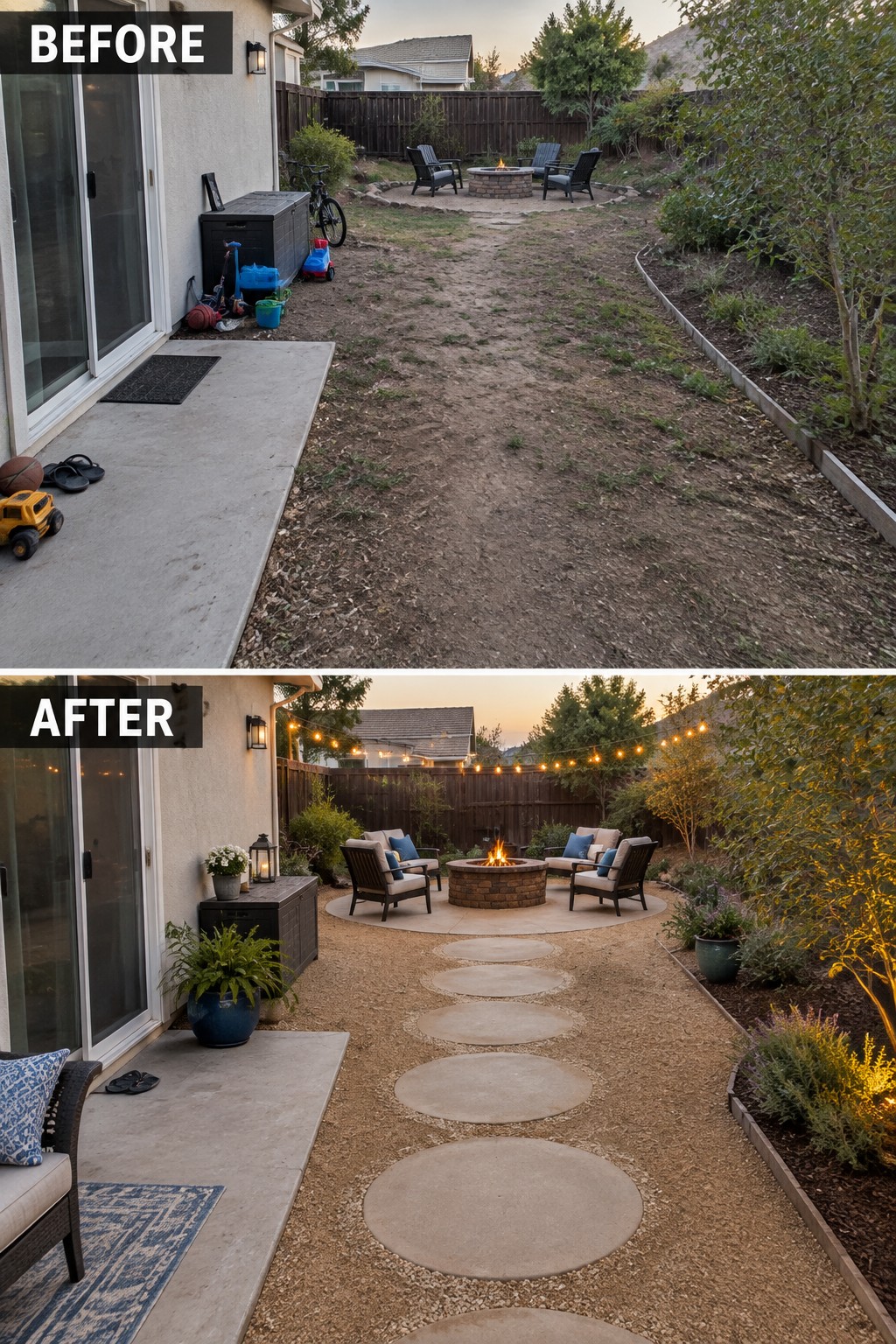
A bare dirt yard can feel aimless until you add a clear path. In this case, round landscape pavers set into gravel turned an open stretch of ground into a simple walkway that leads straight from the house to the fire pit seating area. The pavers give the space shape without covering everything in hard surface.
This approach works best in backyards that already have a main gathering spot but need a better way to reach it. Space the pavers so they feel comfortable to walk on, keep the gravel layer thin enough for drainage, and let the surrounding plants soften the edges over time.
Add Structure To An Overgrown Path With Landscape Pavers
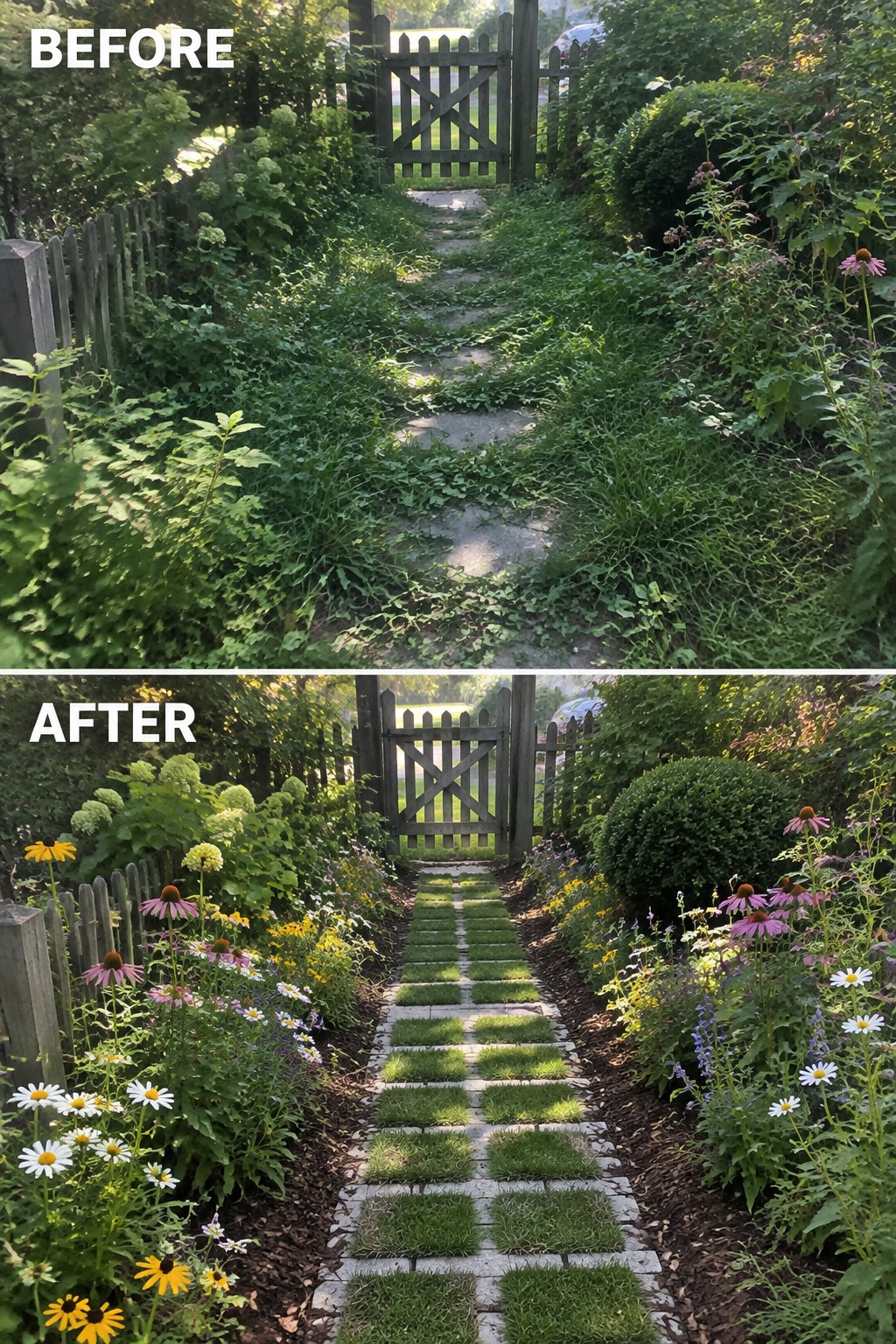
An overgrown path quickly becomes difficult to use and makes the whole yard feel neglected. Placing landscape pavers in a simple grid pattern gives the walkway a clear shape while still letting grass grow between the stones. The result is a path that stays walkable and separates the planted areas on either side.
This approach works best in side yards or along the back of a property where you need regular access. Clear the overgrowth first, then set the pavers level so water drains and mowing stays easy. Mulch the beds along the edges to keep the path looking intentional instead of just a strip of stone cutting through weeds.
Replace Cracked Concrete With Landscape Pavers
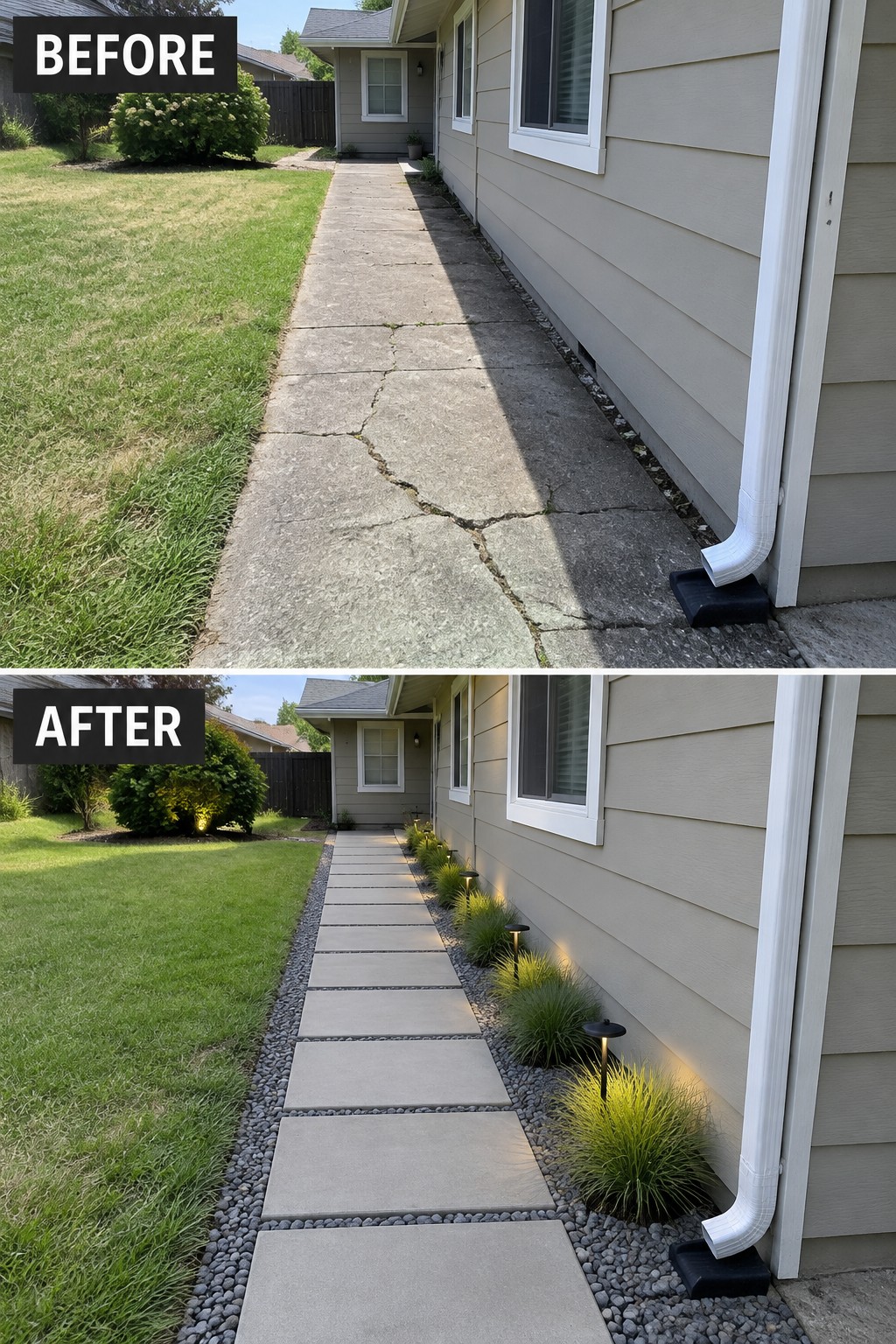
An old cracked concrete path tends to make the side of a house look unfinished. Switching to rectangular pavers with gravel edges creates a cleaner line that feels more intentional and easier to maintain.
This idea works especially well in narrow side yards where space is limited. Keep the pavers simple in color, use gravel to frame them, and add a few low plants along one side if you want extra softness without crowding the walkway.
Turn A Muddy Slope Into A Paver Pathway
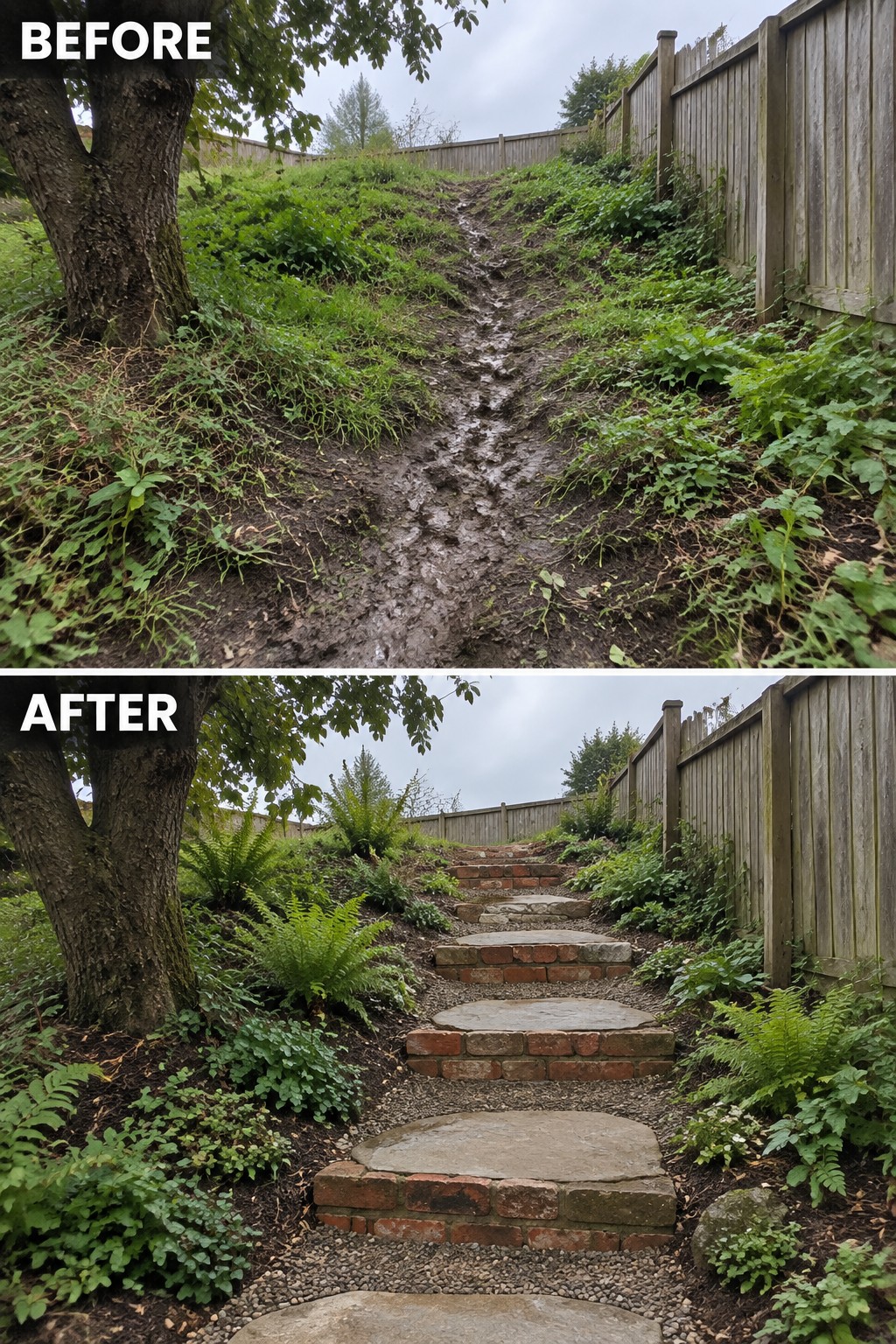
A steep, wet dirt track is hard to use and looks neglected fast. Switching to pavers set as steps gives solid footing, stops the mud, and turns the slope into something people actually walk on. The mix of brick risers and larger stone treads keeps the path from feeling too formal while the gravel and low planting on either side hold the soil in place.
This approach works on any backyard hill where a straight route is needed. Clear the overgrowth first, then build on a good gravel base so water drains instead of pooling. It suits homes with uneven ground and keeps the focus on a simple, durable path before adding more garden features.
Refresh An Old Paver Path With A Good Cleaning
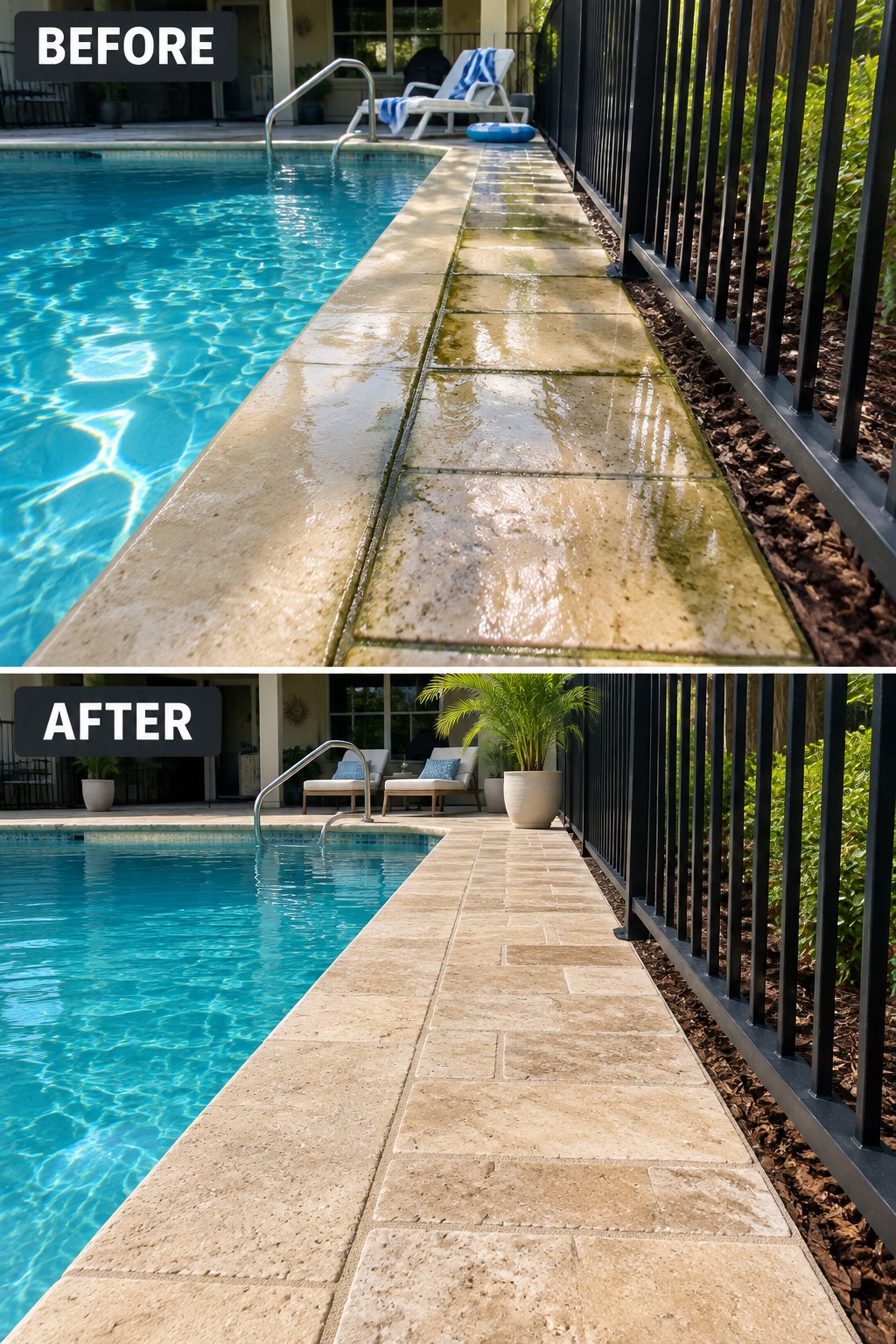
The poolside walkway had become covered in moss and grime, making it look tired and a bit unsafe underfoot. Once the pavers were cleaned and the surrounding beds tidied, the path became a simple, solid route that actually felt pleasant to use again.
This kind of refresh works best on existing paver paths that still have a good base. Start by removing the buildup with a pressure washer or cleaner, then check the joints and edges. If a few pavers have shifted, reset them before the surface gets worse.
Lay Landscape Pavers To Make Garden Paths Usable
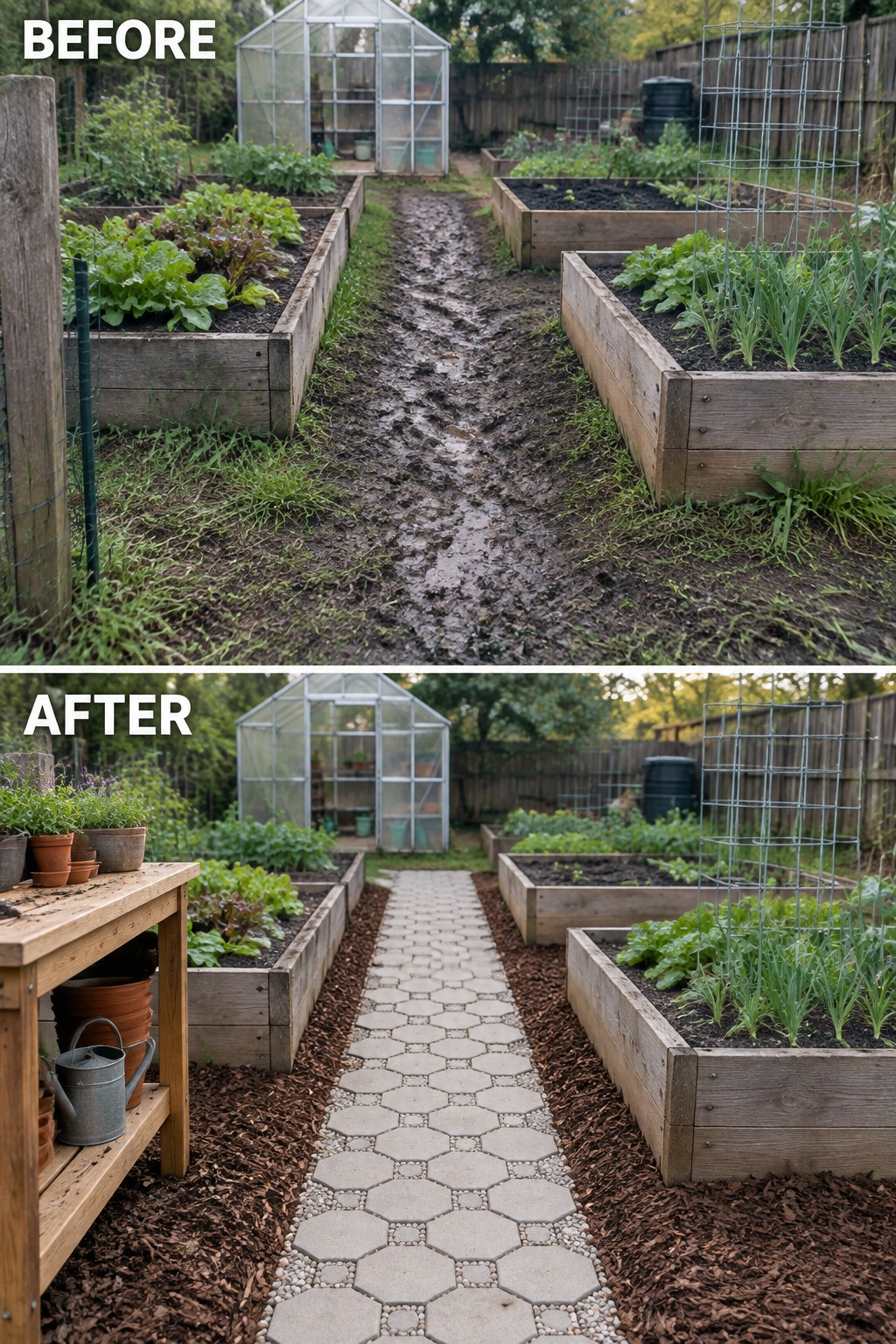
A muddy walkway between raised beds makes it hard to reach plants without tracking dirt everywhere. Switching to pavers creates a firm, clean surface that stays usable even after rain and gives the whole garden a more organized layout.
This approach works well in vegetable gardens or backyard plots where you need steady access to beds. Start by clearing the path area, add a simple base, then set the pavers with gravel or sand in between. Mulch on either side helps keep the edges tidy and reduces weeds.
Create A Defined Front Path With Landscape Pavers
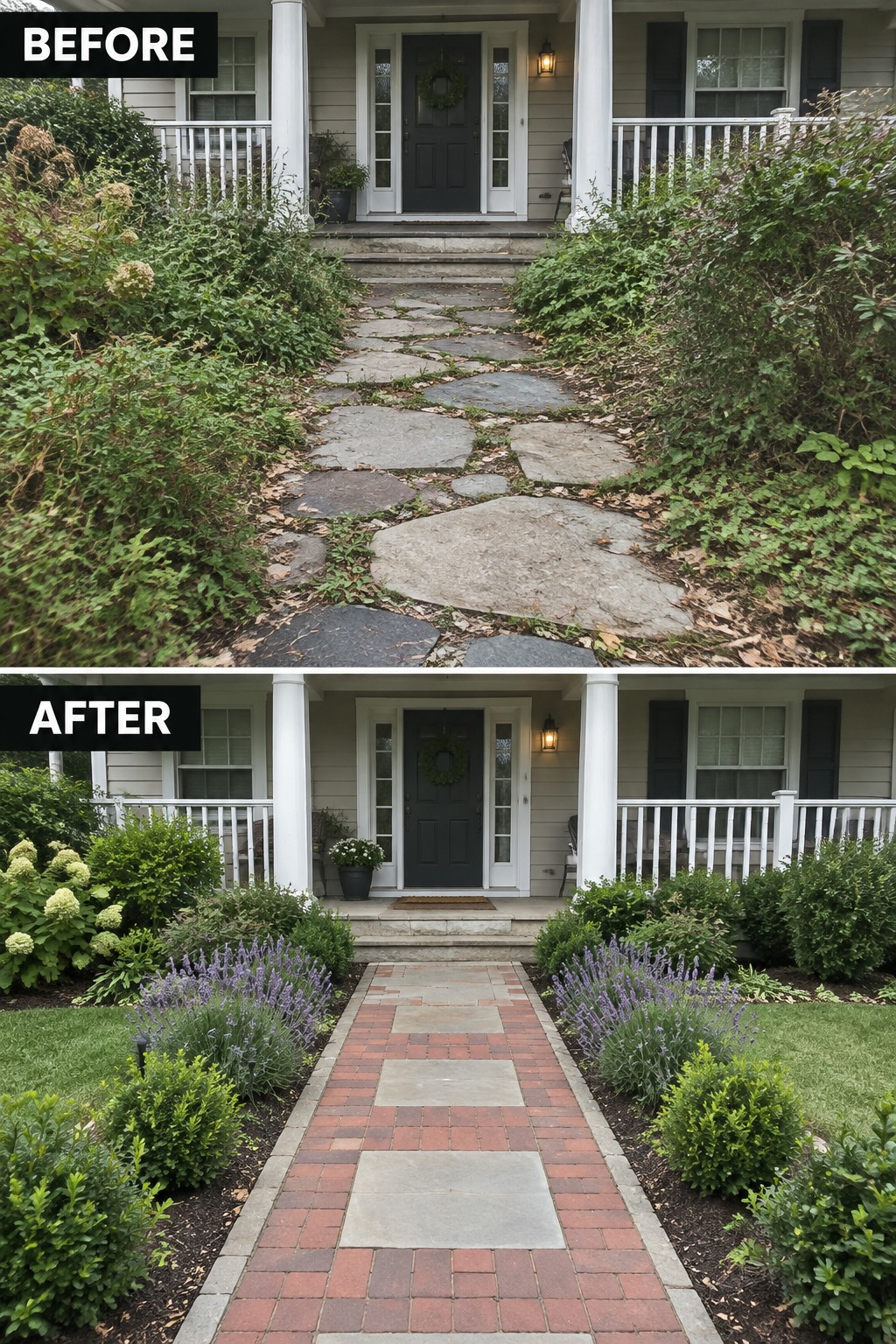
An irregular stone path buried in overgrown shrubs makes the front yard feel neglected and hard to navigate. Switching to a straight run of landscape pavers with a brick border instantly gives the entry a clear route and keeps plants from spilling onto the walkway.
This approach works best on homes where the front door sits at a moderate distance from the street or driveway. Clear the old surface first, set the pavers on a simple gravel base, and use one contrasting material for the edges so the path stays visible year-round. Keep the planting low and tidy along both sides so the walkway remains the main feature.
Define A Pathway With Landscape Pavers

A loose gravel path can look messy and hard to maintain over time. Switching to landscape pavers creates a firm, level surface that stays in place and gives the walkway a clear shape. In this case, a simple strip of pavers replaced the gravel while low planting along both edges helped keep the path contained and easy to follow.
This approach works well along the side of a house or in narrow spaces where you need a practical route without covering the whole area in hardscape. Start with a solid base so the pavers settle evenly, and leave room for planting on the sides to soften the look. It is a straightforward change that makes daily use more comfortable and keeps the yard from feeling scattered.
Use Pavers To Build Steps On A Sloped Yard

A worn dirt path on a slope often turns muddy and hard to walk on once roots start showing. Laying paver steps with gravel fill and adding low stone walls along the sides gives the hill a firm shape that holds up better in wet weather.
This works best on yards where the ground drops away from the house or garden. Set a solid base first and keep the path width consistent so it feels natural to use. Simple planting along the edges keeps the focus on the steps without crowding them.
Use Pavers To Shape A Narrow Side Yard
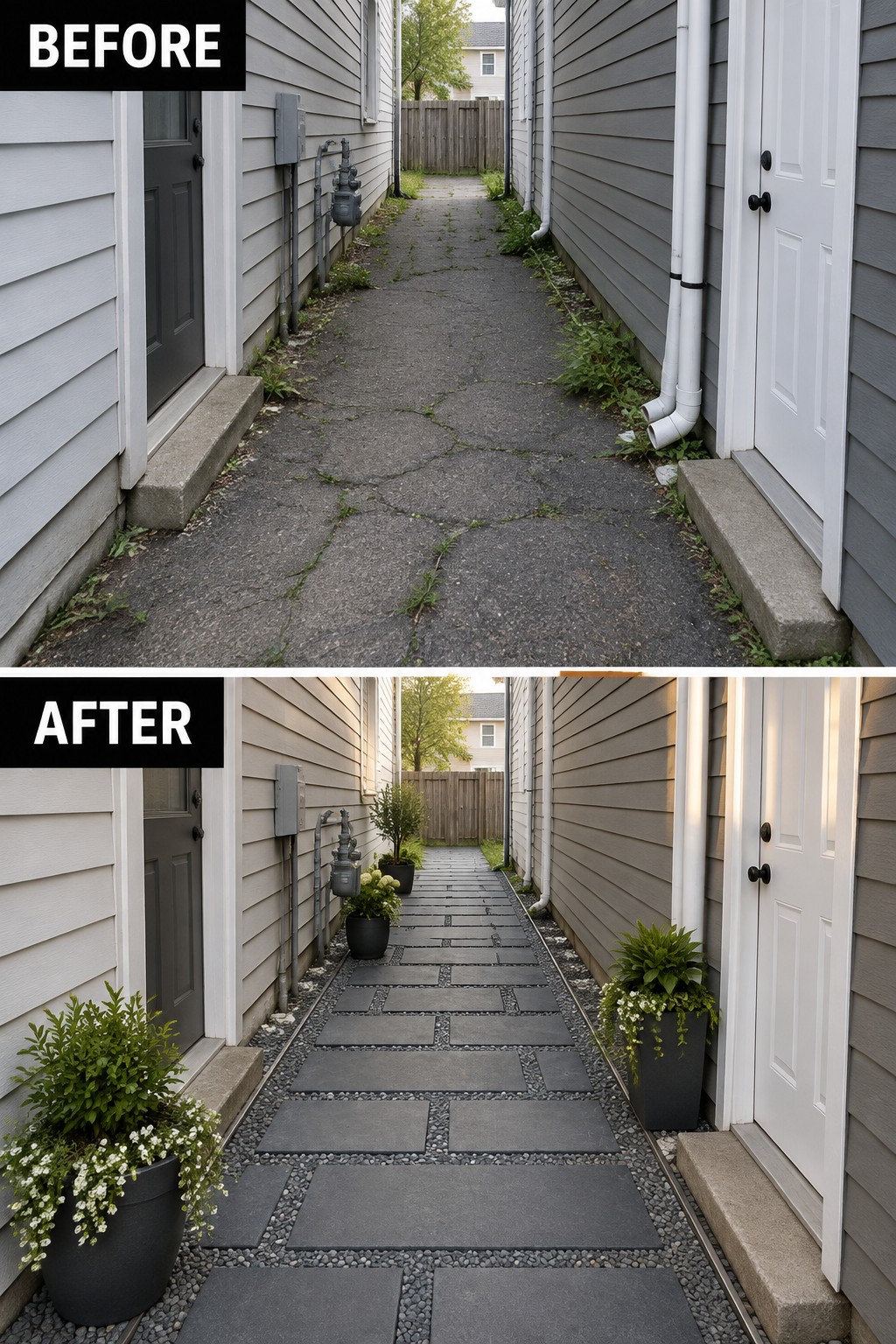
A narrow side passage often gets ignored until the pavement cracks and weeds take over the edges. Switching to rectangular landscape pavers set in gravel creates a flat, defined walkway that stays clear and easy to maintain.
This idea suits homes where the side yard must remain usable for access but still look deliberate. Keep the pavers in a simple pattern, leave room to walk, and add just a few pots along the borders so the space feels finished without crowding the path.
Define A Garden Path With Landscape Pavers

A mulch path with a few stepping stones often looks temporary and can shift over time. Replacing it with a solid cobblestone walkway bordered by larger pavers gives the garden a clear route that stays in place and feels more finished.
This approach works well in side yards or front gardens that already have established beds on both sides. Clear the old mulch first, build a stable base, and keep the path width practical so it does not crowd the plants.
Swap Concrete For Pavers To Define A Side Path
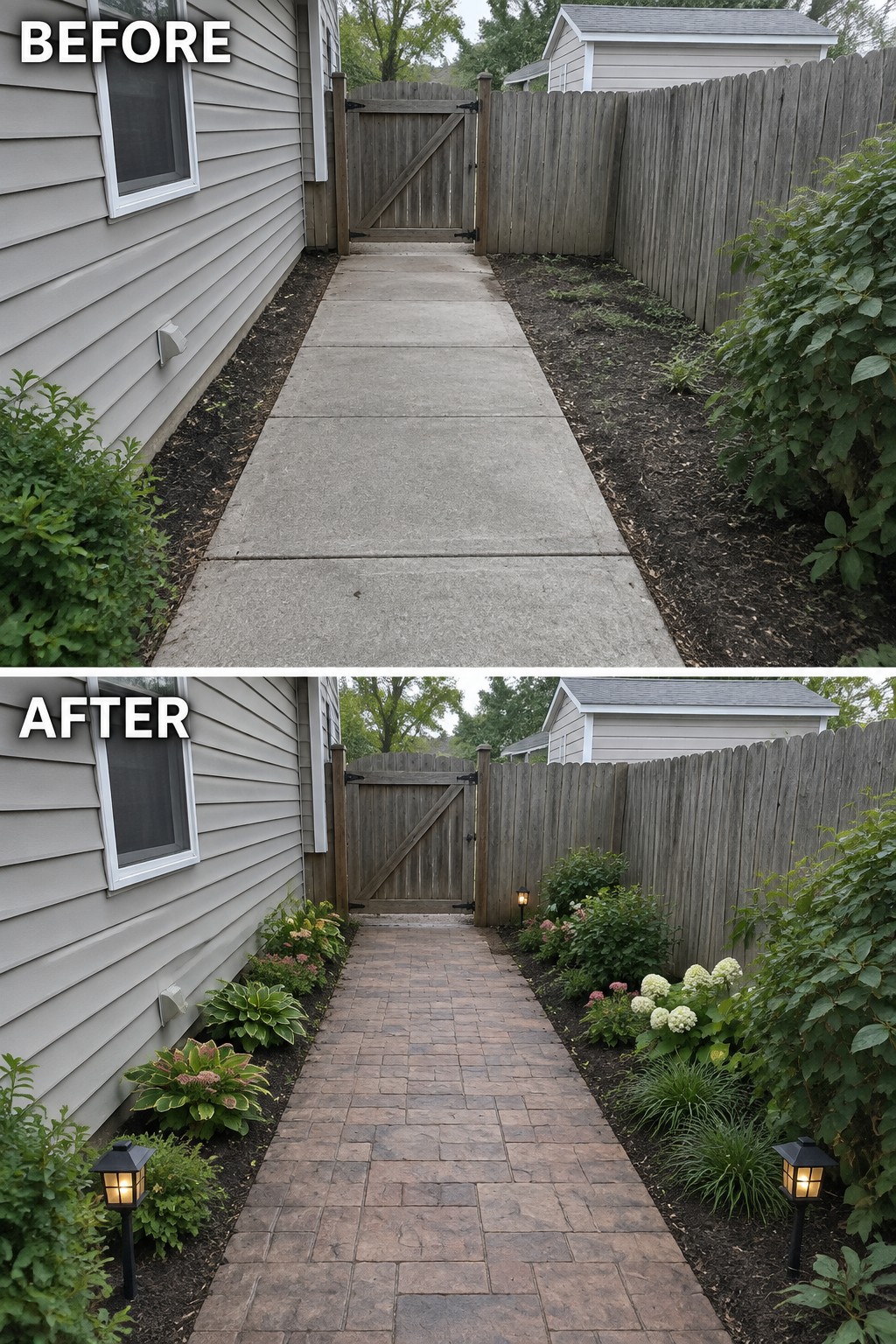
A straight concrete path often looks unfinished when it runs between a house and a fence. Replacing it with landscape pavers adds texture and makes the walkway feel more intentional without changing the overall layout.
This approach works well in narrow side yards where you need a clear route but want to soften the edges. Prepare a solid base first, choose pavers that match your house color, and keep the planting simple on both sides so the path stays easy to maintain.
Create Defined Paths With Gravel And Stepping Stones

A loose dirt path through trees often ends up scattered with leaves and hard to walk on after rain. Adding a layer of gravel with flat stepping stones and a simple metal edge turns the same space into a clear route that stays usable and looks intentional. The change comes mostly from giving the path a firm surface and a border so the surrounding mulch and plants stay in their own zones.
This approach works well in yards with fruit trees or established planting where you want access without compacting the soil. Keep the path width comfortable for two people, use edging to hold the gravel, and choose stones that sit flat enough for steady footing. It is a practical first step before adding more features like lighting or seating.
Define A Garden Path With Landscape Pavers
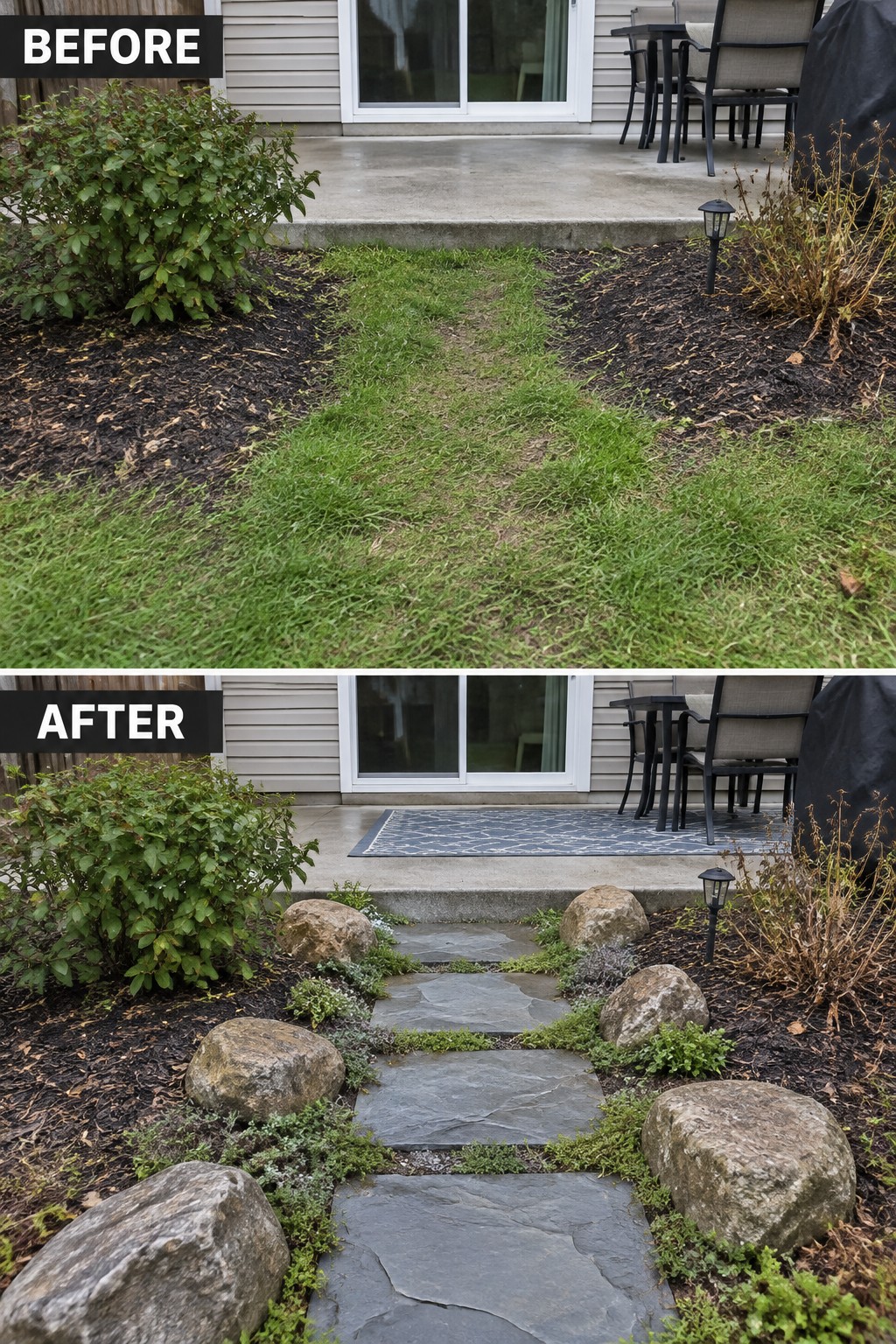
A worn grass trail through mulch and weeds makes the yard feel unfinished and hard to walk. Laying flat stone pavers in a simple line turns that muddy path into a solid walkway while the rocks and low plants along the sides keep the beds in place.
This idea works best in small backyards or side gardens where you need a clear route but still want a natural look. Clear the old grass first, then set the pavers with room for ground cover between them. The rocks help hold the edges and stop mulch from spilling onto the path.
Use Landscape Pavers To Shape A Front Walkway
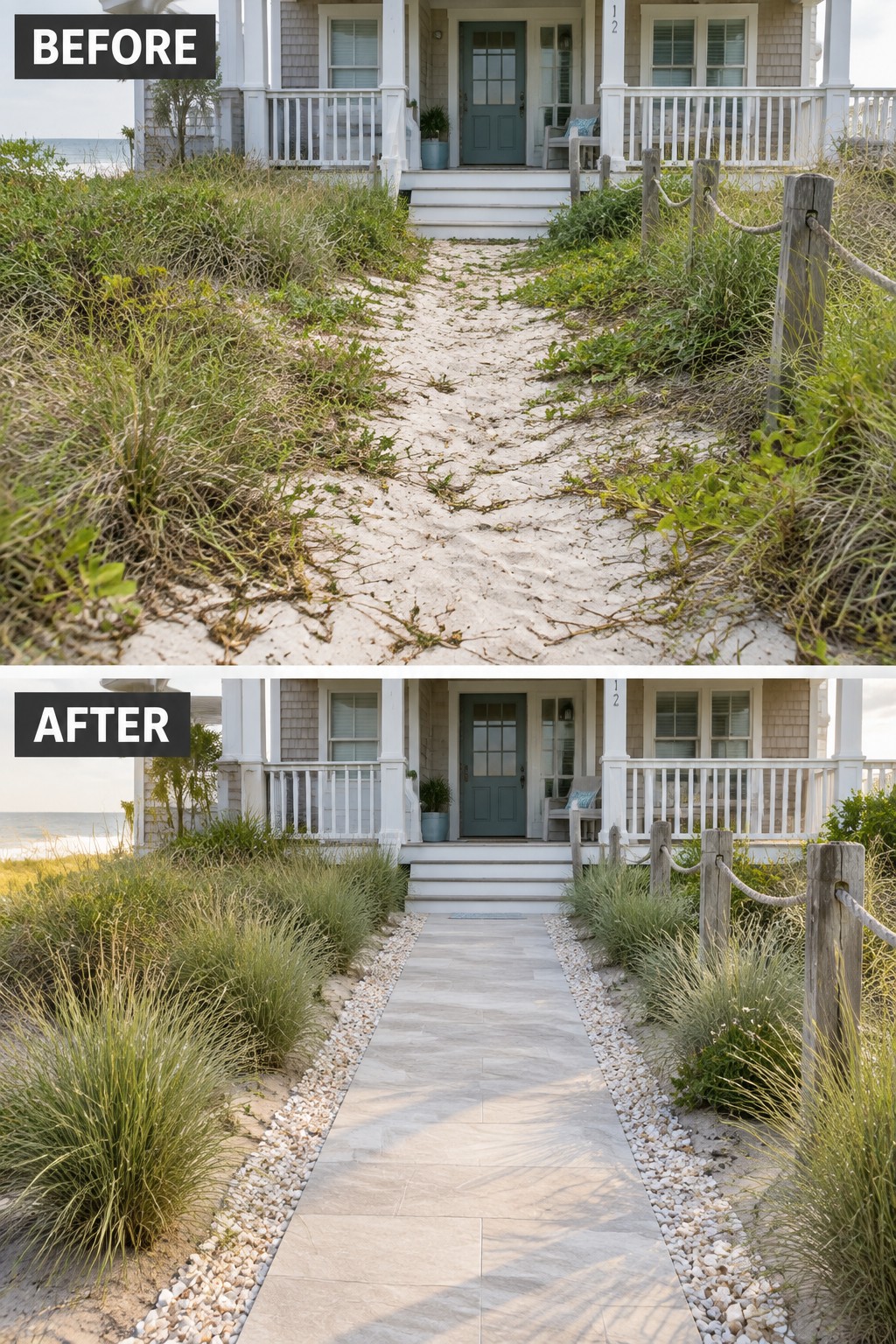
A loose sandy trail through tall grass makes the approach to the house feel unplanned and hard to maintain. Switching to a straight run of pavers with gravel along both edges gives the entry a clear route and stops the plants from spilling onto the path.
This approach suits beach houses or any property where the ground stays sandy or soft. Clear the overgrowth first, set the pavers on a compacted base, and keep the gravel borders narrow so mowing and weeding stay simple.
Use Landscape Pavers To Create A Defined Pathway
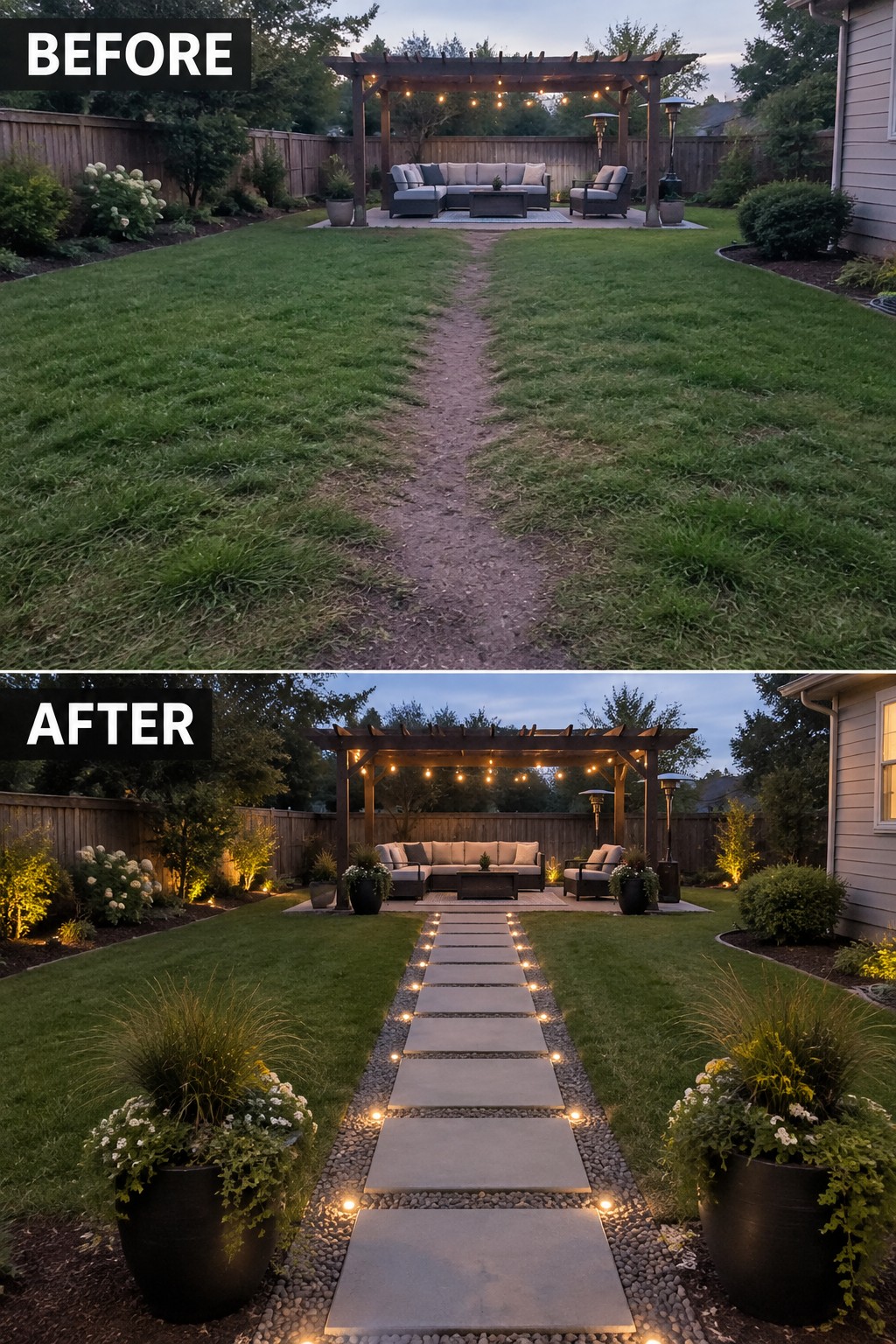
A worn dirt trail through the middle of the lawn made the whole yard feel unfinished and hard to navigate. Laying down a straight run of large concrete pavers set in gravel gave the space a clear, usable route that leads straight to the seating area.
This approach works best in backyards where you need to connect two points without adding a lot of new hardscaping. Keep the path width comfortable for two people, use gravel to help with drainage and weed control, and place a few large planters along the sides so the walkway feels intentional rather than just a strip of concrete.
Replace A Solid Concrete Patio With Landscape Pavers
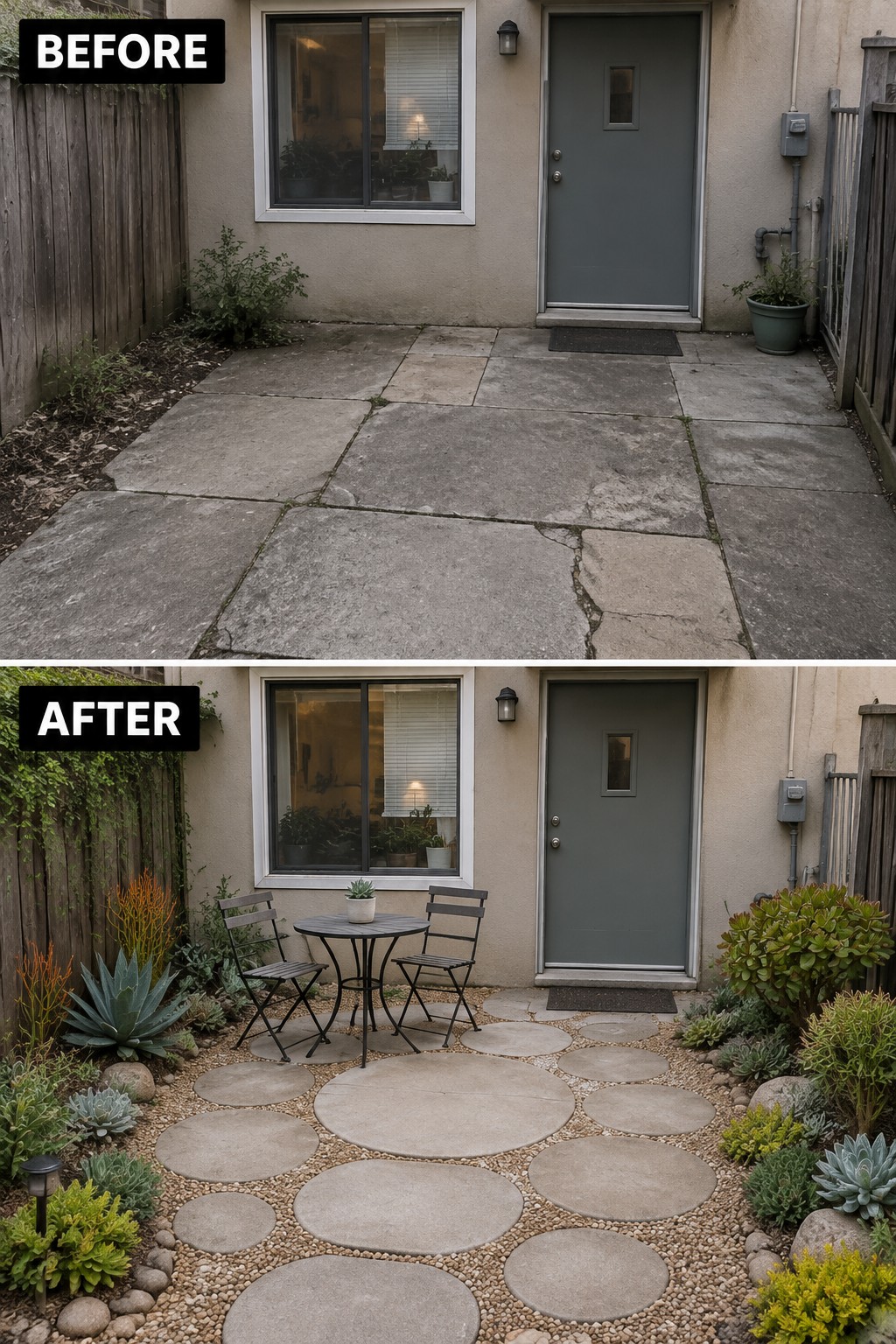
A large concrete slab often feels flat and uninviting in a small yard. Switching to round pavers set in gravel breaks up the surface, creates a clear walking path, and leaves room for planting along the edges without losing usable space.
This approach works best in narrow side yards or entry areas where full paving feels too heavy. Lay the pavers first to set the path direction, then fill the gaps with gravel so water drains easily and weeds stay down. Keep the surrounding beds simple so the pavers remain the main feature.
Define A Garden Path With Landscape Pavers
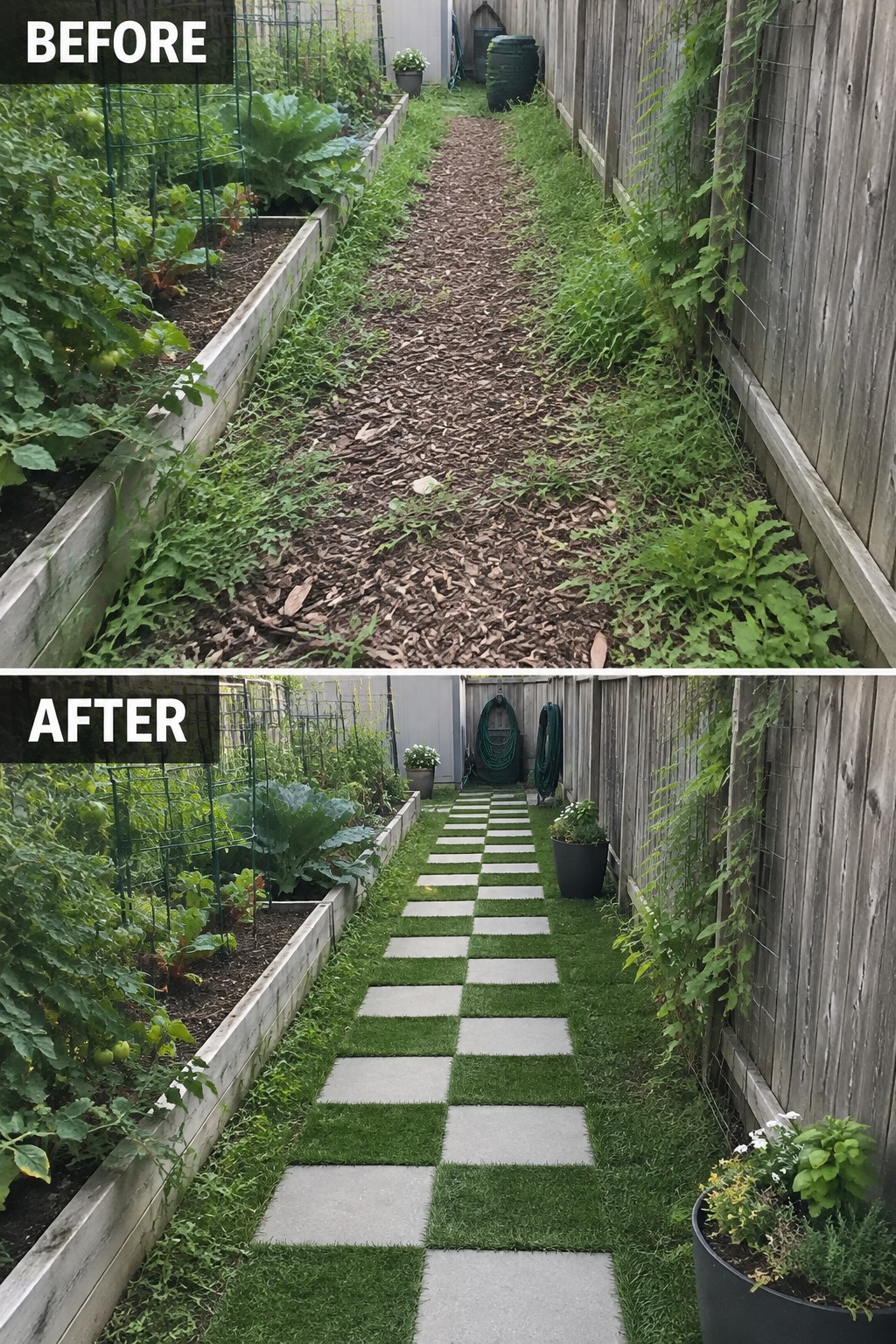
A narrow side yard can quickly turn into an overgrown strip that feels more like an afterthought than a walkway. Adding landscape pavers in a simple checkerboard pattern with turf squares gives the space a clear route and stops the edges from spilling into the beds.
This layout works best in long, tight areas between raised beds and fences. Clear the old mulch first, level the ground, then set the pavers with grass in between. The pattern keeps the path usable while still leaving room for plants on both sides.
Frequently Asked Questions
Q: How do I stop weeds from popping up between the pavers?
A: Lay landscape fabric over the compacted base before adding sand. Sweep polymeric sand into the joints after the pavers are in place and then mist it lightly with water. This seals the gaps and blocks most growth.
Q: What base material works best if I want good drainage?
A: Start with a layer of crushed gravel at least four inches deep. Compact it firmly so water can drain through instead of sitting under the path. Top it with sand for a level surface.
Q: Can I reuse old pavers from another project?
A: Clean them thoroughly and sort out any cracked ones first. Lay the solid pieces in a pattern that fits your path width. This cuts down on new material costs while giving the walkway a lived-in look.
Q: Do the pavers need sealing after installation?
A: A sealer adds protection from weather and spills. Wait until the sand has settled and the surface is dry before applying one coat.
