

I have spent more than one summer looking at my bare backyard and wondering how to make it feel like an actual extension of the house.
A few well placed seating areas and some simple screening can turn that empty patch into a place where I actually want to spend time after work.
The real test comes down to whether the space invites daily use rather than just looking tidy from the window.
I tend to start with anything that creates a clear spot to sit and linger before worrying about the rest of the details.
Small budget projects like these often remind me that comfort matters more than filling every corner with new items.
Clean Up The Lawn Before Adding Garden Features
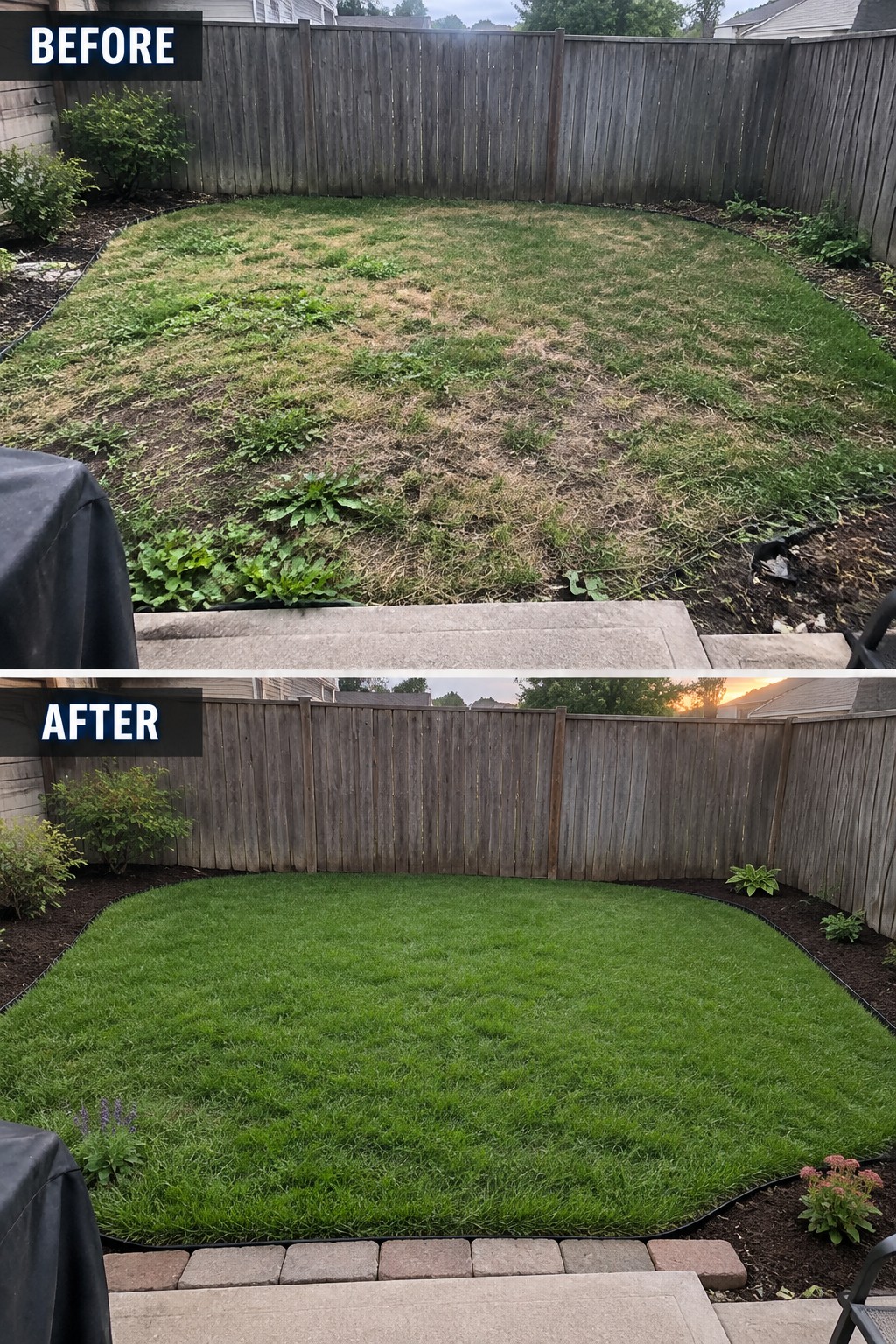
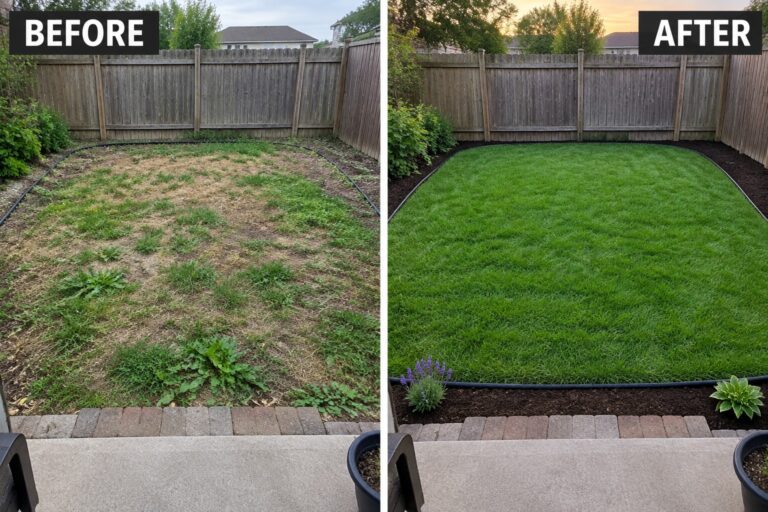
A patchy lawn makes any backyard feel neglected even when the fence and beds are fine. Here the grass changed from thin and weedy to thick and even, with a simple edge that keeps everything looking tidy. That one fix instantly makes the space feel finished.
Fix the lawn and define the border first if your yard looks messy. A healthy lawn gives you a clear base, and you can add a few plants later without the area feeling scattered. This works best in smaller yards where the grass is the main feature and you want to keep future work simple.
Turn A Concrete Patio Into A Seating Area
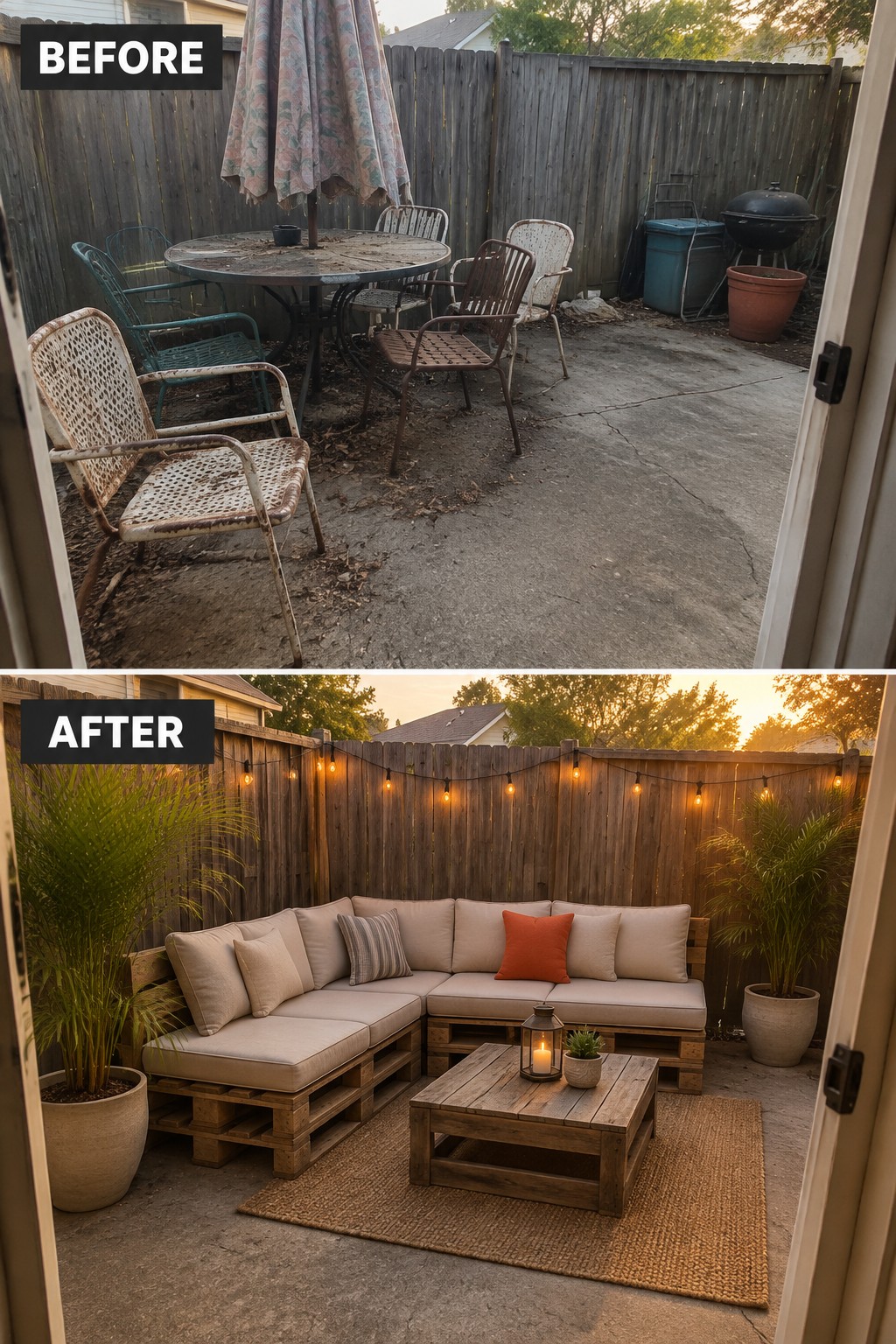
A bare concrete slab with mismatched old chairs does not invite anyone to stay outside for long. Building low pallet sofas along the fence, adding a simple rug, and hanging string lights gives the space clear boundaries and a reason to sit down after sunset.
This idea works best in small yards where the concrete is already in decent shape. Focus first on clearing the clutter, then keep the furniture low and the lighting soft so the area feels open rather than crowded. Weather-resistant cushions and one or two potted plants are usually enough to finish the look.
Turn An Empty Patio Into A Seating Area
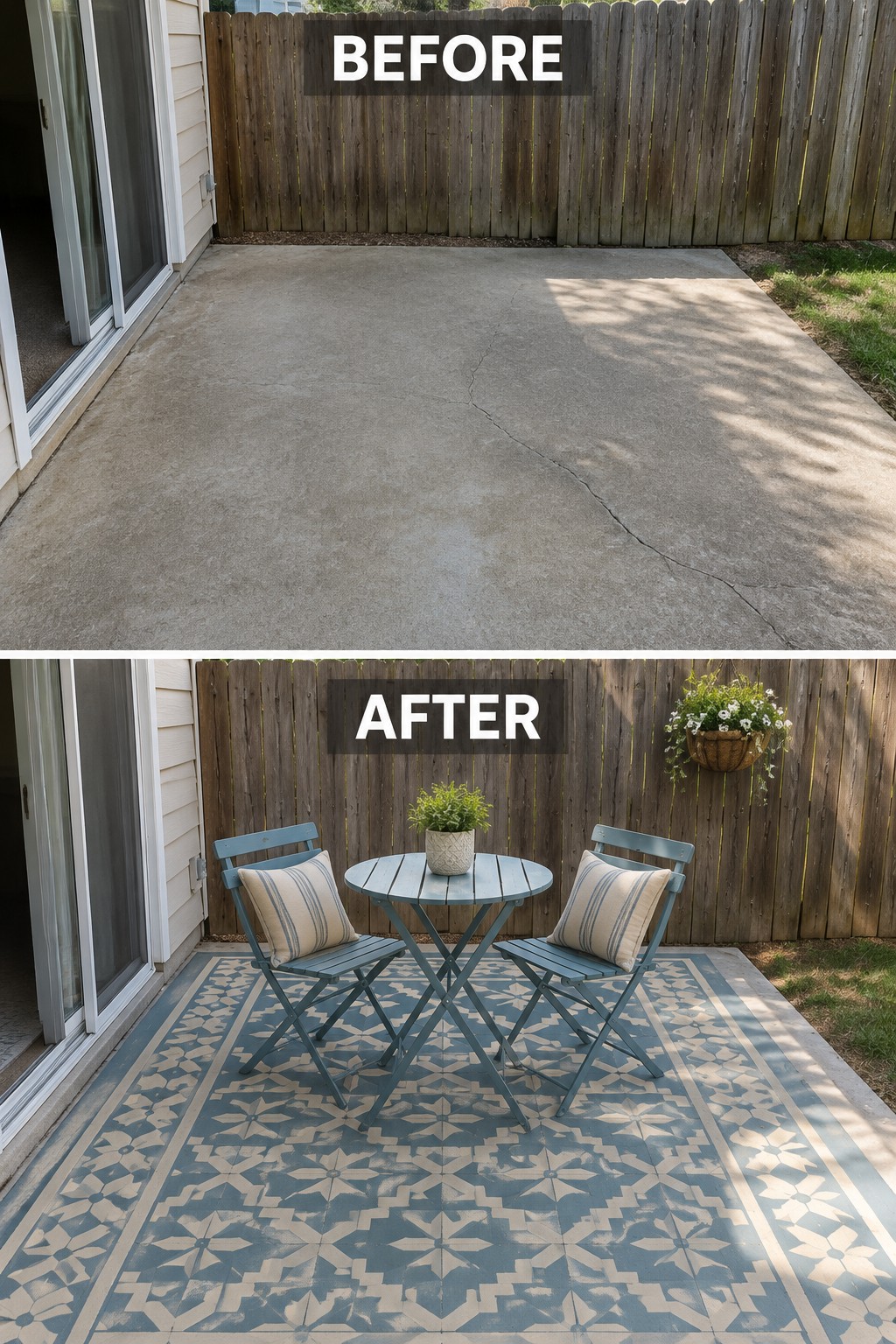
A bare concrete slab often sits unused because it has no clear purpose. Placing a large outdoor rug down first and adding a small table with two chairs gives the space a defined spot to sit without any major construction.
This approach works best on smaller patios where you want to keep things simple. The rug sets the boundary so the furniture feels like it belongs there, and sticking to just a few pieces leaves room to move around. Start with the rug and one seating group before adding anything else.
Refresh A Backyard Fence With Paint And Planters
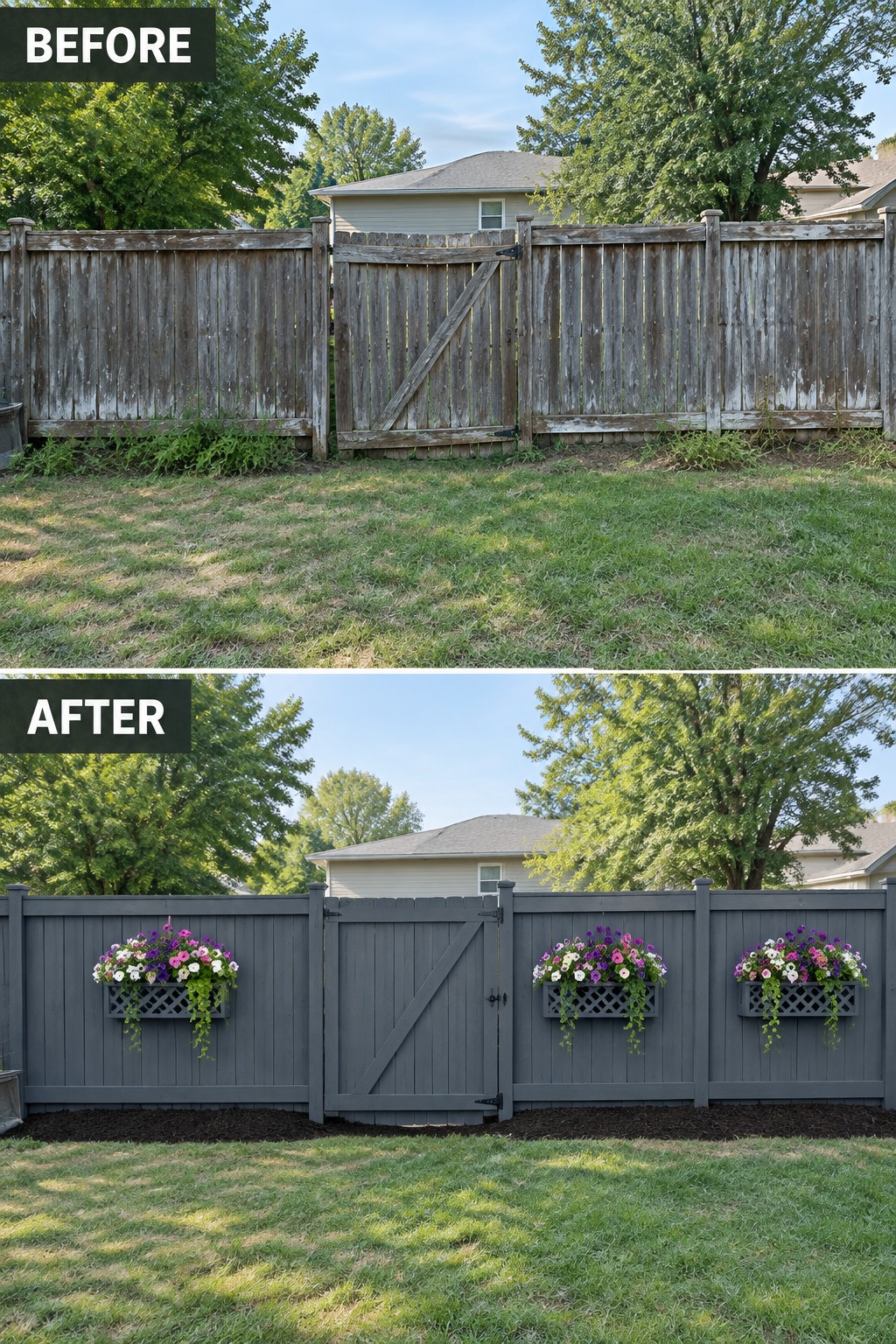
Painting an old fence and hanging a few flower boxes along it gives the whole backyard a cleaner, more finished look without major construction. The weathered wood became a solid gray, the patchy grass edge got a strip of mulch, and simple lattice planters with flowers added color right where people see it most.
This idea works on any home where the fence is a main feature of the yard. Paint first so the new planters stand out, then keep the boxes evenly spaced and choose flowers that handle sun or shade in your area. It keeps costs low because a few gallons of exterior paint and basic boxes do most of the work.
Add Structure To An Overgrown Backyard
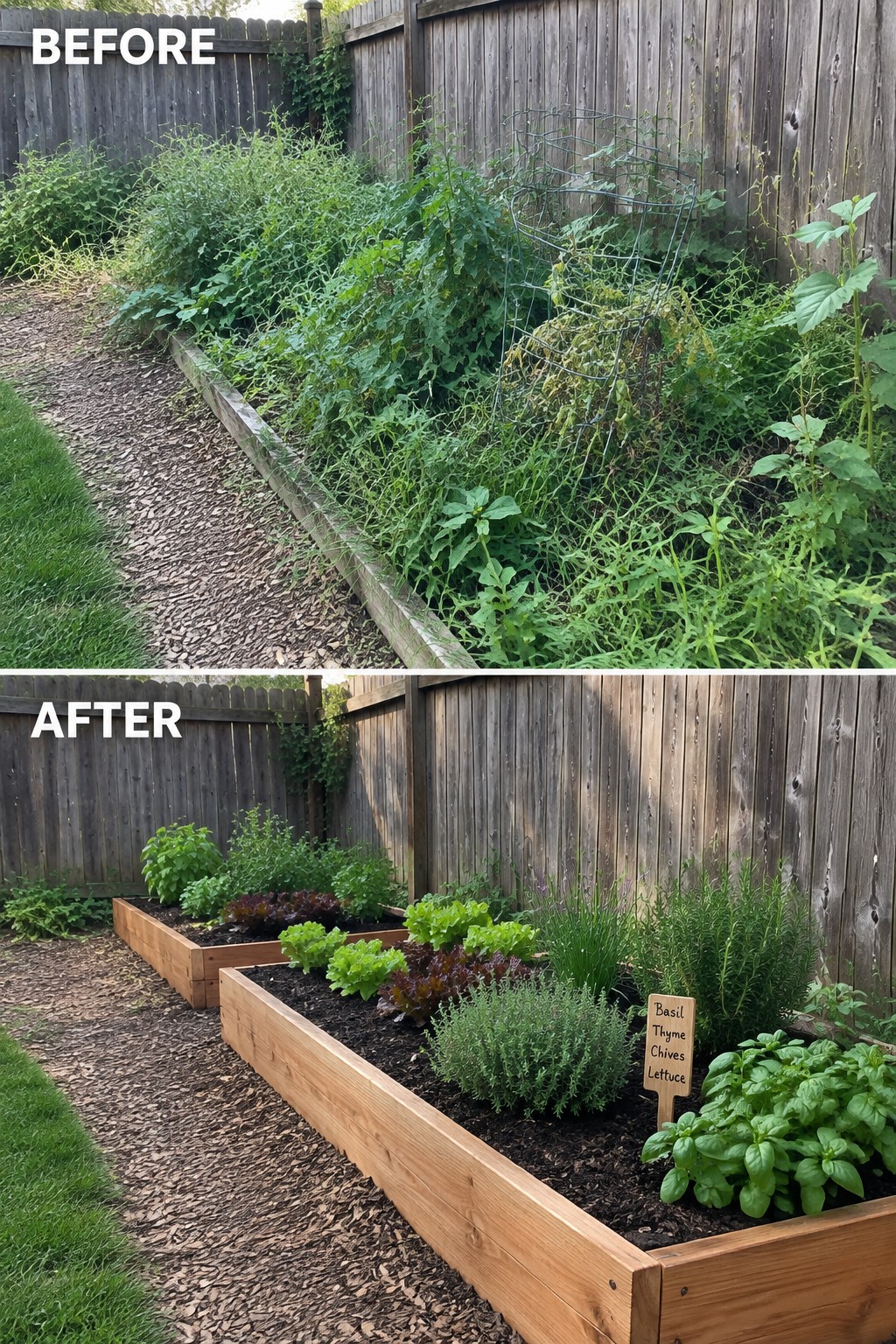
Raised beds can turn a messy garden strip into something you can actually maintain. The before photo shows plants spilling out in all directions with no clear edges, while the after shows neat wooden boxes set in mulch that keep everything contained and easy to reach.
This approach works best along fences or side yards where things tend to sprawl. Start by clearing the old growth, then build or buy simple boxes and fill them with good soil. It keeps paths clear and lets you group herbs or vegetables without them taking over the whole space.
Turn A Bare Backyard Corner Into A Fire Pit Area
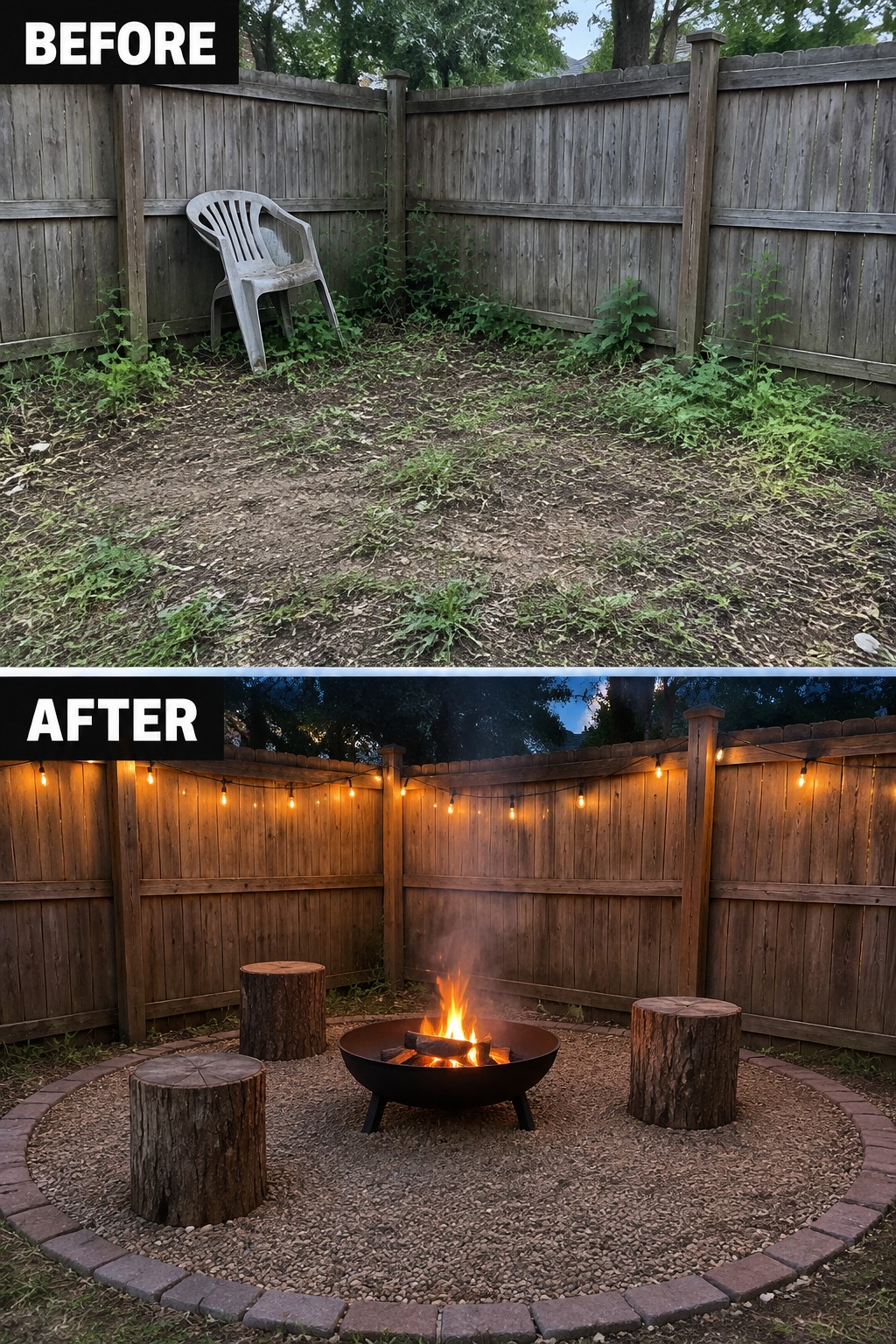
An empty, weedy patch behind the fence rarely gets used. Adding a fire pit, a ring of gravel, and a few tree stumps gives the space a clear purpose and makes it comfortable enough for evening gatherings.
String lights along the fence help define the edges and keep the area usable after dark. This approach works best in smaller yards where one focused seating spot feels more practical than spreading furniture across the whole lawn.
Add Structure To An Overgrown Side Path
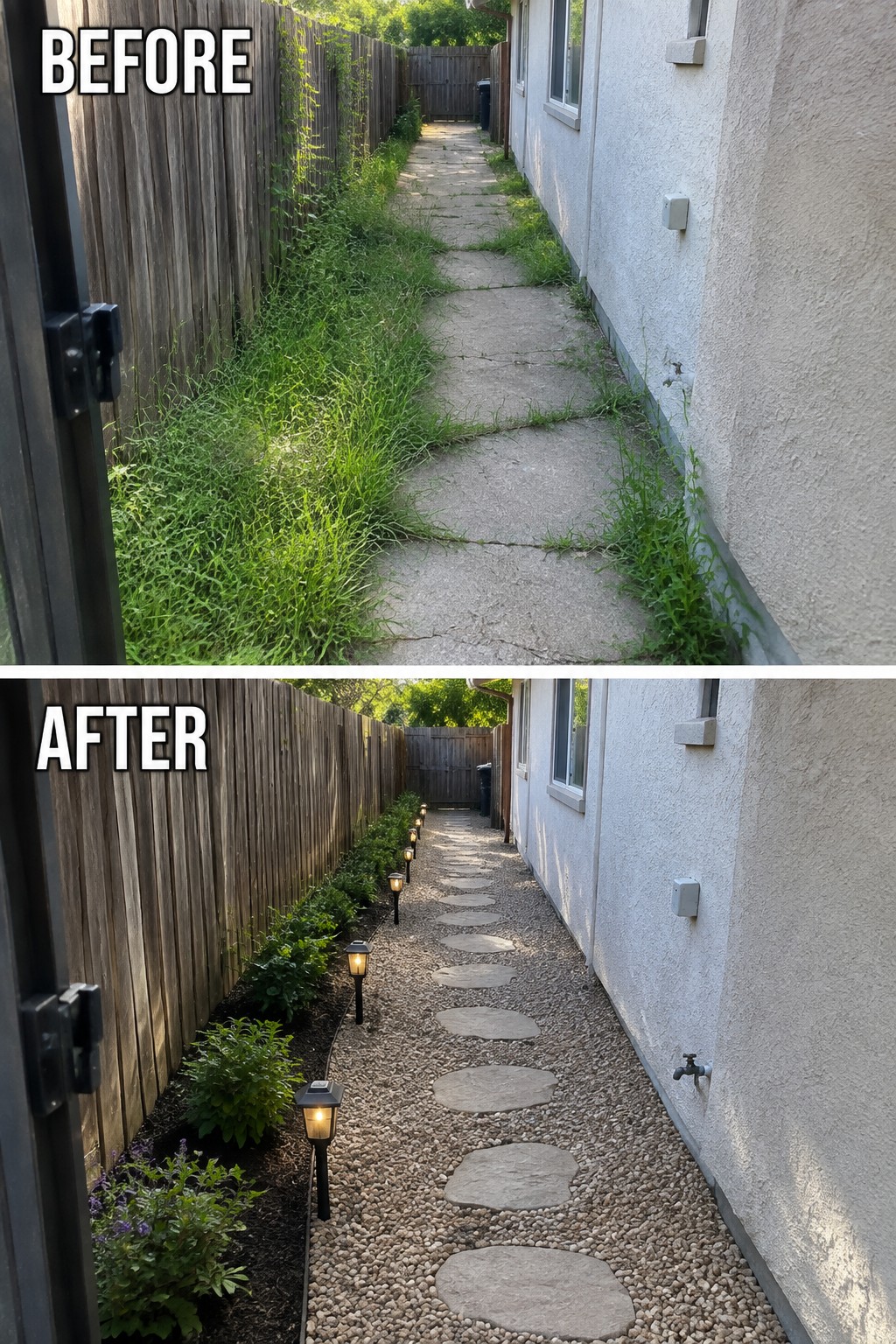
An overgrown side path often ends up ignored because it feels messy and hard to maintain. Clearing the weeds and replacing the uneven ground with gravel and stepping stones turns the narrow space into something you can actually use.
This idea works best in tight areas between a fence and the house where big plantings would get in the way. Keep the planting simple along one edge, add a few solar lights for night use, and make sure the gravel stays a few inches below the siding so water drains away from the foundation.
Turn An Old Deck Into A Simple Seating Area
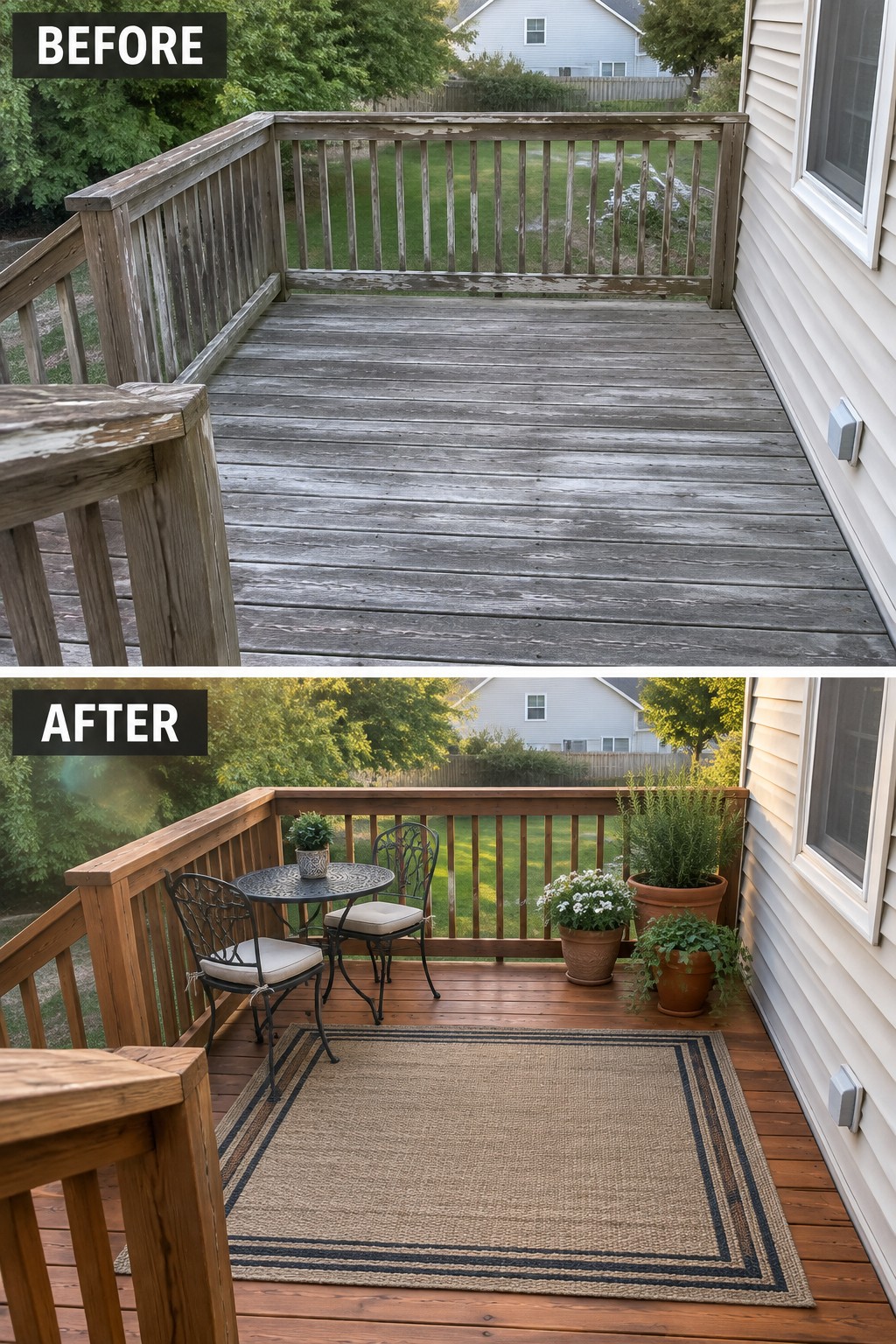
The deck looked tired and unused in the before photo, with faded wood and no real reason to spend time there. Adding a rug, a small table and chairs, and a few potted plants gave the space a clear purpose without covering the whole surface.
This idea works on any deck or patio that feels empty. Start with one rug to mark the seating zone, keep the furniture scale modest, and use a handful of plants rather than filling every corner. The goal is to make the area feel usable while still leaving room to walk around.
Lay Stepping Stones To Define A Backyard Path
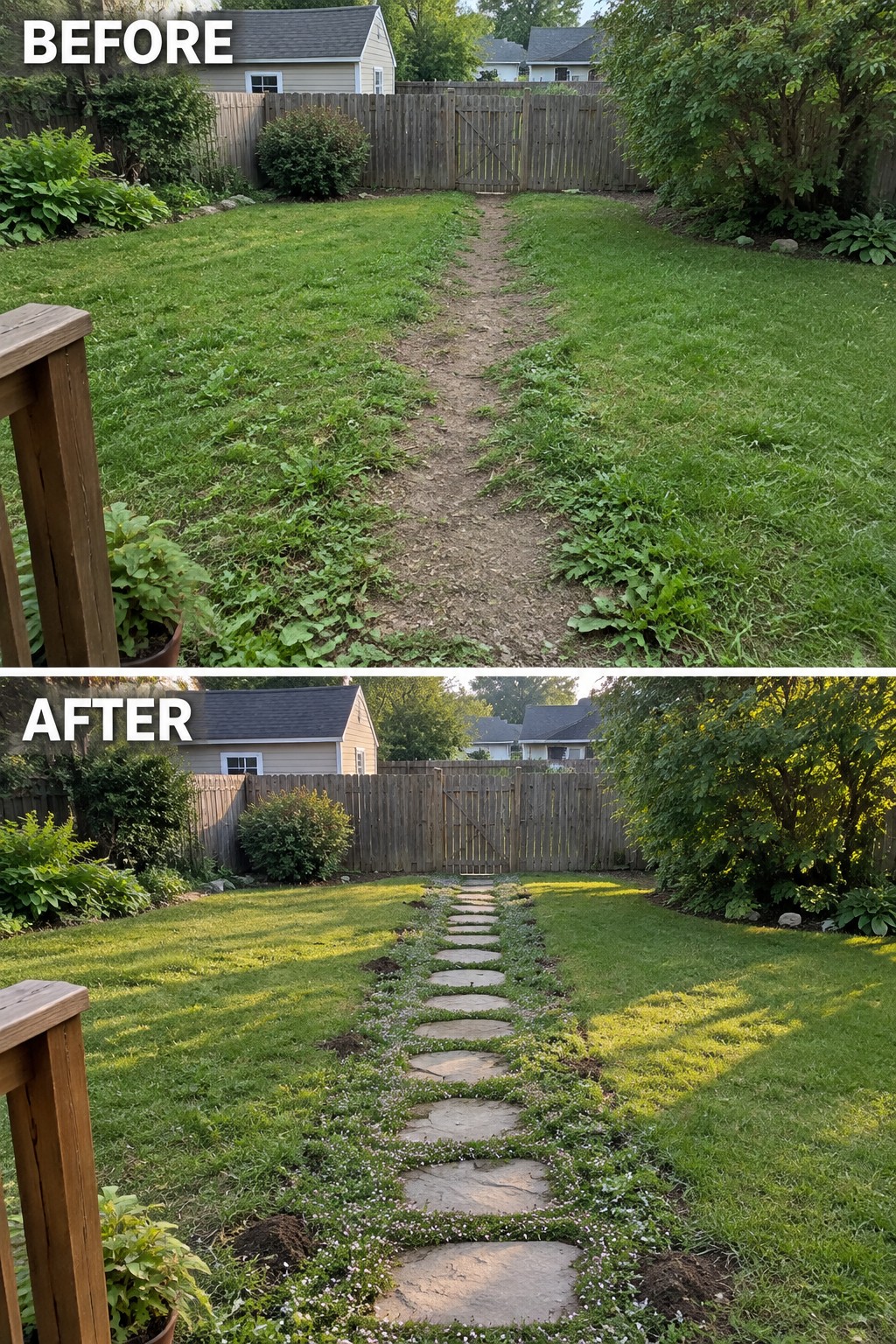
A worn dirt trail across the lawn makes a backyard feel unfinished and hard to walk through after rain. Adding a line of stepping stones gives the space a clear route and turns the open grass into something more usable right away.
This works best in yards where people already cross from one side to the other. Keep the stones level with the grass so mowing stays simple, and add a narrow strip of low ground cover along the edges if you want the path to look settled.
Turn A Bare Patio Into A Cozy Outdoor Room
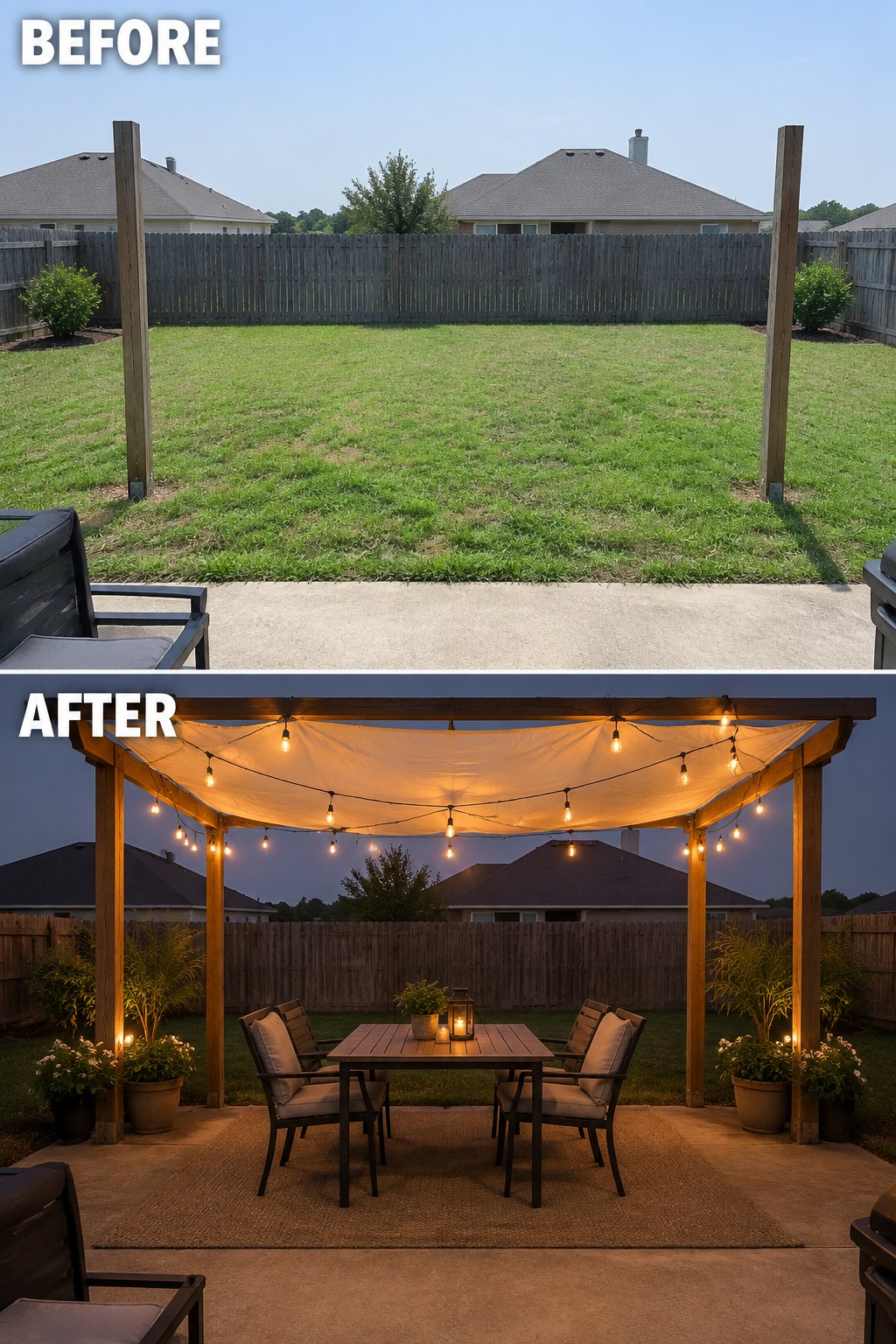
Many backyards have a plain concrete slab that never gets used because it feels open and unfinished. Adding a pergola with a simple shade cover and string lights gives the space structure and makes it feel like a real room. The area shifts from an empty pad to a spot where people can sit and eat without feeling exposed.
This idea works best on homes that already have a flat concrete area or basic posts in place. Start with the overhead frame and lights, then add a rug and a small dining set to define the zone. Keep the furniture modest in size so there is still room to move around the edges.
Create Defined Garden Beds To Fix A Muddy Backyard
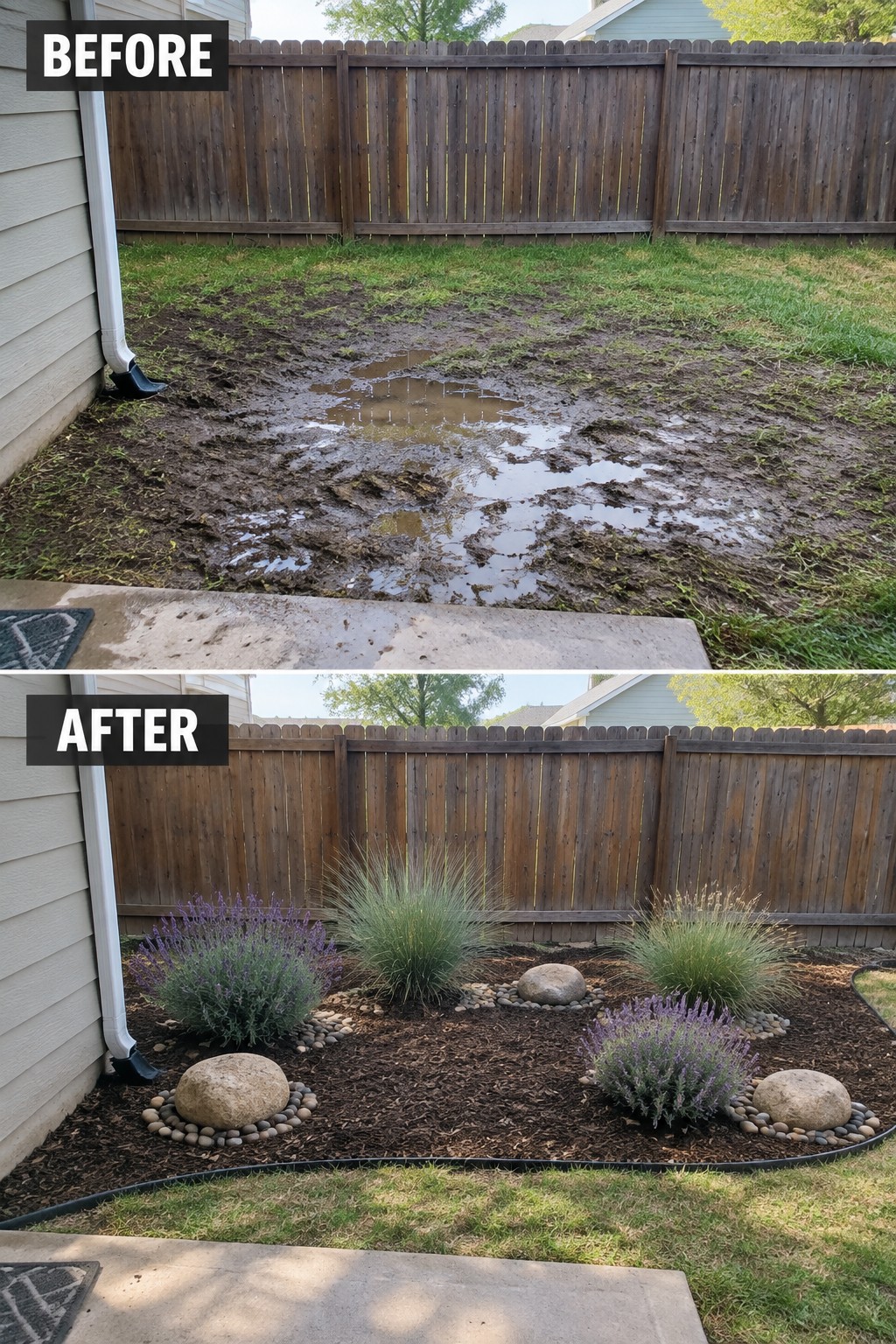
A soggy backyard with standing water is hard to use and harder to enjoy. The simplest fix is to add clear garden beds edged with a flexible border, then fill them with mulch and a few sturdy plants. This pulls the eye away from the wet ground and gives the space structure without needing new drainage or big construction.
This approach works best in small yards that stay damp after rain. Start by letting the soil dry enough to work, then lay out beds along the fence or house wall. Choose plants that handle moisture swings and repeat the same rock border around each one so the layout stays tidy even when the lawn is still patchy.
Add Privacy To A Chain Link Fence
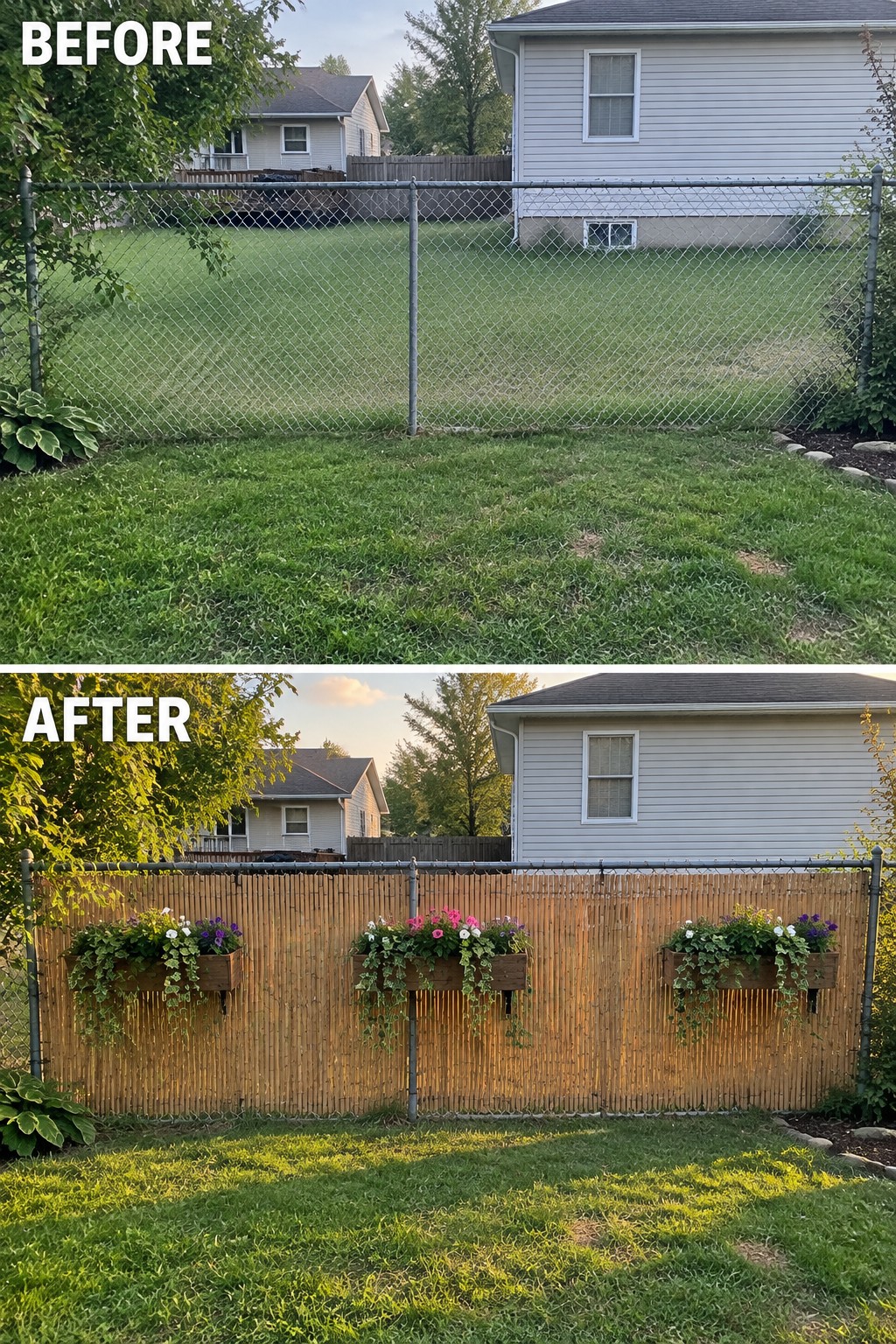
A chain link fence leaves the whole yard feeling open and exposed. Adding a simple bamboo screen across the front instantly blocks the view from the street and neighboring yards while the hanging planters bring in color and soften the look.
This idea works best in smaller backyards where a full privacy fence would feel too heavy. Attach the screening directly to the existing posts, then space out a few wooden planters along the top rail so the flowers trail down the front. The result feels finished without costing much or requiring major construction.
Create A Gravel Patio For Easy Outdoor Seating
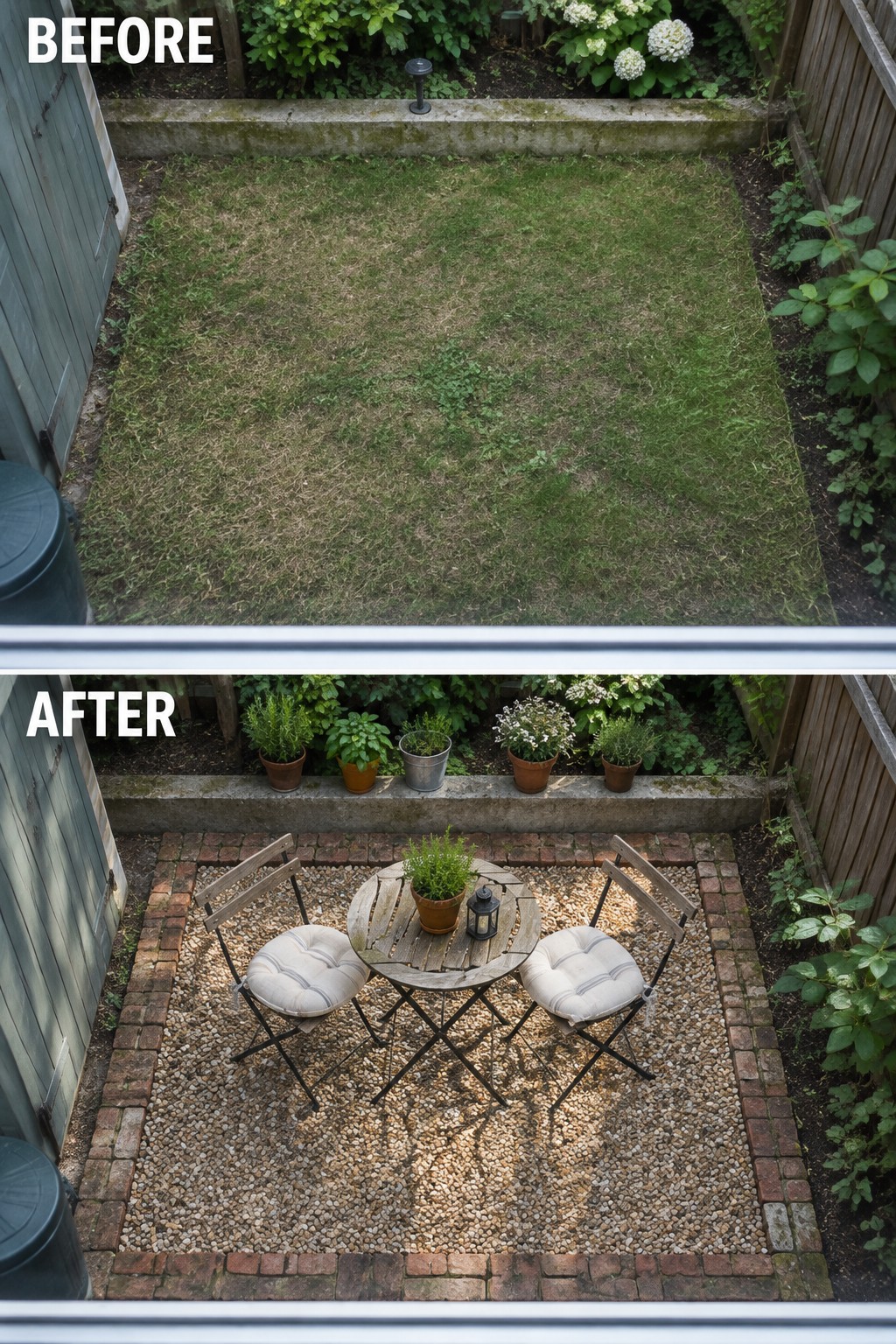
A patchy lawn often leaves a small backyard feeling unfinished and hard to use. Laying down a gravel base with a simple brick border turns that same space into a level, low-maintenance spot that actually invites people to sit. The change is mostly practical: the gravel replaces uneven grass, gives the area clear edges, and keeps furniture stable without much extra work.
This idea works best in compact yards where you want a defined zone without pouring concrete. Start with weed barrier and a few inches of gravel, then add a small table and a couple of chairs that can stay outside. Keep extra plants in pots along the back so the space stays open and easy to clean.
Define A Muddy Backyard With Gravel And A Sandbox
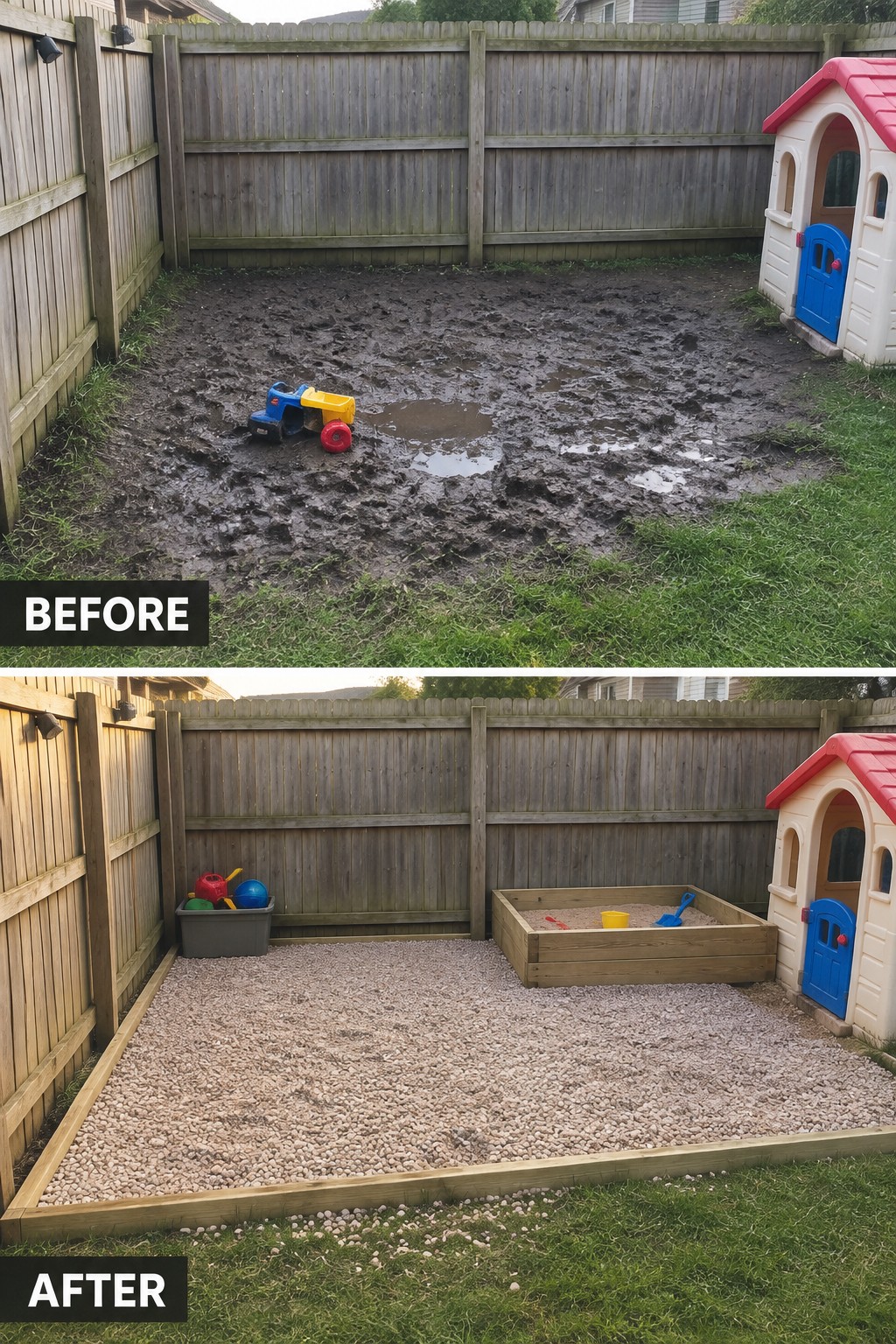
A muddy backyard quickly becomes unusable after rain, leaving nowhere for kids to play without tracking dirt everywhere. Spreading gravel across the main area solves the mud problem and creates a firm surface that drains better. Adding a simple wooden sandbox then gives the space a clear purpose without filling the whole yard.
This idea works best in small or narrow backyards where you need to contain play in one spot. Start with the gravel layer first so the area stays functional, then add the sandbox and a storage bin nearby. Keep the gravel contained with edging so it does not spread into the grass.
Turn A Blank Patio Wall Into A Vertical Garden
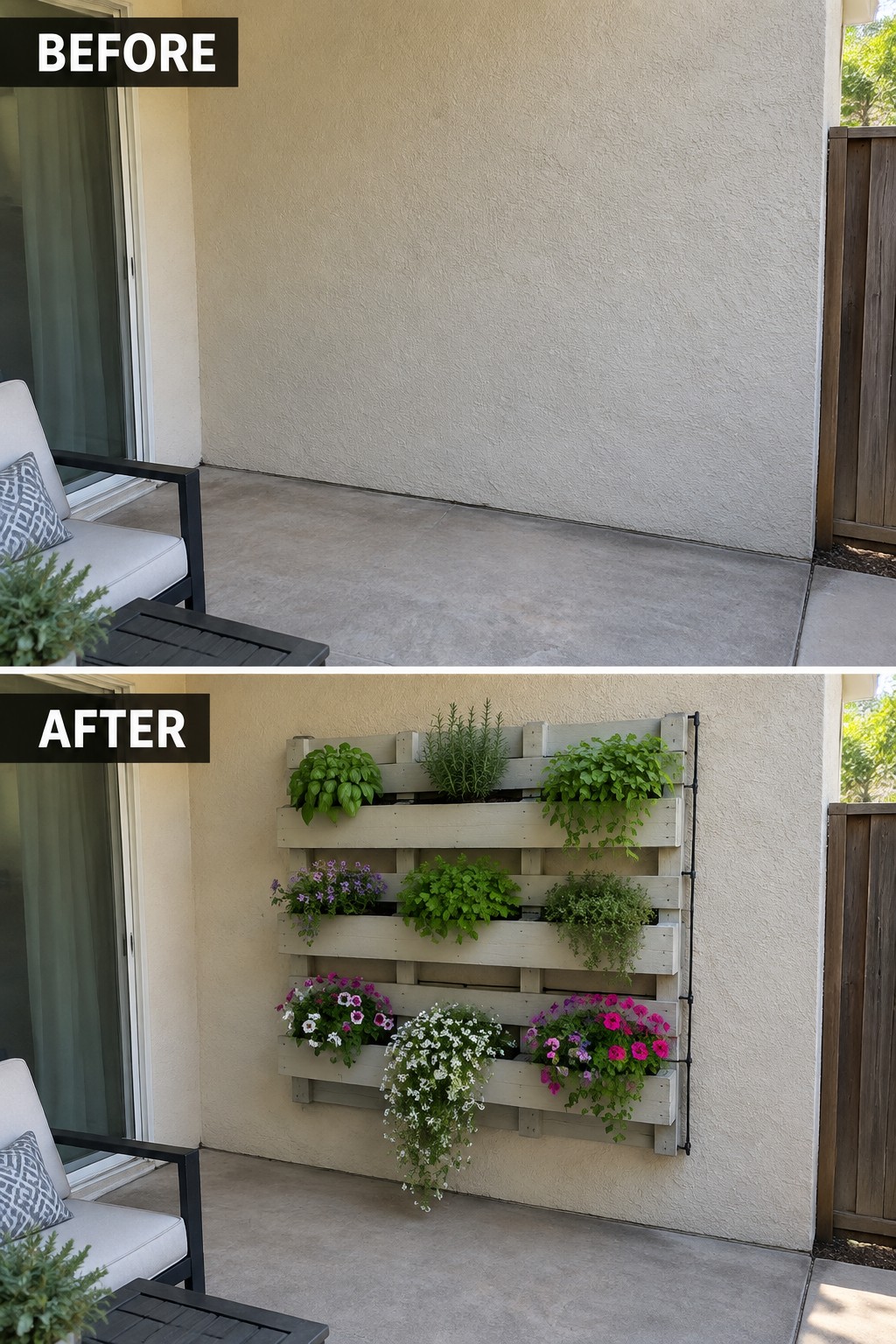
A plain wall next to a patio often gets ignored because there is no obvious way to use it. Mounting a simple wooden pallet and turning it into a planted wall adds greenery right where you need it most. The before photo shows just bare stucco and concrete. The after shows the same wall holding rows of herbs and flowers without taking up any floor space.
This idea works best on patios, balconies, or side yards where ground beds are not possible. Use a sturdy pallet, seal it for outdoor use, and attach it securely to the wall. Choose plants that match the light you have and keep the number of varieties small so the whole thing stays easy to water and maintain.
Build A Simple Potting Bench To Organize Garden Supplies
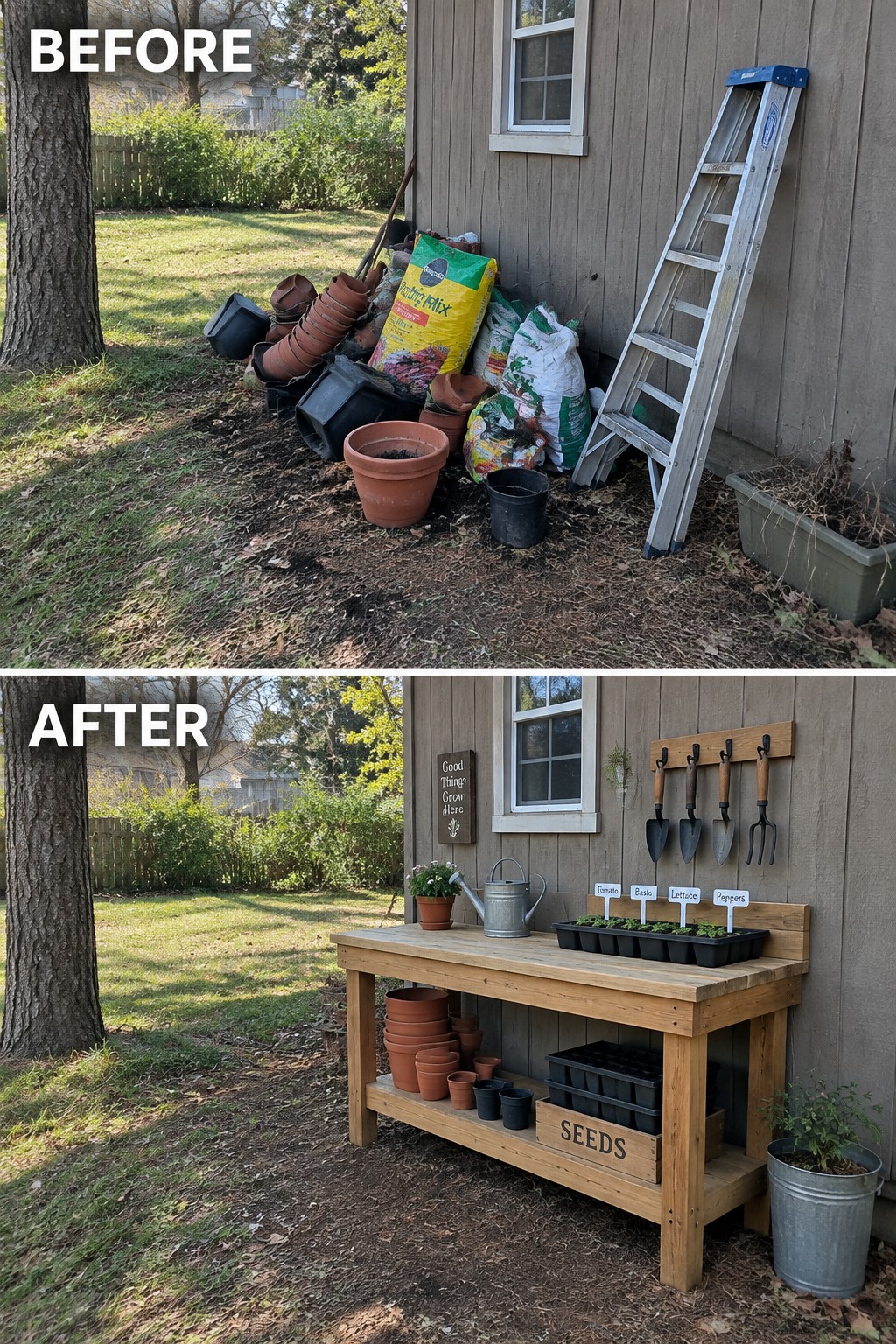
A cluttered side yard often becomes a catch-all for pots, soil bags, and tools. Adding a basic wooden potting bench turns that same strip of ground into a usable workspace where everything has a place. The lower shelf holds extra pots and bins while hooks keep hand tools off the ground and within reach.
This setup works best along the side of a house or garage where you already do most of your planting. Use weather-treated wood and keep the bench height comfortable for standing work. Once the main surface and storage are in place, the area stays tidier without much extra effort.
Turn Patchy Grass Into A Simple Poolside Seating Area
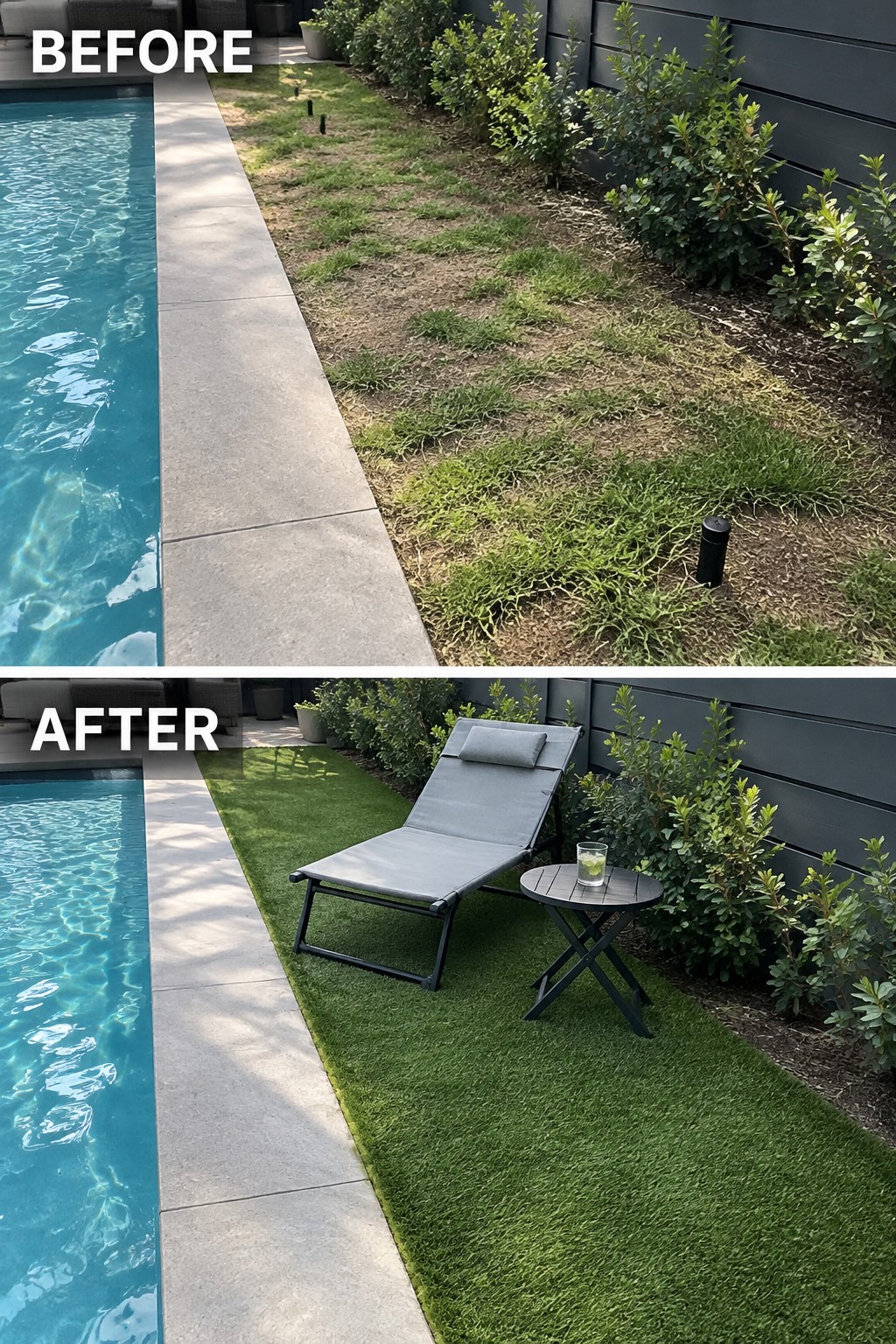
The strip of lawn next to this pool was thin and uneven, making the whole side of the yard feel unfinished. Switching to artificial turf created a flat, clean surface that instantly made the narrow space feel usable instead of neglected.
This approach works well in small or awkward backyard sections where real grass struggles. Keep the furniture light and low so the walkway stays clear, and choose pieces that can stay outside year round.
Add Structure To A Sloped Backyard
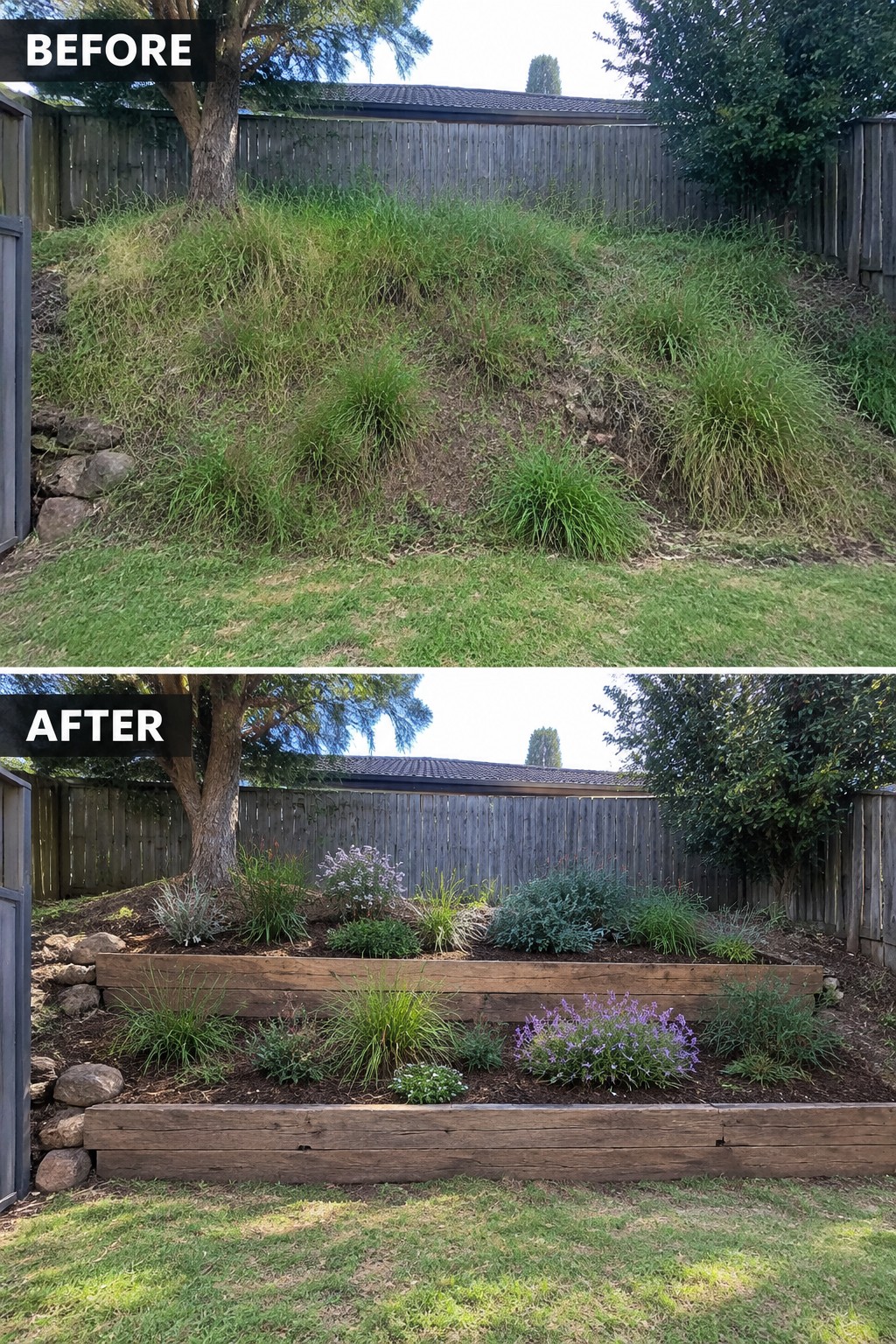
A sloped backyard often ends up as just a patch of weeds because nothing holds the soil or gives plants a place to settle. The simplest fix is to add basic retaining walls that turn the hill into flat, usable beds. In this case, a few rows of timber created three clear planting levels where there used to be only loose grass and bare dirt.
This approach works on most gentle slopes and keeps costs low if you use pressure-treated lumber or reclaimed wood. Focus on one main level first so the job stays manageable, then add plants that can handle the sun and drainage of your area. Once the beds are in place, the whole yard feels intentional instead of neglected.
Frequently Asked Questions
Q: Where should I start if I want to try a couple of these ideas without going over budget? A: Grab the cheapest materials first and take stock of what you already own around the house. Measure your space ahead of time so you skip extra purchases that add up fast. This keeps the total under five hundred while letting you finish two projects instead of one.
Q: What if the wood I grab for a bench or planter looks rough? A: Sand it smooth and seal it to handle rain and sun without issues. Most scrap pieces turn out fine once you put in that quick prep work. Tackle one piece at a time to avoid turning it into a big job.
Q: How do I keep string lights from falling down after a storm? A: Use sturdy hooks screwed into fences or tree branches and test the setup before dark. Add a few zip ties along the way for extra hold. Check them once a month so they stay put without constant fixes.
