


Dahlias can bring a patio garden to life, but their color works best when the planting feels considered rather than crowded.
I find that the first things people notice are the shape of the beds and how the flowers frame the place where they sit.
Mixing dahlia heights and bloom colors can add depth, while paths and simple edging keep the space easy to move through and care for.
It also helps to think about sun, access to water, and how the planting will look as the flowers grow through the season.
I’d start with one layout that suits the patio’s shape, then borrow details from other designs to make it your own.
Make Room for Outdoor Dining

A small patio dining area gives you a reason to enjoy the garden, not just look at it. Here, the table sits close to the flower beds, so dahlias become part of the setting without taking up space needed for chairs.
Try this layout where a path or patio meets a planted border. Keep enough room to pull chairs out and pass by comfortably, and use dahlias nearby for color at eye level. It suits cottage-style gardens especially well, though the same idea works in a simple courtyard.
Add a Fire Pit to a Patio Seating Area

A long, built-in fire pit can give a patio seating area a clear center and make it more useful after dinner or on cooler evenings. Its narrow shape works well between benches or sofas, so people can sit facing one another without crowding the space.
Leave enough room around the fire pit for chairs to move and for people to walk through safely. On a smaller patio, choose a compact model and keep the seating simple.
Add Color Around Patio Seating

Dahlias can bring plenty of color to a patio without taking up the seating area. Planting them in pots near a bench or along the patio edge keeps the flowers close enough to enjoy while leaving room to sit and move around.
Use a few pots at different heights, and repeat colors that suit your cushions or other outdoor fabrics. Give dahlias enough sun, and leave space between containers so the patio does not feel crowded.
Make Room for Patio Dining

A dining area can make a patio feel useful throughout the day, and a pergola helps define the space without closing it off. Here, the wooden table and chairs sit beneath an open timber structure, while dahlias in large pots bring color close to the seating.
For a similar setup, leave enough space around the table for chairs to slide back comfortably. Use containers near the edges of the dining area so flowers brighten the patio without getting in the way.
Use Raised Planters to Bring Color Close to Patio Seating
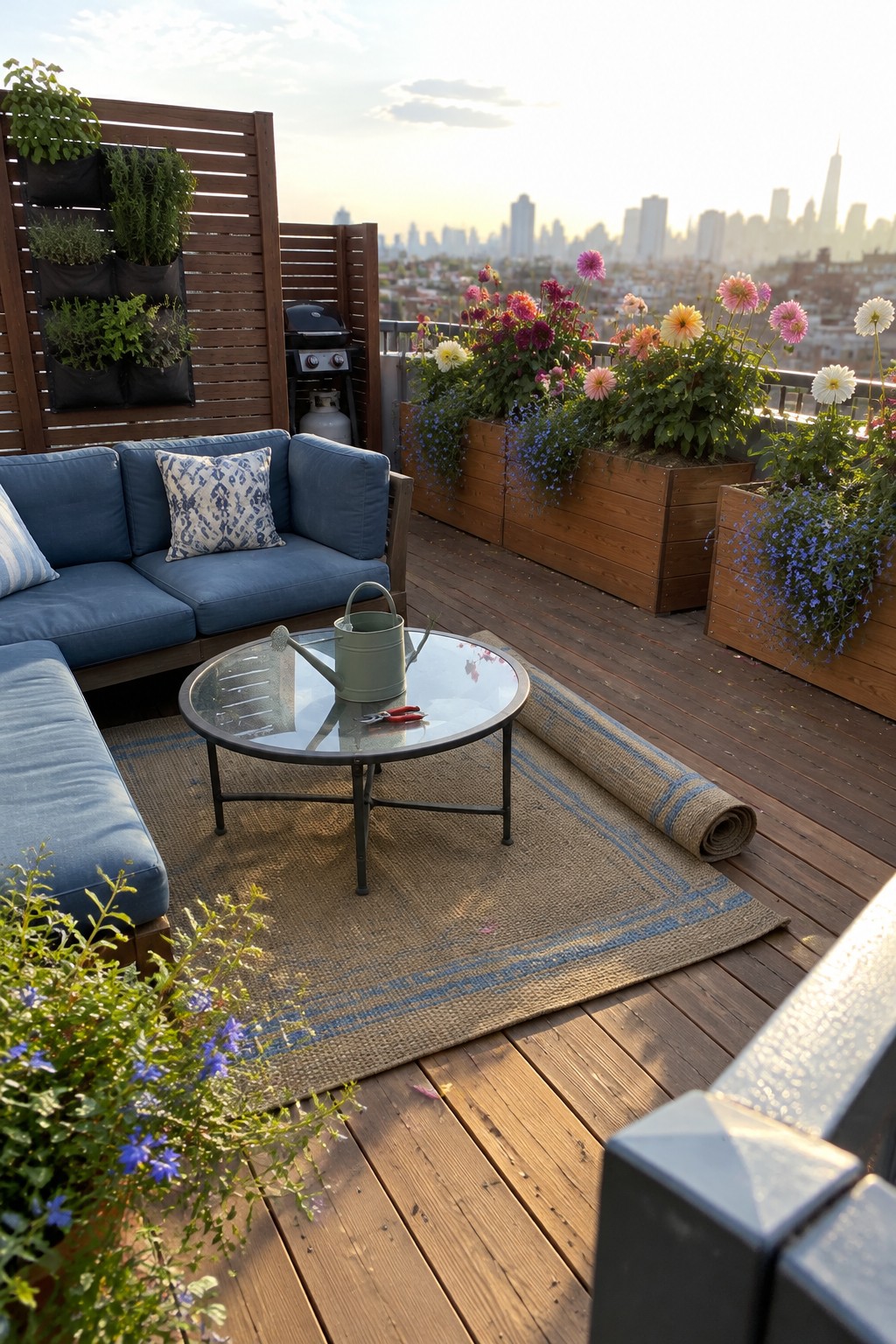
Raised planters make it easier to enjoy colorful flowers from the seating area, rather than keeping the garden off at a distance. Dahlias can provide the taller blooms, while trailing flowers along the edges help the planters feel full.
Place the planters around the patio perimeter, leaving clear paths between them. On a deck or small terrace, choose boxes that fit the available space and leave enough room to sit and move comfortably.
Use Stone Pavers to Define a Patio
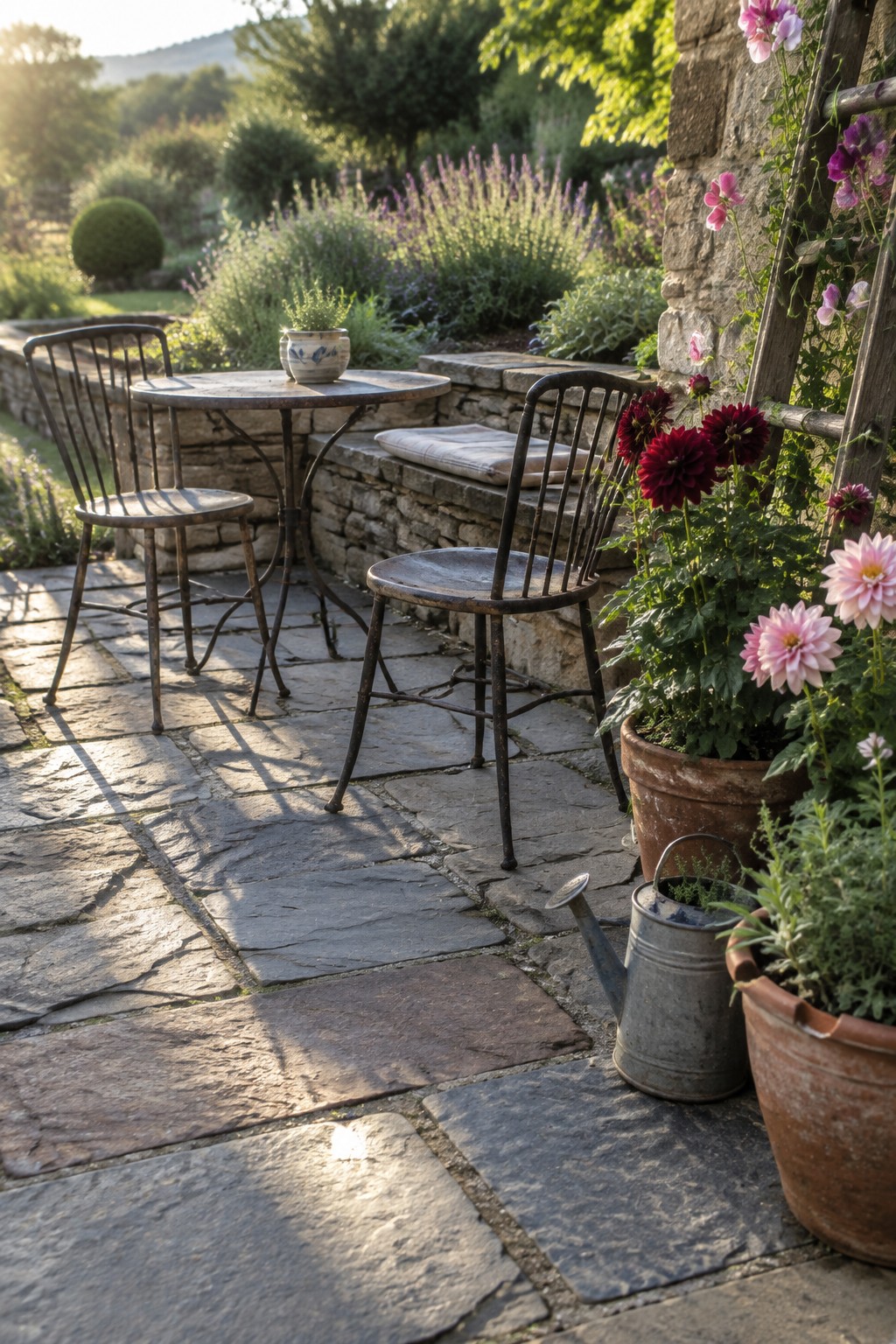
A stone-paver surface gives a patio a clear place for dining and sitting, while still feeling at home in a garden. The irregular shapes add character without needing a complicated layout.
This approach suits cottage-style gardens and older homes especially well. Choose pavers with a comfortable walking surface, and leave even gaps so chairs sit steadily.
Use Raised Beds to Bring Dahlias Close to Patio Seating

Raised flower beds can bring color right to the edge of a patio, so you can enjoy the plants while dining or relaxing outside. Dahlias suit this approach well, and their bold blooms can stand out among simpler patio materials.
Plant dahlias in a raised bed beside a bench or along the patio edge, leaving enough room for people to move comfortably. Choose a spot with plenty of sun, and check that the bed drains well so the plants do not sit in soggy soil.
Use Dahlia Planters to Add Patio Color

Large pots of dahlias bring bright color close to the seating area, where it’s easy to enjoy the blooms. This is a simple way to dress up a deck without planting a full border.
Place the pots near a chair or along the edge of the patio, leaving enough room to move around them. Dahlias do best with plenty of sun and regular watering, so choose a spot that’s easy to reach.
Use Brick Paving to Define a Patio

Brick paving gives this patio a clear surface for outdoor dining while keeping the garden beds distinct. The varied brick tones also suit the older brick walls and raised planters, so the hardscape feels connected to its surroundings.
This approach works well in a courtyard or small garden where you want a defined seating area without a large paved expanse. Leave planting space around the edges, and choose a brick color that complements the nearby house.
Use a Garden Path to Connect Patio Seating and Planting

A curved path through the flower bed can make a small seating spot feel connected to the rest of the garden. Here, stone stepping slabs lead past dahlias, giving the planting room to grow while still offering a clear route through it.
Use this approach where a straight walkway would feel too formal or take up too much space. Leave enough room between the path and the plants for easy access, and choose stones with steady, even footing.
Add a Shade Structure to the Patio

A simple shade structure can make a patio more comfortable and give nearby flowers a place to climb or spill over. Here, a woven canopy covers part of the seating area, while dahlias in a raised planter bring color close to the table.
This setup works well where afternoon sun makes outdoor dining less pleasant. Leave enough open space around the table, and choose a canopy material that suits the climate and can be secured safely.
Keep Patio Seating Close to the Dahlias
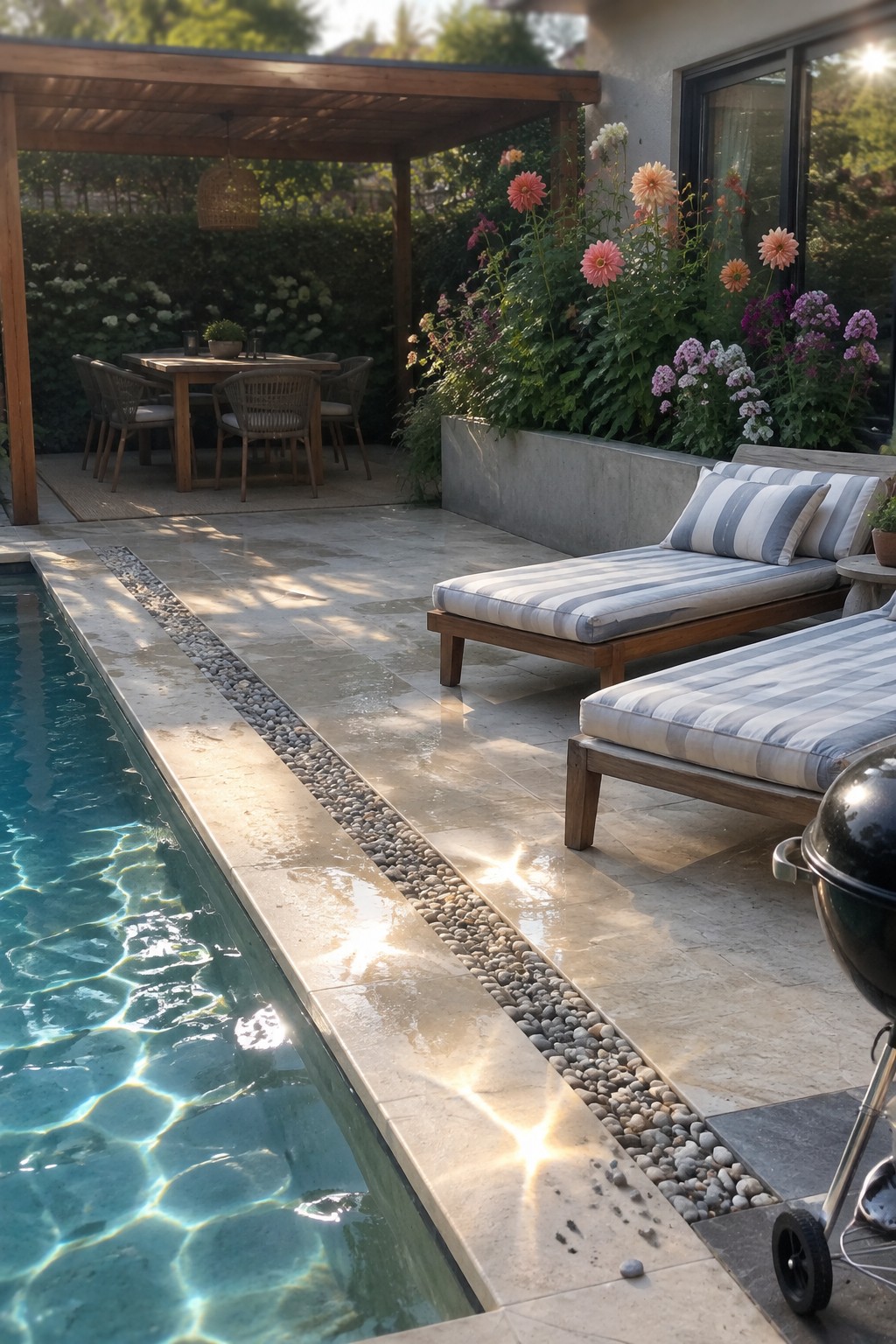
Bringing a flower bed right beside patio seating makes the garden feel like part of the place you spend time. Tall dahlias add color at eye level, so you can enjoy the blooms while resting rather than only from a path or window.
A raised bed works well for this when the patio has limited ground space or needs a clear edge. Leave enough room for chairs and walkways, and plant dahlias where they get plenty of sun.
Use a Long Table to Make Outdoor Dining Practical

A long patio table gives a garden space room for shared meals without making the seating feel scattered. Here, the table runs alongside a brick path, with a small flower arrangement bringing color right to the dining area.
This setup works well on narrow patios or beside a garden bed, where a table can follow the shape of the space. Leave enough room to pull chairs back and walk past, especially if the patio path also serves as a route through the garden.
Grow Dahlias Along a Small Patio

Dahlias can bring plenty of color to a compact patio when you grow them in containers along its edges. Their blooms sit close to the seating area, while pots keep the planting easy to arrange and change through the season.
Choose sturdy pots with good drainage, and leave enough room for people to move between them. A few larger containers usually work better than many small ones, especially in a narrow space.
Use a Stone Path to Shape a Gravel Garden

A curved stone path gives a gravel garden a clear route through the space. It also makes the pale gravel feel more purposeful, while nearby dahlia planters bring color close to the path.
Use broad, flat stones where you want a comfortable walking route or a small place to pause. Keep the curve gentle so it is easy to follow, and leave enough room around the stones for plants to grow without crowding the path.
Arrange Patio Seating Around a Fire Pit

A central fire pit gives patio seating a clear gathering spot and makes the area useful after the sun goes down. Wicker chairs arranged around it keep conversation easy, while nearby dahlias bring color right to the edge of the seating area.
Leave enough space to move comfortably around the fire pit, and choose chairs that can handle outdoor use. This layout works well on a paved patio, especially when the seating is close to the garden rather than separated from it.
Frequently Asked Questions
Q: How much sun do dahlias need beside a patio?
A: Most dahlias bloom best with about six hours of direct sun a day. If your patio gets afternoon shade, plant them where they’ll catch the morning sun.
Q: Can I grow dahlias in pots around my patio?
A: Yes. Choose a roomy pot with drainage holes, since dahlias need space for their roots and dislike soggy soil. Pots also make it easier to move the flowers into a sunnier spot.
Q: How can I keep tall dahlias from flopping onto the patio?
A: Add a stake when you plant each tuber, then tie the stems loosely as they grow. It’s much easier than trying to prop up a fully grown, leaning plant.
Q: Will dahlias keep blooming through summer?
A: They will if you snip off faded flowers regularly. Keep the soil evenly moist, too, especially during hot, dry spells.
