

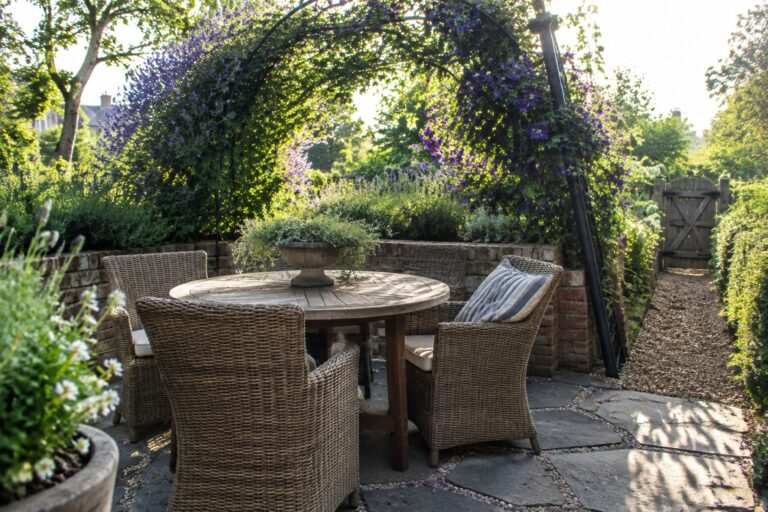
Clematis can soften the hard edges around a patio, but where it grows matters as much as the flowers themselves.
I find that a climbing vine works best when it has a clear place to go, whether that means a trellis, a pergola post, or a simple fence panel.
The surrounding layout also shapes how the patio feels, since a thick screen can add privacy while an open planting bed keeps the space feeling airy.
Some of these approaches use clematis to frame a seating area, while others let it add color along a path or boundary.
I’d start with the ideas that suit the patio’s sunlight and structure, then adapt the planting to leave enough room for everyday use.
Grow Clematis Over a Patio Arch
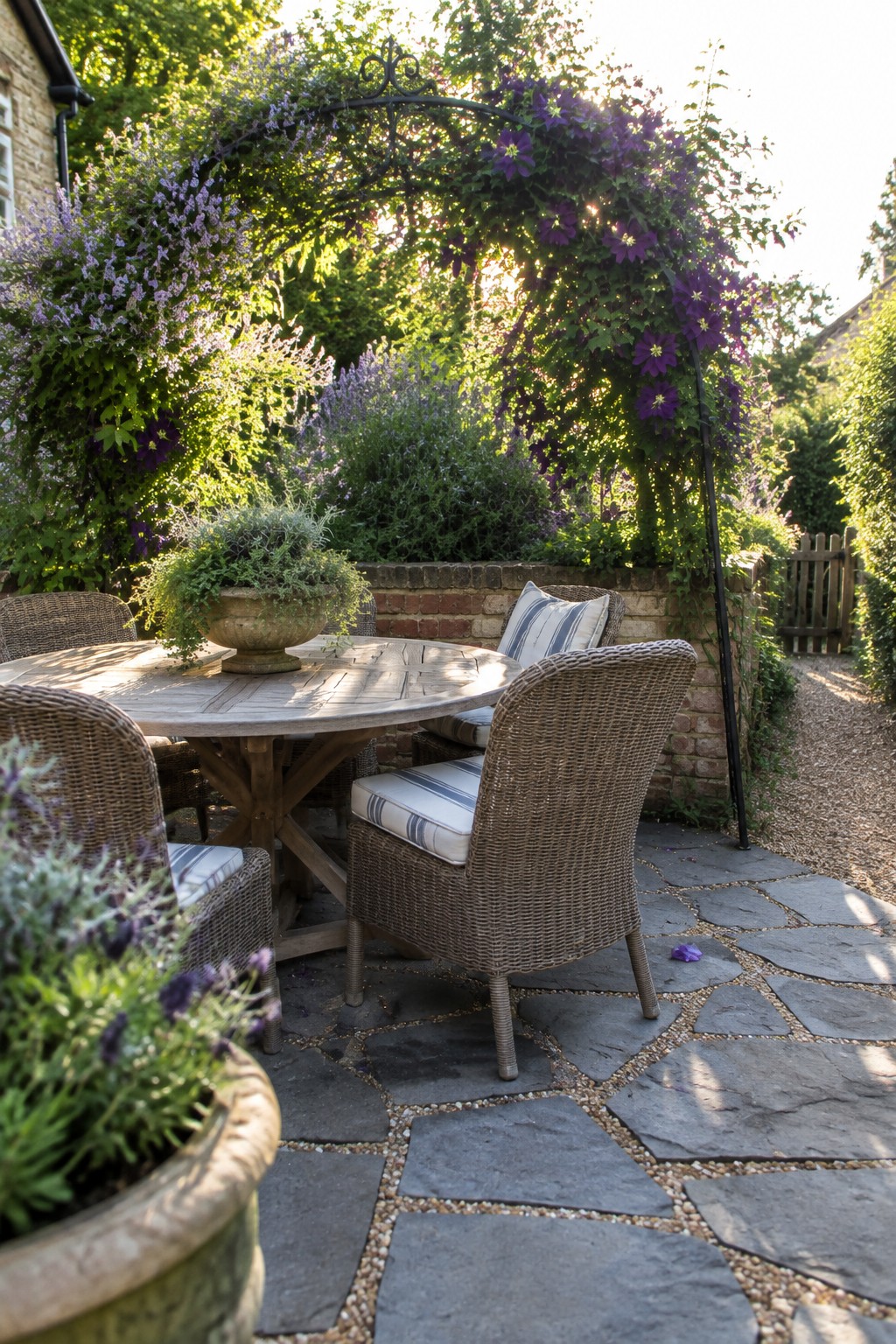
A clematis-covered arch can give a patio a clear sense of enclosure without blocking it off. The flowers draw the eye upward, while the open sides keep the seating area connected to the rest of the garden.
Set an arch at the edge of a dining or sitting area, then train clematis over it as the stems grow. Choose a variety suited to the amount of sun the spot gets, and leave enough room around the supports to reach the plants for pruning.
Add a Built-In Bench to the Patio

A built-in bench can make a patio easier to use without taking up much room. Here, the long concrete seat gives the fire pit area a clear place to gather, and a simple cushion makes it more comfortable.
This setup works well in a compact courtyard or along a garden wall. Keep the bench deep enough for relaxed seating, and leave plenty of clear space around the fire pit.
Add A Pergola For Patio Shade
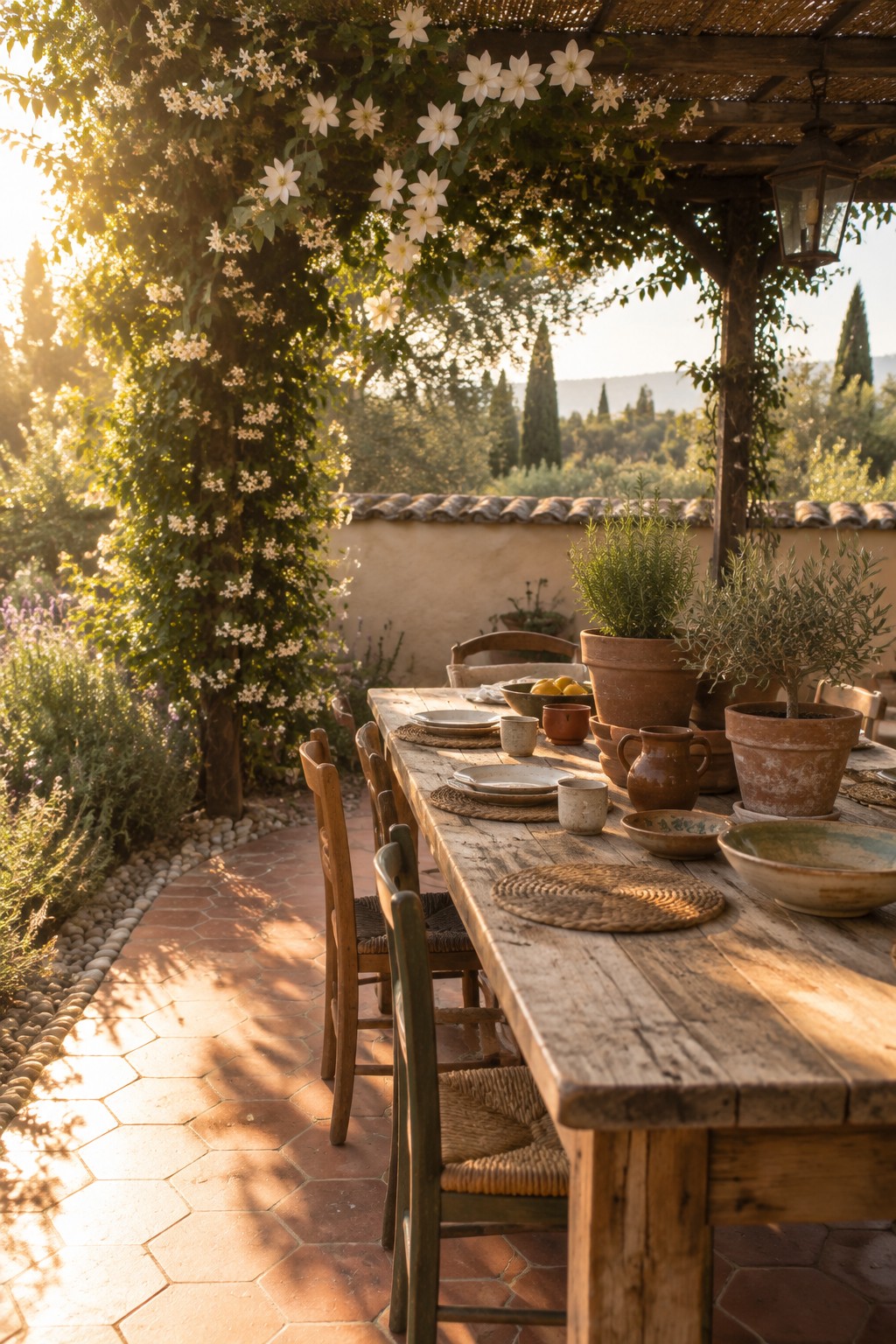
A pergola can make an outdoor dining area feel like a place to linger, especially when clematis grows across the overhead beams. The leafy cover gives the patio some shade while letting light filter through.
Choose a sturdy structure and give the clematis room to climb, guiding its stems along the supports as it grows. This works well over a dining table or seating area, but leave enough open space for air and access to the plants.
Use Clematis to Create a Living Patio Screen
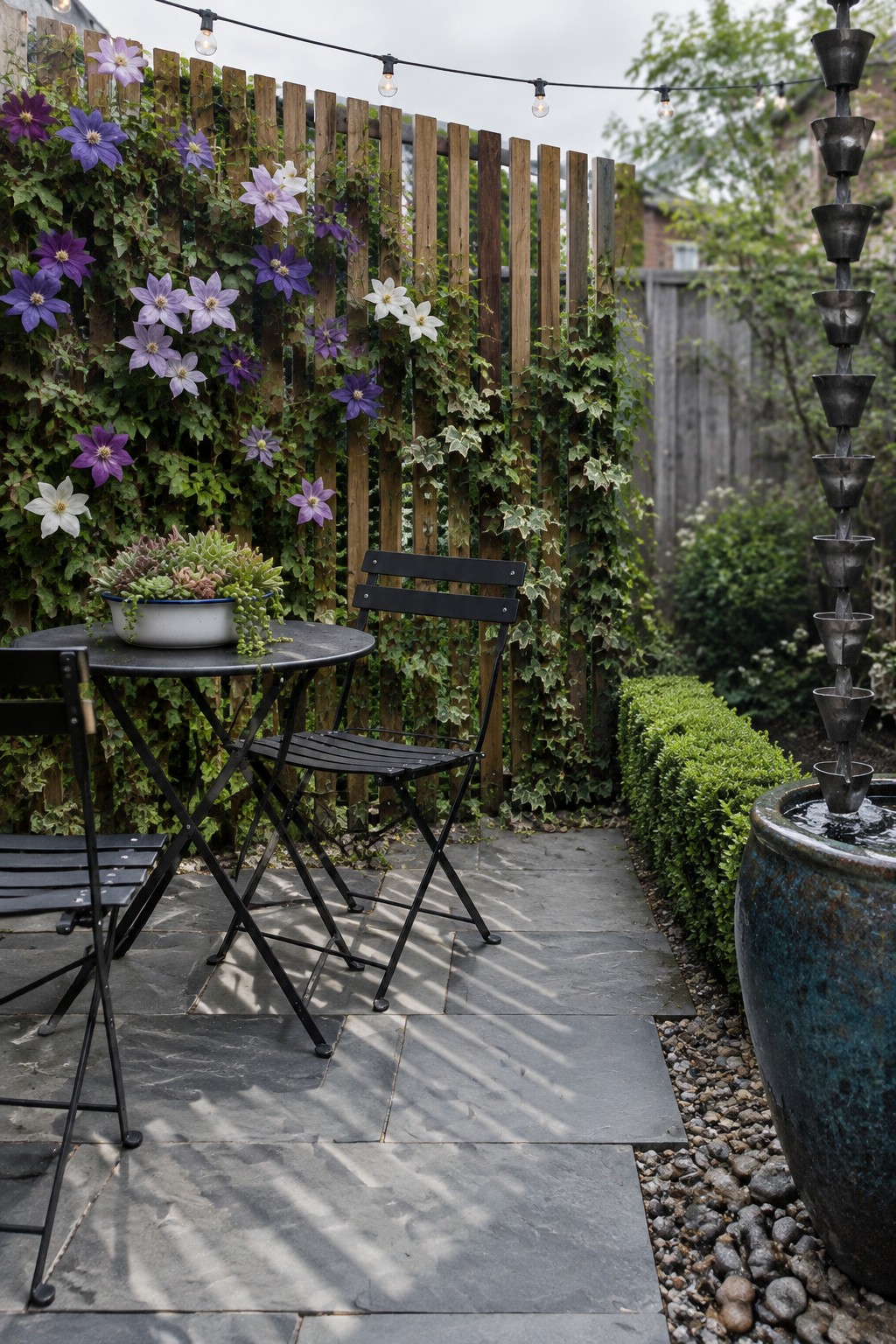
A wooden trellis covered in clematis can make a patio feel more private without closing it off completely. The flowers bring color to the seating area, while the leafy growth gives the fence a softer, more garden-like look.
Train clematis along a sturdy fence or trellis beside a small dining spot or seating area. Leave enough room to reach the plants for pruning, and check that the structure can support mature vines.
Use a Dining Table to Make the Patio More Useful
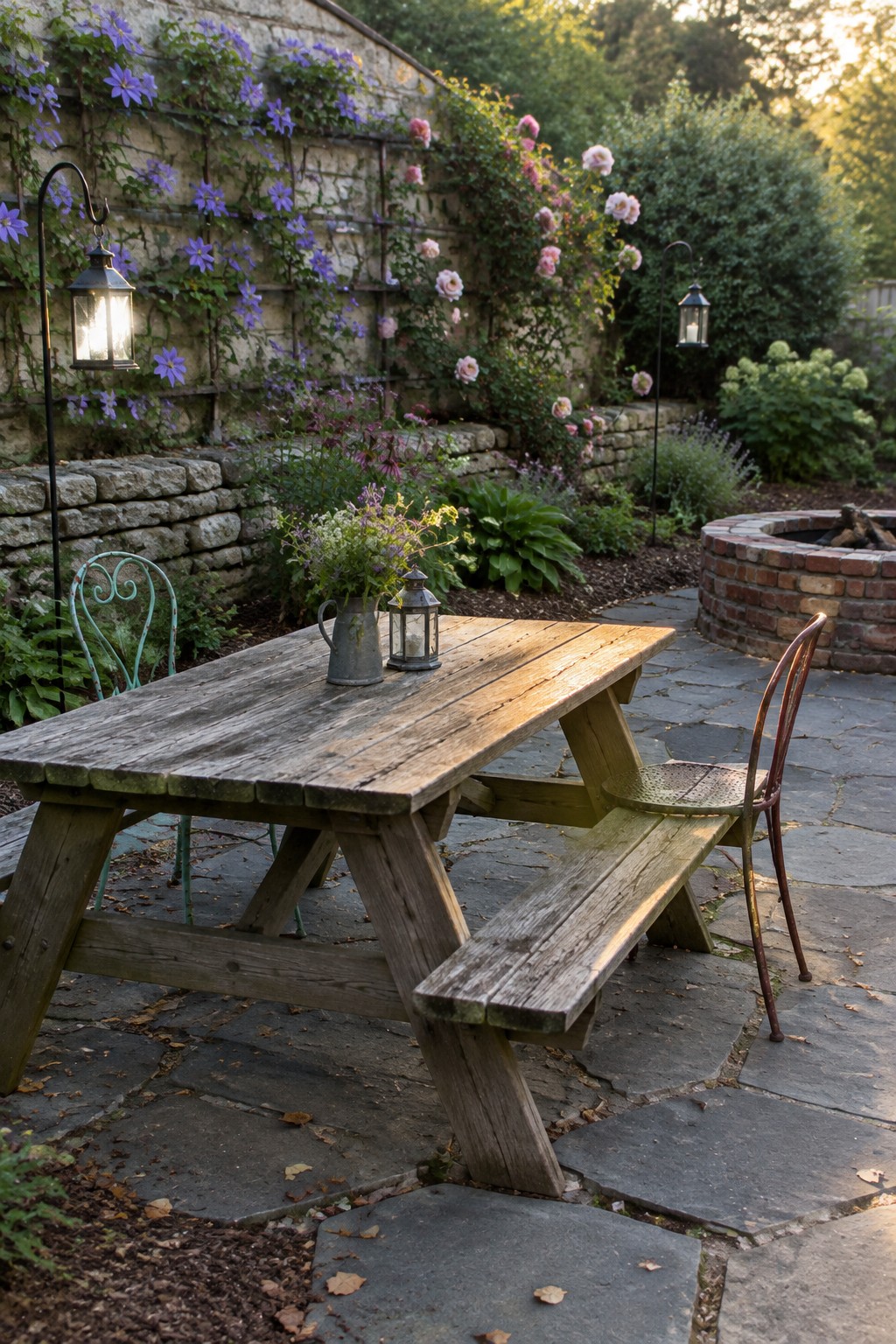
A sturdy picnic table gives a patio a clear place for meals and casual gatherings. It also makes good use of a stone-paved area, so the space feels practical rather than just decorative.
Leave enough room around the table for chairs to move, and keep nearby plantings low enough that they do not crowd the seating. Clematis can climb a wall or trellis nearby, adding flowers without taking up table space.
Train Clematis Up Patio Supports
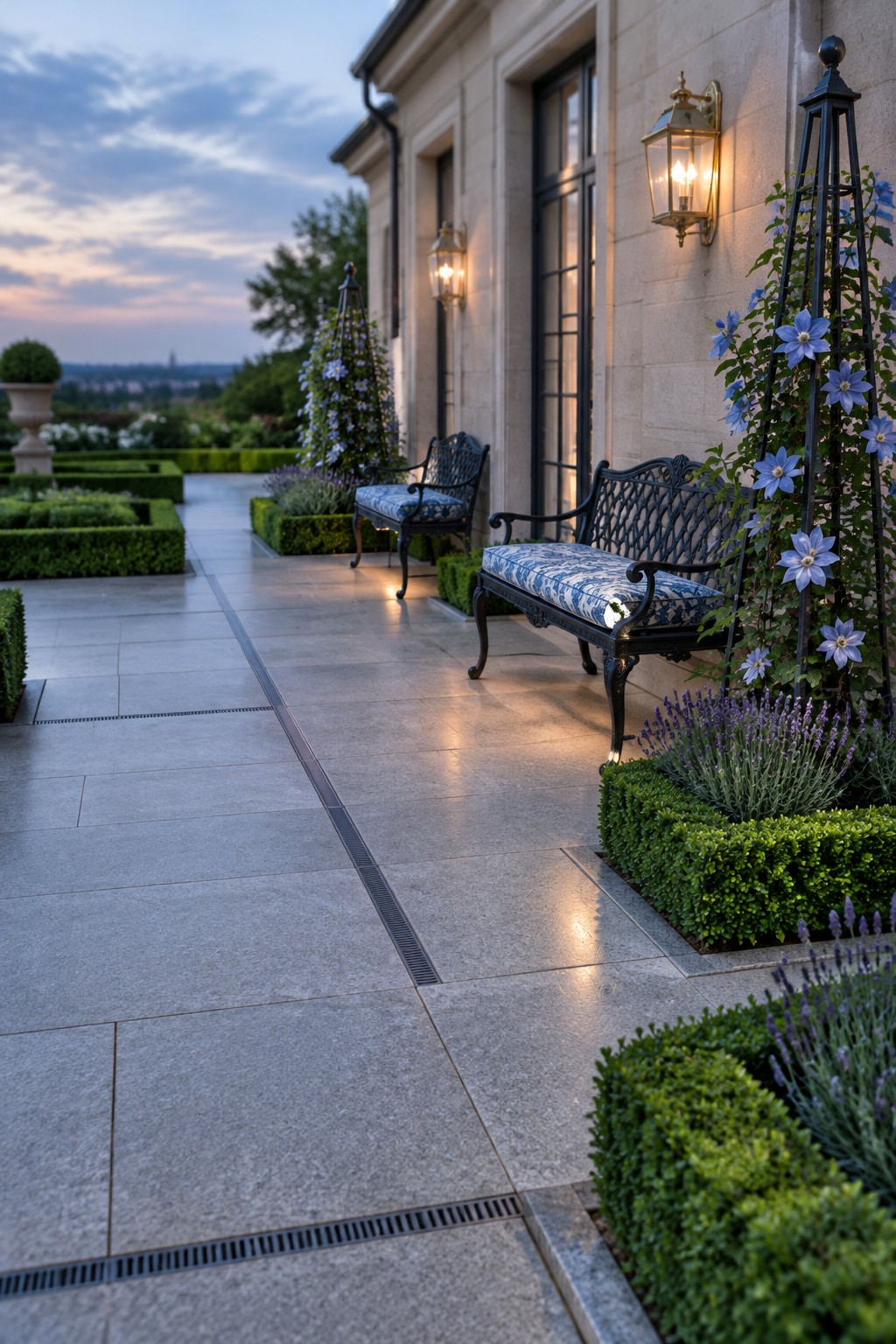
Clematis can bring color to a patio without taking up much floor space. Growing it on tall supports lets the vines add height along a seating area, while keeping the main walkway clear.
Place supports beside a wall or at the edge of a bed, where the roots have room and the vines can be tied in as they grow. This works especially well in a narrow patio, but leave enough space around benches for people to sit comfortably.
Use a Pergola to Shade Patio Seating
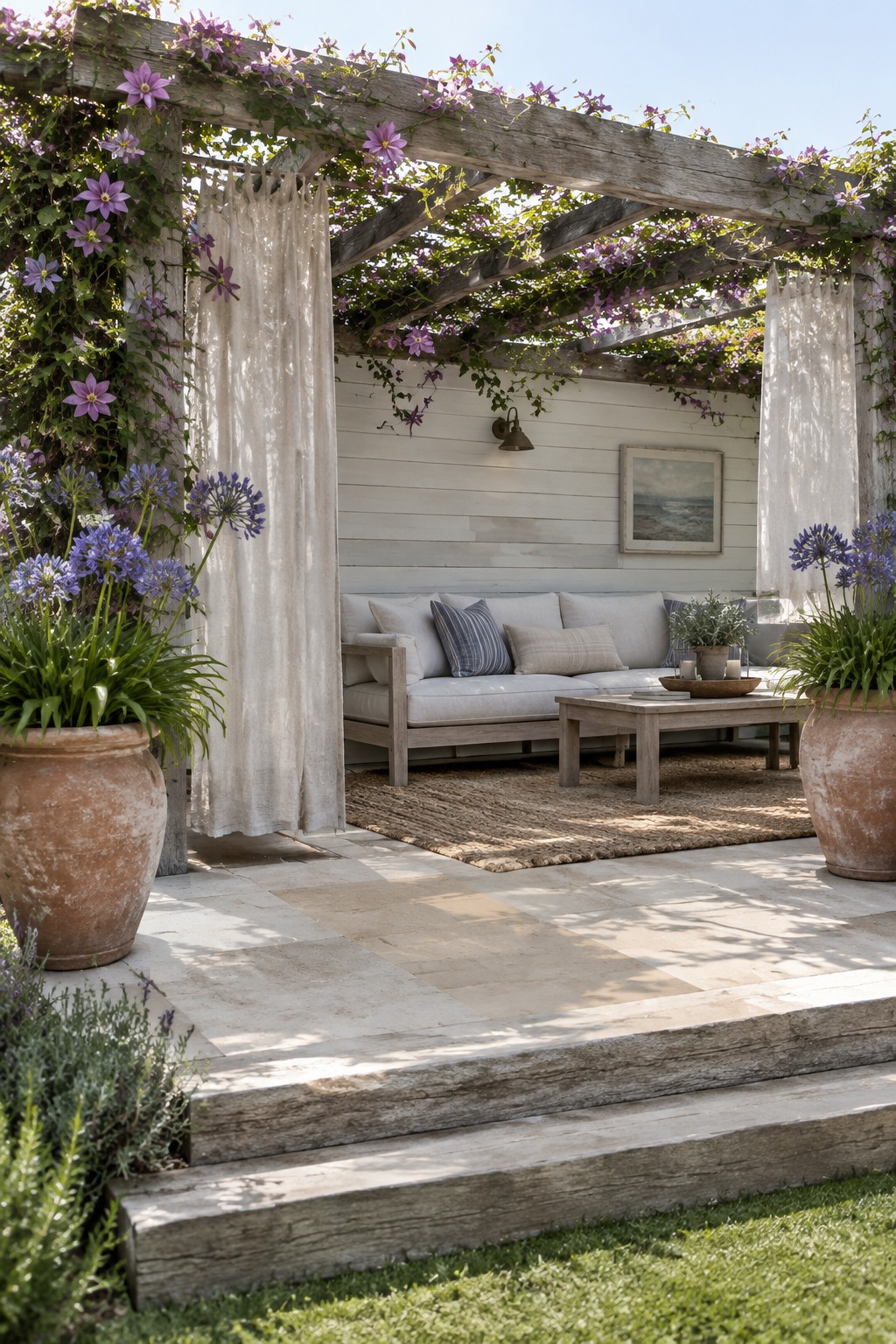
A pergola can make an open patio feel more like a place to sit and stay awhile. Let clematis climb across the beams for leafy cover, while keeping enough open space for light and air.
This works well over a seating area beside the house or in a garden patio. Train the vines along the top and posts, and leave the seating easy to reach and move around.
Use Planters To Define Patio Seating
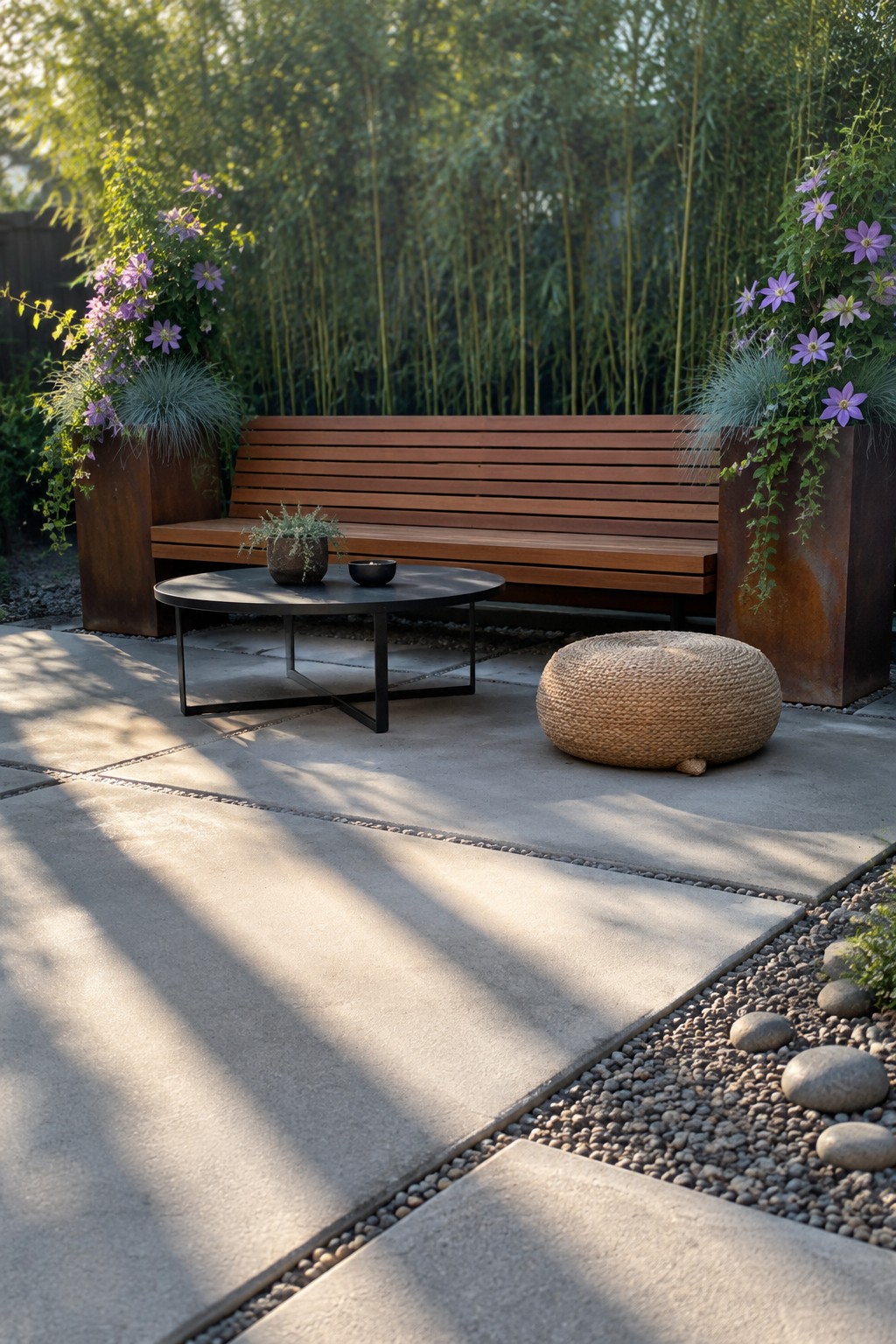
Large planters can help mark out a seating area while adding clematis and other greenery around its edges. This works especially well on an open patio where you want the seating to feel a little more tucked away without building a permanent screen.
Place sturdy planters at the sides of a bench or patio lounge area, and give clematis support to climb as it grows. Leave enough room for the plants to spread without crowding the seats or blocking a walkway.
Plant Clematis Along a Patio Bench
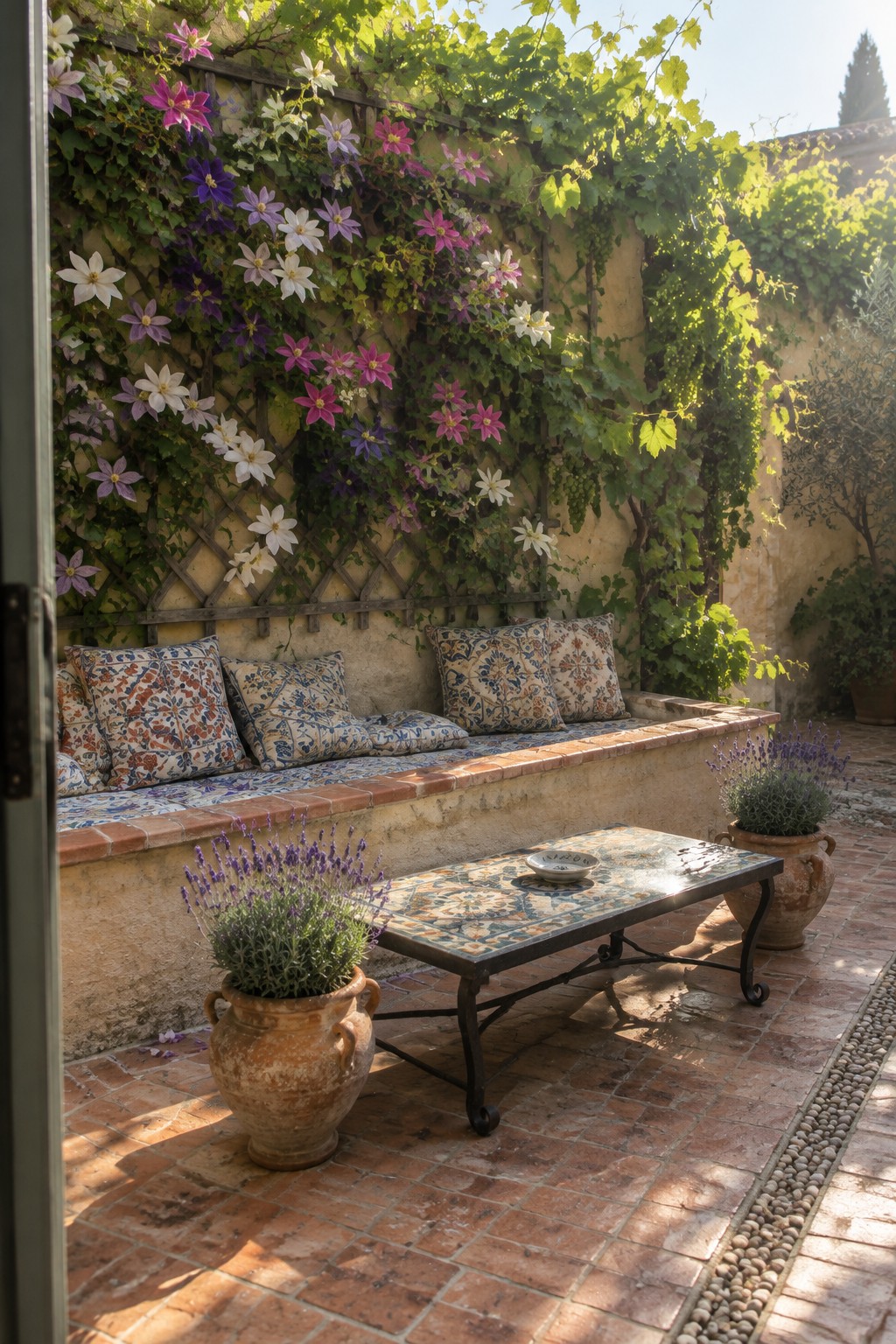
A built-in bench can make a small patio feel settled and give clematis a clear place to grow behind the seating. The flowers add color at eye level, while the bench keeps the main floor area open.
Train clematis along a sturdy trellis behind a masonry bench, leaving enough room to reach the plants for pruning and watering. This works especially well in a narrow courtyard where freestanding screens would take up too much space.
Use Gravel to Shape a Garden Patio
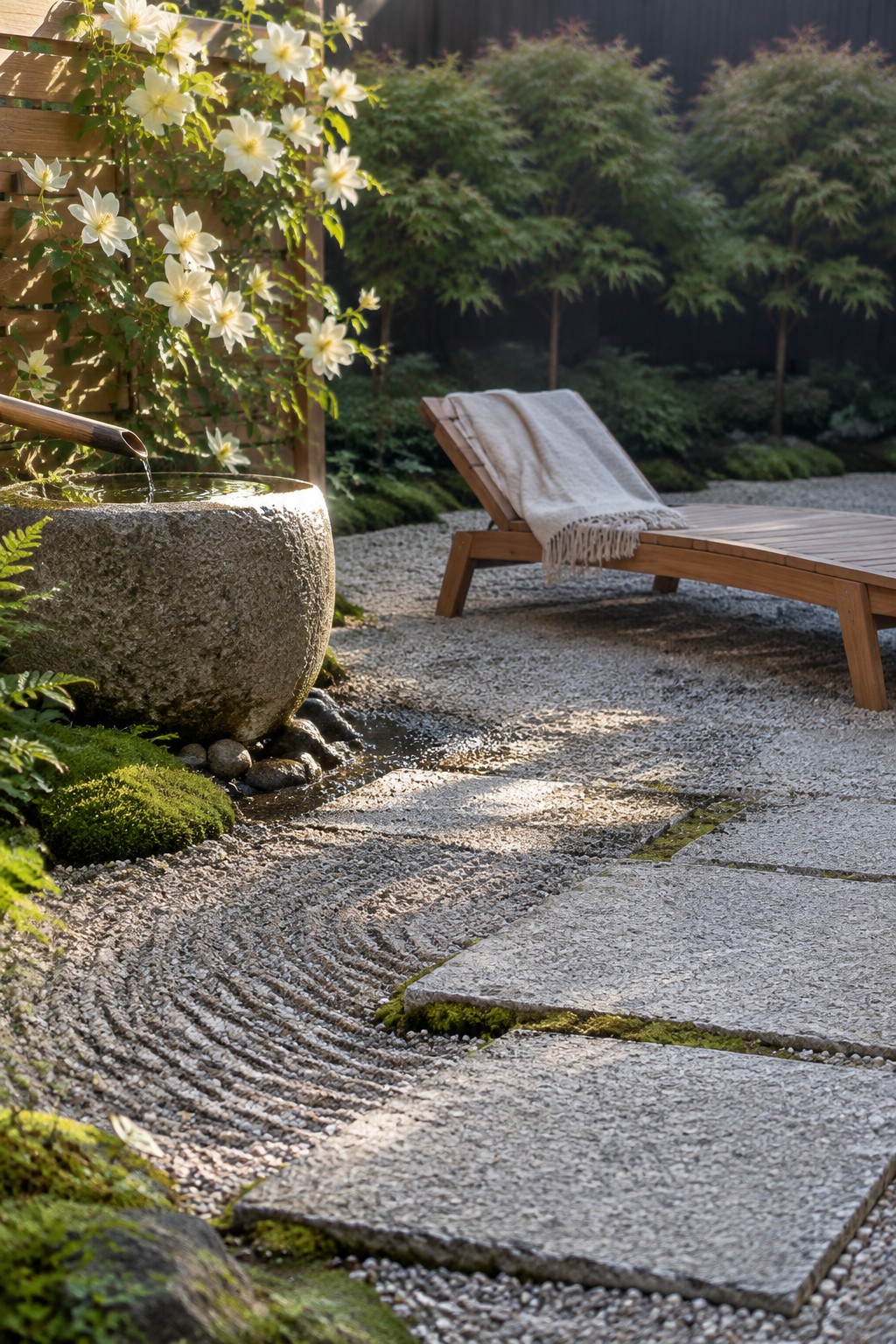
A gravel patio can give a garden a relaxed, informal feel while still providing a clear place to sit. Broad stepping stones make the surface easier to cross, and the gravel helps define the patio without the expense or formality of a fully paved area.
This approach works well in a cottage-style or woodland garden. For a clematis patio, train the vine on a nearby trellis or support, and leave enough room around the seating so the plants don’t crowd the path.
Hang Patio Lights From A Clematis-Covered Pergola
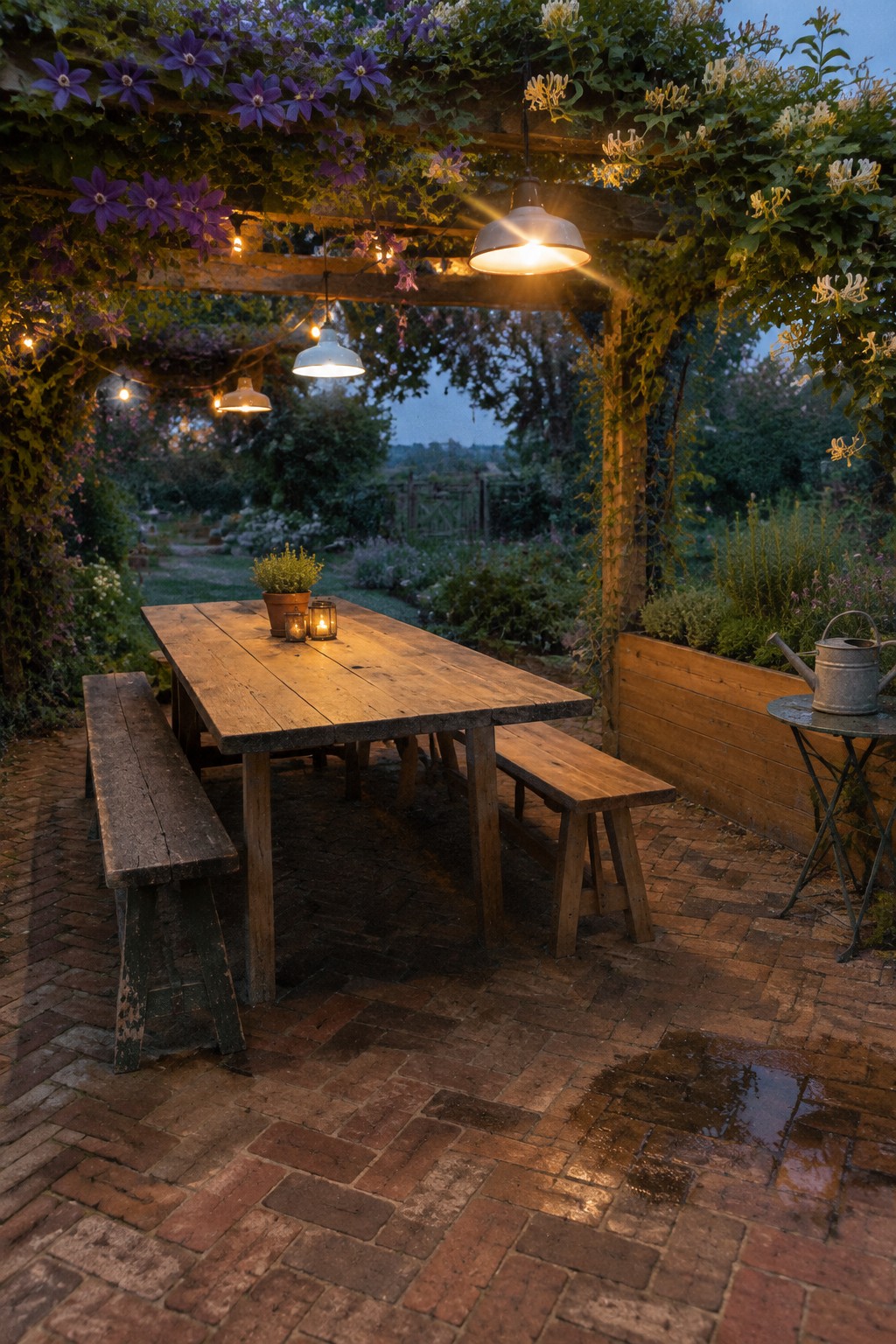
A pergola covered in clematis can make an outdoor dining area feel tucked away without closing it off. Hanging lights from the beams keeps the table usable after dark, while the flowers turn the overhead structure into part of the garden.
For a similar setup, train clematis along sturdy pergola beams and leave room for the vines to grow around the lights. Choose outdoor-rated fixtures, and make sure the pergola can support both the plants and the lighting.
Train Clematis Across a Patio Trellis
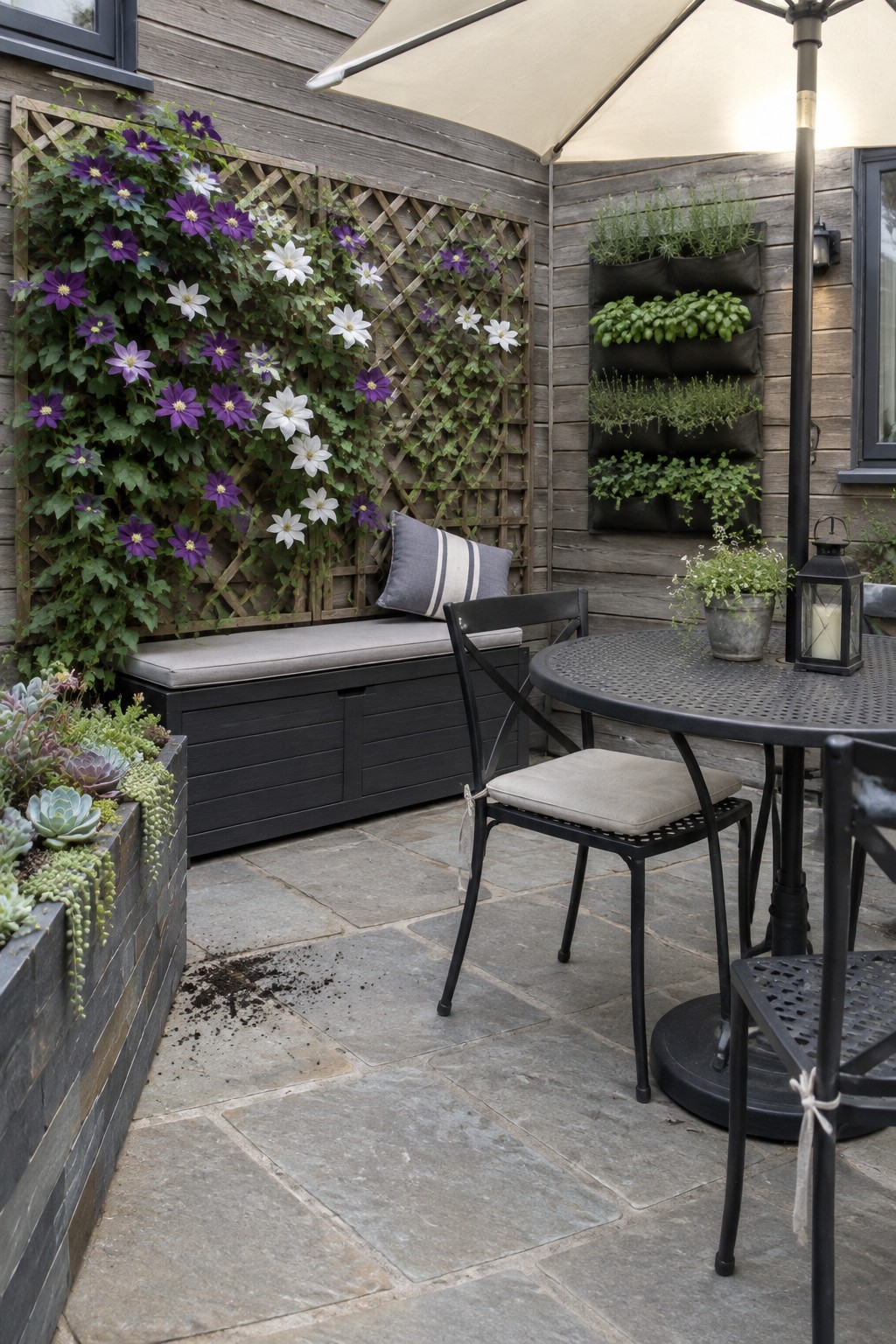
A trellis lets clematis grow upward along a patio wall, adding flowers without taking up much floor space. It can also give a small seating area a bit more privacy. Here, the vine fills a wooden lattice behind a built-in bench.
Use a sturdy trellis where clematis can get enough sun, and leave room to reach the plant for pruning. This approach suits narrow patios where there isn’t much space for a wide flower bed.
Put a Fire Pit at the Center of Patio Seating
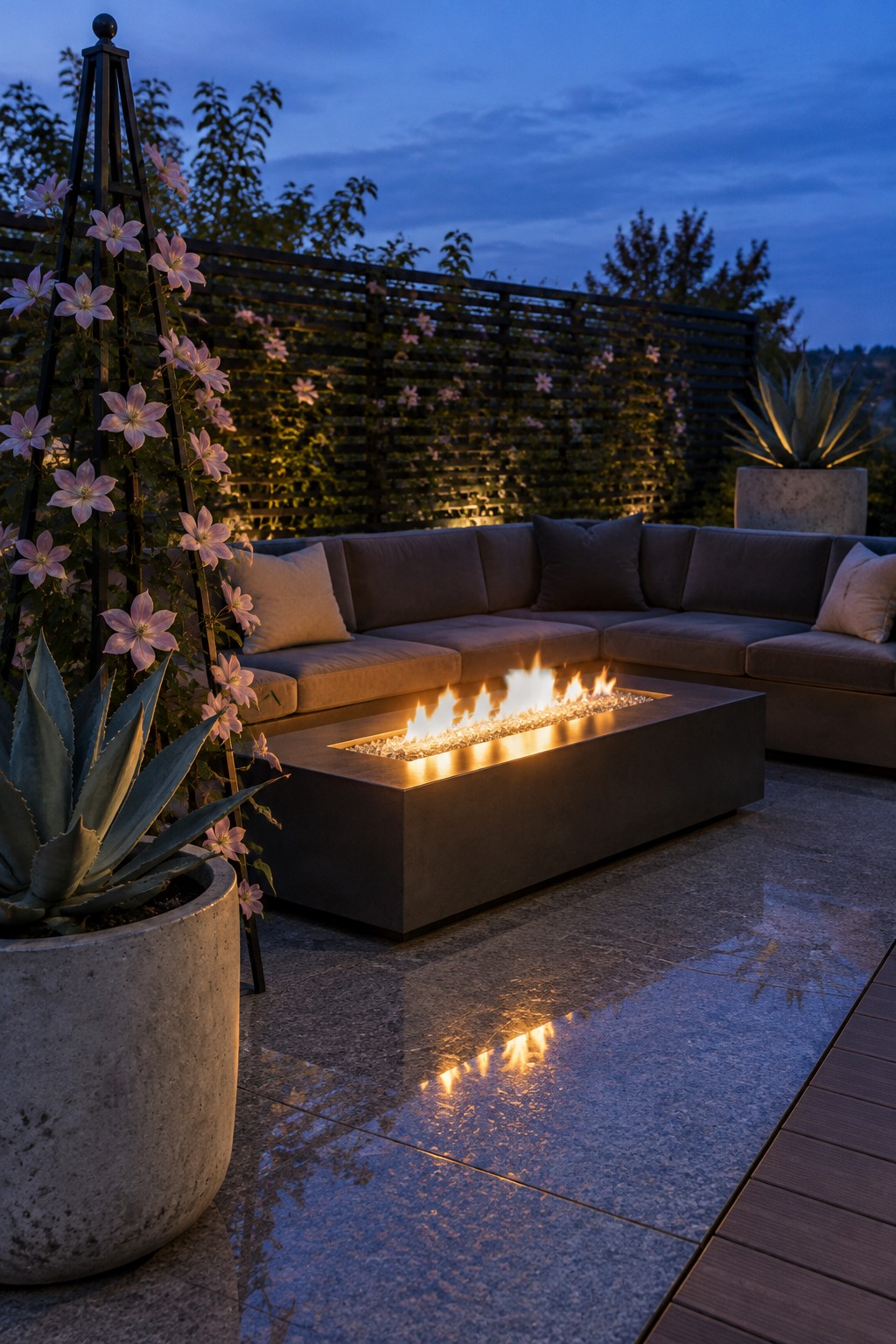
A long fire pit can make a patio seating area feel like a place to gather, rather than just a row of chairs. Set in front of a corner sofa, it gives everyone a clear shared focus and keeps the seating useful after dark.
Leave enough room around the fire pit for people to move comfortably, and check the recommended clearance for the model you choose. This layout works well on a spacious patio where the sofa can wrap around one or two sides without blocking the main walkway.
Let Clematis Shade a Patio Seating Area
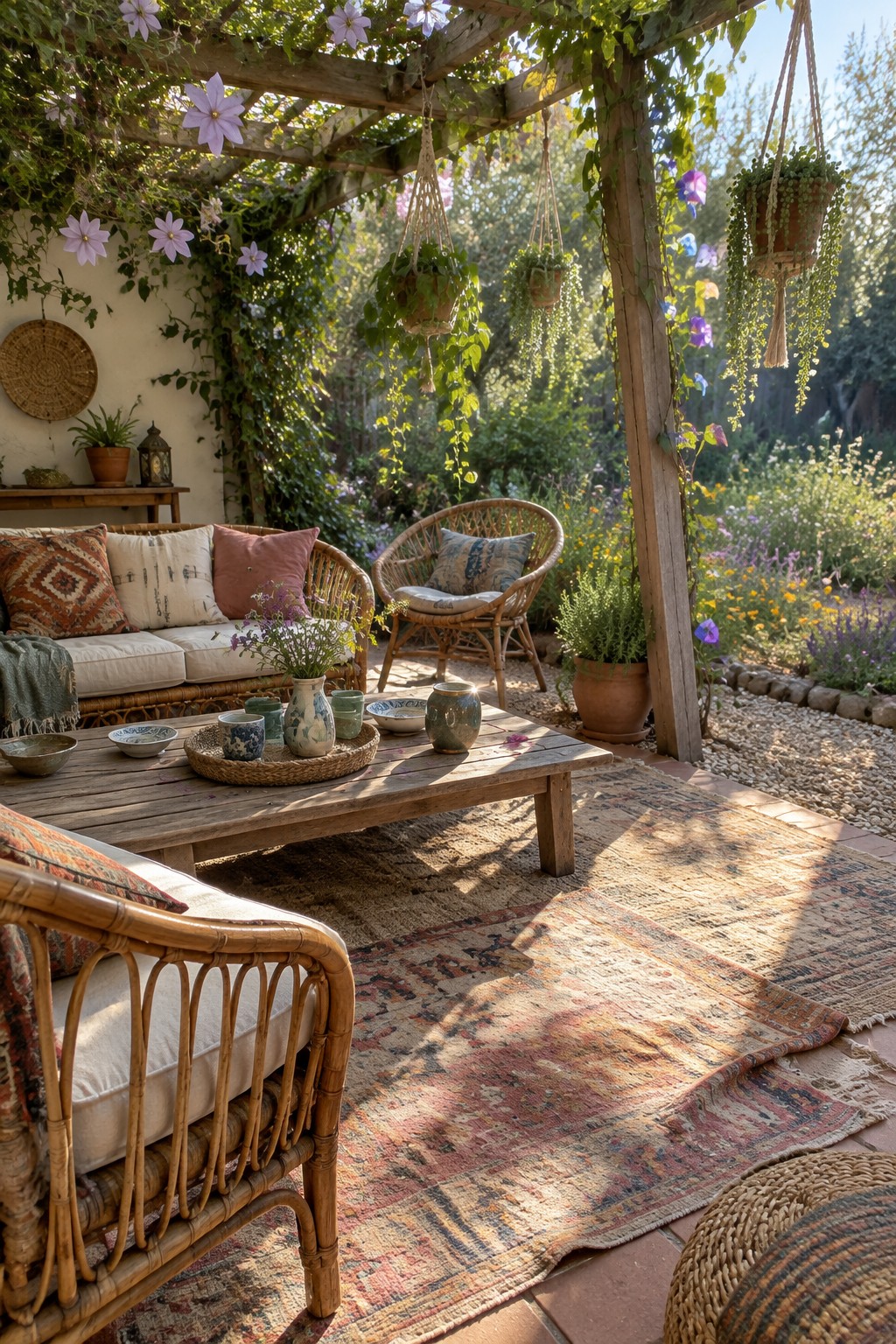
A pergola can make patio seating more comfortable by giving clematis a place to climb overhead. The leafy cover offers some shade while still leaving the space open to the garden.
Train clematis along the beams, and use a sturdy support that can handle mature growth. This works especially well over a seating area where you want dappled shade, but leave enough open space for good airflow and easy access.
Use a Flowering Trellis for Patio Privacy
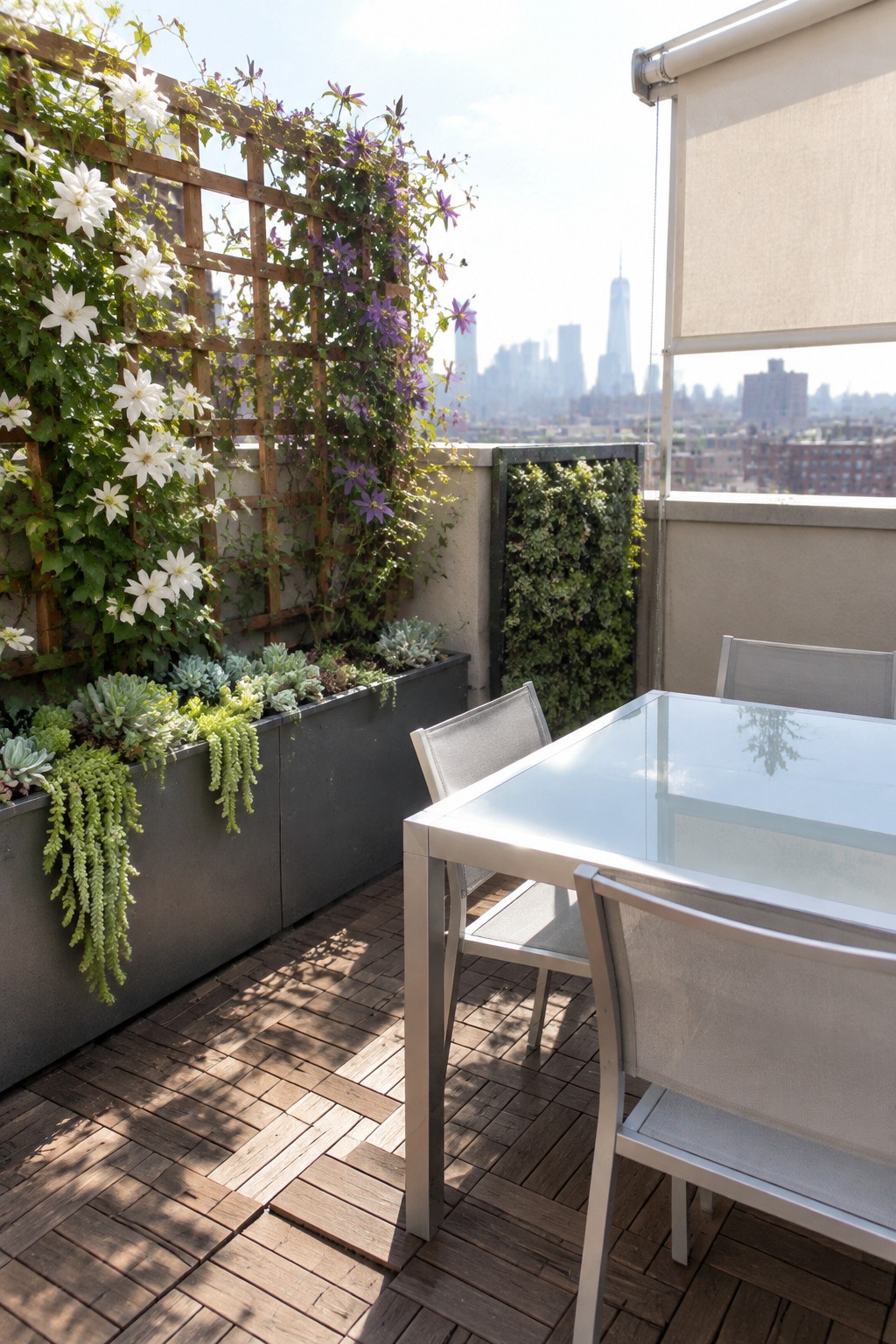
A trellis covered in clematis can give a patio a little more privacy without closing it off. The flowers bring color to the seating area, while the open lattice still lets light and air through.
This idea works well along a balcony or terrace edge where there is room for climbing plants to spread. Choose a clematis suited to the available sun, and leave space to reach the trellis for pruning and tying in new growth.
Train Clematis Along a Patio Wall
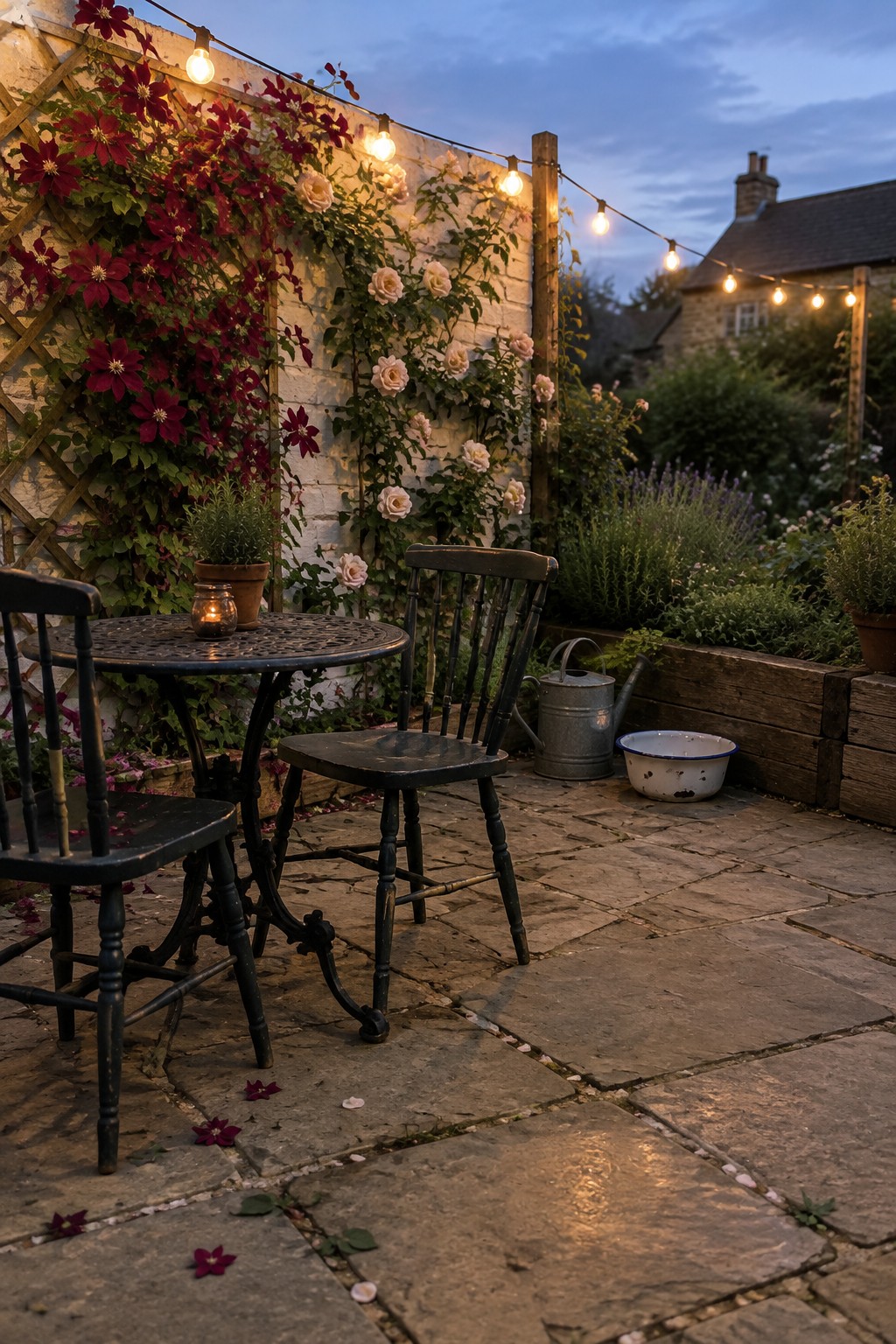
A trellis against a patio wall gives clematis a clear place to climb without taking up much floor space. It also brings flowers close to the seating area, where they’re easy to enjoy.
Use a sturdy trellis fixed securely to the wall, and leave room behind it for air to move around the stems. A small table and chairs nearby make this a practical choice for a compact patio.
Use Stone Terraces to Create a Garden Patio
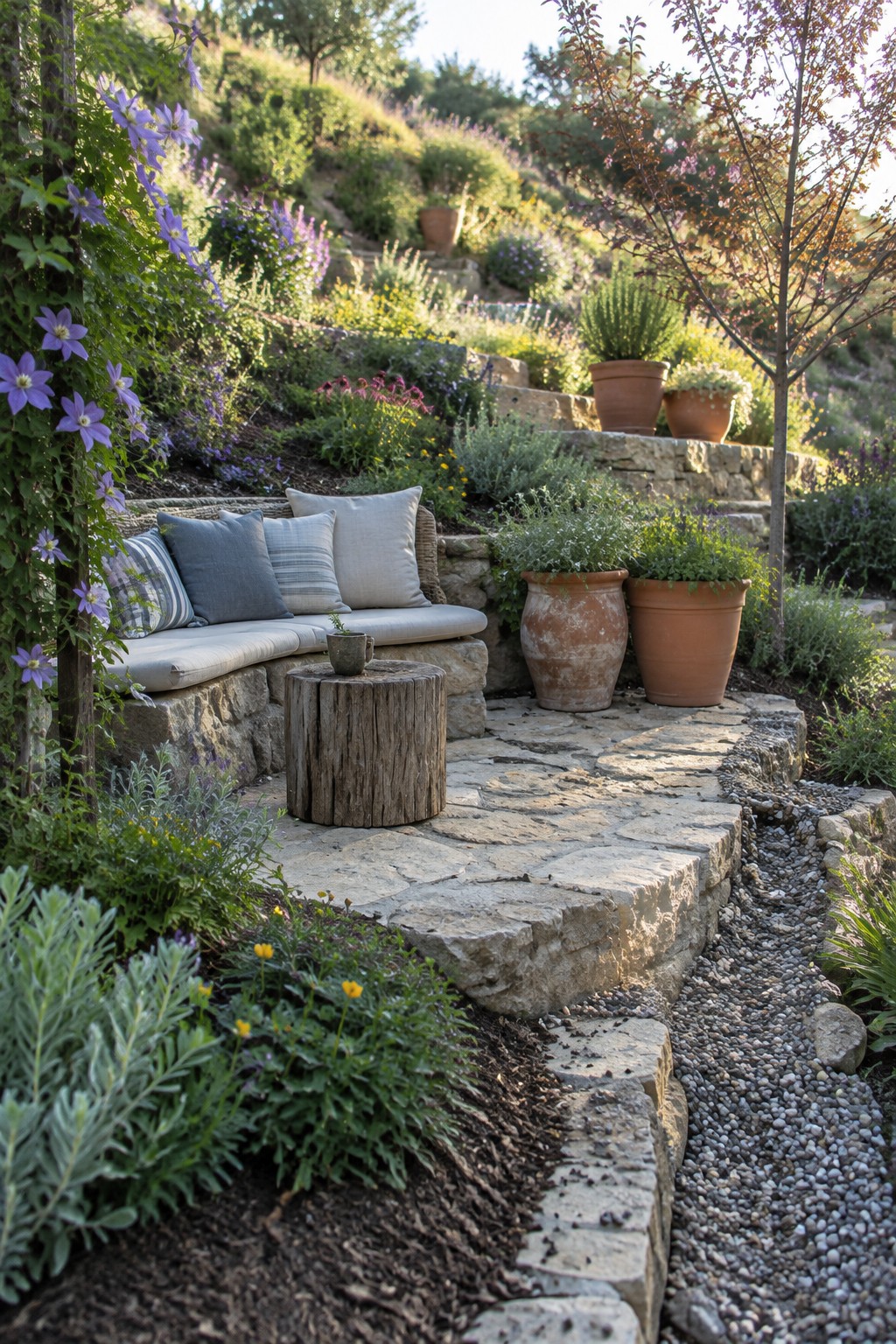
Stone terraces make a sloped garden easier to use by turning uneven ground into level places to sit and plant. The stone patio feels connected to the garden rather than set apart from it.
For a similar layout, build low retaining walls to form small, practical levels, then train clematis on a sturdy support near the seating area. Leave enough room on the patio for chairs and clear walking paths, especially where steps connect the terraces.
Make a Patio Bar Part of the Garden
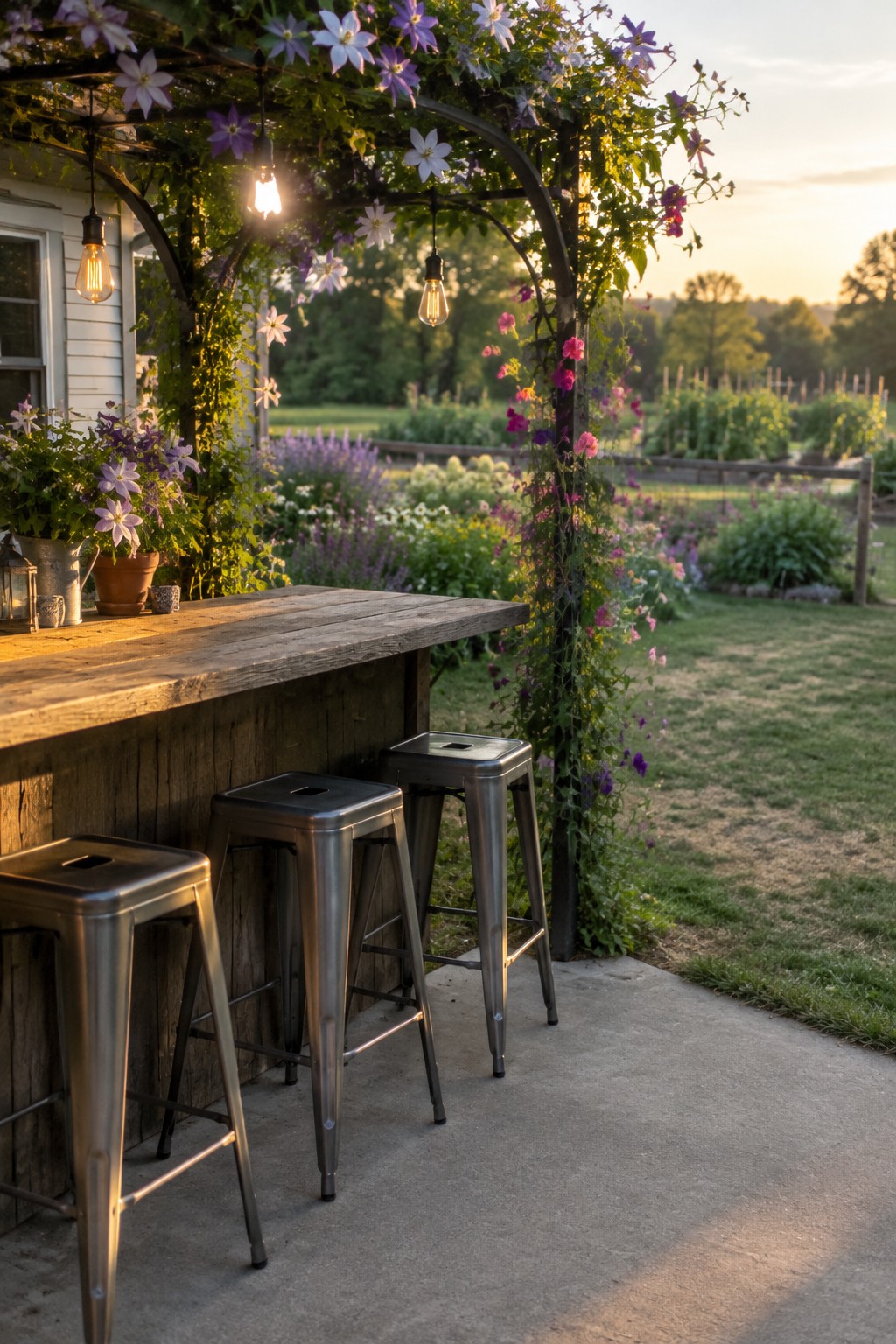
A narrow bar counter can make a patio useful for a quick drink or a casual meal without taking up space for a full dining set. Here, the counter sits beside the garden, so people can pause at the edge of the seating area and still feel connected to the planting.
This setup works well on a small patio or beside a porch. Choose a weather-resistant counter and stools that tuck underneath when not in use, and let a clematis-covered support nearby tie the spot into the garden.
Use Clematis to Line a Garden Path
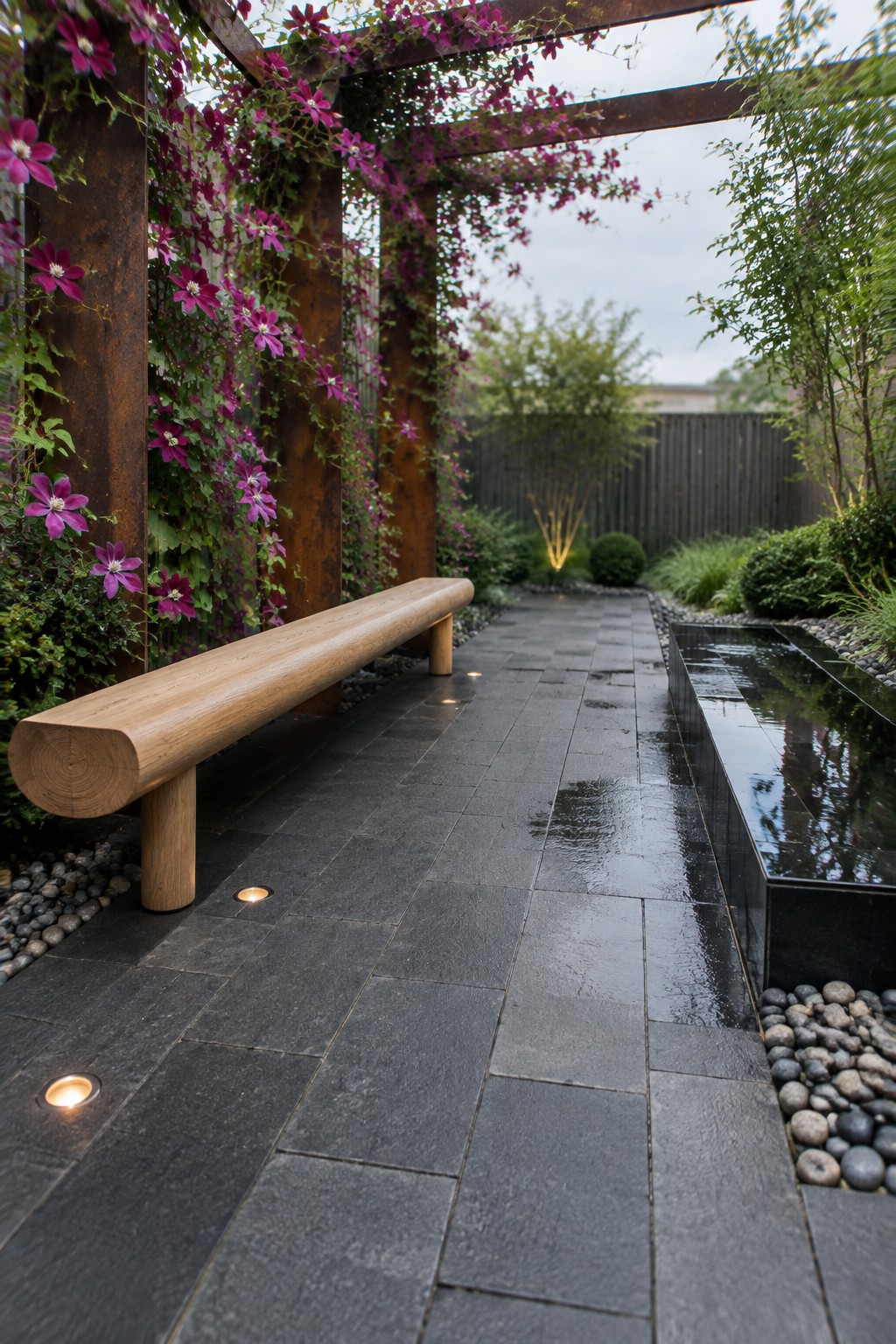
Clematis can turn a plain garden path into a more inviting route by growing it along sturdy vertical supports. Here, rusted metal panels give the vines a place to climb, while the flowers add color close to the walkway.
Use this idea beside a patio path or along a narrow side yard where planting space is limited. Leave enough room for people to pass, and choose supports that can handle mature vines without leaning over the paving.
Use Clematis to Mark the Garden Path
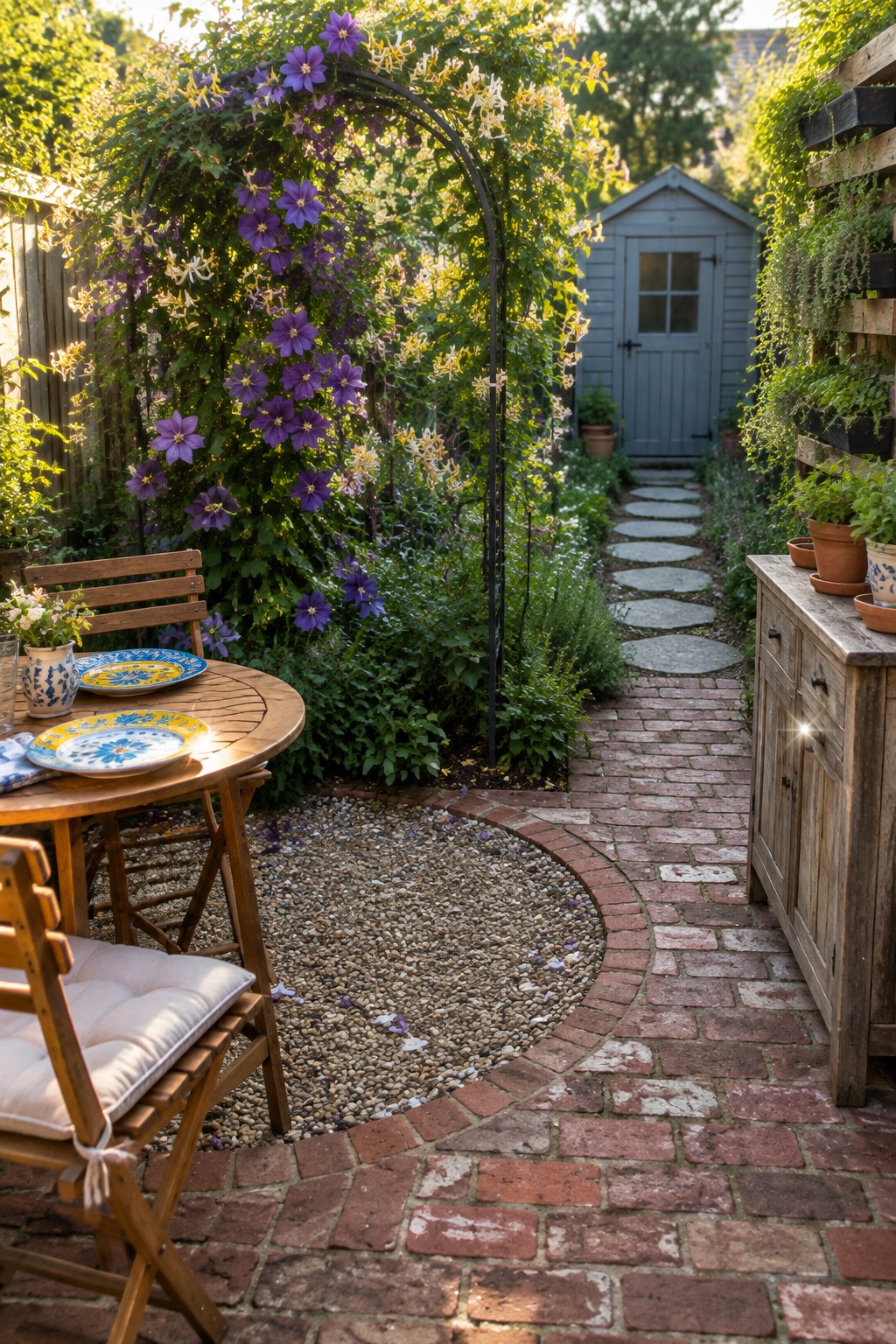
A clematis-covered arch can give a narrow garden path a clear entrance and make the route to the patio feel intentional. Purple flowers stand out against the greenery, while the open structure lets the path stay bright and easy to pass through.
Use a sturdy arch where a path begins or changes direction, and train clematis up both sides as it grows. Leave enough room underneath for comfortable passage, and choose a variety suited to the light and growing conditions in your garden.
Frequently Asked Questions
Q: Will clematis damage the patio or climb onto the house?
A: Clematis climbs by wrapping its leaf stems around slender supports, so give it a trellis, wire, or narrow garden obelisk. Keep the support a little away from siding and point the vine where you want it to grow.
Q: Can I grow clematis in a pot beside the patio?
A: Yes. Choose a roomy pot with drainage holes, add a sturdy trellis, and water when the soil starts to dry. A container can dry out faster than a garden bed, especially in warm, sunny weather.
Q: How do I keep clematis from taking over a small patio?
A: Train the stems along a trellis and trim back any that wander into walkways or seating areas. Pick a variety that fits your space, since some grow much more vigorously than others.
Q: Will clematis bloom in a shady patio spot?
A: It can, but you’ll usually get more flowers if the vine receives a few hours of sun. Keep its roots cool with mulch or a low-growing plant, while letting the upper growth reach the light.
