

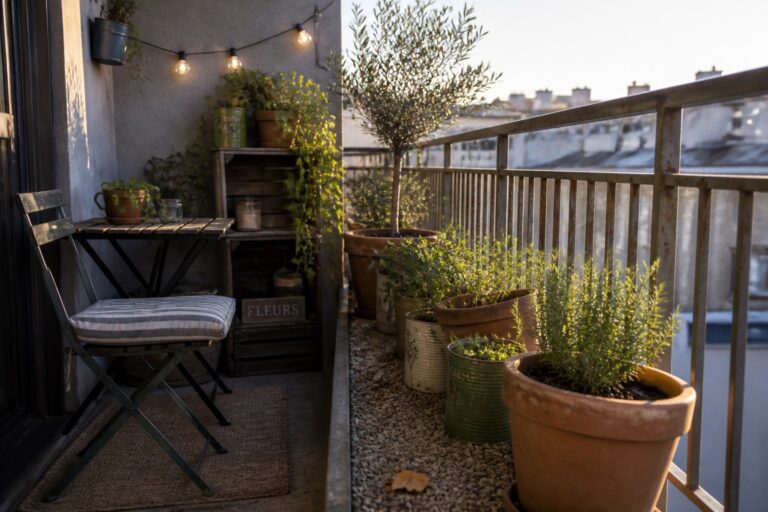
I have spent years trying to make my small patio feel like an actual extension of the house rather than just a leftover slab of concrete.
What usually stands out first is how the ground plane and plant heights work together to create a sense of enclosure without any big construction.
I tend to test ideas with gravel and pots first because they let me adjust things as the seasons change and my needs shift.
Simple layering of plants often turns out to be more practical than it sounds on paper since it adds depth without crowding the space.
Budget choices like these can quietly improve daily use.
Layer Plants Using Affordable Pots And Gravel
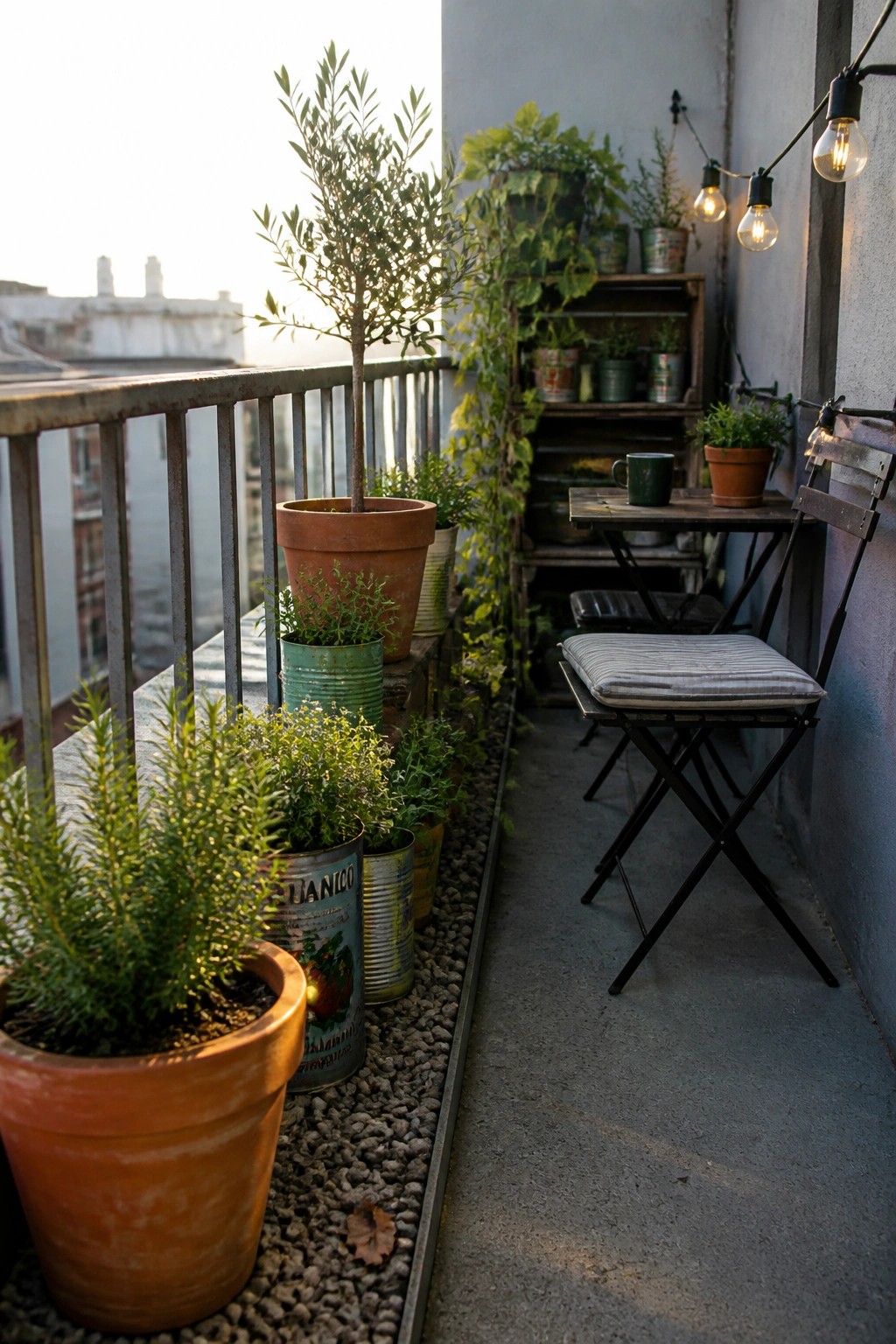
Many small patios gain a lot of life when you group pots of different heights and materials along the edge. The mix of sizes creates simple layers without any built-in beds or big expense.
Set the containers close together on a strip of gravel so water drains well and the ground stays tidy. This approach fits narrow balconies or rental spaces where you need something easy to move and change with the seasons.
Layer Pots of Different Sizes on Gravel
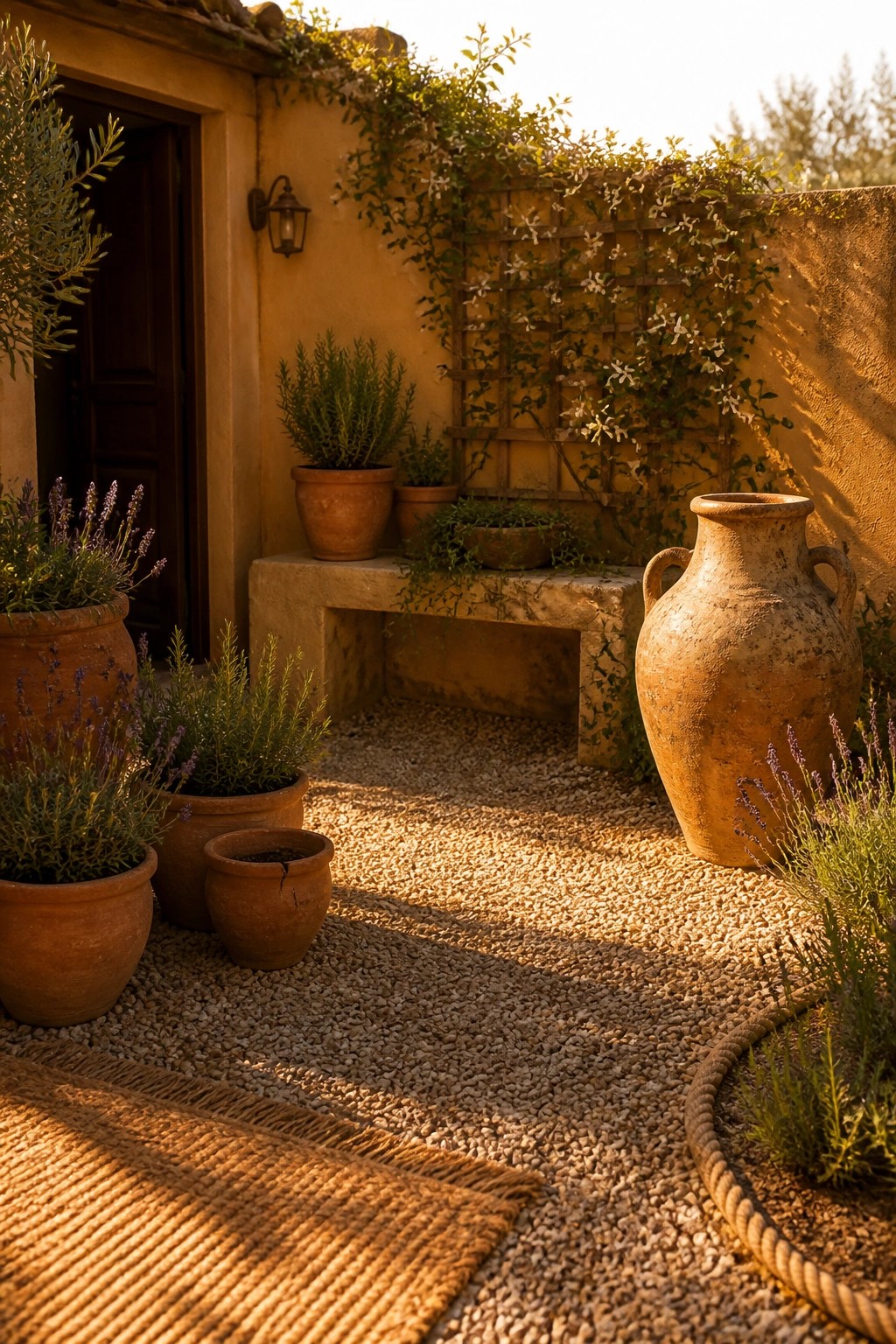
Placing pots in a few different heights on gravel gives you quick layers without building raised beds. The mix of tall and low containers creates depth right away, and gravel keeps everything looking neat while helping with drainage.
This works especially well on a small patio or side yard where you want a garden feel on a budget. Stick with simple plants like lavender or herbs in the smaller pots, and leave a little space between groups so the gravel stays visible.
Layer Plants With Pots On Gravel
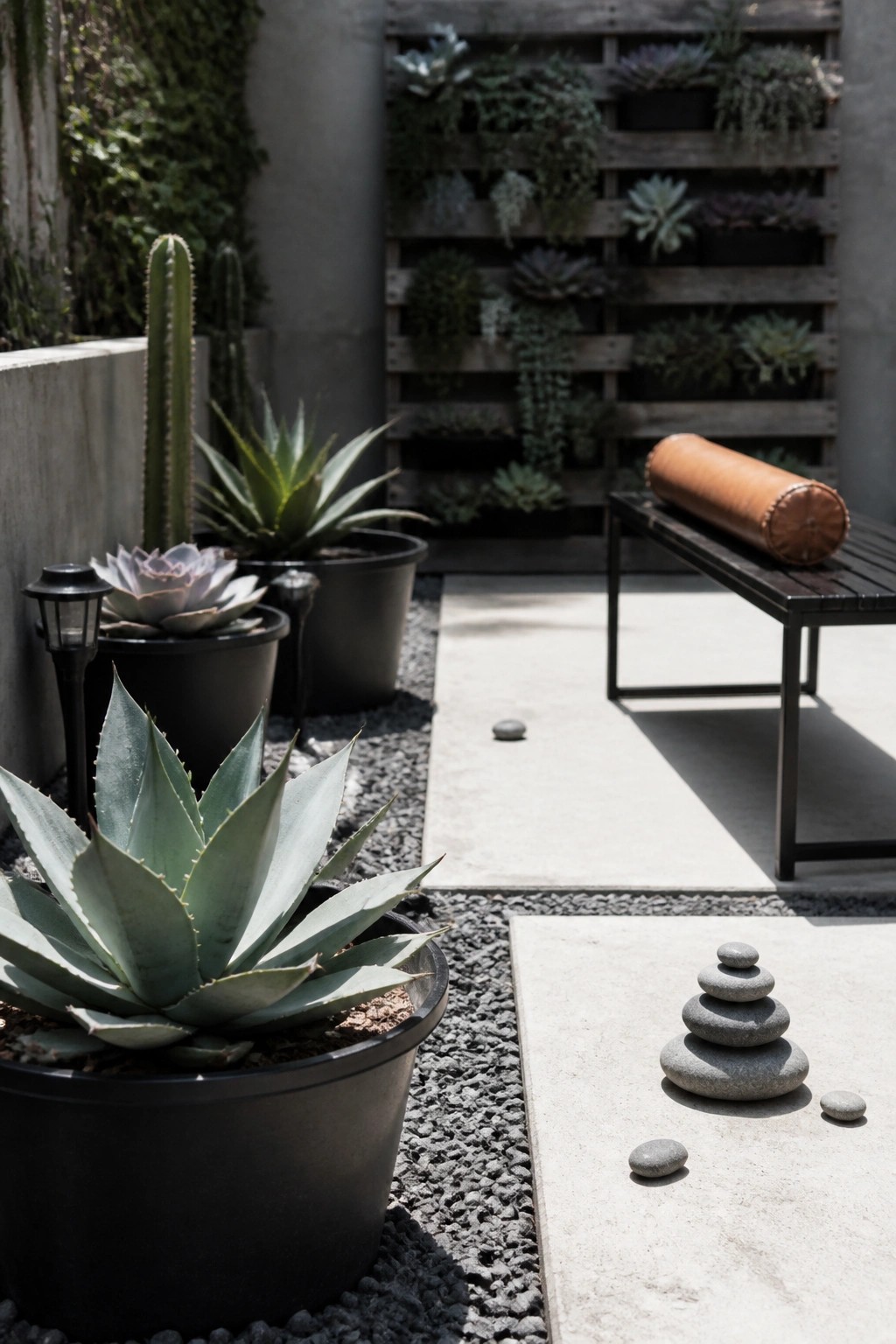
One simple way to build a patio garden on a budget is to place several pots directly on a gravel base. This approach gives you layers of height and texture without needing to dig beds or spend much on materials.
It suits small concrete patios or rental spaces where permanent changes are not possible. Use matching pots and repeat a few plant types so the area feels calm rather than crowded.
Layer Potted Plants Along The Edges
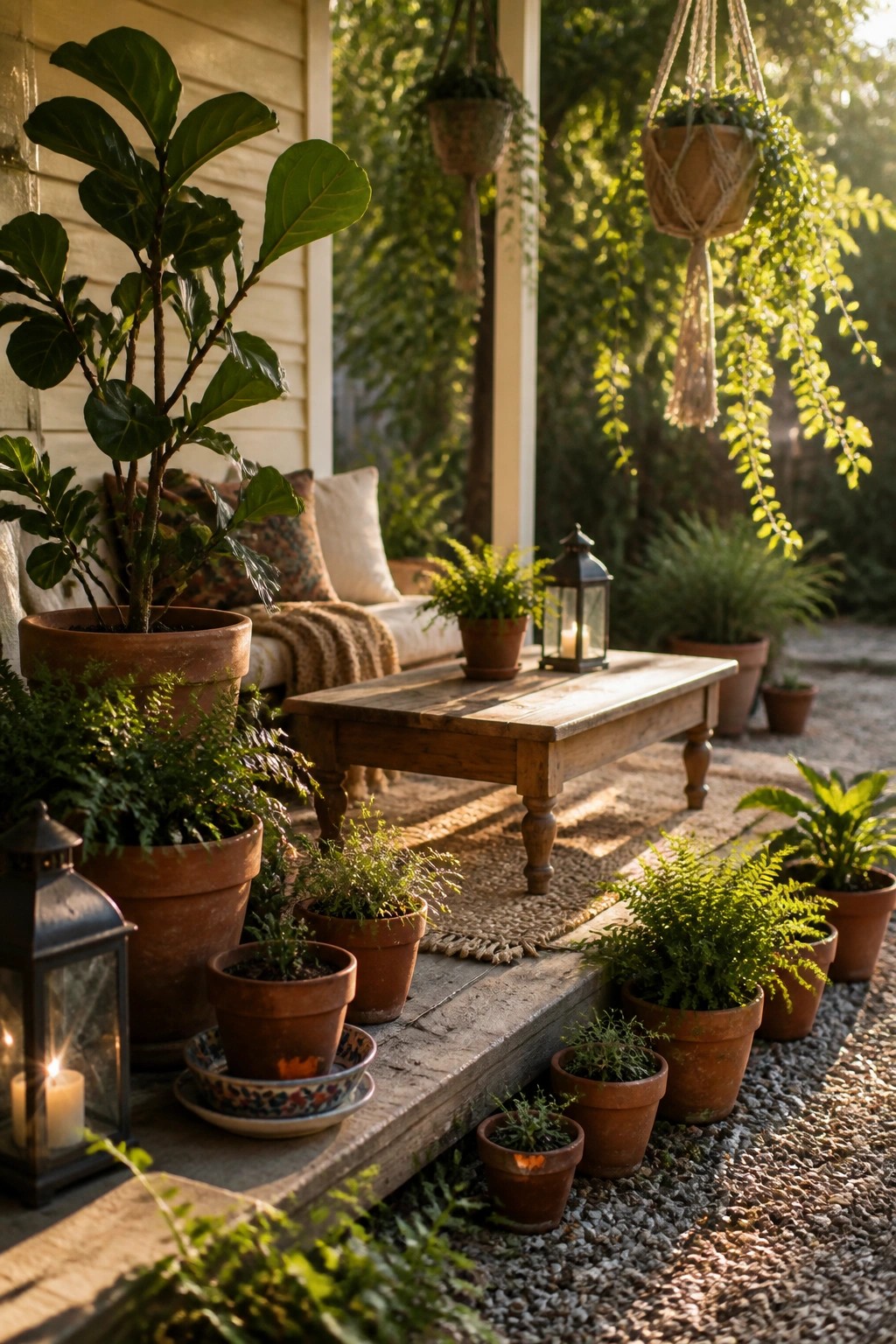
One simple way to make a porch feel more finished is to layer plants in pots of different sizes along the edges. The larger pots sit toward the back while smaller ones fill in closer to the front, so each plant stays visible without crowding the space.
This approach works on most porches or patios that have steps or a clear border. Terracotta pots keep costs down, and a gravel base helps with drainage while giving the whole area a tidy look.
Gravel Paths Keep Container Gardens Accessible
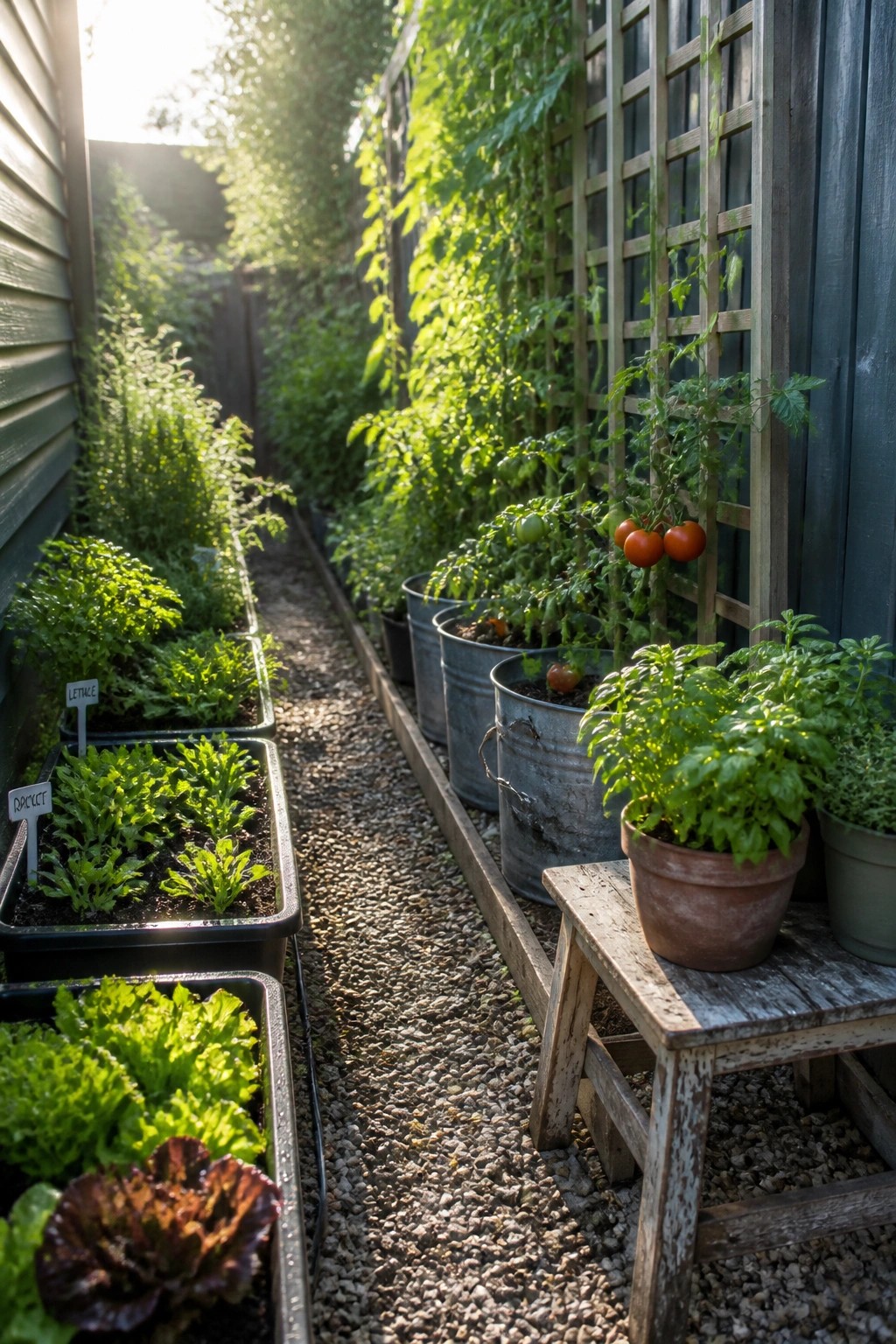
A gravel path works well when you want to pack a lot of plants into a narrow space without losing access. It creates a clean division between beds and pots so you can walk through easily and water or harvest without stepping on soil.
This setup suits side yards or small back gardens where space is tight. Use cheap metal buckets or plastic troughs for the plants and keep the path about two feet wide so wheelbarrows or feet can move through without issue.
Layer Plants In Budget Pots Over Gravel
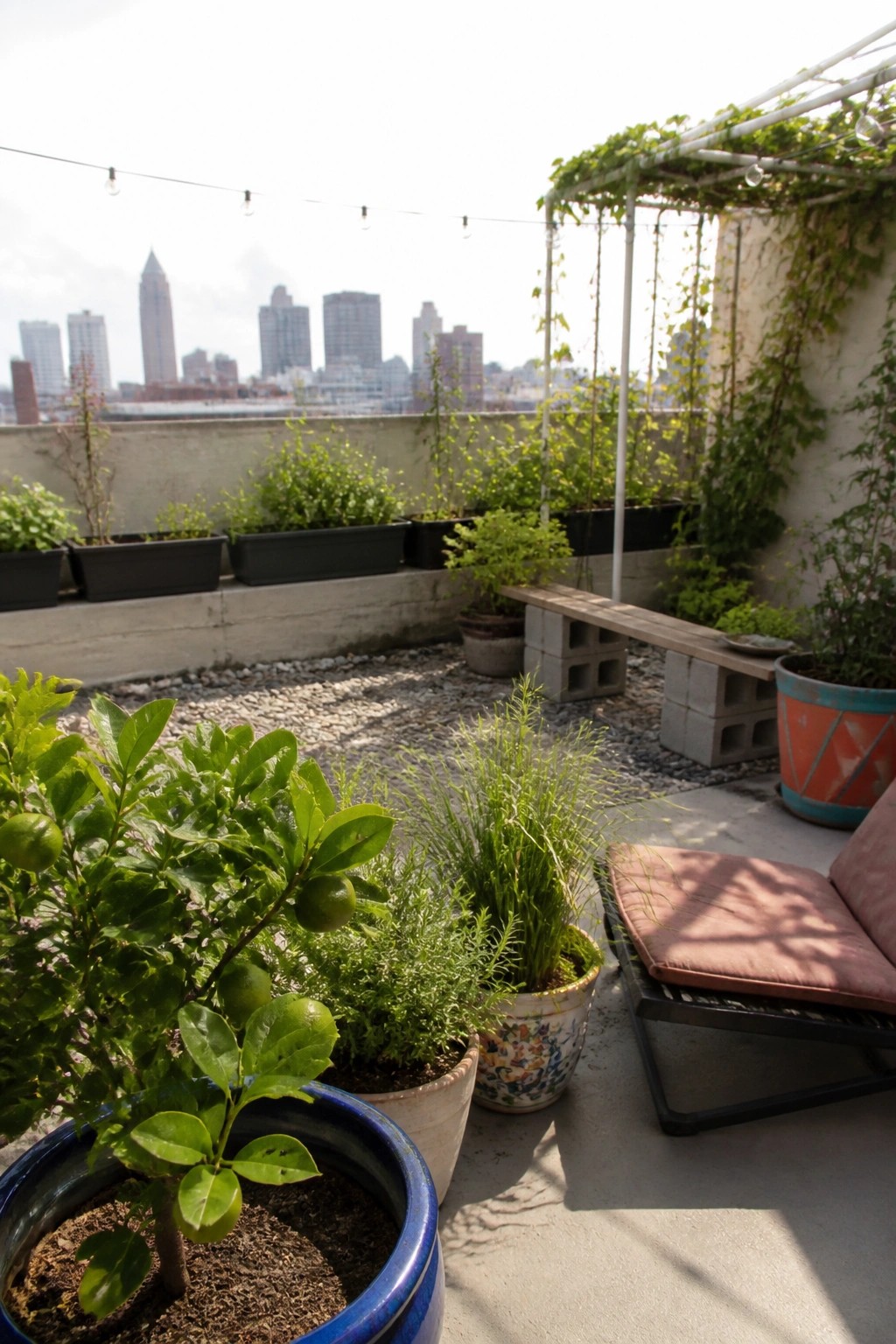
Many people like this setup because it turns a plain patio surface into a garden without spending much on construction. The gravel base handles drainage and keeps the area looking neat while the different pots let you move plants around as they grow or as seasons change.
This works best on rooftops or concrete terraces where soil is limited. Use a few taller plants in larger pots to create height and fill in with smaller ones around them for layers. Make sure every pot has drainage holes so water does not sit and damage the roots.
Layer Pots at Different Heights on Gravel
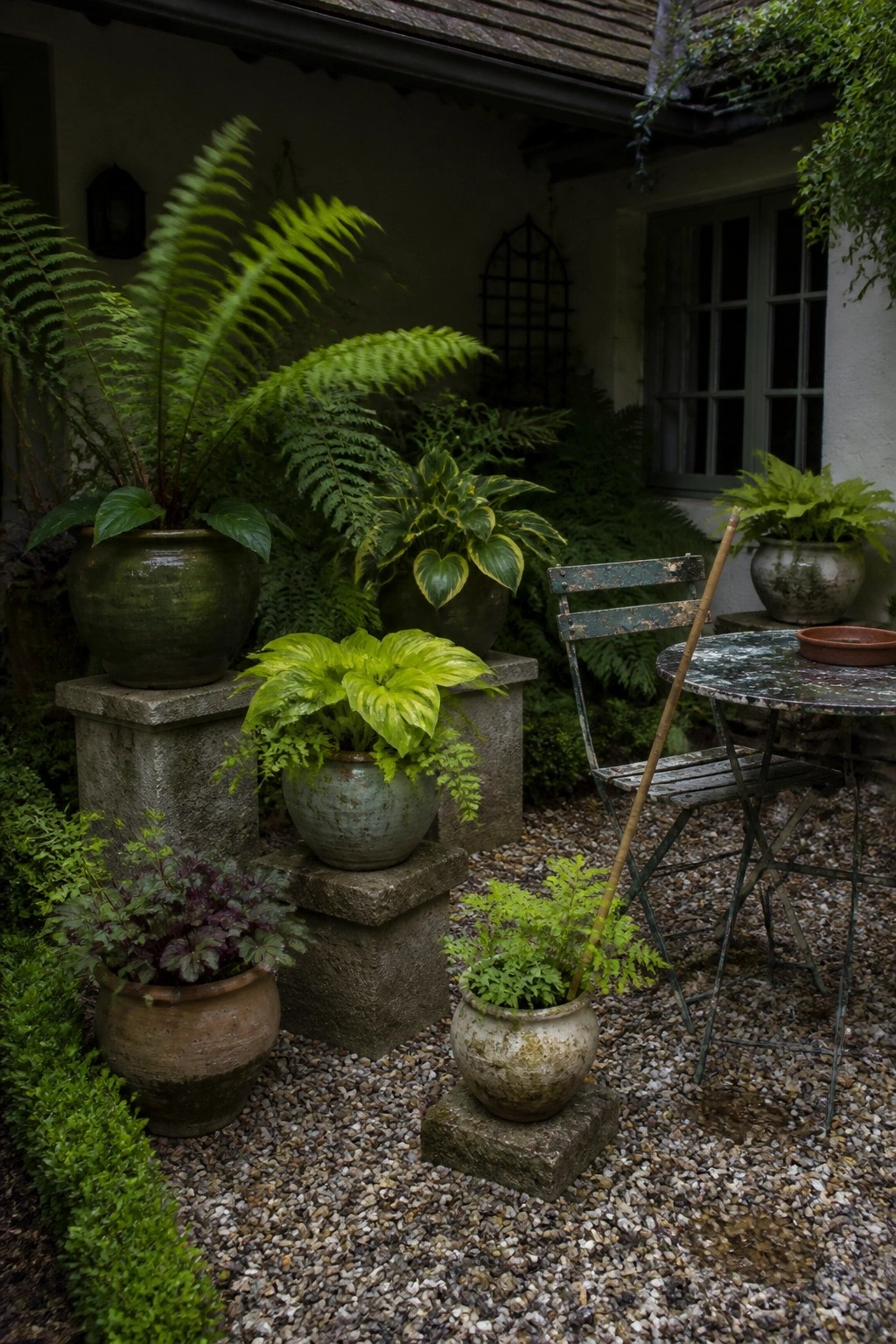
Placing pots in clusters at varying heights gives a patio garden quick depth without much cost. The gravel base keeps things simple and helps with drainage, while the mix of large and small containers lets plants fill in naturally over time.
This approach works well on any flat outdoor spot that needs softening. Start with a few bigger pots on low stands or stones, then add smaller ones around them. It suits older homes or small yards where you want coverage without building raised beds.
Herb Pots On Gravel Trays
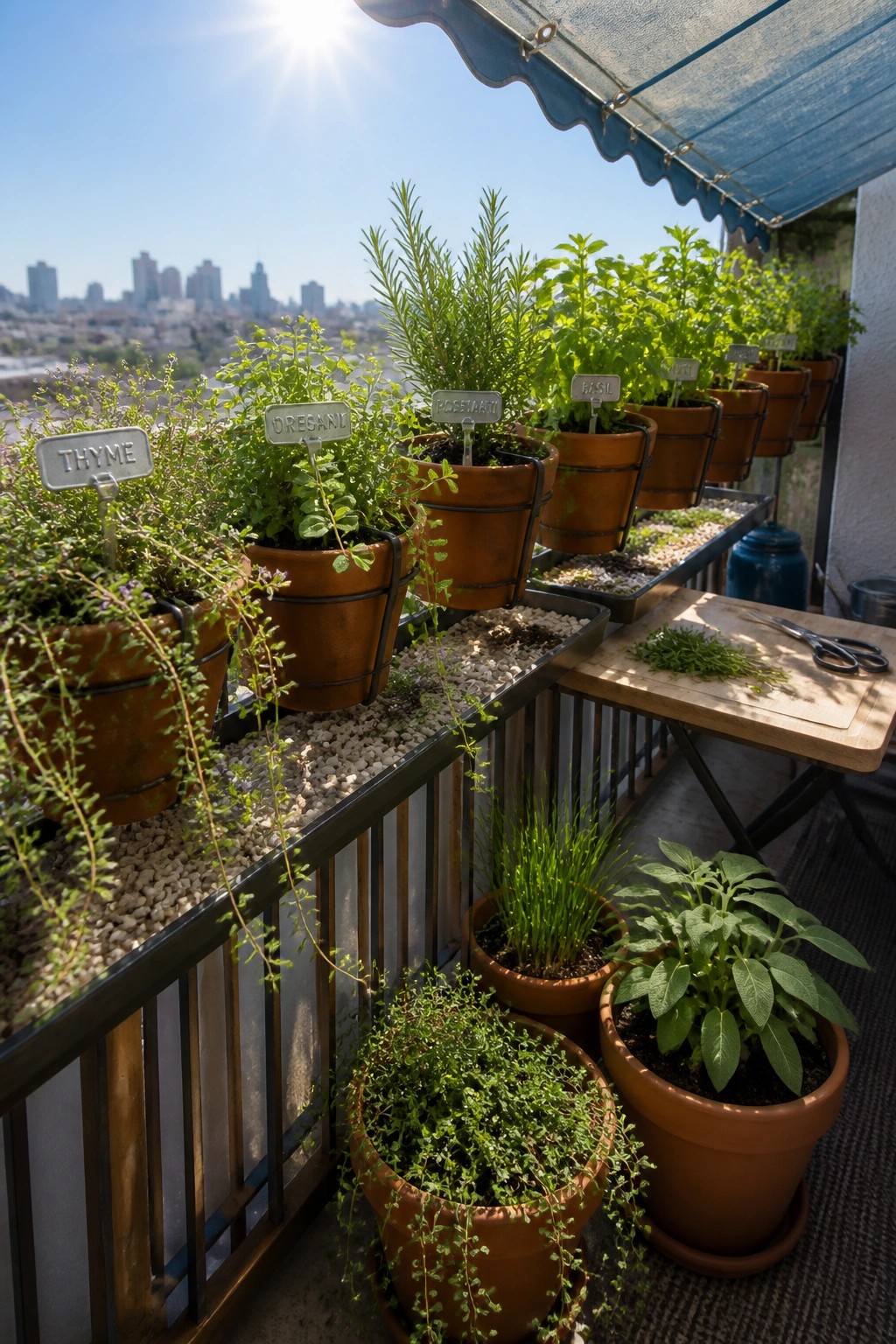
One easy way to start a patio herb garden is to set terracotta pots into shallow trays filled with gravel. This keeps the plants off the floor, improves drainage, and gives the whole setup a tidy look without much cost.
The method works well on balconies or small decks where space is tight. You can move the pots around as needed and the gravel helps prevent water from pooling on the surface.
Layering Plants In Pots On Gravel
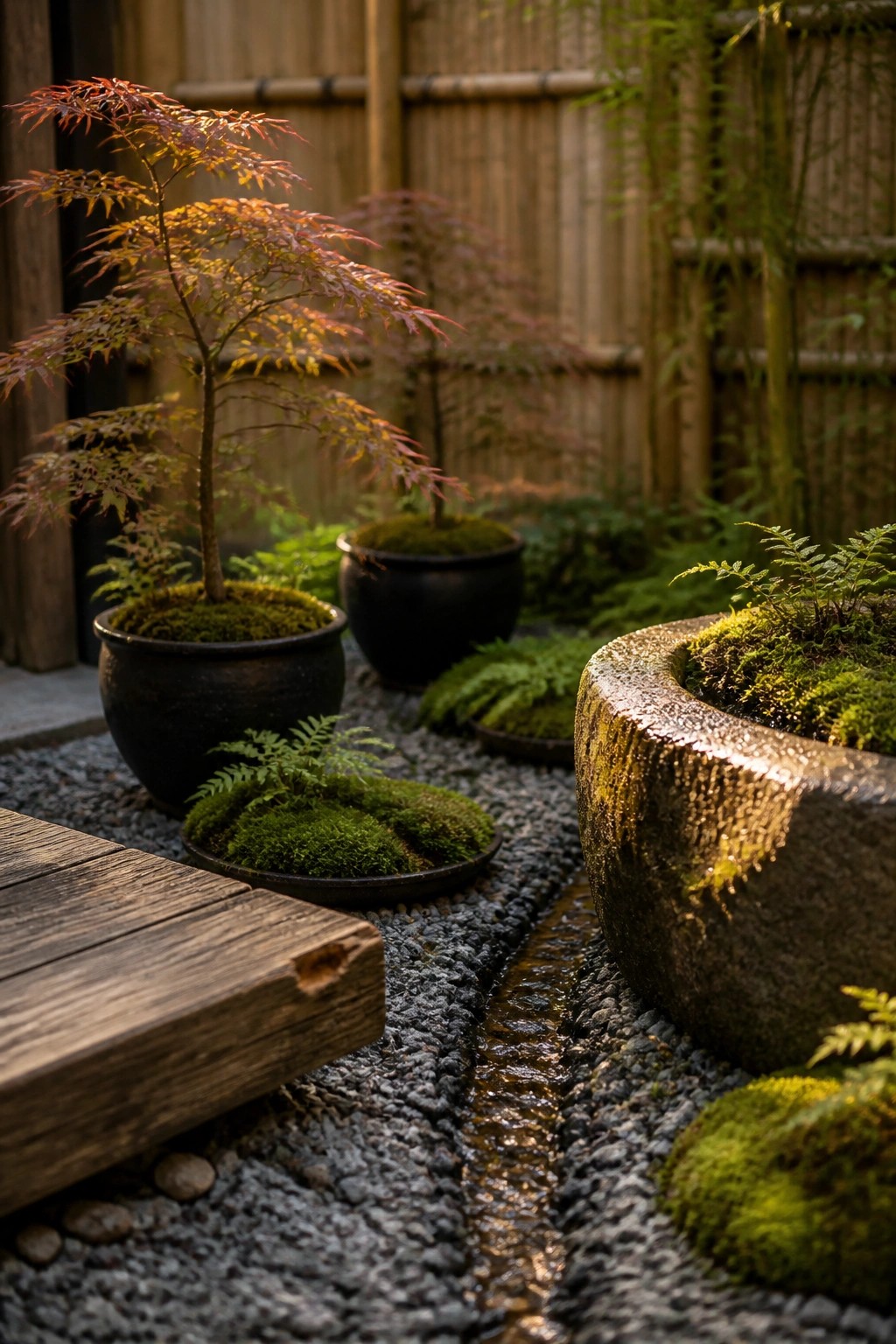
This setup works because it keeps the planting simple and contained while still giving plenty of texture. The moss and ferns in basic pots sit right on the gravel, so you get layers of green without digging beds or dealing with soil everywhere.
It suits narrow side yards or small patios where full planting areas would feel cramped. Use inexpensive pots in a few sizes, add a bit of moss on top, and let the gravel take care of drainage and weeds between them.
Layer Plants In Pots Along Gravel
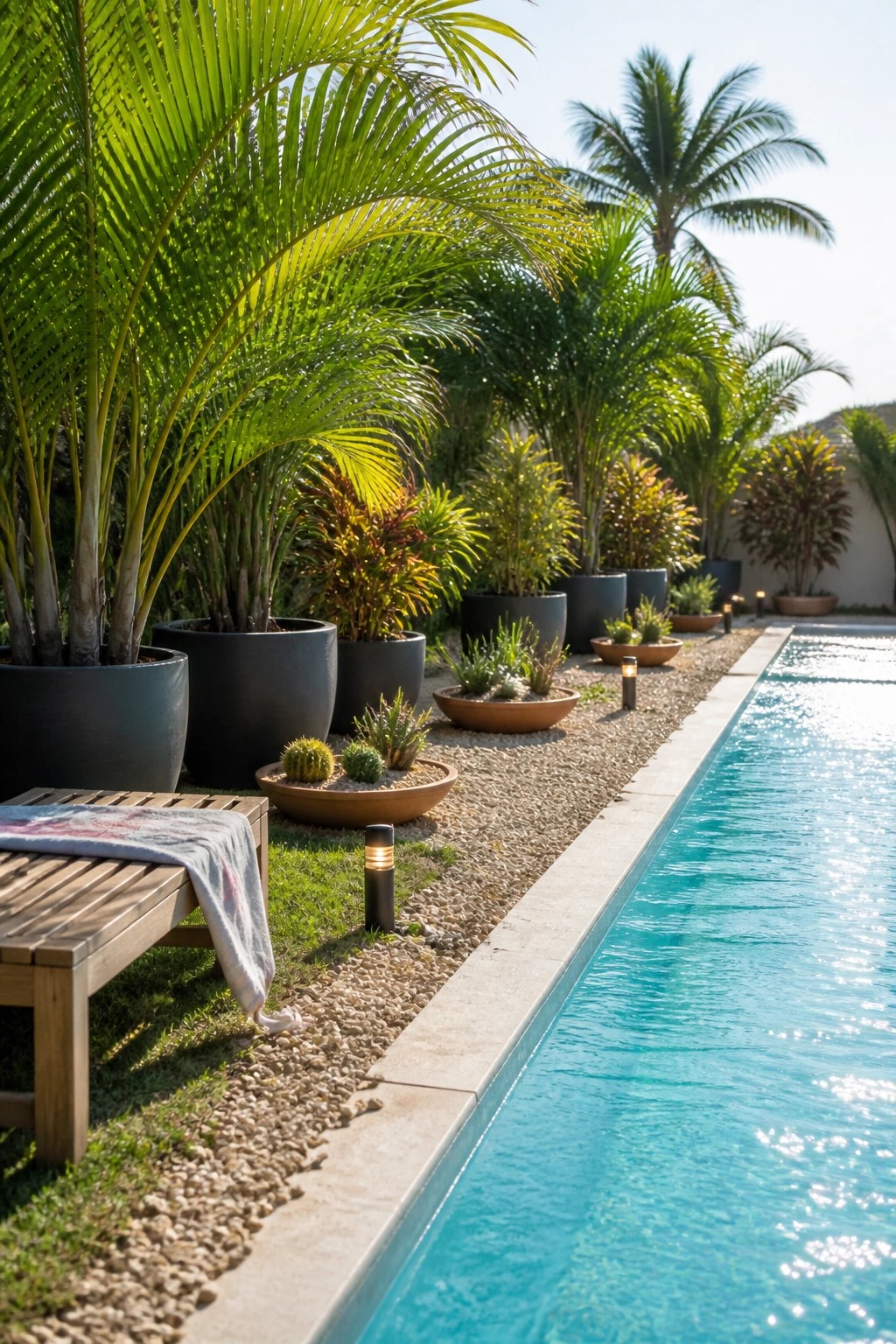
Grouping plants in pots of different sizes creates an easy layered look without much digging or expense. The mix of tall palms in large dark pots, mid-size shrubs, and small succulents near the ground adds height and interest while keeping the whole setup simple to move or change later.
This approach works well along pool edges, side paths, or narrow beds where soil is limited. Use gravel to fill gaps and control weeds, and stick to two or three plant heights so the layers stay clear instead of crowded.
Layer Pots Along a Basic Shelf
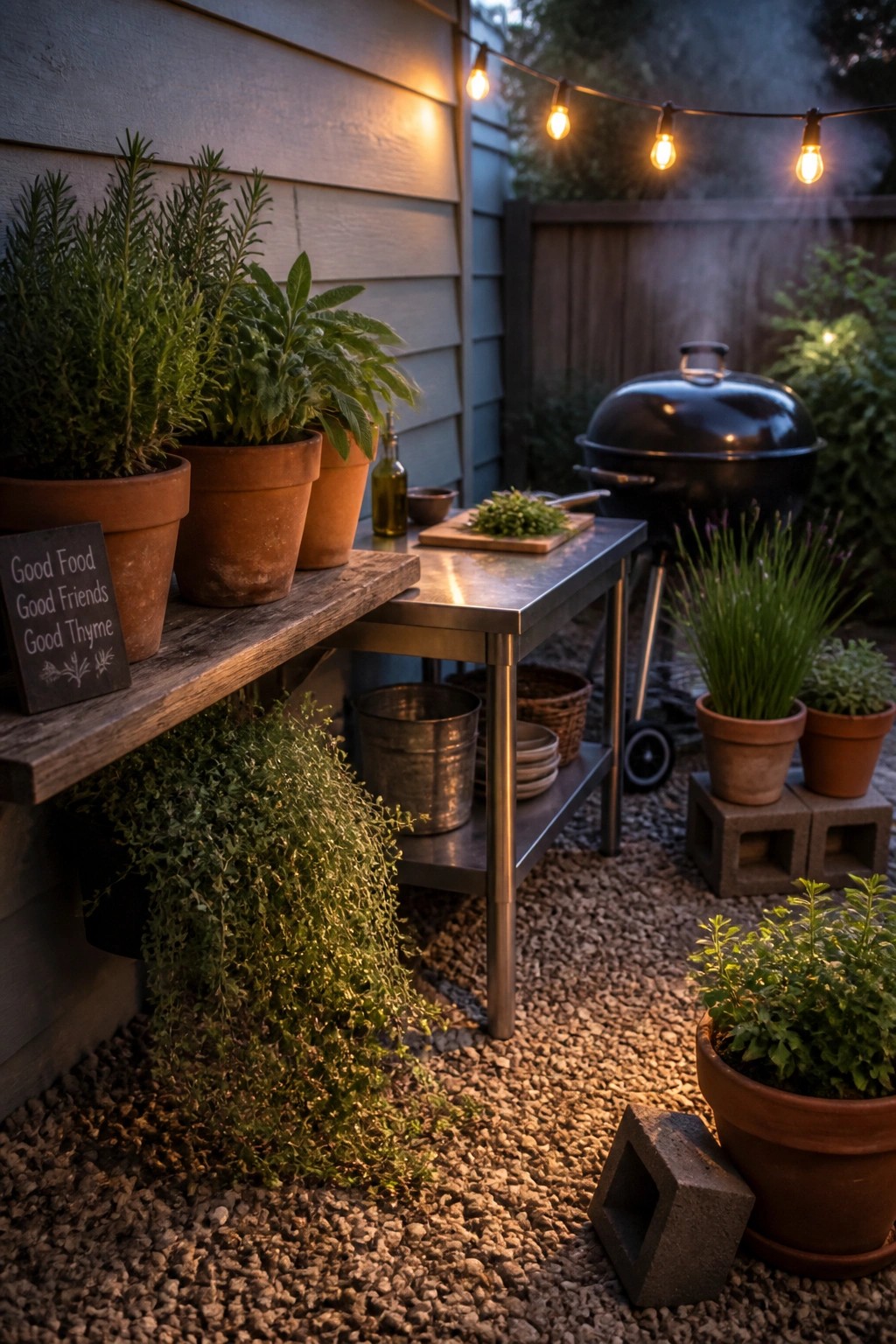
A low wooden shelf gives you an easy way to add layers of plants without building anything permanent. It turns a plain wall into a spot for herbs and greens at different heights while keeping everything off the ground.
Terracotta pots work fine for this since they cost little and drain well. Place the shelf near a grill or seating area so the plants stay handy. Gravel underneath helps with water runoff and keeps the space looking tidy even after a few seasons of use.
Make a Circular Bench with Blocks and Wood
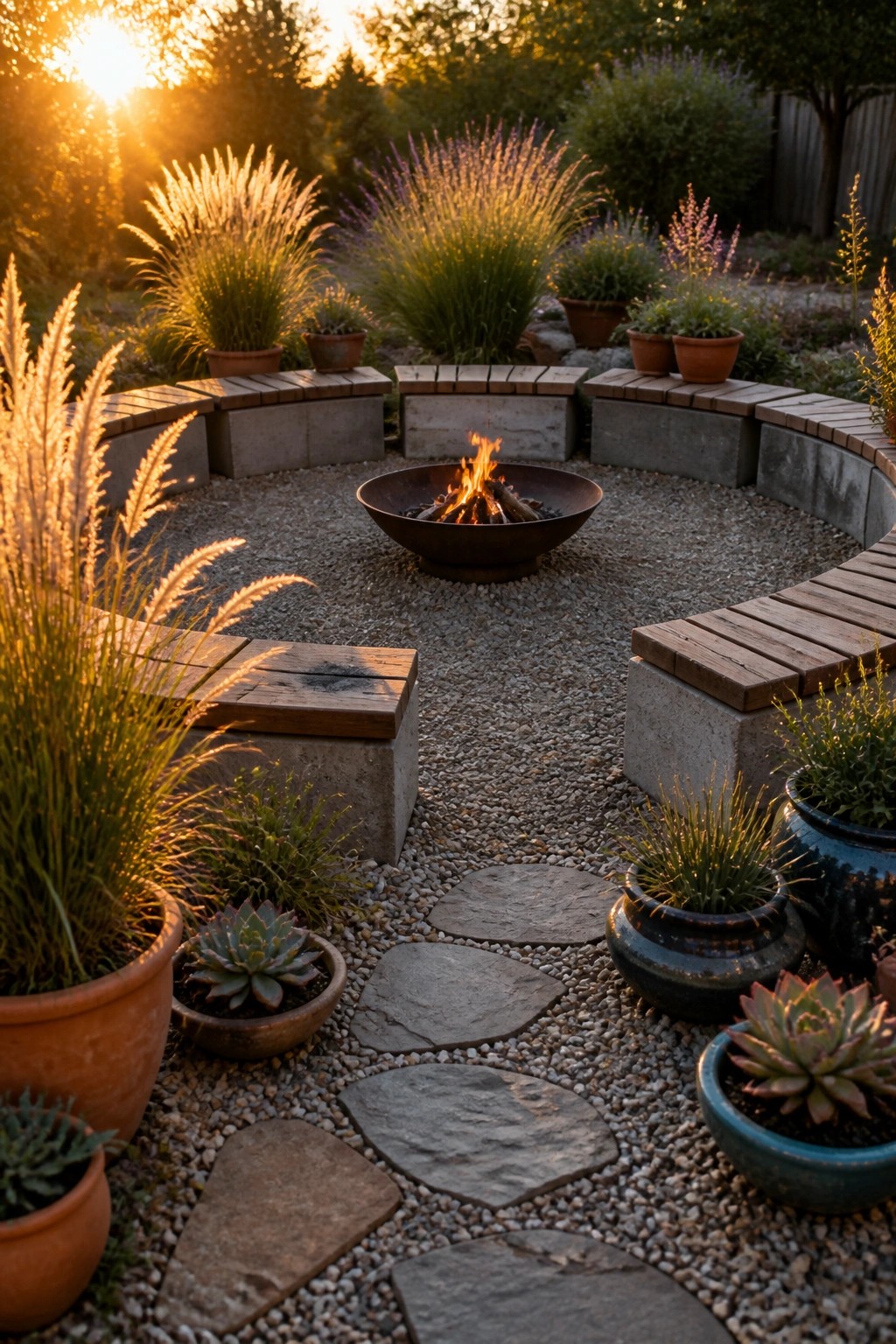
A circle of simple benches around a fire pit pulls people together in a way that feels natural and easy. Concrete blocks topped with wood planks create sturdy seating that stays low cost while still looking intentional, and the gravel base keeps the whole area practical for any weather.
This layout works best in smaller yards where you want one clear gathering spot without building a full deck. Place the benches in a loose ring, fill the center with a basic metal bowl, and use pots of varying heights around the edges to add layers of green without permanent planting.
Mount Pots on Simple Wood for Vertical Layers
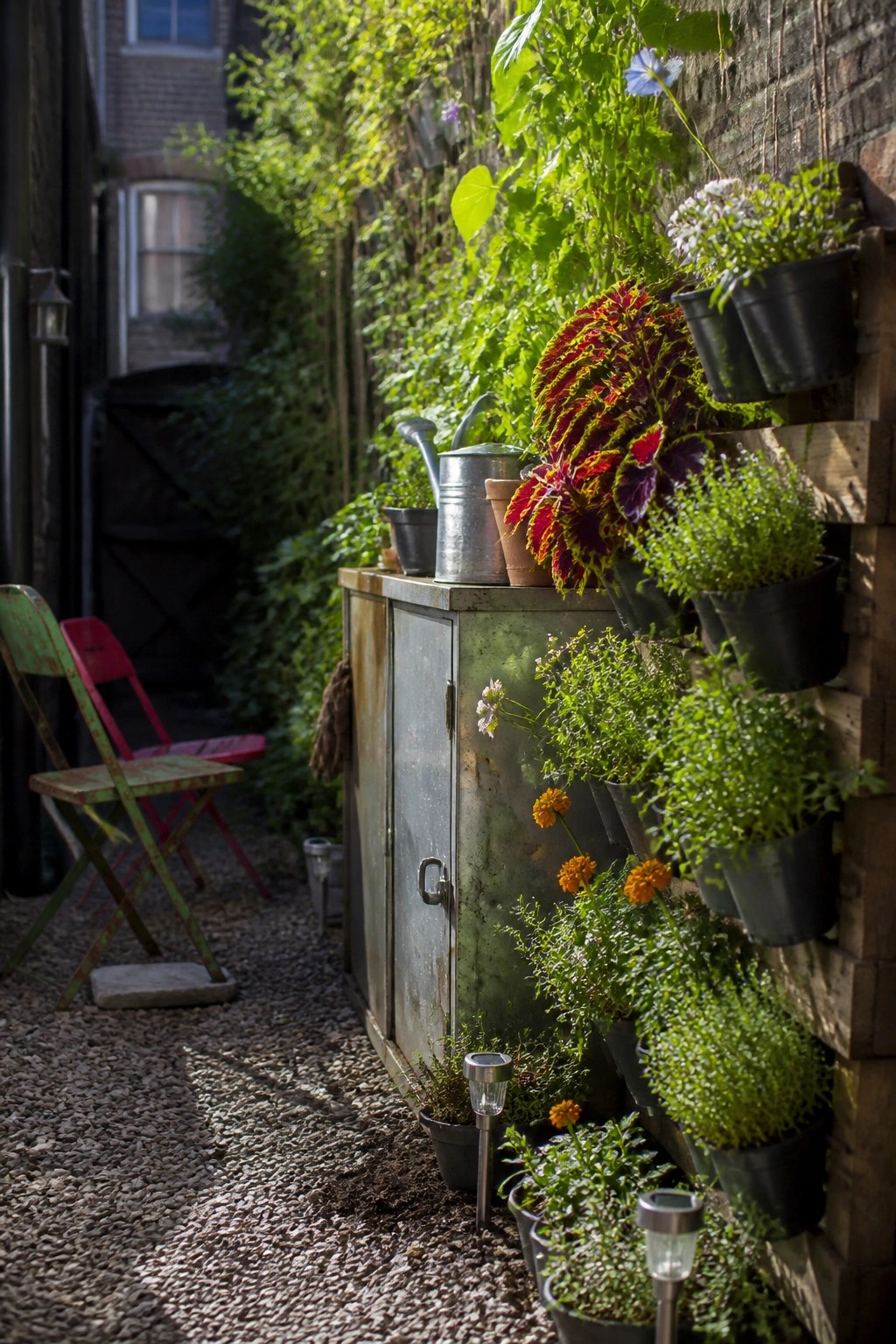
One easy way to build layers in a small garden is to fix basic wooden planks to a wall and hang pots from them. This approach turns a plain fence or side wall into a planted feature without needing much ground space or expensive materials.
It suits narrow paths and tight yards where digging beds is not practical. Use affordable plastic pots in different sizes, group plants by height, and keep the ground cover simple with gravel so the whole setup stays low cost and easy to adjust.
Tiered Beds From Stacked Blocks
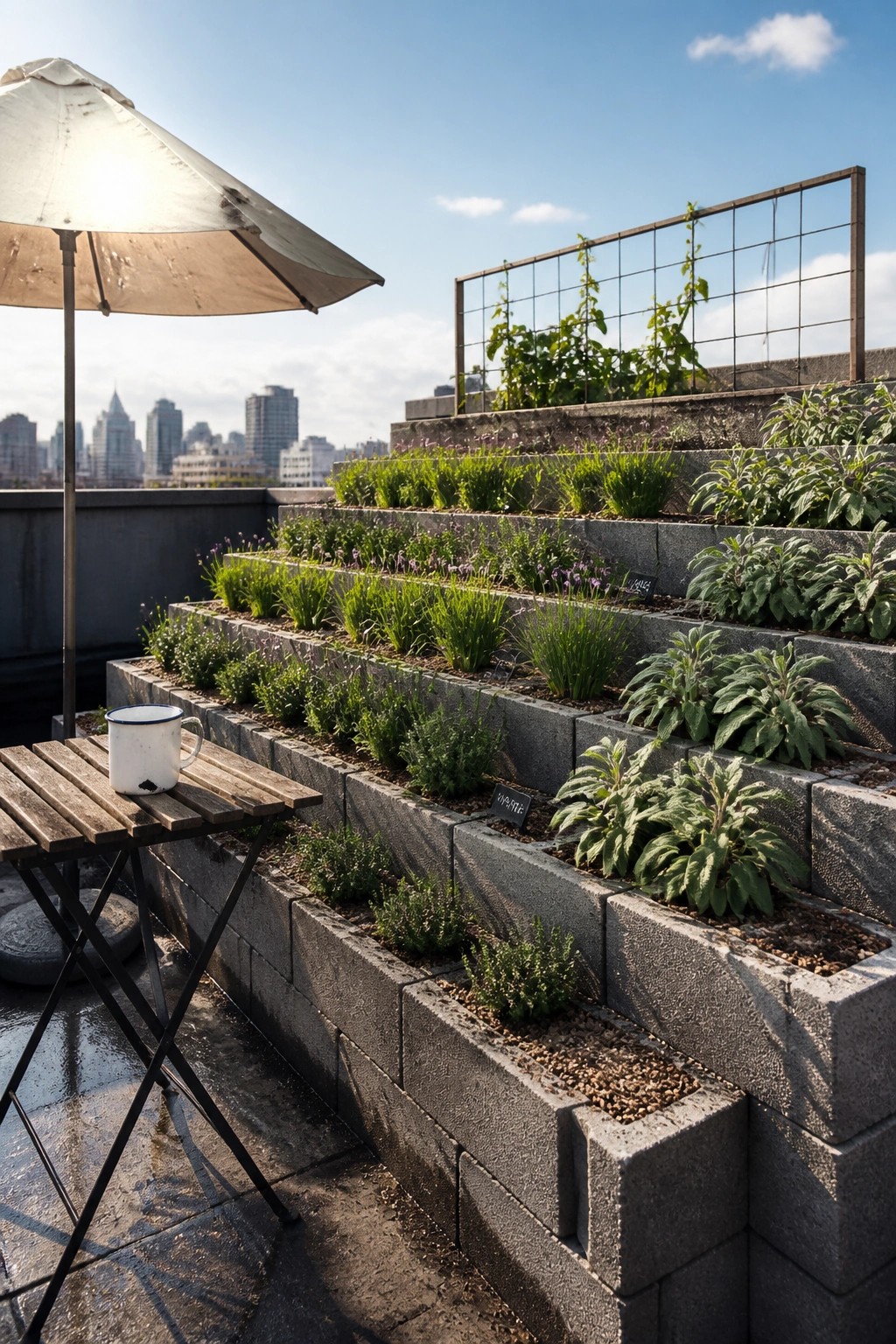
Stacked concrete blocks make it easy to build raised beds that step up in layers. This setup gives you room for different plants at each level without needing fancy materials or a big budget. The blocks hold the soil in place and create a simple structure that works well on a flat patio or rooftop.
You can start small with just a few rows and add more over time. It suits tight urban spaces where ground soil is limited. Keep the lower layers for herbs or ground cover and use the taller sections for taller plants that need more sun.
Layer Plants In Mixed Pots Over Gravel
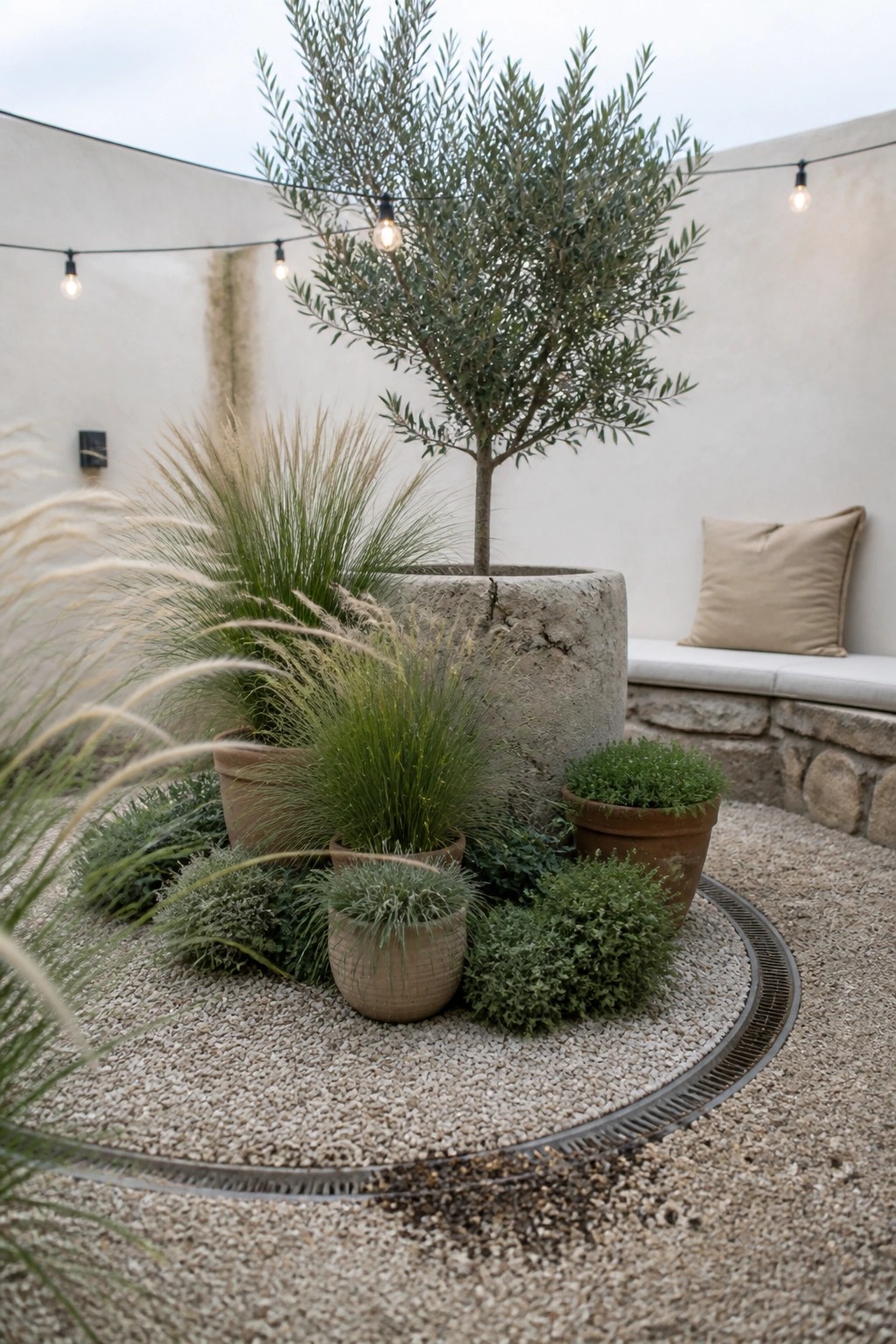
Gravel makes a clean, low-cost base that lets you move pots around and change the layout whenever you want. The different heights and textures of the plants create layers without needing to dig beds or spend much on soil.
This setup works well on a small patio or courtyard where you want some greenery but do not have room for a full garden. Just choose a few sturdy pots in similar tones, set them close together on the gravel, and add a taller plant in the middle for height. Keep the number of pots modest so the space stays easy to maintain.
Layer Plants in Pots Over Gravel
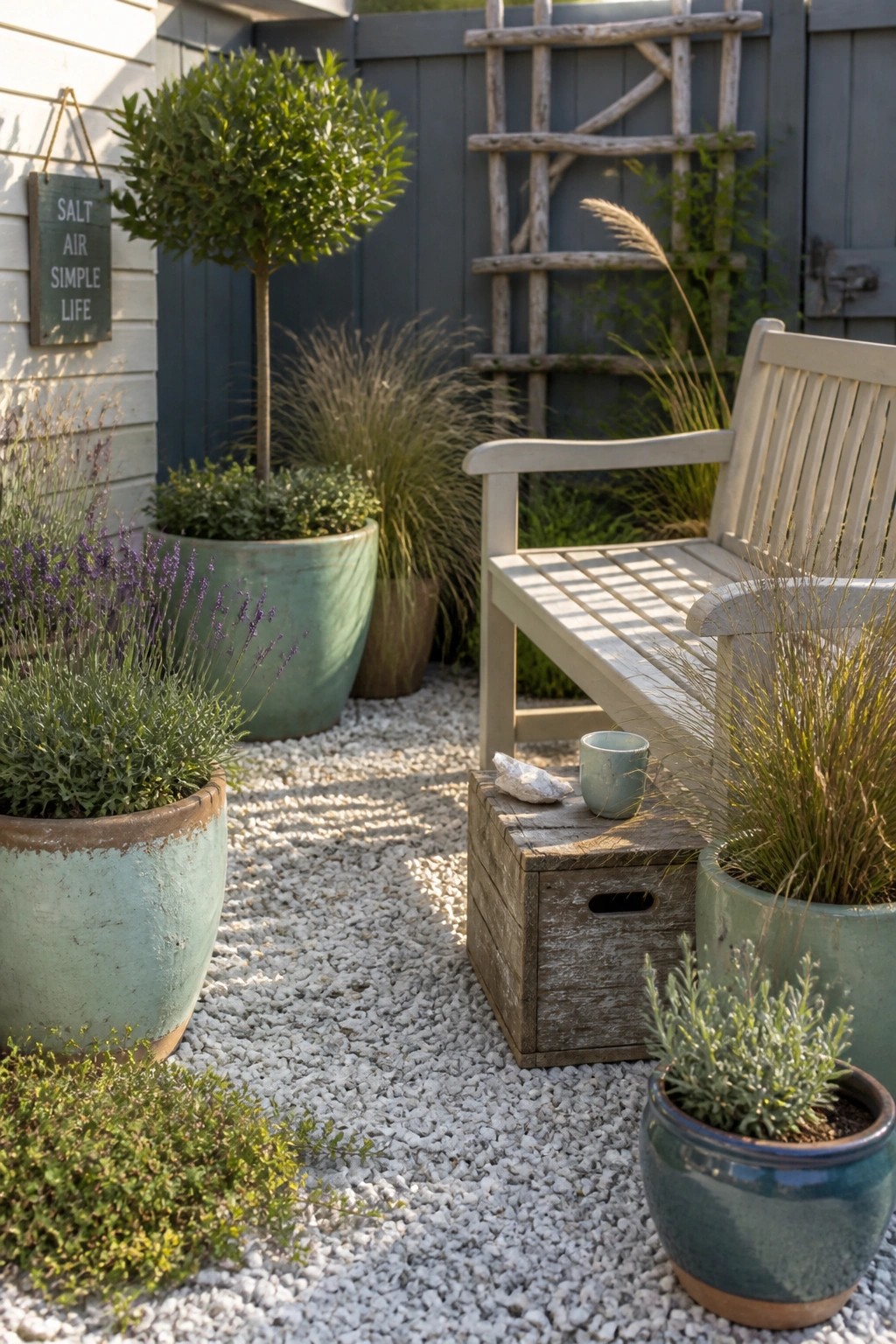
Many people like this approach because it gives a full garden look without digging beds or spending much on materials. The gravel base keeps things neat and drains well, while the pots let you play with different heights and plant types in one small area.
It suits any flat outdoor spot where you want something simple to rearrange later. Start with a few larger pots for the back and add smaller ones in front to build the layers without much effort.
Layer Plants With Budget Pots On Gravel
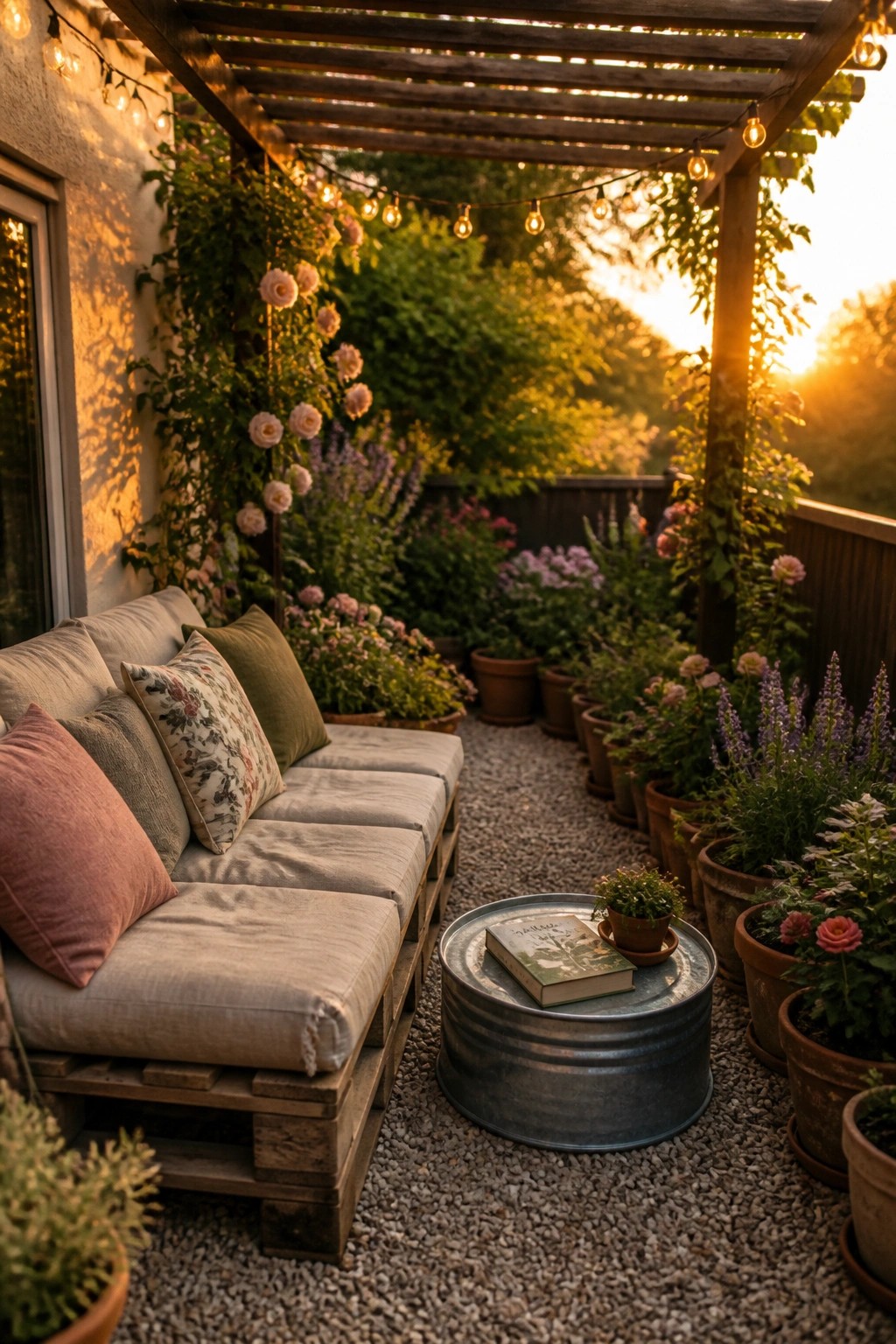
Gravel works well as a simple base for patios because it drains fast and costs little. Placing budget pots of different sizes along the edges creates depth without needing built beds or fancy hardscaping. The mix of terracotta and metal containers keeps everything affordable while letting plants do most of the work.
This approach suits small yards or rental patios where digging is not an option. Group taller plants at the back and shorter ones in front so the layers stay easy to reach and water. Stick to a few plant types that repeat along the path to avoid a scattered look.
Big Pots on Gravel Create a Low-Cost Patio Garden
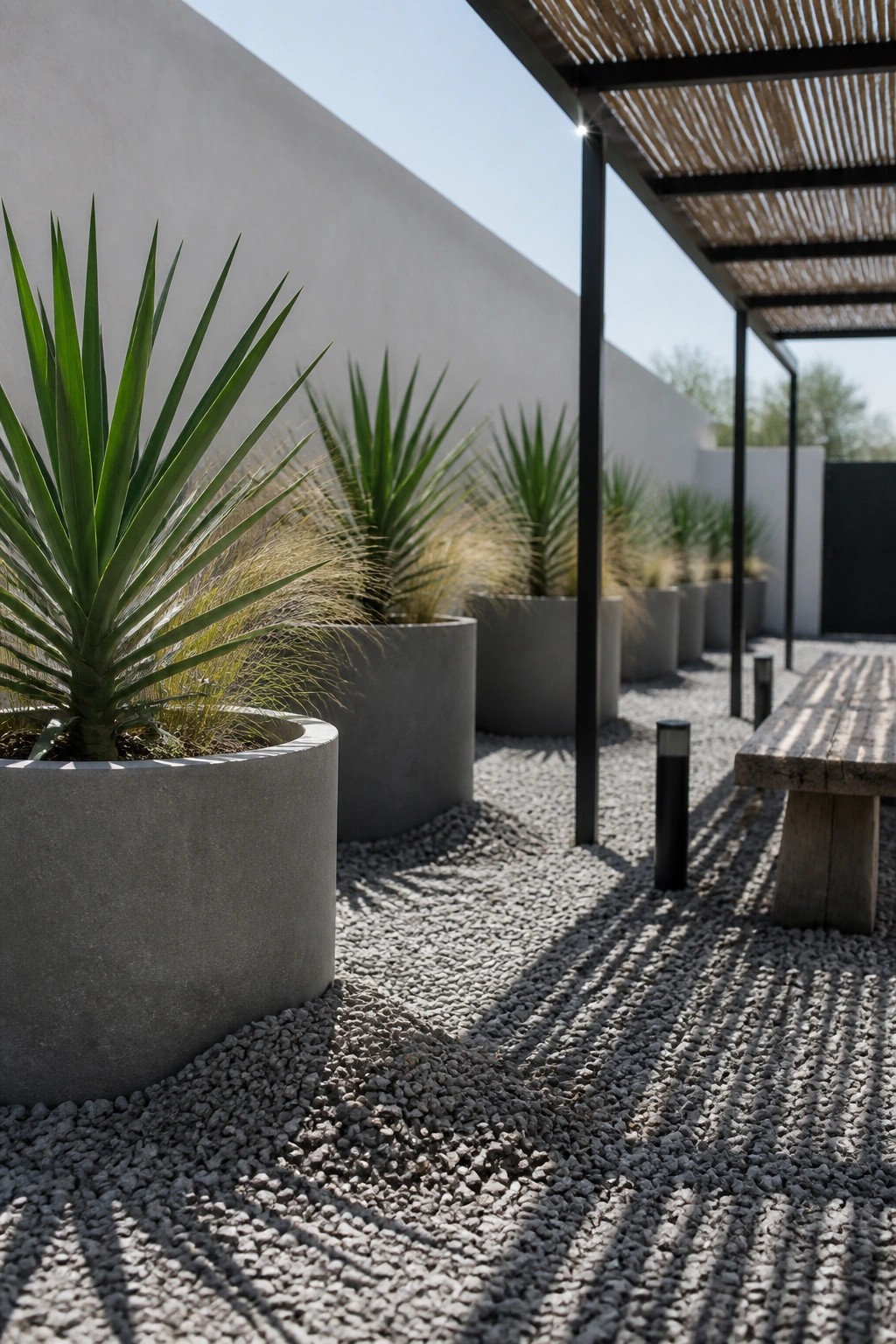
Large pots placed directly on gravel give you a clean patio garden without much digging or soil work. The containers hold the plants, the gravel handles drainage and weeds, and the whole setup stays simple to change later if you want.
This approach works best on flat patios or side yards where you need something quick and affordable. Stick with three or four matching pots, repeat the same plant shapes, and keep the gravel layer thick enough to stay in place.
Repurpose Everyday Containers For A Gravel Patio Garden
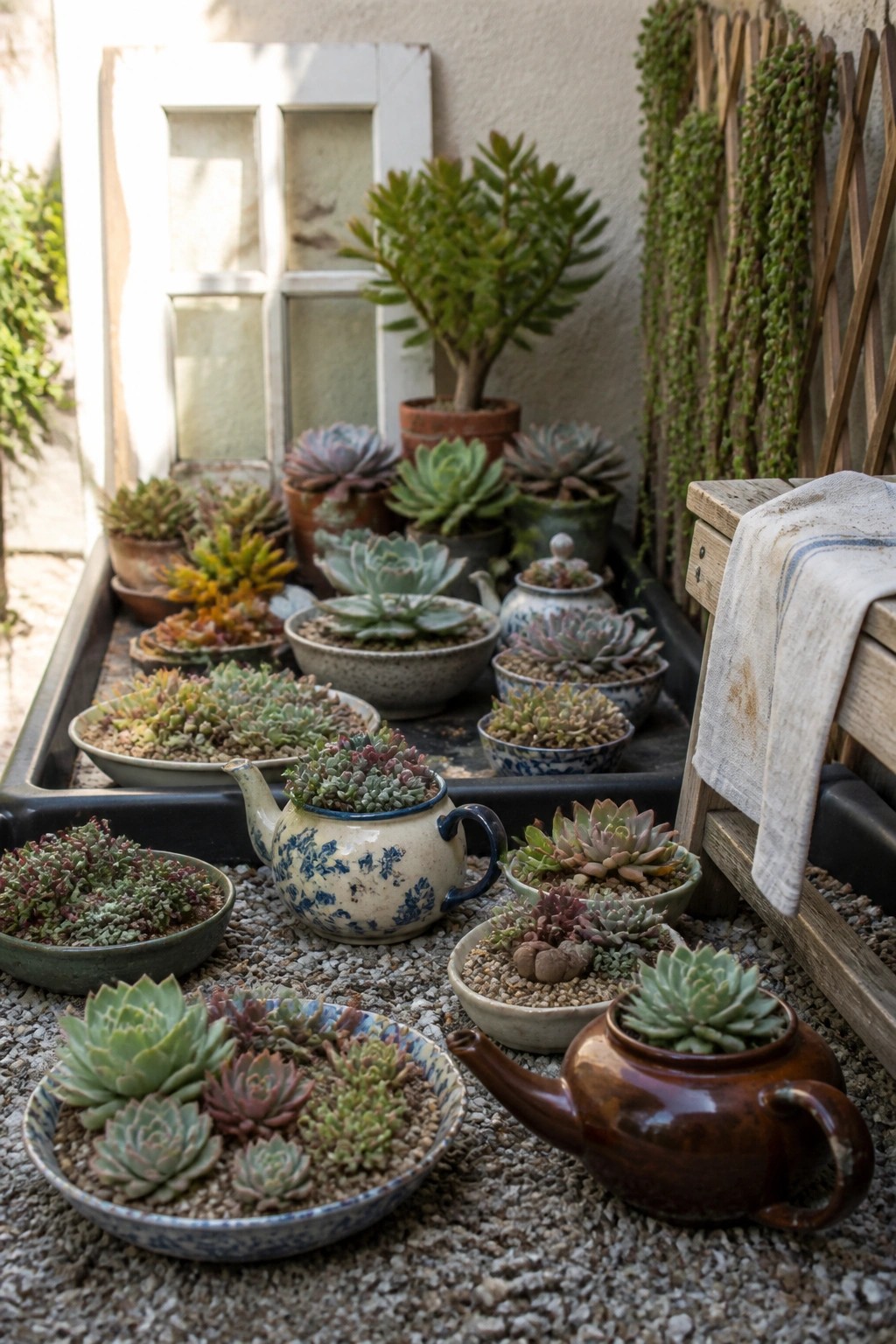
Many people turn to old kitchenware or thrift store finds when they want to add plants without buying new pots. Setting them on a layer of gravel helps with drainage and gives the area a clean, simple look that does not need much upkeep.
This approach works best on a small patio or balcony where you can move things around easily. Just check that each container drains well and stick with plants that handle dry conditions, like the succulents shown here.
Repeat Large Pots Along a Gravel Path
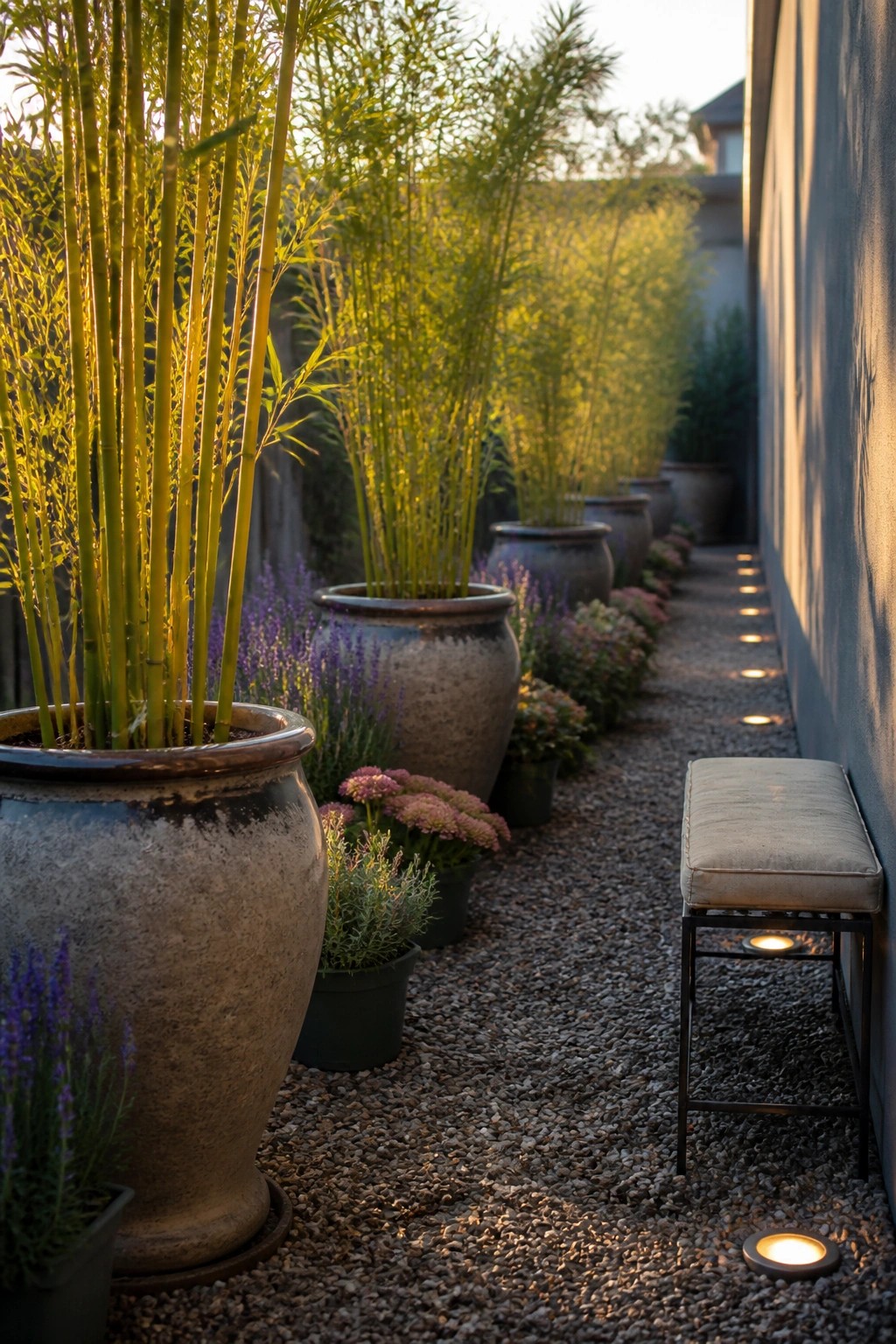
Large pots placed in a steady line give a narrow garden path clear shape without needing built beds or fancy edging. The mix of tall plants in the biggest pots and shorter ones tucked in front creates layers that feel full even when the space is tight.
This works well on side yards or between a wall and a fence where digging is hard. Stick to two or three pot sizes, keep the gravel simple, and let the plants do most of the work.
Create Layers With Pallet Planters
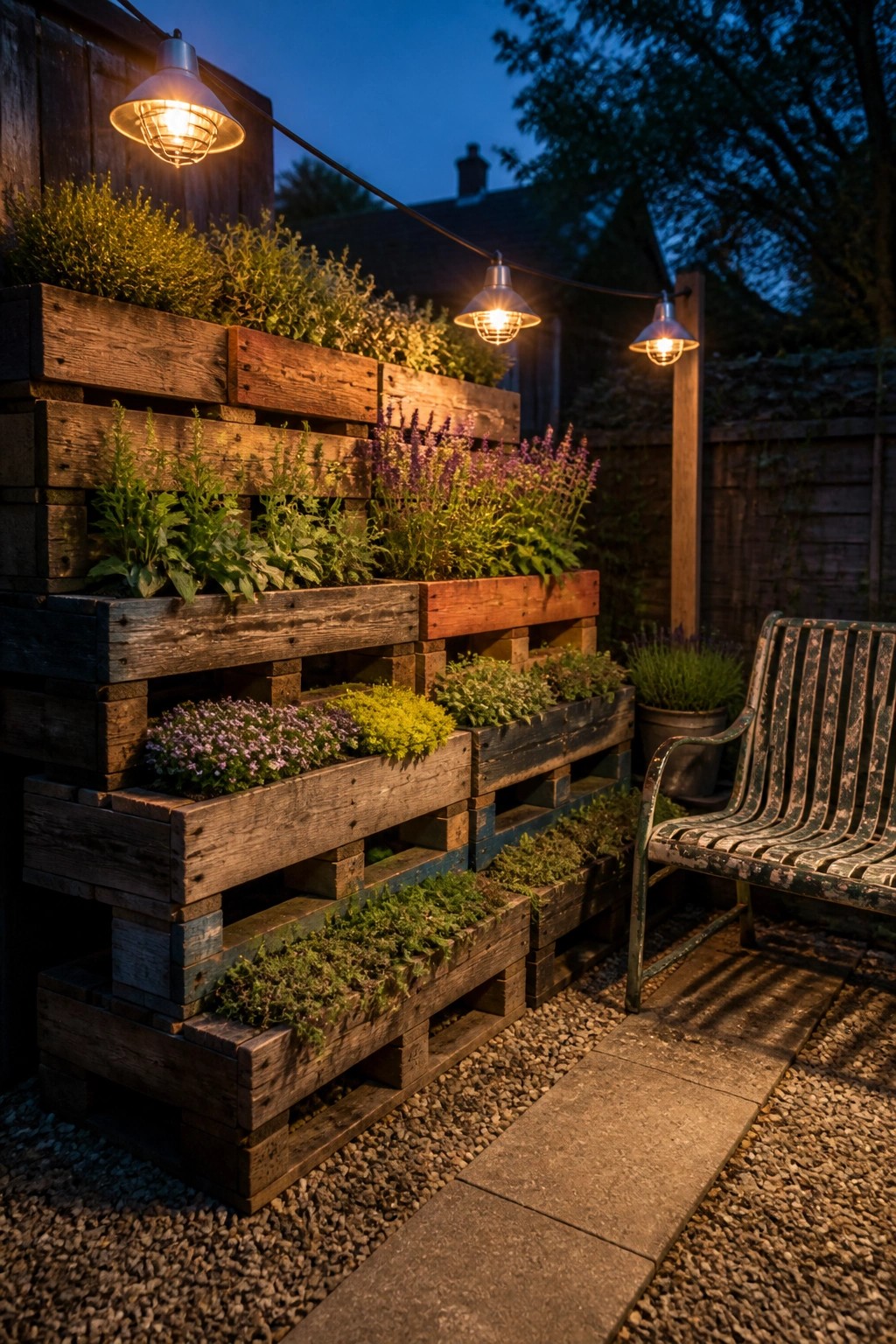
Stacking pallets into a tall planter gives you several planting rows without needing much ground space. It works well because each level can hold a different plant height, so you get that layered look with simple materials.
This approach suits small patios or side yards where a full bed would feel too big. Place it against a fence or wall, fill the gaps with soil, and water from the top so it drains down through the rows.
Gravel And Tile Patio Surfaces
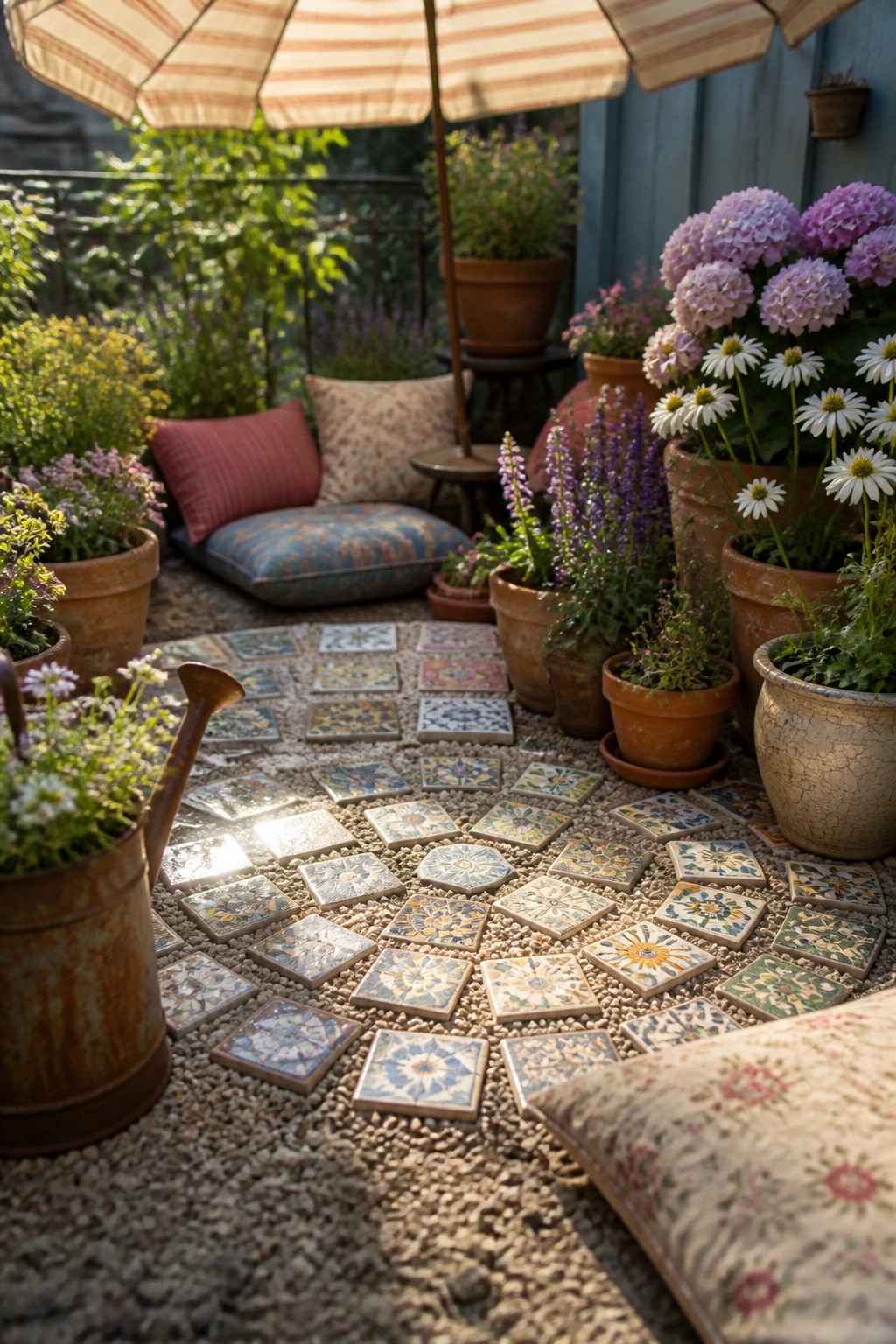
Many people turn to gravel for patio floors because it stays affordable and gives a relaxed feel that works with lots of potted plants. Adding a few patterned tiles on top creates just enough color and order without needing a full hardscape job.
This idea suits small yards or balconies where you want a simple base that still looks finished. Level the gravel well first and keep the tiles loose so you can move them around as your plant layout changes.
Frequently Asked Questions
Q: What size pots work best when you’re just starting out with a small patio?
A: Grab a mix of medium and large pots to start. The bigger ones hold moisture longer so you water less often. Place the largest ones in the corners first to anchor the whole layout.
Q: How do I stop weeds from taking over the gravel later?
A: Lay down a simple weed barrier fabric under the gravel before you spread it. This keeps most weeds from rooting while still letting water drain. Pull any stragglers by hand every couple of weeks.
Q: Which plants actually layer well together without much fuss?
A: Pair tall grasses or small shrubs at the back with trailing vines in front. Add a low flowering plant in the middle layer. They fill space quickly and need little extra care once settled.
