

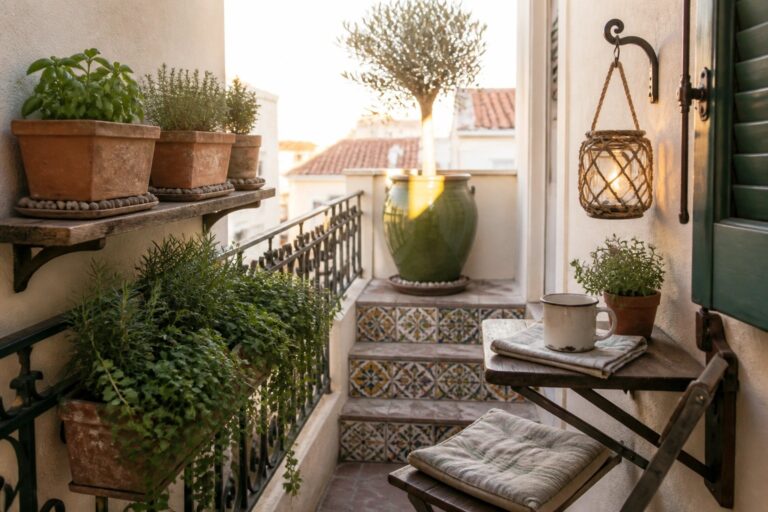
I have noticed that balconies and patios often end up as afterthoughts even though they offer real chances to grow things without needing much space.
Containers give you the flexibility to rearrange when the light shifts or when you want to try something new.
Some setups just sit there unused.
Paying attention to how people actually move through a balcony or patio helps the whole thing feel more practical from day to day.
A couple of these ideas seem worth trying out in my own space to see how they hold up over time.
Group Containers of Different Sizes
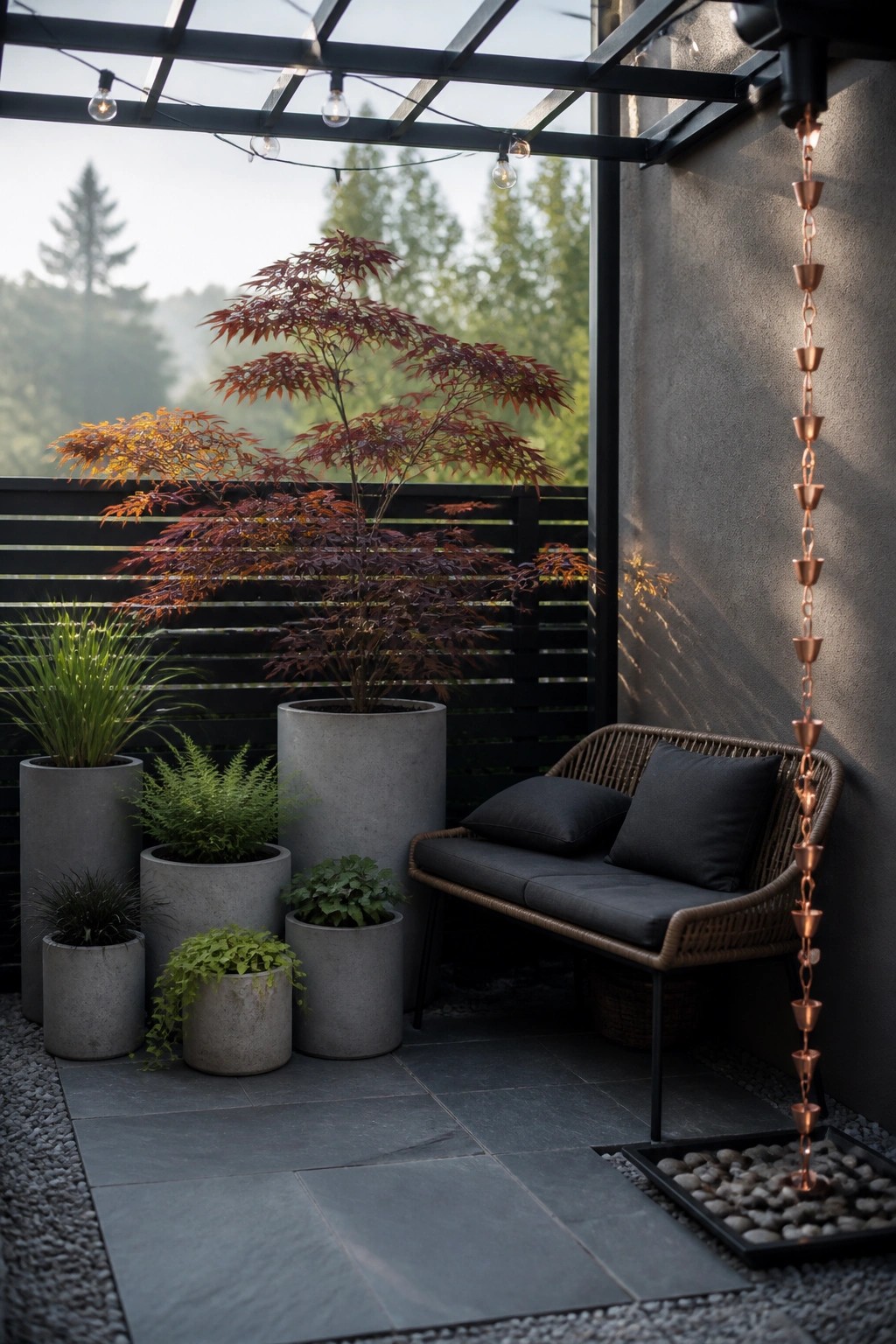
Using pots in a range of heights helps turn a plain patio corner into something that feels more like a garden. Taller containers give height while shorter ones fill in the base, so the whole group looks balanced instead of flat.
This works best on small patios or balconies where you cannot plant directly in the ground. Start with one or two large pots and add smaller ones around them to create layers that suit the space.
Repurpose a Ladder for Vertical Container Gardens
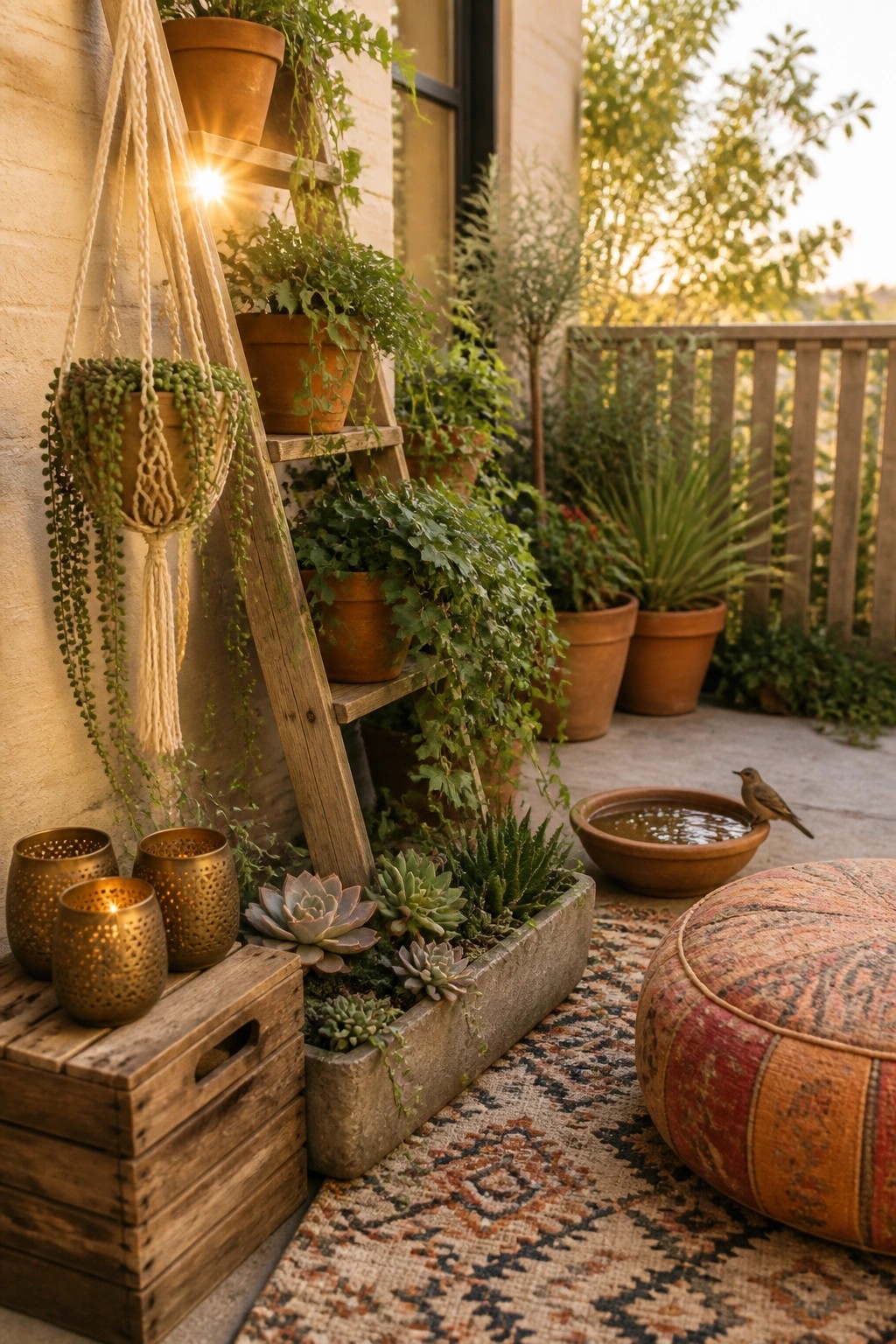
A wooden ladder makes an easy vertical stand for potted plants on a patio. It holds several containers at different heights without taking up much floor space, which helps in small outdoor areas where ground room is limited.
Place the ladder against a wall or railing and set matching pots on the rungs. This works well on balconies or tight corners where a full shelf would feel too bulky. Just make sure the ladder is stable and the pots are not too heavy for the steps.
Vertical Pallets Add Growing Room on Patios
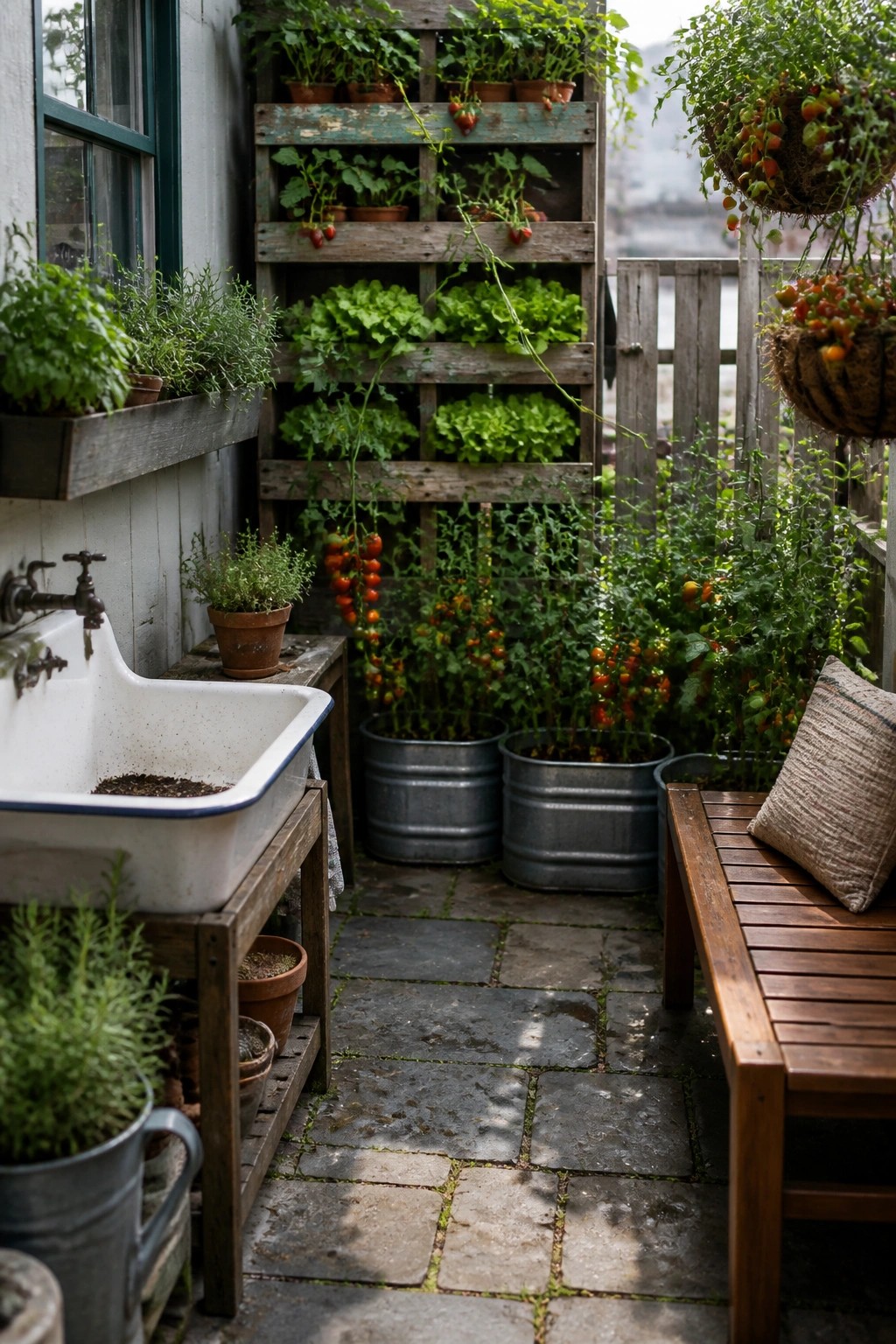
Old wooden pallets stand out as a simple way to grow more in tight outdoor spots. They turn an empty wall into a vertical garden that holds herbs, lettuce, and trailing tomatoes without crowding the floor.
This setup works best on patios or balconies where ground space is limited. Secure the pallet firmly and use small pots that fit the slats. It keeps plants accessible for watering while leaving room for seating or a path.
Large Pots Mix Heights on a Small Deck
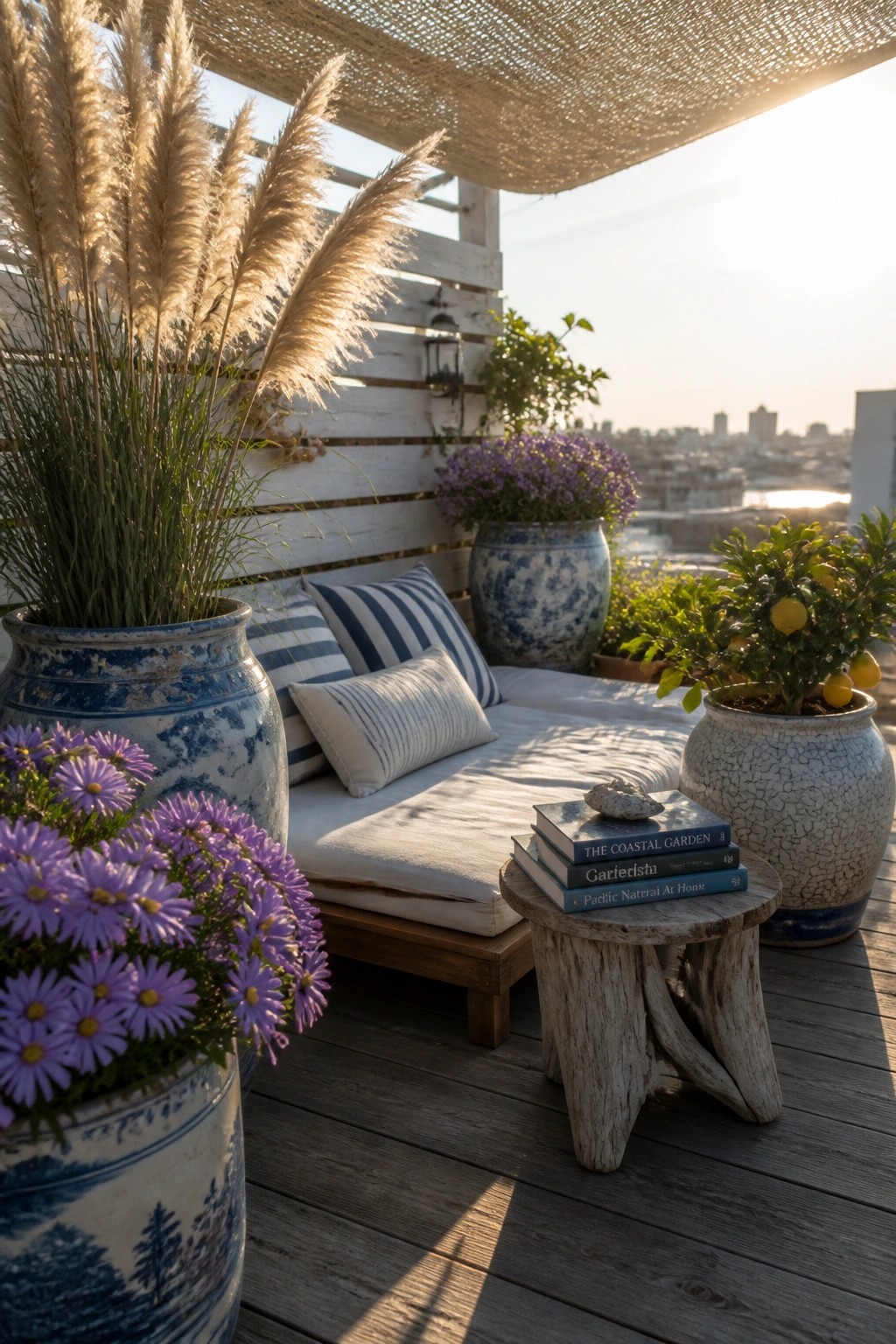
Large containers let you bring real height and fullness to a patio without any permanent planting beds. A few oversized pots with tall grasses paired with lower blooming plants create layers that feel settled and natural instead of scattered.
This works best on wooden decks or balconies where space is tight but you still want a garden feel. Group the pots around the seating edges so they frame the area while leaving room to walk. Just check floor weight limits before choosing very heavy ceramic pots.
Wall Mounted Planters Free Up Floor Space

Mounting planters right on the wall is a simple way to add a lot of greenery without crowding the ground in a small outdoor spot. It works especially well when you still want room for a table and chairs or a bench.
This approach fits narrow passages, side yards, or any tight corner where floor space matters. Secure the planters firmly, pick ones with good drainage, and stick to lighter soil mixes so the wall stays in good shape over time.
Group Large Pots Around Seating Areas
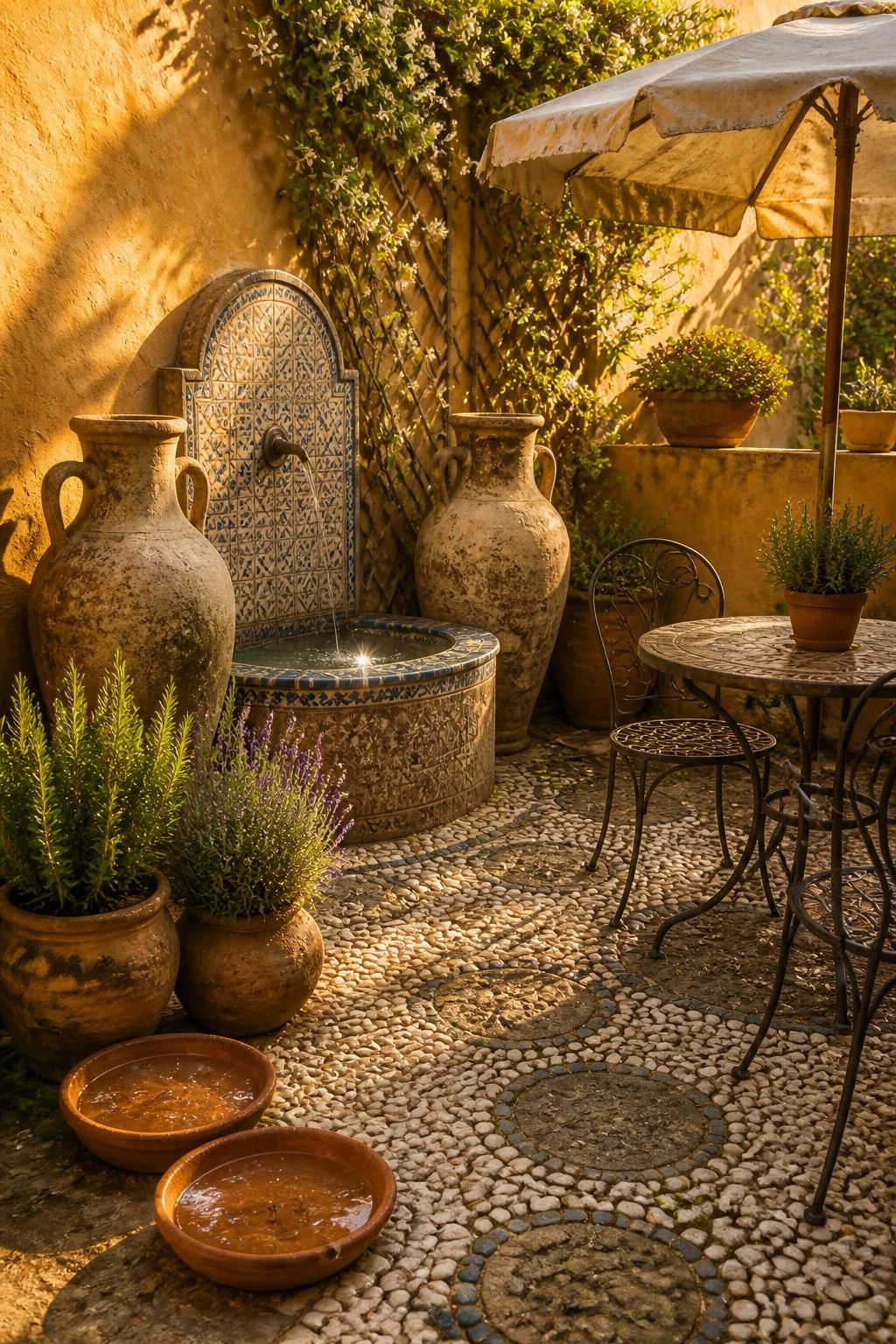
Large containers let you add real greenery to a paved patio without any digging or permanent beds. Grouping several together in different sizes creates a fuller look and helps the plants feel like part of the space rather than scattered accents.
This works especially well on small patios or balconies where floor space is limited. Place the biggest pots near the edge of a seating area and fill them with a mix of herbs and shrubs so everything stays easy to water and move when needed.
Cluster Containers Around a Bench
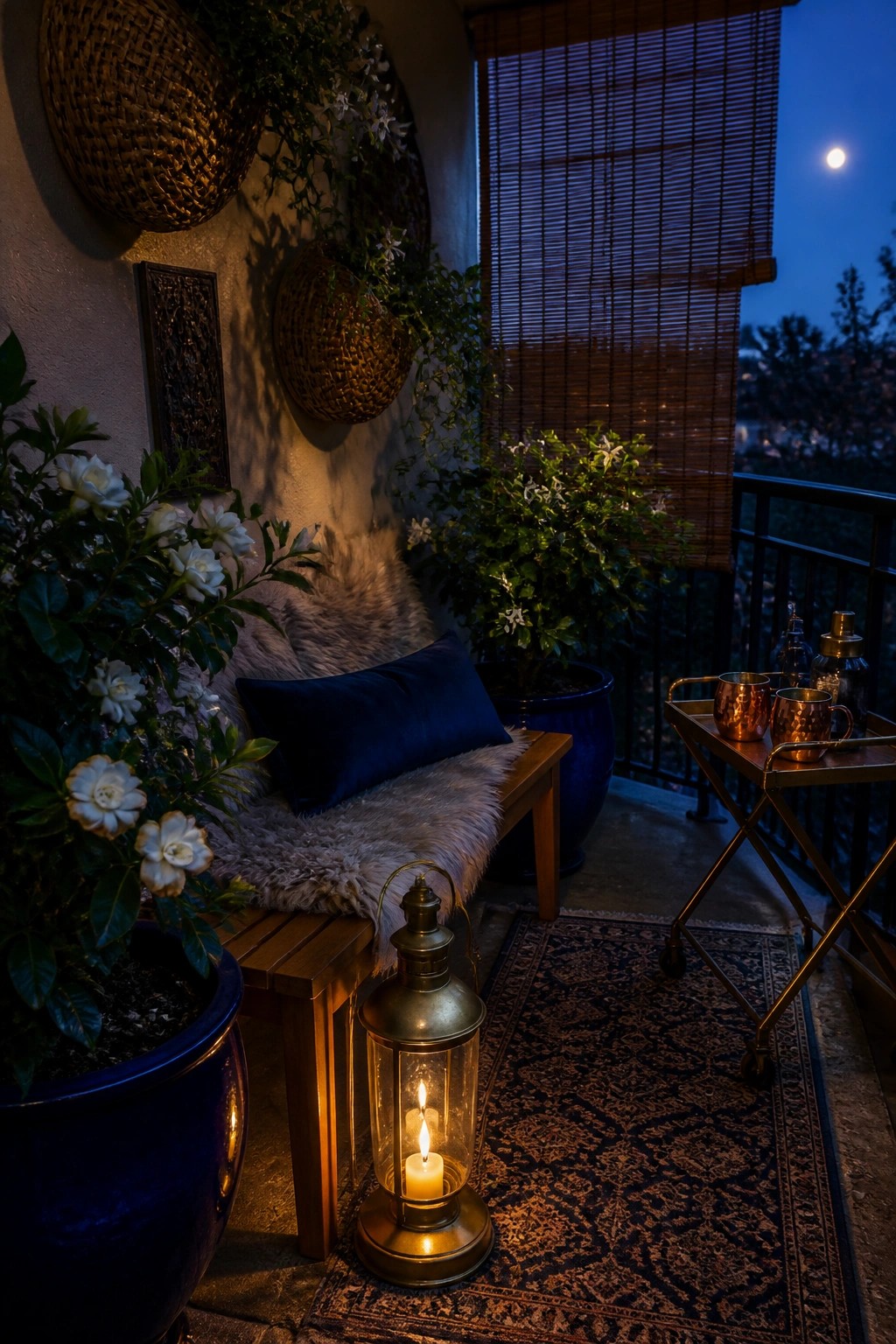
Placing several pots of different sizes around a bench is one of the easiest ways to turn a small balcony into a usable spot. The plants create a bit of enclosure without walls or railings taking up extra room.
This setup works best on balconies and patios where you cannot dig beds. Keep the bench simple and let the containers do the work, mixing a few hanging baskets higher up with larger pots on the floor.
Stack Crates to Add Height to Container Gardens
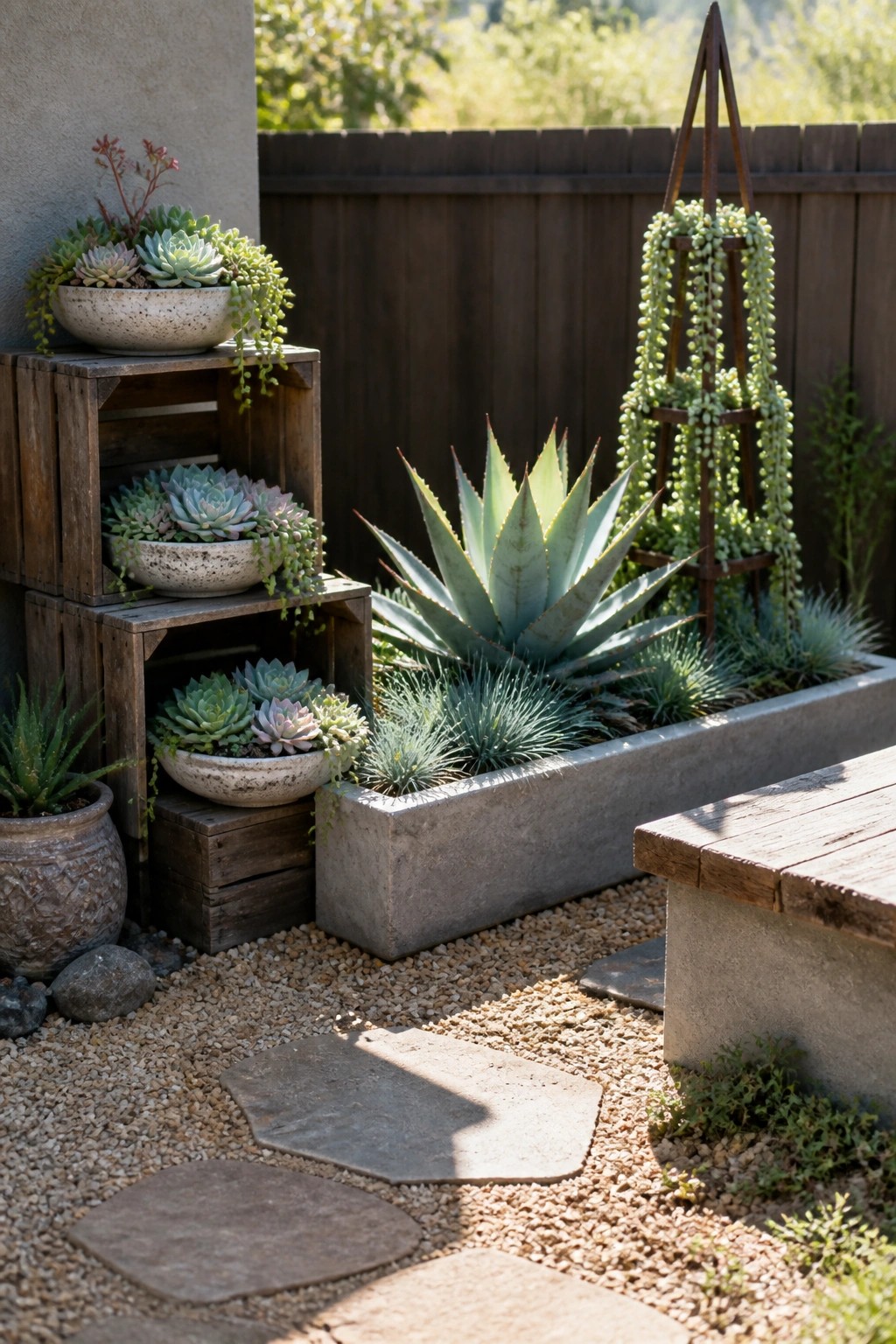
Wooden crates make a simple way to lift some pots higher than others in a container garden. The different levels keep the display from looking flat and let smaller plants get a bit more light and room to show off.
This setup works best along a fence or wall in a small yard or patio corner. Start with two or three crates, place the heavier pots on the bottom, and shift things around when you add new plants or want a change.
Mix Hanging Baskets With Railing Planters
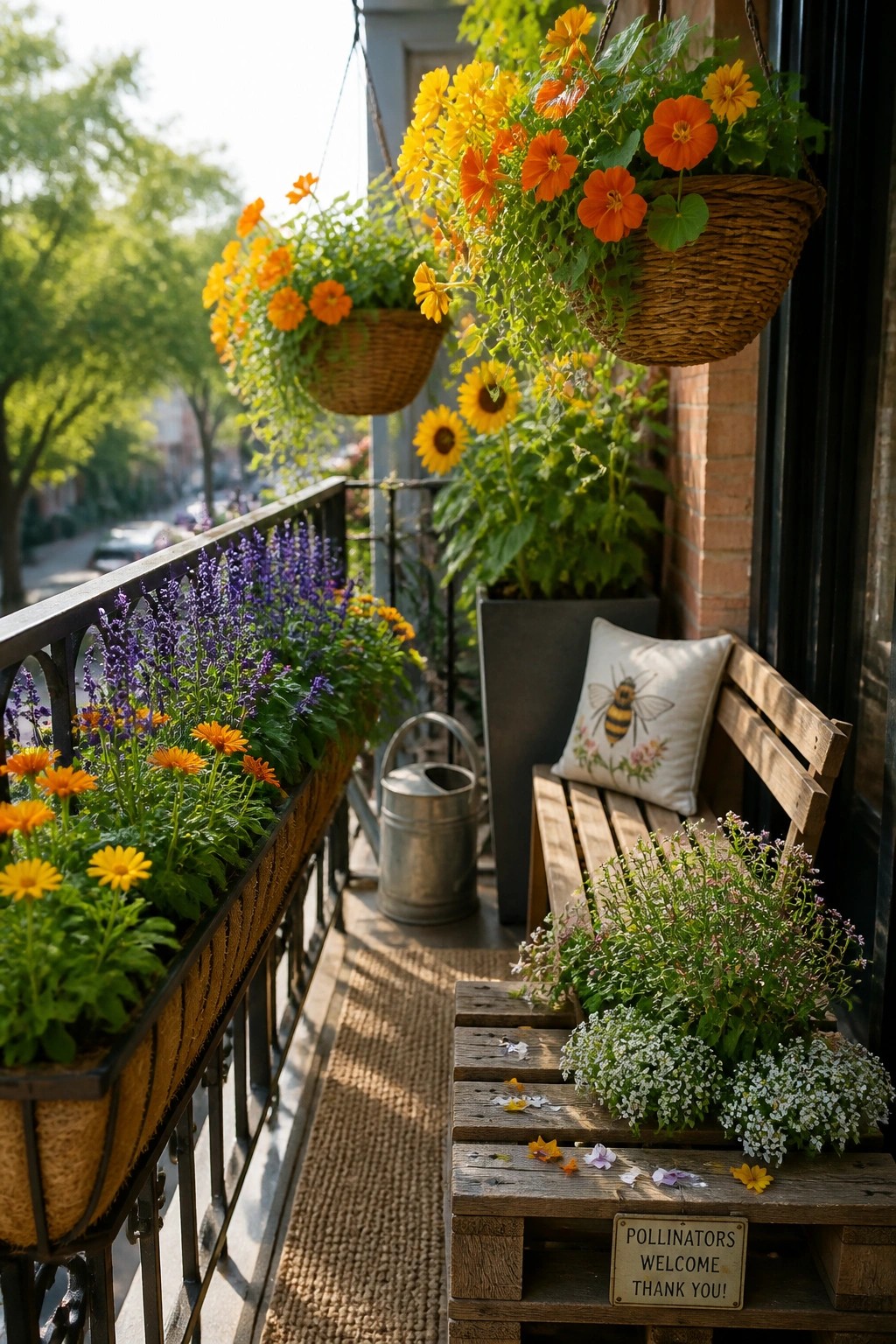
Many balconies feel too narrow for much planting, but mixing hanging baskets with railing boxes changes that fast. The baskets take advantage of vertical space while the railing planters add a solid line of color without using up floor room.
This setup works especially well on city balconies or small porches where you still want a full garden look. Start with a couple of baskets overhead, add boxes along the rail, and tuck a few smaller pots near seating if there is room left.
Mount Containers On A Wall To Free Up Floor Space

Many small patios run out of room fast once you add chairs and tables. Mounting containers on a wall keeps plants off the ground and still gives you plenty of growing area without crowding the walking space.
This approach works best on a solid fence or shed wall that can hold the weight. Use sturdy troughs and secure them well so they stay level once they are filled with soil and plants.
Group Large Containers Around Seating
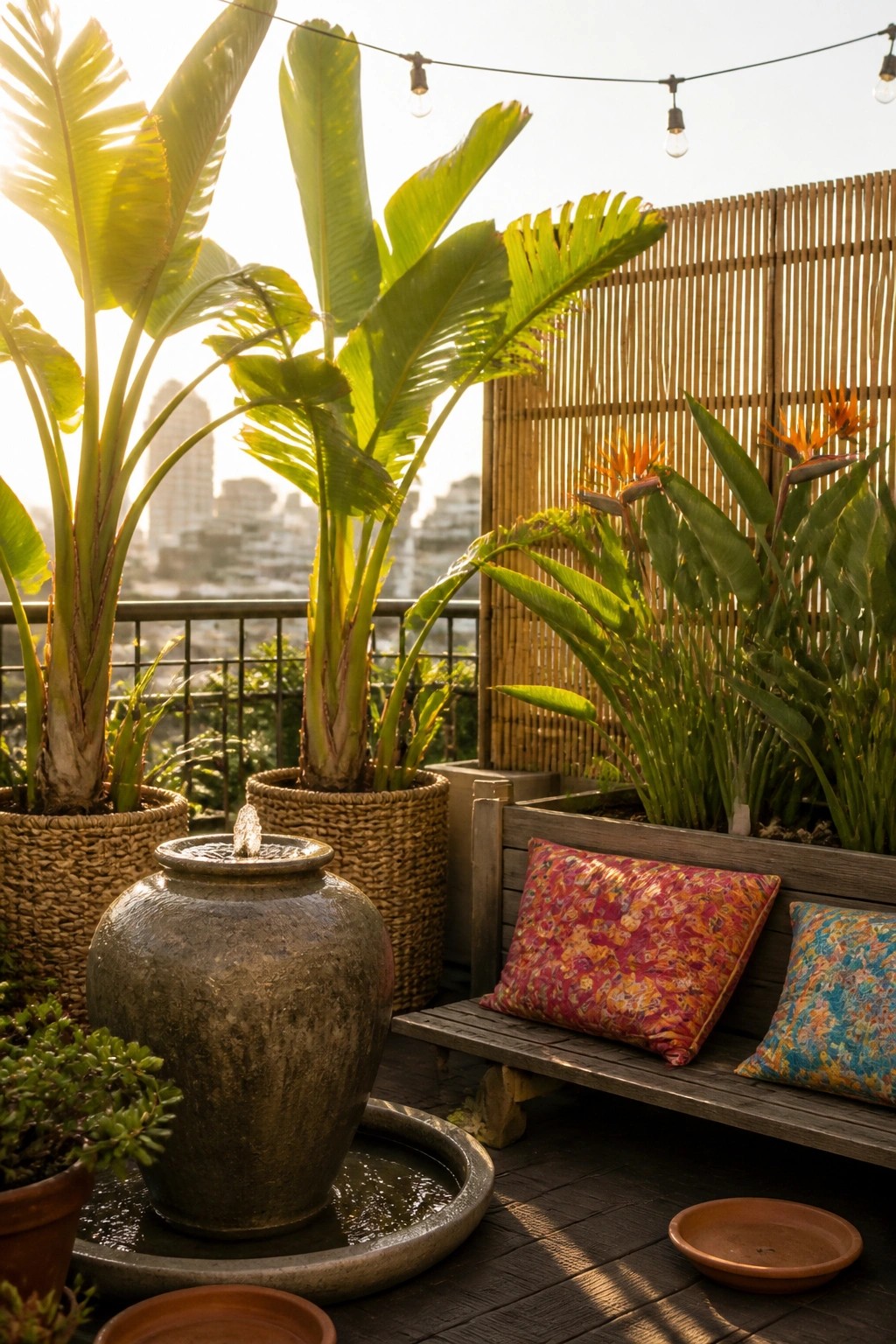
Many people turn to large pots when they want a balcony or patio to feel more like a garden. Placing several tall containers together creates a soft green wall that makes the seating area feel tucked away and private.
This approach works especially well in small urban spaces where you cannot plant in the ground. Keep the tallest plants toward the back and add a few lower ones in front so the bench or chairs stay easy to reach. It suits rooftops and balconies with hard floors and limited square footage.
Tall Containers For Small Patio Corners

Tall containers give you a simple way to add height and greenery when space is tight. They work especially well in corners or along narrow paths because they take up little floor area while still creating layers of plants that feel full.
Try grouping two or three matching dark pots of different sizes near a bench or along stepping stones. Stick to one pot color so the focus stays on the plants, and choose varieties that stay neat without much trimming. This setup suits patios with dark walls or fencing and keeps the area easy to clean and rearrange.
Hang Planters to Add Greenery Without Losing Floor Space
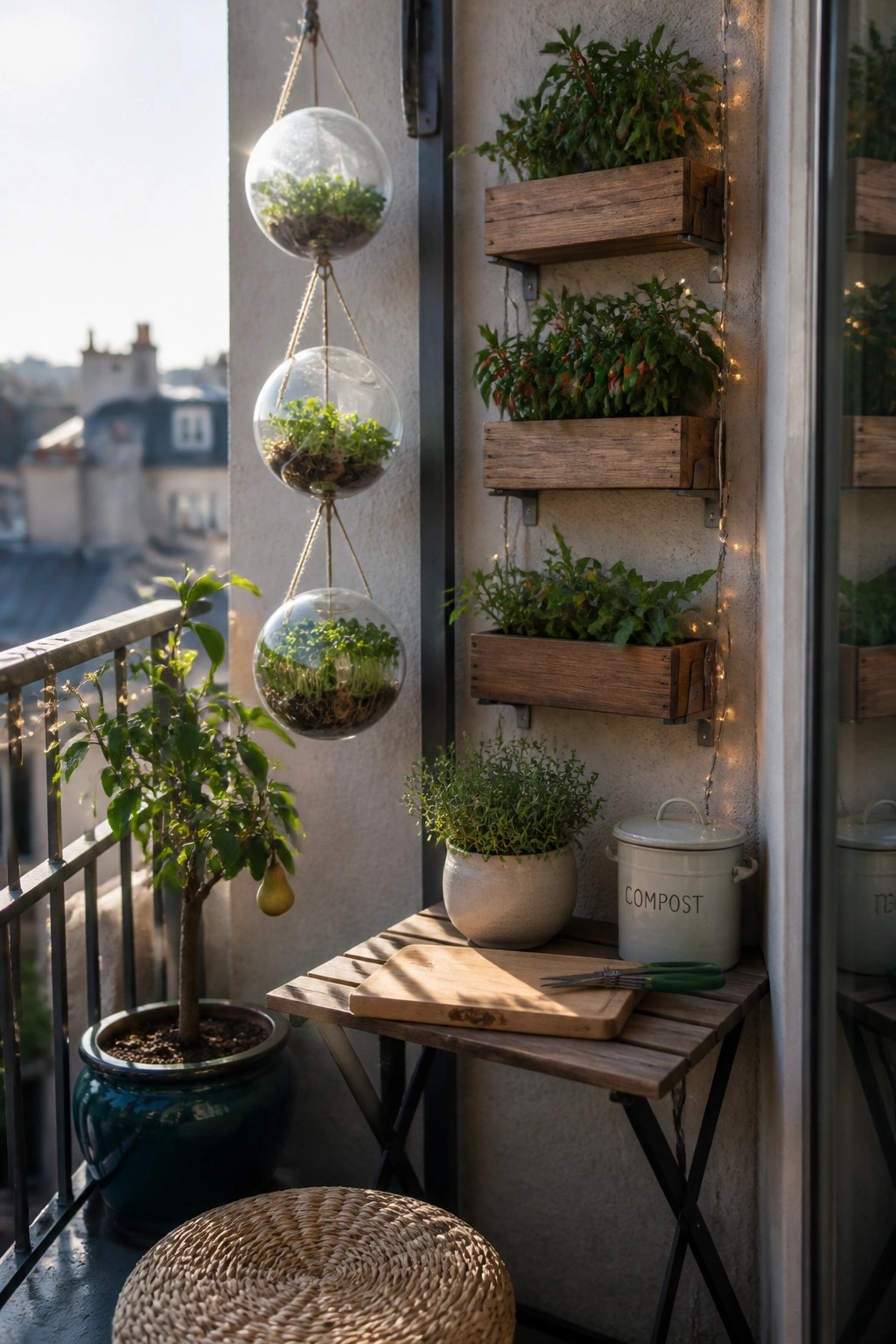
Hanging containers let you bring in more plants on a small balcony while keeping the floor open for a chair or table. The mix of glass globes and wall boxes works because it spreads the plants across different heights instead of crowding everything at one level.
This approach suits apartments or any tight outdoor spot where floor room is limited. Start with two or three hanging pieces and add wall boxes only where the structure can support them. Keep the lower area clear so the space still feels usable.
Mix Pot Sizes and Materials on the Patio

A simple way to make a small patio feel like a real garden is to use containers in different heights and finishes. Placing taller pots near the back and shorter ones up front creates layers that add depth without taking up much floor space. This approach works especially well when you already have a bench or seating area, since the plants can wrap around it naturally.
Try grouping everyday terracotta with a few larger or more unusual pieces like metal cans. The mix keeps things from looking too matchy and lets you move things around as plants grow or seasons change. It suits patios that get good sun and gives you room to experiment without committing to permanent beds.
Use Concrete Blocks As Planters
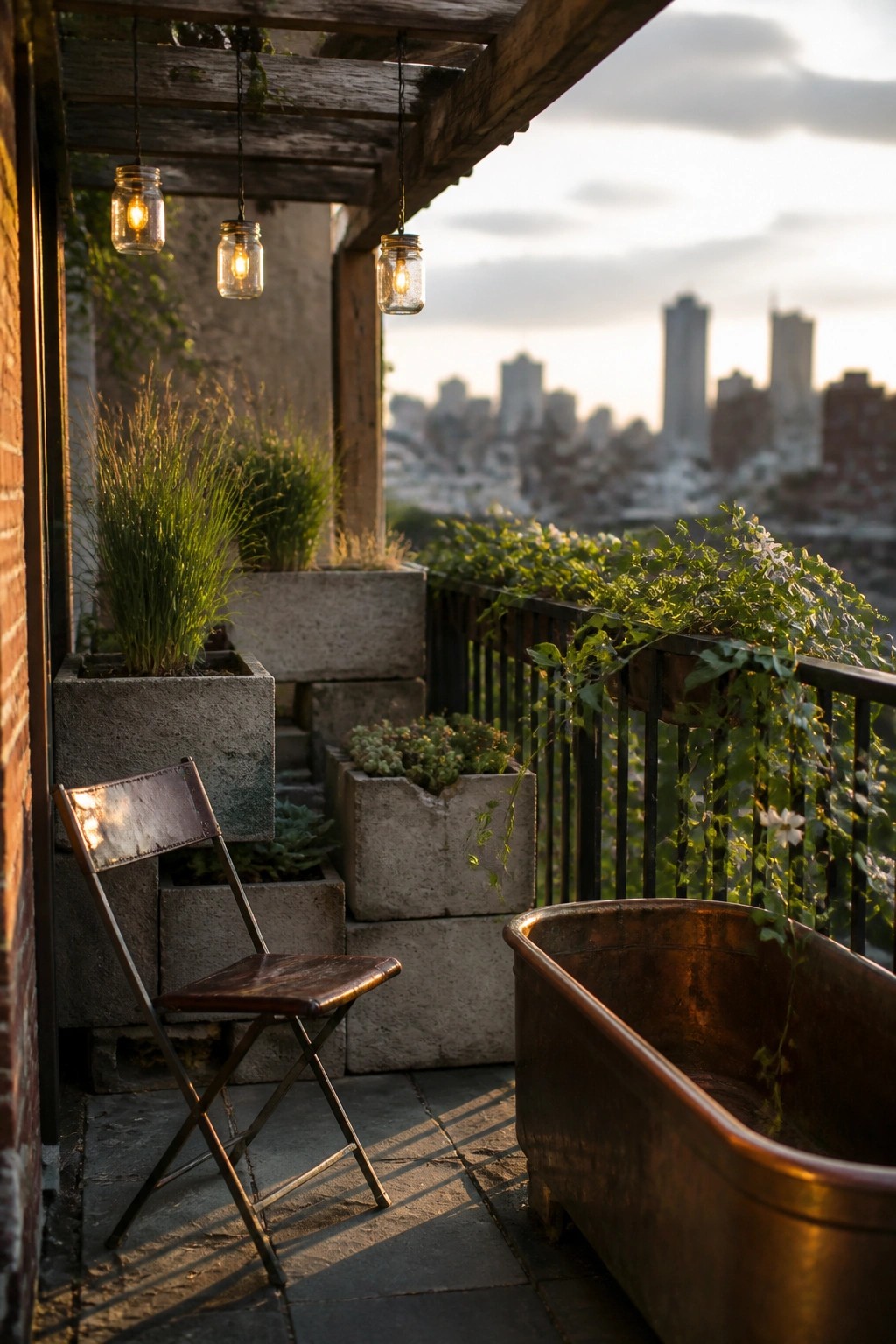
Concrete blocks make simple, strong planters that hold up well on balconies and patios. They stack easily, give plants room to grow, and create a solid base without needing custom builds. Many people like them because they cost little and can be arranged to fit tight spaces.
Place them along a railing or against a wall where they catch sun. Add a metal tub nearby for contrast and extra planting room. Just check that drainage works and the surface underneath can handle the weight.
Mix Herbs in One Large Container
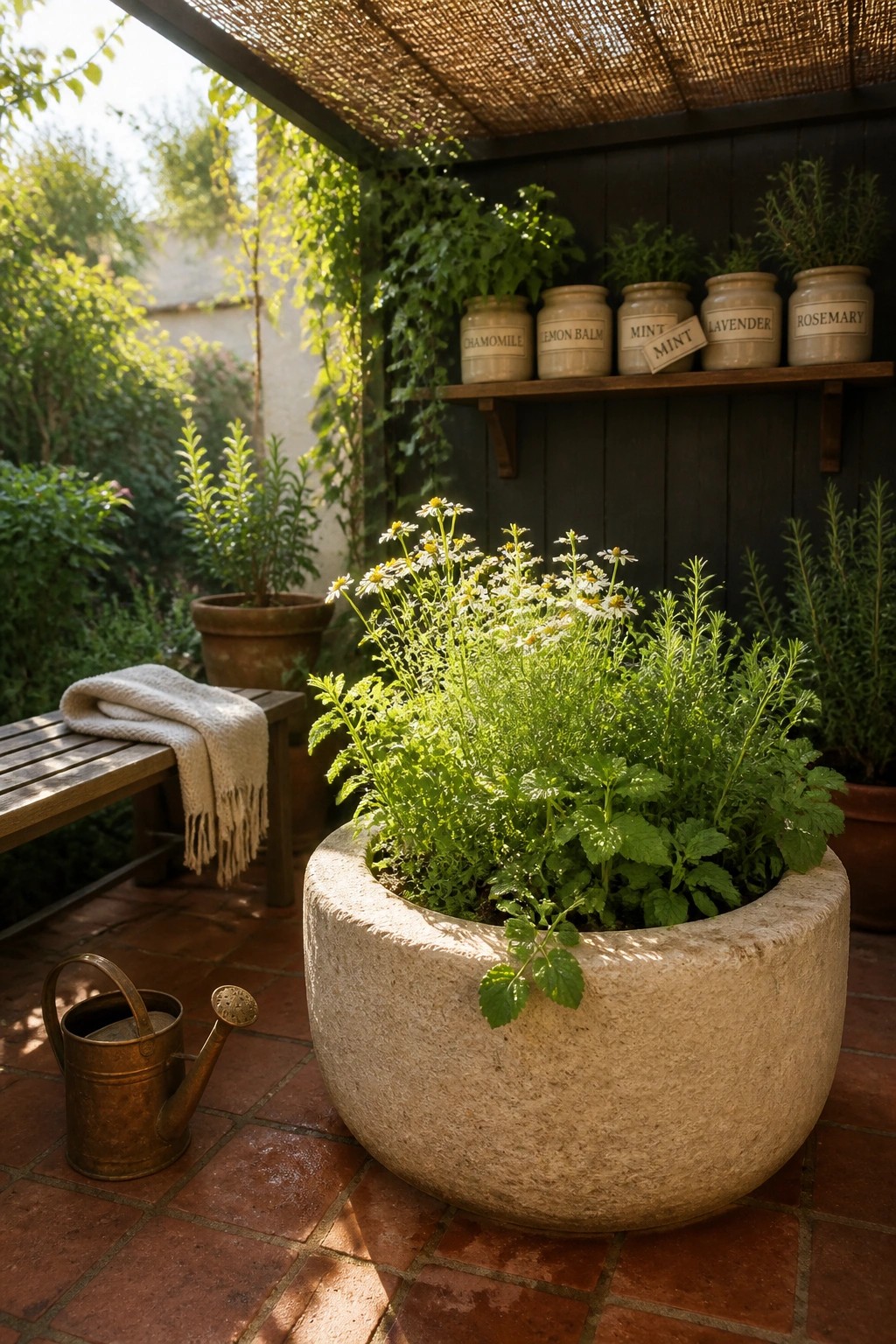
A single oversized container lets you grow several herbs in one spot without crowding a small patio. It keeps everything easy to reach for cooking while giving the space a full, green look that feels intentional rather than scattered.
This approach works well on brick or stone patios where floor space is limited. Choose a sturdy material like stone or concrete so the pot stays put, and combine plants with similar water needs so they all stay healthy without extra fuss.
Stack Concrete Blocks For Vertical Planting
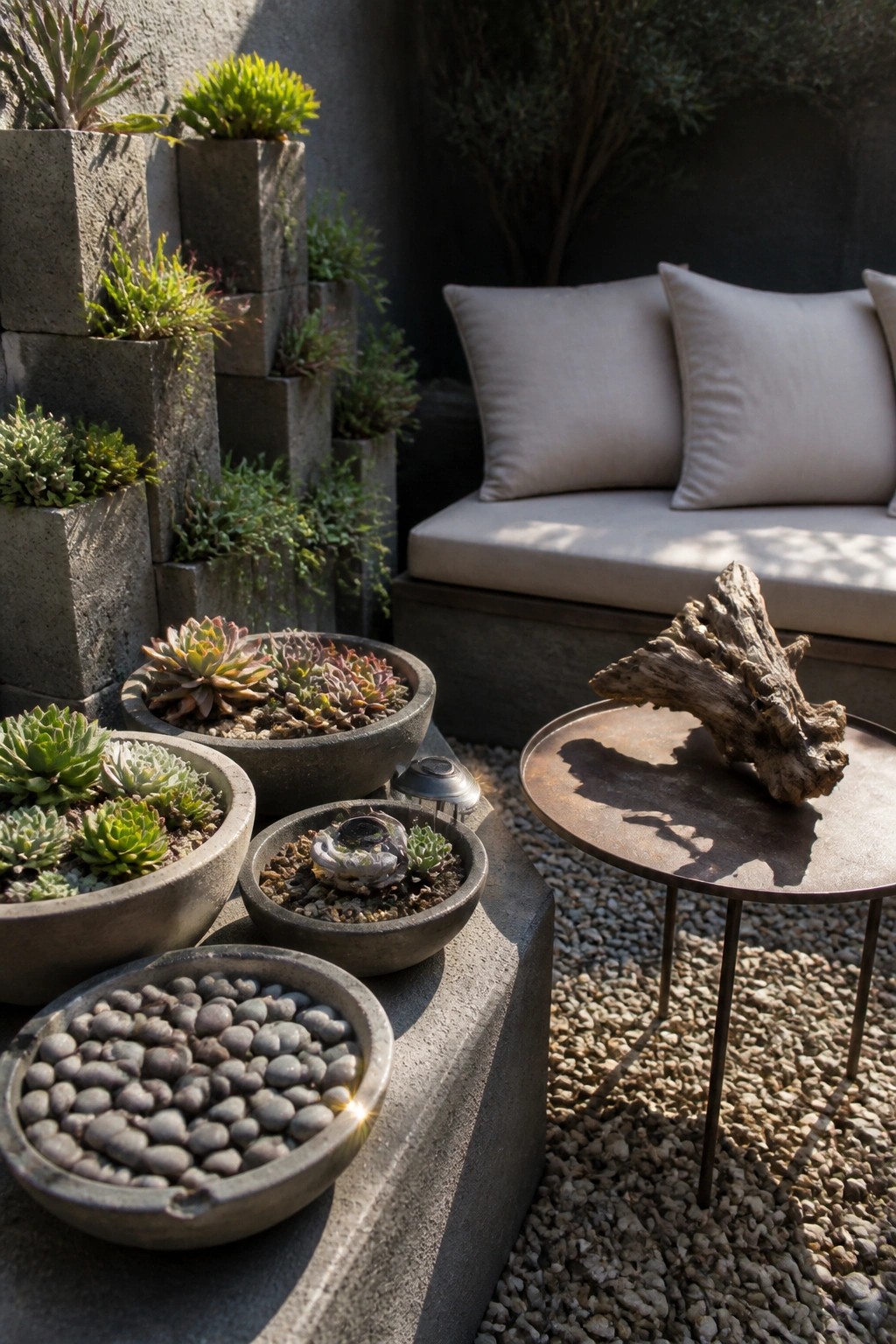
Many people like stacking concrete blocks to add height and more planting spots in a tight patio corner. The blocks hold pots securely at different levels so you can fit quite a few plants without spreading everything across the floor.
This setup works best against a wall or along the edge of a seating area where you still need room to walk or sit. Fill the blocks with succulents or other low-water plants, and keep the lower bowls simple with stones or smaller rosettes so the whole group stays easy to care for.
Frequently Asked Questions
Q: How often do I really need to water my container plants on a hot balcony?
A: Poke your finger into the soil every day or two. Water thoroughly when the top inch feels dry. Morning watering works best so plants have time to dry before night.
Q: Can I stack containers to save floor space on my tiny patio?
A: Stackable planters let you grow upward instead of spreading out. Place taller ones in the back and shorter in front for easy access. Just make sure the bottom layer can handle the extra weight.
Q: What size pots should I start with for a small corner garden?
A: Choose pots at least a foot wide. They hold moisture better and give roots room to spread.
Q: How do I protect my balcony plants from strong winds?
A: Group pots together in clusters so they shield each other. Use heavier ceramic or concrete containers that won’t tip over easily. Move delicate plants to a sheltered spot when storms hit.
