

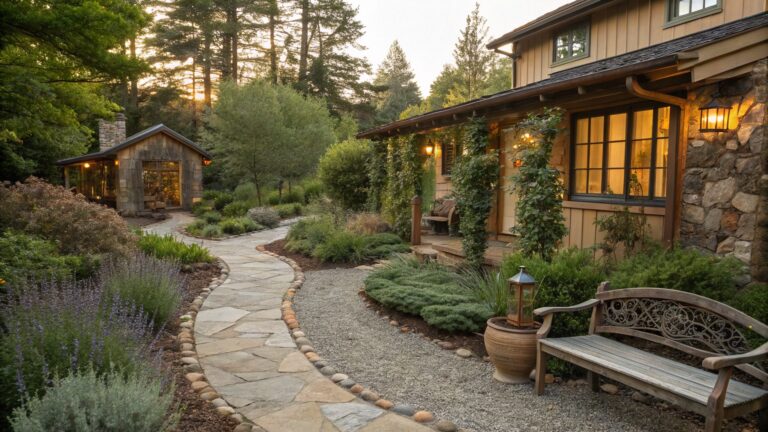
I’ve noticed over the years that rock landscaping really shines when it defines clear pathways and borders that guide you through the yard without overwhelming the plants. In my backyard trials, I figured out that mixing rock sizes creates natural focal points that hold up better through seasons than flat gravel beds ever do. Folks tend to notice those sturdy edges and stepping stones right away, since they set the rhythm for the whole space. You can build these layouts in stages, starting with simple dry-stacked walls or river rock mulches that let soil settle and plants root deeply over time. Save the terraced slope idea; it transforms uneven ground into something usable fast.
Winding Stone Paths with Rock Edging
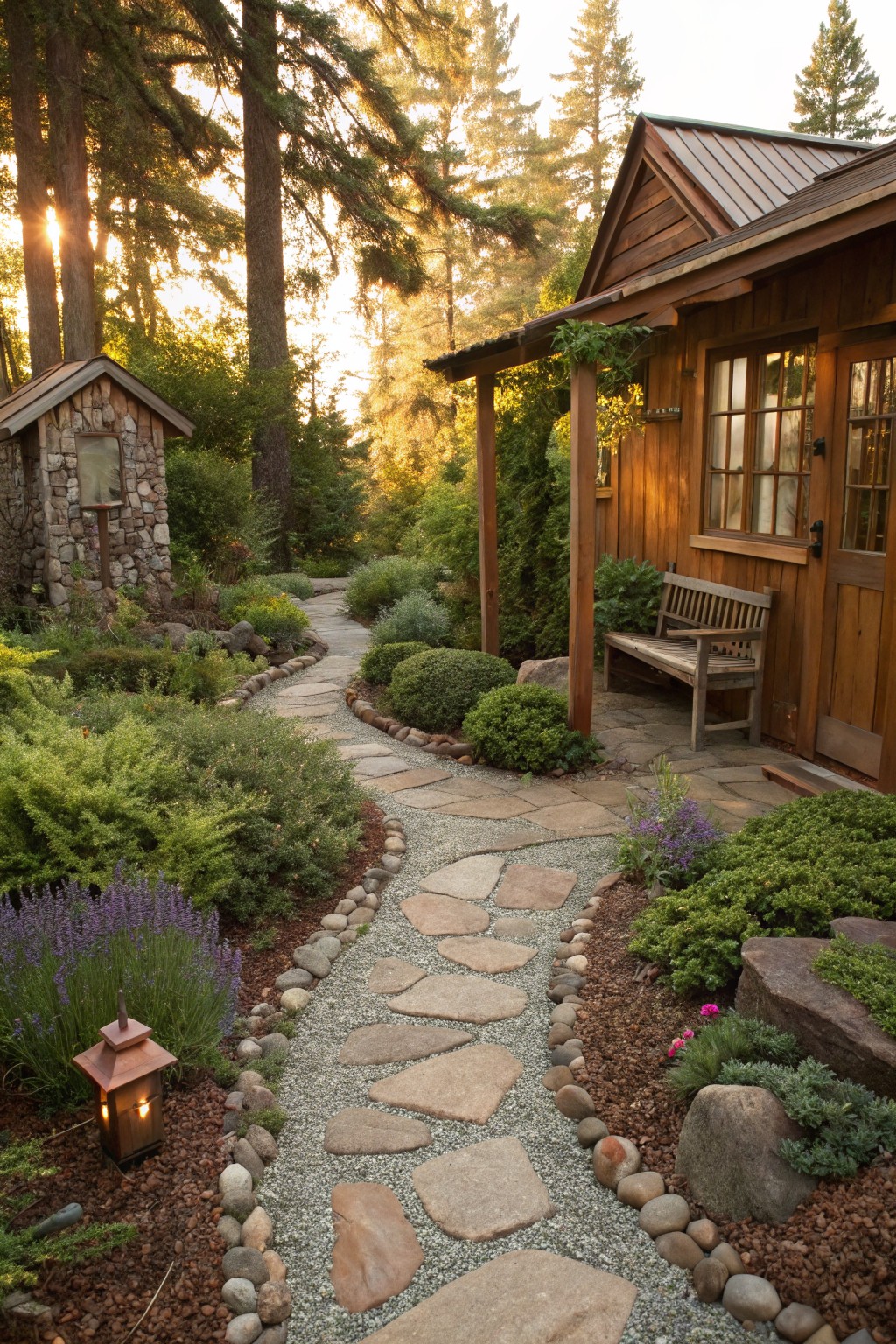
A simple winding path like this uses flat stepping stones set into the ground, edged with pebbles and larger rocks. It pulls you right through the garden in a natural way, without straight lines or fancy paving. The rocks keep mulch and plants in place, and everything blends with the trees around it.
This setup works best in wooded backyards or sloped spots where you want to connect different areas. Lay the stones loose at first to get the curve right, then fill edges with gravel for drainage. Skip it if your yard floods a lot, since water can shift the stones over time.
Terraced Stone Walls for Sloped Yards
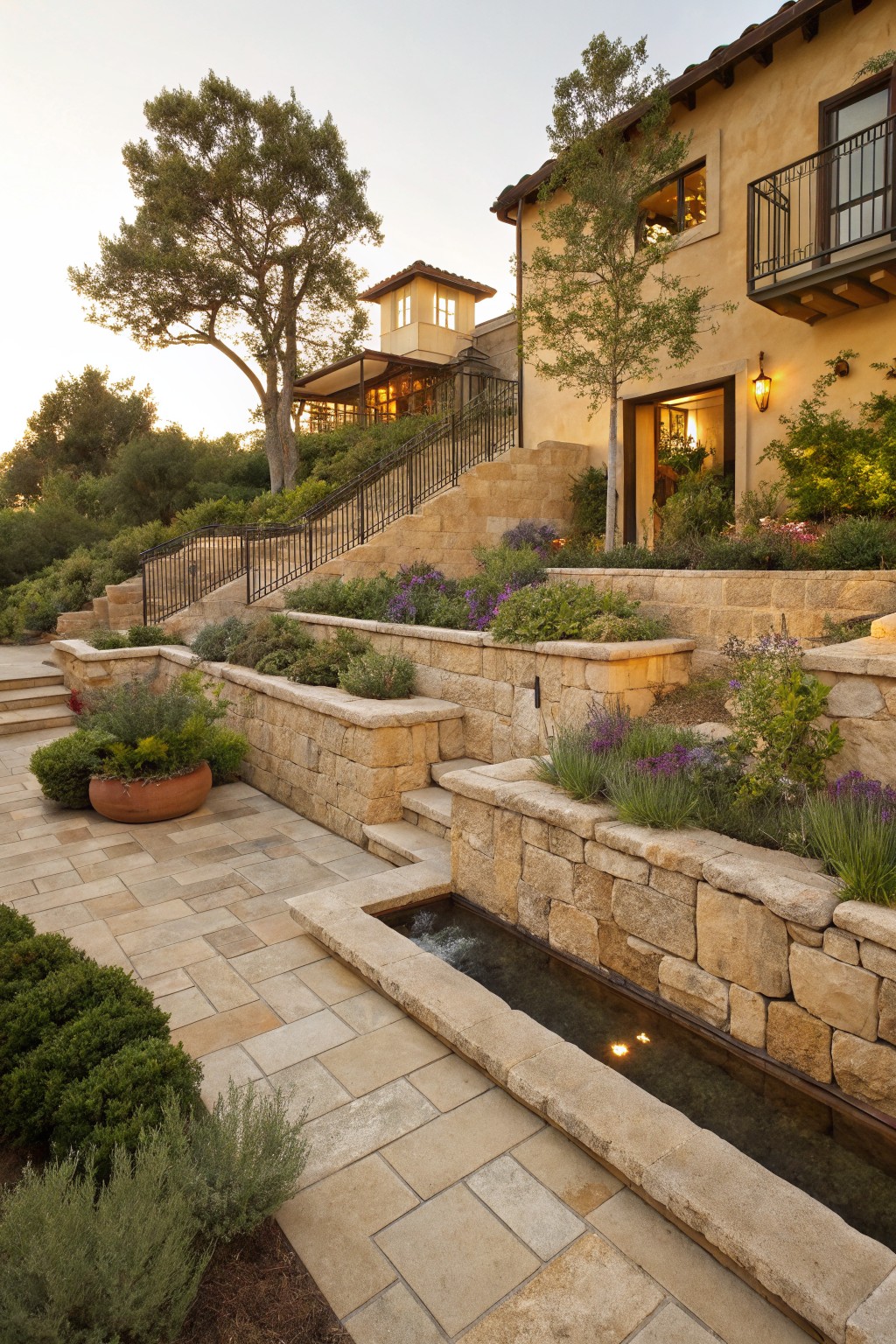
Slopes can be tough in a backyard. They make mowing a chore and planting tricky. But terraced stone walls fix that. They turn a hillside into flat steps of garden beds, like the raised planters overflowing with lavender and grasses here. Stone keeps it sturdy and lets plants spill over naturally. It feels solid, not forced.
These work best on moderate slopes where you want low upkeep. Pick local stone to blend with your house, maybe add a shallow water channel for interest. Suits casual homes in dry areas. Just make sure walls drain well to avoid crumbling. Start small if you’re DIYing.
Gravel Paths with Oversized Boulders
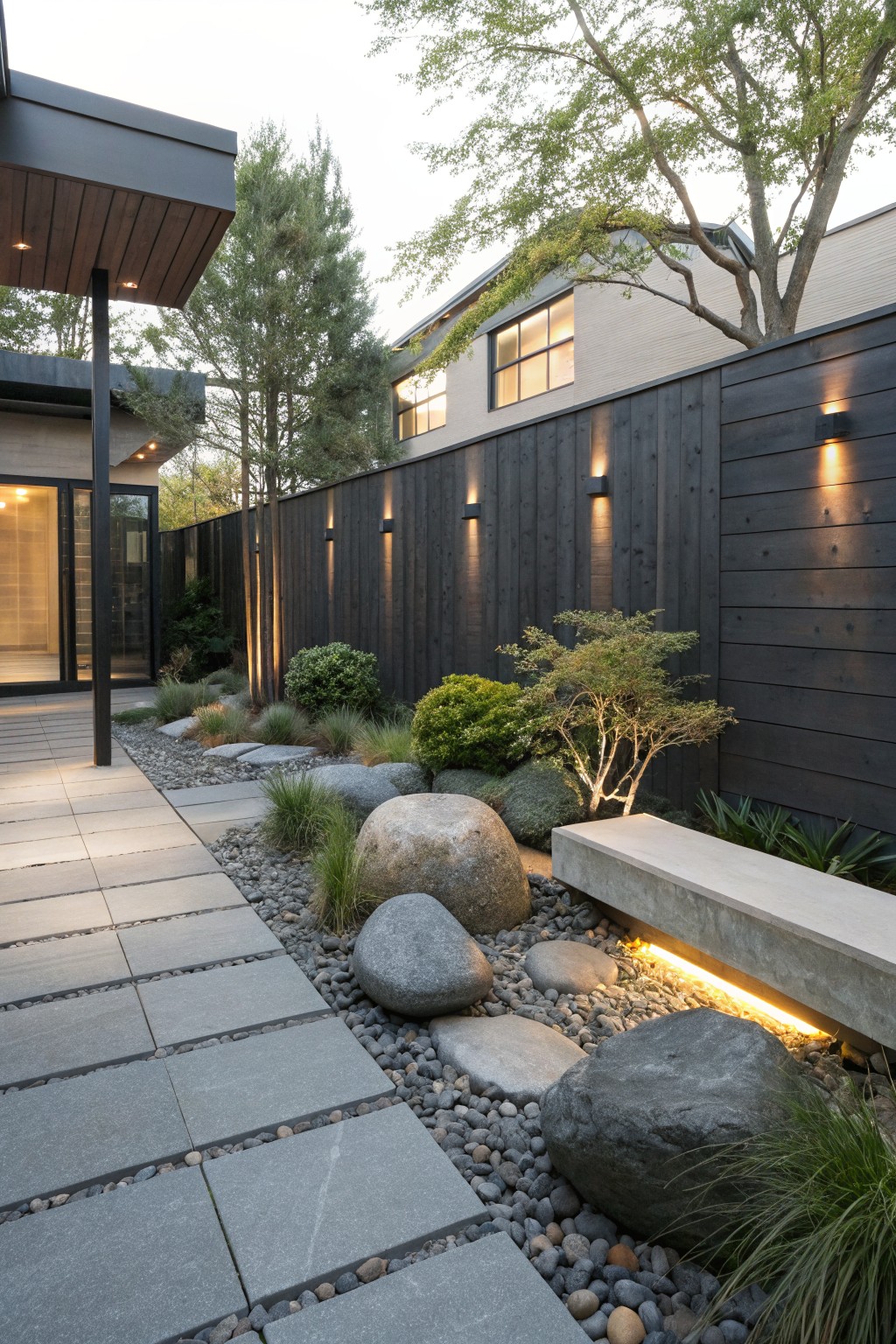
Big round boulders scattered along a gravel walkway make a simple path feel more like a natural trail. They add weight and interest without much upkeep. You see grasses poking up around them, and flat pavers for stepping stones. It’s a calm look that fits right next to a house fence.
This works best in narrow side yards or as a lead-in to a patio. Suits modern homes or any spot needing low-water planting. Pick boulders in a few sizes from a local quarry. Just rake the gravel now and then to keep it tidy.
Curved Stone Fire Pit Gathering Spot
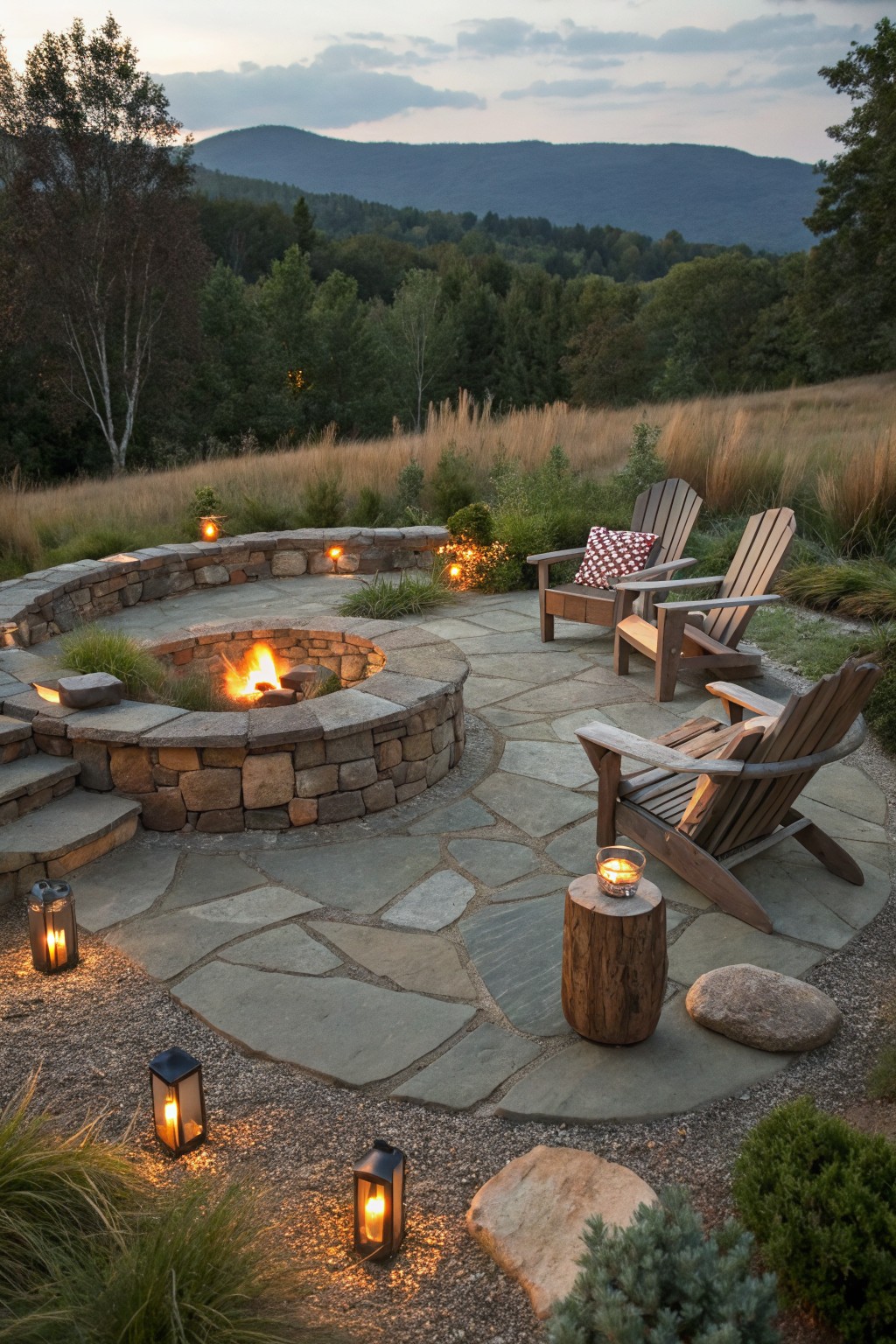
A curved stone fire pit like this one makes a natural spot for backyard evenings. The low wall around it holds the fire safely and doubles as extra seating if you add cushions. Simple Adirondack chairs nearby keep things relaxed, and the flagstone patio ties it all in without fuss.
This works best in a yard with trees or hills nearby, where you want a defined hangout area. Pick stones that match your local look for easy blending. Just make sure the pit is big enough for logs but not too wide… keeps the heat right where you need it.
Dry Creek Beds for Natural Yard Flow
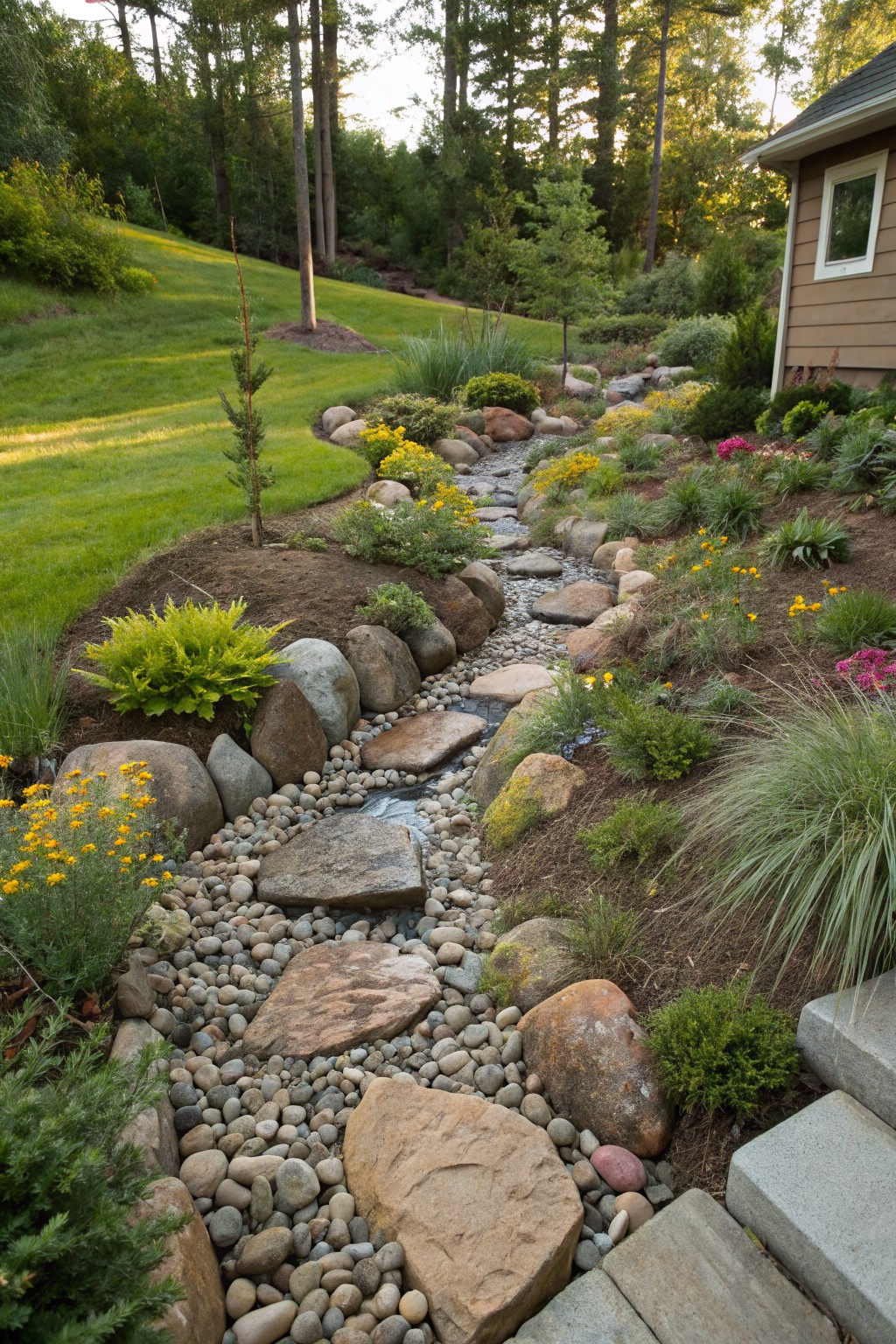
A dry creek bed like this one uses big boulders and smooth pebbles to guide rainwater down a slope without erosion. It looks just like a real stream, even when it’s dry. The plants tucked along the edges, like grasses and low flowers, soften everything and keep soil in place. It’s a smart way to handle yard drainage while making the space feel more wild and natural.
These work best on sloped backyards near a house or patio. Line the trench with landscape fabric first, then layer in the rocks biggest to smallest. Add drought-tolerant plants that won’t mind occasional water. Skip it on flat ground. It stays low-maintenance once set up.
Rock Gardens with Boulders and Raked Gravel
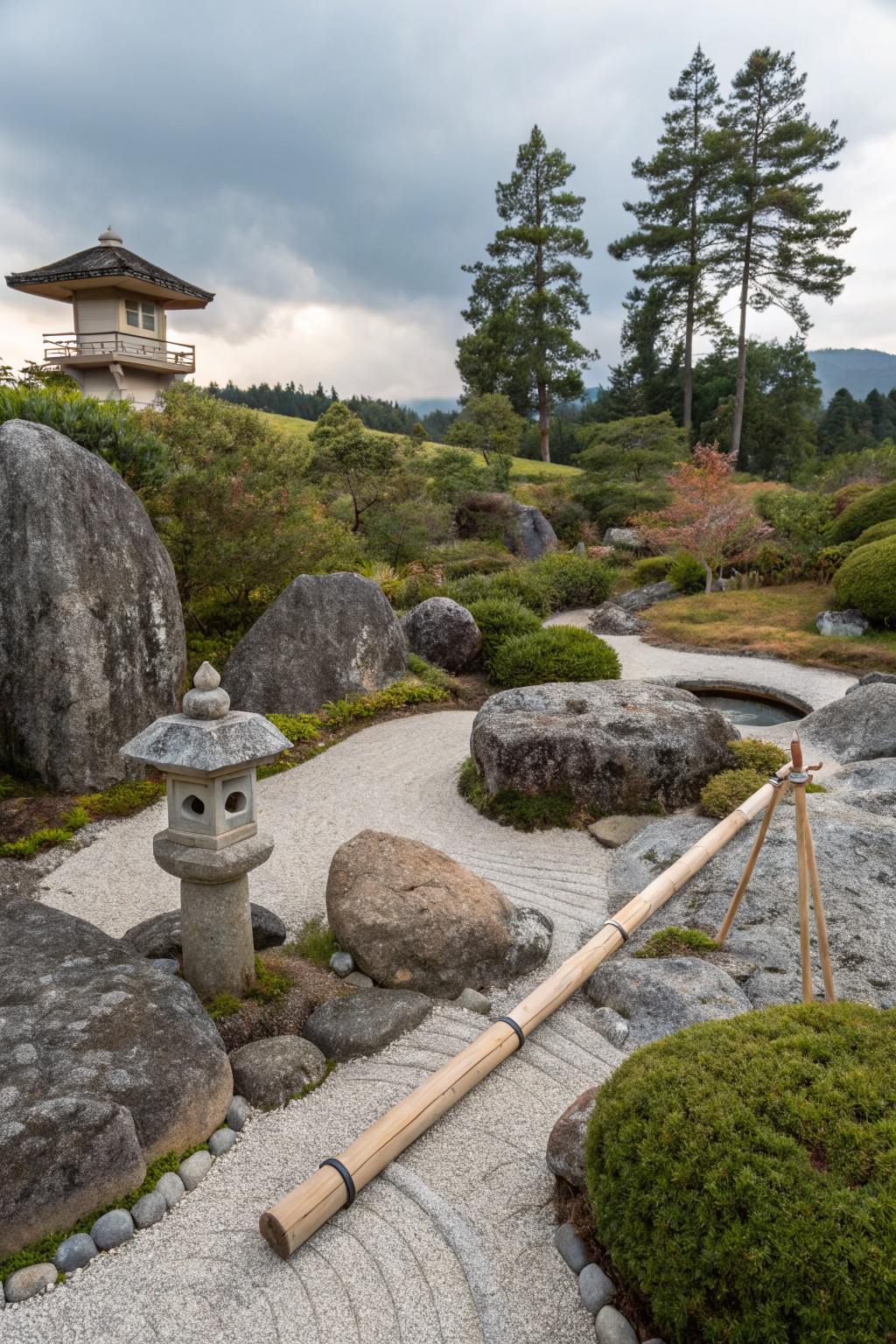
Big boulders make rock gardens feel solid and natural. Set them in raked gravel paths that curve gently around. A stone lantern adds a quiet touch without extra fuss. This setup keeps things simple and peaceful. No need for lots of plants.
Try it in a backyard corner or along a slope. Pick boulders from nearby quarries so they blend right in. Rake the gravel weekly to keep that clean look. It suits smaller yards best. Low water too. Just watch weeds in the gravel.
Winding Stone Path Edged in Boulders
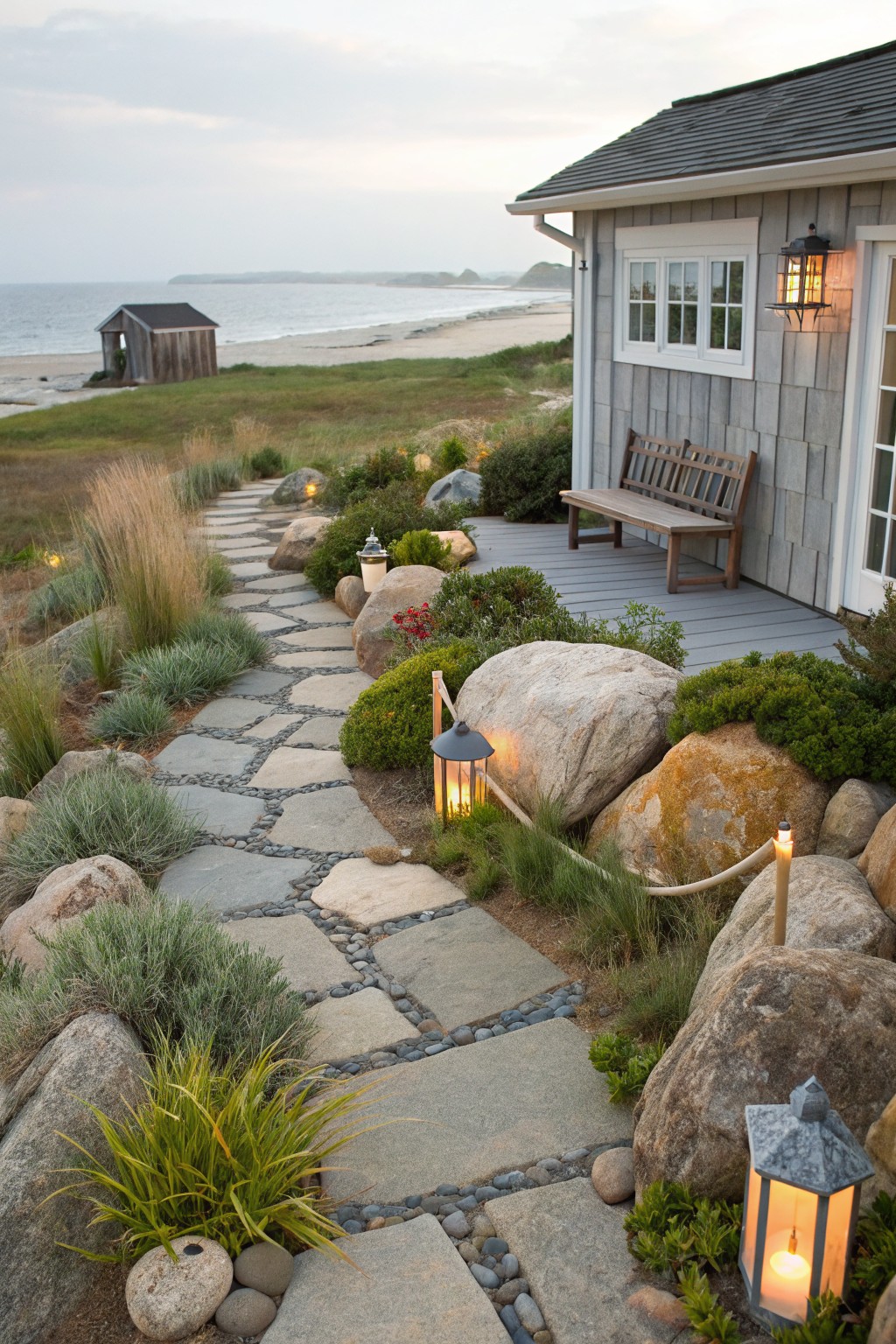
A simple way to guide people through your yard is a winding path made from rough stone slabs. Big boulders line both sides, mixed with clumps of grass and low plants. It looks like it grew there naturally, especially in a coastal spot like this with dunes and beach grass nearby. The lanterns along the way light it up softly in the evening.
This works best in bigger backyards where you want to connect the house to open areas without straight lines. Use local fieldstone or granite for the slabs and boulders so it blends in. Plant tough grasses that handle wind and salt. Skip it for tiny lots, it needs space to breathe.
Stepping Stone Path Through Moss and Ferns
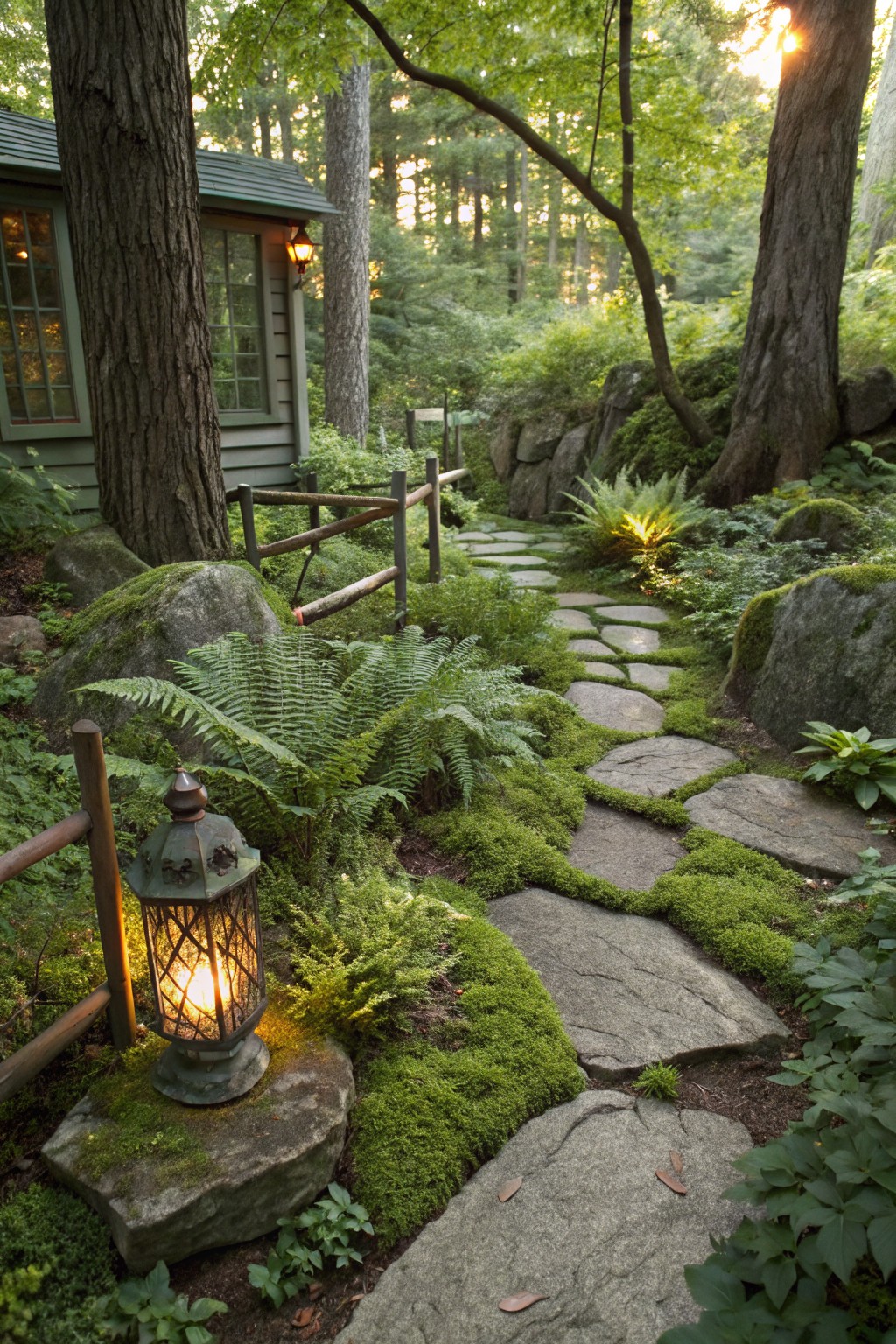
A simple path like this uses big flat stones laid out in a loose curve through thick moss and fern beds. It pulls you right along without feeling too planned out. Those rocks look right at home next to boulders and trees. The soft edges make the whole yard feel wilder and calmer.
You can set this up in any shady spot where moss already grows easy. Pick stones that match your local rocks so they settle in over time. Space them for regular steps and fill around with low plants. A lantern on one of the boulders lights it up nicely at dusk. It leads well to a garden shed or back corner.
Boulders and Gravel for Low-Maintenance Beds
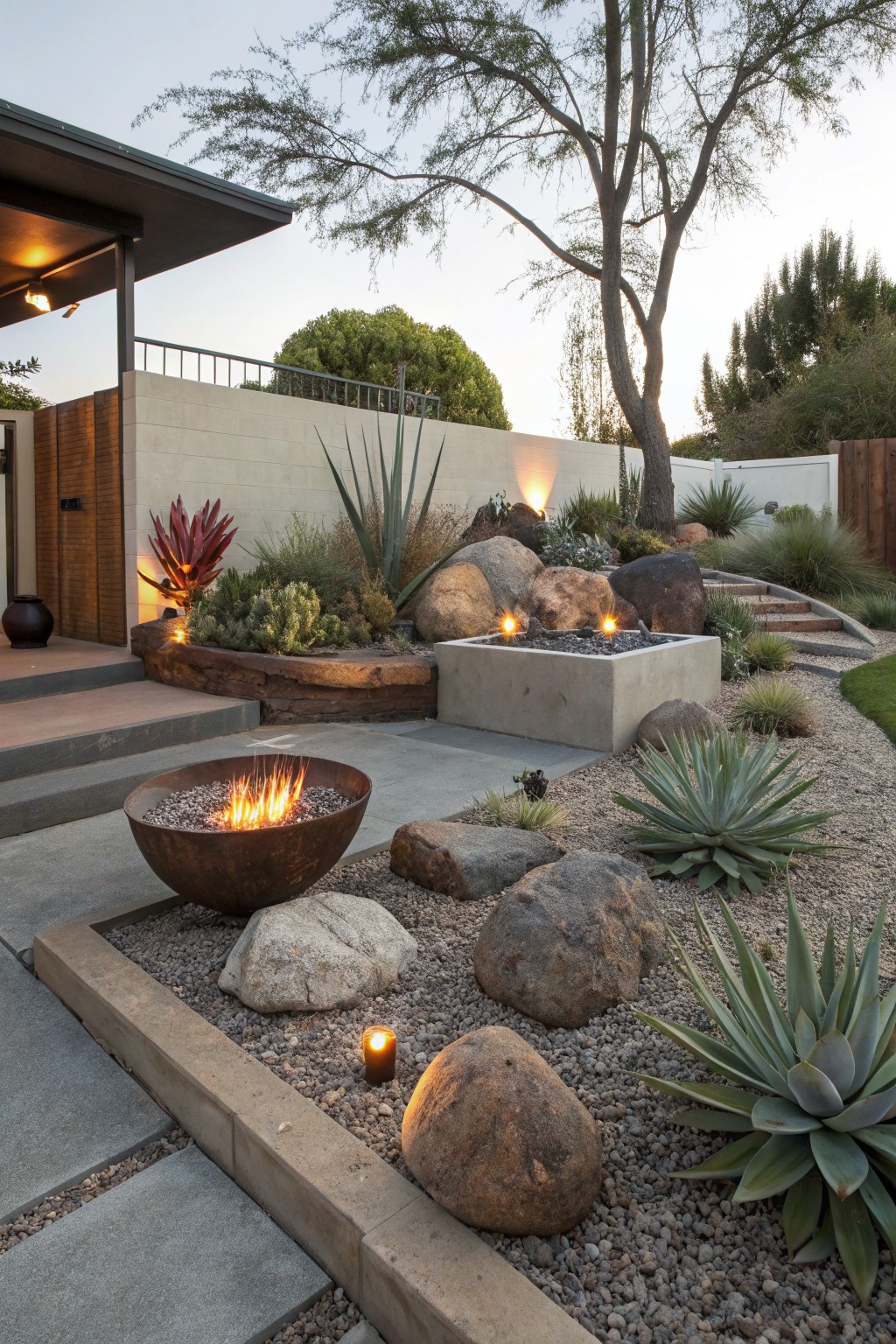
Big boulders scattered in gravel beds make a yard feel rugged and put-together at the same time. Pair them with spiky agaves and you get that desert vibe without much upkeep. The rocks do the heavy visual work, holding the space together while gravel keeps weeds down and water use low.
This works best around patios or entries where you want definition without grass. Source boulders from local quarries to fit your budget, then fill around them with 2-3 inch gravel. Add a fire pit nearby like the bowl-style one here for evenings. Skip it in shady spots, though. It shines in full sun.
Stone Retaining Walls for Sloped Yards
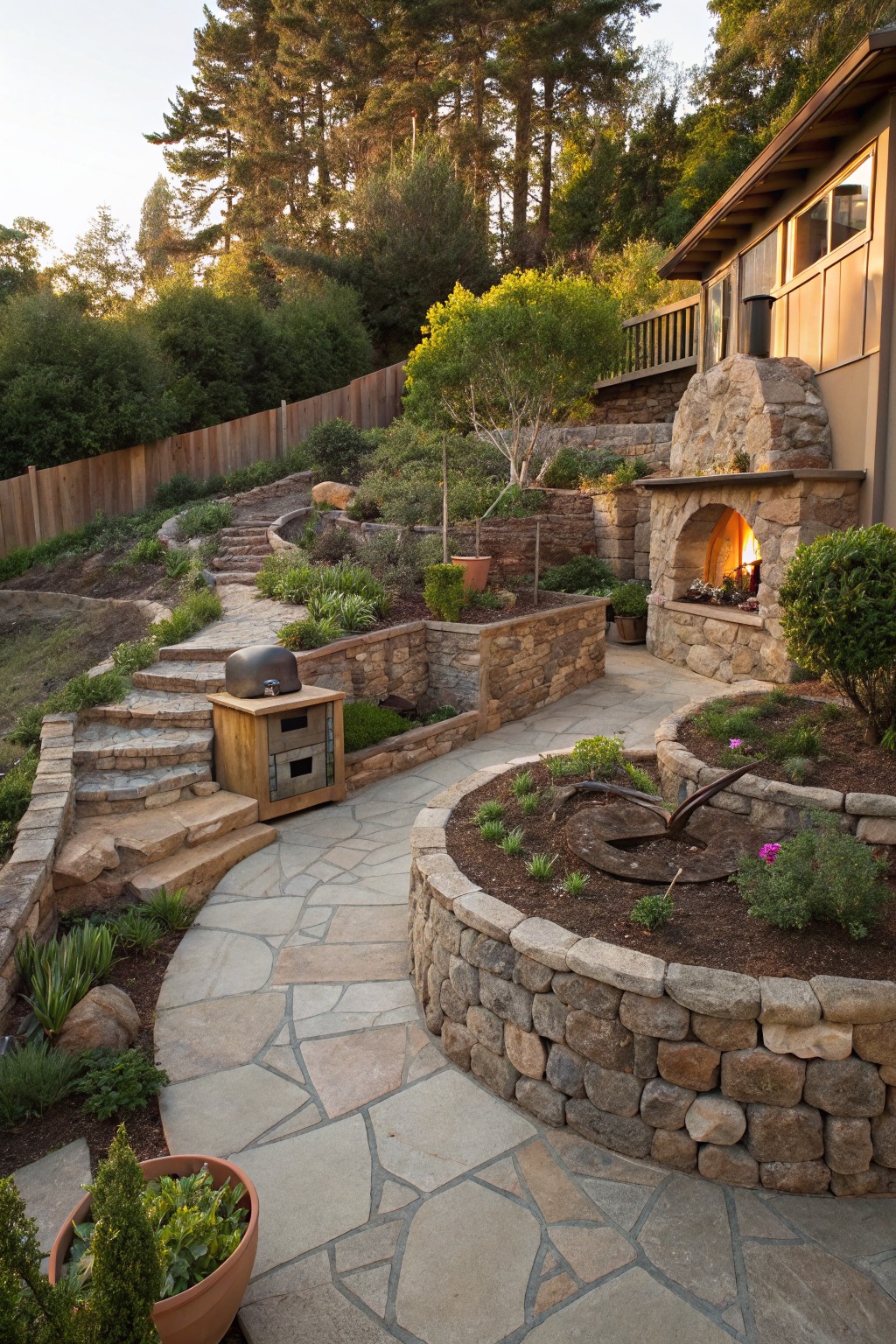
Sloped backyards can be tricky. They often end up as unused space or just grass that washes away in the rain. But stone retaining walls fix that. They create flat terraces for planting and paths. In this setup, the walls hold back soil while steps and walkways connect everything. A simple grill stand and fire pit niche fit right in, making the yard practical.
These walls work best on moderate slopes where you want low upkeep. Use local stone for a natural look that blends with the landscape. Stack them dry or with minimal mortar so they drain well. Pair with tough plants in the beds to cover the edges. Skip this if your slope is too steep, though. Better to grade it first or call in pros.
Natural Boulder Edges for Pool Decks
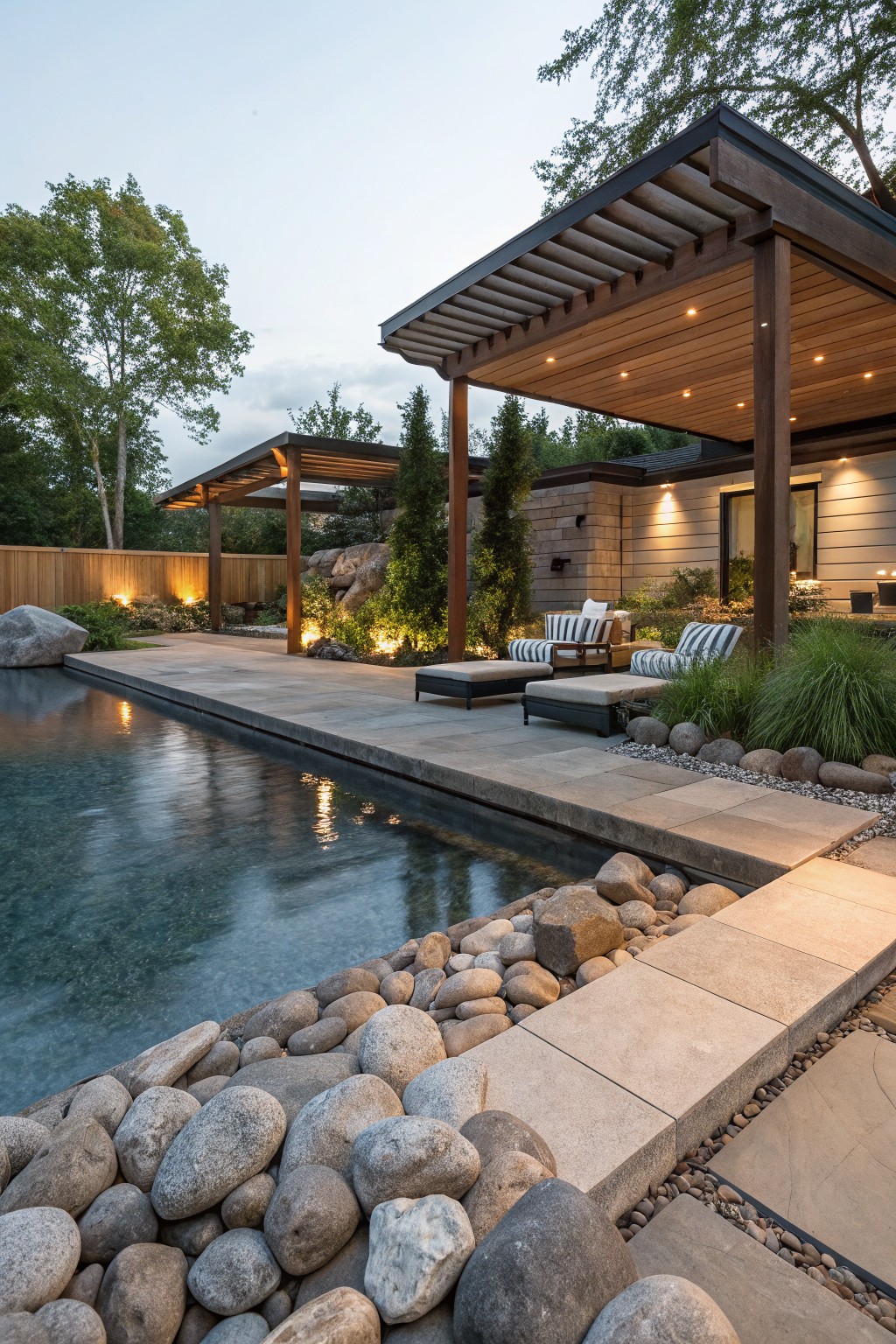
Big boulders placed right along the pool create a rugged, grounded look that ties the water into the yard. Here, they’re mixed with smooth pebbles along the concrete deck, softening the hard lines while keeping things low-maintenance. It gives the space a wilder feel without much planting.
This works best in modern backyards or ones with rocky terrain already. Stack a few large stones at the corners for stability, then scatter pebbles in between. Skip it if your pool gets heavy foot traffic, since loose rocks can shift. Pairs well with clean decks like this one.
Terraced Rock Walls for Sloped Yards
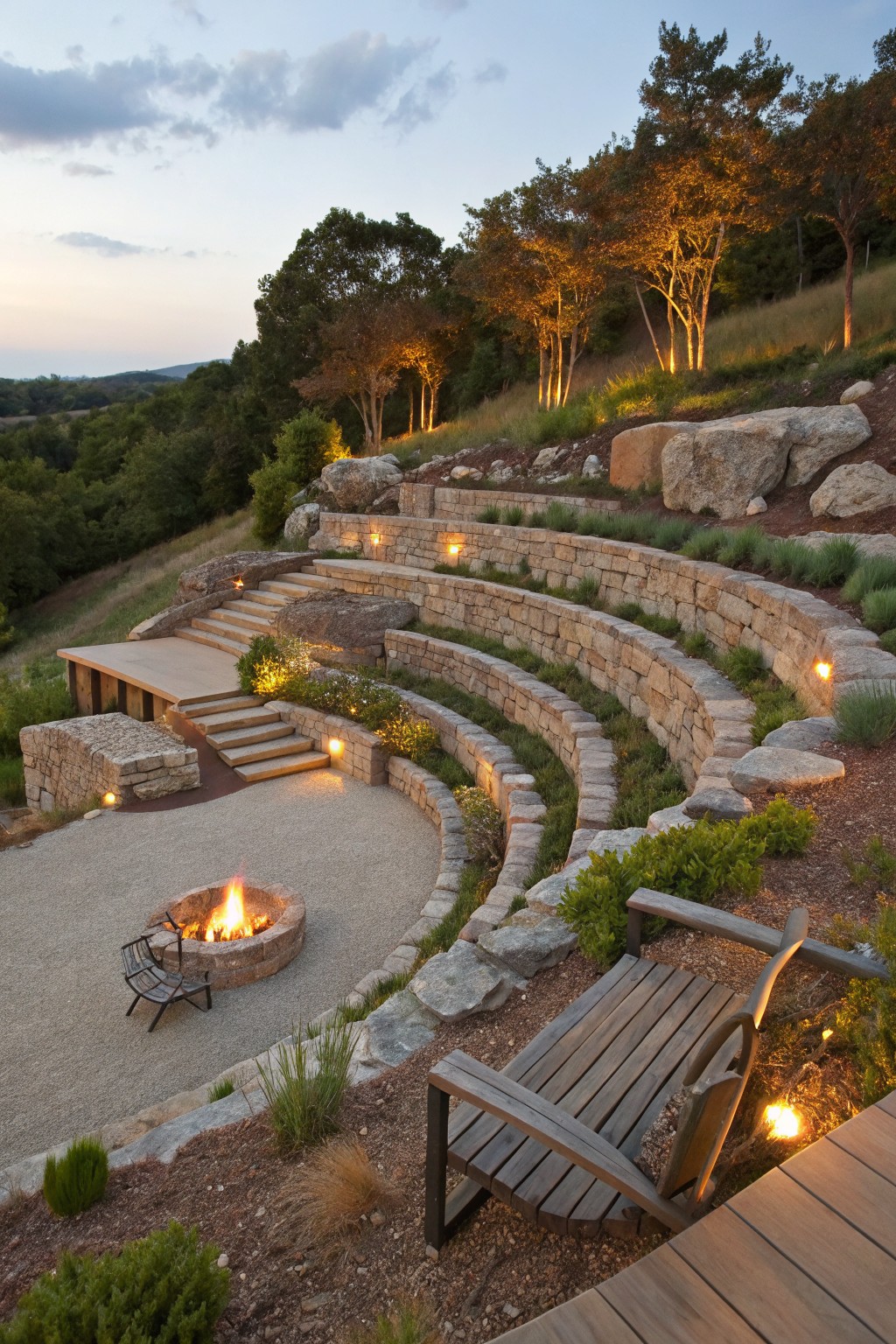
One smart way to handle a hilly backyard is terraced rock walls. They step down the slope in gentle curves, forming natural benches that wrap around a simple fire pit. The dry-stacked stones blend right into the surroundings, and low lights tucked into the walls keep things practical after dark. It makes uneven ground feel purposeful.
These walls suit properties with a noticeable drop, especially in rocky or rural spots. Pick stones that match your area’s geology so it doesn’t look forced. Pair with gravel for the floor and tough plants in the gaps. Skip anything too fussy. It’s low upkeep once set, and the setup draws people outside on cool evenings.
Stone Walls as Raised Planters
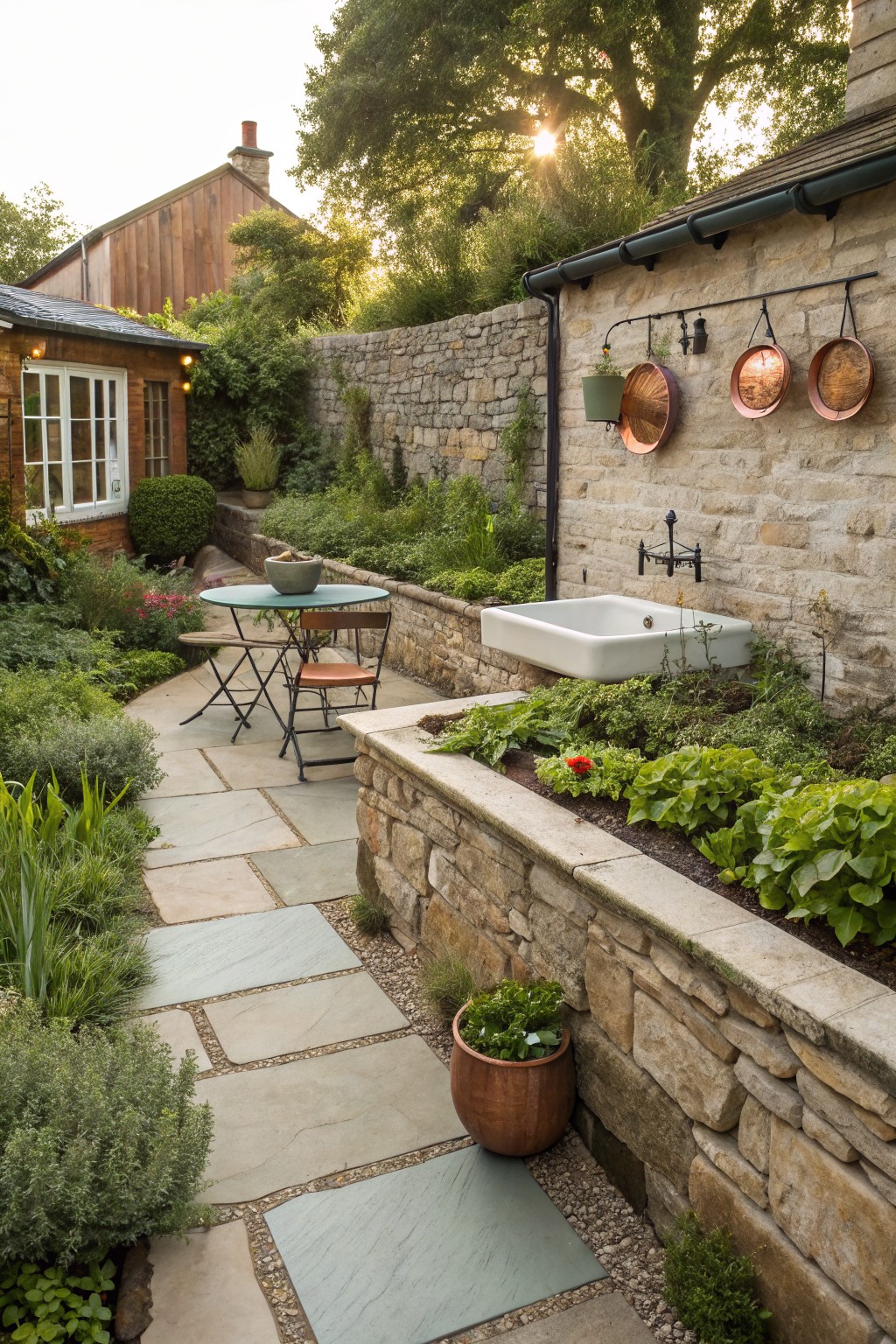
One straightforward way to use rock in your backyard is turning retaining walls into raised planting beds. These walls hold back soil while giving plants a sturdy edge, like the herb-filled beds along this stone boundary. It keeps everything contained and makes tending the garden simpler, especially on sloped spots.
Build them with local stone for a natural tie-in to your home’s look. Stack dry or with minimal mortar so roots can breathe, and add gravel at the base for drainage. This setup works great in cottage-style yards or near patios where you want fresh greens close by. Just check your wall’s height doesn’t block views.
Flagstone Pool Terraces
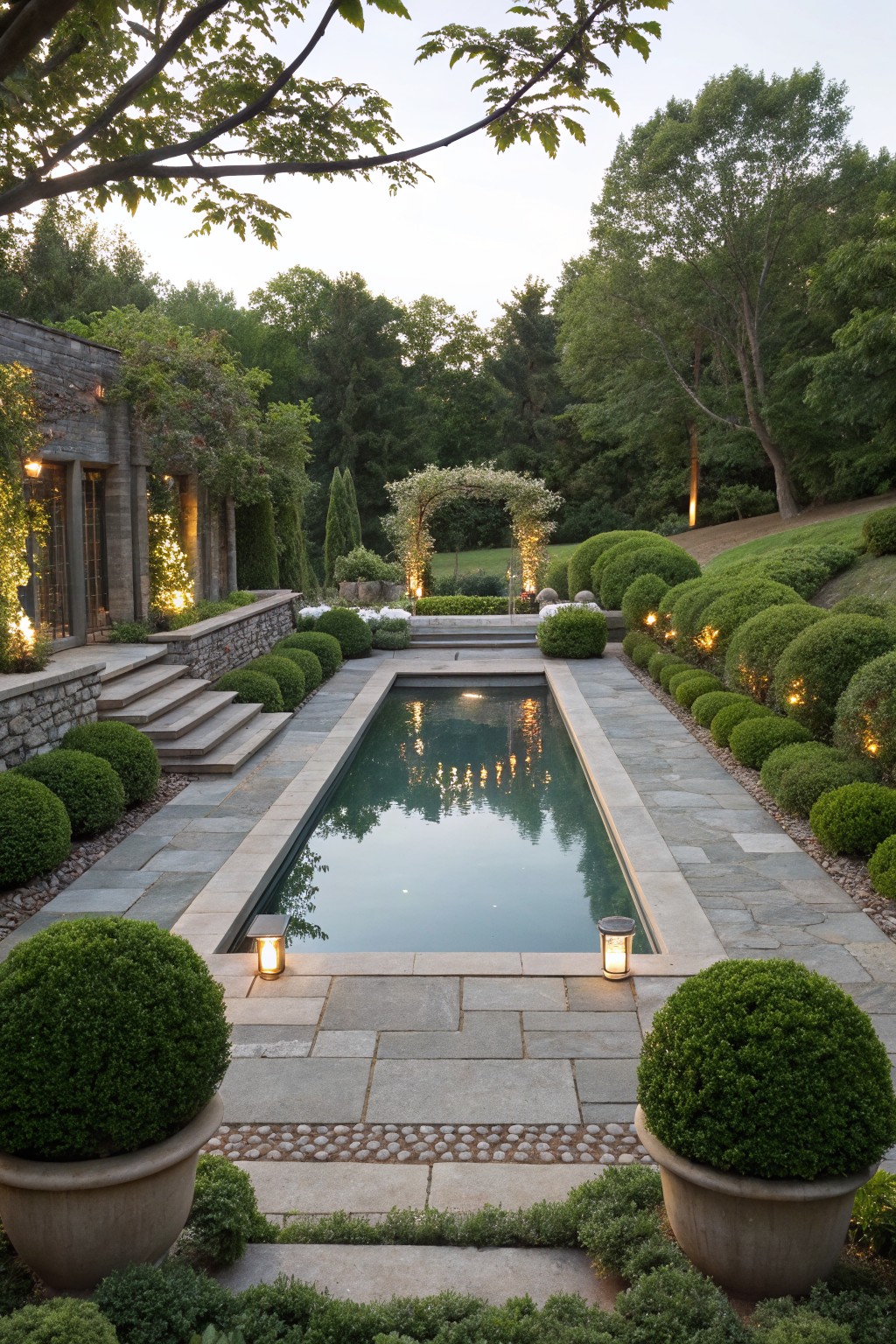
A simple way to make a pool area feel put-together is with flagstone paving right up to the water’s edge. Here, wide gray slabs form a clean deck around a long narrow pool, paired with low stone retaining walls that tie into the hillside. The rough texture of the stone keeps things from looking too slick, and it blends right with the natural rock feel of the yard.
This works best in backyards with some slope, where the walls can double as steps down to the pool. Go for irregular flagstone in neutral tones to let plantings like boxwoods stand out along the borders. Skip it if your space is super flat or small, since the scale shines on bigger lots.
River Rocks Around Patio Edges
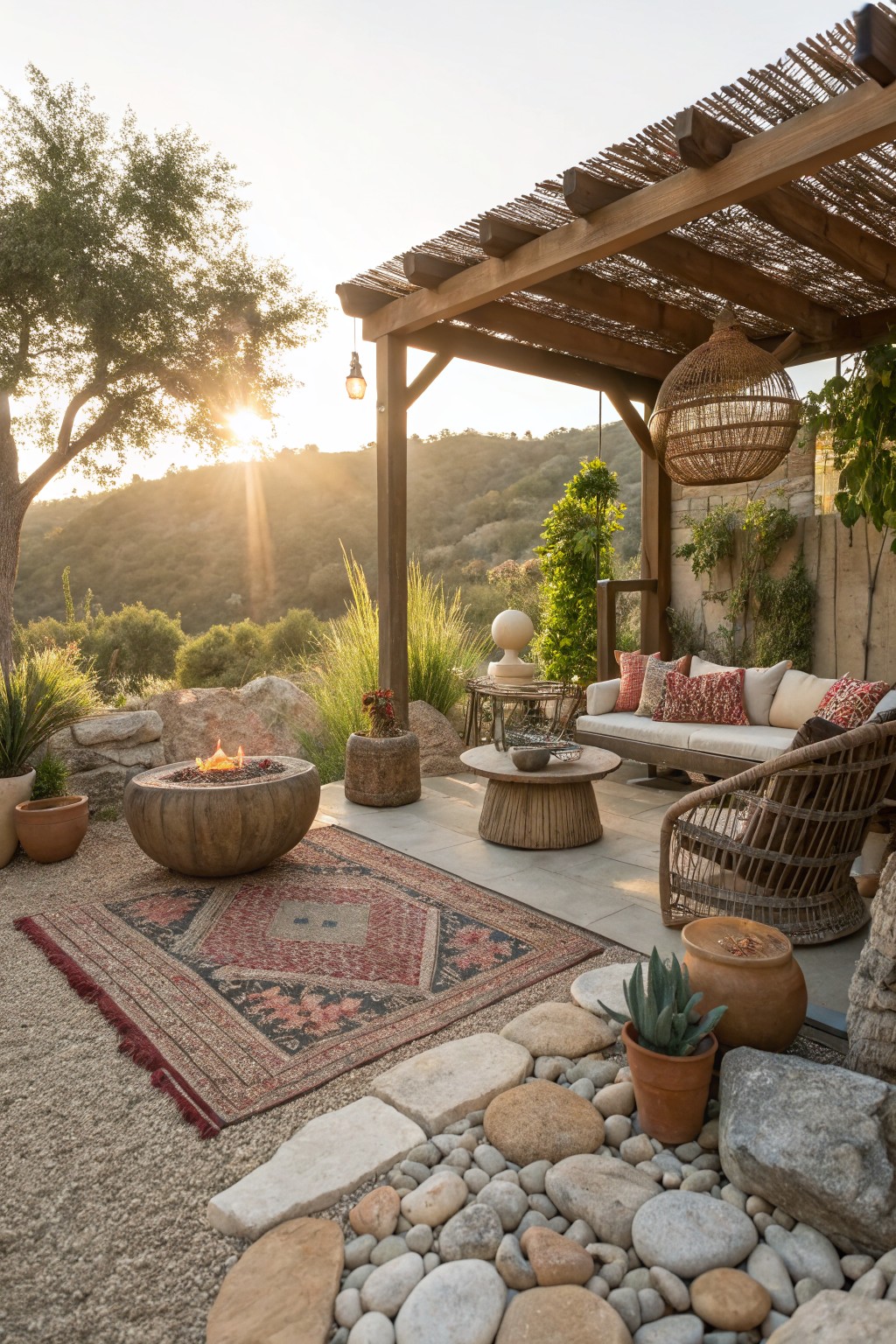
One straightforward way to make a backyard patio feel more finished is lining the edges with river rocks over gravel. In this setup, smooth white pebbles and larger stones create a clean border that separates the seating area from the plants and slope beyond. It adds subtle interest without grass to mow or water, and those agaves and potted succulents fit right in.
This works best in sunny, dry spots where low-maintenance landscaping makes sense. Lay gravel first, then scatter the rocks along the perimeter of your fire pit or lounge zone. It suits hillside yards or anywhere soil erodes easy. Skip it if you want a lush green lawn feel, though, or if foot traffic is heavy.
Boulder-Lined Stream Beds
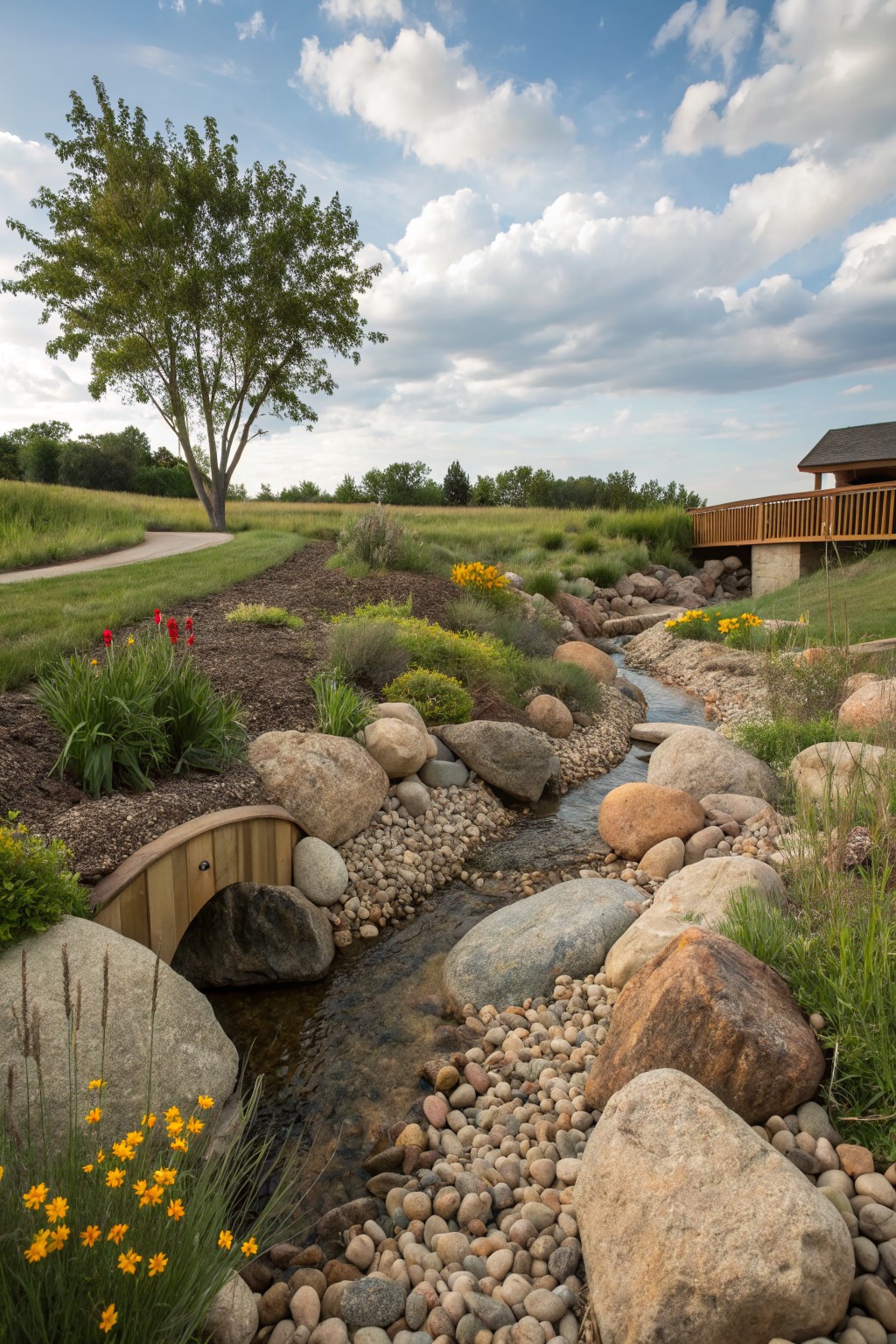
One simple way to add movement and calm to a backyard is with a boulder-lined stream bed. You line it with large rocks and gravel, then let a bit of recirculating water flow through. It pulls the eye along like a real creek, and plants like grasses and wildflowers tuck right in around the edges. Folks like how it feels natural, not fussy.
This works great in bigger yards with some slope, or even flat spots if you build it up a little. Pair it with a wooden footbridge for crossing, and it ties into paths or seating areas. Go for local stone to keep costs down and maintenance low. Just make sure the pump is hidden so it stays peaceful.
Stone Fire Pit as Backyard Focal Point
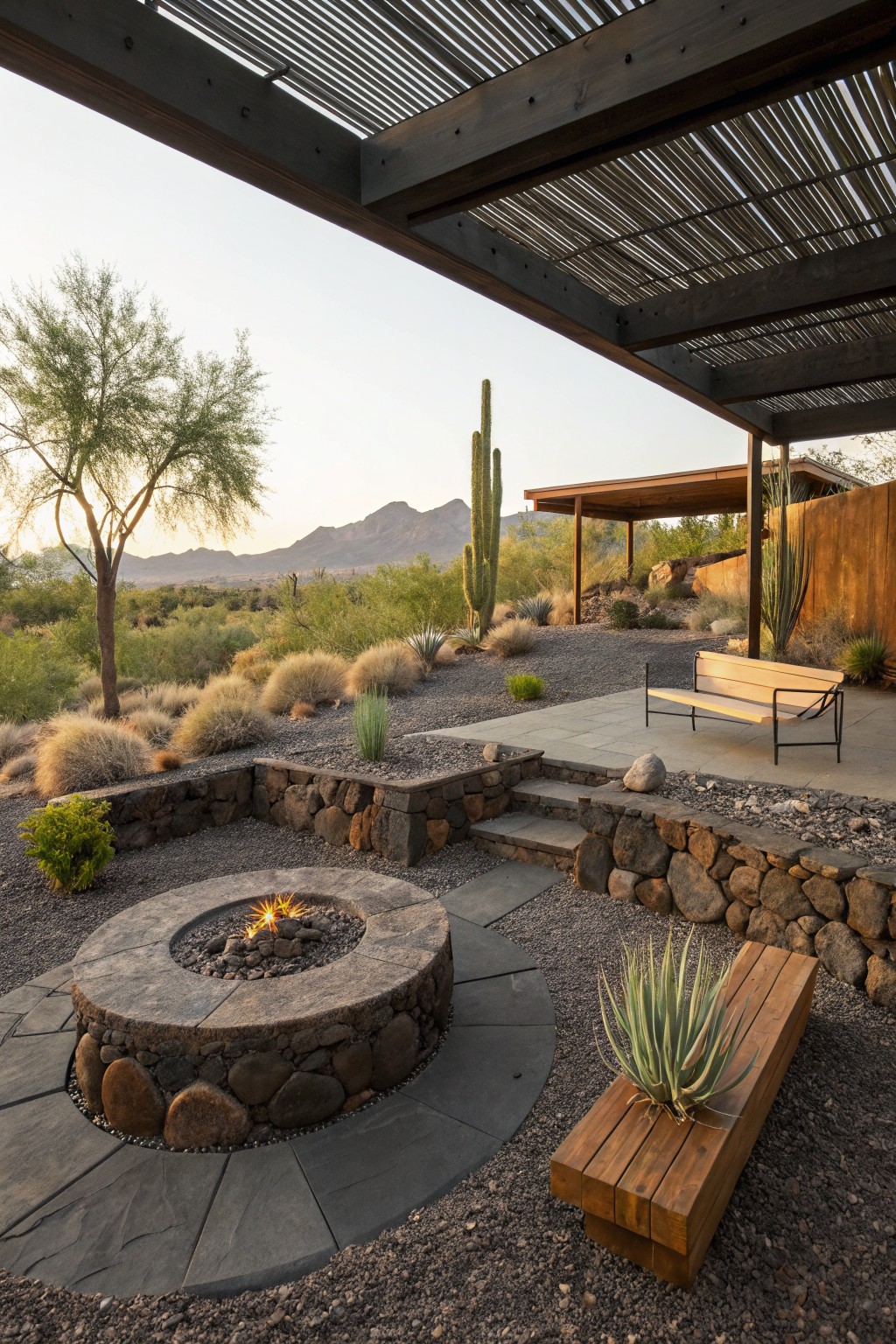
A stone fire pit like this one pulls everything together in a rocky yard. Built right into the ground with stacked local rocks, it sits low and feels part of the landscape. The dark pavers circle around it, and gravel fills the rest, keeping things simple and walkable. Native plants like agave tuck in nearby without much fuss.
This setup works great in dry, sloped spots where you want low upkeep. Use bigger rocks at the base for stability, then smaller ones on top. Pair it with benches for seating, and add steps if there’s a drop. Skip fancy finishes. It suits desert homes or anywhere rocks are handy. Just check local fire codes first.
Stone Pillars Frame Backyard Paths
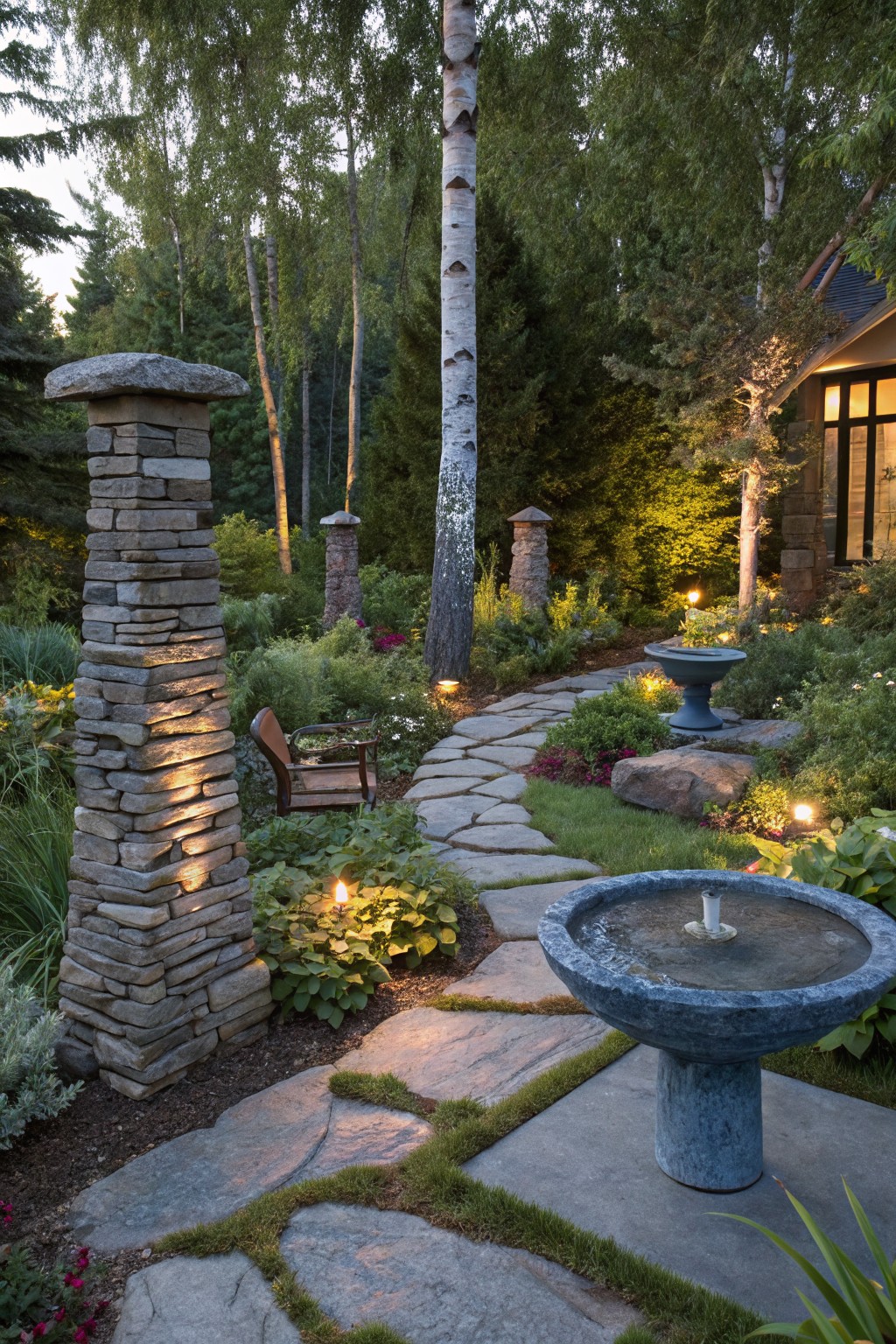
Tall stacked stone pillars like these add real structure to a garden path. They stand about eight feet high, built from rugged fieldstone that fits right into a wooded setting. The low lights tucked into their bases make them pop at dusk, guiding the way without overpowering the birches and plants around them.
Put pillars like this at the start of a winding flagstone path to your patio or seating spot. They suit sloped or natural yards best, especially where you have mature trees. Source stones that match your area’s rock, plant low growers at the bottom, and skip anything too manicured… keeps it easy.
Winding Stone Paths Through the Garden
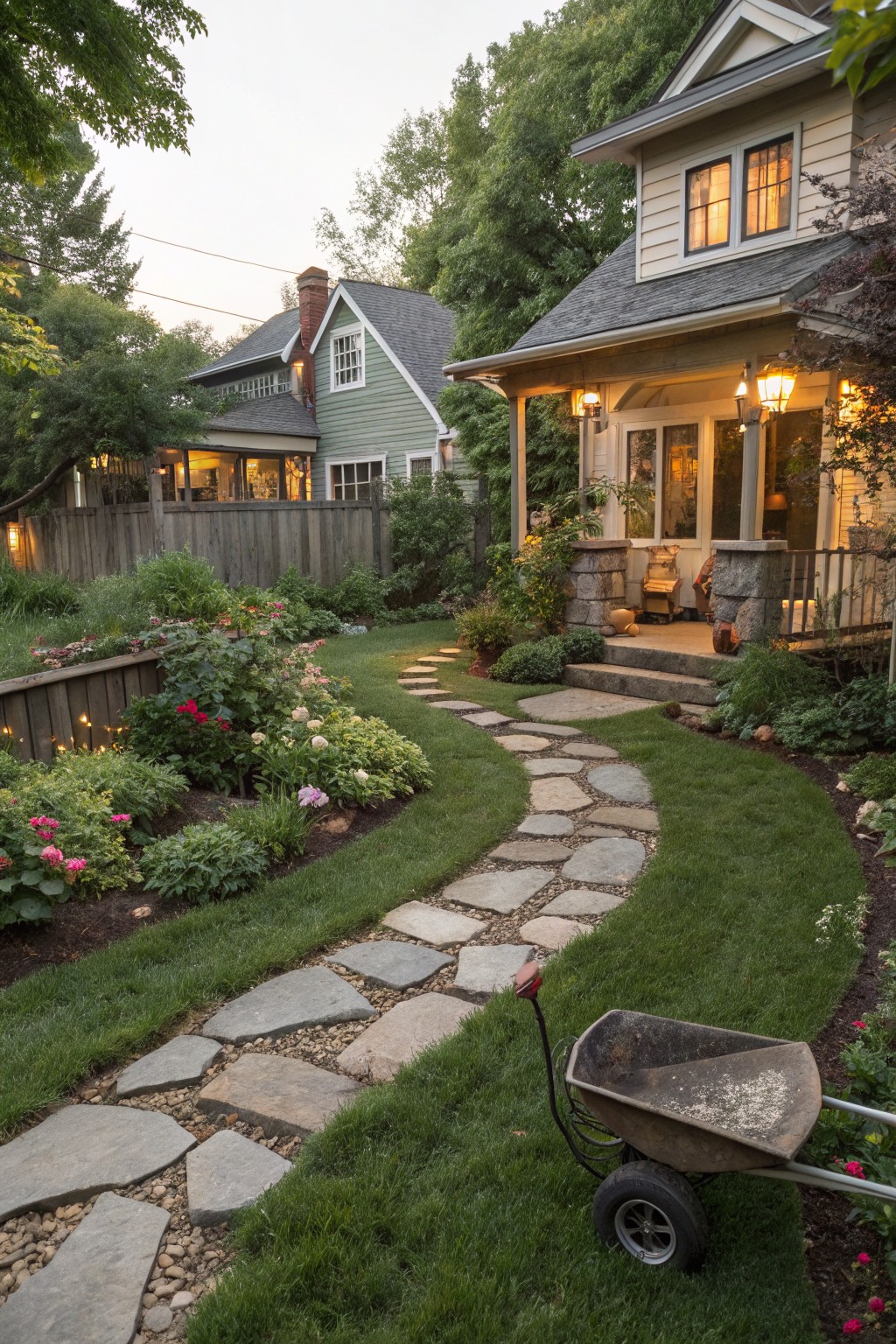
A simple winding path like this one uses flat stones set right into the grass and garden beds. It curves gently past flower borders and low plantings, pulling you toward the house without feeling too straight or formal. That natural flow makes the yard feel bigger and more welcoming, especially with the stones spaced just right for easy steps.
You can pull this off in most backyards by hunting down local flagstones or whatever flat rocks are around. Lay them loose in a curving line, maybe add gravel between for drainage. It works great in cottage-style gardens or anywhere with soft borders. Just keep an eye on spacing so no one trips… and a wheelbarrow nearby never hurts for hauling those stones.
Irregular Stone Pathways with Pebble Edges
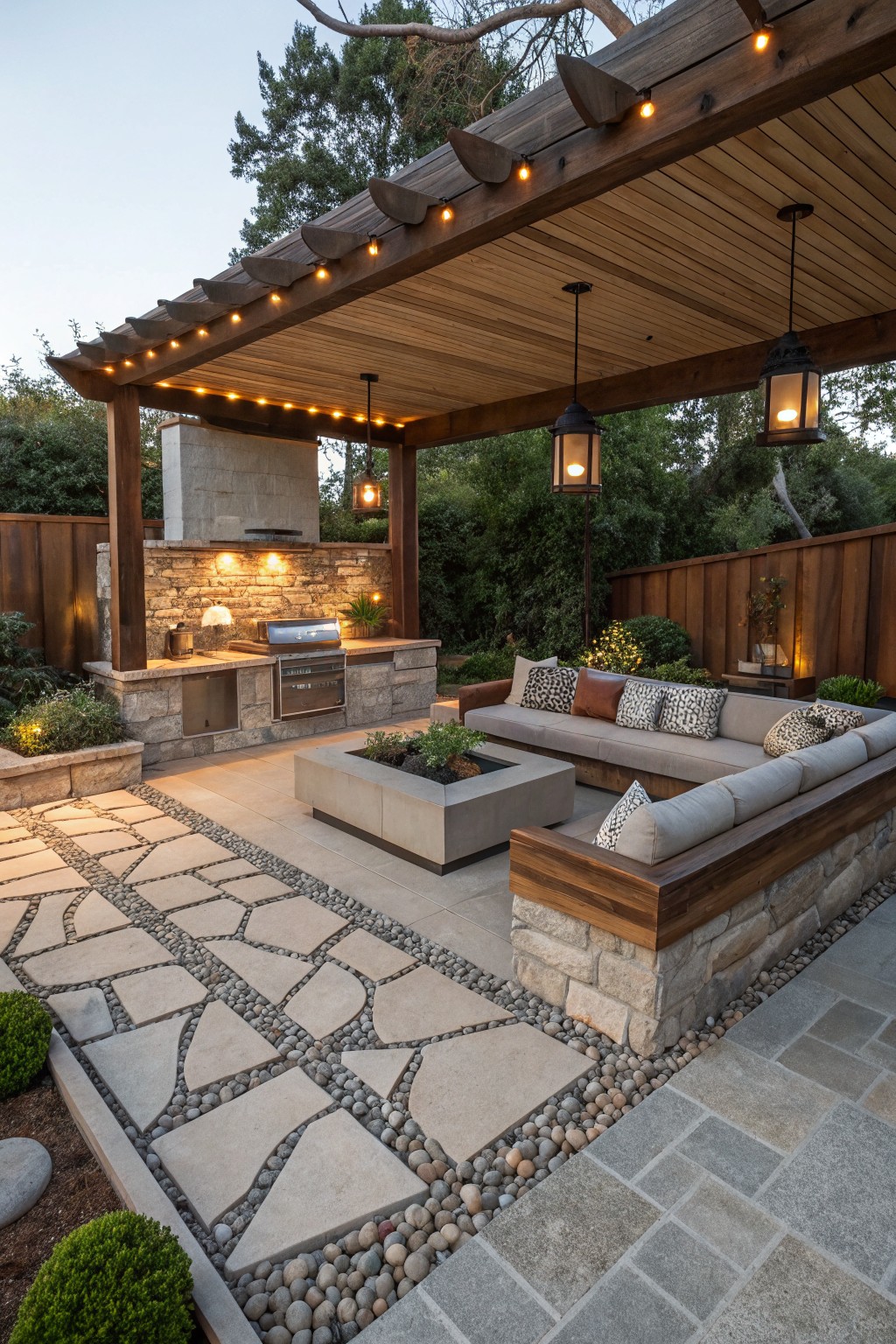
One simple way to add texture to a backyard patio is with large, rough-cut stone slabs laid in an irregular pattern. These paths wind through the space, edged by smooth pebbles that fill the gaps. It gives a natural, almost accidental look that fits right into a casual outdoor setup. The stones here lead from the lawn toward a built-in kitchen and seating area, making the whole yard feel connected without looking too planned out.
You can use this in any backyard with a patio or open area. Pick flagstones or similar in grays and beiges for low upkeep, then add river rocks along the sides for drainage and a softer edge. It works best around seating or near a grill, keeping feet clean while blending hard surfaces with plant beds nearby. Just make sure the stones are set stable so no one trips.
Boulder and Stepping Stone Garden Paths
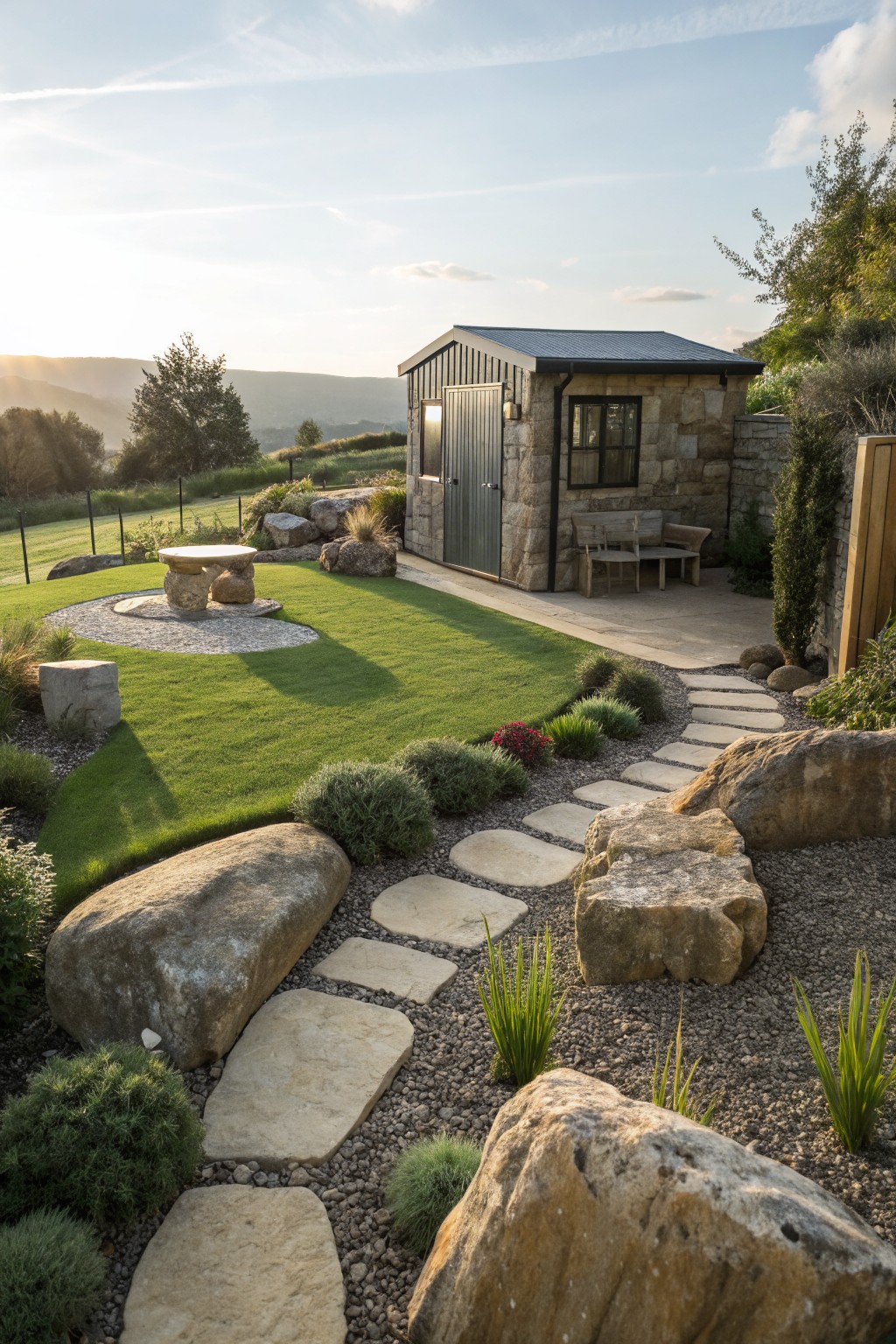
Large boulders paired with rough stepping stones make a simple path that feels part of the land. In this setup, the stones wind between the rocks and patches of gravel, leading right to a garden shed without looking forced. It keeps things low-key and natural, especially good around a backyard retreat where you want easy walking without mowing everything.
You can pull this off in sloped yards or flat ones, just source local rocks for that real fit. Space the stones so your foot lands flat, about two feet apart, and tuck low plants like grasses in the gaps. Works best with a shed or seating spot at the end. Skip it if your yard floods, since gravel drains quick but stones can shift.
Tiered Stone Steps for Sloped Gardens
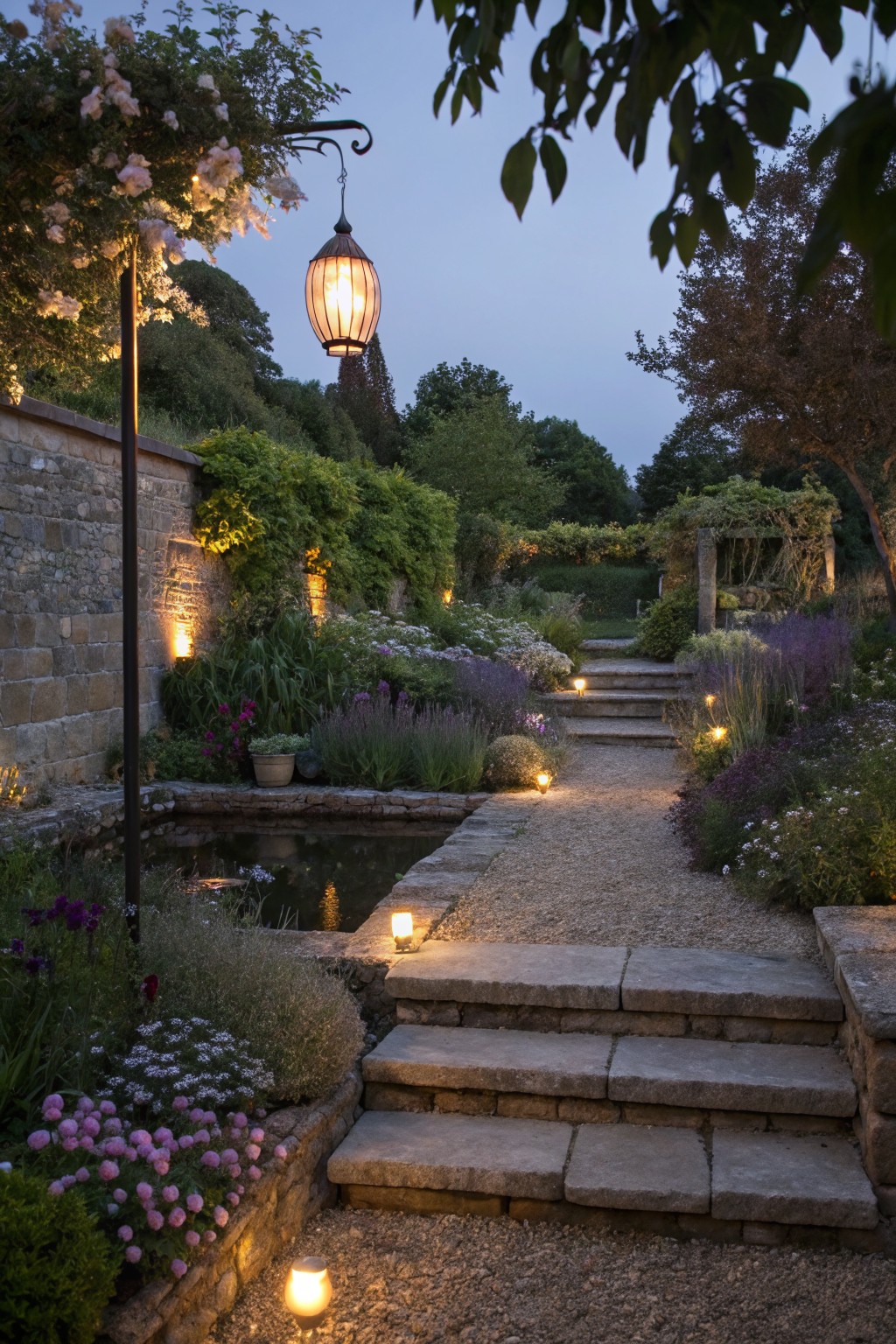
Stone steps like these make a sloped yard feel like an invitation to explore. Built right into retaining walls of the same local rock, they create natural terraces where plants can spill over without much fuss. The gravel path between keeps things simple and ties the levels together. It’s a practical way to turn a tricky hill into garden rooms.
These work best in backyards with gentle slopes, maybe 4 to 10 feet of drop. Pick rugged stone that matches your house or fence for a seamless look. Add low lanterns along the edges for safe evening walks, but skip anything too bright. Just watch the gravel washes out in heavy rain, so top it up now and then.
Winding Stone Path Through Rocky Terrain
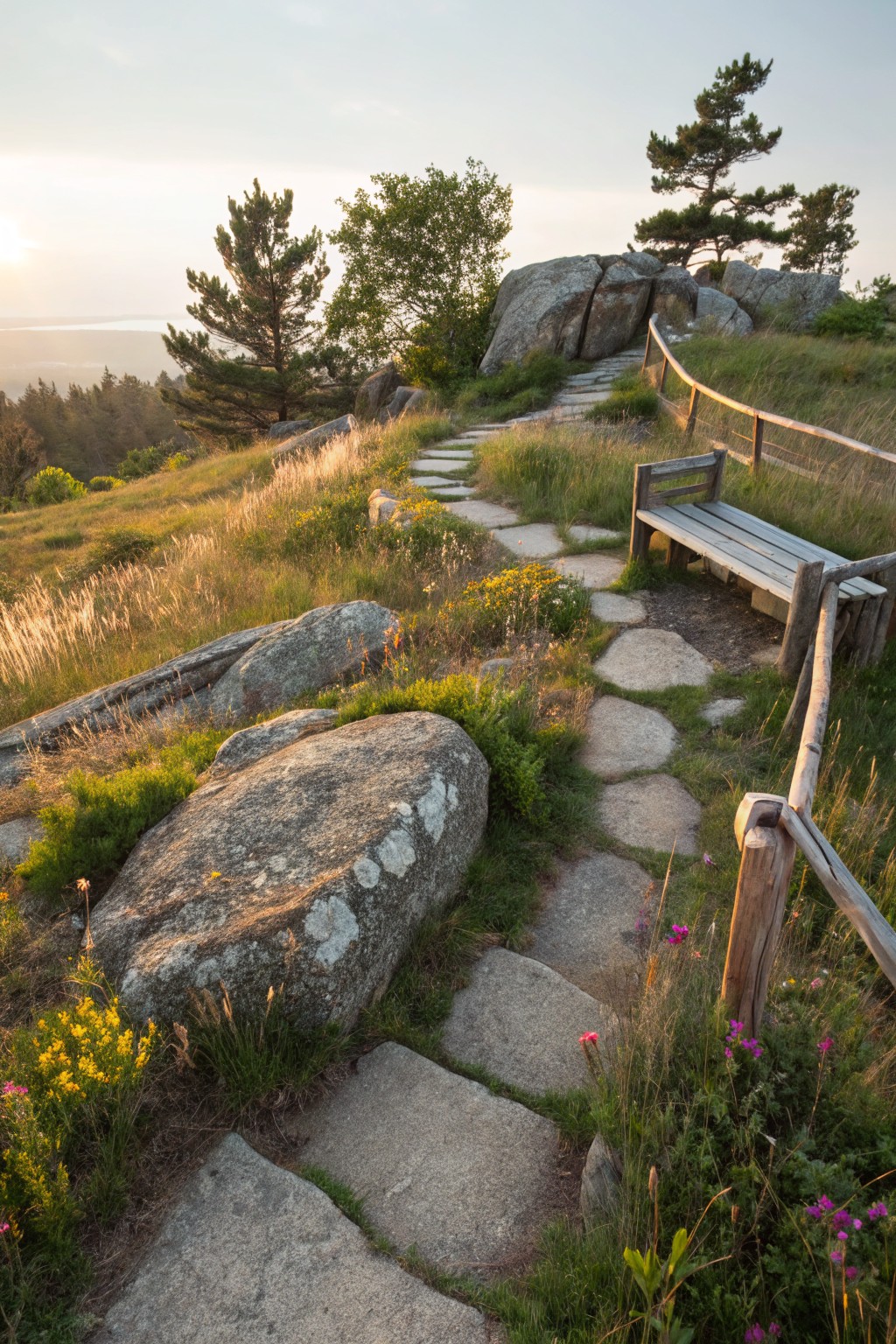
One simple way to handle a sloped backyard is with a series of flat stone steps that wind up through the rocks. This setup lets you climb without much effort, and it fits right into natural boulder outcrops. The stones here are irregular but level enough to walk on, with grass and wildflowers filling the gaps for that easygoing look.
You can pull this off on any hillside with exposed rock, especially if you want low upkeep. Just source local fieldstone or flagstone, set them into the dirt where the path needs to go, and let native plants grow around them. Add a wooden bench halfway up for resting. It works best for trails to a view or seating spot, keeping things practical and wild rather than too manicured.
Frequently Asked Questions
Q: How do I stop weeds from taking over my new rock garden?
A: Lay landscape fabric over the soil before you drop in the rocks. Cut holes only where plants go. This blocks seeds but lets water through.
Q: Do rocks heat up too much in summer and hurt bare feet?
A: Pick light-colored stones like white gravel or pale river rocks. They reflect sunlight and stay cooler. Dark ones soak up heat, so skip those in sunny spots.
Q: How do I level the ground so rocks don’t shift?
A: Rake the area smooth and tamp it down firm. Add sand if needed to fill low spots. Rocks settle right in place that way.
Q: Can I grab rocks from nearby creeks or fields?
A: Check local rules first, many spots ban it to protect habitats. Buy from a quarry instead, they deliver clean stones ready to use.
