

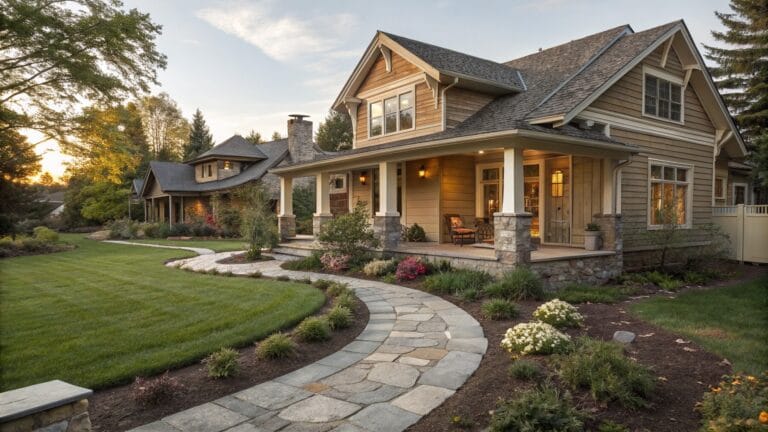
I’ve spent a few weekends reshaping the edges around my flower beds. Garden edging pulls everything together when you choose materials that age gracefully instead of fading fast.
I stick to reclaimed bricks or logs from the yard because they blend right into the soil without looking forced. Overly fussy borders tend to clutter the view.
Picking up a few straightforward approaches like these can refresh your setup on a dime.
Stone Walls for Garden Edging
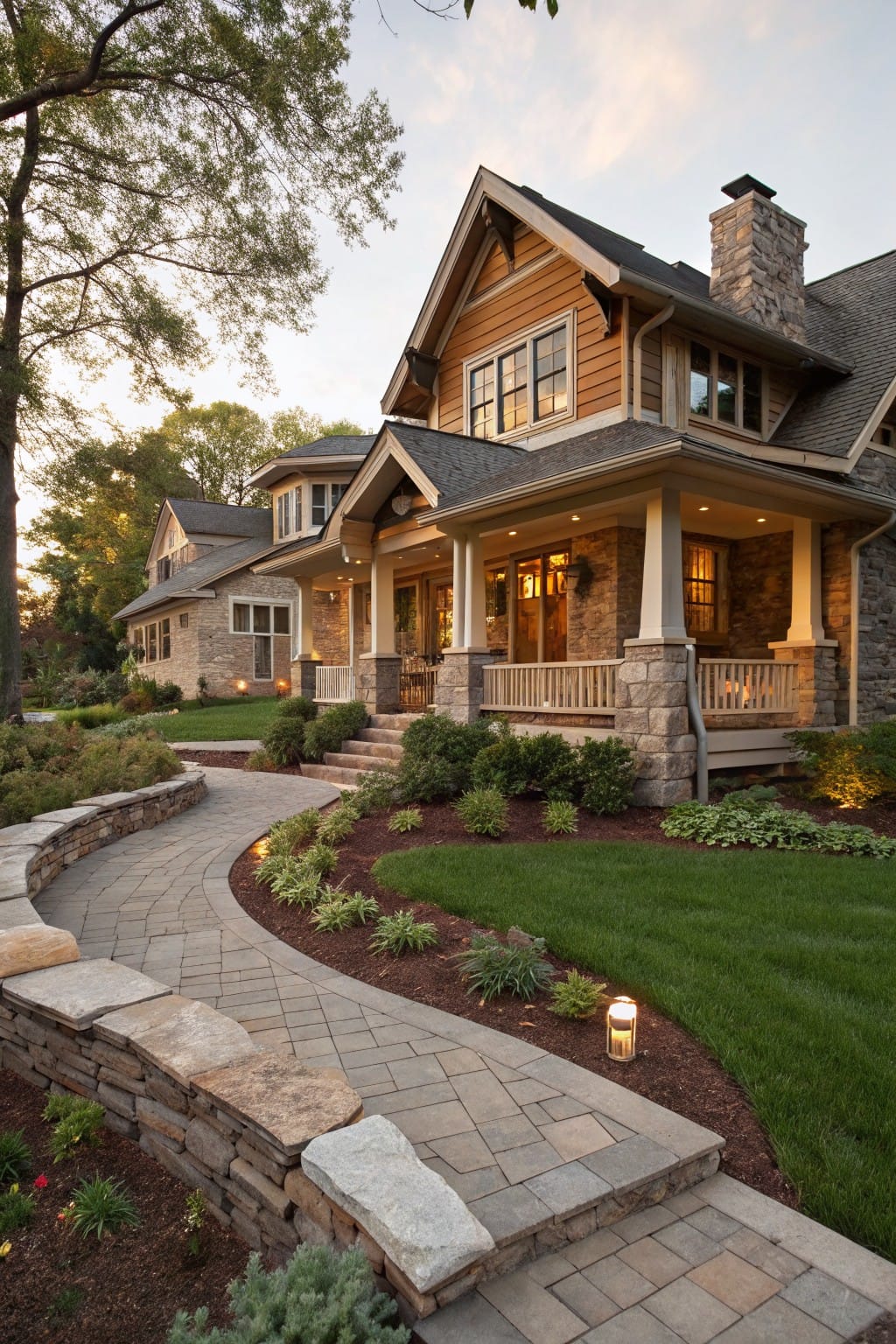
Stone walls make a solid choice for edging garden beds and paths. They hold back soil without much upkeep and give your yard a sturdy, natural look that fits right in with plants and grass. In this setup, the low walls follow a curving walkway, keeping mulch and shrubs neatly in place while letting everything else flow easy.
You can use them around front yards or side paths on homes with a bit of character, like older bungalows or simple ranch styles. Stack flat fieldstones or use dry-laid ones for that affordable touch, no mortar needed. Just watch the height, keep it low so it does not block the view… and pick stones that match your local dirt for less hauling.
Pathway Edging with Grasses and Gravel
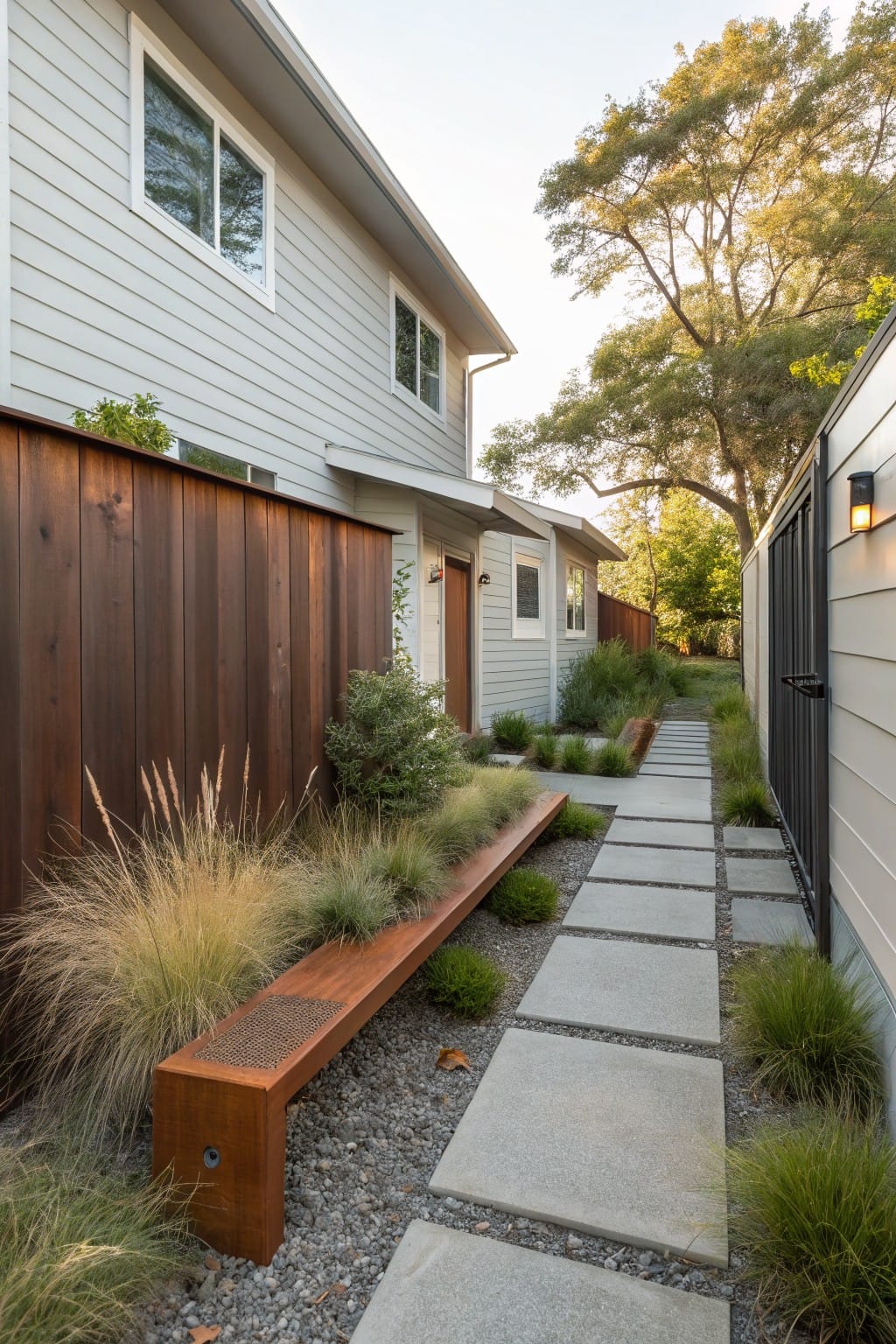
One straightforward way to edge a garden path is to use gravel mulch planted with tall grasses. It keeps things tidy without much work. In this setup, concrete pavers lead through the yard, and the grasses lean over the edges just right. Gravel fills in the beds to hold it all together. Folks like it because it’s cheap and grows on its own once planted.
This works best in side yards or narrow spots where you want a path that doesn’t take over. Pick drought-tolerant grasses like pampas or fountain grass for dry areas. Add gravel over landscape fabric to stop weeds. Watch the height so it doesn’t block the way. A bench tucked along one side makes a nice spot to pause.
Rope Edging for Garden Paths
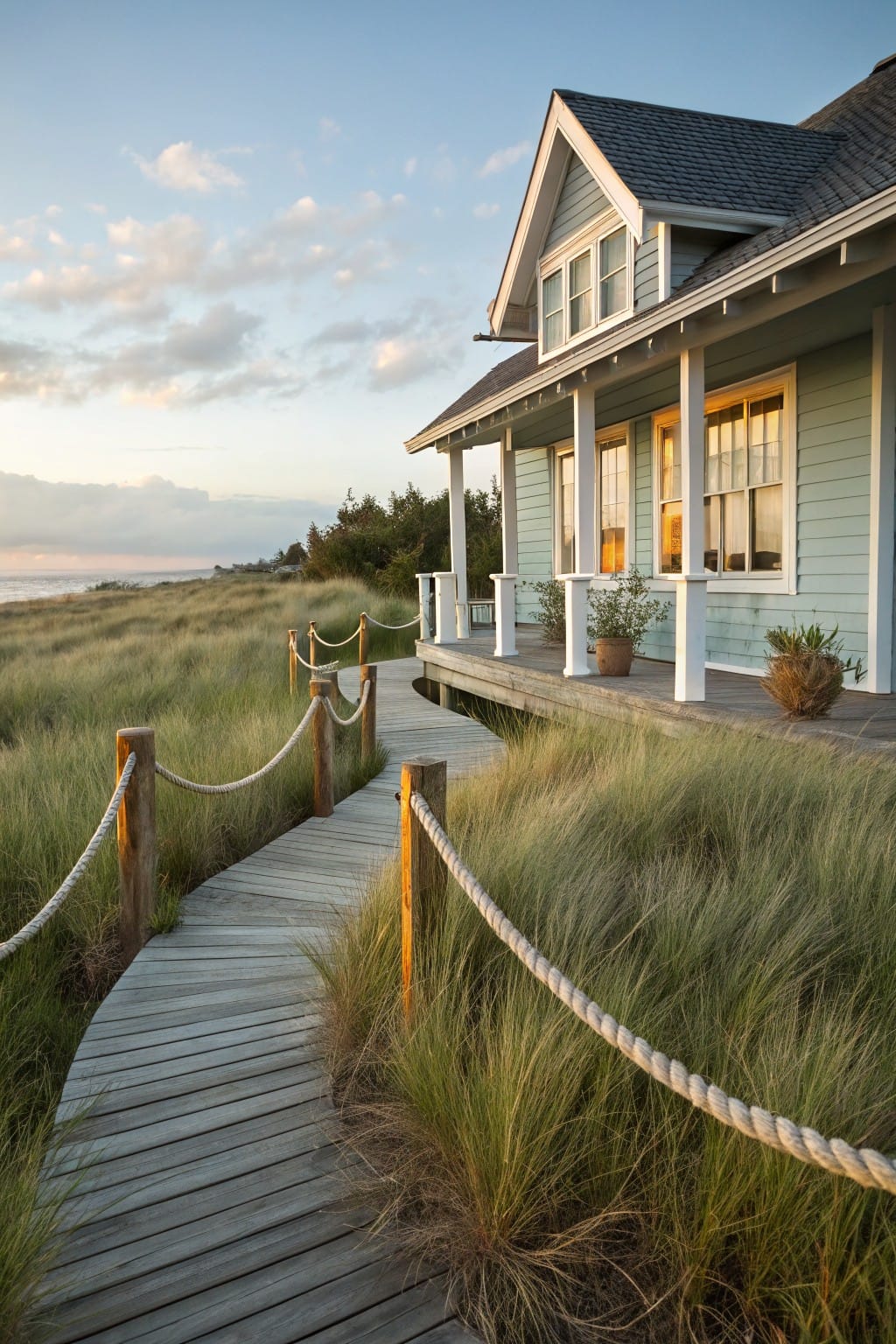
One easy way to edge a garden path is with thick rope strung between simple wooden posts. It keeps the look natural and rustic, especially when the path runs through tall grass or low plants. The rope guides your steps without blocking the view, and it fits right into yards that have a casual feel.
This works best on wood boardwalks or gravel paths in coastal or country gardens. Use pressure-treated posts and marine-grade rope to hold up outdoors. It suits beach houses or cottages on a budget, but check the rope now and then for wear.
Simple Gravel Garden Edging

Gravel makes for straightforward garden edging that keeps things tidy on a budget. A thin strip of it sets off beds from the lawn or path, holding back soil and plants without fancy materials. Here it runs alongside large pavers leading to the house, giving clean separation that lasts.
Put this edging in front yards or side paths where you need low upkeep. It fits homes with modern lines or drought plants like agave. Spread pebbles over fabric to block weeds, one bag at a time. Watch the scale though. Too wide and it overwhelms small yards.
Raised Bed Garden Edging
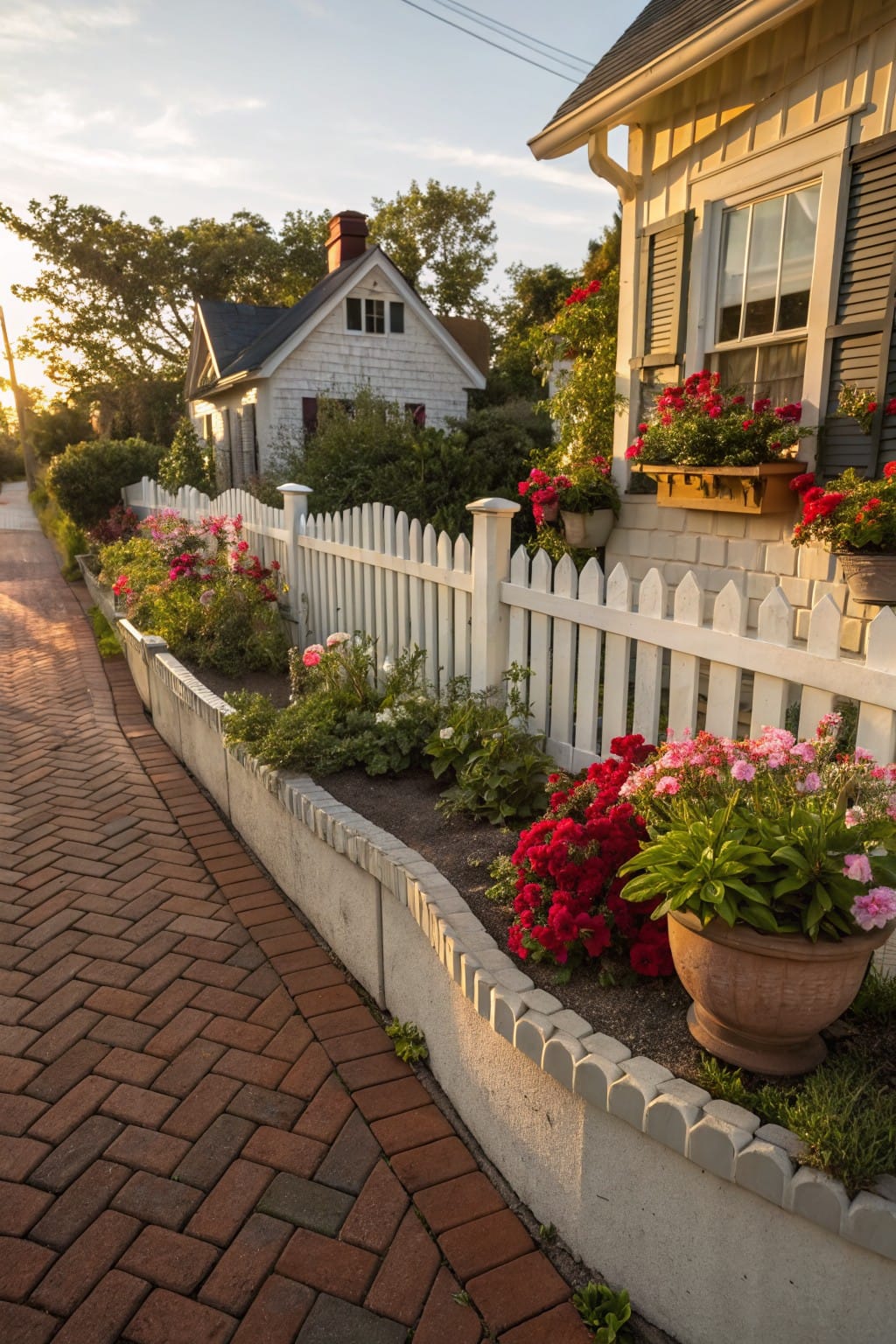
Raised bed edging like this keeps your garden neat and pretty without much cost. You build up a low concrete wall right along the walkway, give it a soft scalloped top, and fill it with flowers. Pink roses and such tumble over the edge here, making a soft line between path and plants. It works because it’s sturdy yet cottage-like, and holds soil back from the bricks.
Try this in a front yard where you walk up to the house. It suits older homes or rentals on a budget. Pour concrete in forms or stack blocks for the bed, then add a picket fence behind if you want that extra layer. Keep plants low so they don’t block the view. Just watch for weeds in the joints.
Brick Pathways Edged with Ornamental Grasses
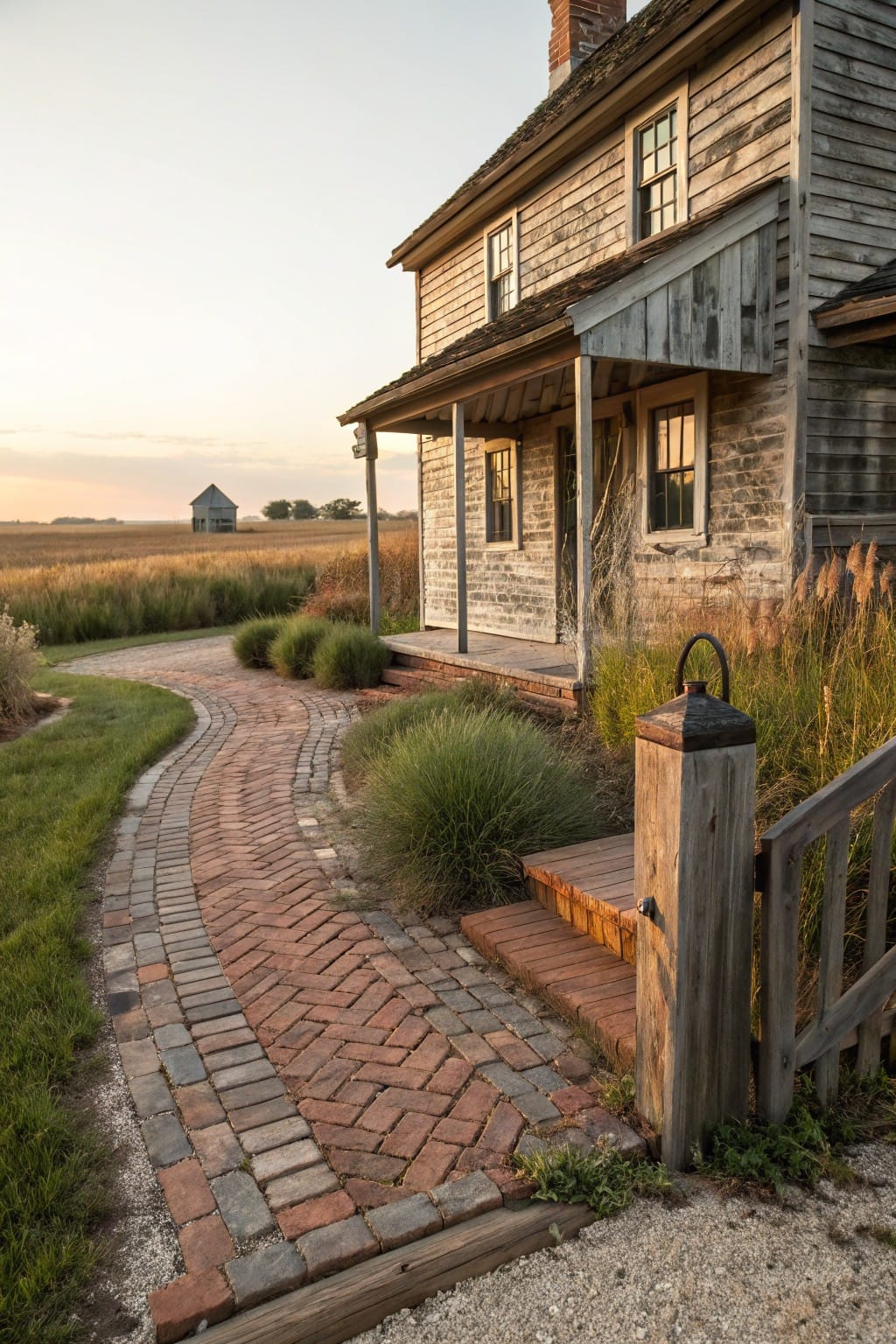
One simple way to upgrade a garden path is to edge it with tall ornamental grasses. They give a soft, natural border that keeps the bricks in place without much work. In this setup, the grasses hug a curved brick walk leading to an old house porch. It looks right at home in a rural spot, blending the path into the yard nicely.
These edges work best around older homes or casual yards where you want low upkeep. Plant varieties like switchgrass or miscanthus along both sides, spacing them about a foot apart. Keep them trimmed back in late winter. They suit flat or gently sloped ground and handle sun well. Just avoid spots with heavy foot traffic, or the grasses might get trampled.
Garden Edging with Terracotta Pots

Large terracotta pots make solid garden edging when lined up along a path. Filled with lavender or similar plants, they hold back the soil and add some height without much work. The rough texture of the pots fits right in with stone walkways and keeps the border looking full and casual.
This idea suits sunny yards where drought-tough plants do well. Set the pots snug against the path edge on level ground. Skip fancy varieties; plain ones from a nursery work fine and stay affordable. Just make sure they drain well.
Raised Beds Along Garden Paths
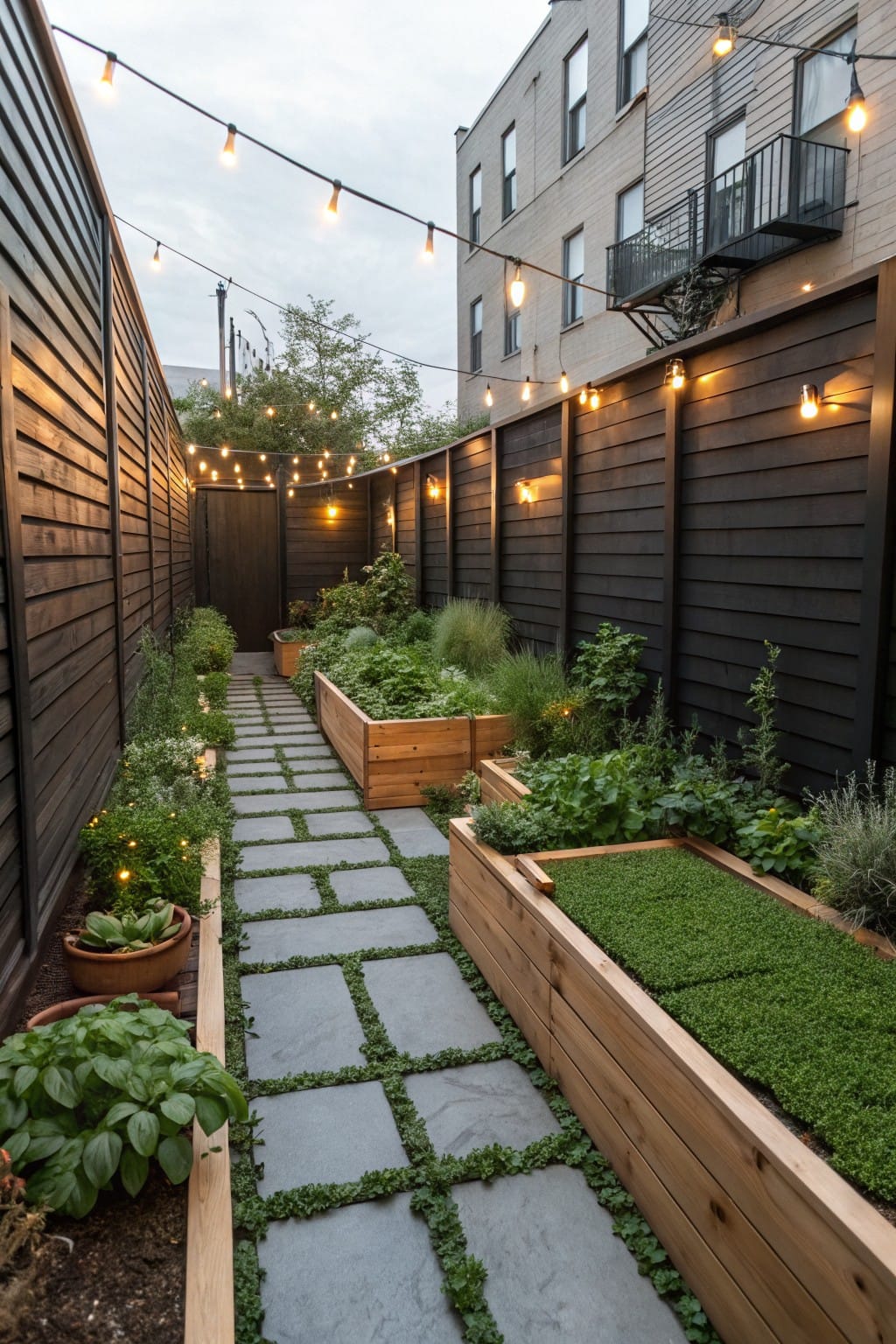
One smart way to edge a garden is with simple raised beds right along your walkway. These wooden ones run the length of a narrow yard path, keeping plants neat and off the stones. They make the space feel organized without much work, and the cedar wood holds up well outside.
You can set them up in skinny side yards or between fences like this. Fill with herbs or greens that spill a bit over the edge. Just use pressure-treated lumber to avoid rot, and keep the height low so it does not block the view. Works great for renters too.
Wood Edging for Raised Garden Beds
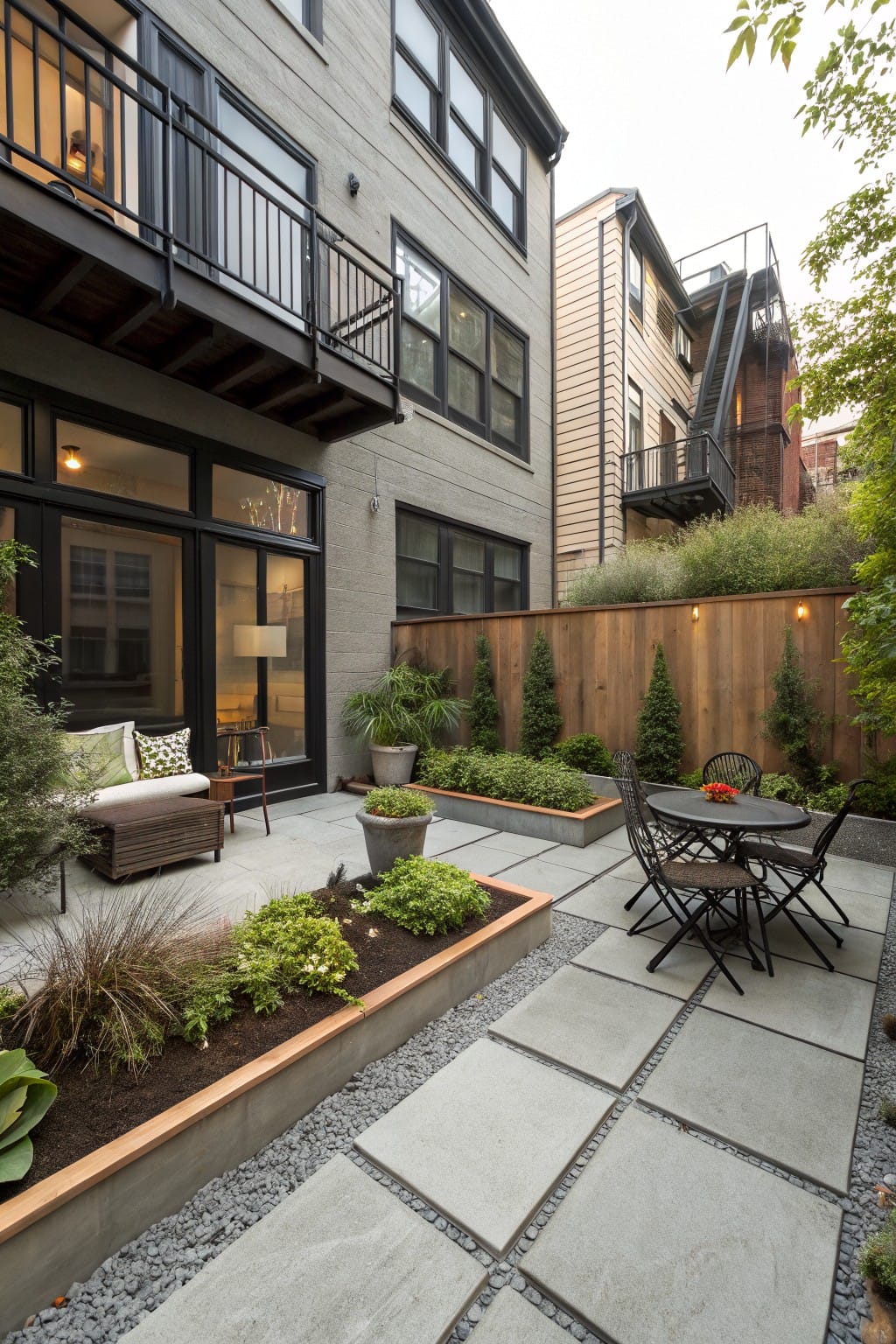
One straightforward way to edge your garden is with simple wood borders around raised beds. In this setup, the wood frames neat rows of plants right along the patio edge. It keeps soil in place and gives a clean line between hardscape and growing areas. Folks like it because the wood looks natural and warm next to concrete or stone. Plus it’s cheap. Just use cedar or pressure-treated lumber.
These work great in small backyards where you want to maximize planting space without taking over the whole yard. Cut boards to fit your bed height, maybe 12 inches or so, and nail them together. Line them up against paths or patios like here, with grasses and low shrubs inside. Skip it if your yard floods a lot, since wood rots over time. Stain it for longer life.
Boxwood Edging for Garden Paths
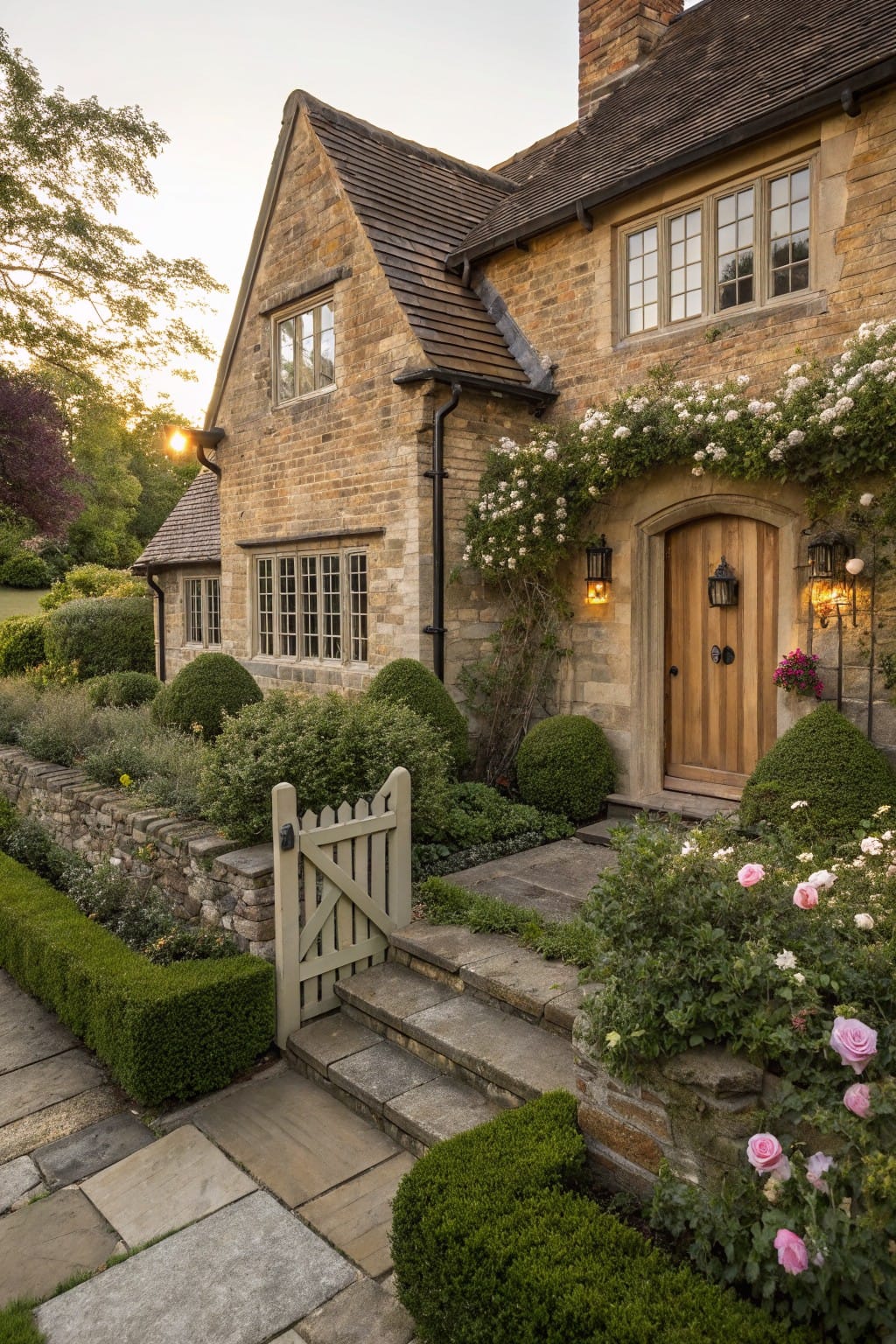
Boxwood makes a solid choice for edging garden paths. These low evergreen hedges run right along the stone walkway here, keeping mulch and plants in place while framing the way to the door. They stay green year round and give a neat cottage garden look that doesn’t break the bank.
Plant boxwoods close together for a quick hedge, spacing them about a foot apart. They suit most yards with decent sun and well drained soil, especially around older homes. Trim them twice a year to hold the shape. Watch for boxwood blight though, so pick resistant varieties.
Stone Edging for Walkways
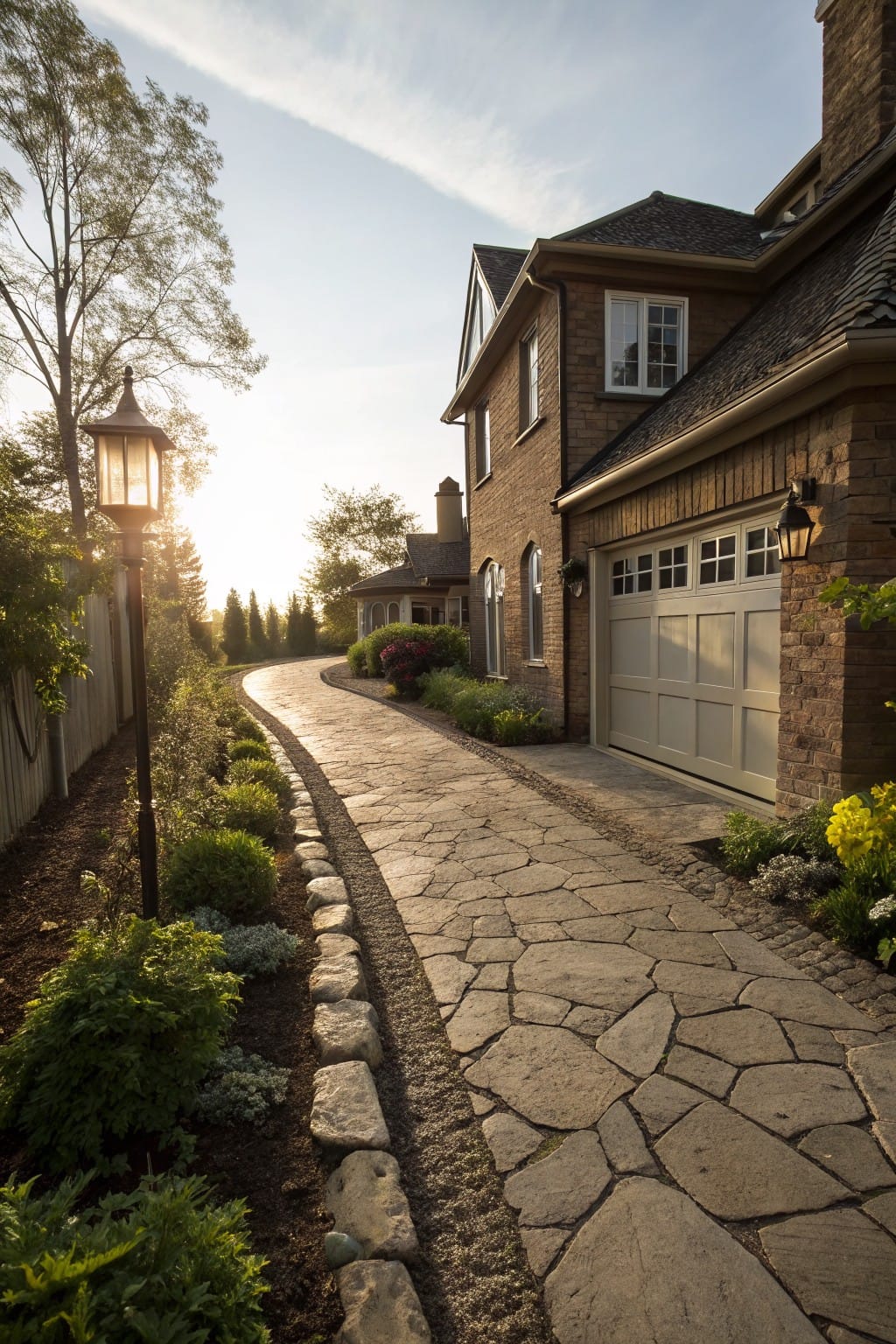
One straightforward way to edge a garden path is with larger natural stones set right along the border. In this yard, rough boulders line a flagstone walkway that curves toward the garage. They hold back the gravel and plants nicely, giving everything a kept look without much fuss.
You can pull this off on a budget by grabbing stones from a local quarry or landscape supply. It suits driveways or side paths where you want low upkeep. Pair it with tough shrubs that fill in over time. Just make sure the stones sit firm so they don’t shift.
Wooden Garden Edging for Raised Beds

Wooden boards make sturdy edging for raised garden beds. You see it here framing a gravel-filled planter right along the entry steps. The simple timber setup holds back soil and mulch while letting plants spill over a bit. It’s cheap to build and fits right in with paths or lawns.
Try this where you have a slope or want to tidy up loose dirt near the house. Pressure-treated lumber works fine outdoors. Pair it with gravel and tough grasses for low upkeep. Good for any yard size, especially if you’re keeping things dry and simple.
Stone Retaining Walls for Garden Edging
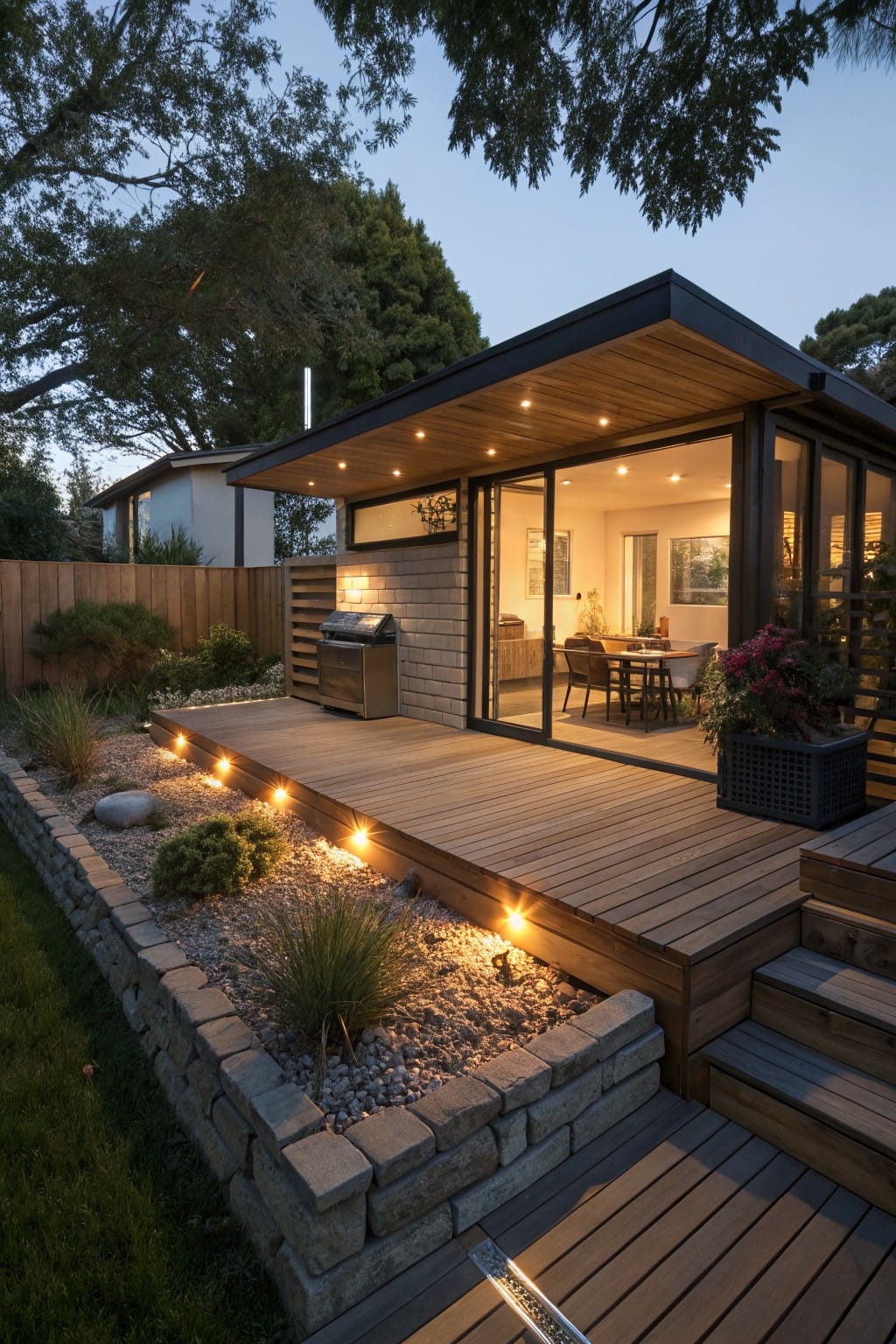
Low stone retaining walls offer a straightforward way to define garden beds next to patios or decks. They hold back soil and mulch while letting water drain through. This keeps plantings tidy and stops grass from creeping into gravel areas. Folks like how they look natural, almost like they grew there.
Use them where you have a slight slope or want to frame hardscape like a wooden deck. Stack flat stones dry or with minimal mortar for an easy build. They suit casual backyards best, but level the ground first to avoid settling. Source stones from local spots to keep costs down.
Colorful Mosaic Garden Path
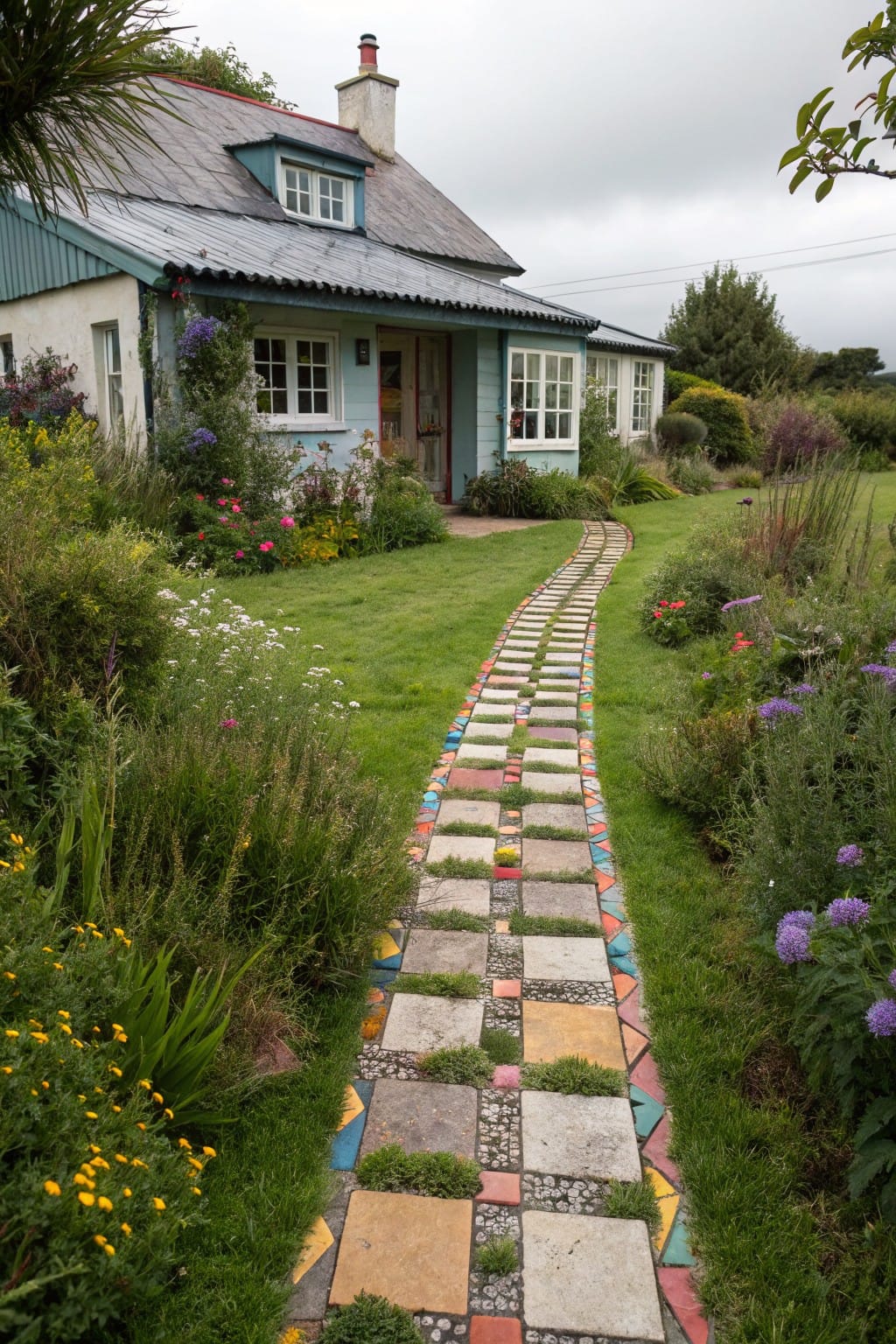
A simple path like this one uses broken tiles and stones set into the lawn to guide you to the door. It stands out with those bright colors against the green grass and plants. Folks like it because it’s cheap to make from scraps you might have around, and it fits right into a garden without looking too planned out.
Try it in a front yard with cottage vibes or wildflowers nearby. Dig a shallow line for the path, press in the tile pieces, and tamp down. Skip super straight lines. It suits smaller lots best, but watch for weeds pushing up in loose soil.
Raised Wooden Beds for Garden Edges

Raised beds built from simple wood frames offer an easy way to edge your garden beds. They keep soil contained and create neat borders that separate planting areas from paths or patios. In tight spots like this backyard alley, a basic green wood box holds back herbs and greens right along the gravel, making the space feel organized without fancy materials.
These work best in small yards where you want to maximize planting room. Use affordable pallet wood or basic lumber, and set them on level ground for good drainage. They suit urban homes or older properties with limited space. Just treat the wood to last longer outdoors.
Rope and Post Path Edging
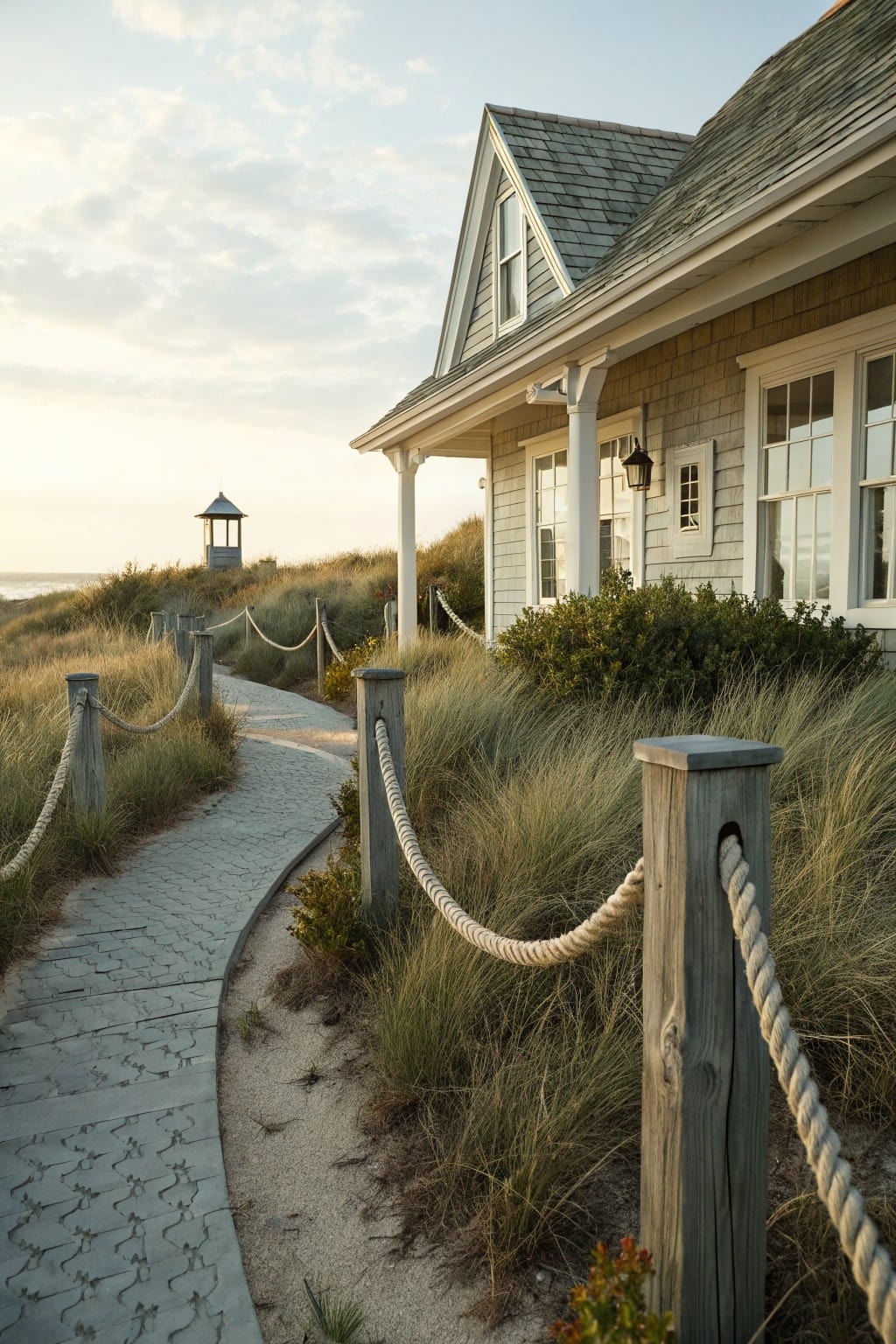
Thick rope tied between simple wooden posts makes a good edge for garden paths. It stands out because it looks right at home in rough grassy areas like dunes or wild borders. The rope and posts blend with natural plantings and keep foot traffic on track without much upkeep.
Use this edging where you have sandy yards or coastal spots. It suits casual homes near the water. Drive posts into the ground every few feet then loop the rope around them. One thing to watch. Rope can fray over time so check it now and then.
Raised Stone Garden Edging
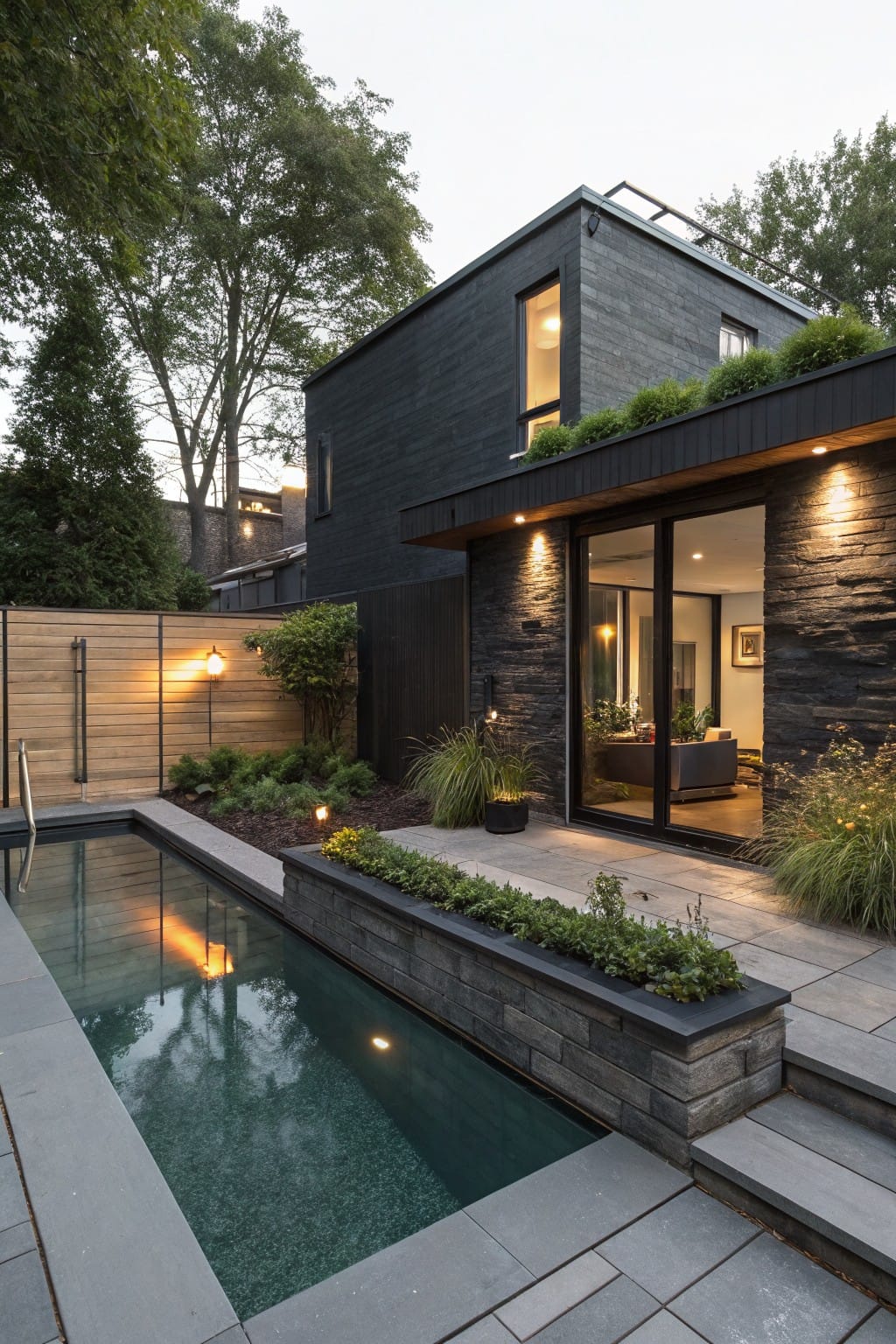
Raised stone blocks make a solid edging choice for garden beds, especially right along hard surfaces like this pool. The dark blocks here hold back the soil neatly and let low plants tuck into the top edge. That setup keeps everything contained without much fuss.
Put this kind of edging to work beside patios or walkways in average backyards. It suits modern or simple home styles where you want clean lines. Stack the stones dry or with mortar, but level them well to avoid settling over time.
Raised Garden Edging with Concrete Blocks
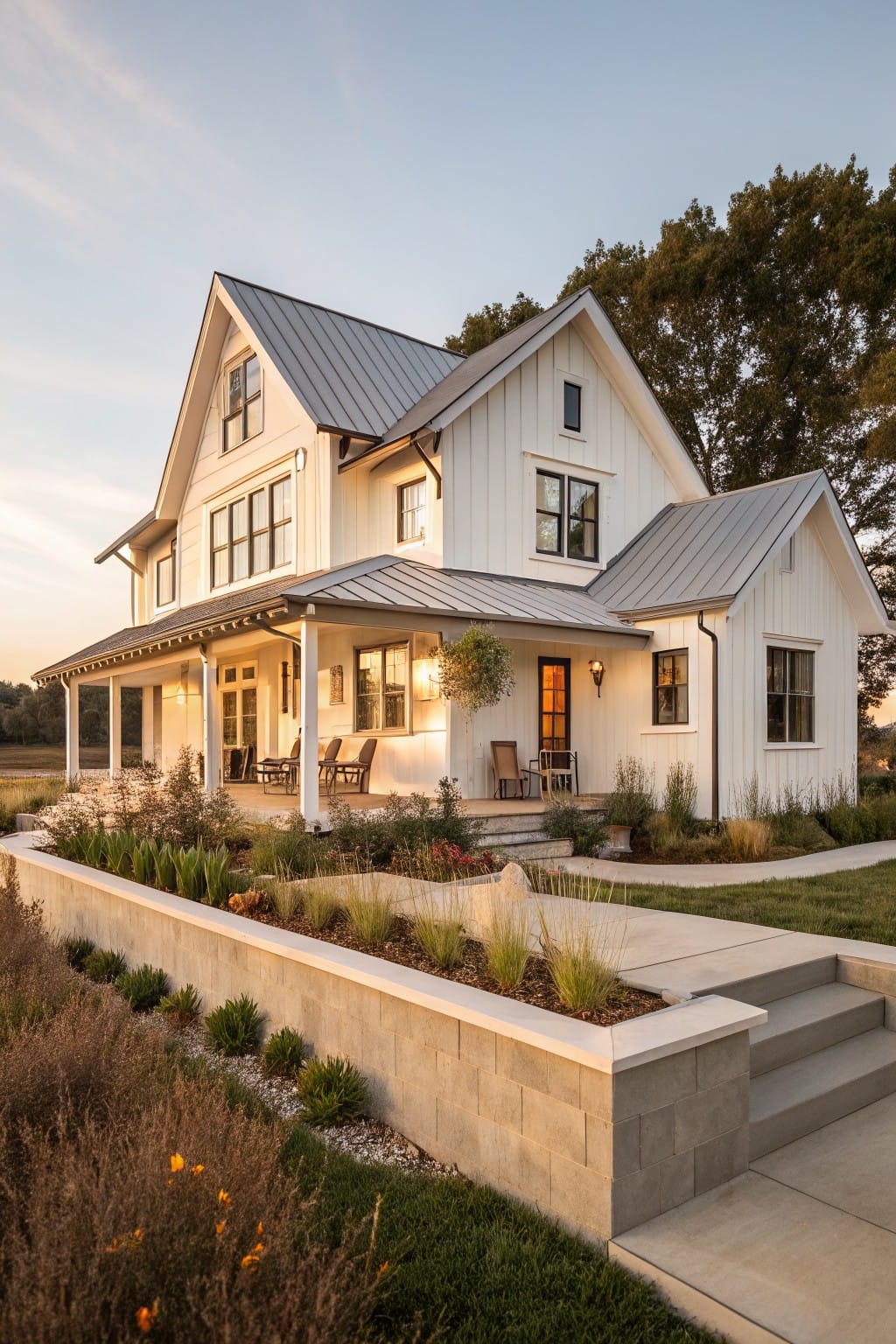
A low retaining wall made from concrete blocks works great as simple garden edging. It holds soil in place around the house base and gives room for plants like grasses and succulents to grow right out of it. This keeps the yard tidy and adds some height without much cost or work.
Put it along pathways or porch steps where you have a slight slope. It fits older homes with big yards or even newer places wanting a clean look. Stack the blocks level and add gravel behind for drainage… or you’ll end up with soggy roots.
Brick Edging for Garden Paths
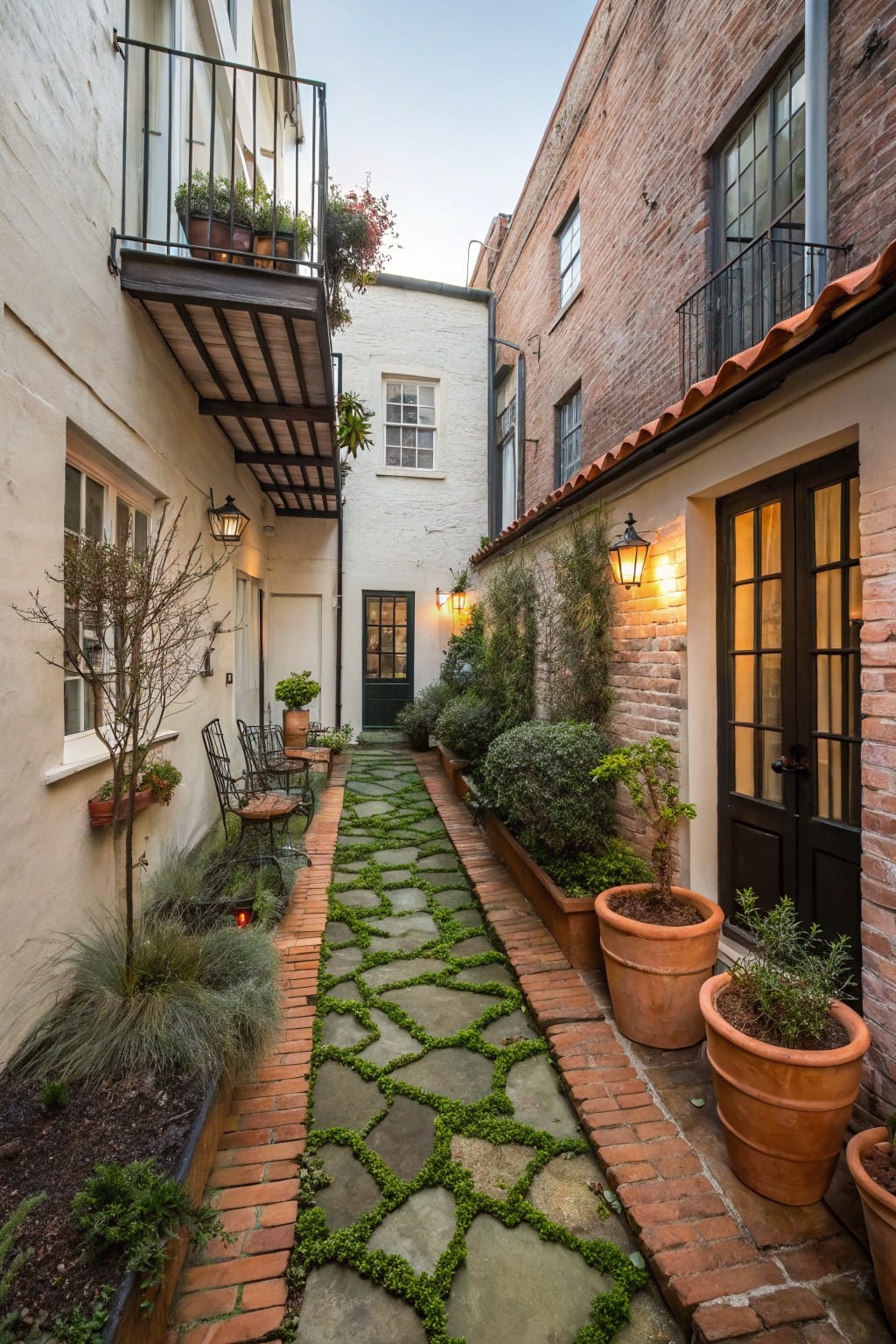
A straightforward garden edging idea uses low brick borders along a stone walkway. It keeps things tidy in a narrow space like this courtyard between buildings. Brick is cheap and blends right in with older walls. The edging lets moss grow between the path stones for a soft look.
Try this in small urban yards or side paths where you want definition without spending much. Stack bricks two or three high for raised planters, fill with grasses or herbs. It suits brick or stucco homes best. Just make sure water drains well so the path stays usable.
Raised Beds for Garden Edging
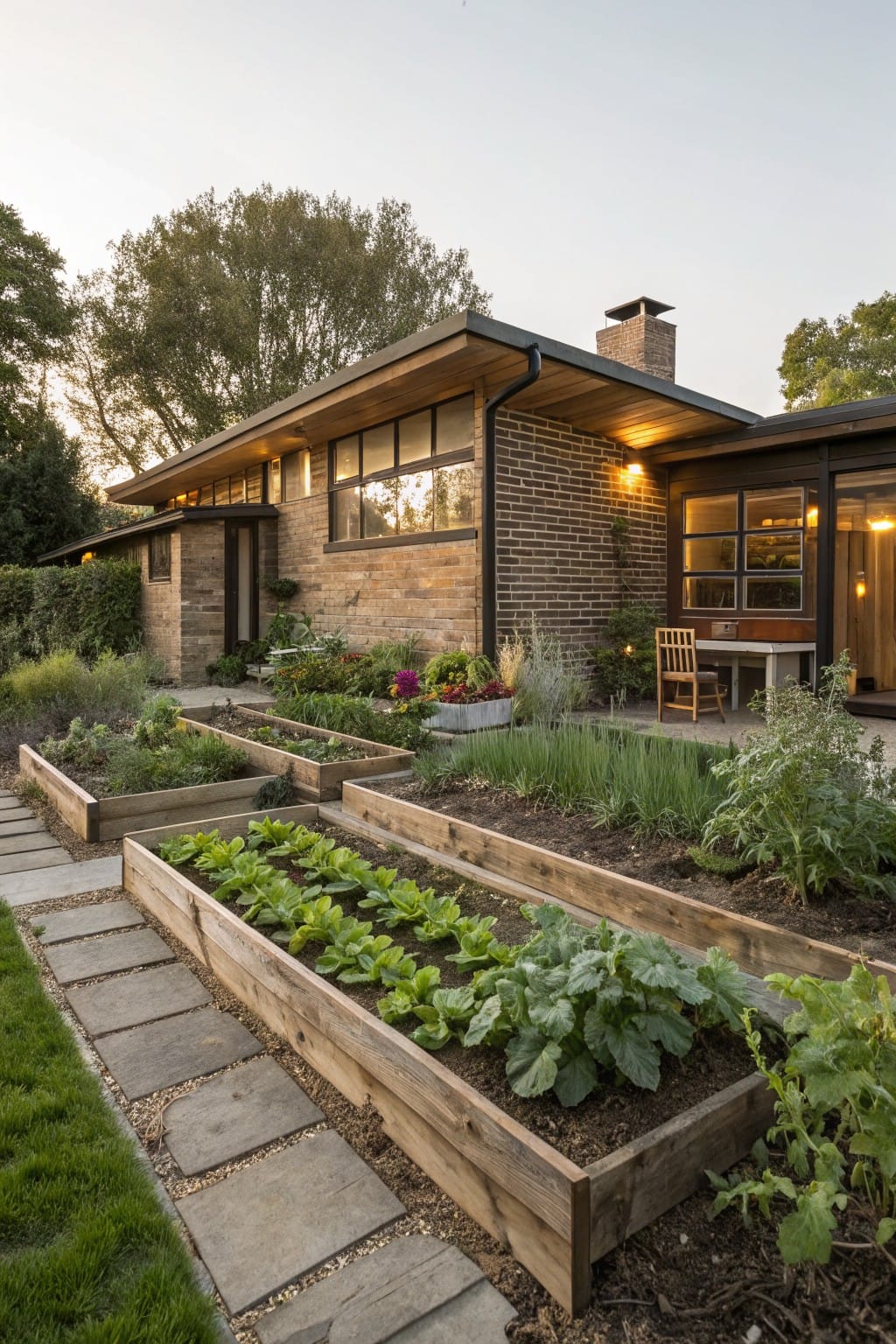
Raised beds do a fine job edging garden paths. Made from simple wood, they hold back soil and let you grow veggies right there. The tiered setup here keeps everything neat and leads the eye to the house door.
Stack rough-cut lumber two or three high for your own version. They fit narrow side yards or front walks best. Use them where you want fresh greens close to the kitchen door. Keep beds under two feet tall unless you like reaching.
Mosaic Tile Garden Paths
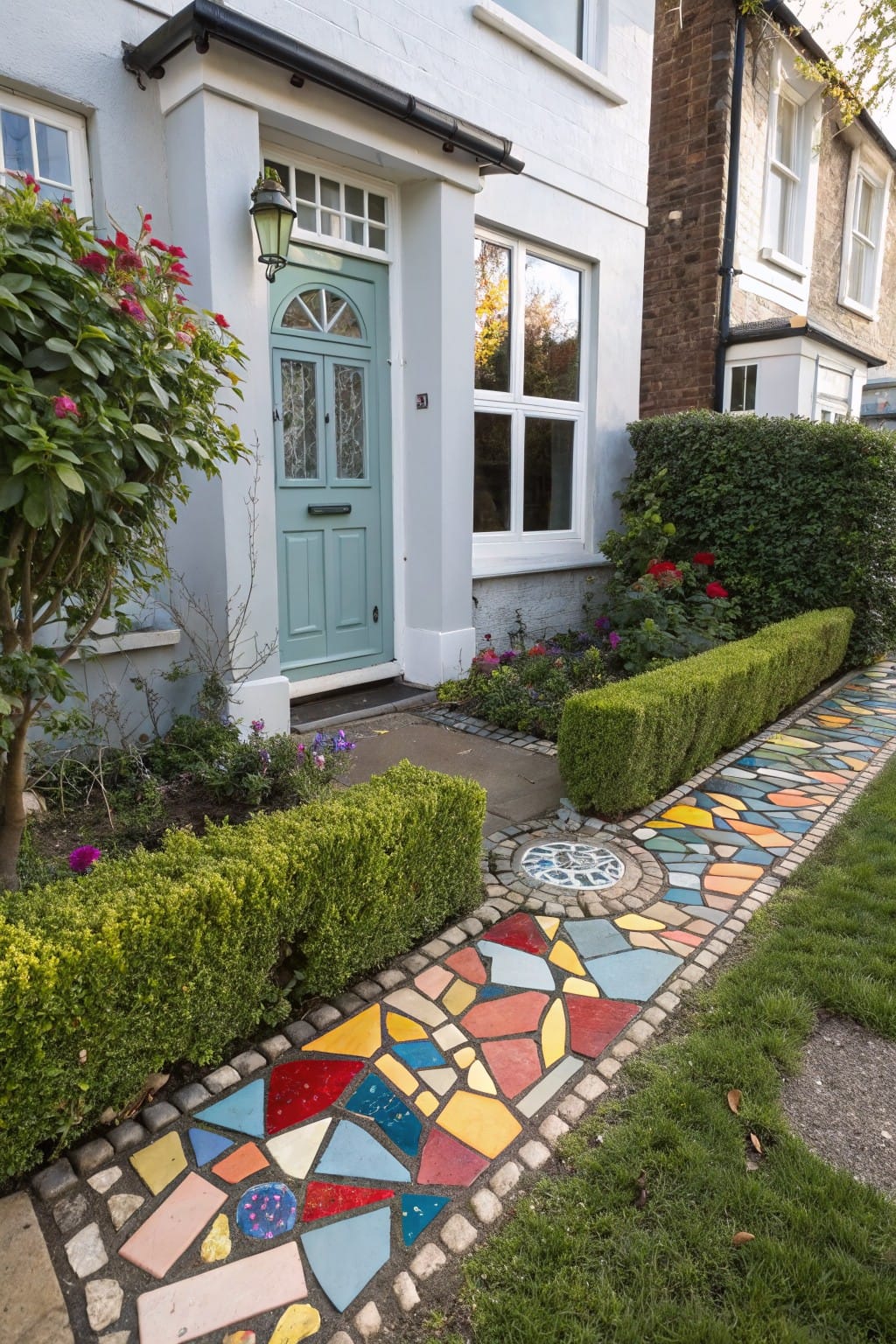
A mosaic tile path turns a plain walkway into something fun and colorful. You see it here snaking through the grass, made from bits of broken ceramics in reds, blues, and yellows. It gives your garden a handmade feel that draws the eye right to the front door, all on a budget if you use leftover or thrift-store tiles.
This works best in small front yards where you want low upkeep but big impact. Edge it with simple box hedges like these to keep things neat. Suits older homes or cottages. Just make sure to set the tiles firmly in mortar so they don’t shift over time.
Low Brick Walls for Garden Edging
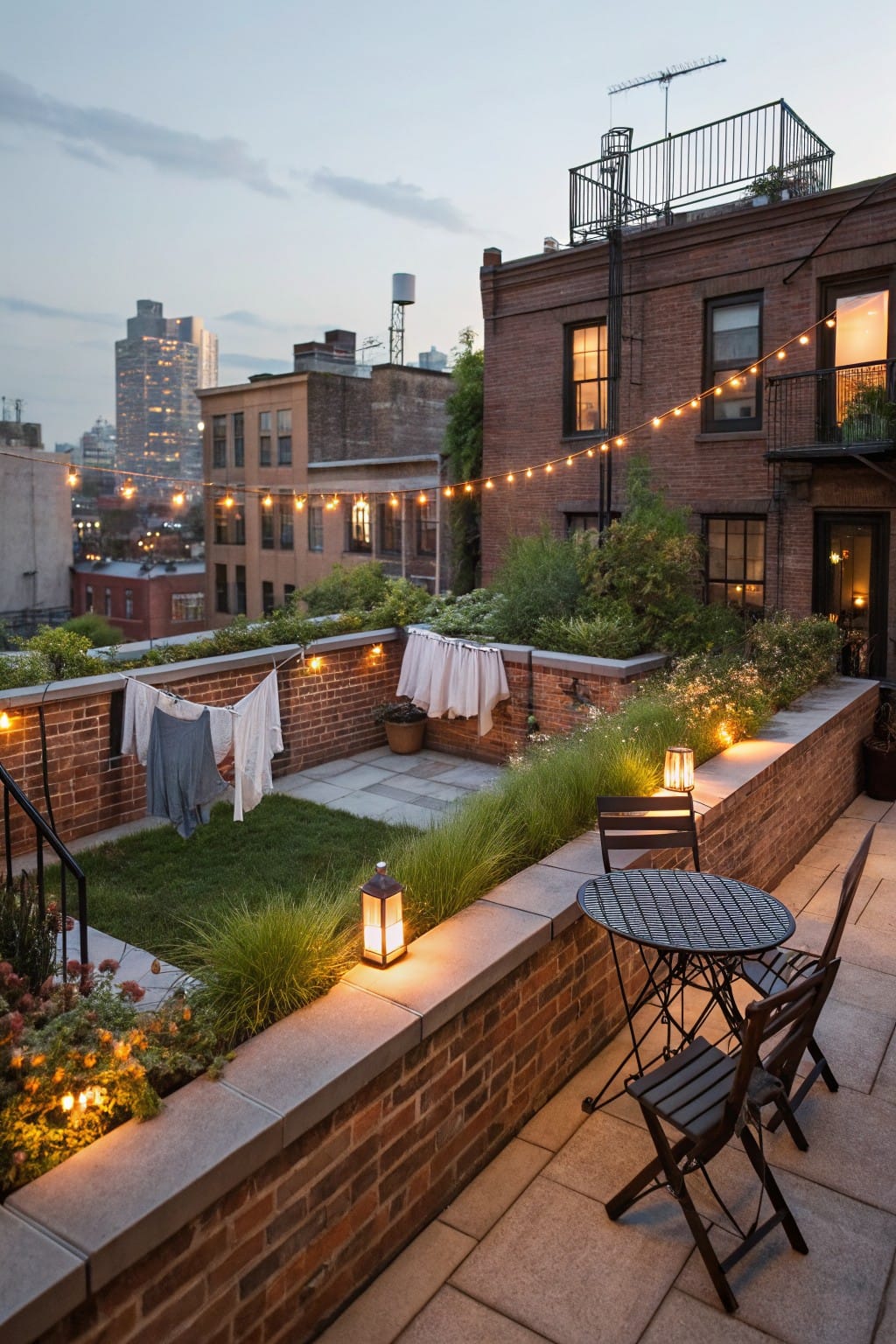
Brick walls make solid garden edging, especially when you keep them low like this. They hold back soil and plants without blocking the view, and the rough texture fits right in with older homes. Here, a short brick wall runs along the edge of a rooftop terrace, topped with concrete for a clean finish. Some tall grasses and flowers tuck in along the top, softening things up a bit.
You can use this on patios, rooftops, or even ground-level yards where space is tight. Match the brick to your house if possible. It works best in urban spots or with city bricks already around. Just make sure the wall is level and drained well, or water will pool. Cheap bricks from salvage yards keep costs down.
Wooden Edging for Garden Paths
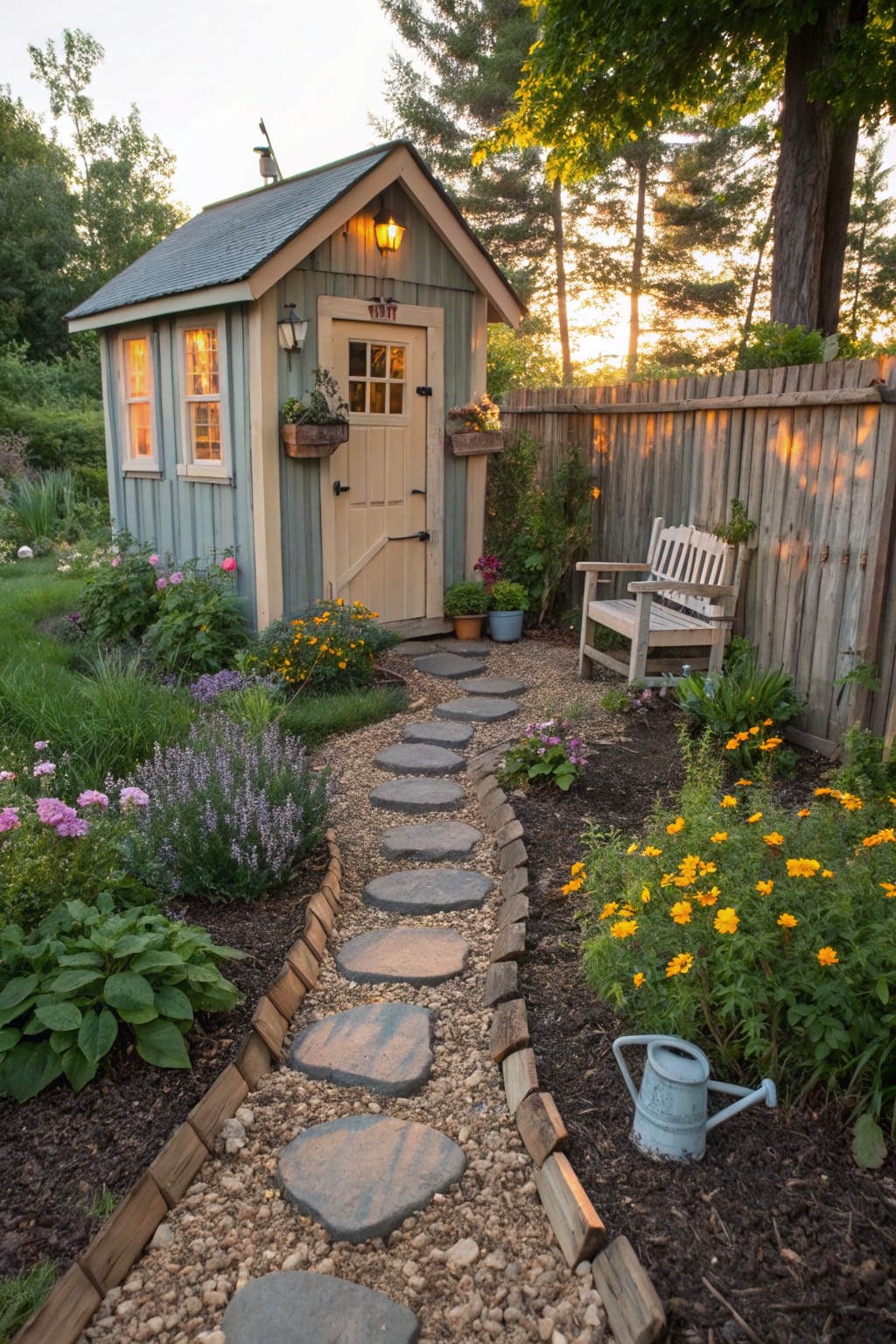
One straightforward way to tidy up a backyard path is with simple wooden edging. Like the split logs lining this stone walkway, it keeps gravel and mulch in place while letting plants spill over just enough. It works because wood blends right into a garden setting, and it’s cheap to source from leftover lumber or basic landscape timbers.
Set this up leading to a shed or seating spot where folks actually walk. It suits average yards with mixed flowers and low shrubs, not super formal setups. Just sink the wood a bit below soil level so it stays put, and refresh it every couple years to avoid rot.
Raised Beds for Garden Edging
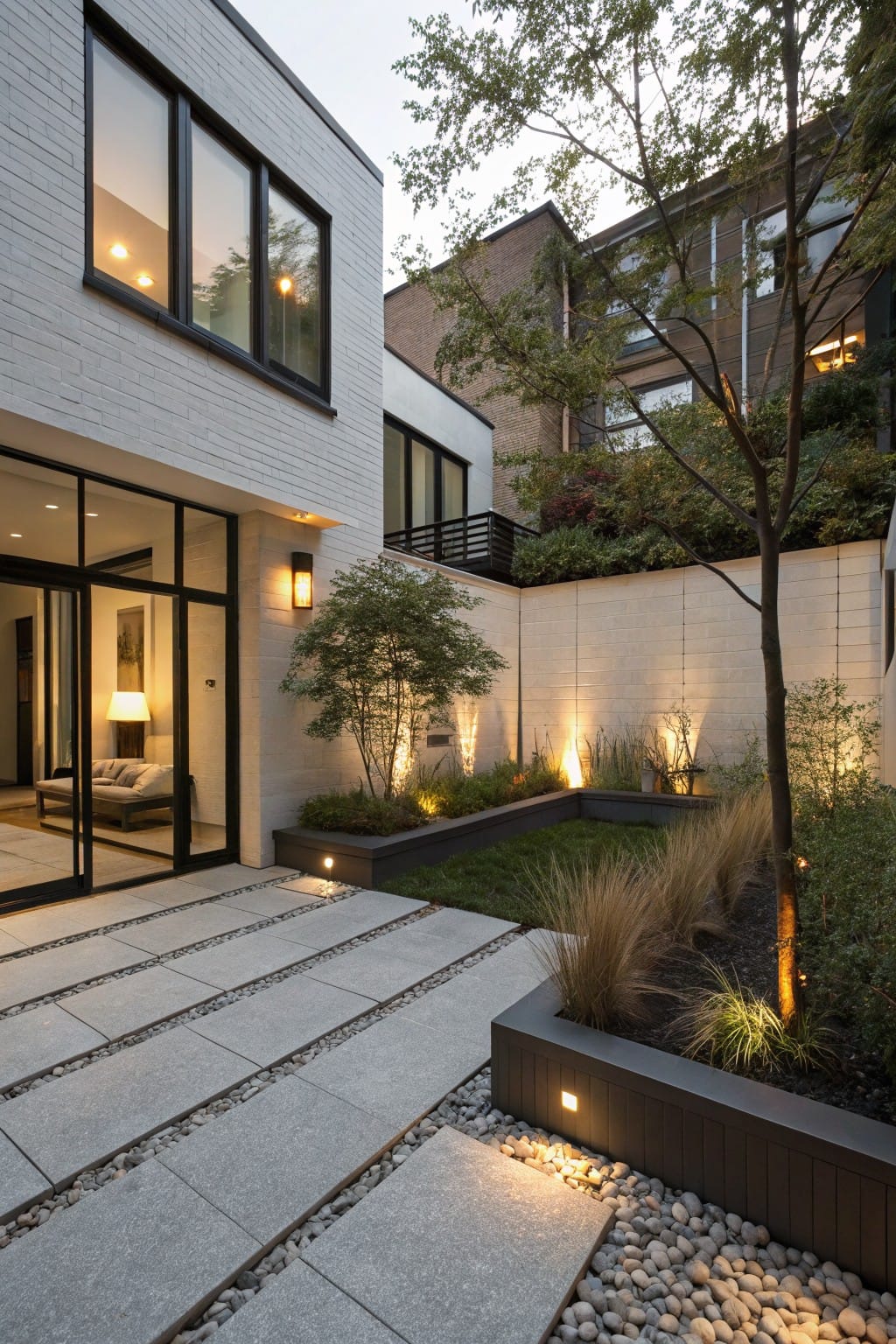
Raised beds make great edging when you want to keep things neat around a lawn or path. These dark wood boxes hold tall grasses and low plants that stay put and look tidy. They separate the green grass from stone walkways without much upkeep. The simple shape works well in small yards, and at night the built-in lights show off the edges nicely.
Put them along patios or side yards where space is tight. They suit modern homes or older ones getting a refresh. Use affordable pressure-treated wood or composites that hold up to weather. Just keep plants trimmed so they don’t flop over the edge. Easy to build yourself on a budget.
Frequently Asked Questions
Q: How deep should I dig the trench for most of these edgings?
A: Dig down about 4 to 6 inches deep across your garden bed line. Make the trench just wide enough so the edging sits snug without wobbling. Pack the bottom soil firm before dropping it in.
Q: Will cheap plastic edging warp or crack in the sun?
A: Pick thicker plastic strips rated for outdoor use, and they hold up fine through hot summers. Bury most of it underground to shield it from direct rays. Water your plants regularly too, since wet soil keeps things stable.
Q: Can I mix different edging materials in one yard?
A: Try it in small sections first to see what clicks. Stone pairs well with wood for a natural vibe, but keep colors from clashing. And switch only where paths meet beds.
Q: What’s the quickest way to stop weeds sneaking through?
A: Tuck landscape fabric under every edging piece you lay. Overlap the edges a bit so nothing slips past. Top with mulch and check gaps yearly.
